
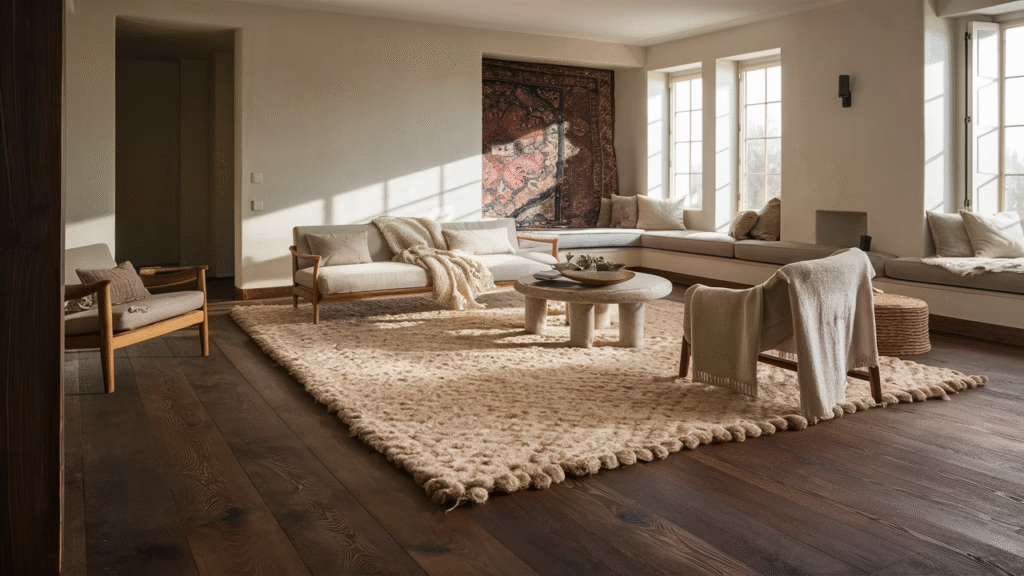
I still remember the panic in my client’s eyes when I walked into her Tribeca loft. “Edwina, I made a mistake,” she confessed, gesturing at her newly installed Brazilian walnut floors. “They’re gorgeous, but my space feels like a cave.”
That’s the thing about dark wood floors – undeniably stunning, yet surprisingly tricky to style.
I’ve seen the transformations firsthand. Last year, a simple ivory wool rug turned a somber living room in a Brooklyn brownstone into the family’s favorite gathering spot. For my own home office, a vibrant vintage Turkish piece brought my espresso floors to life in ways I never expected.
Today, I’m sharing my most successful rug pairings for dark wood floors – combinations I’ve refined through years of client projects (and plenty of trial and error in my own home). From unexpected color choices to texture tricks that create visual magic, these ideas will help you find the perfect partner for your gorgeous dark floors.
Why Rug Choice Makes or Breaks a Dark Wood Floor
Let me be honest – dark wood floors can be divas. They demand attention. They absorb light. They set a mood that can either feel sophisticated or suffocating, depending on what you pair them with.
I learned this lesson the hard way in my first apartment. My gorgeous dark cherry floors looked spectacular in the showroom, but turned my modest space into what my brutally honest friend called “a beautiful coffin.” The game-changer? A textured sisal rug that introduced warmth without competing with the floor’s natural drama.
Dark wood creates a foundation with serious visual weight. Too many dark elements, and your room feels smaller, heavier. Too stark a contrast, and the space feels disjointed.
The right rug creates that elusive balance – softening the darkness while honoring the floor’s natural beauty. Homeowners still deciding between carpet or rug options often start here before refining styling choices!
After countless client projects (and rearranging my own home more times than my husband appreciates), I’ve found three principles that never fail:
First, consider undertones. My client Jen insisted on a gray rug for her mahogany floors, fighting me on my suggestion of something warmer. Three rugs later, she called to admit I was right – the cool gray clashed terribly with the warm red undertones in her floors.
Second, texture is your friend. Smooth floors paired with smooth rugs create a flat, lifeless look. I’ve transformed sterile spaces simply by introducing a rug with visible texture or varied pile height.
Third, scale matters more than you think. In my Park Avenue project last summer, switching from several small rugs to one properly-sized piece visually expanded the room by nearly a third, despite the dark walnut floors.
Color-Based Rug Ideas for Dark Wood Floors
1. Light Neutrals

My client Mark swore his Manhattan loft with ebony floors would never feel bright – until we rolled out a plush cream Moroccan-style rug. The transformation was instant. His space suddenly breathed.
The darkness of his floors became an asset rather than a liability, creating a dramatic contrast that highlighted both the rug’s texture and the floor’s rich grain.
I’ve seen this magic happen repeatedly. Ivory, cream, and beige rugs don’t just brighten spaces with dark floors – they showcase the wood’s depth in ways darker rugs never could. Once color works, following good rug placement rules ensures the room feels cohesive instead of floating.
2. Cool Tones

“I want calm, not boring,” my client Sarah specified for her dark-floored home office. We found the perfect balance with a dusty blue-gray rug that played beautifully against her espresso oak floors.
The cool tone created contrast without the stark drama of white, while the subtle color kept the space feeling grounded.
I find myself reaching for pale blues and soft grays, especially for clients with ebony or dark walnut floors without red undertones. The pairing feels contemporary without trying too hard – a balance that’s surprisingly difficult to achieve.
3. Warm Tones

When I redid my own living room last year, I shocked myself by choosing a rusty orange vintage rug for my dark maple floors. My design friends questioned my sanity until they saw the finished space.
The warm rug tones picked up the subtle amber highlights in my floors, creating a cohesion I couldn’t have planned on paper.
This is especially true in rooms with northern exposure. Those spaces crave warmth, and pairing terracotta, mustard, or burnt orange rugs with dark floors creates an inviting richness that defies even the coldest winter light.
4. Jewel Tones

“I want drama without darkness.” This client request led to one of my favorite pairings ever – a sapphire blue wool rug against walnut floors in a Park Slope dining room.
The deep, saturated blue held its own against the substantial wood while introducing color that felt both bold and natural.
I’ve since become slightly obsessed with jewel tones on dark floors. An emerald green rug transformed a client’s lackluster den with dark cherry floors into a space that literally makes visitors gasp.
The richness of both elements creates a luxurious tension that more expected pairings can’t match.
5. Pastels

My sister nearly disowned me when I suggested a pale pink overdyed rug for her nursery with dark floors. “It’ll look like an ’80s prom dress,” she insisted.
She reluctantly trusted me, and now proudly shows off her sophisticated baby’s room to anyone who visits.
The unexpected charm of pastels against dark wood comes from their contradiction – substantial, grounding floors paired with airy, light colors creates a dynamic that feels fresh rather than fussy.
I especially love this in bedrooms, where the contrast creates both visual rest and interest.
Style-Based Rug Ideas for Dark Wood Floors
6. Vintage Persian Rugs

Nothing makes my designer heart happier than placing a perfectly worn Persian rug on dark hardwood. I’ve scouted flea markets across New York to find these gems for clients.
One of my favorites was a muted navy and rust Persian we placed in a SoHo loft with ebony floors – the 80-year-old rug’s subtle patina created instant soul in a newly renovated space.
These rugs work magic on dark floors because they’re natural bridge-builders. Their typically varied palette includes both light and dark tones, creating harmony between dark floors and lighter furniture.
Plus, the depth that develops in aged Persian rugs mirrors the character of quality wood floors – they just get better together with time.
7. Modern Geometrics

“Modern but not cold” was the brief from a minimalist client with dark walnut floors. Our solution? A cream and charcoal geometric rug with oversized triangular patterns. The bold shapes stood confidently against his substantial floors, while the pattern’s scale kept the space feeling open.
I’ve become slightly addicted to this pairing for clients with contemporary leanings. The clean, bold lines of geometric rugs create a perfect counterpoint to the dark floors’ visual weight.
The trick is balancing pattern scale with room size – an oversized pattern can make a small space feel bigger, while too small a pattern gets lost against the dark wood’s presence.
8. Minimalist Rugs

Sometimes less truly is more. My most satisfying transformation might be the Chelsea penthouse, where we paired espresso floors with a deceptively simple ivory wool rug with subtle high-low texture.
The combination let both elements breathe – the floors provided grounding, while the rug’s restrained design kept the space feeling open.
When clients want this look, I steer them away from truly flat rugs toward pieces with textural interest – bouclé weaves, subtle ribbing, or varied pile heights.
This approach adds dimension without busy patterns, perfect for those who appreciate understated sophistication.
9. Boho or Tribal Rugs

My dining room features a Moroccan Beni Ourain with irregular black diamonds against ivory wool floating above my dark cherry floors. The combination shouldn’t work on paper – the pattern on darkness could be chaotic – but the contrast creates unexpected harmony.
These personality-filled rugs do double duty with dark floors. Their typical palette of earth tones with pops of vibrant color helps connect disparate elements in a room.
Meanwhile, their irregular patterns and varied textures soften dark floors’ formality, creating spaces that feel cultivated rather than decorated.
10. Scandinavian Flat Weaves

I’ve long been a champion of Swedish flat-weaves paired with dark wood floors, especially in smaller spaces that need breathing room.
These light, typically cotton rugs with their distinctive geometric patterns create crisp contrast against espresso or walnut floors while adding visual interest through pattern rather than bulk.
For a client’s narrow Brooklyn hallway with dark mahogany floors, we used a simple blue and white striped dhurrie runner that made the space feel twice as wide.
The key advantage here is practicality – these rugs are typically reversible, washable, and stand up to heavy foot traffic while maintaining their looks. They’re particularly effective in kitchens, entryways, and dining spaces where spills happen.
For dark-floored homes with children or pets, I often recommend the classic Scandinavian striped designs in indoor/outdoor materials – you get the light/dark contrast that makes the space feel larger while gaining stain-resistance that purely decorative rugs can’t match.
Material & Texture Ideas for Dark Wood Floors
11. Wool Rugs

My design studio’s walnut floors serve as the perfect testing ground for client recommendations. The most versatile pairing I’ve found is natural wool rugs, particularly those with some visible texture.
Wool has a natural luster that plays beautifully against dark wood’s depth, creating layers of visual interest without competing elements.
Unlike synthetic fibers that can create a jarring contrast against natural wood, wool shares a complementary organic quality.
For a recent Upper East Side project, we chose a hand-knotted wool rug with subtle high-low texture against ebony floors – the combination created a rich dialogue between surfaces that synthetic rugs simply can’t achieve.
The practical benefits make this pairing even more compelling. Wool naturally resists staining, maintains its appearance for decades, and offers insulation properties that make dark-floored rooms feel cozier in winter months. I particularly love New Zealand wool for its softness combined with durability in high-traffic areas with dark floors.
12. Jute or Sisal

I discovered this pairing by accident early in my career when budget constraints led me to choose a jute rug for a client’s dark-floored living room. The unexpected magic of this combination – the rough, organic texture against sleek, polished wood – has made it a go-to recommendation ever since.
Natural fiber rugs create breathable spaces when paired with dark floors. Their typically light, golden color adds warmth without the starkness of white, while their visible texture adds dimension that flat rugs can’t provide. I find this especially valuable in minimalist spaces where too many smooth surfaces can feel cold or sterile.
For clients concerned about comfort, I recommend jute-wool blends or layering techniques. In my own bedroom, a small vintage rug floats atop a larger jute piece against dark cherry floors – the combination provides the textural contrast I love while maintaining softness underfoot where it matters most.
13. Shag Rugs

“I want my living room to feel like a warm hug.” This client request led to pairing a cream high-pile shag with her espresso floors. The contrast between the ultra-tactile, cloud-like rug and the smooth, substantial flooring created exactly the inviting atmosphere she craved.
High-pile rugs create tension against dark wood floors in the best possible way. The juxtaposition of textures – one deeply tactile, one sleek and refined – creates visual and physical comfort that flat rugs rarely achieve.
This pairing works particularly well in bedrooms, formal living spaces, and media rooms where comfort is paramount.
For clients with dark floors in dimly lit spaces, I often recommend lighter-colored shag rugs in wool or high-quality synthetics. The pile height catches and reflects available light, brightening the room while the textural contrast preserves the sophisticated foundation that the dark floors provide.
14. Low-Pile Rugs

When function needs to lead design decisions, low-pile rugs on dark floors offer practical elegance. I’ve used this combination countless times for clients with mobility concerns, in dining spaces where chairs need to move easily, and in high-traffic areas where cleaning is a priority.
The trick to preventing this pairing from feeling flat is introducing subtle pattern or tonal variation.
For a minimalist client’s dark-floored dining room, we chose a low-pile rug with a subtle geometric print in varied neutral tones – the effect maintained the clean-lined aesthetic she wanted while adding just enough visual interest.
Dark floors paired with performance-focused low-pile rugs make particular sense in family homes. I recently helped a client with three children and a dog select a stain-resistant, low-pile rug with a distressed pattern that disguises inevitable wear while still providing the contrast needed to brighten their dark walnut floors.
15. Layered Looks

Layering changed my approach to dark floors forever. During a photoshoot at my own apartment, a stylist spontaneously placed a small vintage kilim over the larger sisal rug in my dark-floored living room. The dimension this created was so compelling that I’ve been experimenting with layered looks ever since.
This approach solves multiple challenges with dark wood floors. The base layer (typically a larger, neutral piece) provides the light contrast that prevents the space from feeling too heavy.
The top layer introduces color, pattern or additional texture without committing an entire room to a potentially overwhelming design.
I’ve found this particularly valuable for clients who love colorful or patterned rugs but worry about overwhelming their space. A stunning antique Persian that might feel too busy covering an entire dark-floored room becomes the perfect focal point when layered over a simple jute or sisal base.
Function & Room Placement Ideas for Dark Wood Floors
16. Living Room: Anchoring with Purpose

The most common mistake I see with dark-floored living rooms is undersized rugs. When I replaced a client’s 5×8 rug with an 8×10 on her espresso floors, she called me the next day, amazed at how much larger her room suddenly felt.
For living rooms with dark wood floors, I follow my “60% rule” – the rug should cover at least 60% of the visible floor space.
This creates an appropriate scale that prevents the dark wood from visually overwhelming the space. Position your furniture so that at least the front legs are on the rug to create a cohesive conversation area. Understanding proper living room layout helps avoid common sizing mistakes in dark-floor spaces.
In open-concept homes with dark floors throughout, properly sized rugs become even more crucial as zone-defining elements. I recently designed a Tribeca loft where dark walnut floors ran throughout the space. Strategic rug placement created distinct living, dining, and media areas without requiring walls.
17. Hallways & Kitchen Runners: Creating Flow

Long, narrow spaces with dark floors present unique challenges. Too much exposed dark flooring can create a tunnel effect, while the wrong runner can make the space feel choppy.
In my own dark-floored Victorian, I resolved this by installing a 14-foot vintage runner in a faded terracotta palette that picks up the warm undertones of my walnut floors. The pattern adds interest to an otherwise utilitarian space, while the continuous runner expands the perceived width of the hallway.
For kitchen runners with dark floors, I recommend indoor/outdoor materials or washable flatweaves in patterns that disguise inevitable spills. Position runners to highlight kitchen work zones – parallel to counters or islands rather than randomly placed in open floor space – to create practical pathways that also enhance your kitchen’s design.
18. Bedroom: Framing Your Sanctuary

Bedrooms with dark floors offer wonderful opportunities for creating cocoon-like spaces. My approach varies based on bed size and room dimensions, but follows one consistent principle: rugs should extend at least 18 inches beyond each side of the bed (36″ for king beds) to provide a soft landing for bare feet.
I’ve found two approaches particularly successful. For traditional bedrooms, centering a rug under the bed with equal exposure on all sides creates balanced elegance. For more contemporary spaces, I often place the rug two-thirds under the bed, with more exposure at the foot to create asymmetrical interest.
Texture becomes especially important in bedrooms with dark floors. In my Manhattan client’s primary suite with ebony floors, we selected a high-pile wool rug in a warm ivory that creates sensory contrast – cool, smooth floors transitioning to plush, warm rug – that enhances the room’s restful quality.
19. Home Office: Grounding the Workspace

Dark-floored home offices present an opportunity to create sophisticated, focused environments. When designing my own home office with maple floors stained in dark walnut, I discovered that the right rug placement dramatically affected both the room’s appearance and my productivity.
For desk-centered offices, I recommend placing your rug so it extends at least 24″ beyond the desk on all sides where you might roll your chair. This prevents chair legs from catching on rug edges while ensuring you’re not directly on hard floors all day.
In my design practice, I typically recommend low to medium-pile rugs in patterns that energize without distracting. My own office features a vintage Turkish rug with a faded blue geometric pattern – the muted colors provide energy without competing for attention when I need to focus on design work.
20. Dining Room: Practical Elegance

Dark-floored dining rooms demand careful rug consideration. Too small a rug creates the dreaded “raft on an ocean” effect, while improper placement leads to chairs that catch on edges every time guests stand.
My non-negotiable rule: dining rugs must extend at least 24″ beyond the table on all sides. This ensures that chairs remain on the rug even when pulled out.
For a recent Park Slope project with espresso floors, we selected a 9×12 flat-weave with a subtle pattern that disguises inevitable dining mishaps while providing the contrast needed to prevent the dark floors from dominating.
For clients concerned about maintaining rugs under dining tables, I recommend indoor/outdoor materials or wool blends with natural stain-resistance. In my sister’s home with young children and dark walnut floors, we chose a durable wool-blend rug with a variegated pattern specifically designed to camouflage spots and spills while still creating the light/dark contrast her space needed.
21. Transitional Spaces: Creating Continuity

Foyers, landings, and transition areas with dark floors often get overlooked, but these spaces present perfect opportunities for rug statements that set the tone for your entire home.
In my Gramercy Park project, we addressed a dark-floored entryway with a circular vintage rug that immediately draws the eye upward and creates a sense of arrival. The unexpected shape softened the rectangular architecture while the faded colors complemented the richness of the floors.
For split-level homes with dark wood throughout, I recommend creating continuity through material consistency rather than identical rugs. Using the same fiber (like wool or jute) in different patterns or colors throughout connected spaces helps spaces feel related while avoiding the predictability of matching rugs.
How to Pair Rugs with Dark Wood Floors
After years of matching rugs to dark floors, I’ve developed a systematic approach that consistently delivers beautiful results. Let me walk you through my process.
1. Color Coordination: Understanding Undertones
Dark wood floors aren’t just “brown” or “black” – they contain subtle undertones that dramatically impact how they interact with rugs.
I learned this lesson the hard way early in my career when a client rejected three different rug options before I finally recognized the warm cherry undertones in her “espresso” floors.
To identify your floor’s undertones, place a pure white sheet of paper on the floor in natural daylight. The contrast will reveal whether your floors lean warm (red, orange, or yellow undertones) or cool (ash, gray, or bluish undertones).
For warm-toned dark floors like cherry, mahogany, or Brazilian walnut, I typically recommend rugs that either:
- Embrace the warmth with complementary tones (terracotta, gold, amber)
- Create intentional contrast with cool blues or greens (but never cold grays, which can clash)
For cool-toned dark floors like ebonized oak or espresso-stained maple, consider:
- Cool-toned rugs in blue, gray, or sage that enhance the sophisticated finish
- Warm cream (rather than stark white) to soften the coolness without fighting it
2. Balance and Contrast: The 30/70 Rule
One formula I frequently use with clients is what I call the “30/70 rule.” In rooms with dark floors, aim for a balance where dark elements (including floors) comprise approximately 30% of the visual field, with lighter elements making up the remaining 70%. This prevents spaces from feeling bottom-heavy or cave-like.
In my Brooklyn Heights project, we intentionally selected an ivory wool rug that covered about 70% of the visible floor area, instantly brightening the space while allowing the gorgeous walnut floors to provide elegant framing. The high contrast created drama without darkness.
For clients who prefer a more subtle approach, mid-tone rugs in sage, terracotta, or faded blue create moderate contrast that softens the transition between dark floors and lighter furnishings. This approach works particularly well in traditional homes where extreme contrast might feel too contemporary.
3. Texture and Material: Creating Dimension
The smooth, refined surface of polished dark wood floors creates a perfect opportunity to introduce tactile contrast through rugs. This dimensional interplay prevents spaces from feeling flat or static.
In my own living room, I paired smooth walnut floors with a nubby jute rug, creating a textural conversation between elements. This approach works equally well with high-pile wool, bouclé weaves, or subtly ribbed constructions – the key is introducing tactile variety that complements your floor’s smooth finish.
Material compatibility also matters. Natural fiber rugs (wool, cotton, jute, sisal) typically pair more harmoniously with wood floors than synthetic options, creating a cohesive organic quality throughout the space. I particularly recommend wool for its natural depth and dimension against dark floors.
Pro Tips & Common Mistakes to Avoid
After countless consultations with homeowners struggling with their dark floors, I’ve identified patterns in both successful pairings and frustrating failures. Let me share what really works – and what absolutely doesn’t.
Mistake 1: Matching Rug Too Closely to Floor Color
The biggest mistake I encounter? Clients selecting dark brown rugs for dark brown floors. “I thought it would be safer to match,” one client explained as we stood in her living room that felt like the inside of a chocolate bar.
Dark rugs on dark floors create visual heaviness that makes spaces feel smaller and more oppressive. Instead, create intentional contrast – this doesn’t necessarily mean stark white (which brings practical challenges), but definitely lighter than your flooring.
When a real estate client insisted on keeping her dark brown shag with newly installed walnut floors, we compromised by layering a cream-colored Moroccan wedding blanket over the center, creating a lighter focal point that transformed the space.
Mistake 2: The Undersized Rug Syndrome
“Why does my living room still feel off?” This question typically comes from clients who’ve selected beautiful rugs in appropriate colors but in insufficient sizes for their dark-floored spaces.
Dark floors visually recede, making small rugs appear to “float” awkwardly rather than anchoring the space. For rooms with dark wood floors, I recommend sizing up at least one standard dimension from what you might initially consider – an 8×10 becomes a 9×12, a 5×8 becomes an 8×10.
My own dining room taught me this lesson. My initial 6×9 rug looked strangely disconnected against the dark cherry floors. Upgrading to an 8×10 instantly created the cohesion I’d been missing, despite using the same furniture arrangement. Reviewing a full flooring decision guide beforehand often prevents these sizing regrets.
Mistake 3: Forgetting the Rug Pad
Skipping proper rug pads is always a mistake, but particularly damaging with dark wood floors, which tend to show scratches more prominently than lighter varieties.
I learned this lesson the expensive way when moving furniture across a client’s Brazilian walnut floors, which left subtle scratches that required professional refinishing. Now I insist on high-quality, non-slip rug pads for all my dark floor installations.
Beyond protection, the right pad enhances your rug’s appearance and longevity. A quality felt and rubber pad adds cushioning underfoot while preventing the rug from shifting or bunching, particularly important in high-traffic areas with dark flooring.
Mistake 4: Ignoring Undertones
“But it looked perfect in the store!” This lament usually comes from clients who failed to consider how their rug’s undertones would interact with their specific dark floors.
Dark cherry or mahogany floors contain red undertones that can clash with cool gray or blue rugs. Conversely, espresso-stained oak often has cool undertones that might fight with overly warm rust or orange rugs.
My solution? Always bring a floorboard sample (or clear photo taken in natural light) when rug shopping. This simple step has saved countless clients from expensive mistakes. If that’s not possible, request returnable rug samples to test in your actual space before committing.
Mistake 5: Forgetting Practicality
Dark floors show dust and light debris more readily than medium-toned floors. Selecting extremely dark or extremely light rugs can exacerbate maintenance challenges rather than solving them.
For practical spaces like entries, kitchens, or family rooms with dark floors, I recommend mid-tone rugs with subtle patterns that disguise inevitable debris.
A client with three children and dark walnut floors throughout recently thanked me for steering her toward a medium-tone vintage-inspired rug with a distressed pattern – “It actually hides everything,” she reported happily.
For pet owners with dark floors, I typically recommend wool rugs in heathered or variegated colors rather than solid light tones. The natural variation in the fibers helps disguise fur and minor paw prints while still providing the contrast needed to brighten spaces with dark flooring.
Conclusion
Remember that dark floors aren’t a decorating obstacle but a foundation that can support countless design directions.
The most successful spaces I’ve designed don’t hide their dark floors but celebrate them through thoughtful contrast, appropriate scale, and textural dialogue.
By approaching your floors as an asset rather than a limitation, you’ll discover combinations that elevate your entire home.
I still smile thinking about my Tribeca client with the “cave” problem. Six months after we installed a cream Moroccan-style rug over her Brazilian walnut floors, she hosted a dinner party where a guest asked if she’d lightened her floors. “No,” she told me, she replied, “I just finally figured out how to work with them.”
I hope these suggestions help you do the same. Your dark floors aren’t a decorating challenge – they’re your room’s best feature, waiting for the perfect rug to prove it.