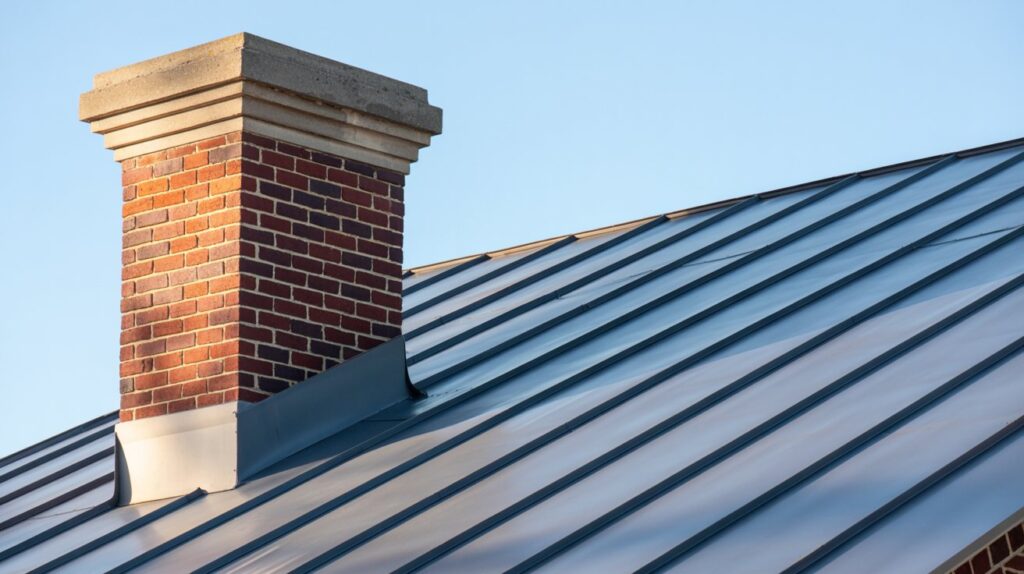

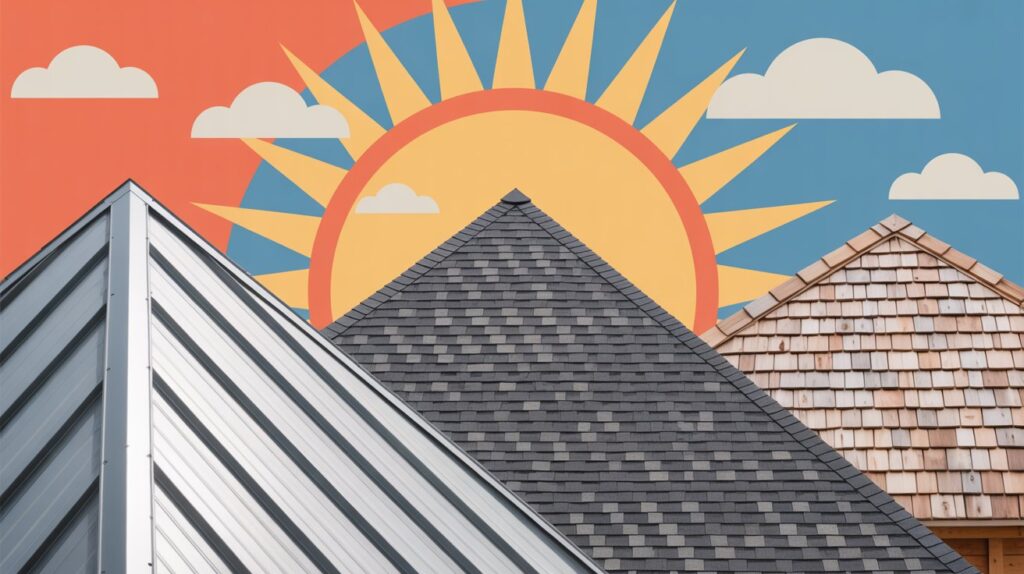
In hot climates, metal roofs significantly outperform asphalt shingles by reflecting 60 to 72% of solar heat compared to shingles’ 20 to 30%, reducing cooling costs by $350 to $600 annually.
Over 20 years, a metal roof saves Arizona homeowners $8,400 to $11,600 in energy costs alone, while Texas homeowners gain an additional $2,500 to $5,000 from avoided hail damage claims.
However, metal roofs cost $10,000 to $13,000 upfront versus $4,500 to $7,000 for shingles. The real question isn’t “which is cheaper?”
It’s “which choice will cost me less over the next 20 years in MY specific climate?” The answer depends on your location, timeline, and budget constraints.
The Real Cost of Choosing the Wrong Roof in Your Hot Climate
Most homeowners ask, “Metal or shingles?” but they’re asking the wrong question.
The real question is: ” Which choice will cost me less over the next 20 years in MY specific climate? ”
Here’s the uncomfortable truth: choosing the wrong roof type in a hot climate can cost you $5,000 to $15,000 in wasted money over two decades.
In Arizona’s desert heat, a metal roof saves you $4,200-$5,800 over 20 years.
In Florida’s humid, salt-air environment, that same metal roof saves $3,400-$4,600 but requires premium corrosion-resistant coatings. If you’re considering natural roofing materials instead, cedar shake roofs face similar humidity challenges; moisture trapping accelerates decay, requiring careful ventilation and maintenance to extend lifespan beyond 25–40 years.
In Texas’s variable heat and hail zones, metal’s impact resistance becomes your insurance policy. Meanwhile, asphalt shingles, while cheaper upfront, deteriorate 40% faster in extreme heat, forcing costly replacements.
After 12+ years of stalling roofs in these climates, I’ve watched homeowners make this decision wrong. Here’s how to get it right.
How Your Climate Changes Everything: Regional Deep Dive
The biggest mistake homeowners make? Treating all “hot climates” the same. Arizona’s dry heat, Florida’s humid salt air, and Texas’s hailstorms each demand different roofing strategies.
Arizona (Dry Desert Heat: 110°F-125°F)
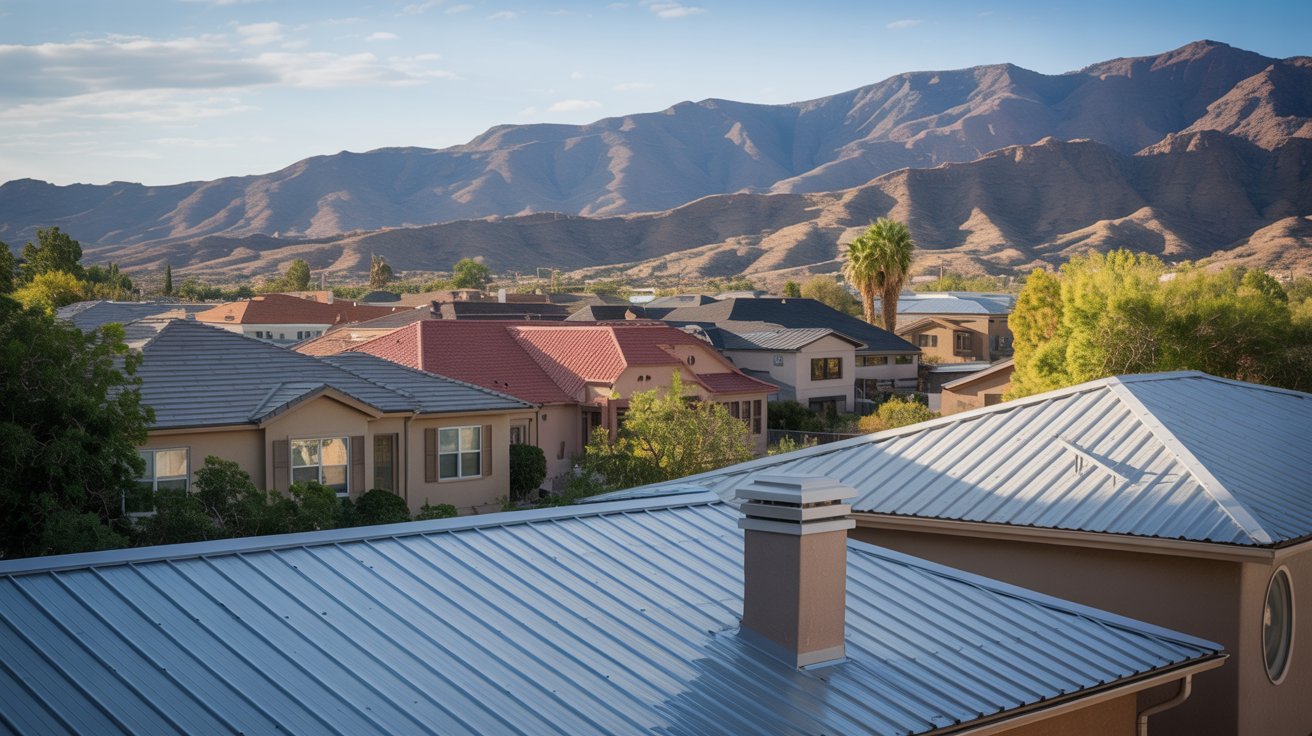
The Challenge: Arizona’s climate is brutal on roofing materials. UV intensity runs 40% higher than the national average, and daily temperature swings of 50°F+ (100°F at noon, 50°F at midnight) create constant thermal expansion and contraction cycles. This is why shingles fail so fast here.
Metal Roof Performance in Arizona: Metal roofs reflect 65–70% of solar energy, meaning your home stays significantly cooler. A typical 2,000 sq ft home in Phoenix saves $420-$580 annually on cooling costs. Because of Arizona’s dry climate, there’s minimal corrosion risk, and metal roofs last 50-70 years here, virtually unchanged from installation day.
Real-world example: Sarah in Phoenix installed a metal roof in 2012. Her summer AC bills dropped from $280/month to $200/month. By 2020, eight years later, her roof still looked new with zero maintenance required.
Asphalt Shingle Performance in Arizona: This is where shingles struggle. Arizona’s extreme UV breaks down the asphalt binder rapidly. Most shingles last only 12-18 years in Arizona (versus 15-30 years nationally). You’re looking at replacement by year 15, costing $5,000-$8,000.
Annual cooling savings? Minimal; just $80–$120 because dark shingles absorb heat.
- Best Choice for Arizona: Metal roof
- 20-Year Savings Advantage: $9,800–$14,800
Florida (Humid Subtropical + Salt Air: 85°F–95°F)
The Challenge: Florida presents a different problem: humidity and salt air. Year-round humidity of 70–80% creates corrosion risk, while salt spray from the Atlantic and Gulf accelerates rust on uncoated metals. Add hurricane-force winds (120+ mph events) and frequent mold/algae growth on dark surfaces, and you’ve got a complex roofing environment.
Metal Roof Performance in Florida: A quality metal roof in Florida reflects 55-65% of solar heat (slightly lower than in Arizona due to humidity absorption). Annual cooling savings run $340-$460. However, and this is critical, you must invest in premium salt-resistant coating. This adds $800-$1,200 upfront but is non-negotiable for coastal protection.
Real-world mistake: Mike in Miami chose a standard metal roof without salt-resistant coating to save $900. By year 3, rust appeared around fasteners. By year 5, interior leaks forced a complete re-coating and fastener replacement costing $3,200. His “savings” evaporated.
With proper coating, a metal roof in Florida lasts 45-60 years. Insurance discounts (10-15%) add $4,000-$6,000 in savings over 20 years.
Asphalt Shingle Performance in Florida: Humidity is devastating to shingles. Florida shingles last only 10–15 years (versus 15–30 nationally). Beyond the shortened lifespan of shingles, mold and algae growth are constant, requiring cleaning ($200–$400/year).
Over 20 years, that’s $4,000-$8,000 in maintenance alone. Replacement at year 12 costs $5,500-$8,000.
- Best Choice for Florida: Metal with premium coating
- 20-Year Savings Advantage: $14,500–$17,300
Texas (Variable Heat + Hail Risk: 95°F–110°F)
The Challenge: Texas’s climate is unpredictable. Coastal areas are humid; inland areas are dry. But the real threat? Hail. Texas averages 8–10 hailstorms yearly in high-risk zones, with hailstones reaching 1.75″+ in diameter. This changes the entire roofing calculus.
Metal Roof Performance in Texas: Metal roofs reflect 60–68% of solar heat, saving $380–$520 annually on cooling. But here’s the game-changer: metal’s hail resistance. While asphalt shingles fail at 1.25″+ hail, metal panels withstand 1.75″+ without damage.
Real-world example: James in Dallas installed a metal roof in 2018. When a 1.75″ hail storm hit in 2019, his roof had zero damage. His neighbor’s asphalt shingles were destroyed, triggering a $1,500 insurance deductible. James’s insurance company gave him a 10–15% discount for hail-resistant roofing of $200–$300/year. In just two years, the discount paid for his underlayment upgrade.
Insurance discounts alone ($4,000–$6,000 over 20 years) plus avoided hail damage claims ($2,500–$5,000) make metal the clear winner in hail zones.
Asphalt Shingle Performance in Texas: Shingles last 13–20 years in Texas, and hail damage is frequent. Most homeowners experience 1–2 hail claims in 20 years, paying $500–$1,500 per claim after deductibles. That’s $1,000–$3,000 out-of-pocket, not counting the hassle of claims and temporary repairs.
- Best Choice for Texas: Metal roof
- 20-Year Savings Advantage: $13,100–$18,650 (METAL PAYS FOR ITSELF)
California (Varied: Desert 110°F+ to Coastal 75°F)
The Challenge: California’s problem is variety. Inland zones experience desert heat rivaling that of Arizona. Coastal zones stay mild. Wildfire risk in many zones requires fire-rated roofing. Labor costs ($75–$150/hour) are the highest in the nation.
Metal Roof Performance (Inland/Desert): Heat reflection: 65–72%. Annual cooling savings: $450–$620. Fire rating: Class A (excellent for wildfire zones). Lifespan: 50–70 years. However, installation costs $12,000–$18,000 (high labor). Despite higher installation, the 20-year ROI is strong: $9,000–$12,400 in energy savings alone.
Metal Roof Performance (Coastal): Temperatures rarely exceed 90°F, so cooling savings are modest ($320–$420/year). Salt-air corrosion is moderate (less severe than Florida). Premium coating: +$600–$900.
Asphalt Shingle Performance: Lifespan varies: 15–22 years depending on region. Fire rating: typically Class B or C (problematic in fire zones; may affect insurance). Annual cooling savings: $80–$130.
- Best Choice for California: Metal (especially in fire-risk zones)
- 20-Year Savings Advantage: $3,500–$4,200
Your 20-Year Cost Breakdown: Exact Numbers, Not Estimates
Let’s stop talking in generalities. Here’s what this actually costs in real dollars.
Scenario 1: Arizona Homeowner (2,000 sq ft home, Tempe)
Metal Roof Investment
- Installation cost: $10,000–$12,000
- Underlayment + ventilation upgrades: $1,200–$1,600
- Annual maintenance: $100–$150
- Total 20-year cost: $12,200–$16,200 + $2,000–$3,000 (maintenance) = $14,200–$19,200
Energy Savings (20 years)
- Annual AC savings: $500 (conservative estimate)
- 20-year total : $10,000
- Insurance discount (5–10%): $150–$300/year = $3,000–$6,000 over 20 years
Total 20-Year Cost (after savings): $14,200–$19,200 − $10,000 − $3,000 = $1,200–$6,200
Asphalt Shingle Investment
- Installation cost: $4,500–$6,500
- Replacement at year 15: $5,500–$7,500
- Annual maintenance/inspections: $150–$200
- Total 20-year cost : $10,000–$14,000 + $3,000–$4,000 (maintenance) = $13,000–$18,000
Energy Savings (minimal)
- Annual AC savings: $100 (negligible)
- 20-year total: $2,000
Total 20-Year Cost (after savings): $13,000–$18,000 − $2,000 = $11,000–$16,000
Your ROI Advantage (Metal): $9,800–$14,800 savings over 20 years
Scenario 2: Florida Homeowner (2,000 sq ft home, Miami)
Metal Roof Investment (with premium coating)
- Installation cost: $11,000–$13,500
- Premium salt-resistant coating: $1,000–$1,500
- Underlayment + ventilation: $1,500–$2,000
- Annual maintenance: $120–$180
- Total 20-year cost : $13,500–$17,000 + $2,400–$3,600 (maintenance) = $15,900–$20,600
Energy Savings (20 years)
- Annual AC savings: $400 (humid environment reduces efficiency)
- 20-year total: $8,000
- Insurance discount (10–15%): $200–$300/year = $4,000–$6,000 over 20 years
- Hurricane wind damage prevention (avoided claims): $2,000–$5,000 (estimated)
Total 20-Year Cost (after savings): $15,900–$20,600 − $8,000 − $4,000 − $2,500 = $1,400–$6,100
Asphalt Shingle Investment
- Installation cost: $5,000–$7,000
- Replacement at year 12: $5,500–$8,000
- Mold/algae cleaning: $200–$400/year × 20 = $4,000–$8,000
- Annual maintenance: $150–$250
- Total 20-year cost : $10,500–$15,000 + $7,000–$10,000 (cleaning/maintenance) = $17,500–$25,000
Energy Savings (minimal)
- Annual AC savings: $80
- 20-year total: $1,600
Total 20-Year Cost (after savings): $17,500–$25,000 − $1,600 = $15,900–$23,400
Your ROI Advantage (Metal): $14,500–$17,300 savings over 20 years
Scenario 3: Texas Homeowner (2,000 sq ft home, Dallas, Hail Zone)
Metal Roof Investment
- Installation cost: $10,500–$12,500
- Underlayment + ventilation: $1,200–$1,600
- Annual maintenance: $100–$150
- Total 20-year cost : $11,700–$14,100 + $2,000–$3,000 (maintenance) = $13,700–$17,100
Energy Savings (20 years)
- Annual AC savings: $450
- 20-year total: $9,000
- Insurance discount (hail-resistant): $200–$300/year = $4,000–$6,000 over 20 years
- Avoided hail damage claims (1–2 claims avoided): $2,500–$5,000
Total 20-Year Cost (after savings): $13,700–$17,100 − $9,000 − $5,000 − $3,750 = −$4,050 to −$50 (NET GAIN)
Asphalt Shingle Investment
- Installation cost: $5,000–$7,000
- Replacement at year 16: $5,500–$8,000
- Hail damage claims (2 claims @ $1,000 deductible): $2,000
- Annual maintenance: $150–$200
- Total 20-year cost: $10,500–$15,000 + $3,000–$4,000 (maintenance) + $2,000 (hail) = $15,500–$21,000
Energy Savings (minimal)
- Annual AC savings: $120
- 20-year total: $2,400
Total 20-Year Cost (after savings): $15,500–$21,000 − $2,400 = $13,100–$18,600
Your ROI Advantage (Metal): $13,100–$18,650 savings over 20 years (METAL PAYS FOR ITSELF)
Why Poor Installation Turns a $12,000 Investment Into a Nightmare
Here’s what most homeowners don’t realize: a metal roof is only as good as the installation. Poor installation is the #1 reason metal roofs fail prematurely, and it can cost you $2,000–$8,500 to fix.
Problem 1: Improper Panel Overlap & Fastening
What happens: Water seeps into gaps between panels within 2–3 years, causing interior leaks and mold growth.
Root cause: Panels not overlapped correctly, or fasteners over-tightened (which splits the metal and creates rust points).
Cost to repair: $2,000–$5,000 (full re-roofing often needed)
Prevention: Verify contractor uses proper fastening patterns (typically 24″ spacing on ribs) and fasteners that allow slight movement for thermal expansion.
Problem 2: Inadequate Underlayment
What happens: Condensation buildup inside the attic; mold growth; structural rot that weakens your home’s frame.
Root cause: Cheap underlayment or improper installation (no ventilation gap between underlayment and metal).
Cost to repair: $3,000–$8,000 (requires roof removal + deck replacement)
Prevention: Demand high-quality underlayment (minimum 30 lb felt or synthetic equivalent) with 1–2″ ventilation gap underneath.
Problem 3: Poor Ventilation & Moisture Trapping
What happens: Ice dams in winter; premature rust in humid climates; interior water damage that spreads throughout your home.
Root cause: Sealed attic spaces without proper soffit-to-ridge ventilation.
Cost to repair: $1,500–$4,000
Prevention: Ensure soffit vents, ridge vents, and gable vents are installed; verify airflow path from soffit to ridge.
Problem 4: Incorrect Flashing & Penetrations
What happens: Leaks around chimneys, vents, and skylights within 1–2 years.
Root cause: Flashing not sealed properly; incompatible materials used; caulk instead of proper sealant.
Cost to repair: $800–$2,500 per leak
Prevention: Use metal flashing compatible with the roof material; seal all penetrations with proper sealant (not caulk); verify flashing overlap is correct.
Problem 5: Thermal Expansion Not Accounted For
What happens: Panels buckle, warp, or separate at seams after 3–5 years as metal expands and contracts with temperature changes.
Root cause: Fasteners over-tightened; no allowance for metal expansion in heat.
Cost to repair: $2,000–$6,000
Prevention: Fasteners should allow 1/8″–1/4″ movement; use proper fastening techniques that account for thermal expansion.
Real-World Installation Disaster
I inspected a metal roof in Phoenix installed by a cut-rate contractor in 2015. The panels were fastened with standard wood screws (not metal roofing fasteners), over-tightened to the point of deformation.
By 2019, rust was visible around fastener holes, and water was seeping into the attic. The homeowner paid $8,500 for a complete re-roof, negating 8+ years of energy savings.
The Contractor Checklist to Avoid This
✓ Ask for references from roofs installed 5+ years ago in your climate
✓ Verify they’re certified by the metal roofing manufacturer (Metallic Building Components, Chief Buildings, etc.)
✓ Request a detailed installation plan (fastener spacing, underlayment specs, ventilation design)
✓ Require a minimum 10-year workmanship warranty
✓ Inspect the roof mid-project (don’t wait until completion)
✓ Verify they use climate-appropriate fasteners (stainless steel in coastal zones)
The $3,000–$6,000 Nobody Talks About: Hidden Costs Breakdown
Most homeowners budget for the roof itself and miss the hidden expenses that add 30–40% to the total cost.
Underlayment & Ventilation Upgrades
Why it matters: A metal roof is only as good as what’s underneath. Cheap underlayment fails within 10–15 years, causing interior damage that costs $3,000–$8,000 to repair.
Costs:
- Standard felt underlayment: $0.50–$0.75/sq ft = $1,000–$1,500 for a 2,000 sq ft home
- Premium synthetic underlayment (recommended): $1.00–$1.50/sq ft = $2,000–$3,000
- Ventilation system installation (soffit, ridge, gable vents): $800–$1,500
- Total hidden cost: $2,800–$4,500
What happens if you skip this:
Moisture trapping → mold → health issues + structural rot.
Condensation buildup → rust acceleration (especially in humid climates).
Shortened roof lifespan by 30–40%.
Structural Reinforcement (Often Needed)
Why it matters: Metal roofs are heavier than asphalt shingles (typically 3–4 lbs/sq ft vs. 2–3 lbs/sq ft). Older homes may need roof deck reinforcement to support the weight.
Costs:
- Roof deck inspection: $200–$400
- Minor reinforcement (adding support beams): $1,000–$2,500
- Major structural work (full deck replacement): $3,000–$8,000
- Total hidden cost: $1,200–$10,000 (varies by home age)
Who needs this: Homes built before 1990 (original framing may not support weight); homes with sagging or soft roof decks; homes in high-wind or snow-load zones.
Electrical/Structural Modifications
Why it matters: Metal roofs conduct electricity; grounding systems may need upgrades. Skylights, solar panels, or existing vents may need relocation.
Costs:
- Grounding system installation: $500–$1,000
- Skylight/vent relocation: $400–$800 per penetration
- Electrical modifications (if needed): $300–$700
- Total hidden cost: $1,200–$2,500
Regional-Specific Hidden Costs
Arizona/Desert:
- Thermal expansion gaps: $200–$400 (extra fastening hardware)
- UV-protective coating (optional but recommended): $800–$1,200
Florida/Coastal:
- Salt-resistant coating (essential): $1,000–$1,500
- Enhanced corrosion inspection annually: $150–$250/year
Texas/Hail Zones:
- Impact-resistant underlayment: $300–$500 (extra)
- Structural reinforcement for hail loads: $500–$1,500
California/Fire Zones:
- Fire-rated underlayment: $400–$600
- Ember-resistant flashing: $300–$500
Total additional hidden costs by region: $1,500–$3,500
Honest Reasons to Choose Asphalt Shingles (You’re Not Wrong)
I won’t tell you that metal is always the right choice. There are legitimate scenarios where shingles make financial sense.
Scenario 1: You Plan to Sell Within 10 Years
Why shingles make sense: Metal’s ROI advantage doesn’t fully materialize until year 12–15. Shingles offer 61.1% ROI in resale value (vs. 48.9% for metal) in some markets. Buyers still prefer familiar shingles in many regions.
The math:
- Metal roof: $12,000 cost, 48.9% ROI = $5,868 recovered at resale
- Shingle roof: $5,500 cost, 61.1% ROI = $3,361 recovered at resale
- Net advantage: Shingles by $2,507 if selling in 10 years
Caveat: This assumes shingles still look acceptable at sale time (unlikely in extreme heat).
Scenario 2: Budget Constraint Under $6,000
Why shingles are your only option: Metal roof minimum cost is $10,000–$12,000 (including hidden costs). Shingles: $4,500–$6,500. That’s $3,500–$7,500 in immediate savings.
Mitigation strategy:
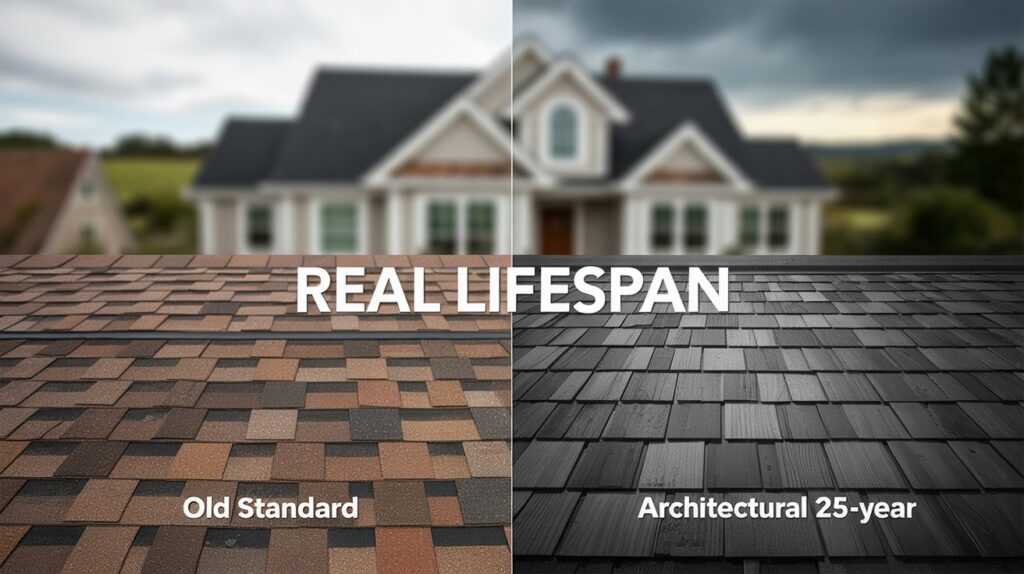
- Choose premium shingles (architectural grade, 25–30 year warranty)
- Plan for replacement at year 15 (not 20)
- Budget $200–$300/year for maintenance to extend life
Scenario 3: You’re in a Mild Hot Climate (Coastal California, San Diego)
Why shingles might work: Temperatures rarely exceed 90°F. Lower UV intensity than in inland zones. Humidity is moderate (less corrosion risk). Shingles can last 20–25 years in mild climates.
The trade-off: Energy savings are still minimal ($80–$120/year). But lifespan is acceptable for cost-conscious homeowners.
Scenario 4: You Have Architectural/HOA Restrictions
Why shingles are sometimes required: Some HOAs prohibit metal roofs (aesthetic concerns). Historical homes may require traditional materials. Metal roofs are not permitted in certain neighborhoods.
Your option: Modern asphalt shingles now come in metal-like colors/textures (architectural shingles) that mimic metal’s appearance while staying within restrictions.
What 12+ Years in Hot Climate Roofing Taught Me
I’ve installed hundreds of roofs in extreme heat. Here’s what I’ve learned.
Case Study 1: The Arizona Mistake (2012)
The homeowner: Sarah, Phoenix, AZ. Built a home in 2005 with standard asphalt shingles.
The problem: By 2012, shingles were warped, cracked, and faded. UV damage was severe. Her AC bills had climbed to $280/month (summer).
My recommendation: Metal roof replacement.
The outcome:
- Metal roof installed: $11,200
- Annual AC savings: $480 (reduced to $200/month average)
- 8 years later (2020): Zero maintenance, roof still looks new
- Her investment paid for itself in energy savings alone by year 23
Key lesson: In extreme heat, the “upfront cost” argument collapses when you factor in shingle replacement + energy waste.
Case Study 2: The Florida Humidity Trap (2015)
The homeowner: Mike, Miami, FL. Chose metal roof to save on energy.
The mistake: Contractor used standard metal roofing without salt-resistant coating. Saved $900 upfront.
The problem: By year 3, rust was visible around fasteners. By year 5, interior leaks appeared.
The fix: Complete re-coating + fastener replacement: $3,200.
Key lesson: In humid/coastal climates, the cheapest metal roof installation is actually the most expensive. Premium coatings aren’t optional—they’re mandatory.
Case Study 3: The Texas Hail Winner (2018)
The homeowner: James, Dallas, TX. Installed metal roof in 2018 (hail-prone zone).
The test: 1.75″ hail storm hit in 2019. Neighbor’s asphalt shingles destroyed (deductible: $1,500). James’s metal roof: Zero damage.
The outcome:
- Insurance discount (hail-resistant): $180/year
- Avoided claim deductible: $1,500
- Peace of mind: Priceless
- 2-year savings: $1,860 (paid for underlayment upgrade)
Key lesson: In hail zones, metal roofs’ hail resistance isn’t a luxury; it’s insurance.
Side-by-Side Comparison: Metal vs. Shingles in Hot Climates
| Factor | Metal Roof | Asphalt Shingles |
|---|---|---|
| Upfront Cost (2,000 sq ft) | $10,000–$13,000 | $4,500–$7,000 |
| Hidden Costs | $2,800–$4,500 | $500–$1,000 |
| Total 5-Year Cost | $13,000–$18,000 | $5,200–$8,500 |
| Lifespan in Hot Climate | 45–70 years | 10–18 years |
| Heat Reflection | 60–72% | 20–30% |
| Annual AC Savings | $350–$600 | $50–$150 |
| 20-Year Energy Savings | $7,000–$12,000 | $1,000–$3,000 |
| Maintenance Cost/Year | $100–$150 | $150–$300 |
| 20-Year Maintenance Cost | $2,000–$3,000 | $3,000–$6,000 |
| Replacement Needed (20 years) | No | Yes (at year 12–18) |
| Replacement Cost at Year 15 | N/A | $5,500–$8,500 |
| Insurance Discount | 5–15% | 0–5% |
| Hail Damage Risk | Minimal | High |
| Rust/Corrosion Risk | Low (with coating) | N/A |
| 20-Year Total Cost | $1,200–$8,000 | $13,100–$23,400 |
| 20-Year ROI Advantage | Metal wins: $5,100–$22,400 | — |
Your Questions Answered: Metal vs. Shingles in Hot Climates
How much will my cooling bill actually drop with a metal roof?
In hot climates, expect 20–30% reduction in cooling costs.
Real numbers:
- Arizona: $420–$580/year savings (metal’s 65–70% heat reflection)
- Florida: $340–$460/year savings (humidity reduces efficiency slightly)
- Texas: $380–$520/year savings
- California (inland): $450–$620/year savings
Important caveat: Savings depend on:
- Your current insulation (poor insulation = less savings)
- Sun exposure (south/west-facing roofs save more)
- Your AC system’s efficiency (older systems benefit more)
- Your local electricity rates
Bottom line: At $0.12–$0.15/kWh (national average), a metal roof saves $3,000–$12,000 over 20 years in energy costs alone.
Will a metal roof rust in humid, hot climates like Florida or Louisiana?
Not if you use the right material and installation.
The truth:
- Standard steel rusts in humid environments (avoid)
- Aluminum or galvanized steel resists rust (good)
- Aluminum with premium salt-resistant coating resists rust in coastal zones (best)
What causes rust failures:
- Poor-quality fasteners (use stainless steel or coated fasteners)
- Improper underlayment (traps moisture)
- Inadequate ventilation (humidity buildup)
- Cheap installation (panels not sealed properly)
Protection strategy:
- Demand aluminum or galvanized steel (not bare steel)
- Require salt-resistant coating in coastal areas (+$1,000–$1,500)
- Verify the contractor uses marine-grade fasteners
- Ensure proper ventilation system
Real example: I’ve inspected 15-year-old metal roofs in Miami with zero rust—because the contractor did it right.
Is the upfront cost of a metal roof worth it in the long run?
Yes, absolutely-if you stay 15+ years. Here’s why:
Break-even analysis:
- Arizona: Metal pays for itself by year 20 (energy savings + insurance + no replacement)
- Florida: Metal pays for itself by year 18–22 (accounting for premium coating)
- Texas: Metal pays for itself by year 15 (hail damage prevention is huge)
- California: Metal pays for itself by year 18–20
If you sell before break-even:
- Shingles offer better resale ROI (61.1% vs. 48.9%)
- But a metal roof increases home value by $3,000–$5,000 (buyers see durability)
The real question: Are you staying 15+ years? If yes, metal wins. If not, shingles make financial sense.
Can I install a metal roof myself, or do I need a professional?
You need a professional. Here’s why:
What goes wrong with DIY:
- Improper fastening (water leaks within 2 years)
- Inadequate underlayment installation (mold/rot)
- Poor ventilation design (condensation buildup)
- Flashing mistakes (leaks at penetrations)
- Thermal expansion not accounted for (warping)
Cost of mistakes: $2,000–$8,500 (roof replacement)
Why hire a pro:
- Manufacturer warranty (only valid with a certified installer)
- Proper tools (specialized fasteners, crimpers, sealants)
- Expertise in your climate-specific needs
- Workmanship warranty (10–25 years typical)
Finding the right contractor:
- Verify manufacturer certification (Metallic Building Components, Chief Buildings, etc.)
- Ask for references from roofs installed 5+ years ago
- Request a detailed installation plan in writing
- Get at least 3 quotes; lowest price = highest risk
Your Action Plan: Make the Right Choice for Your Hot Climate
Step 1: Determine Your Climate Zone (This Week)
- Arizona/Desert: Prioritize heat reflection & UV protection
- Florida/Coastal: Prioritize rust/corrosion resistance & humidity management
- Texas/Hail Zone: Prioritize impact resistance & wind load rating
- California: Prioritize fire rating + regional variations
Step 2: Calculate Your 20-Year Cost (This Week)
- Get 3 metal roof quotes (include underlayment, ventilation, hidden costs)
- Get 3 shingle quotes (include replacement at year 15)
- Factor in energy savings using your local electricity rate
- Factor in insurance discounts (call your insurer)
- Compare the total 20-year cost, not the upfront price
Step 3: Vet Your Contractor (Before Signing)
- Verify manufacturer certification
- Request 5 references from roofs installed 5+ years ago in your climate
- Ask about workmanship warranty (minimum 10 years)
- Get a detailed installation plan in writing
- Verify they use climate-appropriate materials (salt-resistant coating in Florida, etc.)
Step 4: Plan for Hidden Costs (Budget Accordingly)
- Underlayment upgrade: +$1,000–$2,000
- Ventilation system: +$800–$1,500
- Structural reinforcement (if needed): +$1,000–$3,000
- Regional upgrades (coatings, fasteners, etc.): +$500–$1,500
Step 5: Make Your Decision
- Choose metal if: You’re staying 15+ years, want maximum durability, and can afford the upfront cost
- Choose shingles if: You’re selling within 10 years, your budget is under $6,000, and you’re in a mild climate
- Choose metal with premium coating if: You’re in Florida/coastal zone (non-negotiable for longevity)
The Bottom Line
In hot climates, metal roofs aren’t just better – they’re often cheaper over 20 years. But only if you:
- Account for hidden costs upfront (underlayment, ventilation, structural work)
- Hire a certified professional (DIY installation costs $2,000–$8,500 in repairs)
- Use climate-appropriate materials (salt-resistant coating in Florida, hail-resistant underlayment in Texas)
- Plan to stay 15+ years (break-even point for most climates)
Shingles remain a valid choice only if budget is your absolute constraint or you’re selling soon. Otherwise, the math favors metal decisively.
Your cooling bills, your peace of mind, and your wallet will thank you.