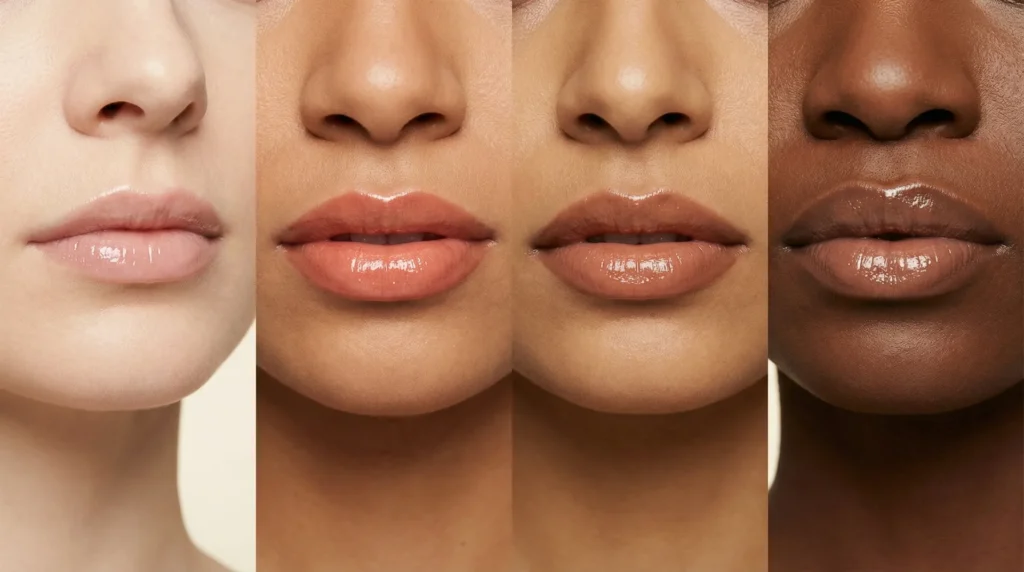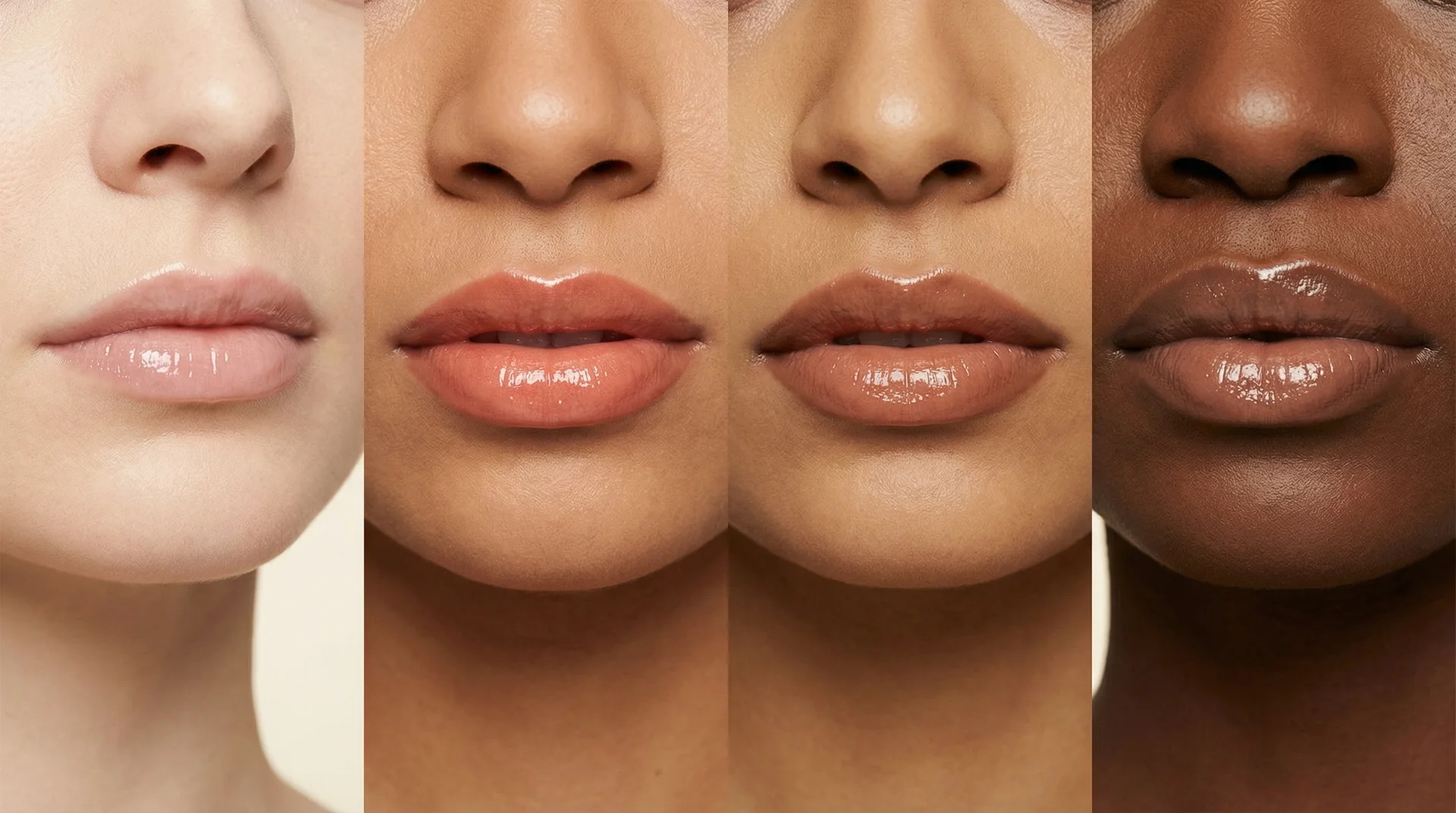
You probably already own three lip glosses that promised hydration and delivered exactly none of it. I know this because I hear it constantly, from brides sitting in my chair two hours before their ceremony, from editorial models between shots on cold Pacific Northwest mornings, and from friends texting me photos of their lips, asking where things went wrong. The gloss looks beautiful for twenty minutes, then your lips feel tighter than before you applied anything.
Your lips are not the problem. The formula is.
Lips have no oil glands. Every other patch of skin on your body produces its own moisture, but your lips rely entirely on what you give them externally.
So when you swipe on a gloss loaded with alcohol, synthetic fragrance, or menthol, you put a dehydrant on the driest surface of your face and wonder why it feels worse an hour later.
Here’s the short answer to what you came here for:
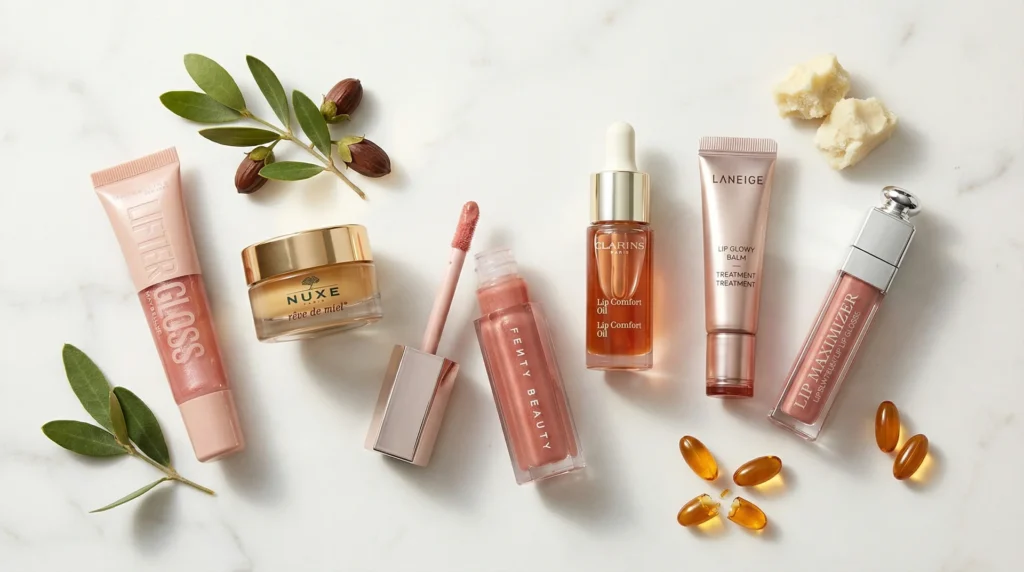
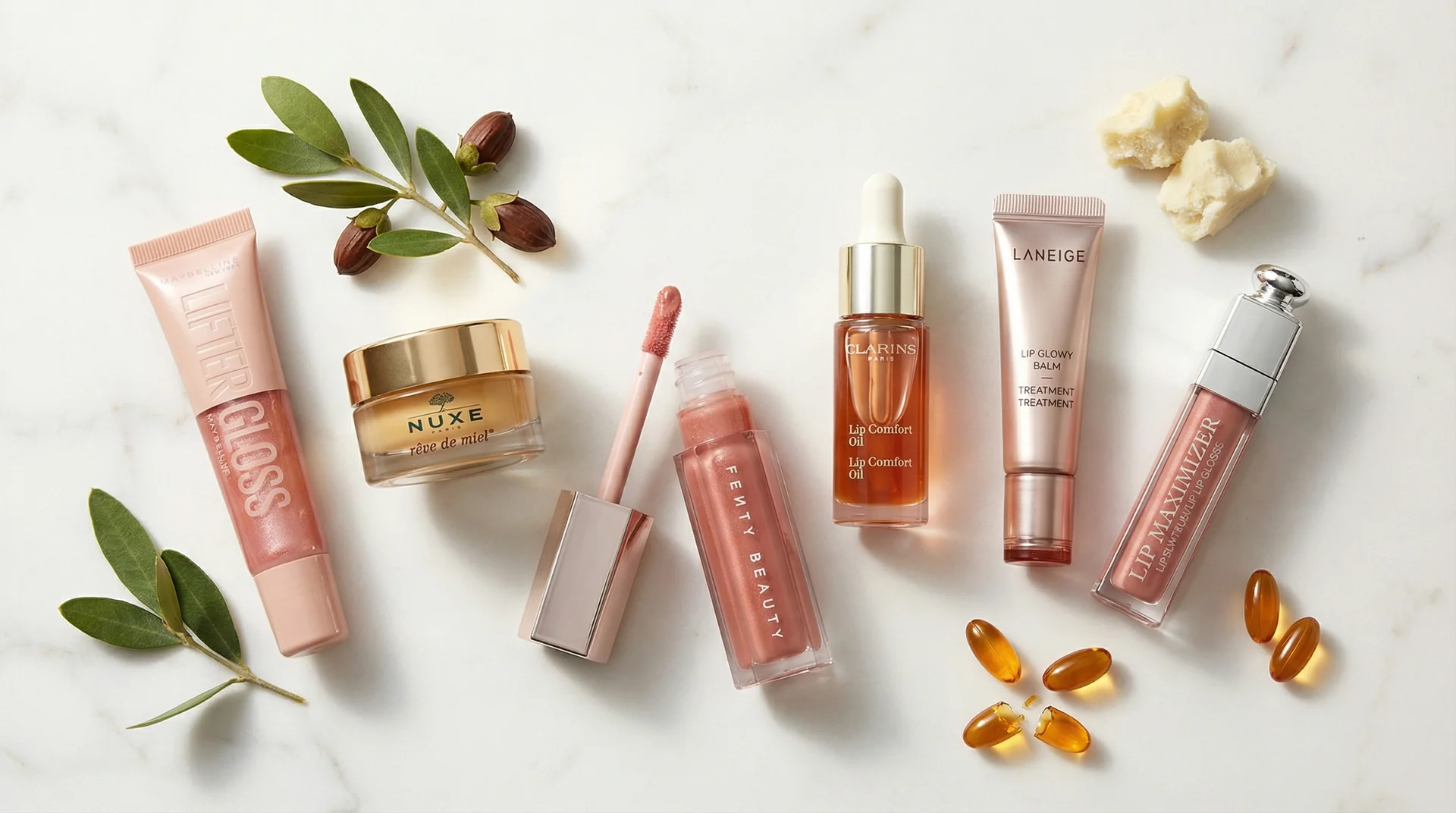
The best lip glosses for dry lips sit on a base of occlusives and emollients – ingredients like shea butter, castor oil, jojoba oil, and petrolatum that physically seal moisture against your lip surface.
Products like Tower 28 ShineOn Lip Jelly, Maybelline Lifter Gloss with Hyaluronic Acid, NYX Butter Gloss, and Fenty Beauty Gloss Bomb consistently work well for dry-lipped wearers because their core formulas prioritise skin function over temporary shine.
The longer answer, the one that will save you money and a lot of frustrating trial runs, is below.
Why Your Lip Gloss Might Be Making Your Lips Drier
I want to start here because this is what nobody tells you clearly, and it’s the reason so many people give up on gloss altogether. They assume they just have “really dry lips” when what they have is a product working against them.
Your Lips Have No Oil Glands, and That Changes Everything
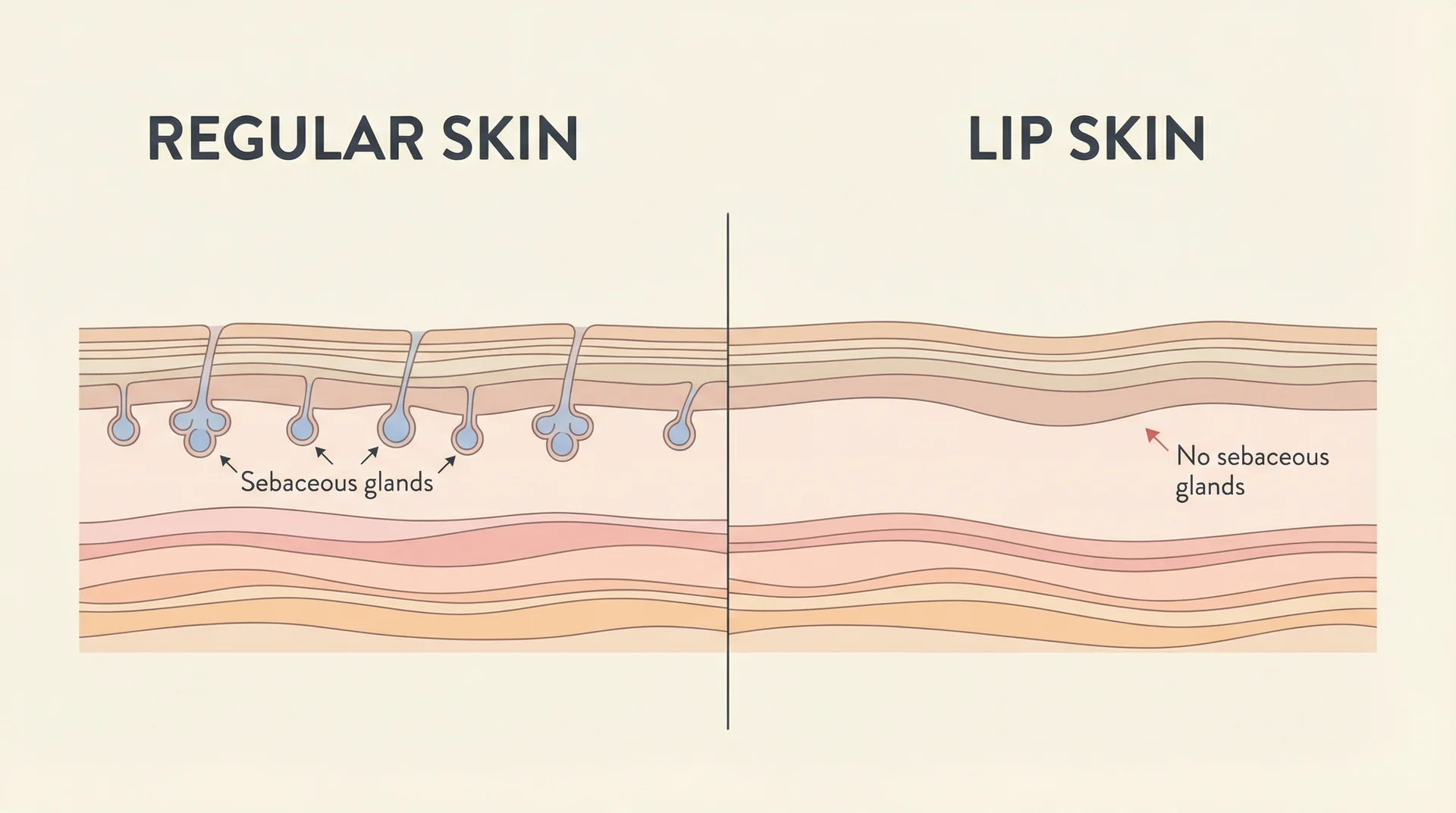
The skin on your lips is thinner than anywhere else on your face. It has fewer layers, no hair follicles, and no sebaceous glands, and those are the glands that produce sebum, your skin’s natural moisturising oil, and your lips have zero of them.
Every drop of moisture your lips hold comes from what you drink and what you apply externally.
When the air is dry, when you sit in a heated room, or when you’ve been in a studio for eight hours, your lips lose moisture faster than your skin does elsewhere. The tightness and flaking you feel are real signals of a genuine hydration deficit, and the wrong product at that moment accelerates the problem instead of solving it.
What the Applicator Tells You About the Formula
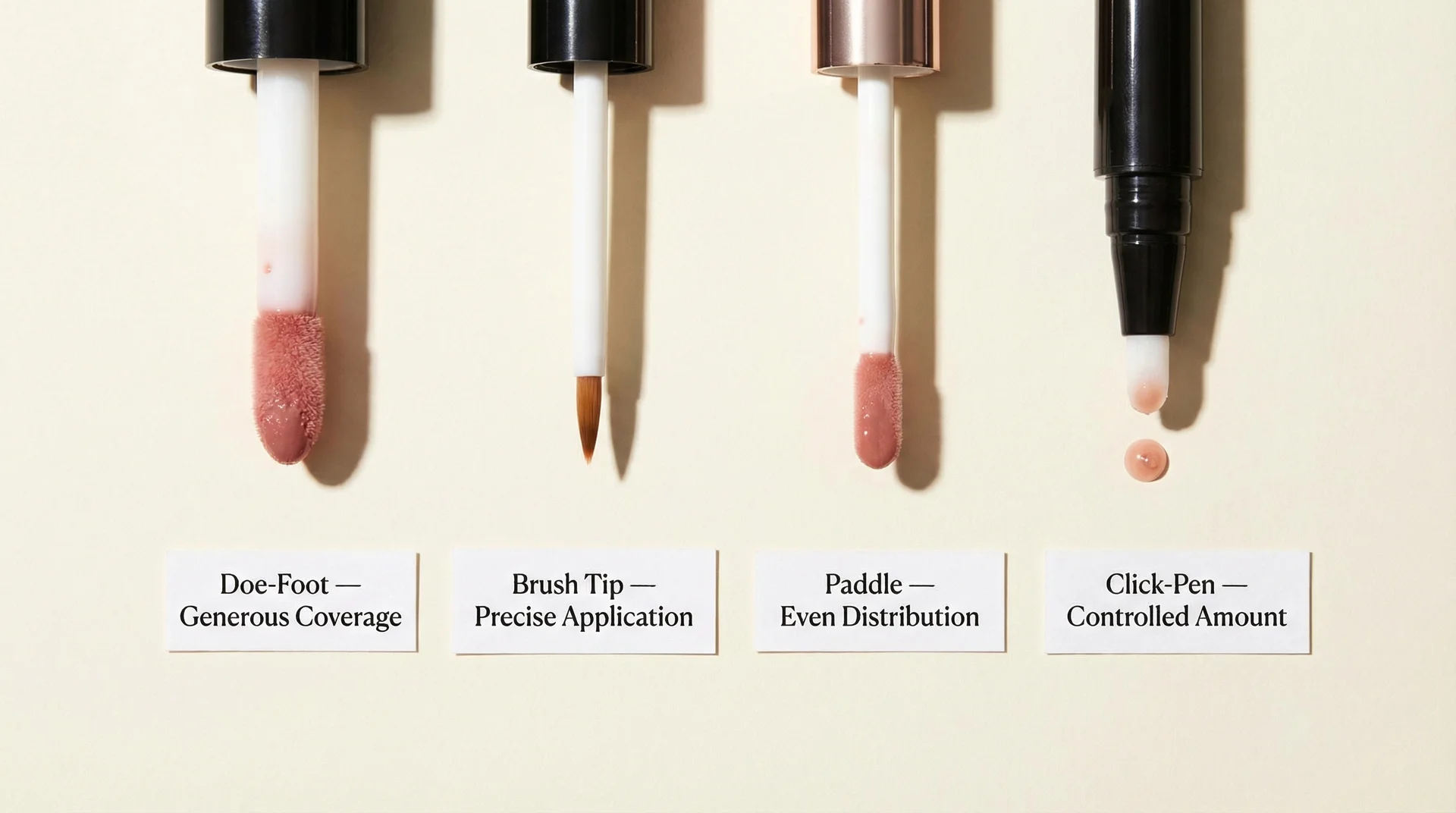
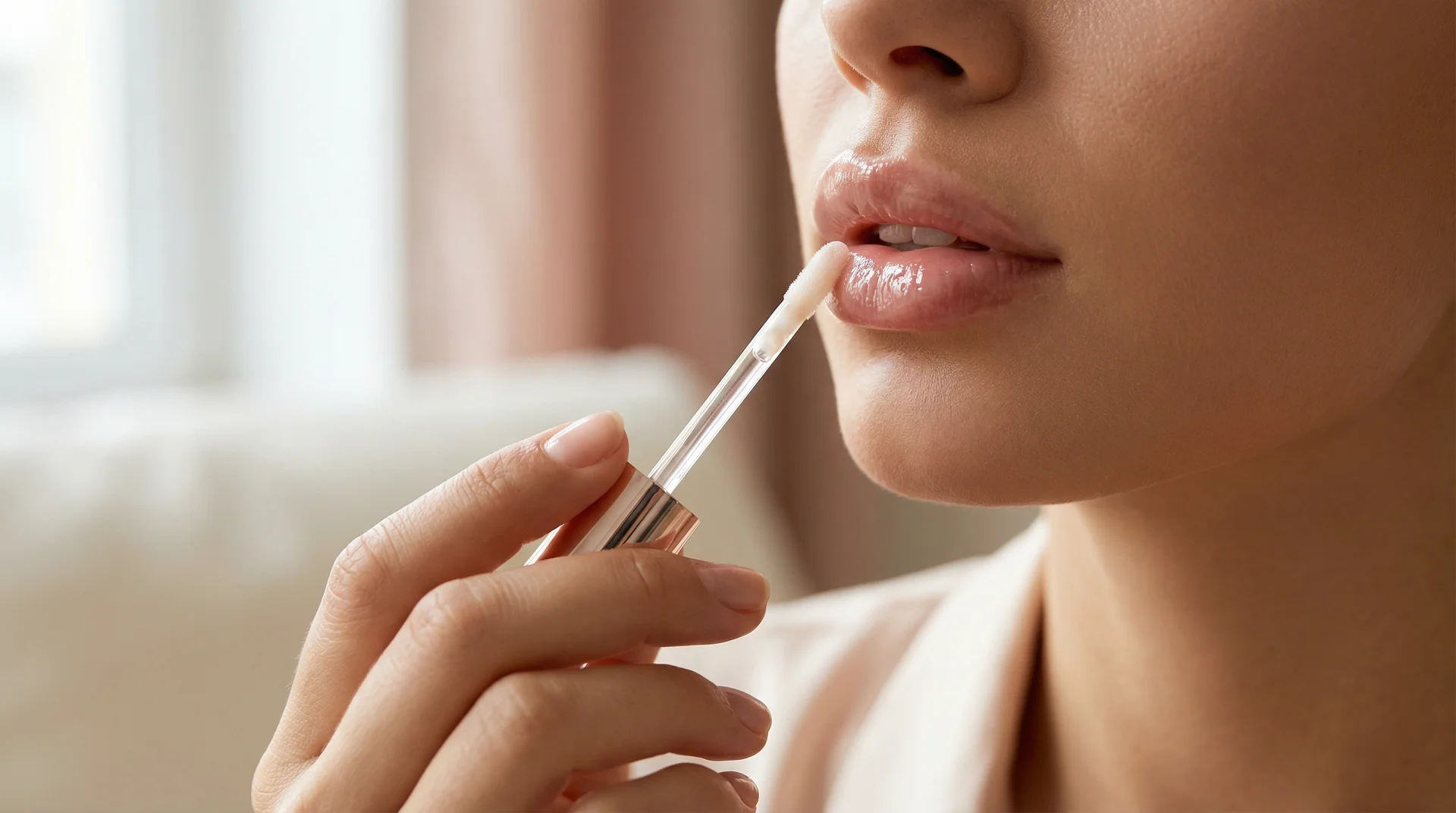
Applicators are not just a packaging detail; they actually affect how much product lands on your lips and how evenly it distributes.
Doe-foot applicators are the most common and the most forgiving. A large, chubby doe foot (like the one on Maybelline Lifter Gloss) deposits generous product in one swipe and suits everyday use.
Brush-tip applicators offer more precision and suit thinner formulas and more intricate applications. They work well for layering gloss over a sharp lip liner.
Paddle or flat applicators coat the lip surface evenly without concentrating product in one spot. Refy’s gloss uses this format, and it distributes beautifully on dry lips.
Click-pen applicators dispense a controlled amount, which prevents overloading. The ELF Pout Clout uses this format, and it keeps the formula from sliding onto the skin around the lip.
The Best Lip Glosses for Dry Lips
I have already tried some of the best lip glosses, but they were not specifically for dry lips. But these are products I’ve used on clients or tested personally over an extended time.
1. Best Overall: Tower 28 ShineOn Lip Jelly
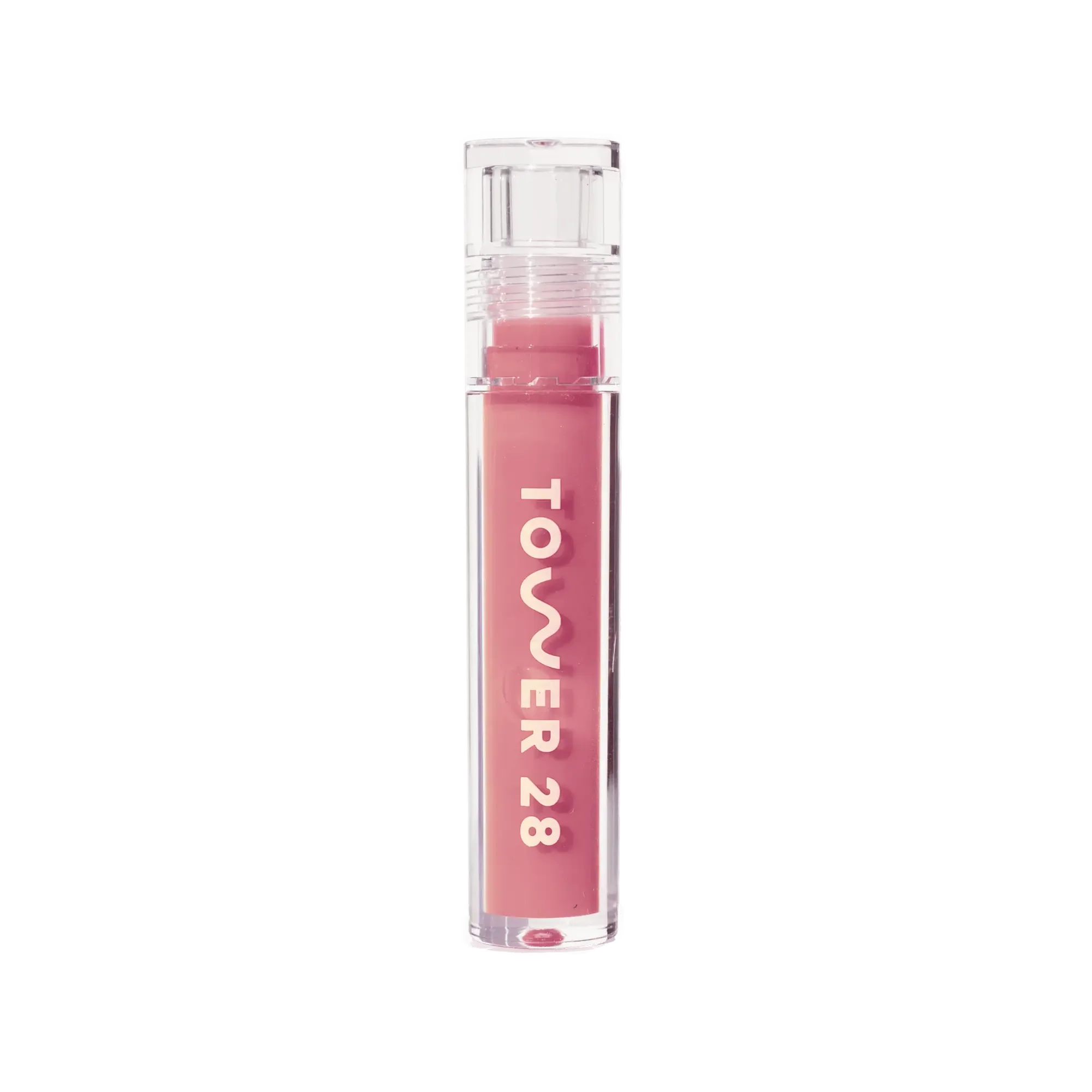
Tower 28 ShineOn is the product I recommend most when someone asks me this question in person. It feels like a gloss on application and behaves like a balm once on the lip.
The formula is non-sticky, fragrance-free, and built around a jelly base that seals moisture against the lip surface rather than sitting on top of it. I’ve used it on clients with extremely reactive lips without issue.
Best for: Anyone who wants one product covering both hydration and shine without a complex layering routine.
Price: Around $20, available at Sephora and Target.
Shade tip: The clear shade works on every skin tone; warm nudes suit medium to deep complexions best.
2. Best Drugstore Pick: Maybelline Lifter Gloss with Hyaluronic Acid
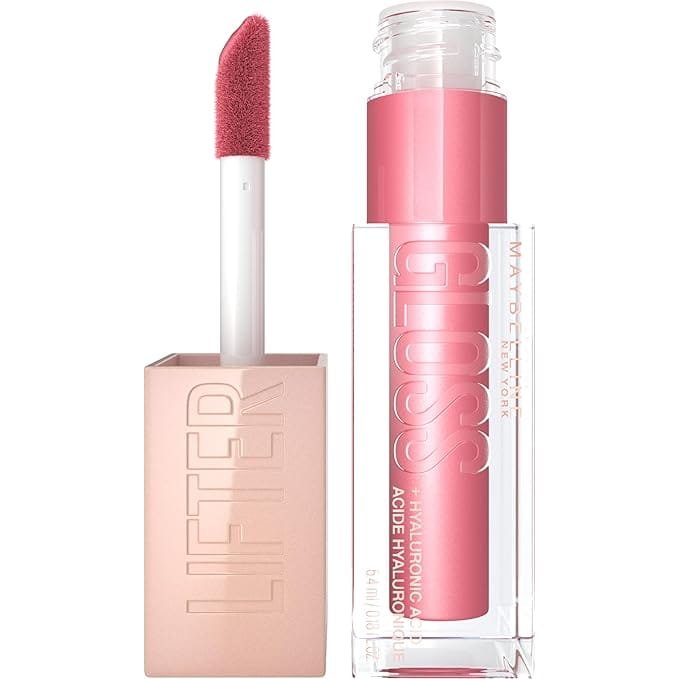
This gloss has earned its bestseller status. The formula pairs hyaluronic acid with a pomegranate flower complex and emollient oils, so the HA has something to work with. The large doe-foot applicator deposits an even coat in one swipe, and the shade range covers everything from clear to deep nudes.
Over 36,000 Amazon reviewers cite its non-sticky texture and flattering shade range as the main reasons they repurchase.
The one honest caveat: on severely chapped lips, apply a balm first. This gloss performs best on lips in reasonably good condition.
Best for: Everyday wear, layering over lipstick, and budget-conscious buyers.
Price: Under $10, widely available at drugstores, Target, and Amazon.
Shade tip: Moon is a universally flattering sheer nude; Ice works beautifully on fair to medium skin tones.
3. Best Drugstore Classic: NYX Butter Gloss
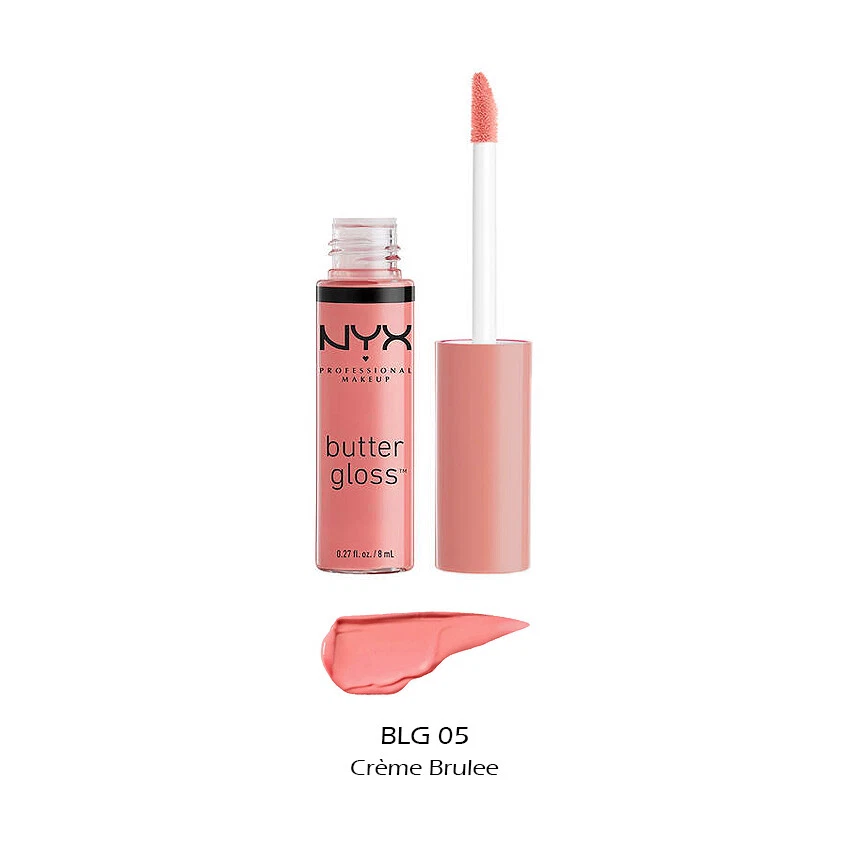
NYX Butter Gloss has held its place in every honest drugstore roundup for years, and it deserves to. The buttery-smooth texture is genuinely non-sticky, the shade range runs to over 30 options, and the formula feels conditioning on the lips from the first swipe.
It sits somewhere between a gloss and a balm in texture, which suits dry lips well. At around $6, it gives you very little reason to look elsewhere at the drugstore.
Best for: Anyone who wants excellent colour variety, a cushiony texture, and a budget-friendly formula they can restock without thinking twice.
Price: Around $6, available at Ulta, Target, and Amazon.
Shade tip: Crème Brulee is a warm nude that flatters medium and olive skin tones; Angel Food works for fair to light skin.
4. Best Lip Oil-Gloss Hybrid: NYX Fat Oil Lip Drip
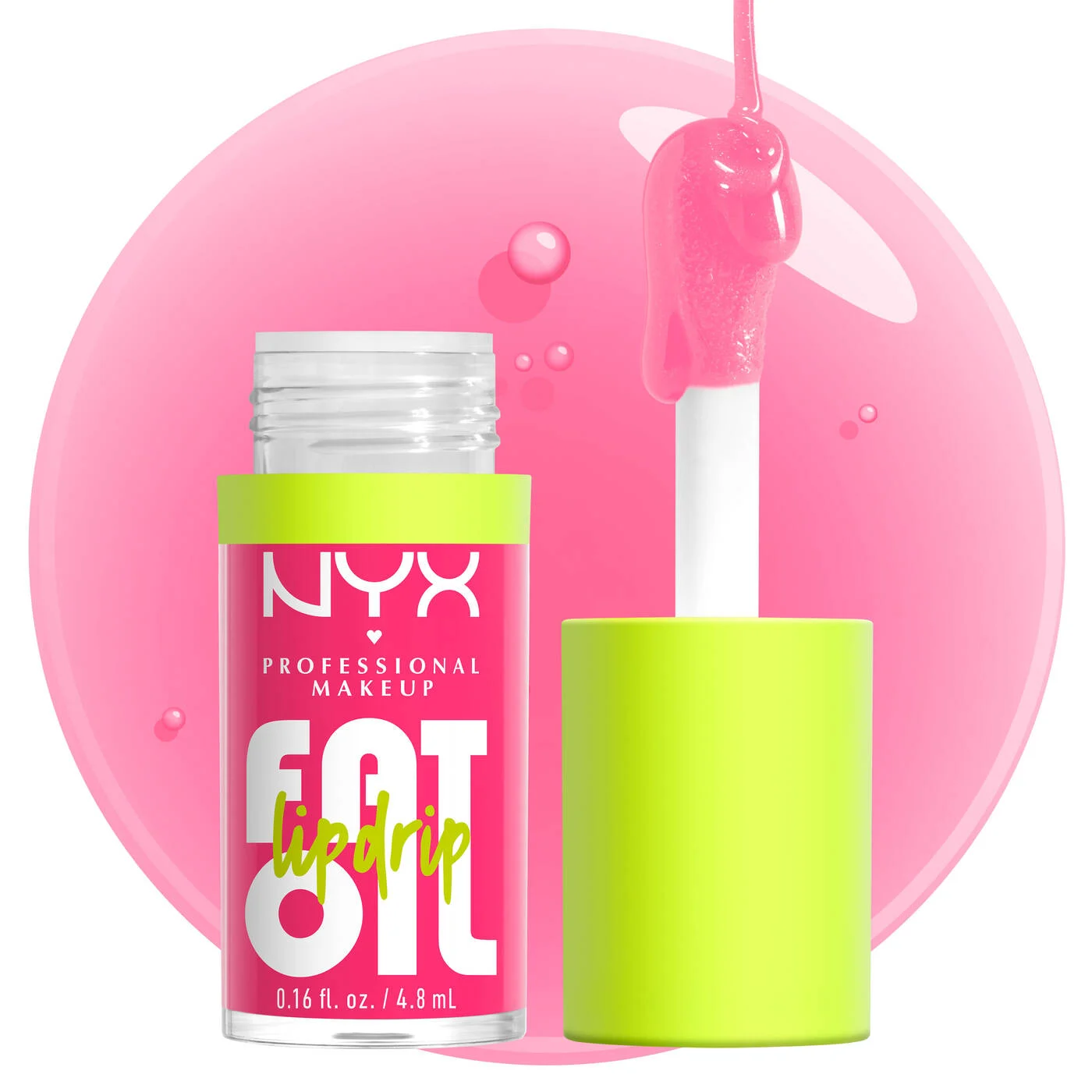
NYX describes this as a tinted lip gloss, but it performs closer to a nourishing lip oil with more shine payoff than most oils deliver. The formula carries a subtle tint and uses seed oils as its base, making it genuinely emollient rather than just reflective.
Wearers with dry lips consistently report that it doesn’t require frequent reapplication and doesn’t leave lips feeling tacky. I use this in my personal routine on mornings when I want something effortless that keeps my lips comfortable through a full day of client work.
Best for: Skincare-first lip wear, minimal makeup days, readers who find heavy gloss texture uncomfortable.
Price: Around $10, available at drugstores, Ulta, and Target.
Shade tip: Scrollin’ is a warm peachy nude that reads well on most skin tones.
5. Best for Real Colour with Hydration: Fenty Beauty Gloss Bomb
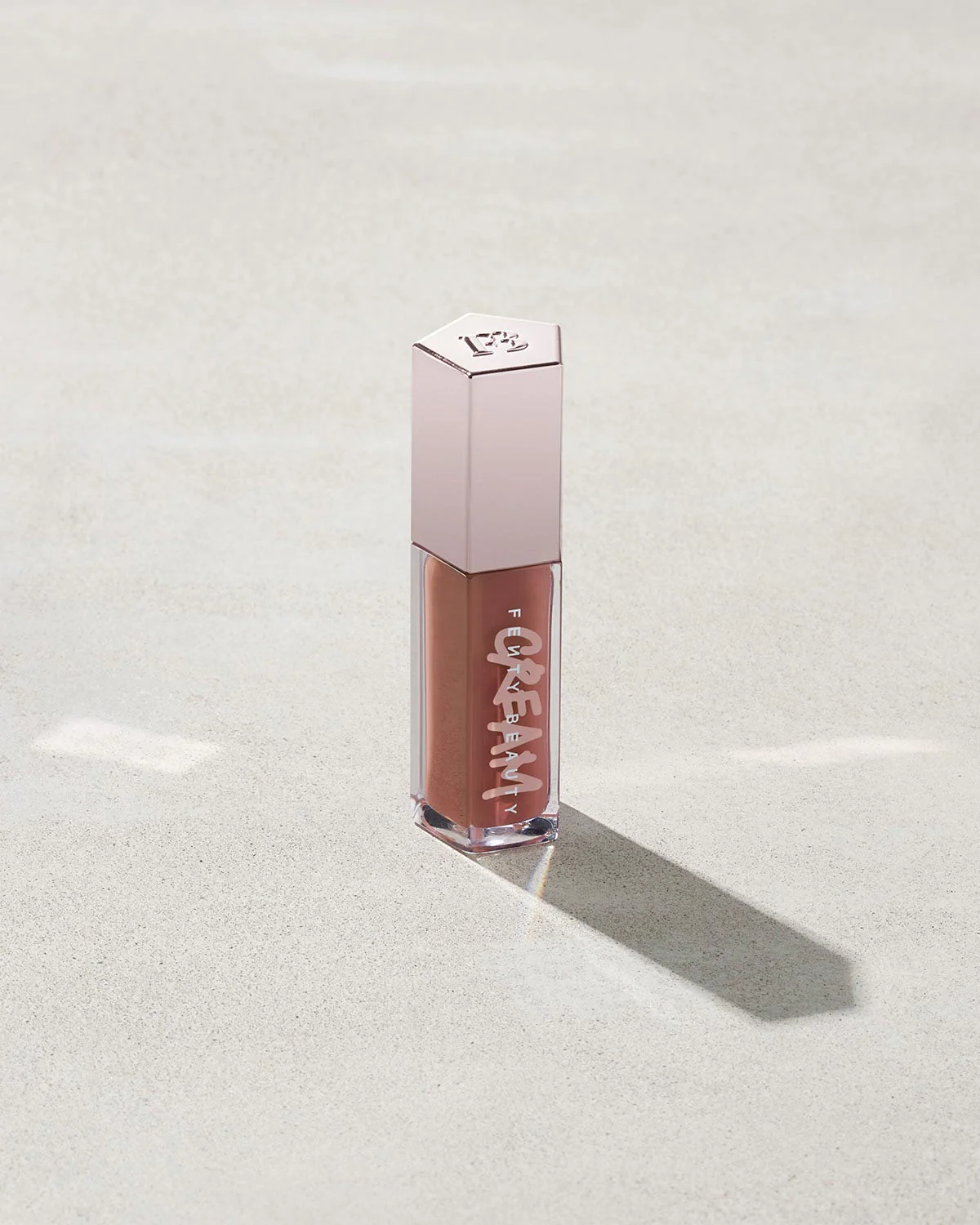
The Fenty Gloss Bomb is a genuine crossover product. It delivers high shine, real pigment, and shea butter-based moisture in a formula that fits every skin tone. The oversized wand coats lips fully in one swipe.
The formula is not fragrance-free (it has a peach-vanilla scent), so if you have very reactive lips, patch-test first. For everyone else, it earns its cult status consistently.
Best for: Readers who want visible colour alongside shine, and those who want a universal shade that photographs well.
Price: Around $22, available at Sephora, Ulta, and Harvey Nichols.
Shade tip: Fenty Glow is the universally flattering nude-pink that works across every skin tone.
6. Best Tinted Option: Rare Beauty Soft Pinch Tinted Lip Oil
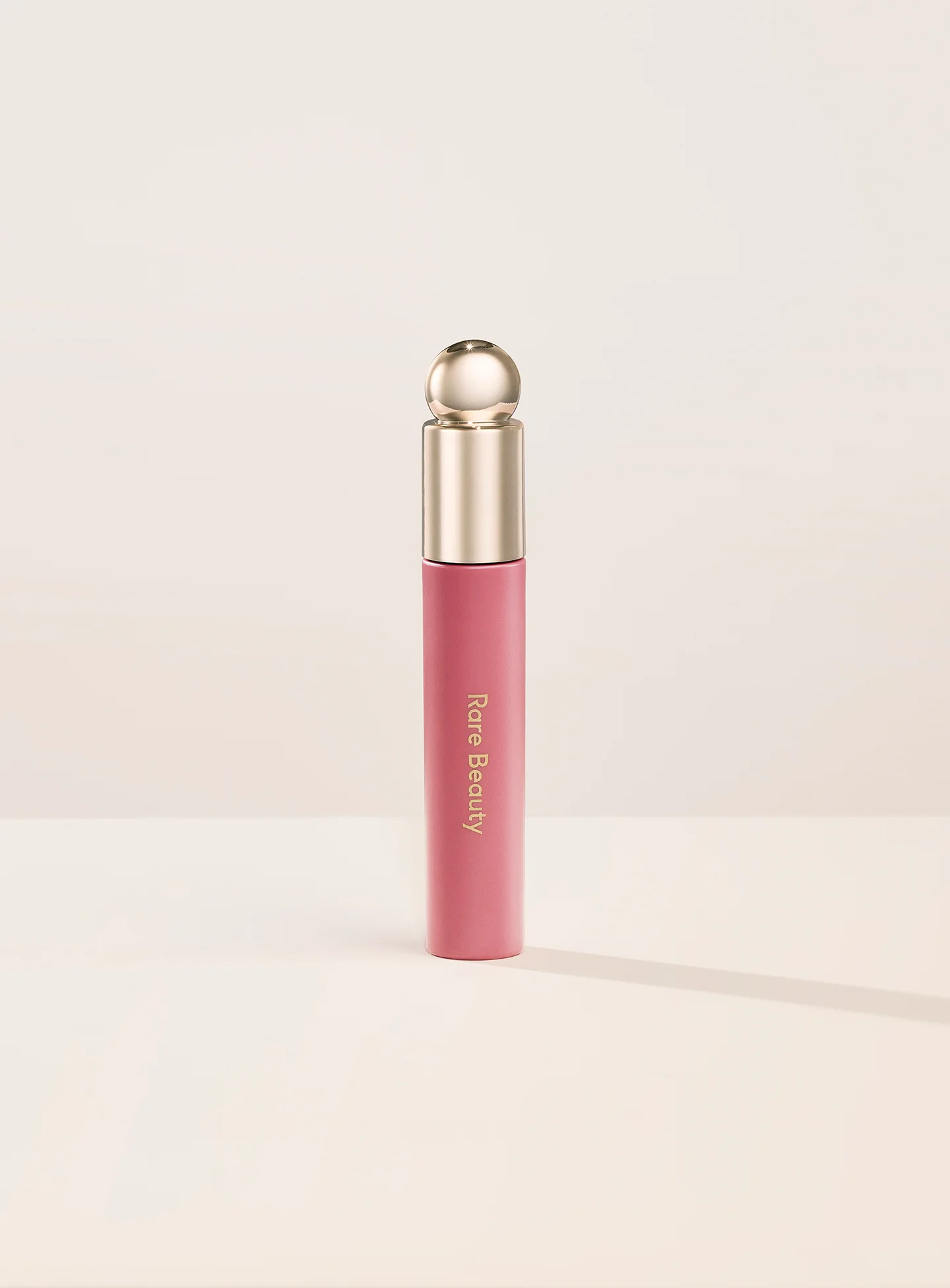
This lip oil is dermatologist-tested, non-sticky, and built to deliver colour without the drying ingredients that usually accompany pigment. The oil base nourishes while the tint gives a soft, natural-looking flush.
It’s one of the few tinted products I reach for on clients with sensitive or reactive lips without extensive patch-testing first.
Best for: Readers who want real colour alongside hydration, sensitive lip types, and anyone who has reacted to fragranced glosses.
Price: Around $24, available at Sephora.
Shade tip: Nearly Apricot suits fair to medium skin; Nearly Berry works beautifully on medium to deep skin tones.
7. Best Investment Pick: Charlotte Tilbury Collagen Lip Bath
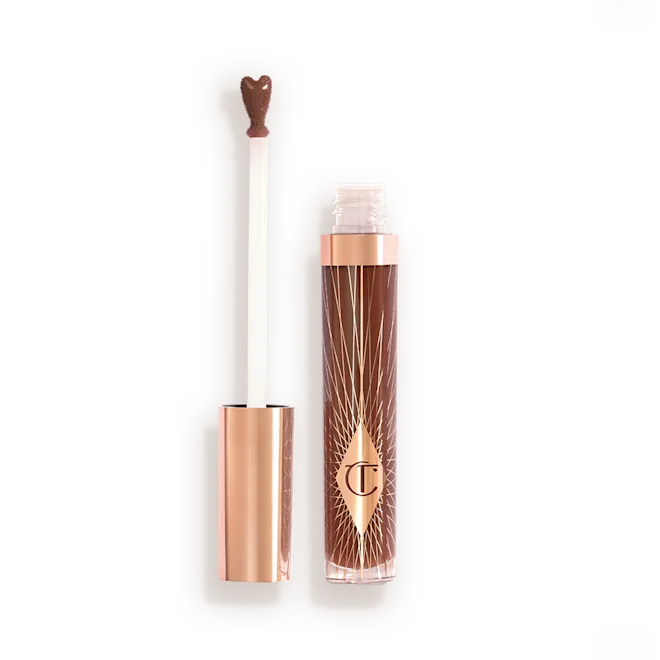
If you want to spend more and get noticeably more, this is the one. Marine collagen alongside a high-shine base creates a result that is intensely glossy and non-sticky simultaneously, which is genuinely difficult to achieve.
It wears comfortably for several hours on prepped lips and comes in shades that photograph beautifully.
Best for: Special occasions, brides, and anyone who wants a long-term investment in their lip product rotation.
Price: Around $40, available at Sephora and Charlotte Tilbury.
Shade tip: Rose Glory suits most complexions; Pillow Talk Pink is particularly flattering on fair and light skin tones.
8. Best for Severely Dry or Chapped Lips: Aquaphor Lip Repair Under Any Clear Gloss
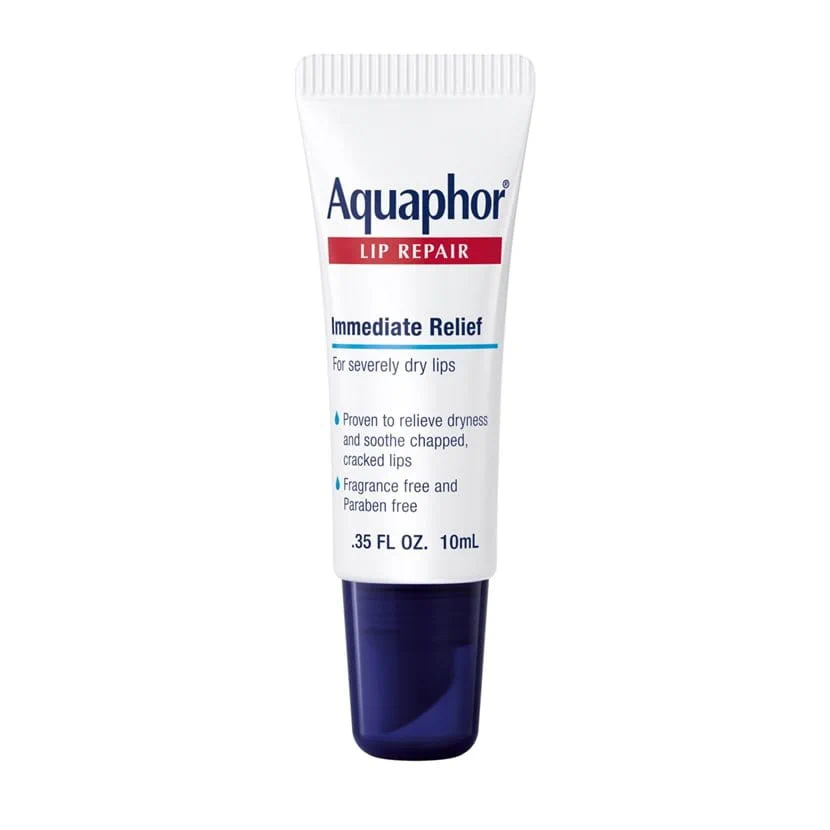
For anyone whose lips are genuinely cracked or peeling, no single gloss solves the problem on its own. Aquaphor Lip Repair is petrolatum-based, making it the most effective occlusive you can apply to compromised lip skin.
Apply it generously and let it sit. Once your lips recover over a few days of consistent use, layer any of the glosses above for a polished finish.
Using a clear gloss directly over a fresh coat of Aquaphor gives you shine without removing the healing layer underneath.
Best for: Anyone in a flare of dryness, cold-weather months, and overnight recovery routines.
Price: Under $5, available everywhere.
Lip Gloss Mistakes That Make Dry Lips Worse
I see these happen regularly, and every one of them is fixable.
Applying gloss directly to unprepped, flaky lips. The formula catches on dry patches and emphasises them. Sixty seconds on a balm base changes this entirely.
Choosing plumping glosses when your lips are already irritated. Many plumping formulas use capsaicin or cinnamon derivatives. On compromised lip skin, these cause genuine irritation, not cosmetic plumping.
Over-exfoliating before application. A sugar scrub before gloss removes the thin protective layer your lips rely on. Exfoliate the night before at most.
Using gloss as your only lip product. Even the most hydrating gloss wears off. Without a balm underneath and an overnight treatment before bed, gloss does maintenance, not repair.
Ignoring environmental triggers. Indoor heating, air conditioning, flying, and cold outdoor air all dehydrate your lips. In winter, or during travel, apply your base balm twice as often and switch to a thicker occlusive before bed.
Frequently Asked Questions
Can you wear lip gloss if you have chapped lips?
You can, but the prep step matters more than the product itself. Apply an occlusive balm first, let it absorb, and then apply your gloss. Skipping the base and going directly to gloss on actively chapped lips highlights the dryness.
Does lip gloss dry out your lips?
Some formulas do, because they contain alcohol, fragrance, menthol, or camphor ingredients that feel pleasant initially but irritate the lip skin barrier over time. Glosses built on oil and occlusive bases generally don’t dry lips out. Checking the ingredient list before you buy is worth the extra thirty seconds.
What is the difference between lip oil and lip gloss for dry lips?
Lip oils are formulated primarily for nourishment, using plant-based oils that condition and soften lip skin, with a subtle sheen as a secondary effect. Lip glosses are formulated primarily for shine, with hydration as a secondary feature in better formulas. Balm-gloss hybrids sit between the two and suit most dry-lipped readers best for everyday wear.
Is hyaluronic acid in lip gloss actually effective for dry lips?
It’s effective when paired with an occlusive ingredient in the same formula or applied over an occlusive base. On its own in a dry environment, hyaluronic acid can pull water from the deeper layers of your lip skin rather than from the air, which can tighten rather than soften lips. Look for glosses that combine HA with oils or butters.
How often should you reapply lip gloss on dry lips?
Realistically, every two to three hours. If a gloss wears off in thirty minutes or leaves your lips drier than before, the formula has the wrong ingredients for your lip type. Reapplication is expected with any gloss, regardless of price.
What is the best drugstore lip gloss for dry lips?
Maybelline Lifter Gloss with Hyaluronic Acid for hydration-forward shine, and NYX Butter Gloss for a buttery, non-sticky texture with excellent shade variety. Both stay under $10 and outperform many prestige formulas in terms of comfort.
What makes a lip gloss non-sticky on dry lips?
The base formula. Glosses built on castor oil, jojoba oil, or a lightweight emollient base stay comfortable and non-tacky throughout wear. Glosses relying heavily on synthetic polymers for shine tend to feel stickier and can dry lips out with repeated wear.
Final Thought
If you’ve been cycling through glosses and your lips never actually feel better, the problem has almost certainly been in the formula or the prep routine, not your lips themselves.
An occlusive base plus a well-formulated hydrating gloss changes the experience completely. Pick one gloss from the list above that fits your budget and what you need the product to do, build the overnight routine, and give it a week.
Your lips are not a lost cause. They’ve been waiting for the right formula.