Every few weeks, someone sits down in my treatment room and asks the same thing: “Robin, I tan indoors regularly, so why does my color still fade so fast?”
And almost every time, the answer comes down to one overlooked detail.
They either skip the lotion entirely or grab whatever is cheapest at the front desk without understanding what is actually in it.
I have spent over a decade working with skin professionally, watching how it behaves under UV exposure and different product formulations.
Tanning bed lotions became part of my professional curiosity because so many clients were undoing their skincare progress during tanning sessions simply by choosing the wrong product.
So here is your short answer first:
The best tanning bed lotion matches your skin type, your tanning experience level, and your color goal simultaneously.
A moisturizing accelerator works beautifully for beginners with dry skin. A DHA bronzer suits someone chasing deeper, longer-lasting color.
A tingle lotion belongs strictly with experienced tanners whose skin handles increased circulation stimulation well.
Everything after this is the why behind that answer, with the ingredient-level detail and honest opinion I wish more people shared.
| Disclaimer: This article is for educational purposes only and does not constitute medical or dermatological advice. Indoor tanning involves UV exposure with real cumulative health risks. Consult a dermatologist before starting any tanning. |
Why Tanning Bed Lotion Makes a Bigger Difference Than You Expect
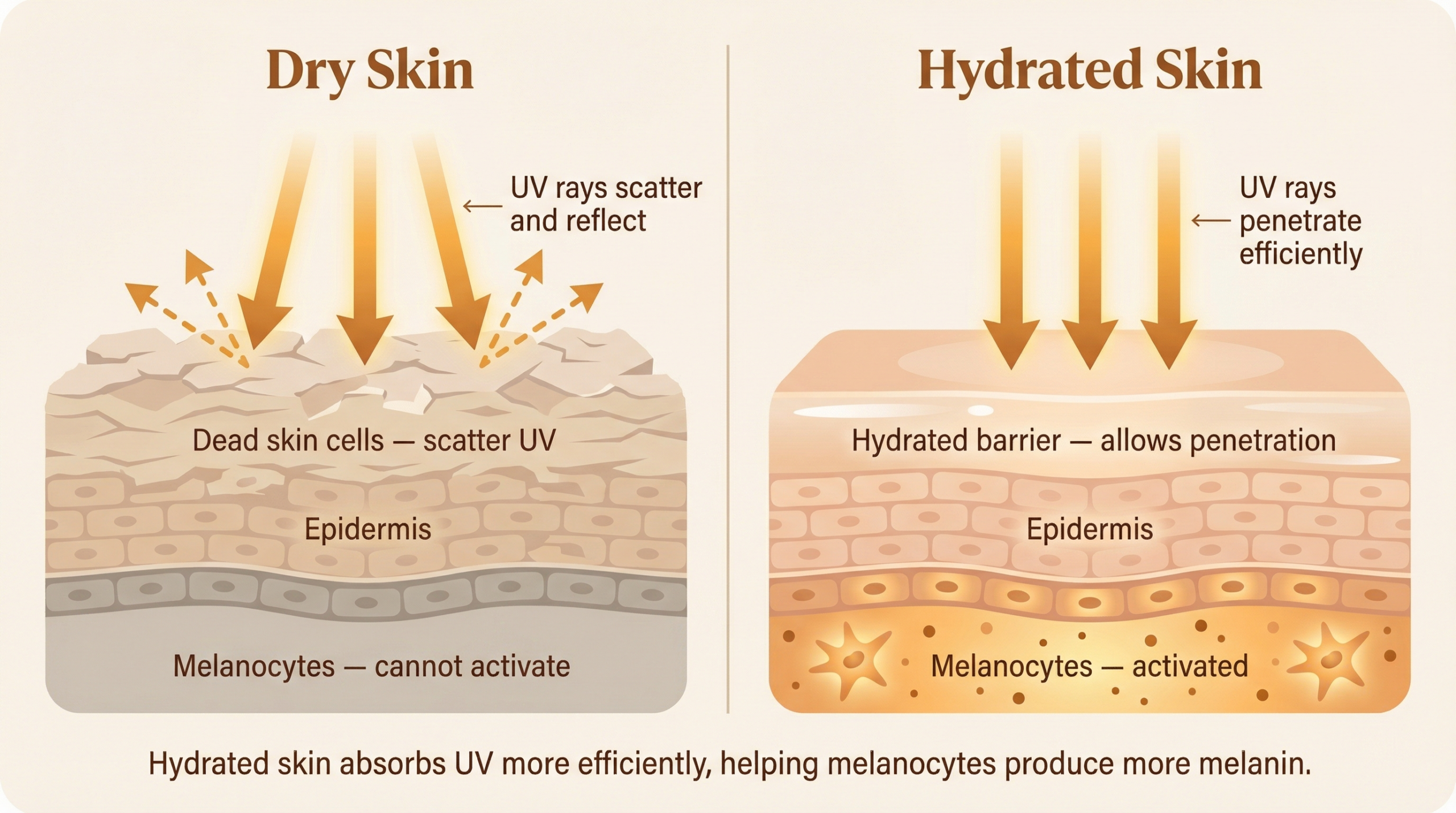
Dry skin reflects UV light rather than absorbing it efficiently. When you step into a tanning bed without lotion, the top layer of dead skin cells scatters UV rays before they reach the melanocytes sitting deeper in your epidermis.
Melanocytes produce melanin, the pigment responsible for your tan, and they need a hydrated, healthy environment to do that effectively.
A well-formulated tanning bed lotion creates that environment. Here is what it actually does during a session:
- Hydrates the skin barrier so UV light penetrates more evenly
- Stimulates melanin synthesis through active ingredients like L-Tyrosine
- Accelerates the tanning process so you spend less time under UV exposure for the same result
- Protects moisture levels during the heat of the session
- Supports faster color development with bronzing compounds when included
The cumulative effect is what indoor tanners are actually chasing.
Your color builds more evenly, lasts longer between sessions, and the skin you are tanning stays in significantly better condition over time.
The Different Types of Tanning Bed Lotions
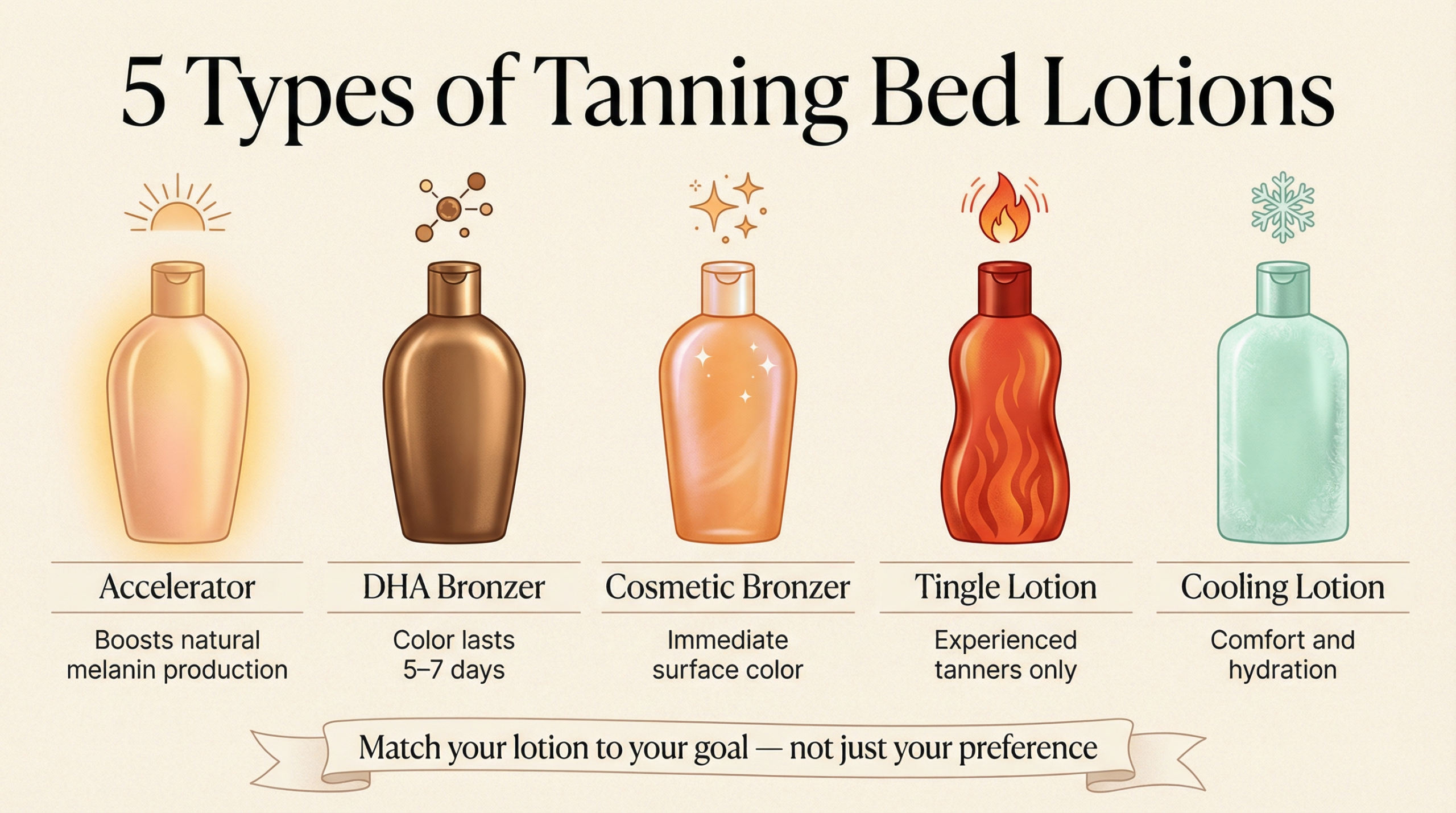
This is where most generic guides fall short because the category confusion here is enormous.
People see the word “bronzer” and assume it is automatically the best option. Sometimes it is exactly right. Sometimes it is entirely wrong for where they are in their tanning journey.
1. Accelerators and Intensifiers
Accelerators are the foundational category and the one I recommend to almost every first-time or early-stage indoor tanner.
These lotions work through deep hydration combined with melanin-boosting ingredients that help your skin produce its darkest natural color.
The key active ingredient to look for is L-Tyrosine, an amino acid that serves as a precursor to melanin production.
When your skin absorbs it, your melanocytes get more of the raw material they need to produce pigment.
Some formulas also include copper peptides and riboflavin (Vitamin B2), both of which support the melanin pathway.
The tan you build with an accelerator is entirely your skin’s own melanin, which means it looks natural and fades gradually the way a real tan should.
I also lean toward recommending accelerators with added antioxidants like Vitamin C or green tea extract, because tanning sessions generate oxidative stress on the skin, and antioxidant support in the formula can meaningfully buffer some of that cellular stress.
2. Bronzing Lotions
Bronzers split into three distinct subtypes, and understanding the difference between them saves you from frustration, or worse, a patchy orange result.
| Bronzer Type | How It Works | How Long Does It Last | Best For |
|---|---|---|---|
| Natural Bronzer | Plant-based extracts (caramel, walnut) tint the skin temporarily | Washes off the same day | Subtle immediate color for beginners |
| Cosmetic Bronzer | Dye-based color sits on the skin surface | Fades within 1 to 2 days | Immediate visible color boost |
| DHA Bronzer | Reacts chemically with amino acids in the stratum corneum | Lasts 5 to 7 days | Deeper, longer-lasting color |
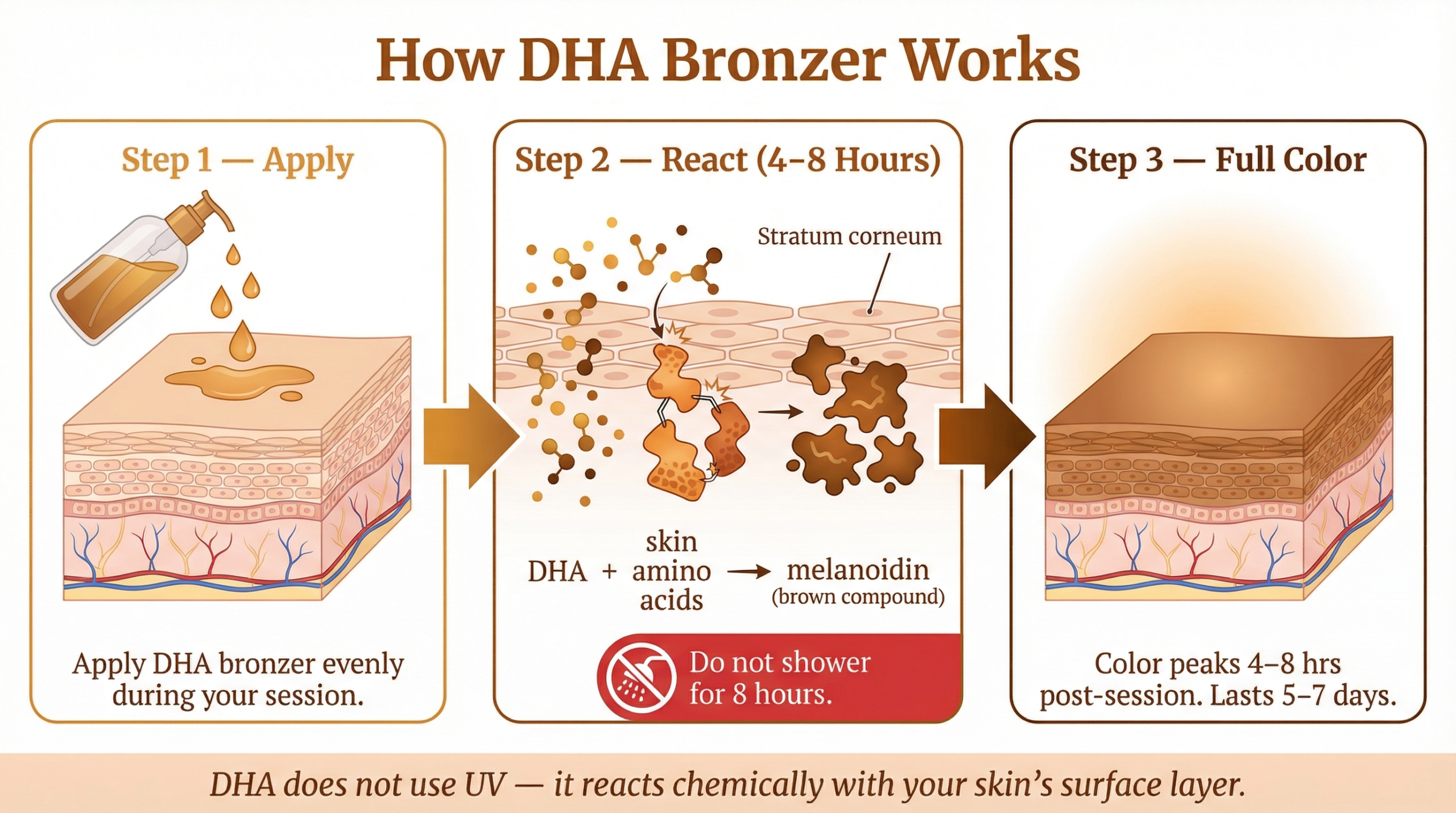
DHA (Dihydroxyacetone) undergoes a Maillard-like reaction with the amino acids in your skin’s outermost layer, creating a brown compound called melanoidin.
It mimics the visual effect of a tan and deepens beautifully when layered across sessions.
Two things I always tell people about DHA: exfoliate the night thoroughly before using it, and expect the full color 4 to 8 hours after your session, not immediately.
Dry elbows, knees, and ankles absorb DHA more aggressively and turn darker without that prep.
The tan you see walking out of the salon is not your final result.
3. Tingle Lotions
Tingle lotions are the category I approach with the most caution. The primary active ingredient, benzyl nicotinate, is a vasodilator that causes rapid blood vessel dilation near the skin’s surface.
This increases circulation, brings more oxygen to the skin, and enhances melanin stimulation.
The sensation ranges from a mild warmth to an intense prickling, depending on the formula’s strength.
My honest clinical opinion: tingle lotions produce genuinely impressive results for the right person.
However, for anyone with rosacea, eczema, sensitive skin, or a compromised barrier, they can cause significant inflammation that persists well beyond the session.
My rule of thumb: If you have tanned indoors consistently for at least 6 months, your skin responds well without excessive sensitivity, and you have no underlying inflammatory skin conditions, a mild tingle formula is worth exploring.
Start with the lowest rating available and evaluate your skin’s response before increasing intensity.
4. Cooling Lotions
Cooling lotions use menthol or peppermint extract to create a refreshing sensation during the session.
Their primary value is comfort and hydration rather than any unique tan enhancement, but a comfortable session where you stay relaxed still contributes to more even results.
Quick-Reference Guide: Match Your Lotion to Your Goal
| Your Goal | Best Lotion Type | Key Ingredient to Look For |
|---|---|---|
| Build a natural base tan | Accelerator / Intensifier | L-Tyrosine, Copper Peptides |
| Immediate color visible today | Cosmetic or Natural Bronzer | Caramel, Walnut Extract |
| Deeper, longer-lasting color | DHA Bronzer | Dihydroxyacetone (DHA) |
| Fastest possible intense color | Tingle Lotion | Benzyl Nicotinate |
| Sensitive skin, no irritation | Hypoallergenic Accelerator | Bisabolol, Allantoin, Aloe Vera |
| Uncomfortable with heat | Cooling Lotion | Menthol, Peppermint Extract |
Which Lotion Works Best for Your Tanning Bed Level
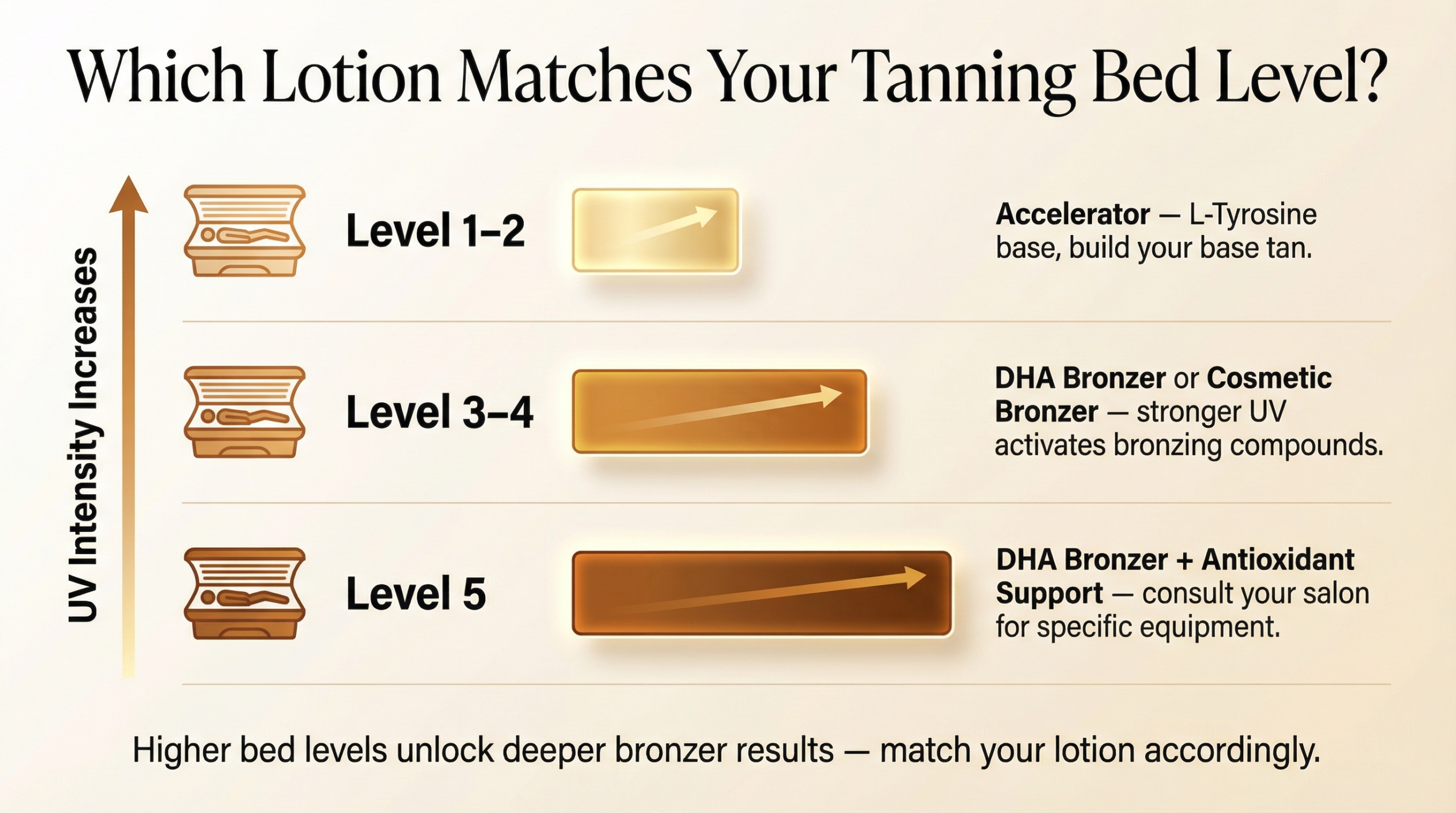
Most salons run beds from Level 1 through Level 5, and the lotion that serves you best actually shifts depending on the UV intensity of the equipment you are using.
This is something I find almost no one talks about clearly, and it catches beginners off guard regularly.
Level 1 and Level 2 beds use lower-pressure lamps with a higher UVB ratio.
These beds are ideal for building a base tan gradually, and a quality accelerator with L-Tyrosine is genuinely all you need at this stage.
Bronzers are not wrong here, but the UV output is not strong enough to fully activate their deepening potential.
Level 3 and Level 4 beds shift toward a higher UVA ratio and produce noticeably more intense tanning sessions.
A DHA bronzer or cosmetic bronzer at this level starts making a visible difference because the UV output can deepen and activate the bronzing compounds more effectively.
If you have a solid base tan already, this is the level where adding a bronzer starts producing results you can see the same day.
Level 5 beds, which include high-pressure specialty equipment and often red light or infrared technology, deliver the most powerful output available in most salons.
Consult your salon staff directly about which lotion formulas they recommend for their specific Level 5 equipment, because the lamp technology varies significantly between brands and salon setups.
As a general principle, a DHA bronzer with strong moisturizing support works well here, and antioxidant-rich formulas help protect skin under that level of UV intensity.
Best Tanning Bed Lotions by Skin Type and Goal
I want to be clear about how I approach product recommendations as an esthetician: I look at formula quality, ingredient transparency, and skin compatibility before anything else. Branding and price point matter less to me than what is actually in the bottle.
Here are the categories of products I consistently point clients toward, with the key reason each one earns that recommendation.
Best for Beginners: A Clean, Hydrating Accelerator
What to look for in the formula: L-Tyrosine in the top half of the ingredient list, aloe vera as a meaningful base ingredient, absence of heavy synthetic fragrance, and a lightweight lotion texture that absorbs quickly.
Beginner skin benefits most from a formula that maximizes hydration and supports natural melanin production without introducing the complexity of DHA or the intensity of a tingle formula.
The goal at this stage is to build a consistent base while keeping the skin barrier intact and comfortable.
What I tell first-session clients specifically: Apply the lotion, wait 3 minutes, and do not overdo your first session, regardless of what the lotion promises.
The lotion enhances what UV does, but UV exposure still accumulates, and building tolerance gradually protects your skin long term.
Best for Building Deep Color: A DHA Bronzer Formula
What to look for in the formula: DHA listed within the first third of the ingredient list for meaningful concentration, hyaluronic acid or glycerin for hydration during development, and minimal alcohol content that would dry the skin during the DHA reaction period.
DHA bronzers reward preparation and patience.
The clients who get the best results from them exfoliate the night before, moisturize thoroughly in the morning, apply the bronzer evenly during their session, and avoid showering for at least 8 hours afterward.
When that sequence is followed consistently, the color that develops is genuinely impressive and holds for 5 to 7 days between sessions.
Best for Experienced Tanners Chasing Intensity: A Mild Tingle Lotion
What to look for in the formula: Benzyl nicotinate with a clearly labeled tingle intensity level (most quality brands rate their tingle formulas on a scale), plus robust moisturizing ingredients to support the skin through the circulation stimulation.
I recommend starting at the lowest tingle intensity your salon carries and staying there for at least 3 to 4 sessions before considering moving up.
The skin adapts, and results from tingle lotions tend to build progressively rather than delivering their full impact in one session.
Best for Sensitive Skin: A Fragrance-Free Hypoallergenic Accelerator
What to look for in the formula: Fragrance-free designation on the label, bisabolol or allantoin as active soothing ingredients, no mineral oil in the first half of the ingredient list, and aloe vera as a base rather than an afterthought.
For my clients with rosacea, eczema, or chronic skin sensitivity, a fragrance-free accelerator is the only category I recommend without reservation.
It delivers the hydration and melanin support their skin needs without the inflammatory risk that tingle formulas or heavily fragranced bronzers carry.
Best for Dry or Mature Skin: A Peptide-Rich Moisturizing Bronzer
What to look for in the formula: Shea butter, hemp seed oil, or coconut oil as prominent moisturizing agents, a peptide complex for barrier support, and hyaluronic acid for deep hydration throughout the session.
Dry and mature skin benefits from the extra emollient support that richer formula bases provide.
DHA bronzers produce beautifully even results on well-hydrated dry skin specifically because the DHA reaction reads the amino acid distribution in the stratum corneum more evenly when the skin is thoroughly moisturized.
Ingredients Worth Looking For (And a Few to Approach Carefully)
Ingredients That Actually Deliver
L-Tyrosine forms the foundation of most quality accelerators. Look for it within the first half of the ingredient list.
Hyaluronic acid holds up to 1,000 times its weight in water and keeps the skin hydrated throughout the heat of a session.
Aloe vera soothes inflammation and supports the skin barrier. Cold-pressed aloe vera near the top of the ingredient list is meaningful. “Aloe vera powder” buried near the bottom is largely cosmetic.
Hemp seed oil contains an ideal ratio of omega-3 to omega-6 fatty acids that supports the lipid barrier, exactly what stressed, UV-exposed skin needs.
Vitamin E (tocopherol) neutralizes free radicals generated during UV exposure and aids moisture retention.
Ingredients to Approach with Awareness
Synthetic fragrances are the most common irritants I see causing issues in tanning lotions. The heat of a tanning bed opens pores and increases absorption, meaning fragrance compounds penetrate more deeply than they would under normal conditions.
Mineral oil sits on top of the skin rather than penetrating, which can clog pores during a heat-intensive session. I steer acne-prone clients away from heavy mineral oil formulas specifically.
High concentrations of alcohol strip moisture during the session, working directly against the hydration goal. Check that alcohol appears low on the ingredient list or is absent entirely.
How to Match the Right Lotion to Your Skin Type
| Skin Type | What to Look For | How to Apply | What to Avoid | Extra Tips |
|---|---|---|---|---|
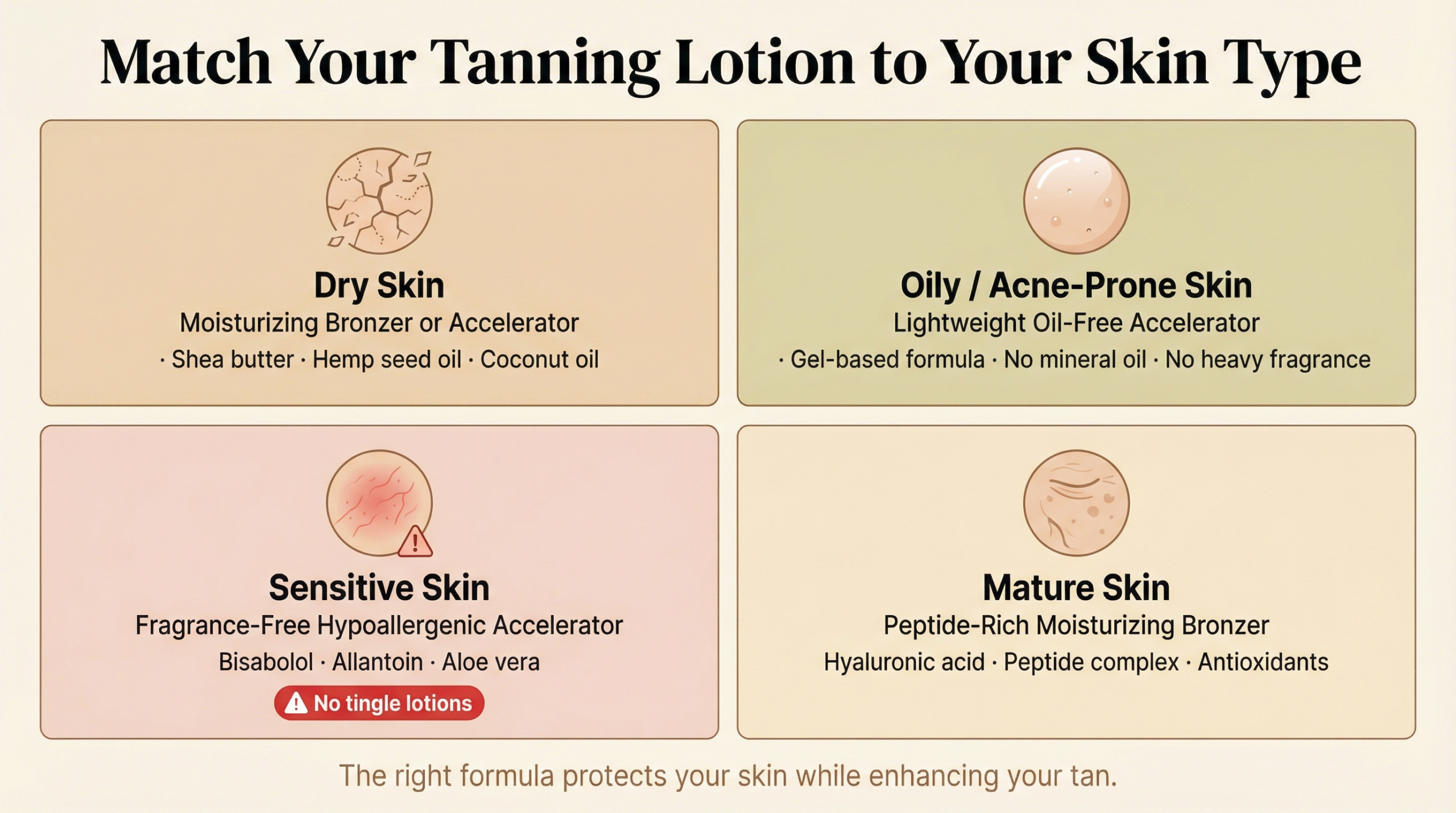
| Dry Skin | Shea butter, coconut oil, hemp seed oil | Apply normally; ensure skin is well-moisturized | Skipping pre-hydration | Moisturize the night before for deeper hydration and better results |
| Oily / Acne-Prone Skin | Oil-free, gel-based, lightweight formulas | Apply in thin, even layers | Heavy, fragranced, cocoa butter-rich bronzers | Prevent clogged pores and overheating during sessions |
| Sensitive / Reactive Skin | Fragrance-free, hypoallergenic; bisabolol, allantoin, centella asiatica | Apply gently after patch testing | Tingle lotions, harsh fragrances | Patch test 24 hours before use to avoid irritation |
| Mature Skin | Peptides, hyaluronic acid, antioxidants | Apply evenly; follow with moisturizer post-session | Ignoring post-session hydration | Moisturize within 30 minutes after the session to lock in hydration benefits |
The Application Process (Most People Get This Wrong)
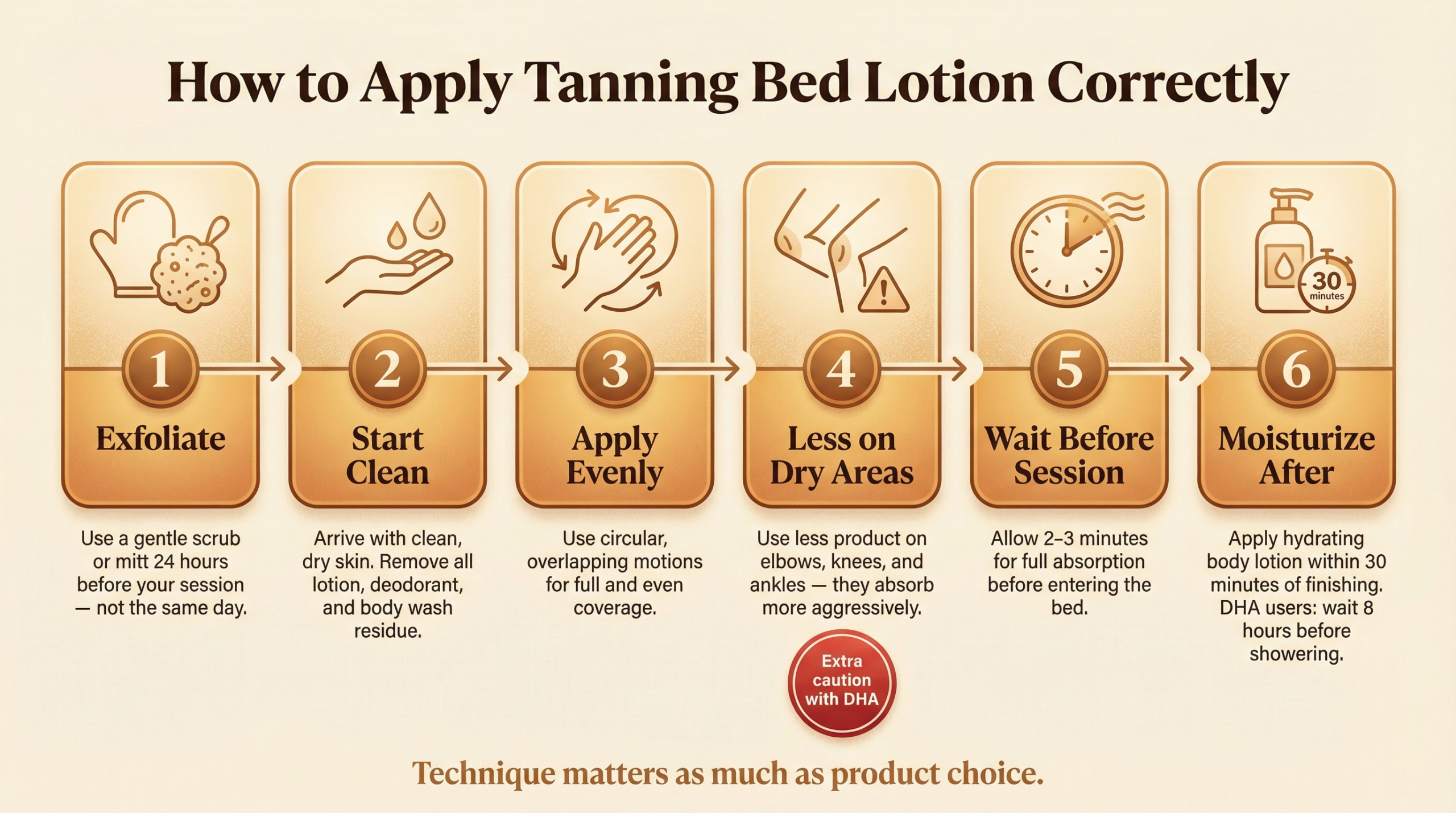
Applying tanning lotion correctly makes a real difference in how evenly your tan develops.
Many people invest in a good product and still get uneven results purely because of technique.
- Exfoliate 24 hours before your session. Using a gentle body scrub or exfoliating mitt. Exfoliating too close to your session leaves skin temporarily more sensitive.
- Arrive with clean, dry skin. Residue from previous lotions, deodorant, or body wash interferes with even product absorption.
- Apply in circular, overlapping motions. To ensure even coverage and proper absorption.
- Use less product on drier areas. Like elbows, knees, and ankles. These spots absorb product more aggressively, especially DHA formulas.
- Allow 2 to 3 minutes for absorption. Before getting into the tanning bed.
- Moisturize again. Within 30 minutes
How Long Does a Tanning Bed Lotion Tan Last?
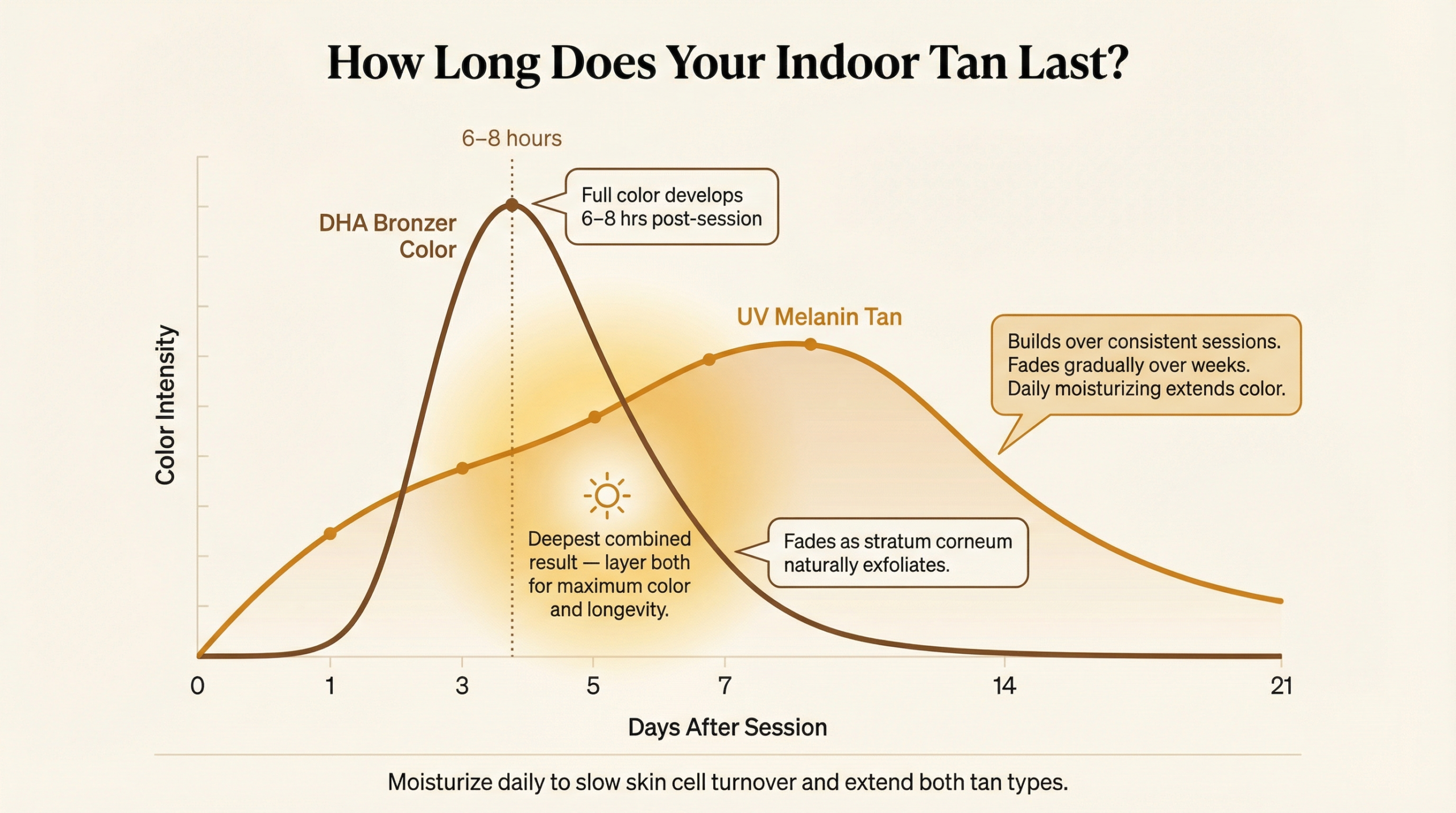
Your result comes from two components: your UV-induced melanin tan and any DHA bronzing from your lotion.
UV-induced melanin tan builds cumulatively across sessions and fades as your skin naturally sheds its outer layers. With consistent sessions and daily moisturization, a base tan holds for several weeks.
Moisturizing daily extends its life noticeably because it slows surface skin cell turnover.
DHA bronzer color peaks 6 to 8 hours after application and lasts 5 to 7 days, fading as the stratum corneum exfoliates naturally. Avoiding long, hot showers preserves the color significantly.
Combining both gives the deepest and longest-lasting indoor tan result. This is what experienced tanners are building toward, and why product consistency matters as much as session frequency.
Post-Tan Skin Care: What to Do After Your Session
This step gets skipped more than any other, and it is genuinely the difference between color that lasts and color that fades within days.
Within 30 minutes of your session, apply a generous layer of a hydrating body lotion. Look for formulas with ceramides, glycerin, or hyaluronic acid that rebuild moisture without heavy fragrance.
For DHA bronzer users specifically, avoid oil-stripping washes or long hot showers for at least 8 hours to let the color develop fully.
Over the following days, moisturizing daily is the single highest-return habit you can build around indoor tanning.
Hydrated skin turns over more slowly, which means your tan, both UV-induced and DHA-based, visibly lasts longer with no additional effort.
Common Mistakes That Cost People Results
Using outdoor tanning oil in a tanning bed. Outdoor tanning oils are formulated for natural sunlight. SPF-containing versions reduce UV absorption in a tanning bed directly. Always use lotion specifically formulated for indoor tanning.
Jumping straight to tingle lotions as a beginner. Unprepared skin reacts with inflammation rather than deepened melanin production. That redness is a clear distress signal, not a sign the lotion is working.
Skipping lotion to save money. Dry skin tans less efficiently, which means more sessions to reach your color goal and more UV exposure overall. A quality lotion is the more economical long-term choice by any honest calculation.
Applying lotion unevenly and blaming the product. Quick, patchy application creates uneven tanning. The product gets the blame when the technique is the issue.
Frequently Asked Questions
Can I use regular body lotion in a tanning bed?
You can, but it will not deliver the melanin-stimulating or bronzing benefits of a purpose-formulated indoor tanning lotion.
Regular lotions are not designed for heat exposure and can behave differently under tanning bed conditions.
A product specifically formulated for indoor tanning gives you measurably better results.
How long before my session should I apply tanning lotion?
Apply it immediately before your session and allow 2 to 3 minutes for absorption before lying down.
For deeply moisturizing formulas, applying to slightly damp skin right after a quick shower and then waiting 5 minutes works well.
Can I shower after a tanning bed session?
Wait at least 3 hours after a regular session and at least 8 hours if you used a DHA bronzer.
Hot water and soap accelerate the fading of both your UV tan and your DHA color. When you do shower, use lukewarm water and a gentle sulfate-free body wash.
What tanning lotion should a beginner use for their first session?
Start with a clean, fragrance-free accelerator that focuses on hydration and L-Tyrosine.
Avoid bronzers, tingle lotions, or high-DHA formulas until you have established a comfortable base tan over 4 to 6 sessions.
Your skin needs time to build UV tolerance before you layer on additional complexity.
What is the difference between tanning bed levels, and which lotion matches?
Level 1 and 2 beds work well with accelerators. Level 3 and 4 beds benefit from bronzers or DHA formulas that maximize the stronger UV output.
Level 5 beds, which often include specialty lamp technology, work best with formulas your salon staff specifically recommends for that equipment, but a DHA bronzer with strong antioxidant support is a solid general choice.
How often should I use a tanning bed lotion?
Every single session, without exception. Consistency is what builds cumulative results. Skipping even occasional sessions means tanning dry skin, which both slows progress and contributes to long-term skin dryness.
A Final Note on Skin Health and Indoor Tanning
I want to be straightforward with you because you deserve the full picture. Indoor tanning involves UV radiation exposure, and that carries real cumulative implications for skin health over time.
This is not something I skip over with clients, and it is not something I will skip here.
The way I approach it in my practice is this: if someone chooses to tan indoors, I want them to do it in the most skin-supportive way possible.
Proper hydration before and after sessions, antioxidant support in the lotion formula, appropriate session frequency, and serious post-tanning skincare all work together to protect your skin even while you are exposing it.
A tanning bed lotion that prioritizes skin barrier health is both a better product for your tan and a meaningfully better choice for your skin over the long term.
The best tanning bed lotion gives you the color you want while genuinely caring for the skin underneath it.