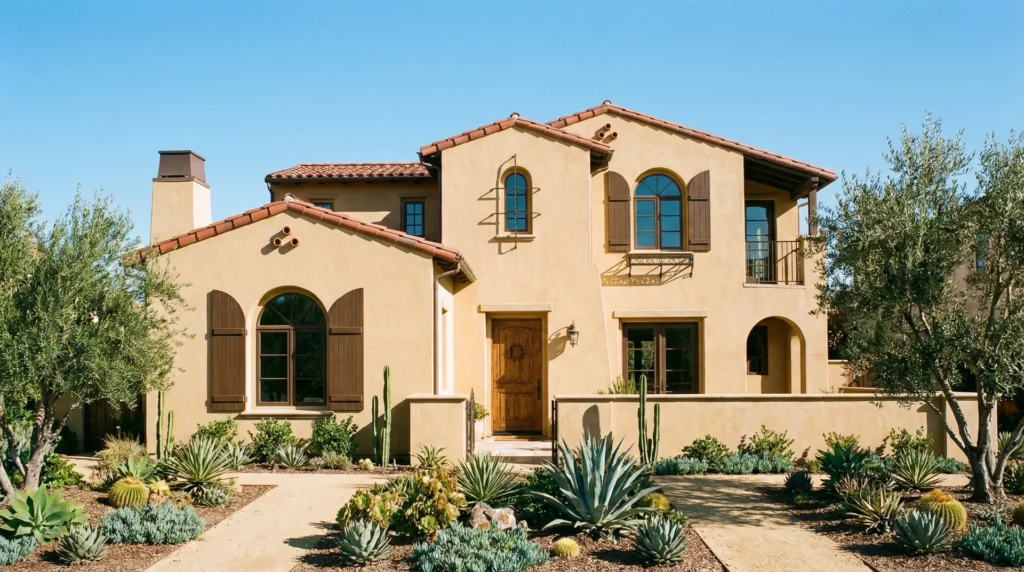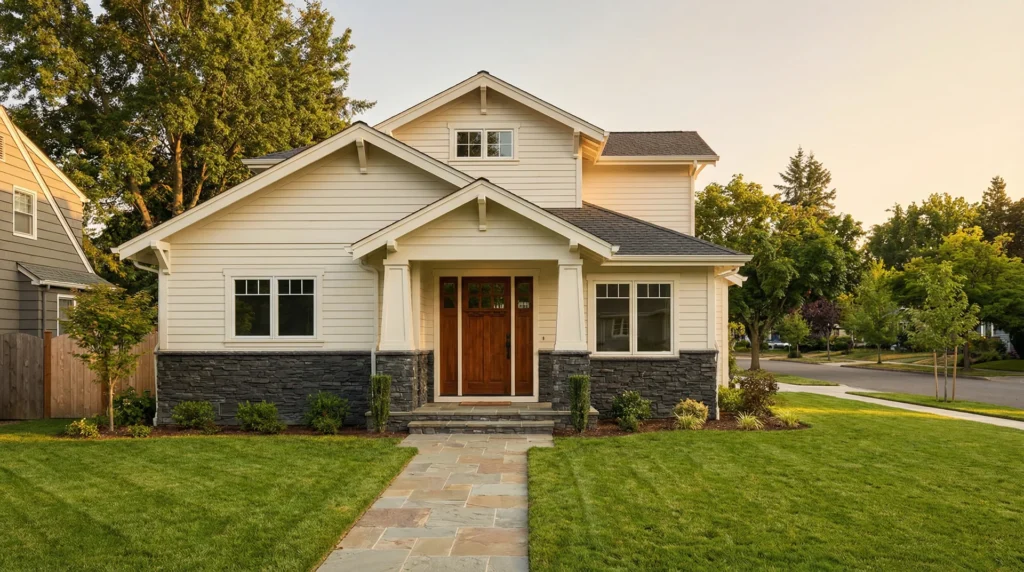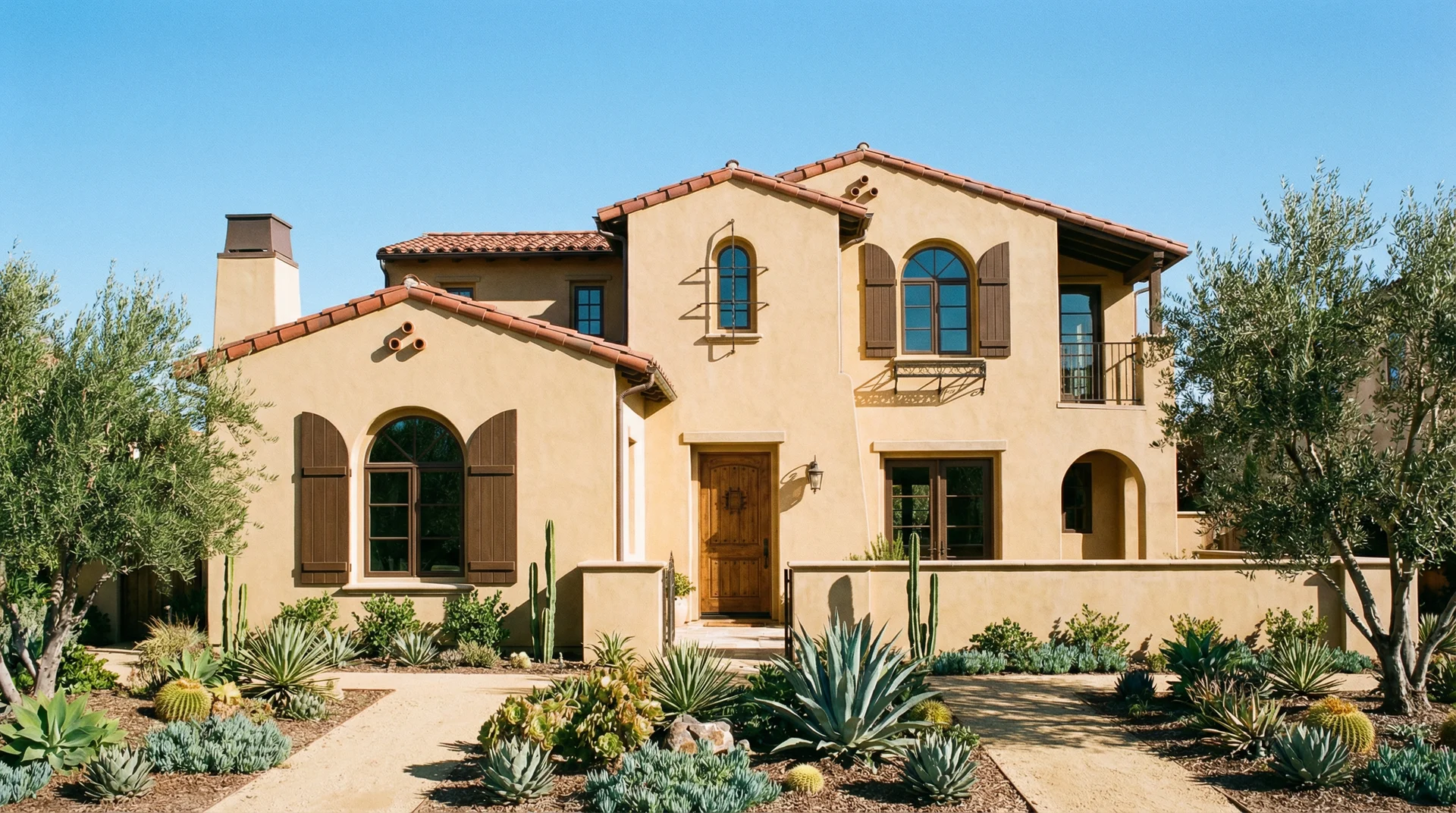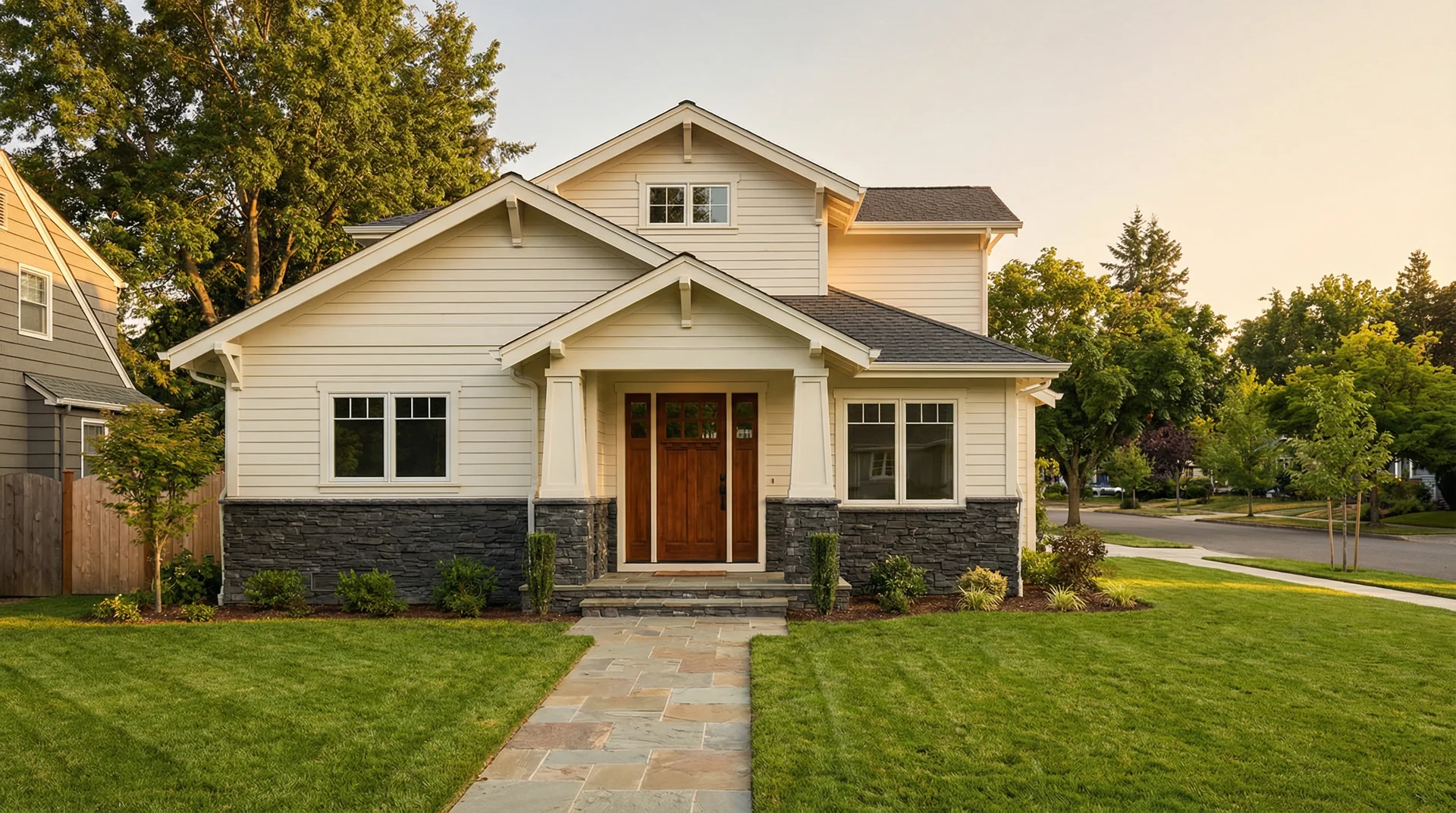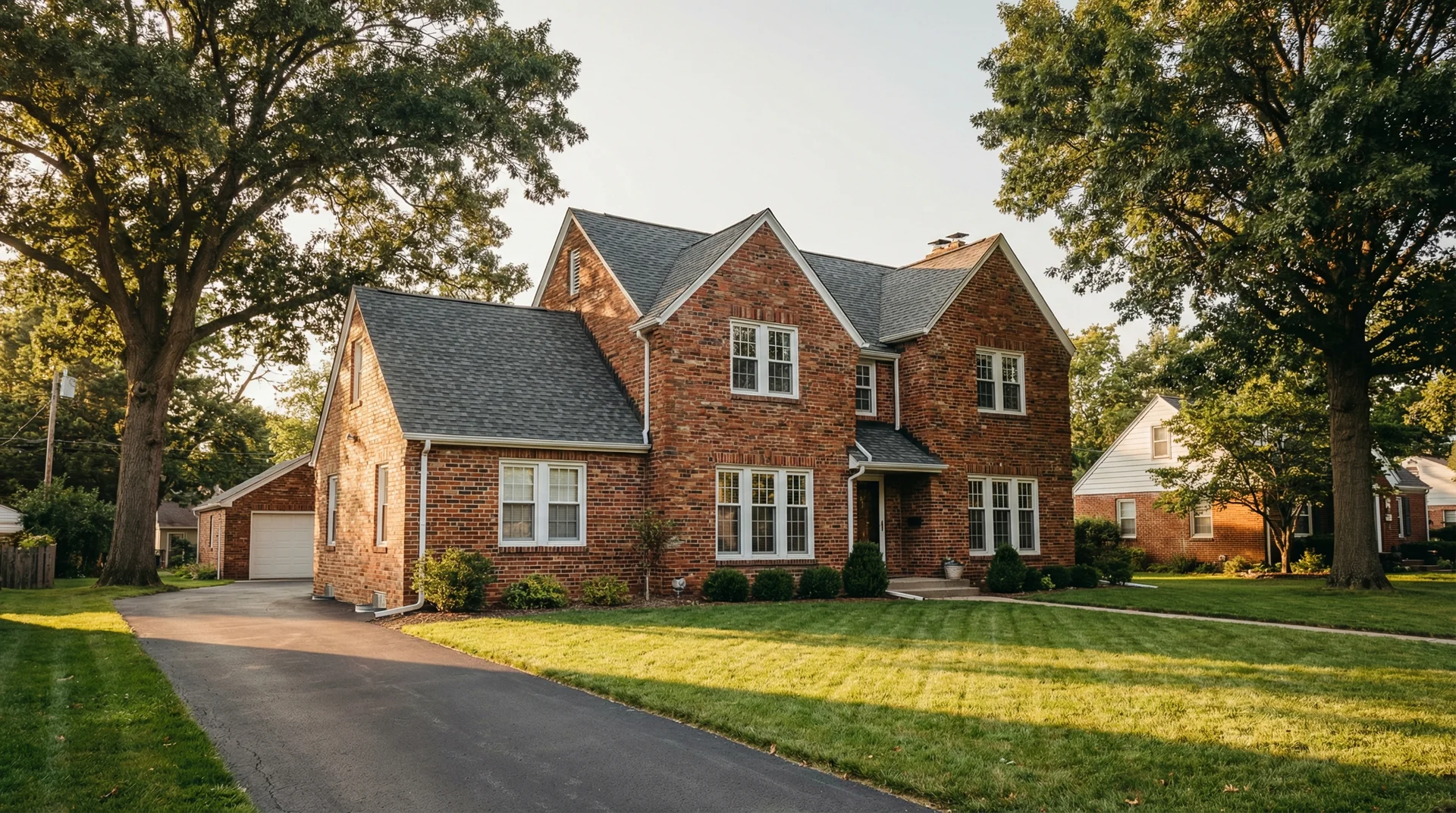
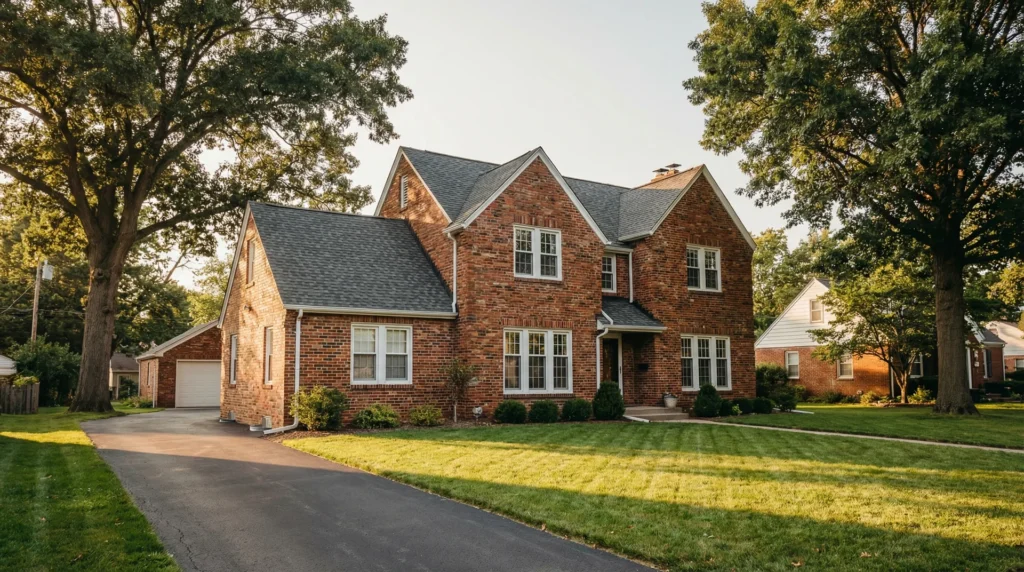
I grew up in a brick neighborhood in the Midwest. The homes on my street were mostly built in the 1940s and 1950s, with solid masonry construction, double-wythe brick walls, and original mortar joints.
I watched those houses take fifty winters, fifty freeze-thaw cycles, ice storms, a couple of minor tornadoes, and one derecho that flattened newer vinyl-sided homes two blocks away. The brick homes stood untouched. A few needed tuckpointing. That was it.
That experience is one of the reasons I take brick seriously when homeowners ask about it. It is also why I always explain the distinction between what I grew up around, true solid masonry construction, and what most homeowners are actually buying when they specify “brick siding” today.
Those two things are genuinely different. Understanding the difference changes every conversation about cost, performance, longevity, and maintenance.
| The short answer first: Full solid brick masonry lasts 100-plus years, provides structural mass and fire resistance, and costs $20 to $70 per square foot installed. Brick veneer, the “brick siding” covering most new construction today, is a single layer of real brick applied over a wood or steel frame. It costs $10 to $27 per square foot installed, lasts 50-plus years with proper maintenance, requires tuckpointing every 25 to 50 years, and delivers an estimated 6 to 10% premium over comparable non-brick homes at resale. Both are legitimate choices. They are not the same material doing the same job. |
Full Brick vs. Brick Veneer: The Structural Difference Most Homeowners Miss
The performance implications of this distinction are significant, and the visual difference from the street is essentially zero. Which means a lot of homeowners spend years thinking they have one thing when they actually have the other.
What Full Solid Brick Masonry Is
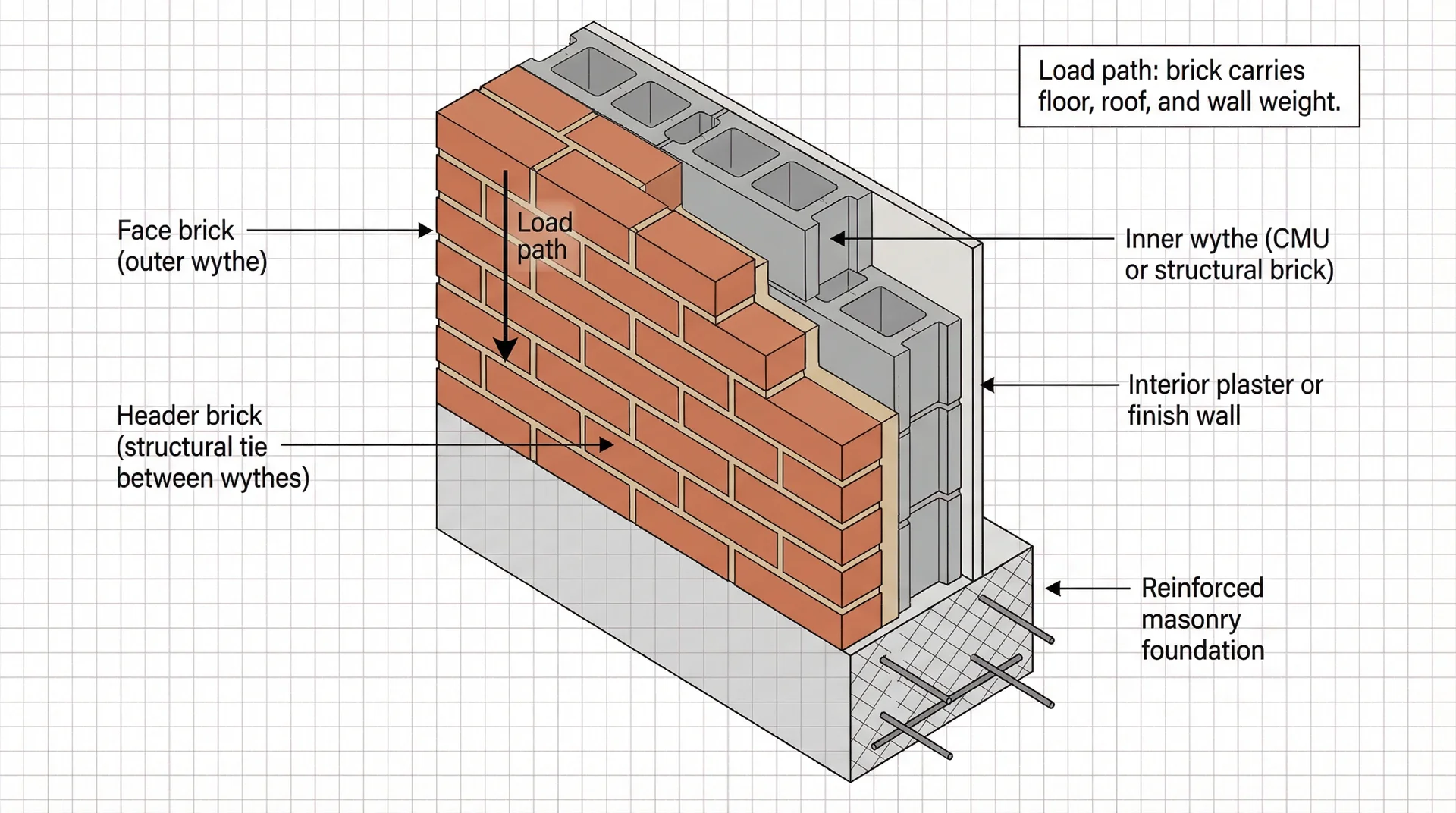
Solid masonry construction, also called double-brick or brick-and-block, uses brick as a structural element of the building itself. The wall is built from at least two parallel layers, called wythes. The outer wythe is always face brick.
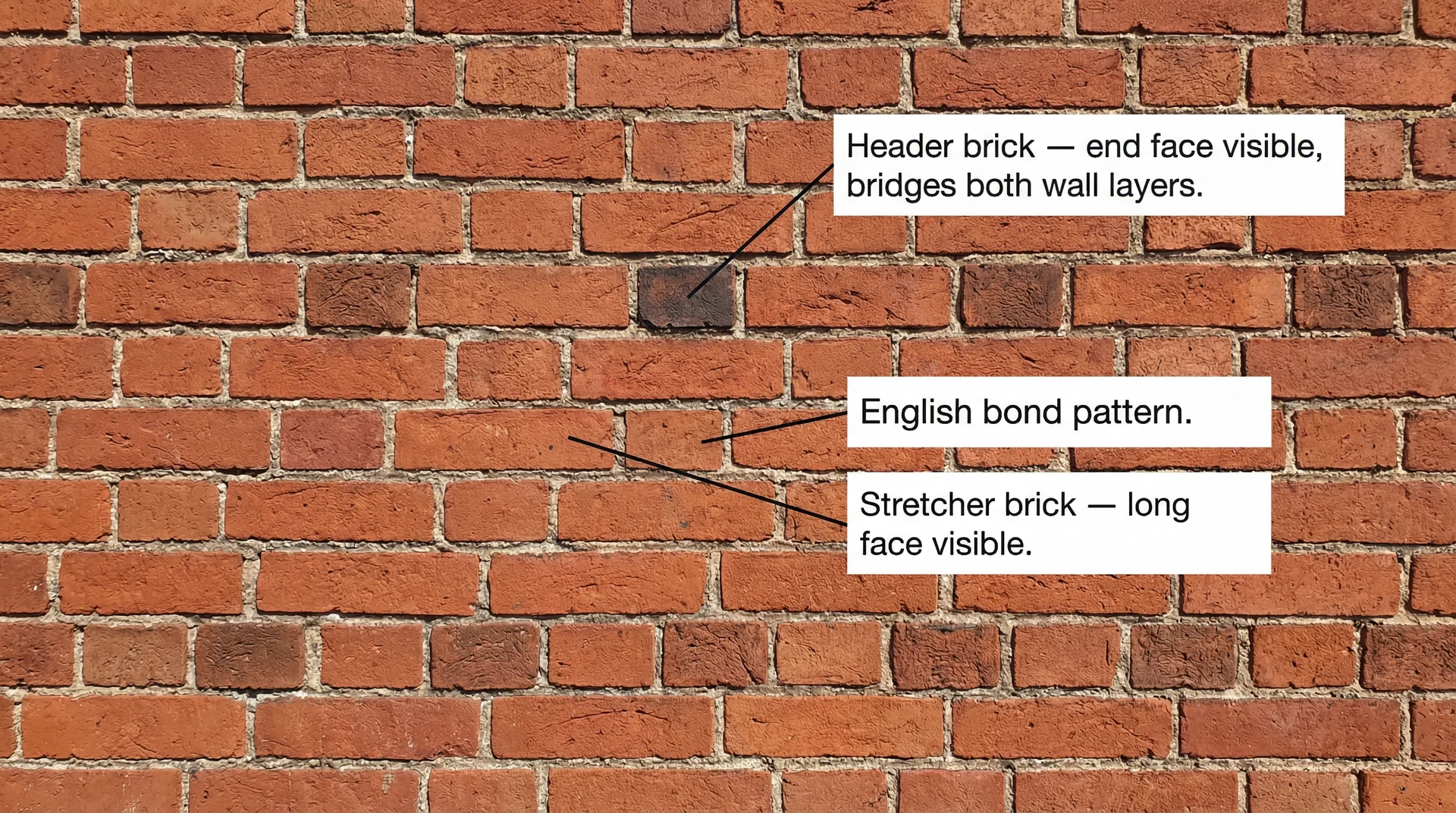
The inner wythe is structural brick or, in most 20th-century construction, concrete masonry units (CMU). The two layers are tied together either with header bricks (bricks laid sideways so their short end is visible from the exterior, bridging both wythes) or with metal wall ties embedded in the mortar joints.
In solid masonry, the brick carries the load. The wall supports the floor system, the roof, and itself. True solid brick homes are built on reinforced masonry foundations with a continuous, engineered footing to support the weight of the masonry. You cannot add solid brick to an existing wood-frame home without a foundation assessment and likely a structural supplement to carry the additional dead load.
The visual tells: Look at the exterior brick pattern. If you see header bricks, shorter bricks turned sideways with their end faces visible, spaced at regular intervals across the field of the wall, you are looking at solid masonry. Solid masonry homes built before roughly 1960 frequently show this pattern clearly.
What Brick Veneer Is
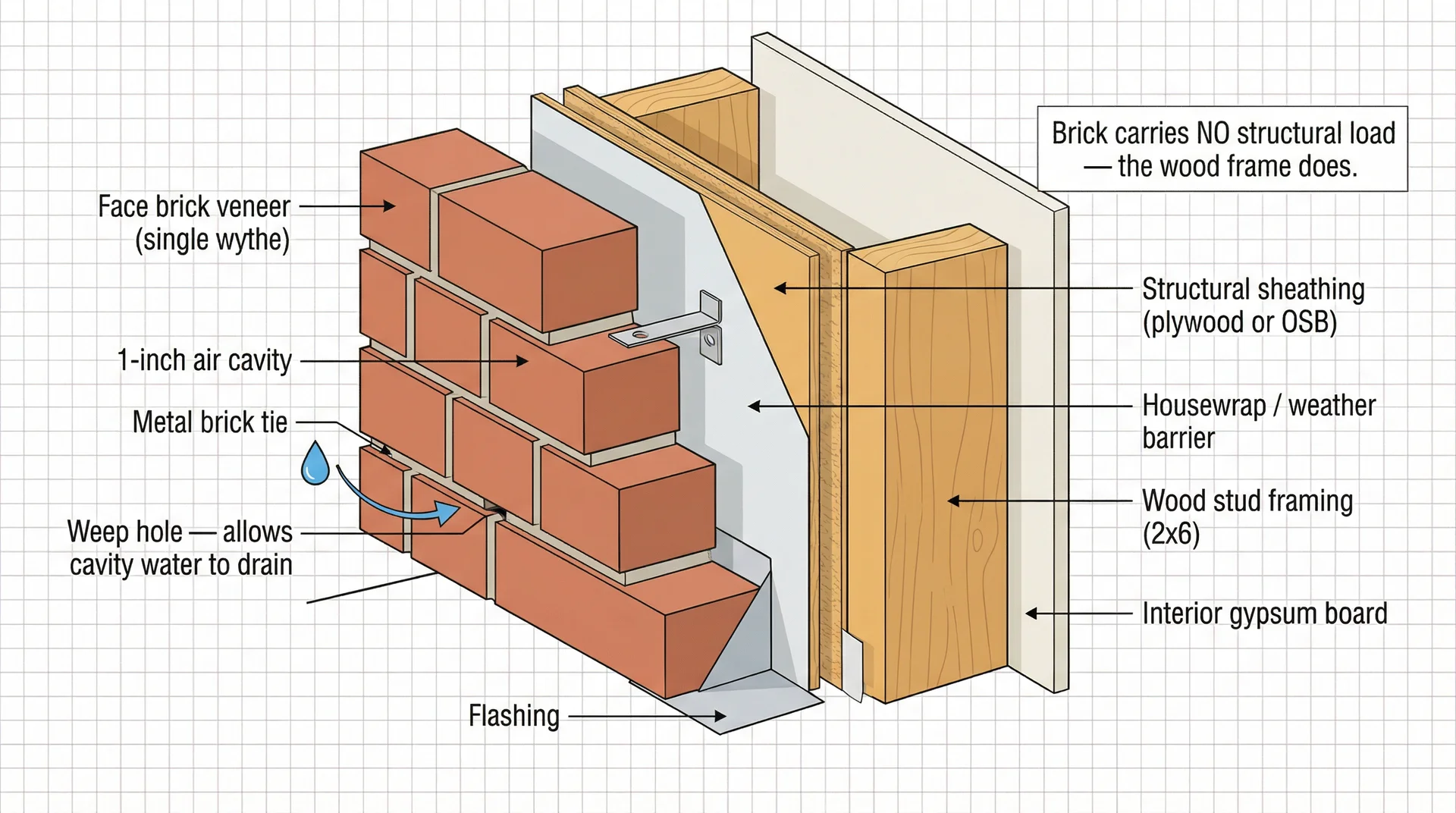
Brick veneer, which dominates virtually all new residential brick construction today, uses a single wythe of face brick applied to the exterior of a wood or steel-framed wall. The brick carries no structural load. The frame carries the building. The brick carries itself and transfers lateral wind loads back to the frame through metal brick ties embedded in the mortar joints.
Between the brick veneer and the structural frame sits a deliberate air cavity, typically 1 inch wide, that manages moisture. The veneer is not in direct contact with the frame. It stands slightly away from it, held in place by metal ties, with flashing and weep holes at the base managing water that enters through the porous brick face.
From the street, brick veneer and solid masonry look identical. The only reliable field identification: look for header bricks in the exterior pattern (their absence confirms veneer), or measure wall thickness at a window reveal. Veneer walls are significantly thinner than double-wythe solid masonry.
Why the Distinction Matters Practically
Longevity. Solid masonry walls can genuinely last centuries. Brick masonry buildings from the 18th and 19th centuries still stand across the Eastern United States. The limitation is always the mortar joints, not the brick itself. Brick veneer, properly installed, lasts 50 to 100-plus years, an impressive lifespan compared to most cladding materials, but not the multi-generational permanence of solid masonry.
Renovation complexity. Adding windows, running new plumbing or electrical penetrations, or modifying the exterior of a solid masonry home requires more time, skill, and cost than the same work on a veneer-clad home. With brick veneer, the frame does the structural work, and the brick can be modified more freely, though still with care.
Moisture management. Solid masonry absorbs water that penetrates the face and releases it slowly as conditions permit. This works well with cement plaster interiors but creates problems when gypsum board is present, and the wall is not designed for the moisture load. Brick veneer manages moisture through its cavity system: water drains down the air cavity behind it and exits through weep holes at the base. The two systems require different maintenance attention.
Brick Types and What the Differences Mean
When a contractor quotes a brick veneer project, they are specifying face brick, the product manufactured specifically for exterior visible applications. Understanding the basic categories helps you have an informed conversation about quality and appearance.
Face Brick
Face brick is manufactured specifically for visible exterior applications. It is selected for consistent color, surface texture, and dimensional tolerance. Modern face brick comes from clay fired at temperatures up to 2,000°F, producing a dense, low-absorption unit with excellent color stability.
The variables that affect both appearance and performance:
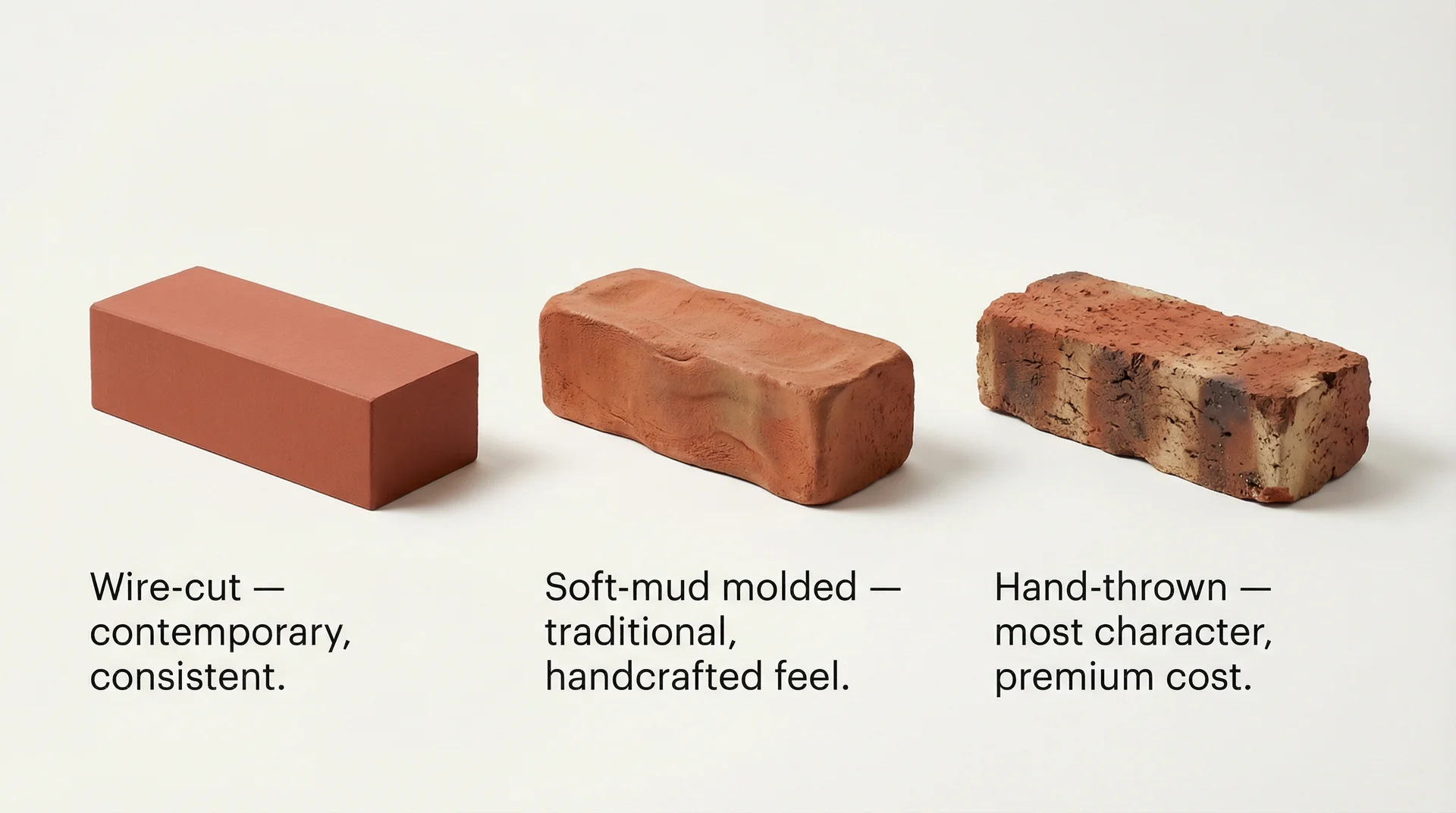
Manufacturing process. Wire-cut (extruded) brick has a machine-cut surface with consistent, sharp edges and a more contemporary appearance. Soft-mud molded brick has a handcrafted aesthetic with slight surface variation, the kind of brick associated with traditional residential architecture. Hand-thrown brick offers the most surface variation and character but comes at a significant premium for the labor involved in production.
Surface texture. Smooth face brick reads as formal and urban. Textured surfaces read as more traditional and residential. A more textured surface also develops patina and character over decades in ways smooth brick does not.
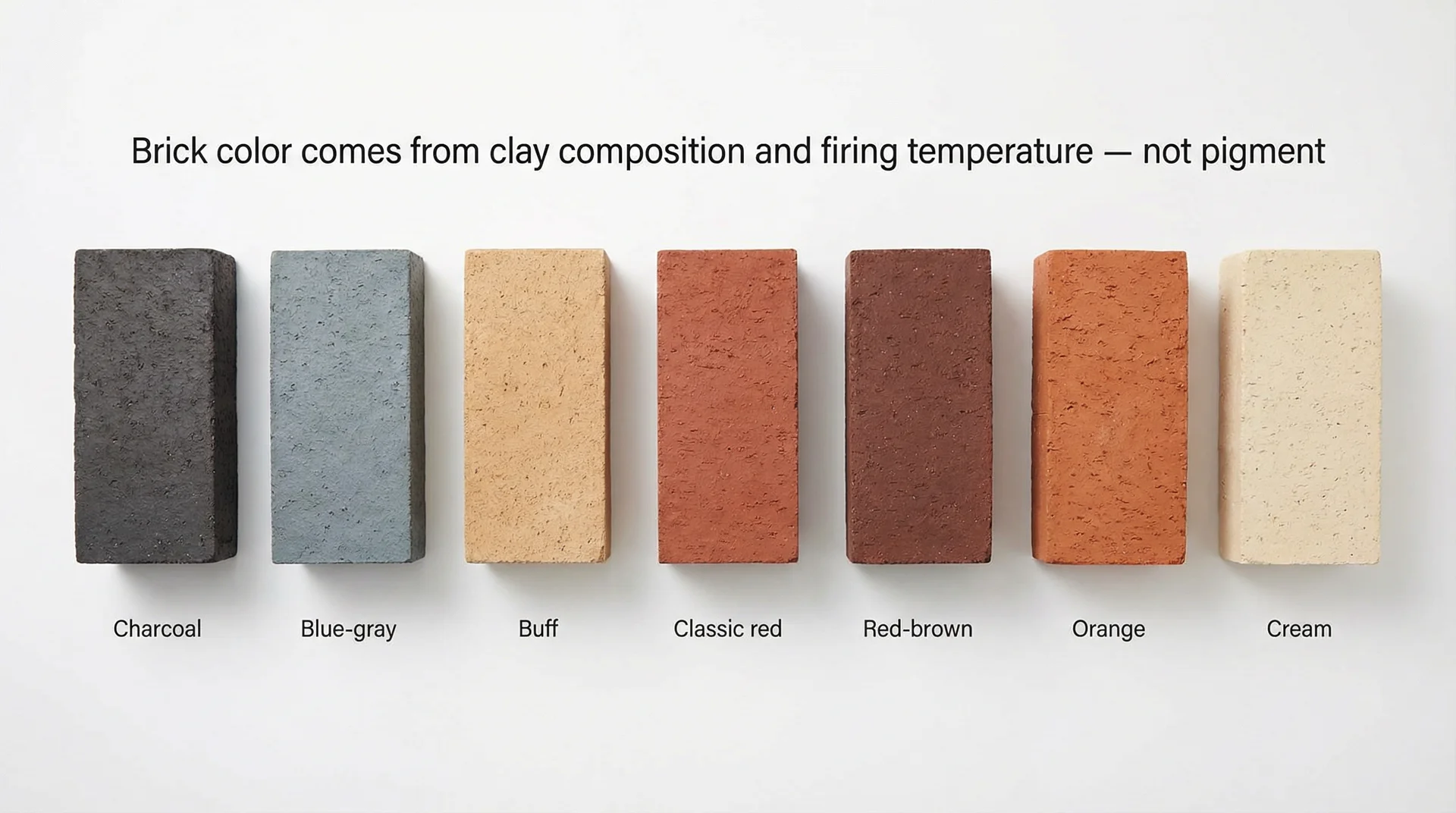
Color. Brick color comes from the clay composition and firing temperature, not from applied pigment. Iron-rich clays produce reds and browns. Manganese compounds produce buffs, tans, and grays. Modern face brick also includes deep charcoals and near-blacks that have become increasingly popular with contemporary architectural styles.
Common Brick
Common brick is manufactured for structural use where appearance is not the primary concern: interior cores, backup wythes in solid masonry, and foundations. Using it on visible exterior surfaces is not appropriate for residential applications.
Thin Brick Veneer
Thin brick is face brick sliced to approximately 3/4 to 1 inch thickness, designed for applications where the full 4-inch depth of standard brick veneer would create structural or weight challenges. Increasingly used in renovation projects where adding standard veneer is not structurally feasible, and in interior applications where brick character is desired without masonry weight. Installed cost runs $8 to $22 per square foot.
Faux Brick Panels
For homeowners on tight budgets, manufactured composite panels that mimic brick’s appearance cost $14 to $26 per square foot installed. They install quickly and weigh far less than real masonry. The trade-off is lifespan and resale perception. Faux brick lacks the dimensional presence, fire resistance, and long-term value of real brick veneer. Worth knowing about, not a substitute if longevity and resale premium matter to you.
How Long Does Brick Actually Last?
The longevity claim for brick is one of the most legitimate in residential construction. Properly executed brick masonry lasts 100-plus years. “Properly executed” has a specific meaning that involves both installation quality and ongoing maintenance.
The Mortar Joint Is the System’s Vulnerable Component
Brick itself is one of the most durable building materials ever manufactured. Fired clay units from demolished 18th-century buildings are routinely salvaged and reused because the brick is structurally sound after 200 years. The material does not rot, insects cannot eat it, UV radiation does not degrade it, and under most conditions, it does not absorb enough water to suffer freeze-thaw damage.
Mortar is a different story. Mortar is softer and more porous than the brick it holds, by design. It is the sacrificial element of the system, absorbing stress from thermal movement and minor settlement rather than transmitting that stress into the brick itself. Over decades, mortar weathers, carbonates, and eventually cracks and crumbles. When mortar joints fail, water enters the joint, freezes, expands, and accelerates deterioration.
Tuckpointing Schedule and Costs
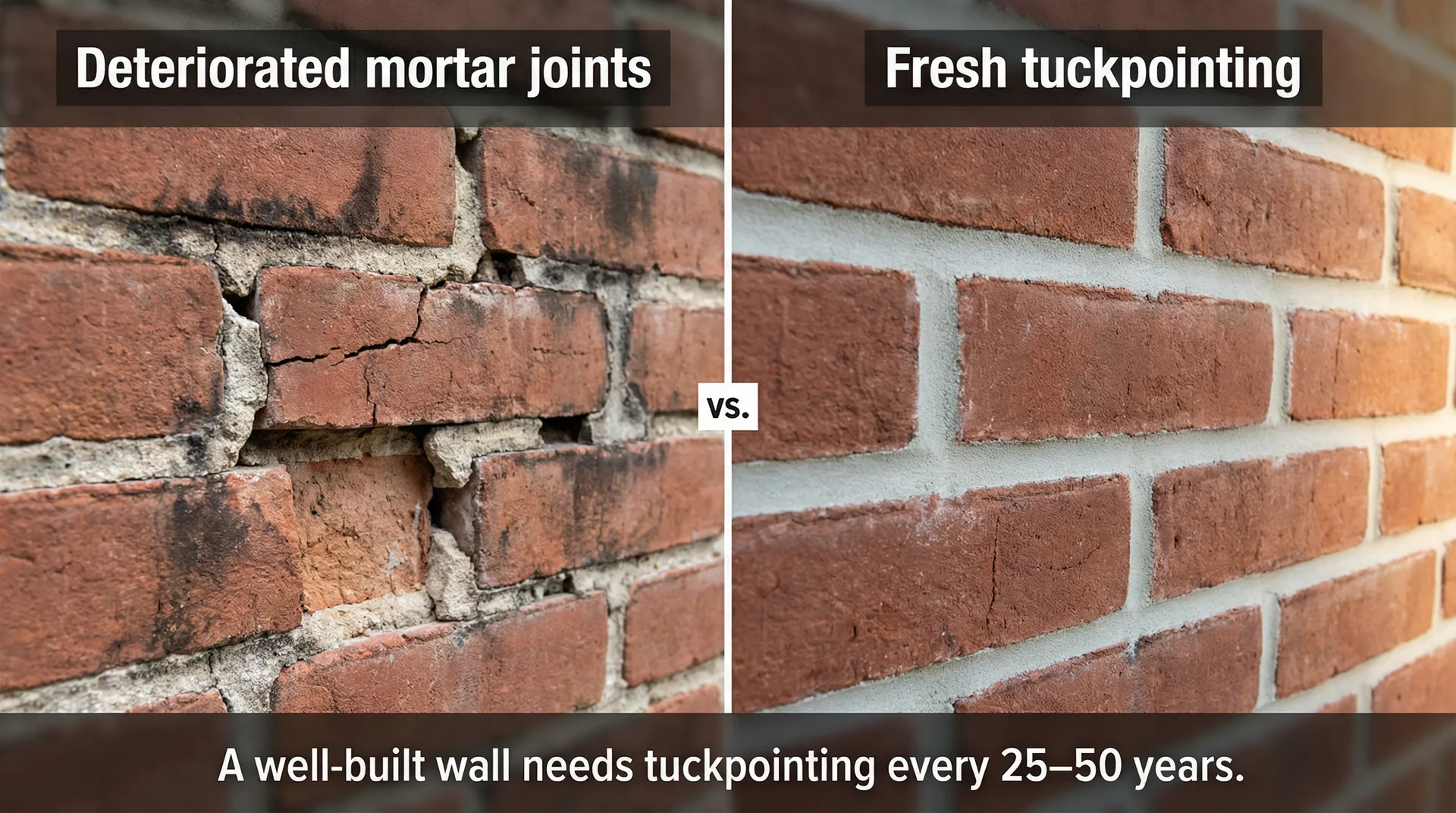
Tuckpointing, the process of removing deteriorated mortar to a depth of 3/4 to 1 inch and repointing with fresh mortar, is the primary maintenance event in the life of a brick exterior. A well-constructed brick wall typically does not need tuckpointing until 25 to 50 years after installation.
Repointing costs $3 to $15 per square foot. Full tuckpointing, which involves adding a contrasting mortar line for visual definition in addition to the structural repointing, runs $5 to $25 per square foot. For a full-house exterior, that means $10,000 to $50,000 for a complete tuckpointing project.
This number surprises homeowners, but context matters. If you spend $22,000 on brick veneer installation today and tuckpoint the entire house once at the 35-year mark for $20,000, your total maintenance investment over 50 years is $42,000.
Over the same 50 years, a vinyl siding installation at $10,000 might require a full replacement at year 20 ($12,000) and another at year 40 ($14,000), plus periodic repairs, totaling around $36,000. The gap over a 50-year horizon is narrower than the upfront cost difference suggests, and it narrows further when you factor in insurance savings and resale premium.
Annual Maintenance for Brick
Between tuckpointing cycles, brick veneer requires minimal active maintenance.
Annual inspection of mortar joints, particularly at window and door surrounds, at the foundation line, and at any horizontal projections where water concentrates. You are looking for cracks, spalling, or mortar that sounds hollow when tapped with a key.
Annual inspection of weep holes, the small open head joints at the base of the veneer. Weep holes blocked with mortar droppings, dirt, or insect nests prevent drainage and allow water to accumulate in the cavity.
Periodic cleaning. Brick accumulates efflorescence, biological growth on north-facing walls, and atmospheric staining. Low-pressure washing with an appropriate masonry cleaner handles routine cleaning. For mold or mildew on shaded walls, a solution of one cup of bleach to one gallon of water applied with a natural or synthetic bristle brush works well. Soak the area thoroughly with water first to prevent the brick from absorbing the bleach, and avoid wire brushes entirely as they leave steel traces that rust and discolor the brick. Avoid muriatic acid solutions. Overly acidic solutions etch the brick surface and accelerate deterioration.
Caulk maintenance at transitions, where brick veneer meets window frames, door frames, or transitions to a different cladding material. This is typically a 10 to 15-year maintenance cycle, depending on product quality and climate exposure.
Brick Siding and Energy Efficiency: Thermal Mass vs. R-Value
The energy efficiency story for brick is frequently oversimplified in both directions. Some sources overstate brick’s insulation value, and others dismiss it entirely because the R-value is low. The accurate picture is more nuanced.
R-Value vs. Thermal Mass: Two Different Things
Standard brick carries an R-value of approximately 0.20 per inch, roughly R-0.80 for a 4-inch thick standard modular brick. By R-value alone, brick is among the poorest insulating materials available. A single layer of 1-inch polyisocyanurate foam board outperforms a full brick wall by a factor of 12 or more.
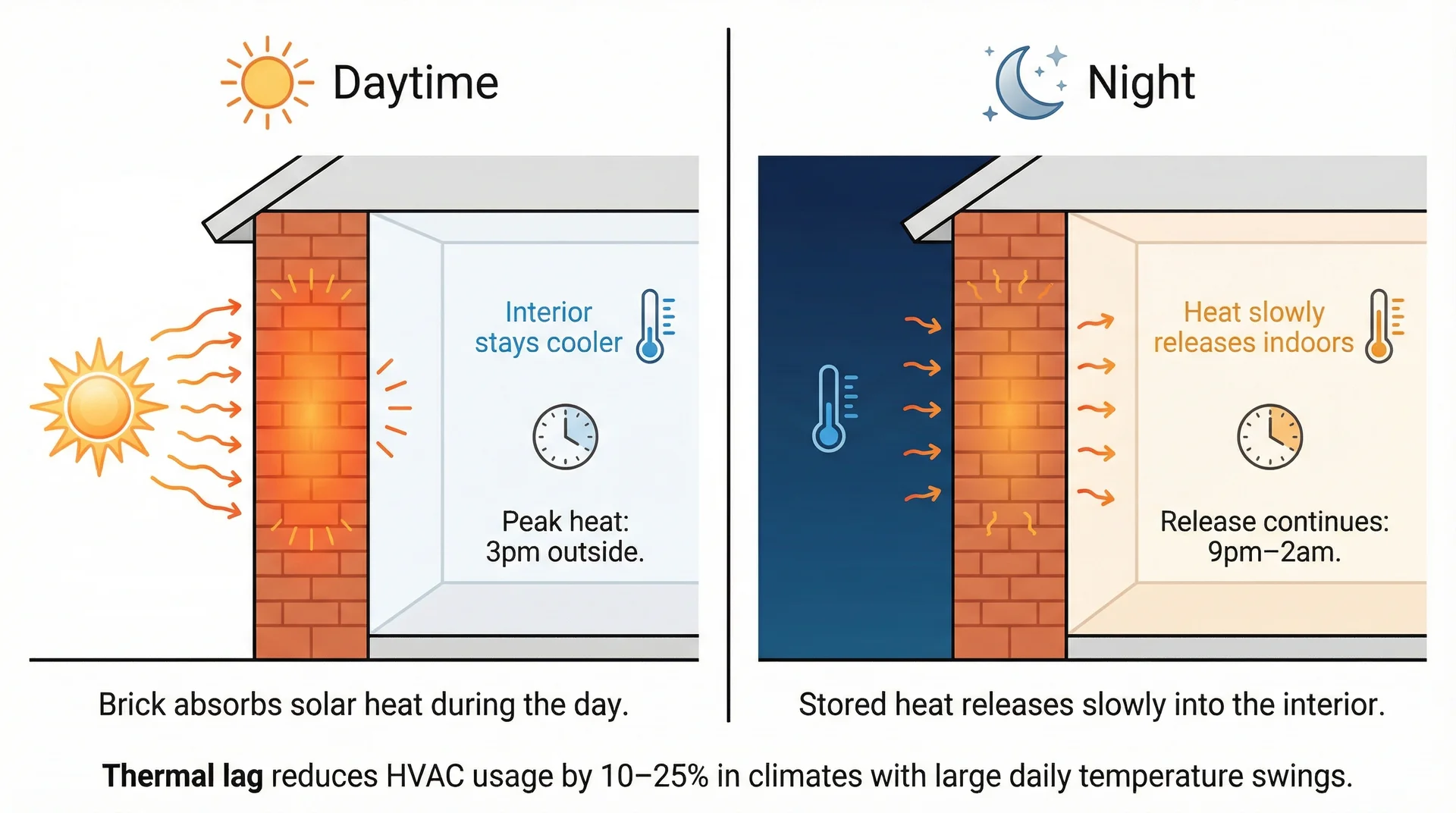
But R-value measures steady-state thermal resistance, how well a material resists a constant temperature differential. Brick’s actual performance comes from thermal mass, a different physical property entirely.
Thermal mass describes a material’s ability to absorb, store, and slowly release thermal energy. Dense, heavy materials like brick absorb heat energy as temperatures rise and release that energy slowly as temperatures fall.
The practical result is thermal lag: the brick exterior absorbs solar heat during the day but delays the transfer of that heat into the interior, so the peak interior temperature lags behind the peak exterior temperature by several hours. On a hot day, the interior stays cooler longer. On a cold night, stored heat releases slowly into the interior, helping maintain temperature.
This thermal lag effect is most meaningful in climates with large daily temperature swings, such as the Midwest, Mountain West, and parts of the South. In these climates, brick’s thermal mass can reduce HVAC usage by 10 to 25% compared to lightweight cladding materials. In hot-humid climates like the Gulf Coast or the Pacific Northwest, where humidity is the dominant comfort variable, brick’s thermal mass advantage is less pronounced.
Brick Veneer and Insulation
One practical advantage of brick veneer over solid masonry: the cavity between the veneer and the structural frame can accommodate insulation. Modern brick veneer construction typically includes continuous rigid foam insulation on the exterior face of the structural sheathing before the brick ties go on.
Adding 2 inches of rigid foam, approximately R-10 to R-13 depending on product, to a brick veneer wall assembly reduces heating and cooling costs substantially and produces a wall that delivers both thermal lag and meaningful R-value resistance.
Sound Insulation
One benefit the energy conversation often overshadows: brick is one of the best sound-insulating exterior materials available for residential construction. The mass of brick absorbs and blocks exterior noise significantly better than vinyl, fiber cement, or wood siding.
For homes on busy streets, near airports, or in dense neighborhoods, this is a genuine quality-of-life benefit that does not show up in energy performance numbers.
Brick Siding Cost: A Complete Picture
The cost range for brick siding spans more than any other residential cladding category because it includes fundamentally different systems at substantially different price points.
| System | Material Cost | Total Installed | Typical Lifespan |
|---|---|---|---|
| Thin brick veneer | $3 to $10/sq. ft. | $8 to $22/sq. ft. | 25 to 50 years |
| Standard brick veneer | $5 to $12/sq. ft. | $10 to $27/sq. ft. | 50 to 100+ years |
| Solid masonry construction | $15 to $25/sq. ft. | $20 to $70/sq. ft. | 100 to 200+ years |
For a 2,500 square foot home, standard brick veneer installation runs $25,000 to $67,500 total. Full solid masonry runs $50,000 to $175,000 or more, depending on home complexity, regional labor rates, and material selection.
What Drives the Range Within Brick Veneer
Mason labor. Labor accounts for 50% or more of the total brick veneer project cost in most markets. Mason labor rates vary substantially by region. Markets with high construction activity and limited mason availability, much of the Sunbelt and Mountain West, cost considerably more than the Midwest and Northeast, where masonry tradition has produced a larger skilled workforce.
Brick selection. Standard face brick in a common color from a regional manufacturer costs $5 to $8 per square foot for material. Premium handmade or specialty brick, thin-joint historical reproductions, water-struck molded brick, and European-sourced product can reach $15 to $25 per square foot for material alone. The visual premium is real; the structural performance is not materially different.
Architectural complexity. A simple rectangular single-story home is the least expensive brick veneer application. Multi-story construction (scaffolding adds cost), homes with arched windows, corbeling, water table courses, decorative soldier courses, or complex roofline transitions all add mason labor time and total cost.
Insulation specification. Adding continuous rigid foam insulation behind the veneer adds $1 to $3 per square foot to the project cost but meaningfully transforms the wall assembly’s energy performance.
Mixing Brick and Siding: A Cost-Saving Option Worth Knowing
Many homeowners use brick on the front elevation only, then install vinyl or fiber cement on the sides and back. This delivers the curb appeal and resale premium of brick where buyers see it, at roughly 40 to 50% of the cost of a full brick exterior.
If budget is the primary constraint, but you want the brick look, this is worth discussing with your contractor before committing to either material across the whole house.
25-Year Total Cost Comparison
| Material | Initial Install | Maintenance (25 yrs) | 25-Year Total |
|---|---|---|---|
| Standard brick veneer | $22,000 | ~$2,000 (cleaning, caulk) | $24,000 |
| Fiber cement | $18,000 | ~$5,000 (repaint x1.5) | $23,000 |
| Premium vinyl | $14,000 | ~$2,000 (repairs, cleaning) | $16,000 |
| Natural wood | $16,000 | ~$14,000 (repaint x5) | $30,000 |
Over a 25-year horizon, brick veneer’s cost-per-year is competitive with fiber cement and meaningfully lower than natural wood. The comparison improves further when insurance premium differences and resale premiums are factored in.
Brick and Resale Value: What the Data Says
Brick homes command a consistent premium in US residential real estate markets, and the premium is backed by transaction data rather than aesthetic opinion. Brick exteriors can increase a home’s resale value by 6 to 10% over comparable properties with other materials, based on national averages from appraisal studies.
Industry data puts brick’s return on investment at approximately 92%, compared to around 67% for vinyl siding. Brick homes also tend to sell faster and attract more qualified buyer interest in markets where brick is a recognized premium feature.
The resale premium is strongest in markets where brick is architecturally dominant, the Midwest, the Mid-Atlantic, and parts of the South, and weakest in markets where brick is rare and buyers are less familiar with its characteristics.
Brick’s resale advantage also extends to insurance. Brick’s Class A fire rating and impact resistance qualify it for reduced homeowners insurance premiums with many carriers, particularly in markets where storm damage and fire claims are common. Over a 20-year ownership period, those premium savings contribute meaningfully to the material’s total cost-of-ownership calculation.
The Installation Complexity of Brick and Why Contractor Selection Is Critical
Brick veneer installation is masonry work. Finding and vetting a qualified mason is the most important step in any brick project, more important than brick selection, more important than cost negotiation.
The Critical Installation Components
Flashing and weep holes. The moisture management system for brick veneer depends entirely on two components installed correctly: metal flashing at the base of each wall section (and above every window and door opening), and weep holes, open head joints spaced every 24 to 33 inches at every flashing line. The flashing directs water that enters the cavity to the weep holes; the weep holes allow it to exit the wall.
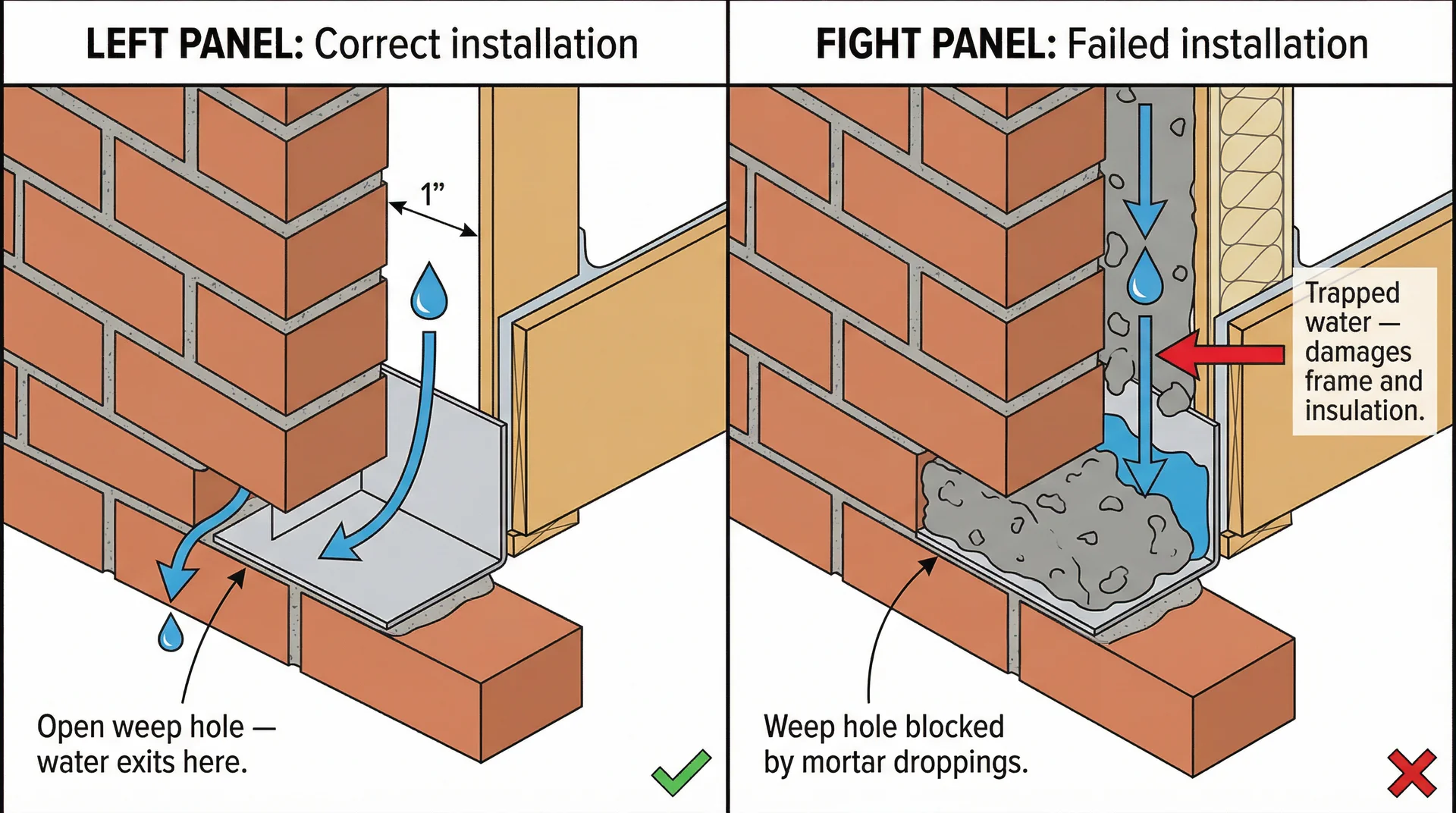
Weep holes blocked by mortar droppings during installation are the most common cause of brick veneer moisture failure. Mortar falls from courses above and lands at the base of the cavity, directly over the weep holes. Responsible masons use mortar collection materials, mesh fabrics, or gravel beds at the base of the cavity to catch mortar droppings. Walk every brick job before the first course goes up to confirm this detail is specified and in place.
Brick ties. Wall ties connect the brick veneer to the structural frame, transferring lateral wind loads from the brick face back to the studs. Building codes specify tie type, spacing, and fastener requirements. Ties fastened only to sheathing, not to structural studs, pull out under lateral load.
Mortar specification. Type N mortar is the standard specification for above-grade brick veneer in residential applications. It has good workability, adequate bond strength, and the flexibility to accommodate minor differential movement between brick and frame. Type S is used for below-grade work, high-wind zones, and areas requiring higher bond strength. Using Type M mortar in residential veneer creates a joint that cannot accommodate the movement inherent in wood-frame construction and results in cracking.
Proper clearances. Brick veneer must terminate at least 4 inches above finished grade to prevent direct soil moisture contact. It must not contact roofing materials at roof-to-wall intersections. A flashed clearance must be maintained. These clearances are frequently compressed in competitive-bid projects where the mason is pressed for time. Every clearance violation shortens the installation’s effective lifespan.
Questions to Ask Before Hiring a Mason
These questions separate contractors who understand brick veneer from those who lay brick competently but have not mastered the building science that makes the system perform long-term:
- How do you manage mortar droppings in the cavity to protect weep holes?
- What flashing material do you specify at window heads and at the wall base?
- Do you use adjustable brick ties or corrugated ties, and why?
- What mortar type do you specify for this application?
- Can I see a completed project you finished at least five years ago that I can inspect?
A qualified mason answers all of these specifically and immediately. One who deflects or says “we do it the standard way” has not thought carefully about the water management requirements of this system.
Is Brick Siding Right for Your Home?
Brick is a material I recommend with genuine enthusiasm to homeowners whose situation aligns with what it does well. It is also a material I steer clients away from when the economics or the architecture work against it.
Brick is the right choice if you:
- Plan to stay in the home for 20-plus years and want an exterior you will genuinely never need to think about between tuckpointing cycles
- Live in a climate where thermal mass provides measurable HVAC savings, such as the Midwest, Mountain West, and parts of the South with significant daily temperature variation
- Are on a busy street or in a dense neighborhood, and care about sound insulation, brick blocks exterior noise far better than any standard siding material
- Have fire resistance as a genuine concern, brick’s Class A rating is unambiguous, and insurance savings in fire-risk markets are real
- Want the lowest maintenance exterior available that still looks premium over a 30-plus year horizon
Consider alternatives if you:
- Have the budget as the primary constraint. Brick veneer at $22,000 to $45,000 for a standard home is real money compared to vinyl at $10,000 to $14,000 or fiber cement at $16,000 to $20,000
- Live in a hot-humid climate without significant temperature swings, where thermal mass provides less benefit and moisture management demands more attention
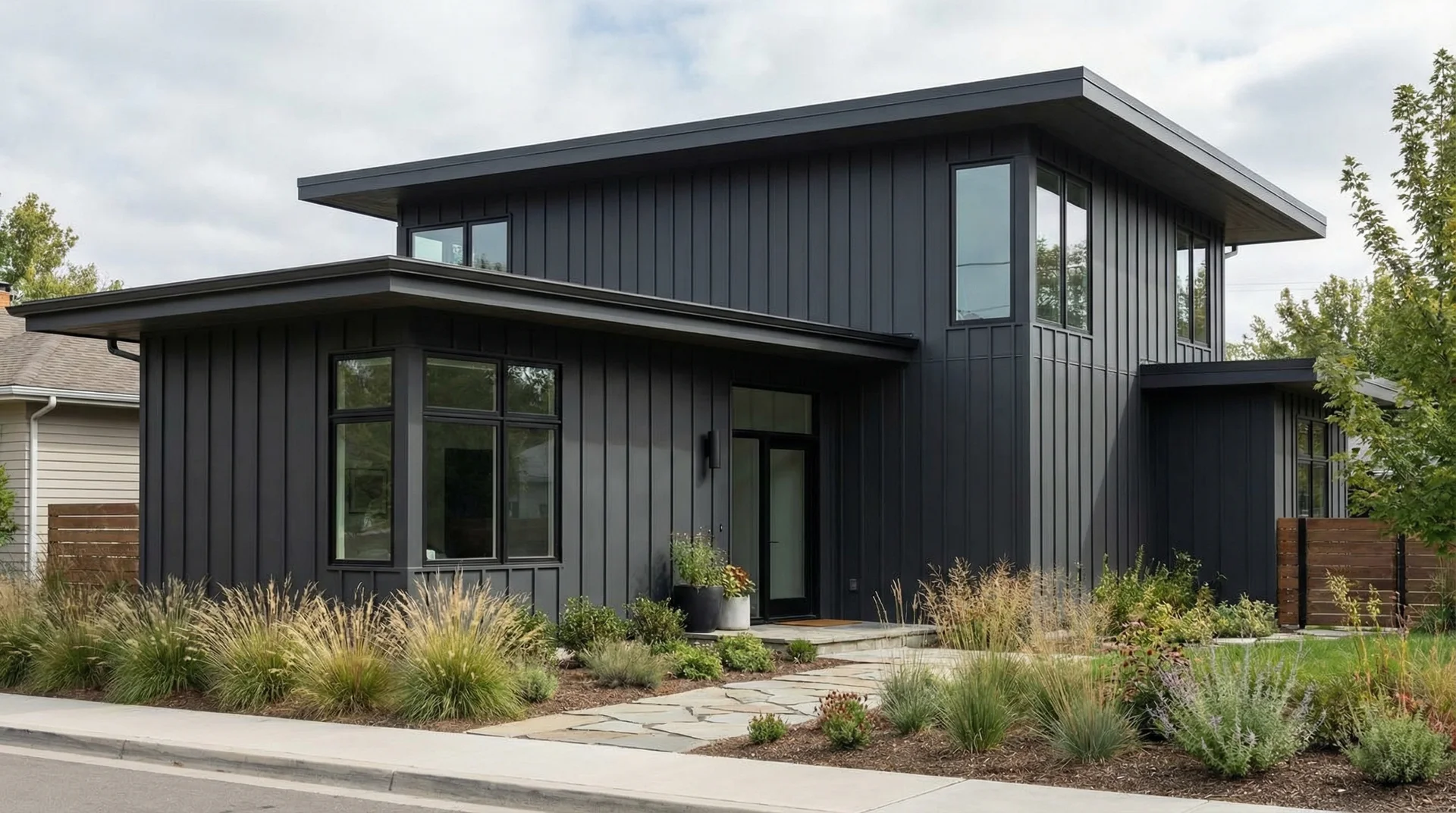
- Have a distinctly contemporary or modern home, where brick’s historical associations can feel contextually mismatched
- Anticipate significant exterior modification in the next decade, adding windows, changing the roofline, running new utility penetrations, where brick’s renovation complexity would create disproportionate costs
Frequently Asked Questions
How long does brick veneer last?
Brick veneer, properly installed with correct cavity drainage and maintained with periodic tuckpointing, lasts 50 to 100-plus years. Solid masonry construction lasts 100 to 200-plus years. The quality of the mortar specification and the functioning of the weep hole drainage system are the primary variables that determine where within that range your installation falls.
How often does brick need tuckpointing?
A well-constructed brick wall typically goes 25 to 50 years between tuckpointing cycles. Walls with high-quality Type S mortar in protected exposures often exceed 50 years before needing repointing. Walls with moisture management problems, improper mortar specification, or aggressive freeze-thaw exposure may need attention in 15 to 20 years.
Can you add brick siding to an existing home?
Yes, but only if the structure can support the weight. Standard brick veneer weighs approximately 40 pounds per square foot. Before proceeding, consult a structural engineer to assess whether your foundation and framing can handle the added dead load. Many older wood-frame homes require foundation reinforcement first. Thin brick or faux brick panels add far less weight and are often a more practical option for renovations on existing homes.
Can you paint brick siding?
Yes, but painting brick is a permanent commitment. Once painted, the brick must be repainted every 8 to 12 years because paint on brick is difficult to fully remove. The paint film also traps moisture that the natural brick surface would normally release, which can accelerate spalling in freeze-thaw climates. I recommend it only as a last resort for severely stained or damaged brick, not as a cosmetic choice.
Does brick help with homeowner’s insurance premiums?
Yes, in most markets. Brick’s Class A fire rating and impact resistance qualify brick homes for reduced premiums with most major carriers. The savings vary by insurer and location, but in markets where fire, wind, or hail claims are common, the cumulative savings over 20 years of ownership are meaningful.
What is efflorescence on brick, and is it a problem?
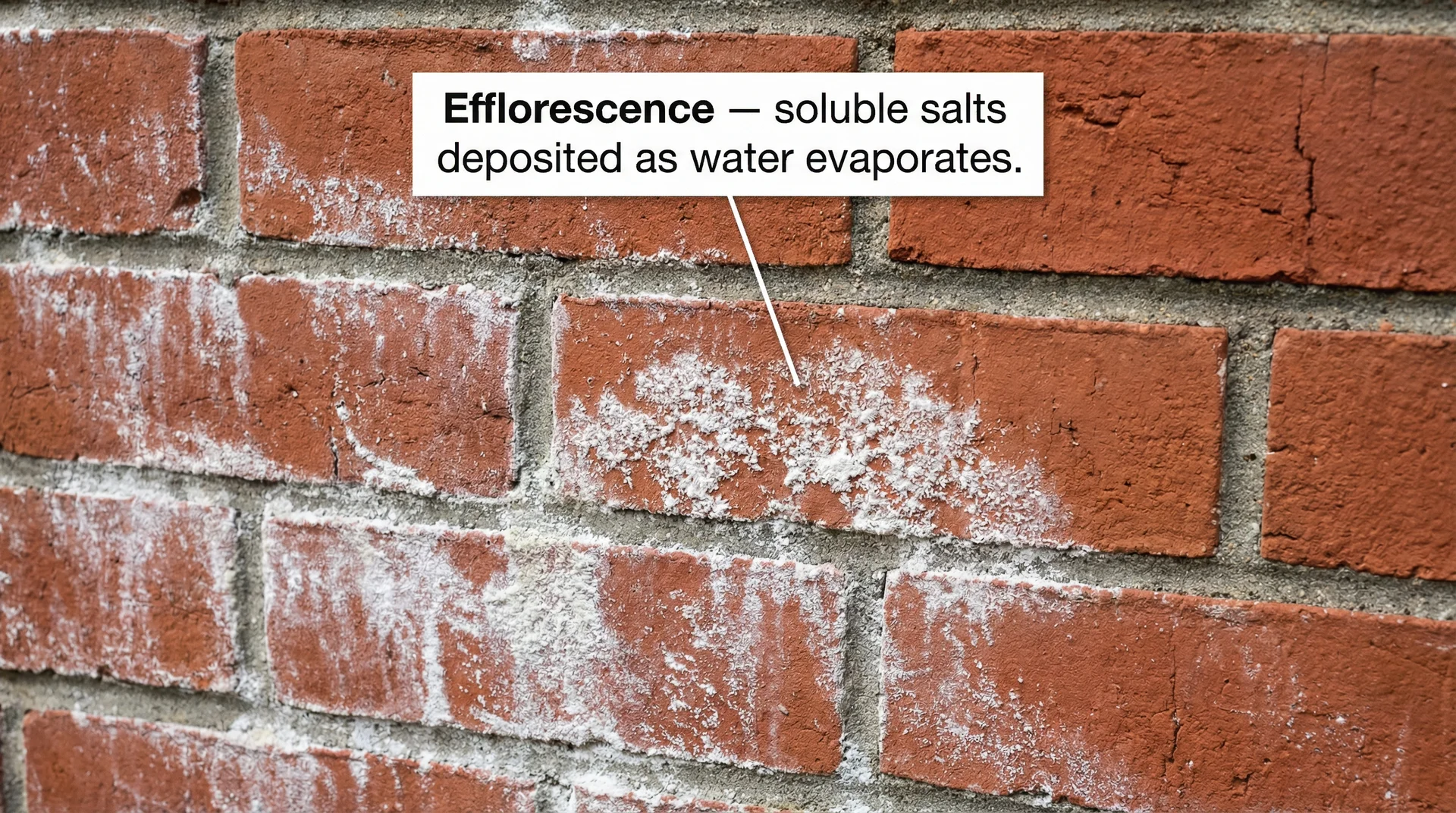
Efflorescence is the white powdery deposit that sometimes appears on brick surfaces. It forms when water migrating through the brick dissolves soluble salts in the mortar and deposits them at the surface as the water evaporates. Light efflorescence on a relatively new installation is typically cosmetic. Heavy or recurrent efflorescence on an older installation indicates sustained moisture infiltration the drainage system is not managing adequately. That warrants professional inspection of the weep holes, flashing, and mortar joint condition.
Is brick a good choice in cold climates?
Yes, with the right mortar specification and proper installation details at clearances and flashings. Brick’s thermal mass is particularly beneficial in cold climates with significant daily temperature swings. The freeze-thaw risk for brick itself is minimal because modern face brick has low enough water absorption that freeze-thaw cycling does not cause brick failure under normal conditions. The vulnerability in cold climates is the mortar joint, which is why mortar specification and maintenance inspection timing matter more in climates with harsh winters.
Is brick environmentally friendly?
Brick is made from natural clay, requires no chemical preservatives, and does not off-gas VOCs. Its longevity means less material replacement over a building’s life than most alternatives, and salvaged brick from demolished buildings is routinely reused in new construction. The primary environmental consideration is the energy required to fire brick at high temperatures during manufacturing. On balance, brick’s strongest environmental case is its durability: a material you install once and maintain for a century generates far less waste than materials replaced every 20 to 40 years.