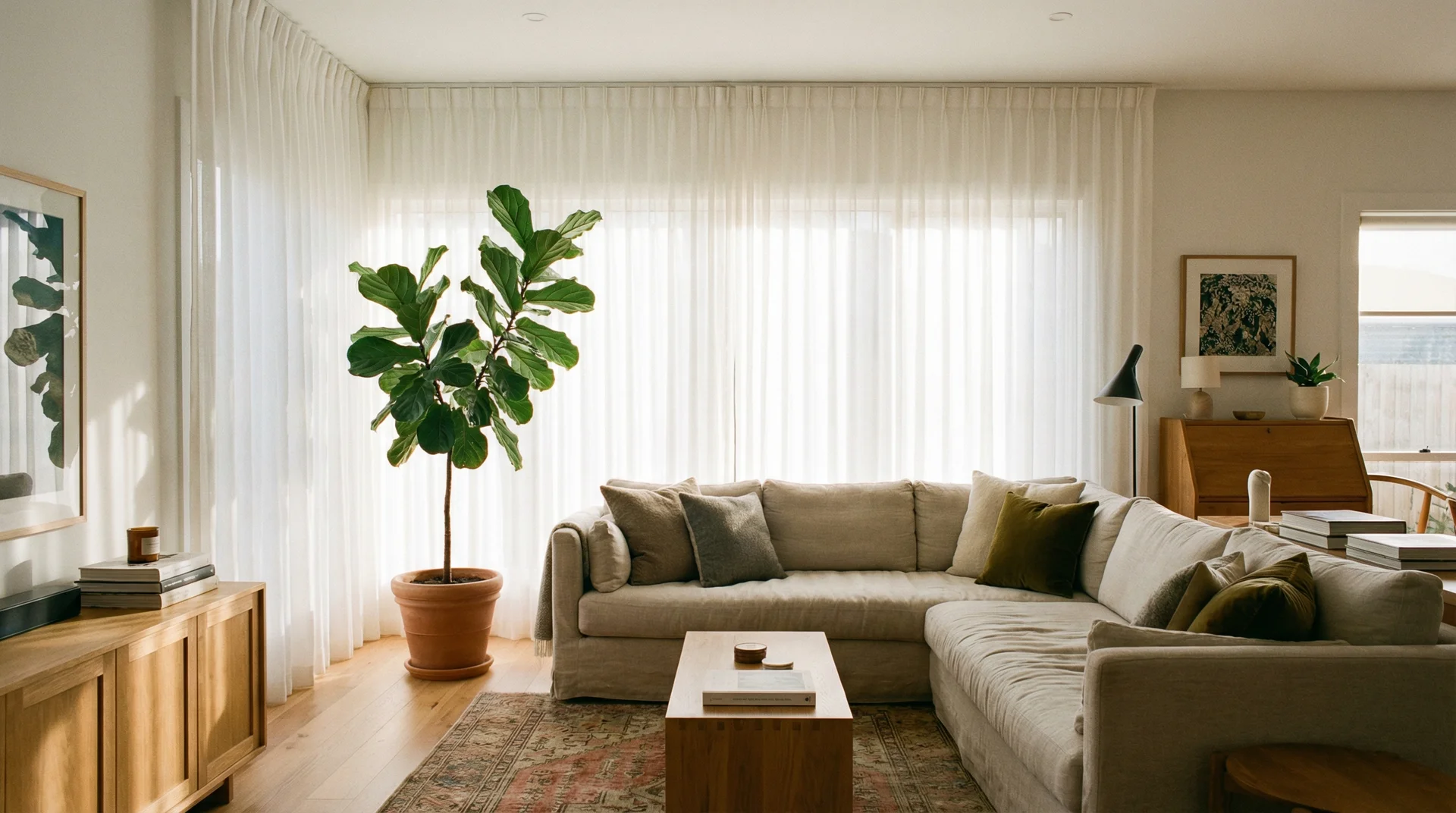
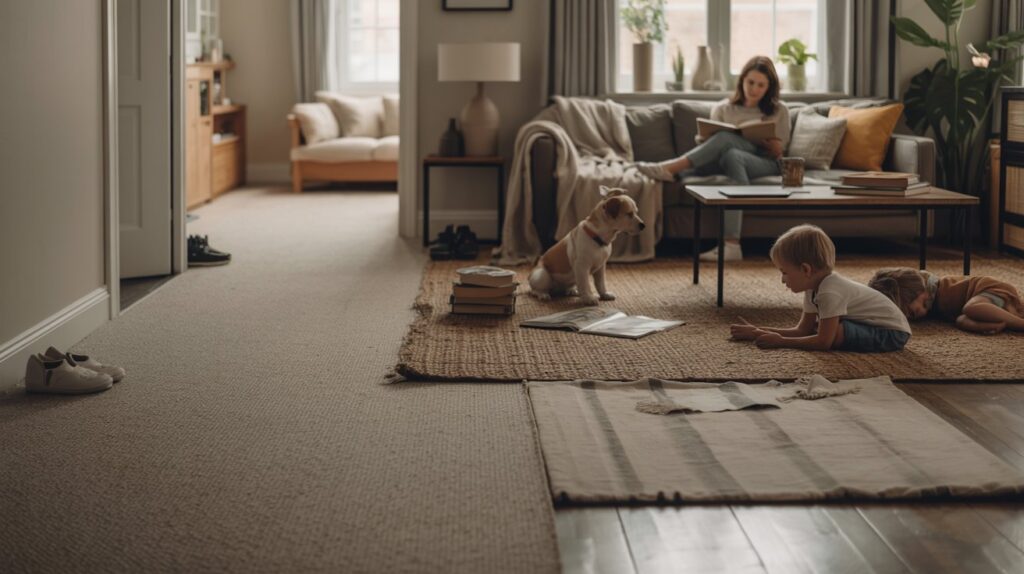
Clients ask me this question in almost every home project, so let me answer it right away.
If you want softness and warmth across the entire room, choose carpet. If you want flexibility, easier cleaning, and the freedom to refresh your space anytime, choose a rug.
Here’s a quick guide I often share during consultations:
| If your priority is… | Go with… |
|---|---|
| Cozy, wall-to-wall comfort | Carpet |
| Easy style changes | Rug |
| Noise reduction | Carpet |
| Easier maintenance | Rug |
| Long-term flooring solution | Carpet |
| Budget-friendly room updates | Rug |
In most homes I design, bedrooms benefit from carpet, while living areas work better with rugs because families rearrange and update those spaces more often.
Now, let me quickly clarify what actually separates carpet and rugs, because many people use the terms interchangeably, while they serve very different purposes in real homes.
Carpet vs Rug: What’s the Actual Difference?
People often use the words carpet and rug as if they mean the same thing. In practice, they behave very differently inside a home.
Carpet gets installed wall-to-wall and stays fixed in place. Installers stretch it across the floor and secure the edges, which turns it into part of the room itself. You walk on one continuous soft surface, and you cannot move it without removing the flooring.
A rug sits loosely on top of your existing floor. You place it where you need comfort or visual focus, and you can roll it up, replace it, or move it to another room whenever your layout changes.
I usually explain the difference to homeowners this way:
- Carpet becomes part of the house.
- A rug remains part of your décor.
This difference affects cleaning, replacement cost, flexibility, and how your space evolves.
Next, let’s look at a side-by-side comparison so you can see how both options perform in daily life before we get into lifestyle and room-by-room decisions.
Carpet vs Rug: Side-by-Side Comparison for Real Homes
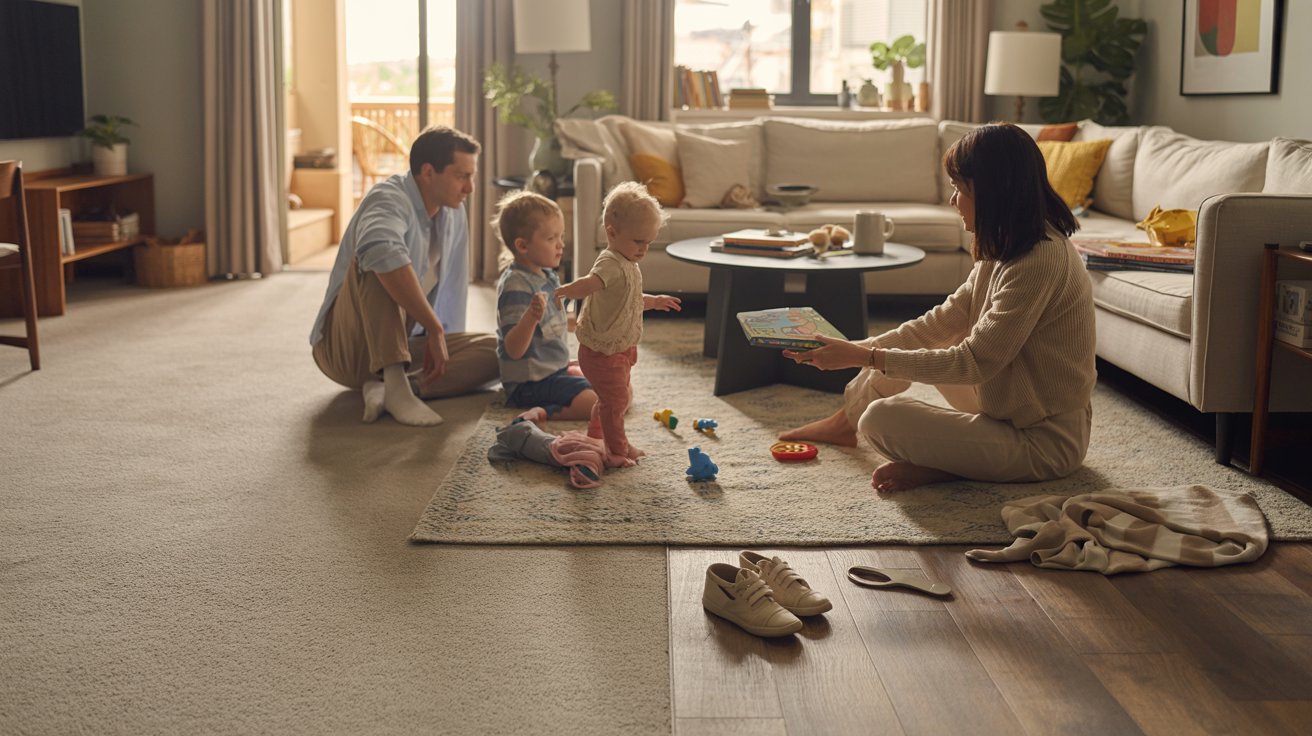
When homeowners sit with me to finalize flooring decisions, I usually pull out a simple comparison sheet. Seeing everything in one place helps people connect choices with daily living rather than with showroom impressions.
Here’s the expanded version I walk clients through.
| Everyday Factor | Carpet | Rug |
|---|---|---|
| Installation | Professionally installed wall-to-wall and fixed in place | Laid loose on existing flooring |
| Flexibility | Stays permanent until replaced | Easy to move or replace anytime |
| Comfort | Softness across the entire room | Softness is limited to the covered area |
| Cleaning | Needs regular vacuuming and periodic deep cleaning | Can be removed for washing or cleaning |
| Replacement | Full replacement required when worn | Replace only the rug when needed |
| Noise Reduction | Absorbs sound across the room | Reduces noise only where placed |
| Design Updates | Changing means reinstalling the flooring | Swap rugs to refresh the room instantly |
| Upfront Cost | Lower per square foot, higher installation cost | Higher piece cost, no installation expense |
| Long-Term Cost | Replacement affects the whole room | Replace individual rugs over time |
| Floor Protection | Covers existing flooring completely | Protects specific zones only |
| Resale Appeal | Comfortable for bedrooms and basements | Appeals to buyers who prefer visible hardwood |
| Seasonal Flexibility | Fixed year-round | Can rotate seasonally |
What This Means in Daily Life
Numbers and categories help, yet real decisions happen during everyday routines.
I often see carpet chosen by families who love stepping onto a warm floor every morning. Bedrooms especially benefit because people value comfort the moment their feet touch the ground.
Rugs become the smarter solution in spaces where life keeps shifting. Living rooms evolve as furniture moves, children grow, or work-from-home setups appear. A rug adapts to these changes without forcing homeowners into expensive updates.
One project still stands out in my memory. A client installed carpet in a formal living room that later turned into a playroom and then into a home office. Within five years, the carpet showed uneven wear in every new layout. We replaced it with hardwood and added layered rugs instead. The space started evolving without reminding them of past layouts.
Experience teaches me a consistent lesson:
Flooring should support how a room will change over time, not only how it looks today.
A Quick Reality Check I Share With Clients
Before moving forward, I ask homeowners three questions:
- Do you expect this room’s purpose to change in the next five years?
- Do you prefer permanent comfort or flexible styling?
- Do you want maintenance to stay simple?
Your answers usually point clearly toward carpet or rugs.
Next, we’ll go deeper into the real decision maker: how your lifestyle influences which option works better, because families, pets, work routines, and climate shape flooring success more than design preferences do.
How Your Lifestyle Should Decide Between Carpet and a Rug
Flooring decisions work best when they follow real living patterns. I always ask clients to describe a normal weekday at home before we discuss materials or colors. The way people move through their homes tells me more than any mood board.
Let’s walk through the situations I see most often and how each flooring option performs.
Homes With Kids
Children turn every room into an activity space. Crawling, running, building forts, and spilling snacks become daily routines.
Carpet works well in bedrooms and playrooms because it softens falls and reduces noise. Parents often tell me bedtime becomes calmer when footsteps and dropped toys stop echoing across the house.
Rugs work better in living rooms where activities change throughout the day. You can clean spills faster, rotate rugs as kids grow, and replace them without touching the entire floor.
If you plan to use rugs in shared spaces, a simple rug placement guide helps avoid furniture layouts that feel disconnected.
I remember redesigning a townhouse where twins learned to walk on thick living room rugs. Two years later, the family rolled them away and reclaimed a cleaner, more grown-up space without major renovation costs.
Pet Owners
Pets influence flooring decisions more than style preferences ever do.
Wall-to-wall carpet feels cozy, yet fur, accidents, and muddy paws settle deep into fibers. Regular cleaning helps, though older carpet can start holding odors in busy pet households.
Rugs offer more flexibility. Owners often use washable or lower-cost rugs in pet zones and replace them when needed. Rotating rugs also spreads wear across different areas.
Many pet owners eventually choose hard flooring with large rugs on top, since that combination gives them comfort without long-term cleaning stress.
Renters vs Homeowners
Renters rarely want permanent changes. Rugs solve comfort and style needs while staying portable when moving.
Homeowners who plan to stay long term often prefer carpet in bedrooms for comfort and resale appeal. Buyers frequently appreciate cozy private spaces even if they prefer hardwood elsewhere.
Allergy and Dust Concerns
Many homeowners worry about allergens trapped in flooring.
Modern carpet captures dust particles, which helps some households because allergens stay contained until vacuumed. Yet regular cleaning becomes essential.
Rugs allow more frequent deep cleaning since you can remove them completely. Allergy-sensitive households often prefer washable rugs or thinner materials.
Busy Homes vs Quiet Homes
Active households with guests, kids, and constant movement benefit from flexible flooring solutions. Rugs let you refresh worn areas without major investment.
Quieter homes where layouts stay consistent often enjoy the uninterrupted comfort carpet provides.
A Pattern I Notice After Years in Homes
Homes that change often benefit from rugs. Homes that stay predictable benefit from carpet.
I tell clients this during consultations:
Flooring should match how long your room layouts last.
If furniture arrangements change every few years, permanent flooring may start working against you.
Comfort vs Practicality: What You’ll Appreciate After a Few Years
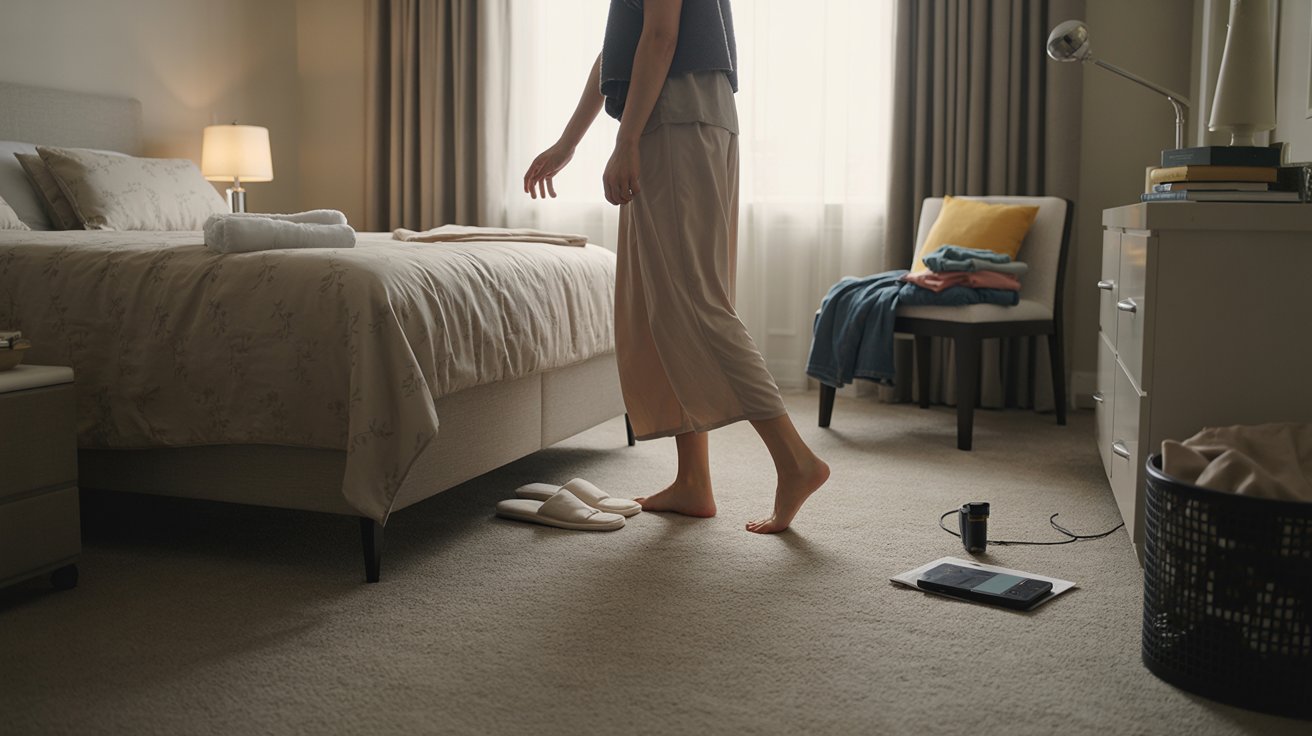
Flooring decisions feel exciting during renovations, yet real opinions form after people live with them for a while. I often revisit homes years after completing projects, and homeowners usually share the same reflections.
They remember how their floors feel on winter mornings. They remember cleaning routines. They notice whether rooms feel quiet or noisy. Comfort and practicality quietly compete every day.
Warmth and Noise Make a Bigger Difference Than Expected
Carpet creates a noticeable difference in bedrooms and upstairs spaces. Footsteps soften, rooms feel warmer, and sound does not travel as much between floors. Families often tell me carpet makes their homes feel calmer, especially with children running around.
Rugs help with comfort, too, yet only when placed. Large living room rugs reduce echo and add softness, though uncovered floor areas still reflect sound.
In colder climates or homes with tile or concrete flooring, rugs become essential comfort layers even when homeowners prefer hard flooring visually.
Daily Cleaning Habits Shape Satisfaction
Many homeowners choose carpet for comfort, but later feel frustrated about maintenance. Vacuuming works well, though spills and stains sometimes stay longer than expected.
Rugs simplify cleaning routines. You can lift them, shake them outdoors, or send them for cleaning when necessary. Busy families appreciate that flexibility.
A homeowner once told me her favorite renovation decision involved replacing worn carpet with hardwood and layered rugs. She enjoyed vacuuming less and rearranging rooms without worrying about traffic patterns, leaving marks behind.
The Regret Factors I Hear Most Often
After years of follow-up visits, certain regrets appear repeatedly.
Homeowners sometimes wish they had avoided thick carpet in dining areas where food spills become routine. Others regret installing carpet in rooms that later changed function.
Rug buyers occasionally choose sizes too small for their spaces, which makes rooms feel disconnected rather than cohesive.
The pattern becomes clear:
- Carpet regrets often involve maintenance or permanence.
- Rug regrets usually involve sizing or quality choices.
I often remind clients that flooring lives with them longer than paint colors or furniture styles. Comfort matters every single day.
What Homeowners Tend to Appreciate Over Time
People appreciate carpet most in spaces meant for rest. Bedrooms, media rooms, and cozy basements benefit from softness underfoot.
People appreciate rugs most in spaces meant for activity and social life. Living rooms, offices, and dining spaces change often, and flexible flooring adapts easily.
Experience teaches me that long-term satisfaction comes from matching flooring comfort with how rooms actually function.
Real Cost Comparison Most Homeowners Don’t See Coming
Flooring budgets often focus on purchase price alone. During consultations, clients frequently assume carpet costs more because it covers the entire room. The reality surprises many of them once installation and long-term replacement enter the conversation.
I like to break flooring costs into phases, because flooring lives with you for years.
Upfront Purchase Costs
Carpet usually costs less per square foot than a large, high-quality rug. When covering an entire room, carpet materials remain relatively affordable.
Rugs often carry higher upfront prices, especially when made from wool or other durable fibers. A well-made rug costs more than basic carpet materials covering the same area.
Yet purchase price rarely tells the whole story.
Installation Costs Many People Forget
Carpet installation requires professional fitting in most homes. Installers stretch, trim, and secure the material across the entire room. Labor charges and padding costs quickly add to the final bill.
Rugs require no installation. You simply place them where needed. Even large rugs avoid the labor expenses carpet demands.
One homeowner once joked with me after installation day that moving furniture twice cost almost as much as the carpet itself.
Maintenance Costs Over Time
Carpet cleaning often involves periodic professional services, especially in homes with pets or children. Stains and wear show up in traffic zones, and replacing only a section rarely works visually.
Rugs offer flexibility. You can clean them individually or replace only worn pieces without affecting the entire room.
Families with active households often save money long-term by replacing rugs periodically instead of reinstalling carpet.
Replacement Costs Across Years
Here’s where decisions usually become clearer.
Carpet often lasts around 8–12 years in busy households before replacement becomes necessary. When wear appears, the whole room requires updating.
Rugs can rotate between rooms or be replaced individually. A worn living room rug might later serve in a guest room or home office.
I usually explain replacement thinking like this:
| Over 10 Years | Carpet | Rugs |
|---|---|---|
| Replacement scope | Entire room | Individual rugs |
| Flexibility | Low | High |
| Long-term spending | Larger single expense | Smaller periodic updates |
The Cost Lesson Experience Teaches
Permanent flooring decisions work best when families feel confident their room layout will remain consistent. Flexible homes benefit from flexible flooring investments.
Many homeowners later tell me they prefer smaller periodic updates instead of one large renovation expense every decade.
Maintenance Reality Check: Which One Is Easier to Live With?
Flooring looks perfect on installation day. Real opinions form months later when daily life settles in. I usually tell homeowners that maintenance shapes satisfaction far more than appearance.
Most families do not regret style choices. They regret cleaning routines that feel harder than expected.
Spills, Pets, and Daily Messes
Busy homes produce constant small accidents. Drinks spill, pets track mud, and food drops during rushed mornings.
Carpet absorbs these messes quickly. Modern stain-resistant options help, yet liquids sometimes travel deeper than expected. Quick cleaning matters because stains settle if ignored.
Rugs simplify accident management. You can lift them, clean them outdoors, or send them for professional washing. Many families keep washable or lower-cost rugs in high-risk areas, so replacement stays easy.
One household I worked with replaced its formal dining carpet after repeated stains from holiday gatherings. We installed hardwood and placed a durable rug underneath the table. Cleanup became easier, and the space still felt warm.
Deep Cleaning Differences
Carpet needs consistent vacuuming and occasional professional cleaning to stay fresh. Dirt settles into fibers across the whole room, especially in walkways.
Rugs let homeowners target cleaning efforts. You can rotate rugs to spread wear or remove them completely for cleaning. Floors underneath also get proper attention.
Clients often tell me they vacuum less often after switching from carpeted living rooms to rugs over hard flooring.
Odor and Wear Over Time
Pets, moisture, and heavy use gradually affect carpet scent and appearance. Professional cleaning refreshes it, though older carpet sometimes retains odors in active homes.
Rugs wear out, yet replacement remains easier. Rotating rugs between rooms often extends their life and keeps spaces looking fresh.
I sometimes walk into homes where traffic patterns clearly show in older carpet, reminding homeowners how furniture once stood. Rugs avoid that permanent memory.
What Maintenance Satisfaction Looks Like
Homeowners feel happiest when cleaning routines match their lifestyle energy.
Active households often appreciate rugs because they simplify problem-solving. Quiet households or private rooms often enjoy carpet comfort without heavy wear concerns.
I often share this reminder:
Flooring maintenance should feel manageable on busy days, not only on weekends.
Design Flexibility: How Flooring Shapes the Feel of a Room
Flooring quietly sets the mood of a room before furniture or décor finishes the story. Choosing the right rugs for dark floors also prevents darker rooms from feeling visually heavy.
I often see homeowners focus on sofas and wall colors while the floor already determines how warm, modern, or relaxed the space feels.
Both carpet and rugs influence design differently, and understanding that difference helps rooms age gracefully instead of feeling outdated after a few years.
Rugs Help Define Spaces in Open Layouts
Open-plan homes benefit enormously from rugs. Large rooms often combine living, dining, and workspace areas, and rugs help visually separate these zones without walls.
I frequently use rugs to:
- Define seating areas
- Anchor dining tables
- Frame conversation zones
- Add warmth beneath workspaces
A well-sized rug makes furniture arrangements feel intentional rather than floating awkwardly in open space.
Many homeowners tell me their rooms finally feel complete once the right rug enters the space.
Carpet Creates a Consistent, Cozy Atmosphere
Carpet works best when homeowners want uninterrupted comfort. Bedrooms, media rooms, and basement lounges benefit from flooring that feels soft across the entire surface.
Carpet also simplifies design decisions since flooring remains neutral and consistent throughout the room. Furniture and décor then become the main visual focus.
In many projects, clients ask for bedrooms that feel calm and hotel-like. Wall-to-wall carpet often delivers that atmosphere better than layered flooring.
Layering Rugs Over Carpet Adds Depth
Some homeowners assume carpet eliminates rug use. I often layer rugs over low-pile carpet to add personality and texture.
Layering works well when:
- A room needs a visual focus
- Neutral carpet feels too plain
- Furniture layouts need definition
- Homeowners want change without replacing flooring
A patterned or textured rug transforms a room without requiring renovation.
Flooring Quietly Affects Room Mood
Flooring influences how light travels across a space and how textures interact with furniture. Soft surfaces absorb light, creating warmth. Hard surfaces reflect light, creating brightness.
I sometimes remind clients:
Floors act like the background music of a room. You notice them most when they feel wrong.
Choosing flooring that supports how you want a room to feel often matters more than choosing trendy colors.
Room-by-Room Guide: Where Carpet Works Better and Where Rugs Win
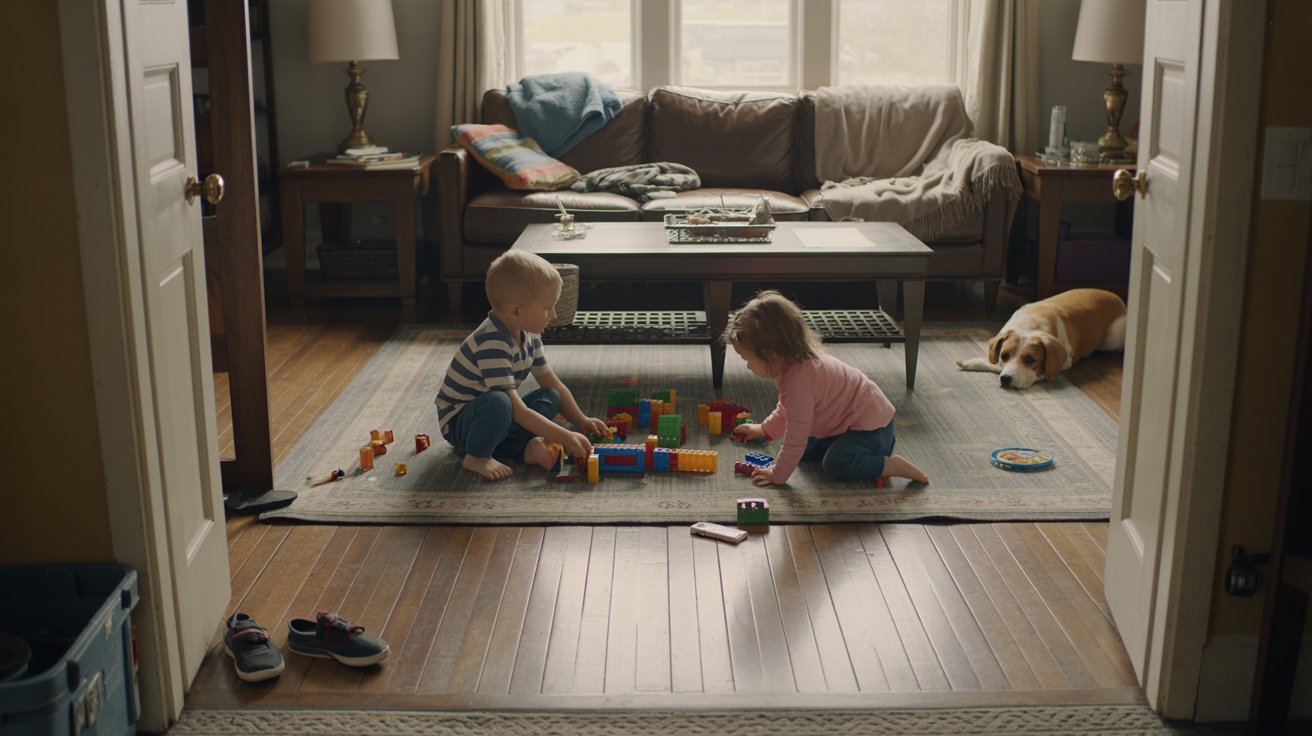
Every room serves a different purpose, so flooring should support how the space gets used rather than follow a single rule across the house. When I review floor plans with clients, we walk room by room because the best solution often changes within the same home.
Here’s how I typically guide homeowners.
Living Room
Living rooms evolve constantly. Furniture shifts, children play on the floor, and guests gather here more than anywhere else.
Rugs usually perform better because they define seating zones while allowing flexibility when layouts change. Cleaning also becomes easier since high-traffic areas can get refreshed without replacing the entire floor.
Large rugs create comfort while preserving flexibility. If you’re unsure whether a medium rug will anchor your seating properly, seeing a real 6×9 rug size comparison often clarifies layout decisions.
Bedroom
Bedrooms benefit most from consistent softness. People step onto the floor barefoot every morning and appreciate the warmth immediately.
Carpet often becomes the preferred option because it reduces noise and creates a calm atmosphere. Many homeowners describe carpeted bedrooms as feeling quieter and more restful.
Some homeowners still prefer hardwood with large rugs under the bed, especially when they want future flexibility.
Kids’ Rooms and Play Areas
Children drop toys, spill drinks, and spend time playing on the floor.
Carpet cushions fall and absorb sound, which helps in multi-level homes. Cleaning routines matter here, so stain-resistant carpet works best.
Families who expect room purposes to change later often use large rugs instead, so updates remain simple as children grow.
Dining Rooms
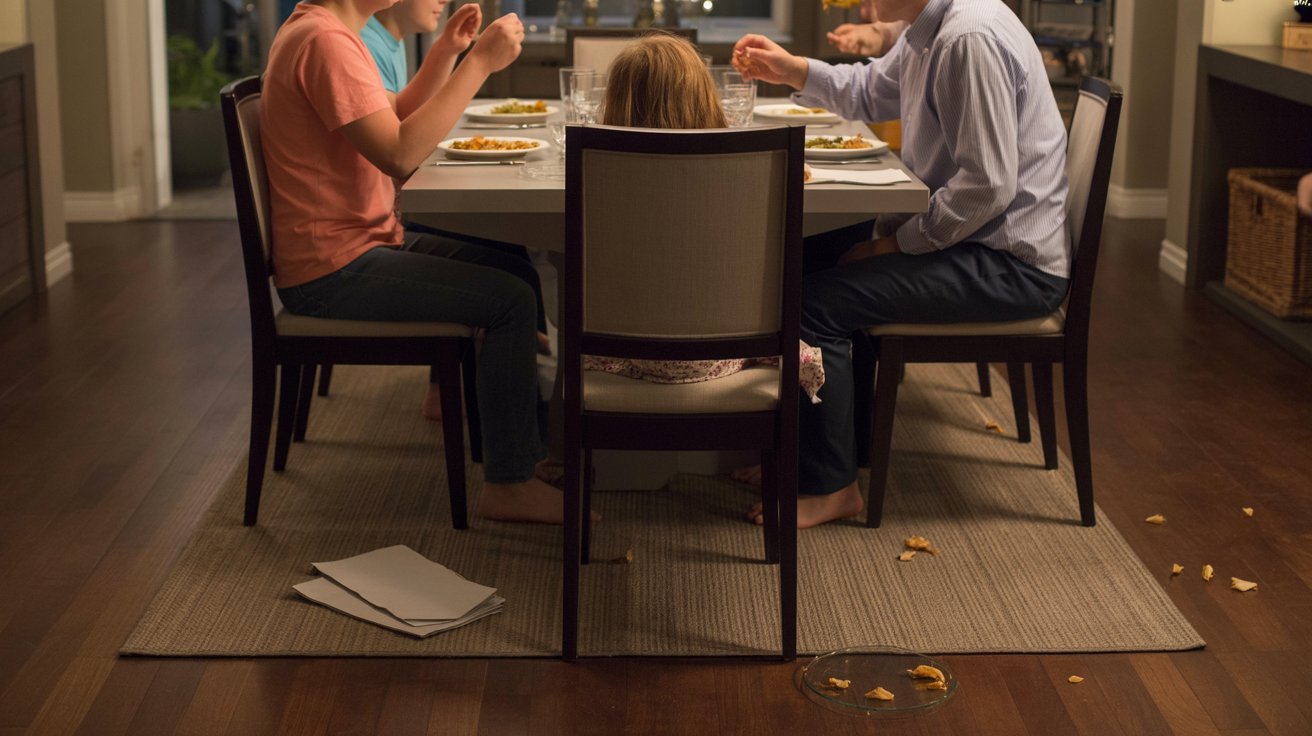
Dining rooms experience frequent spills and chair movement.
Rugs usually work better because cleaning remains easier, and homeowners can replace them when wear becomes visible. Choosing a durable, low-pile rug helps chairs move smoothly.
Following proper dining rug sizing prevents chairs from catching on the edges when guests sit down.
Carpet in dining areas often shows wear faster due to food and drink accidents.
Hallways and Entryways
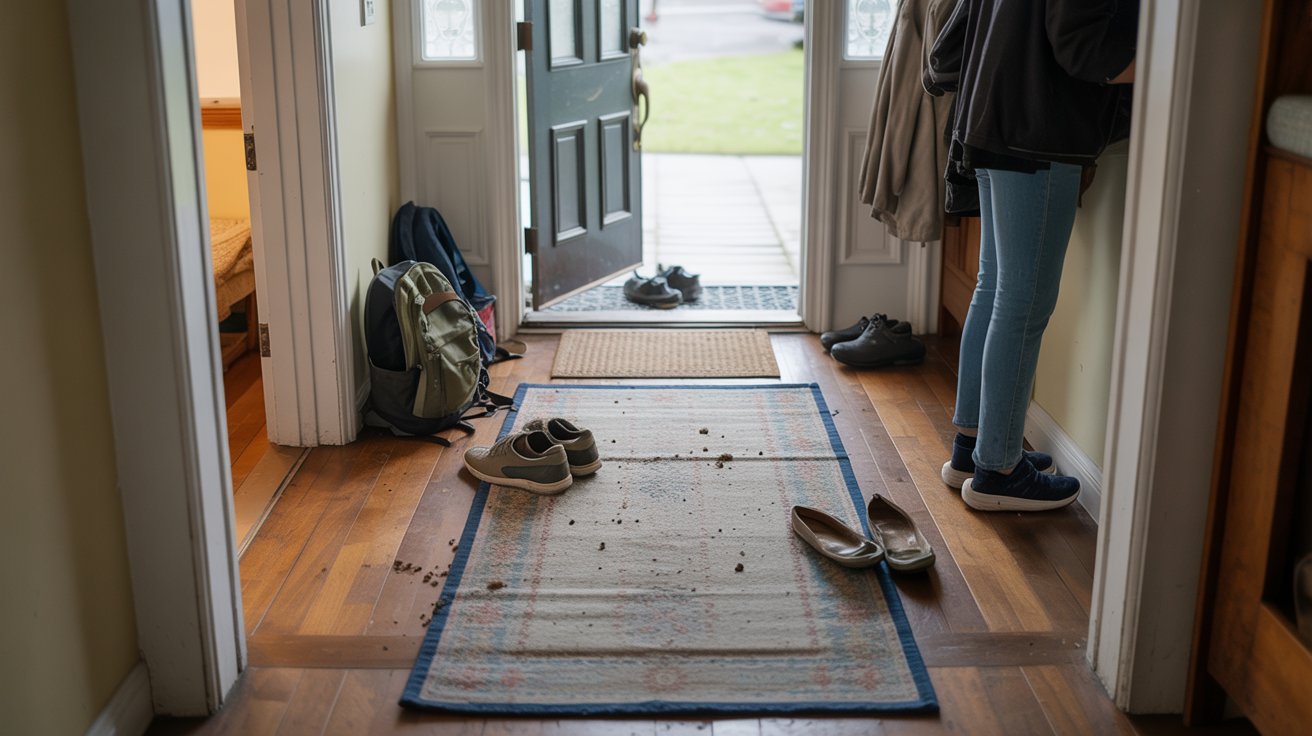
These areas see constant traffic, dirt, and moisture.
Rugs or runners provide targeted protection while remaining replaceable. Entryway rugs capture dirt before it travels deeper into the home.
Permanent carpet in these zones tends to wear unevenly over time.
Basements and Home Offices
Basements often feel cooler, so carpet adds welcome warmth and comfort. Media rooms and office spaces benefit from sound absorption, too.
Home offices sometimes perform better with rugs over hard flooring, especially when rolling chairs require smoother movement.
What This Room Guide Teaches
Different rooms demand different priorities. Comfort, flexibility, cleaning ease, and noise control all matter depending on how the space functions.
I often remind homeowners:
Flooring decisions succeed when each room gets treated according to how people truly use it.
Common Carpet and Rug Mistakes Homeowners Regret Later
Many flooring regrets have nothing to do with color or style. They usually happen because small practical details get ignored during exciting renovation decisions. Over the years, I’ve walked into homes where people loved their choices at first, yet grew frustrated months later.
Avoiding a few common mistakes saves both money and stress.
Choosing Rugs That Are Too Small
This mistake appears more often than any other. Homeowners pick rugs based on price or availability, and the result leaves furniture floating awkwardly outside the rug edges.
A rug should anchor furniture, not sit like a small island in the center of the room.
A simple rule I share:
- Front legs of sofas and chairs should rest on the rug at a minimum.
- Ideally, all major seating furniture sits on the rug.
Rooms instantly feel larger and more cohesive when rug sizing works correctly.
Ignoring Traffic Patterns
Homes develop natural walking paths. Carpet in heavy walkways shows wear faster, and rugs placed directly in these zones wear unevenly.
I often ask clients to imagine how people walk through rooms before finalizing layouts. Slight furniture adjustments or rug placement changes often extend flooring life significantly.
Choosing Style Without Considering Maintenance
High-pile carpet feels luxurious in showrooms, yet busy households struggle to maintain it. Similarly, light-colored rugs look beautiful but reveal stains quickly in homes with pets or children.
Design decisions should match the cleaning energy levels at home.
Many clients later admit they chose showroom beauty over daily practicality.
Skipping Rug Pads
Some homeowners try to save money by placing rugs directly on floors. Rugs slide, corners curl, and wear increases underneath.
A good rug pad:
- Prevents slipping
- Adds comfort
- Protects flooring
- Extends rug lifespan
Small investments here prevent daily annoyance later.
Installing Carpet in Rooms That Change Purpose
Rooms rarely keep the same function forever. Guest rooms become offices, nurseries become study spaces, and living rooms evolve over time.
Permanent carpet sometimes limits these transitions. Flexible flooring choices often age better as households change.
What Experience Teaches About Flooring Mistakes
Most regrets stem from overlooking daily habits rather than poor taste. Flooring decisions succeed when they consider how people move, clean, and adapt spaces over time.
I often tell clients:
Floors should support real living patterns, not only first impressions.
Materials and Construction Matter More Than Most People Realize
Many flooring disappointments trace back to material choices rather than design decisions. Two carpets or rugs may look almost identical in a showroom, yet they behave completely differently after a year of daily use.
When clients ask why one option lasts longer than another, the answer usually lies in fibers and construction methods rather than appearance.
Let me simplify what actually matters.
Common Carpet Fibers and How They Perform
Carpet performance largely depends on the fiber used. Each option balances durability, softness, and maintenance differently.
Here’s how the most common choices behave in real homes:
| Carpet Fiber | What I Notice in Homes | Best For |
|---|---|---|
| Nylon | Holds shape well and resists wear in busy homes | Hallways, living rooms, stairs |
| Polyester | Feels soft and resists stains, but can flatten in traffic areas | Bedrooms, moderate traffic rooms |
| Olefin (Polypropylene) | Handles moisture well but crushes easily | Basements, low-traffic areas |
| Wool | Naturally durable and luxurious, though higher maintenance | Premium bedrooms, quiet spaces |
In busy homes, nylon usually survives longest, while polyester works nicely where softness matters more than durability.
Popular Rug Materials and What They Feel Like Over Time
Rugs vary widely in construction, which explains why prices and longevity differ so much.
Here’s what I observe most often:
| Rug Material | Real-Life Performance | Good For |
|---|---|---|
| Wool | Durable, comfortable, and ages beautifully | Living rooms, bedrooms |
| Cotton | Easy to clean, but wears faster | Casual spaces, washable rugs |
| Jute & Sisal | Natural look but rougher underfoot | Layering, low-moisture spaces |
| Synthetic blends | Affordable and stain-resistant | Family rooms, rental homes |
Wool rugs often outlast cheaper materials and even improve with age, though synthetic rugs work well where replacement may happen sooner.
Pile Height Changes Everything
Pile height refers to how tall or dense the fibers feel underfoot. Many homeowners choose based on softness without realizing how the pile affects cleaning and wear.
In real homes:
- High pile feels plush but traps dirt more easily.
- Medium pile balances comfort and maintenance.
- Low pile cleans easily and handles heavy traffic well.
Dining rooms and hallways benefit from lower pile surfaces, while bedrooms often enjoy softer textures.
Construction Influences Longevity
Hand-knotted or tightly woven rugs often last decades, while machine-made rugs serve well for shorter-term needs.
Carpet density also matters. Dense carpet resists crushing and looks fresh longer, even when pile height stays moderate.
Lessons I Share With Homeowners After Years of Design Work
After working on residential interiors for years, certain flooring patterns repeat themselves across homes, budgets, and design styles. Trends shift, families grow, and layouts change, yet homeowner feedback about flooring choices sounds surprisingly similar over time.
These lessons often help people make decisions faster because they come from lived experiences rather than catalogs or showrooms.
Most Homeowners Underestimate How Quickly Rooms Change
I often install flooring for a specific purpose, and a few years later, the room serves an entirely different function.
Guest rooms become nurseries. Playrooms become offices. Dining rooms turn into study areas. Permanent flooring choices sometimes struggle to keep pace with these changes.
Homes evolve faster than we expect, so flexibility often wins in shared living areas.
Comfort Matters More Over Time Than Style
People rarely complain that their flooring looks outdated. They complain when it feels uncomfortable or difficult to maintain.
Soft surfaces in bedrooms continue to feel rewarding long after décor trends pass. Similarly, flexible rugs in living spaces allow updates without renovation expenses.
I often hear homeowners say they appreciate choices that make daily routines easier, not necessarily choices that look best in magazines.
Cleaning Effort Shapes Long-Term Satisfaction

Flooring that demands constant attention eventually frustrates homeowners. Families prefer solutions that tolerate busy schedules and occasional messes.
Households with children or pets especially appreciate flooring that forgives accidents and adapts to changing needs.
Homes stay happier when maintenance feels manageable.
Flooring Choices That Age Well Share One Trait
Successful flooring decisions usually align with how homeowners truly live rather than how they hope to live.
I remind clients during planning meetings:
Choose flooring for real routines, not ideal routines.
Rooms feel better when materials support daily behavior rather than resist it.
What Experience Teaches About Carpet vs Rugs
Bedrooms consistently benefit from soft, continuous comfort. Living spaces perform better when flexibility exists. Maintenance expectations matter more than appearance in long-term satisfaction.
Once homeowners understand how their routines influence flooring success, decisions become much clearer.
Final Decision Guide: Should You Choose Carpet or a Rug?
After walking through comfort, costs, maintenance, and real-life use, the decision usually becomes clearer. Most homeowners already know which direction feels right once they picture their daily routines honestly.
Here’s the simple decision guide I share at the end of consultations.
Choose Carpet If…
- You want consistent softness across the entire room.
- The room’s purpose will likely stay the same for years.
- Noise reduction and warmth matter to you.
- You prefer a uniform, cozy feel in private spaces.
- Bedrooms or basements need added comfort.
Choose a Rug If…
- You like refreshing your space without major renovations.
- Room layouts change often.
- Cleaning flexibility matters in busy homes.
- Pets or kids create frequent messes.
- You want to highlight existing hard flooring.
Still Unsure? Use This Simple Rule
I often tell homeowners:
Use carpet where life slows down. Use rugs where life keeps changing.
Bedrooms, media rooms, and quiet spaces benefit from permanent softness. Living rooms, offices, and shared spaces benefit from flexibility. Once you match flooring choice to how a room actually functions, the decision rarely feels complicated.
Carpet vs Rug: Frequently Asked Questions
Is carpet or a rug cheaper in the long run?
Carpet usually costs less per square foot initially, though installation adds to the expense. Over time, replacing worn carpet across an entire room can cost more than replacing individual rugs when needed.
Homes that change layouts often save money using rugs, while stable room layouts make carpet a reasonable long-term investment.
Can rugs damage hardwood floors?
Rugs protect hardwood when paired with proper rug pads. Damage typically occurs when rugs trap moisture or when backing materials react with finishes.
I always recommend breathable, non-slip rug pads to prevent scratches and allow airflow.
Can you place rugs over carpet?
Yes, and I often encourage it. Rugs add texture, color, and definition to low-pile carpet. They help anchor furniture layouts and refresh rooms without replacing flooring.
A rug pad or heavier rug helps prevent shifting.
Which option lasts longer?
Durability depends on material quality and household activity levels. High-quality carpet lasts many years in moderate-use rooms, while well-made rugs can last decades when rotated and maintained.
Traffic patterns usually determine lifespan more than product type.
Which option helps resale value more?
Many buyers appreciate carpet in bedrooms because it feels warm and comfortable. Buyers often prefer visible hardwood or hard flooring in shared living areas, where rugs offer flexibility.
Balanced flooring choices tend to appeal to the widest range of future buyers.
Can carpet be turned into a rug?
Yes. Installers can cut carpet remnants to size and bind edges to create custom rugs. Many homeowners use leftover carpet pieces for basements, offices, or utility spaces.
Final Thoughts: Choose Flooring That Supports the Way You Live
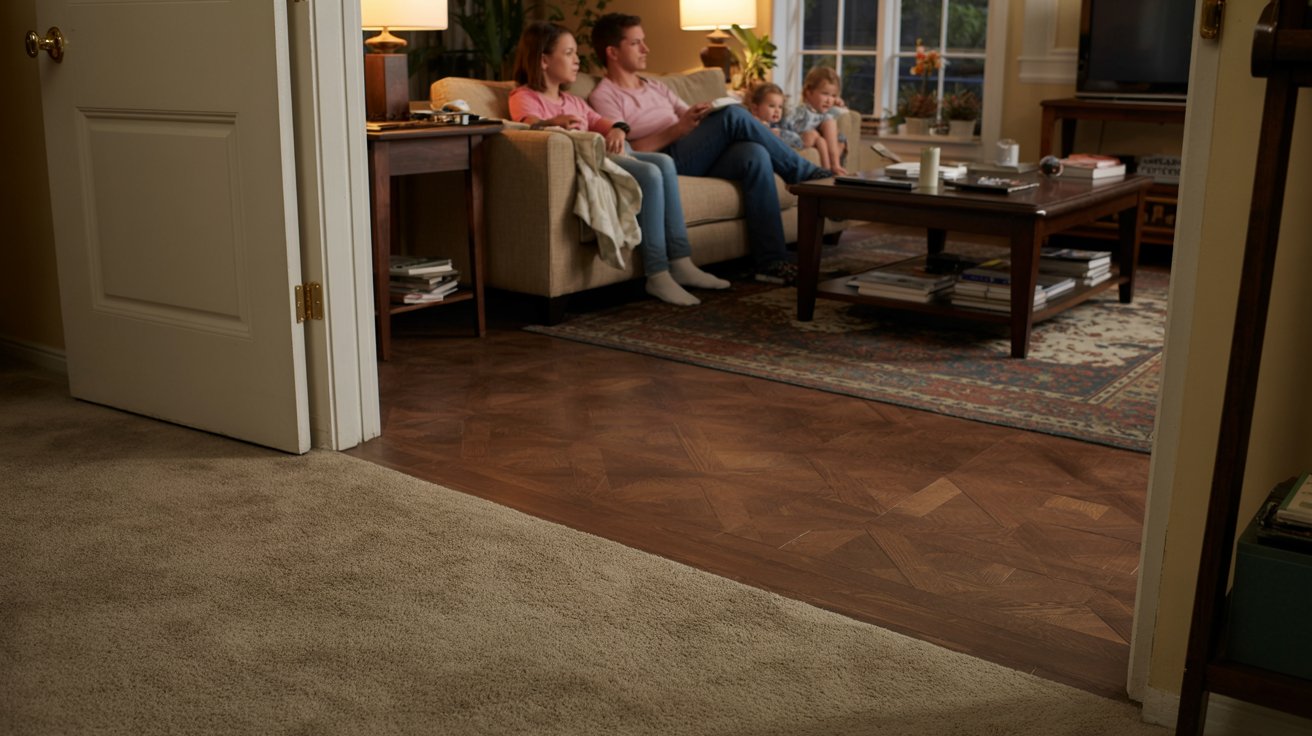
After years of designing homes and revisiting them long after projects finish, I’ve learned something simple: flooring choices feel right when they support daily life without demanding constant attention.
Carpet brings comfort and quiet into spaces meant for rest. Rugs bring flexibility into spaces that keep evolving. Neither option wins everywhere, and most successful homes use a thoughtful mix of both.
Before making your decision, picture ordinary days rather than perfect ones. Think about rushed mornings, movie nights, pets running in from the yard, or quiet evenings in the bedroom. Flooring lives with you through all of it.
When your choice supports those routines, you rarely think about the floor again-and that’s usually the sign you chose well.