A few years ago, I was replacing siding on a home in a wildfire-adjacent area of Colorado. The homeowner had done her research and narrowed it down to two options: premium vinyl or fiber cement. On paper, the vinyl job was $6,000 cheaper. She almost went with it. We talked for about twenty minutes. She went with fiber cement.
Two years later, a brush fire moved through the neighborhood. Her house was fine. Three vinyl-sided homes nearby had significant damage from radiant heat alone – panels warping, and in one case, fully melting away from the sheathing.
Fiber cement is not invincible. But for certain homes, in certain climates, the $6,000 difference turns out to be one of the better financial decisions a homeowner can make.
| Here’s the short answer: fiber cement siding costs $8–$12 per square foot installed, lasts 25–50 years, needs repainting roughly every 15–25 years, and recoups approximately 114% of its installation cost at resale according to the JLC 2025 Cost vs. Value Report. It’s non-combustible, pest-resistant, dimensionally stable, and works in virtually every US climate zone. The downsides are upfront cost, installation weight, and a low native R-value. |
If that’s enough, stop here. If you’re trying to figure out whether fiber cement is right for your specific home — not just right in theory — keep reading.
What is Fiber Cement Made of?
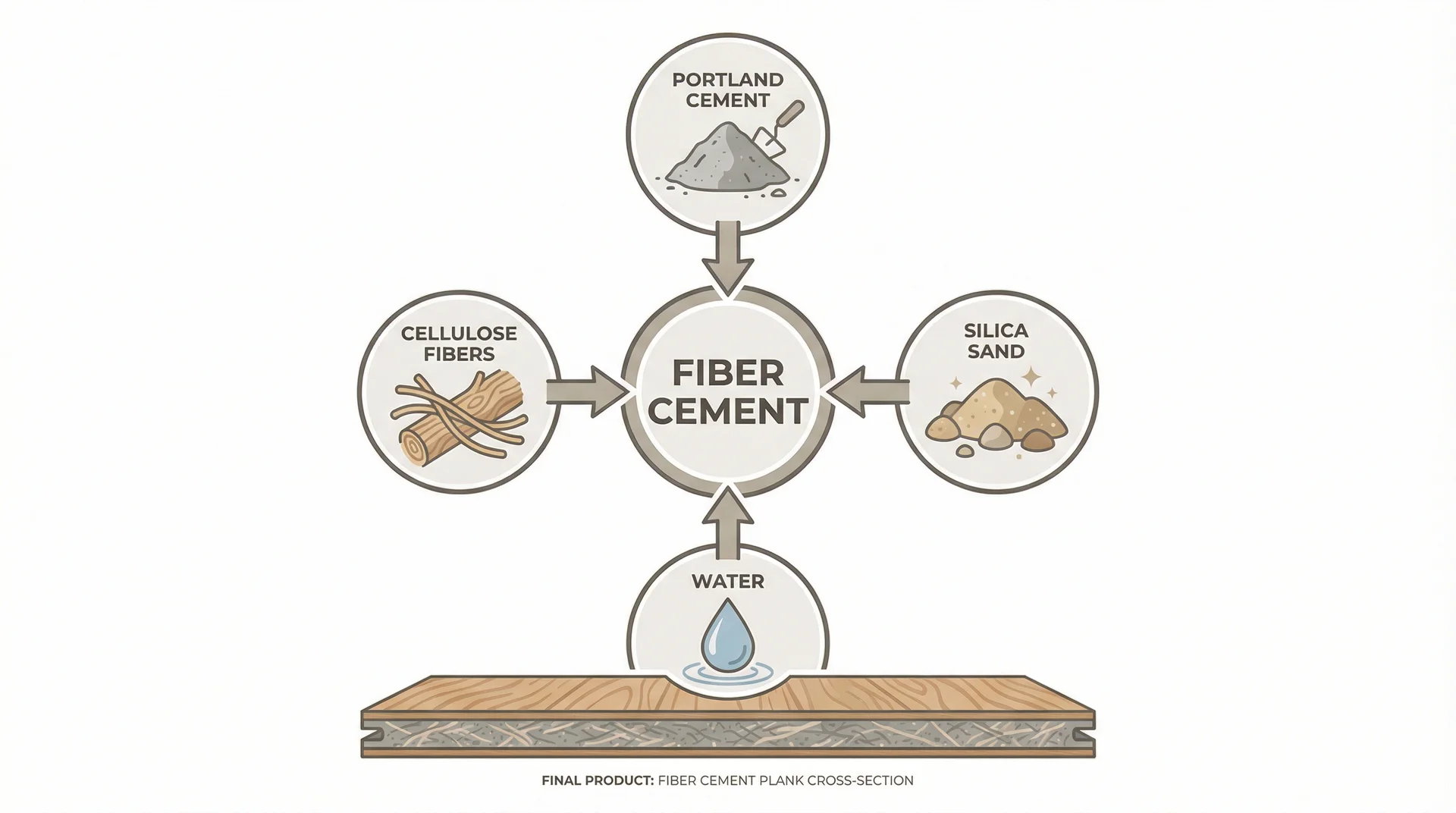
Fiber cement is a composite made from four ingredients: Portland cement, silica sand, water, and cellulose fibers from wood pulp. These get blended, poured into molds or pressed into sheets, then steam-cured under high pressure.
The steam-curing step is what separates quality fiber cement from cheaper alternatives — it densifies the material, accelerates cement hydration, and produces a board far more dimensionally stable than standard cast material.
Portland cement provides compressive strength. Sand adds stability and prevents cracking under compression. Cellulose fibers give the board tensile flexibility, which keeps it from shattering under impact, the way pure cement would.
The balance between these three is where manufacturer formulations diverge, which is why different brands perform differently in impact and freeze-thaw tests.
James Hardie adds proprietary additives specifically for freeze-thaw performance. Their HZ5 products sold in cold-climate markets include treatments that prevent micro-cracking when absorbed moisture freezes inside the cement matrix. No other brand does this at scale, and it’s a real differentiator.
What it can look like:
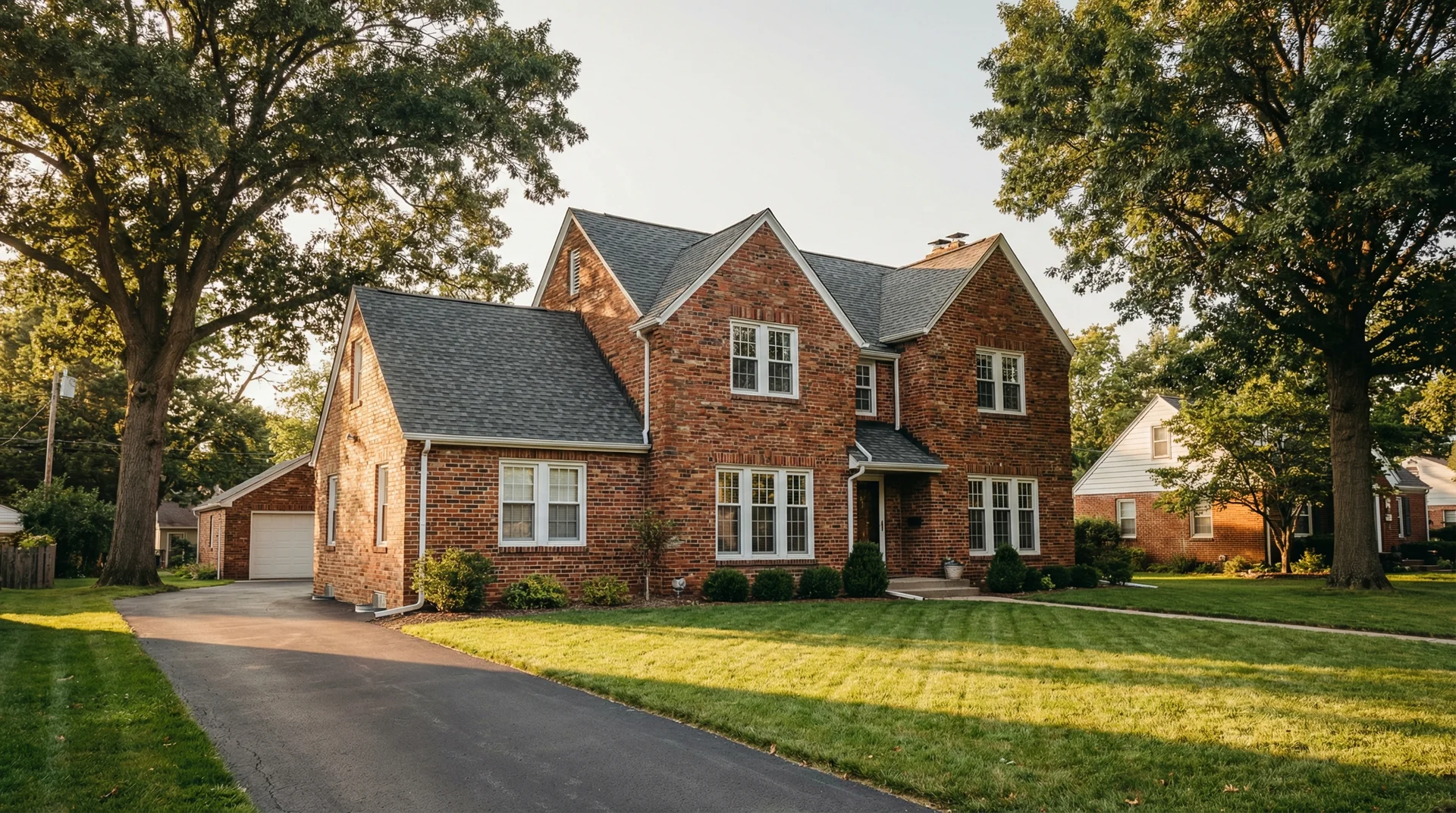
- Wood grain lap siding (most common for residential)
- Smooth finish lap for contemporary and transitional homes
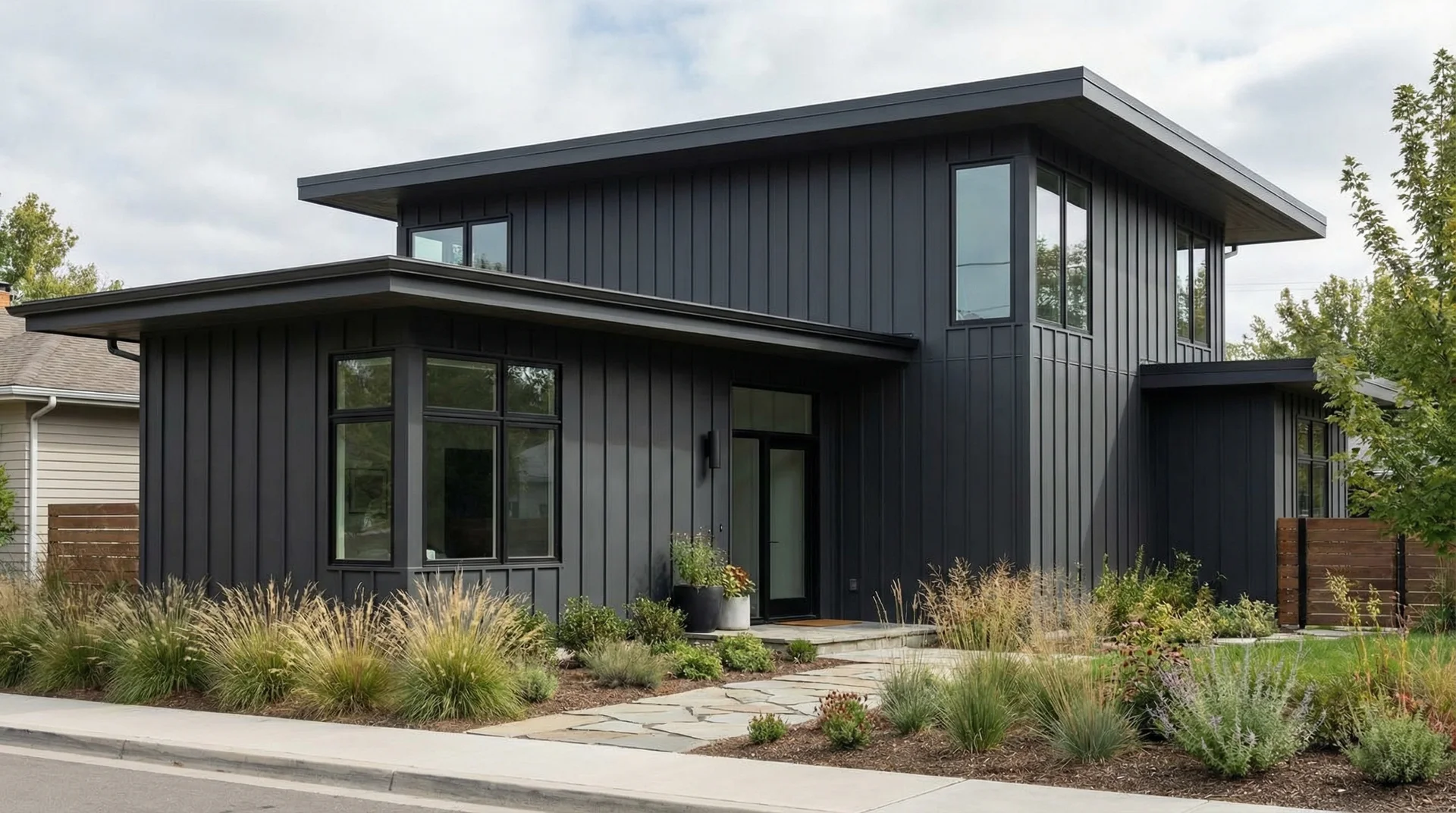
- Vertical board-and-batten panels
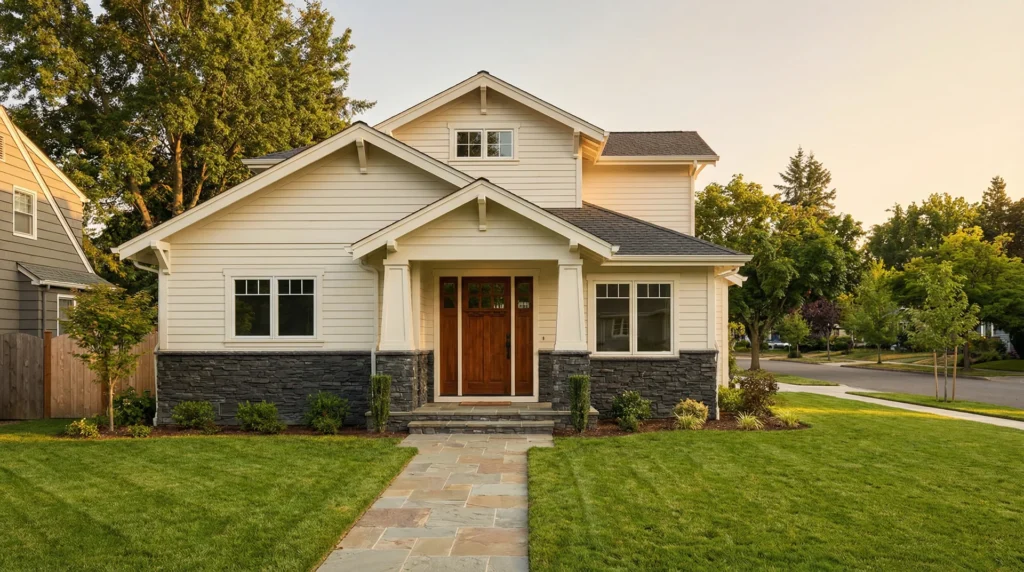
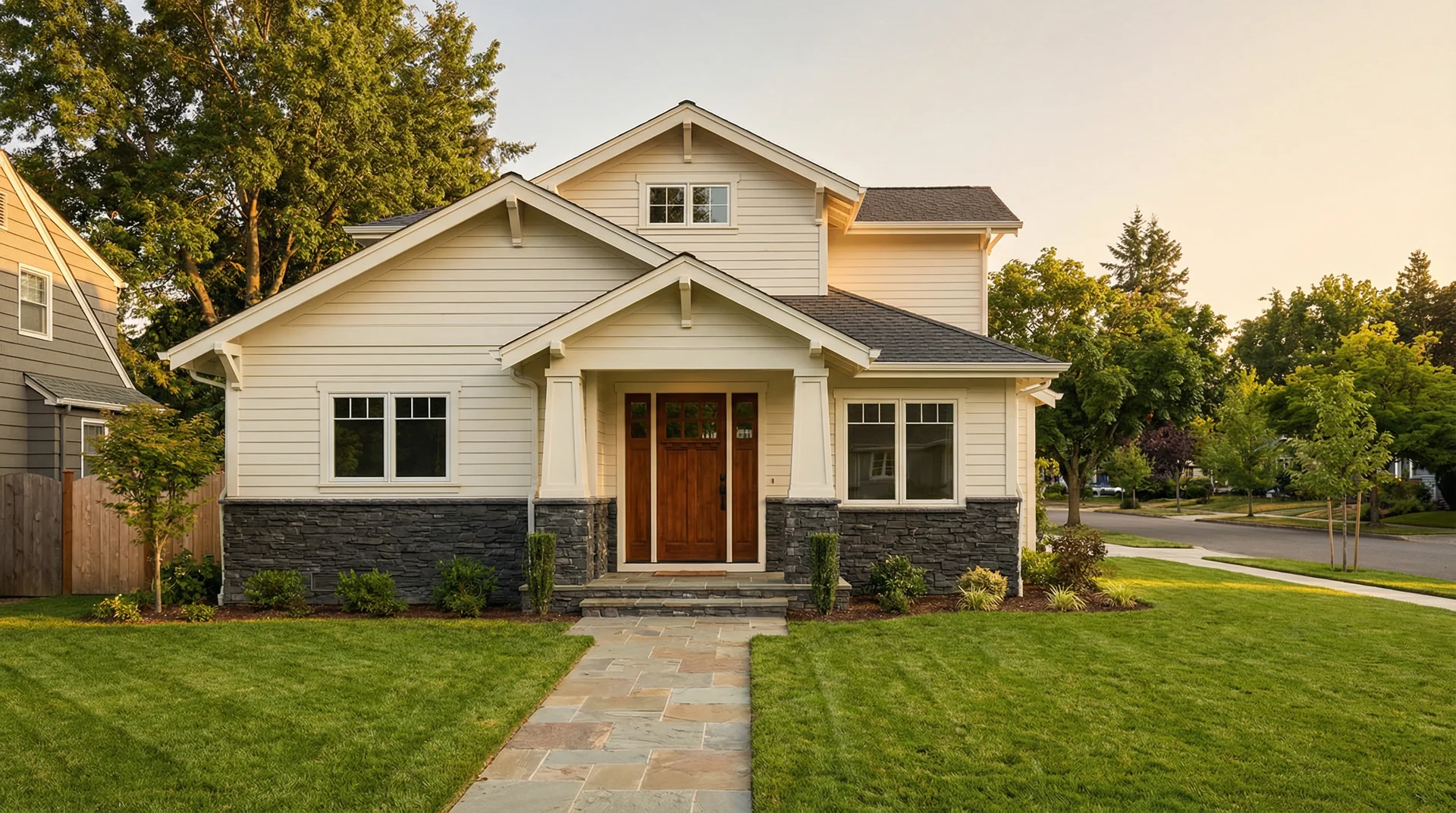
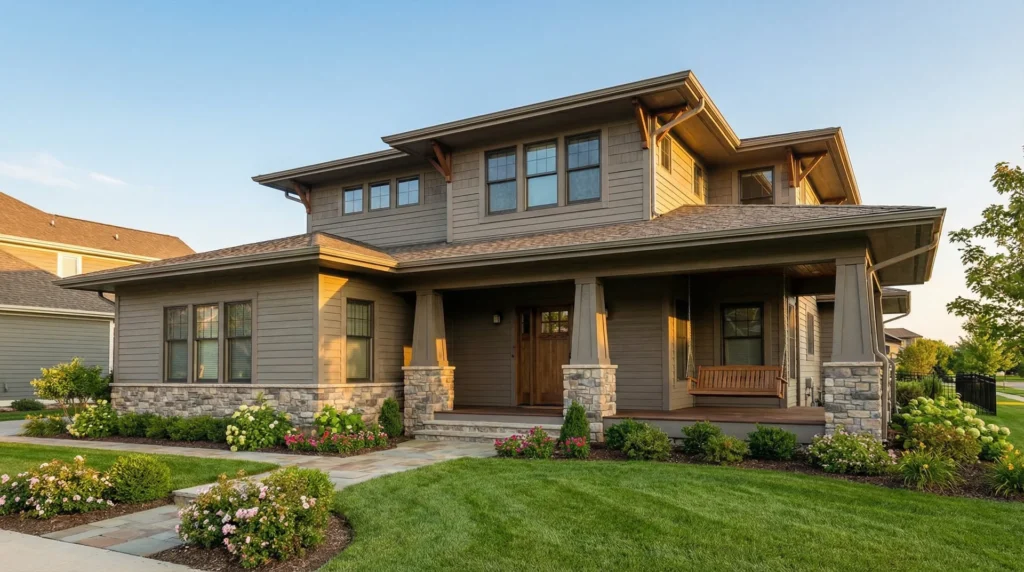
- Shingle and shake profiles for cottage, coastal, and craftsman styles
- Large architectural panels for modern or commercial-adjacent residential
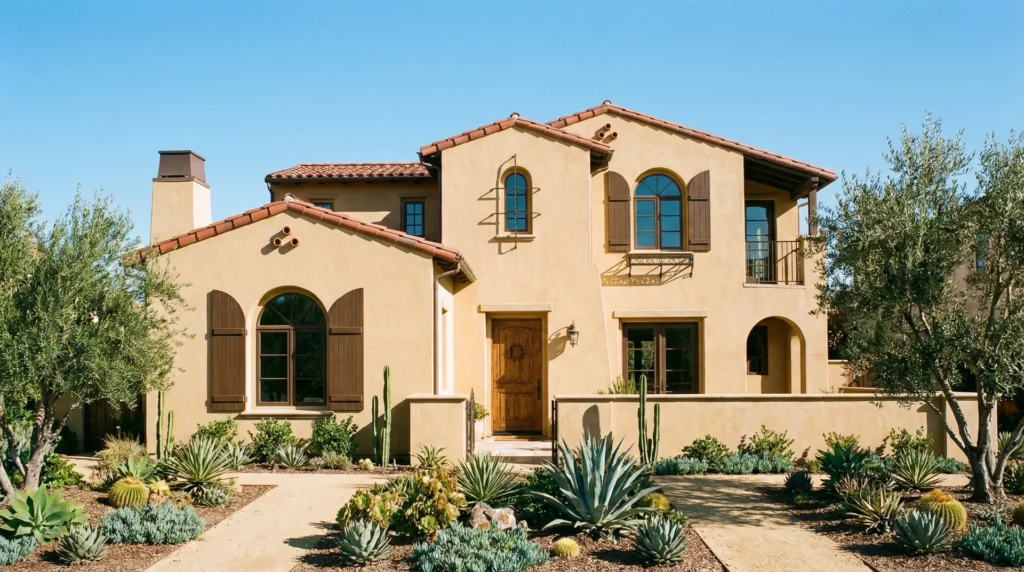
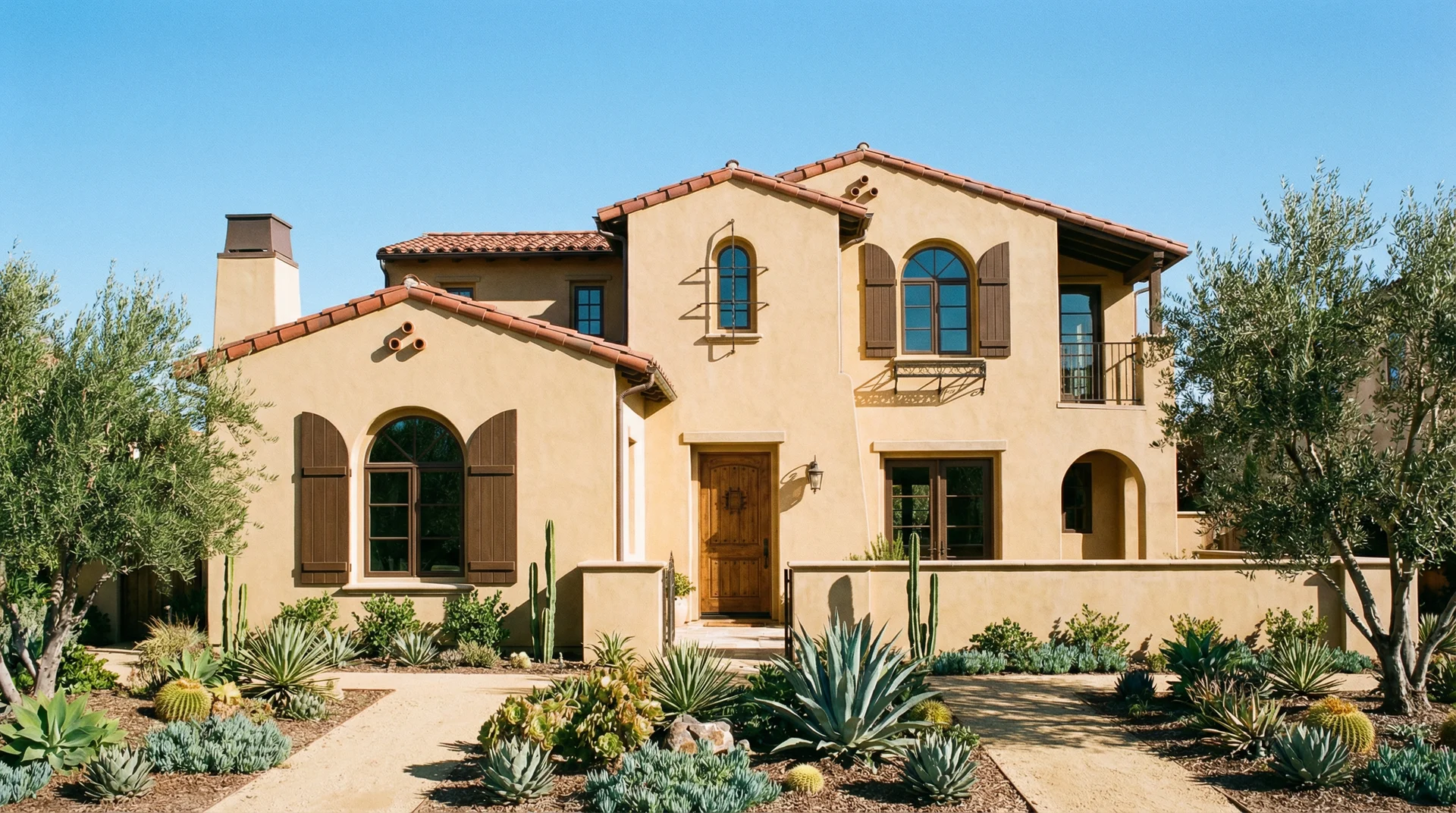
- Stucco-textured panels for Mediterranean and Southwest aesthetics
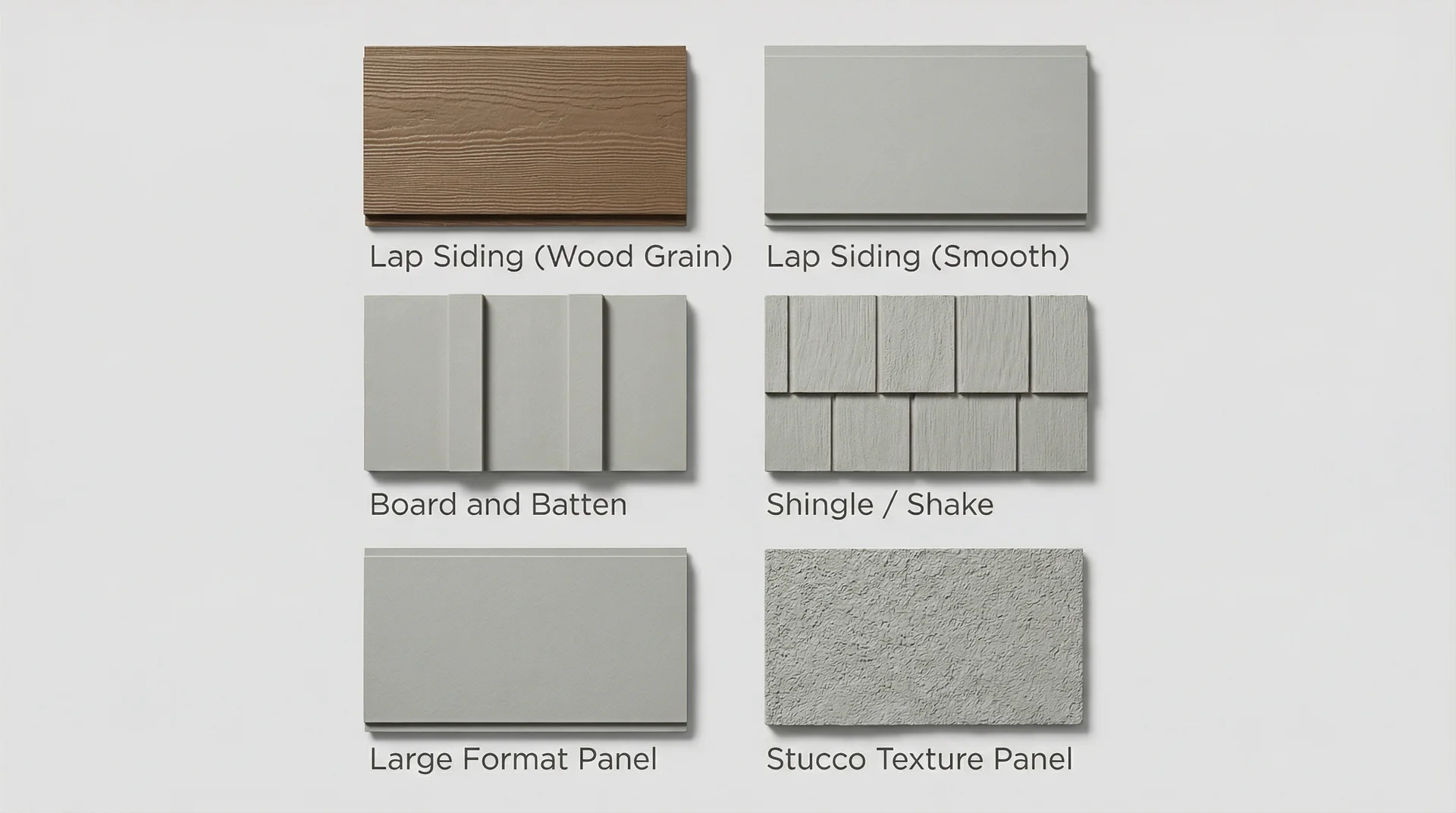
I’ve installed fiber cement on 1920s craftsman homes where you genuinely couldn’t tell it from original wood, and on ultra-modern builds where large-format smooth panels gave the exterior an architectural quality most materials can’t replicate.
How Does Fiber Cement Actually Perform?
Specs on a data sheet are one thing. What a material does on an actual wall over fifteen years in a specific climate is the only thing that matters in my line of work.
Against moisture
Fiber cement is semi-permeable, meaning it manages moisture rather than blocking it entirely. This is a functional advantage in most climates; materials that are completely moisture-impermeable can trap vapor against the wall assembly and cause condensation problems at the sheathing level. Fiber cement lets the wall breathe while resisting liquid water.
The vulnerability points are cut edges and butt joints. Raw cut edges expose the cellulose fiber content directly to moisture. Most manufacturers require cutting-edge treatment with primer as a warranty condition. It adds maybe thirty seconds per cut. Contractors who skip it are cutting a corner that shortens the product’s moisture resistance at every joint.
I’ve seen fiber cement installations that lasted 40 years without a problem and installations that showed moisture damage in five years. The difference was almost always installation quality, not material failure.
Against fire
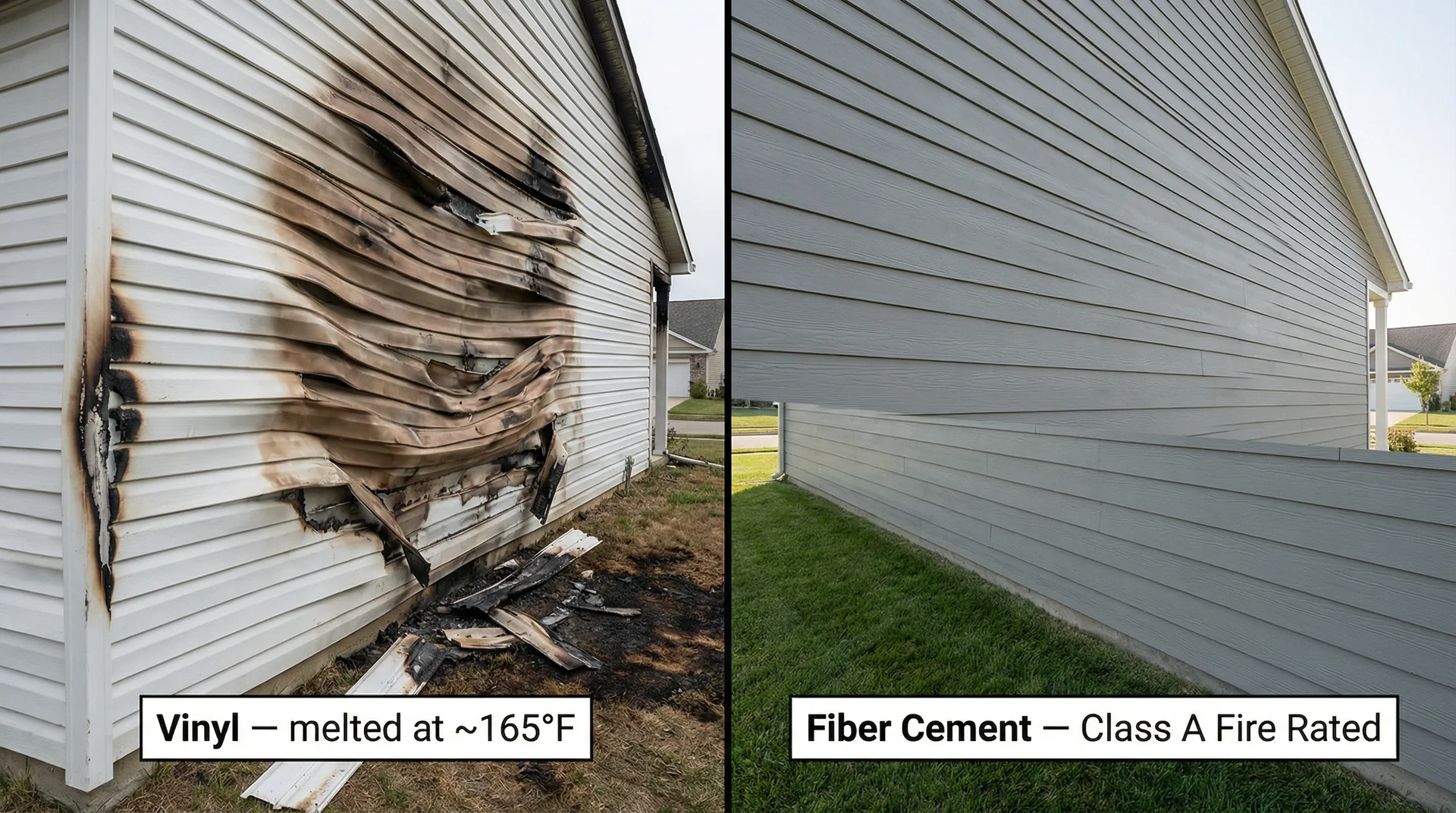
Fiber cement carries a Class A fire rating, the highest available for residential siding. It’s non-combustible under direct flame exposure. In wildfire-adjacent regions, an ember cast from a fire a quarter-mile away can land on combustible siding and ignite it.
Fiber cement doesn’t ignite from ember exposure. In a direct flame scenario, the material chars rather than burns, significantly slowing fire spread compared to wood or vinyl.
Several insurance carriers offer meaningful premium reductions for homes clad in Class A fire-rated siding in designated wildfire risk zones.
If you’re in California, Colorado, Oregon, or any high fire hazard severity zone, ask your insurance carrier directly before finalizing your material choice. The savings over fifteen years can offset a substantial portion of the upgrade cost.
Against impact
Fiber cement handles wind-driven debris and hail well, particularly when board thickness matches the climate. Standard residential planks run 5/16 inch. Premium products like James Hardie Artisan run 5/8 inch. Thicker plank, more impact resistance.
In the Midwest, where hail is a genuine annual risk, this difference shows up consistently in post-storm inspections. I’ve walked jobs after hail events where vinyl and aluminum showed impact marks across every exposed surface, while the fiber cement walls looked undamaged. That’s not a marketing claim, it’s a pattern I see repeatedly.
Against insects and rot
Fiber cement contains nothing insects find nutritionally appealing. Termites and wood-boring insects leave it alone. In coastal Florida, the Southeast, and Hawaii, where subterranean and Formosan termites cause enormous structural damage, switching from wood-based materials to fiber cement isn’t just an aesthetic upgrade.
Similarly, the cement content means biological rot can’t occur. Fungi and mold can’t colonize cement. The cellulose fiber content can theoretically support mold if the board is perpetually saturated, but that requires installation failure rather than material failure.
Choosing Fiber Cement: Honest Cost Breakdown
Most guides mislead homeowners here. Here’s the complete picture.
Material cost only
| Product type | Approx. material cost |
|---|---|
| Standard HardiePlank lap siding | $0.70–$2.50/sq. ft. |
| Premium/Artisan lap profiles | $3.00–$8.00/sq. ft. |
| Allura lap siding | $1.50–$4.20/sq. ft. |
| Fiber cement panels (large format) | $2.00–$6.00/sq. ft. |
| Fiber cement shingles | $1.50–$3.50/sq. ft. |
Do not use these numbers to budget your project.
Total installed cost
When you add labor, trim boards, house wrap, flashing, disposal of existing siding, and any substrate repairs discovered during teardown, the total installed cost runs $8–$12 per square foot for standard residential applications. Complex profiles or difficult-access homes push toward $14–$18 per square foot.
For a 2,000 square foot home, the realistic total project budget is $16,000–$24,000.
The Angi and This Old House 2025–2026 estimates put the range at $7,500–$21,000 for a 1,500 square foot home, reflecting regional labor variation and product choice.
What drives the cost up: multi-story homes, complex architectural profiles with a lot of trim work, premium product lines, substrate damage discovered on teardown, and factory-painted ColorPlus finishes.
What keeps it at the lower end: single-story homes with simple rectangular footprints, standard lap profiles, primed product the homeowner paints post-installation, and bundling the siding project with other exterior work to share mobilization and staging costs.
10-year and 20-year cost
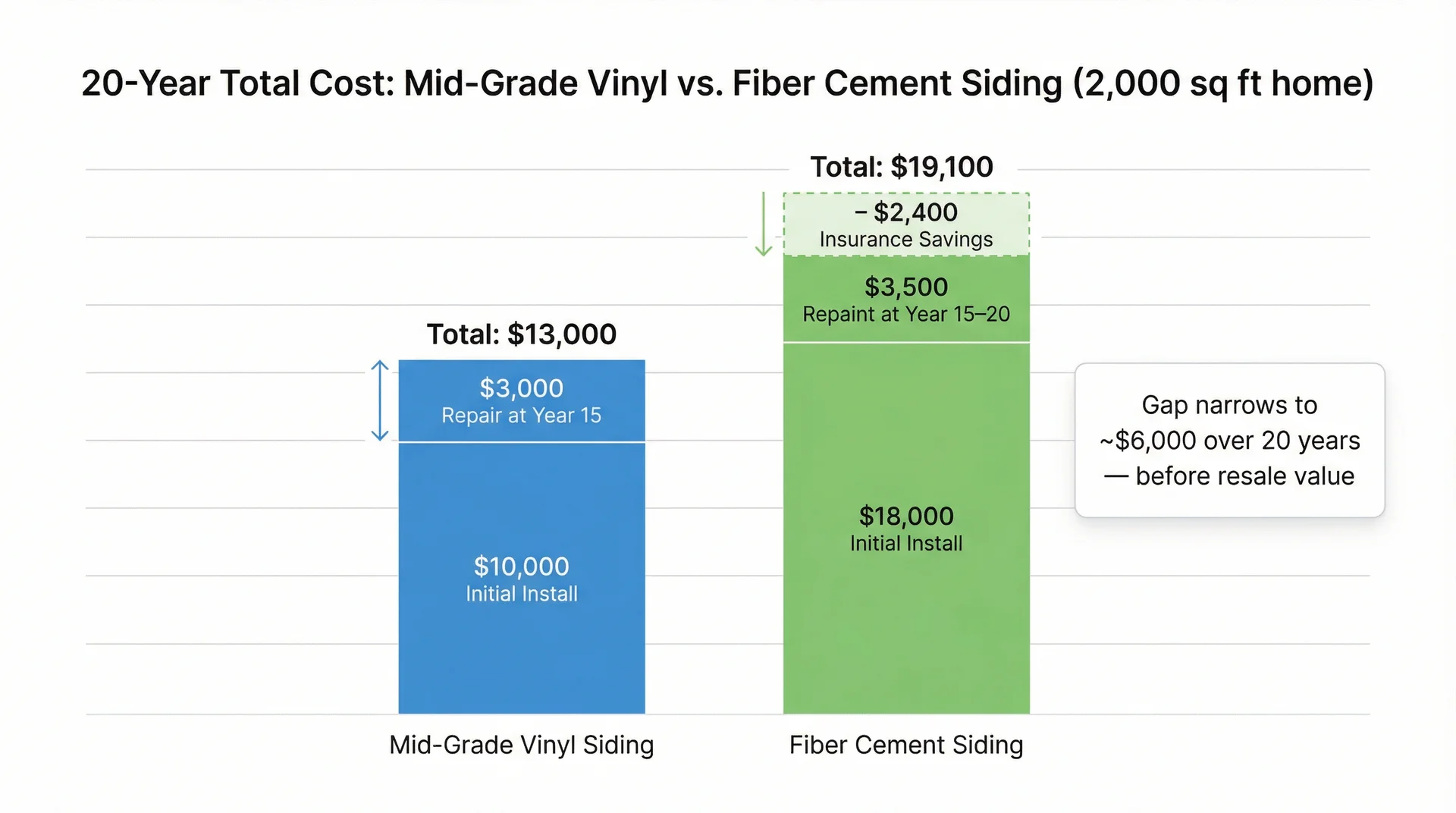
Where fiber cement wins the financial argument is on a long horizon. Here’s a comparison against vinyl over twenty years on a hypothetical 2,000 square foot home:
| Mid-grade vinyl | Fiber cement | |
|---|---|---|
| Initial installation | $10,000 | $18,000 |
| Repair/replace at year 15 | $3,000 | $0 |
| Repaint at year 15–20 | $0 | $3,500 |
| Insurance premium savings (est.) | $0 | $2,400 |
| 20-year total | $13,000 | $19,100 |
The gap shrinks to about $6,000 over twenty years, and this doesn’t account for resale value. The JLC 2025 Cost vs. Value Report shows fiber cement recoups 114% of its installation cost at resale, making it one of only four remodeling projects that return more than it costs. If you plan to sell within the next fifteen years, the financial calculus shifts further toward fiber cement.
Comparing Fiber Cement vs. Vinyl
This is the decision most homeowners are actually making.
| Factor | Fiber cement | Vinyl |
|---|---|---|
| Upfront cost | Higher ($8–$12 installed) | Lower ($3–$8 installed) |
| Lifespan | 25–50 years | 20–40 years |
| Fire resistance | Class A non-combustible | Melts at ~165°F |
| Impact resistance | High | Moderate (brittle in cold) |
| Maintenance | Repaint every 15–25 years | Occasional washing only |
| Can be repainted | Yes, freely | No (voids warranty) |
| Climate versatility | All climates | Moderate climates best |
| R-value | ~0.15–0.50 (low) | ~0.61 standard; 3.0–4.0 insulated |
| Resale impact | Strong (114% ROI, 2025) | Moderate (97% ROI, 2025) |
The R-value gap is worth addressing directly. Fiber cement performs poorly as an insulator on its own. If energy efficiency is a primary concern, pair it with continuous rigid foam insulation behind the cladding, increasingly standard in high-performance residential construction, adding roughly $1–$2 per square foot to installation cost.
My honest take: if you live in a moderate climate, plan to sell within ten years, and have a firm budget ceiling, quality vinyl is a reasonable choice. If you’re in a fire risk zone, hurricane region, harsh climate, or plan to own the home for fifteen-plus years, fiber cement is the better decision when you run the numbers honestly.
Comparing Fiber Cement vs. Natural Wood
I love natural wood siding. I’ve restored it on hundred-year-old homes and understand exactly why homeowners choose it. But I won’t pretend the maintenance comparison is close.
| Factor | Fiber cement | Natural wood (cedar) |
|---|---|---|
| Upfront cost | $8–$12 installed | $10–$18 installed |
| Lifespan | 25–50 years | 10–40 years (maintenance-dependent) |
| Maintenance cycle | Repaint every 15–25 years | Repaint/restain every 3–5 years |
| 20-year maintenance cost (est.) | $3,500–$5,000 | $15,000–$22,000 |
| Fire resistance | Class A | Combustible |
| Pest resistance | Full | Partial (cedar has natural resistance) |
The case for natural wood is real. For historic homes with authenticity requirements, for clients who want an exterior that ages without any factory pretense, and for homeowners in mild dry climates with the discipline to maintain it, natural wood is a legitimate first choice.
For everyone else, fiber cement’s wood-grain profiles have become convincing enough that the visual difference is negligible at normal viewing distance. I’ve had clients standing three feet from the wall ask me whether they were looking at real cedar or fiber cement.
Which Brand of Fiber Cement is Right for You?
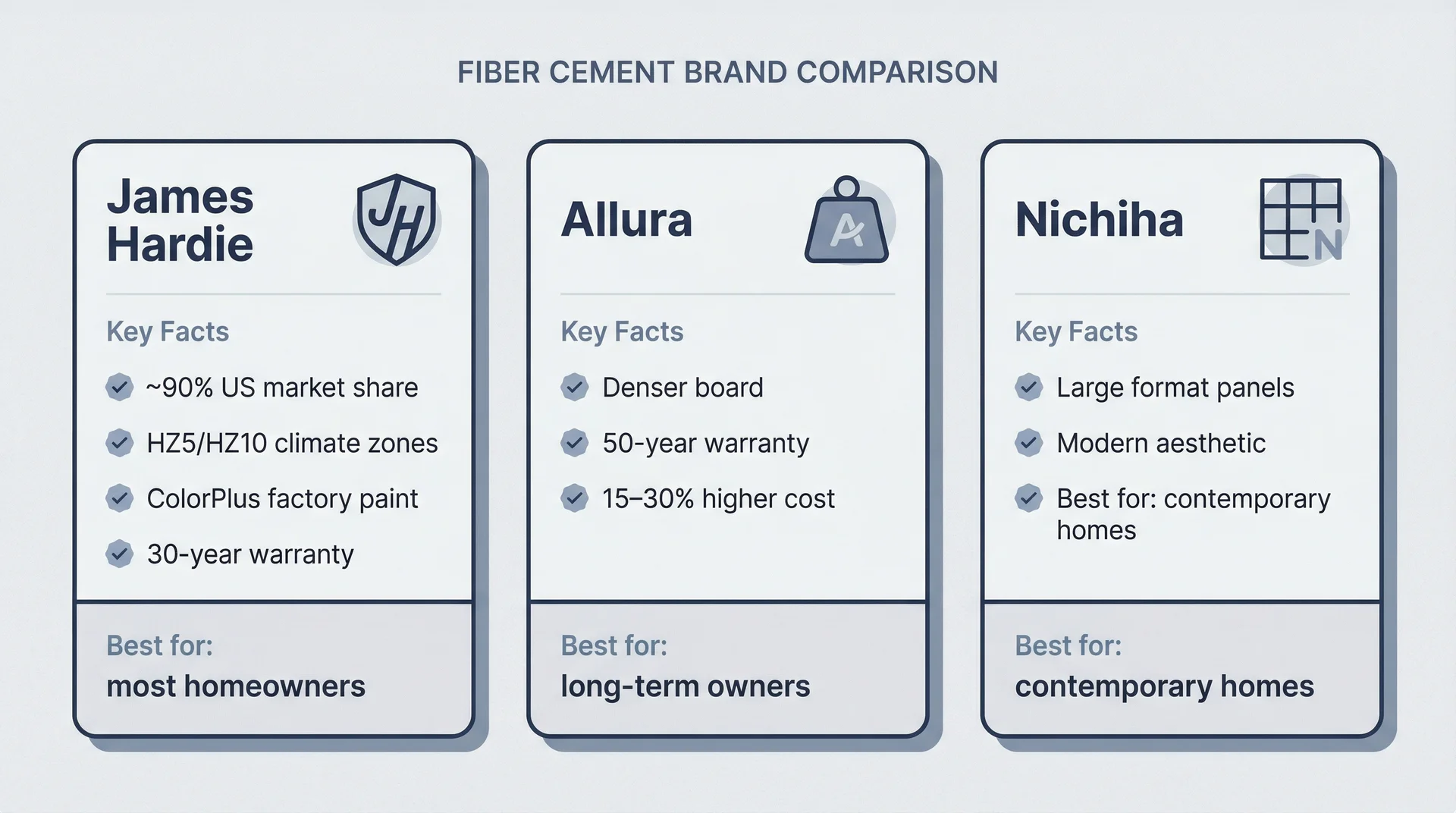
James Hardie controls roughly 90% of the US fiber cement siding market. That dominance reflects two things: they invented modern fiber cement technology in the 1980s, and their contractor network, distribution infrastructure, and warranty support are the most developed in the industry. That said, Allura and Nichiha are legitimate alternatives.
James Hardie
The HardieZone System is the most meaningful product differentiator in the category. James Hardie manufactures two primary climate formulations: HZ5 for cold-climate zones where freeze-thaw performance matters, and HZ10 for warm-climate applications.
The HZ5 formulation includes additives that prevent moisture absorption and freeze-thaw micro-cracking that can compromise standard fiber cement in Minnesota winters. No other brand does this at scale.
ColorPlus Technology applies factory-baked paint in multiple coats before shipping, with a 15-year fade warranty. The baked-on process produces a more durable, more even finish than field painting and eliminates the labor cost of painting at installation.
Contractor certification matters more than most homeowners realize. James Hardie’s Preferred and Elite Preferred programs certify installers in proper techniques, and warranty coverage is directly tied to using a certified contractor on many product lines. An uncertified installer can void the product warranty.
Cost: $0.70–$5.25/sq. ft. material; $9,350–$14,210 average total installed cost for a standard home. Warranty: 30-year non-prorated limited.
Allura
Allura produces a denser board than standard HardiePlank, which translates to marginally better impact resistance in independent testing. Their 50-year warranty is longer than Hardie’s 30-year coverage.
Where Allura loses ground is in distribution and contractor familiarity. James Hardie operates eight US manufacturing plants; Allura operates three. Fewer contractors have deep Allura installation experience, which creates its own quality risk. Pricing typically runs 15–30% higher than comparable Hardie products.
Best fit: homeowners in regions well-served by Allura’s distribution network who want a slightly denser product and longer warranty, and who can confirm their contractor has genuine Allura installation experience.
Nichiha
Nichiha excels in large-format architectural panels for modern and transitional residential designs. Their residential product line is smaller than Hardie’s or Allura’s, but their panel profiles are distinctive and produce a genuinely high-end modern aesthetic that neither competitor matches as well. For contemporary homes wanting large smooth panels rather than lap siding, Nichiha is worth evaluating.
My field recommendation: For most US homeowners doing a full re-siding project, James Hardie with a certified installer is the lowest-risk choice. The contractor network, climate-specific engineering, warranty infrastructure, and resale recognition all support that recommendation.
If Allura has strong contractor representation in your region and the 50-year warranty matters to your ownership horizon, get quotes on both and compare installed costs.
What a Good Installation of Fiber Cement Actually Looks Like?
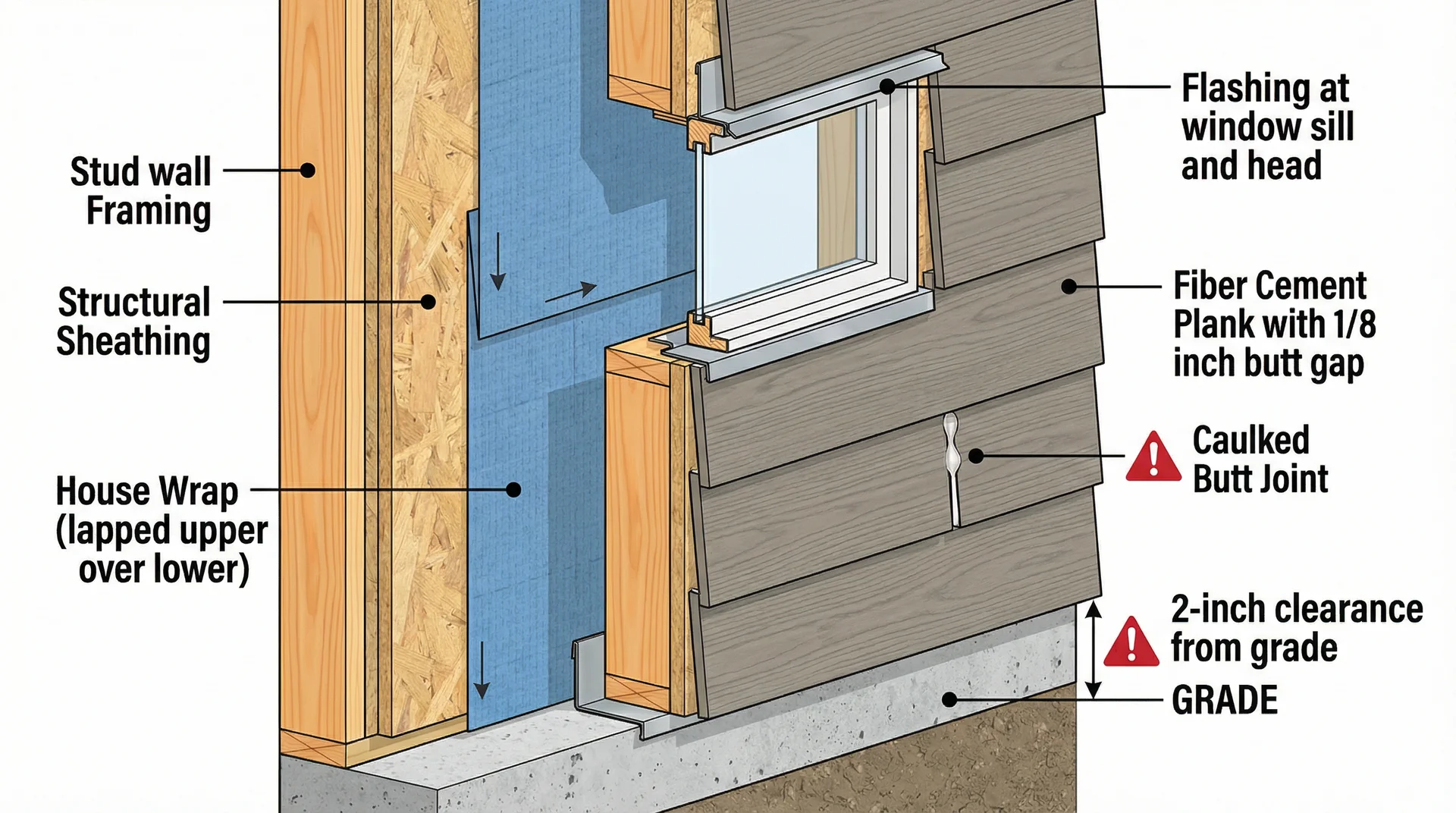
The gap between a correctly installed and incorrectly installed fiber cement job is enormous and invisible until damage surfaces, sometimes years later.
House wrap before anything goes on the wall. Fiber cement is a cladding system, not a waterproofing system. The weather-resistive barrier behind it is what keeps water out of your wall assembly. It needs to be continuous, lapped correctly (upper layers over lower layers, never the reverse), and integrated with window and door flashing at all sill, jamb, and head locations. I walk every job before the first panel goes up to confirm this layer is right.
Edge priming on every cut. This step adds maybe thirty seconds per cut. Contractors who skip it are shortening the product’s moisture resistance at every joint.
Butt joint gaps and caulking. Horizontal lap siding requires a specific gap between butt ends of adjacent planks, typically 1/8 inch, to allow for thermal expansion. Caulk fills this gap. Missing caulk at butt joints is the single most common pathway for water infiltration in fiber cement installations I’ve inspected.
Correct nailing. Each manufacturer specifies nail type, diameter, penetration depth, and spacing. Overdriven nails create stress fractures. Underdriven nails create movement that eventually works the plank loose. I carry a nail depth gauge on every job because this detail gets rushed when crews are working fast.
Clearance from grade and rooflines. Fiber cement requires a minimum 2-inch clearance from finished grade and 1-inch clearance from roof surfaces. These clearances prevent capillary moisture wicking at the bottom course and prevent rot at roof-to-wall intersections where water accumulates.
Paint within 180 days if using a primed product. Leaving primed boards exposed indefinitely allows moisture to work into the wood fiber content of the primed surface layer. Most manufacturers specify painting within 180 days of installation. This is a warranty condition, not a suggestion.
Questions to ask your installer
Before signing any contract, these questions separate contractors who understand fiber cement from those who treat it like any other plank siding:
- Are you a James Hardie Preferred or Elite Preferred Contractor? (Ask to see the certification.)
- What weather-resistive barrier do you use, and how do you lap it at corners and openings?
- How do you handle cut edges during installation?
- What nailing schedule and nail specification do you follow?
- What is your workmanship warranty, and does it cover water infiltration?
- Can I see a recently completed fiber cement job I can inspect?
A contractor who answers these fluently and specifically is worth trusting with a $15,000–$20,000 project. One who answers vaguely is not.
Who Should Choose Fiber Cement? Who Shouldn’t?
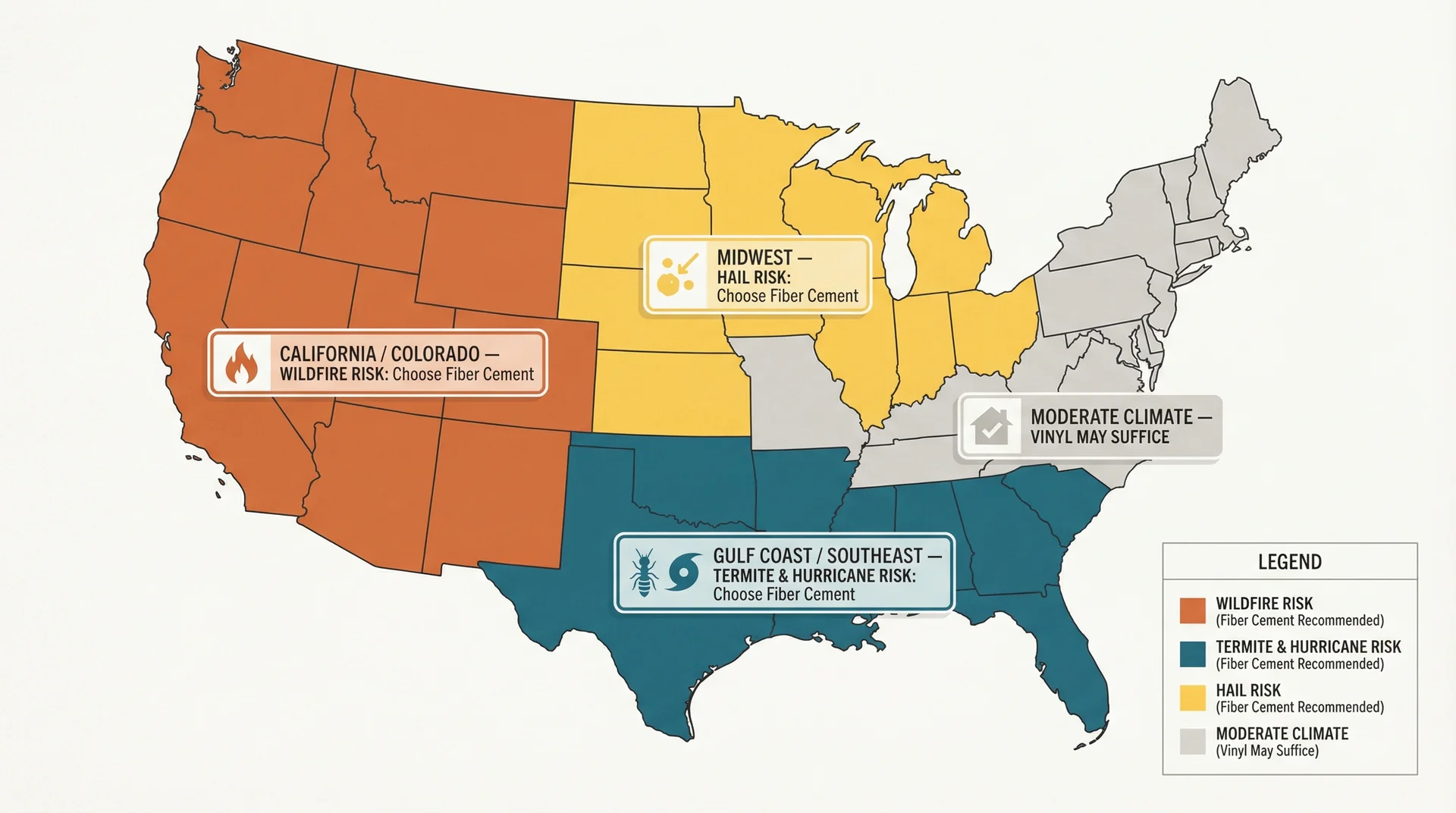
Fiber cement makes sense if:
- You live in a wildfire risk zone, hurricane region, coastal area, or climate with genuine temperature extremes
- You plan to own the home for more than ten years
- Resale value in your market rewards premium exterior materials
- Your HOA requires a wood-look aesthetic, but wood itself is impractical
- You want a material you won’t think about for fifteen or more years between major maintenance events
- You’re in a high-insect zone (Southeast, Gulf Coast, Hawaii) where wood-based materials carry structural risk
Look elsewhere if:
- Your budget genuinely can’t absorb the upfront cost, and you live in a moderate, stable climate
- You’re selling within five years, and your neighborhood market doesn’t reward the premium (get a local real estate opinion on this before assuming)
- You want the best thermal performance without adding external insulation. Insulated vinyl will outperform uninsulated fiber cement on R-value alone
- You’re renovating a historic home where natural wood is specified
Frequently Asked Questions
How long does fiber cement siding last?
With proper installation and maintenance, 25–50 years. James Hardie offers a 30-year warranty. Allura offers 50. Real-world installations from the early 1990s are still performing well in many climates.
Does fiber cement need to be painted?
Yes, eventually. Factory-painted products carry a 15-year finish warranty. After that cycle, repainting is required. Field-painted installations typically need repainting every 10–15 years, depending on climate and paint quality.
Can fiber cement be installed over existing siding?
In some cases, if the existing substrate is sound and the added weight is within structural tolerance. In most full re-siding projects, removal is recommended so you can inspect and repair the sheathing layer. Always have the substrate assessed before deciding on the overlay approach.
Is fiber cement worth it over vinyl?
For most homeowners outside of mild climates and short ownership periods, yes. The fire resistance, impact durability, paint flexibility, and resale performance outperform vinyl over a ten-plus-year ownership horizon. The 114% vs. 97% resale recoup gap reflects this in the market data.
What’s the difference between HardieZone HZ5 and HZ10?
HZ5 is James Hardie’s cold-climate formulation, engineered for freeze-thaw performance and moisture resistance in freezing conditions. HZ10 is their warm-climate formulation for the South and West Coast. If you’re buying Hardie in the Northeast or Midwest, confirm your contractor is using the HZ5 product.
How do I find a certified James Hardie installer?
James Hardie’s website has a contractor locator by zip code. Elite Preferred status requires a higher volume of completed installations and a stricter training and audit process than the base Preferred level.
Does fiber cement save on insurance?
In wildfire risk zones and some coastal regions, yes. The Class A fire rating qualifies fiber cement for reduced premiums with many carriers. Call your insurance agent before finalizing your material choice; the savings over ten to fifteen years can be meaningful.