

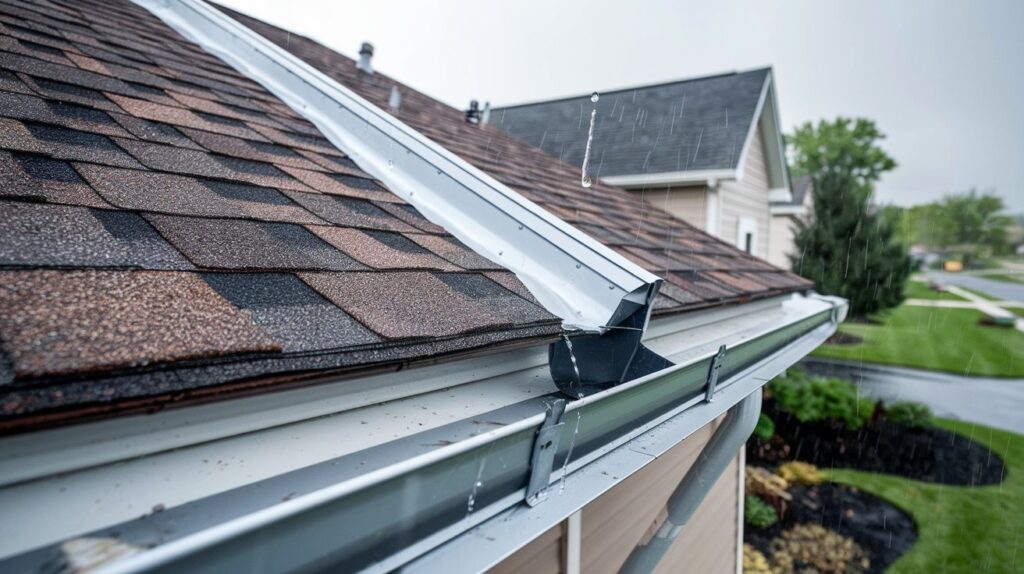
Many homeowners hear roofing terms thrown around and assume they all mean the same thing.
That confusion shows up often with gutter apron vs drip edge, two parts that look similar but solve different problems.
Gutters are often assumed to handle all rainwater automatically, and many people think any metal edge along the roof does the same job.
After more than a decade working on remodeling projects, I’ve seen how often small misunderstandings about roof edges lead to larger moisture problems later.
Water behaves in tricky ways around shingles and gutters, and small construction details matter.
This guide goes deeper than typical advice and explains how each component works, where it belongs, and why both often appear on modern roofs.
Let’s start by clearly separating what each component actually does.
What is the Difference Between a Gutter Apron and a Drip Edge?
At first glance, both components look like simple metal strips along the edge of the roof. Because they appear similar, many homeowners assume they are interchangeable pieces.
They serve different purposes and handle water differently.
A gutter apron moves water directly into the gutter. A drip edge helps move water away from the fascia and roof edges in areas where gutters may not catch runoff effectively.
The difference becomes clearer when you consider how water leaves shingles. The shape and placement of each component guide water in different directions once it reaches the roof edge.
Quick Comparison
|
Feature |
Gutter Apron |
Drip Edge |
|
Main purpose |
Sends water into gutters |
Pushes water away from the roof edge |
|
Typical location |
Roof eaves above gutters |
Roof rakes and sometimes eaves |
|
Water direction |
Into the gutter trough |
Away from the fascia and the roof edge |
|
Overhang design |
Minimal or none |
Small outward overhang |
The confusion happens because both manage water near the roof edge, yet they address different water movement problems.
Water rarely drops straight down. Wind, roof slope, and surface tension influence how runoff travels.
During inspections on homes where fascia boards were already deteriorating, I often found that water had been slipping behind gutters for years because the wrong edge treatment was installed or missing altogether.
What a Gutter Apron Does
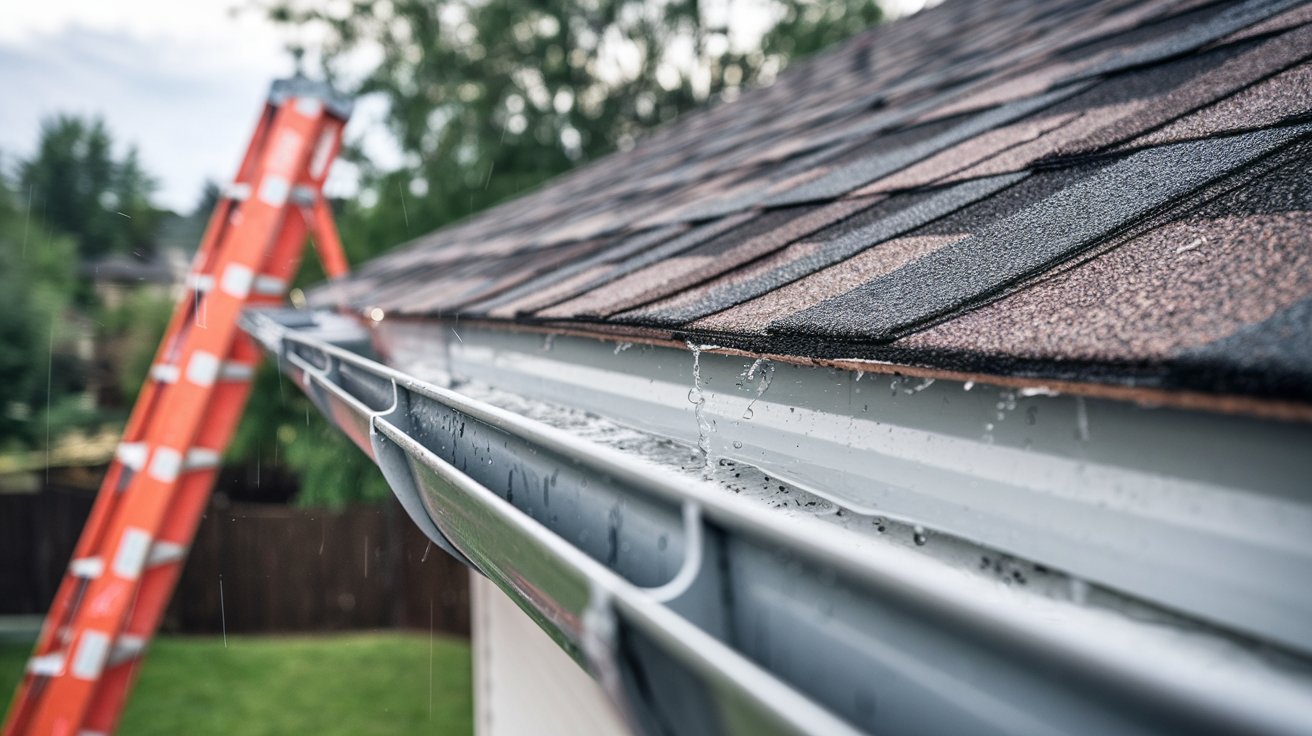
A gutter apron slides under the first row of shingles and extends slightly into the gutter. Its shape helps runoff leave the shingles smoothly and land inside the gutter channel.
Without an apron, water can:
- Slide behind the gutter
- Stick to the roof decking edges
- Run down fascia boards
Water clings to surfaces due to surface tension. Instead of falling cleanly into the gutter, runoff sometimes curves backward and slips behind it. The apron interrupts that path and pushes water forward into the gutter.
Performance changes depending on roof pitch and rainfall intensity.
Steeper roofs move water faster, which sometimes causes water to shoot past gutters.
Shallower roofs move water more slowly, increasing the chance of water slipping behind gutters.
The apron helps manage both situations by guiding runoff consistently.
During heavy storms, gutters sometimes overflow even when installed correctly. The apron still helps protect the fascia area behind the gutter, which is where long-term moisture damage usually begins.
Over the years, I’ve seen this hidden damage appear in homes where gutters seemed functional from the outside.
What a Drip Edge Does
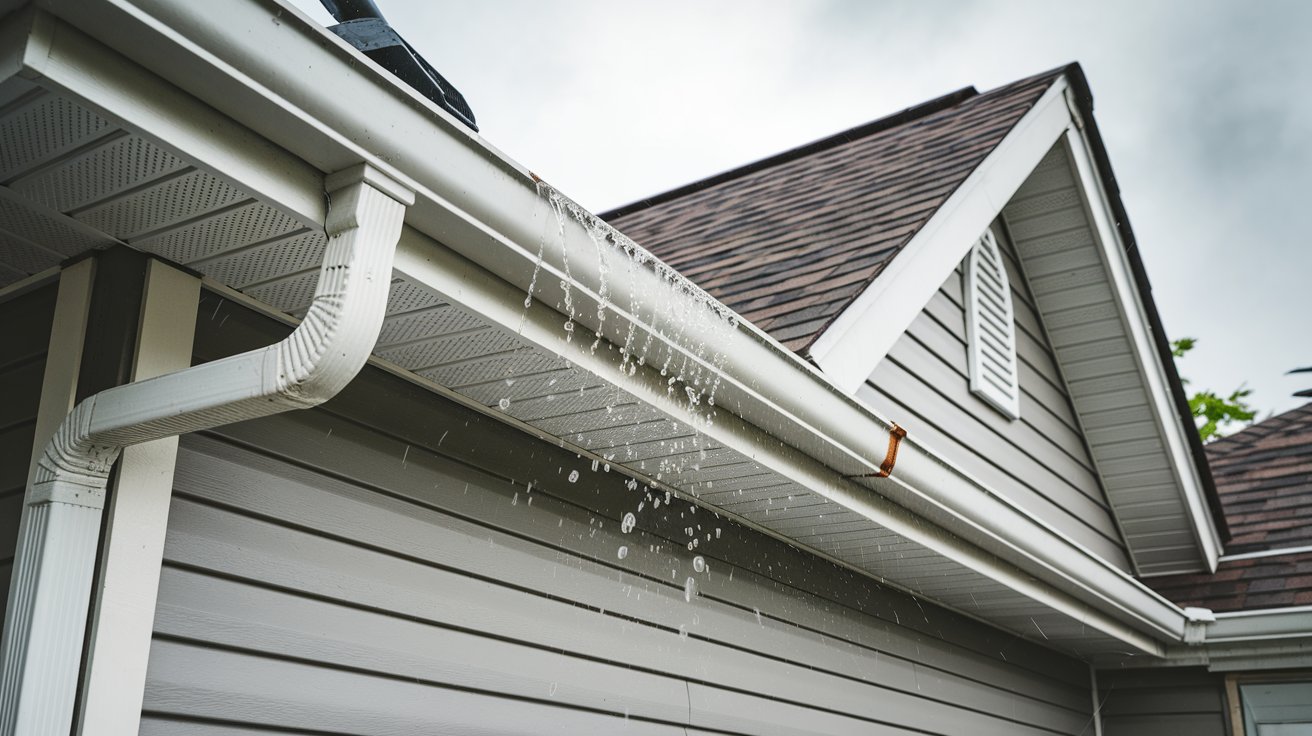
A drip edge protects the fascia and roof deck edges rather than directing water into gutters.
It extends slightly past the roof edge, so water releases cleanly instead of crawling backward underneath roofing materials.
Without a drip edge, water may:
- Run back under the shingles
- Soak the fascia boards
- Damage the roof decking edges
Water often sticks, curls, and travels sideways instead of dropping freely. A drip edge creates a break that forces water to fall away from vulnerable wood components.
Weather conditions also influence performance. Wind-driven rain can push water under shingles, and snowmelt can creep slowly back toward fascia boards.
Drip edges reduce those risks by keeping runoff moving away from structural edges.
The contrast becomes clear when examining damaged homes: drip edges protect structural components from constant moisture exposure, while gutter aprons improve how runoff enters the gutter system.
How Water Actually Behaves at Roof Edges?
Many people assume gravity controls all rainwater movement, though real water behavior around roofs is far more complex.
Several forces shape runoff:
- Surface tension causes water to cling to materials.
- Wind pushes rain sideways or upward.
- Roof pitch affects runoff speed.
- Shingle texture changes flow patterns.
Instead of falling straight down, water often curls backward beneath shingles or behind gutters.
Here’s what commonly happens:
- Water sticks to shingles and travels underneath the edges.
- Fast runoff shoots past gutters.
- Slow runoff drips behind gutters.
- Wind blows rain under the roof edges.
When runoff reaches areas behind gutters, fascia boards, and roof decking absorb moisture over time. Damage develops gradually, often hidden until repairs become necessary.
Conditions vary daily. Light rain behaves differently from heavy storms. Snowmelt flows differently from summer rain. Older shingles also shed water less efficiently than newer materials.
This same trapped moisture is one of the biggest factors that shortens the life of natural roofing materials like cedar shake roofs.
The difference becomes noticeable when comparing homes:
- Well-directed runoff moves safely into gutters or away from structural edges.
- Poorly directed runoff seeps behind materials and causes slow deterioration.
Roof edge metal exists because water rarely behaves predictably on its own.
Where Each Component Is Installed on a Roof
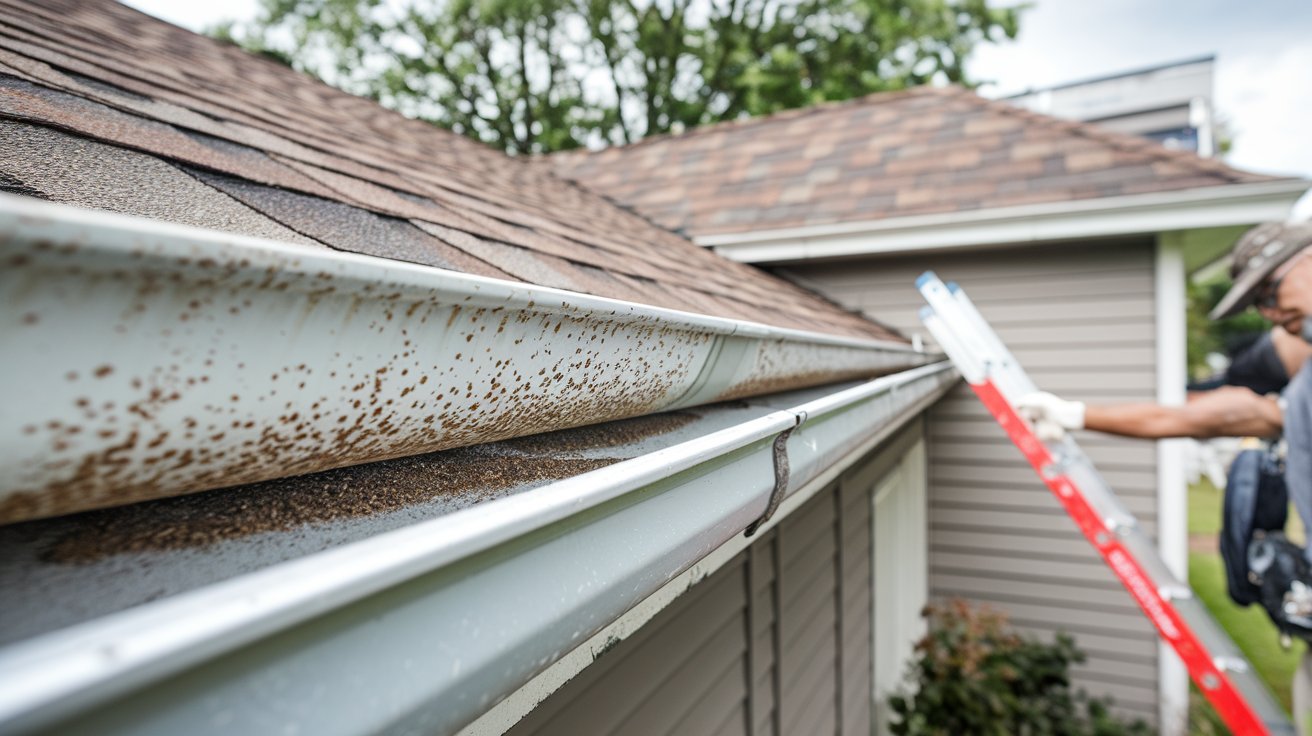
Placement decisions serve functional needs rather than appearance. Each roof edge experiences different water behavior.
Two edges matter most:
- Eaves are the lower roof edges where gutters usually sit.
- Rakes, the sloped sides of the roof, often without gutters.
Water behavior changes depending on which edge the runoff reaches.
Placement on Eaves
Eaves handle most roof runoff because gravity moves water toward the lower edge. Gutters typically collect water here.
Since runoff must enter gutters efficiently, gutter aprons are commonly installed at eaves. They extend into the gutter and prevent runoff from slipping behind it.
When gutters are present, directing water inward becomes critical. Without guidance, runoff sometimes bypasses gutters completely.
During remodeling projects, I’ve encountered homes where gutters were installed properly, yet fascia boards still rotted because runoff was slipping behind them.
Roof slope and gutter placement also influence results. Some gutters sit slightly away from the roof edges, which makes apron installation even more important.
Placement on Rakes
Rakes usually lack gutters, so the goal shifts. Instead of feeding runoff into a gutter, the objective becomes pushing water away from structural edges.
Drip edges typically sit along rake edges to help water release away from fascia and siding.
Without them, water can creep along surfaces and soak exposed materials. Wind-driven rain affects rake edges more strongly on certain homes, making drip edges especially important in those areas.
The comparison becomes simple:
- Eaves require water guidance into gutters.
- Rakes require water to move away from the structure.
Placement always follows function.
Why Many Roofs Use Both Gutter Apron and Drip Edge
Some homeowners assume they must choose one option. Many roofs benefit from using both components together.
Each part handles a different issue:
- Drip edge protects exposed roof edges.
- Gutter apron ensures runoff enters gutters properly.
If only the drip edge appears along eaves, water may still slip behind gutters.
If only the gutter apron appears everywhere, edges without gutters may remain vulnerable to moisture exposure.
Roof design also influences needs. Homes with complex layouts, varying slopes, or exposed edges benefit from both components working together. In remodeling older homes, adding missing edge protection often stops recurring fascia repairs.
The comparison looks like this:
- Using both components creates balanced runoff control.
- Using only one leaves certain edges exposed.
They function as partners in guiding water safely.
What Happens When Edge Flashing Is Missing or Incorrect
Problems usually start quietly and grow over time.
Water slipping behind gutters or under shingles gradually damages materials. Over time, homeowners may see:
- Rotting fascia boards
- Roof decking deterioration
- Stained or damaged siding
- Foundation moisture issues
- Gutter overflow problems
Damage progression changes with weather. Heavy storms, snowmelt, and wind-driven rain accelerate moisture problems, while dry seasons slow visible effects.
This inconsistency makes issues hard to notice until repairs become expensive.
The difference between homes becomes noticeable:
- Proper flashing keeps water moving away from vulnerable areas.
- Missing flashing allows moisture to collect behind hidden surfaces.
Gutters may appear to function normally while water still runs behind them. Visual performance does not always equal protection.
How to Tell What Your Roof Currently Has
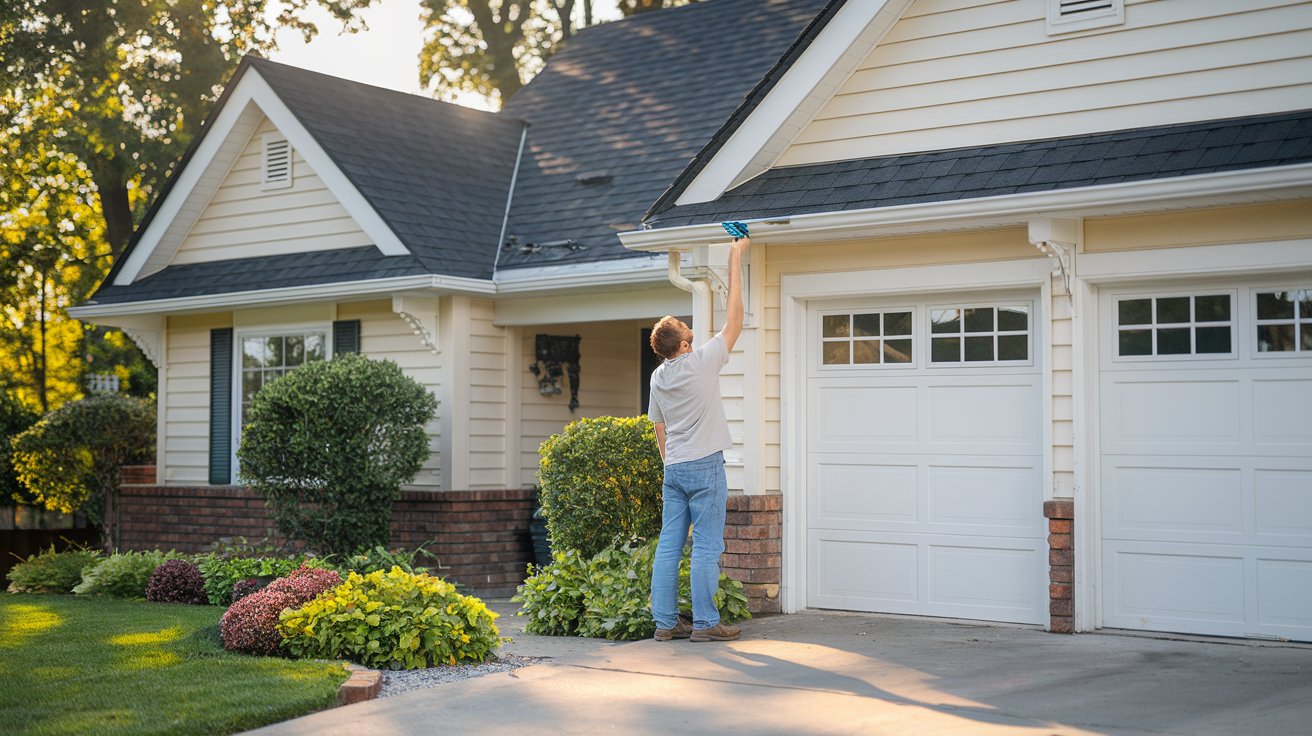
Most homeowners can identify roof edge components from the ground without climbing onto the roof.
Look for clues such as:
- A metal strip extending slightly into the gutter often indicates a gutter apron.
- A visible metal edge along sloped roof sides often signals a drip edge.
- Water stains on fascia or siding sometimes indicate missing or failing edge flashing.
Visibility varies. Some installations hide components beneath shingles or gutter edges, making them harder to see. Roof color, design, and viewing angle also affect visibility. Older homes may include outdated or partial installations.
If nothing extends toward the gutter or away from the roof edges, the home may lack proper edge protection.
Sometimes components remain hidden beneath roofing layers, so absence from view does not always mean absence from the roof.
Proper roof edge protection begins with understanding how water behaves once it leaves your shingles.
Final Thoughts
Confusion surrounding gutter apron vs drip edge clears up once you see how each controls water differently. One helps runoff enter gutters efficiently, while the other keeps moisture away from exposed structural edges.
Many homes benefit from both components working together for full protection.
If you remain unsure what your roof uses, a simple visual check from the ground often provides clues.
When uncertainty remains, a professional inspection can offer reassurance and help maintain long-term protection for your home.
Frequently Asked Questions
What is better, a drip edge or gutter apron?
Neither option works better in every situation because each solves a different water management issue. Drip edge protects roof edges, while gutter aprons guide runoff into gutters. Many homes benefit from having both installed.
Do I need both drip edge and gutter apron?
Many roofs benefit from both components. Drip edges protect areas without gutters, while gutter aprons help direct runoff properly at guttered edges.
Can a drip edge replace a gutter apron?
Drip edges do not reliably guide runoff into gutters, so water may still slip behind the gutter when a gutter apron is missing.
How do I know if I have a gutter apron?
A thin metal strip extending slightly into the gutter usually indicates a gutter apron. If nothing extends into the gutter, it may be hidden or missing.