Ask anyone who has ever considered a cedar shake roof, and the first question always sounds the same: How long does it actually last?
Not in theory.
Not in ideal conditions.
But on a real house, with real weather, real maintenance habits, and real life getting in the way.
I ask that same question every time I walk a homeowner through their options. I have seen cedar roofs that quietly held their ground for decades and others that aged far too fast, not because cedar failed, but because expectations didn’t match reality.
Over time, I learn that longevity has less to do with the material alone and more to do with how it lives in your home.
Think of cedar as a relationship, not a product. Treat it well, and it rewards you with durability and character. Ignore how it behaves, and it reminds you that natural materials don’t tolerate neglect the way synthetics do. This is not a flaw. This is the trade-off.
I write this from years of working around residential roofs, remodels, and renovations, where theory meets weather. I watch how sunlight breaks down exposed shakes.
I see how trapped moisture shortens lifespan. I also see how proper spacing, airflow, and basic care stretch cedar far beyond what most people expect.
This guide doesn’t aim to sell you on cedar or scare you away from it. It aims to help you decide clearly and confidently whether a cedar shake roof fits your home, your climate, and your tolerance for upkeep.
By the end, you won’t just know how long a cedar shake roof lasts. You’ll know why, when, and for whom it truly makes sense.
Before We Talk Years, Let’s Talk Expectations
Why Most Homeowners Worry About Cedar Roofs in the First Place
Start with the concern no one says out loud: “What if I choose cedar and regret it?”
I hear this almost every time. People love how cedar looks, but they fear the upkeep, the uncertainty, the stories of premature rot or curling shakes. That fear doesn’t come from cedar itself; it comes from seeing natural materials treated like maintenance-free products.
Cedar doesn’t fail suddenly. Cedar responds. It reacts to moisture, sunlight, airflow, and neglect in predictable ways. When expectations ignore that reality, disappointment follows. When expectations align with how cedar behaves, the material performs beautifully.
I’ve learned this the hard way – by seeing roofs blamed for problems they never caused. Poor ventilation gets blamed on wood. Inconsistent maintenance gets blamed on durability. Bad installation gets blamed on “old-fashioned roofing.” Cedar becomes the scapegoat.
The real issue usually sits elsewhere.
The Truth About Longevity Versus Lifestyle Fit
Stop thinking in years for a moment. Start thinking in habits.
A cedar shake roof lasts longest on homes where:
- Owners notice small issues before they grow
- Gutters get cleared instead of ignored
- Shade, sun, and airflow get balanced thoughtfully
That doesn’t mean constant work. It means awareness.
I’ve seen homeowners stretch a roof’s life simply by understanding how water moves across it. I’ve also seen others shorten lifespan unintentionally by power washing too aggressively or letting debris sit through monsoon seasons.
Here’s the honest framing I use:
Cedar rewards attentiveness, not perfection.
If your lifestyle allows occasional observation and basic care, cedar can exceed expectations. If you want to install it and forget it entirely, frustration creeps in fast.
This isn’t about effort. This is about alignment.
The Realistic Lifespan Range of a Cedar Shake Roof
A well-installed cedar shake roof typically lasts 25 to 40 years. In the right conditions, with thoughtful care and good airflow, that number can push higher. In harsh climates or poorly managed environments, it can drop much sooner.
That range isn’t marketing fluff. It reflects what I’ve seen play out across real homes, new builds, older remodels, and everything in between. Cedar doesn’t come with a fixed expiration date. It earns its years.
To make this clearer, here’s how lifespan usually breaks down in practice:
| Condition of the Roof | Expected Lifespan |
|---|---|
| Excellent installation + consistent care | 35–40+ years |
| Average conditions + basic maintenance | 25–30 years |
| Poor ventilation or high moisture exposure | 15–20 years |
Why No Two Cedar Roofs Age the Same Way
Two houses on the same street can install cedar in the same year and end up with very different results. I’ve watched that happen more than once. One roof dries quickly after rain.
The other stays damp because of shade, debris, or poor airflow. Ten years later, the difference shows.
Cedar reacts to its surroundings. Sunlight hardens and dries it. Moisture softens and breaks it down. Airflow determines which force wins.
This explains why lifespan questions feel so frustrating online. Generic answers ignore the variables that actually matter.
When people say, “My cedar roof failed early,” the story almost always includes a hidden factor like blocked gutters, overhanging trees, trapped moisture, or rushed installation.
Longevity doesn’t come from luck. It comes from understanding how cedar lives on your roof.
Why Cedar Shake Roofs Age Differently Than Other Roofing Materials
Cedar is a natural, breathable material
Work with cedar long enough, and one thing becomes obvious: it never behaves like asphalt, metal, or tile. Cedar breathes. It absorbs moisture, releases it, expands, contracts, and slowly hardens over time. That movement isn’t a weakness. It’s part of why cedar survives where rigid materials crack.
I’ve handled shakes straight from the bundle and others that have sat on roofs for decades. New cedar feels soft and light. Aged cedar feels dense, almost seasoned.
That change happens because cedar adjusts itself to its environment instead of fighting it.
This is also why cedar needs space and airflow. When shakes dry properly, they resist decay naturally. When they stay damp, deterioration accelerates. The wood doesn’t fail—it suffocates.
How weathering differs from failure
Many homeowners confuse aging with damage. I see this misunderstanding more than anything else.
Cedar weathering looks like:
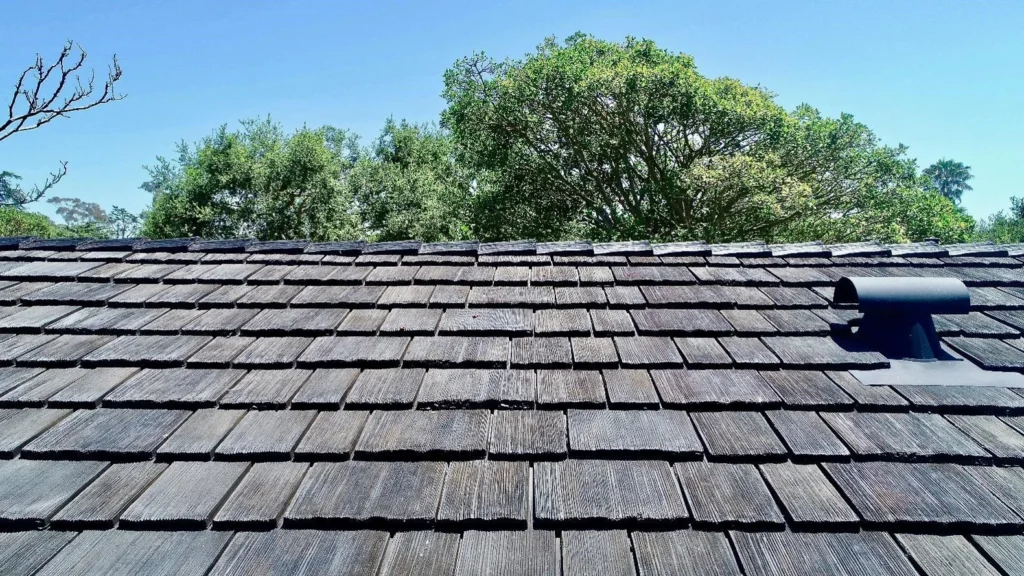
- Silver-gray coloring
- Light surface checking
- Slight texture changes over time
These signs don’t signal failure. They signal maturity.
Actual failure looks different. It shows up as deep splits, soft spots, excessive cupping, or persistent moisture retention. I’ve inspected roofs that looked old but performed perfectly, and others that looked fine from the ground but hid serious problems underneath.
The lesson here stays simple:
A cedar roof doesn’t look new for long, but it can stay functional for decades.
Understanding that difference saves homeowners from unnecessary replacements and bad decisions.
What homeowners often misunderstand about “aging.”
Most people expect a roof to age invisibly. Cedar refuses to do that. It tells its story openly. Sun exposure, rainfall patterns, and maintenance habits all leave their mark.
That visibility makes some people nervous. Others learn to read it.
Over time, I’ve come to trust cedar roofs that show consistent, even aging far more than ones that look untouched. Uniform weathering usually means balanced exposure and good drying conditions. Uneven aging often points to underlying issues.
Cedar doesn’t hide problems. It reveals them EARLY, if you know what to look for.
Once you understand this, the next question becomes obvious: what actually controls how long a cedar shake roof lasts? That’s where the real variables come into play.
What Actually Determines How Long a Cedar Shake Roof Lasts
Climate and Regional Weather Patterns
Start with the environment, because it sets the rules before installation even begins. Cedar performs differently in dry, cold, humid, and coastal regions. I’ve watched cedar thrive in areas with long dry seasons and struggle where moisture hangs in the air day after day.
Heavy rainfall, snow accumulation, and freeze–thaw cycles push cedar harder. Consistent drying periods give it time to recover. This doesn’t mean cedar can’t work in challenging climates. It means climate demands smarter planning and maintenance.
Sun Exposure and UV Intensity
Sunlight helps cedar dry, but too much exposure breaks down surface fibers. I’ve seen south-facing slopes age faster simply because they take the full brunt of UV radiation year after year.
Balanced exposure matters. When one side of a roof stays shaded while another bakes, aging becomes uneven. Over time, that imbalance shortens overall lifespan.
Cedar handles the sun best when airflow supports drying and when the wood isn’t constantly overheated.
Moisture, Ventilation, and Airflow Beneath the Shakes
This factor decides everything.
Moisture alone doesn’t destroy cedar. Trapped moisture does. Poor ventilation beneath the shakes creates a damp environment where decay accelerates quietly. I’ve inspected roofs where the wood looked fine on top but softened underneath due to airflow problems.
Proper spacing, underlayment choices, and ventilation paths let cedar dry from both sides. When that happens, longevity improves dramatically.
If cedar fails early, this is usually where the story begins.
Installation Quality and Craftsmanship
Cedar forgives many things, but sloppy installation isn’t one of them. Nail placement, shake spacing, and underlayment selection affect how water sheds and how air circulates.
I’ve walked roofs where installers treated cedar like asphalt shingles. Those roofs rarely age well. Cedar needs room to move. When installers respect that, the roof rewards the homeowner with decades of service.
Good craftsmanship doesn’t just prevent leaks. It extends lifespan.
Ongoing Maintenance Habits
Maintenance doesn’t mean constant intervention. It means noticing changes before they compound.
Clearing debris, checking flashing, and watching how water drains at roof edges and gutters make a measurable difference.
I have seen small habits add years to a roof’s life simply by preventing moisture buildup. Cedar doesn’t demand perfection. It responds to consistency.
Debris, Vegetation, and Surrounding Environment
Trees bring shade and debris. Leaves trap moisture. Moss holds water against the wood. These factors don’t destroy cedar overnight, but they quietly shorten its useful life.
Homes surrounded by vegetation need slightly more attention. That attention often decides whether a roof lasts 20 years or 35.
Every one of these factors interacts. No single issue ruins a cedar roof alone. Problems stack. Understanding that the stacking effect helps homeowners intervene early—before longevity slips away unnoticed.
For more information, take a look at this video, which I found very helpful by The Roofing Channel
Maintenance Reality Check: What Matters and What Doesn’t
Essential care that protects lifespan
Maintenance sounds intimidating until you strip it down to what actually moves the needle. In practice, a cedar shake roof needs awareness more than action.
The habits that consistently extend lifespan stay simple:
- Remove accumulated debris so moisture doesn’t linger
- Keep gutters and valleys clear to allow fast drainage
- Check for blocked airflow after storms or seasonal changes
I’ve seen roofs gain extra years simply because homeowners noticed a problem early and addressed it calmly. Cedar responds well to small corrections.
Ignore those same issues, and deterioration accelerates quietly.
Maintenance mistakes that shorten roof life
Most damage doesn’t come from neglect. It comes from overcorrection.
Aggressive power washing strips protective surface fibers. Harsh chemical treatments kill organic growth but weaken the wood underneath. I’ve walked roofs that aged ten years in two because someone tried to “restore” them too forcefully.
Cedar doesn’t need to be scrubbed into submission. It needs to dry, breathe, and shed water naturally.
The goal isn’t to make cedar look new. The goal is to help it stay dry.
That distinction saves roofs.
How much effort does cedar really require year to year
On average, cedar asks for light seasonal checks and occasional cleaning. It doesn’t demand weekly attention or constant expense. Compared to the effort required to repair water damage inside a home, this level of care remains minimal.
I often tell homeowners this: if you already maintain your gutters and exterior, you’re halfway there. Cedar fits best into routines that already exist. It doesn’t force new habits; it rewards existing ones.
Understanding maintenance realistically helps remove fear from the decision. Once fear fades, longevity becomes easier to manage.
And that leads naturally to the next concern homeowners raise: how do you know when a cedar roof is aging normally or when something is actually wrong?
Signs Your Cedar Shake Roof Is Aging & When That’s a Problem
Normal aging versus structural warning signs
Spend enough time around cedar roofs, and you learn to separate appearance from performance. Cedar rarely fails without warning, but those warnings don’t always look dramatic.
Normal aging shows up slowly and evenly. The color softens into a silver-gray. The surface develops fine lines. The texture changes slightly underfoot. I’ve stood on roofs like this that still shed water perfectly and had years of life left.
Structural issues feel different. Shakes lose firmness. The wood feels spongy instead of dense. Cracks run deep rather than staying on the surface. These signs tell you the wood isn’t just aging; it’s weakening.
The mistake many homeowners make is assuming age equals failure. Cedar doesn’t work that way.
Common visual changes that don’t mean failure
Some changes trigger panic unnecessarily:
- Color fading – cosmetic, not structural
- Minor cupping or curling – common as wood adjusts
- Surface checking – part of natural drying cycles
I’ve seen roofs replaced early because they “looked old,” even though they still performed well. In most cases, the roof wasn’t failing. Expectations were.
Cedar wears its age openly. That honesty confuses people used to uniform materials.
When repairs are enough and when replacement makes sense
Repairs make sense when issues stay localized. A few damaged shakes. A flashing problem. A drainage issue that traps water in one area. Address those early, and the rest of the roof continues to perform.
Replacement becomes necessary when deterioration spreads or when moisture exposure compromises the structure beneath. At that point, the roof stops protecting the home reliably.
The key lesson I’ve learned over time stays simple: don’t wait for obvious damage to act. Cedar gives subtle signals first. Read them early, and you control the outcome instead of reacting to it.
Once homeowners reach this stage of understanding, a bigger question often follows: not about fixing cedar, but about whether sticking with natural wood still makes sense at all. That’s where alternatives enter the conversation.
When Natural Cedar Stops Being the Right Choice
Situations Where Cedar Becomes Impractical
Cedar isn’t a mistake when it fails to fit a situation. It’s simply the wrong tool for the job.
I’ve seen cedar struggle on homes where shade never breaks, where moisture sits for long stretches, or where maintenance realistically won’t happen. In those cases, the roof doesn’t fail because cedar lacks durability. It fails because the environment overwhelms it.
Busy homeowners, rental properties, and heavily wooded lots often push cedar past its comfort zone. That doesn’t make cedar bad. It makes the context demanding.
Good decisions respect limitations.
Why Some Homeowners Choose Synthetic Alternatives
Synthetic shake roofing exists because many people love the look of cedar but want predictability. These materials don’t absorb moisture. They don’t breathe. They don’t weather in the same way.
I’ve worked with homeowners who switched to synthetic after living with natural cedar. Most of them didn’t hate cedar. They just wanted fewer variables.
Here’s the trade-off, plainly stated:
| Natural Cedar | Synthetic Shake |
|---|---|
| Ages visibly over time | Maintains uniform appearance |
| Requires awareness and care | Requires minimal maintenance |
| Responds to the environment | Resists environment |
| Unique character | Consistent performance |
Neither choice wins universally. Each serves a different mindset.
Longevity, Maintenance, & Aesthetic Trade-offs
Synthetic materials often last longer on paper. Cedar lasts longer in homes where people engage with it. I’ve seen both outcomes play out honestly.
The decision comes down to tolerance. Some homeowners enjoy knowing how their roof behaves. Others prefer not to think about it at all.
Understanding when cedar stops making sense helps people walk away confidently instead of reluctantly. And for those who stay with cedar, the final step becomes choosing the right option from the start, not just the right material in name.
Choosing the Right Cedar Roofing Option for Your Home
Matching cedar type to climate and exposure
Not all cedar performs the same way, and this detail gets overlooked far too often. I’ve seen excellent roofs fail early simply because the wrong cedar profile met the wrong environment.
Thicker, hand-split shakes handle harsh conditions better than thinner, machine-cut options. Homes exposed to heavy rain, snow, or strong sun benefit from materials that dry more slowly but resist deformation. Lighter exposure allows more flexibility.
The decision isn’t about upgrading. It’s about matching.
When cedar fits its environment, it ages evenly. When it doesn’t, problems appear early.
Budget, lifespan expectations, and long-term value
Cedar costs more upfront, but that cost only makes sense when expectations align. I always frame this decision in terms of ownership horizon. A homeowner planning to stay long-term often values cedar differently than someone thinking short-term resale.
Longevity depends on more than price. It depends on installation quality, maintenance tolerance, and climate realities.
Paying more for better materials and workmanship often saves money later, not because cedar is fragile, but because shortcuts age poorly. Value comes from patience, not just spending.
Questions homeowners should ask before committing
Before committing to cedar, ask practical questions:
- How will this roof dry after rain?
- Who handles maintenance realistically?
- How much shade does the roof receive year-round?
- Does the installer understand cedar specifically, not just roofing generally?
These questions prevent regret. I’ve learned that homeowners who ask them early rarely feel surprised later.
Choosing cedar works best when decisions come from clarity, not attraction alone. Once that clarity exists, the final question becomes unavoidable: is a cedar shake roof truly worth it for the long run? That answer depends entirely on who you are and how you live.
Is a Cedar Shake Roof Worth It in the Long Run?
Who benefits most from cedar roofing
Cedar rewards homeowners who notice things. People who look up after a storm. People who understand that natural materials change and don’t panic when they do. I’ve seen cedar roofs thrive on homes where owners treat maintenance as awareness, not obligation.
If you value character over uniformity and longevity over convenience, cedar makes sense. It offers insulation benefits, natural resistance to insects, and an appearance that improves with age when conditions support it.
For the right homeowner, cedar doesn’t feel demanding. It feels intentional.
Who may be better off choosing another material
Cedar frustrates homeowners who want permanence without participation. If maintenance already feels like a burden, cedar will amplify that frustration. I’ve seen that mismatch play out too often to ignore it.
Homes with heavy shade, high humidity, or limited airflow challenge cedar constantly. In those environments, even well-installed roofs work harder than they should. Choosing another material in those cases isn’t a compromise. It’s wisdom.
Longevity isn’t just about years. It’s about compatibility.
Final Thoughts: Longevity Is About Fit, Not Just Years
After years of working around cedar shake roofs, one conclusion stays consistent: the roofs that last the longest belong to homeowners who understand them. Not experts. Not perfectionists. Just people who respect how cedar behaves.
Cedar doesn’t promise uniform aging or zero maintenance. It promises honesty. Treat it as a living material, and it gives back in durability and character. Treat it like a synthetic product, and it pushes back.
If you choose cedar with clear expectations, the question shifts from “How long will it last?” to “How well will it age with my home?”
That’s the question that leads to satisfaction and the roofs that quietly last for decades.