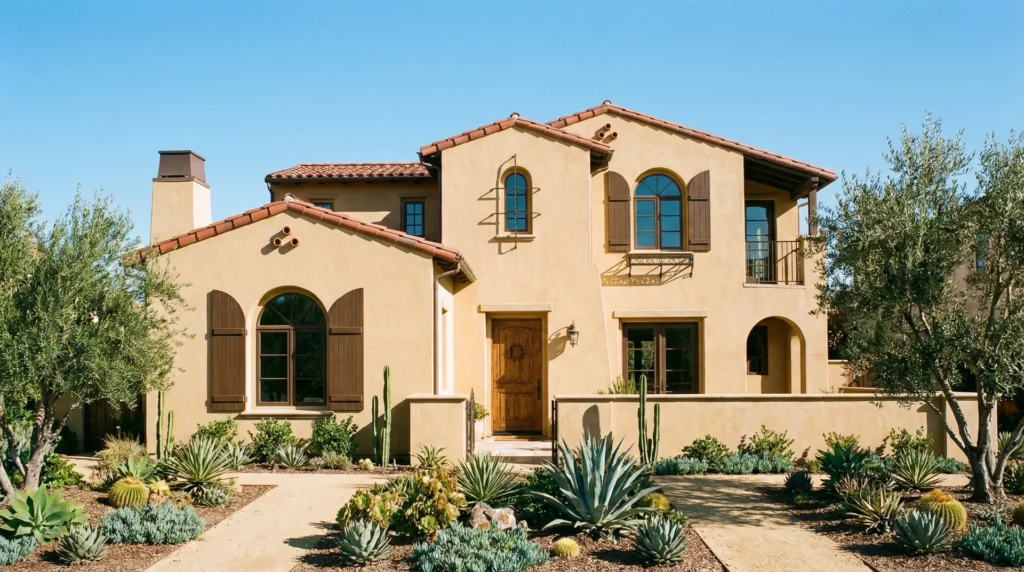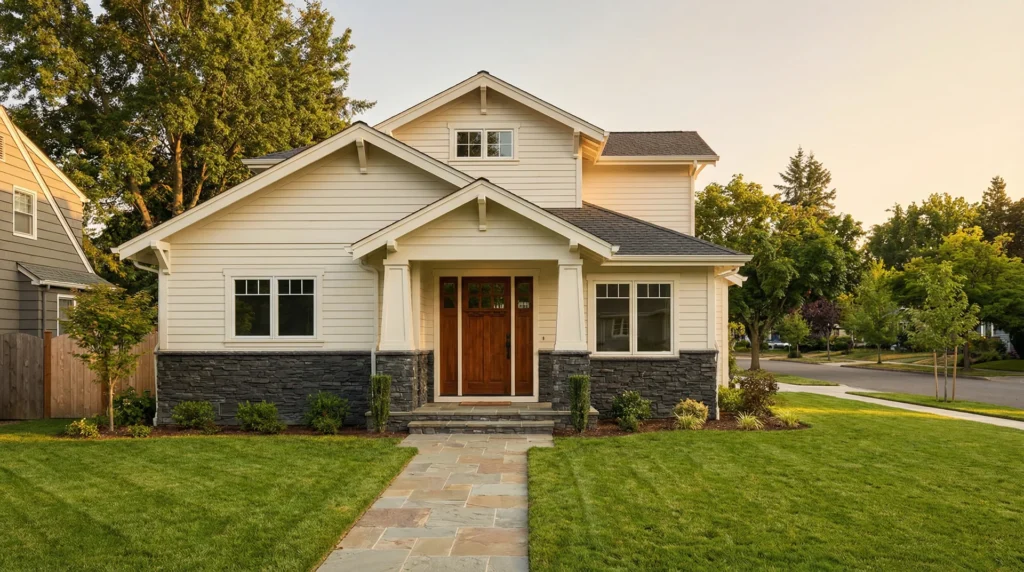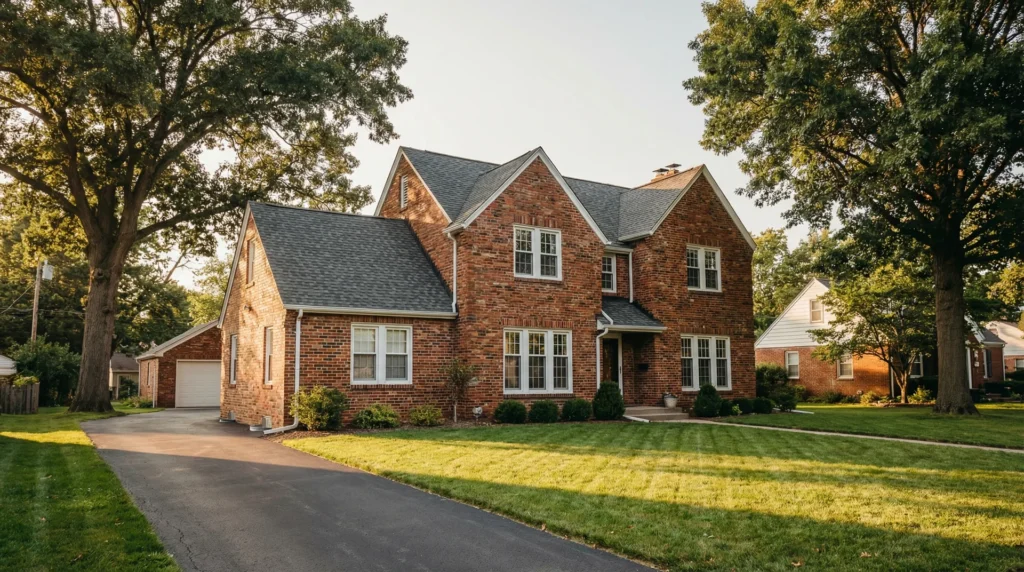
When most homeowners hear “metal siding,” they picture corrugated tin on a barn off a highway. That image has done more damage to this material’s residential reputation than any actual performance failure ever has.
The metal siding going onto homes in 2026 looks nothing like that. I have installed wood-grain steel lap siding on craftsman homes where neighbors walking past could not identify the material. I have spec’d steel board-and-batten on modern farmhouses that ended up in regional architecture features.
Steel siding with premium PVDF coatings holds color for 30 to 50 years and handles impact that would crack fiber cement and shatter vinyl. Aluminum with marine-grade coatings is my go-to for oceanfront homes where salt air reliably destroys every other material category.
Metal siding is the most underspecified residential product I work with. Homeowners who choose it almost never regret it. The ones who rule it out based on an outdated mental image frequently end up on a shorter replacement cycle with whatever they chose instead.
Quick Reference: Steel vs. Aluminum
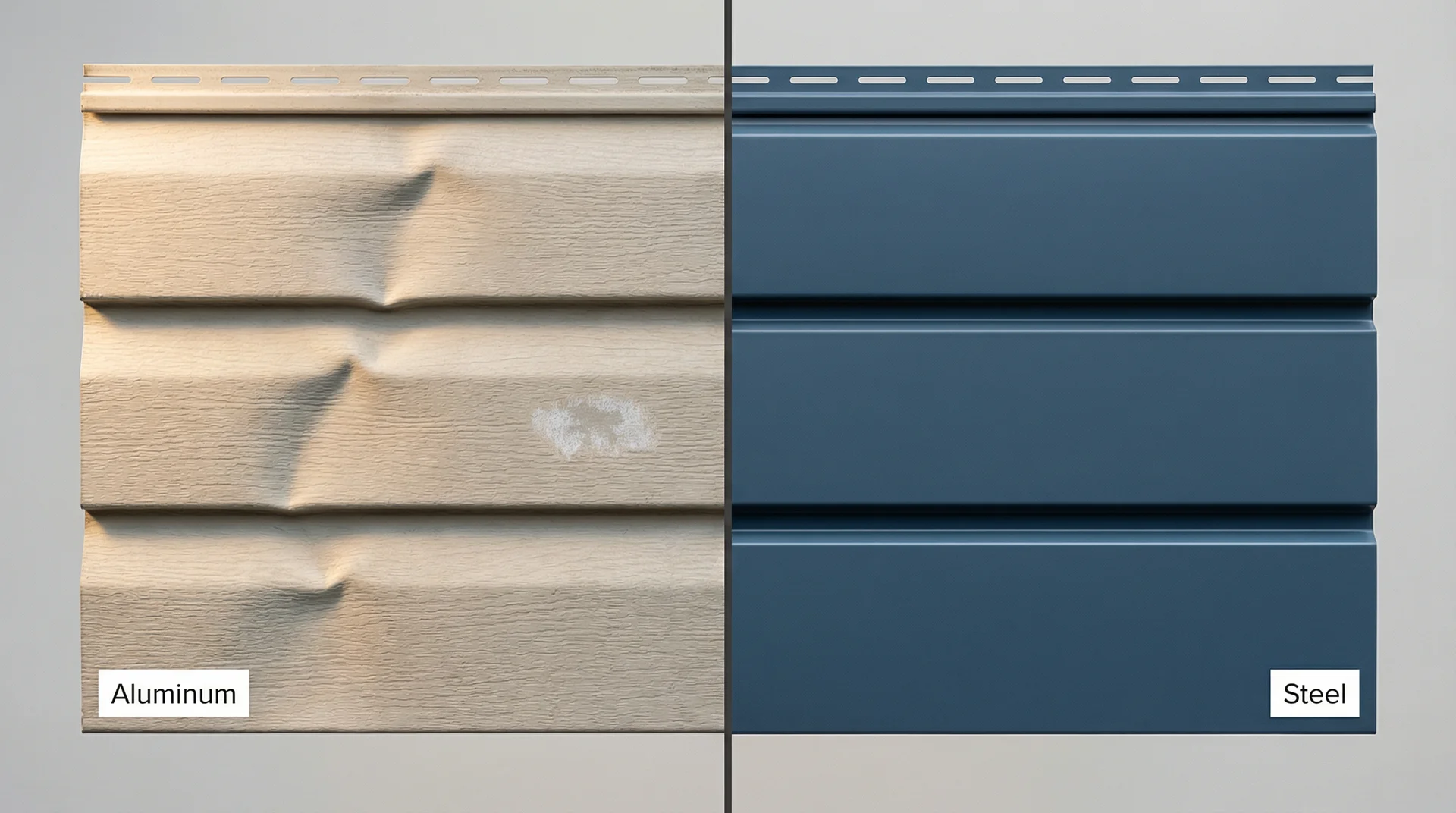
| Metal Type | Cost Installed | Lifespan | Best Climate | Main Risk |
|---|---|---|---|---|
| Steel siding | $7–$16/sq. ft. | 40–70+ years | All climates, severe weather | Denting in extreme hail |
| Aluminum siding | $7–$14/sq. ft. | 15–40 years | Coastal, mild climates | Denting, color fade, chalking |
Steel Siding vs. Aluminum Siding: Not the Same Decision
Every article on metal siding groups steel and aluminum together as if they are variations of the same product. They are not. They perform differently, age differently, cost differently over time, and suit different homes and climates. Understanding this is the foundation of any honest metal siding conversation.
What Steel Siding Is
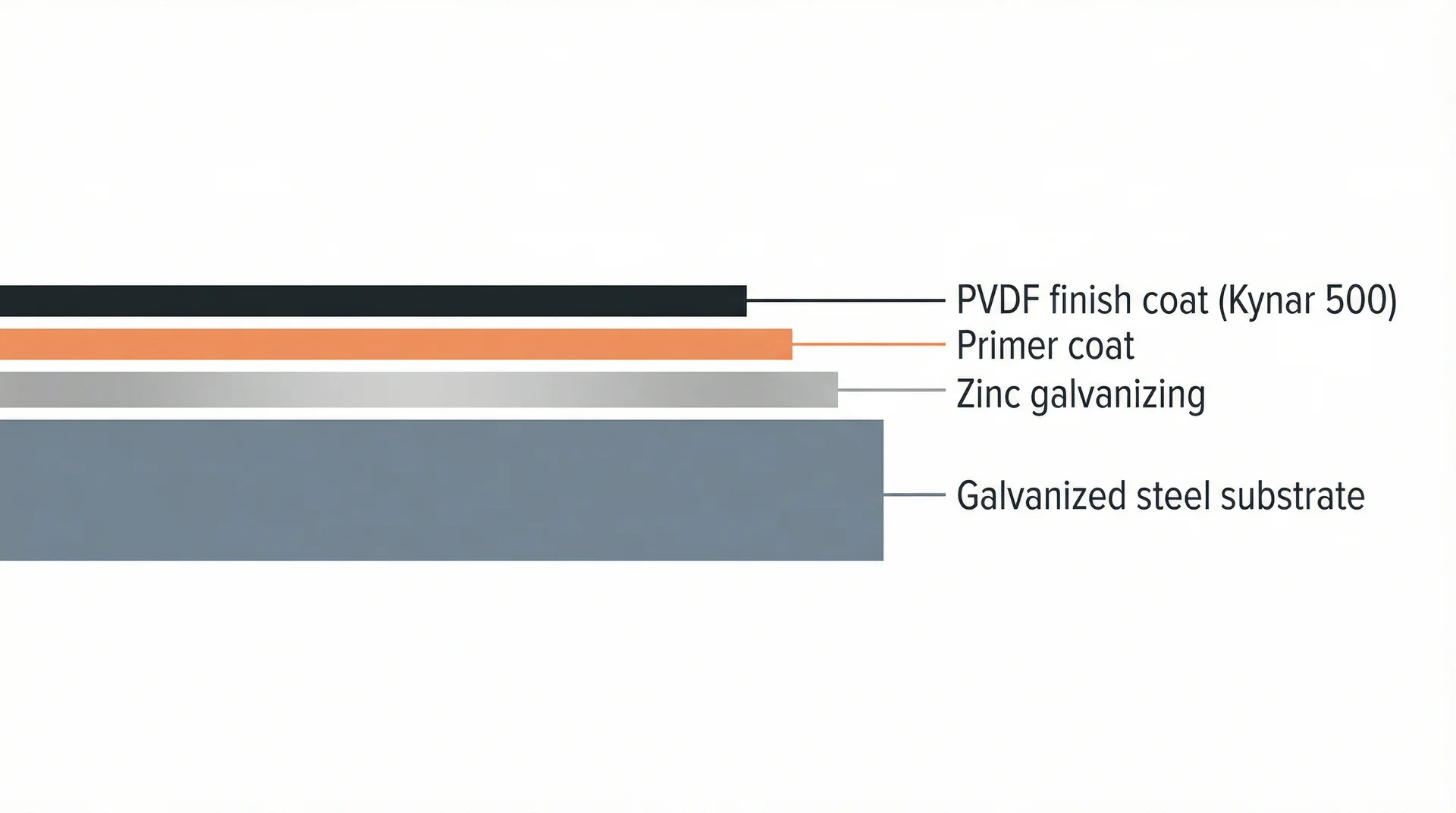
Steel siding is manufactured from galvanized or Galvalume-coated steel coil stock, roll-formed into panels, then finished with a PVDF (polyvinylidene fluoride) coating, commonly branded as Kynar 500. The zinc galvanizing sacrificially protects the steel substrate from oxidation. The PVDF coat adds UV resistance, color retention, and a moisture barrier on top of that.
The result is a genuinely hard panel. Steel siding at 26 gauge resists hail impacts that dent aluminum and crack vinyl. It does not expand and contract as dramatically as organic siding materials, which means it avoids the gaps and separations shorter-lived materials develop over time. Steel is also non-combustible, carries a Class A fire rating, and will not ignite or release toxic gases the way vinyl does under extreme heat.
Steel’s known vulnerability is rust at any point where the coating is breached: a deep scratch, an unsealed cut edge, or a fastener penetration without corrosion-resistant hardware. This is not a spontaneous failure mode. It requires a coating breach followed by sustained moisture exposure. Properly installed steel with correct fasteners and edge treatments avoids this effectively.
What Aluminum Siding Is
Aluminum siding is manufactured from aluminum coil stock at minimum gauges between 0.019 and 0.024 inches. It is lighter than steel, contains no iron, and does not rust. It forms a natural oxidation layer that provides some corrosion protection on its own. These properties made it the dominant residential siding material from the 1930s through the 1970s, before vinyl undercut it on price.
The performance limitation of aluminum is softness. It dents from relatively modest impacts: hail, windborne branches, sports equipment, even accidental tool contact during installation. Unlike a steel dent that can sometimes be popped back or simply accepted cosmetically, dents in aluminum panels typically require full panel replacement. Finding an exact color match on a home where the existing aluminum has faded over ten or fifteen years is one of the more frustrating repair conversations I have with homeowners.
Aluminum also repaints on a 5-to-10-year cycle, more frequently than most homeowners expect when they choose it as a low-maintenance material. The original factory finish chalks and fades with UV exposure, and repainting requires cleaning, metal-specific primer, and exterior-grade paint. That is manageable, but it is not the maintenance-free experience that vinyl or modern steel offers.
Where aluminum genuinely earns its specification is in coastal environments with persistent salt air. It does not rust the way steel can when the coating is compromised.
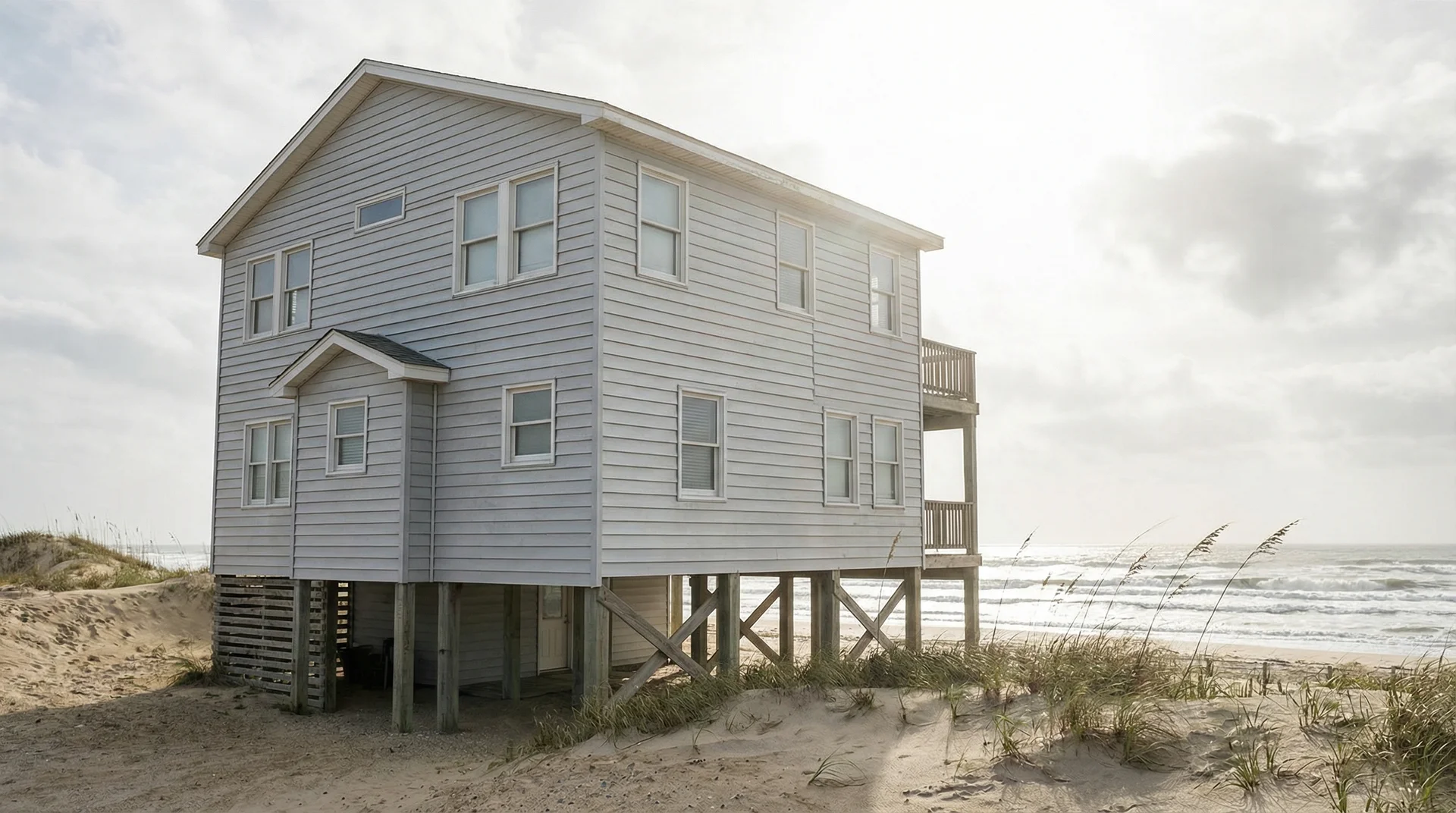
For oceanfront or near-oceanfront homes, aluminum with a quality marine-grade coating performs consistently in conditions that create genuine corrosion risk for steel panels without premium protective systems.
Steel vs. Aluminum: At a Glance
| Factor | Steel | Aluminum |
|---|---|---|
| Impact resistance | High, resists denting | Low, dents readily |
| Rust risk | Yes, if the coating is breached | No, contains no iron |
| Salt air corrosion | Risk without marine-grade coatings | Naturally resistant, preferred for coastal |
| Color retention | Excellent with PVDF, 30–50 years | Chalks and fades in 10–15 years |
| Paint cycle | Rarely needed | Every 5–10 years |
| Weight | Heavier, higher labor cost | Lighter, lower installation labor |
| Fire resistance | Class A, non-combustible | Class A, non-combustible |
| Lifespan | 40–70+ years | 15–40 years |
| Best for | Severe weather, hail zones, modern aesthetic | Coastal and salt-air environments |
My field recommendation: for the vast majority of US residential applications, steel is the stronger long-term investment. Its color retention, impact resistance, and lifespan are meaningfully superior.
Aluminum earns the specification specifically for coastal applications and for projects where the climate is mild, and labor cost is the primary constraint.
Metal Siding vs. Fiber Cement vs. Vinyl: How They Compare
Most homeowners narrow their choice to these three materials. They overlap in price at the mid-range, and that overlap is where decisions get genuinely hard.
| Factor | Steel Siding | Fiber Cement | Vinyl |
|---|---|---|---|
| Cost installed | $7–$16/sq. ft. | $6–$13/sq. ft. | $3–$12/sq. ft. |
| Lifespan | 40–70+ years | 30–50 years | 20–40 years |
| Fire resistance | Class A | Class A | Melts, releases fumes |
| Maintenance | Nearly zero | Repaint every 10–15 years | Occasional cleaning |
| Impact resistance | High | Moderate | Low to moderate |
| Pest resistance | Complete | Complete | Complete |
| ROI at resale | ~86% | ~70% | ~60–70% |
| Insulation (native) | Low, needs foam added | Low | Low (insulated option available) |
Fiber cement is the closest competitor to steel. It shares fire resistance and pest immunity, and the upfront cost is comparable on many projects. The real differences show up over time: fiber cement needs repainting on a 10-to-15-year cycle, it absorbs moisture if not properly sealed, and it carries a shorter expected lifespan than steel.
Vinyl is cheaper to install upfront, but it typically needs replacement or significant repair in 15 to 20 years in harsh climates, and it cannot match steel’s fire or impact performance.
What Residential Metal Siding Actually Looks Like in 2026?
The aesthetic evolution of residential metal siding over the past fifteen years is real and significant. Quality Edge’s Vesta and TruCedar product lines produce steel panels with wood-grain embossing detailed enough that the texture reads as genuine wood at conversational distance.
TruLog’s steel siding mimics log construction convincingly on cabin and mountain home applications. Standing seam steel panels in matte charcoal or slate blue read as premium and intentional on contemporary builds.
The design vocabulary of modern metal siding now serves virtually any residential architectural style:
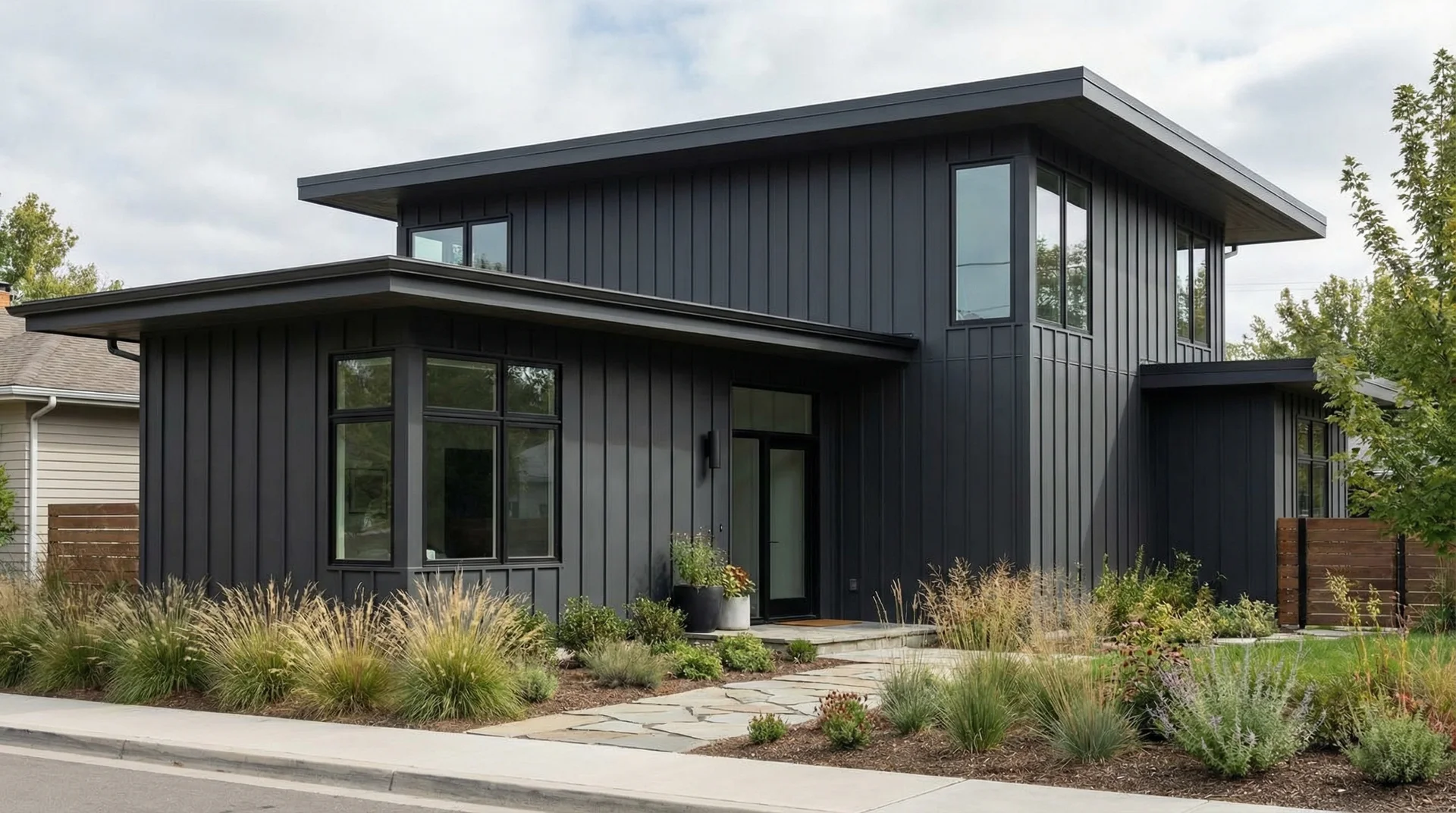
Contemporary and modern homes: Standing seam and flush wall panels with concealed fasteners produce the cleanest, most architectural look. Matte black, charcoal, deep navy, and slate dominate this end of the market.
Modern farmhouse and transitional homes: Board-and-batten steel panels in matte white, warm gray, or woodgrain finishes have become genuinely dominant in this category. The vertical profile delivers the same clean line as wood originals with none of the maintenance demands. I have installed steel board-and-batten on more modern farmhouse projects in the last three years than any other metal profile.
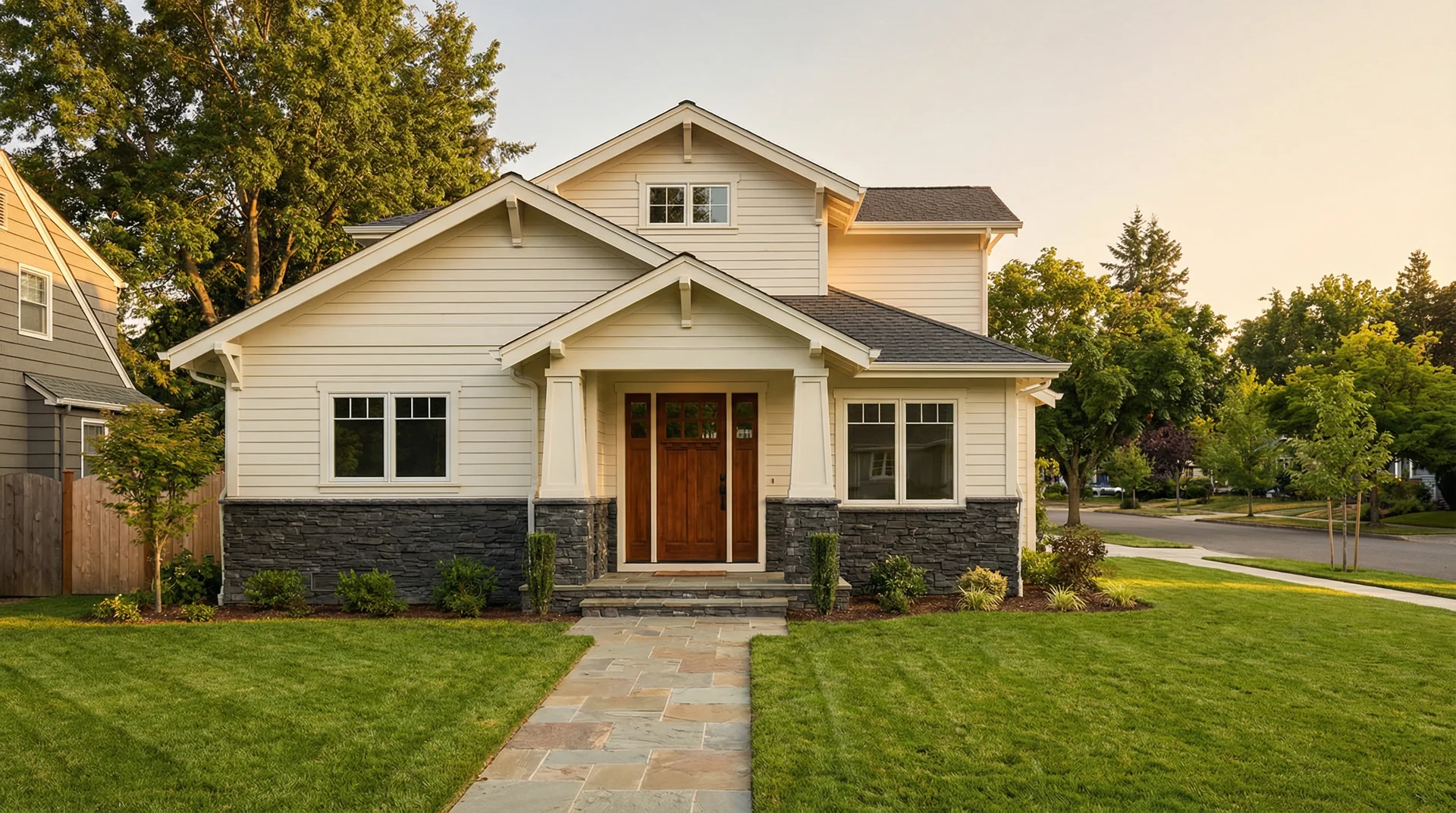
Traditional and craftsman homes: Wood-grain steel lap siding in warm cedar tones reads as traditional at street level. At 26 gauge, the material has a rigidity that actually looks more substantial on the wall than standard vinyl.
Cabins, mountain homes, and rural properties: Log-style steel siding replicates the rounded profile and woodgrain texture of log construction while providing fire resistance, pest immunity, and dimensional stability that real log construction cannot match. In wildfire-adjacent mountain communities, this combination of aesthetic and performance has made log-style steel a strongly growing category.
Metal Siding Profiles Explained
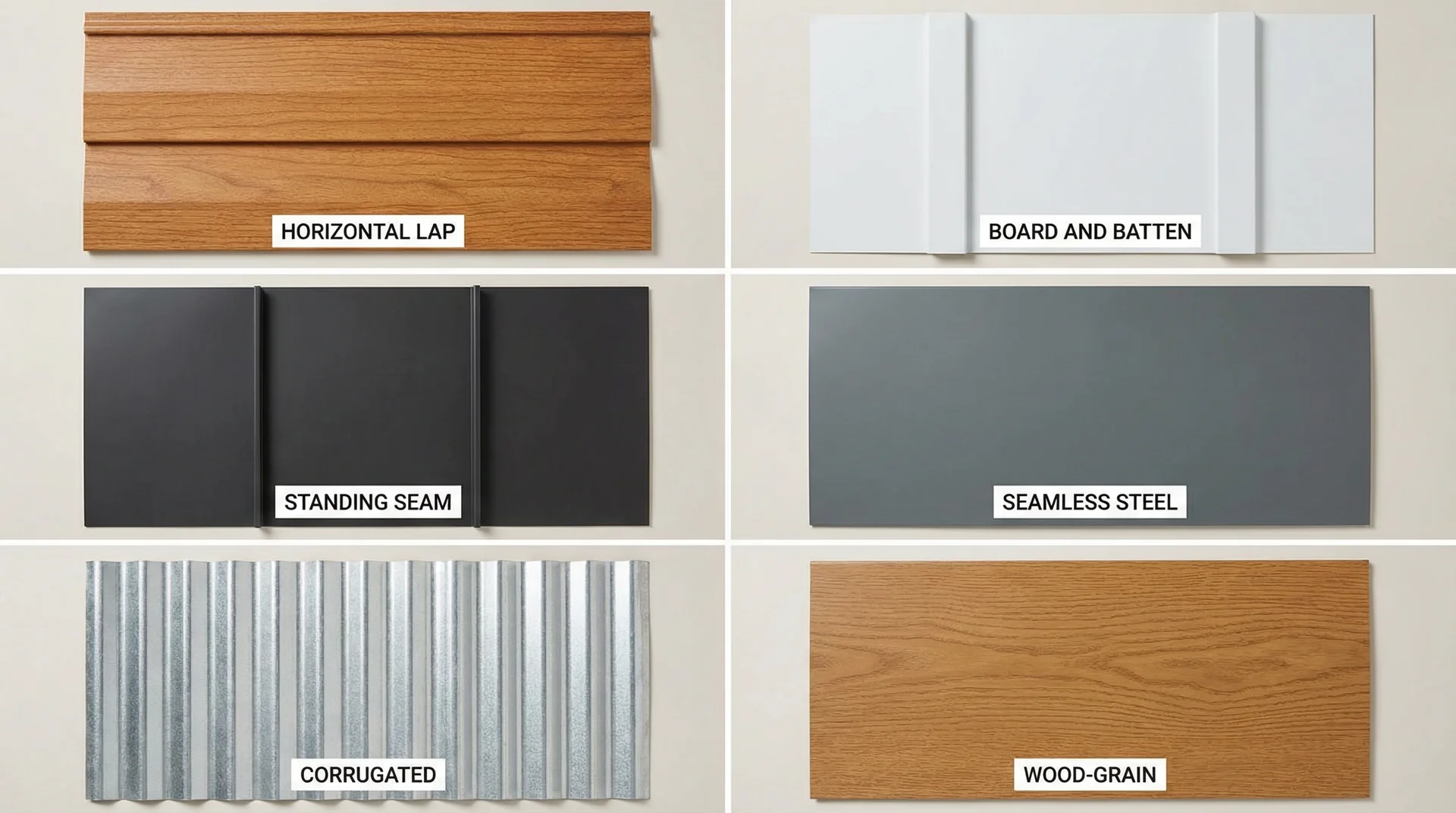
The profile determines visual character, water management behavior, and installation complexity. These are the profiles you will encounter.
Horizontal Lap: Long horizontal panels overlapping like traditional clapboard. Available in wood-grain and smooth finishes. Material runs $4.25–$7.25/sq. ft., with installed costs of $7–$12/sq. ft. The most accessible profile for contractors with standard siding installation experience.
Board and Batten (Vertical): Wide vertical panels with raised battens covering the seams, available in exposed and concealed-fastener configurations. Material runs $4.25–$8.50/sq. ft. The vertical orientation sheds water naturally and makes a home appear taller, which is why it became the dominant modern farmhouse profile.
Standing Seam: Vertical panels with raised seams where adjacent panels interlock. Concealed fasteners create a completely smooth panel face. This is the cleanest, most architectural metal siding profile available, and the most expensive, with seamless steel reaching $16/sq. ft. for material alone. Installation requires contractors specifically trained in the standing seam technique.
Seamless Steel: Custom-cut panels that span the entire wall in one continuous piece with no seams. This eliminates gap points where water and pests can infiltrate. It requires on-site or factory custom fabrication and sits among the highest-cost configurations.
Corrugated: A repeating wave or ridge pattern pressed into the panel. The corrugated geometry hides minor scratches better than flat profiles. Material cost runs $5–$8/sq. ft. It reads specifically as industrial or farmhouse and does not suit traditional or colonial home styles.
Wood-Grain and Log-Look: A finish category rather than a structural profile: wood-grain embossing applied to lap, board-and-batten, or corrugated panels. Material runs $5.50–$8.50/sq. ft. for premium HD finishes. The quality of current embossing has advanced to the point where casual observation does not distinguish it from real wood.
Where Metal Siding Outperforms Everything Else
There are specific scenarios where metal siding’s performance advantages over every competing material are unambiguous.
Wildfire Risk Zones
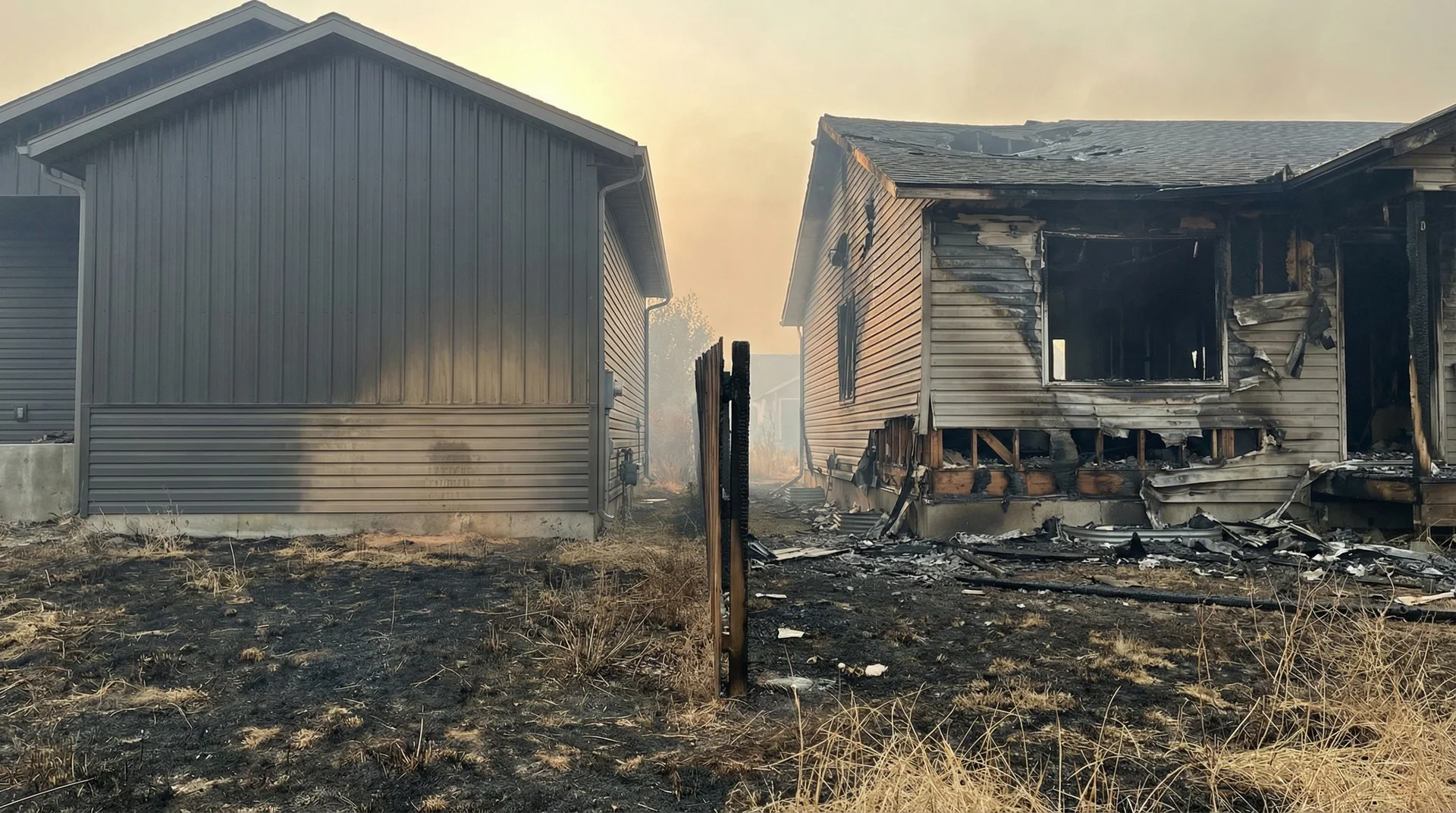
Steel and aluminum are non-combustible. They do not ignite from ember cast, which is the primary mechanism of home ignition in wildfire events. In California’s high fire hazard severity zones, Colorado’s wildland-urban interface communities, and similar designations across the Mountain West and Pacific Northwest, non-combustible siding is increasingly required by local building codes.
Insurance carriers in wildfire-risk states offer meaningful premium discounts for homes with Class A-rated exterior cladding. In markets where homeowner’s insurance availability is becoming constrained, particularly in California, the fire rating of your siding material can affect not just your premium but your eligibility for coverage. Ask your insurance carrier directly before finalizing material selection in any elevated fire risk area.
Hurricane and High-Wind Zones
Premium steel siding profiles carry wind-load ratings up to 160 MPH. The rigidity of steel means it does not flex, flap, or separate from the wall assembly under sustained wind loads, the way vinyl and some fiber cement can. In Florida, the Gulf Coast, and the Carolinas, where named storms are a recurring reality, the mechanical fastening systems used in standing seam and concealed-fastener board-and-batten metal siding provide a level of structural engagement that exposed-fastener profiles cannot match.
Local coastal building codes specify minimum wind-load ratings for exterior cladding. Your contractor should know these requirements for your specific county and confirm your product selection meets them before installation begins.
Coastal Salt Air Environments
Aluminum with marine-grade coatings is the most corrosion-resistant siding material in salt-air environments. It does not rust, and the protective oxidation layer it forms actually adds to its durability. With quality coatings, aluminum coastal installations have remained structurally sound for 30-plus years in environments that would compromise steel, destroy wood, and challenge fiber cement over the same time horizon.
Extreme Heat and High UV Regions
Metal siding with reflective coatings actively redirects solar radiant heat away from the building envelope. PVDF-finished steel panels can reduce cooling load by 10–25% compared to dark absorptive materials, and some installations qualify for energy efficiency tax credits.
In desert climates where UV intensity is extreme, and summer temperatures push materials to their limits, the dimensional stability of metal, which does not warp, buckle, or off-gas like vinyl at high temperatures, is a genuine functional advantage.
Pest-Prone Environments
Metal cannot be eaten, tunneled through, or compromised by any insect species. Termites, carpenter ants, carpenter bees, and woodpeckers have no mechanism for affecting metal siding. In regions with significant termite pressure, the pest immunity of metal siding represents real structural protection over the life of the home.
Where Metal Siding Struggles
Thermal Conductivity
Metal conducts heat efficiently, which means it transfers outdoor temperatures into the wall assembly more readily than organic or composite materials. In cold climates, this thermal bridging can increase heating loads if the wall assembly behind the metal is not adequately insulated.
The solution is continuous rigid foam insulation installed between the metal siding and the wall sheathing. This adds $1–$2/sq. ft. to project cost but produces a wall assembly with genuine energy performance.
Any metal siding installation in a cold climate should include this layer as a standard specification rather than an optional upgrade. I always build it into my estimates for cold-climate metal projects because the homeowners who skip it feel it in their utility bills.
Noise
Metal siding amplifies the sound of rain and hail more than most other cladding materials. Some homeowners find the sound of rain on a metal surface pleasant; others find it genuinely intrusive.
Installing insulation behind the panel significantly dampens sound transmission, and concealed-fastener profiles reduce resonance compared to exposed-fastener systems. But the acoustic character of metal never fully disappears, and it is worth acknowledging upfront.
Denting
Steel handles impact well. Aluminum does not. And even steel at thinner gauges, 29 gauge being common in entry-level products, can show hail impressions in severe storms. For homes in hail-prone regions of the Great Plains, I specify 26-gauge steel. The material cost increase is 10–25%, but the impact resistance improvement is substantial.
A dent in metal siding does not compromise weatherproofing or lifespan. The frustration is cosmetic and logistical: matching an exact color after the original finish has weathered even slightly is difficult. Keep a small quantity of unused panels from the original installation for future repair matching.
Contractor Availability
Metal siding installation is more specialized than vinyl or fiber cement. Proper seaming, flashing, thermal expansion allowances, and fastener schedules require training and experience that not every siding contractor has. In suburban and rural markets, finding an installer with documented residential metal siding experience can take more search effort than finding a vinyl or fiber cement contractor. More on what to ask them below.
Metal Siding Cost: Why the Range Is So Wide
Metal siding carries the widest cost range of any residential siding category, from roughly $7 to $35+ per square foot installed. This range reflects genuine product differences rather than market inflation.
What drives cost up: Gauge thickness (26-gauge costs 10–25% more than 29-gauge), panel profile complexity (standing seam with concealed fasteners is the most labor-intensive to install), finish quality (PVDF/Kynar 500 coatings cost more than standard painted finishes but deliver 30-to-50-year color warranties), and home complexity (multi-story homes, complex rooflines, and numerous penetrations all increase labor time).
Additional costs that often go missing in quotes: Old siding removal runs $0.70–$2.00/sq. ft. and is frequently excluded from initial estimates, so confirm whether your quote includes removal and disposal. New trim adds $1–$5 per linear foot. Insulated panels cost $1–$2/sq. ft. more than uninsulated panels, and separate rigid foam insulation adds $1.00–$4.50/sq. ft. depending on R-value.
Cost by Profile (Installed Estimates)
| Profile | Material Cost | Total Installed |
|---|---|---|
| Corrugated steel | $5–$8/sq. ft. | $7–$12/sq. ft. |
| Horizontal lap steel | $4.25–$7.25/sq. ft. | $7–$14/sq. ft. |
| Board-and-batten steel | $4.25–$8.50/sq. ft. | $10–$20/sq. ft. |
| Standing seam (concealed fastener) | $8–$16/sq. ft. | $14–$25/sq. ft. |
| Premium wood-grain or log-look | $5.50–$8.50/sq. ft. | $12–$22/sq. ft. |
| Aluminum siding (standard) | $4–$8/sq. ft. | $7–$14/sq. ft. |
For a 2,000 sq. ft. home, total project cost using standard steel lap or board-and-batten profiles runs $14,000 to $28,000, depending on complexity. Premium standing seam or log-look profiles on the same home can reach $28,000 to $44,000.
The 20-Year Cost Argument for Metal
Steel siding’s maintenance demands over 20 years are nearly zero: occasional cleaning, fastener checks after severe storms, and at most a paint touch-up for powder-coated finishes at the 10-to-20-year mark. Against vinyl that may require replacement in 15 to 20 years, and against natural wood that requires repainting every 3 to 5 years, steel’s total cost of ownership often compares favorably despite the higher upfront cost.
Steel siding carries an average nationwide ROI of approximately 86%, with northern markets reaching closer to 95% according to Klauer Manufacturing’s analysis of regional resale data.
How to Save on Your Project
Schedule installation during late fall or winter when contractors are less busy, and labor rates may be lower. Just confirm that the weather conditions will not delay the work. Buy material in bulk when possible, since contractors often offer discounts on larger orders. And always get at least three onsite estimates with comparable siding specs before signing anything. Never pay in full before work begins.
Installation Requirements: Why Contractor Selection Matters More Here
Metal siding installation is technically more demanding than any other residential cladding category except masonry. The precision requirements, thermal expansion management, and profile-specific techniques create a real skill gap between capable and incapable installers.
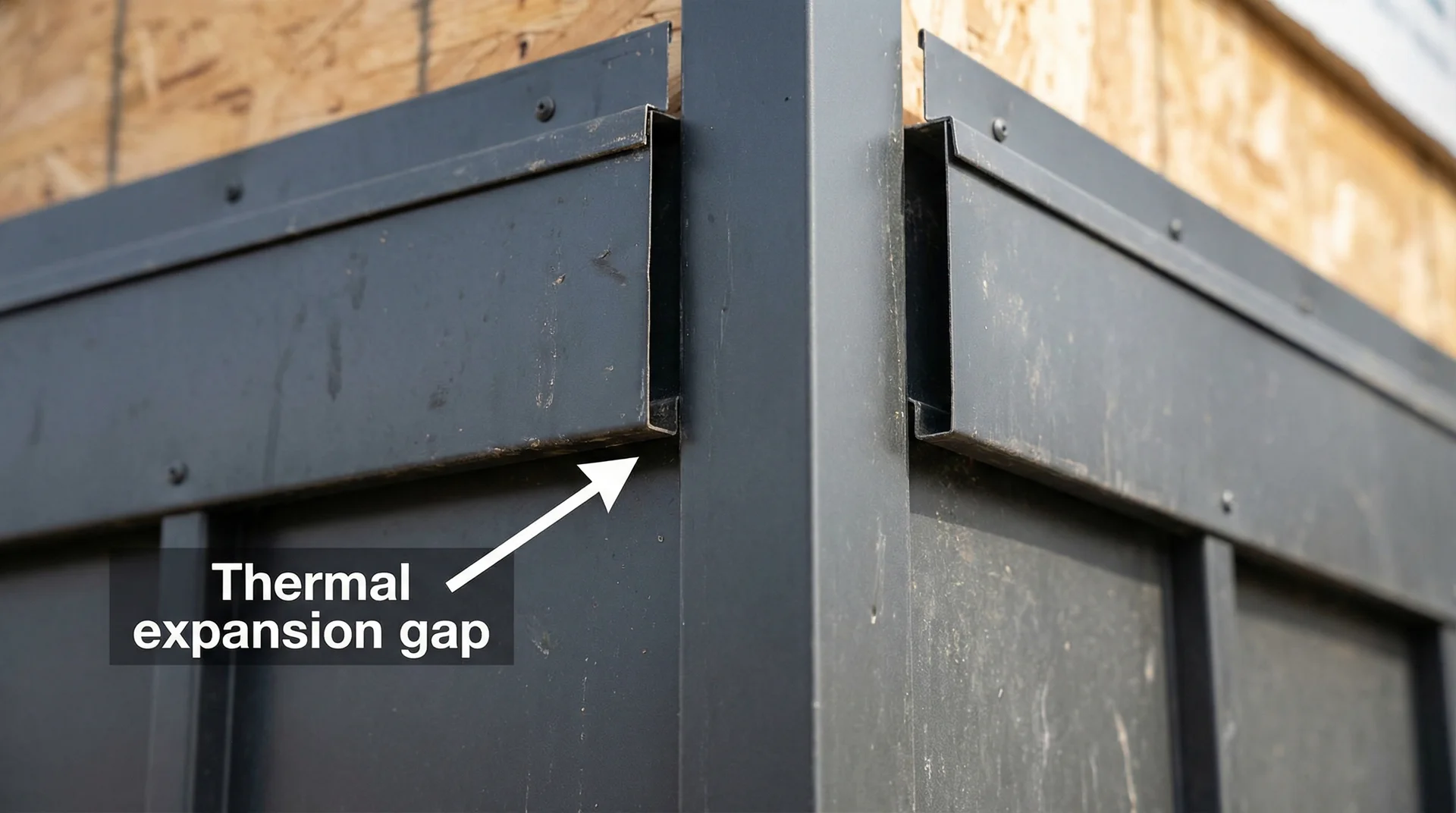
Thermal Expansion: Metals expand and contract more than organic materials with temperature changes. Fasteners must be driven to allow panel movement, not too tight and not loose enough to create rattle.
Expansion gaps at panel ends and trim transitions are required and must be calculated for the climate zone’s temperature range. An installer who fastens metal siding the same way they fasten vinyl will create a job that buckles, pops, and loosens within a few heating and cooling cycles.
Flashing at Transitions: Metal-to-masonry, metal-to-window, and metal-to-roof transitions require careful flashing integration. Metal’s rigidity means it does not conform to irregular surfaces the way flexible materials can, making the precision of flashing installation more consequential. Water management failures in metal siding installations almost always trace to a transition detail that was not flashed correctly, not to panel failure.
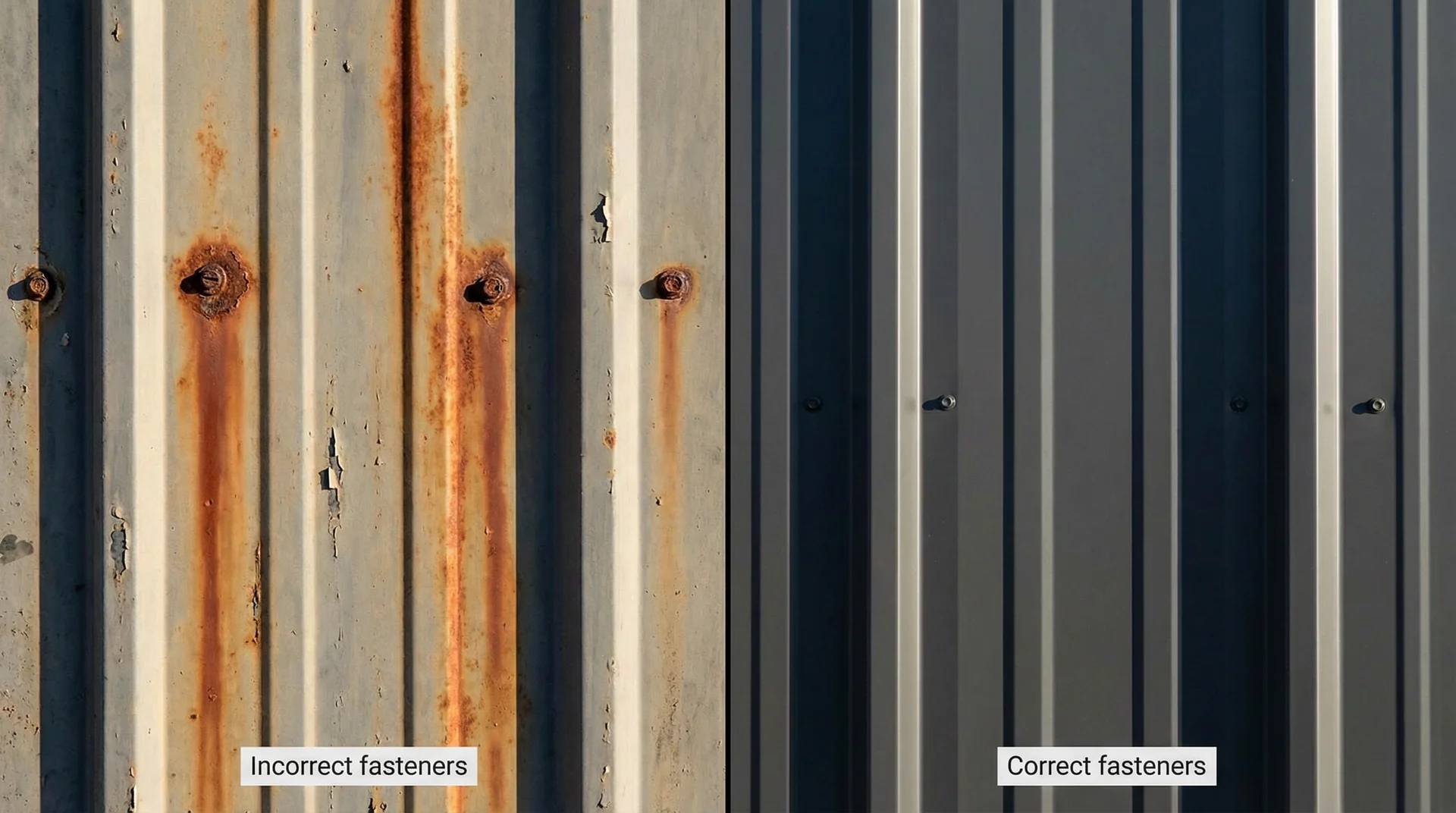
Fastener Specification: Every metal siding manufacturer specifies fastener type, corrosion resistance rating, diameter, and drive depth. Using non-corrosion-resistant screws or nails in steel applications creates rust streaking along fastener lines and eventual fastener failure. This is the most common installation shortcut I see on metal siding jobs done by contractors without metal-specific experience.
Permits: Most jurisdictions require a permit for full siding replacement. Your contractor should pull the permit, and you should confirm this before work begins. An unpermitted installation can create problems at resale and may void manufacturer warranties.
Questions to Ask Before You Sign a Metal Siding Contract
- How many residential metal siding projects have you completed in the last two years? Can I visit or photograph any of them?
- How do you calculate and manage thermal expansion gaps for this climate?
- What fastener specification do you use and why?
- How do you handle flashing at window transitions?
- What gauge are you specifying and why?
- Does the estimate include old siding removal and disposal?
- Will you pull the necessary permits?
A contractor who answers these questions specifically and confidently has done this work. One who deflects or generalizes has not done enough of it.
Sustainability and Recyclability
Steel and aluminum rank among the most recyclable construction materials available. Many steel siding products contain up to 67% recycled content, and the material is 100% recyclable at the end of life.
It will not sit in a landfill the way vinyl does. For homeowners who factor environmental impact into material selection, metal siding’s recyclability and long lifespan, which reduces replacement frequency, make it a defensible choice on sustainability grounds.
Is Metal Siding Right for Your Home?
Metal siding is the strongest choice if you live in a wildfire risk zone, hurricane region, or severe-weather climate where fire resistance and structural performance justify the premium.
It suits homeowners who want a modern, contemporary, or industrial aesthetic that other materials cannot replicate convincingly, and those who plan to own the home for 20-plus years and want to remove siding from the maintenance schedule entirely.
Coastal locations where aluminum’s corrosion resistance addresses a primary durability concern are also well-suited. If sustainability matters in your material choice, steel and aluminum are among the most recyclable options in residential construction.
Consider alternatives if your primary concern is minimizing upfront cost (vinyl offers significantly lower initial investment in moderate climates), if you want maximum thermal performance without adding external insulation (insulated vinyl outperforms uninsulated metal on native R-value), or if you cannot find a contractor in your market with documented residential metal siding experience.
Frequently Asked Questions
Does metal siding rust?
Steel siding can rust if the protective coating is breached and the exposed steel is subjected to sustained moisture. Quality galvanized or Galvalume-coated steel with PVDF finish resists rust effectively under normal conditions. Aluminum does not rust at all.
How long does metal siding last?
Steel lasts 40 to 70-plus years with proper installation and minimal maintenance. Aluminum typically lasts 15 to 40 years, depending on gauge, coating quality, climate, and maintenance frequency.
Can metal siding be painted?
Yes. Aluminum needs repainting every 5 to 10 years as the factory finish chalks and fades. Steel with PVDF coatings retains color for 30 to 50 years and typically does not require repainting within a normal ownership period. Proper preparation, including cleaning, metal-specific primer, and exterior-grade topcoat, is required for adhesion when repainting either material.
Is metal siding loud in the rain?
It amplifies rain sound more than organic materials. The degree depends on the profile, the gauge, and whether insulation is installed behind the panels. Concealed-fastener profiles and continuous rigid insulation significantly reduce the acoustic effect, but some sound transmission remains.
What is the best gauge for residential steel siding?
26 gauge is the recommended specification for most residential applications, particularly in hail-prone or severe-weather climates. 29 gauge is adequate in mild climates and reduces material cost, but provides less impact resistance.
Does metal siding affect home value?
Steel siding carries an average nationwide ROI of approximately 86%, with cold-climate northern markets reaching closer to 95%. The modern aesthetic, fire resistance, and near-zero maintenance profile are increasingly valued by buyers in markets where severe weather and insurance costs are pressing considerations.
Can you mix metal siding with other materials?
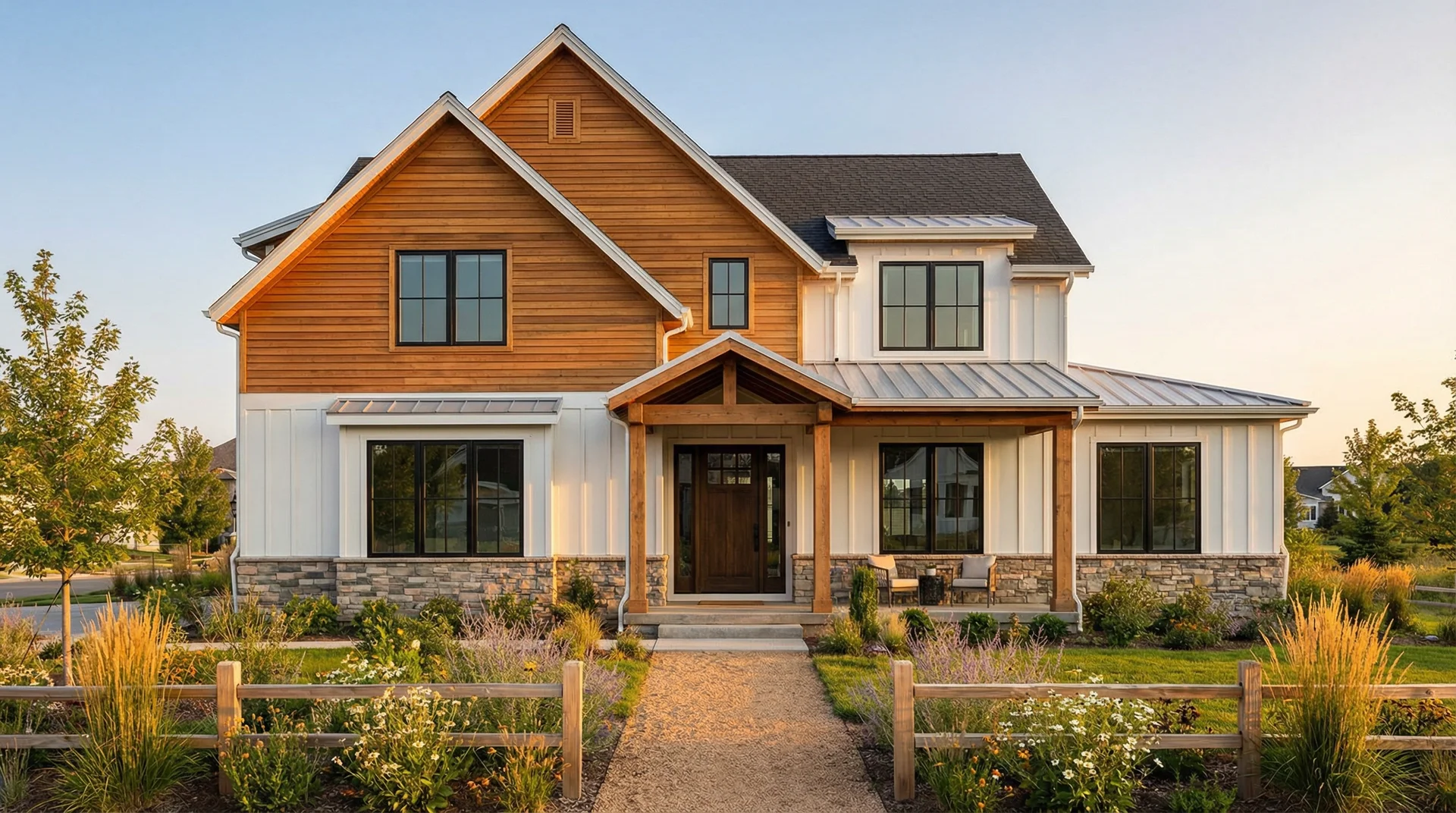
Yes. Mixed-material exteriors are one of the strongest design trends in residential construction right now. Metal board-and-batten or standing seam panels combined with fiber cement lap siding, stone veneer accents, or natural wood details produce exteriors that read as premium and intentional. The contrast between metal’s clean lines and the warmth of other materials is a compositional tool that contemporary architects use consistently.
Can I install metal siding myself?
Not recommended unless you have professional experience with the material. Metal siding is heavy, requires precise thermal expansion management, and demands correct fastener specification and flashing technique. Mistakes in any of these areas are expensive to correct after the fact. The labor savings are not worth the risk on a material you expect to last 40 to 70 years.