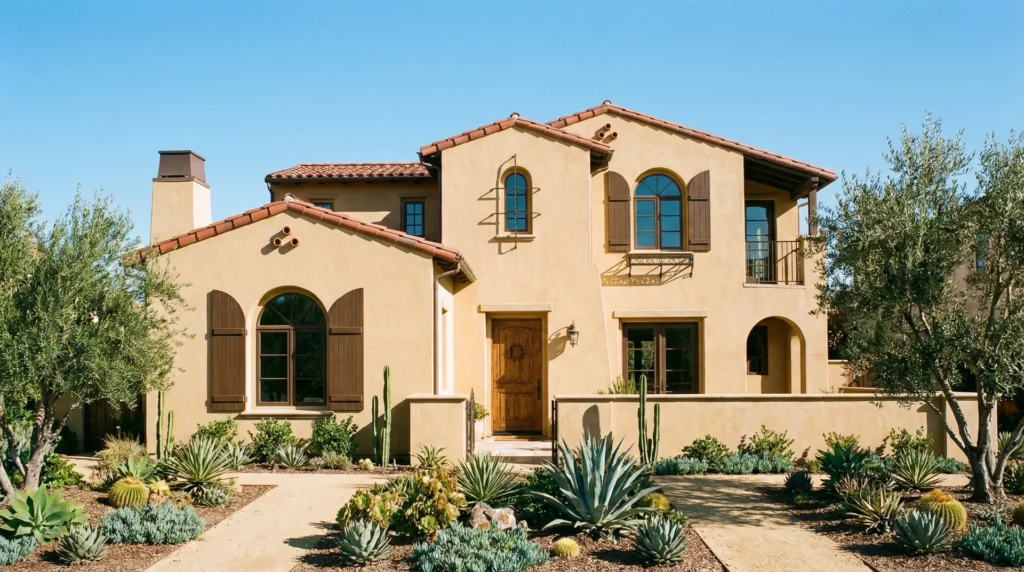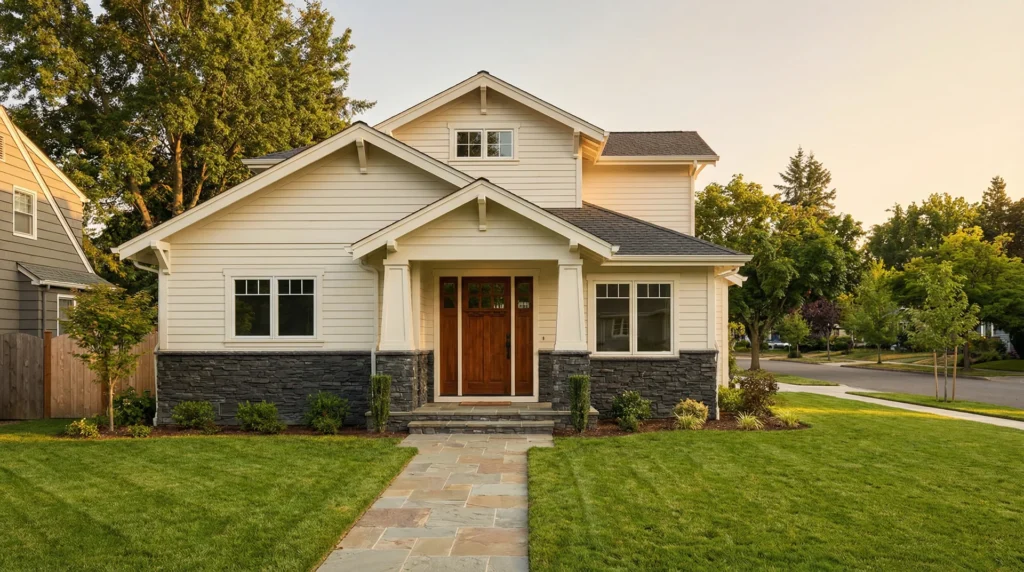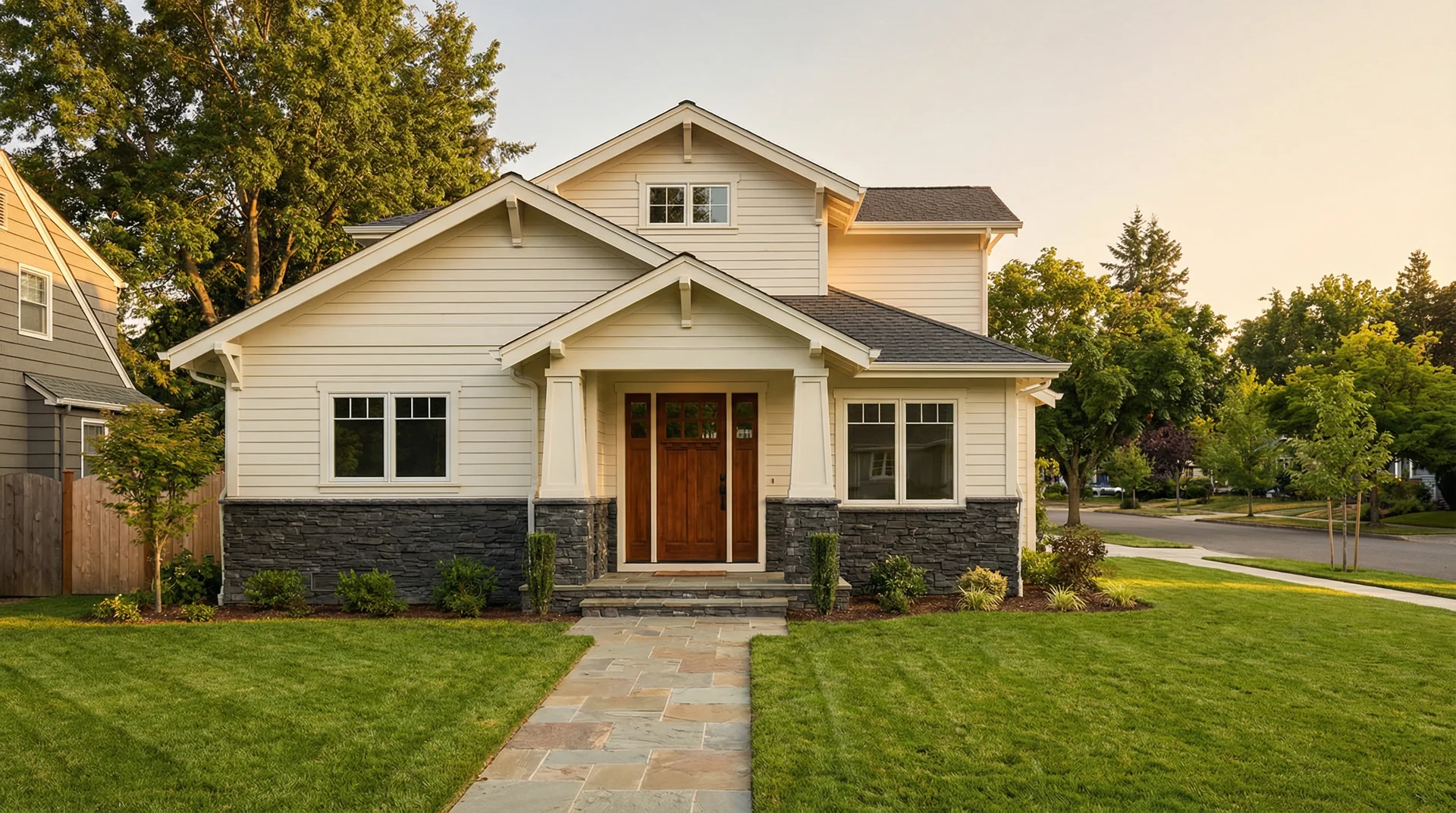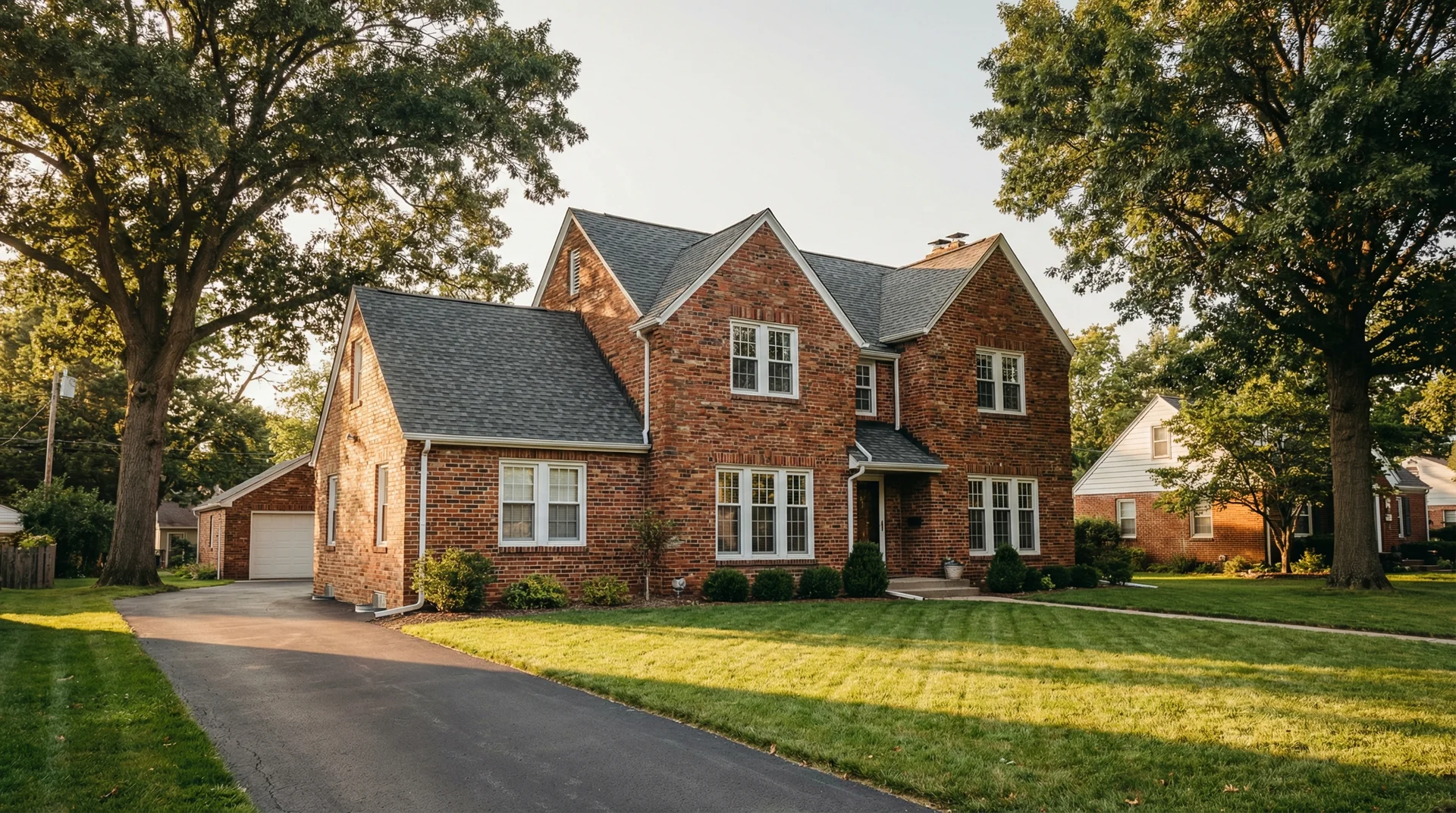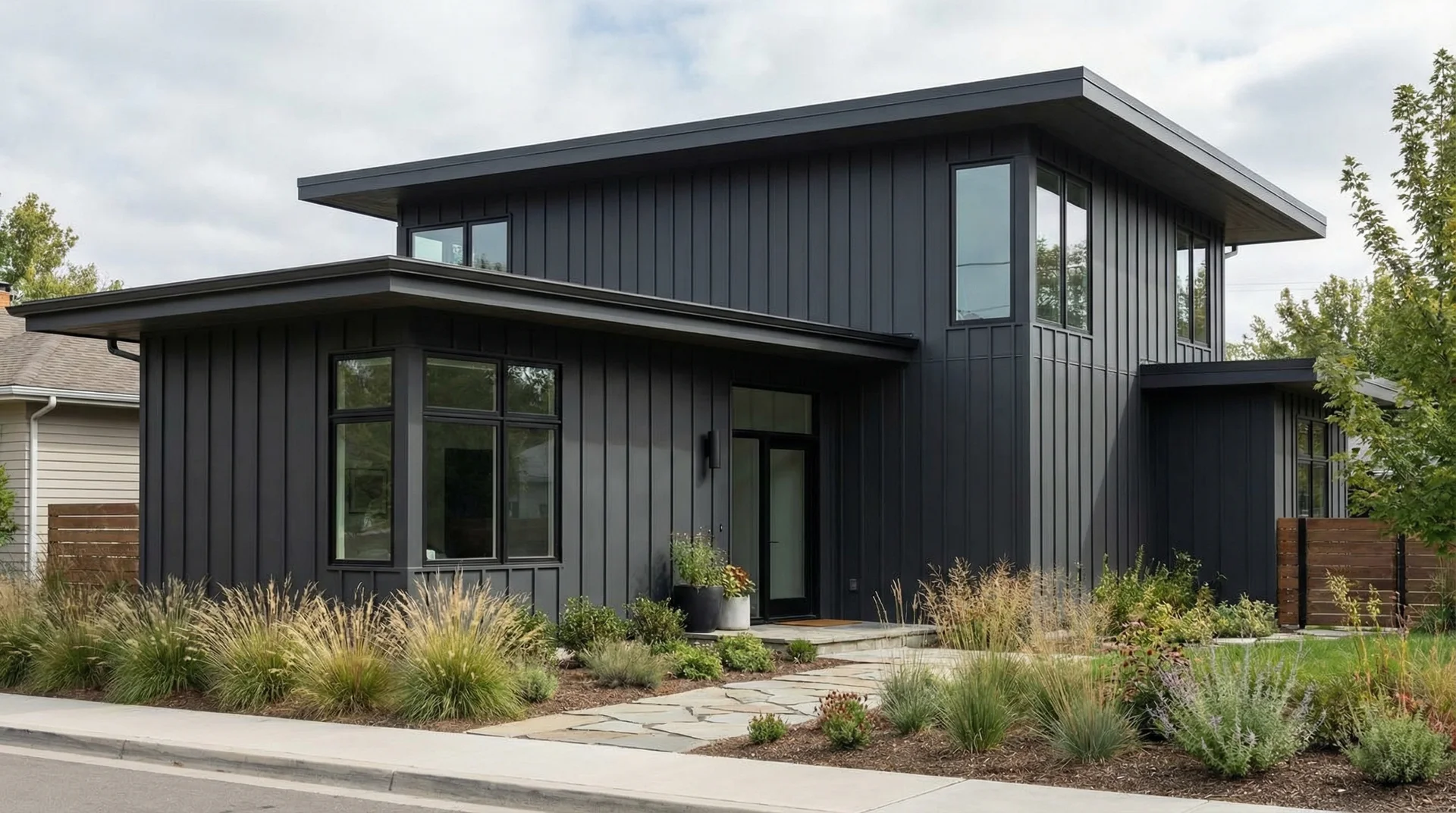
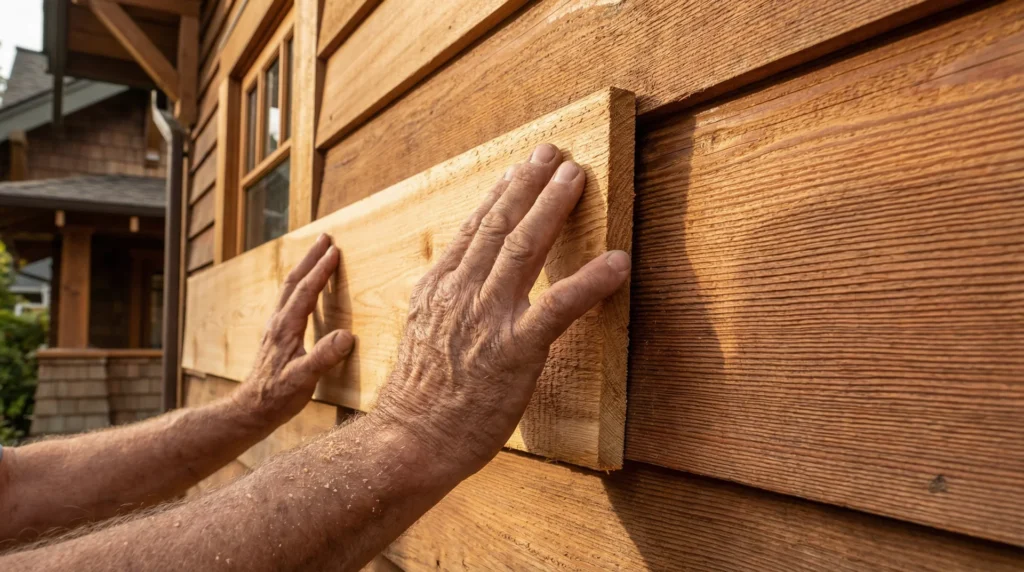
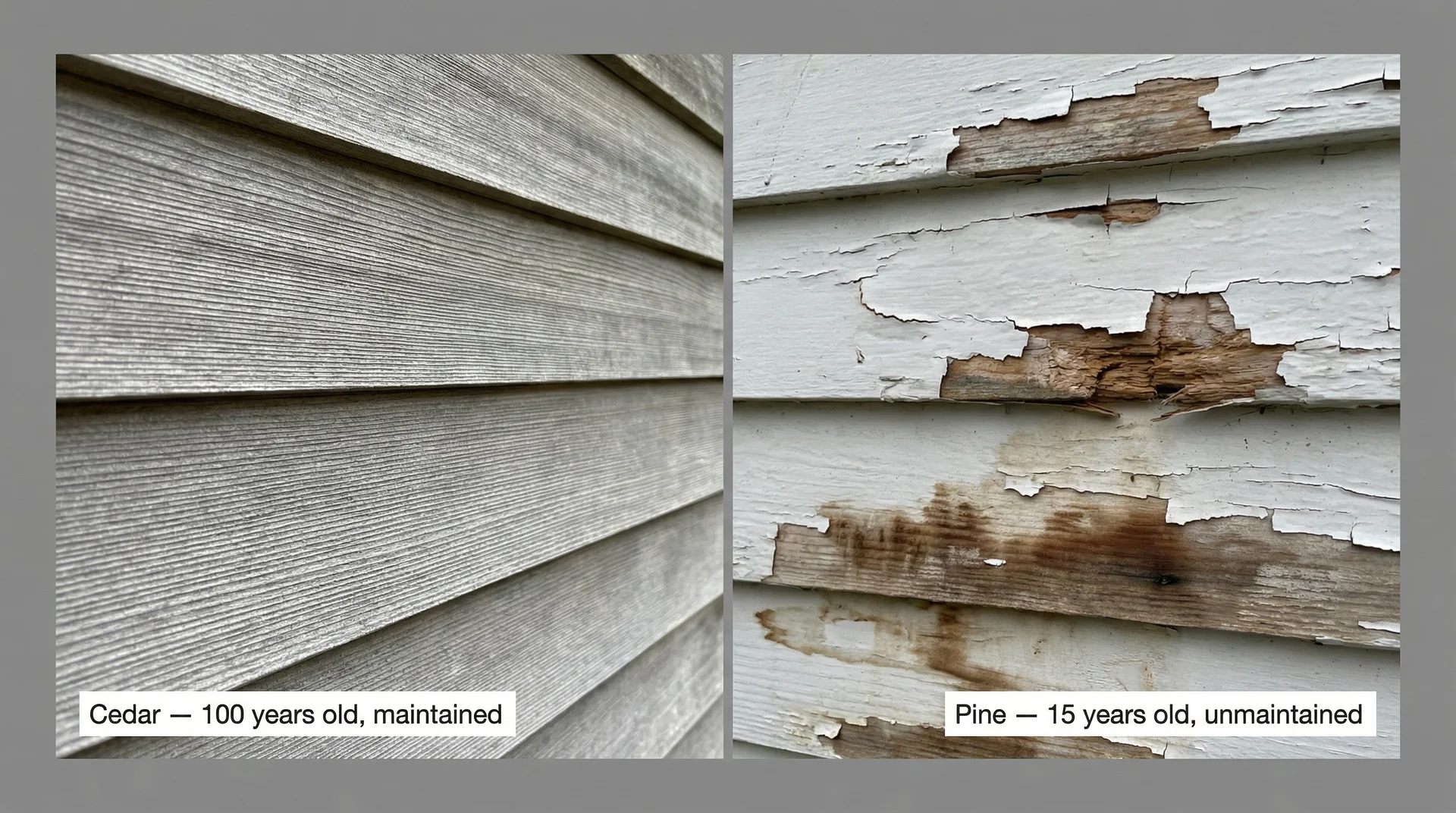
Two years ago, I worked on a craftsman-style home in the Boston suburbs with original cedar clapboard siding installed sometime in the 1920s. Over a century old. The boards were sound, the grain was extraordinary, and the color had weathered to a silver-gray that no factory product has convincingly replicated.
The homeowner stained it every four years without fail, ran annual inspections, and replaced a few boards after storm damage in the 1980s. That was it.
The week after that project, I replaced the pine siding on a home built in 2009. Fifteen years old. Failed at the board ends, soft in the lower courses, paint delaminating in sheets. The homeowners had painted it once, four years after installation, and assumed that was enough. It was not.
Those two jobs represent the full range of natural wood siding outcomes. The first is what wood does when you honor its requirements. The second is what it does when you do not.
There is no middle ground. No version of natural wood siding that performs adequately on partial maintenance. You either commit to the schedule, or you pay for it in board replacement and sometimes structural damage behind the failing material.
If you are still reading, you probably genuinely love wood. This guide is for you.
| Quick answer: Natural wood siding costs $6 to $18 per square foot installed, depending on species. Cedar is the performance standard, lasting 40 to 60 years on a 3-to-5-year maintenance cycle. Pine is affordable but unforgiving of neglect. Redwood delivers premium longevity on the West Coast. Cypress is the right call for the humid Southeast. In dry to moderate climates, for homeowners who will actually maintain it, natural wood is a legitimate long-term choice. In wet climates with indifferent maintenance, it fails predictably and expensively. |
Pros and Cons of Natural Wood Siding
Before getting into species and costs, here is the honest summary.
Pros:
- Genuine grain depth and character that no engineered product fully replicates
- Can be stained to show real wood tones, not just painted
- Individual boards are replaceable without disturbing the rest of the wall
- Naturally higher R-value than vinyl or fiber cement (roughly R-1.0 per inch), offering modest thermal benefits
- Renewable and biodegradable when sourced from certified sustainable forests
- Adds demonstrable curb appeal and resale value, particularly for historically-styled homes
Cons:
- Requires repainting or restaining every 3 to 5 years, depending on climate; no exceptions
- Combustible – a genuine concern in wildfire-prone regions
- 20-year total cost runs $15,000 to $25,000 higher than fiber cement on a comparable home
- Vulnerable to moisture, rot, and insects when maintenance is deferred
- Cedar and redwood grade selection matters enormously – buying the wrong grade erases much of the species premium
Wood Species for Siding: Cedar, Pine, Redwood, Cypress, Fir Compared
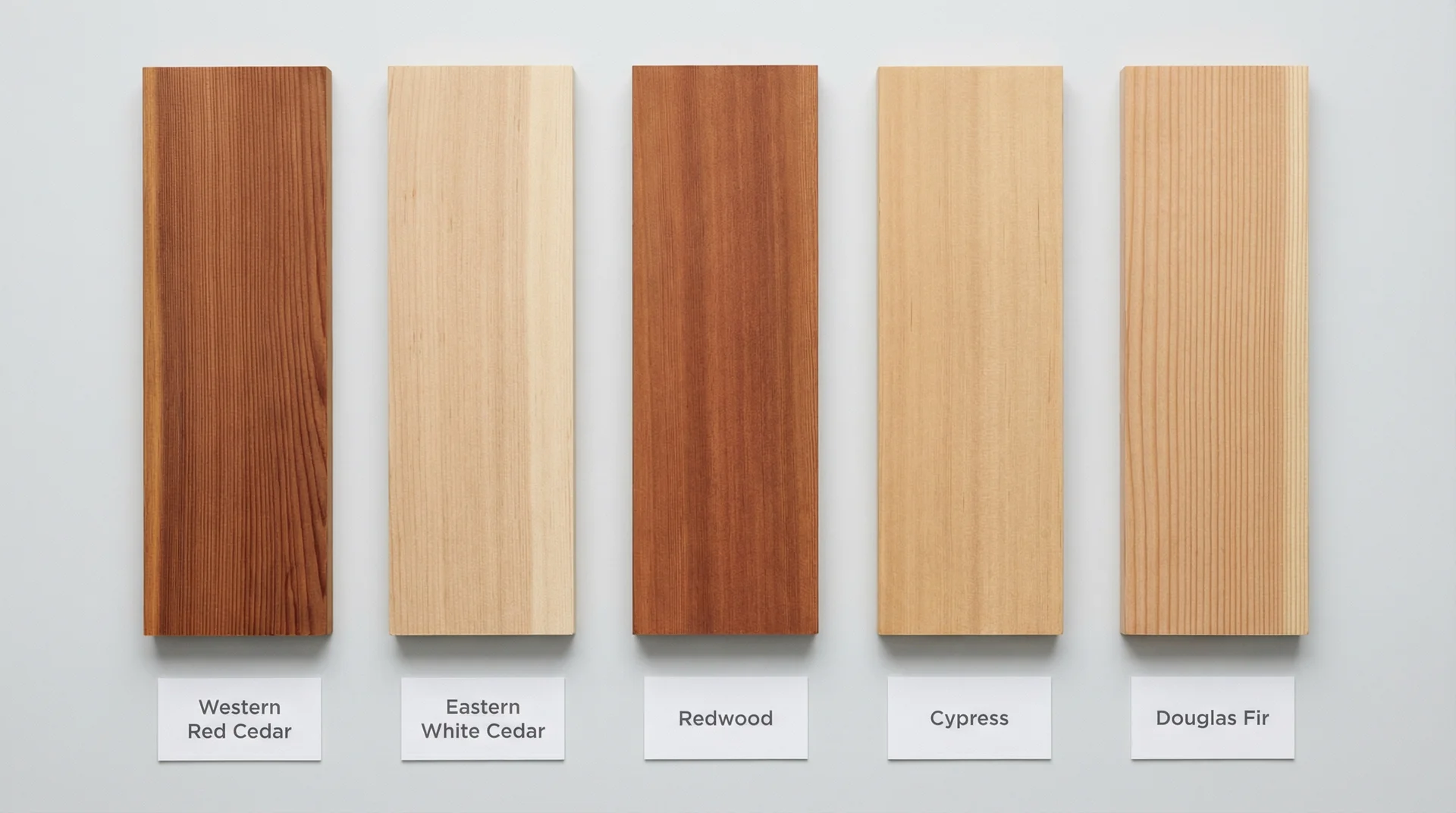
The species you choose shapes every other variable: cost, lifespan, maintenance frequency, and what failure looks like when it eventually comes.
Western Red Cedar
Western Red Cedar is the gold standard, and its market dominance is earned rather than marketed. When a homeowner insists on natural wood, and I want to give them the best possible outcome, this is what I specify.
The performance comes from the wood’s chemistry. Cedar heartwood contains thujaplicins, natural biocides produced by the tree, and cedrol, an oil compound that repels moisture and inhibits the fungi responsible for rot.
These compounds are not a surface treatment. They are woven into the cellular structure. A cedar board milled entirely from heartwood can resist decay even in sustained moisture exposure that would destroy untreated pine within a few seasons.
The color variable: Cedar heartwood is a rich reddish-brown that many homeowners find beautiful enough to display with a clear UV-blocking stain rather than paint. Unfinished cedar weathers to silver-gray over one to three years. If you want to preserve the original color, a penetrating oil stain with UV protection needs renewal every three to five years.
Species variants worth knowing:
- Eastern White Cedar is lighter in color, finer in texture, and more fibrous than Western Red. It is the dominant species for New England shake and shingle applications and performs well in the damp northeast.
- Incense Cedar (native to California and southern Oregon) has similar chemistry but less dramatic tonal variation. It takes stain well and holds up equally in natural weathering.
- Inland Red Cedar is the same species as Western Red Cedar but grows in the Rockies. More knots, lighter color, harder to source in grades above Select Tight Knot.
Cost: $2 to $9 per square foot material; $6 to $16 per square foot installed.
Lifespan: 30 to 60 years with proper maintenance. Documented century-old installations exist.
A note on grades that most contractors skip:
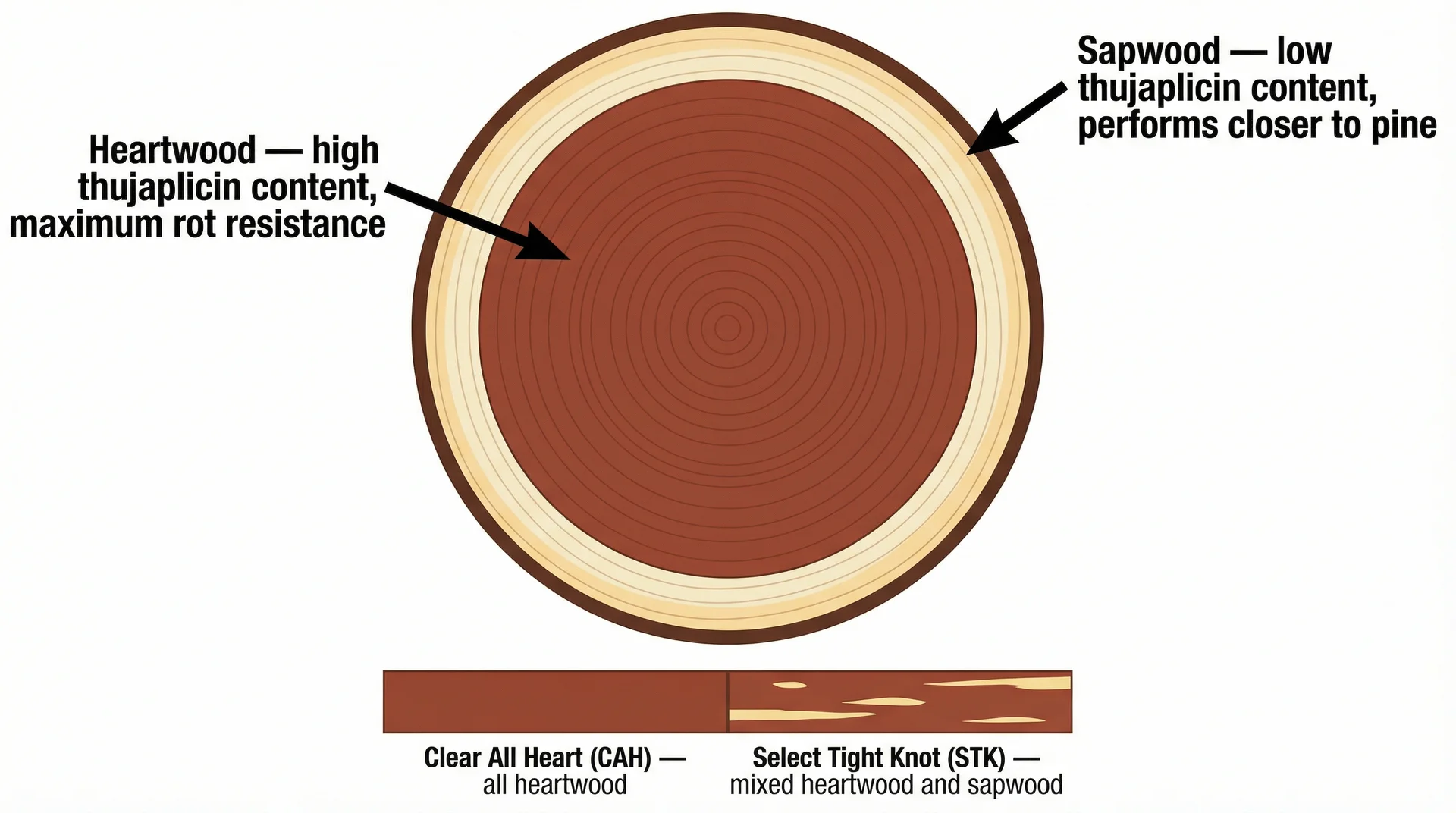
Clear All Heart (CAH) Western Red Cedar boards milled entirely from heartwood carry maximum natural protection.
Select Tight Knot (STK) and Common grades mix heartwood and sapwood, giving you boards with variable natural resistance.
When you buy a lower cedar grade to save on material cost, you are buying some proportion of sapwood whose thujaplicin content is much lower, which brings that product’s performance closer to pine than to CAH cedar. This is a more useful conversation than simply picking “cedar” and assuming all grades perform equally.
Pine
Pine is the affordable option, and its affordability comes with a trade-off that deserves plain communication rather than footnote treatment.
Pine lacks the natural protective oils and tannins that give cedar and redwood their decay resistance. It is a fast-growing softwood with an open cellular structure that absorbs moisture readily and provides an ideal habitat for wood-destroying fungi. Untreated pine siding in a humid climate can begin showing failure in as little as five to seven years if maintenance is deferred.
Pressure-treated pine adds chemical preservatives, but it makes paint adhesion more difficult, and the greenish tint of copper-based preservatives is not everyone’s preference.
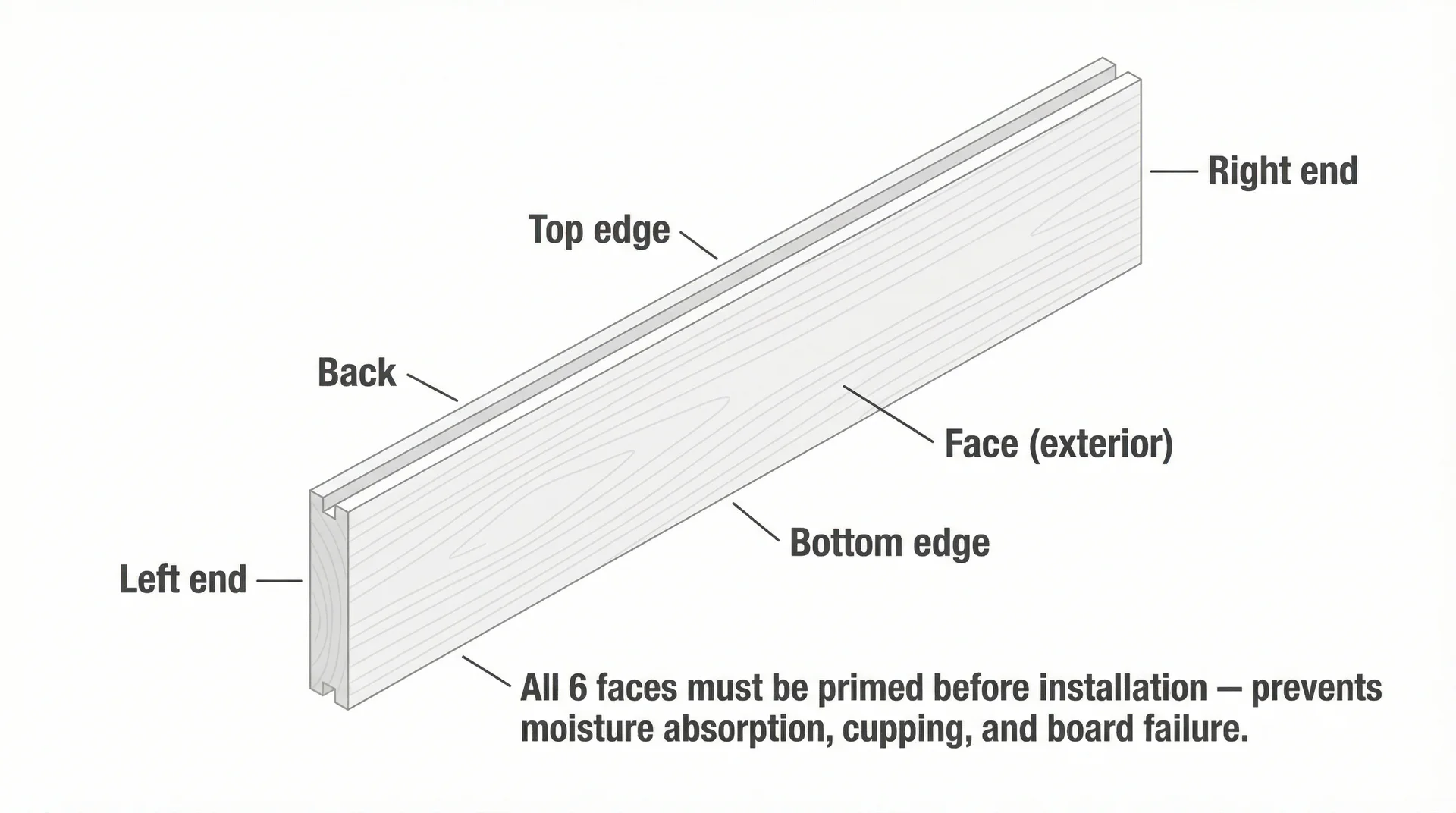
For pine to perform reasonably, installation requires back-priming (applying primer to all six faces of each board before it goes on the wall) and a strict 3-to-5-year repainting schedule without exception. A deferred paint cycle on cedar might show early surface weathering. A deferred paint cycle on pine might show board-end failure within the same period.
I use pine in specific situations: historically accurate restorations where pine was the original species, budget-constrained projects where the homeowner genuinely commits to the maintenance schedule, and applications where boards are protected by deep roof overhangs.
Cost: $1 to $5 per square foot material; $2.50 to $11 per square foot installed.
Lifespan: 15 to 25 years with diligent maintenance. Shorter in humid climates.
Redwood
Redwood is pine’s opposite. Dense, slow-growing, and naturally resistant to moisture, insects, and decay. Its tannin content is high, and its dense grain resists the moisture infiltration that precedes rot.
Redwood’s reddish-brown color is visually distinctive — warmer and richer than most cedar. Like cedar, it can be left to weather to driftwood gray or maintained with penetrating stain to preserve its color.
The practical limitation is supply. True old-growth redwood is not commercially available in the volumes that once existed. Modern redwood comes from younger-growth trees, which are less dense and somewhat less naturally resistant than old-growth material, though still substantially more durable than pine.
Redwood is most cost-accessible on the West Coast. In the Midwest and East, shipping pushes it toward the upper end of premium pricing, and cedar is typically the more economical specification for equivalent performance.
Cost: $4 to $12 per square foot material; $6 to $18 per square foot installed.
Lifespan: 25 to 50 years with appropriate maintenance.
Cypress
Cypress is the Southeast’s answer to western cedar. It grows abundantly in the Gulf Coast region and carries natural decay resistance through a compound called cypressene, which functions similarly to cedar’s thujaplicins. It is less widely known nationally, but in Louisiana, Mississippi, Georgia, and Florida, it has centuries of documented exterior performance.
Cypress’s durability in wet, humid conditions makes it particularly appropriate for the Southeast, where cedar’s performance can be less consistent than in the Pacific Northwest or New England. If you live in a Gulf Coast climate and want natural wood, regionally sourced cypress deserves evaluation alongside western cedar.
Cost: $2 to $6 per square foot material; $4 to $16 per square foot installed.
Lifespan: 30 to 50 years with appropriate maintenance.
Douglas Fir
Douglas fir is dimensionally stable, strong, and takes stain well, a legitimate choice for contemporary horizontal and vertical siding profiles, particularly in the Pacific Northwest, where it is locally abundant. Its straight grain produces clean, modern-looking exteriors when finished with a semi-transparent stain.
The limitation: Fir is not naturally rot-resistant. Like pine, it requires diligent back-priming, a strict repaint or restain schedule, and careful installation detailing at board ends and transitions. In dry western climates with disciplined maintenance, it performs well. In high-humidity regions, the maintenance stakes are the same as those for pine.
Cost: $2 to $6 per square foot material; $4 to $14 per square foot installed.
Lifespan: 15 to 25 years with diligent maintenance.
Spruce and Fir
Spruce occupies the same position as pine: affordable, widely available, and lacking the natural decay resistance that makes cedar, redwood, and cypress perform over long time horizons. They require the same strict maintenance protocol as pine, with similar failure consequences when that protocol is not followed.
In most residential applications where budget constraints are driving a wood specification, engineered wood siding, which has better moisture resistance through its manufacturing process, is a more honest recommendation than untreated spruce.
Natural Wood Siding Styles: Clapboard, Shiplap, Board and Batten, and Shingles
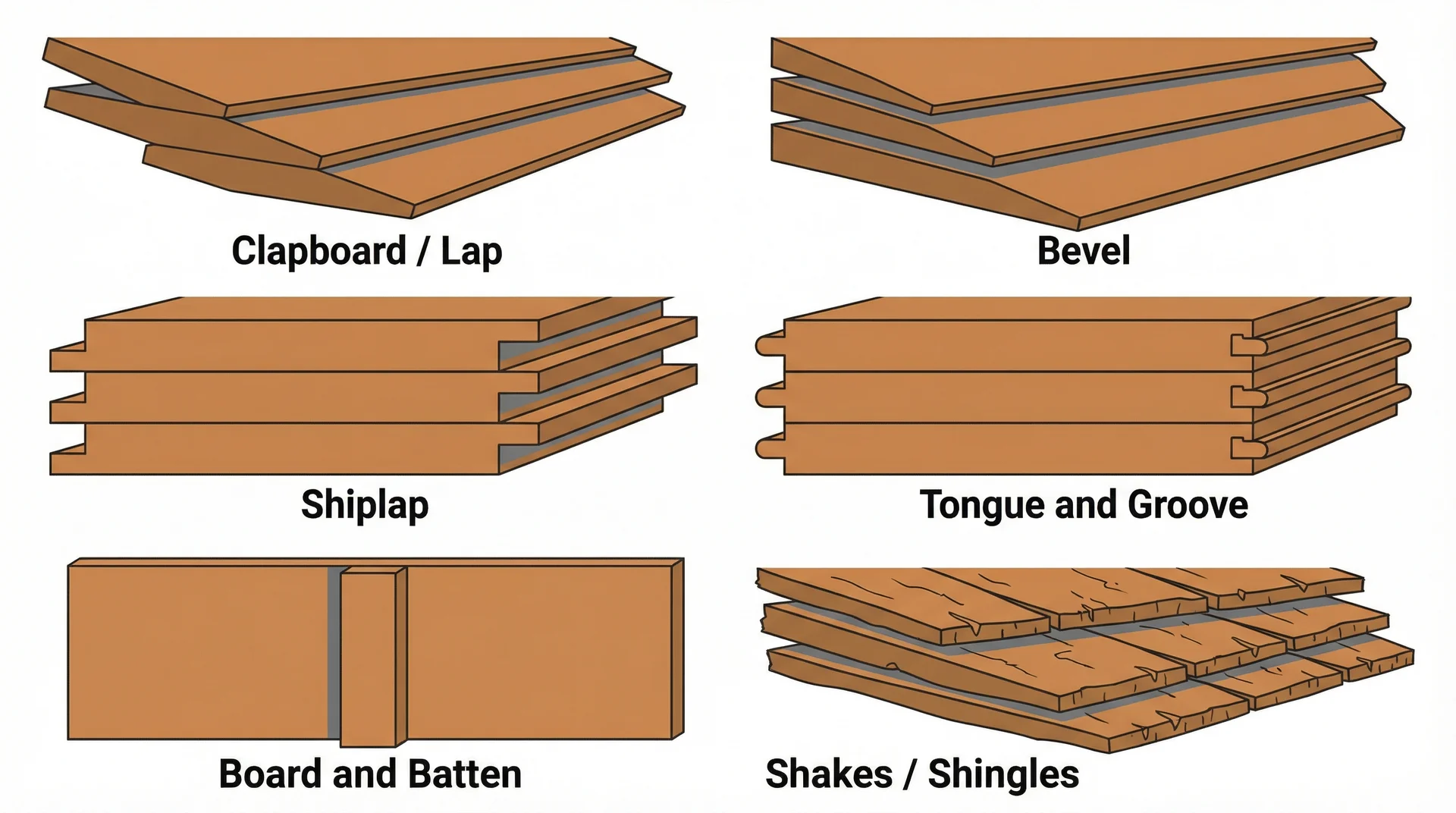
Clapboard / Lap Siding
The classic American residential profile: long horizontal boards that overlap, installed bottom course first, with each successive course lapping over the one below. The overlapping design sheds water naturally and has been used on American homes since the colonial period. Standard clapboard reveals run from 4 to 6 inches. Wider reveals read as more contemporary; narrower as more traditional.
Bevel Siding
A variation of a clapboard where the board is thicker at the bottom edge and tapered to a thinner top. The taper creates a more pronounced shadow line between courses. Common to craftsman and Arts and Crafts architecture.
Shiplap
Boards milled with a rabbet at each edge, allowing adjacent boards to overlap tightly without the visual step that traditional clapboard creates. Produces a flatter, more continuous surface. Can be installed horizontally or vertically.
Tongue and Groove
Boards fitted edge-to-edge with a tongue on one side and a matching groove on the other. Most common in vertical installations. A strong visual statement for contemporary and transitional architectural styles.
Board and Batten
Wide vertical boards with narrower strips covering the seams. The classic barn-and-farmhouse profile, reclaimed heavily by the modern farmhouse movement and now appearing on homes from craftsman to contemporary transitional.
Shakes and Shingles
Shingles are sawn smooth on both faces and taper uniformly. Shakes are split on at least one face, creating a rougher, more textured surface with irregular thickness.
Both are applied in overlapping horizontal courses, producing the dimensional texture associated with Cape Cod, coastal New England, and Arts and Crafts architecture. Cedar is the dominant species; the grain and natural oils suit the narrow profile of the shingle product.
Installation Detail That Separates Good Work from Failures: Rainscreen Assembly
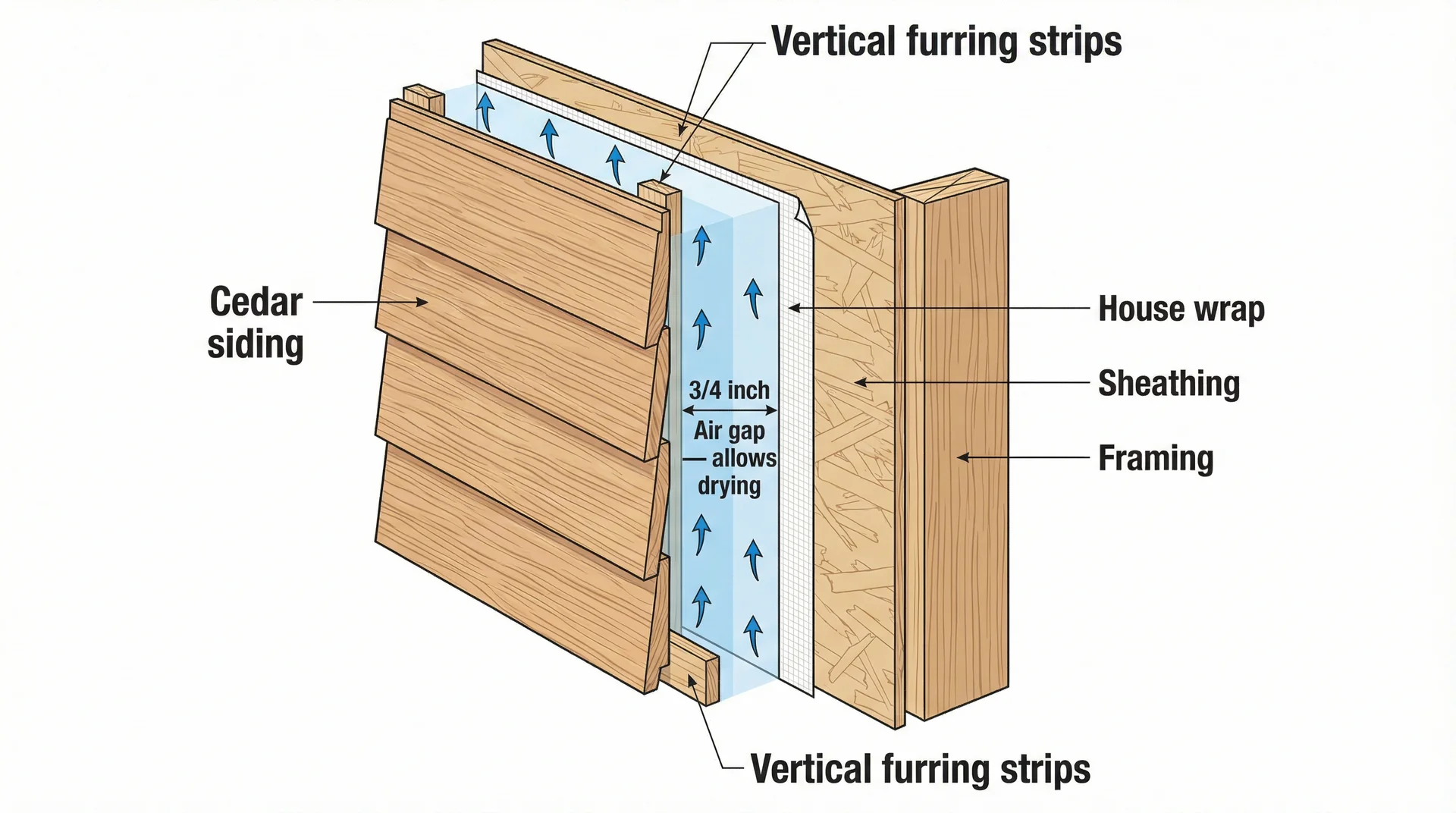
One element that competitors mention and many homeowners never hear about: the rainscreen installation method.
In a standard installation, wood siding sits directly against the house wrap and sheathing.
In a rainscreen installation, a small gap (typically 3/8 to 3/4 inch) is created between the back of the siding and the wall assembly using vertical furring strips.
That gap allows air to circulate behind the boards, dramatically improving drying speed after rain and reducing the sustained moisture exposure that drives rot.
For cedar and redwood in moderate climates, the difference is meaningful. In high-humidity climates like the Pacific Northwest or Southeast, a rainscreen installation can extend the effective maintenance interval and reduce the risk of moisture-driven failure at the bottom courses where most wood siding problems start.
If you are specifying natural wood siding in a wet climate, ask your contractor explicitly about the rainscreen. It adds modest cost at installation and pays for itself in reduced maintenance spending over time.
The Real Maintenance Schedule: By Climate and Finish
This is the section to read carefully before signing anything. The maintenance commitment is not optional, negotiable, or the same in every climate.
Painted Wood Siding
Paint provides a film barrier against moisture. When the film is intact, it performs well. When it fails through cracking, peeling, or loss of adhesion, moisture enters the wood, and degradation follows.
Repainting cycle by climate:
| Climate | Repainting Cycle |
|---|---|
| Dry (Southwest, Mountain West) | 5 to 7 years; 4 to 5 years on south/west elevations |
| Moderate (mid-Atlantic, Midwest, lower New England) | 4 to 6 years |
| Humid (Southeast, Gulf Coast, Pacific Northwest) | 3 to 4 years; sometimes shorter on north-facing walls |
Between full repaint cycles, any cracked or peeling sections must be spot-painted as they appear, not deferred to the next full cycle. A board with failing paint that goes through one full winter without repair begins to soften from moisture infiltration. A board that goes through two winters without repair is often past the point where painting helps and requires replacement.
Back-priming: When installing or replacing boards, all six faces, both long faces, both edges, and both ends should be primed before the board goes on the wall. This prevents differential moisture absorption that causes cupping and splits boards away from the wall. This detail is performed inconsistently in the field and is one of the most reliable predictors of premature failure in painted wood siding.
Stained Wood Siding
Penetrating oil stains are the correct finish for cedar and redwood, displayed in a natural wood-tone appearance. Unlike paint, which forms a surface film, penetrating stains absorb into the wood’s cellular structure and replace the natural oils that UV radiation and weather wash out over time.
Restaining cycle:
- Semi-transparent stains (light tint, full grain visibility): 3 to 4 years
- Solid-body stains (opaque, covering grain): 4 to 6 years
The major advantage of penetrating stain over paint is its maintenance behavior when the finish begins to wear. Paint failure is dramatic: cracking, peeling, and flaking that requires scraping and sanding before the next application. Stain wear is gradual; the surface looks weathered and gray rather than peeling. Restaining a worn, stained surface requires cleaning and preparation, but not the mechanical removal that deteriorated paint demands.
The tradeoff: in high-moisture climates, a penetrating stain system provides less barrier protection than a properly maintained paint system.
Natural Wood Siding Cost: Material, Installation, and 20-Year Reality
Material and Installation Cost by Species
| Species | Material Cost | Total Installed |
|---|---|---|
| Pine / Spruce | $1 to $5 per sq. ft. | $2.50 to $11 per sq. ft. |
| Cedar (STK grade) | $2 to $7 per sq. ft. | $6 to $13 per sq. ft. |
| Cedar (Clear All Heart) | $5 to $9 per sq. ft. | $10 to $16 per sq. ft. |
| Redwood | $4 to $12 per sq. ft. | $6 to $18 per sq. ft. |
| Cypress | $2 to $6 per sq. ft. | $4 to $16 per sq. ft. |
| Douglas Fir | $2 to $6 per sq. ft. | $4 to $14 per sq. ft. |
For a 2,000 square foot home, a complete cedar STK installation runs roughly $12,000 to $26,000.
Clear All Heart cedar runs $20,000 to $32,000.
Redwood on the West Coast runs $12,000 to $36,000, depending on grade and regional availability.
The 20-Year Maintenance Cost Reality
This is the number that changes the financial calculation for most homeowners. Here is what 20 years of wood siding maintenance actually costs on a typical 2,000 square foot home, assuming professional painters for each cycle.
Painted cedar (approximately 3,000 sq. ft. of paintable surface with soffits and trim):
| Maintenance Event | Timing | Cost (Professional) |
|---|---|---|
| Initial installation | Year 0 | $20,000 (STK cedar) |
| Full repaint | Year 5 | $3,500 to $5,500 |
| Spot repairs and prep | Year 8 | $800 to $1,500 |
| Full repaint | Year 10 | $3,500 to $5,500 |
| Spot repairs and prep | Year 13 | $800 to $1,500 |
| Full repaint | Year 15 | $3,500 to $5,500 |
| Spot repairs and board replacement | Year 18 | $1,500 to $3,000 |
| Full repaint | Year 20 | $3,500 to $5,500 |
| 20-year total | $37,100 to $47,500 |
Fiber cement comparison:
| Item | Cost |
|---|---|
| Initial installation | $18,000 |
| Repaint at year 15 | $4,000 |
| 20-year total | $22,000 |
The honest gap: natural wood siding costs $15,000 to $25,000 more than fiber cement over 20 years on a comparable home. For many homeowners, the aesthetic justifies this. But the number should be visible before the decision is made, not after the 10-year repaint quote lands.
Does Wood Siding Add Resale Value?
It can, but conditionally. Well-maintained cedar or redwood siding on a historically styled home in a neighborhood where buyers expect premium materials does support higher asking prices and faster sales.
Poorly maintained wood siding, like peeling paint, soft board ends, and failing caulk at windows, actively depresses value and flags deferred maintenance to every buyer’s inspector.
The resale value benefit of natural wood is not the material; it is the maintained material.
Fire Risk: What Wood Siding Means in Wildfire Zones
This deserves a direct section rather than a parenthetical.
Natural wood siding is combustible. In California, Oregon, Washington, Colorado, and other states with defined Wildland-Urban Interface (WUI) zones, local building codes increasingly restrict or prohibit combustible exterior cladding on new construction and major renovations. If your home is in a wildfire risk zone, check your local code before specifying any natural wood product.
Even where wood siding is not prohibited, insurance implications are real. Some carriers surcharge or exclude properties with combustible siding in high-risk zones. The financial math on natural wood changes significantly when insurance premiums are factored into the 20-year comparison above.
Flame-retardant treatments can be applied to wood siding, but they add to installation cost and must typically be reapplied with each repaint cycle to remain effective. For homeowners in WUI zones who love the wood aesthetic, fiber cement is the more straightforward answer.
Natural Wood vs. Engineered Wood: Authenticity vs. Practicality
Both are wood products in a meaningful sense. Their performance requirements differ, and their failure modes differ.
| Factor | Natural Wood (Cedar) | Engineered Wood (LP SmartSide) |
|---|---|---|
| Material authenticity | Full — genuine wood grain and aging | Approximation — embossed grain, uniform |
| Can be stained to show natural grain | Yes | No — requires paint |
| Natural decay resistance | High (cedar) to Low (pine) | Moderate — zinc borate treatment |
| Fire resistance | Combustible | Combustible |
| Maintenance cycle (painted) | 3 to 5 years | 8 to 14 years |
| 20-year maintenance cost | $15,000 to $27,000 | $5,000 to $8,000 |
| Material cost | $2 to $12 per sq. ft. | $3.50 to $4.50 per sq. ft. |
| Installed cost | $6 to $18 per sq. ft. | $5.50 to $10.50 per sq. ft. |
| Geographic warranty exclusions | None | Several high-moisture regions |
| Board replaceability | Yes | Yes |
Natural cedar has an aesthetic depth that LP SmartSide approximates but does not replicate. Cedar can be stained to show genuine grain variation; LP SmartSide cannot be stained at all. Cedar demands a maintenance cycle roughly twice as frequent as engineered wood and costs substantially more over a 20-year horizon.
For homeowners in moderate climates who love the look of wood and will actually maintain it, natural cedar is a legitimate, rewarding choice. For homeowners who want wood aesthetics with less maintenance demand, engineered wood delivers that trade-off clearly.
Historic Homes and Wood Siding: When Authenticity Is Not Optional
For homes in designated historic districts and National Register properties, natural wood is frequently the only compliant choice.
The National Park Service’s Preservation Brief 16 establishes that “in-kind replacement,” matching the original material in species, profile, and finish, is always the preferred approach when existing historic siding must be replaced. Substitute materials are recognized as permissible when they visually replicate the historic material and meet the specific standards of the local preservation board.
Some preservation boards accept high-quality fiber cement profiles. Others require natural wood. The specifics depend on your property’s designation and your local board’s interpretation.
Practical guidance for historic property owners:
Contact your local historic preservation commission before specifying any material. The rules vary significantly between cities and between district designations. An hour in conversation with your preservation officer before getting contractor quotes will save you from specifying a material that cannot receive approval.
If natural wood is required, grade matters. Replacing historic clapboard with clear-grade material that matches the original profile reads as authentic. Replacing it with common-grade pine with visible knots does not. Matching the original profile dimension precisely often requires custom milling and should be budgeted accordingly.
When wood cannot be maintained at the required frequency, fiber cement is the preservation-compliant alternative in most districts. The NPS and most preservation authorities are pragmatic about this: a well-specified fiber cement installation that maintains historic visual character is preferable to poorly maintained natural wood that deteriorates and eventually requires emergency replacement.
Is Natural Wood Siding Right for Your Home?
Natural wood is the right choice if:
- You genuinely love the material and will honor a 3-to-5-year maintenance schedule without deferral
- You are in a moderate to dry climate where the maintenance burden is lower and the material performs predictably
- Your home is historically designated and natural wood is required or strongly preferred
- You want a material that can be stained to show genuine wood grain character that no manufactured product fully replicates
- You are restoring a historic home and material authenticity is part of the project’s purpose
Consider alternatives if:
- You have thought “I don’t want to think about it every few years” at any point during your research that thought is the honest answer about wood ownership
- You live in the Pacific Northwest, Southeast, or any high-humidity climate where the maintenance cycle tightens and the consequences of missing it accelerate
- Your home is in a wildfire risk zone where combustible cladding creates genuine safety and insurance exposure
- The 20-year total cost comparison matters to your financial planning the $15,000 to $25,000 gap versus fiber cement over 20 years is real money
Frequently Asked Questions
How long does cedar siding last?
Quality Western Red Cedar heartwood siding, properly installed and maintained on a 3-to-5-year paint or stain schedule, lasts 40 to 60 years. Documented century-old installations exist on homes where maintenance has been continuous.
Unfinished cedar weathers to silver-gray in one to three years and can remain structurally sound in moderate climates, though the unfinished surface is more vulnerable to surface mold and mildew. In dry western climates, unfinished cedar performs reasonably well.
In humid eastern climates, a clear water-repellent sealer applied annually or biennially is strongly recommended even without paint or stain.
Can you leave cedar siding natural without painting or staining?
Yes, with trade-offs. Unfinished cedar weathers to silver-gray through UV photodegradation. The heartwood’s natural oils continue to provide some decay resistance, but surface biological growth like algae and mildew is more likely on unfinished surfaces in humid conditions.
In dry western climates, unfinished cedar develops an attractive natural patina. In humid eastern climates, apply at a minimum a clear water-repellent sealer.
What is the difference between cedar shakes and cedar shingles?
Shingles are sawn on both faces, producing uniform surfaces and a consistent taper from butt to tip. Shakes are hand-split on at least one face, creating a rougher texture with more thickness variation. Shakes read as more rustic; shingles as more refined.
Is pine a good choice for siding?
Pine is appropriate for homeowners who commit to a strict 3-to-5-year repaint schedule, live in dry climates, and understand that pine lacks the natural decay resistance of cedar, redwood, or cypress.
For homeowners who want wood aesthetics with less maintenance demand, engineered wood siding is a more honest recommendation than pine.
How do you repair a damaged natural wood siding board?
Individual board replacement is one of natural wood’s genuine advantages. A damaged board can be cut out at the nearest stud location, and a new board can be cut and installed to match the original profile.
The new board requires back-priming before installation, and the finish needs to be matched to the existing wall. In older homes where the existing paint color has shifted through years of UV exposure, an exact color match may require custom tinting.
The repaired section typically looks slightly different from the surrounding siding for one to three years until weathering equalizes.
What causes wood siding to fail?
In order of frequency: deferred maintenance (paint or stain not applied on schedule), missing back-priming at installation, inadequate clearance from grade (bottom course wicking soil moisture), failed caulk at window and door transitions, and water management failures in the roof system above (overflowing gutters depositing water against the wall continuously). None of these is a material failure. They are installation and maintenance failures.
Does wood siding increase home value?
Well-maintained wood siding on an appropriate architectural style can support higher asking prices and faster sales. Poorly maintained wood siding actively depresses value. The material alone does not add value; the maintained material does.