I have spent enough mornings in other people’s bathrooms to know this question stresses people out more than it should. Brides, editorial clients, and everyday regulars sit in my chair before a shoot, and they all ask some version of it. Most of them have already Googled it, read ten different takes, and landed back at square one.
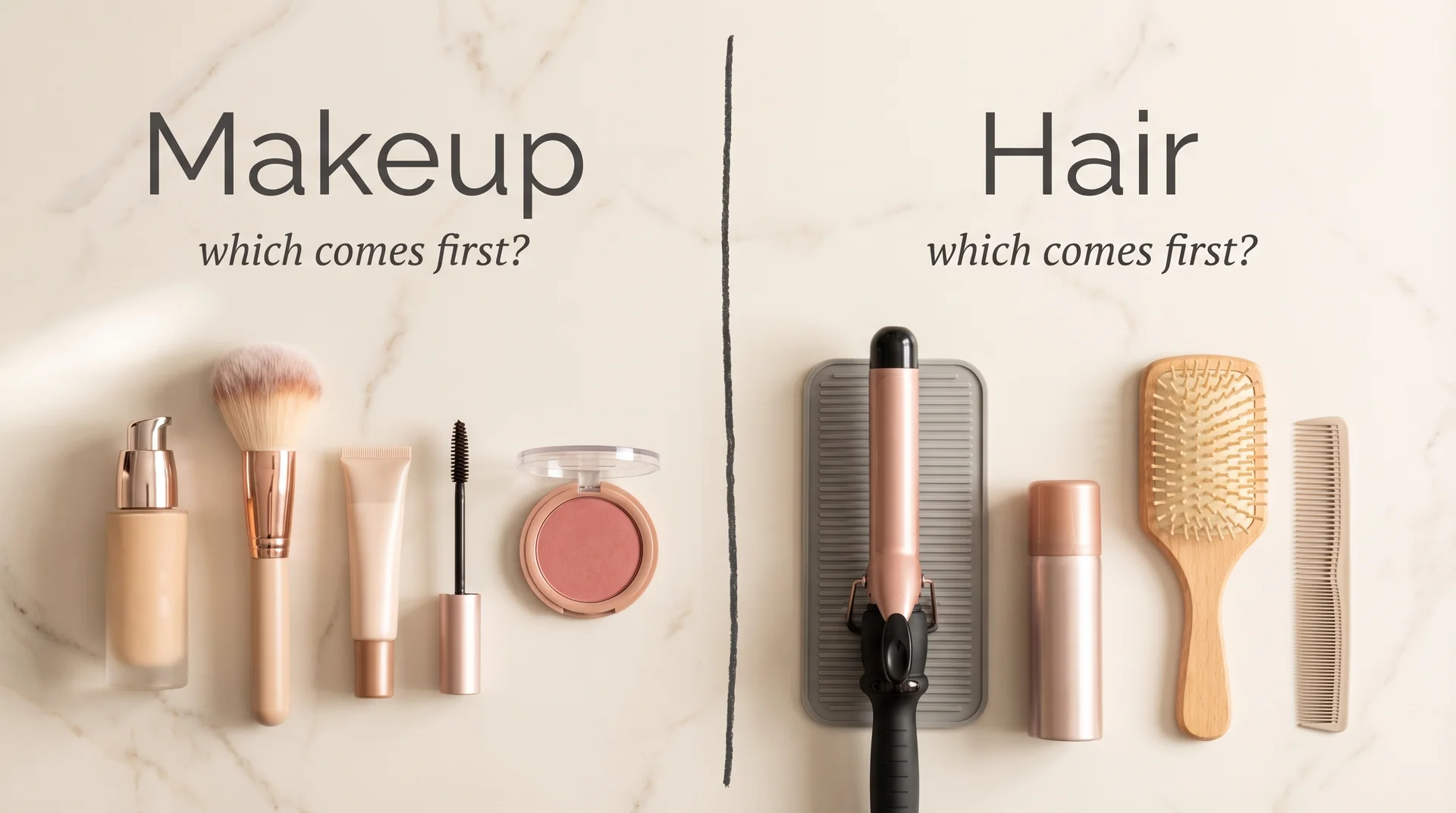
So here is the answer before anything else: do your makeup first, most of the time. That is the working default for the majority of people on the majority of days. The exceptions are real, and they matter, but they are still exceptions. If you use hot tools, if it is summer, if your skin runs oily, or if you are getting ready for a wedding, the order flips. Those cases get their own sections below.
For everyone else, makeup goes on first. Here is why that holds, and exactly when it stops holding.
| A note on skin advice: everyone’s skin responds differently to heat, product, and humidity. The guidance here is general. If you have a specific skin condition or sensitivity, check with a dermatologist before changing your routine. |
Why Makeup First Is the Professional Default
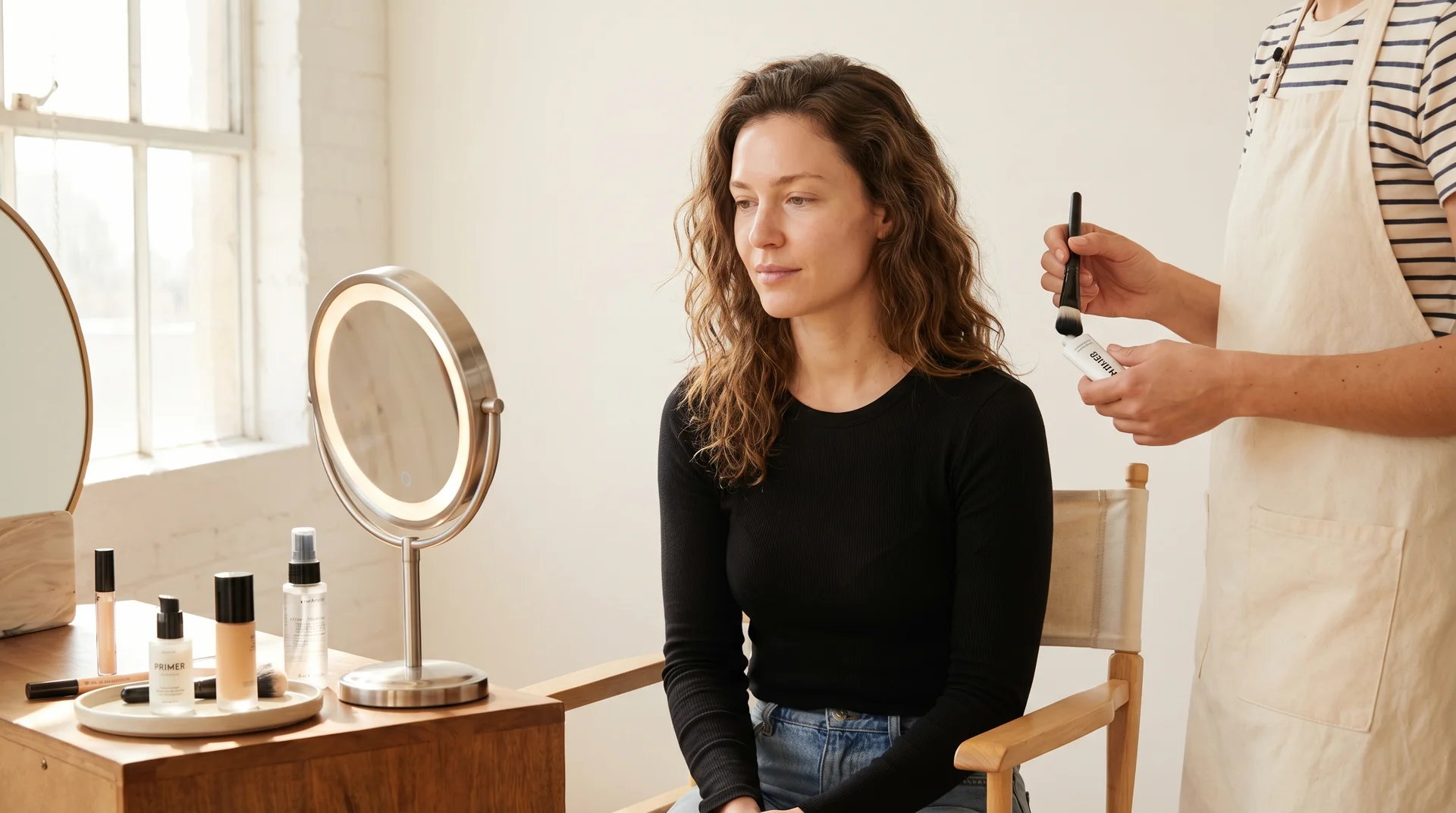
The reason makeup-first became standard practice is straightforward. Styling your hair before touching your face introduces at least three things onto your skin that do not belong there: heat, sweat, and product residue.
When you run a curling iron through your hair, your body temperature goes up. Your skin responds by producing oil and, in warm rooms especially, a light sweat. Foundation applied over a warm, oil-slicked face oxidises faster and sits unevenly. It looks different two hours later than it did when you first checked the mirror. Primer loses its grip. Concealer creases earlier than it should.
Hairspray compounds the problem. Aerosol particles travel further than most people expect. If you have just set your hair and then try to apply foundation, you are working through a film of lacquer you cannot see. The finish looks off, and the makeup does not blend the way it is supposed to.
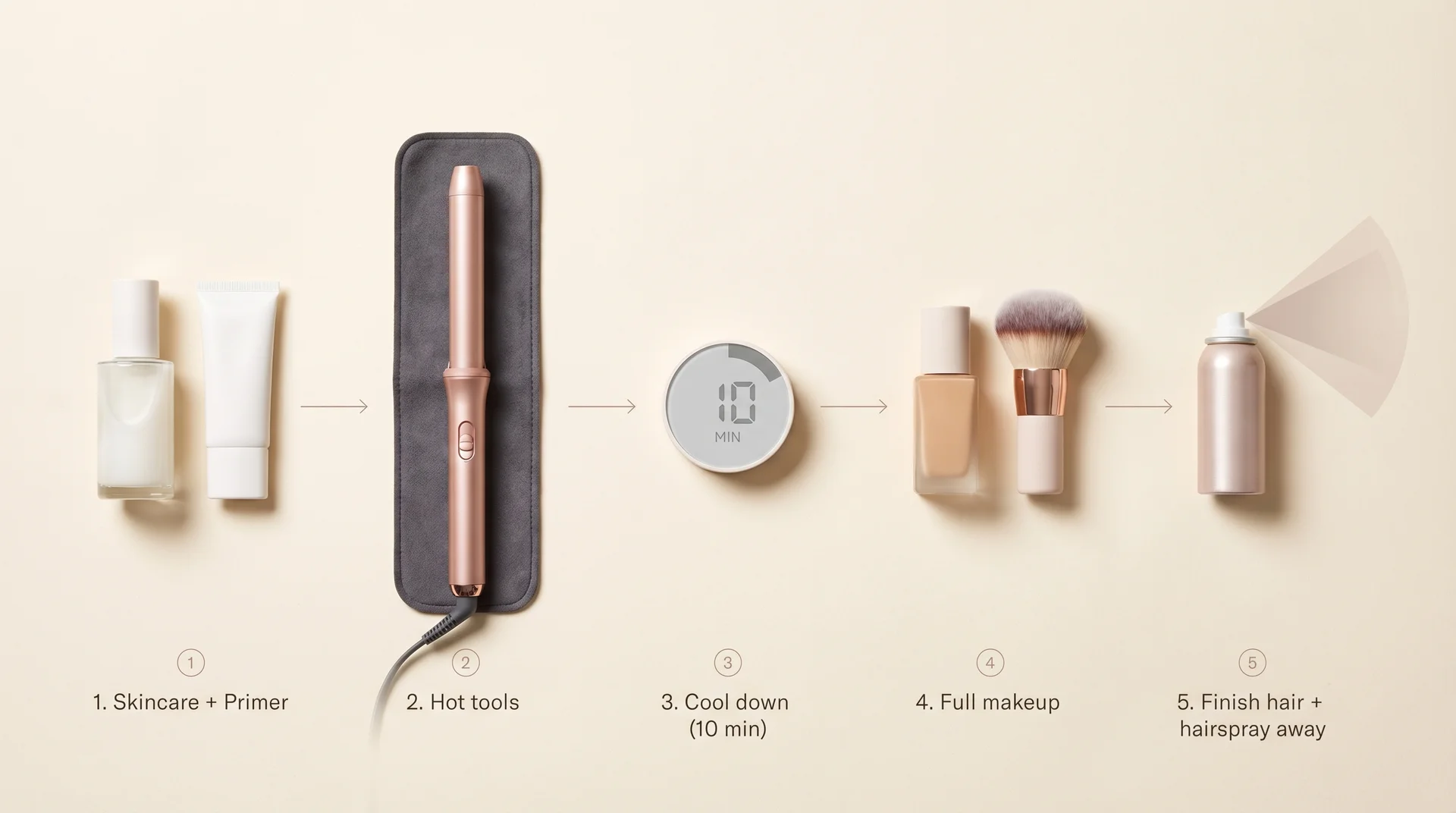
When I prep a client before a shoot, I want to touch a clean, temperature-neutral face. I ask them to arrive with dry, product-free hair for exactly this reason. My sequence on most editorial days: skincare and primer first, rough hair prep if needed, a few minutes for the skin to settle and cool, full makeup application, then final hair finishing. That order protects the work.
How Skin Type Changes the Hair vs. Makeup First Answer
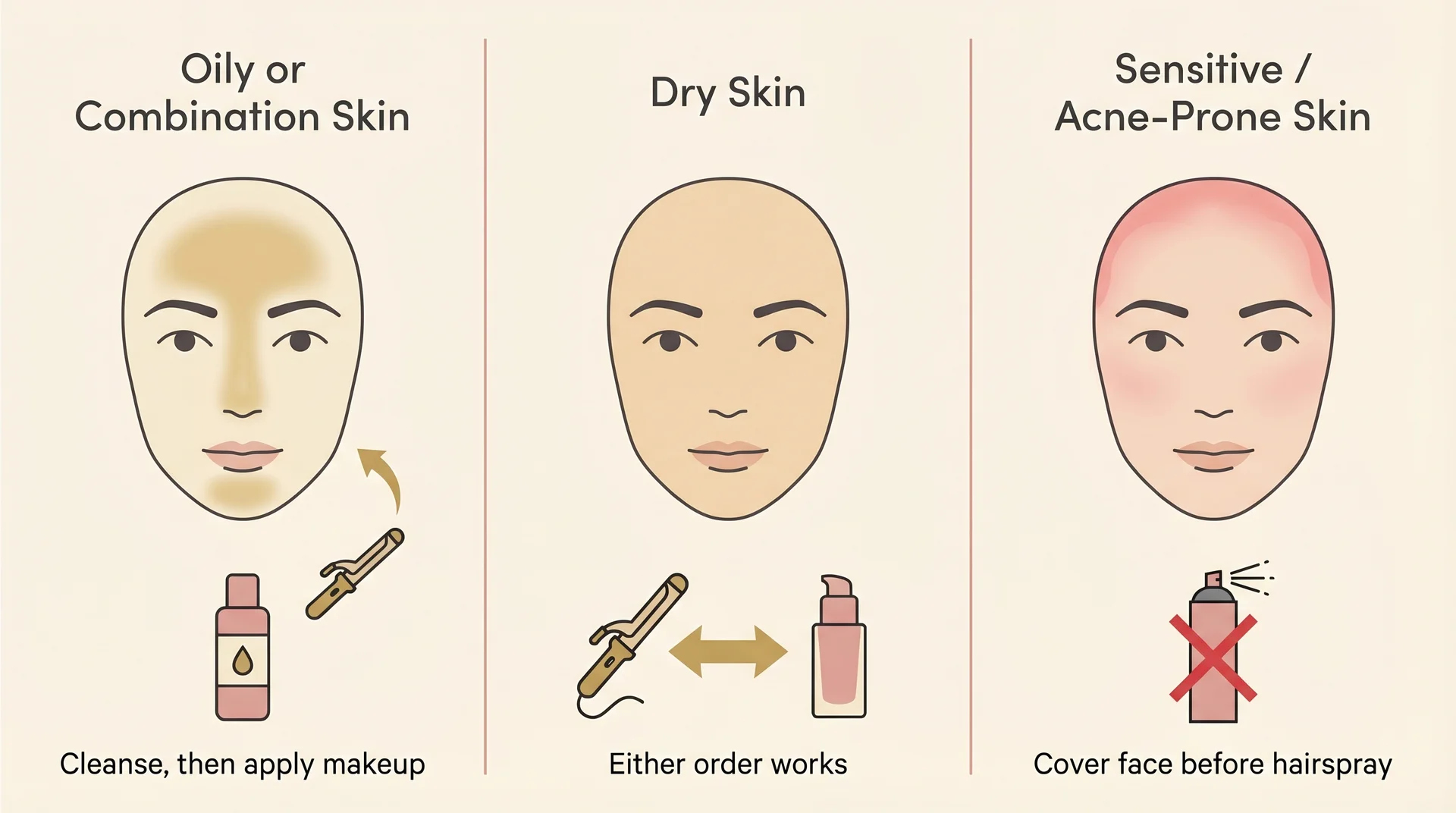
Your skin type changes the answer more than your hairstyle does. This is the most overlooked variable in the whole conversation.
Oily or combination skin: Heat styling first is worth considering. Doing your hair gives your skin time to do what it naturally does, produce sebum, and then you can cleanse your face right before you apply your base. Your foundation goes onto a freshly washed, de-oiled face as close to neutral as it will get that morning. I carry blotting papers in my kit and use them between the hair styling and makeup steps for clients who run oily. It makes a visible difference in how long the base holds.
Dry skin: The sequencing is more forgiving. Dry skin does not respond to heat with the same oil surge. Your primer will hold in either order, and you have real flexibility depending on what your styling routine looks like that day.
Sensitive or acne-prone skin: Take hairspray seriously. Aerosol product near a reactive face can clog pores and trigger breakouts, especially around the hairline and temples. Do your makeup first, cover your face when you apply hairspray, or switch to a non-aerosol formula.
When to Flip the Order and Do Hair First
You Are Using Hot Tools (Especially in Summer)
Heat is the main reason to rearrange the sequence. Blow dryers, curling wands, and flat irons raise your core temperature. If you are already in a warm room or it is July and your bathroom has no air conditioning, that temperature spike is enough to break down the foundation before you finish applying it.
I had a client at a bridal shoot in late August, an outdoor venue, no real shade. We started with makeup because the schedule had been set that way. By the time her stylist finished the curling iron work, we had about 40 minutes of effort to redo across her forehead and T-zone. That day confirmed something I already knew in theory: in heat, sequencing matters more than the products do. A waterproof formula over sweated-off primer still looks rough.
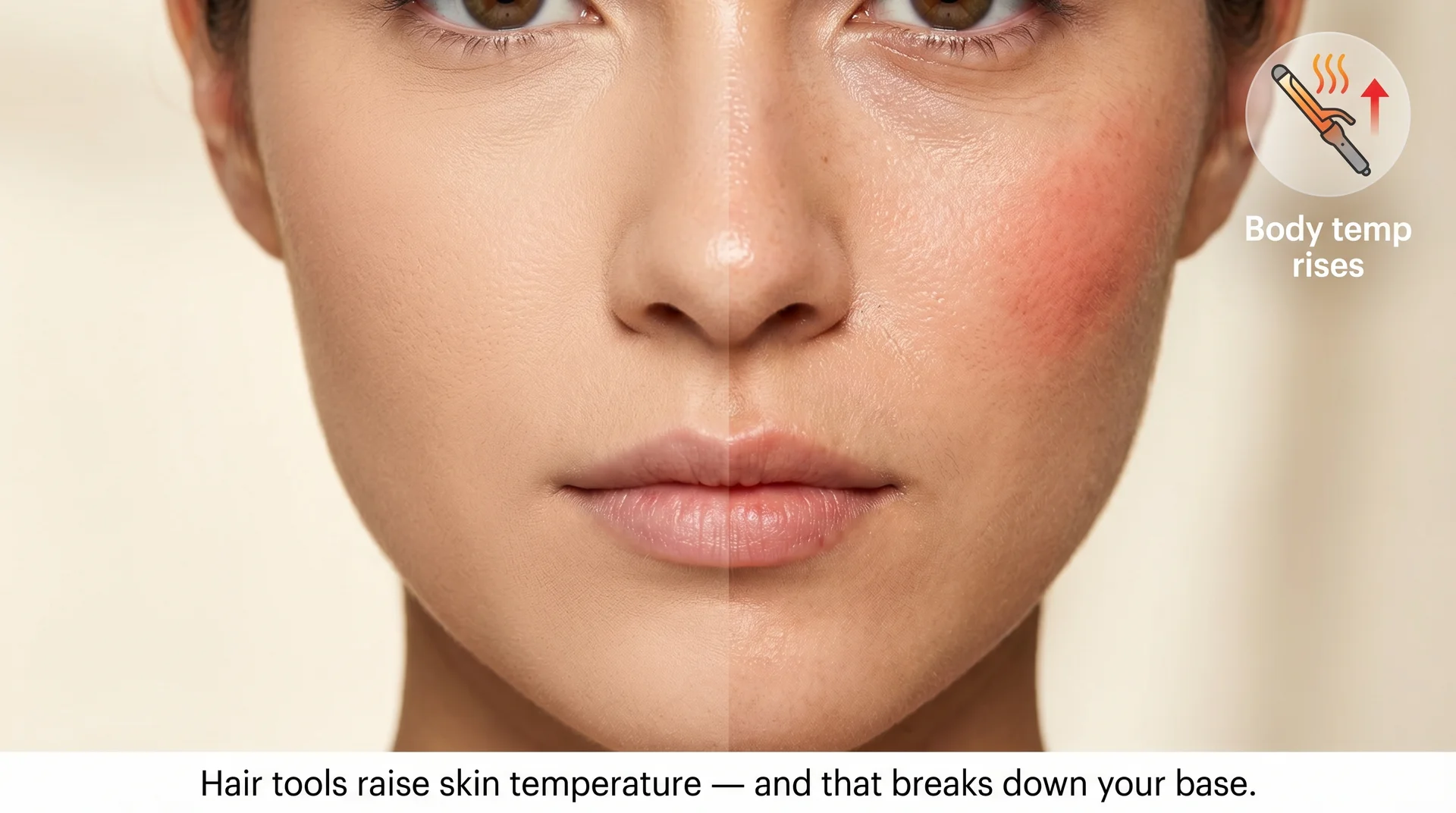
The fix is simple. Do all your hot tool work first, give your face 10 minutes to come back to a resting temperature, use a chilled facial mist if you have one, then start your base.
Your Hair Routine Involves Water
Wash day, wet sets, diffusing curls from damp: any routine that starts with water needs to start before your makeup. Shampoo, conditioning rinse, leave-in spray: all of it creates moisture that lands on your face whether you intend it or not. If you have already applied for the foundation, you will be reapplying. Do the wet work first, let your hair dry enough for heat tools or a diffuser to finish it, then move to your face.
Your Style Needs Time to Set
Pin curls need to cool before you brush them out. Hot rollers need to sit. A braided style being pinned up later needs the tension to settle. If you have a 30-to-45-minute wait built into your hair process, use that window for your makeup. You are working within the dead time instead of around it, which is the kind of efficiency that makes getting ready feel less chaotic.
You Have Bangs
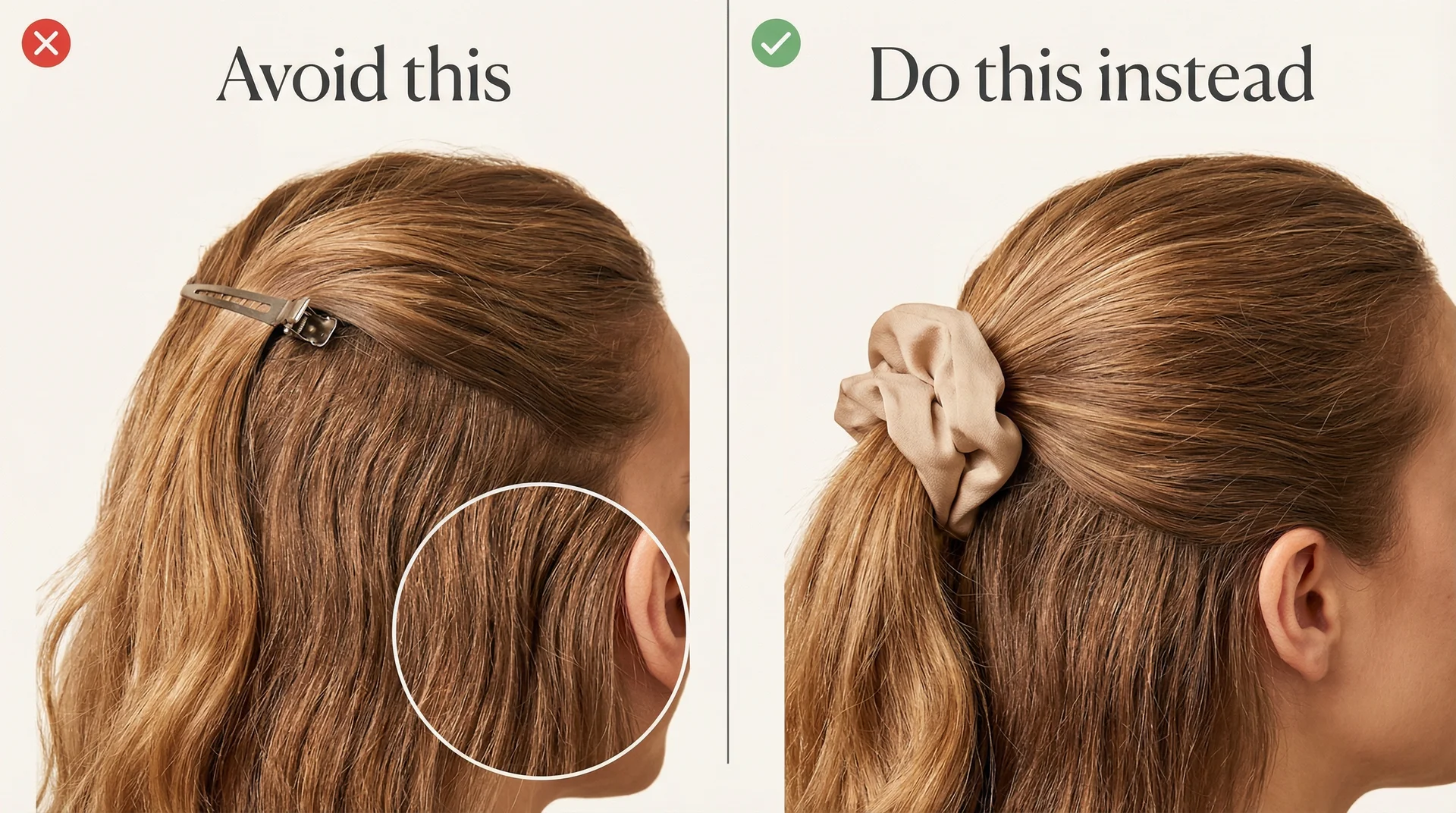
Bangs are trickier than people give them credit for. If you blow-dry or style your bangs with heat and then clip them back to apply makeup, you risk creating creases that are hard to fix.
The cleaner approach: style your bangs last, after your face is done. Keep them out of the way with a soft headband during makeup application. Avoid a clip. If your bangs dry naturally, the sequence matters less, but aim to style them after your base is set.
Should I Do My Hair or Makeup First for a Wedding?
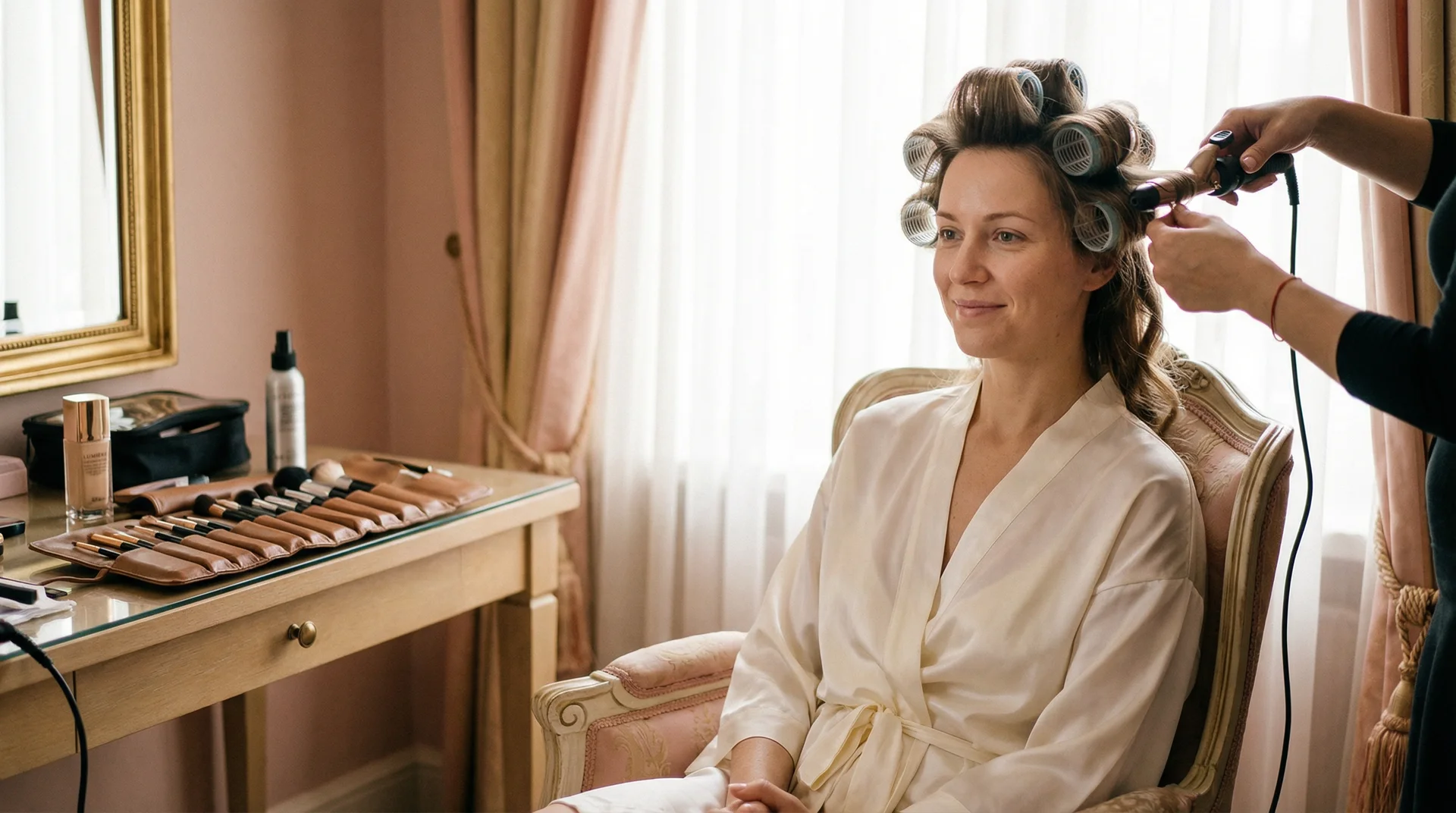
Weddings get their own section because the stakes and the environment are different.
My consistent recommendation for brides is hair first, every time. On a wedding morning, heat tools are being used continuously on multiple people. The room runs warm. You are on adrenaline, which means your body temperature is already higher than it would be on an ordinary Tuesday. The emotional state of the morning, the nerves, the hugging, the moments that catch you off guard before you have even thought about waterproof mascara, all of it affects how your skin behaves.
If your makeup goes on last, it sits on a face that has fully stabilised. The stylist has finished. The room has quieted a little. You have had a moment to cool down. The base photographs better and hold through the ceremony without needing significant touch-ups.
A look applied two or three hours before the ceremony, while another hour of hot tool work happens around your face, is a look that has been through something. Makeup applied after the hair is done simply has less to survive.
The exception for simple bridal styles: if your wedding hair is a quick blowout or a sleek, low bun that your stylist finishes in under 20 minutes without heavy product use near your face, the order matters less. The concern is heat and aerosol proximity. If your stylist works cleanly and keeps tools away from your face, the risk of disrupting your makeup is low.
Coordinate with both artists before the morning: if you have separate people doing your hair and makeup, talk to both of them before the day, not on it. Ask the hairstylist what they will finish last. Ask the MUA when they prefer to start. The sentence “Can you finish all your curling iron work before my MUA starts my foundation?” saves a significant amount of rework and takes about 15 seconds to say.
The 2-to-3-hour rule: finish all hair and makeup at least two hours before your ceremony. This buffer gives time for touch-ups, photos, getting into your dress, and a few minutes to breathe before the day gets moving. I build this buffer into every bridal timeline I work on.
Should I Do My Hair or Makeup First for Prom?
Hair first, same logic as a wedding, but slightly lower stakes. Prom prep almost always involves a full blowout or curling iron session in a warm salon or bathroom. The heat involved is enough to disrupt makeup if you do it before the tools come out. Get your hair done, let your face cool for 10 minutes, then apply your makeup right before you leave. That way, your look is fresh when you walk in.
If you are doing your prom hair and makeup at home yourself, the same sequence applies: hair tools first, cool down, then your base and colour. Do not rush the cooling step; it is the one most people skip and the one that makes the biggest difference.
Your Everyday Hair and Makeup Order
This is the part most articles skip over, and it is where the advice has to actually work 300 or more mornings a year.
The everyday sequence that works for most people with a moderate hair routine and a standard makeup look:
- Skincare and primer: apply and let it sit while you sort your hair
- Hot tool work or rough blowout: get the heat out of the way
- 5 to 10 minutes cooling time: your primer is setting, your face is normalising, and this is not wasted time
- Full makeup application: foundation through setting spray
- Hair finishing and bangs: shape, edges, dry shampoo if needed, then hairspray with your face covered or turned away
This sequence works because it respects what each step needs. Primer bonds better when it sits undisturbed for a few minutes. Your face needs to be cool for the foundation to apply evenly. Hair finishing needs to happen on a face that is already set and protected.
What to Do when You Are Running Late
If time collapses and you have to choose, finish your makeup and simplify your hair. A low bun, a ponytail, or your natural texture reads as a deliberate style choice. Half-applied or sweated-off makeup does not. I have shown up to client appointments with my own hair in a claw clip more times than I can count because I ran out of time. The face has to be right first.
Second-Day Hair Changes the Whole Equation
If you styled your hair yesterday and today’s routine is dry shampoo and a quick touch-up, do your makeup first without any hesitation. There is no heat, no water, no aerosol near your face. Your hair routine is five minutes, and it can happen last. Save the dry shampoo for after your makeup is done, and your hair will look fresher anyway.
What Order Should You Get Dressed in Relative to Hair and Makeup?
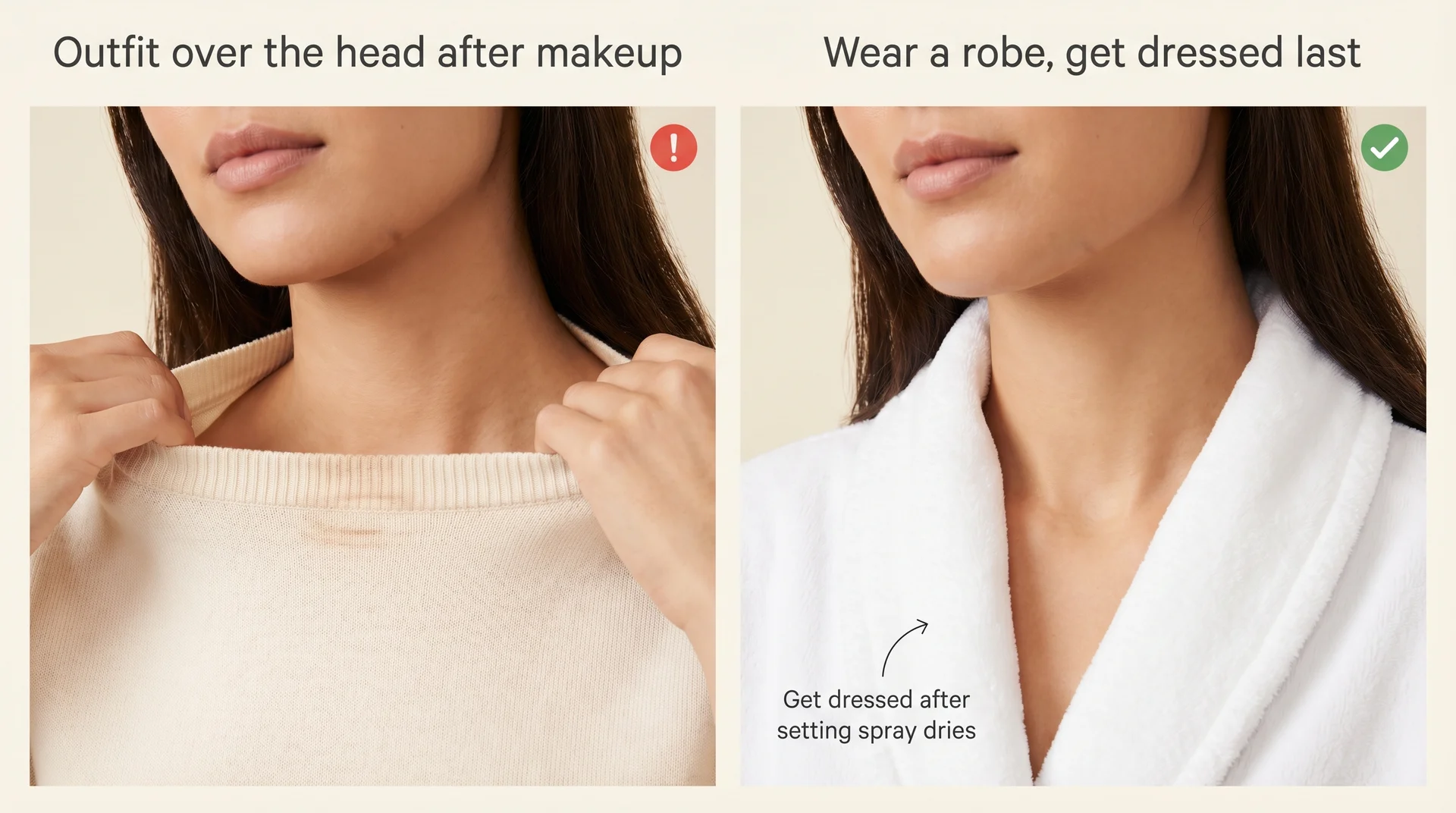
This part almost never comes up in articles about hair versus makeup, but the outfit question matters more than people think. Getting dressed is the step most likely to drag makeup or hair you just finished through a tight collar or over a complicated neckline.
Put your outfit on before you do your hair and makeup if: the outfit is easy to step into (bottoms, wrap dresses, anything that does not go over your head), or if you get hot easily and want to know how warm your clothes run before you start sweating through your blowout.
Put your outfit on after hair and makeup if the garment has to go over your head, has a narrow neck, or has intricate back fastenings that require help. Going over your head is the fastest way to drag foundation onto a neckline. For these, wear a robe or a zip-up until you are fully ready, then carefully step or zip into the outfit at the end.
The one rule I apply across every getting-ready session I run: the outfit goes on after the face is fully set and the setting spray has dried. Powder migrates to the fabric when it is still fresh.
How Hairspray Affects Your Makeup (and What to Do About It)
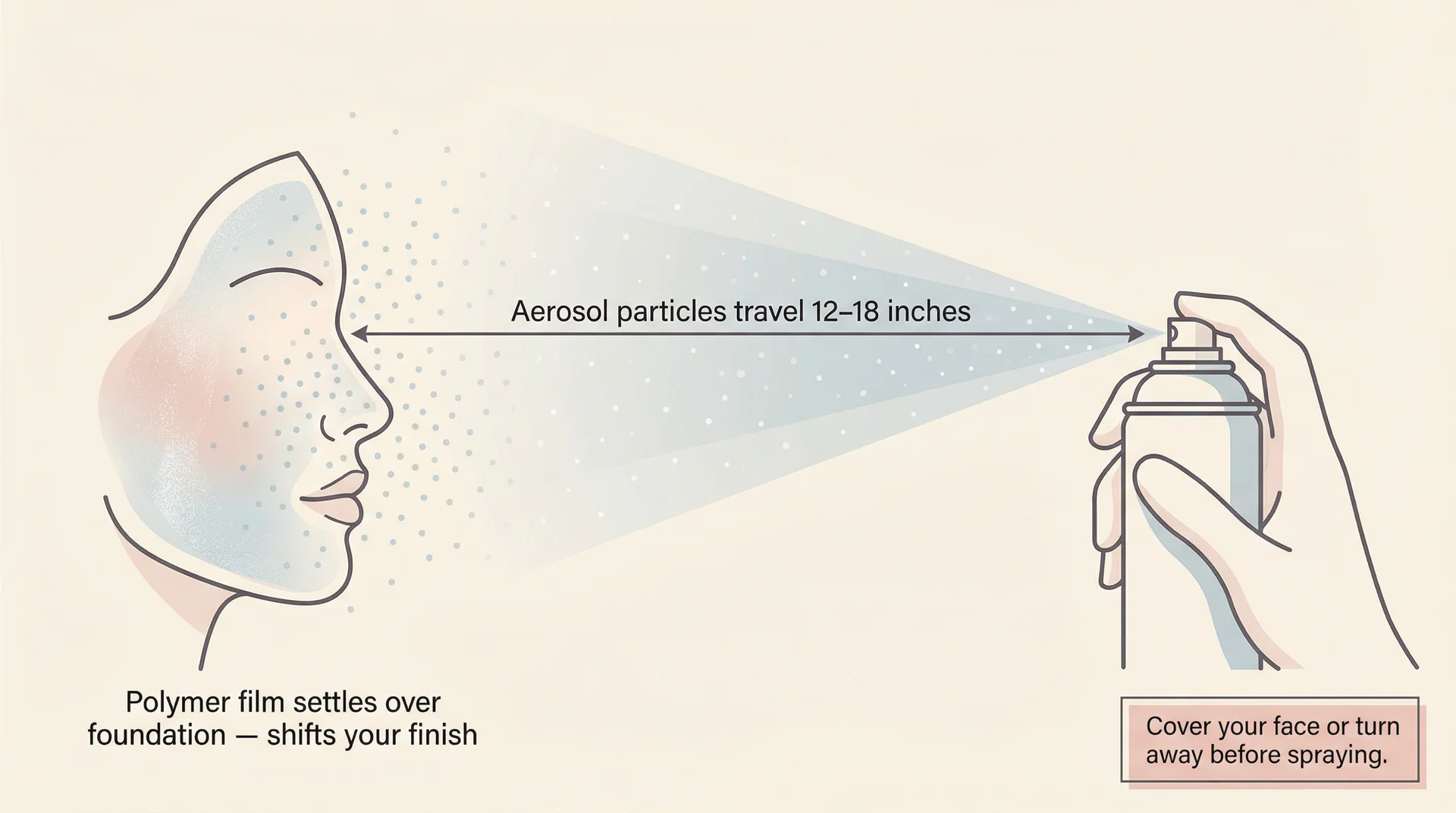
Hairspray is the most disruptive variable in the hair-versus-makeup debate, and most articles treat it as a footnote. It deserves more than that.
Aerosol hairspray travels. If you apply it within 12 to 18 inches of a finished face, you lay a light polymer film over your foundation. The finish shifts from your intended glow or matte to something in between, and cameras pick it up even when your eyes do not.
If you are doing hair before makeup, this is a non-issue. If you are doing makeup before hair, cover your face whenever hairspray comes out. Cover it with your hands, turn your face away, or switch to a non-aerosol formula. I mention this to almost every new client during a first session because it is so easy to do and so rarely thought about.
Common Mistakes that Ruin the Finished Look
Skipping primer when heat is involved. Of all the steps in a makeup routine, primer is the one that determines how long the base actually holds under difficult conditions. I have tested enough long-wear formulas on clients in hot environments to say this with confidence: primer matters more than foundation when it comes to longevity. If you are using hot tools on any given day, primer is not optional.
Using clips that leave marks. Metal clips and tight bobby pins create indentations in fine or freshly styled hair. If you use these to keep hair back during makeup and then try to style afterward, you are working around marks that need time to disappear. Use soft fabric scrunchies or loose clips instead. Style face-framing pieces and bangs after your makeup is done.
Touching your face right after the last hot tool pass. Residual heat from a curling iron used on the front sections transfers to your hands. If you immediately adjust earrings, smooth your collar, or dust setting powder after that last pass, the heat disrupts whatever you touch. Give yourself five minutes after the final tool pass before you handle anything near your face.
How Do I Actually Run This Sequence Before a Session?
When I prepare a client for a shoot or a wedding, I ask two questions up front: what does your hair routine involve today, and how does your skin behave under heat? Those two answers set the sequencing for everything that follows.
For editorial sessions, I ask clients to arrive with dry, unstyled hair and a bare, moisturised face.
If a hairstylist is on set, I coordinate with them directly so all major heat work finishes before I touch the skin. I start with a primer suited to the day’s conditions, something mattifying for outdoor or summer shoots, something hydrating for studio work under cool lights, and I let it sit for three full minutes before going in with foundation. Primer bonds better when it has a moment to settle, and the base blends more evenly as a result.
For bridal sessions, I build my timeline around the hairstylist’s finishing time. I start my work when the curling iron is done, even if that means working slightly faster at the end. A bride whose makeup goes on last looks fresher in every photo from that point forward, and that is what the whole morning is working toward.
The one time I broke my own rule and regretted it: a summer outdoor wedding in Oregon. We did makeup first because the bride preferred it, and the morning was running ahead of schedule. By the time hair was finished and family photos started, humidity and an unexpected warm spell had done enough damage to the T-zone that we needed a full blot-and-powder reset before the ceremony.
The makeup held fine from that point, but the 20 minutes of reset were completely avoidable. I run hair first at outdoor summer events now without discussion.
Quick-Reference Guide: Should I Do My Hair or Makeup First?
| Your situation | Do this first |
|---|---|
| Every day routine with light styling | Makeup |
| Blow-dry or hot tools in the routine | Hair |
| Summer or warm room | Hair |
| Oily or combination skin | Hair |
| Second-day or no-wash hair | Makeup |
| Wedding day | Hair |
| Simple updo or quick bridal style | Either makeup first is fine |
| Prom with full styling | Hair |
| Running late | Makeup, then simplify hair |
| Wash day or wet styling | Hair |
| Rollers or sets that need time to cool | Hair, then use the wait time for makeup |
| The outfit goes over your head | Get dressed last |
Frequently Asked Questions
Should I Do My Hair or Makeup First for a Wedding?
Hair first. Heat tools raise your body temperature and cause sweating that disrupts your makeup. When your makeup goes on last, it sits on a face that has fully settled and photographs at its freshest.
Should I Do My Hair or Makeup First for Prom?
Hair first. Prom prep usually involves a full blowout or curling iron session in a warm environment. Get your hair done, give your face 10 minutes to cool down, then apply your makeup right before you leave.
Does the Order Really Matter for An Everyday Routine?
Yes, but the stakes are lower. For light daily styling, makeup first works fine. When hot tools or sweating are involved, the order starts to affect how long your makeup holds.
Should I Blow-Dry Before or After Makeup?
Blow-dry before. Let the blowout finish, give your face 5 to 10 minutes to cool, then apply your base. Foundation applied immediately after blow-drying will sit and wear differently.
Can Hairspray Ruin Finished Makeup?
Yes, it can shift the finish and feel of the base even without fully ruining it. Aerosol particles alter the texture of foundation, especially on dewy or satin finishes. Cover your face when you use hairspray after makeup is applied.
What Is the Right Order for The Whole Getting-Ready Routine?
For most people: hair tools first, cool down, makeup, finish hair details, then get dressed last if your outfit goes over your head. If your outfit slips or zips, you can put it on earlier.
Who Should Go First in a Bridal Party, Hair or Makeup?
Bridesmaids can go in whatever order suits the artists’ timeline. The bride should finish last so her look is freshest for photos and the ceremony.
How Do You Protect Makeup While Doing Your Hair?
Use primer before makeup and setting spray after. Cover your face or turn away before applying hairspray. Keep blotting papers and translucent powder accessible throughout.
What if I Am Always Running Late and Cannot Plan the Ideal Order?
Finish your makeup and choose the simplest hair option you have time for. A clean face of makeup is harder to recover from quickly than a simplified hairstyle.
Final Thoughts
Getting the order right comes down to understanding what each step actually needs to work well. Makeup needs a cool, clean, product-free face. Hair styling needs enough time and heat to do its job without disrupting anything below the neck. When you respect both, the finished look holds longer and takes less effort to maintain.
The question comes up because people have had things go wrong: a foundation that oxidised in an overheated bathroom, hairspray that dulled a just-finished glow, a blowout that undid 20 minutes of careful concealer work. All of that is avoidable once you understand the mechanism. Now you do.