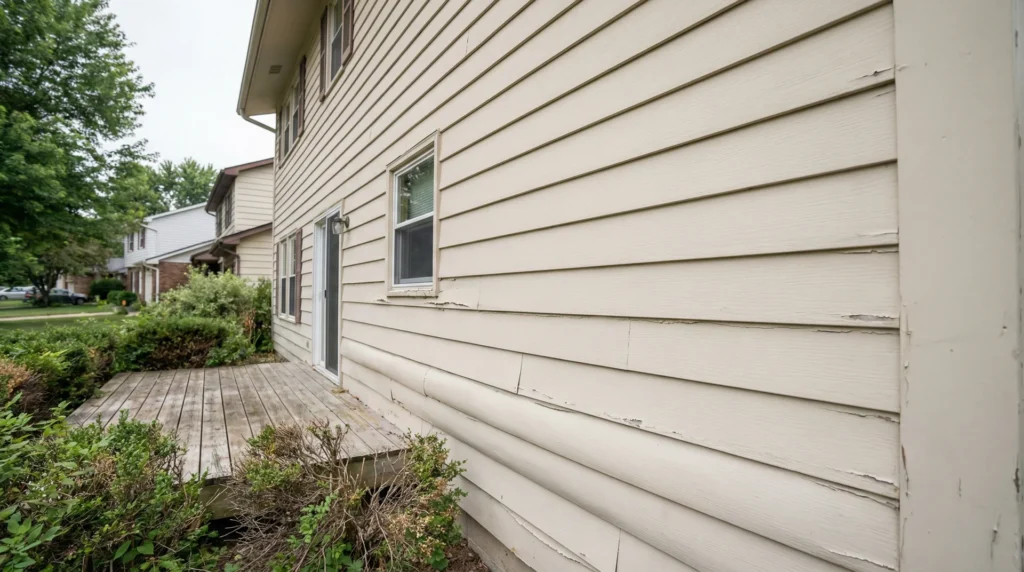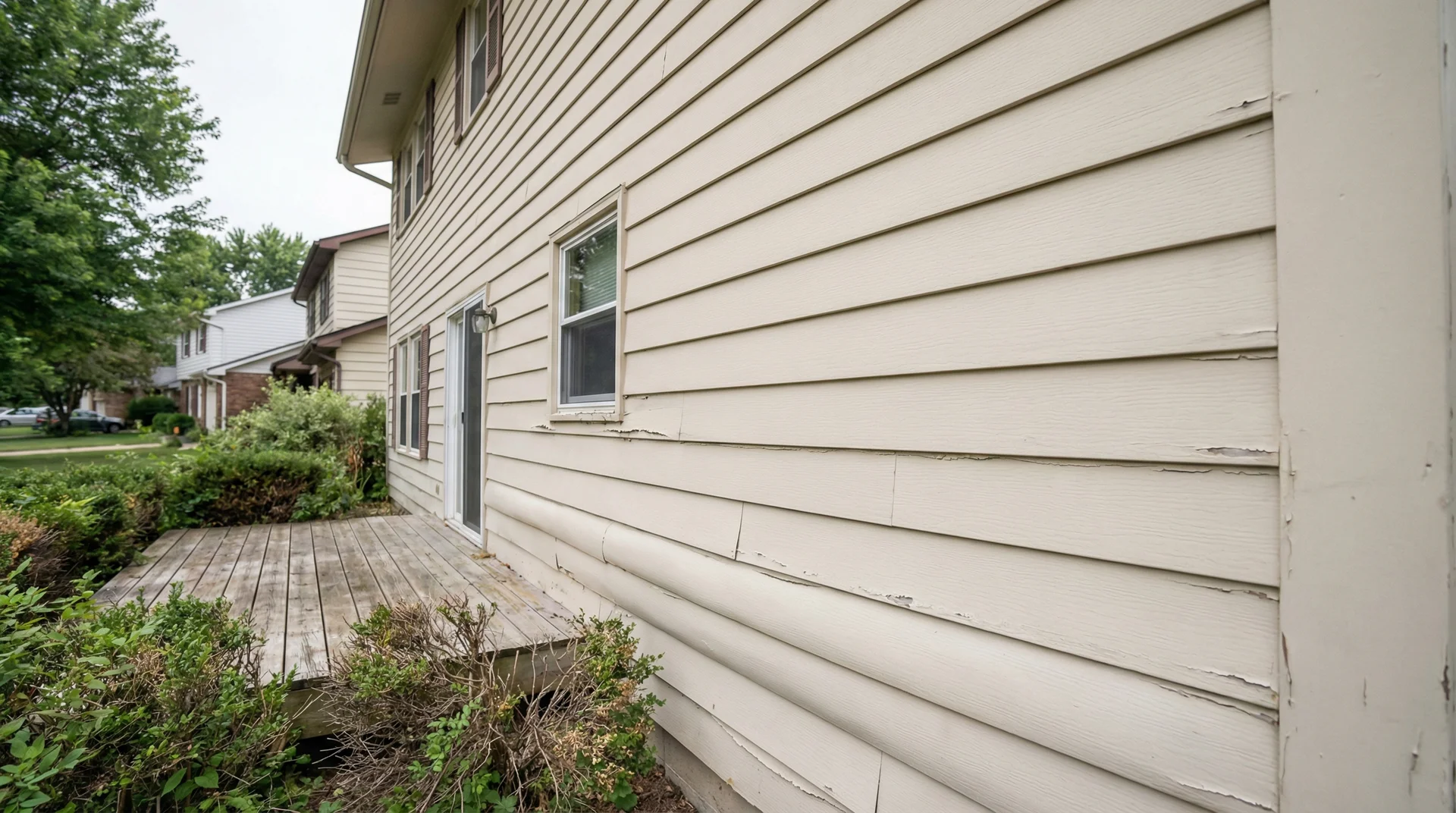
I remember standing on a client’s front lawn in early October while she pressed her palm against a vinyl panel near the garage. Her hand went through it. Water had been sitting behind that section for two full seasons.
The rot underneath had eaten through the sheathing entirely. What started as a “budget-friendly” siding job years ago had turned into a $14,000 repair conversation on a Tuesday morning.
She had done everything a homeowner is supposed to do. She read articles, got three quotes, and chose the most popular option. What nobody told her was that popular does not equal suitable, and cheap upfront rarely stays cheap.
So before you open another tab or call your first contractor, here is what you need to know right now.
The main types of exterior siding and where each one stands:
| Siding Type | Installed Cost/Sq. Ft. | Lifespan | Maintenance | Best For |
|---|---|---|---|---|
| Vinyl | $3–$12 | 20–40 yrs | Low | Moderate climates, tight budgets |
| Fiber Cement | $8–$12 | 25–50 yrs | Low-Moderate | Most US climates, fire risk zones |
| Engineered Wood | $4–$9 | 20–50 yrs | Moderate | Wood look without full wood upkeep |
| Natural Wood | $5–$15 | 10–40 yrs | High | Mild climates, committed maintainers |
| Metal (Steel/Aluminum) | $4–$35 | 15–100+ yrs | Low | Coastal, wildfire, modern aesthetic |
| Brick Veneer | $9–$30 | 50–100+ yrs | Very Low | Long-term owners, cold climates |
| Stucco | $6–$15 | 50–80 yrs | Low (dry only) | Southwest and dry Pacific regions |
| Stone Veneer | $11–$30 | 50–100 yrs | Low | Accent use, premium curb appeal |
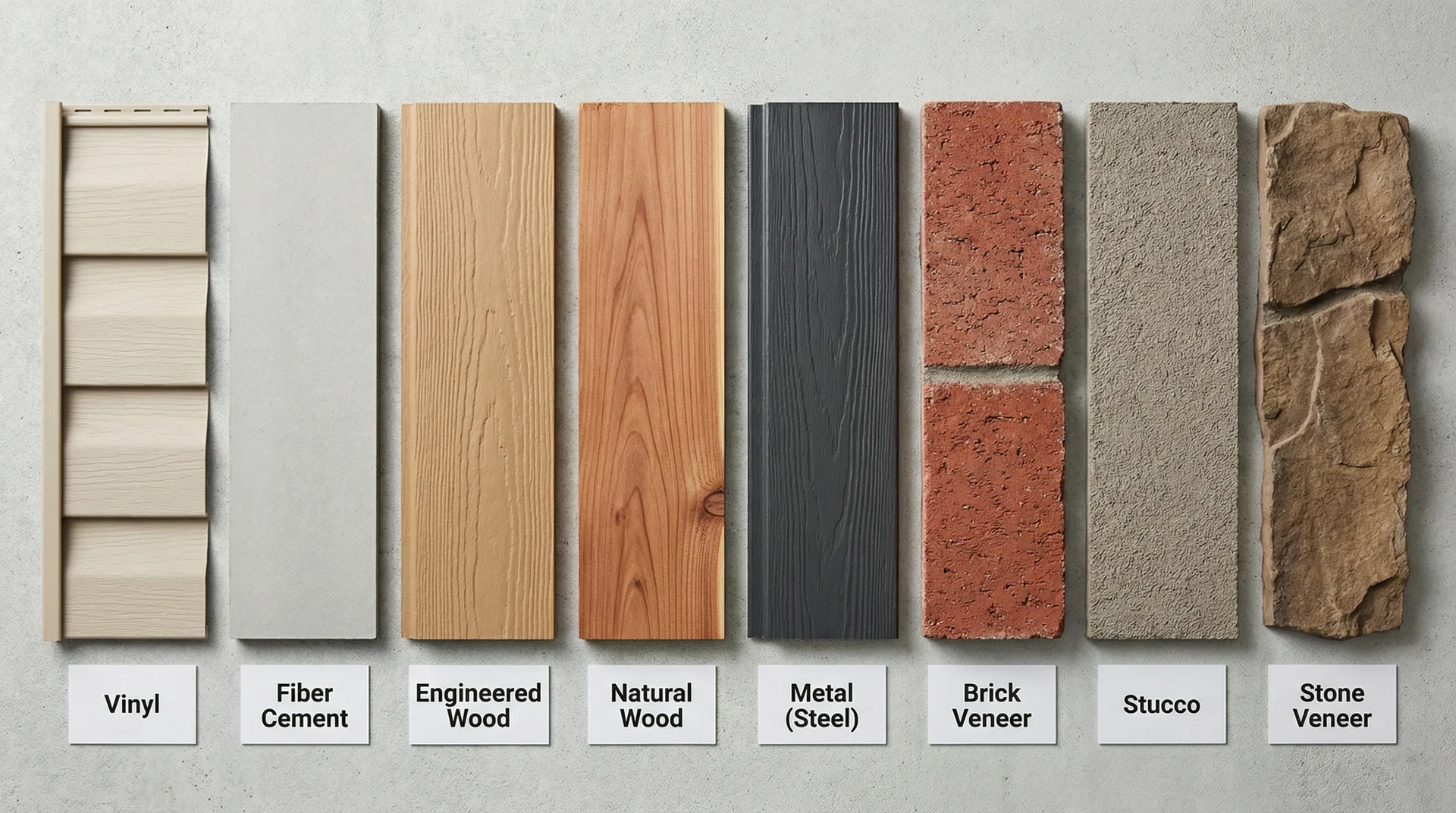 If you are short on time, that table gives you the landscape. But if you are about to spend anywhere between $5,000 and $17,000 on your home’s exterior, the time you spend reading the rest of this is worth every minute.
I have spent fifteen years installing, repairing, and replacing every material on that list, and I want to walk you through what I have learned before you make a decision you will live with for the next two or three decades.
How to Think About Siding Before You Even Look at Options
Most homeowners approach siding like a shopping decision. They browse materials, compare prices, and pick something that looks good in a photo. Your siding choice needs to come from your home first, and from a catalog second.
Every time I start a siding consultation, I ask four questions before I mention a single material.
The 4 Questions Every Homeowner Should Answer First
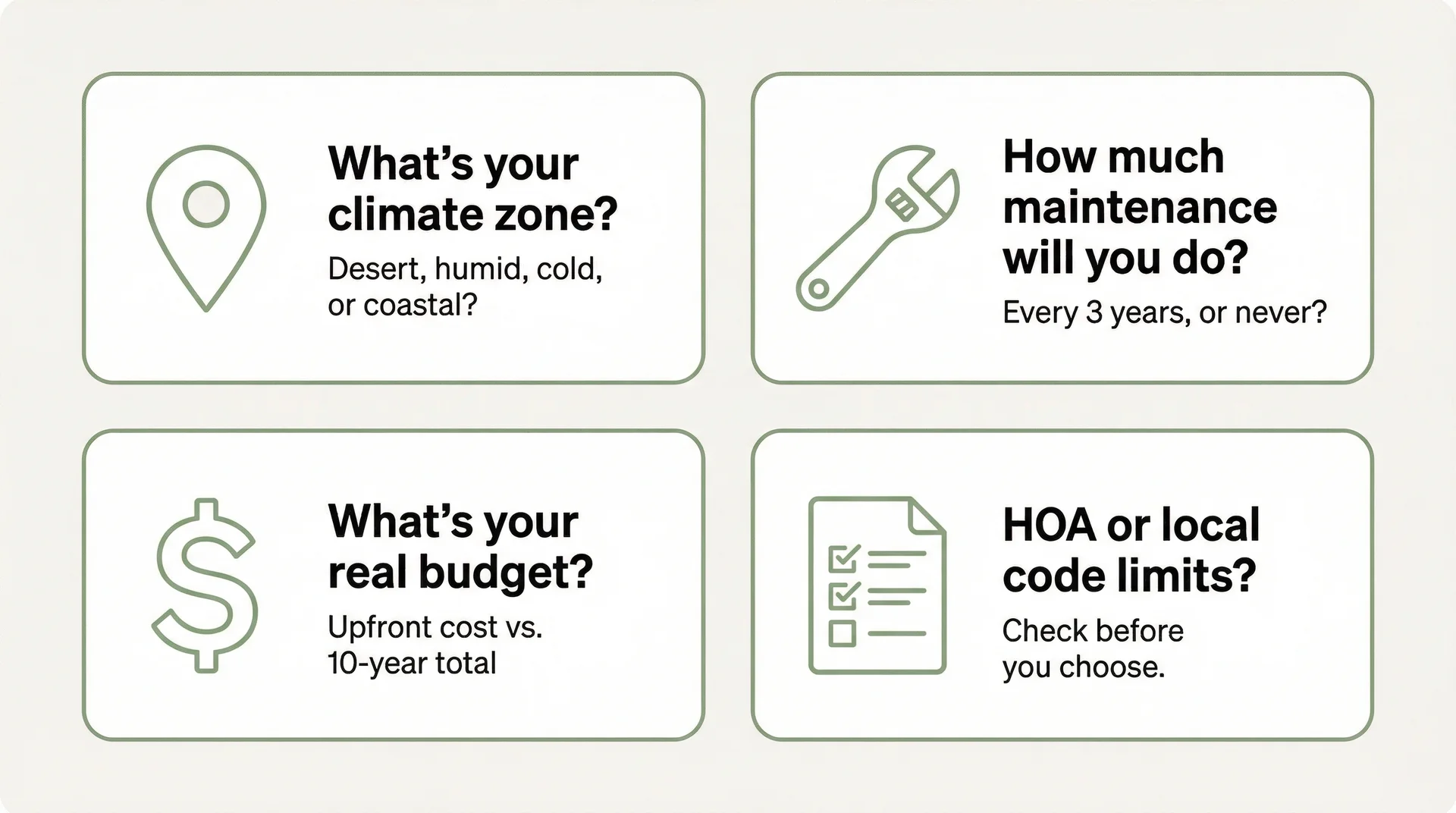
1. What climate zone do you live in?
This one question eliminates half your options immediately. A homeowner in coastal Florida and one in Minnesota are not shopping for the same product, even if both want “durable siding.”
Salt air destroys aluminum coatings over time. Freeze-thaw cycles crack improperly sealed wood. Extreme UV in desert regions fades standard vinyl faster than the manufacturer’s warranty will acknowledge.
2. How honest are you about maintenance?
Some siding types require attention every three to five years. Some require almost nothing beyond an occasional rinse with a garden hose.
If you travel often, have a demanding schedule, or simply do not want to think about your siding for twenty years, weigh your decision toward low-maintenance materials. There is no shame in that. There is, however, real financial pain in choosing a high-maintenance material and then not maintaining it.
3. What is your actual budget – upfront and over ten years?
The per-square-foot number you see in articles is almost always material cost alone, sometimes installed cost, and almost never the ten-year cost. A $3 per square foot vinyl job that needs full replacement in fifteen years is more expensive than a $10 per square foot fiber cement job that lasts forty years with two paint refreshes. I will break this down fully in the cost section.
4. Do you have HOA restrictions or local code requirements?
I have seen homeowners fall in love with a material, get three quotes, and then discover their HOA prohibits it or their fire zone requires a specific fire-resistance rating.
In wildfire-prone areas across California, Colorado, and parts of the Pacific Northwest, local building codes now specify minimum fire ratings for exterior cladding. Check this before you invest any time comparing options.
The 8 Main Types of Exterior Siding
I want to walk you through each material the way I explain it on-site: what it is, where it excels, where it disappoints, and who I genuinely recommend it for.
1. Vinyl Siding
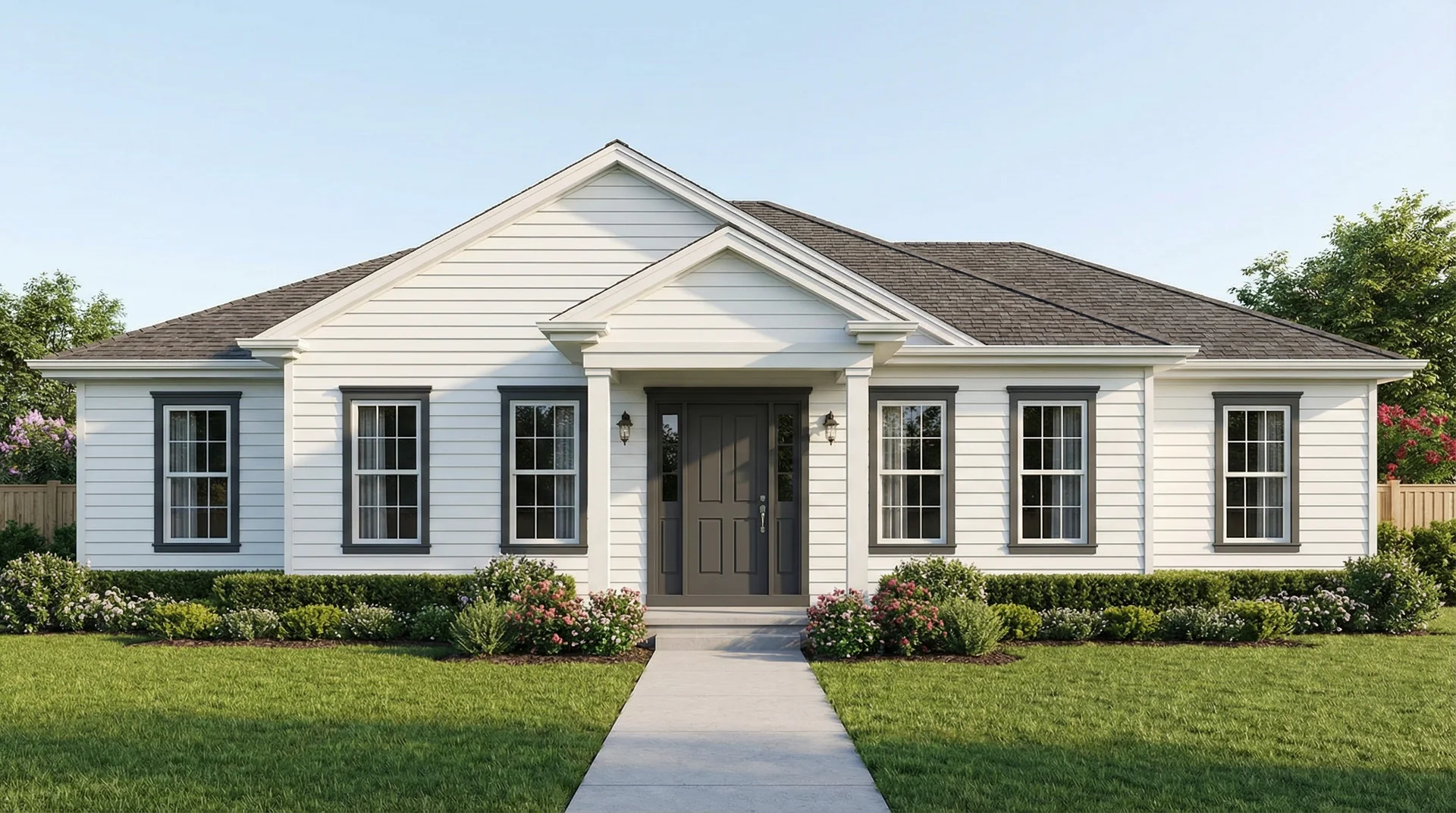
Vinyl is made from polyvinyl chloride and has been the dominant residential siding material in America since the 1970s. It does not rot, insects cannot eat it, it requires no painting, and a pressure wash every year or two keeps it looking clean. Individual damaged panels can usually be replaced without touching the rest of the wall.
Where vinyl earns its criticism is at temperature extremes. When temperatures climb above 165°F which reflected sunlight from nearby windows can absolutely reach vinyl warps and distort permanently.
I have seen panels buckle because a neighboring home’s window reflected afternoon sun onto them for a few hours each day. In cold climates, standard vinyl becomes brittle and cracks on impact from hail or debris. Premium thick-wall vinyl products address some of this, but they push the cost toward fiber cement territory.
Vinyl also cannot be painted without voiding most manufacturer warranties, which limits your options if you want to update your home’s color without a full re-siding.
Who I recommend it for: Homeowners in moderate climates – mid-Atlantic, parts of the Midwest – with a tight upfront budget who want low maintenance and understand the long-term trade-offs. Insulated vinyl specifically performs well in cold climates where energy efficiency matters. Its R-value jumps from roughly 0.61 for standard vinyl to 3.0 or 4.0 for insulated versions, which makes a meaningful difference in heating costs over a winter season.
Who I steer away from it: Homeowners in the deep South with intense sun exposure, anyone in a coastal hurricane zone, and those who care about resale differentiation.
Cost: $3–$12/sq. ft. installed | Lifespan: 20–40 years
2. Fiber Cement Siding
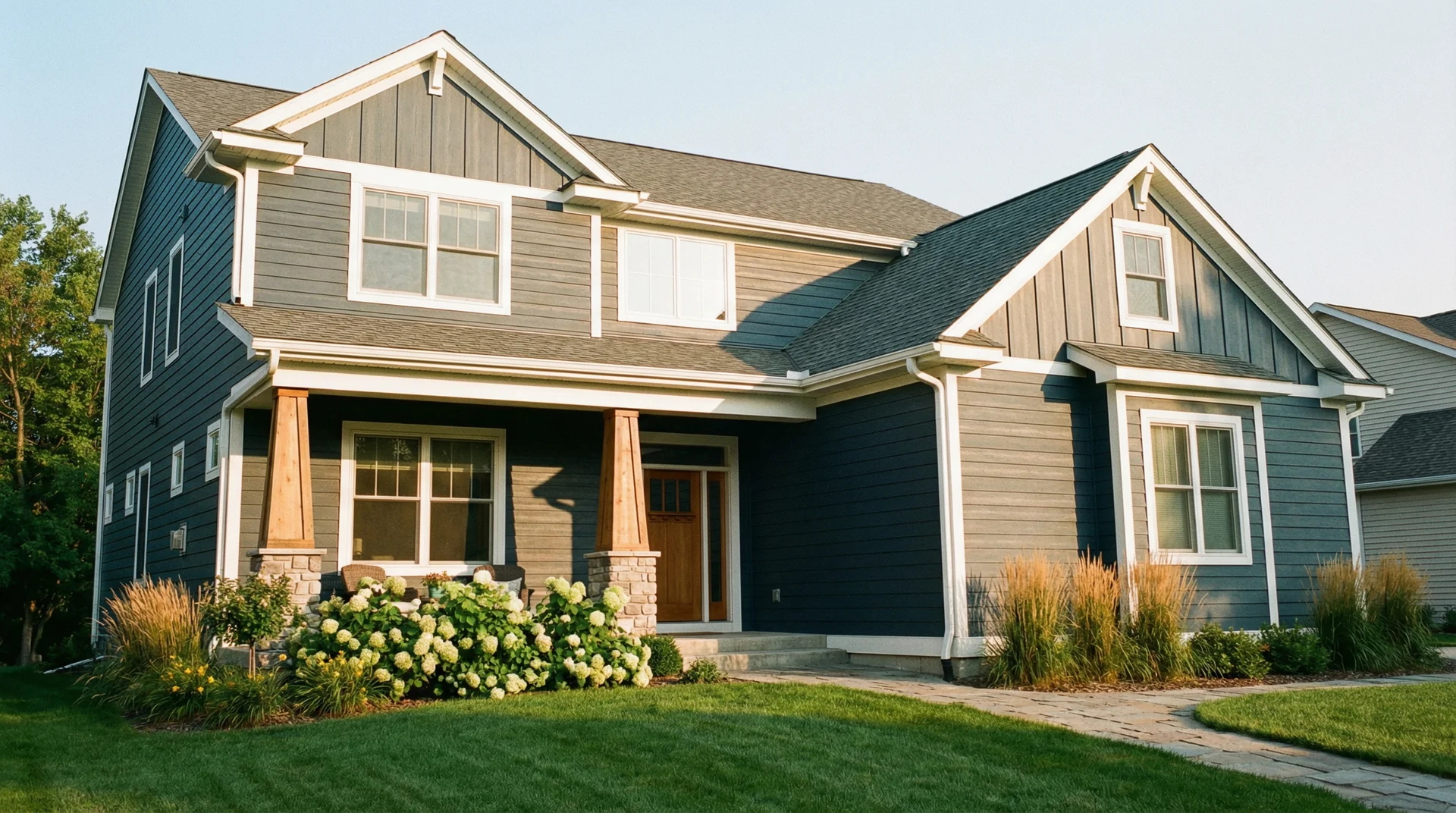
If I had to pick one material that has consistently outperformed expectations across the widest range of conditions, fiber cement is it. I have watched James Hardie panels come through a house fire and a high-wind weather event in the same calendar year, and the siding did its job both times.
Fiber cement is a mixture of Portland cement, sand, and cellulose fibers. The result resists fire, moisture, insects, rot, and dimensional warping through temperature swings. It can be manufactured to mimic wood grain, smooth stucco, shingles, or vertical panels, and it holds paint exceptionally well – typically 15 to 25 years between paint cycles when professionally applied.
The trade-offs are real but manageable. Fiber cement is heavy, installation requires more labor, and cutting it produces silica dust that demands proper respiratory protection. This makes it almost always a professional installation job.
The cost looks high on paper, but fiber cement products from reputable manufacturers carry 30-year warranties, and I have personally seen early 1990s installations that still look excellent today.
There is one financial angle I raise with every fiber cement client: insurance premiums. According to the JLC 2025 Cost vs. Value report, fiber cement siding installation recoups 114% of its cost at resale.
One of only four remodeling projects that returns more than it costs. Beyond resale, fire-rated siding can reduce your homeowner’s insurance premium meaningfully in wildfire risk zones. One client in Northern California calculated that her insurance savings over fifteen years offset nearly 40% of her material upgrade cost from vinyl.
Who I recommend it for: Almost anyone with a moderate to generous budget. It performs in humid climates, cold climates, fire zones, and coastal areas. It is the closest thing to a universally solid choice in residential exterior construction.
Cost: $8–$12/sq. ft. installed | Lifespan: 25–50 years
3. Natural Wood Siding
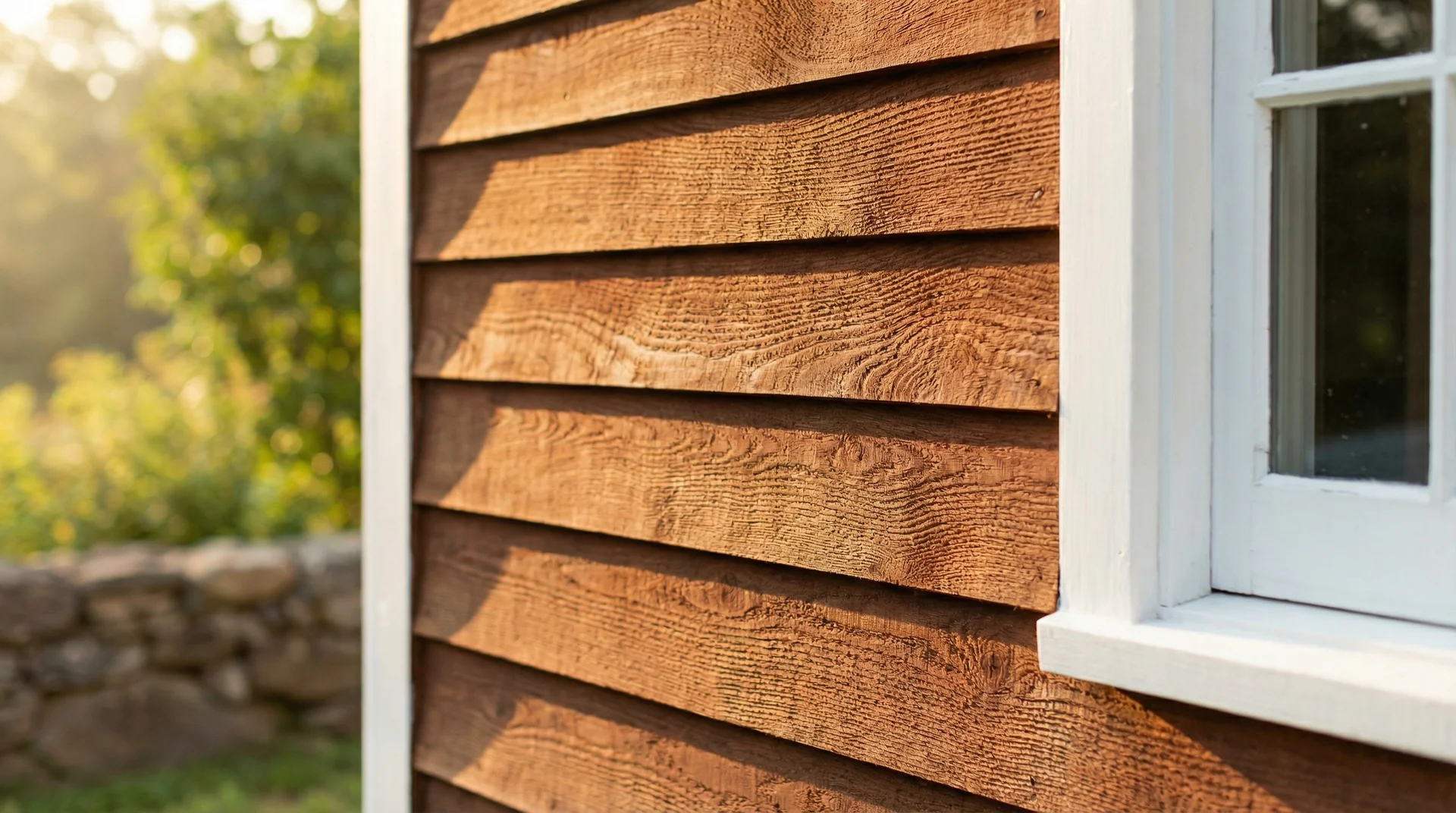
Wood siding has an aesthetic that no manufactured product has fully replicated, and I want to be honest about that. There is a warmth and depth to a well-maintained cedar or redwood exterior that changes the feeling of an entire street.
I have restored historic wood siding on homes built in the 1890s, and that work reminds you why this material dominated residential construction for so long.
The maintenance reality requires complete transparency. Natural wood needs repainting or restaining every three to five years without exception. In humid climates, that cycle tightens further. Gaps in the finish invite moisture, and moisture in wood siding invites rot and wood-boring insects. A homeowner who misses two maintenance cycles is potentially looking at section replacements that cost more than a fiber cement upgrade would have cost originally.
Within natural wood, the material differences matter. Cedar is the gold standard; its natural oils resist decay and insects, and quality cedar can last 40 years with proper care. Pine and spruce are more affordable but demand stricter maintenance because they lack cedar’s natural defenses. Cedar carries an R-value of roughly 0.81 per inch, which gives it a modest natural insulation value compared to other materials.
Who I recommend it for: Homeowners who genuinely love the material and will commit to its care schedule, those restoring historic homes where authenticity matters, and clients in mild, dry climates.
Who I steer away from it: Anyone who has used the phrase “I don’t want to think about it” during a consultation. Also, homeowners in the Pacific Northwest or Southeast, where persistent moisture creates a relentless adversarial environment for untreated wood.
Cost: $5–$15/sq. ft. | Lifespan: 10–40 years, entirely dependent on maintenance
4. Engineered Wood
Engineered wood addresses the most legitimate complaint about natural wood: the maintenance burden. LP SmartSide and similar products are made from wood strands treated with zinc borate and resin binders, then compressed into panels and boards.
The result looks convincingly like natural wood grain, accepts paint or stain well, and resists moisture penetration, insects, and fungal growth far better than untreated lumber.
LP SmartSide’s 50-year warranty gets cited frequently, and it is genuinely impressive. What I always clarify is that coverage requires proper installation. The spacing, priming, and sealing requirements are specific, and contractors who skip installation details create the exact moisture vulnerability the material is engineered to prevent. I have seen engineered wood panels swell at the edges because a previous installer left butt joints unsealed. The material buckled and voided the warranty.
When installed correctly, engineered wood is one of the strongest value propositions in the residential siding market: the aesthetic of natural wood, complete color flexibility, a serious warranty, and a maintenance schedule far more forgiving than real wood.
Cost: $4–$9/sq. ft. installed | Lifespan: 20–50 years with proper installation
5. Metal Siding
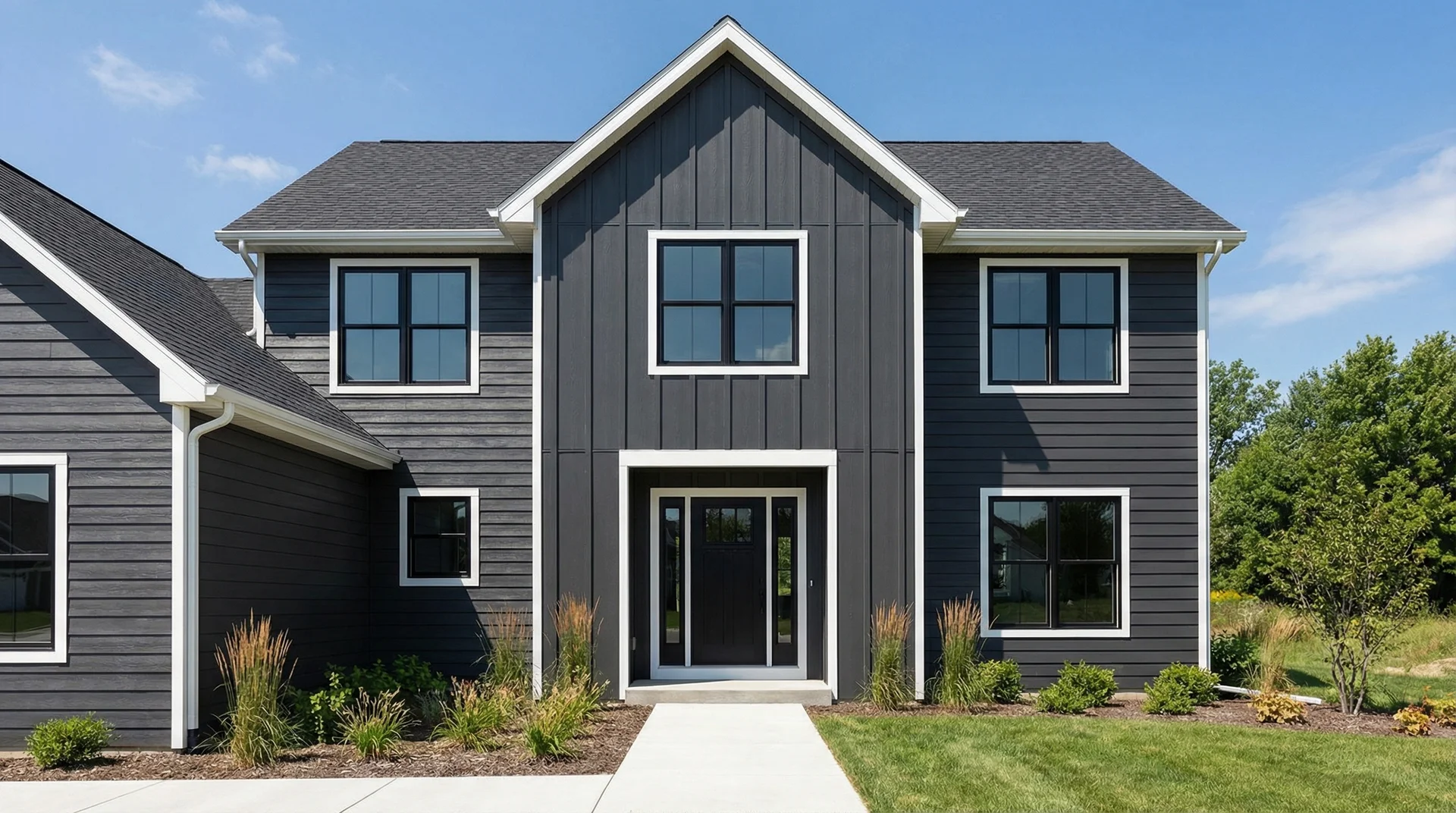
Modern residential steel and aluminum siding products look nothing like the agricultural buildings people associate with metal cladding. Steel siding from manufacturers like Quality Edge produces panels that convincingly mimic wood grain, come in refined color palettes, and carry performance specs that most organic materials cannot match.
Steel and aluminum behave differently enough that I treat them as separate materials. Steel is denser, more impact-resistant, and holds up better in severe weather. Aluminum is lighter, less prone to rust in coastal salt-air environments, and more cost-accessible. The trade-off for aluminum is dent susceptibility. A hailstorm that would leave fiber cement unmarked can leave visible impressions in thinner aluminum panels.
Both materials share immunity to rot and insects, genuine fire resistance, and a potential lifespan well beyond 50 years. Both share a low natural R-value, which means homes in very cold climates need additional wall insulation to offset thermal bridging. Metal siding is also one of the most environmentally friendly choices available. Steel and aluminum panels are fully recyclable at the end of their service life.
Who I recommend metal for: Homeowners in coastal zones (steel for impact resistance, aluminum with proper coatings for corrosion resistance), wildfire risk regions, and those wanting a genuinely modern aesthetic. In hurricane zones and wildfire areas, the fire and wind resistance ratings justify the premium cost clearly.
Cost: $4–$35/sq. ft. installed | Lifespan: 15–100+ years
6. Brick Siding
Brick homes from the 1920s still stand across the American Midwest and Northeast with original brick intact, requiring nothing more than occasional tuckpointing to refresh the mortar joints. I tell clients who ask about brick that they are choosing a building system that will outlast them, possibly outlast their children, and still look good doing it.
The distinction most homeowners do not know before we talk: full brick construction and brick veneer are genuinely different systems. Full brick uses double-wythe masonry where the brick is a structural element of the wall.
Brick veneer is a single-wythe layer applied over a wood or steel frame. The vast majority of new construction that appears to be “brick” is actually veneer. Both systems offer fire resistance, pest immunity, and thermal mass. They differ in structural contribution and in how water management at the wall base needs to be handled.
Brick acts as a natural insulator and performs particularly well in cold climates where thermal mass helps regulate interior temperature. The honest limitation is its upfront cost, and its permanent painting brick is a commitment you cannot undo.
Who I recommend it for: Homeowners planning to stay 20-plus years, those in cold climates where thermal mass reduces heating costs, and anyone whose neighborhood architecture aligns with the aesthetic.
Cost: $9–$30/sq. ft. installed | Lifespan: 50–100+ years
7. Stucco
Stucco covers roughly 50% to 60% of homes in the Southwest and Pacific regions of the US, and in those climates, it makes tremendous sense. A blend of Portland cement, sand, and lime applied in layers over wire mesh, it provides excellent thermal mass, resists fire, and requires almost no active maintenance in dry environments.
The failure mode for stucco is specific and predictable: moisture infiltration. In dry climates, stucco performs beautifully for fifty years or more. In wet climates, water finds the cracks that develop as the material ages, penetrates behind the stucco layer, and creates wood rot and mold that remains invisible until it becomes extremely expensive to remediate.
I have worked on stucco repair projects in the Southeast that involved removing entire wall assemblies because water had been working behind the cladding for years, with no exterior indication.
Repairs also require skill to match the existing texture. A patch done without matching the original float pattern and pigment stays visible for years.
Who I recommend it for: Homeowners in Arizona, New Mexico, Nevada, and Southern California. The right choice in those geographies.
Who I steer away from it: Anyone in the Southeast, Pacific Northwest, or anywhere receiving more than 40 inches of annual rainfall.
Cost: $6–$15/sq. ft. installed | Lifespan: 50–80 years in appropriate climates
8. Stone and Stone Veneer
Natural stone offers absolute individuality; no two installations look alike. The problem is that natural stone siding sits at the top of the residential cost range, and its weight creates structural considerations for most wood-frame homes.
Manufactured stone veneer has filled that gap. These products are cast from lightweight Portland cement in molds taken from real stone, and modern manufacturing makes them visually convincing. They cost substantially less, install more quickly, and offer consistent sizing that makes planning predictable.
The installation challenge for both is significant. Water management behind the stone is critical if flashing, drainage mats, and the water-resistive barrier are not installed correctly, water gets trapped and creates structural damage that is both difficult to diagnose and expensive to repair. Always use an installer with documented stone work in their portfolio.
Most of my clients use stone as an accent rather than a full-exterior cladding – lower façade sections, chimney surrounds, entryway columns, and that approach typically delivers strong visual impact at a fraction of the full-exterior cost.
Cost: $11–$30/sq. ft. for manufactured veneer | Lifespan: 50–100 years with proper installation
Siding Styles vs. Siding Materials
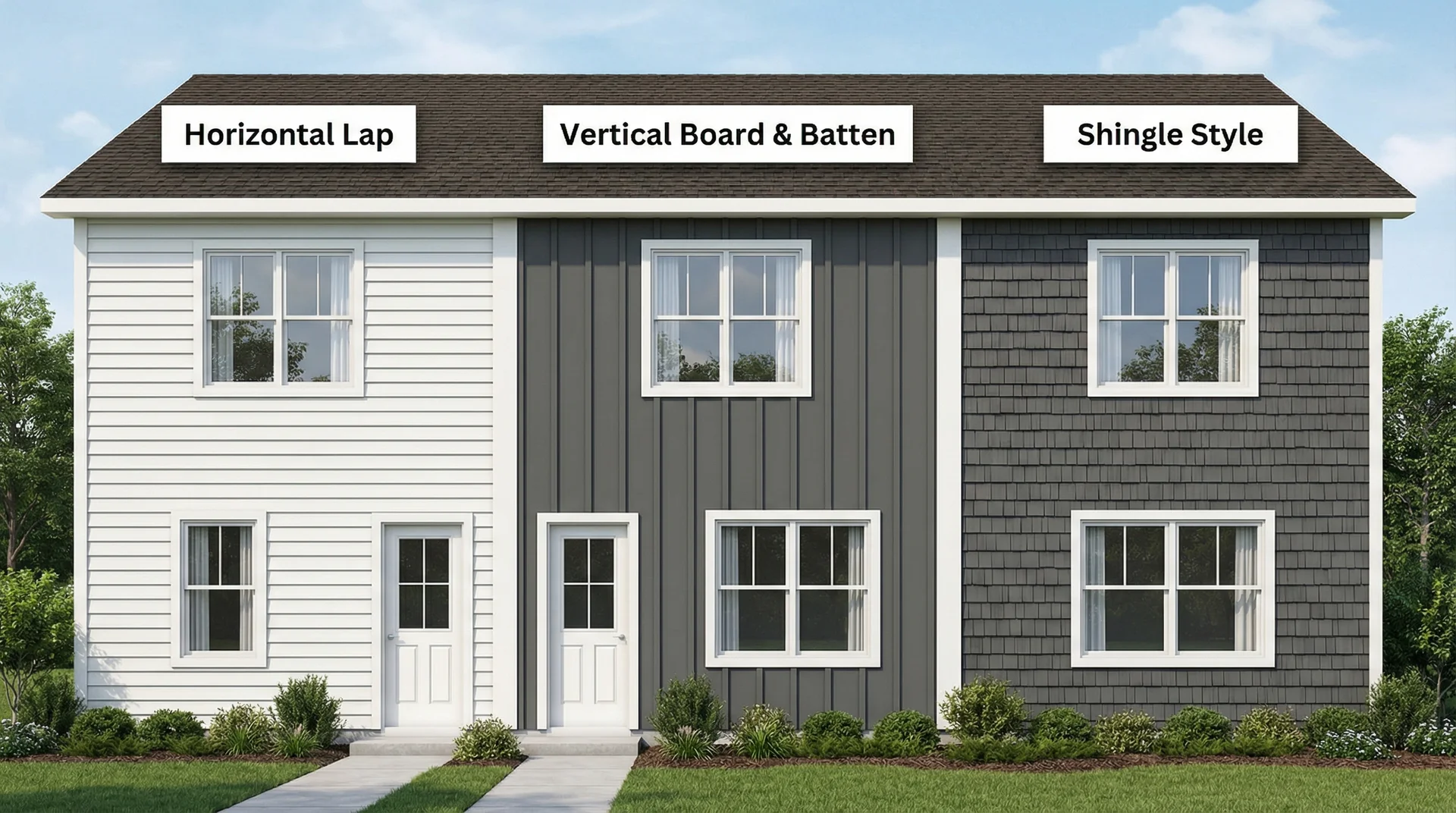
Many homeowners conflate these, and it costs them during contractor conversations. The material is what performs. The style is what the home looks like. Both decisions happen independently; you can have vinyl in a horizontal lap profile or in a vertical board-and-batten profile. You can have fiber cement in shingles or smooth panels.
Horizontal styles cover the majority of American homes:
- Traditional lap (clapboard): Long overlapping boards, consistent reveal, suits virtually every architectural style
- Dutch lap: Concave cut along each board’s face creates a shadow line that adds visual depth
- Beaded: A small, rounded bead along the bottom edge adds a refined detail that suits cottage and craftsman homes
- Log lap: Rounded board faces that suggest log construction, common in mountain and cabin-style homes
Vertical styles have surged alongside the modern farmhouse movement:
- Board and batten: Wide vertical boards with narrow strips covering the seams – the most commonly requested vertical profile I install today
- Tongue and groove: Interlocking board edges create a clean, seamless surface suited to modern and transitional homes
- Shiplap panels: Rabbeted edges create a tight overlap, work horizontally or vertically, strongly associated with contemporary exterior design
One practical note on vertical installation: it demands more attention at the bottom termination detail to ensure water does not wick up behind the panels. The flashing and sealing at the base of vertical sections is more demanding than with horizontal lap, and it affects both labor cost and long-term performance.
Shingle and shake styles carry a specific visual identity with coastal New England architecture. Today, fiber cement versions deliver that aesthetic without the aggressive maintenance demands of real cedar shakes.
Shingles are sawn smooth and taper uniformly – shakes are split on at least one face, creating a rougher, more textured surface. Shakes read more rustic; shingles read slightly more refined.
Matching Siding to Your Climate
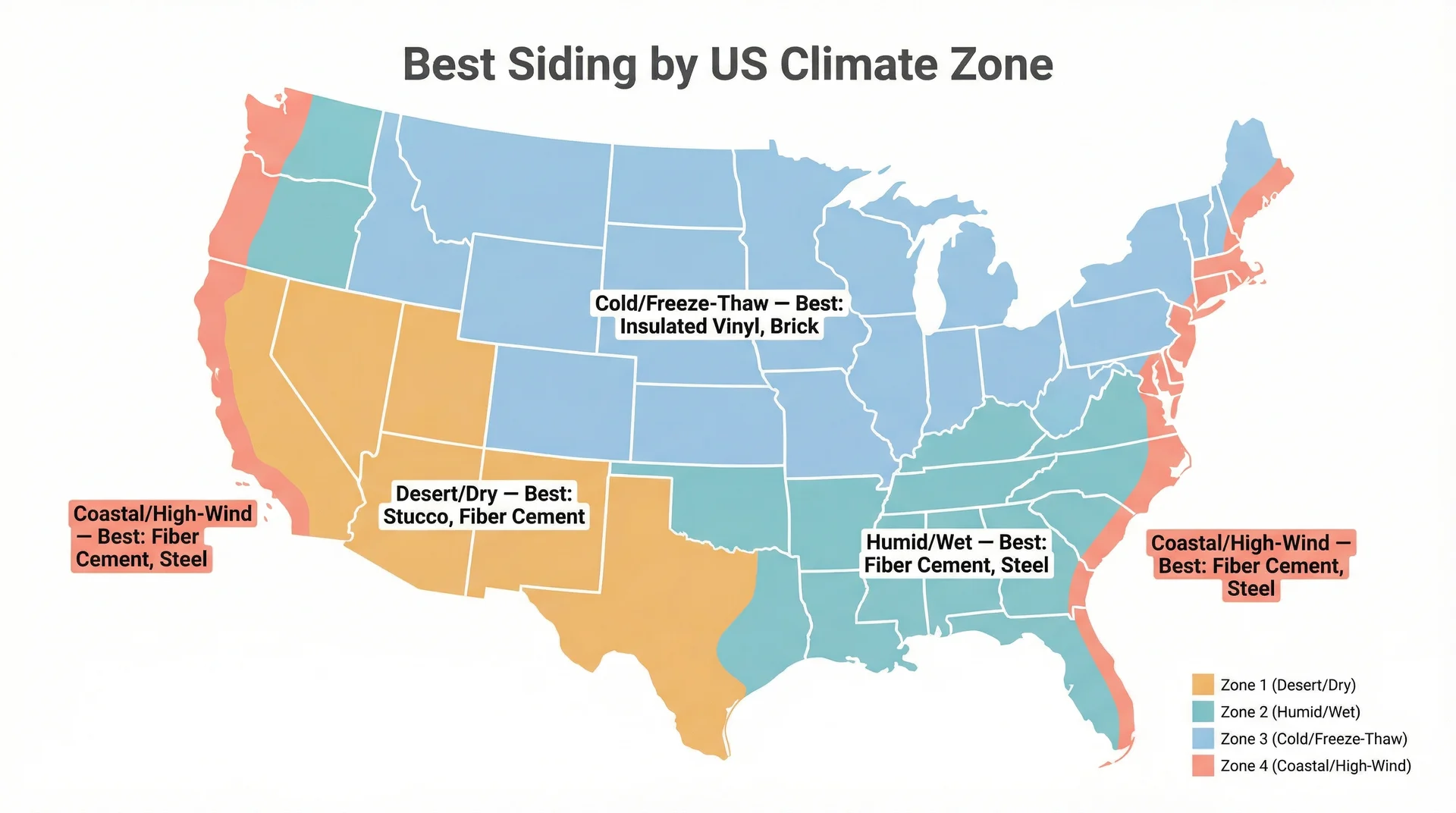
Climate is the single most predictive variable for long-term siding performance, and it almost always gets a paragraph at the end of articles rather than the central role it deserves. I am going to be specific here because general advice does not help you.
Hot and Dry Climates (Southwest, Desert Regions)
Arizona, Nevada, New Mexico, and inland Southern California punish organic materials through UV degradation and thermal expansion and contraction.
Best choices: Stucco, fiber cement with a quality exterior paint system, metal with UV-resistant coatings, and stone veneer as an accent.
What fails repeatedly: Standard mid-grade vinyl on direct southern exposures. In desert climates that push ambient temperatures above 110°F, thermal expansion in dark-colored vinyl panels causes warping and panel separation. If you choose vinyl here, select premium-grade products with higher heat thresholds and light colors only.
Humid and Wet Climates (Southeast, Pacific Northwest)
Coastal Georgia, Florida, Louisiana, Oregon, and Washington each deliver consistent high humidity and precipitation that turns any gap in your siding system into a pathway for rot, mold, and structural damage.
Best choices: Fiber cement consistently comes first. Engineered wood performs well with complete, code-correct installation, including all edge-priming and butt joint sealing. Steel for maximum moisture resistance in salt-adjacent coastal environments.
What I caution against: Natural wood without a genuine commitment to a three-year maintenance cycle. Stucco in the Southeast — the remediation cost of failed stucco in the Carolinas or Florida is far higher than the original installation savings.
Cold and Freeze-Thaw Climates (Northeast, Midwest, Mountain West)
The freeze-thaw cycle is one of the most mechanically destructive forces in building physics. Water expands roughly 9% when it freezes. Any water that enters a gap and freezes will mechanically widen that gap with each cycle, separating panels and creating accelerating structural damage over several winters.
Best choices: Insulated vinyl performs well here specifically because the foam backer prevents the thermal bridging that thinner vinyl allows and reduces condensation risk on the panel’s backside. Fiber cement handles freeze-thaw cycles well due to its low moisture absorption rate. Brick, where budget allows, offers thermal mass that genuinely reduces heating costs and is completely impervious to freeze-thaw damage when properly installed.
What to be careful about: Thin aluminum in areas with frequent hail or windborne ice – the denting eventually creates moisture pathways. Any siding installed without a complete, sealed house wrap system in cold climates is not optional.
Coastal and High-Wind Zones
Coastal installation combines salt air corrosion, sustained wind loads, humidity, and, in hurricane-prone areas, the impact resistance requirements that go well beyond standard residential specs.
Best choices: Impact-rated fiber cement carries some of the highest wind-load ratings available in residential siding. Steel for maximum impact resistance in hurricane-adjacent areas. Aluminum with marine-grade coatings performs in mild to moderate coastal exposure, but is not my first choice for direct oceanfront applications where salt air eventually penetrates standard coatings.
Worth knowing: Many coastal counties and all hurricane-designated building zones now have specific siding installation requirements in local codes covering fastener type, spacing, and minimum wind-load ratings. Your contractor should pull permits and know these requirements without being asked.
Energy Efficiency and R-Values: What Your Siding Actually Does for Your Utility Bills
This is a topic competitors mention but rarely explain clearly, and homeowners deserve a straight answer on it.
R-value measures thermal resistance – the higher the number, the better the material resists heat transfer. Here is how the main siding materials compare:
| Siding Material | R-Value (per inch) | Notes |
|---|---|---|
| Standard vinyl | ~0.61 | Limited insulation on its own |
| Insulated vinyl | 3.0–4.0 | Foam backer makes a real difference |
| Natural wood (cedar) | ~0.81 | Moderate natural insulation |
| Fiber cement | ~0.37 | Low on its own; pair with insulated sheathing |
| Metal (aluminum) | ~0.61 | Low; pair with foam-backed insulation |
| Insulated steel | 2.0–5.0 | Meaningful improvement over standard metal |
| Brick | ~0.20 per inch | Low R-value, but thermal mass compensates |
The important nuance here is that siding R-value tells only part of the story.
Brick’s low R-value, for example, is offset by its thermal mass. It absorbs heat during the day and releases it slowly at night, which reduces heating and cooling swings in a home. Insulated vinyl adds an air barrier and foam layer that genuinely reduces drafts and lowers utility bills in cold climates.
Asking your contractor about energy-efficient siding options alongside your material choice is worth the conversation, particularly in climate zones where heating or cooling costs are high.
Signs Your Siding Needs Replacement
Before deciding on a new material, it helps to know whether you are working with aging siding that needs attention or failing siding that demands replacement. These are the signs I look for on every inspection:
- Indoor paint peeling or wallpaper sagging: As exterior cladding loses integrity, moisture begins migrating through the wall assembly and damages interior finishes
- Visible mold or mildew on interior walls: Exterior moisture infiltration has reached the point where it is affecting the living space
- Cracks, gaps, or holes in panels: Any breach in the outer cladding exposes the underlying structure to the elements and gives insects and rodents an entry point
- Soft or spongy areas when you press on the siding: This is active rot in wood-based materials or the sheathing behind them, and it requires immediate attention
- Noticeably higher heating or cooling bills: Siding that has lost its integrity loses its contribution to the building envelope, and your HVAC system compensates
- Fading, chalking, or persistent discoloration: Surface degradation that cleaning cannot resolve usually signals the material has reached the end of its useful surface life
- Bubbling or warping under the surface: Moisture has entered behind the panels and is actively damaging the substrate
If you are seeing two or more of these simultaneously, replacement is likely the better financial decision over continued repair. I always recommend getting an inspection before you invest in repairs on siding that has reached the end of its service life.
The Real Cost of Exterior Siding
The per-square-foot number in every comparison article is the least useful number in the siding decision. Let me reframe how you think about cost.
Material vs. Installed vs. 10-Year Cost
Material cost covers panels, trim, fasteners, and accessories – what comparison sites typically quote.
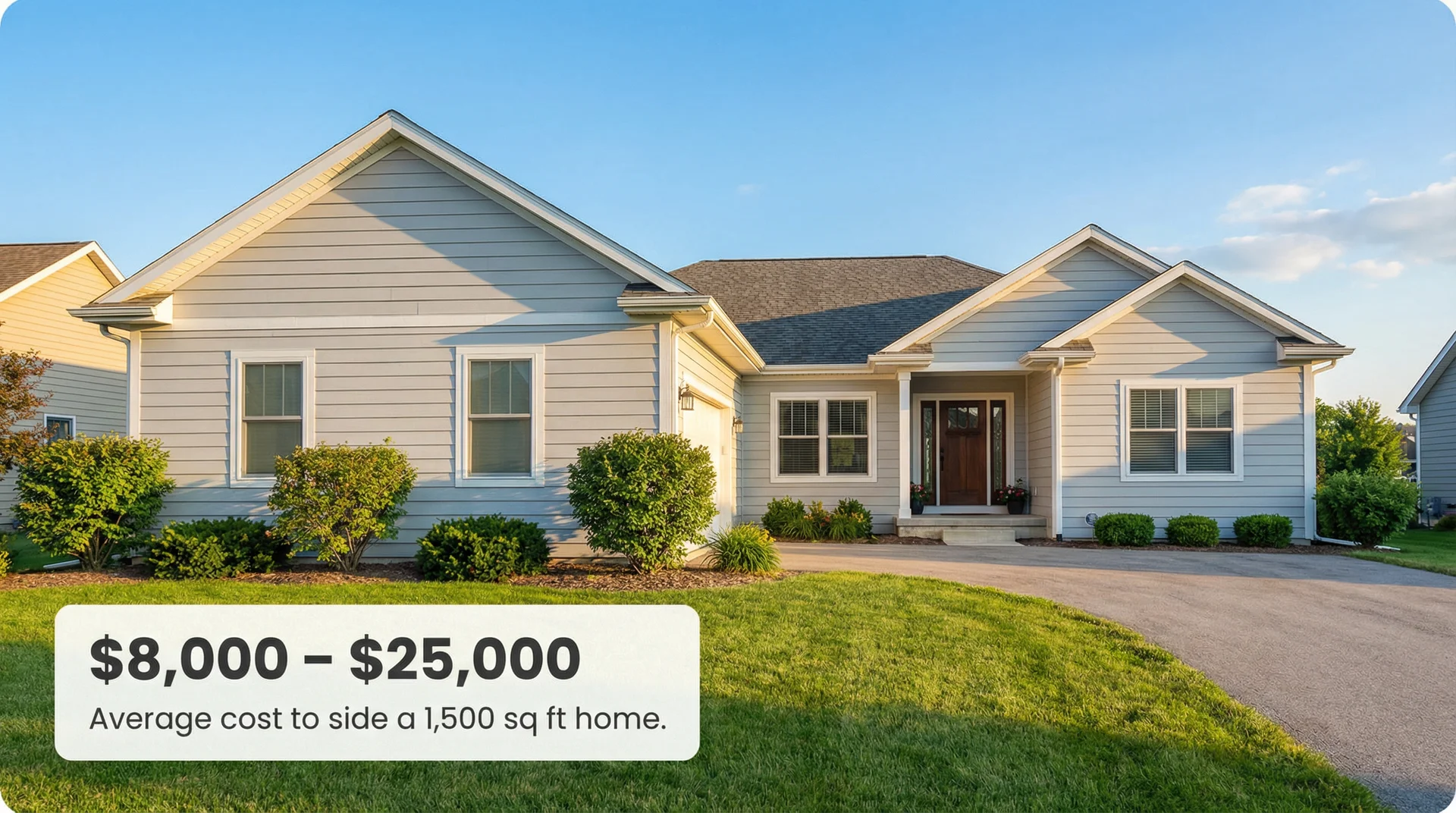
Total installed cost adds labor, removal, and disposal of existing siding, house wrap, flashing, and any substrate repairs discovered during demolition. Based on current national averages, the total installed cost for a full siding replacement on a standard 2,000 square foot home runs between $5,570 and $17,595. Budget toward the middle of that range.
For a 1500 square feet home, check this out to know the current estimate:
10-year total cost is where the real comparison lives:
| Material | Avg. Installed Cost | 10-Year Maintenance | Approx. 10-Year Total |
|---|---|---|---|
| Mid-grade vinyl | $8,000 | Minimal | $8,500 |
| Premium/insulated vinyl | $13,000 | Minimal | $13,500 |
| Fiber cement | $16,000 | Paint at year 15+ | $16,000 |
| Natural wood | $14,000 | Repaint every 4 yrs | $20,000+ |
| Engineered wood | $11,000 | Paint refresh at yr 10 | $12,500 |
| Metal (steel) | $18,000 | Minimal | $18,200 |
| Brick veneer | $22,000 | Tuckpoint at yr 25+ | $22,000 |
These are illustrations, but the pattern holds consistently: materials that cost more upfront often cost equal or less over a realistic ownership period.
Resale Value: Updated 2025 Data
The JLC 2025 Cost vs. Value report shows that replacing vinyl siding recoups 97% of its cost at resale, while fiber cement siding installation recoups 114% of its cost, placing fiber cement among the highest-returning exterior renovations in residential real estate.
One important note for sellers: condition matters as much as material. Fresh, clean, well-maintained vinyl in excellent condition often appraises better than tired, chalky fiber cement. Buyers and appraisers notice effort, not only expense.
How Your Siding Choice Affects Insurance Premiums
This cost factor rarely appears in siding articles, and it is one of the more meaningful financial variables in the decision. Fire-rated siding, primarily fiber cement and steel, can qualify a home for reduced premiums in wildfire risk zones and in states where insurers are tightening underwriting standards.
If you are in California, Colorado, or parts of the Mountain West, call your insurance agent before finalizing your material choice. Ask directly whether your selection affects your premium or coverage eligibility. That five-minute call could change your financial analysis.
What Good Siding Installation Looks Like?
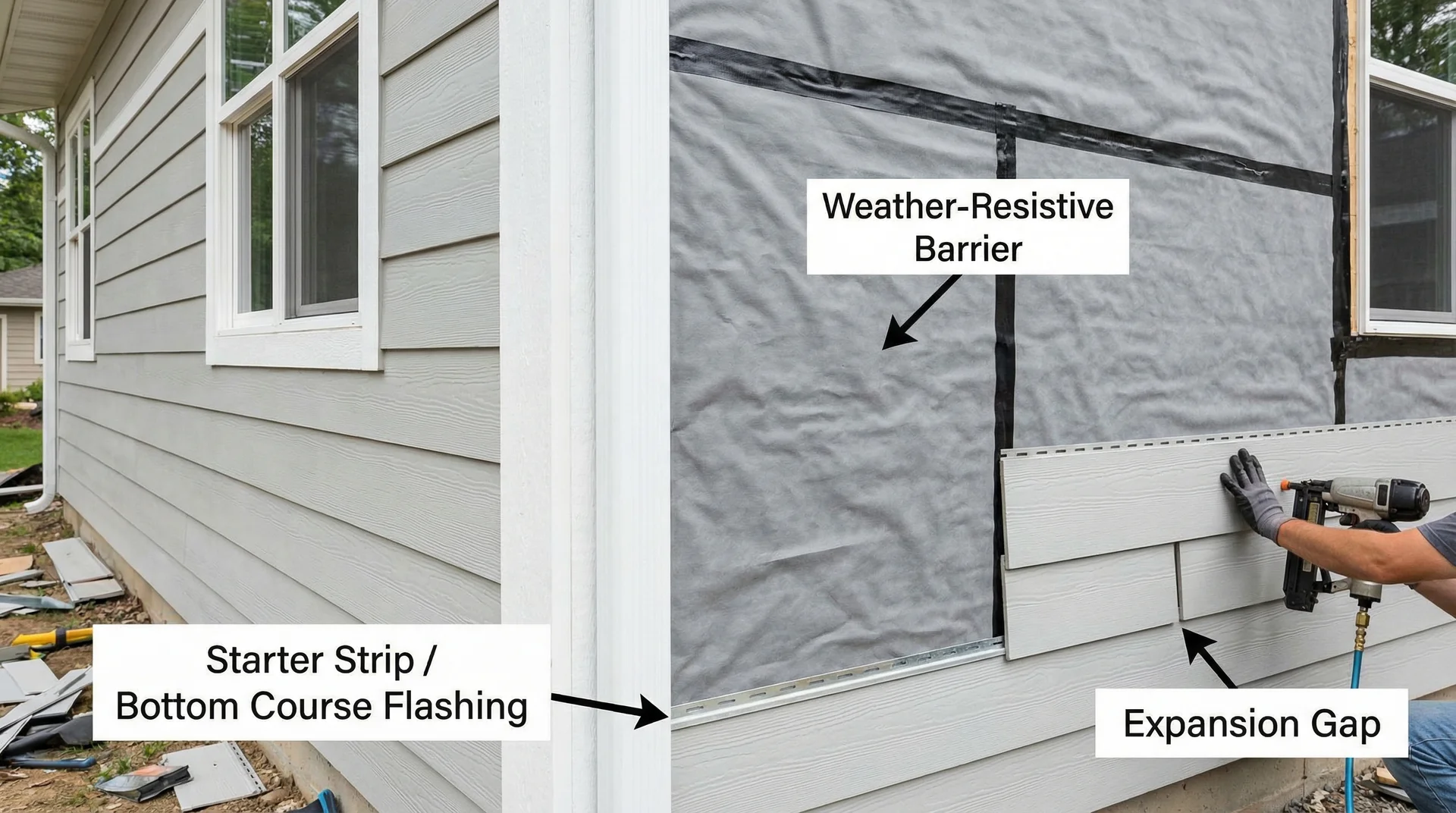
The material matters. The installation matters more. I have seen $12 per square foot fiber cement fail in eight years because of a careless install, and I have seen $4 per square foot vinyl last 30 years because an attentive installer followed every specification correctly.
5 Installation Details That Separate a Quality Job From a Problem
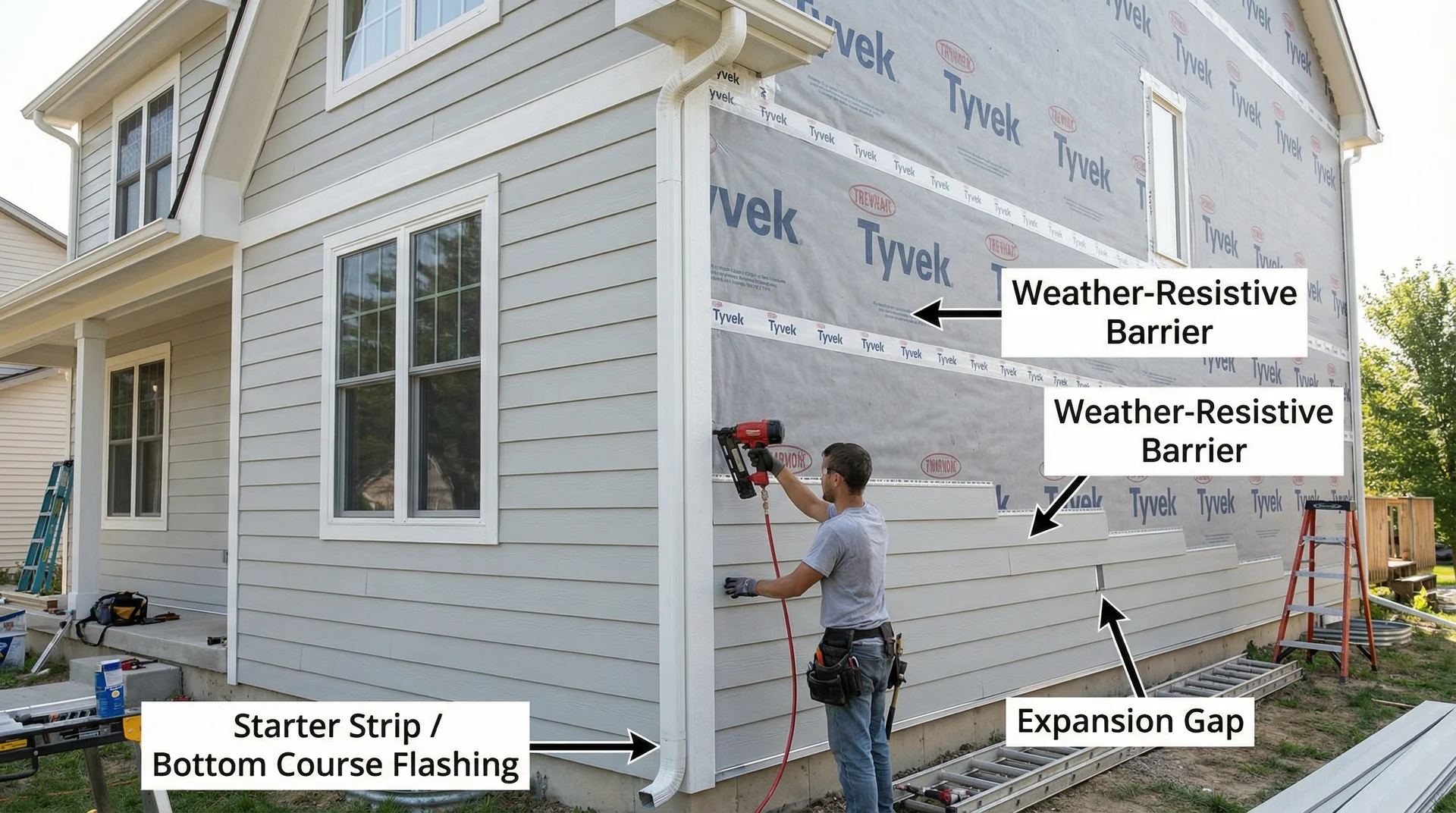
1. House wrap and weather-resistive barrier.
Before any siding goes on, the wall sheathing needs a continuous, properly lapped weather-resistive barrier. This layer keeps incidental water infiltration from reaching the structural wall assembly.
I walk every job before hanging product to confirm this layer is continuous, taped at seams, and correctly integrated with window and door flashing. If a contractor’s quote does not mention house wrap, ask why directly.
2. Correct nailing patterns and expansion gaps.
Every manufacturer specifies fastener type, penetration depth, spacing, and the required gap at panel ends to allow for thermal expansion.
Overdriven nails restrict the movement that vinyl and engineered wood need to expand and contract with temperature changes, causing buckling.
Underdriven nails create loose panels that flex and eventually crack at the nail hole.
3. Sealing at windows, doors, and penetrations.
The most common pathway for water to enter a wall assembly is at the transition between siding and window or door frames.
Flexible flashing tape at all window flanges, combined with backer rod and appropriate exterior caulk at all siding terminations, creates a durable seal.
This detail adds roughly an hour of labor per window opening and prevents repairs costing hundreds to thousands of dollars.
4. Proper bottom course flashing and termination.
The bottom edge of your siding system is where gravity and water concentration work hardest against you.
A drip cap or J-channel at the bottom course, set at the correct height above grade with a continuous starter strip establishing proper pitch, is foundational to long-term performance.
Siding that terminates too close to the grade or without proper flashing will wick moisture from soil contact regardless of material quality.
5. Ventilation behind the cladding in high-rainfall climates.
In high-rainfall climates or on south and west exposures with intense sun, a small drainage plane created by furring strips between the back of the siding and the face of the house wrap allows incidental moisture to drain out rather than sit against the barrier.
This rainscreen approach extends the life of the entire wall system meaningfully and is worth the modest additional labor cost in wet regions.
4 Red Flags When Getting Siding Quotes
- No mention of weather-resistive barrier or house wrap in the scope of work
- Labor-only quotes where you supply the materials – this removes the contractor’s stake in material quality and leaves you responsible for specification errors
- Workmanship warranty under two years, or no written workmanship warranty at all – the manufacturer’s product warranty and the installer’s workmanship warranty are separate, and you need both in writing before any deposit changes hands
- Pressure to sign the same day or risk losing the price – take your time, get three quotes, and call the references
Quick-Reference Comparison: All Siding Types at a Glance
| Material | Installed Cost | Lifespan | Maintenance | Fire Resistance | Climate Fit | Energy Efficiency |
|---|---|---|---|---|---|---|
| Standard Vinyl | $3–$8/sq. ft. | 20–30 yrs | Low | Moderate | Moderate | Low (R ~0.61) |
| Insulated Vinyl | $7–$12/sq. ft. | 30–40 yrs | Low | Moderate | Cold, moderate | Good (R 3.0–4.0) |
| Fiber Cement | $8–$12/sq. ft. | 25–50 yrs | Low-Moderate | High | Most climates | Low alone; good with sheathing |
| Engineered Wood | $4–$9/sq. ft. | 20–50 yrs | Moderate | Moderate | Moderate, dry | Moderate |
| Natural Wood | $5–$15/sq. ft. | 10–40 yrs | High | Low | Mild, dry | Moderate (R ~0.81) |
| Steel | $8–$20/sq. ft. | 40–100+ yrs | Low | Very High | All climates | Low alone; good insulated |
| Aluminum | $4–$10/sq. ft. | 15–40 yrs | Low | High | Mild, coastal | Low (R ~0.61) |
| Brick Veneer | $9–$20/sq. ft. | 50–100 yrs | Very Low | Very High | Cold, moderate | Thermal mass benefit |
| Stucco | $6–$15/sq. ft. | 50–80 yrs | Low (dry) | High | Dry only | Good in dry climates |
| Stone Veneer | $11–$30/sq. ft. | 50–100 yrs | Low | Very High | Most climates | Low |
So Which Siding Is Right for Your Home?
After walking through every material, climate consideration, and cost reality, here is how I help homeowners narrow this to an actual answer.
If low maintenance is your number one priority: Your shortlist should be fiber cement, brick veneer, or premium insulated vinyl. Fiber cement needs a paint refresh every 15 to 25 years and nothing else. Brick needs tuckpointing every 25 to 30 years. Premium vinyl needs occasional washing and nothing more, though it carries more performance caveats in extreme climates than the other two.
If budget is the deciding factor: Start with premium vinyl over standard vinyl – the performance and longevity gap between the two does not justify the small price difference between them. If your budget stretches to engineered wood, I would put it ahead of standard vinyl on almost every measure. Get multiple quotes and confirm each contractor includes house wrap, proper flashing, and a written workmanship warranty. The cheapest all-in quote with those elements is worth more than a cheaper quote without them.
If you plan to sell within five to seven years: Focus on condition and curb appeal over material prestige. If your existing siding is structurally sound, a thorough cleaning, targeted repair, and fresh paint on trim elements may deliver more return than a full replacement. If replacement is necessary, fiber cement offers the strongest 2025 documented resale return and reads as “upgraded” to buyers in a way that standard vinyl often does not.
If you are in a high-risk weather zone: Your material choice becomes less discretionary. In hurricane zones, use impact-rated fiber cement or steel and confirm your contractor pulls permits and complies with local wind-load requirements. In wildfire risk areas, fiber cement or steel is the clear recommendation – the insurance and safety case is unambiguous. In high-hail regions across the Great Plains, ask contractors specifically about impact-resistance ratings.
If aesthetics are driving the decision: Stone veneer or brick on the entry elevation combined with fiber cement lap siding on the remaining faces is a combination that photographs well, reads as premium, and performs better than full stone veneer alone at a lower total cost. Board-and-batten profiles in fiber cement or engineered wood have become the dominant aesthetic in contemporary residential renovation, and they hold their visual appeal across architectural styles from farmhouse to transitional to modern.
Frequently Asked Questions
What is the most durable type of exterior siding?
Brick and natural stone carry the longest lifespan at 50 to 100-plus years. Among more accessible materials, steel siding and fiber cement offer the strongest combination of durability and climate versatility for most American homeowners.
What is the cheapest exterior siding option?
Standard vinyl siding carries the lowest upfront cost at $3 to $8 per square foot installed. Engineered wood offers stronger long-term value at a modest price premium.
Can you side over existing siding?
In some cases, yes. You can re-side over existing wood clapboard in certain situations, and homes with asbestos siding are often re-sided over the existing material rather than having the asbestos removed, since covering it is faster, less expensive, and eliminates the disturbance of hazardous material. Your contractor should inspect the substrate and confirm the existing layer is sound before recommending this approach.
Which siding is best for cold climates?
Insulated vinyl, fiber cement, and brick are the consistent top performers in freeze-thaw climates. Insulated vinyl adds meaningful R-value. Fiber cement resists moisture absorption through freeze-thaw cycles. Brick provides thermal mass that stabilizes interior temperature.
How do I know when my siding needs to be replaced?
Look for soft or spongy areas when you press on panels, visible cracks or gaps, mold or mildew on interior walls, bubbling under the surface, and noticeably higher heating or cooling bills. Two or more of these signs together typically indicate replacement is the better financial decision over continued repair.
Conclusion
Choosing exterior siding is one of the decisions that shapes how your home performs and looks for the next several decades. The homeowners who feel best about their outcomes almost always start with the right questions rather than the right catalog.
They ask about their climate first, are honest about their maintenance bandwidth, think about ten-year cost rather than square-foot cost, and hire contractors who can explain every installation detail without being asked twice.
Whatever material you choose, the installation quality and the house wrap system underneath it will do as much to determine the outcome as the product itself. The right siding for your home is out there. Now you have what you need to find it.