
I didn’t learn what bouclé was from a textbook or a trend report. I learned it the first time a client ran their hand across a chair sample and instantly relaxed.
That moment stayed with me. Bouclé isn’t just a fabric you look at; it’s one you respond to. Over the years, I’ve specified it for sculptural lounge chairs, rejected it for busy family rooms, and watched it elevate spaces without asking for attention.
If you’ve ever wondered what bouclé really is, why it feels different, or whether it belongs in your home, I’ll walk you through it the same way I explain it to clients; through experience, observation, and honest design judgment.
Identify the Different Types of Bouclé You’ll Encounter
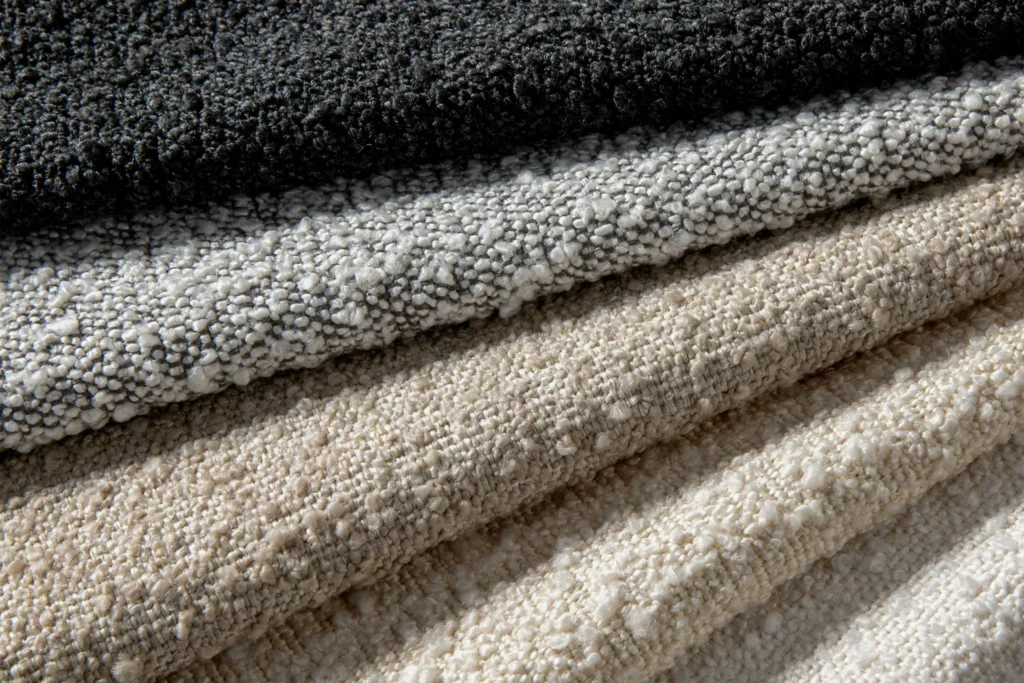
Distinguish Natural Bouclé From Synthetic Bouclé
Not all bouclé is created from the same fibers, and this distinction matters more than most people realize. Natural bouclé is typically made from wool or cotton, sometimes blended with linen.
Wool bouclé, in particular, has a springiness to it that helps the loops recover after pressure, something I value when specifying seating meant for regular use.
Cotton bouclé feels softer and lighter but lacks the same resilience, which makes it better suited for decorative applications rather than daily lounging.
Synthetic bouclé, often made from polyester or acrylic blends, behaves differently. It’s more uniform, easier to mass-produce, and usually more stain-resistant.
I’ve used it in projects where maintenance and cost mattered more than tactile nuance, especially in rental or high-turnover spaces.
Recognize Performance Bouclé vs Decorative Bouclé
One of the most overlooked differences is performance rating. Upholstery-grade bouclé is engineered to handle friction, weight, and repeated use.
Decorative bouclé, on the other hand, is meant to be seen more than lived on. When I source bouclé for furniture, I always look beyond the texture and check abrasion ratings, backing strength, and fiber recovery.
Two fabrics can look identical on a mood board and perform completely differently in real life.
Bouclé Colors, Patterns, and Visual Weight
Understand Why Bouclé Is Often Neutral (and When It Isn’t)
Bouclé naturally gravitates toward neutral palettes, and that isn’t a limitation, it’s a strength. The texture already does a lot of visual work, so softer shades like ivory, sand, stone, and warm gray allow the loops to stand out without overwhelming a space.
In my own projects, I lean toward neutrals when bouclé is used on larger pieces like sofas or lounge chairs because the fabric becomes a quiet anchor rather than a focal distraction.
That said, bouclé doesn’t have to stay neutral. Deeper tones like charcoal, forest green, even muted terracotta—can work beautifully when the surrounding materials are restrained. Color in bouclé reads softer than it does on flat fabrics, which makes it surprisingly forgiving.
Learn How Loop Size Affects the Final Look
The size of the loops changes how bouclé feels visually and physically. Fine-loop bouclé appears more tailored and refined, making it suitable for modern or minimalist interiors.
Chunkier loops feel more casual and cozy, but they also add visual weight. I avoid oversized loops in small rooms because they can make furniture feel bulky.
Understanding loop scale helps you choose bouclé that complements the proportions of your space rather than competing with them.
See Where Bouclé Works Best & Where It Doesn’t
Use Bouclé Successfully in Furniture
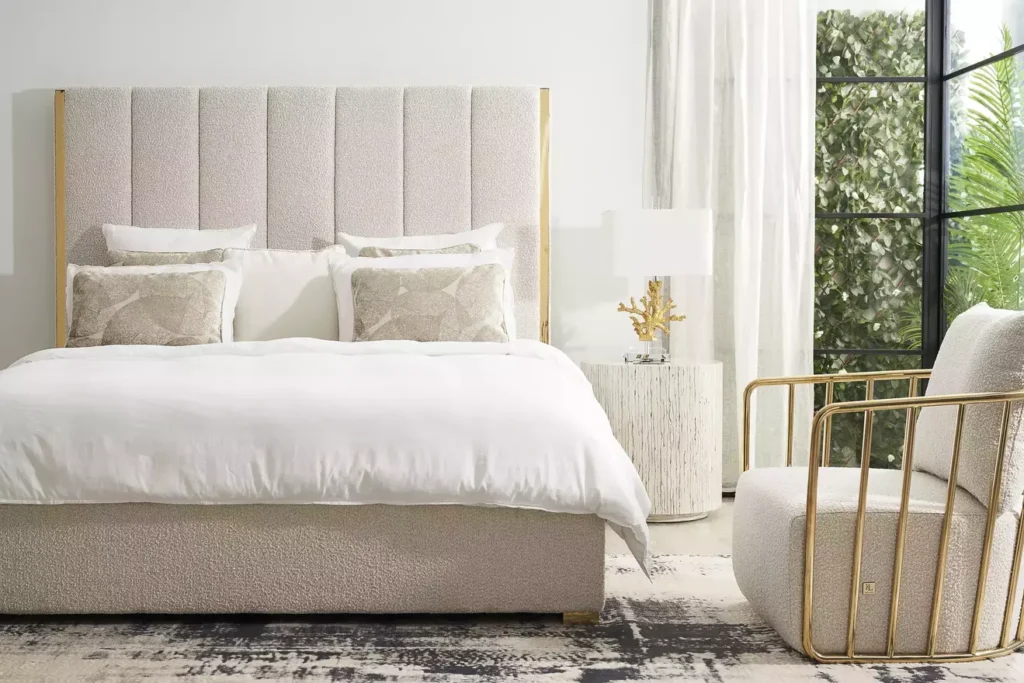
Bouclé shines when it’s allowed to do what it does best and soften form. I most often specify it for lounge chairs, accent seating, and sculptural sofas where comfort and presence matter more than crisp tailoring.
On rounded frames, bouclé feels intentional, almost inevitable. It cushions sharp silhouettes and makes furniture look inviting without relying on excess padding.
In calmer living rooms or reading corners, it becomes a tactile focal point that doesn’t demand visual attention.
Apply Bouclé Thoughtfully Beyond Furniture
Outside of seating, bouclé works well in controlled doses. Cushions, headboards, and upholstered panels benefit from its texture without being exposed to constant friction.
I’m more cautious using bouclé on dining chairs or frequently handled surfaces. While the fabric is durable in the right context, it isn’t designed for environments where spills, pulling, or abrasion are part of daily life.
Placement, more than the fabric itself, determines success.
Compare Bouclé With Fabrics That Look Similar
| Fabric Type | How the Texture Is Created | How It Feels | How It Ages Over Time | Best Use Cases | Key Limitation |
|---|---|---|---|---|---|
| Bouclé | Looped yarns woven into the fabric structure | Soft, nubby, dimensional | Holds shape well; texture remains visible | Upholstered furniture, accent chairs, sculptural pieces | Can catch debris; needs mindful placement |
| Sherpa | Fleece-like pile applied on the surface | Very plush, fluffy | Tends to mat and flatten with use | Throws, casual seating, winter décor | Loses texture faster |
| Teddy Fabric | Raised fibers for a cozy look | Extremely soft, less defined | Compresses easily over time | Decorative pieces, cushions | Lacks structure and depth |
| Chenille | Short, fuzzy yarns woven flat | Velvety and smooth | Shows wear and shading with friction | Sofas, cushions, upholstery | Appears flatter visually |
| Textured Weaves | Patterned weaving, not loops | Firm with mild texture | Stable but visually static | Minimalist or structured furniture | Limited tactile interest |
Which One Should You Choose?
Choose bouclé if you want a fabric that adds warmth, depth, and softness without looking casual or unstructured. It’s ideal when comfort and visual richness matter equally, especially for statement seating or sculptural furniture.
Choose Sherpa if your priority is instant plushness and cozy appeal, and the piece won’t see heavy, long-term use. It works best for seasonal or decorative elements rather than investment furniture.
Choose teddy fabric when softness matters more than longevity. It’s a good option for cushions or occasional-use pieces but not for furniture you’ll rely on daily.
Choose chenille if you prefer a smooth, velvety feel with a more traditional upholstery look. It performs well on sofas but won’t deliver the same textural interest as bouclé.
Choose textured weaves if you want durability and structure without visual softness. These fabrics suit minimalist or tailored interiors where texture should stay subtle.
Evaluate Bouclé’s Durability in Real Homes
“Bouclé isn’t fragile—but it is honest. It reflects how you live.”
That’s usually how I frame it for clients before they decide.
Address the Biggest Concern: Will Bouclé Hold Up?
Bouclé is durable by construction, not by accident. The looped yarns distribute pressure more evenly than flat weaves, which helps prevent obvious wear patterns. In homes where bouclé is used thoughtfully—reading chairs, living room sofas without constant rough use—it ages gracefully. I’ve seen bouclé chairs look better after a few years because the fabric softens without collapsing.
That said, durability isn’t just about the fabric itself. It’s about fiber type, loop density, and placement.
What Actually Affects Bouclé’s Longevity
Rather than asking “Is bouclé durable?”, I always evaluate these factors:
- Fiber composition: Wool and high-quality synthetic blends outperform cotton bouclé in resilience.
- Loop tightness: Tighter loops resist snagging better than oversized, decorative loops.
- Usage pattern: Daily lounging behaves very differently from occasional seating.
- Environment: Homes with pets, sharp accessories, or constant friction need extra care.
Bouclé Durability by Use Case
| Use Area | Durability Rating | Designer Insight |
|---|---|---|
| Accent chairs | High | Ideal balance of comfort and wear resistance |
| Sofas (low–medium use) | Medium–High | Choose performance bouclé for longevity |
| Dining chairs | Low–Medium | Not my first choice due to friction and spills |
| Headboards | High | Minimal abrasion, maximum visual impact |
| Decorative cushions | Medium | Expect gradual softening, not damage |
When Bouclé Struggles
It’s important to be clear here. Bouclé is not the best option if:
- You expect zero maintenance
- The furniture will face constant abrasion
- You prefer crisp, tailored edges over softness
That doesn’t make bouclé impractical, it makes it specific. And when used correctly, that specificity is exactly why it works so well.
Weigh the Pros and Cons of Choosing Bouclé
Before I recommend bouclé to a client, I always pause here. Not because bouclé is risky—but because it’s distinctive. Like any material with a strong personality, it rewards the right context and pushes back in the wrong one.
Why Designers Keep Choosing Bouclé
Bouclé solves a problem many interiors quietly have: spaces that look good but don’t feel good.
Adds instant warmth without relying on color or pattern
- Softens architectural furniture forms, especially curves
- Feels inviting and human, even in minimal spaces
- Hides minor wrinkles and impressions better than flat fabrics
- Ages gently, developing softness rather than sharp wear lines
I’ve often used bouclé when a room felt visually correct but emotionally cold. It bridges that gap better than most fabrics.
Where Bouclé Asks for Compromise
Bouclé isn’t demanding, but it isn’t careless either.
- Loops can catch on sharp objects or pet claws
- Not ideal for high-spill environments without treatment
- Requires mindful vacuuming rather than aggressive cleaning
- Can look bulky if loop size isn’t scaled to the room
None of these are dealbreakers but they are design decisions. When bouclé fails in a home, it’s usually because it was treated like a generic upholstery fabric instead of a material with intent.
A Simple Rule I Follow
If comfort, softness, and visual depth matter more than perfect crispness, bouclé is usually the right choice. If structure, sharp tailoring, or zero maintenance matter more, I look elsewhere.
Learn How to Style Bouclé Without Overdoing It
Styling bouclé is less about adding more and more softness and more about knowing when to stop.
I’ve seen bouclé feel luxurious in one home and heavy in another, purely because of what surrounded it.
Balance Bouclé With Hard and Smooth Materials
Bouclé works best when it has something to push against. I rarely place it in rooms that are already filled with soft finishes.
Materials that pair especially well with bouclé:
- Wood – adds warmth without competing for attention
- Metal – introduces contrast and structure
- Glass or stone – keeps the space visually light
- Leather – balances softness with definition
A bouclé chair next to a stone side table often feels more intentional than one surrounded by other plush elements.
Use Bouclé as an Accent vs a Statement
This is where many people overcommit.
Use bouclé as an accent when you want texture without dominance
- One chair
- Cushions
- A headboard
Use bouclé as a statement when the form is sculptural and the palette restrained
- Curved sofas
- Lounge seating
- Architectural benches
If everything is bouclé, nothing is bouclé. Restraint is what makes it feel elevated rather than trendy.
Common Styling Mistakes I Actively Avoid
- Pairing bouclé with overly busy patterns
- Using chunky bouclé in small rooms
- Mixing multiple heavy textures without contrast
Bouclé already speaks softly. Good styling makes sure it doesn’t have to shout.
Care for Bouclé Without Ruining Its Texture
Bouclé doesn’t need delicate handling but it does need informed care. Most damage I see isn’t caused by use; it’s caused by overcorrecting with the wrong cleaning methods.
Maintain Bouclé Upholstery Day to Day
Daily care is simple when you respect the fabric’s structure.
What I recommend doing regularly:
- Vacuum gently using a soft brush attachment
- Rotate cushions to distribute pressure evenly
- Fluff loops by hand if they compress temporarily
What I actively avoid:
- Aggressive rubbing
- Hard-bristle brushes
- High-suction industrial vacuums
Bouclé responds best to light, consistent care—not heavy intervention.
Handle Spills, Pilling, and Wear Gracefully
For spills
- Blot immediately, never rub
- Use a damp cloth with mild soap only if needed
- Let it air dry completely before use
For pilling or loose loops
- Trim pills carefully with fabric scissors
- Never pull loose loops—they’re structural, not surface fuzz
For long-term freshness
- Occasional professional upholstery cleaning (low-moisture)
- Avoid steam unless the manufacturer explicitly allows it
Bouclé Care by Situation
| Situation | Best Approach | Why It Works |
|---|---|---|
| Everyday dust | Soft vacuuming | Preserves loop integrity |
| Light spill | Blot + mild soap | Prevents loop distortion |
| Pilling | Gentle trimming | Maintains texture without damage |
| Deep cleaning | Professional service | Protects backing and yarn tension |
Understand Stretch, Structure, and Comfort of Bouclé
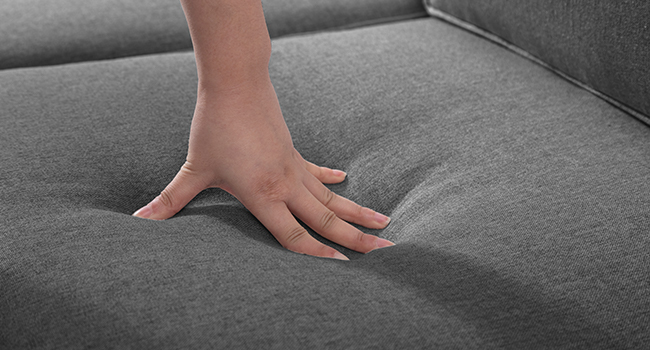
People often assume bouclé stretches because it looks soft. The truth is a little more nuanced. Bouclé feels forgiving, but its flexibility depends entirely on how the yarns are built and what fibers hold them together.
Explain Whether Bouclé Has Stretch
Most bouclé fabrics don’t stretch in the way knits do. The loops create visual softness, not elasticity. When I press into a bouclé sofa, the comfort usually comes from the cushion beneath it, not the fabric giving way.
Some blended bouclé fabrics include a small amount of synthetic fiber that allows minimal movement, but the structure stays largely stable.
Clarify How Bouclé Feels Over Time
Bouclé changes slowly.
The fabric softens as the loops relax, but it doesn’t sag or lose shape when the upholstery is well made.
I’ve noticed that bouclé tends to feel more comfortable after a few months of use, especially on seating.
It breaks in rather than breaks down, which is why it works so well in spaces meant for long, unhurried use.
Answer the Most Asked Questions About Bouclé
People usually reach this point with practical concerns. They like how bouclé looks, but they want to know how it behaves in real life. These are the questions I hear most often, and I answer them the same way every time—directly and without dressing them up.
Is bouclé durable?
Bouclé holds up well when you place it thoughtfully. The looped structure spreads out wear instead of concentrating it in one spot. In my experience, a well-made bouclé chair used daily still looks good years later. Problems usually come from rough friction or poor-quality fabric, not from bouclé itself.
How do you protect bouclé?
You protect bouclé by limiting unnecessary friction. Regular gentle vacuuming helps. Placing the furniture away from sharp edges makes a noticeable difference. If the piece allows it, a fabric protector adds peace of mind, but smart placement does most of the work.
How much does bouclé cost?
Bouclé prices vary widely. Decorative bouclé fabrics sit on the lower end, while upholstery-grade or performance bouclé costs more. The price usually reflects fiber quality and durability. When I budget for bouclé, I focus less on the label and more on how the fabric performs.
What is the difference between bouclé and Sherpa?
Bouclé builds texture into the fabric through looped yarns. Sherpa creates softness by raising fibers on the surface. Bouclé keeps its shape better over time, while Sherpa tends to flatten. That difference becomes clear after months of use.
Is bouclé fabric pet-friendly?
Bouclé can work in pet-friendly homes, but it depends on the pet and the loop size. Tighter loops handle everyday use better than loose, chunky ones. I avoid bouclé in homes with pets that scratch frequently, but I’ve seen it work well with calmer animals.
Is bouclé natural or synthetic?
Bouclé can be either. Some versions use wool or cotton, while others rely on synthetic fibers or blends. Natural bouclé feels warmer and more tactile. Synthetic bouclé often offers better stain resistance. The right choice depends on how you plan to use it.
Decide If Bouclé Belongs in Your Space
I usually know whether bouclé is right for a home within a few minutes of the conversation. Not because of trends or photos, but because of how people describe their space.
When someone talks about wanting a room to feel calmer, softer, or more lived-in, bouclé often fits naturally. When they talk about precision, sharp lines, or zero maintenance, it usually doesn’t.
Bouclé works best when you let it be what it is. It adds comfort without looking casual and texture without needing pattern.
It doesn’t try to impress, but it changes how a space feels the moment you sit down. If that balance matters to you, if you value touch as much as appearance bouclé tends to make sense. And when it does, it rarely feels like a passing choice.