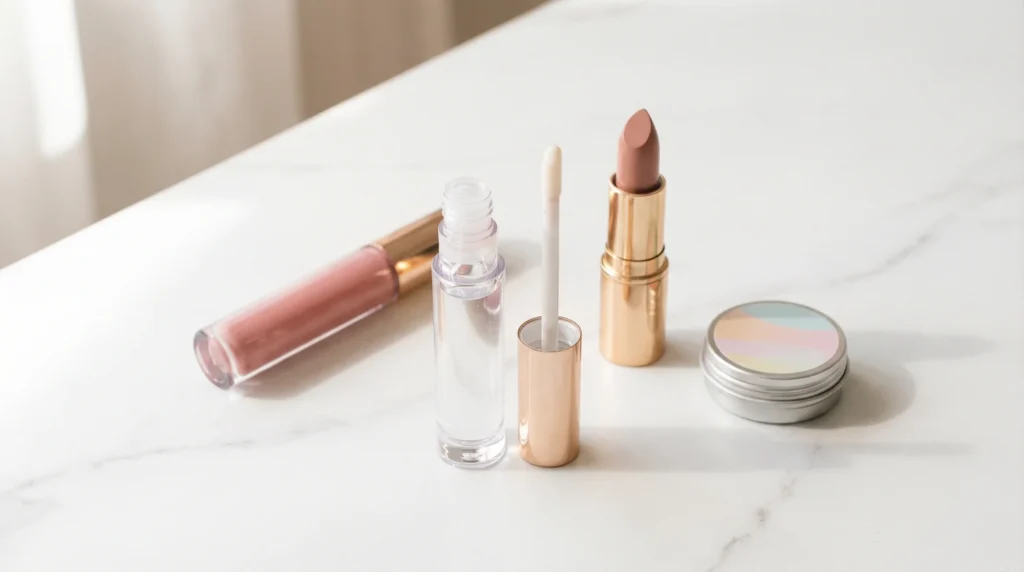
You are standing in the beauty aisle holding three different shiny lip products, reading the back of each one, and walking away more confused than when you arrived. One says “nourishing lip oil,” another says “tinted balm,” and the third just says “gloss” in a very confident font that tells you nothing useful.
I have been there. And after years of working with clients on bridal days, fashion shoots, and editorial sets across the Pacific Northwest, I still think the lip category is one of the most misunderstood shelves in beauty.
So here is the direct answer first, because you deserve it before anything else.
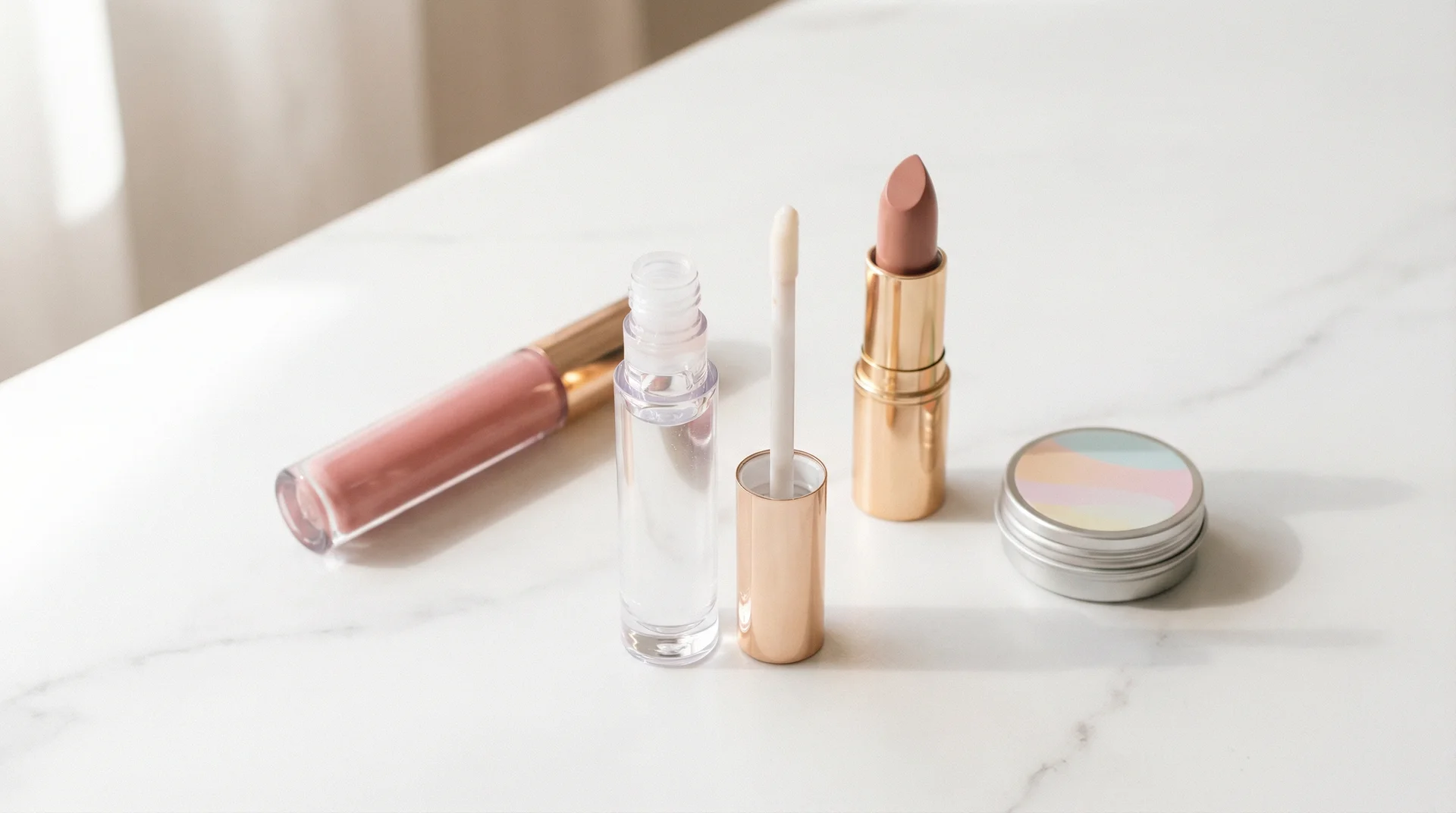
Lip gloss is a cosmetic product designed to give your lips a shiny, reflective finish. It comes in clear, tinted, and pigmented shades, sits lighter on the lips than lipstick, and creates a visual illusion of fullness by catching and reflecting light. It is not a treatment product, and it is not a lipstick. It lives in its own lane, and once you understand what it actually does, it becomes one of the most versatile things you can own.
Everything else in this piece, the ingredients, the comparisons, the application technique, the shade-picking, builds on that core idea.
What Exactly Is Lip Gloss? (The Full Picture)
Lip gloss has one primary job: shine. It makes your lips look reflective, fuller, and more alive with almost zero effort. The glossy surface catches light in a way that naturally makes lips appear plumper, and that effect works on every lip shape and skin tone, something I have confirmed across hundreds of clients over the years.
Here is the definition that covers all of it:
Lip gloss is a fluid or soft-solid cosmetic applied to the lips to create a high-shine finish. It ranges from completely transparent to deeply pigmented and comes in finishes including glittery, metallic, and mirror-like. It typically contains fewer pigments and more oil than lipstick, and its primary purpose is aesthetic. Hydration and skincare benefits depend entirely on the formula.
A Brief History Worth Knowing
Max Factor created the first commercial lip gloss in 1930 for Hollywood film actresses. The Polish-born cosmetic chemist developed the original formula to make performers’ lips appear more luminous on black-and-white film under harsh studio lighting. The initial product was called X-Rated and reached the general public in 1932.
Lip gloss did not become a makeup bag essential until the 1970s, when celebrities began wearing it, and women sought to emulate their look. Then in 1973, Bonne Bell created Lip Smacker, which became a popular choice among schoolgirls, with strawberry as the first flavor.
The rest, as they say, is history. Since its creation in the 1930s, lip gloss has intrigued us with its shine, hitting its stride in the 1970s when icons like Cher and Donna Summer made it a must-have.
And right now, in 2026, it is experiencing its biggest cultural moment yet.
How Lip Gloss Compares to Every Other Lip Product
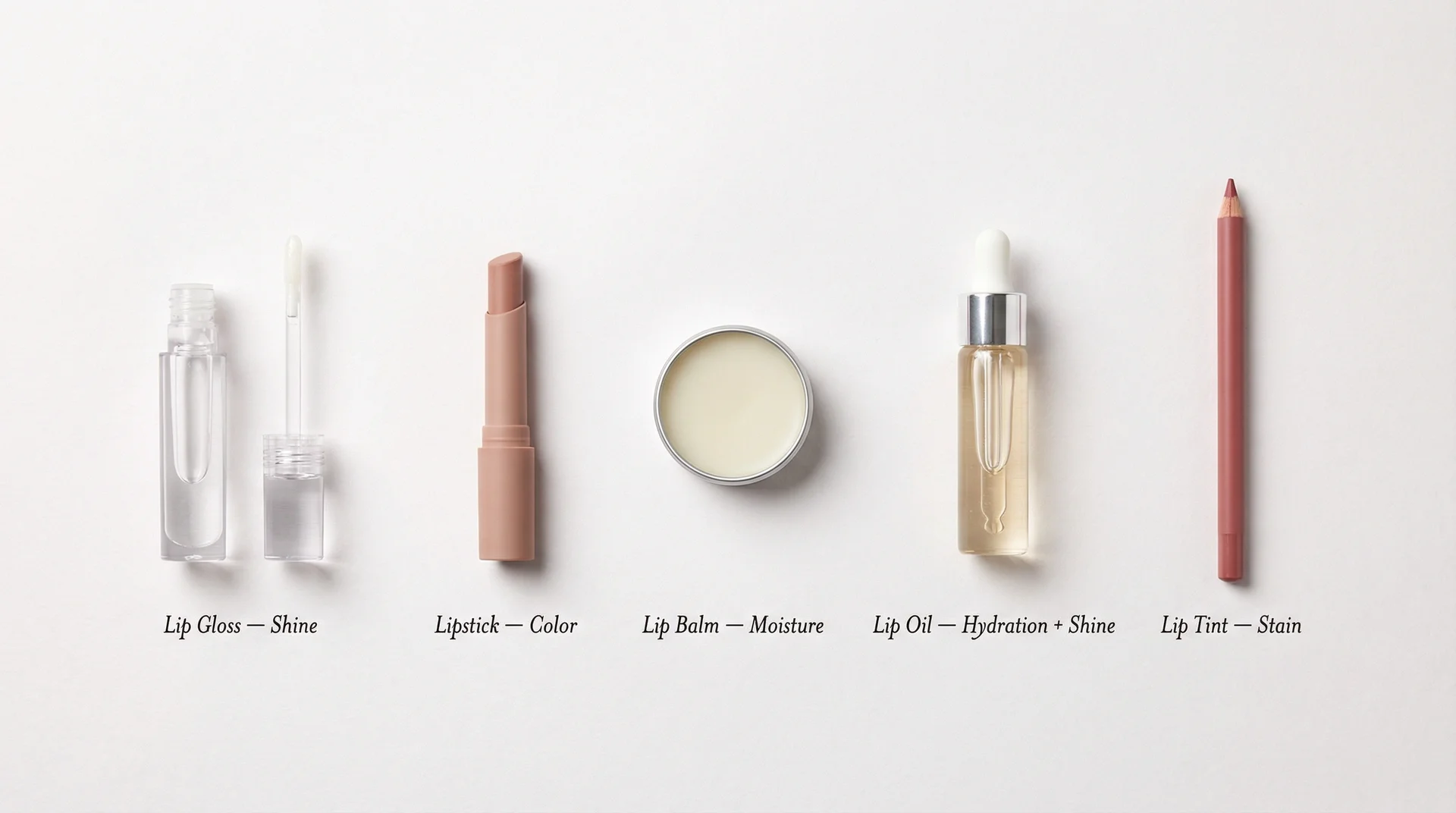
The reason gloss feels confusing is that it sits in a crowded neighbourhood of products that look similar in packaging but do completely different jobs. This table gives you the orientation most beauty aisles fail to provide:
| Product | Primary Purpose | Finish | Hydration Level | Best Used For |
|---|---|---|---|---|
| Lip Gloss | Shine and visual plumpness | High-shine, reflective | Low to moderate | Layering, instant polish, finishing touch |
| Lip Balm | Moisture and lip repair | Matte to subtle sheen | High | Every day care, healing, and base prep |
| Lip Oil | Hydration with shine | Sheer, glassy | Moderate to high | Daily wear, skincare-makeup hybrid |
| Lipstick | Pigmented color | Matte, satin, or sheer | Low to moderate | Full coverage, defined lip looks |
| Lip Tint | Long-wear color stain | Natural, semi-sheer | Low | All-day color with minimal effort |
My rule for anyone building a first lip routine: gloss is not a replacement for any of these. It is an addition. It layers beautifully over most of them, and that is exactly where its real power lives.
What’s Actually Inside Your Lip Gloss
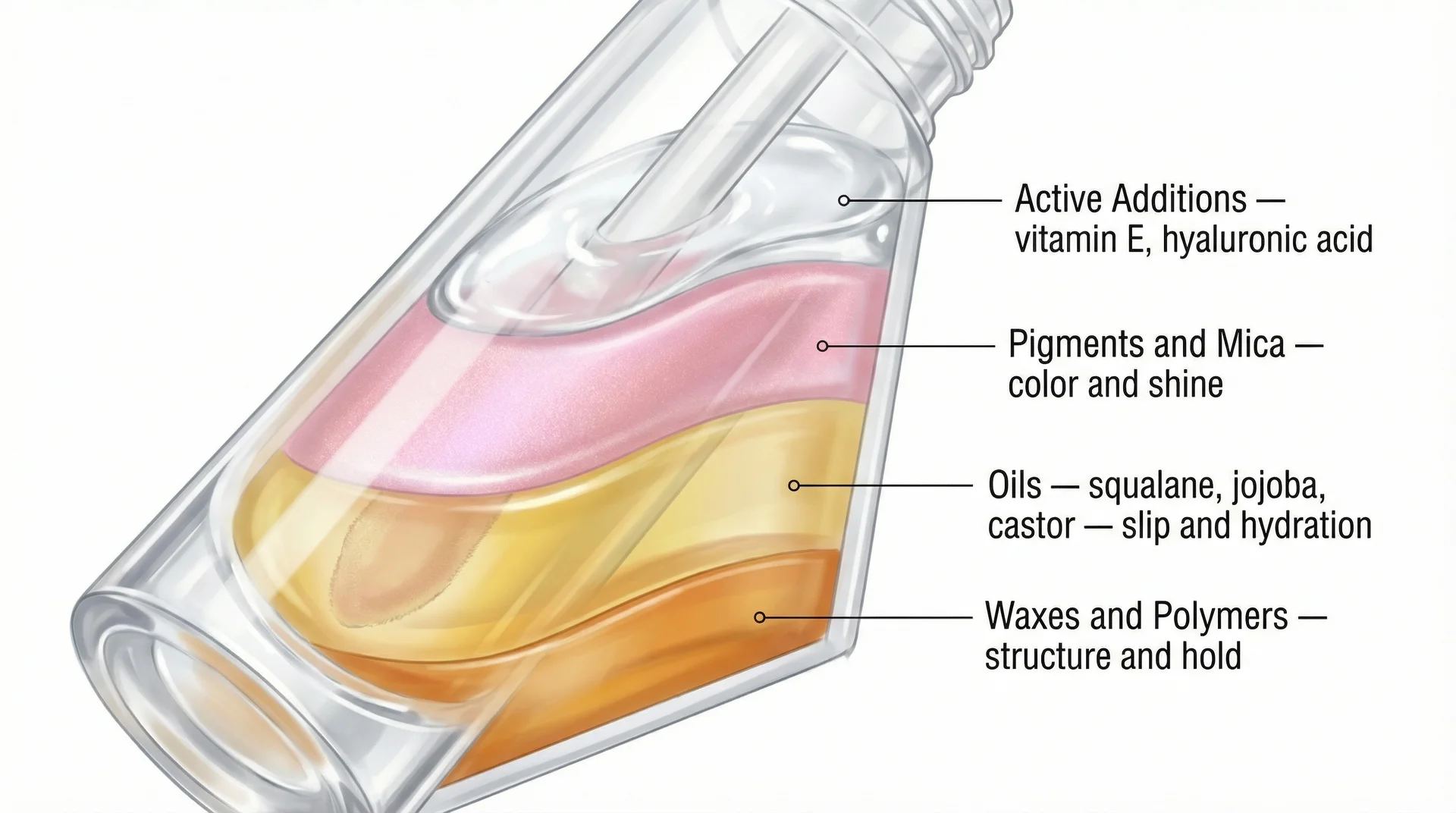
Most people apply gloss without a second thought about what is in it, which is fine. But understanding the basics of the formula helps you pick a better product, avoid ingredients that irritate your skin, and figure out why some glosses feel incredible while others feel like corn syrup.
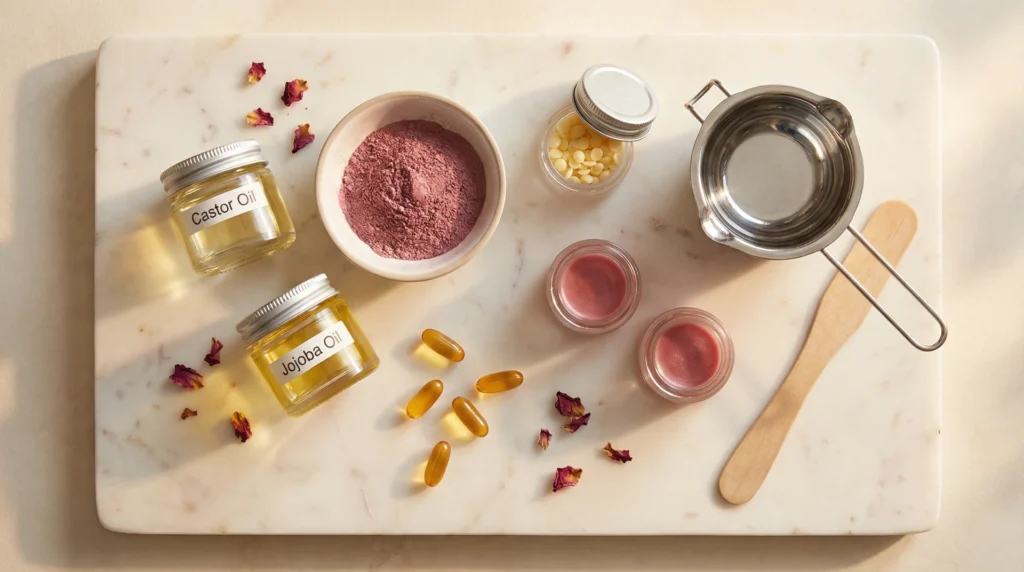
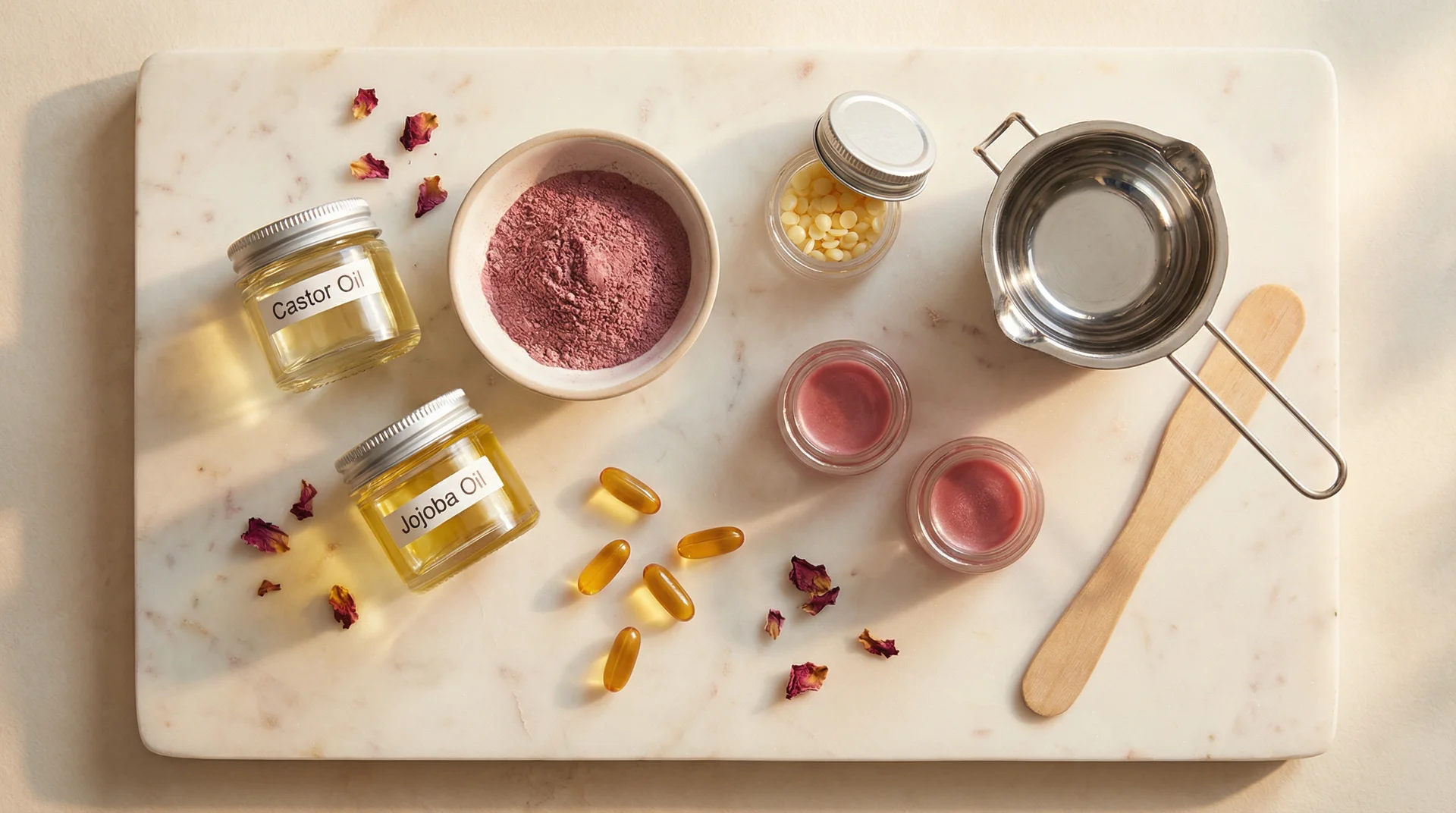
The base of almost every lip gloss is a combination of waxes, oils, and polymers. The waxes give the formula structure and help it stay on the lips. The oils, which include castor oil, jojoba, squalane, or plant-derived alternatives, give it slip and that signature glide.
And polymers like polybutene create the thick, viscous, glossy texture that makes the product cling to your lips and catch the light. Polybutene and its relative polyisobutene are also what keep the formula from running off your lips in five minutes flat.
On top of that base, formulators add:
- Pigments and dyes – mica for shimmer, iron oxides for earthy tones, titanium dioxide for brightness and opacity, synthetic dyes for vivid shades
- Emollients – shea butter, cocoa butter, and similar ingredients that soften the lip surface and make application feel smooth
- Fragrance and flavoring – the strawberry or vanilla notes you remember from childhood
- Modern active additions – hyaluronic acid, peptides, vitamin E, and even vegan collagen alternatives that push gloss closer to skincare territory
The ingredients that cause most problems for sensitive skin are fragrance, certain synthetic dyes, and preservatives. If you have ever put on a gloss and felt immediate tingling or irritation around the lip line, one of those three is almost certainly responsible. Look for fragrance-free formulas and check that dyes are mineral-based rather than synthetic FD&C dyes.
On the safety question: regulatory bodies, including the FDA, set strict maximum levels for substances like lead, which can appear as a trace contaminant in color pigments.
Lip glosses sold in the US go through these standards. That said, if you prefer cleaner formulations, EWG-verified and vegan formulas have grown significantly in quality and are genuinely worth considering.
If you wish to make your own lip gloss for personal use or to even start a business on it, it is fairly easy to do so.
What Separates a Great Formula From a Mediocre One
Look for these ingredients:
- Squalane or jojoba oil (lightweight, non-comedogenic hydration)
- Vitamin E (tocopherol) for antioxidant protection
- Dimethicone (delivers a smooth, non-sticky finish)
- Hyaluronic acid in newer hybrid formulas
- Candelilla wax or carnauba wax, if you prefer plant-based options
Be cautious of these:
- Heavy synthetic fragrance if you have sensitive skin
- Menthol or camphor in glosses marketed as “plumping” – the tingling is irritation, not actual plumping
- Petrolatum is the primary base if your lips tend to be dry, because it seals moisture in but adds none
I shifted to recommending squalane-based glosses for my bridal clients specifically. A bride in a five-hour ceremony needs a formula that does not evaporate off her lips every forty minutes.
Why People Avoid Lip Gloss (And Why Those Reasons No Longer Hold Up)
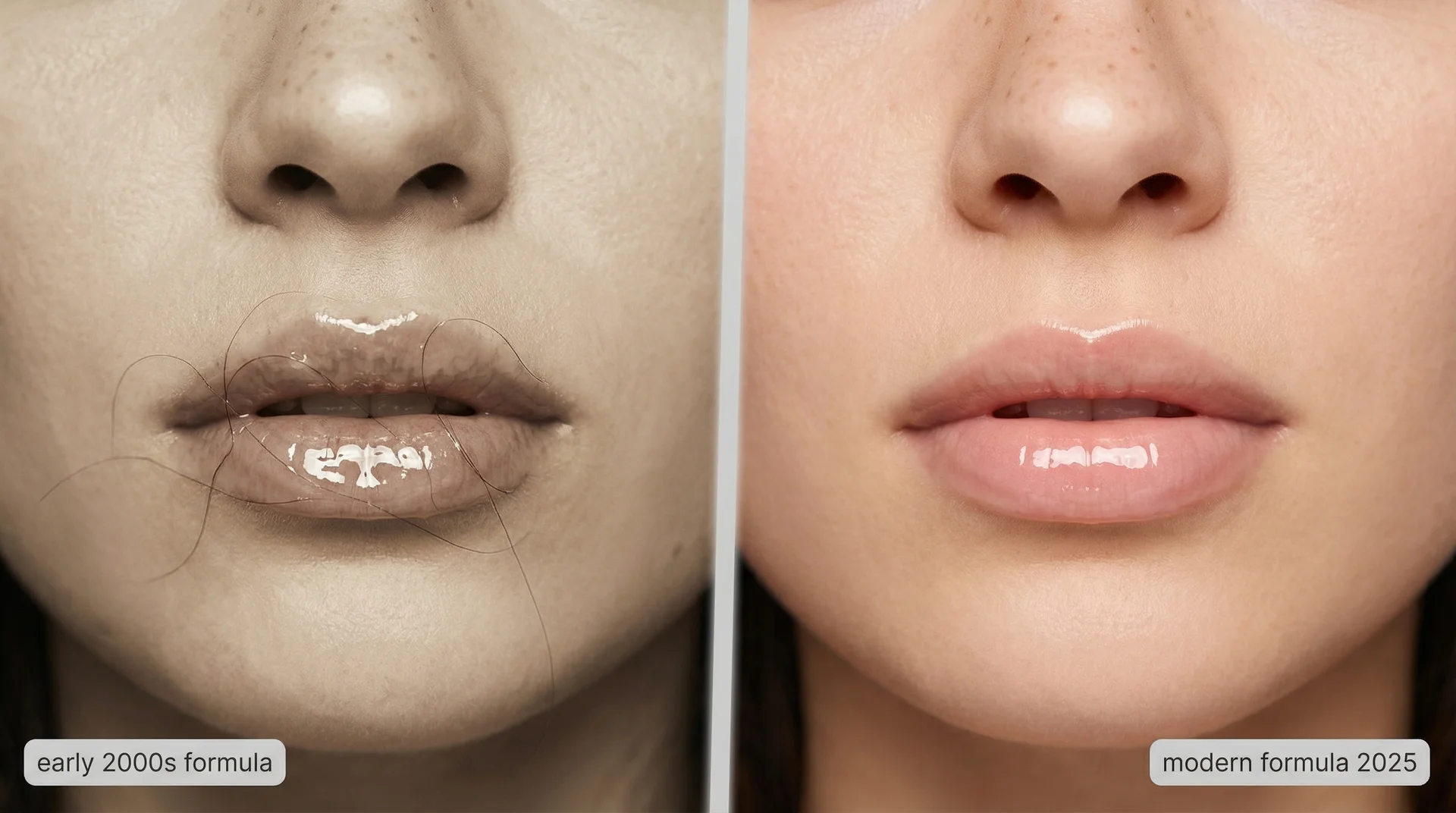
The three complaints I hear most often about lip gloss are that it is sticky, it wears off fast, and it is for younger people. Every one of these has a real basis in the glosses of the early 2000s. Every one of them is also almost completely irrelevant to what is on shelves in 2026.
The stickiness issue came from formulas that leaned heavily on thick polybutene with very little slip. Modern formulas use silicones like dimethicone and cyclopentasiloxane to create a smooth, non-coating finish. When someone tells me they hate gloss because it is sticky, I hand them a current formula and watch their reaction change immediately.
The “wears off too fast” concern is partially valid and entirely manageable. Gloss does not anchor to the lip the way a stain or matte lipstick does. But the solution is a liner underneath, which I cover in the application section. A lined lip holds gloss significantly longer.
As for gloss being “too young,” I have applied it to clients from their early twenties to their early sixties. The only thing that changes is the shade and finish.
A deep, sheer berry gloss on someone in their fifties reads as completely polished. A heavy glitter gloss at any age, on someone who does not want that, reads as uncomfortable. Age is not the variable. The finish choice is.
How Modern Formulas Have Changed Everything
There are now over 209 million TikTok videos about lip gloss. What went viral was not nostalgia for sticky tubes. It was the discovery that a 2026 formula feels nothing like what most people remembered.
Searches for “hydrating lip gloss” have surged over 30% year over year, which tells you exactly where both the market and the consumer are heading.
Gloss has moved from a purely cosmetic product to a hybrid that competes with skincare. Brands now infuse formulas with hyaluronic acid, plant-based peptides, marine collagen alternatives, and antioxidant-rich oils.
The global lip gloss market reflects this shift: the market was valued at USD 3.29 billion in 2023 and is projected to reach USD 4.68 billion by 2031, growing at a CAGR of 4.53%, driven largely by demand for hydrating, skincare-infused formulas.
The result is a category of glosses that genuinely condition the lips over time rather than just sitting on top of them. That is a meaningful shift, and it is the main reason gloss has earned its place back at the center of the beauty conversation.
Lip Gloss vs. Lip Balm vs. Lip Oil vs. Lipstick: Which One Do You Actually Need?
This is the question underneath the question. When someone searches “what is lip gloss,” what they often mean is: which of these shiny things actually belongs in my life? So instead of a feature list, here is a use-case decision framework.
Use Lip Gloss When:
- You want your lips to look fuller without any technique or precision
- You are layering over a lipstick and want to add dimension and a glossier finish
- You need something quick, forgiving, and high-impact for a casual or social occasion
- You are building a “clean girl” or no-makeup makeup look, and want the lips to look hydrated and alive
Use Lip Balm When:
- Your lips are dry, cracked, or irritated and need actual repair
- You want an overnight conditioning treatment
- You are in a cold or dry climate where the lip barrier needs protection throughout the day
- You want to use it as a prep base before gloss application (I always recommend this)
Use Lip Oil When:
- You want hydration and shine in one product without the weight of a full gloss
- You prefer something that feels lighter and less coating during the day
- Your lips are generally healthy, and you want daily maintenance rather than repair
- You love the glazed, glass-skin aesthetic because lip oils are built for exactly that finish
Use Lipstick When:
- You want a full, opaque color with staying power
- You need something that holds through long events without reapplication
- You are working with a specific shade for a defined look
The “Lip Combo” Method: When You Use More Than One
Searches for “lip combo” across Google and TikTok increased by 97.5% from April 2024 to March 2025 compared to the same period the previous year.
This is the trend that makeup artists have been doing on professional sets for years, now finally going mainstream.
A lip combo is layering multiple products to achieve a result none of them can produce alone. The most effective version:
Step 1: Apply a lip liner in a shade close to your natural lip color or your chosen lipstick shade. Fill in the lips fully, not just the edges. This creates an anchor layer.
Step 2: Add a lipstick, tinted balm, or lip stain on top. This gives you a color base and staying power.
Step 3: Apply gloss over the center of the lips. This adds dimension, optically plumps the lip, and gives the whole look a finished quality.
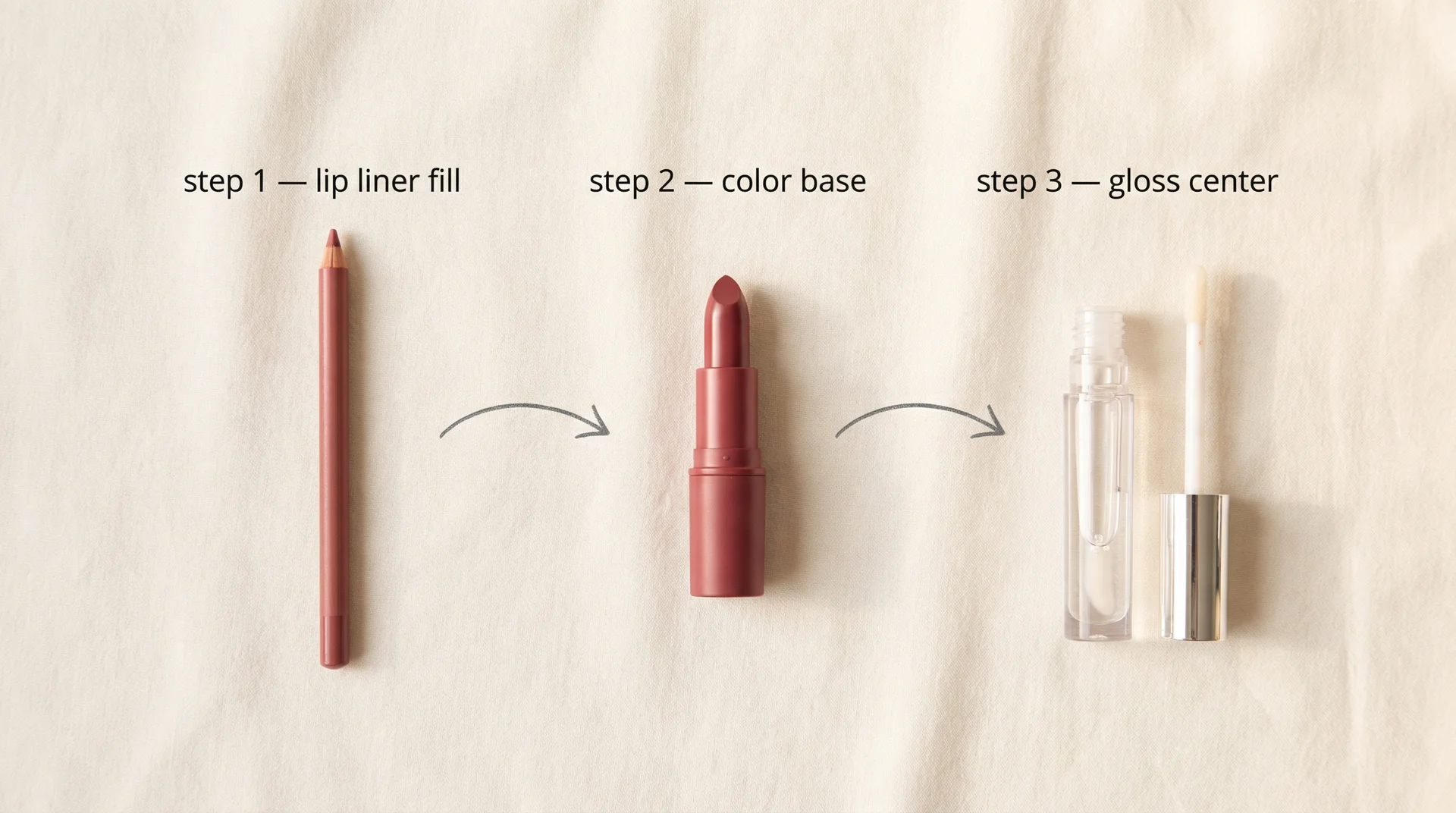
I have used a version of this on editorial shoots for years. The liner fill-in is the step most people skip, and it is the one that makes the biggest difference in how long the gloss lasts and how polished the result looks. The whole process takes under a minute.
How to Apply Lip Gloss Correctly
The application sounds too simple to deserve its own section. I thought the same thing until I started watching clients apply gloss in my chair and noticed that almost everyone does at least one thing that undermines the result they want.
Start with prep. If your lips have any dry skin or flakiness on the surface, gloss collects in those areas and makes them more visible. A gentle exfoliation with a soft toothbrush or a sugar scrub a few times a week keeps the lip surface smooth. Follow that with a balm and give it a minute to absorb before anything else goes on top.
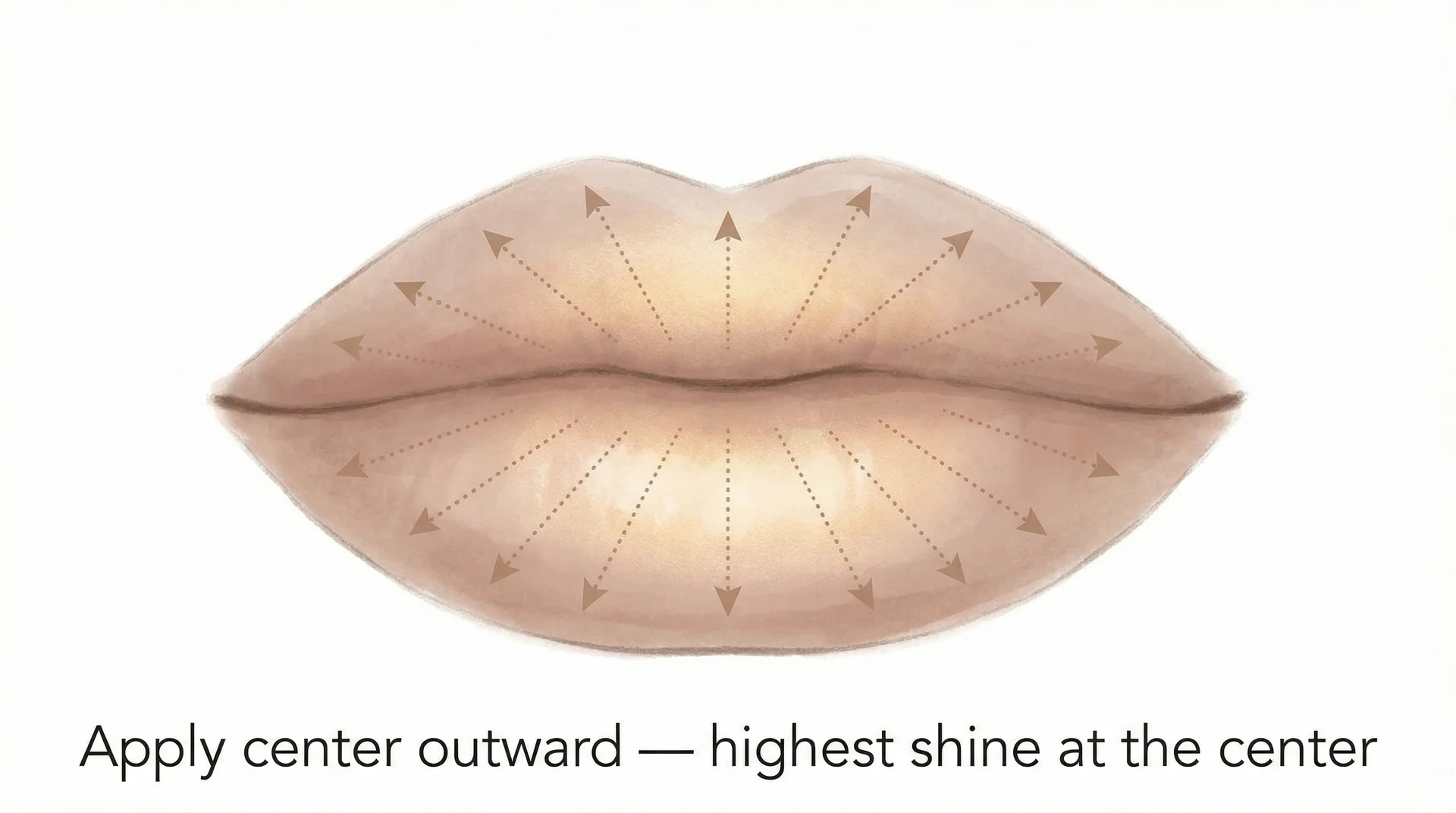
Apply from the center outward. The most natural-looking application starts at the center of the lower lip and moves toward the corners, then repeats on the upper lip. This keeps the highest concentration of shine where it reads most as fullness, which is the visual center of the pout.
The most common mistake is loading too much product at the outer edges of the lips. When gloss bleeds past the lip line, it does not look intentional. Use the applicator to stay inside the lip line, or use a liner first to create a physical barrier.
Applying over lipstick works best when the lipstick has had thirty seconds to set. Press the lipstick lightly with a fingertip rather than blotting fully, then apply gloss to the center of the lip only. Full-coverage gloss over full-coverage lipstick can muddy both products. Keeping the gloss to the center gives you dimension without compromising either formula.
How to Make Lip Gloss Last Longer
The most effective thing you can do is use a lip liner underneath and fill in the entire lip before applying gloss over it. This gives the product something to grip rather than a bare lip surface.
Beyond that:
- Blot lightly after the first application, then reapply a thin second layer. This removes the excess that would otherwise slide off and leaves a more adherent base underneath
- Press, do not swipe when you touch up throughout the day. Swiping removes what is already there. Pressing with the applicator or your fingertip adds product without disturbing the layer underneath
- Apply after eating, not before. The combination of heat, pressure, and moisture from eating removes gloss faster than almost anything else
Lip Gloss Tips for Different Lip Shapes
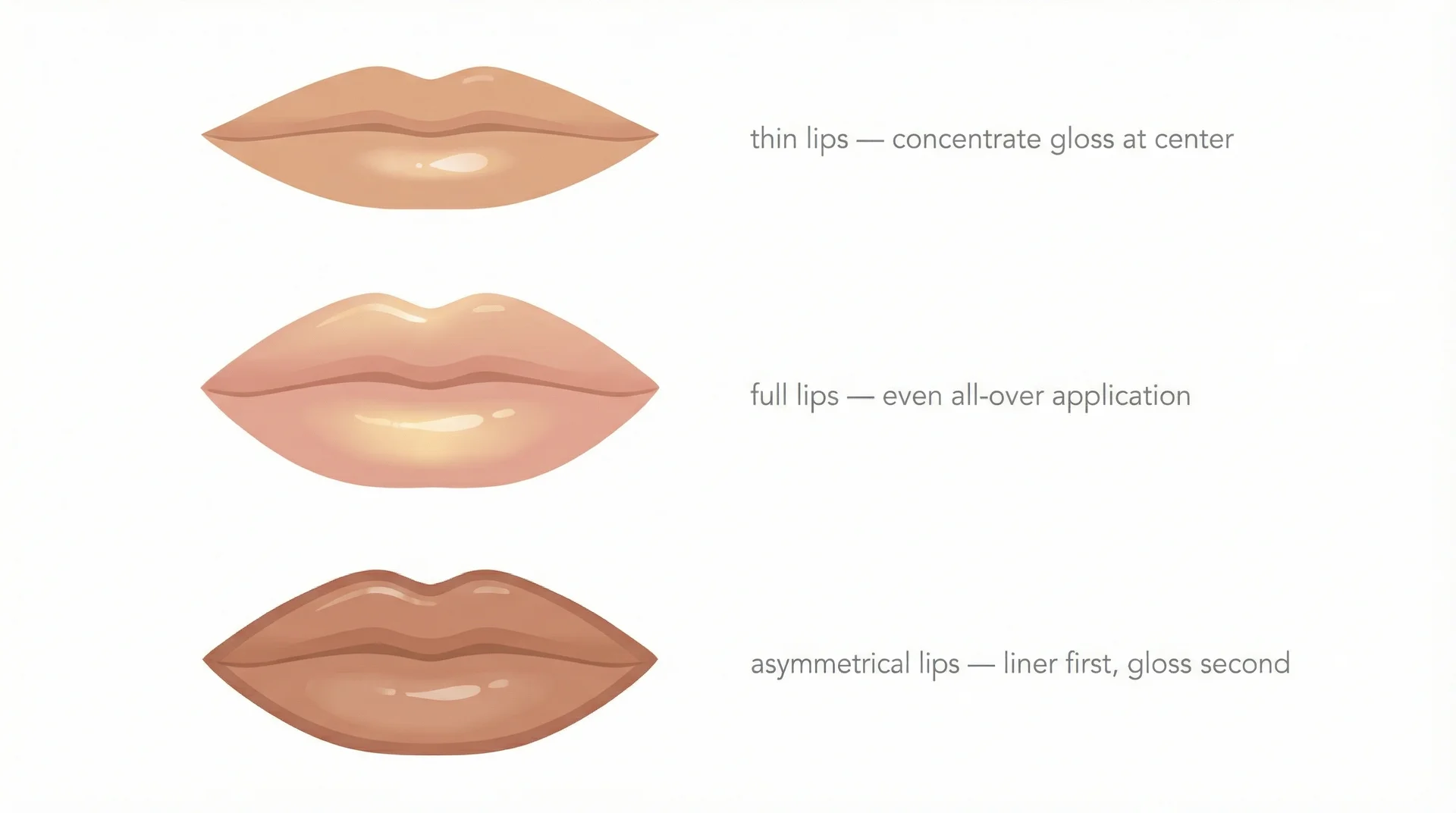
Thinner lips: Focus gloss on the center third of the lips rather than applying edge-to-edge. The reflective surface in the center creates a forward projection illusion that reads as fullness. Pair with a liner placed just slightly outside your natural edge at the bow and the center of the lower lip.
Fuller lips: Apply gloss all over without outlining. Full lips with a high-shine gloss in a nude or sheer shade look extraordinary. The shine enhances what is already there.
Asymmetrical lips: Use a liner to even out the shape first, pressing color fully into the lip before adding gloss. Let the liner do the structural work. Let the gloss do the finishing work.
How to Choose the Right Lip Gloss for Your Skin Tone and Occasion
Narrow the decision with two questions: what is my skin tone, and what is the context? Those two answers eliminate about eighty percent of the options immediately.
Shade Selection by Skin Tone
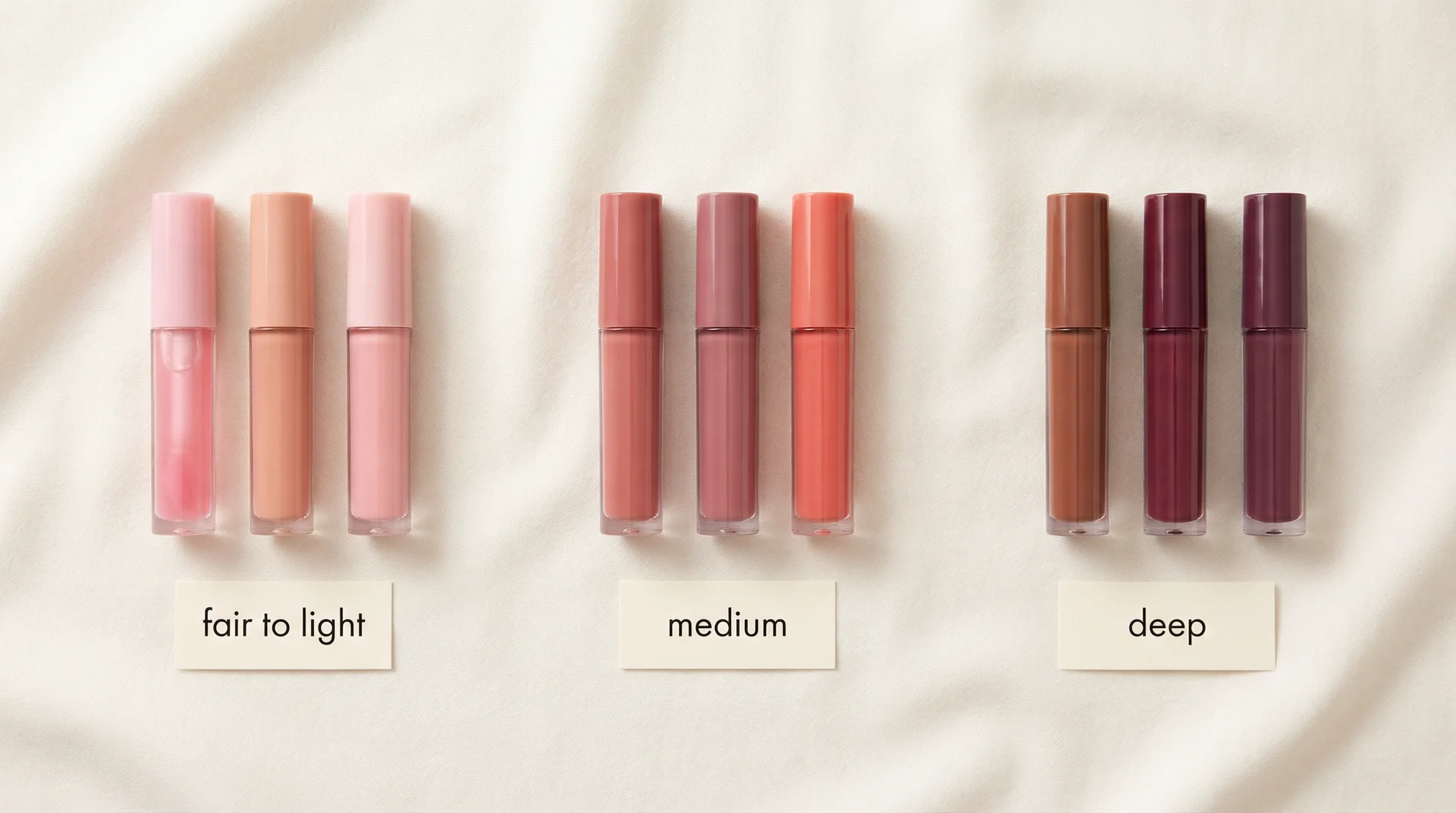
Fair and light skin tones tend to look beautiful in soft pinks, peachy nudes, and sheer baby roses. Clear gloss also works exceptionally well because it lets the natural lip color come through and lets the shine do the work.
Medium skin tones have the most flexibility in the gloss category. Warm roses, mauves, terracottas, and coral shades all work beautifully. This group also carries richer plum or berry shades particularly well in a sheer formula.
Deep and rich skin tones look stunning in warm browns, deep berries, plum, and chocolate tones. A sheer gloss in a deep shade over a matching liner creates a look that is both rich and polished. Very pale nude glosses can wash out deeper skin tones, so the trick is to look for formulas with warm, gold, or bronze undertones.
My universal starting point for anyone: a clear or barely-there sheer gloss works on every skin tone. It enhances whatever your natural lip color already is, rather than replacing it, which makes it the lowest-risk, highest-reward place to begin.
Finish Types and When to Wear Them
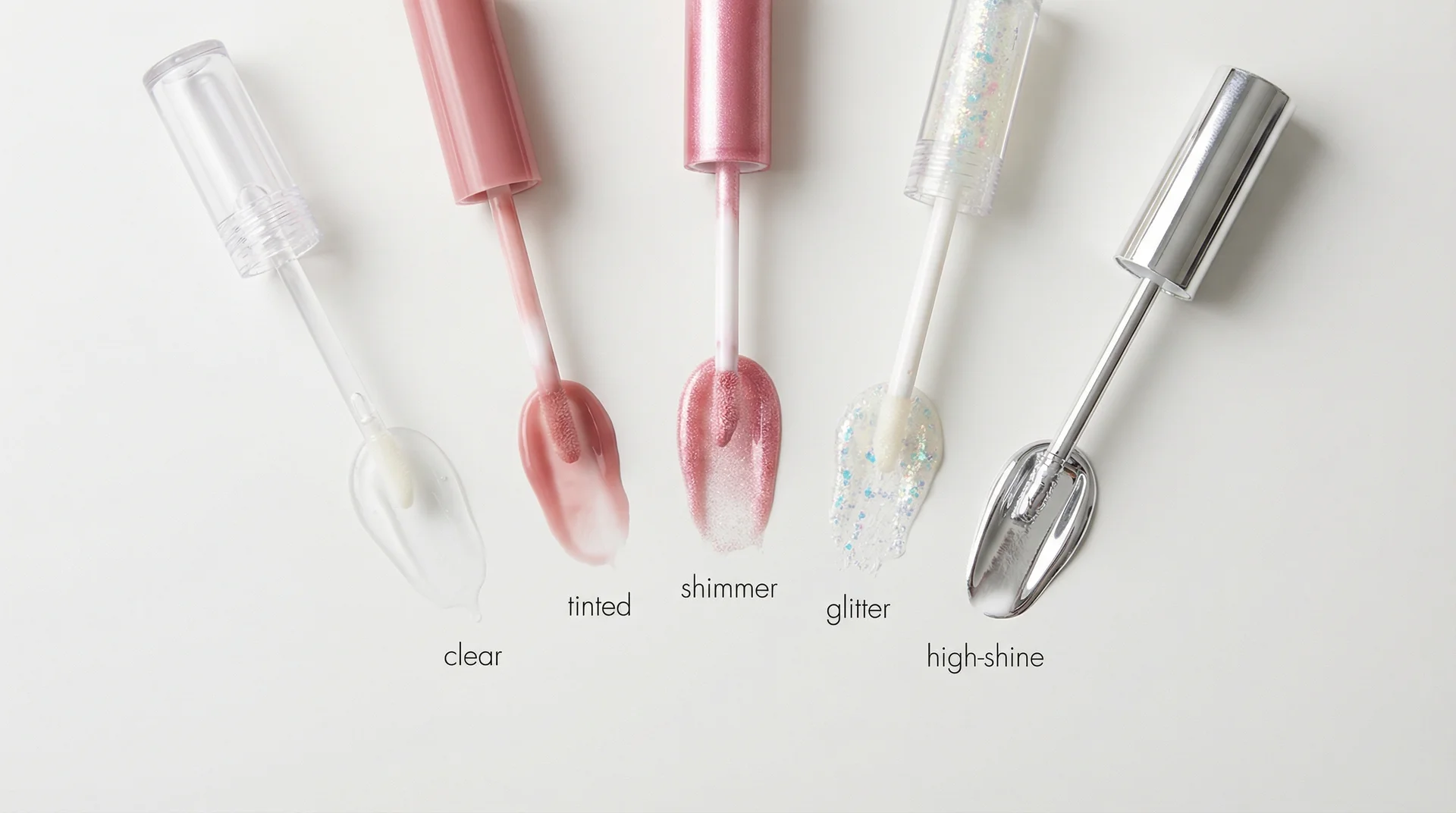
| Finish | What It Looks Like | Best For |
|---|---|---|
| Clear/Sheer | Glass-like, enhances your natural lip color | Every day, clean girl aesthetic, no-makeup makeup |
| Tinted | A wash of color with full shine | Work, casual outings, daytime events |
| Shimmer | Shine with visible light-catching particles | Evening, parties, festive occasions |
| Glitter | Bold statement sparkle | Editorial, fashion events, creative looks |
| Mirror/High-shine | Ultra-reflective lacquer finish | Statement looks, minimalist face makeup |
Occasion Guide from Someone Who Has Seen It All
Everyday wear: A clear or sheer tinted gloss over balm-prepped lips. This is the simplest and most consistently flattering combination, and the one I always recommend to anyone just starting out.
Work: A muted rose or warm nude tinted gloss, applied with liner underneath. Looks intentional without being distracting.
Bridal: I always build a bridal lip around a liner, a satin or cream lipstick base, and a gloss applied to the center for dimension. Gloss catches light in photographs beautifully, especially in natural outdoor settings. I choose non-sticky, smooth-wear formulas so the look holds through the ceremony and into the reception without constant touch-ups.
Editorial and fashion: This is where shimmer, high-shine mirror finishes, and layered lip combos come in. The goal is visual impact in photographs, so more reflective finishes tend to perform better on camera than anything sheer.
Clean Beauty and Vegan Lip Gloss: What to Know
The beauty landscape in 2026 is marked by a significant resurgence of glossy lip products, with consumers prioritizing products that offer both aesthetic appeal and lip health benefits.
A big part of that shift involves clean and vegan formulations, and the demand is real.
Vegan and organic formulations have become a key growth driver across the lip gloss market, and the quality has improved to the point where you genuinely do not have to trade performance for a cleaner formula.
If clean beauty matters to you, here is what to look for on the label:
- EWG Verified – means ingredients have been screened against the Environmental Working Group’s database for safety concerns
- Vegan – confirms no animal-derived ingredients like lanolin (from sheep’s wool) or carmine (a red pigment from insects)
- Cruelty-free – means the product and its ingredients were not tested on animals
- Fragrance-free – the single most important callout for anyone with sensitive skin or lips
Plant-based waxes like candelilla wax and carnauba wax replace beeswax in vegan formulas. Natural oils like jojoba, sea buckthorn, and cloudberry replace petroleum jelly-based bases.
The finish and wear are now largely indistinguishable from conventional formulas, which was not always true a few years ago.
Frequently Asked Questions About Lip Gloss
Is lip gloss bad for your lips?
Lip gloss is safe when used as directed. The real concern is using it as your only lip product without any underlying moisture. Gloss sits on the lip surface and does not add hydration on its own. Pair it with a balm underneath, and the concern disappears.
Can I wear lip gloss without lipstick?
Absolutely. Gloss worn alone over well-prepped lips gives a natural, effortless finish that works for a wide range of occasions. A tinted gloss worn solo is one of the fastest routes to a polished appearance.
Does lip gloss make lips look bigger?
It creates a visual illusion of fullness by reflecting light outward. The effect is strongest when gloss is applied to the center of the lips and when the surrounding face makeup is relatively neutral.
How long does lip gloss last?
Most formulas last between two and four hours with normal wear. Eating and drinking reduce that window considerably. Using a lip liner underneath extends it.
Is lip gloss the same as lip balm?
They serve different purposes. Lip balm is primarily a moisture and protection product. Lip gloss is primarily a cosmetic shine product. Some hybrid formulas blur the line between them, but traditionally, they are built for different jobs.
What is the difference between lip gloss and lip oil?
Lip oils prioritize hydration with shine as a secondary benefit, while lip glosses are designed for shine first, with hydration varying by formula. Lip oils are lighter and less coating on the lips. Glosses typically offer higher pigment payoff and a more intensely reflective surface shine.
Can anyone wear lip gloss?
Yes. Gloss works across skin tones, ages, and genders. Clear and very sheer formulas are particularly universal because they enhance rather than replace your natural lip color.
A Final Thought From Someone Who Uses This Every Day
Lip gloss is the product I reach for when I need something to work quickly and look like I actually thought about it. It does not ask much of you. You do not need a brush, a mirror, or a steady hand. You need fifteen seconds and a reasonable shade choice.
After years of working on faces before weddings, before cameras, and before occasions that mattered enormously to the people sitting in my chair, I have found that the products with the lowest barriers to use tend to make the most consistent difference. Gloss is one of them.
If you have been avoiding it because of how it felt in 2004, give a current formula a try. The experience is genuinely different. And if you are brand new to lip products entirely, starting with a clear or sheer gloss over a good balm is one of the most foolproof routes to a finished look there is.
Start simple. Layer when you are ready.