
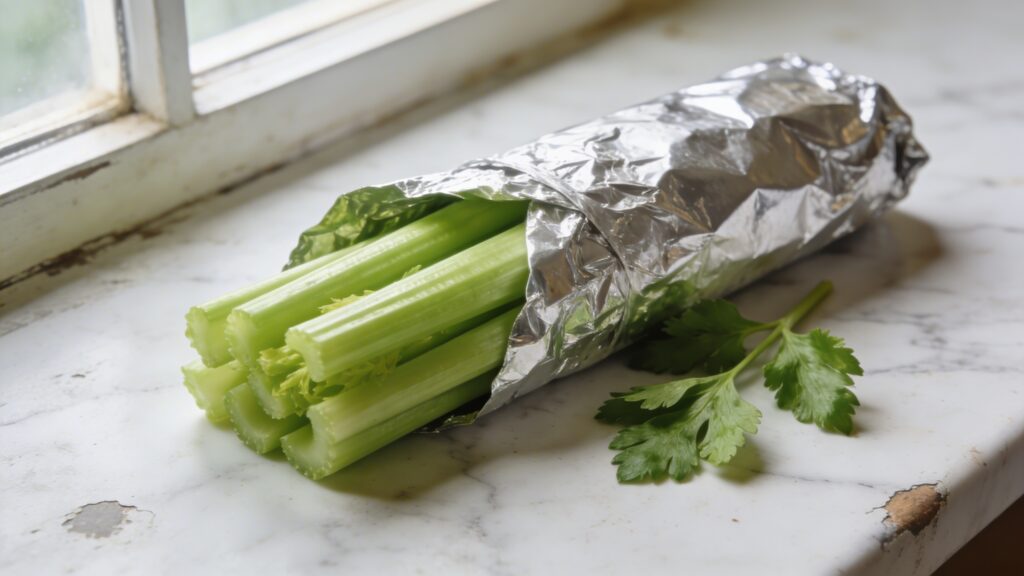
I have thrown away more celery than I care to admit. During my early years working in restaurant kitchens in Portland, produce waste felt like a daily punishment.
A bunch of celery would come in crisp and bright on Monday, and by Thursday, it looked like it had given up on life.
So I learned, quickly, how to actually keep celery fresh.
After more than twelve years in professional kitchens and now developing recipes full-time for home cooks, I want to share exactly what works, why it works, and how you can stop the cycle of limp, rubbery celery for good.
| Short answer: Wrap your celery tightly in aluminium foil, leave the ends slightly open, and store it in the coldest part of your crisper drawer. Done correctly, your celery stays crisp for two to four weeks with almost no effort. |
How to Pick Fresh Celery at the Store
Good storage starts at the shop.
Look for bunches with tightly packed, pale-to-bright-green stalks that feel rigid when you press them. Each stalk should snap cleanly if bent, not flex or bend.
Avoid any bunch with yellowing leaves, brown spots along the edges, or a hollow feeling in the stalks.
The fresher it is when you bring it home, the longer any storage method will work.
Why Your Celery Keeps Going Limp
1. Celery Is Mostly Water, and That Is the Whole Problem
Celery contains about 95% water by weight. That high water content is exactly what makes it satisfying to eat, crunchy in salads, and sturdy enough to hold dips.
The moment celery loses moisture, its cell walls lose their rigidity, and the whole stalk turns floppy.
What pulls that moisture out? Airflow, low humidity, and improper packaging all accelerate the process.
A standard refrigerator, despite feeling cold and sealed, actually creates a relatively dry environment. That dry air draws moisture out of exposed vegetables faster than most people realise.
2. The Real Culprit: Ethylene Gas and Poor Airflow
Here is something most home cooks never learn: celery is sensitive to ethylene gas.
Ethylene is a naturally occurring ripening gas that many fruits and some vegetables release as they age.
Apples, bananas, avocados, pears, and peaches produce significant amounts of ethylene. When celery sits near any of these, it deteriorates faster.
Plastic bags and wraps make this worse. Sealing celery inside plastic traps ethylene gas around the stalks, speeding up the ageing process from the inside.
Any celery stored in a sealed bag near stone fruit will go soft within two days, even in a perfectly temperature-controlled environment.
Aluminium foil, by contrast, allows gases to escape through the slightly open ends while still holding moisture close to the stalks.
This balance, first documented by Cook’s Illustrated in their produce storage testing, is why foil consistently outperforms every other common storage method.
3. Your Fridge Alone Is Not Doing Enough
Placing celery in the crisper and closing the drawer feels like enough.
In practice, the crisper drawer without any wrapping still exposes celery to circulating cold air that pulls moisture away over time.
The fridge creates the right temperature conditions, but it does not handle moisture retention on its own. Your storage method fills that gap.
The Best Ways to Store Celery
There are three methods that genuinely work, and each suits a slightly different household.
Method 1: The Aluminium Foil Wrap (Best for Most People)
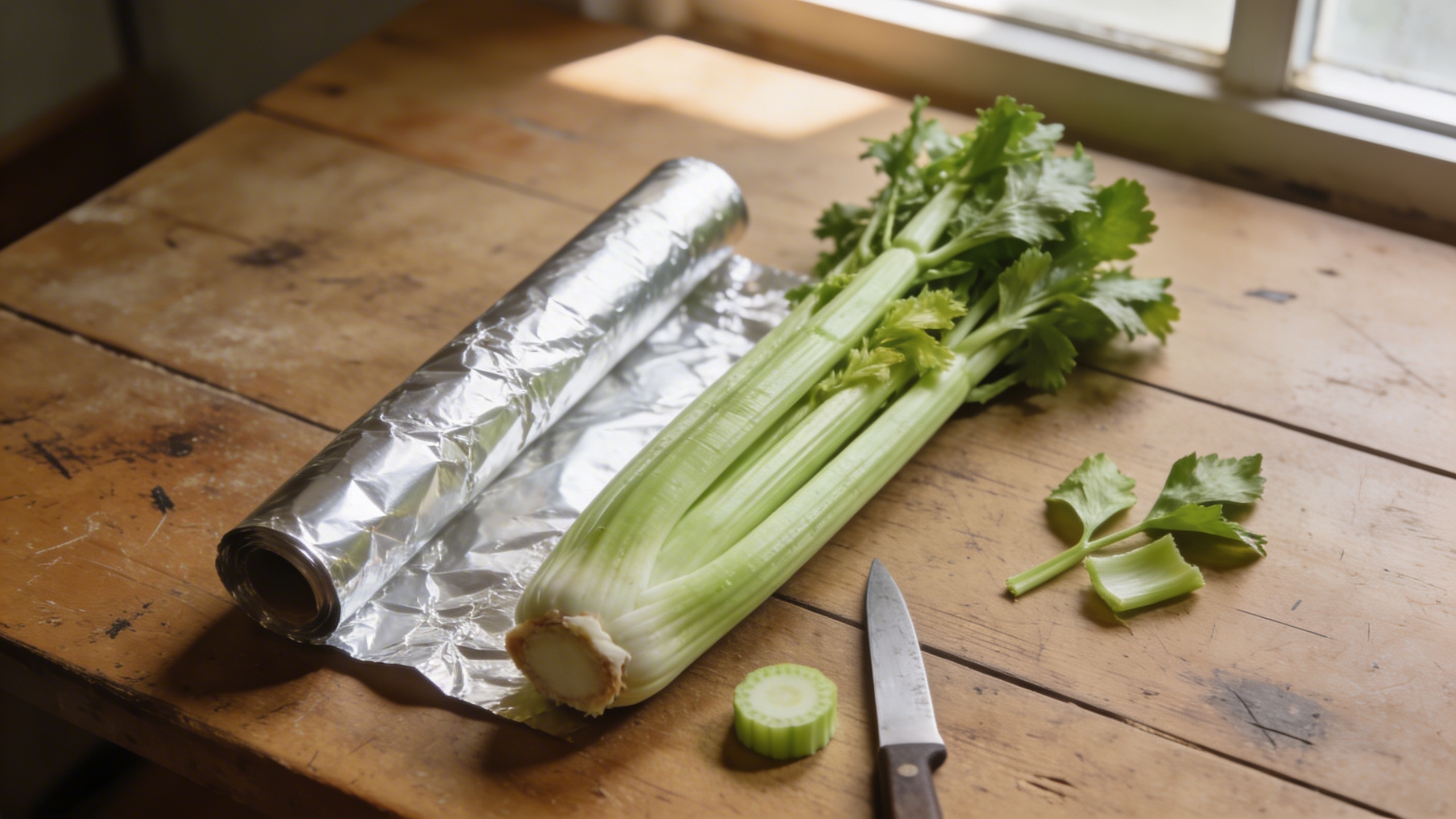
This is the method I recommend to almost everyone, and the one I use myself. It requires minimal prep, works for whole or partial bunches, and holds celery crisp for weeks.
How to prepare your celery:
- Store celery dry and unwashed. Wash it only right before use. Surface moisture left on the stalks migrates toward the base, where it creates conditions for early spoilage.
- Trim the root end by about half an inch if it looks dried out or discoloured.
- Remove leaves you do not plan to use soon. Store them separately in a small airtight container in the fridge for up to five days, then use them in soups, stocks, or as a garnish.
- Keep the stalks together as a bundle rather than separating them individually.
How to wrap it:
- Lay a sheet of aluminium foil flat on your counter, long enough to fully cover the bunch with a few inches of overlap at each end.
- Optional: Place a sheet of parchment paper between the celery and the foil if you prefer not to have foil touching food directly. Both work equally well.
- Place the celery at one edge of the foil and roll it firmly so the stalks stay pressed together.
- Fold the sides loosely at each end rather than sealing them shut completely, since that slight opening allows ethylene gas to escape while the foil body retains moisture.
- When you take some stalks out to use, rewrap the remaining bunch the same way before returning it to the fridge.
- Reuse the same foil sheet for your next bunch. Carefully unwrap, smooth it out, and rewrap. One sheet typically holds up for two to three bunches before it shreds.
What to expect: Wrapped celery stored in the crisper drawer stays genuinely crisp for two to four weeks, depending on how fresh it was when you bought it.
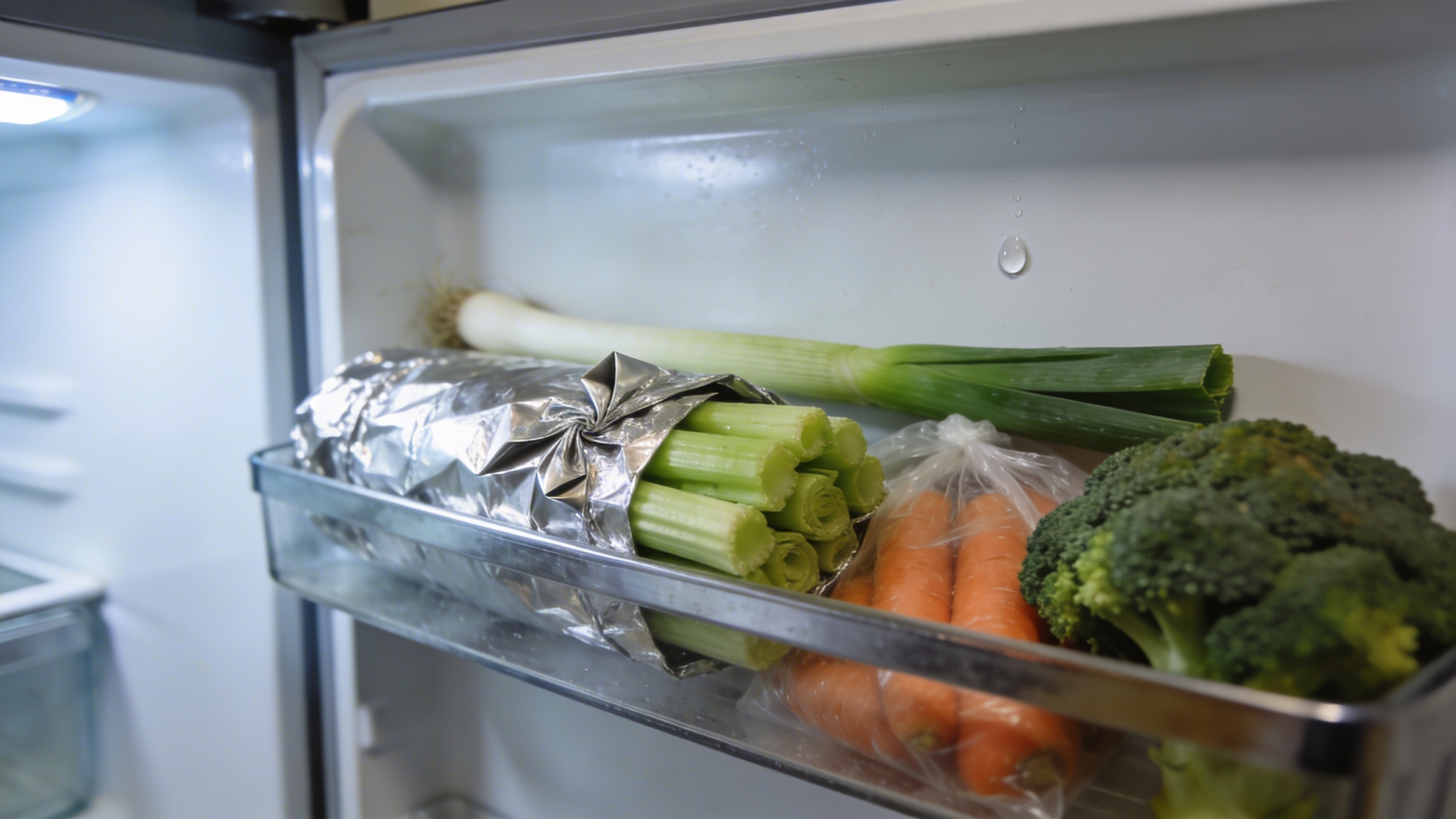
After cutting a few stalks off, always rewrap them tightly again before putting them back.
The exposed cut ends dry out fastest, and keeping them pressed together inside the foil slows that process considerably.
Method 2: Storing Celery in Water (Best for Pre-Cut Stalks or High-Frequency Use)
If your household eats a lot of celery throughout the week, this method keeps pre-cut stalks ready to grab at any moment.
It works the same way you would keep fresh flowers alive, by giving the stalks a continuous water source.
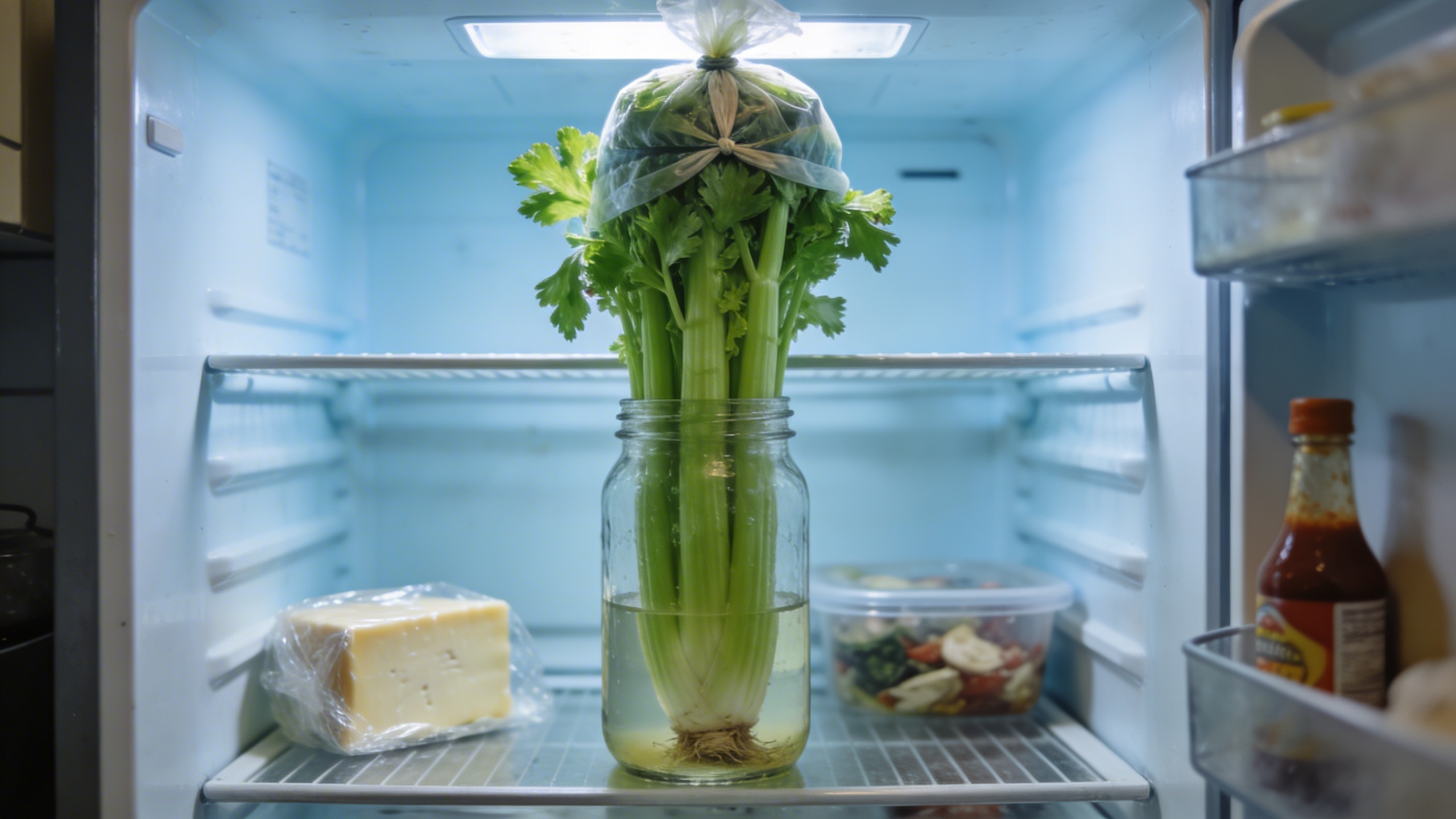
The upright jar method:
- Trim about half an inch off the base of the celery bunch so the cut ends are fresh.
- Stand the whole bunch upright in a tall glass or jar filled with a few inches of cold water.
- Cover the leafy tops loosely with a produce bag or a clean, damp cloth.
- Keep the jar in the coldest part of your fridge and change the water every two to three days.
The full submersion method:
- Cut the celery into sticks or pieces at whatever size your household uses most often.
- Place the pieces into a sealed airtight container.
- Fill the container with cold water until all the pieces are fully submerged.
- Seal and refrigerate, changing the water every few days.
What to expect: Both water methods keep celery crisp for roughly one to two weeks. Whole stalks generally hold up better in water than cut pieces, since the cut surfaces can become slightly waterlogged over time.
Chef’s note: This method works best for families with kids who snack on celery sticks regularly. The foil method is better for longer storage, but the water method wins on convenience for daily use.
Method 3: The Damp Paper Towel Method (Best for Smaller Bunches or Half-Used Celery)
This method works well when you have a partial bunch left over after cooking or a smaller amount of celery that does not justify pulling out a large piece of foil.
- Dampen a paper towel until it is moist throughout but not dripping, since too much moisture encourages bacterial growth at the base.
- Wrap the celery loosely inside the damp paper towel so the stalks stay in contact with the moisture.
- Place the wrapped celery inside a partially open zip bag or reusable produce bag, leaving the top slightly open for airflow.
- Store in the crisper drawer.
What to expect: This method keeps celery fresh for roughly one to one and a half weeks. Check the paper towel every few days and re-dampen it if it has dried out.
How to Set Up Your Fridge for Better Celery Storage
The Crisper Drawer Is Not All the Same
Most refrigerators have two crisper drawers, one set to high humidity and one set to low humidity. Celery belongs in the high-humidity drawer.
The high-humidity setting reduces airflow inside the drawer, which slows moisture loss from vegetables.
If you have been storing celery in the low-humidity side, switching it over makes a noticeable difference even before you change your wrapping method.
If you only have one crisper drawer with no humidity control, keep celery toward the back of the drawer where temperatures stay most consistent.
Keep Celery Away from These Neighbours
Ethylene-producing items sitting near celery accelerate how quickly it deteriorates. Keep celery stored away from:
- Apples (one of the highest ethylene producers)
- Bananas
- Avocados that are ripening or already ripe
- Pears
- Peaches and nectarines
- Tomatoes stored in the fridge
Keeping celery on the opposite side of the crisper from apples, for example, genuinely extends its life.
The Right Temperature Zone for Celery
Celery stores best between 32°F and 40°F (0°C to 4°C).
The coldest zone in most refrigerators sits toward the back and lower sections.
Storing celery at the front of the fridge or in the door exposes it to more temperature fluctuation every time you open the fridge, which gradually softens the texture.
How Long Does Celery Actually Last?
Shelf life depends above everything else on how fresh the celery was when you bought it and how consistently you store it.
| Storage Method | Expected Freshness |
|---|---|
| Loose in the crisper with no wrapping | 2 to 3 days |
| Damp paper towel in a partly open bag | 1 to 1.5 weeks |
| Upright in water (whole stalks) | 1 to 2 weeks |
| Cut pieces fully submerged in water | 1 to 1.5 weeks |
| Aluminium foil wrap in the crisper | 2 to 4 weeks |
| Blanched and frozen | Up to 12 months |
How to judge freshness when you are using stored celery?
Fresh celery snaps cleanly when you bend a stalk. It smells clean and faintly vegetal.
The colour stays bright green without yellowing on the leaves or browning along the stalk edges.
Any celery that passes these checks is worth eating, regardless of how many days have passed.
My Celery is Already Limp. Can I Save It?
Yes, in most cases you can. Limp celery has lost moisture, but if it has not gone slimy and has no visible mould growth, it is still safe and usually recoverable.
Reviving the Celery Using Ice Baths
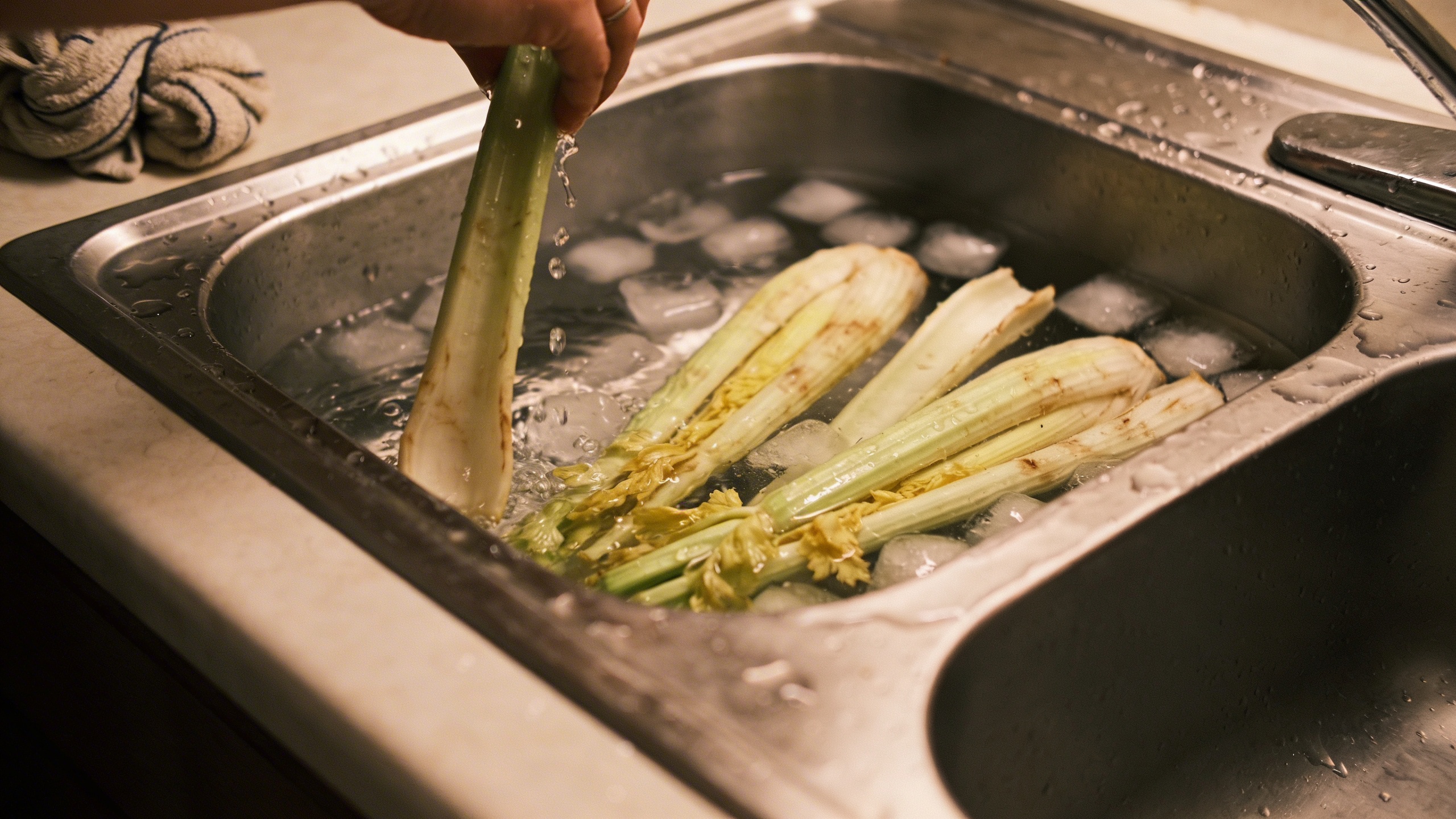
Restaurants use ice baths constantly to revive slightly wilted vegetables, and it works at home just as well.
- Fill a large bowl or your kitchen sink with cold water and a generous amount of ice.
- Separate the celery into individual stalks if they are still in a bunch.
- Submerge the stalks completely in the ice water.
- Leave them for 15 to 30 minutes.
- Remove the stalks and pat them dry before eating or cooking with them.
The cold water re-enters the celery’s cell walls through osmosis, restoring some of the rigidity you thought was gone for good. It does not bring fully dehydrated or very old celery back to perfect crunch, but for celery that has gone soft over a few days, it works well.
How to Tell When It Has Gone Too Far
- Sliminess along the surface of the stalks
- Visible mould anywhere on the bunch, including at the base
- A sour or fermented smell rather than the clean, fresh scent of good celery
- Complete hollowness in the stalks, where the inside feels empty rather than solid
If any of these show up, discard the celery. There is no recovery method for truly spoiled produce.
Smart Ways to Use Celery That Is Past Its Peak But Still Safe
Limp celery that passes the checks above still has plenty of use left for various celery recipes:
- Soups and stews: Softened celery becomes tender and flavourful when cooked.
- Stocks and broths: Slightly older celery concentrates its flavour more intensely during a long simmer.
- Stir-fries and sautés: Once celery hits a hot pan, texture becomes secondary to flavour.
- Sauces and braises: Any recipe where celery cooks down welcomes older stalks.
Chef hack: keep a dedicated freezer container for vegetable scraps. Slightly limp celery goes straight in, stalks, leaves, and all. When the container fills up, simmer it into a stock that outperforms anything from a carton.
Can You Freeze Celery? What Actually Happens When You Do!
Freezing celery is entirely possible and solves the problem of having more than you can use before it goes soft. Freezing changes the texture permanently.
Frozen and thawed celery will never snap the way fresh celery does. For cooking applications, this is completely fine and often ideal.
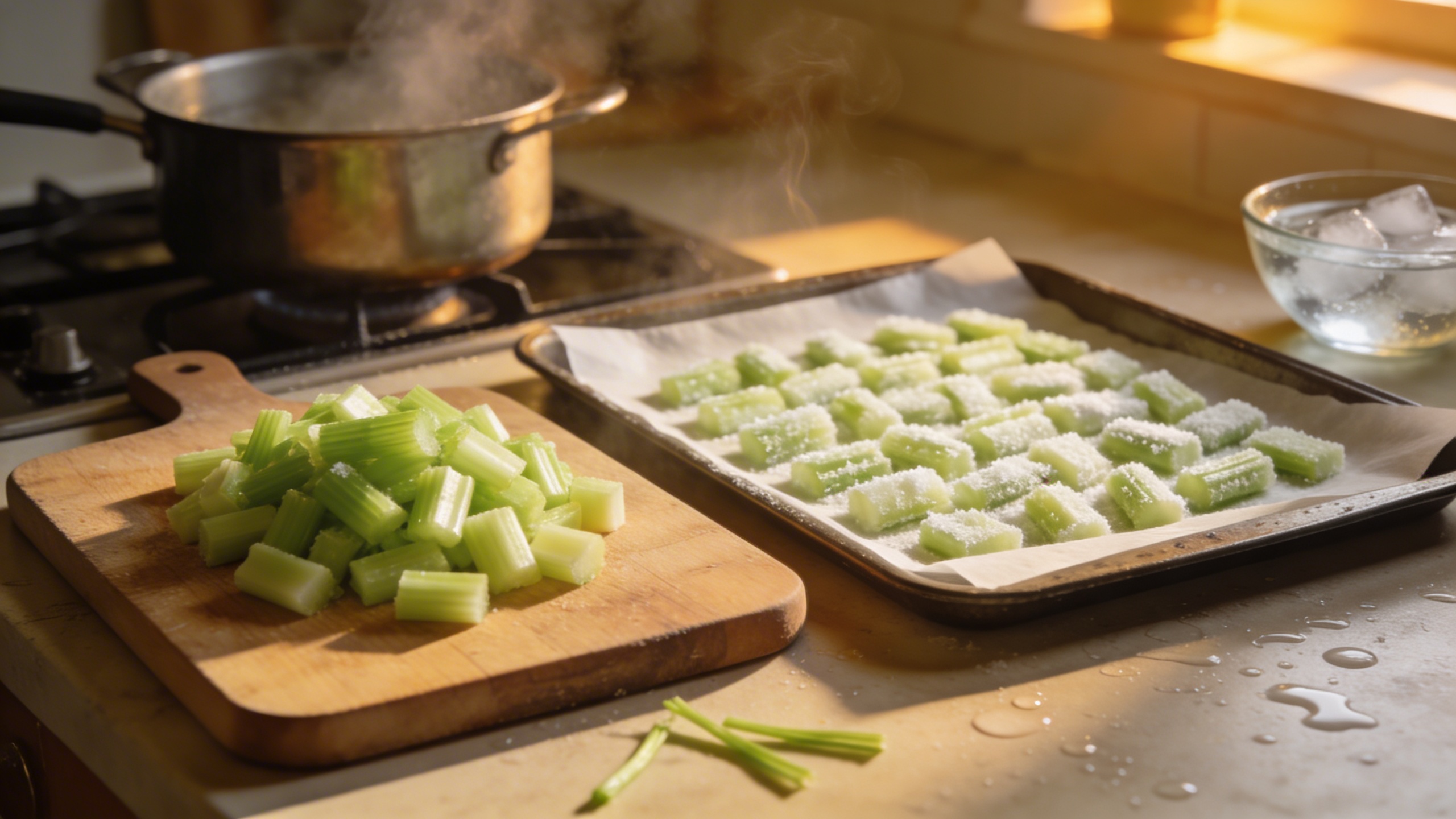
How to Blanch and Freeze Celery the Right Way
Blanching before freezing deactivates the enzymes that continue to degrade colour, texture, and nutrients even in frozen conditions.
- Wash the celery and cut into half-inch to one-inch pieces.
- Bring a large pot of water to a rolling boil.
- Drop the celery pieces in and blanch for exactly two minutes.
- Transfer immediately into a bowl of ice water to stop the cooking.
- Leave in the ice bath for two minutes, matching the blanching time.
- Drain well and pat as dry as possible.
- Spread the dry pieces in a single layer on a baking sheet and freeze for one to two hours until solid.
- Transfer to a freezer-safe bag, remove as much air as possible, label with the date, and store for up to twelve months.
Why the individual freeze step matters: Skipping it means the pieces freeze into a solid mass, and you end up hacking apart a block of celery every time you need a handful. Freezing them separately first lets you pour out exactly what you need.
What Frozen Celery Is Best For
Works well in soups, stews, braised dishes, homemade broths, tomato-based sauces, and stuffing. Not suitable for raw snacking, salads, or any dish where celery is lightly cooked and meant to stay firm.
You rarely need to thaw frozen celery before using it in a cooked dish. Add it directly to the pot or pan from frozen. Thawing before cooking tends to make it even softer and releases excess water into the dish.
Regrowing Celery from the Root
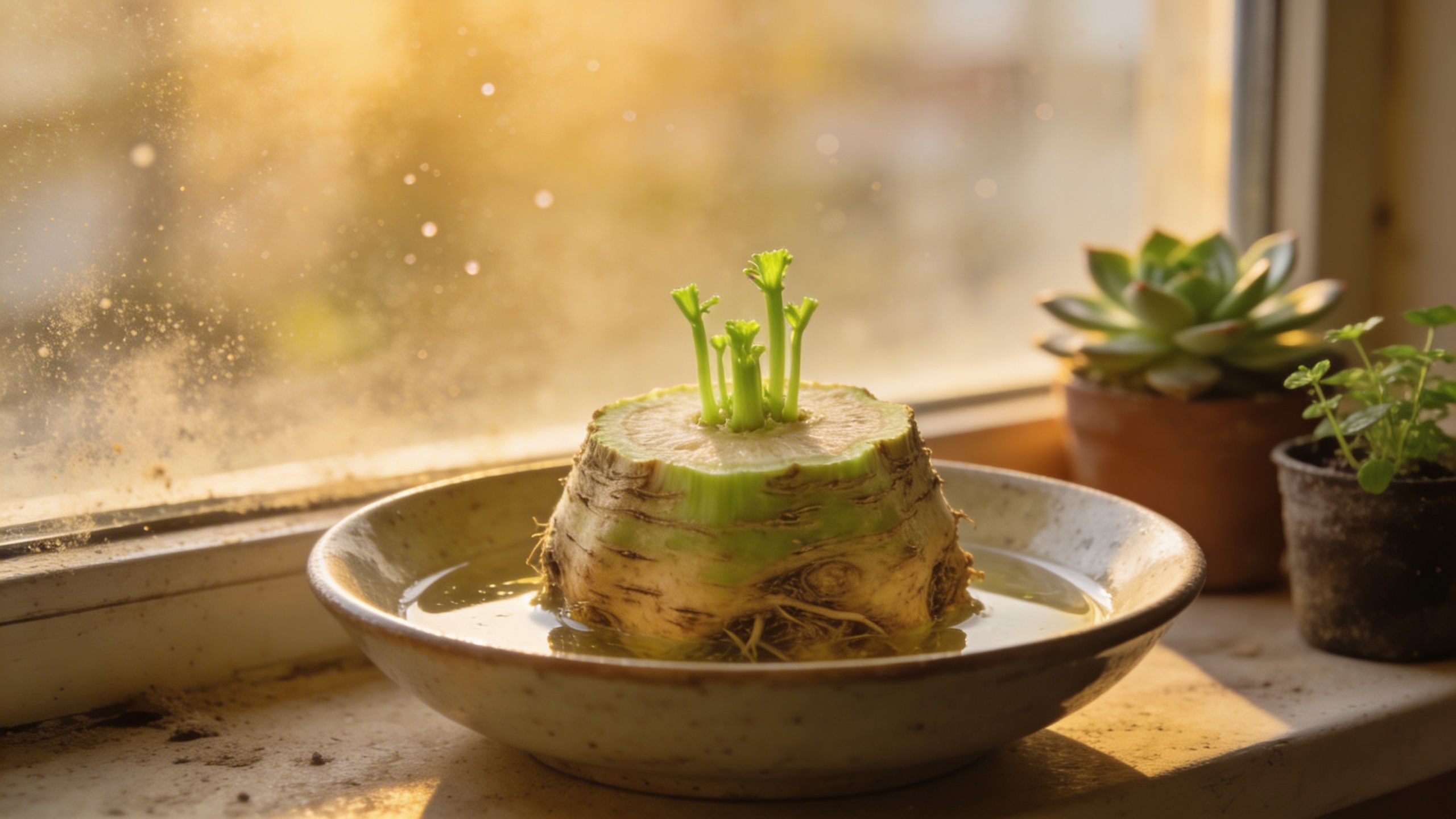
When you finish a bunch of celery, cut the stalks away about an inch above the base and keep that dense root section. It is a viable starting point for regrowth.
- Place the root base cut-side up in a shallow dish.
- Add enough water to cover the base by about half an inch without fully submerging the cut surface.
- Set it in indirect natural light, such as a windowsill.
- Change the water every one to two days.
- Within five to seven days, small green shoots will emerge from the centre.
- Once shoots reach two to three inches tall and roots appear at the base, transplant into a pot with standard potting soil.
- Water regularly and keep it in a bright location.
Regrown celery tends to grow thinner stalks than grocery store celery, but the flavour is often more intense and herby.
The leaves that grow first are especially fragrant and work well in salads, salsas, and as a garnish. Think of it as a bonus crop, not a full replacement.
Quick Storage Mistakes That Are Quietly Ruining Your Celery
- Storing celery in a sealed plastic bag: Plastic traps ethylene gas directly around the stalks and creates conditions that accelerate spoilage from the inside.
- Leaving celery at room temperature for more than a couple of hours: Celery loses moisture fast at room temperature. Getting it into the fridge within an hour or two of buying it makes a real difference.
- Washing celery before storing: Always wash celery just before you use it, not before you store it. Surface moisture migrates to the base and encourages bacterial growth.
- Cutting celery into pieces before storing: Cut surfaces dry out and oxidise faster. Store celery in whole or longer sections and cut only when needed, unless you are using the water submersion method.
- Keeping celery near apples or other ethylene-heavy produce: Proximity to ethylene producers shortens celery’s fridge life significantly.
Frequently Asked Questions
Can I store celery at room temperature?
Celery survives at room temperature for one to two days if conditions are cool. For anything beyond immediate use, the fridge gives dramatically better results.
Should I wash celery before or after storing it?
Always after. Wash it right before you plan to use it. Pre-washing leaves surface moisture that creates conditions at the base of the bunch that encourage early spoilage.
Does storing celery in water dilute its nutrients?
Some water-soluble nutrients, like vitamin C and certain B vitamins, do leach into the water slightly during prolonged submersion. The amount is nutritionally insignificant for typical storage durations of one to two weeks. If this concerns you, the foil method keeps celery out of water entirely.
Can I store celery alongside other vegetables in the crisper?
Celery shares the crisper fine with ethylene-insensitive vegetables like carrots, broccoli, cauliflower, and leafy greens. Keep it away from high ethylene producers.
Why does my celery sometimes smell like chemicals or cleaning products?
This usually comes from cross-contamination in the fridge, particularly from cleaning sprays used near open produce. Celery absorbs odours easily because of its high water content and porous structure. Store celery wrapped or covered so it does not absorb ambient fridge odours from strong-smelling foods.
Can I reuse the aluminium foil?
Yes. Carefully unwrap, smooth it out, and use the same sheet for your next bunch. One sheet typically holds up for two to three bunches before it shreds enough to need replacing.
The Bottom Line
Wrap celery in foil, keep it in the high-humidity crisper, and store it away from ethylene producers. That combination alone keeps celery crisp for weeks.
For heavy weekly use, the water method gives you ready-to-grab stalks. For surplus, blanch and freeze so nothing goes to waste.