
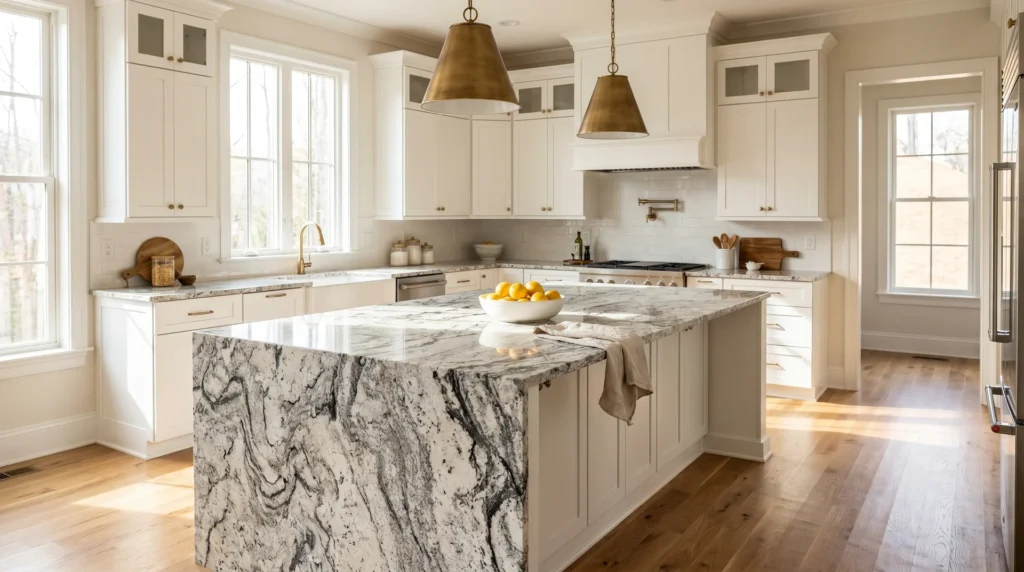
| The short answer: white and off-white granite dominate the US market. Alaska White, Colonial White, and Bianco Antico consistently lead the field. Gray and black follow closely. Gold-toned and earthy options have gained real ground in recent years. And a handful of statement colors, particularly Blue Pearl and Titanium, hold a loyal following among homeowners who want genuine personality in their space. |
That’s the list upfront. But if you’re still reading, it’s because knowing what’s popular doesn’t make the decision easier. You’ve probably already scrolled through hundreds of slabs online. Maybe you’ve stood in a stone yard for two hours, feeling more confused than when you arrived.
The question running through your head isn’t really “what’s popular?” It’s: Will this look right in my kitchen? Will I regret this in ten years? What actually goes with my cabinets?
Those are the questions worth answering. I’ve spent over a decade advising homeowners on interior decisions, and the most common mistake I see in countertop selection has nothing to do with color preference.
It’s choosing a slab without a clear framework for the three variables that actually drive the decision. Get those anchored first, and the color choice gets considerably less overwhelming.
Before You Browse Granite Colors, Know These Three Variables
Going into a showroom without these three anchors means spending two hours admiring everything and committing to nothing.
Your Cabinet Color Family
This is the single most influential variable in selecting a granite color for your kitchen. Your countertop lives in direct visual relationship with your cabinetry, and the undertones in your granite need to either harmonize with or intentionally contrast your cabinet color.
Identify your family before anything else: white, off-white, wood-toned, dark, or painted in a defined color. Everything else follows from there.
Your Light Source and Direction
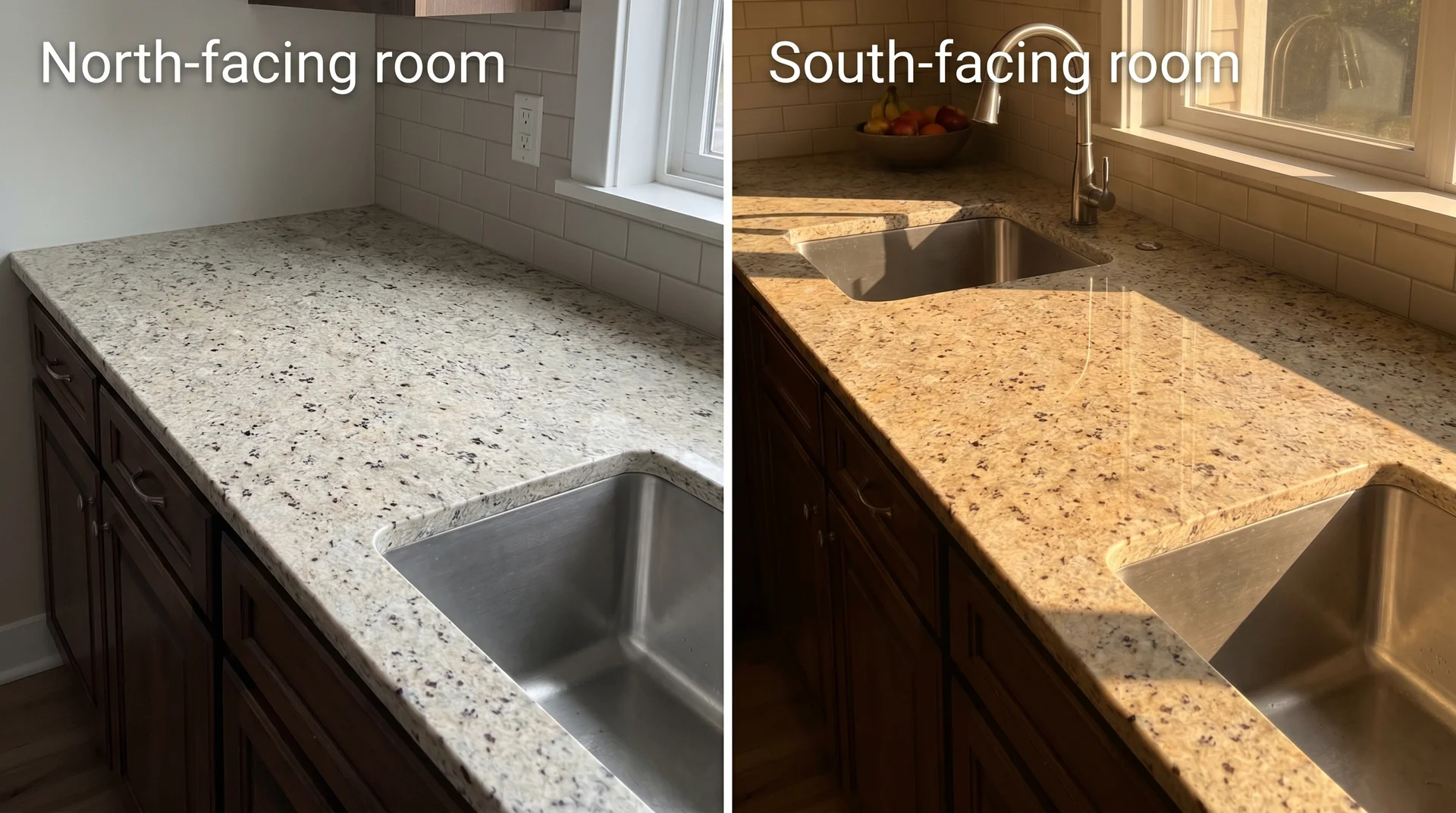
“You can fall in love with a granite color in a showroom and regret it at home, and the gap between those two experiences is almost always about light.”
Granite reads differently under different lighting conditions. A slab that looks warm and creamy in a south-facing kitchen can look flat and cool in a north-facing one under identical conditions.
Natural daylight direction matters, and so does your bulb type. Incandescent and warm-LED lighting pulls out gold and brown undertones. Cooler daylight-spectrum bulbs emphasize gray and blue tones.
This is the most practical reason to take a sample home before you commit: the showroom has its own lighting, and your kitchen has entirely different ones. Testing your sample at home, under your actual light at different times of day, is the one step that prevents most countertop regret.
Kitchen Scale and Pattern Movement
Larger kitchens handle bold pattern movement well. Smaller kitchens tend to read better with lower-variation stones, because busy veining across a limited surface can feel visually crowded.
This doesn’t rule out interesting granite for small kitchens. It means the movement in the stone should fit the scale of the space you’re working with.
The Most Popular Granite Colors for Kitchens and Bathrooms
1. Alaska White
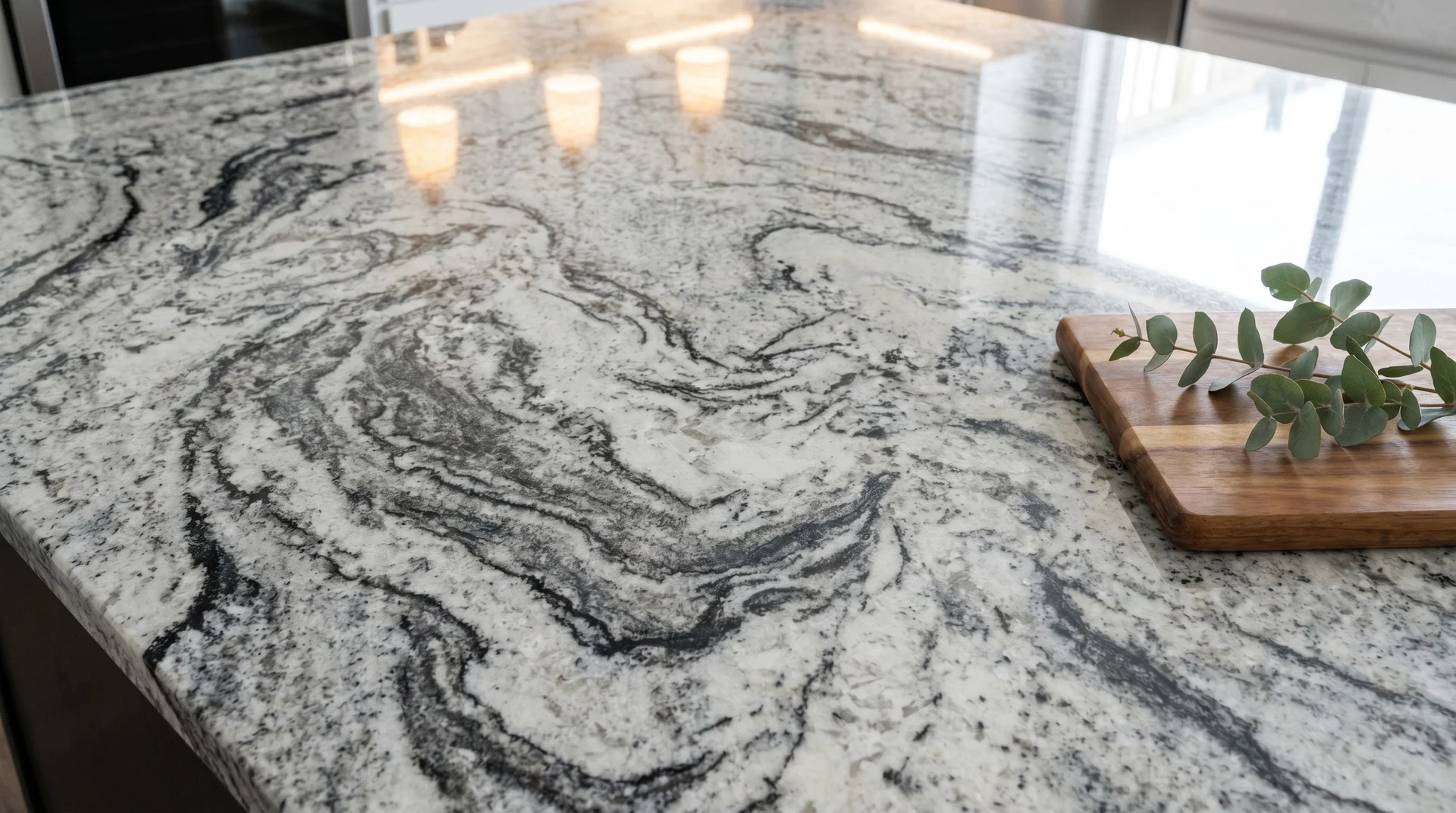
Color profile: Icy white and pale silver base with large swirling patches of gray and black onyx. The gray and black components can account for 40 to 50 percent of the visual mass, making this a high-contrast stone despite its white classification. Movement level: High.
Alaska White brings real energy to a kitchen. The large swirling pattern reads as modern and eclectic, and it photographs with exceptional presence, which explains its dominance on design platforms.
What makes it forgiving is the range: white, black, navy, gray, warm brown, and sage green cabinets all work here. The cool, icy undertone does most of the compatibility work.
One thing worth knowing before you choose this one: because the pattern varies significantly from slab to slab, always select your specific piece in person. Stock photography of Alaska White can look very different from what arrives at your home.
Best for: White, dark, navy, and warm brown cabinets. Modern and transitional design styles.
Approx. installed price: $60–$100/sq ft.
2. Colonial White
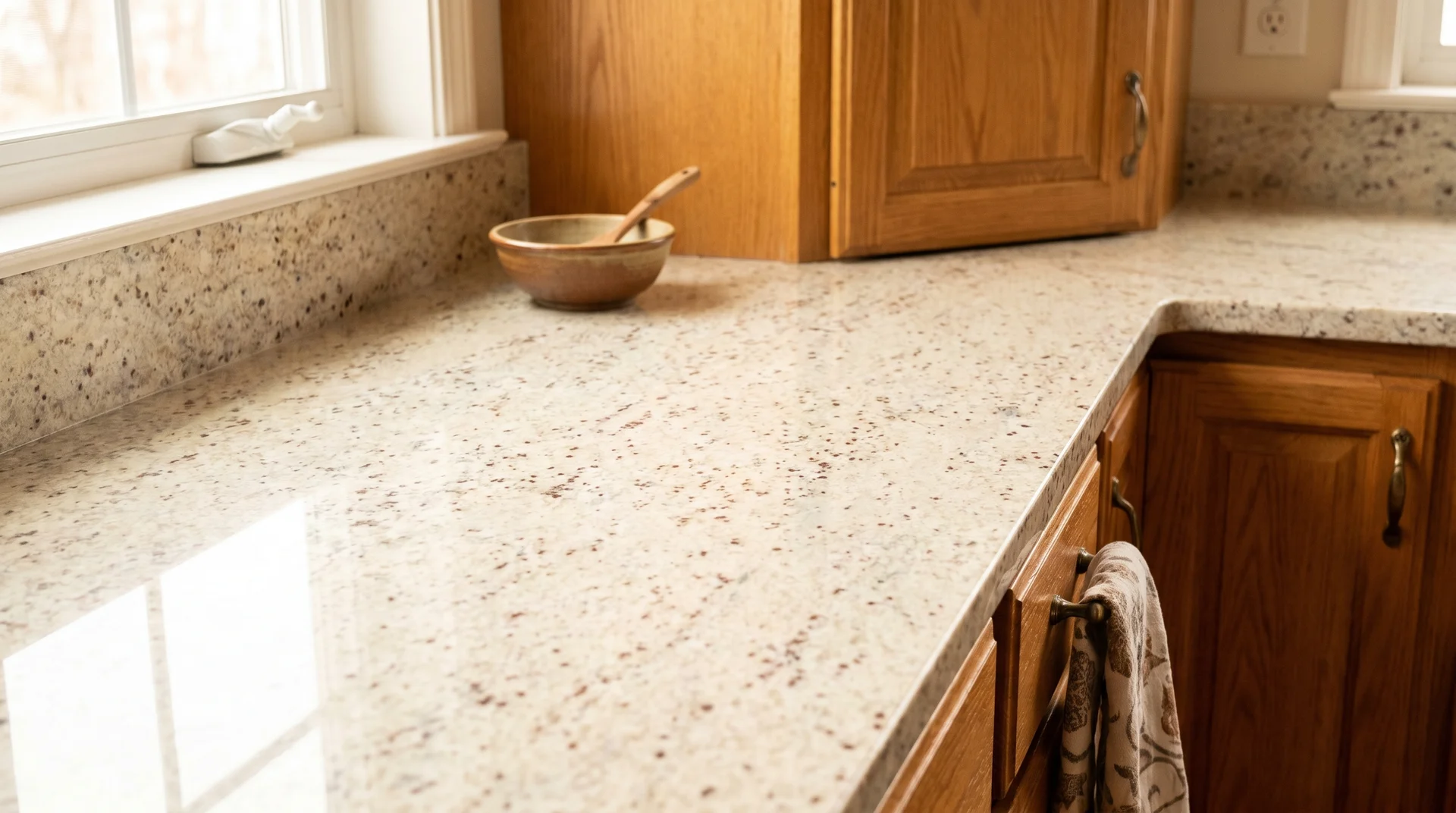
Color profile: Creamy vanilla base with brown and rose-colored flakes, smoky gray patches, and small dark flecks scattered throughout. Fine granules give the surface a soft, even-textured quality. Movement level: Low to medium.
If Alaska White makes a statement, Colonial White makes a room feel like home. The vanilla undertone adds warmth without heaviness, and the subtle variation keeps it from reading flat.
It works well in kitchens that lean traditional or transitional, and it’s a particularly good choice when your cabinetry carries any golden or honey toning. Where Alaska White pulls cool, Colonial White pulls warm.
That distinction matters more than most buyers initially realize. It also performs in darker kitchens better than many expect: the creamy base brightens a space without the starkness of a bright white stone.
Best for: Light wood, cream, and warm white cabinets. Traditional, farmhouse, and country design styles.
Approx. installed price: $50–$85/sq ft.
3. Bianco Antico
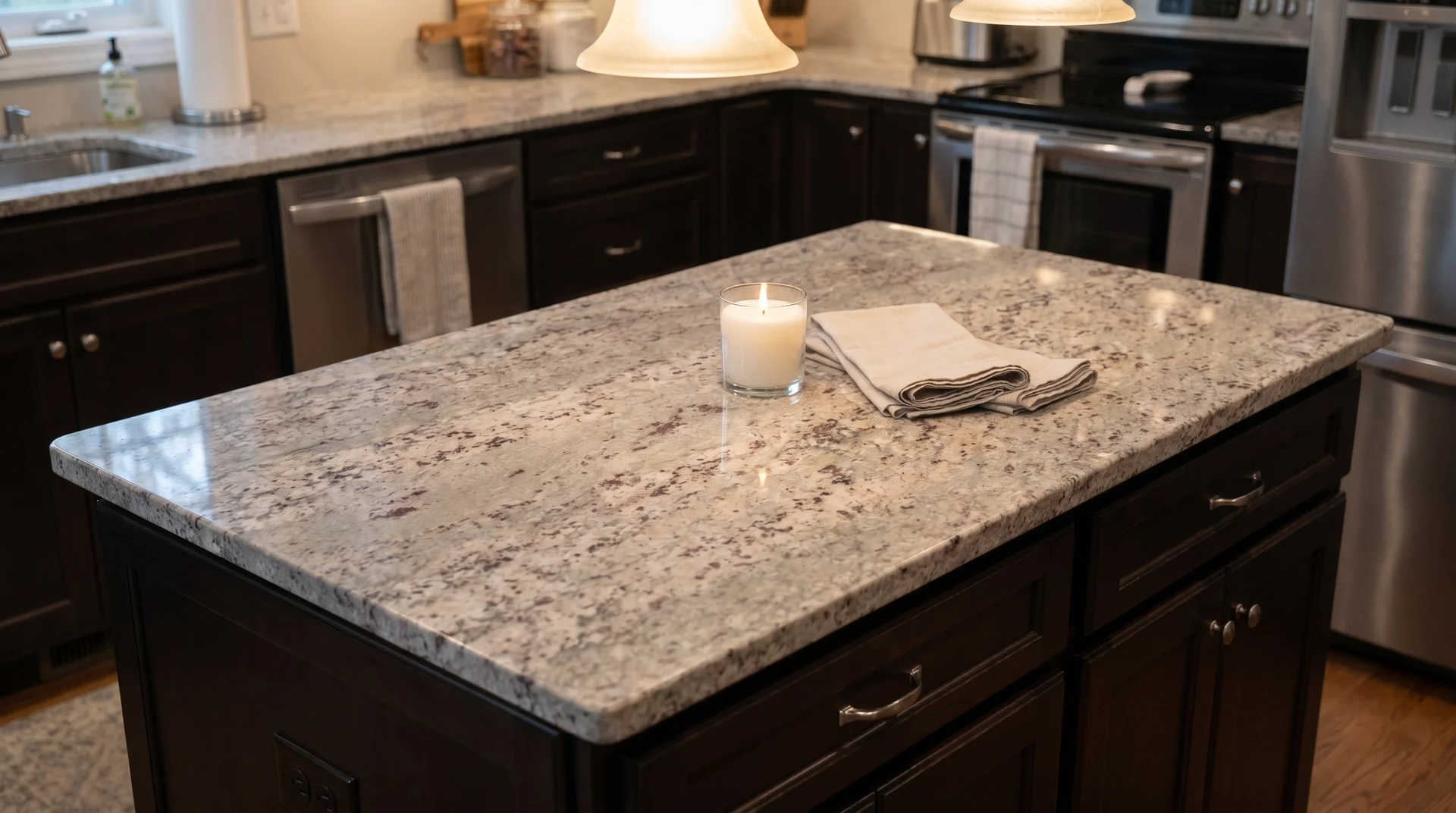
Color profile: Pale gray base with soft taupe flecks, subtle pink and burgundy undertones, and occasional warm cream movement across the surface. Movement level: Low to medium.
Bianco Antico sits in a category of its own because it adds warmth through undertone rather than overt color. The pink and taupe flecks are subtle enough that most people don’t consciously register them, but they make the stone feel alive and layered rather than flat.
It works with both light and dark cabinetry, which is relatively rare among popular granite options, and it’s one of the most commonly compared to marble.
If you want the refined character of marble without the maintenance demands, Bianco Antico deserves a serious look. It’s the one I reach for when a client wants something that feels elevated but not cold.
Best for: Dark espresso, white, and two-toned cabinets. Transitional and refined contemporary styles.
Approx. installed price: $65–$100/sq ft.
4. White Ice
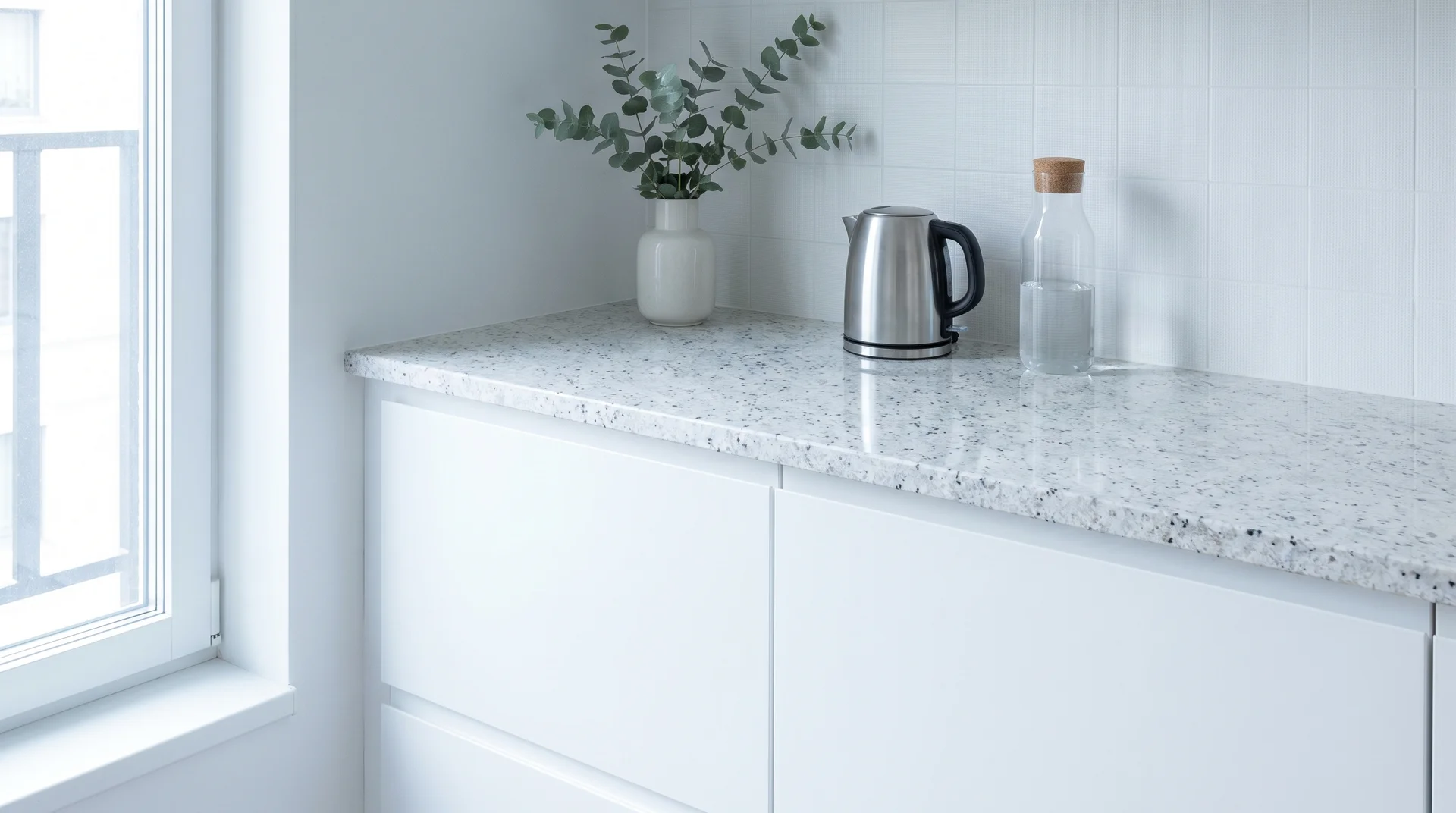
Color profile: Bright white base with soft gray tones and delicate specks of black throughout. Cleaner and crisper in character than Alaska White, with less dramatic pattern movement. Movement level: Low to medium.
White Ice delivers the brightness of a light stone with enough speckling to give it genuine character. It’s particularly effective in smaller kitchens because the light base reflects well and the speckling keeps it from reading sterile or institutional.
It pairs well with white and navy cabinetry, where the contrast between a clean stone and a defined cabinet color creates visual definition without competition.
It’s also one of the most consistently available and affordable white granite options in the US market, which makes it practical for mid-range renovations where the budget needs to stretch.
Best for: White, navy, and soft gray cabinets. Contemporary and minimalist design styles.
Approx. installed price: $45–$80/sq ft.
5. Steel Gray
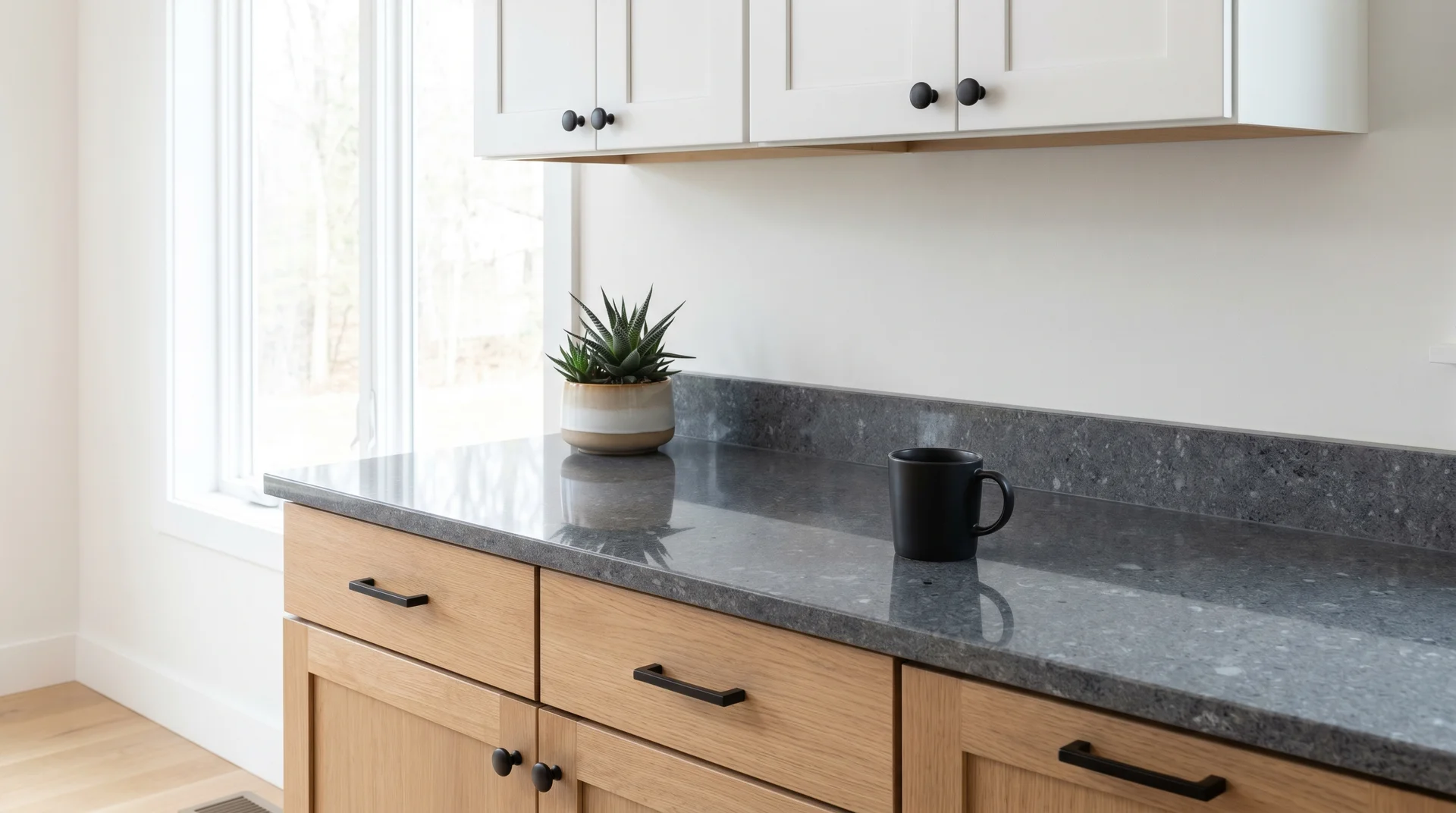
Color profile: Medium to dark gray base with a fine, consistent pattern of lighter gray minerals throughout. Low variation, with a uniform surface quality sourced primarily from India. Movement level: Low.
Steel Gray is for the homeowner who wants sophistication without drama. The consistency of the pattern is actually its strongest asset: it functions as a clean, neutral backdrop that lets cabinetry, hardware, and lighting carry the design without competition.
It hides wear and fingerprints better than lighter stones and holds up well in high-traffic kitchens. Paired with stainless steel appliances, it’s exceptionally cohesive. With brass or matte black hardware, it takes on a slightly warmer, more intentional character.
Consistently underestimated in showrooms, Steel Gray reads as clean rather than boring once it’s installed at full scale.
Best for: White, charcoal, and natural wood cabinets. Modern and Scandinavian-influenced design styles.
Approx. installed price: $55–$90/sq ft.
6. Black Galaxy
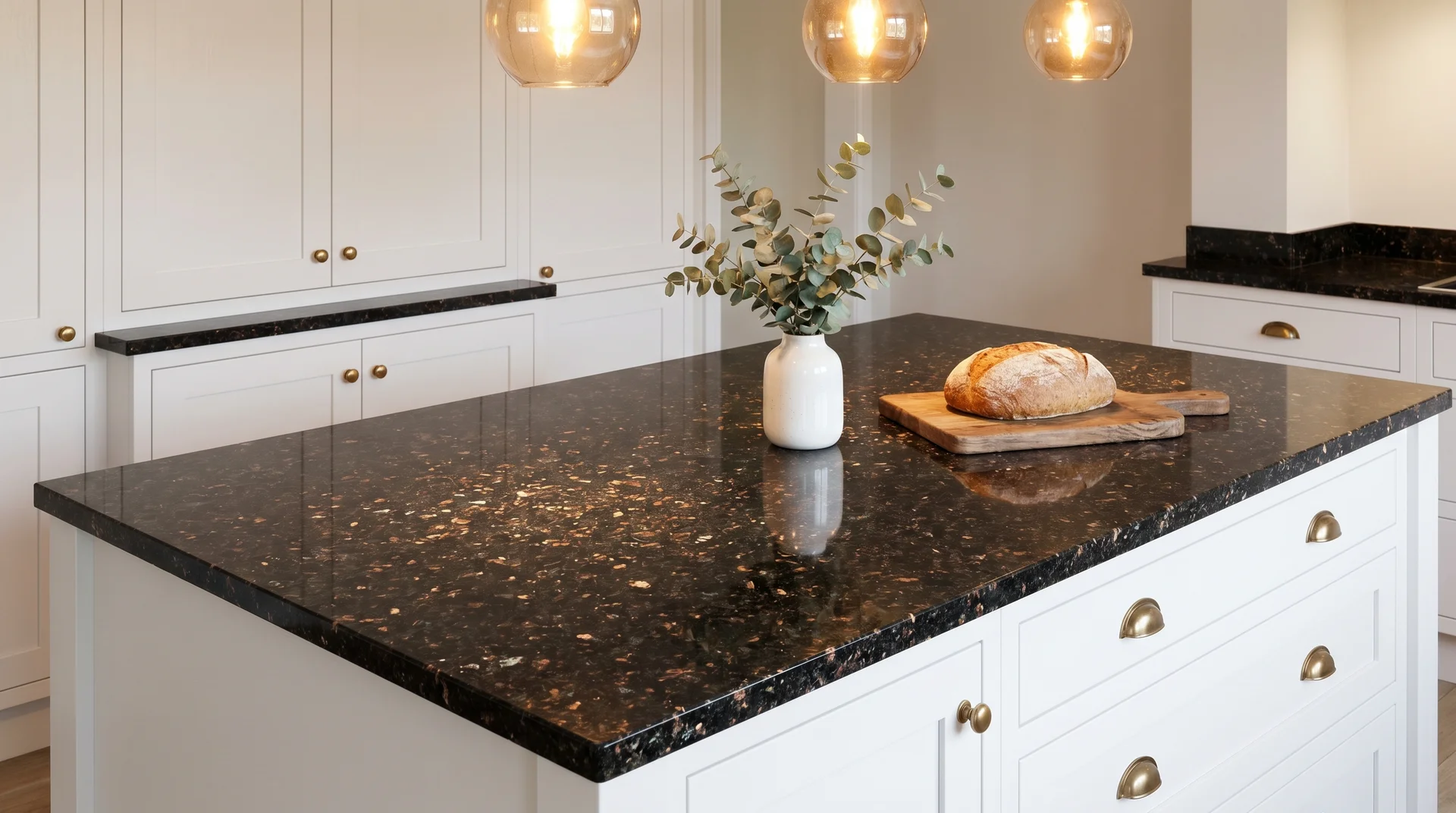
Color profile: Deep black base with copper, gold, and white bronzite mineral deposits that radiate when light hits the surface. The metallic flecks are the defining feature of this stone. Movement level: Low to medium.
Black Galaxy has been consistently popular for over forty years. The reason is clear the moment you see a polished slab in direct light: the bronzite deposits catch light in a way that feels almost luminous.
It works best with lighter cabinetry, where the contrast creates drama without overwhelming the room. White shaker cabinets with Black Galaxy countertops are one of the most requested combinations in kitchen renovation, and it holds up across different lighting conditions and design seasons.
The polished finish maximizes the shimmer effect. A leathered or honed finish softens the surface considerably and reads more contemporary. If you’re going to make a bold countertop decision, this is one of the safest bold choices available.
Best for: White, cream, and pale gray cabinets. Contemporary and high-contrast modern design styles.
Approx. installed price: $75–$120/sq ft.
7. Giallo Ornamental
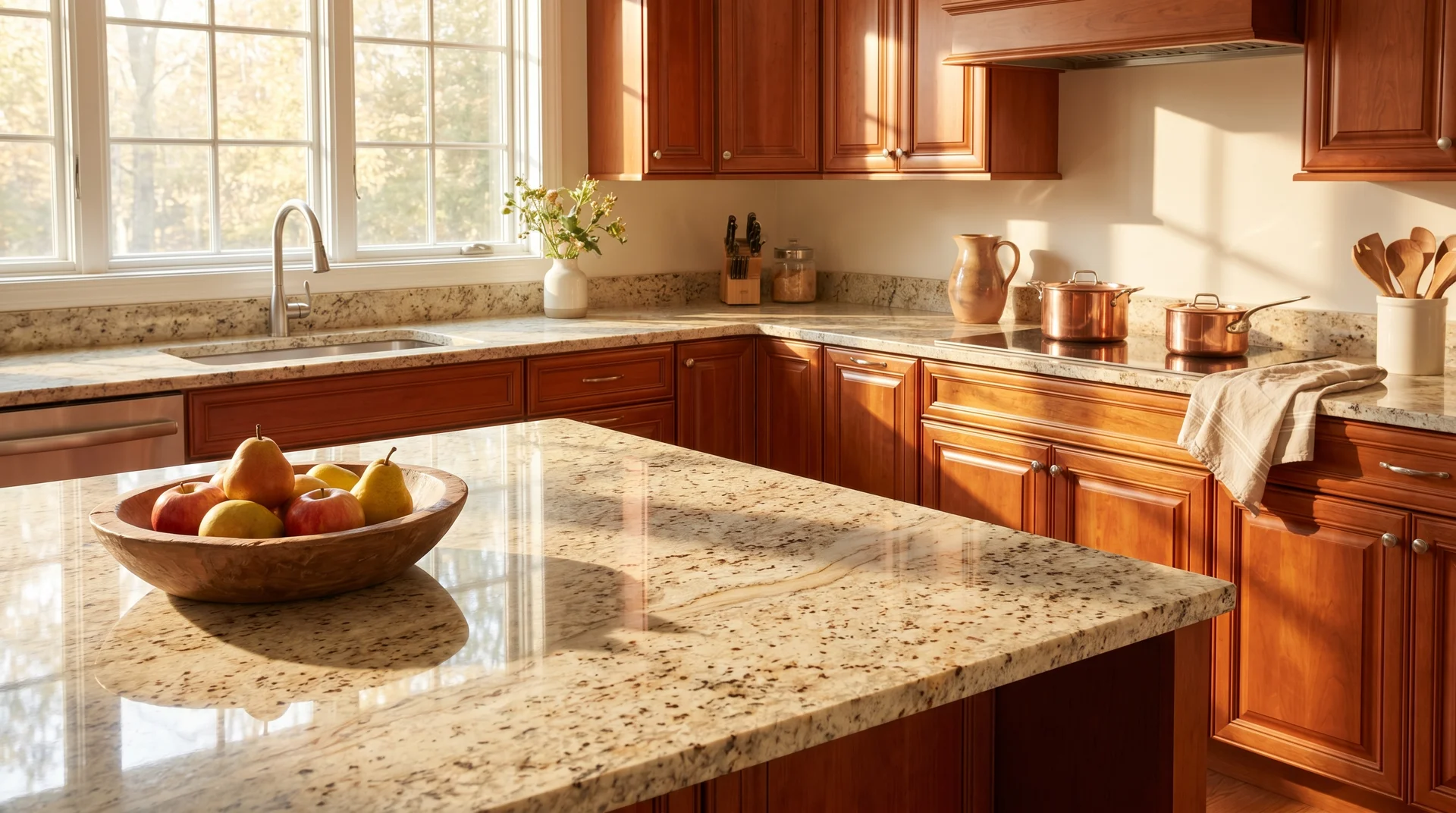
Color profile: Light golden-cream background with brownish, gray, and cream spots. Warm honeyed tones with occasional darker flecks and soft veining throughout. Movement level: Low to medium.
Giallo Ornamental is a comfort stone. The warm golden undertone makes a kitchen feel immediately welcoming, and it responds beautifully to natural light, particularly in south-facing rooms where the warmth can deepen into something almost amber at certain times of day.
It’s been a reliable choice in traditional and country-style kitchens for years.
Where it requires careful thought is in the pairing: the warm, golden quality works beautifully with wood cabinetry and cream fixtures, but cooler-toned kitchens with stainless steel and gray cabinetry can feel disconnected. Often dismissed in the showroom as too warm, and then genuinely loved once it’s installed. The warmth is the point.
Best for: Cherry, walnut, and cream cabinets. Traditional, country, and Mediterranean design styles.
Approx. installed price: $50–$85/sq ft.
8. Coffee Brown
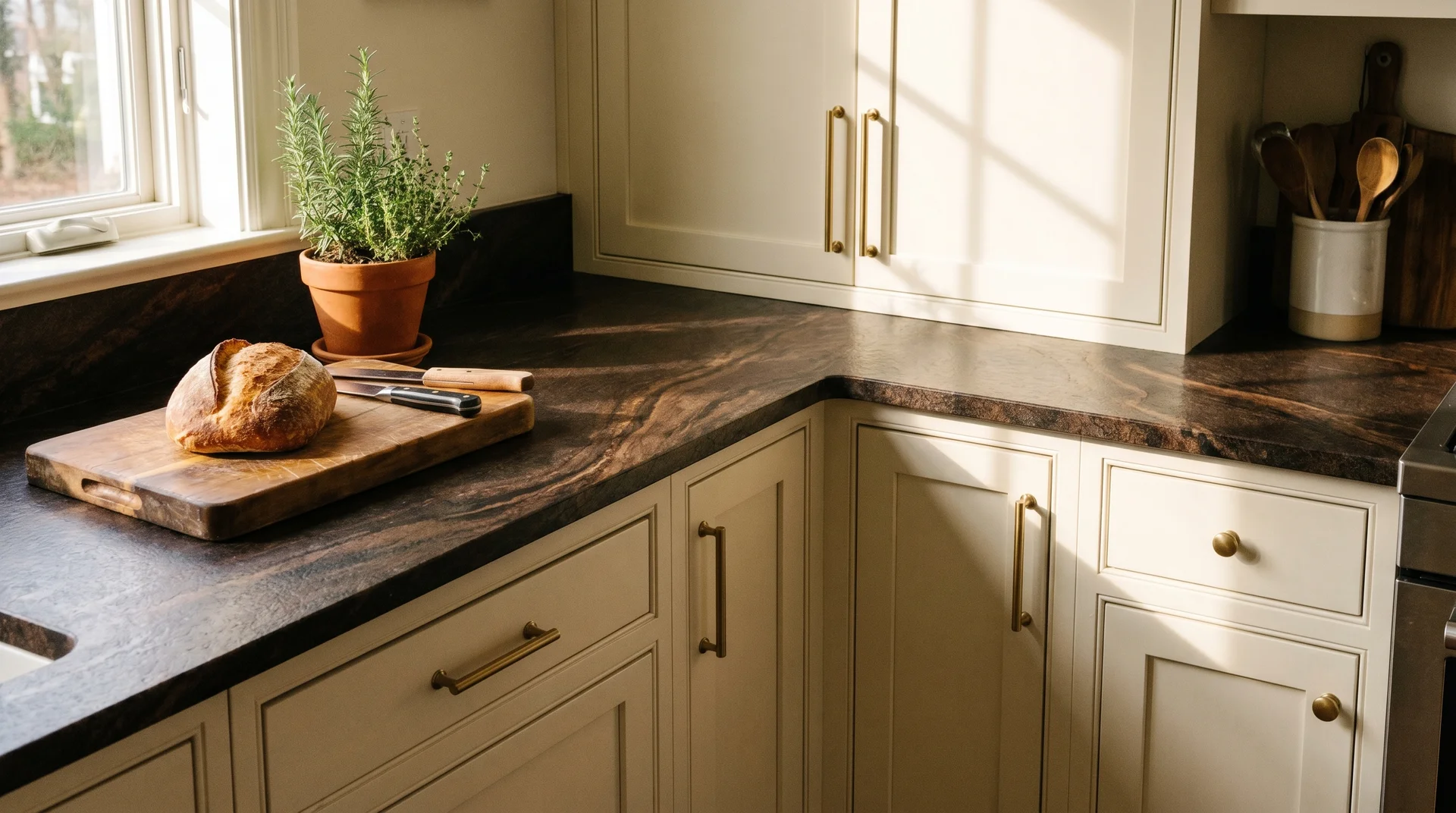
Color profile: Rich, consistent brown base with coffee and chocolate veining throughout. Low-variation and earthy, similar to ground coffee beans in both color and consistency. Movement level: Low.
Coffee Brown doesn’t get the attention it deserves. The earthy consistency makes it one of the most grounding stones you can install in a kitchen, and it wears exceptionally well over time. It’s also among the more affordable options in the brown granite category.
It pairs best with lighter cabinetry, where the contrast between a rich brown surface and lighter wood or painted cabinets creates warmth and depth. Very dark cabinetry can flatten the overall palette and lose the stone’s character.
Clients come in looking for something dramatic and leave reconsidering this one once they see how it reads in person. For homeowners drawn to earthy, organic interior palettes, warm tones and natural materials work across multiple rooms in a home, and Coffee Brown granite anchors that sensibility well in a kitchen.
Best for: Cream, light wood, and warm gray cabinets. Rustic, farmhouse, and southwestern design styles.
Approx. installed price: $40–$70/sq ft.
9. Blue Pearl
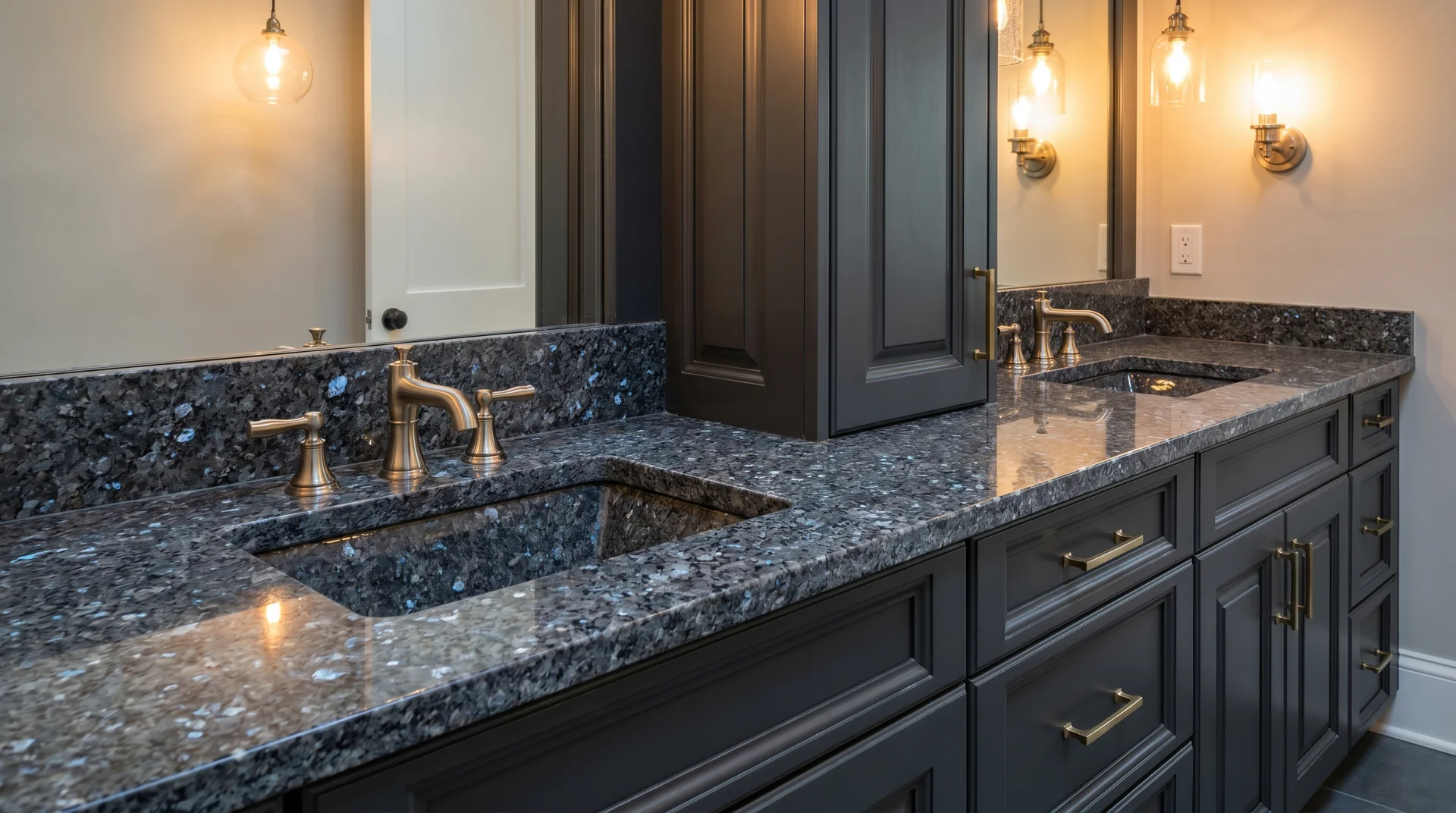
Color profile: Deep gray-blue to gray-black base with shimmering crystalline blue minerals and granular white flecks throughout. Quarried in Norway, with a distinctly Nordic cool quality. Movement level: Low, with shimmer providing the visual interest.
Blue Pearl is one of the most genuinely distinctive options on this list. The blue quality is real but restrained: more of a deep, dimensional shimmer than an obvious statement color.
It reads differently depending on the light, cooler and more mineral in natural daylight, warmer and more jewel-like under incandescent light. Paired with dark cabinetry, it feels luxurious.
With lighter cabinetry, it creates a refined contrast that reads as curated rather than accidental. It rewards a more intentional design approach, since it works best when the surrounding palette is composed around it.
Every client who’s chosen this one has been glad they did. The hesitation is always in the showroom. The satisfaction is consistent after installation.
Best for: Dark espresso, charcoal, and warm white cabinets. Contemporary and high-end traditional design styles.
Approx. installed price: $80–$130/sq ft.
10. Titanium
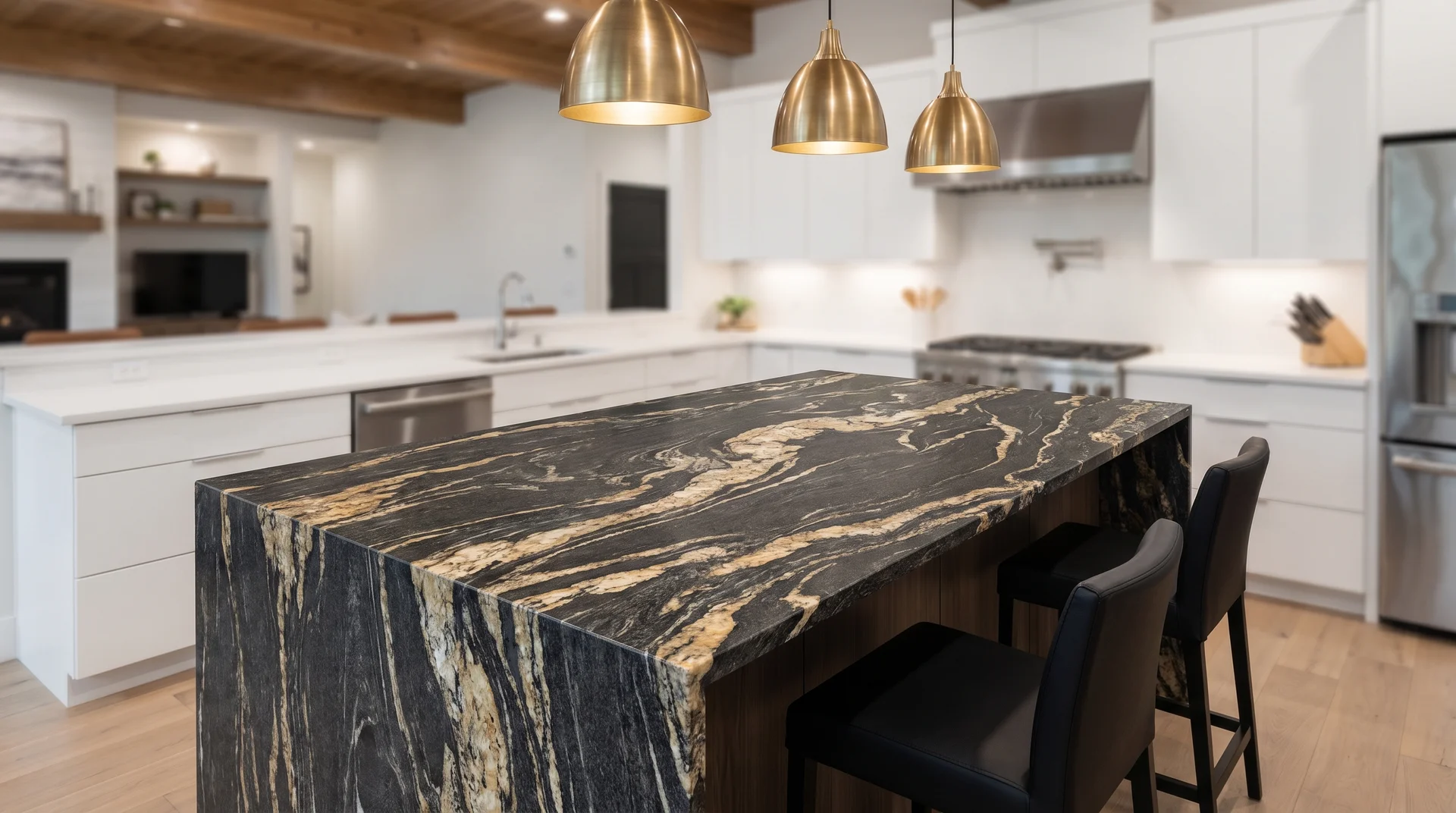
Color profile: Black background with bold, sweeping swirls of gold, cream, and gray that move across the surface with significant visual energy. Movement level: High.
Titanium is the statement piece of this list, and it knows it. The gold and cream movement against a black base is visually commanding, which is exactly why it’s most effectively used on kitchen islands rather than full perimeter countertops.
Used strategically, it becomes the focal point of the room. Used across every surface in a kitchen, it competes for attention at every angle. It works best when the surrounding space is restrained: simple flat-panel cabinet fronts, spare hardware choices, and neutral flooring give the granite room to perform.
This is the one I recommend for a statement island with neutral perimeter countertops. That combination gives you the drama without the visual overwhelm.
Best for: Flat-panel white and matte charcoal cabinets. Luxury contemporary and high-contrast modern styles.
Approx. installed price: $100–$180/sq ft.
Quick Reference: All 10 Popular Granite Colors at a Glance
| Granite Color | Undertone | Movement | Best Cabinet Family | Approx. Installed Price |
|---|---|---|---|---|
| Alaska White | Cool/neutral | High | White, dark, navy, brown | $60–$100/sq ft |
| Colonial White | Warm/cream | Low-medium | Light wood, cream, warm white | $50–$85/sq ft |
| Bianco Antico | Warm/pink | Low-medium | Dark, white, two-toned | $65–$100/sq ft |
| White Ice | Cool/neutral | Low-medium | White, navy, charcoal | $45–$80/sq ft |
| Steel Gray | Cool/neutral | Low | White, natural wood, black | $55–$90/sq ft |
| Black Galaxy | Neutral/metallic | Low-medium | White, cream, pale gray | $75–$120/sq ft |
| Giallo Ornamental | Warm/gold | Low-medium | Cherry, walnut, cream | $50–$85/sq ft |
| Coffee Brown | Warm/earthy | Low | Cream, light wood, sage | $40–$70/sq ft |
| Blue Pearl | Cool/blue | Low | Dark, navy, warm white | $80–$130/sq ft |
| Titanium | Bold/gold-black | High | White flat-panel, gray | $100–$180/sq ft |
Pricing note: Figures above reflect approximate US installed averages and vary by region, slab grade, edge profile, and fabricator. Always request a direct quote from your local stone fabricator before finalizing your renovation budget.
Matching Popular Granite Colors to Your Cabinet Color
White and Off-White Cabinets
White cabinets are the most forgiving backdrop for granite because they let the stone carry the visual weight. Alaska White and White Ice create a clean, tonal look with enough variation to avoid flatness.
Bianco Antico and Colonial White add warmth to what can otherwise feel like a cold palette. Black Galaxy creates the most dramatic contrast available in this pairing.
If your cabinets are bright, cool white, lean toward granite with cool or neutral undertones. If your cabinets are off-white or cream, warm-toned granite like Colonial White or Giallo Ornamental will feel more harmonious.
When choosing wall paint colors to coordinate alongside white cabinetry and granite, understanding how soft whites shift in tone under different lighting is the same logic that applies to reading granite undertones, and it’s worth getting right on both surfaces.
Natural Wood and Wood-Tone Cabinets
Wood cabinetry requires a more considered approach to granite pairing than most buyers expect. Stark white granite can create a jarring contrast against warm wood grain.
Off-white and warm-cream granites work considerably better because the undertone harmonizes with the wood’s warmth rather than working against it. For white oak, look for granite with subtle gold or warm beige mineral deposits.
For walnut and cherry, Bianco Antico, Coffee Brown, or Giallo Ornamental all create cohesive warmth that feels deliberate rather than assembled.
Dark and Charcoal Cabinets
Dark cabinetry pairs most naturally with lighter granite, where the contrast creates the visual definition that keeps the room from feeling heavy. White Ice, Alaska White, and Bianco Antico all work well here.
Steel Gray creates a more tonal, sophisticated look if you prefer a lower-contrast approach. Black Galaxy on very dark cabinets can work in a space with strong natural light, but you’ll want enough brightness somewhere else in the palette to keep it from closing in.
Painted Cabinets in Color (Navy, Sage, Red, Greige)
A strong cabinet color and a high-movement granite tend to compete for the room’s attention. Keep one element complex and let the other be quieter. Alaska White handles navy exceptionally well.
Steel Gray works with sage and greige without competing. Colonial White pairs well with softer painted tones. For kitchens where bold cabinet color is the design anchor, choosing the right countertop to sit alongside a statement cabinet color is one of the most consequential pairing decisions in the room.
Granite Finishes: What the Showroom Won’t Always Walk You Through
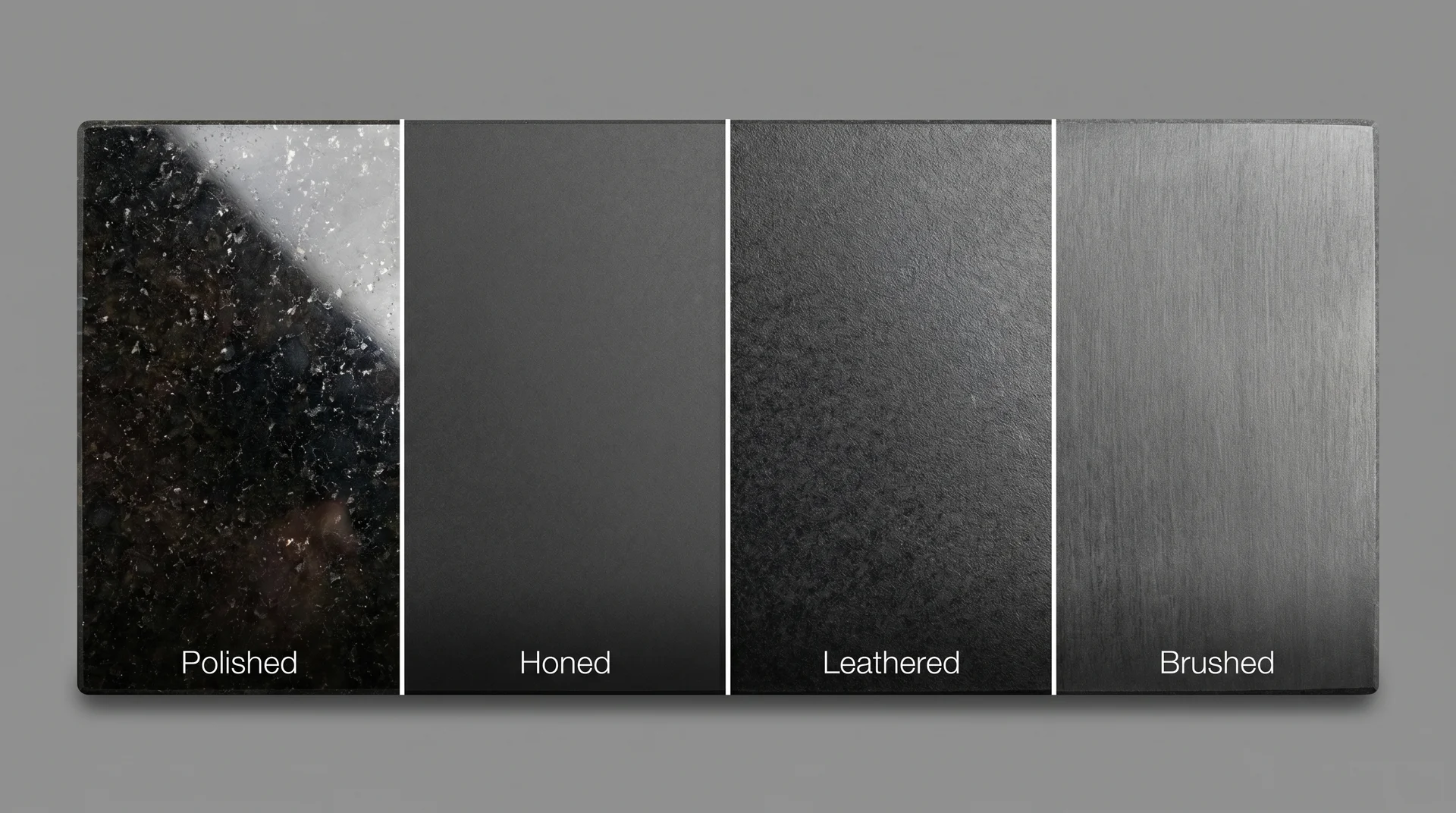
The color of your slab is only half the decision. The finish changes how a granite color reads in your space, how it wears over time, and how much maintenance it requires. Most of the 10 most popular granite colors are available in several finish options.
- Polished: High-gloss surface that maximizes color depth and intensifies the shimmer in stones like Black Galaxy and Blue Pearl. Shows fingerprints and water spots more readily on lighter stones. The most common finish choice.
- Honed: Matte finish that softens color and pattern. Hides water spots better on lighter colors. Scratches are slightly more visible on dark polished stones in this finish. A strong choice for contemporary interiors.
- Leathered: Subtle texture with minimal reflection. Hides fingerprints and everyday marks well. Adds tactile interest to stones like Coffee Brown and Steel Gray. Increasingly popular in modern kitchen design.
- Brushed: Soft, natural appearance between honed and leathered. Low reflection with gentle texture. Works particularly well on earth-toned and gray granites.
Designer’s note: If you love a darker stone like Black Galaxy or Titanium but want a more contemporary feel, ask to see the leathered version before you decide. It reads completely differently and often surprises people who assumed they wanted polished.
Granite Maintenance and Sealing: What to Plan For
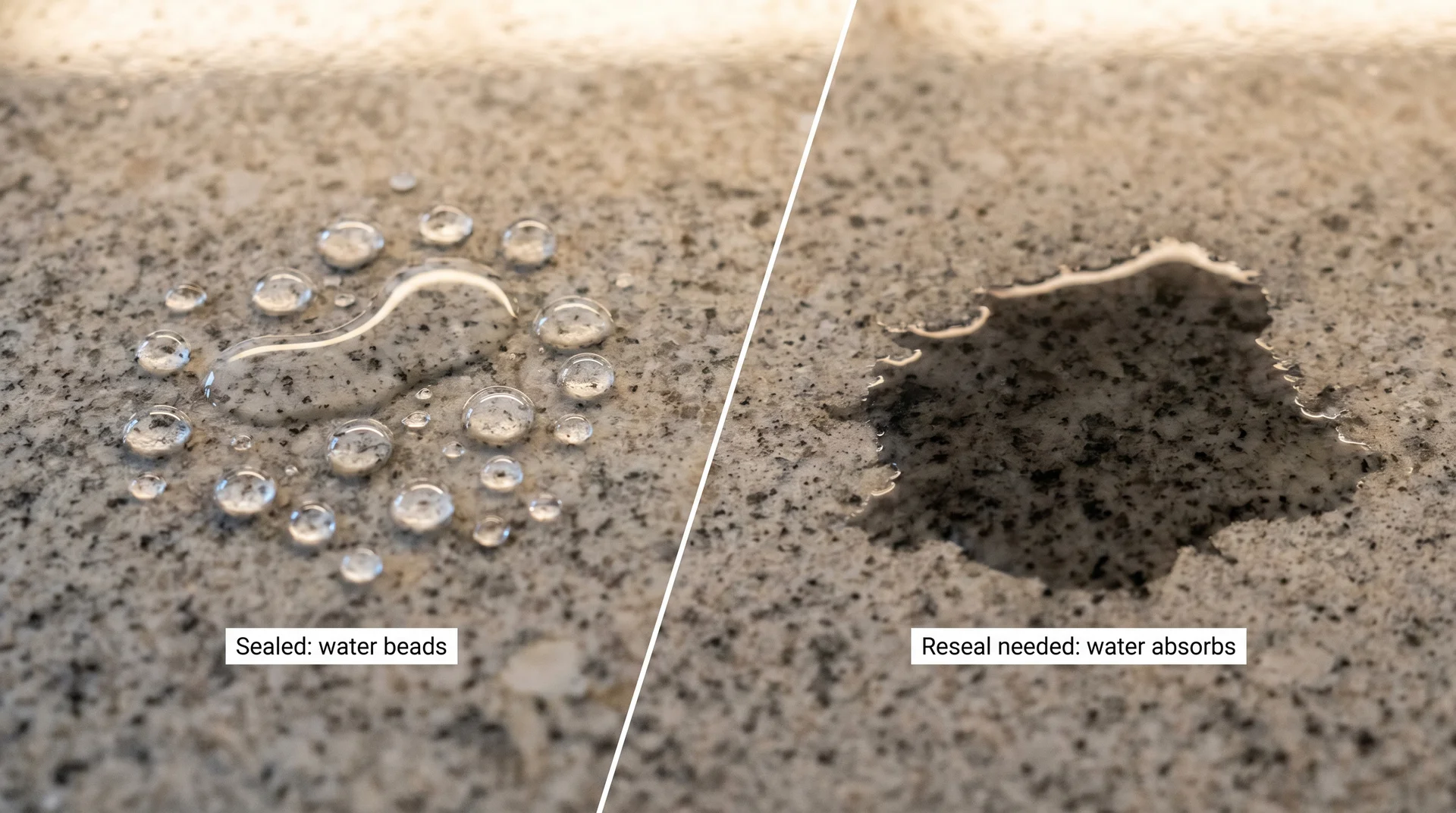
Granite is one of the more durable natural stone countertop options available, but it’s porous and requires periodic sealing to resist staining.
Most granite countertops should be sealed every 12 to 24 months, depending on how heavily the surface is used and the density of the specific stone. Lighter-colored granites typically need more frequent sealing than denser dark stones like Black Galaxy or Steel Gray.
For daily cleaning, a pH-neutral stone cleaner or mild dish soap with warm water is sufficient. Avoid acidic cleaners, vinegar, or anything abrasive, which can degrade sealant over time and dull polished surfaces.
The sealing process itself takes less than an hour for a standard kitchen countertop and is a straightforward DIY task using spray-on granite sealers widely available at home improvement stores.
Simple sealing test: Pour a small amount of water on the surface. If it beads up, the seal is intact. If it absorbs into the stone in under a few minutes, it’s time to reseal. Honed and leathered finishes tend to be more forgiving of daily use than polished surfaces on lighter stones.
Which Popular Granite Colors Hold the Most Resale Appeal
If resale is part of your thinking at any point in this decision, here’s what the data actually says. NKBA professional data shows that 96 percent of design professionals favor neutral palettes for kitchen renovations.
Houzz data places white at 41 percent of countertop color choices in US kitchen renovations, with off-white at 23 percent and black at 8 percent for main countertops, rising to 18 percent for contrasting islands.
Alaska White, Colonial White, Bianco Antico, and Steel Gray all sit firmly in the broadest-appeal category. Bold choices like Blue Pearl, Titanium, and Black Galaxy have genuine staying power and aren’t risky in a design sense, but they do appeal to a more specific buyer profile, which slightly narrows the field in a competitive resale environment.
The honest bottom line: if maximum buyer appeal is your priority, stay in the white, off-white, and gray family. If you plan to be in the home for ten or more years and the stone genuinely excites you, the resale risk of a well-chosen bold granite is considerably overstated by most advice online.
It’s also worth noting that several of the most popular granite colors on this list have maintained their standing for decades. Black Galaxy has been a design staple for over forty years.
Alaska White and Colonial White have held steady through multiple renovation cycles. That kind of longevity is what separates timeless granite from trend-chasing, and it’s a real signal when you’re evaluating whether a stone will date.
Kitchen Granite vs. Bathroom Granite: Does the Same Color Logic Apply?
In the kitchen, granite covers significant square footage and anchors the visual character of the entire room. The case for neutrals is stronger simply because the surface does so much work across so much space.
In the bathroom, the scale changes everything. A vanity top covers far less surface area, which means granite can carry considerably more personality without overwhelming the space.
Blue Pearl on a bathroom vanity creates a jewel-box quality that would feel aggressive across forty square feet of kitchen countertop. Titanium on a guest bath vanity becomes a design moment rather than a design commitment.
If you love a bold granite but can’t fully commit to it in the kitchen, the bathroom is a genuinely good place to use it. The smaller scale lets you experience the color at its best without the risk of it defining the whole room.
What to Do at the Showroom Before You Commit to a Granite Color
Bring Physical Samples of Your Materials, Not Just Photos
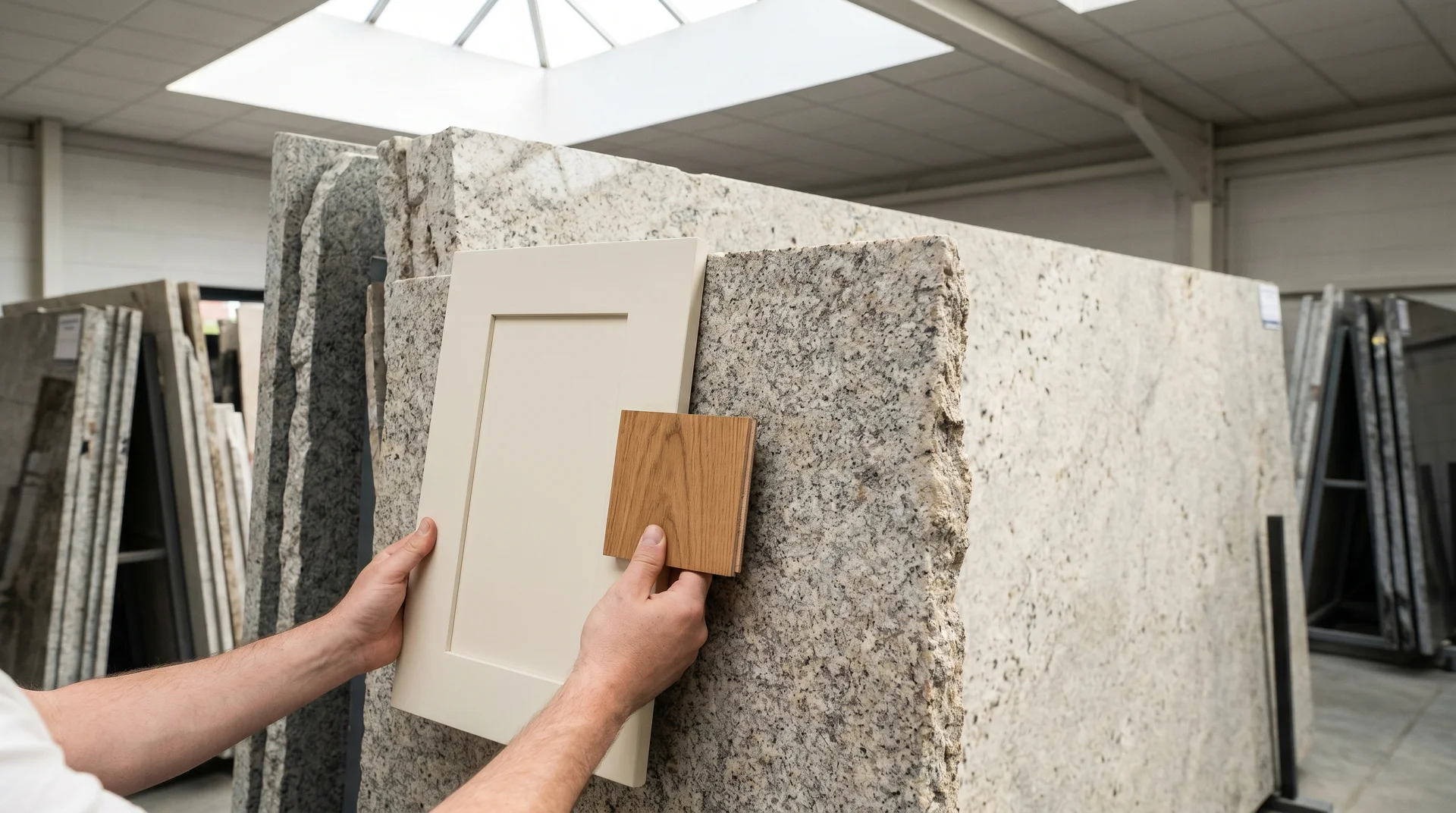
Bring a cabinet door sample, a flooring tile, and a paint chip from your walls. Photos on a phone don’t reproduce undertone accurately under showroom lighting.
Holding a granite slab next to a cabinet door sample under the same light source tells you more in thirty seconds than two hours of online browsing can.
If you haven’t settled on a wall color yet, it’s worth making that decision before you go granite undertones and wall paint undertones interact directly, and the gap between a warm beige wall and a cool-gray wall can shift whether a granite reads warm or flat in your actual kitchen.
For warm-palette kitchens in particular, Agreeable Gray (SW 7029 is the wall color that appears most consistently alongside the granite options on this list.
A four-inch sample is a fragment. Pattern movement only reveals itself at full scale, and high-movement granites like Alaska White or Titanium can look completely different as a full slab compared to a cut sample piece.
Ask the yard to show you the actual slab. Pay attention to how the pattern flows across the surface. You’ll look at this countertop from across the room and from inches away every single day, and both viewing distances matter to whether you’ll love it long-term.
Take the Sample Home and Observe It for 48 Hours
Most stone yards will let you take a sample home. Do it. Prop it against the wall, set it on the countertop, and observe it through the course of a full day and into the evening. Look at it in morning light, afternoon light, overcast daylight, and under your evening artificial lighting.
The same stone can read warm or cool, blue-toned or gray-toned, depending entirely on your window direction and bulb spectrum. This one step prevents the most common type of countertop regret.
Frequently Asked Questions About Popular Granite Colors
What Is the Most Popular Granite Color for Kitchen Countertops?
White and off-white granite consistently lead renovation data across the US market, with Alaska White the single most frequently specified granite color overall. Colonial White follows closely. Among darker choices, Black Galaxy and Steel Gray hold the strongest and most consistent market presence year over year.
Is Granite Still Popular in 2026, or Has Quartz Taken Over?
Granite remains a genuinely popular and widely chosen material. Quartz holds a larger overall market share, but granite has something engineered materials can’t replicate: no two slabs are ever identical. The natural variation and character of granite is exactly what continues to attract buyers who want a kitchen that feels singular rather than assembled from a catalog. It’s a strong and well-supported choice in both kitchens and bathrooms in 2026.
What Granite Color Goes Best With White Cabinets?
Alaska White, Colonial White, Bianco Antico, and Black Galaxy all perform well with white cabinetry. The right choice depends on whether you want a tonal, warm, or high-contrast relationship between the stone and the cabinet color. If your white cabinets are bright and cool-toned, lean toward granite with cool or neutral undertones. If they’re cream or off-white, warm-toned granite will feel considerably more harmonious.
Which Granite Colors Are the Most Timeless?
White, off-white, and gray granites have the longest proven track record across renovation cycles. Alaska White, Bianco Antico, and Colonial White have been consistently popular for decades. Black Galaxy has similar longevity in the dark stone category, with over forty years of sustained demand in the US market. These stones earn their standing because they perform across more kitchen conditions, lighting types, and cabinet pairings than their alternatives.
What Granite Color Adds the Most Resale Value to a Home?
Neutral granite in white, off-white, or gray has the broadest buyer appeal, according to current industry data. The specific stone matters less than whether it fits the overall kitchen palette and reads as timeless rather than trend-specific. For maximum resale appeal, the white, off-white, and gray family is your safest range.
How Often Does Granite Need to Be Sealed?
Most granite countertops require sealing every 12 to 24 months. Lighter, more porous stones typically need more frequent attention than denser dark varieties. The simple field test: pour a small amount of water on the surface. If it beads, the seal is holding. If it absorbs within a few minutes, it’s time to reseal.
How Do I Know If a Granite Color Will Work in My Specific Kitchen?
Start with the three variables: cabinet color family, dominant light source and direction, and the scale of your kitchen relative to the pattern movement in the stone. Then take a physical sample home, observe it under your actual lighting at different times of day, and hold it next to your cabinet door. That process will give you more grounded confidence than any photograph or showroom visit on its own.
The Bottom Line
Choosing granite gets easier the moment you stop looking for the right color in the abstract and start working backward from your specific kitchen. Your cabinets, your light, and your daily life in that space are the variables that actually make the decision.
The granite colors on this list have earned their standing because they work consistently, across a wide range of real-home conditions. Your job is to narrow from ten to one using the variables specific to your home. Start with your cabinet color.
Test your sample under your actual lighting. View the full slab before you commit. And trust the option that keeps pulling your attention, because that instinct, built on a solid framework, is usually right.