| This article is for informational purposes only and does not replace professional medical advice, diagnosis, or treatment. If your sore throat is severe, lasts beyond seven to ten days, or comes with high fever, white patches on the tonsils, or difficulty breathing, please see a healthcare provider. |
One of the most common questions I hear from clients when cold and flu season rolls in is some version of: “I’ve been drinking ginger tea all day, is it actually doing anything?” I understand the skepticism.
Ginger sits in that awkward middle ground between grandmother’s remedy and something that shows up in nutrition research, and it can be hard to know how seriously to take it.
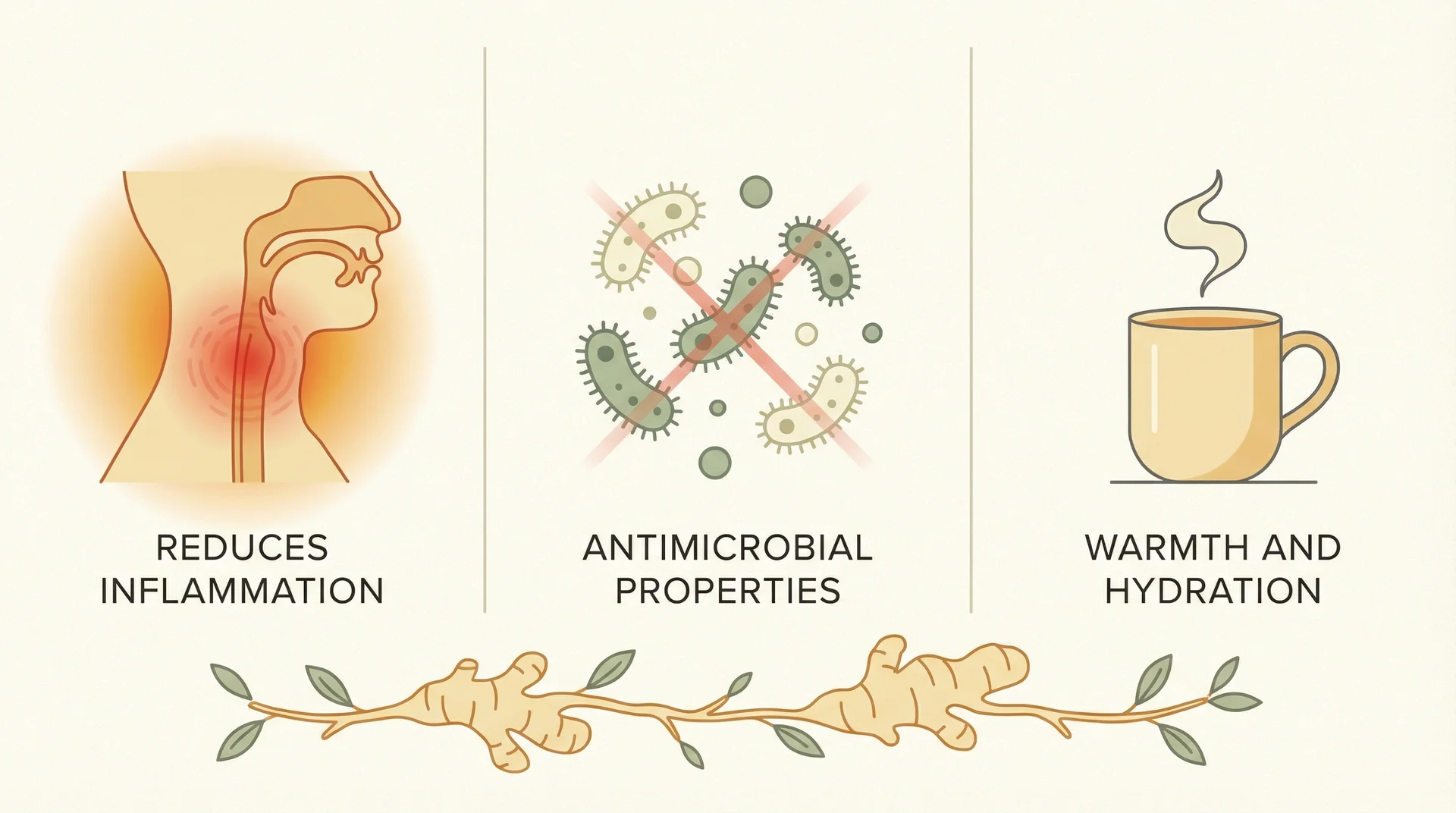
Here is the short answer, so you have it right away: yes, ginger genuinely helps a sore throat. The active compounds in fresh ginger reduce the inflammatory response that causes the raw, burning sensation in your throat. Research shows ginger also carries antimicrobial properties that may create a less hospitable environment for certain pathogens during a mild viral infection. On top of that, the warmth of the tea itself does real, separate work by keeping throat tissue moist and loosening mucus.
Where people lose confidence in it is when they expect ginger to cure something it can only soothe. For a standard viral sore throat from a cold or flu, it is genuinely useful. For strep throat, you need antibiotics, and ginger will only make the wait more comfortable. For a sore throat caused by acid reflux, ginger can actually make the burning worse. The sections below walk through all of this in practical terms, including how to prepare it correctly so it works as well as it should.
What Ginger Actually Does in Your Throat
The Anti-Inflammatory Effect
The pain and scratchiness of a sore throat come from inflammation. When your body detects an irritant or infection in the pharyngeal tissue, it sends out pro-inflammatory proteins, mainly COX-2 and TNF-alpha, as part of the immune response. Those proteins cause swelling, hypersensitivity, and the kind of burning that makes swallowing feel like a chore.
Gingerols, the primary active compound in fresh ginger, block some of these pro-inflammatory proteins. The effect is real and measurable.
Ginger contains compounds with anti-inflammatory and analgesic effects that may help ease throat discomfort, though direct clinical trials in acute pharyngitis are limited, and most evidence comes from broader pain and inflammation research.
The benefit shows up most consistently in non-bacterial, virus-associated sore throats, which is worth keeping in mind before we get to the strep section.
A useful way to think about it: an inflamed throat swells for the same reason an inflamed ankle does. Your immune system sends fluid and cells to the site, the tissue swells, and everything hurts. Ginger does not eliminate the cause, but it dials down the inflammatory signal enough that the tissue calms and the discomfort becomes more manageable.
The Antimicrobial Side
Lab studies show ginger extract can inhibit Streptococcus mutans, Candida albicans, and Enterococcus faecalis, all pathogens associated with oral and throat infections. Some research has compared ginger extract against conventional antibiotics on certain bacteria in test-tube conditions and found comparable inhibitory effects.
I want to be clear about what that means and what it does not mean. Those studies happen in controlled lab environments. The concentration of ginger extract used in a petri dish is a long way from what reaches your throat tissue after a cup of tea.
More clinical trials in humans are needed before anyone can accurately describe ginger as an antimicrobial treatment. What the research does reasonably support is the idea that ginger may create a slightly less favorable environment for certain pathogens during a mild viral infection, and that is worth something even if it is not the whole story.
One more thing worth knowing: a 2024 study found that combining ginger and garlic extracts produced stronger antiviral activity than either ingredient alone. If you are making ginger tea during a cold and you want to push the immune-support angle, adding a small sliver of raw garlic is a reasonable choice.
The Warmth Factor
Warm liquid, regardless of what it contains, keeps mucous membranes hydrated, loosens thick mucus, and increases blood flow to irritated tissue. Even a weak ginger tea with minimal active compounds still gives you this benefit.
This matters practically because it means you are not wasting your time with a lower-quality preparation. You are just leaving some of the anti-inflammatory benefits on the table. The warmth and hydration are always doing something.
Does Ginger Work the Same Way for Every Sore Throat?
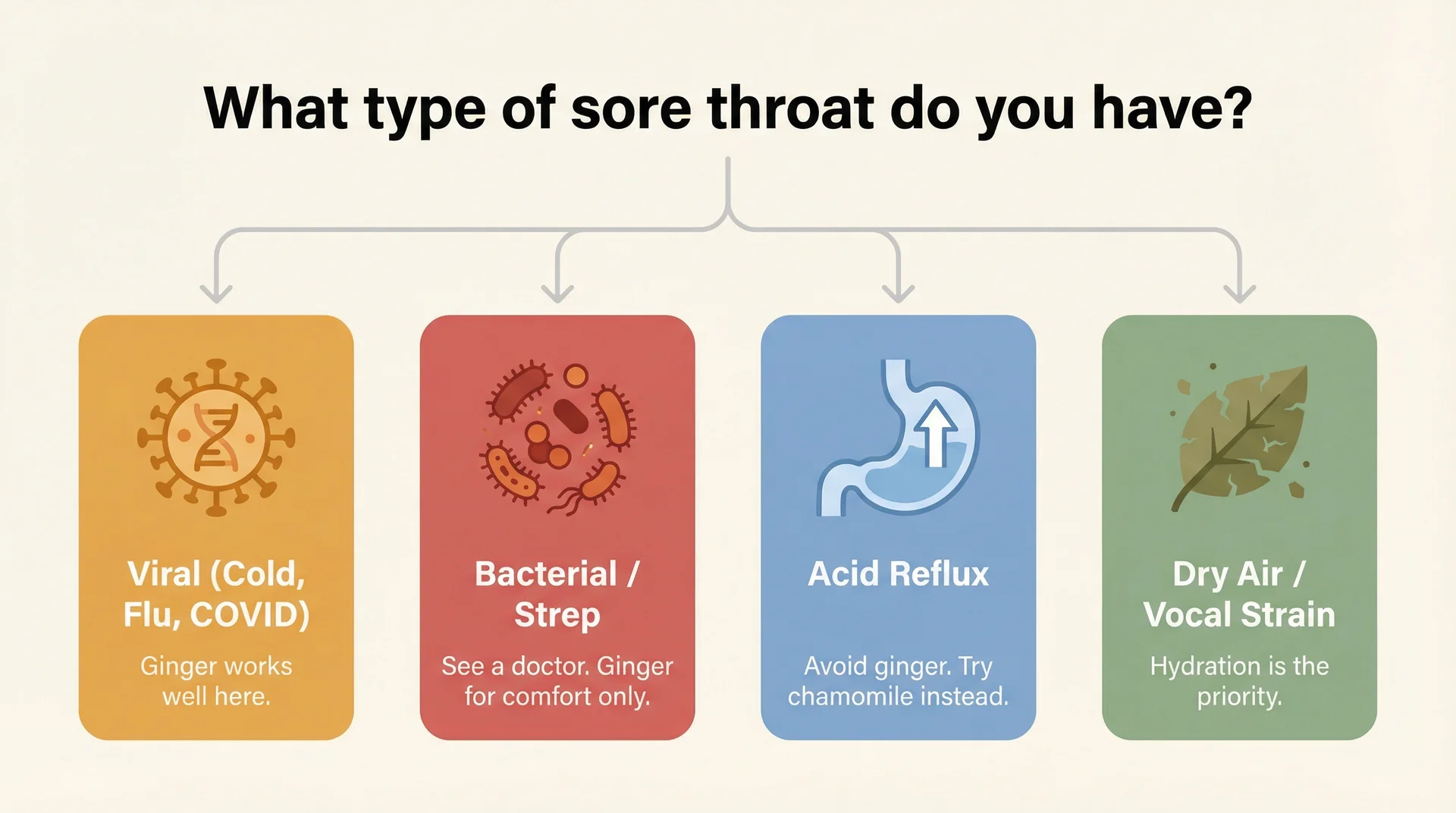
It does not, and this is the part of the conversation I find myself having most often with clients who are frustrated that ginger “isn’t working.” Usually, the issue is not the ginger. It is that the sore throat has a cause that ginger was never going to address.
Viral Sore Throat – Where Ginger Does Its Best Work
The majority of sore throats are viral. Cold, flu, COVID-19, and mononucleosis do not respond to antibiotics, and all of them require the body to fight through the infection on its own timeline. This is where ginger is most genuinely useful, and where the clinical evidence is most supportive.
If your sore throat arrived alongside a stuffy nose, mild fatigue, and a low-grade fever, and the pain feels diffuse and scratchy rather than sharp and one-sided, a viral infection is the likely cause. Two to three well-made cups of ginger tea a day, started early, will help manage the discomfort and support the recovery environment your body is trying to create.
Strep Throat – Ginger Helps with Comfort, Not the Infection
Strep throat is caused by Group A Streptococcus, a bacterium, and it needs antibiotics. Ginger will make you more comfortable while you get a diagnosis and while medication does its work, but it cannot clear the infection on its own.
I raise this not to alarm anyone, but because I have seen people sit with a bacterial infection for several days convinced that home remedies will be enough. Untreated strep can lead to serious complications, which is why a rapid test and a course of antibiotics matter here in a way that no kitchen remedy can substitute for. If symptoms point toward strep, the right move is to get tested, not to wait.
The signs that suggest strep rather than a viral sore throat:
- Fever above 101°F (38.3°C)
- Throat pain that feels severe and concentrated rather than diffuse
- Visible white patches or pus on the tonsils
- Swollen lymph nodes in the neck
- Little or no cough
- Pain that came on fast rather than building gradually over a day or two
If you are seeing a few of those, get tested before you reach for the kettle.
Acid Reflux Sore Throat – Where Ginger Can Backfire
This one gets very little attention on most sore throat pages, and it deserves more. Ginger stimulates gastric acid secretion. For a sore throat caused by acid reflux (GERD), where stomach acid has already been rising into the esophagus and throat, increasing acid production makes the burning worse.
If your sore throat tends to be worse in the morning, worse when you lie down, or arrives without any cold or flu symptoms at all, reflux may be the cause. Plain warm water, chamomile tea, or unsweetened aloe vera juice will serve you much better in that case.
Post-Nasal Drip, Dry Air, and Vocal Strain
For these non-infectious causes, ginger is a reasonable comfort choice rather than a targeted remedy. Ginger’s mild effect on mucus viscosity can reduce the tickling sensation that comes from post-nasal drip and the coughing it triggers. For dry air or vocal strain, consistent hydration throughout the day matters more than any specific ingredient. Room-temperature water, sipped regularly, will do more for a voice-strained throat than two large cups of ginger tea taken at meals.
Fresh Root vs. Tea Bags vs. Ginger Ale
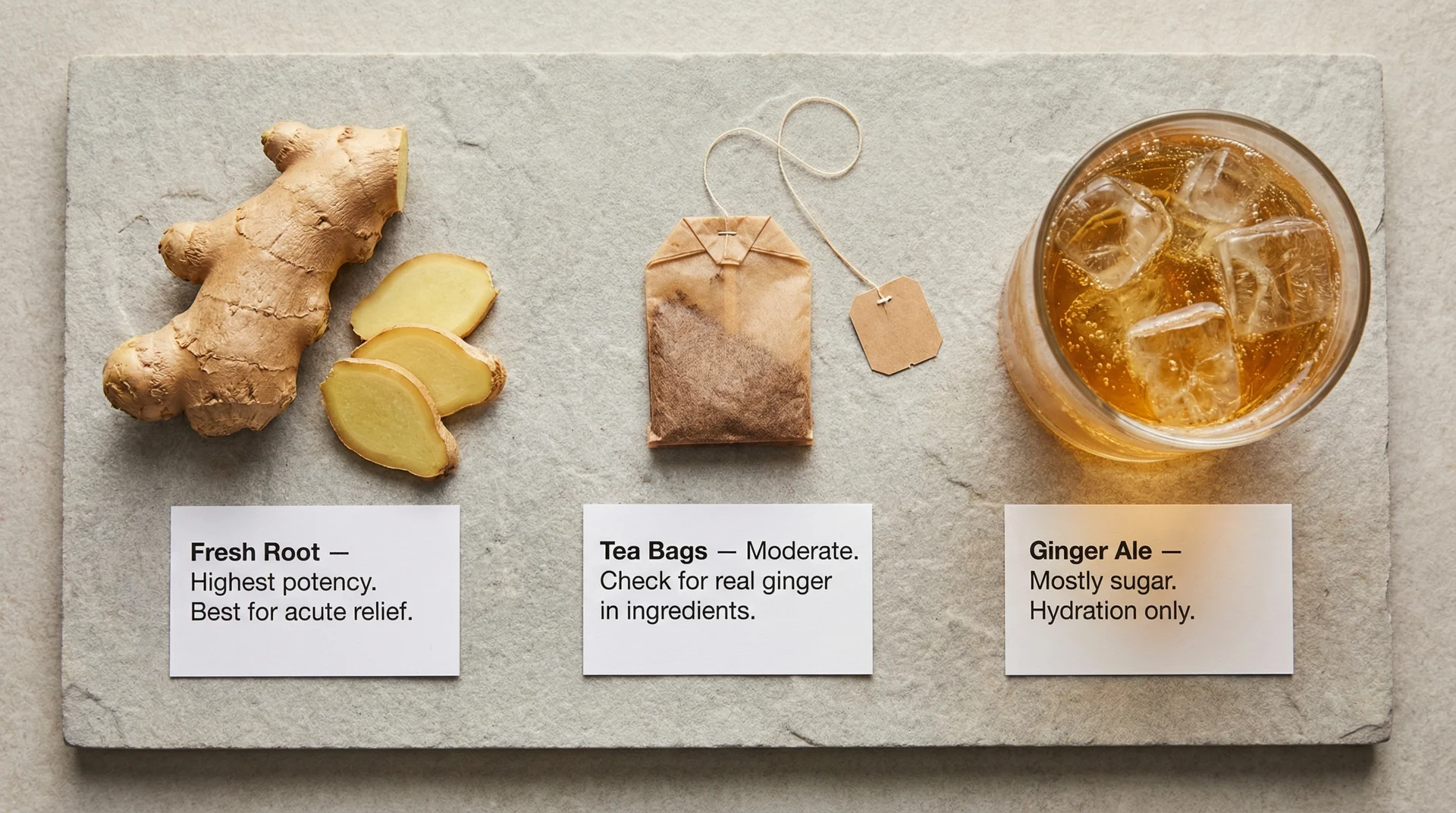
Fresh Ginger Root – Worth the Extra Two Minutes
Fresh ginger contains the highest concentration of gingerols. When ginger is dried or heated significantly, gingerols convert to shogaols, which are also bioactive compounds but with a slightly different profile. For acute throat pain, fresh root gives you a broader and more potent preparation.
Technique matters considerably more than most people realize. A two-minute steep gives you very little. Simmering 2 to 3 centimetres of grated or sliced fresh root in 250ml of water for 10 to 12 minutes extracts substantially more active compounds than a quick steep, and the difference in effect is noticeable.
One practical note: fresh ginger freezes well and retains the large majority of its potency for up to three months. You can grate it straight from frozen without thawing. If you are the type to buy it fresh and then forget it exists until you are already sick, keeping a piece in the freezer solves that entirely.
Pre-Packaged Tea Bags – Fine in Context
Quality varies quite a bit. Some commercial ginger tea bags contain well below 50mg of actual ginger extract per bag, which delivers minimal anti-inflammatory effect. Others are more concentrated and work reasonably well.
The way to tell the difference is to read the ingredient label. A bag that lists “ginger root” as the first and primary ingredient is a different product from one that lists “natural ginger flavor” or has ginger listed fourth behind other herbs. That said, even a modest tea bag gives you warmth and hydration. You are not wasting your time. You are just getting a smaller dose of the ginger benefit, and sometimes that is enough.
Ginger Ale – Honestly Not Worth It
Most commercial ginger ales contain almost no real ginger. They are sweetened, carbonated water with ginger flavoring, and the carbonation adds mild irritation to an already inflamed throat surface. If ginger ale makes someone feel better, the hydration is doing the real work. The sugar in it works against the anti-inflammatory process rather than supporting it.
A small number of craft ginger ales use genuine ginger extract in meaningful concentrations, and those are a different story. But that is not what most people have in their fridge when they are sick.
How to Make Ginger Tea That Actually Works
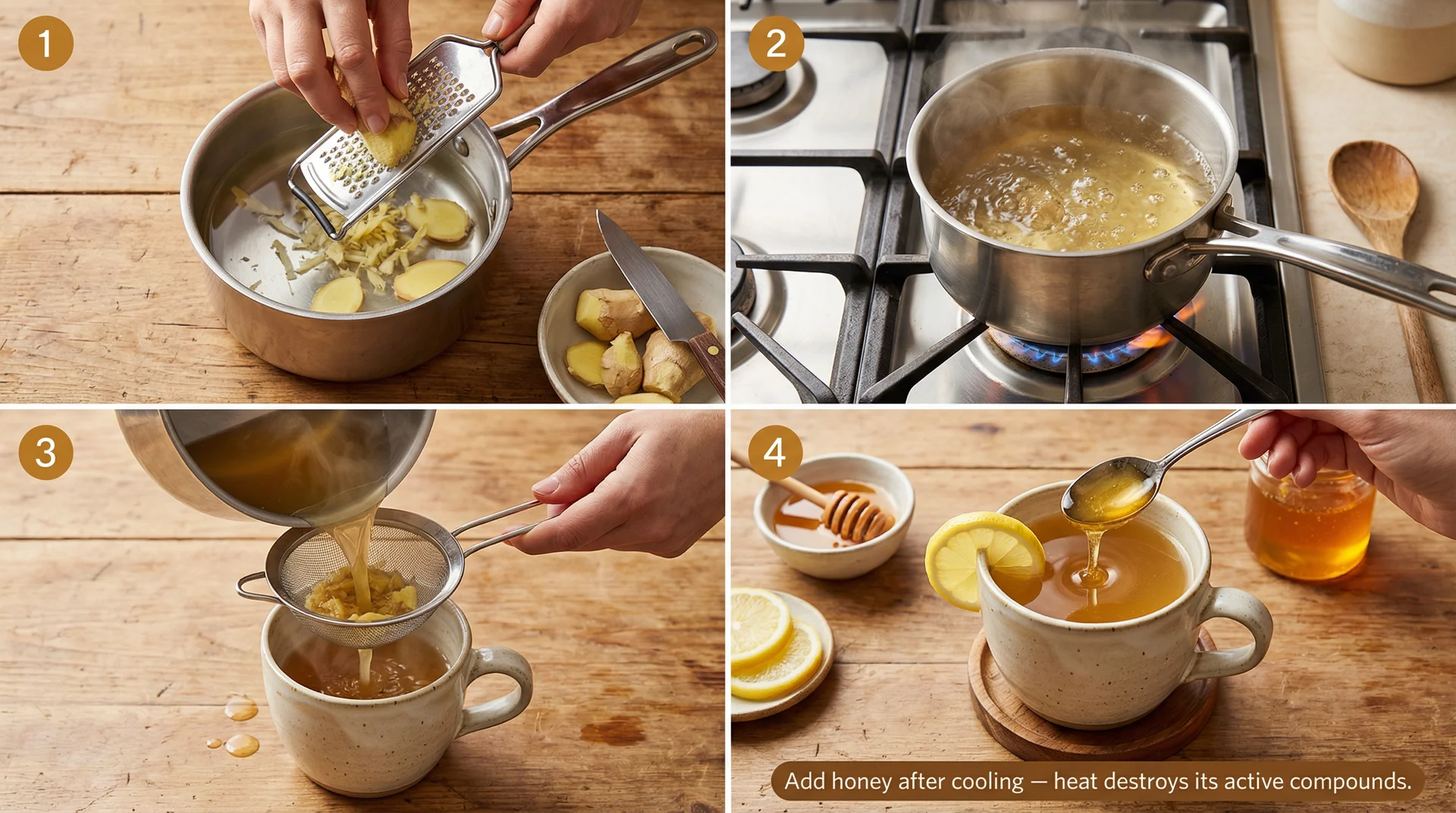
There is a real difference between a properly made ginger preparation and a weak, lukewarm cup that does very little. The preparation decisions matter.
The Recipe
| Ingredient | Amount | Purpose |
|---|---|---|
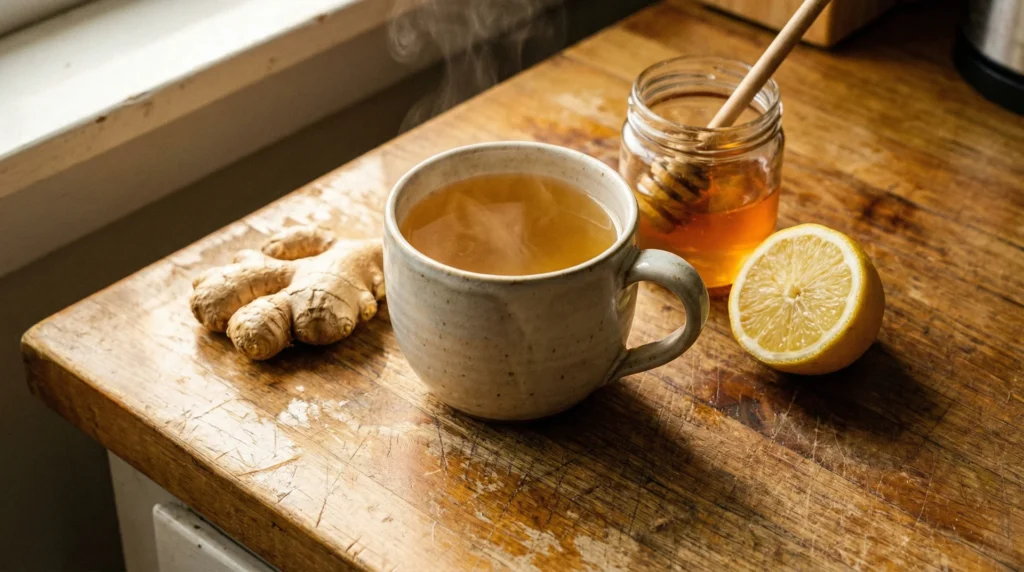
| Fresh ginger root, peeled and grated or sliced thin | 2 to 3cm piece | Provides gingerols and shogaols for anti-inflammatory effects |
| Water | 250ml (about 1 cup) | Hydration and the vehicle for warmth |
| Raw honey | 1 to 2 teaspoons | Coats the throat, adds mild antimicrobial benefit |
| Fresh lemon juice | Half a lemon, optional | Vitamin C, helps break up mucus; ease off on this if the throat is very raw |
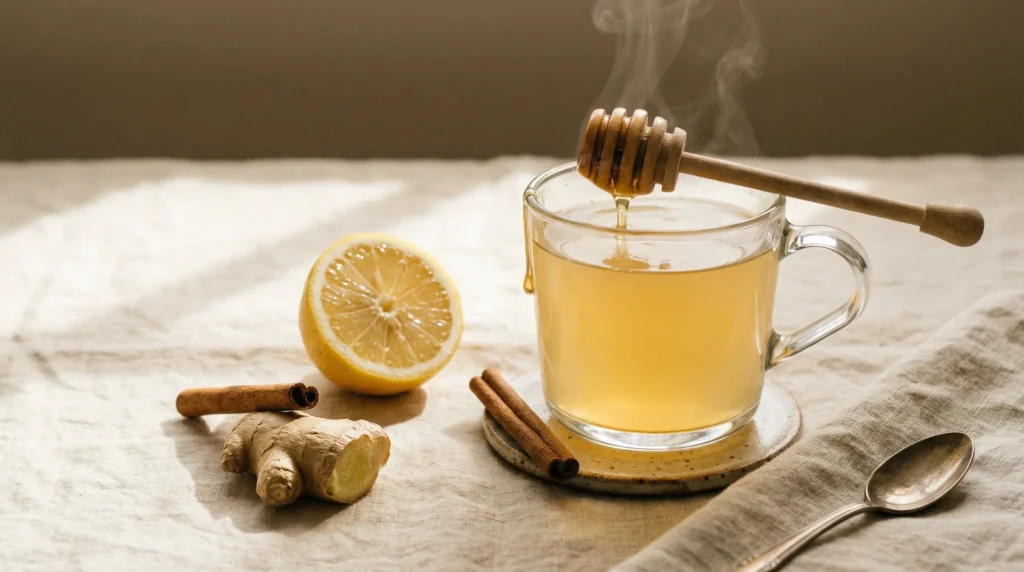
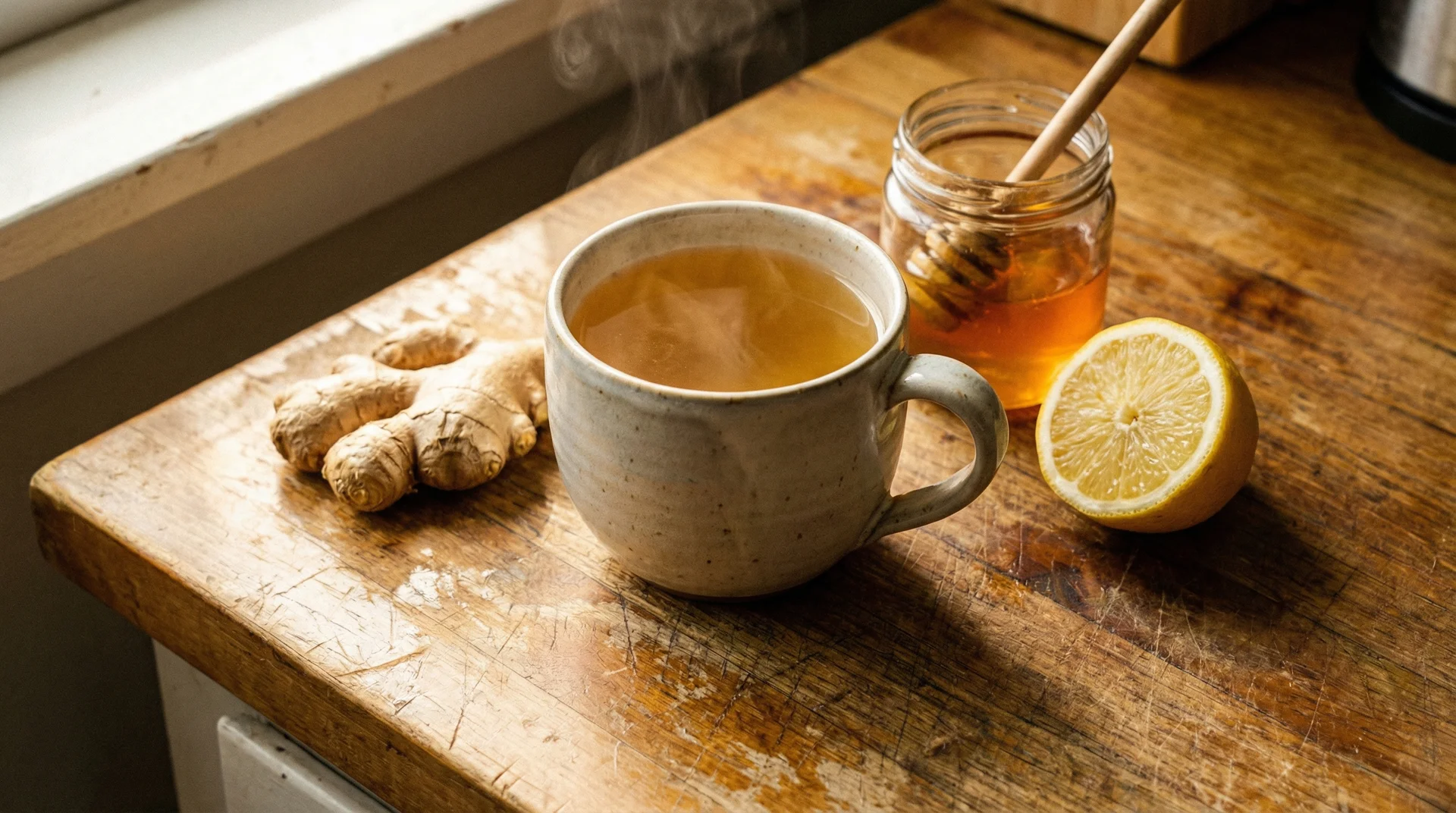
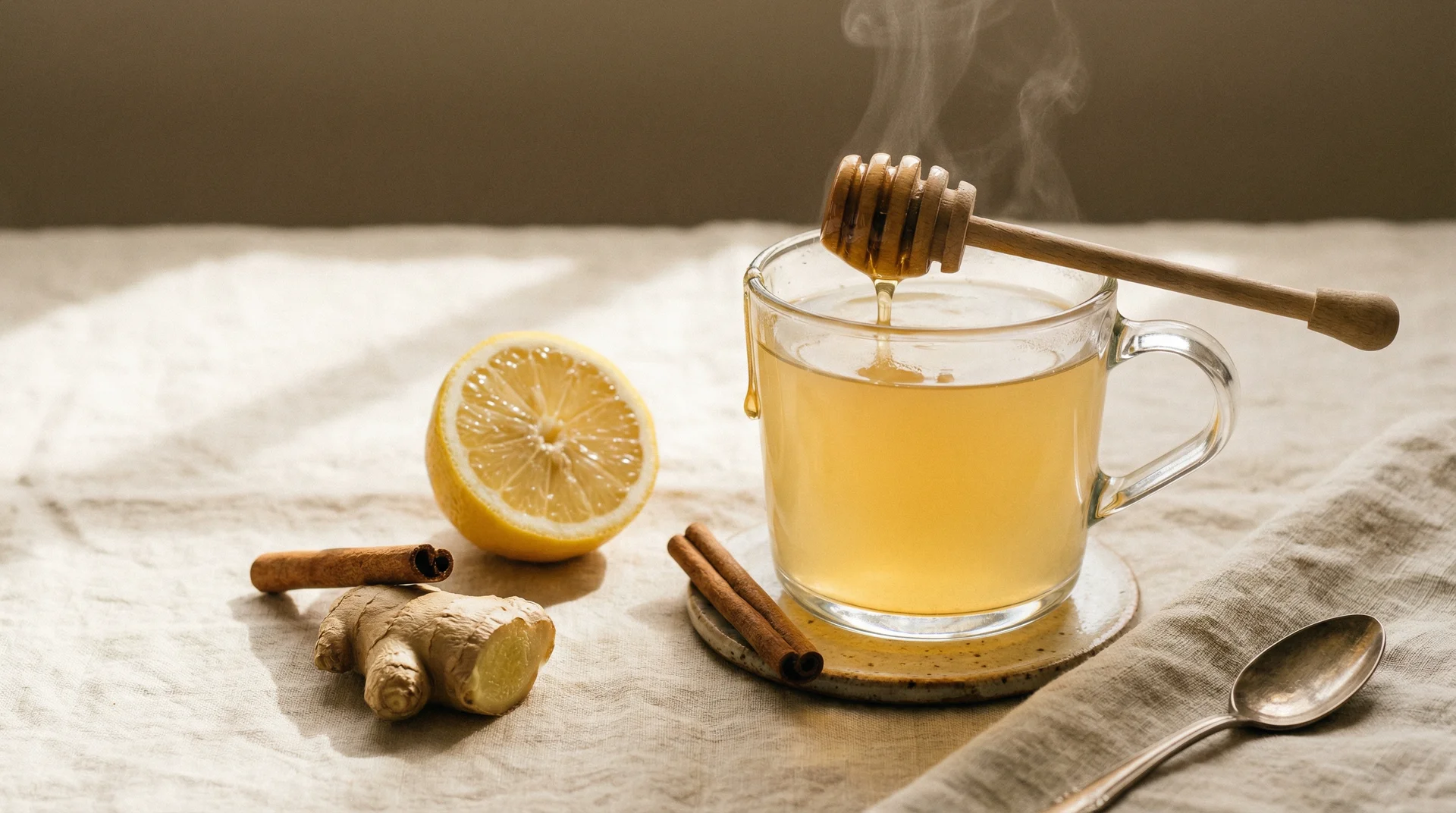
Add the ginger to the water in a small saucepan. Bring it to a gentle simmer, not a rolling boil, and hold it there for 10 to 12 minutes with the lid off. Strain into a mug. Let it cool until it is comfortably warm, then add the honey. Honey added to boiling liquid loses a portion of its beneficial compounds, so the cooling step is worth the patience. Lemon goes in at the same stage as the honey.
Sip it slowly over 15 to 20 minutes rather than drinking it quickly. You want the liquid in contact with the throat tissue, not funneled past it.
How Much and How Often
Most research on ginger for sore throats uses 1.5 to 3 grams of fresh ginger per serving, consumed two to three times daily. In kitchen terms, that is roughly a 1-inch (2.5cm) piece of fresh root per cup.
Two to three cups a day, spaced four to six hours apart, is a sensible target while symptoms are active. Some people notice easing within 20 to 30 minutes of the first cup. The fuller anti-inflammatory effect tends to build over the first 24 to 48 hours of consistent use, so drinking it once and waiting for a dramatic result is not the right expectation.
Other Ways to Use Ginger
Gargling: Brew a stronger preparation, roughly double the normal ginger concentration, let it cool to warm, and gargle for 30 seconds before swallowing or spitting. Research on topical ginger preparations shows reduced oral and throat inflammation, and gargling extends the contact time between the active compounds and the inflamed tissue. Most people skip this step, but adding it alongside drinking the tea does make a difference.
Raw ginger chew: Slice a thin piece of peeled fresh ginger and chew it slowly, letting the juice coat the throat. It is intense, it is not for everyone, and it works well for people who can handle the heat of raw ginger.
Ginger shot: Juice a 3 to 4cm piece of fresh ginger, combine with lemon juice and a small amount of honey, and drink it in one go. Higher concentration, faster onset, useful for people who want something strong rather than something to sip over twenty minutes.
Ginger lozenges: Available at most health food stores. Look for ones with real ginger extract and low sugar content. Useful for sustained relief during the workday without needing to prepare tea every few hours.
What to Pair with Ginger
Ginger works best as part of a broader approach to a sore throat.
Honey has documented antimicrobial and anti-inflammatory properties independent of ginger, and its thick texture creates a physical coating over irritated throat tissue. A 2021 review in BMJ Evidence-Based Medicine found honey more effective than standard care at reducing upper respiratory symptoms, including cough frequency. Adding honey to ginger tea is a genuinely additive combination, not just a taste preference.
A saltwater gargle (half a teaspoon of salt in a cup of warm water, held for 30 seconds before spitting) draws fluid out of swollen tissue and creates an environment that bacteria find harder to survive in. Using it between cups of ginger tea gives you two complementary mechanisms working on the same problem from different angles.
Who Should Be Careful with Ginger
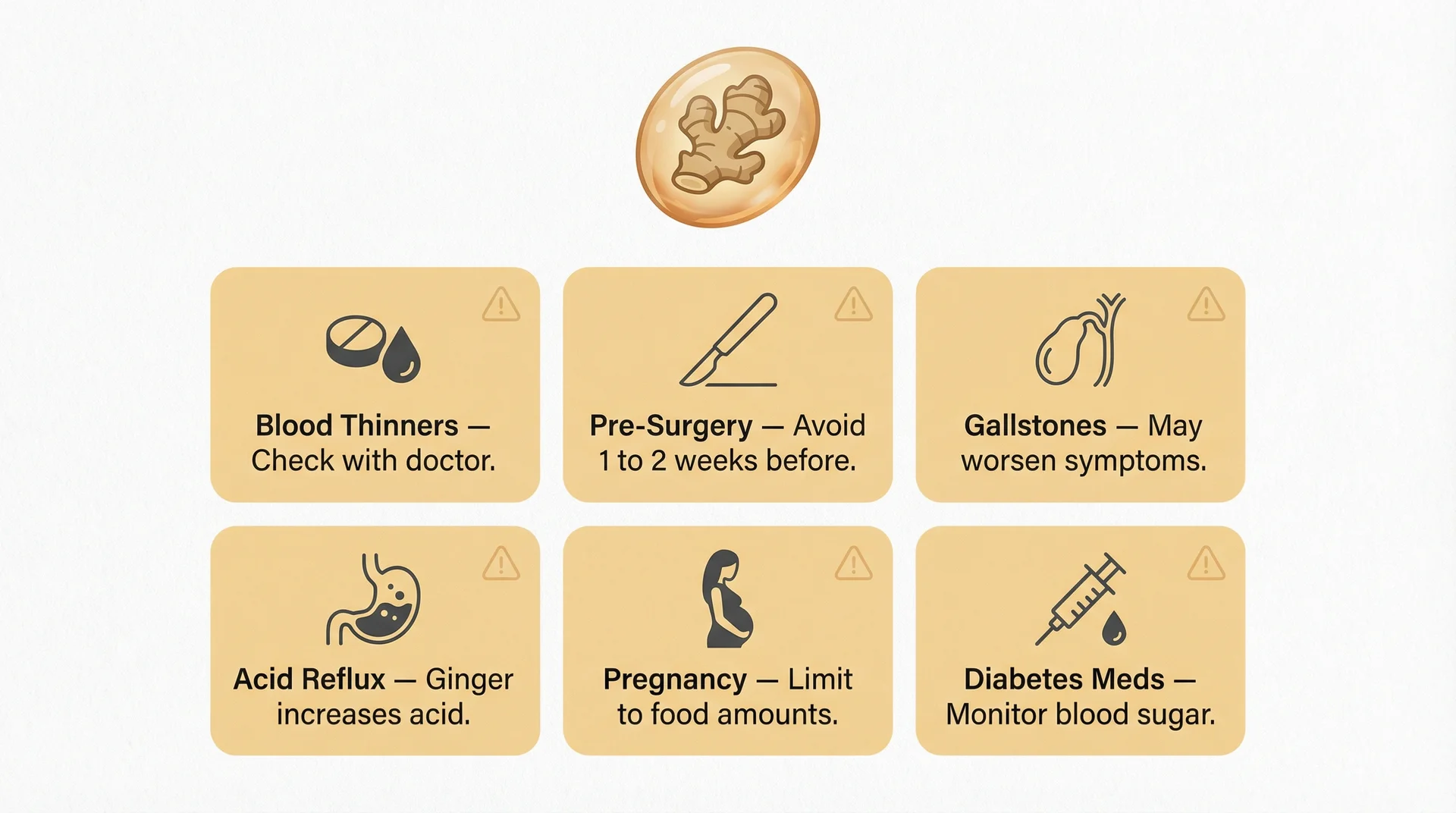
Ginger is safe for most adults in the amounts used for sore throat relief, and for the majority of people reading this, drinking two to three cups of ginger tea a day is a low-risk choice. A few situations do call for a conversation with a doctor or pharmacist first, and I want to flag them clearly.
People on blood thinners. Ginger has natural anticoagulant properties and can enhance the effect of medications like warfarin, aspirin, and clopidogrel. Culinary amounts of tea are generally lower risk than concentrated supplements, but if you take anticoagulants regularly, it is worth checking with your pharmacist before using ginger in therapeutic quantities rather than just as a flavor.
Before scheduled surgery. Most clinical guidelines recommend avoiding ginger in medicinal amounts at least one to two weeks before surgery because of its effects on blood clotting. This is worth mentioning to your surgical team if you use ginger regularly.
Gallstones. Ginger stimulates bile production, which can aggravate gallbladder issues in people with existing gallstones.
Acid reflux. As covered above, ginger increases gastric acid and will worsen a reflux-related sore throat rather than ease it.
During pregnancy. Ginger in food and culinary tea amounts is widely considered safe during pregnancy. For therapeutic use, conservative guidance suggests staying within approximately 1 gram per day and checking with a healthcare provider before using it regularly, particularly in later stages of pregnancy.
People on diabetes medications. Ginger can lower blood sugar levels and may interact with insulin or other diabetes medications. If you manage blood sugar with medication, it is worth monitoring and discussing with your doctor.
If you are on any prescription medications and want to use ginger regularly for more than a few days, a quick check with your pharmacist is a sensible step. Ginger interacts with more medications than most people assume.
When to Put the Tea Down and See a Doctor
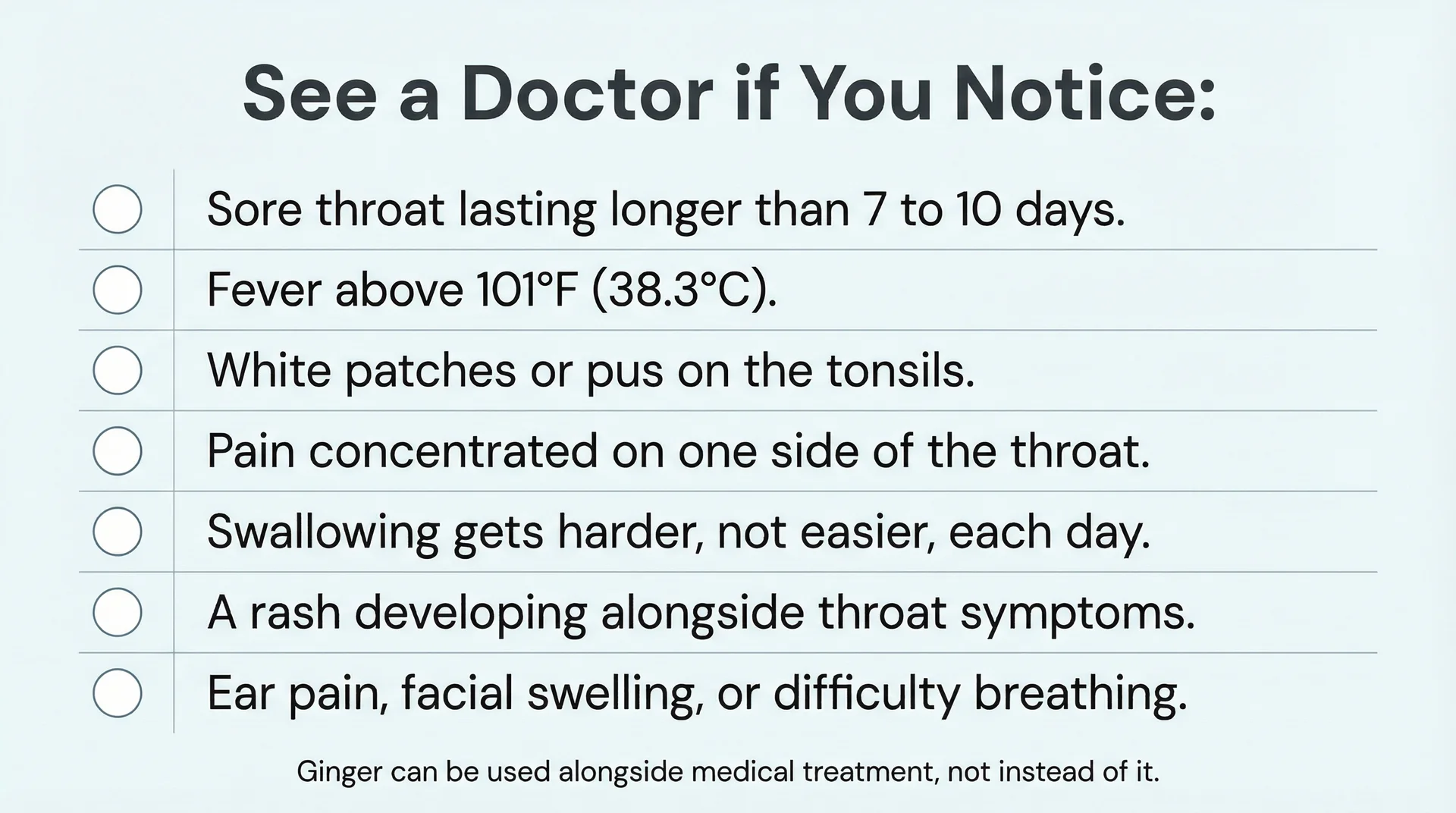
Ginger handles the common viral sore throat well. It does not handle everything, and some situations need medical assessment rather than another cup of something warm.
See a doctor if you notice any of the following:
- Sore throat lasting longer than 7 to 10 days without clear improvement
- Fever above 101°F (38.3°C)
- White patches or visible pus on the tonsils or back of the throat
- Pain concentrated on one side of the throat rather than diffuse discomfort
- Swallowing that becomes increasingly difficult, rather than gradually easier
- A rash developing alongside throat symptoms
- Ear pain, facial swelling, or any difficulty breathing
Ginger can be used alongside prescribed treatment for comfort. These symptoms are not reasons to delay care in favor of home remedies.
Frequently Asked Questions
Does ginger tea cure a sore throat?
Ginger tea reduces inflammation and may create a less favorable environment for certain pathogens, but it does not cure a sore throat. It manages symptoms while your body, or medication in the case of a bacterial infection, handles the resolution.
How quickly does ginger work for a sore throat?
Some easing is possible within 15 to 30 minutes of a well-made cup, mainly from the warmth and the early anti-inflammatory effect on throat tissue. The fuller benefit builds over the first 24 to 48 hours of consistent use.
Is fresh ginger better than ginger powder for a sore throat?
Fresh root contains higher levels of gingerols, the primary active compound. Dried powder contains more shogaols, which form during drying and are also active, but have a different profile. For acute throat pain, fresh root is the stronger preparation. Powder works in a pinch, but research suggests powdered ginger loses a significant portion of its active compounds over several months of storage at room temperature.
Can I give ginger tea to my child for a sore throat?
Ginger tea is generally safe for children over one year of age, prepared mildly. Honey should never be given to infants under one year because of the risk of botulism. For younger children, keep the preparation weak and comfortably warm rather than strong and hot, and check with a pediatrician if the child has any other health conditions.
Does ginger help with strep throat?
Ginger reduces discomfort during strep throat, but will not clear the infection. Strep requires antibiotics. If the symptom pattern described above points toward strep, getting tested is the right step rather than waiting it out.
Can ginger make a sore throat worse?
Yes, in one specific situation. If the sore throat comes from acid reflux, ginger increases gastric acid secretion and worsens the burning. For reflux-related throat irritation, chamomile tea or plain warm water is the better choice.
Is ginger safe during pregnancy for a sore throat?
In culinary and food amounts, ginger is widely considered safe during pregnancy. For regular therapeutic use, the conservative guidance is to stay within approximately 1 gram per day and to check with a healthcare provider, particularly in the later stages of pregnancy.
Can I use ginger alongside antibiotics?
Generally, yes, for comfort during a bacterial infection. The main interaction concern for ginger is with blood thinners and certain other medications, not with antibiotics specifically. That said, always mention any herbal remedy you are using regularly to whoever is prescribing your medication.
A Final Note
If your throat started aching today, the rest of your symptoms point to a standard cold or viral infection, and swallowing is uncomfortable but manageable, make the tea properly and drink it consistently throughout the day. The improvement over 48 hours is real when you use it correctly and stay on it.
If you are on day three and it is getting harder to swallow rather than easier, step back from the home remedy approach and get it looked at. Ginger is useful in the right situation. Knowing which situation you are in is what makes it work.