
| This article is for informational purposes only and does not replace professional medical advice. If your sore throat is severe, lasts more than 7 to 10 days, or comes with fever, white patches in your throat, or difficulty swallowing, see a healthcare provider. |
You wake up with that scratchy, raw feeling, and the first thing you reach for is orange juice. Vitamin C. That is what you do when you are sick. Everyone knows this.
Except there is a problem most people never hear: the vitamin C logic is right, but orange juice as the delivery vehicle when your throat is already inflamed is usually the wrong call. The acidity stings raw tissue, the sugar load works against your immune response, and the benefit you are chasing is available from sources that will not make every sip hurt.
The nuanced answer is that orange juice can actually support you, just not in the way or at the time most people use it.
I am Dr. Molly Grant, a registered dietitian nutritionist. I have spent years helping people translate nutrition research into decisions that make sense on an actual sick day, not just in a clinical study. Here is what you need to know.
The Real Answer: It Depends on When You Are Drinking It

This is the part that almost no one explains clearly. Orange juice is not a flat yes or a flat no for sore throats. The answer changes entirely based on whether your throat is already sore or whether you are trying to avoid getting there.
Before You Get Sick, OJ Has a Reasonable Case
Consistent vitamin C intake over weeks and months has measurable benefits. A large Cochrane review found that adults who supplement regularly with vitamin C experience colds that are roughly 8% shorter, about one day less of symptoms. If orange juice is part of your daily routine when you are healthy, it contributes to the kind of immune baseline that can make illness a bit milder.
That is a legitimate benefit. The problem is that most people reach for OJ the moment symptoms hit, which is a different situation entirely.
Once Your Throat Is Already Sore, the Acidity Becomes the Issue
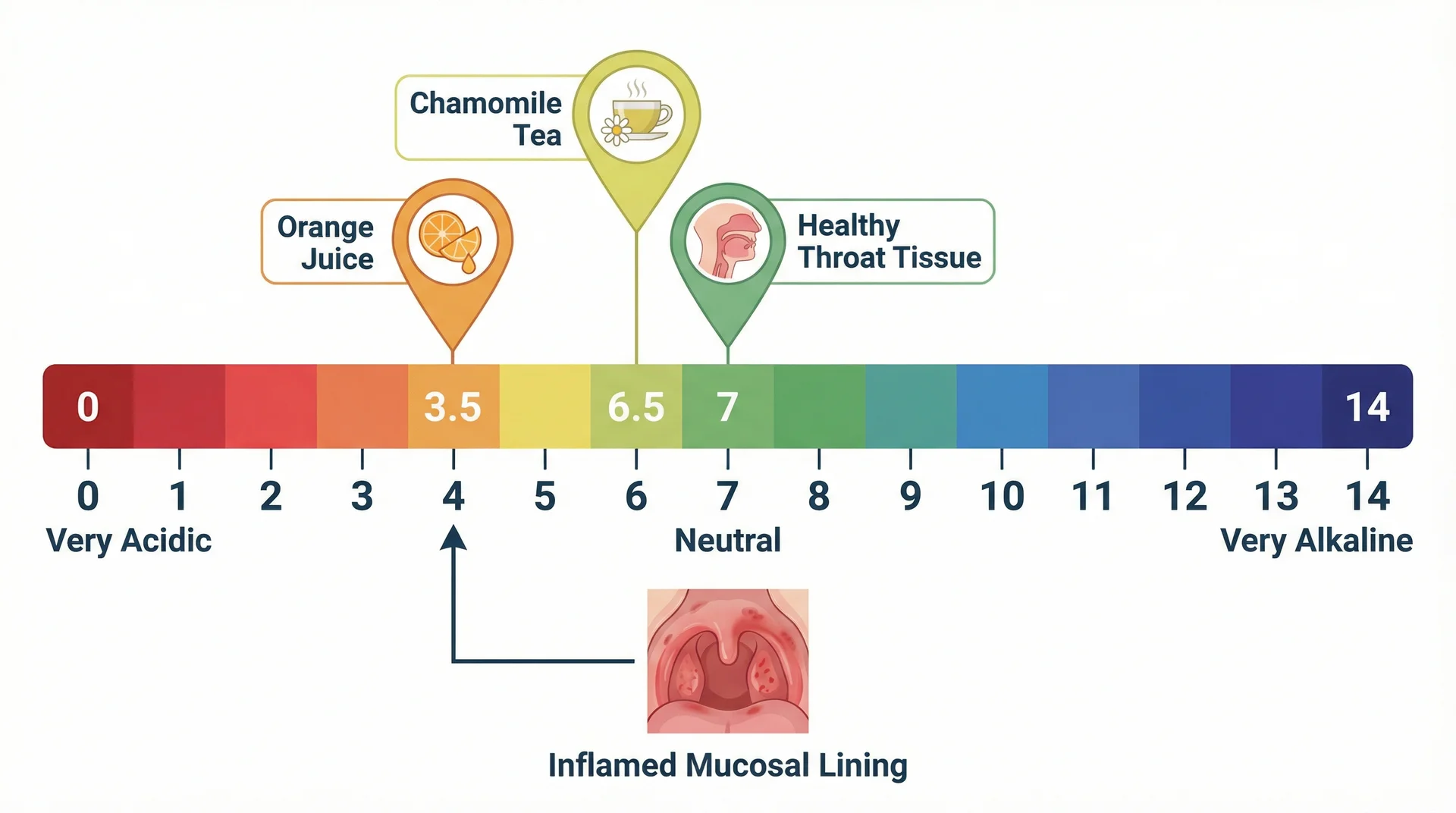
Orange juice has a pH of roughly 3.0 to 4.2, which puts it in the same acidity range as vinegar and well below the neutral midpoint of 7. When your throat is healthy, that acidity passes through without much trouble.
When the mucosal lining is inflamed and raw from infection, that same acid hits compromised tissue directly. It can intensify the burning sensation and, in some cases, slow the tissue’s ability to recover.
This is why the vitamin C logic and the sore throat reality point in opposite directions. The nutrient is useful. The vehicle is the problem.
Why We All Reach for OJ When We Are Sick
The belief has been around long enough that most people have never questioned it. Vitamin C became synonymous with immune defense through decades of research coverage, advertising, and the genuine enthusiasm of medical professionals who recommended it for general health. Reaching for OJ when you feel a sore throat coming on feels almost automatic.
The instinct is not entirely wrong. It is just misapplied.
What the Research Actually Shows About Vitamin C
Taking vitamin C reactively, once you already have symptoms, does not meaningfully shorten a cold or treat the infection behind a sore throat. The Cochrane review referenced above is consistent on this point: the benefit is in regular supplementation over time, not in a single glass when you already feel awful.
Vitamin C supports immune function as part of a sustained diet. It is not a treatment.
The Nutrient Is Fine. The Juice, Right Now, Is Not.
The vitamin C in orange juice is real. The problem is that you cannot separate it from the citric acid, the sugar load, and the cold temperature, all of which create friction with an inflamed throat. If you want the benefit of vitamin C while your throat heals, there are better ways to get it, which I will cover below.
What Orange Juice Actually Does to an Inflamed Throat
The Acidity Problem, In Plain Terms
When you have a sore throat, the pharyngeal tissue lining the back of your throat is swollen, and the normal protective mucous layer is thinner than usual. A liquid with a pH of 3 to 4 passes over that exposed tissue and creates a chemical irritation response. That stinging sensation you feel after a sip is not incidental. It is the acid making contact with the inflamed cells that are already struggling.
ENT clinicians routinely advise limiting citrus drinks while throat pain is active, then reintroducing them once the soreness has resolved. The tissue just needs less friction while it heals.
The Sugar Issue Most People Miss
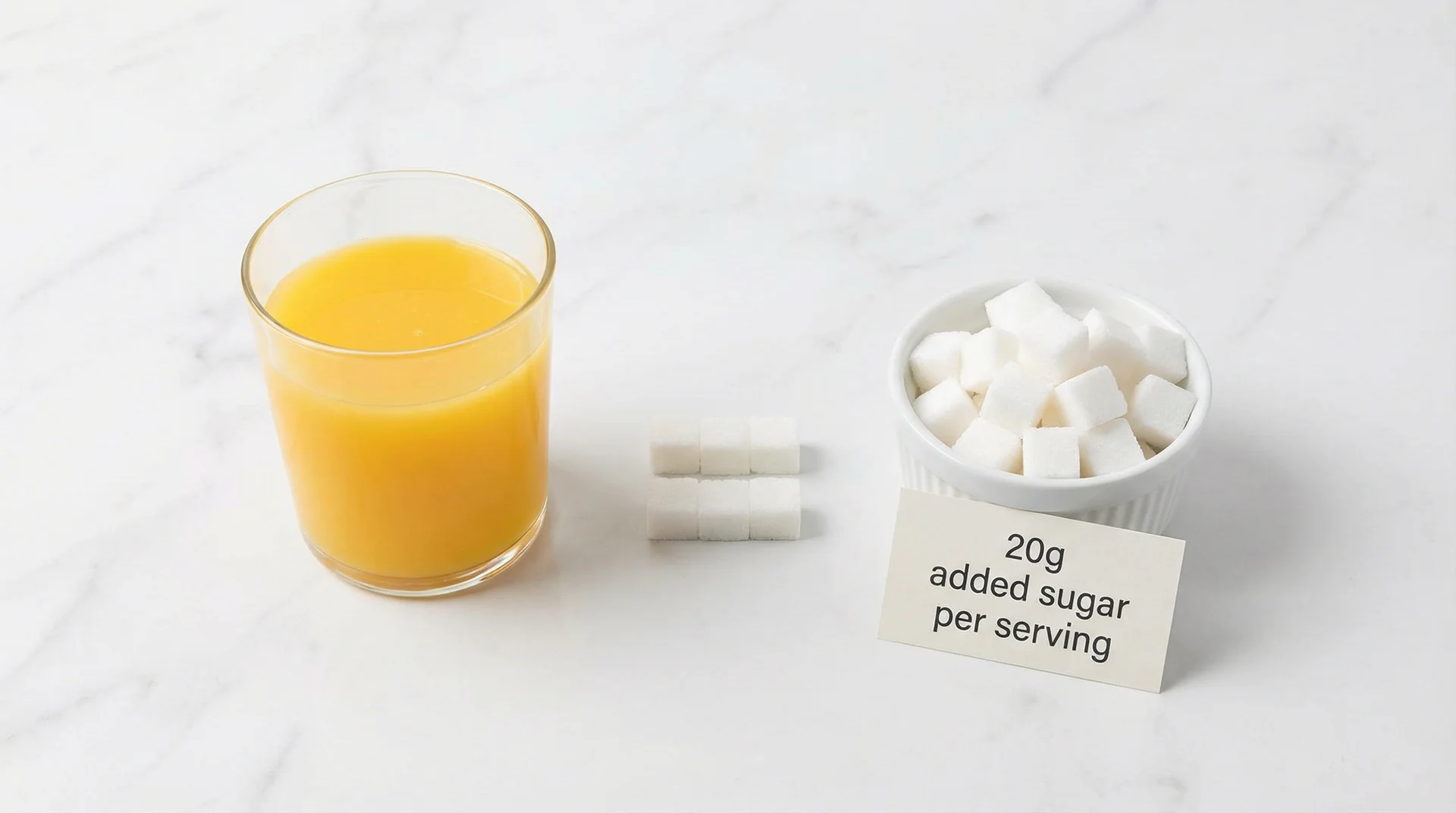
A standard 8-ounce glass of orange juice contains more than 20 grams of sugar. Research has shown that high sugar intake temporarily suppresses white blood cell activity for several hours after consumption. You are sick, your immune cells are already working hard, and a sugar load reduces their efficiency for a window of time. It is not a catastrophic effect, but it is the opposite of what you want.
One Exception Worth Knowing
Cold orange juice can provide brief numbing relief for some people because cold temperatures temporarily reduce pain signaling at inflamed tissue. This does not outweigh the acid problem for most people, but it is worth noting honestly rather than giving a blanket rule.
Does OJ Make Mucus Worse?
Not exactly. The idea that dairy or citrus creates more mucus is not well supported by research. What can happen with acidic drinks is that the body produces extra mucus to neutralize and protect the throat lining from the acidity. Some people notice thicker, stickier mucus after OJ when sick. If you are already dealing with congestion or post-nasal drip, this can feel worse even if the total mucus volume has not changed.
Does the Type of Sore Throat Change the Answer?
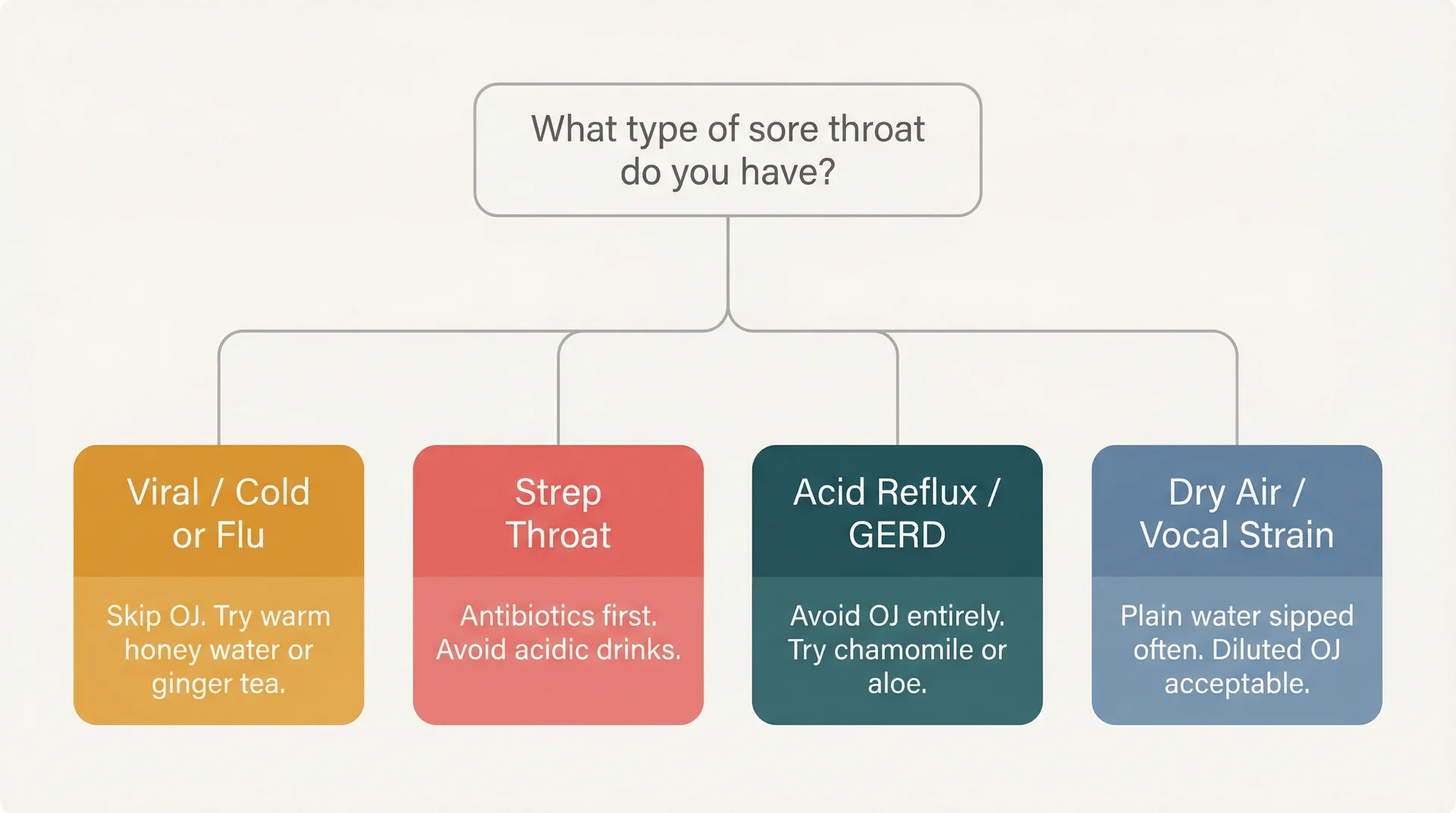
It does, and this is where most generic advice falls short. The cause of your sore throat changes, which remedies help, and which make things worse.
Viral Sore Throat (Cold or Flu)
This is the most common type. Skip OJ during the acute phase, when swallowing is painful, and the tissue is most raw. Honey water, warm broth, and ginger tea will do more. Once symptoms are fading, gradually reintroducing OJ is fine.
Strep Throat
Antibiotics are doing the real work with strep. No drink treats a bacterial infection. During treatment, the last thing you want is acid hitting already infected, inflamed throat tissue. Stay off OJ until you are through the course and feeling better.
Acid Reflux or GERD-Related Sore Throat
This is the situation where OJ is genuinely counterproductive, not just suboptimal. Orange juice relaxes the lower esophageal sphincter, the muscle that keeps stomach acid from rising into the throat. If acid reflux is already irritating your throat, drinking OJ worsens the underlying mechanism causing the pain. Plain warm water, chamomile tea, and diluted aloe vera juice are the better choices here.
Post-Nasal Drip or Allergy-Related Throat Irritation
The irritation here comes from mucus drainage, not infection. Acidic drinks can add an extra layer of irritation to tissue that is already sensitive. Warm ginger tea and honey water work better because they soothe without triggering additional mucus production.
Dry Air or Vocal Strain
No infection is involved, so the same restrictions do not apply quite as strongly. But plain water sipped frequently throughout the day does more for vocal strain than any specific juice. If you want OJ here, diluting it is a reasonable approach.
You Already Drank Some Orange Juice. Now What?
A fair number of people searching for this question have already had a glass. If that is you, you probably felt it immediately.
Rinse your throat with warm water to dilute and clear the acid. Give it 10 to 15 minutes. If the stinging settles, you can move on to something more soothing. A warm honey water or a cup of chamomile tea will help coat the tissue and calm the irritation.
You did not cause lasting harm. Discomfort from a single glass is temporary. But now you know why it stings, and what to reach for instead.
How to Get Your Vitamin C Without the Acidity
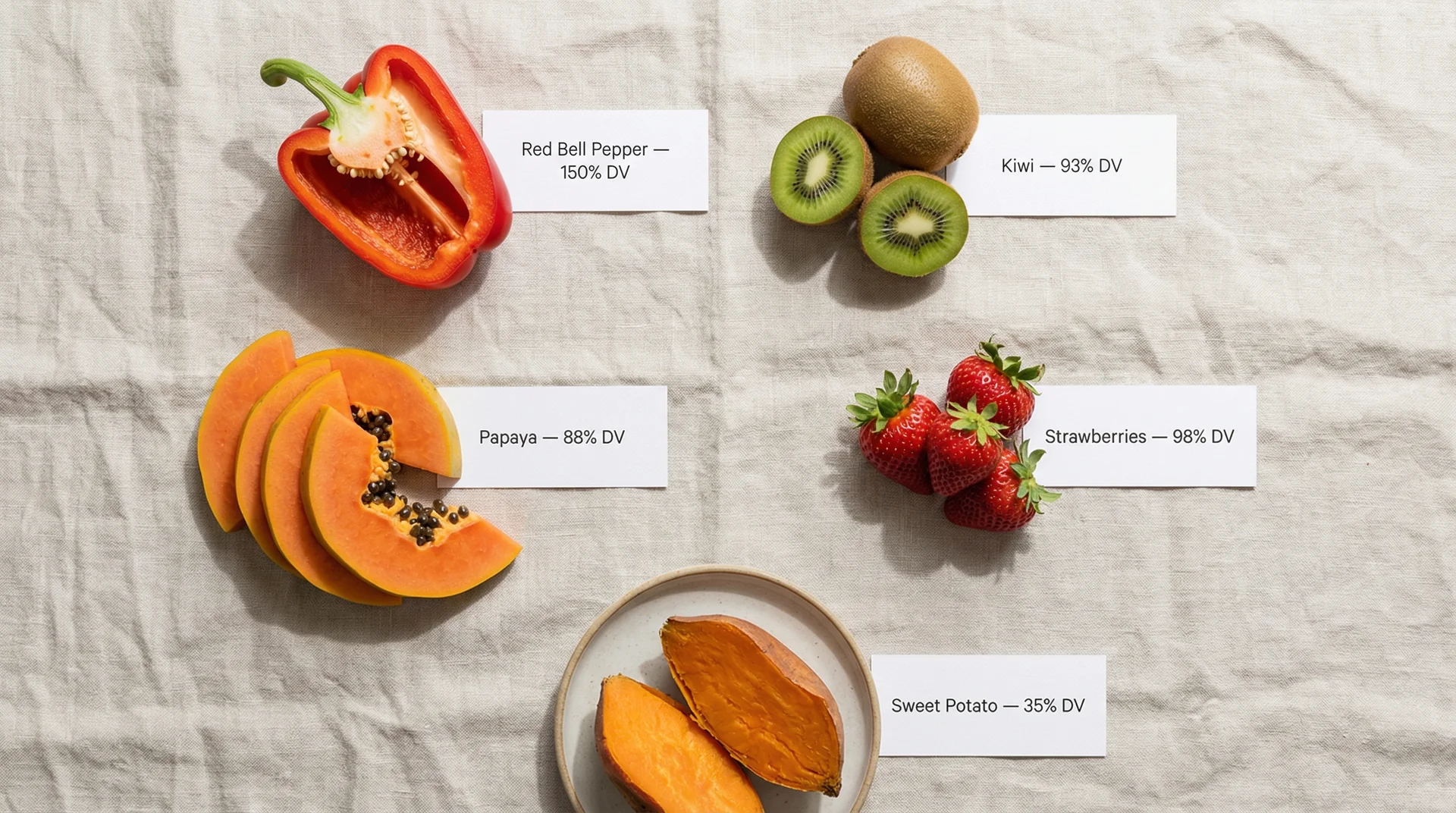
This is the practical answer the OJ question deserves. You can absolutely support your immune system with vitamin C right now, just not from the glass on your counter.
Non-Acidic Foods with High Vitamin C
Bell peppers have more vitamin C per gram than an orange and essentially no citric acid. One medium red bell pepper delivers roughly 150% of the daily recommended intake. Other good options are kiwi (less acidic than citrus), cooked sweet potato, papaya, and strawberries blended into a smoothie with banana. All of these give you the nutrients without the acid load.
The Diluted OJ Middle Ground
If you want to keep some OJ in the picture, dilute it with an equal amount of water, or more. This cuts both the acidity and the sugar concentration while preserving a portion of the vitamin C. Drink it at room temperature rather than cold, and sip it alongside food so the acid does not hit an empty throat lining.
This is not the first choice during active inflammation, but it is a reasonable compromise for someone who is feeling slightly better and wants to bring OJ back gradually.
What to Drink Right Now Instead
Warm water with raw honey and a squeeze of lemon is the most evidence-backed option for sore throat relief. A 2021 review in BMJ Evidence-Based Medicine found that honey outperformed standard care for upper respiratory symptom relief.
Ginger tea addresses congestion alongside throat pain. Warm broth delivers sodium and amino acids that support immune function while keeping the throat coated. Chamomile tea works particularly well in the evening because its mild analgesic properties help with sleep, and sleep is where most of the actual healing happens.
When Home Remedies Are Not Enough
Most sore throats resolve in 7 to 10 days with rest, hydration, and sensible choices about what you eat and drink. A few situations call for a medical evaluation rather than another adjustment to your drink rotation:
Fever above 101 degrees Fahrenheit, white patches or pus visible on the back of the throat, throat pain that worsens over several days instead of gradually improving, severe pain on one side only, a rash appearing alongside throat symptoms, or any difficulty breathing.
These do not automatically mean something serious is happening, but they do mean the right next step is a provider, not a home remedy.
Frequently Asked Questions
Is orange juice good for a sore throat?
Not during active inflammation. The citric acid irritates already-swollen mucosal tissue, and the sugar load temporarily suppresses immune cell activity. As a preventive measure taken consistently when healthy, OJ supports immune function. Once your throat is raw and painful, there are better options.
Does vitamin C help when you are already sick?
The evidence is mixed. Regular vitamin C intake over weeks and months can shorten cold duration modestly. Taking it reactively after symptoms appear has not shown consistent benefit in clinical research. The immune support from vitamin C is cumulative, not immediate.
Can I drink orange juice with strep throat?
It is better to avoid it until you are through your antibiotic course and the acute inflammation has settled. Strep causes significant tissue irritation on its own, and adding acid to that environment tends to worsen discomfort.
What juice is good for a sore throat if not OJ?
Diluted apple juice, diluted pomegranate juice, and watermelon juice are lower-acid options that keep you hydrated without the citric acid problem. Pomegranate juice, in particular, has some research behind its anti-inflammatory properties.
Is warm orange juice better than cold for a sore throat?
Slightly, because the temperature itself is less of an irritant than cold OJ. But the acid is still the core problem regardless of temperature. Warm OJ diluted with water is the gentler version if you are going to have any at all.
Can orange juice make a sore throat worse?
Yes, for most people during active infection. The citric acid stings inflamed tissue, the sugar suppresses immune response temporarily, and the body can produce extra mucus to buffer the acidity, which adds to congestion.
What is the best drink for a sore throat, according to a dietitian?
Warm water with raw honey and a small squeeze of lemon. Honey has documented antimicrobial and anti-inflammatory properties. The warmth soothes inflamed tissue. And the lemon gives you some vitamin C without a full glass of citric acid against the raw mucosal lining.
A Final Note
The OJ instinct comes from a real place. Vitamin C matters for immune health, and orange juice is an easy source of it. The timing is just off. When you are healthy, a daily glass of OJ makes sense. When your throat is raw and swallowing hurts, the same glass works against the very tissue it is supposed to help.
Put it aside for now. Get your vitamin C from a bell pepper or a kiwi. Sip warm honey water. Let your throat heal on its terms.