

| This article is written from a makeup artist’s perspective based on professional observation and publicly available clinical information. It does not constitute medical advice. Consult a board-certified provider before undergoing any cosmetic procedure. |
Most of my clients do not come to me asking about thread brow lifts directly. They sit down, I pick up my brush, and somewhere in the first five minutes, they say they look tired. They say their eyes feel heavier. They say their brows used to sit higher. That is almost always the beginning of the conversation.
I am a makeup artist. I work with bridal clients, editorial shoots, and everyday people across the Pacific Northwest. I cannot perform this procedure, but I have watched what it does to the brow area in client after client who came back to my chair with noticeably different brow placement. I have also seen clients return frustrated because nobody told them what the results actually look like. That gap is what I want to close here.
| So, the short answer first: a thread brow lift uses thin dissolvable sutures placed under the skin to lift brow tissue physically. The results are real and subtle, around 3 to 5 millimeters of lift, and they last 12 to 18 months, depending on the thread type and your skin. It works well for people in their late 30s to early 50s with mild to moderate brow descent. It does not replace surgery for significant sagging, and it is not the same thing as a Botox brow lift. If your brows are sitting lower than they used to and you want to know whether threads are worth your time and money, keep reading. |
What Is a Thread Brow Lift?
Skin loses collagen over time, and facial muscles weaken. When that happens, the soft tissue in the brow area starts to descend. For most people, this begins in the late 30s or early 40s. The outer tail of the brow tends to drop first, which creates that heavy, hooded look over the eye that no amount of highlighter can fully correct. People often say they look permanently tired or stern, even when they feel perfectly fine.
A thread brow lift addresses this by inserting fine medical-grade sutures under the skin using a small needle or cannula. The sutures are barbed, meaning tiny hooks anchor them into the tissue.
Once positioned correctly, the provider pulls the threads to lift and reposition the brow. The threads dissolve over three to six months, but they trigger a collagen response during that time.
The skin continues to tighten and firm even after the threads are gone, which is why results often outlast the threads themselves. Clinical data shows PDO threads can increase collagen production in treated areas by 25 to 30% over three to twelve months.
The American Society of Plastic Surgeons describes the thread lift (also known as “lunchtime lift“) as a procedure that uses absorbable, barbed sutures to produce a tighter, more youthful appearance, with the added benefit of stimulating collagen in the skin. The whole appointment runs 45 to 60 minutes. Most people go home the same afternoon and return to work within 24 to 48 hours.
The thread type matters more than most clinics tell you
If you go into a consultation and the provider does not mention what type of thread they plan to use, ask. There are three materials in common use, and each behaves differently in the body.
| Thread type | Dissolves in | Typical result duration | Notes |
|---|---|---|---|
| PDO (Polydioxanone) | 3 to 6 months | 12 to 18 months | Most common for brow work; established safety profile |
| PLLA (Poly-L-Lactic Acid) | 12 to 18 months | Up to 2 years | Stronger collagen stimulus; used more in the mid and lower face |
| PCL (Polycaprolactone) | 2 to 3 years | Potentially 3 or more years | Less common for brows; longer dissolve time |
PDO threads dominate brow work because they give providers precise control and have the longest track record. The threads also come in two textures: barbed threads do the lifting, and smooth threads primarily stimulate collagen in targeted areas. A good provider will explain which combination they are using and why, based on your brow anatomy specifically.
Thread Brow Lift Procedure
Before you go in
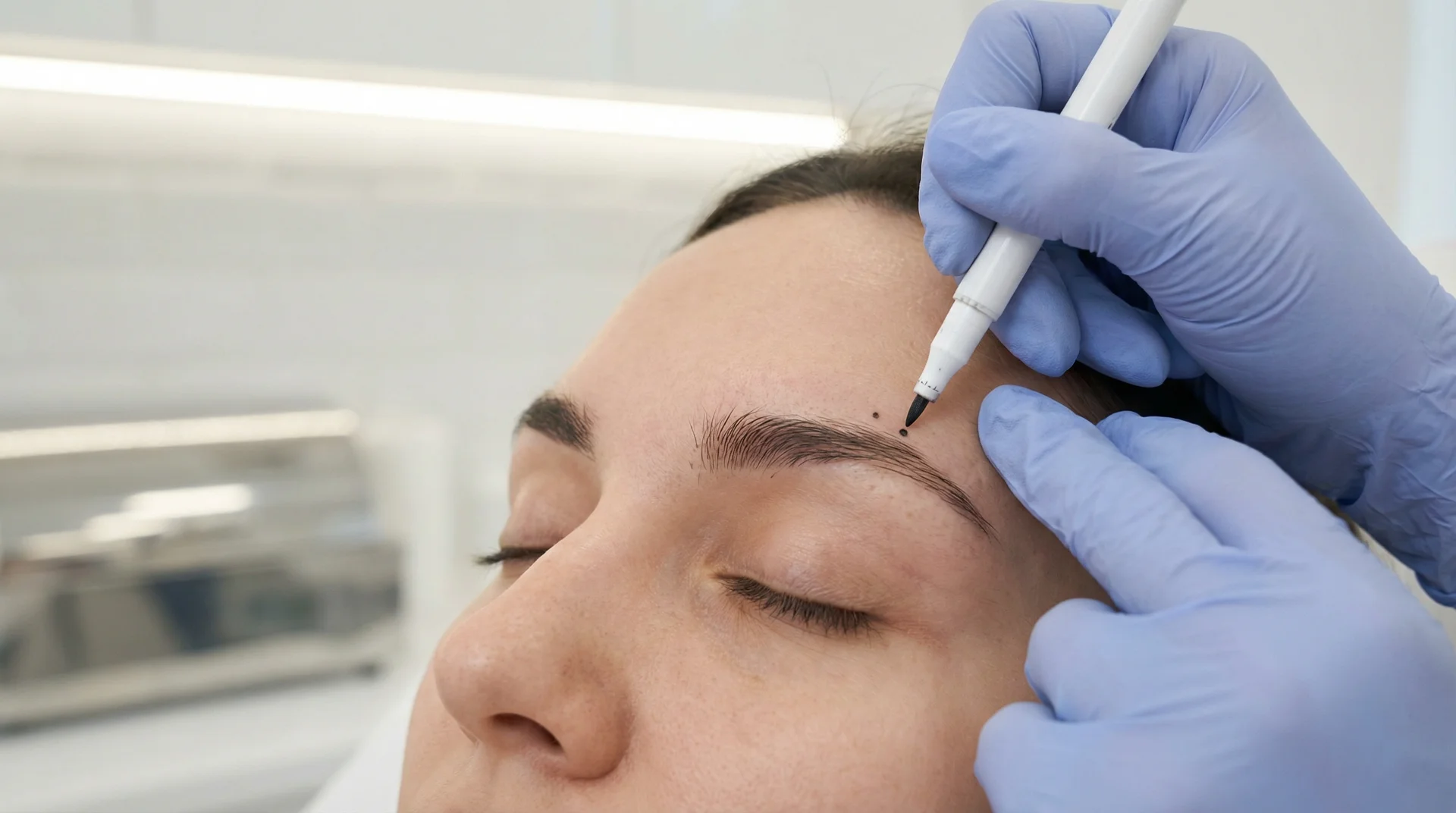
A proper consultation should happen before any needles do. Your provider needs to assess your skin laxity, brow position, facial symmetry, and medical history. Disclose whether you take blood thinners or NSAIDs, whether you have a history of keloid scarring, and whether you have any autoimmune conditions. Some of these are outright contraindications.
Pre-procedure preparation typically involves avoiding alcohol, smoking, and blood-thinning supplements like vitamin E, fish oil, and aspirin for one to two weeks beforehand. The provider should walk you through this list at the consultation stage. The consultation is also where you set expectations about what the lift will look like. If that conversation does not happen in detail, or if the provider rushes through it, pay attention to that.
During the procedure
You lie back. The provider marks the treatment area and applies a numbing cream or local anesthetic. Most people describe the sensation as pressure or mild tugging. I have had clients tell me it was much less uncomfortable than they expected. The insertion phase takes around 30 to 45 minutes, depending on how many threads are placed.
After the threads are positioned, the provider massages the area gently to smooth any unevenness and confirm symmetry. You can see a difference immediately when you sit up. The brow is lifted, the eye area looks more open, and the outer tail has more definition. That immediate result is real, but it is slightly more dramatic than your final result will be, because some of the visual lift comes from initial tissue response that settles over the following days.
The first week after
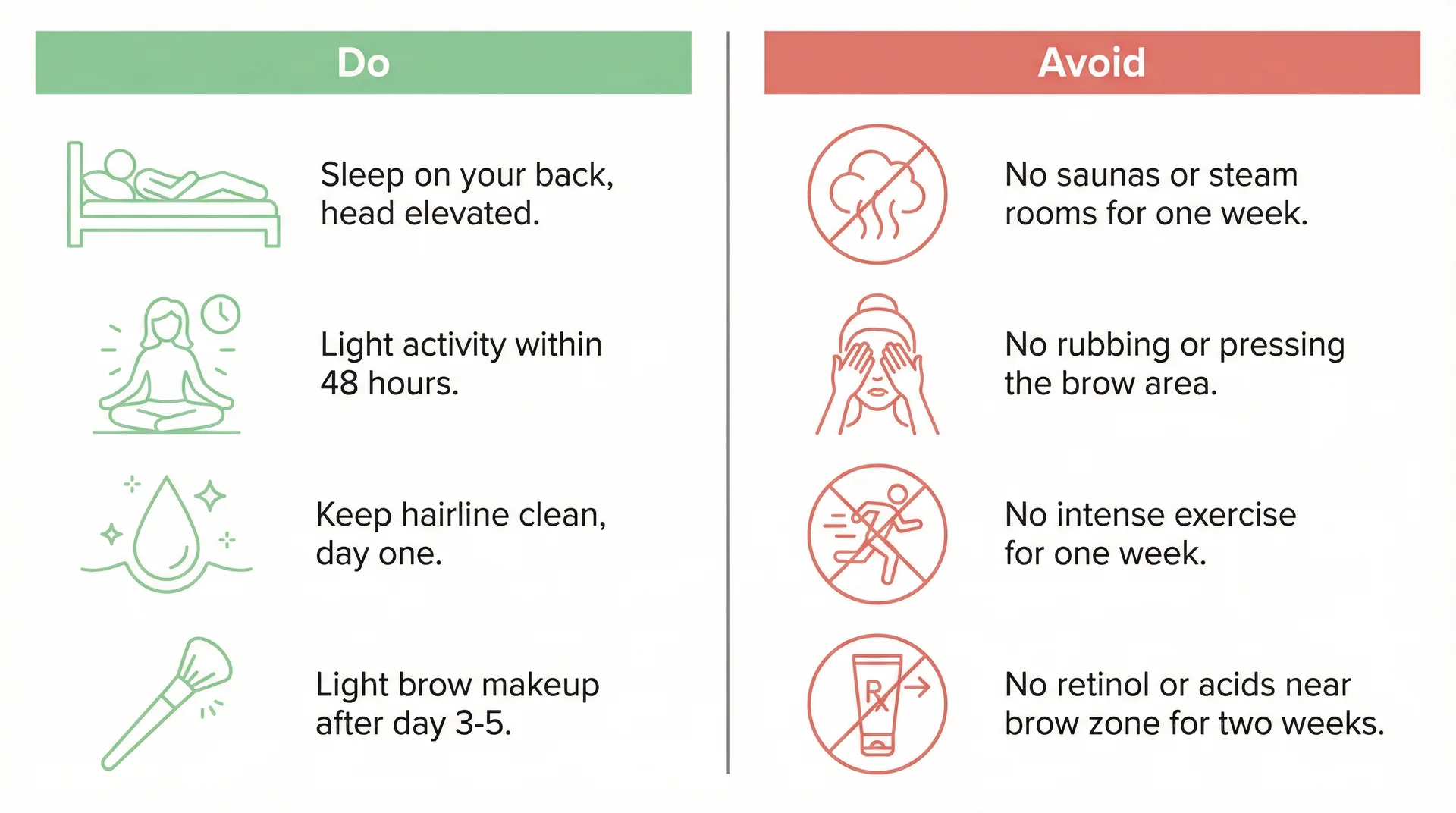
Swelling around the brow tends to last three to five days, longer than the one or two days you might experience with mid or lower face thread work, because there is less soft tissue and more blood vessel density in the brow area. Bruising at the insertion points is common and usually fades within a week.
Recovery instructions to follow:
- Sleep on your back for three to five nights to keep threads in position
- Avoid lying on your stomach or side for at least four hours after the procedure
- Keep the hairline and skin clean for the first 24 hours
- Hold off on saunas, steam rooms, and intense exercise for about a week
- Skip your daily moisturizer for the first few weeks and sleep with your head elevated to avoid pressure on the sutures
On the makeup side, I tell my clients to wait at least three to five days before applying products around the brow area. When you do return to brow makeup, use a light hand. The tissue is still settling, and heavy product application with pressing or rubbing motions is not ideal in the first two weeks.
What do the results realistically look like?
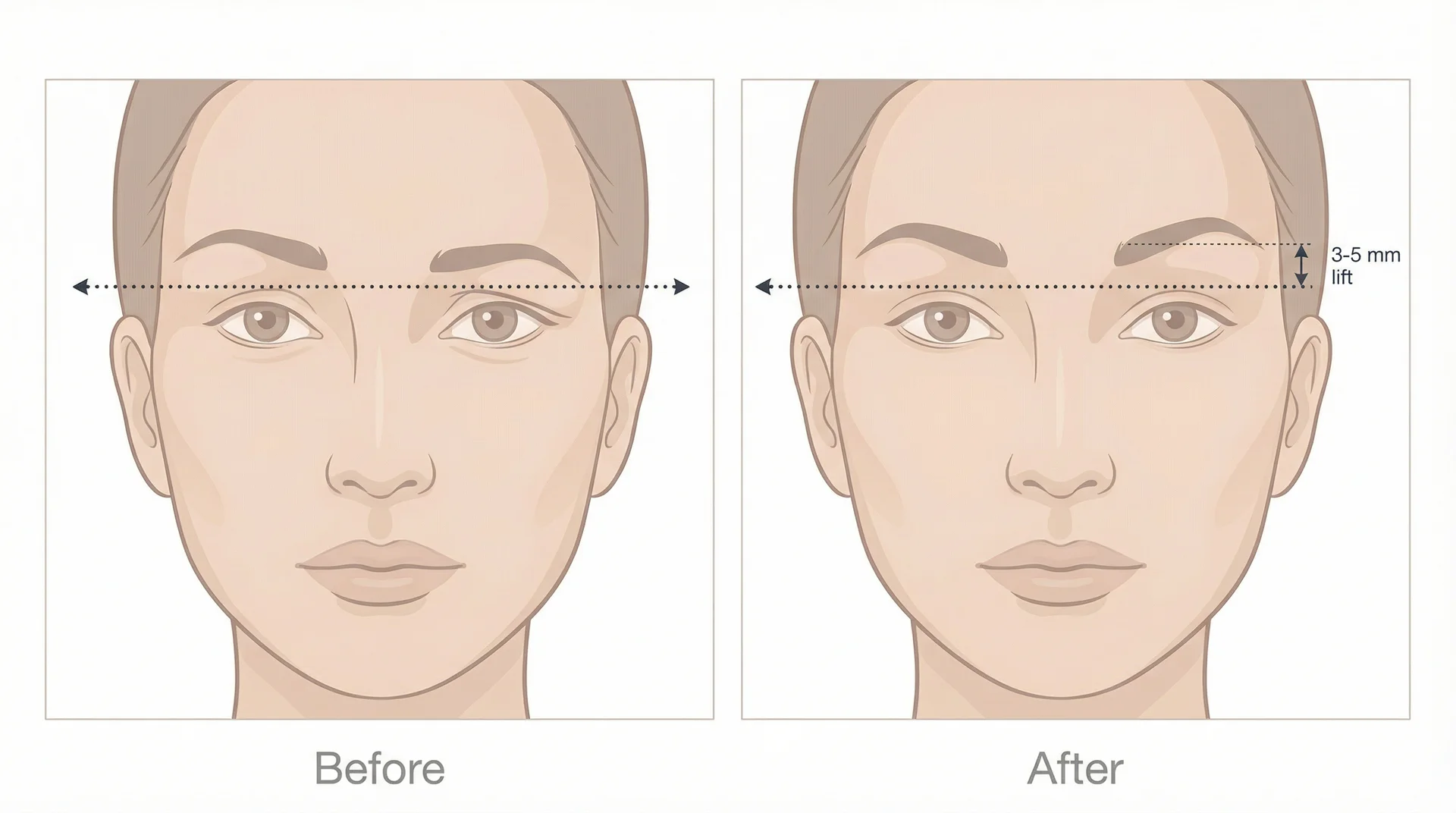
Optimal results appear at about three to four weeks after the procedure, once initial swelling resolves and the threads settle. The lift at that point is typically three to five millimeters. That sounds small until you see what it does to the eye area. Three millimeters of lift on the outer brow tail opens the eye, removes the heaviness over the lid, and changes how the entire face reads.
Most patients see results last 18 months or longer. The threads dissolve within three to six months, but the collagen they stimulate continues to support the brow structure well beyond that point. Lifestyle factors affect longevity. Sun exposure, smoking, poor skin hydration, and stress all accelerate collagen breakdown. People who start the procedure earlier, when their skin still has reasonable elasticity, generally get more time out of each treatment.
If you go in for maintenance at the 12 to 18 month mark, that follow-up appointment typically costs about 60 to 75% of your original procedure price. To extend results between sessions, a daily broad-spectrum SPF, collagen-supporting skincare ingredients like retinoids or peptides, and good hydration all make a difference.
Will it look natural?
Yes, when done well. The lift creates more space between the brow and the eye without altering the fundamental structure of your face. You look like yourself, but more rested. The threads are not visible, though you may feel them if you press on the brow area in the first few weeks. Temporary dimpling or puckering at the brow corner usually resolves within two weeks.
From where I sit as a makeup artist, a well-done thread brow lift makes my job noticeably easier. The lifted brow creates more visible lid space, which opens up the canvas for shadow and liner that was harder to execute when the brow was sitting low. Clients who used to spend time drawing their outer tail higher to create the illusion of lift often find they need significantly less product and time to get the same result after threads.
The fox eye and cat eye variation
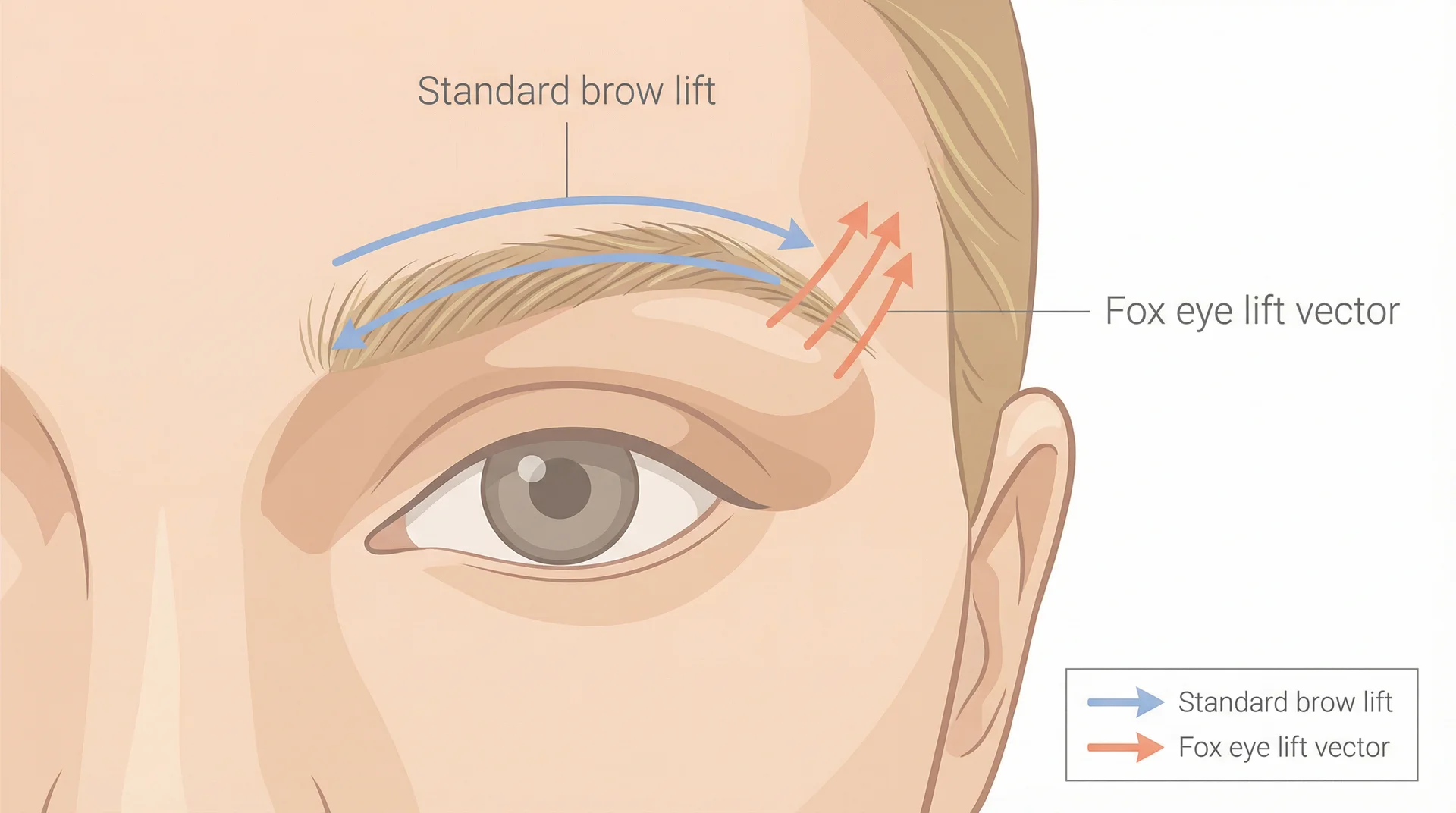
Worth mentioning separately: some providers offer what they call a fox eye thread lift or cat eye lift. The technique is the same, but the vector of placement targets the outer brow tail specifically to create an angled, elongated eye shape.
Rather than lifting the whole brow frame, the threads pull the outer corner upward and slightly toward the temple, producing the almond-shaped eye associated with the fox eye trend.
The procedure is ideal for people who want outer brow elevation, specifically, rather than an overall brow lift. The same candidacy rules apply. Your anatomy determines whether the shape is achievable and how pronounced the result will be.
Who is a good candidate, and who should skip it
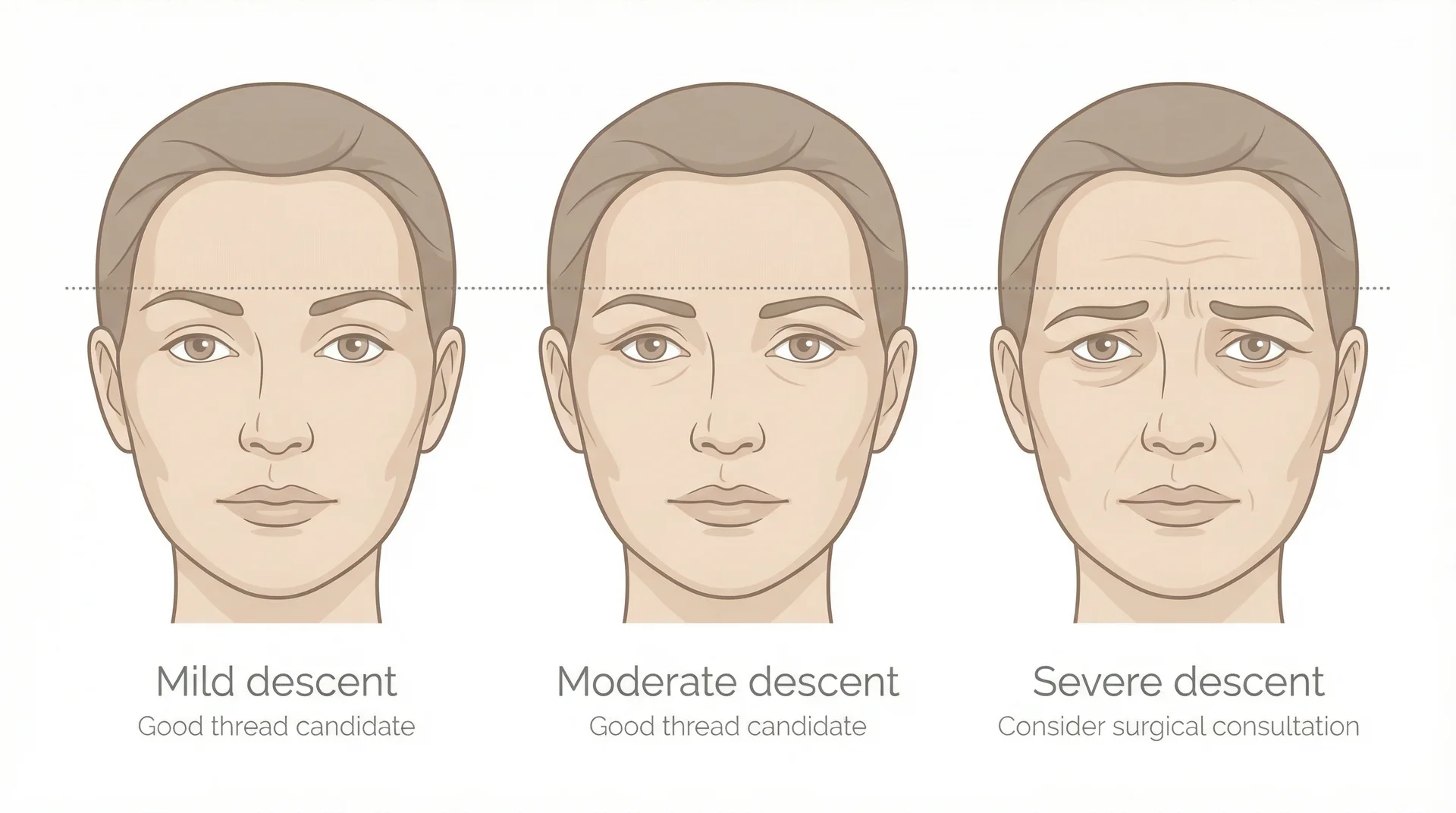
Most clinic content gives you a vague ideal candidate description that fits roughly half the adult population. The reality is more specific.
You are likely a good fit if:
- You are in your late 30s to early 50s with mild to moderate brow descent
- Your outer brow tail droops more than your inner brow, creating an asymmetric or tired appearance
- You have reasonable skin elasticity, meaning skin that still has some spring and firmness
- You want a preventative or early-stage intervention rather than the correction of significant sagging
- You understand the results are temporary and are comfortable with that tradeoff
- Botox alone is no longer giving you enough lift, and you are not ready for surgery
You should probably skip it if:
- You have a history of keloid scarring (thread friction can activate the keloid process)
- You have active skin infections in the treatment area
- You have very thin skin (thread visibility is more likely, and results may be less predictable)
- Your temple region is already tight, and your brow tail sits high (not enough tissue laxity to create meaningful change)
- You have severe skin laxity (threads can tighten and lift, but cannot reposition what surgery needs to address)
- You have autoimmune conditions like lupus (discuss with your provider, as these may be contraindications)
- Your expectation is a dramatic transformation rather than a subtle improvement
The best candidate tends to be someone who looks in the mirror and thinks, “I look more tired than I feel.” That is exactly the gap threads can close.
Thread brow lift vs. your other options
Thread brow lift vs. Botox brow lift
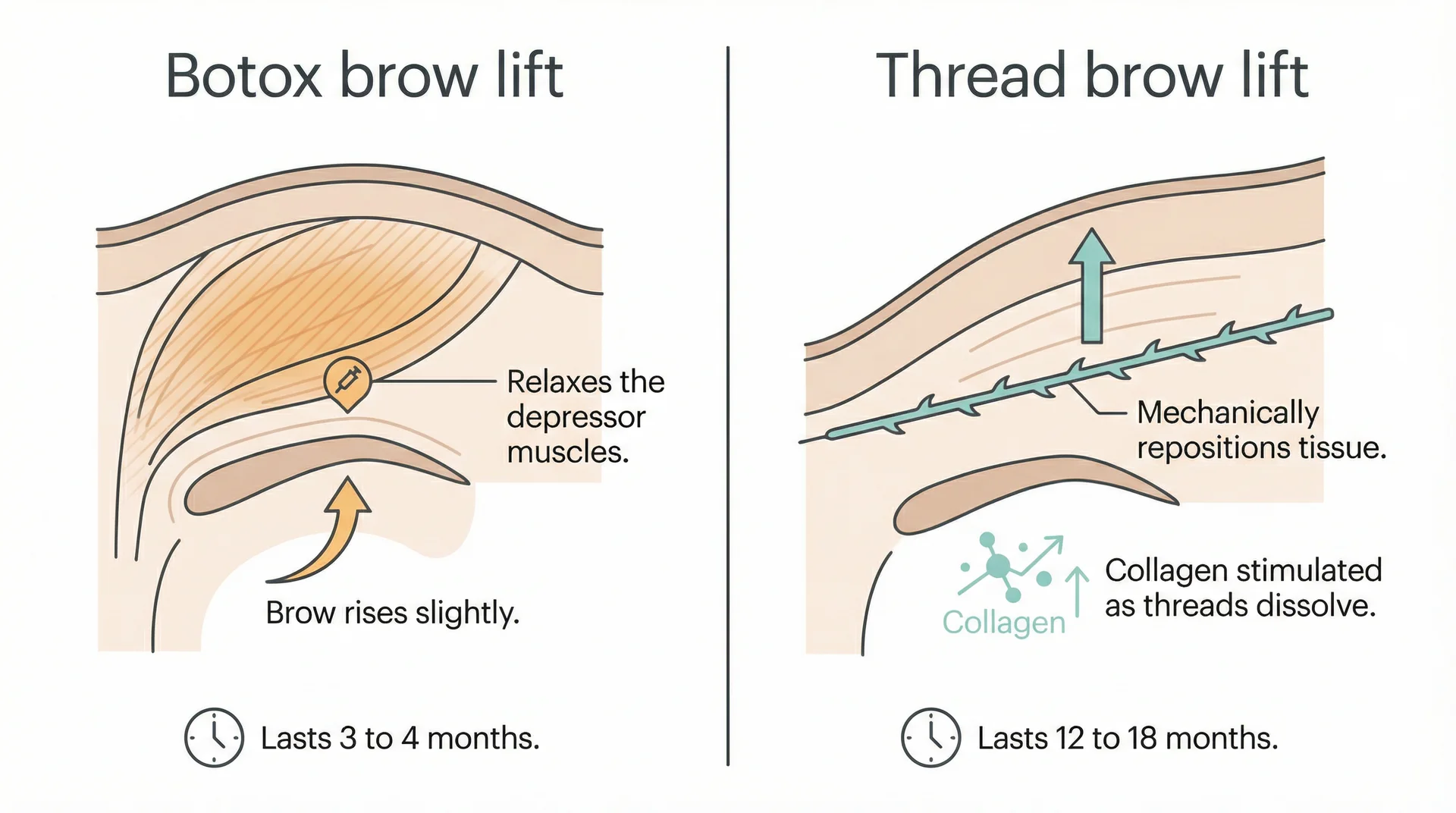
These two procedures look similar on the surface but work through completely different mechanisms. Botox relaxes the muscles that pull the brow downward, allowing the frontalis muscle to act with less resistance. The result is a subtle elevation that lasts three to four months. The lift is modest and depends heavily on your anatomy and the injector’s skill.
Thread lifts physically reposition tissue using sutures. The lift is mechanical and more consistent across skin types. For people whose brows have descended structurally, threads often produce more visible and longer-lasting results than Botox alone. Many providers use both in combination: threads to reposition the brow, Botox to smooth the forehead, and reduce the downward muscle pull. Botox is the right first step when brow heaviness is mild. Threads are the natural next step when Botox alone is not doing enough.
Thread brow lift vs. surgical brow lift
| Factor | Thread brow lift | Endoscopic brow lift |
|---|---|---|
| Procedure time | 45 to 60 minutes | 1 to 2 hours |
| Anesthesia | Local | General or deep sedation |
| Results duration | 12 to 18 months | 10 to 12 years |
| Recovery | 2 to 5 days of visible downtime | 1 to 2 weeks |
| Average US cost | $2,000 to $3,000 | $7,500 and up |
| Scarring | None | Small incisions in the hairline |
| Lift magnitude | 3 to 5 mm | Significant repositioning |
Surgery produces results that threads genuinely cannot match in duration or degree of lift. For people with significant brow descent or hooding severe enough to affect vision, surgery is often the right recommendation. The thread lift works well as a middle option for people whose anatomy does not yet require surgery, or who want to see how a lifted brow position looks on their face before committing to a surgical approach.
Thread brow lift vs. filler brow lift
Filler addresses a different problem. Over time, the fat pad underneath the brow loses volume, which makes the brow look flat and deflated rather than descended. Filler reinflates that pad and restores three-dimensional contour to an area that has gone flat. That is genuinely useful for the right person. Filler does not reposition a descended brow. Threads do.
Some patients need both: threads to reposition the brow and filler to restore volume underneath. When a provider tells you one or the other will solve every concern, ask them to explain specifically what each one addresses. If they cannot, that is worth knowing.
Risks, side effects, and what a 15 to 20% complication rate actually means
Thread brow lifts carry a roughly 15 to 20% chance of complications according to available clinical data. That number sounds alarming until you understand that the most common complications are temporary and minor.
Typical side effects:
- Swelling lasting three to seven days in the brow area
- Bruising at the insertion points, fading within a week
- Temporary dimpling or puckering where the thread is adjusting, usually resolving within two weeks
- Mild soreness or tightness in the treated area for a few days
Less common complications worth knowing:
- Thread migration, where threads shift from their original position and cause asymmetry or lumpiness
- Infection, which is rare but requires immediate contact with your provider if you notice swelling beyond 48 hours, fever, or discharge at the insertion site
- Thread visibility is more likely with very thin skin or superficial placement
- Asymmetry from uneven placement
The serious complications are rare, and most minor ones resolve on their own. The bigger variable in outcome quality is provider training. Threads have a much larger learning curve than Botox or fillers because the technique depends on understanding facial vectors, the correct depth of placement, and how different thread types behave in different tissue types.
As Vanessa Lee, RN, aesthetic practitioner and thread educator, put it: “Threads have a much larger learning curve than fillers and Botox because there are so many variables to nailing great results.”
A practitioner who learned threads in a weekend course is a different risk profile than one who has placed hundreds of them with documented follow-up results.
How to choose a provider
Before you book, ask these questions:
- What thread type do you use for brow work, and why that type for my anatomy specifically?
- How many brow thread procedures have you performed? (Thread lifts in general are not the same answer.)
- Can I see before and after photos of your brow thread patients, taken at four weeks post-procedure?
- What is your protocol if I develop asymmetry or dimpling?
- Do you offer a follow-up appointment in the first month?
A provider who answers these questions clearly and without rushing is the kind of provider worth sitting down with. Vague answers or pressure to book on the spot deserve a second opinion.
How much does a thread brow lift cost?
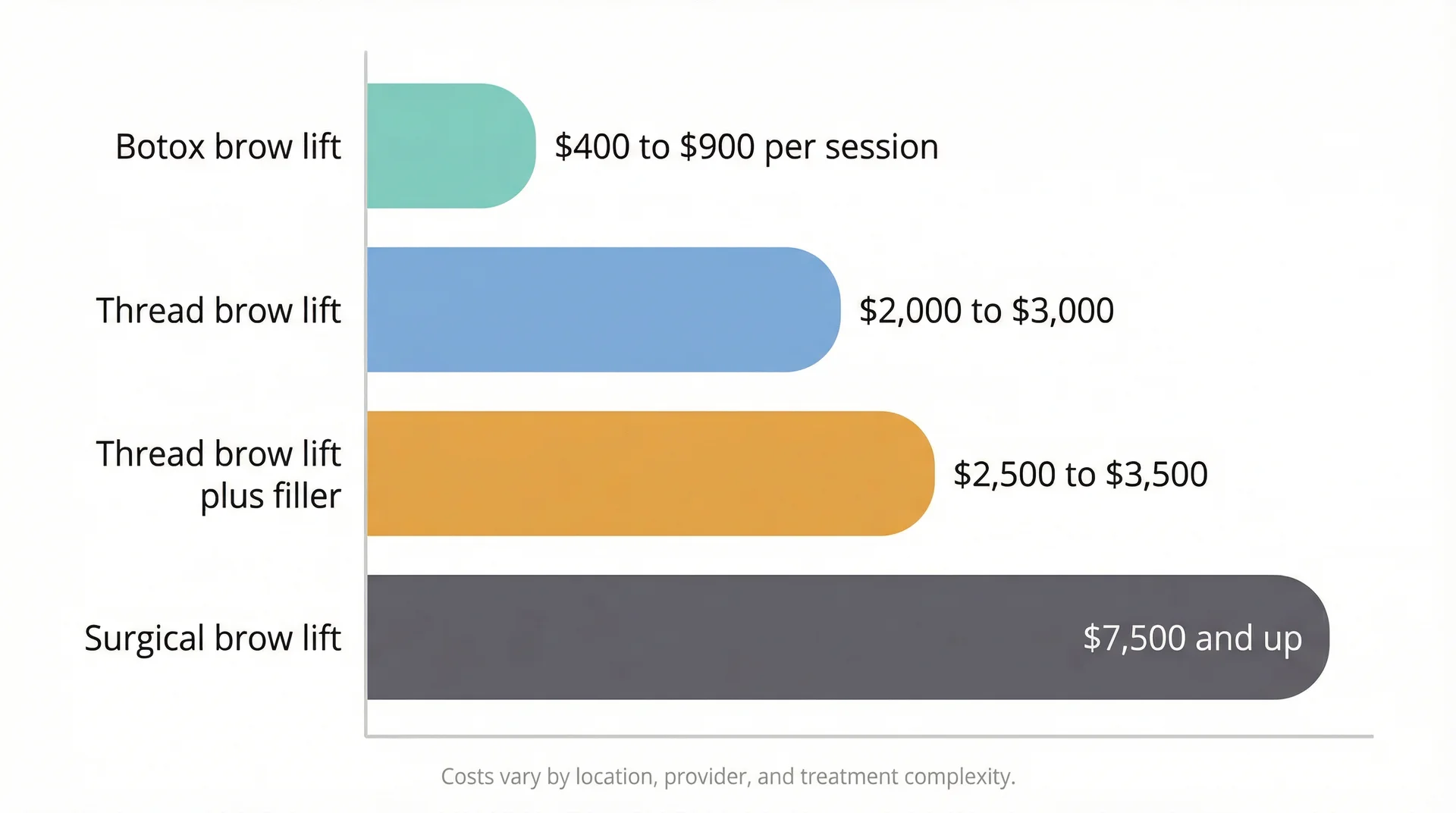
The average PDO thread brow lift in the US costs between $2,000 and $3,000. Adding filler to address volume loss under the brow typically brings the total to $2,500 to $3,500. In high-cost urban markets like New York City or Los Angeles, prices can reach $5,000 to $6,000 for the same procedure, largely because of facility costs and provider demand.
Price varies based on provider experience and credentials, thread quality (premium products like MINT PDO cost more than generic alternatives), the number of threads placed, and your geographic market. Ask whether the consultation fee is included in the quote or billed separately, because clinics vary on this.
Insurance does not cover this. It is a cosmetic procedure.
One way to think about the cost: if you currently spend $600 to $900 every three to four months on Botox and it is no longer producing the lift you want, a single thread procedure at $2,500 that lasts 18 months may be more cost-efficient over time. That math does not work for everyone, but it is worth running before assuming threads are the expensive option.
From my chair: what changes about brow makeup after threads
When a client comes back after a thread brow lift, the brow position has shifted, and that changes how I work with their face. A few things I consistently tell clients who are thinking about timing their procedure around an event:
Get the procedure done at least two to three weeks beforehand, preferably closer to four. That window lets swelling fully resolve, and threads settle into their final position. The four-week mark is when results look their best. Booking it the week before your wedding is an unnecessary risk.
Once the first two weeks have passed and tissue has settled, rethink your brow routine. The brow tail sits higher now. The arch may be more defined. If you were drawing your tail upward to fake a lift, you may find that the shape is already there, and you need less product to achieve it. Clients who used pencils with heavy pressure in the outer brow area often find the new brow position changes where they want to fill, and sometimes how much.
Skip anything with retinol, glycolic acid, or exfoliating acids near the brow zone for at least two weeks post-procedure. These can cause irritation in tissue that is still healing around the insertion points. Use a clean spoolie to brush the brows gently, and apply brow products with a light hand and a short, angled brush rather than dragging strokes across the area.
The open space that the threads create changes what the eye can see. Clients who felt their brow was eating into their crease often find they have visible lid space again. I have had clients who were convinced they needed a heavy eyelid approach discover that a softer, more defined look was available to them once the brow was properly positioned.
Frequently Asked Questions
How long does a thread brow lift last?
Most patients see results for 12 to 18 months, depending on the thread type, skin quality, and aftercare. PDO threads dissolve in three to six months, but the collagen they stimulate continues to support the lift well beyond that. Maintenance treatments at the 12 to 18-month mark help extend results.
Is a thread brow lift painful?
A local anesthetic is applied before the procedure. Most people describe pressure and mild tugging during insertion rather than sharp pain. Soreness and tightness in the brow area typically last two to three days.
Can I get a thread brow lift if I already use Botox?
Generally, yes, and many providers combine both. Discuss your Botox schedule with your thread provider so they can plan placement around your current muscle activity. Some providers recommend spacing the two procedures by two to four weeks.
How many threads go into a brow lift?
It depends on your anatomy and the degree of lift you need. Typically, providers place two to four threads per side for a brow lift. Asking for a specific number during your consultation is a reasonable question.
Is a thread brow lift worth it?
For people with mild to moderate brow descent who want results beyond Botox and are not ready for surgery, the procedure has a solid track record. Most patients who choose a skilled provider and enter with realistic expectations report satisfaction with the outcome.
What is the recovery time?
Most people return to normal activities within 24 to 48 hours. Visible social downtime from swelling and bruising is typically three to five days around the brow area.
Can you feel the threads?
You may feel them if you press on the brow area in the first few weeks. They are not visible through the skin and dissolve completely within three to six months.
The information in this blog is based on publicly available clinical sources and the professional observations of a licensed makeup artist. It is intended for educational purposes only and does not replace a consultation with a qualified medical provider. If you are considering a thread brow lift, speak with a board-certified dermatologist or plastic surgeon who can assess your individual anatomy and medical history before you proceed.