
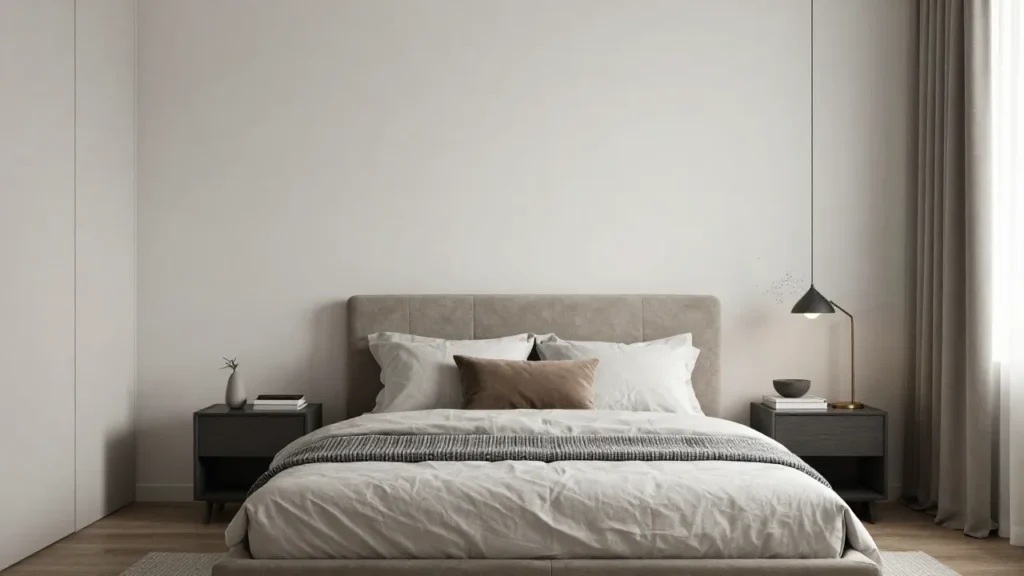
Most men I have worked with over the years walk me through the living room first, then the kitchen, and somewhere at the end of the tour, they open the bedroom door halfway and say, “This one’s a work in progress.” It always is.
Here is the short answer: you can genuinely transform a man’s bedroom for anywhere between $0 and $500, depending on where you start and how intentional you get with each decision.
The money matters less than the order in which you make decisions, and that is exactly what this guide walks you through.
Why Most Men’s Bedrooms Feel “Off”
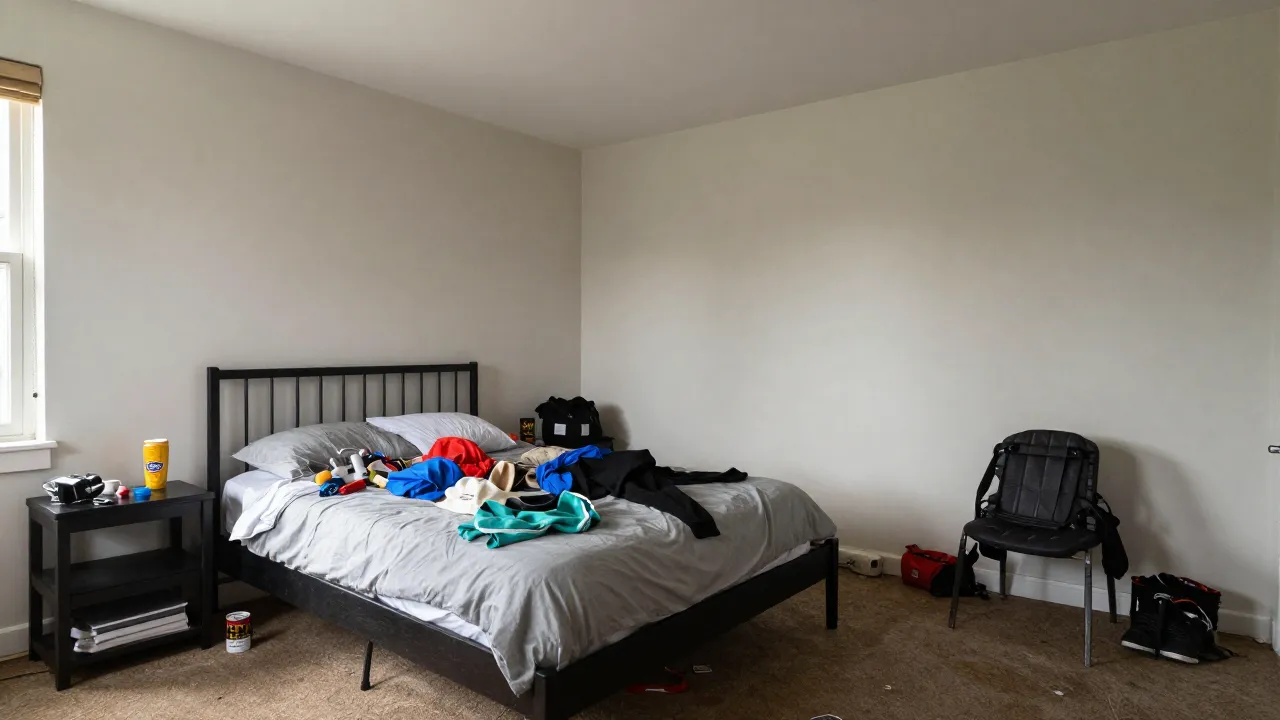
When I walk into a bedroom that feels wrong, I can usually identify the problem within thirty seconds.
The furniture is functional, the bed is made, yet the room feels incomplete in a way that is hard to articulate but impossible to ignore.
The reason is almost never a lack of budget. The reason is almost always a lack of intention.
You Don’t Have a Style Problem
Most men approach their bedroom the same way: they buy what they need when they need it, with no connecting thread between purchases.
The nightstand came from one place, the dresser from another, the bedding from a sale. Each item made sense in isolation, but together they create visual noise.
You need one anchor decision before anything else. One piece, one color, one feeling you are designing toward. Everything else connects back to that anchor.
Ask yourself one question before you read any further:
“How do I want to feel when I walk into my bedroom?”
Calm? Energised? Grounded? That single word becomes your filter for every purchase going forward. I have seen this reframe save people hundreds of dollars in returns and impulse buys.
The Three Things That Make Any Bedroom Feel Unfinished
After consulting on dozens of residential bedrooms, I keep seeing the same three culprits:
- Clutter without a home. Items are sitting on surfaces because there is nowhere else for them to go. This is a storage problem wearing a style costume.
- A single overhead light is doing all the work. Overhead lighting flattens a room and makes even beautiful furniture look institutional.
- No visual focal point. The eye enters the room and has nowhere to land. Without a focal point, every wall competes equally for attention, and the result feels chaotic even in a tidy room.
Every recommendation I make below solves at least one of these.
Before You Spend a Dollar: What You Can Fix Today for Free
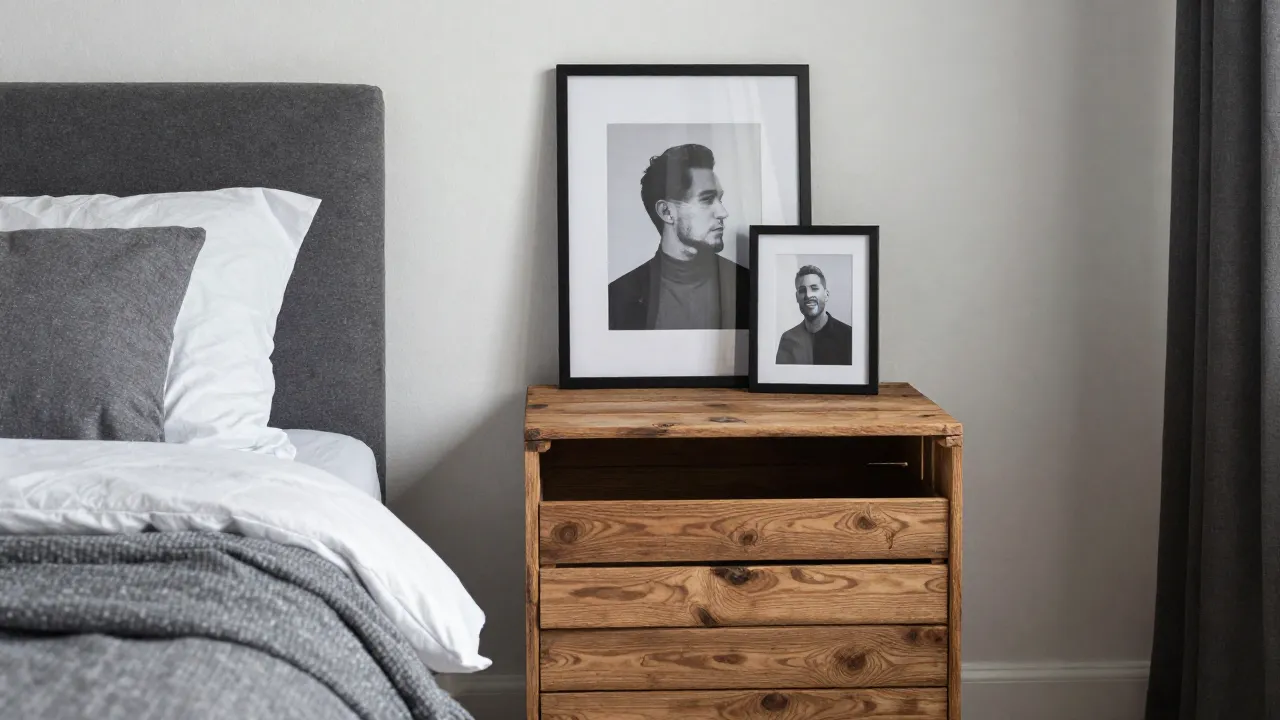
Some of the most dramatic before-and-after results I have seen cost exactly nothing. Starting with free wins builds the momentum you need to make smarter paid decisions later.
The 20-Minute Furniture Reset That Changes Everything
The position of your bed determines the energy of your entire room. If your bed is pushed into a corner, or floating awkwardly on a wall with uneven space on either side, the room will never feel resolved, no matter what else you do.
Here is the principle I use with every client: the bed should be the first thing you see when you walk in, centred on the most prominent wall, with equal or deliberate space on both sides. This single move has transformed more bedrooms than any piece of furniture I have ever recommended.
Declutter Like Someone Who Lives There Intentionally
Think of it as a fifteen-minute audit with one question in mind: Does this item have a home, or is it just parked here?
Surfaces belong to the items you use every day and the items that bring you genuine visual pleasure. Everything else needs a drawer, a shelf, a basket, or a bin. The moment you give clutter a proper home, the room immediately reads as more designed, even if nothing else has changed.
Repurpose What You Already Own
Before you buy anything new, walk through your home with fresh eyes.
- A wooden crate from the garage becomes a bedside table with character
- A scarf or throw blanket draped over a chair adds texture instantly
- A stack of books creates a sculptural bedside display when styled with a small lamp and one object
Designers repurpose constantly because it creates spaces that feel collected and personal rather than showroom-staged.
DIY Wall Art That Doesn’t Look Like a Pinterest Fail
Framing changes everything. A page torn from an old coffee table book in a matte black frame looks intentional. A high-resolution photograph from your phone, printed at 16×20, becomes a statement.
The rules that actually work:
- Choose frames in the same finish (all black, all white, all natural wood), even if the art inside varies
- Go large rather than small. One 24×30 print outperforms six 5×7 photos every single time
- Frame things that mean something to you. A vintage map of a city you love. A band poster from a show that mattered. Personal art reads as confident.
Building Your Bedroom’s Visual Identity Before You Shop
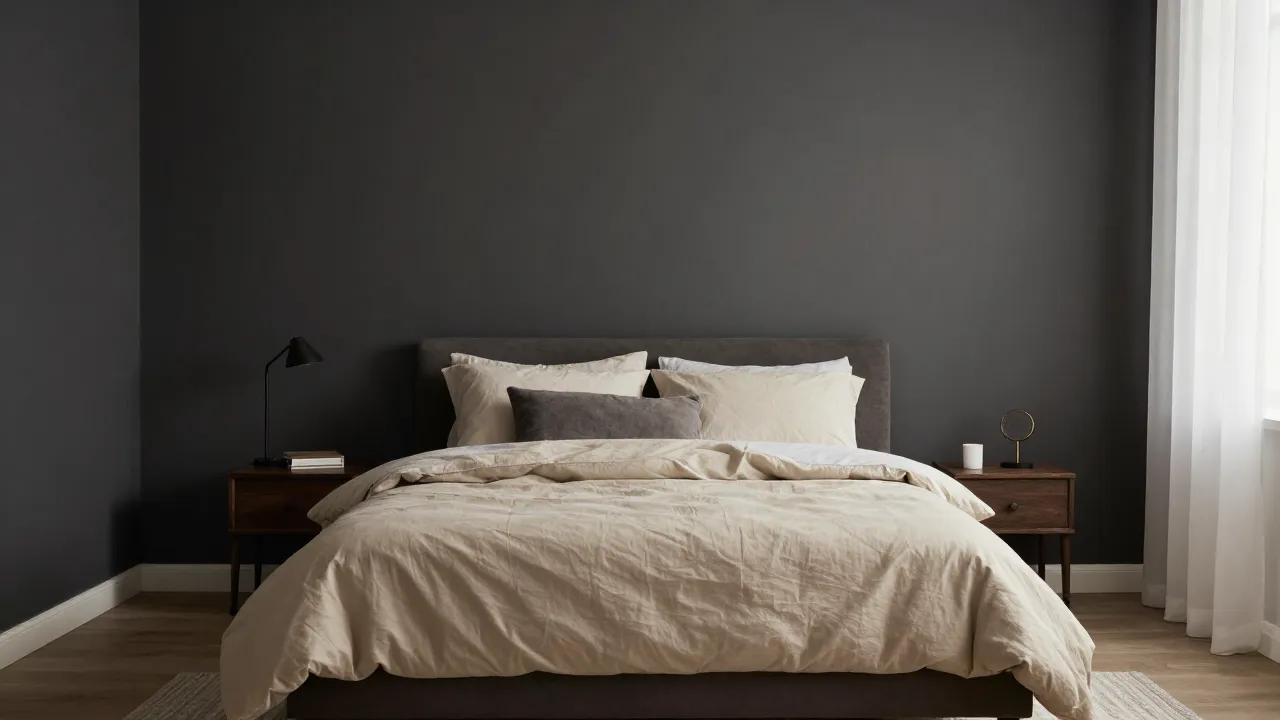
I have watched people spend $400 on bedroom items that sit in bags for weeks because nothing connects. Shopping without a visual direction is the most expensive mistake you can make in interior design.
Pick One Word That Describes How You Want This Room to Feel
Your one word becomes your brief. Every purchase gets held up against it.
If your word is calm, a deep red accent wall fails the brief. If your word is bold, beige bedding probably is not right.
This turns hundreds of possible decisions into a much smaller, more confident set of choices.
The Color Moves That Work Best in Men’s Bedrooms
Color is where most people either overthink or underthink. Here is my honest take after years of working with residential clients:
| Color Direction | Why It Works | What to Watch For |
|---|---|---|
| Navy blue | Anchors the room with depth and confidence | Pair with warm whites and natural wood to avoid feeling cold |
| Warm charcoal | Versatile across every style from industrial to refined | Use warm-toned bulbs to stop it from looking flat |
| Warm neutrals (cream, linen, sand) | Creates a calm base that layers beautifully | Needs texture variation to avoid feeling bland |
| Olive and terracotta accents | Adds organic warmth without feminising the space | Use in small doses through pillows, throws, or ceramics |
| Slate and deep green | Both age well and feel current | Works best in rooms with natural light |
My personal preference for most men’s bedrooms is a warm neutral base with one broad accent and organic materials to add visual interest. It works across nearly every style direction and never feels dated.
Choosing a Visual Element Before You Buy Anything
Every well-designed room has one dominant visual element that tells the eye where to look first. In a bedroom, this is almost always the bed wall or a feature wall opposite the entry.
Ways to create a focal point depending on your budget:
- $0: Rearrange furniture so the bed wall has deliberate, clear space above it
- Under $50: A gallery wall arrangement with consistently framed art
- Under $150: A painted accent wall in a deeper tone than the rest of the room
- Under $300: Peel-and-stick wallpaper or a DIY wall paneling kit
Once you have a point, decorating the rest of the room becomes significantly easier because you are building outward from a centre rather than filling empty space in every direction simultaneously.
Understanding Masculine Design Without the Stereotypes
Some of the most striking, genuinely masculine bedrooms I have worked on were light, airy, and completely sports-free. What they shared was a specific set of design principles:
- Clean lines over ornate detail. Furniture with simple, geometric forms reads as stronger and more deliberate.
- Restrained decoration. Fewer objects, each one chosen carefully.
- Textural contrast over pattern. The layering of different materials (wood, linen, leather, metal) creates depth without visual clutter.
- Intentional colour relationships. Whether the palette is dark and moody or light and minimal, the colors speak to each other.
Style directions that work especially well include industrial, modern minimal, lodge, and transitional. Spend ten minutes browsing rooms in each category and notice which one makes you feel at home.
Men’s Bedroom Ideas Under $100: Where to Put Your First Dollars
When someone tells me they have $100 to start, I always put bedding and lighting at the top of the list. Both dramatically affect how the room feels at a level completely disproportionate to their cost.
Bedding That Does More Work Than Any Piece of Furniture
A quality duvet cover in a color that connects to your palette makes the entire room look more considered, even if nothing else has changed.
Here is the approach I recommend:
- One solid or subtly textured duvet cover in your chosen accent or base color
- Two matching pillow shams in the same fabric or a tonal variation
- One throw blanket draped at the foot of the bed or over a chair for texture
Avoid full bedding sets with coordinated everything. They photograph well on packaging but create a hotel-generic look in real rooms. Mixing a solid duvet with textured shams and a contrasting throw always reads as more personal and more sophisticated.
For budget picks, IKEA’s ULLVIDE line consistently delivers texture and color for well under $60. Target’s Threshold linen-look collection is another dependable source in this range.
Accent Pillows: The One Rule You Actually Need
Odd numbers work, and size variation creates visual rhythm. A practical arrangement for a queen or king bed:
- Two larger Euro shams (26×26) against the headboard
- Two standard sleeping pillows in cases that match the duvet
- One lumbar or square accent pillow at the front
One statement pillow is interesting. Three competing ones create noise.
Framed Artwork That Says Something Real
A single large-format print in a quality frame has more impact than a gallery wall of smaller prints in cheaper frames. Where to source artwork on a budget:
- Posterlounge, Art.com, and Society6 carry prints from $15 to $40 in sizes up to 24×36
- Your own photography, printed through Artifact Uprising or even Walgreens at 16×20, is underrated
- Thrift stores regularly stock frames worth rescuing. The glass and backing are intact, and spray paint handles the rest.
Storage and Organisation That Reads as Intentional
An organisation that looks good is about creating a system with clear visual logic. Some under-$30 pieces that solve the most common bedroom clutter problems:
- Under-bed storage bags (the flat, zippered kind) for seasonal items
- A bedside caddy or small tray to corral the phone, keys, and book into one defined space
- Cable management clips to route charging cables cleanly along furniture legs
Designed mess has a container. A pile of books feels intentional when stacked neatly on a tray. The same books scattered across the floor do not.
Thrift Store Shopping Strategy for Men’s Bedrooms
Thrifting rewards patience and a specific approach. Here is my honest breakdown:
Worth buying secondhand:
- Picture frames (any condition, spray paint is cheap)
- Wooden furniture with solid construction
- Table lamps with quality bases (swap the shade)
- Mirrors in interesting shapes or frames
- Ceramic and stoneware decorative objects
Leave it on the shelf:
- Soft goods (pillows, duvet inserts, mattress toppers)
- Anything with structural damage to joints or legs
- Lamps with fraying or damaged cords
My tip for thrift shopping in unfamiliar territory: photograph the item in the store, then image-search similar pieces styled in a room. Seeing a piece in context clarifies whether it fits your direction faster than trying to imagine it from scratch.
Men’s Bedroom Ideas Under $200: Building on What You Have
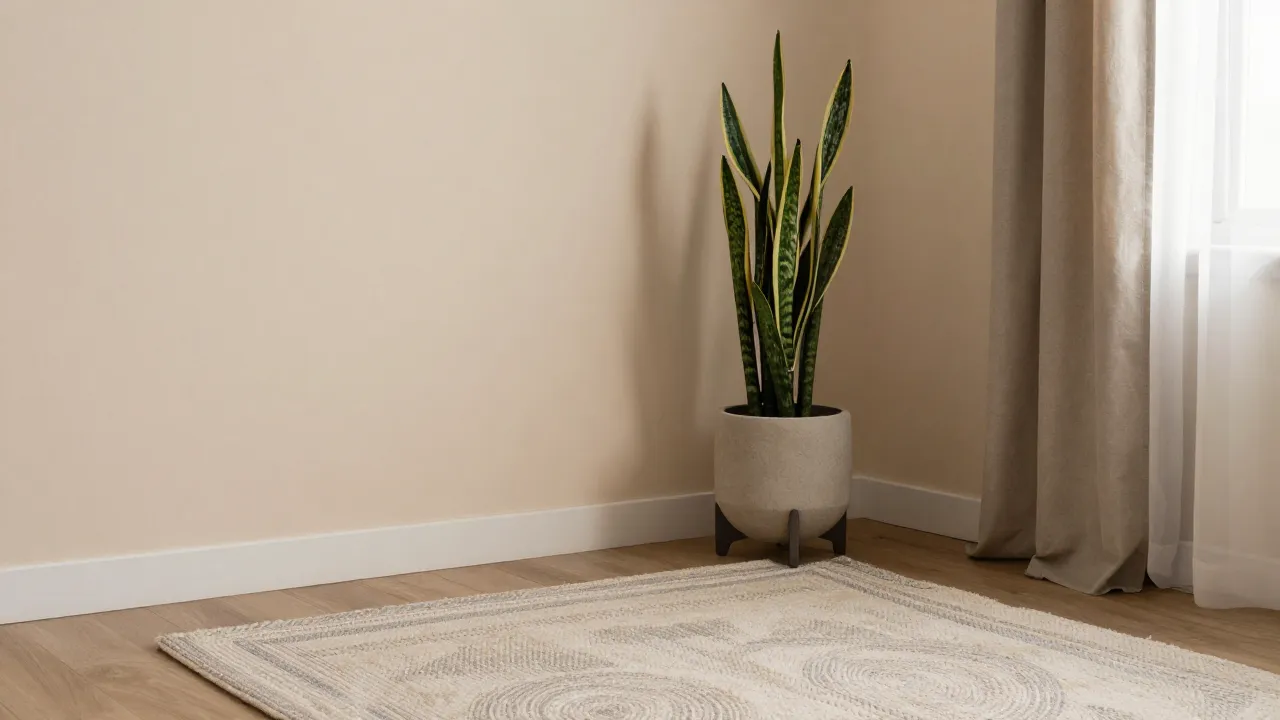
The $100 to $200 range is where the room starts to feel genuinely cohesive. These purchases connect individual elements into a space that reads as designed rather than assembled.
An Area Rug That Grounds the Whole Room
The most consistent mistake I see in bedroom design is a rug that is too small. A rug that only sits under the foot of the bed does nothing for the room.
A rug that extends under the lower two-thirds of the bed and reaches past the nightstands on each side transforms the space entirely.
Sizing guide for bedrooms:
| Bed Size | Recommended Rug Size |
|---|---|
| Twin | 5×8 ft |
| Full/Queen | 8×10 ft |
| King | 9×12 ft |
For men’s bedrooms specifically, I gravitate toward low-pile wool, jute, or flat-weave rugs in geometric or subtly textured patterns.
They hold up well, look clean, and work across industrial, modern, and natural design styles. Ruggable, Rugs USA, and IKEA all carry solid options under $200.
Lighting That Works at Every Hour of the Day
The overhead light is a working light. It is for getting dressed in the morning, and it is not the light you want when you are winding down at night.
Layering light means adding at least two other sources at different heights:
- A table lamp or wall sconce beside the bed for reading and evening use
- A floor lamp in a corner to add ambient warmth
- Warm bulbs throughout at 2700K to 3000K color temperature
Swapping a cool daylight bulb for a warm one costs about $8 and immediately makes a bedroom feel more settled.
I have recommended this single change to clients who had spent thousands on furniture and were still unhappy with how the room felt at night. The bulb fixed it.
For lamps in the $40 to $80 range, Target’s Threshold line and Amazon’s Rivet brand both balance quality and design without looking budget.
Mirrors: The Underrated Space Multiplier
A well-placed mirror expands the perceived size of the room, bounces light into darker corners, and adds a visual layer without adding visual clutter.
Placement matters more than the mirror itself. Opposite a window is always the highest-impact position because it reflects natural light back into the room.
For men’s bedrooms, these styles read as both practical and intentional:
- Arched full-length mirror leaning against the wall (industrial or black frame)
- Simple rectangular mirror with a thin matte black frame above the dresser
- A round mirror as an accent piece on a gallery wall
Plants, Pots, and the Case for Organic Texture
I was genuinely skeptical of indoor plants in men’s bedrooms for a long time.
Then I styled a room for a client in his late thirties who specifically asked for a “no plants” space, and I snuck in a single snake plant in a matte black pot beside his dresser.
He noticed it a week later and texted me to ask if he could get another one.
Plants add organic texture that no manufactured product can replicate. They soften the geometric hardness that most men’s bedrooms default toward.
Low-maintenance options for bedrooms:
- Snake plant (Sansevieria): Thrives in low light, needs water once every two to three weeks
- Pothos: Trails beautifully from shelves, nearly impossible to kill
- ZZ plant: Handles neglect better than almost any other indoor plant
- Peace lily: One of the few plants that actually flowers indoors in low light
One or two plants chosen deliberately always look more intentional than a cluster. The pot matters as much as the plant. Matte black, terracotta, and raw cement pots all work beautifully in masculine spaces.
Art, Decor, and the Editing Principle
People add things to their bedrooms over time without ever removing anything, and the result is a room that feels busy regardless of how good each individual item is.
For every new decorative item you bring in, evaluate whether something already in the room should come out. This is curation.
The 60-30-10 rule gives you a starting structure for color balance:
- 60% dominant color (walls, large furniture, bedding base)
- 30% secondary color (rug, curtains, secondary furniture)
- 10% accent color (pillows, art, small decorative objects)
This ratio keeps the room visually cohesive even when you mix materials, styles, and price points.
Refreshing Your Color Scheme Without Repainting
When repainting is not an option, you can shift the color story entirely through textiles and accessories. Swapping out one or two of the following creates a measurable visual shift:
- Duvet cover in a new color direction
- A rug that introduces an accent tone
- New curtains in a deeper or warmer shade
- Two accent pillows in a contrasting color family
I once shifted a client’s bedroom from a cool, slightly clinical feeling to something warmer and more settled entirely by replacing his blue-grey duvet with a warm linen cream version and adding a terracotta throw.
The walls stayed the same. The furniture stayed the same. The room felt like a completely different space.
Men’s Bedroom Ideas Under $500
Five hundred dollars, used intentionally, creates a room transformation that most people would assume costs significantly more. The key is sequencing: start with changes that affect the most visible surface area, then move toward the details that add refinement.
Furniture That Earns Its Place
The furniture pieces worth spending on are the ones you interact with every single day: the bed frame, the nightstand, and, wherever possible, the dresser.
Where you can save without visible compromise:
- Decorative objects and accessories
- Accent chairs (Facebook Marketplace is exceptional for these)
- Storage solutions that sit behind closed doors
Where to find quality furniture on a budget:
- IKEA for bed frames, wardrobes, and dressers with clean, modern lines
- Facebook Marketplace and Craigslist for solid wood furniture at a fraction of retail price
- Wayfair and Amazon for nightstands and accent pieces in the $50 to $120 range
- End-of-season sales at CB2, West Elm, and Article, which regularly hit 40% off
For men who prefer a clean look, platform bed frames with integrated storage solve both the style and the clutter problem simultaneously.
The IKEA MALM storage bed has been a consistent recommendation in my practice for years because it maximises under-bed storage without the visual bulk of traditional storage drawers.
Closet Organisation as a Room Design Move
A chaotic closet that spills visual disorder every time the door opens undermines the calm of even a beautifully designed bedroom. Your closet is a room design element, whether you treat it that way or not.
The IKEA PAX system at $150 to $300 depending on configuration, or the Rubbermaid Configurations system from most hardware stores, both create order that makes the room feel genuinely more settled.
The categories your closet needs at a minimum:
- A hanging zone for longer items (jackets, shirts)
- A hanging zone for shorter items with space below for shoes or folded storage
- A shelf or drawer unit for folded clothing
- A dedicated spot for shoes so they are off the floor
When the closet is organised, the bedroom floor stays cleaner, and the room always reads as more deliberately designed.
Wall Treatments That Change the Entire Room
Wall treatments offer some of the highest return-on-investment moves available in bedroom design:
| Treatment | Approximate Cost | Difficulty | Visual Impact |
|---|---|---|---|
| Accent wall paint | $30 to $60 | Low | High |
| Peel-and-stick wallpaper | $60 to $150 | Medium | Very High |
| DIY wall molding/paneling kit | $80 to $200 | Medium | Very High |
| Wall stencil | $20 to $40 | Medium | High |
| Traditional wallpaper (one wall) | $100 to $250 | High | Very High |
My recommendation for the under-$500 budget is a painted accent wall combined with either a molding kit or a stencil pattern. This achieves a layered, architectural look while leaving room in the budget for other upgrades.
Molding kits from companies like House of Antique Hardware and INTRIM are genuinely beginner-friendly. I walked a client through his first paneling installation over a weekend with no prior experience, and the result looked custom.
Accent Lighting for Atmosphere
Accent lighting is the difference between a bedroom that looks good in photographs and one that feels good to be in at 9 pm.
- LED strip lights behind the bed frame: Creates a warm halo effect that adds depth. Govee strips in warm white (2700K) run $20 to $40.
- Pendant lights or sconces beside the bed: Frees up nightstand surface and adds architectural interest. IKEA’s HEKTAR pendant in dark grey runs around $30 per fixture.
- Smart bulbs in existing lamps: Philips Hue White or IKEA TRADFRI let you control warmth and brightness from your phone for around $60.
- A dimmer switch: A $15 investment that changes how you experience your bedroom at night more than almost anything else in this guide.
Hardware and Finish Upgrades: The Detail That Reads Premium
Replacing drawer pulls and cabinet handles takes twenty minutes and transforms furniture that costs $200 into something that reads considerably more expensive.
The combination I recommend most often: matte black hardware on lighter wood furniture, or brushed brass hardware on darker wood. Both read as intentional and current without being trendy in a way that dates quickly.
Replacement hardware runs $3 to $12 per pull. On a six-drawer dresser, the total investment is $20 to $70, and the visual result is immediate.
How to Make Your Bedroom Look Expensive?
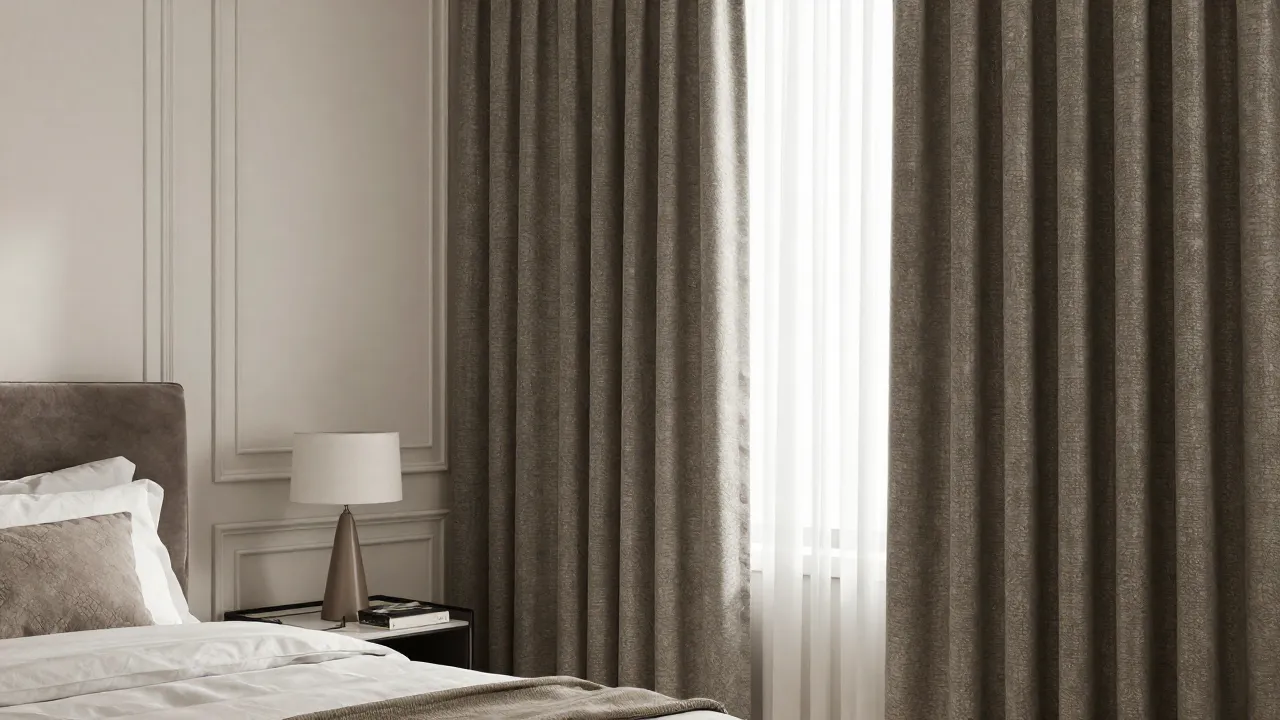
This is my favourite part of interior design to talk about because it is where craft matters more than money.
“Luxury in design is not a price point. It is the density of intentional decisions.”
Upcycle Furniture the Right Way
The furniture worth upcycling shares two qualities: solid structure and a surface that accepts paint or stain cleanly.
A solid wood dresser from a thrift store with good bones and dated hardware becomes something special with $40 in chalk paint and $25 in new pulls.
The process that works:
- Clean the surface thoroughly and sand lightly if the finish is glossy
- Apply two coats of chalk paint or furniture-specific paint in your chosen color
- Seal with a water-based topcoat for durability
- Install new hardware
I have done this with everything from bedside tables to full wardrobes, and the result reads as custom at a fraction of retail.
The Texture Stack: How Designers Layer Materials
Texture is what separates a room that looks designed from one that looks assembled.
Hard materials (structure) + Soft materials (warmth) + Organic materials (life)
In practice:
- A wooden bed frame with a linen duvet and a jute rug
- A metal lamp with a cotton throw and a terracotta pot
- A concrete planter with a wool pillow and a leather-bound book stack
You can build a room entirely in neutrals and grays and still have it feel rich and layered if the textures are varied enough.
Wall Panelling: High Impact, Surprisingly Affordable
Half-wall paneling, also called dado paneling or board and batten, adds architectural weight to a room that paint alone cannot replicate. Hotels, boutique accommodations, and high-end apartments use it constantly for exactly this reason.
A DIY board and batten installation on a single bedroom wall runs $80 to $150 in materials and takes a weekend. The tools required are basic: a miter saw (often rentable from hardware stores), a nail gun, and a level.
Color combinations that work especially well with paneling in men’s bedrooms:
- Deep navy panels with warm white above
- Charcoal lower panels with warm greige above
- Sage green panels with cream above
- Natural wood tone panels with white above (skip the paint entirely)
A Neutral Palette Done Right
A neutral palette executed well is one of the most sophisticated outcomes in interior design. The rooms that feel flat in neutral tones suffer from one of two problems: all the tones are too similar in temperature, or there is no variation in texture to create depth.
Building a neutral palette with actual character means choosing:
- A warm white or cream for walls (never pure white unless you want clinical)
- A mid-tone neutral for large textile surfaces (warm linen, oatmeal, sand)
- A deep neutral as an accent (charcoal, warm black, deep taupe)
- Organic tones for texture (natural wood, jute, leather, stone)
Drapes That Make a Room Look Taller and More Finished
Curtains are one of the most consistently under-invested areas in men’s bedrooms, and they have an outsized effect on how finished the room feels.
The rule that matters above all others: hang the rod as close to the ceiling as structurally possible, and let the drapes fall all the way to the floor.
This single adjustment makes ceilings look higher, windows look larger, and rooms look more finished, regardless of the curtains themselves.
For fabric, linen and velvet both communicate quality in a bedroom context. IKEA’s MAJGULL blackout curtains in off-white, Pottery Barn’s Belgian Flax Linen panels, and H&M Home’s velvet curtain range all hit the quality-to-cost ratio well.
Layered Lighting: The Trick Every Good Hotel Uses
Hotel rooms feel more intimate and expensive at night because they never rely on overhead lighting after dark. They use layered sources at different heights, all in warm tones, all at low intensity.
Here is the layering formula applied to a bedroom:
- Layer 1 (Ambient): A floor lamp in a corner on the lowest warm setting
- Layer 2 (Task): A bedside lamp or sconce for reading
- Layer 3 (Accent): LED strips behind the headboard or under the bed frame on a low warm setting
Used together, these three layers create depth and warmth that a single overhead light simply cannot replicate.
Putting It All Together! How to Start Without Getting Stuck?
The hardest part of any room transformation is starting. Here is the sequence I recommend every single time, regardless of budget.
The 5-Step Bedroom Refresh Sequence
1. Define your one-word style identity. Write it down. Every decision from this point runs through that word.
2. Fix the free stuff first. Rearrange furniture, declutter surfaces, and repurpose what you already own before spending a single dollar.
3. Identify your focal point. Decide which wall the eye should find first and make a plan for it.
4. Invest in bedding and lighting before anything else. These two categories cover more visual and sensory ground than any piece of furniture.
5. Layer over time. The rooms that look most personal always come together gradually, with space for things to settle and new ideas to emerge.
A Simple Budget Allocation Guide
| Budget Level | Recommended Allocation |
|---|---|
| $100 | Bedding $50 / Art and Frames $30 / Organisation $20 |
| $200 | Bedding $60 / Area Rug $80 / Lighting $40 / Decor $20 |
| $500 | Bedding $70 / Area Rug $100 / Lighting $80 / Wall Treatment $100 / Furniture Upgrade $100 / Hardware and Accessories $50 |
These are starting points. Your room might need a rug more urgently than new bedding. Adjust based on what your space is actually missing.
Conclusion
The bedroom I have seen transform most dramatically was a 280-square-foot city apartment belonging to a client who had lived with a mattress on the floor and a single overhead bulb for three years.
Over two weekends and about $380, we rearranged the furniture, painted an accent wall in warm charcoal, added a platform bed frame from Facebook Marketplace, replaced the bulb with a floor lamp and two bedside lights, and layered in a jute rug and simple linen bedding.
He told me two weeks later that he had started coming home earlier, feeling more settled.
That is what a bedroom that feels like yours actually does. It changes how you inhabit your own life, not just your square footage.
Whether you start with zero dollars or five hundred, the process is the same: decide what you want it to feel like, fix the free things first, and build the rest deliberately over time.