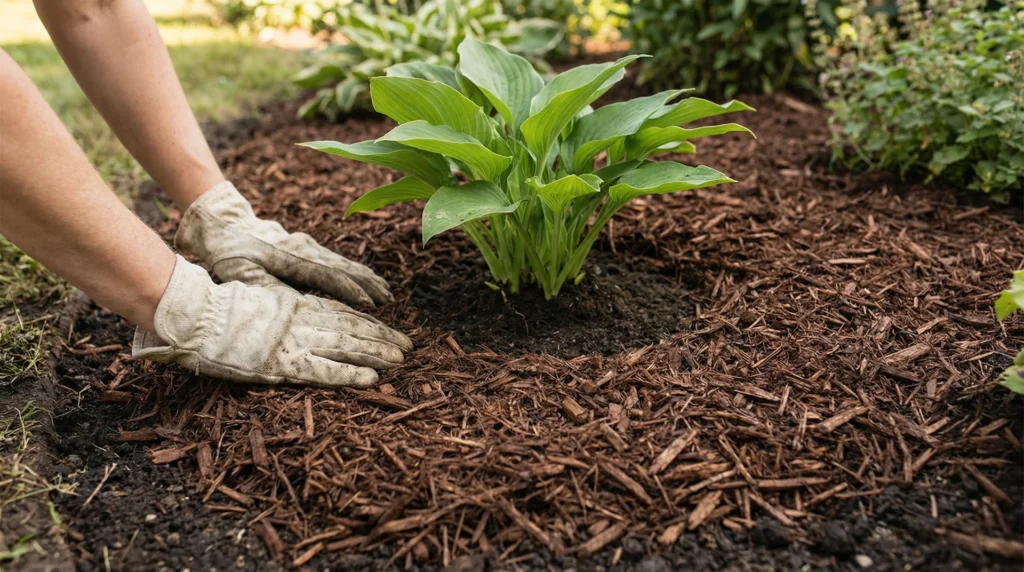
One cubic yard of mulch equals 27 cubic feet, every single time. A cubic yard is simply a cube measuring 3 feet on every side, and the math resolves cleanly:
\[ 3 \times 3 \times 3 = 27 \]
So when a supplier quotes you a price “per yard,” they mean per cubic yard = 27 cubic feet of material. That is the number every calculation in this guide flows from.
Why This Trips People Up in the First Place
The word “yard” carries a lot of meaning depending on context, and that creates genuine confusion at the point of purchase.
You think of a yard as a flat stretch of lawn, a unit of fabric, or the distance from your front door to the kerb.
When mulch suppliers use the word, they mean a three-dimensional cubic yard, and that mental shift from flat to volumetric is where most calculation errors start.
Bags at a hardware store are labelled in cubic feet (usually 2 cu ft or 3 cu ft per bag).
Bulk orders from a landscaping supplier come in cubic yards. When someone reads “yard” on a supplier’s invoice and translates it mentally as “a unit roughly the size of a bag,” the order falls dramatically short.
I worked on a compact urban garden project early in my career where the client had made exactly this assumption.
She ordered what felt like a generous amount of mulch, received a fraction of what she needed, and we lost two days waiting for a second delivery.
The planting phase slipped past a clean weather window, and we ended up laying mulch in drizzle.
The project finished beautifully, but the lesson has stayed with every project since.
From Cubic Yards to Bags: The Real Breakdown
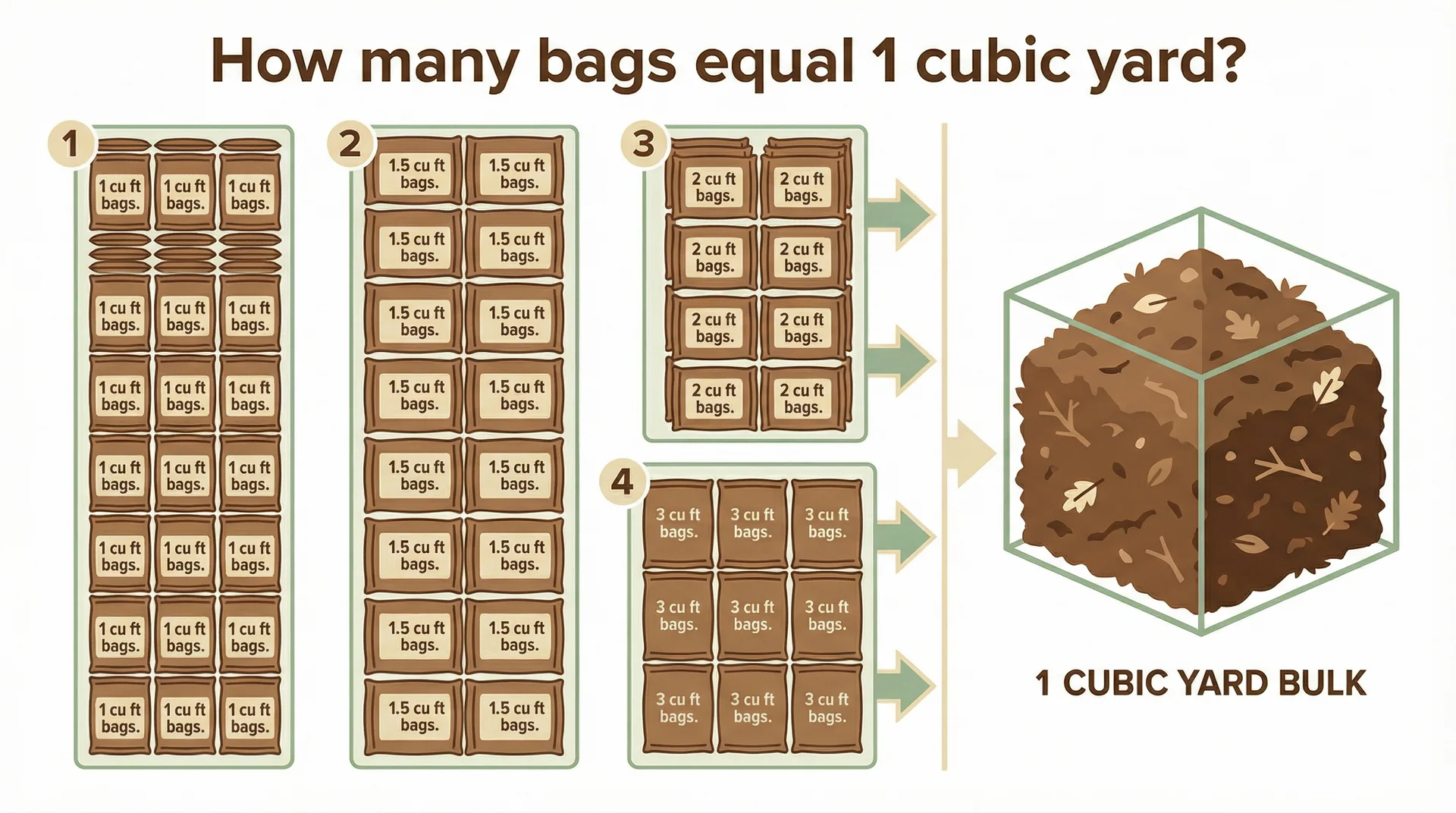
| Bag Size | Bags Needed to Equal 1 Cubic Yard |
|---|---|
| 1 cubic foot bags | 27 bags |
| 1.5 cubic foot bags | 18 bags |
| 2 cubic foot bags | 14 bags (round up from 13.5) |
| 3 cubic foot bags | 9 bags |
Nine large 3-cubic-foot bags equal one cubic yard of mulch. That visual reference alone makes the garden centre decision significantly easier.
For small raised beds, container borders, or spot top-ups mid-season, bagged mulch makes complete sense.
For anything covering more than roughly 200 square feet, I almost always recommend going bulk.
The cost per cubic yard drops considerably, and you avoid a pile of plastic bags at the end of the project, which matters both financially and from a sustainability standpoint.
How Much Ground Does One Cubic Yard Actually Cover?
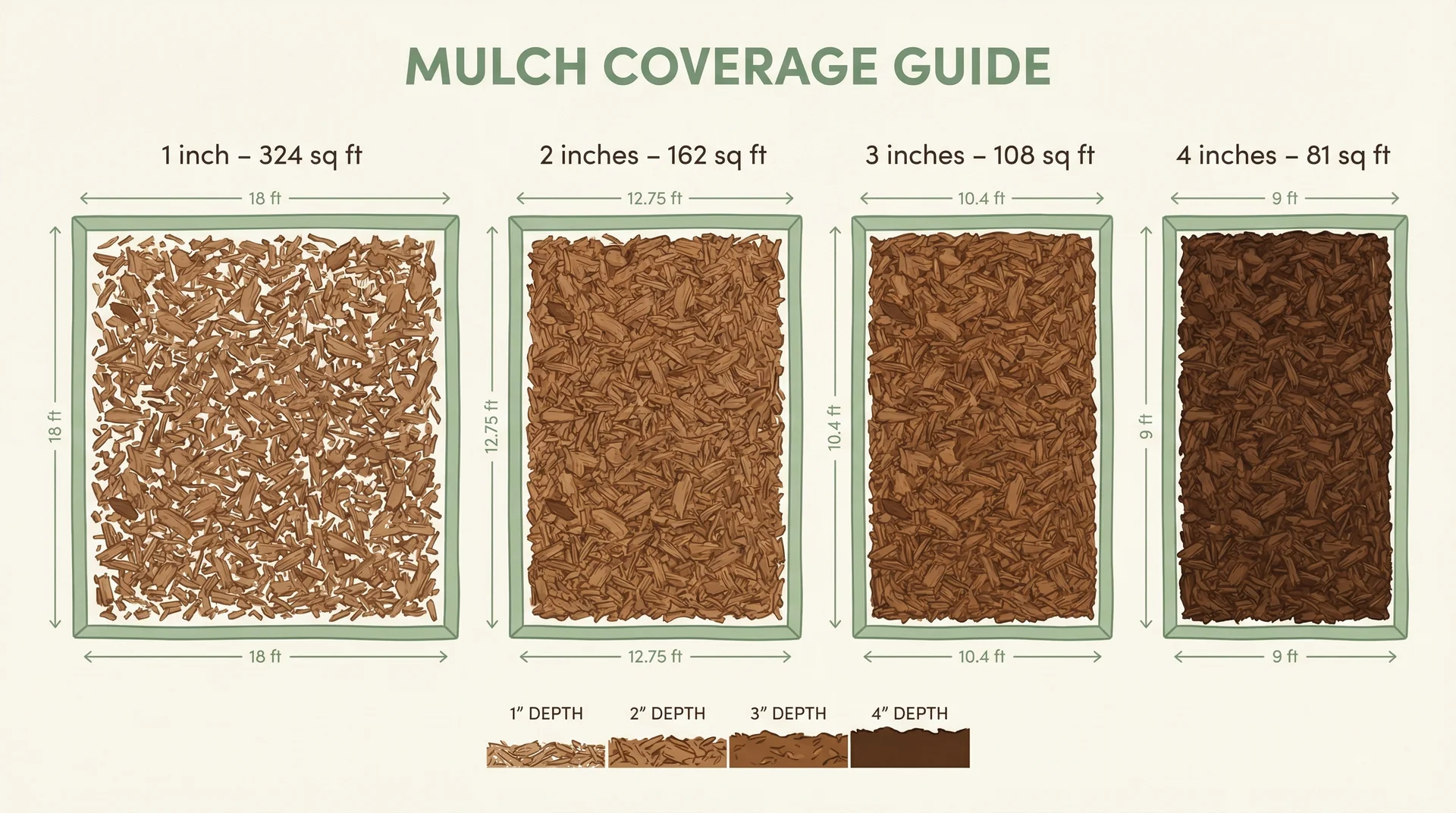
Coverage depends on how deep you spread the mulch. Here is the formula and the coverage table together.
\[
\text{Cubic Yards Needed} = \frac{\text{Area (sq ft)} \times \text{Depth (inches)}}{324}
\]
The number 324 comes from multiplying 27 cubic feet by 12 inches per foot, converting everything into a single workable ratio across units.
| Mulch Depth | Area Covered by 1 Cubic Yard |
|---|---|
| 1 inch | 324 sq ft |
| 2 inches | 162 sq ft |
| 3 inches | 108 sq ft |
| 4 inches | 81 sq ft |
A Real Calculation Walk-Through
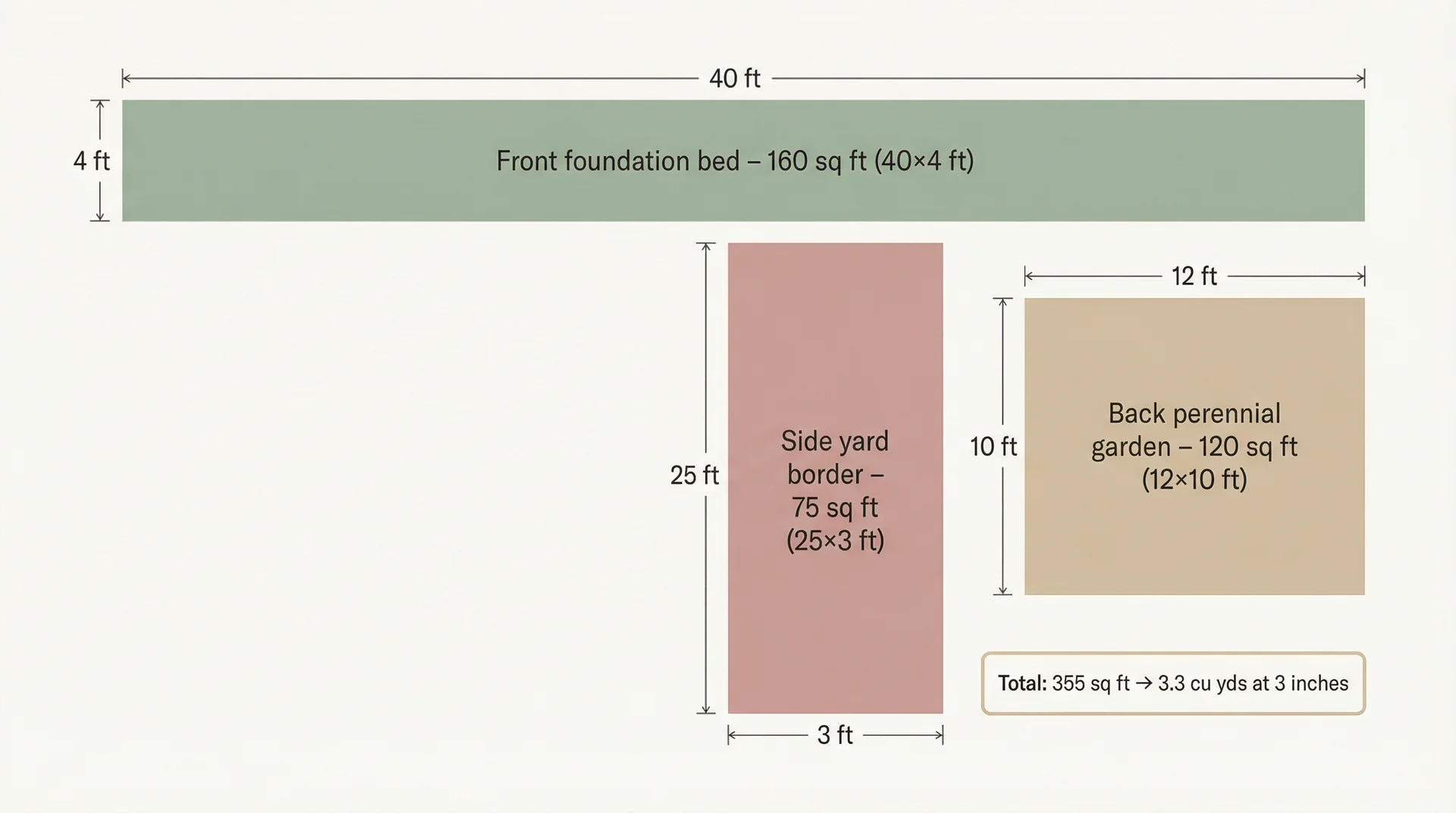
Three distinct planting zones in a suburban backyard renovation:
- Front foundation bed: 40 ft × 4 ft = 160 sq ft
- Side yard border: 25 ft × 3 ft = 75 sq ft
- Back perennial garden: 12 ft × 10 ft = 120 sq ft
- Total area: 355 sq ft
With established perennials needing strong weed suppression, a 3-inch depth was chosen:
\[
\frac{355 \times 3}{324} = \frac{1065}{324} \approx 3.3 \text{ cubic yards}
\]
Order placed for 3.5 cubic yards. That buffer matters because freshly delivered bulk mulch compresses by roughly 10–15% once it settles and gets its first watering.
Always order a little more than the math tells you to. Mulch compresses, beds are rarely perfect rectangles, and running short mid-project is genuinely disruptive.
How Much Does a Yard of Mulch Weigh?
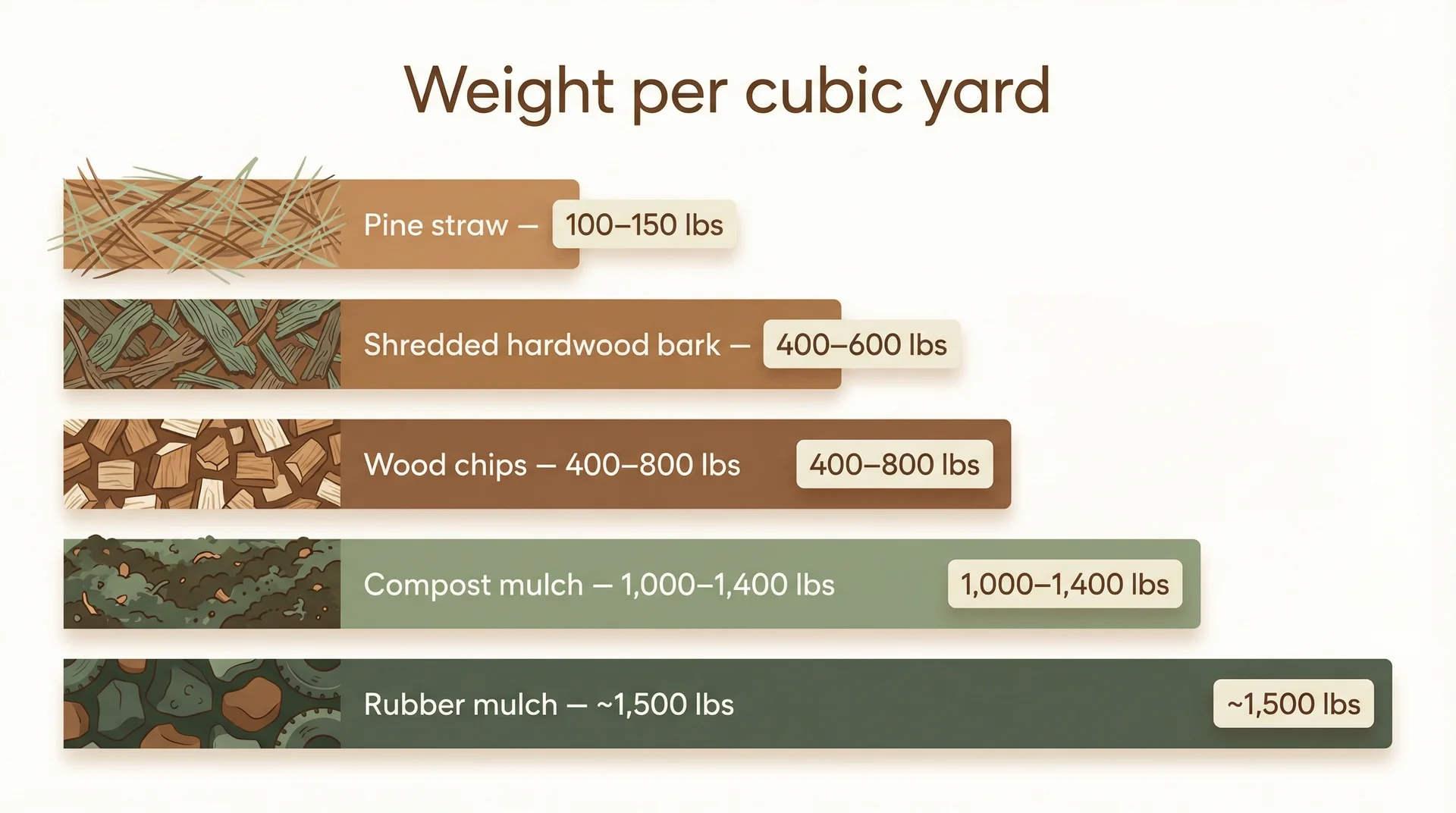
| Mulch Type | Approximate Weight per Cubic Yard |
|---|---|
| Shredded hardwood bark | 400 to 600 lbs |
| Wood chips | 400 to 800 lbs |
| Pine straw | 100 to 150 lbs |
| Compost mulch | 1,000 to 1,400 lbs |
| Rubber mulch | 1,500 lbs or more |
What Does a Cubic Yard of Mulch Cost?
| Mulch Type | Cost/Yard (Bulk) | Cost/Yard (Bagged) |
|---|---|---|
| Shredded hardwood bark | $25 to $45 | $55 to $75 |
| Dyed decorative mulch | $30 to $55 | $60 to $85 |
| Pine bark nuggets | $30 to $50 | $55 to $75 |
| Premium certified compost | $40 to $80 | $90 to $120 |
The Right Mulch Depth for Different Parts of Your Garden
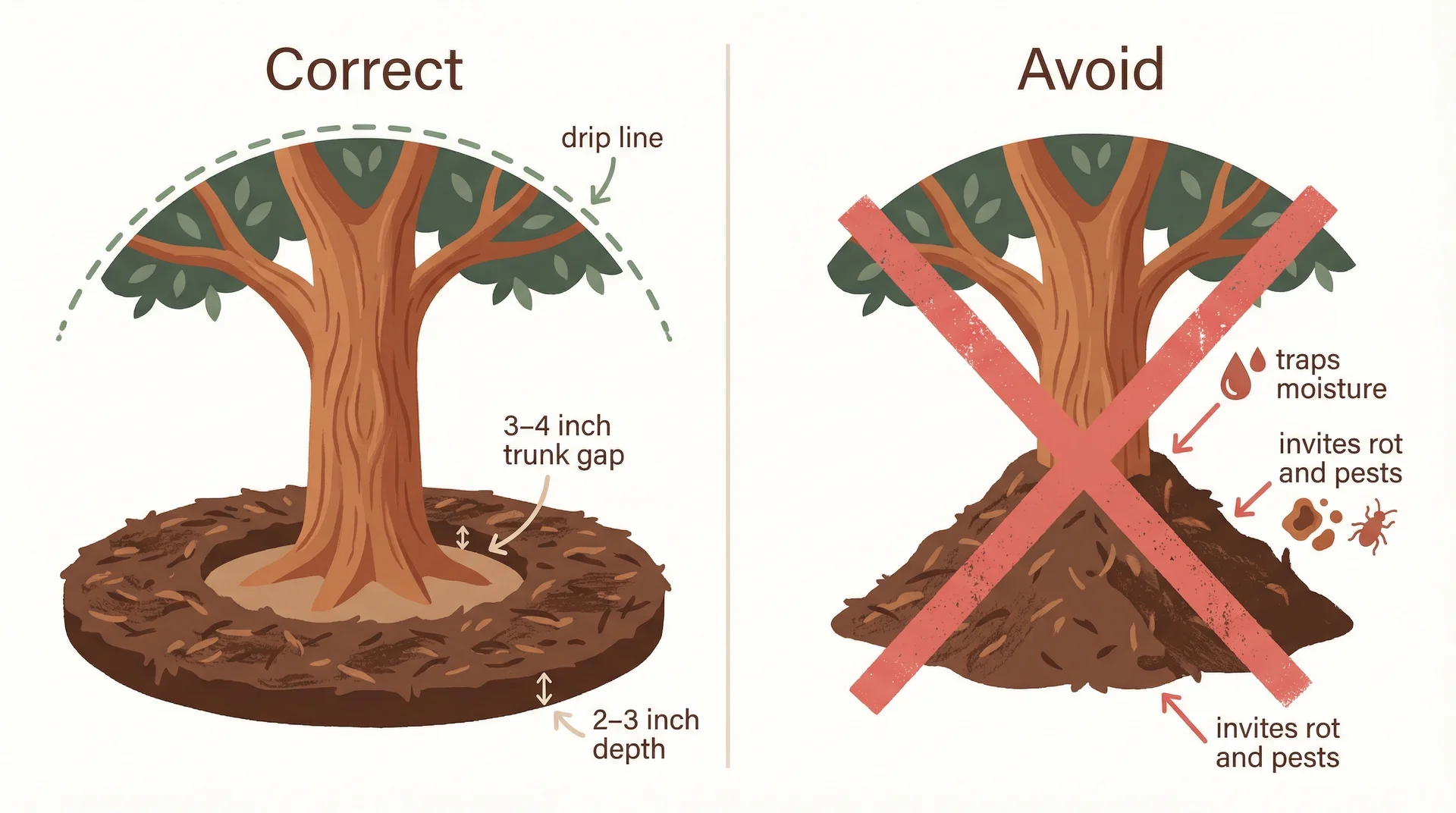
Since depth controls your cubic yard order directly, here is the specificity it deserves.
Around trees and large shrubs: Spread mulch in a wide ring extending toward the drip line, keeping depth at 2 to 3 inches. Leave a clear gap of 3 to 4 inches around the base of the trunk. Mulch pressed directly against bark traps moisture against wood and creates conditions where rot and pests establish quickly. Landscapers call this volcano mulching because of the cone shape that forms, and it causes measurable long-term damage to trees even when people do it with the best intentions.
In perennial beds: Three inches provides real weed suppression without suffocating the crowns of your plants. Pull mulch back slightly from each plant crown to give new spring growth room to push through cleanly.
In annual beds: Two inches works well since you turn and refresh these beds seasonally. Deeper mulch makes direct seeding harder and gets in the way when you amend soil between plantings.
In vegetable gardens: Keep depth at 2 inches maximum and use organic, untreated materials like straw or plain wood chips. Avoid dyed decorative mulch anywhere near food crops, and confirm that any wood chip mulch comes from untreated timber sources.
Choosing the Right Mulch Type: How Material Affects Coverage and Results
Not all mulch types behave the same at the same volume, and the material you choose affects settling, coverage effectiveness, and re-mulching frequency.
Shredded hardwood bark knits together well and resists displacement from rain and wind. It compacts moderately, breaks down slowly, and remains my most recommended option for perennial beds and foundation plantings in residential settings.
Wood chips (coarser, chunkier) settle less than shredded material but can migrate on slopes in heavy rain. They work well under trees and in naturalistic garden areas where you want a more textured, organic appearance.
Pine straw covers a noticeably larger area per cubic yard because it is lightweight and springy. It also provides a gentle acidity benefit as it breaks down, making it an excellent choice around azaleas, blueberries, rhododendrons, and other acid-loving plants.
Dyed decorative mulch holds colour for a season reasonably well. When using it near food gardens or in planting beds where soil health matters, confirm that the colourant is vegetable-based or listed as non-toxic. Most reputable suppliers specify this clearly.
Rubber mulch does not break down and does not contribute to soil biology. It has a legitimate place in playground surfaces and high-traffic utility areas. Around planting beds, it works against the soil ecosystem you are trying to build.
When to Mulch: Seasonal Timing That Changes the Results
Timing your mulch application affects how well it performs, and this is something I factor into every garden project I plan seasonally.
Spring (late, after soil warms): This is the most common mulching window, and the most important caveat is to wait until soil has genuinely warmed before applying. Mulching over cold, wet soil in early spring traps that cold and delays plant emergence by several weeks. I usually wait until daytime temperatures are consistently above 50°F and the first flush of perennial growth is visible above soil level.
Late autumn (after hard frost): A fresh layer of mulch applied after the ground freezes insulates root systems through winter temperature swings. The goal here is to keep soil temperature stable, not to prevent freezing entirely. Apply after frost rather than before, or you risk creating a warm, protected space for pests and rodents to overwinter directly around your plants.
Summer top-ups: In hot, dry climates or during drought periods, a light top-up of 1 inch can meaningfully extend the time between waterings. This is where keeping bagged mulch on hand for small quantities pays off.
Bulk vs. Bagged: A Practical Comparison
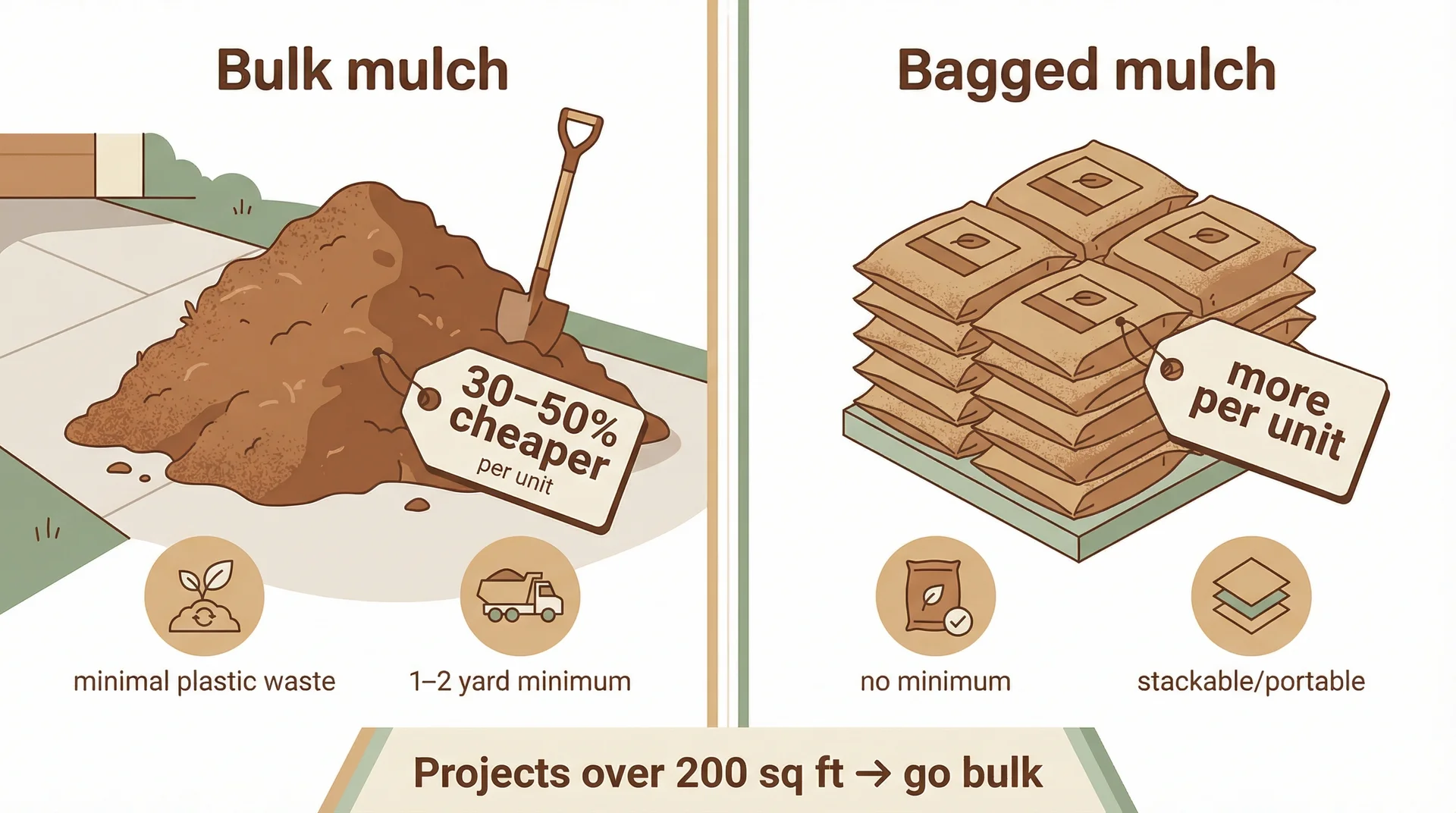
| Factor | Bulk Mulch | Bagged Mulch |
|---|---|---|
| Cost per cubic yard | 30 to 50% cheaper | More expensive per unit |
| Minimum order | Usually 1 to 2 yards minimum | No minimum |
| Convenience | Requires driveway space for a pile | Stackable, portable |
| Environmental impact | Minimal plastic waste | Significant bag waste |
| Best suited for | Projects over 200 sq ft | Small beds, touch-ups |
| Delivery required | Usually yes | No |
For most full-garden mulching projects, bulk ordering is the clear choice on both cost and sustainability.
For targeted applications, seasonal top-ups, or situations where you have no space for a pile, bagged mulch delivers the flexibility you need.
Common Calculation Mistakes Worth Avoiding
Measuring only simple rectangles. Most garden beds curve and taper. Break irregular shapes into smaller rectangular or triangular sections, calculate each separately, and add them together. It takes a few extra minutes and makes the order accurate.
Forgetting existing mulch. If you have existing coverage, measure its current depth before ordering. If 1.5 inches of last year’s mulch remains and you want to reach 3 inches, you only need to add 1.5 inches of new material. Ordering a full top-up over adequate existing coverage often results in 5 or 6 inches of mulch in beds that are already well-covered.
Rounding down. The formula rarely produces a round number. Always round up to the next half yard. The cost difference on a small overage is minor; the disruption of running short mid-project is significant.
Ignoring moisture weight. Wet bulk mulch feels and spreads differently from dry material. If your delivery arrives after rain, give it a day before making a final assessment of quantity. Freshly wet mulch appears denser and shorter than the same material would look once it dries and settles.
Quick Reference: Everything on One Page
\[ 1 \text{ cubic yard} = 27 \text{ cubic feet} \]
\[
\text{Cubic Yards Needed} = \frac{\text{Square Footage} \times \text{Depth (inches)}}{324}
\]
Coverage Table
| Depth | Coverage per Cubic Yard |
|---|---|
| 1 inch | 324 sq ft |
| 2 inches | 162 sq ft |
| 3 inches | 108 sq ft |
| 4 inches | 81 sq ft |
Bags per Cubic Yard
| Bag Size | Bags Needed |
|---|---|
| 2 cu ft | 14 bags |
| 3 cu ft | 9 bags |
Frequently Asked Questions
How many square feet does 1 yard of mulch cover?
At 2 inches deep, one cubic yard covers 162 square feet. At 3 inches deep, it covers 108 square feet. The depth you choose depends on your plant type and how much weed suppression you need.
How many bags of mulch make a yard?
Nine 3-cubic-foot bags equal one cubic yard. If you are using 2-cubic-foot bags, you need 14 bags to reach one cubic yard.
How much does a yard of mulch weigh?
Shredded hardwood bark weighs 400 to 600 lbs per cubic yard when dry. Wet mulch can weigh significantly more.
Compost-based mulch runs 1,000 lbs or heavier per cubic yard.
How much does a yard of mulch cost?
Bulk shredded bark typically costs $25 to $45 per cubic yard, plus delivery. Bagged mulch runs 30 to 60 percent more per equivalent cubic yard.
How many cubic yards fit in a pickup truck?
A standard 6-foot pickup truck bed holds approximately 2 cubic yards of mulch safely.
Always confirm your truck’s payload rating and account for mulch moisture content before loading.
How deep should I put mulch around trees?
Two to 3 inches is the right range. Keep mulch pulled back 3 to 4 inches from the trunk itself to prevent moisture damage to the bark.
When is the best time to mulch?
Late spring, after the soil warms, and late autumn, after the ground freezes, are the two most effective windows.
Avoid mulching over cold, wet soil in early spring as it traps cold and delays plant emergence.
Closing Thought
The 27-cubic-feet-per-yard conversion is the foundation, but the real skill is in applying it accurately across an actual space with irregular shapes, varied depths, and different materials behaving differently under the same conditions.
Once the formula clicks, every mulching project becomes a planning exercise rather than a guessing game.
The gardens with the strongest long-term health tend to share one consistent quality: intentional mulching done correctly from the start.
The right depth, the right material, placed with enough care to protect rather than harm the plants at the centre of the design.
Knowing how to order exactly what you need means that investment goes precisely where it belongs.