

This article is for general wellness information only and does not replace medical advice. If your sore throat comes with a high fever, white patches on the tonsils, difficulty breathing or swallowing, or does not improve within seven to ten days, see a doctor. |
You grab lemonade because it feels like the right instinct. Lemon. Vitamin C. Vaguely medicinal. Two sips in, your throat stings worse than before. That happened to me the first time I reached for a cold bottle from the fridge while I was sick, and I spent a while confused about it, because I had always heard lemon was good for a sore throat.
It is. The problem is that lemon and lemonade are not always the same drink, and that gap is what most people never stop to examine.
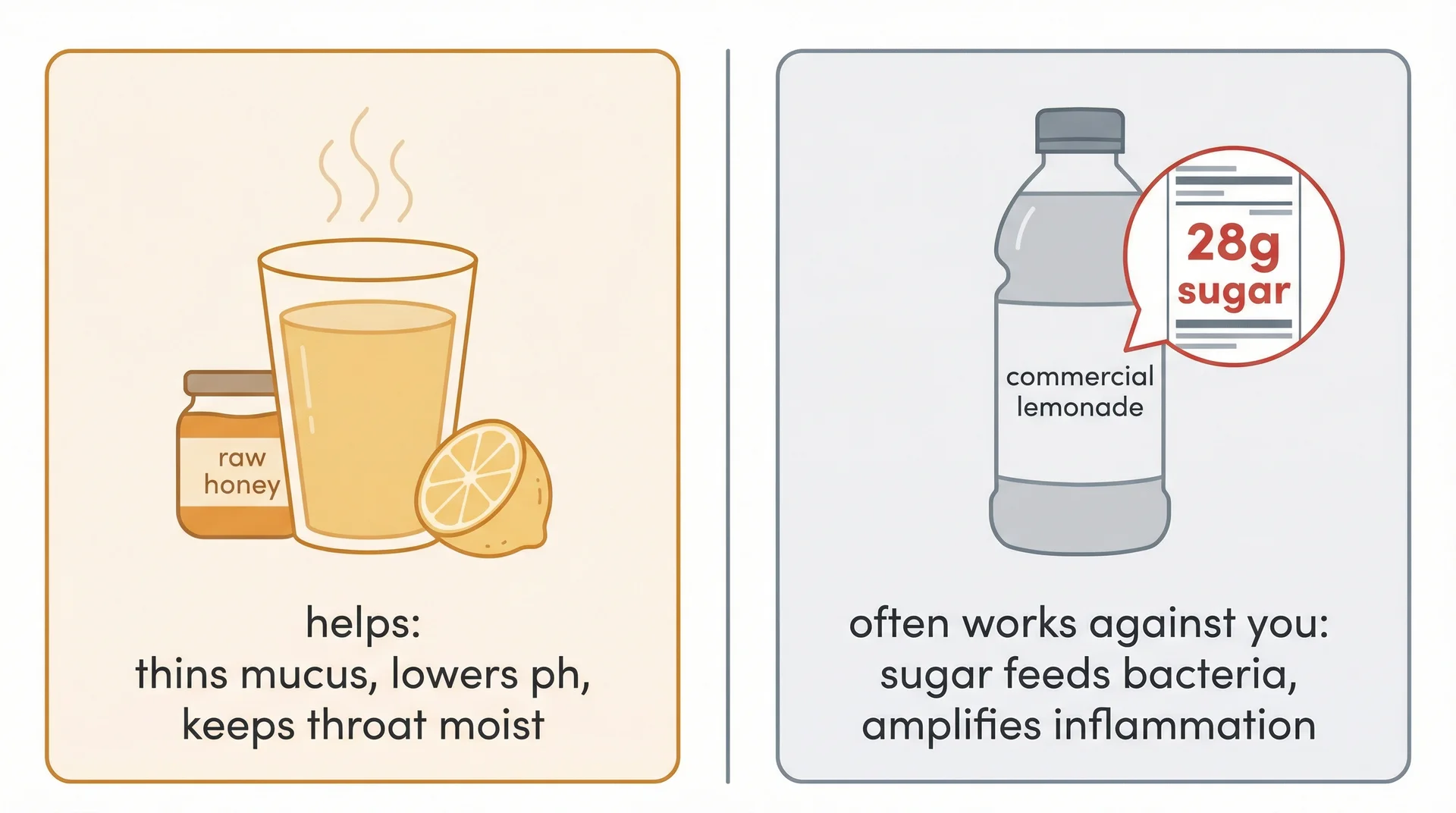
Lemonade can help with a sore throat. The lemon lowers the pH inside your throat, which makes the environment harder for bacteria and viruses to survive in. Citric acid also helps thin mucus. Warm liquid keeps throat tissue moist and relaxes inflamed muscles. These are real, consistent benefits.
The version most people actually drink when they are sick, a cold commercial bottle carrying 28 to 32 grams of added sugar, cancels most of that out. Sugar promotes inflammation, feeds bacteria, and creates exactly the conditions you are trying to avoid. The lemon is doing its job. The sugar is undoing it.
Made the right way, with fresh lemon juice, warm water, and raw honey, lemonade earns its place when your throat hurts. The rest of this piece covers how to get there, and a few specific situations where you should skip it entirely.
What lemonade actually does to a sore throat
The case for lemon
Lemon juice sits at a pH of around 2 to 2.5. When you drink something that acidic in diluted form, it temporarily lowers the pH inside your throat. Most bacteria and viruses that cause sore throats prefer a more neutral environment, so that shift matters. Citric acid also stimulates the cough reflex in a way that helps clear mucus, which is why a warm lemon drink can make your chest feel a little looser even without doing anything dramatic.
Vitamin C gets a lot of credit here, and I want to be straight about it: a cup of lemonade gives you meaningful vitamin C, and vitamin C supports immune function, but it will not cure your throat infection or shorten your illness on its own. It is a supporting player. What diluted lemonade reliably does is keep you hydrating consistently, and that alone is useful across almost every cause of a sore throat.
Why lemonade and lemon water are different
Lemon water is typically a squeeze of fresh lemon in warm water, sometimes with honey. It is diluted, mildly acidic, and carries almost no sugar. Lemonade is lemon juice plus sweetener plus water, and the sweetener changes everything. A homemade lemonade with a teaspoon of raw honey is a completely different drink from a store-bought bottle with high-fructose corn syrup.
Sugar creates an inflammatory environment and creates conditions that bacteria find comfortable, so the 28-plus grams of sugar in a commercial lemonade works against the lemon’s anti-pathogen effect. The lemon is trying to help. The sugar is undoing it.
Why does your throat sometimes feel worse after lemonade?

This is a real experience. You drink lemonade expecting relief, and your throat feels sharper than before. A few things cause that.
Store-bought lemonades often contain added citric acid as a preservative on top of what the lemon naturally brings, pushing the concentration higher than a fresh-squeezed version would. When the mucosal lining of your throat is already swollen and raw, that extra acid stings. High sugar content also causes an inflammatory response in some people, who feel it as throat irritation, even when they blame the lemon.
Then there is a third group: if your sore throat comes from acid reflux or GERD, lemonade of any kind is likely to make things worse. Citric acid relaxes the lower esophageal sphincter, the muscle that keeps stomach acid from rising into the throat. More on that shortly.
Preservatives and artificial flavourings in commercial lemonade are a real but underacknowledged factor too. Many people who find that store-bought lemonade hurts their throat have no problem with a fresh-squeezed homemade version, and additives are a plausible reason for that difference.
One more thing worth flagging: if you have a citrus allergy or sensitivity, even low-concentration lemon can cause throat itching, burning, or swelling. Grass pollen allergies and citrus allergies sometimes overlap. If lemon has ever caused mouth or throat symptoms outside of a sore throat context, skip lemonade when you are already inflamed.
Warm vs. cold lemonade: does temperature matter?

It does, and the answer depends on what your throat is doing right now.
When warm lemonade works better
Warm liquid relaxes the muscles around your throat and increases local blood flow to inflamed tissue. It also produces a small amount of steam as you sip, which helps if you have nasal congestion alongside your sore throat. Warm drinks keep the throat moist in a way cold drinks do not maintain as long.
I reach for warm lemonade during the early scratchy stage of a throat infection, when swallowing is uncomfortable but manageable, and when a cough tags along with the throat pain. Raw honey in warm lemonade works as a natural cough suppressant in a way the cold version does not deliver as effectively, because its coating mechanism works better against a warm mucosal surface. It is also a good nighttime choice. The warmth relaxes tight throat muscles, the honey has a mild calming quality, and sleep comes more easily than it would with something cold.
When cold lemonade works better
Cold works on a sore throat the same way ice works on a sprained ankle. It constricts blood vessels at the site of inflammation, reduces localised swelling, and numbs pain receptors in the throat lining temporarily. For acute, severe throat pain where swallowing anything warm feels unbearable, cold provides faster relief than warmth does.
The version that helps is diluted, low-sugar homemade lemonade over ice chips, sipped slowly. Children who resist warm drinks often accept cold lemonade more readily, and cold works well for their acute throat pain too.
The one temperature to always avoid
There is a common assumption that hotter equals more medicinal when you are sick. A very hot drink burns the mucosal tissue you are trying to protect and leaves it more vulnerable. Keep any warm lemonade at the temperature you would comfortably give to a small child.
Store-bought vs. homemade: where most people go wrong
What is actually in commercial lemonade
I started reading labels closely after years of paying attention to how people eat and drink through illness. Commercial lemonade surprised me when I started looking at it as a sick-day drink rather than a summer beverage. A typical 12-ounce serving of a major brand carries 28 to 32 grams of added sugar, which puts it in the same ballpark as a can of soda. Many brands also list citric acid separately from the lemon juice as a preservative, concentrating the acidity above what fresh-squeezed lemon would give you. Sodium benzoate and artificial lemon flavourings appear in most shelf-stable versions.
The result is a drink that is more acidic than homemade, more sugary than anything your throat benefits from, and it carries additional compounds that irritate already-sensitive tissue.
| Homemade with raw honey | Store-bought | |
|---|---|---|
| Sugar content | 4 to 6g | 24 to 32g |
| Acidity | Dilutable, controllable | Often amplified with added citric acid |
| Antibacterial benefit | Yes, from raw honey | Minimal |
| Preservatives | None | Often present |
| Net effect on sore throat | Supportive | Frequently counterproductive |
The lemonade version that actually helps sore throat
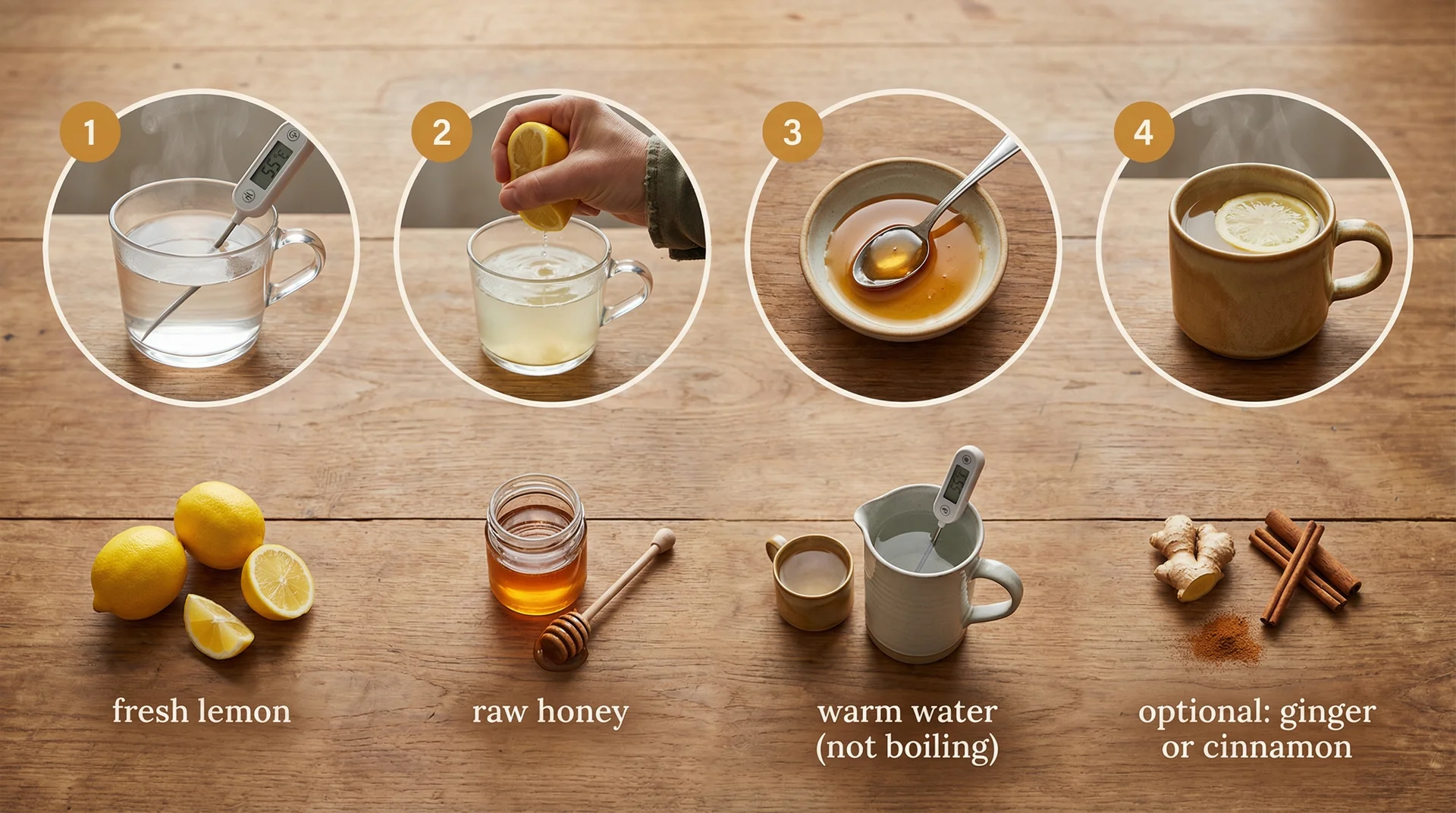
This is the recipe I come back to consistently. Worth making in a small batch so you have it ready to sip from every hour without preparing it fresh each time.
Base recipe:
- 1 cup warm water, around 50 to 60°C
- Juice of half a fresh lemon
- 1 to 2 teaspoons raw honey, stirred in after the water cools slightly below 40°C
The honey timing matters. Heat above 40°C degrades the beneficial enzymes and antimicrobial compounds in raw honey, so you add it after the water has cooled a little, not while it is still steaming.
Variations based on what else is going on:
- Congestion with the sore throat: steep two thin slices of fresh ginger in the water for ten minutes before adding the lemon. Ginger’s gingerols help thin mucus in a way lemon alone does not.
- Inflammation is the main problem: a small pinch of turmeric and an even smaller pinch of black pepper. Piperine in black pepper improves curcumin absorption significantly. Go light until you know what amount you can tolerate in a drink.
- Antibacterial support: a small pinch of cinnamon. It blends well with lemon and honey and adds real antibacterial properties.
- Throat is severely raw, and the lemon is stinging: reduce to a quarter lemon and increase the honey. The coating effect becomes the priority here.
Sip slowly. Letting the warm liquid coat your throat gradually works better than drinking it down quickly.
A practical note on tooth enamel: lemon juice, in concentrated or frequent doses, wears down tooth enamel over time. If you are drinking lemonade multiple times a day through a longer illness, rinse your mouth with plain water after each cup. A reusable straw also reduces direct acid contact with your teeth.
When you should not drink lemonade for a sore throat
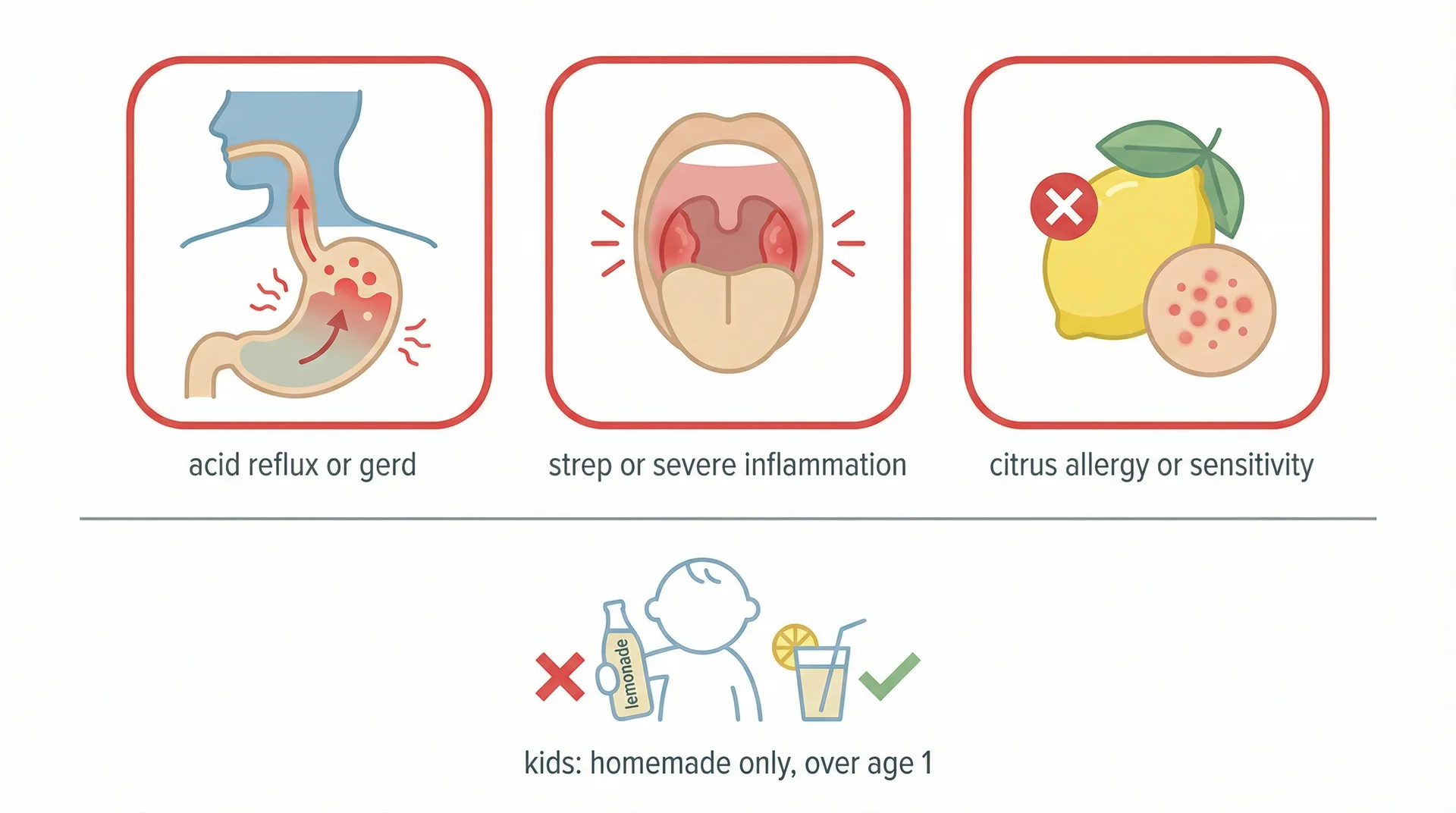
If your sore throat is from acid reflux or GERD
This is the most important contraindication, and I find it consistently underemphasised in general sore throat content. If your sore throat comes from reflux, lemonade is specifically the wrong drink to reach for.
Citric acid relaxes the lower esophageal sphincter. Drinking lemonade loosens the mechanism causing your pain, so stomach acid rises more easily into the esophagus and throat. The burning gets worse, not better. If your sore throat tends to be worse in the morning, worsens after eating, or comes with a bitter taste at the back of your throat, reflux is a likely cause. Skip lemonade in that case. Plain warm water, chamomile tea, and unsweetened aloe vera juice are gentler options for reflux-related throat irritation.
If you have strep throat or severe inflammation
WebMD’s guidance on strep is direct: avoid lemonade and other high-acid drinks when you have strep, because they burn already damaged throat tissue. When the throat lining is acutely inflamed with swollen tonsils or visible rawness, concentrated acid stings the mucosal surface. Strep needs antibiotics regardless. No drinks treats a bacterial infection. Cold water, ice chips, and chamomile with honey are gentler options while the medication works. Once acute inflammation settles, you can bring diluted warm lemonade back.
If you have a citrus allergy or sensitivity
If lemon has ever caused throat itching, swelling, or burning outside of a sore throat, do not use it as a remedy when you are already inflamed. An allergic reaction on top of already irritated throat tissue is a combination worth avoiding, and it is more common than people expect, particularly in those with grass pollen sensitivities.
Kids and lemonade for sore throats
Children over one year of age can have warm, diluted homemade lemonade with raw honey as the sweetener. The dilution matters more with children than with adults because their throat tissue is more sensitive to acid. Use a smaller lemon-to-water ratio and keep the honey to half a teaspoon.
Paediatric guidance recommends avoiding citrus juices for children with sore throats because the acidity adds irritation to already inflamed tissue, and that applies to commercial lemonade especially. The sugar content, concentrated acid, and preservatives in store-bought versions are not a worthwhile trade when a child is sick. Never give honey to infants under one year old due to the risk of infant botulism.
How lemonade compares to other drinks for a sore throat?
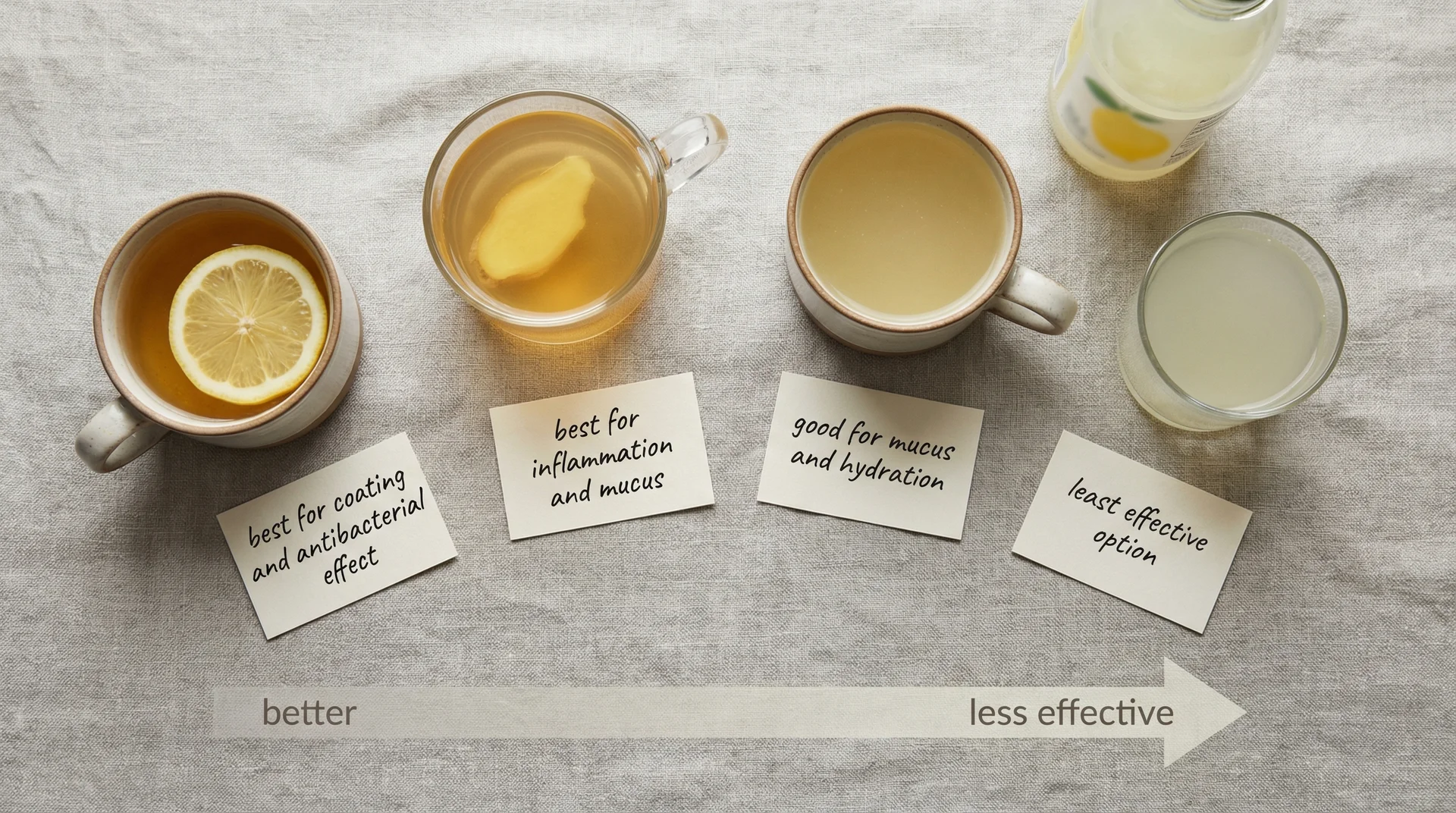
If you already have lemonade and are deciding whether to switch, here is where it sits.
Lemonade vs. honey-lemon warm water: These are nearly the same drink when made correctly. The ratio shifts slightly: honey-lemon warm water typically uses more honey relative to lemon, leaning more toward coating and antibacterial effect rather than mucus-thinning. Either works well for a standard viral sore throat.
Lemonade vs. ginger tea: Ginger tea has something lemonade lacks. Gingerols and shogaols carry a measurable anti-inflammatory effect that lemon does not replicate. If swelling is the dominant discomfort, ginger tea with honey edges out lemonade. If mucus clearance and hydration are the priority, lemonade holds its own.
Lemonade vs. bone broth: These work on different mechanisms entirely. Lemonade helps with mucus, pH, and hydration. Broth provides sodium with an osmotic effect similar to gargling salt water, amino acids that support immune function, and calories when eating solid food feel impossible. If you have a fever or no appetite, broth does things lemonade cannot.
For a standard viral sore throat: honey-lemon warm water and ginger tea sit at the top of the list, homemade lemonade sits comfortably in the middle, and store-bought lemonade sits near the bottom alongside coffee and soda.
Frequently asked questions
Is lemonade good for a sore throat?
Yes, when you make it with fresh lemon juice, warm water, and raw honey. The lemon thins mucus and creates a less hospitable environment for pathogens. Commercial lemonade with high sugar content and added preservatives tends to work against throat inflammation rather than helping it.
Is warm or cold lemonade better for a sore throat?
Warm works better for most viral sore throats, for cough alongside throat pain, and at night. Cold works better for acute severe pain, where numbing provides faster relief than soothing. Both are fine when sugar is low, and dilution is adequate.
Can lemonade make a sore throat worse?
Yes. Concentrated acid irritates inflamed throat tissue. High sugar content promotes inflammation and feeds bacteria. Commercial lemonade often contains added citric acid that amplifies the acidity beyond what fresh-squeezed lemon would give. People with GERD should avoid it entirely.
Can children drink lemonade with a sore throat?
Homemade, diluted, honey-sweetened lemonade is fine for children over one year old. Avoid commercial lemonade for sick children. Paediatric guidance recommends against citrus juices for children with sore throats because the acidity adds irritation. Never give honey to infants under one year old.
Does lemonade help with mucus from a sore throat?
The citric acid in lemon helps thin mucus and stimulate clearance. Adding fresh ginger amplifies this effect through a different mechanism.
Can you drink lemonade with strep throat?
Strep needs antibiotics, and lemonade will not treat it. In the acutely raw and inflamed stage of strep, the acid in lemonade can burn already damaged throat tissue. Cold water and chamomile with honey are gentler while the antibiotics work.
Why does lemonade sometimes make my throat sting?
Concentrated citric acid on inflamed tissue, added citric acid preservatives in commercial versions, high sugar content causing an inflammatory response, or an underlying reflux condition that worsens with any acidic drink. Diluting the lemon more or reducing the amount used usually resolves it.