
If you’ve landed here, you’ve probably already decided that reaching for a brow pencil every morning isn’t something you want to keep doing. The next question is which technique to book, and that comes with a frustrating amount of conflicting advice online.
Nanoblading and microblading both create natural-looking hair strokes using pigment deposited into the skin, but the tools, technique, and results differ enough that the right choice depends almost entirely on your skin type and the brow aesthetic you want.
I’ve worked with bridal and editorial clients whose brows needed to hold up for 12-hour shoot days, high-humidity summer ceremonies, and HD cameras at close range.
That means I’ve seen both techniques freshly done, half-healed, fully healed, and two years later. Here’s what I’d tell a client sitting across from me, trying to make this decision.
The Core Difference Between Nanoblading and Microblading
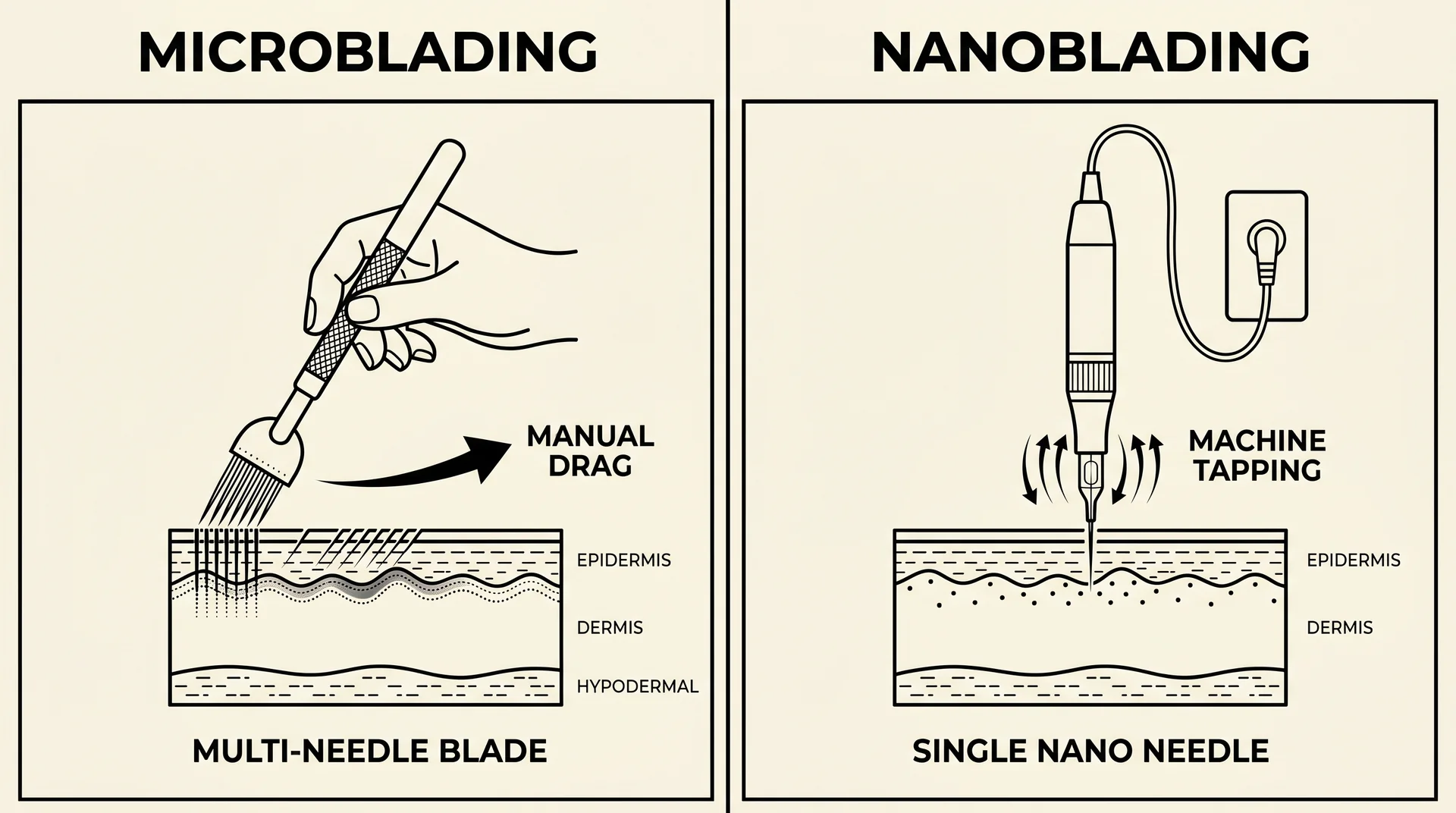
Nanoblading and microblading both produce hair-like strokes in the brow area. Still, they use fundamentally different tools: nanoblading uses a digital PMU machine with a single ultra-fine needle.
In contrast, microblading uses a manual hand tool fitted with a row of 9 to 14 needles arranged in a blade. That tool difference drives every downstream difference in the result.
The Tool That Changes Everything
Microblading works by dragging the multi-needle blade through the upper layers of skin in short, controlled strokes, depositing pigment as it cuts. The impact area per stroke is wider, the cut is a true incision, and the artist controls depth manually through applied pressure.
A skilled microblading artist knows how to keep this shallow and precise, but the technique is inherently more manual. If you’re also weighing whether microblading or a permanent eyebrow tattoo is the right direction entirely, this breakdown of eyebrow tattoo vs. microblading covers the bigger picture before you commit to either.
A skilled microblading artist knows how to keep this shallow and precise, but the technique is inherently more manual.
Nanoblading uses a machine that drives a single nano needle in rapid oscillating taps rather than a drag. The machine controls depth, which removes much of the human variability from the equation.
The result is that each stroke is thinner, more consistent, and less traumatic to the surrounding skin tissue. Nanoblading gets its name from that single nano needle, and the name is accurate.
The practical difference comes down to this: microblading cuts into the skin, nanoblading taps into it. That distinction is not minor.
How the Strokes Compare on Skin
When both are freshly healed, microbladed strokes have a crisper, slightly bolder edge. The cut creates a defined line that reads clearly and gives immediate visible fullness.
Nanobladed strokes are finer, with a softer edge that blends into existing brow hairs more convincingly. On a client with a reasonable amount of natural brow hair to work with, nanoblading can be genuinely difficult to identify as a cosmetic procedure.
The difference matters most at two points: fresh healing, when microblading reads with more immediate impact, and at 12 to 18 months, when how each technique ages on your specific skin becomes visible.
Which Lasts Longer: Nanoblading or Microblading?
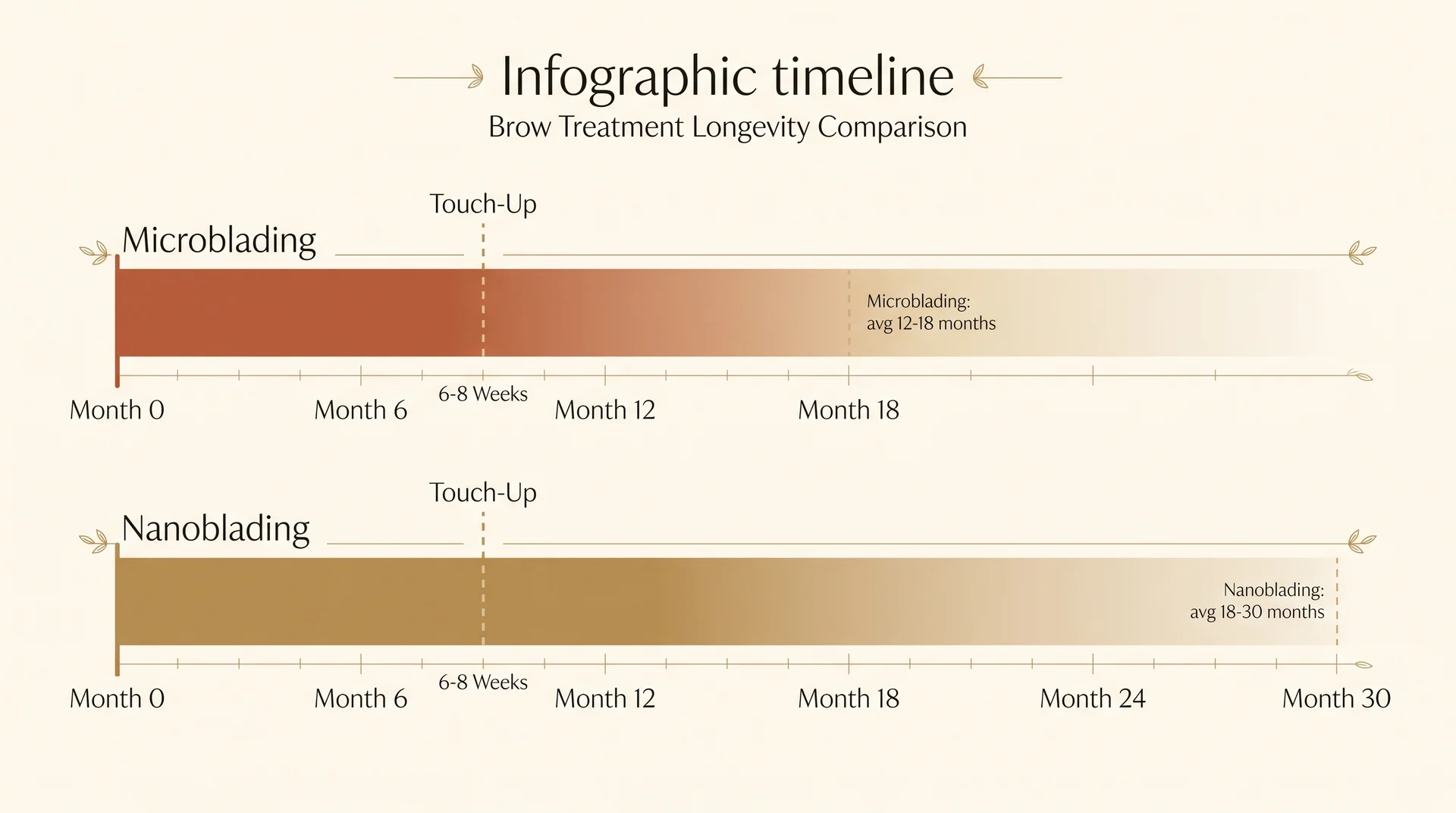
Nanoblading generally outlasts microblading by 6 to 12 months, with most clients seeing results for 1.5 to 2.5 years before a full refresh is needed, compared to microblading’s typical 12 to 18 months. The reason is rooted in how each technique deposits pigment and how the skin responds to that deposition.
Microblading’s blade creates a small incision, and as the skin closes during healing, it pushes some pigment out. This is normal physiology, not an error.
It’s why the 6 to 8 week touch-up session is included in every legitimate microblading package: the artist fills in what healed unevenly. After that, the clock starts, and factors like sun exposure, skincare actives such as retinol or AHAs, and oily skin all accelerate the fading.
Nanoblading’s machine tapping places pigment more consistently across each stroke with less surface disruption. The more uniform deposit tends to hold more evenly over time.
Some sources note that very shallow placement in certain skin types can also lead to faster fading, so this isn’t a blanket guarantee, but the longevity advantage holds for most clients across most skin types.
Why Skin Type Changes the Longevity Equation
On dry to normal skin, both techniques perform well within their expected ranges. On oily skin, the gap between them widens considerably, and that gap matters when you’re looking at the cost of repeat touch-ups over two or three years.
Microblading on oily skin can soften, blur, or fade unevenly within 8 to 10 months. Nanoblading on oily skin holds more reliably because machine-applied strokes are more resistant to the sebum that oily skin produces in the pore-dense brow area.
If your microblading has faded or blurred much earlier than you were told it would, oily skin is likely the explanation, not a bad artist.
Which Is Better for Oily Skin?
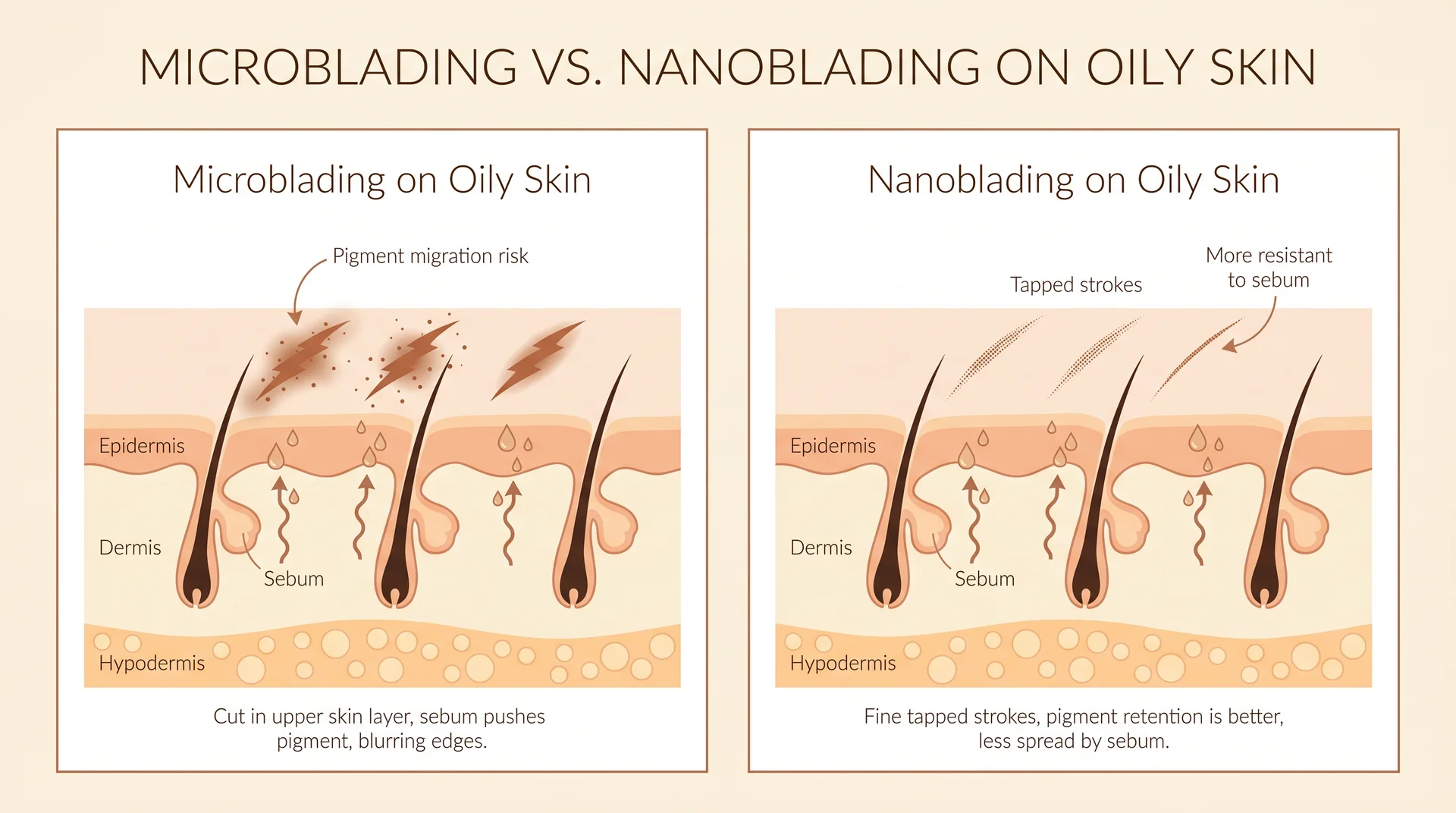
Nanoblading is the better choice for oily skin. Machine-controlled needle placement produces strokes that are more resistant to sebum migration during healing and throughout the life of the treatment.
Microbladed strokes on very oily skin can blur at the edges and fade unevenly, sometimes within a year, which turns what looks like a cost-effective option into a more expensive one once you factor in how often you need a touch-up to keep the result looking right.
That said, oily skin does not rule out microblading entirely. An experienced artist who specializes in oily skin clients can adjust blade depth and choose pigments formulated for higher retention.
But nanoblading removes most of that uncertainty from the beginning. It’s a cleaner technical match.
If your skin is oily enough that you’re also dealing with foundation challenges, this guide to why foundation looks patchy breaks down the sebum-related reasons and how to work around them in your daily makeup routine.
What the Results Actually Look Like
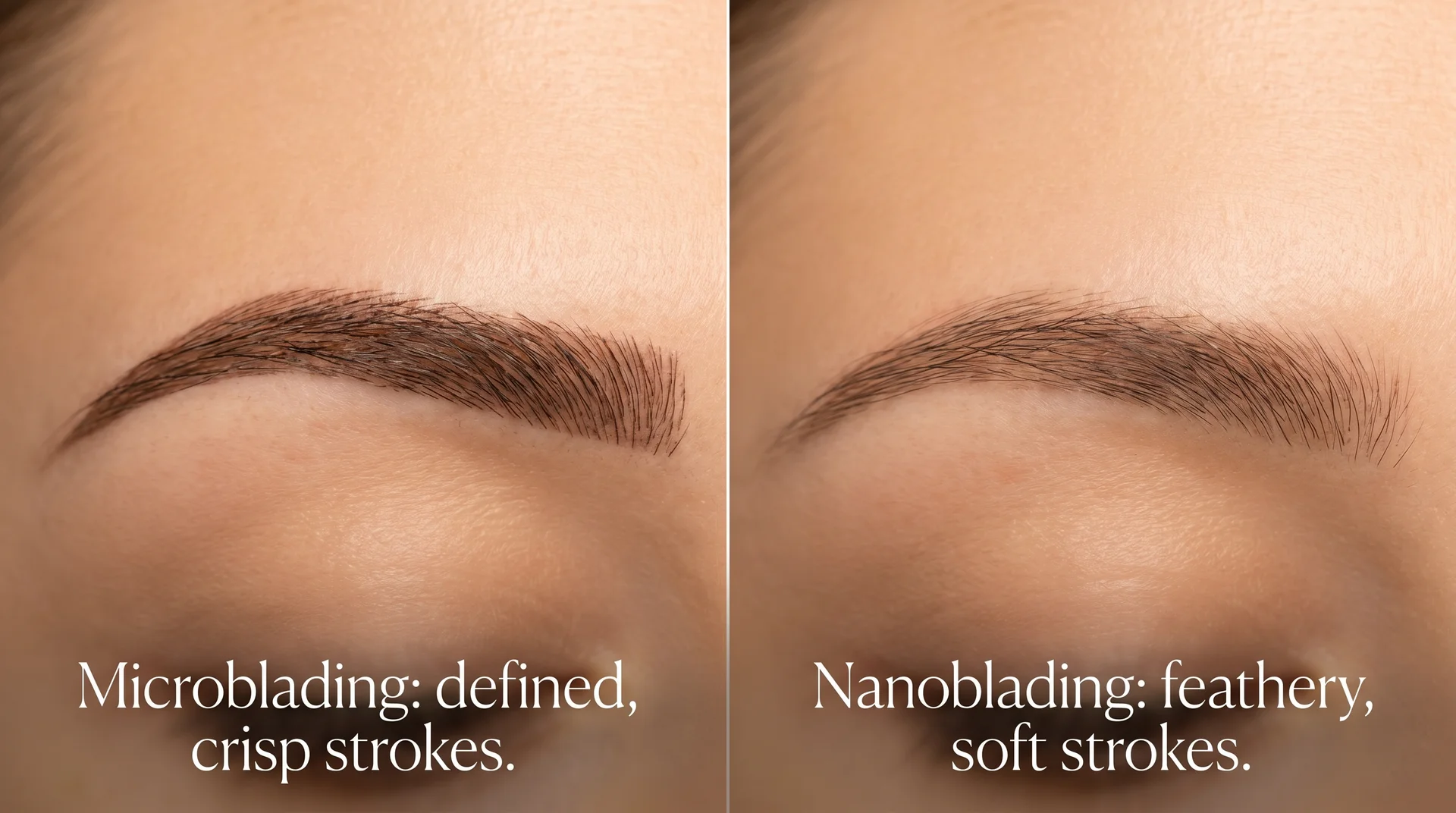
Both techniques aim for natural-looking hair strokes, but the aesthetic they produce is meaningfully different, and knowing which you actually want saves a lot of disappointment after healing.
Microblading: Defined, Crisp, and Immediately Noticeable
Freshly healed microblading reads with clear definition. The slightly bolder stroke creates a visible arch and fullness that makes an impression without any additional pencil or powder on top.
For editorial photography and bridal close-ups, this reads well: the contrast is clean, and the shape is obvious in frame. For a client who wants their brows to do the work without adding anything on top of them, microblading delivers that clarity immediately after healing.
The aging story is more variable. As microblading fades over months, the strokes can soften into a blurred line rather than fading cleanly to nothing. On some skin types, this reads as a natural softening. On others, particularly lighter skin with oily tendencies, it can look smudgy rather than soft. This is the scenario that surprises clients most, and it’s worth discussing with your artist before you commit.
Nanoblading: Feathery, Soft, and Harder to Detect
Nanobladed strokes look more like actual brow hair, especially when the client has some existing hairs to blend with. Each stroke is thinner than a microbladed stroke and sits more softly on the skin, producing what’s often described as a fluffy or feathered effect. When healing is complete and the brows have settled, a well-executed nanoblading result can be genuinely hard to identify as a cosmetic procedure.
For clients starting from almost nothing, very sparse brows with few natural hairs, the soft stroke can look lighter than expected once healed. This is where combination brows become worth discussing: nanobladed strokes at the front of the brow layered with some powder shading through the body and tail. It’s a hybrid result that most comparison articles don’t address, but it’s what many clients with sparse brows actually need.
Bring it up with your artist before you decide on either technique alone. For a full breakdown of how nano brows and powder brows compare as separate techniques, this guide on nano brows vs. powder brows covers that decision in detail.
The Healing Timeline: What to Expect from Both
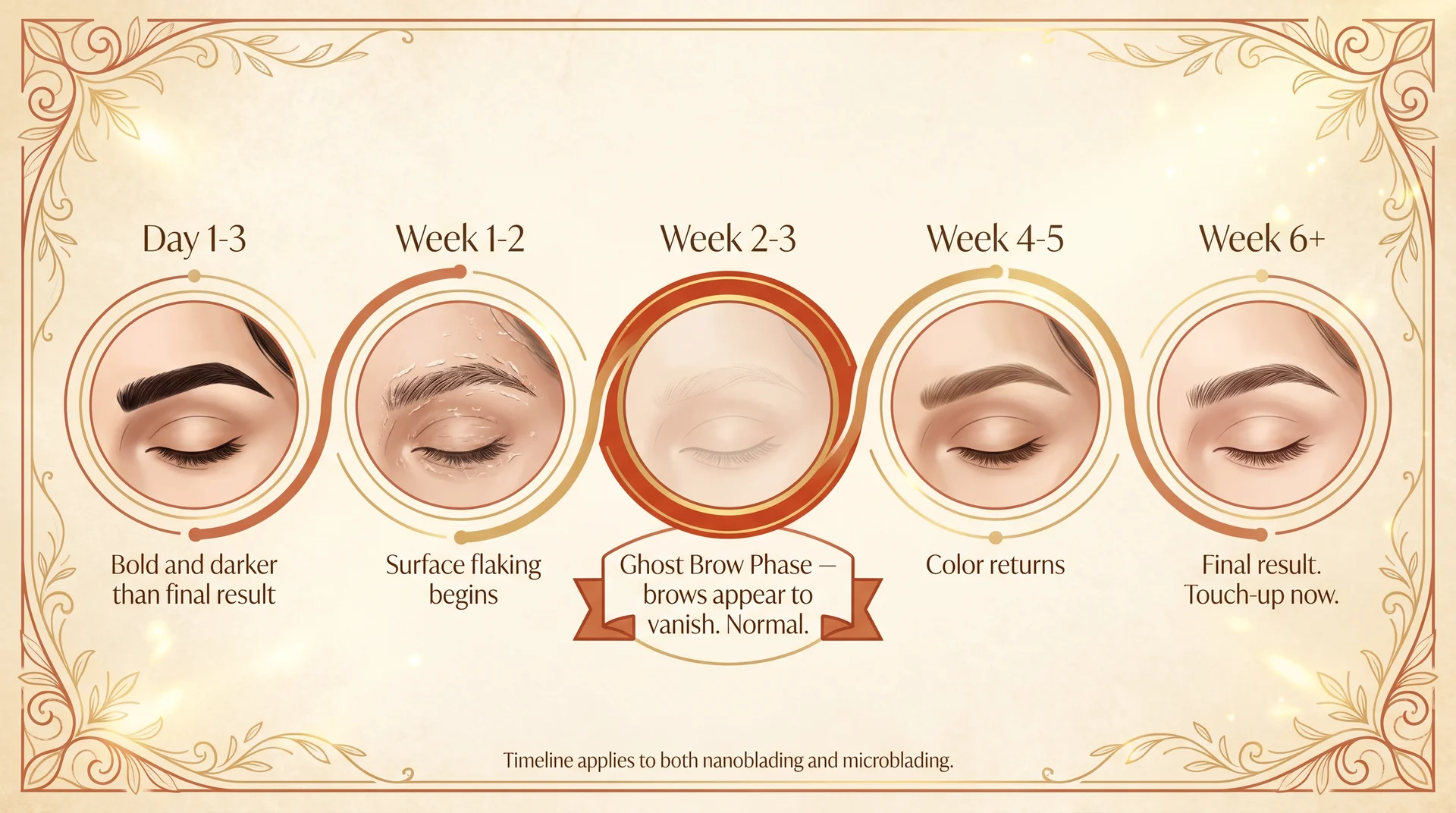
Both nanoblading and microblading take 4 to 6 weeks to fully settle into the final healed result, though nanoblading typically produces less initial scabbing and redness due to lower surface trauma. The arc of healing is nearly identical for both.
In the first 24 to 48 hours, expect the brows to look darker and bolder than the finished result. Some swelling and redness around the brow area is normal and usually resolves within a day or two. For the first 7 to 10 days, keep the area dry, avoid makeup on the brow, and skip sweaty workouts that will soak the brow line. Your artist’s specific aftercare instructions take precedence over any general guidance.
The Ghost Brow Phase
Around weeks 2 to 3, almost everyone goes through what PMU artists call the ghost brow phase. The brows appear to nearly disappear as the top layer of healing skin flakes away. This is not a sign that something has gone wrong. The pigment is still present beneath the surface and will re-emerge as the skin completes its healing cycle. The issue is that nobody warns clients strongly enough about how alarming this looks in person.
A good artist will walk you through the ghost brow phase before you leave the appointment. If yours doesn’t bring it up, bring it up yourself. Knowing it’s coming makes week three manageable instead of frightening.
Do not book your touch-up session any earlier than 6 weeks after the initial appointment. The skin needs its full healing cycle for the artist to read an accurate result and address any patchiness or shape adjustments that need correcting. The 6 to 8-week touch-up is included in every reputable package and should be in your booking confirmation from the start.
Nanoblading produces less scabbing than microblading because mechanical tapping causes less surface disruption than a blade cut. The healing period tends to feel a little smoother, with less visible flaking. The timeline to the final result is the same.
Pain, Skin Trauma, and Risk
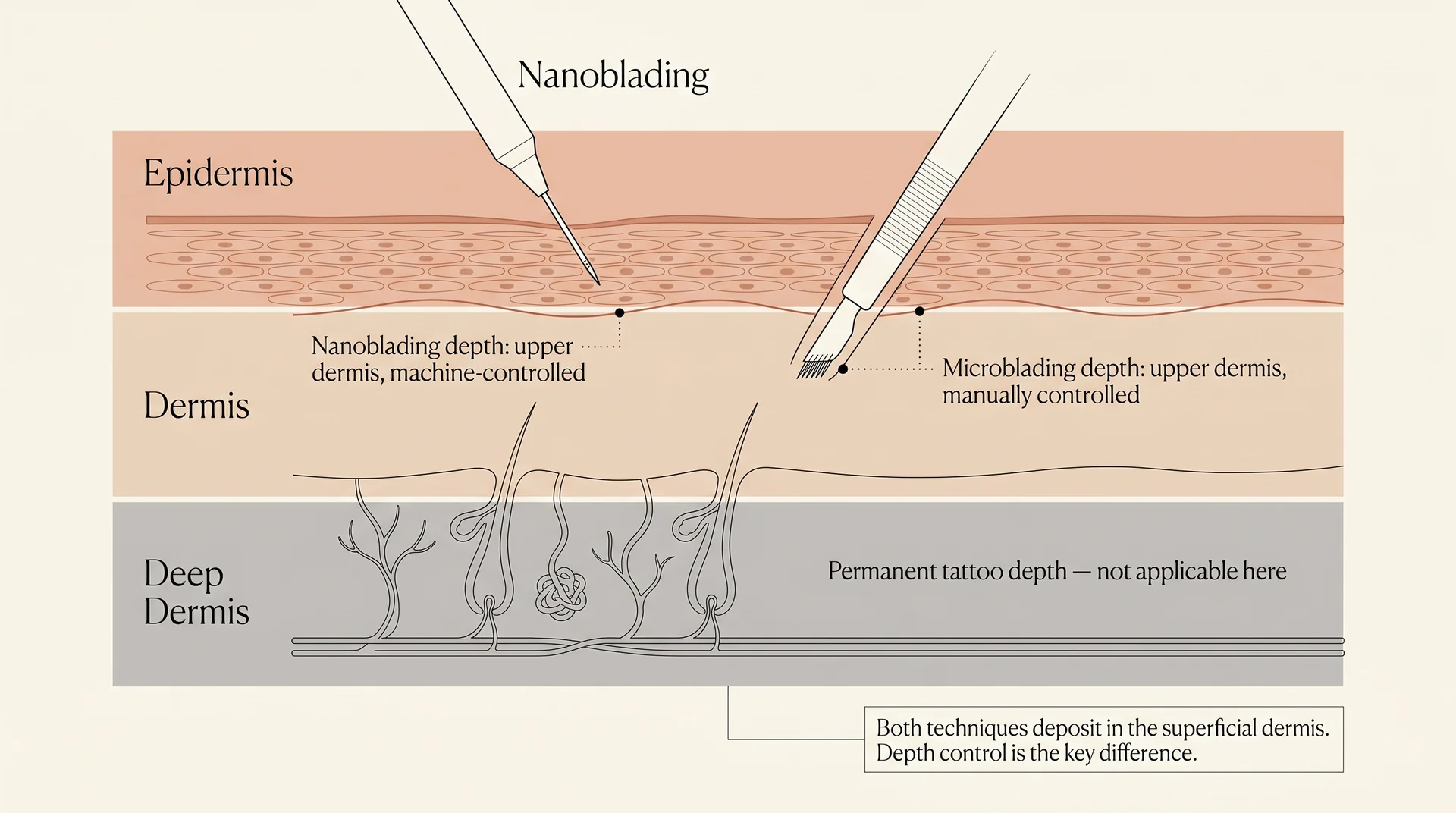
Both procedures use topical numbing cream applied before the session, and most clients describe the sensation during the procedure as mild discomfort rather than pain. Nanoblading is generally considered slightly more comfortable because a single fine needle tapping into skin causes less surface disruption than a multi-needle blade being dragged through it.
The risk of scarring is lower with nanoblading because the machine controls depth and eliminates the manual pressure variability that, in less skilled hands, can cause a blade to go too deep.
Skilled microblading artists minimize this risk through technique, but the machine removes it structurally. The risk of infection for both is low when the procedure is performed in a clean environment with sterile single-use tools, which you should confirm with any artist before booking.
According to the U.S. Food and Drug Administration’s guidance on cosmetic tattoos and permanent makeup, reactions, including infection, can occur with any pigment-based skin procedure, and confirming sterile technique is a reasonable pre-booking question.
If you have keloid-prone skin, both techniques carry an elevated risk. This is worth discussing with a dermatologist before booking either.
How Much Does Nanoblading vs. Microblading Cost in the US?
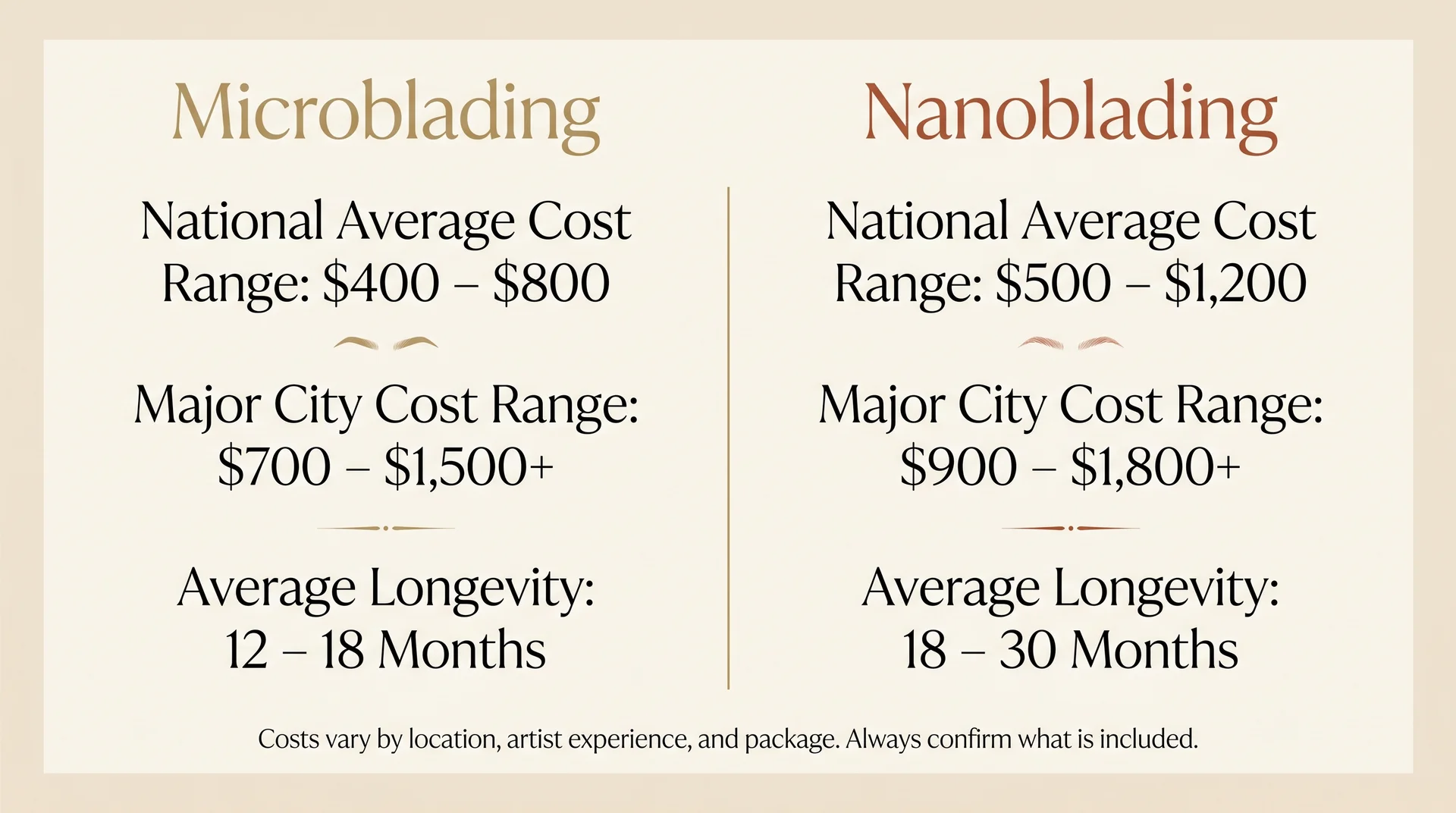
Microblading typically costs between $400 and $800 for the initial session and includes touch-up combined in most US markets, while nanoblading runs roughly 10 to 25 percent higher due to the specialized equipment and skill required.
| Technique | National Avg (Initial + Touch-Up) | Major City Range |
|---|---|---|
| Microblading | $400 to $800 | $700 to $1,500+ |
| Nanoblading | $500 to $1,200 | $900 to $1,800+ |
The premium for nanoblading reflects a few things. PMU machines cost more to operate and maintain than a manual blade tool. Fewer artists have nanoblading training, especially outside major metropolitan areas, which affects availability and drives prices up where it is offered. And because the technique demands a different skill set around machine speed, needle depth, and stroke construction, you’re paying for a specialized certification on top of the base brow work.
Neither option is genuinely cheap once you account for annual or biannual touch-ups. Budget for the touch-up when you budget for the initial procedure, not as an afterthought.
If you’re choosing between a $400 microblading package that needs a $150 touch-up at 10 months and a $700 nanoblading session that needs a touch-up at 20 months, the real cost difference across three years looks different from the upfront numbers suggest.
What to Choose: Nanoblading or Microblading?
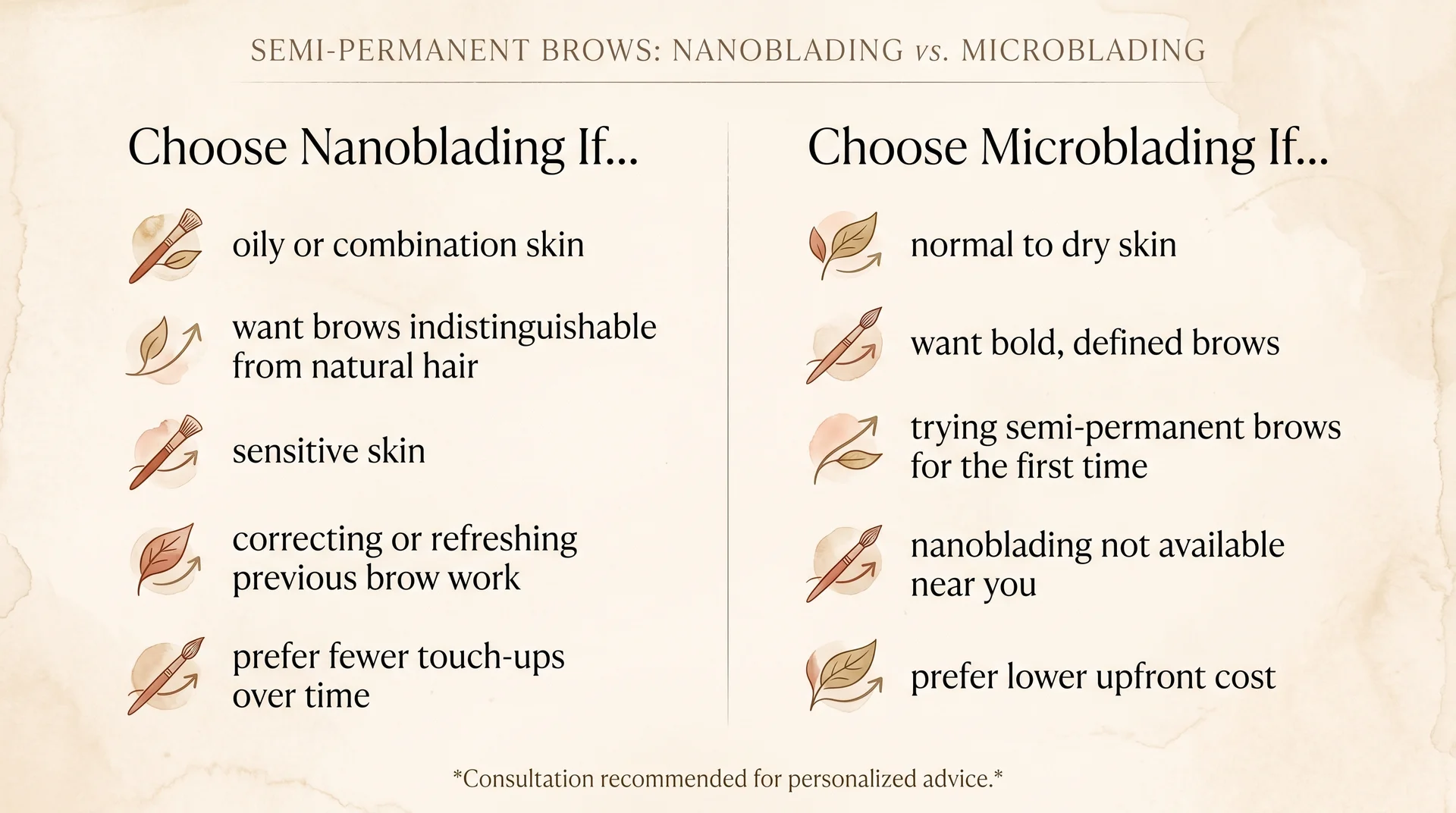
Choose Nanoblading
Nanoblading is the stronger technical choice in the following situations:
- Oily or combination skin. Machine-applied strokes resist sebum migration more effectively than microbladed cuts throughout healing and the life of the treatment.
- You want brows that look like your own hair grew there. The finer strokes integrate more convincingly with existing brow hairs, especially in natural light and close-up photography.
- Sensitive skin or limited healing tolerance. Less surface trauma during the procedure means a gentler healing process and a lower risk of the inflammatory response that can affect the final results on reactive skin.
- You want to refresh or correct previous brow work. Nanoblading can be applied over faded microblading in many cases, which gives it flexibility as a follow-on option when existing pigment has lightened to a suitable level.
- You want fewer visits over time. The longer average longevity is worth the higher initial cost for clients who prefer to minimize how often they’re back in the chair.
If you’re not sure which hair-stroke technique is what you want, and you’re open to a non-tattooed alternative for lifting and defining the brow area, this guide to thread brow lifts covers a completely different approach worth knowing about before you book.
Choose Microblading
Microblading is the better fit in these specific situations:
- Normal to dry skin. The technique performs best where excess oil isn’t a factor in healing or retention. On this skin type, microblading holds well and ages reasonably.
- You want clear, defined brows with immediate impact. The slightly bolder stroke delivers visible definition from day one and reads well in photos, which works for clients who want their brows to make an impression without any additional product.
- You’re trying semi-permanent brows for the first time and want flexibility. Microblading fades more completely over time than a deep cosmetic tattoo, making it a reasonable first commitment for someone who isn’t certain about their long-term shape or density preference. The decision to go more permanent can come after you’ve lived with hair strokes for a year or two.
- Nanoblading artists aren’t available in your area. Microblading is significantly more widely offered across the US, particularly outside major cities. If there are no trained nanoblading artists within a reasonable distance, microblading with a highly experienced artist is a better choice than nanoblading with someone who just added it to their menu.
Can You Get Nanoblading Over Old Microblading?
In many cases, yes, though whether it’s the right move depends on how saturated and how faded the existing microblading is.
If your microblading has faded to a soft, light tone with no significant color shift, a nanoblading artist can often work over it to lay in finer strokes and refresh the result. The lighter the remaining pigment, the more cleanly the new strokes will sit.
If the existing pigment has shifted toward orange, grey, or blue undertones, the artist needs to address that first, either through a corrective pigment session or laser removal, before new strokes will read clearly on top.
This is a consultation conversation, not an assumption to make at home. Bring photos of your current brows and your healed result from when the microblading was fresh, and let the artist assess in person.
Booking nanoblading over existing pigment without a consultation and honest assessment first is where mismatched results come from.