
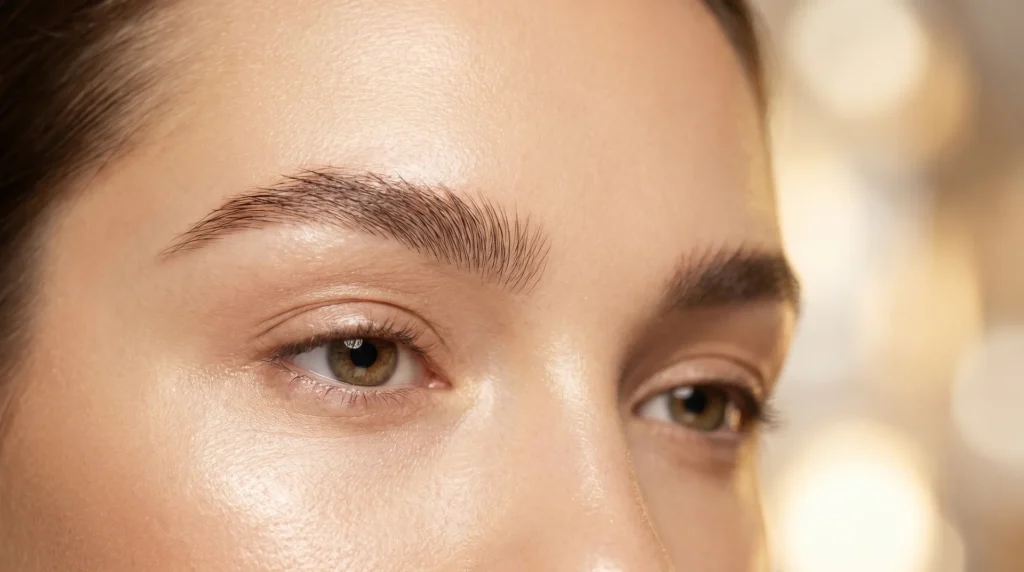
| Here’s the short answer before we go deeper: if you want natural-looking individual hair strokes and you’re comfortable with a touch-up every one to two years, microblading is likely your match. If you want a defined, filled, long-lasting brow with minimal maintenance, and you’re comfortable with something more permanent, eyebrow tattooing fits better. Oily skin changes the equation significantly, and there are newer techniques that serve both camps better than either classic option. |
You’ve probably stood at your bathroom mirror longer than you’d like to admit, working a brow pencil into patches that weren’t there five years ago. At some point, the question stops being “which product should I use” and starts being “is there something more permanent?”
That’s when the research spiral usually begins, and that’s when eyebrow tattoo and microblading start to blur into one confusing category. They’re genuinely different procedures.
They produce different results, suit different skin types, carry different levels of commitment, and have different failure modes when something goes wrong. I’ve seen both done beautifully on bridal clients and editorial sets across the Pacific Northwest.
I’ve also watched both require real-time and real money to correct. The good news is that choosing between them isn’t complicated once you understand what each actually does.
| Quick note before you read on: Both procedures involve breaking the skin. Results vary based on skin type, artist skill, and aftercare. Always consult a licensed brow technician or dermatologist before booking any cosmetic tattooing procedure. |
The Choice Between Eyebrow Tattoo vs. Microblading
Most comparison guides make you read 2,000 words of anatomy before arriving at the actual decision. These two questions will do more work than anything else in this piece.
How Permanent Do You Want Your Brows to Be?
There’s a meaningful difference between a one-to-three-year commitment and a lifetime one. Microblading is semi-permanent. The pigment sits in the upper layers of the skin, and your body gradually breaks it down over time.
Most clients see results in one to two years, sometimes up to three, with ideal skin and diligent aftercare. You’ll go back for a touch-up, you can adjust the shape or color each time, and if your taste changes, you’re not locked in.
Eyebrow tattooing is permanent in the way that any traditional tattoo is permanent. The ink goes deep into the dermis, your body doesn’t break it down easily, and while it will fade and shift over the years, it won’t disappear without laser removal.
Neither answer is wrong. Knowing where you sit on that spectrum tells you a lot about which direction to move.
Do You Want Natural Hair Strokes or a Defined, Filled Shape?
This is the aesthetic question most people forget to ask themselves, and it’s the one that most reliably predicts satisfaction. Microblading creates individual hair-like strokes that blend with your existing brow hairs.
The result looks like you simply have fuller, better-shaped natural brows. It reads beautifully in person and in candid photos where you’re not wearing much makeup. Eyebrow tattooing fills the brow area with pigment in a more solid, defined way.
It looks more like a brow carefully drawn on and made permanent. In the right hands with modern pigments, it can look polished and structured. What it won’t do is mimic individual hairs.
Neither look is superior. They serve different aesthetics and different faces. Knowing which one you actually want, before you walk into a consultation, will save you from choosing the wrong technique based on longevity alone.
What Each Procedure Actually Does to Your Skin
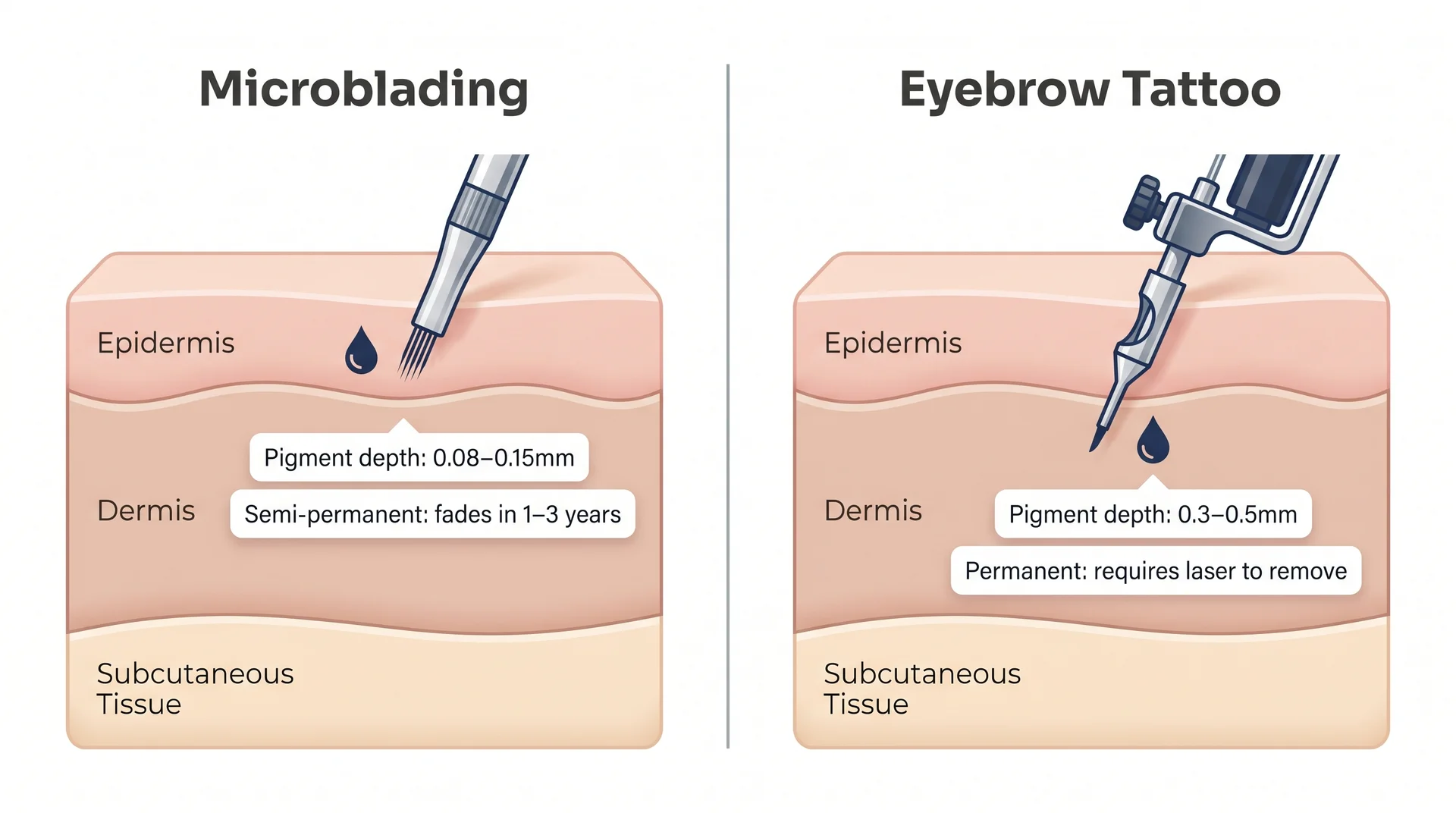
The technical difference between eyebrow tattooing and microblading lives mostly in depth. How deep the pigment goes determines everything else: longevity, aging, fading, and your options if you want to change it later.
Microblading: The Shallow Technique That Fades by Design
A trained technician uses a small handheld tool fitted with ultra-fine needles to make shallow incisions in the epidermis, the outermost layer of your skin. Pigment gets deposited into those cuts as the tool moves across the brow, creating strokes that look like individual hairs.
Because the pigment sits in that outer layer, your skin’s natural renewal cycle gradually pushes it toward the surface and breaks it down. This is why microblading fades. It’s also why the color stays truer as it fades.
The iron oxide pigments used in microblading tend to lighten rather than shift to unexpected tones. Blacks don’t turn blue. Browns don’t turn green. They simply become lighter and softer over time.
Eyebrow Tattooing: Deeper, Bolder, More Permanent
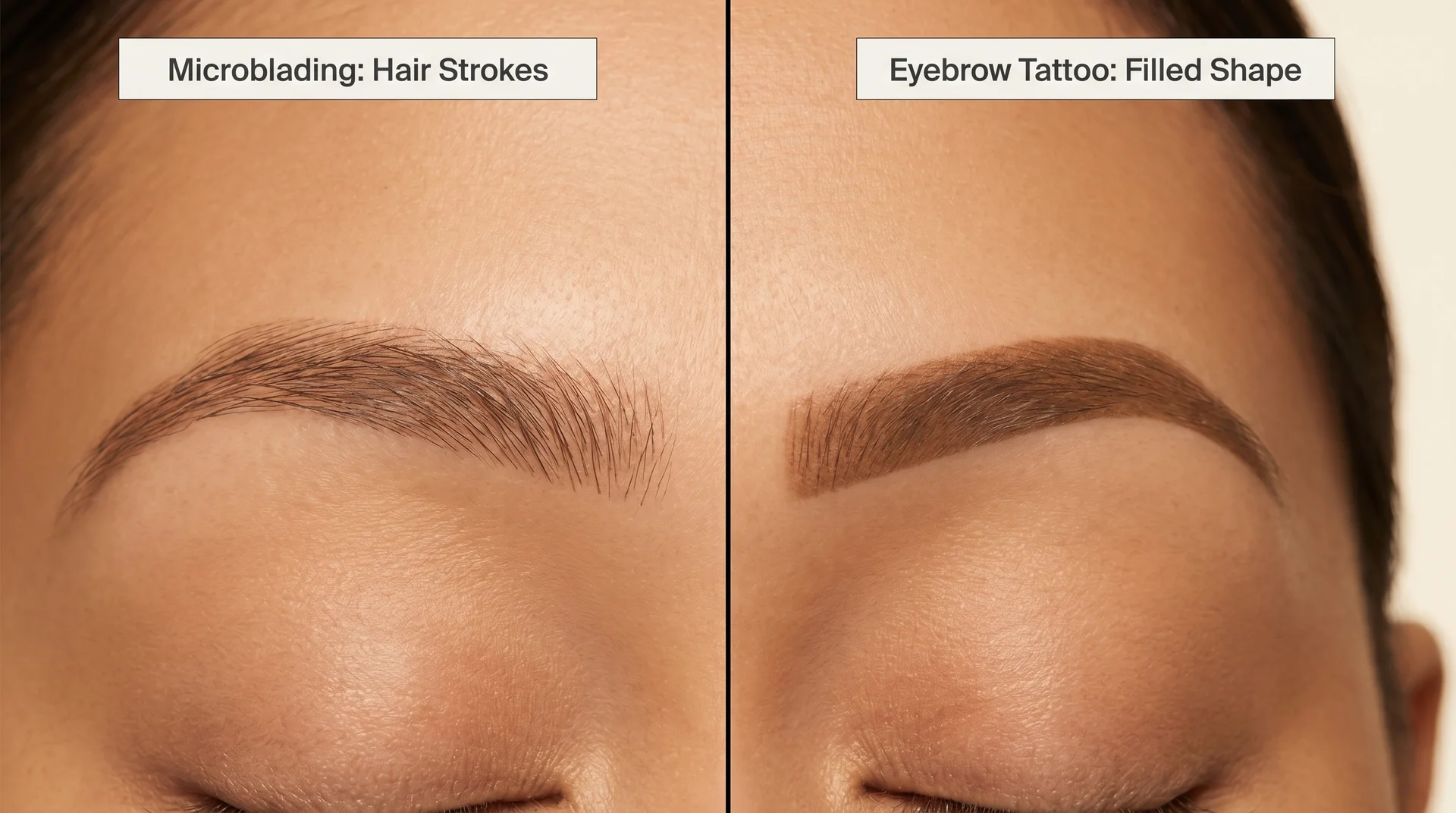
Eyebrow tattooing uses a motorized machine that drives pigment into the dermis, the second and deeper layer of skin, the same basic mechanism as any traditional body tattoo, applied to a much smaller area with cosmetic goals in mind.
Because the ink goes deeper, it stays longer. In some cases, it stays indefinitely without laser intervention. The machine allows for efficient coverage and suits clients who want a defined, filled brow shape.
Modern eyebrow tattooing has improved considerably from the block-color results of the early 2000s, and a skilled technician can produce a result that looks intentional and well-shaped.
It remains a more solid look than microblading, and that matters for how you’ll wear it daily.
The Color Shift Problem Nobody Warns You About
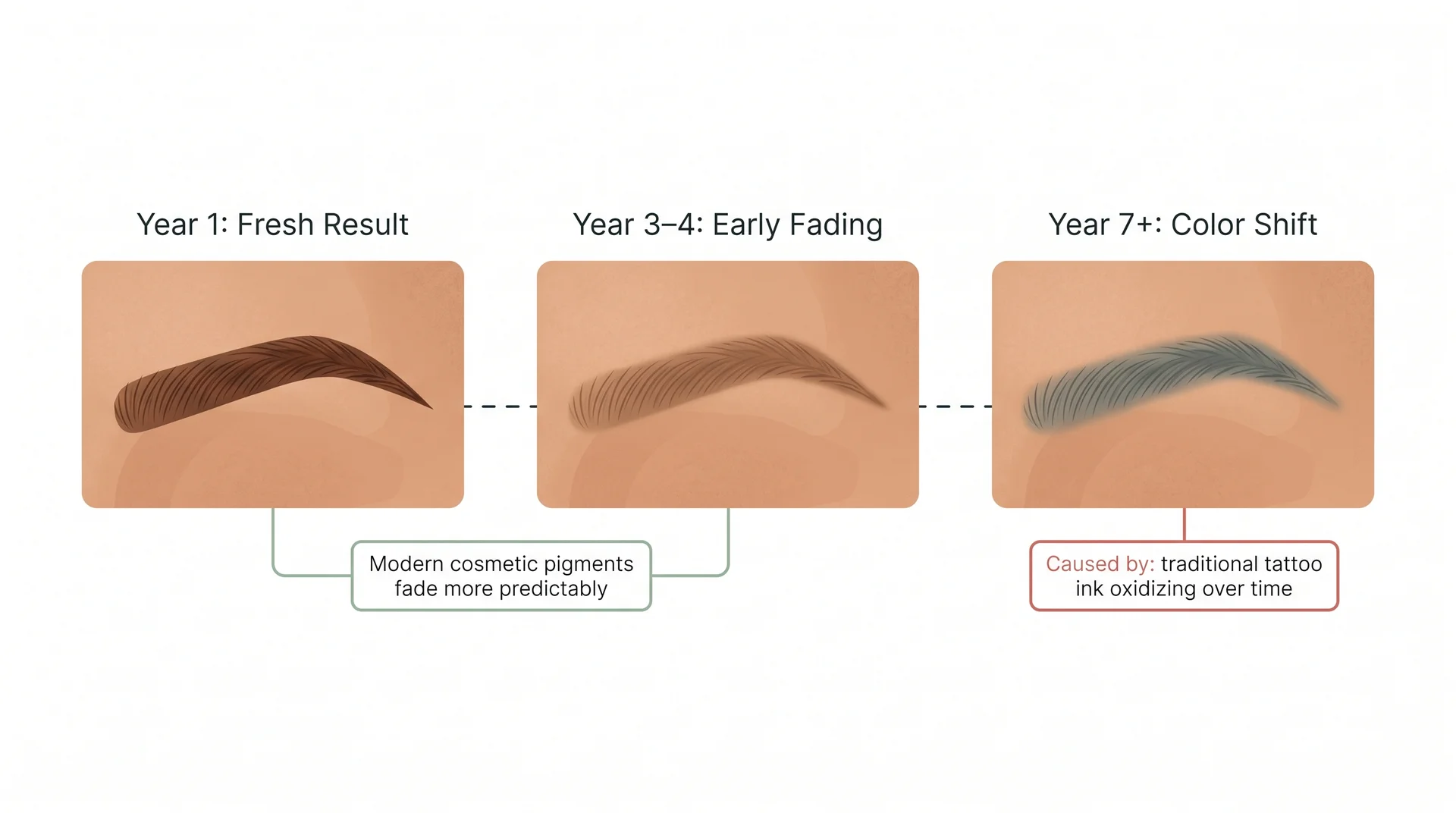
Traditional tattoo inks were formulated for body work and long-term skin retention, not the nuances of facial tissue. On the face, over five to ten years, those inks can oxidize and shift color in ways that weren’t obvious at booking.
Gray brows that shade toward blue-green. Brown brows that take on a reddish or ashy tone. This happens more with older formulations than with modern cosmetic pigments, but it remains common enough, particularly among clients who got eyebrow tattoos before 2010, that it deserves direct discussion.
Modern cosmetic pigments used by skilled practitioners today are specifically formulated to fade more predictably. The risk is lower than it was fifteen years ago, and it isn’t zero. The pigment brand and formulation matter enormously, and it’s a question worth asking any artist you’re considering.
Eyebrow Tattoo vs. Microblading: The Honest Comparison
How Each Option Looks at Day One, Year One, and Year Three
Right after the procedure: Both options look darker and more intense than the healed result will be. Your brows will look bolder than what you asked for, and that’s completely normal. The color hasn’t settled, and the skin is still processing.
The ghost brow phase (weeks two to three): This is where microblading clients most often panic, and it happens to nearly everyone. The pigment appears to have faded dramatically or nearly disappeared.
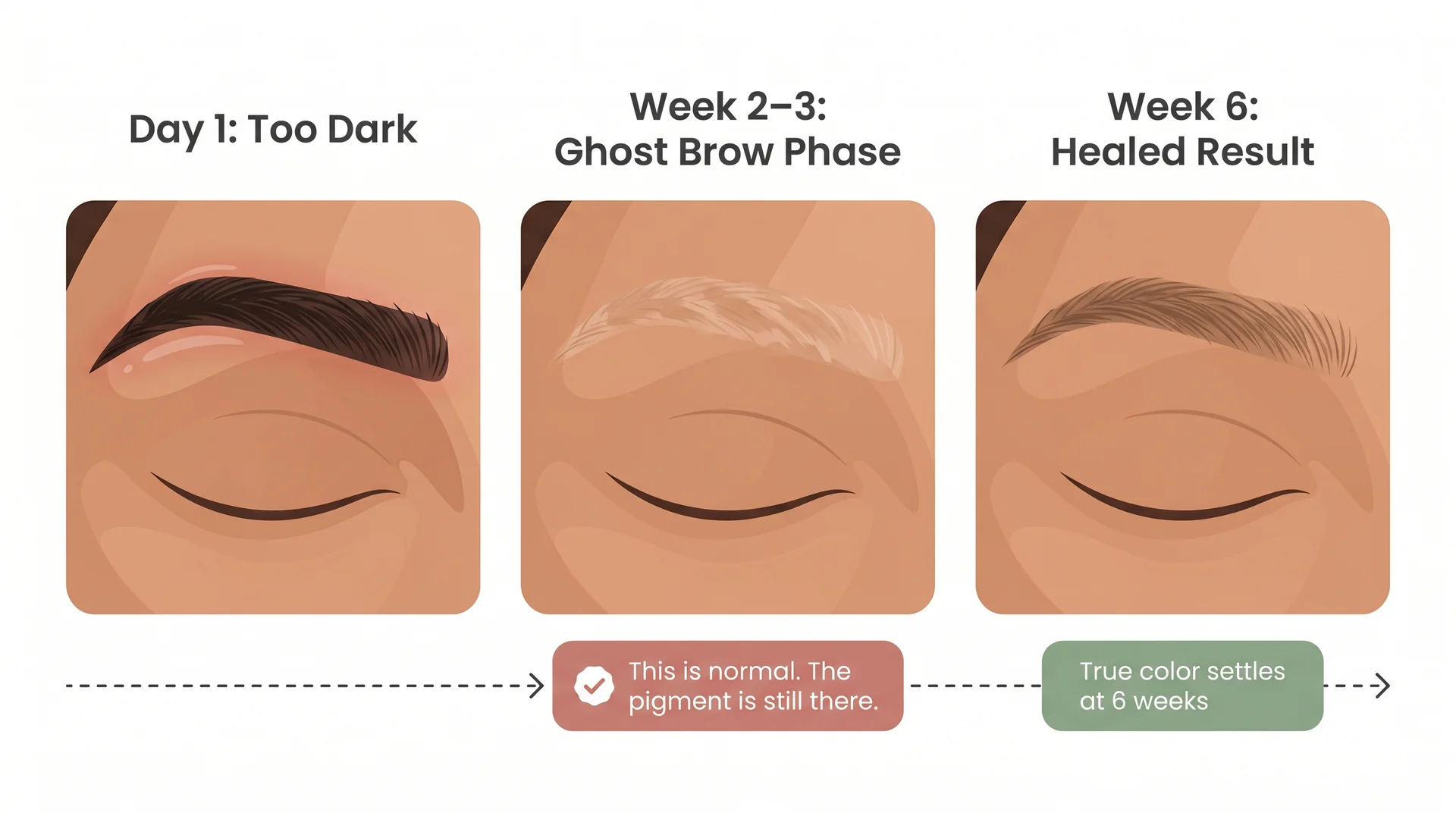
The skin heals over the strokes and temporarily mutes them. They come back. Most microbladed brows reveal their true settled color around week six. Eyebrow tattoos go through a similar, less dramatic version of this. If your brows look like they’ve vanished after microblading, this is why. Give it six weeks before you worry.
Year one: A well-executed microbladed brow at the one-year mark still looks defined and natural, though lighter and softer than the result at month two. A well-done eyebrow tattoo holds its shape and color well, and the definition remains clear.
Year three: Microblading has typically faded significantly and usually needs a full touch-up or refresh at this point. Eyebrow tattooing still holds, though the color may have shifted slightly. Some clients schedule a color correction appointment to keep it looking current.
Oily Skin and Why It Changes the Entire Decision
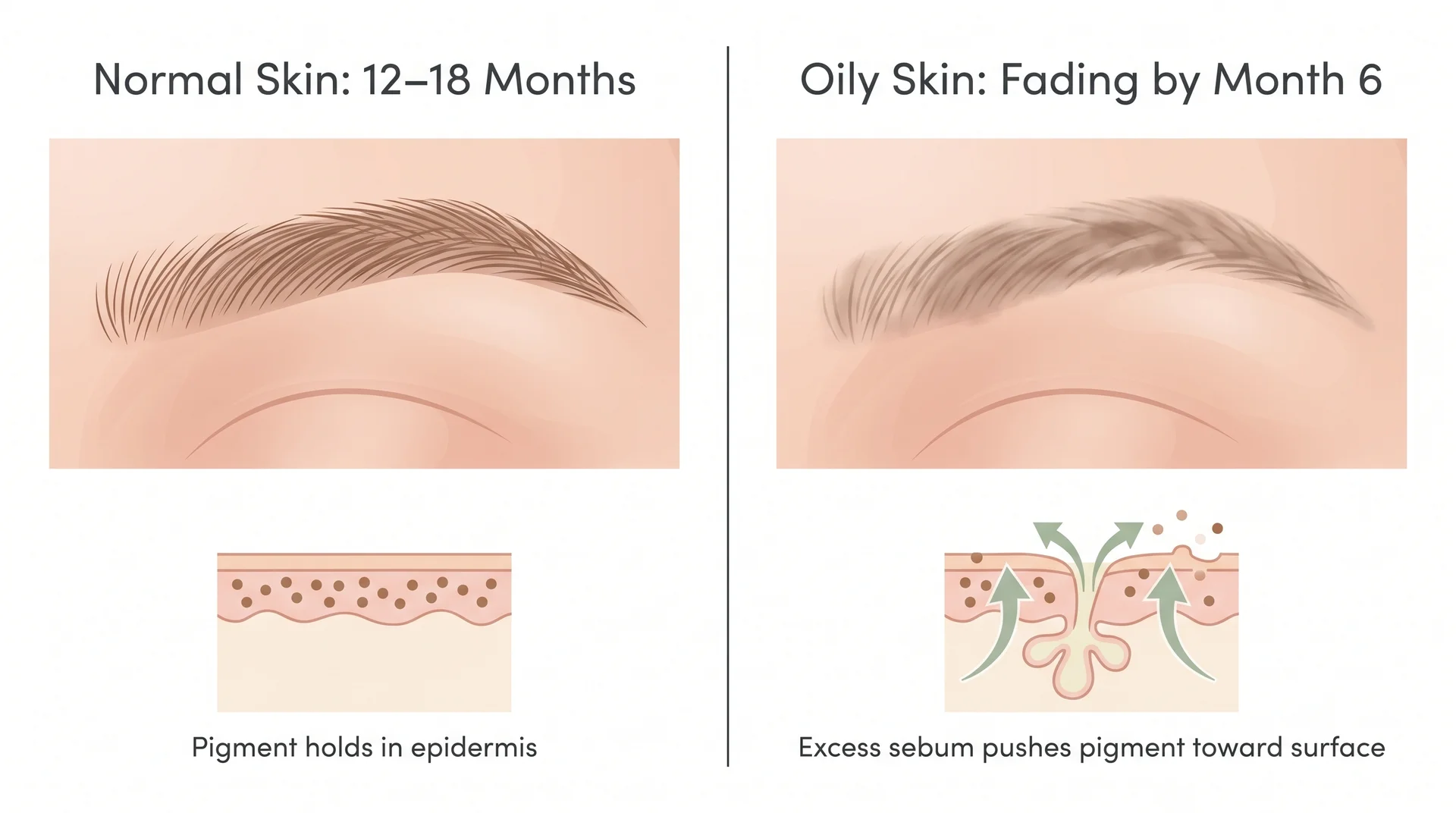
If you have oily skin and you choose traditional microblading, there’s a real possibility you’ll feel shortchanged by the results.
Oily skin produces sebum that pushes pigment out of the shallow epidermis layer faster than normal, which means the fine hair strokes may blur together or fade noticeably within months rather than years.
The result looks less crisp and less natural than it did at the six-week mark. This doesn’t mean you can’t have beautiful semi-permanent brows. It means traditional microblading may not be your best route.
Powder brows, nano brows, or combination techniques tend to perform significantly better on oily skin. A good technician will assess your skin type at the consultation and redirect you. If they don’t bring it up, you should.
Pain, Appointment Length, and What to Expect in the Chair
Both procedures use numbing cream, applied about twenty to thirty minutes before the technician starts. With numbing properly in place, microblading tends to feel like light, repeated scratching.
Most clients describe it as uncomfortable rather than painful. Eyebrow tattooing involves a machine, and you’ll feel the vibration more than the needle itself. It tends to feel more intense for most people.
The machine moves faster, the depth is greater, and the cumulative sensation over an appointment builds. Neither is typically described as unbearable.
If you’re anxious about pain specifically, ask your technician about their numbing protocol before you book and whether a stronger topical option is available.
Healing Week by Week: What’s Normal and What Warrants a Call
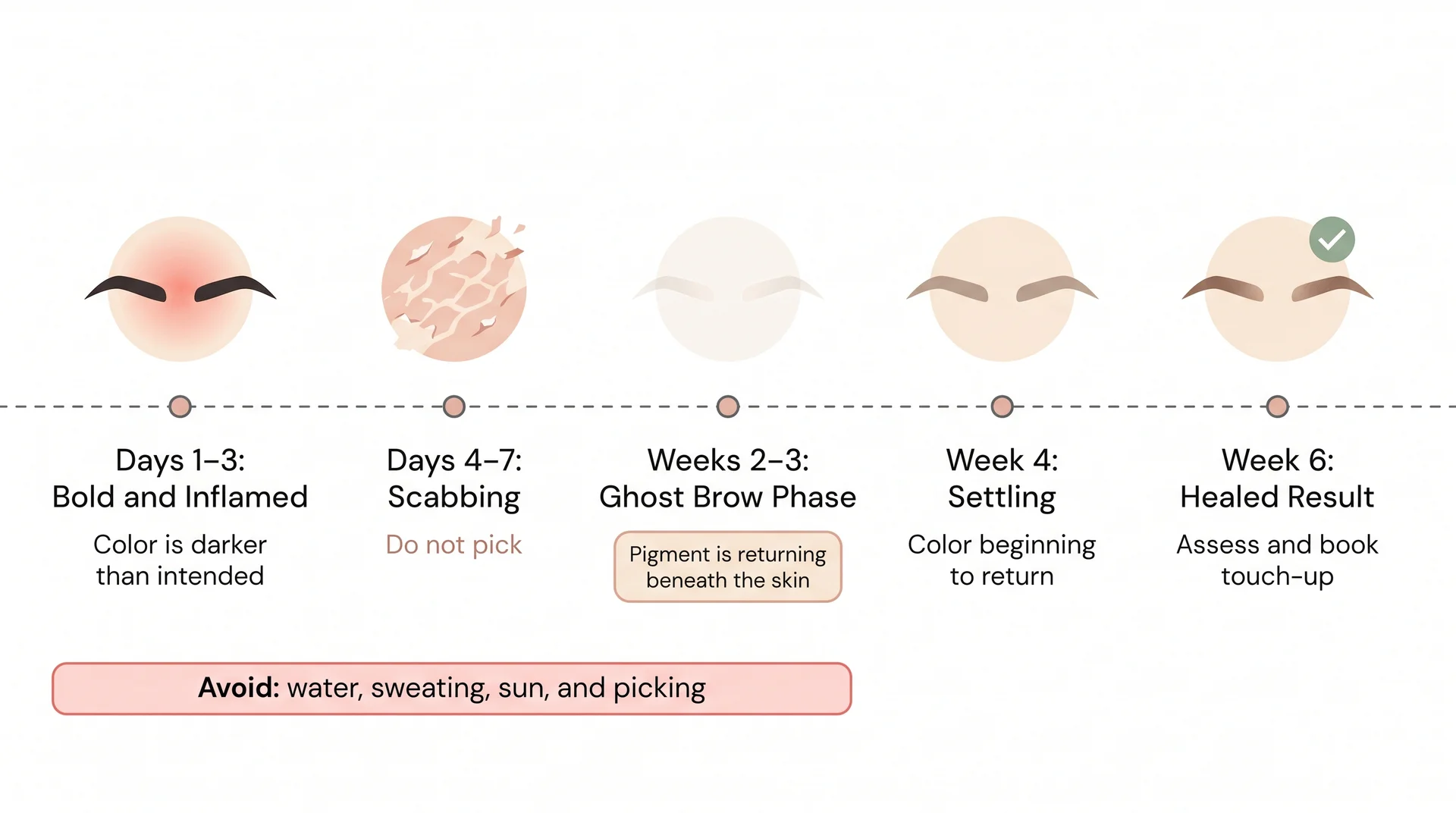
- Days one to three: Some redness, mild swelling, and brows that look darker than the intended result. Keep the area clean and resist touching it.
- Days four to seven: Flaking and light scabbing begin. Let the flakes fall away on their own. Pulling them early can remove pigment from the skin with them, creating gaps in the final result.
- Weeks two to three (microblading): The ghost brow phase. Strokes look faded or patchy. This is temporary. The true result reveals itself over the following weeks.
- Week six: The healed result is visible. This is when you assess the color and shape and decide what adjustments you want at your touch-up appointment.
- Weeks four to eight (eyebrow tattooing): A longer overall healing window, with more noticeable scabbing in many cases. The result continues to soften as the skin heals fully.
The Real Cost of Microblading vs. Eyebrow Tattooing Over Five Years
The price you see quoted on a studio’s website is usually the starting point of a longer financial relationship. Here’s how the numbers actually break down.
Upfront Pricing for Microblading and Eyebrow Tattooing
Microblading typically runs between $400 and $800 for the initial session, which usually includes a mandatory touch-up appointment four to six weeks later. Some studios charge $100 to $200 for that touch-up separately, so clarify before you book.
Traditional eyebrow tattooing tends to run between $150 and $400 for the initial session, making it less expensive at entry. The lower upfront cost reflects the faster application process and the expectation of fewer return appointments.
Total Five-Year Cost Comparison
| Cost Category | Microblading | Eyebrow Tattoo |
|---|---|---|
| Initial session | $400–$800 | $150–$400 |
| Year 1–2 touch-up | $150–$300 | Usually none |
| Year 2–3 touch-up | $150–$300 | Possible color refresh ($100–$250) |
| Year 4–5 refresh | New session ($400–$800) | Possible correction ($200+) |
| Five-year estimate | $900–$1,700+ | $250–$650+ |
Microblading costs more over time. That’s the honest math. Whether it’s worth it depends on how much you value the flexibility to adjust shape and color, the more natural hair-stroke appearance, and the ability to let it fade on its own if your preferences change.
What Corrections and Removals Actually Cost
If an eyebrow tattoo heals with color you didn’t expect, or the shape drifts over the years, a color correction appointment typically runs $200 to $400 and doesn’t always resolve the issue in a single session.
Laser removal for a small area like the brow costs $500 to $1,500 or more across multiple sessions, and not all pigment colors respond equally well to laser treatment.
Microblading corrections are generally more manageable. A skilled technician can adjust shape and color at the touch-up appointment. Because the pigment is semi-permanent, a result you dislike will at least fade with time, which gives you a natural exit that permanent tattoo ink doesn’t offer.
A Third Option Most Clients Don’t Know to Ask About
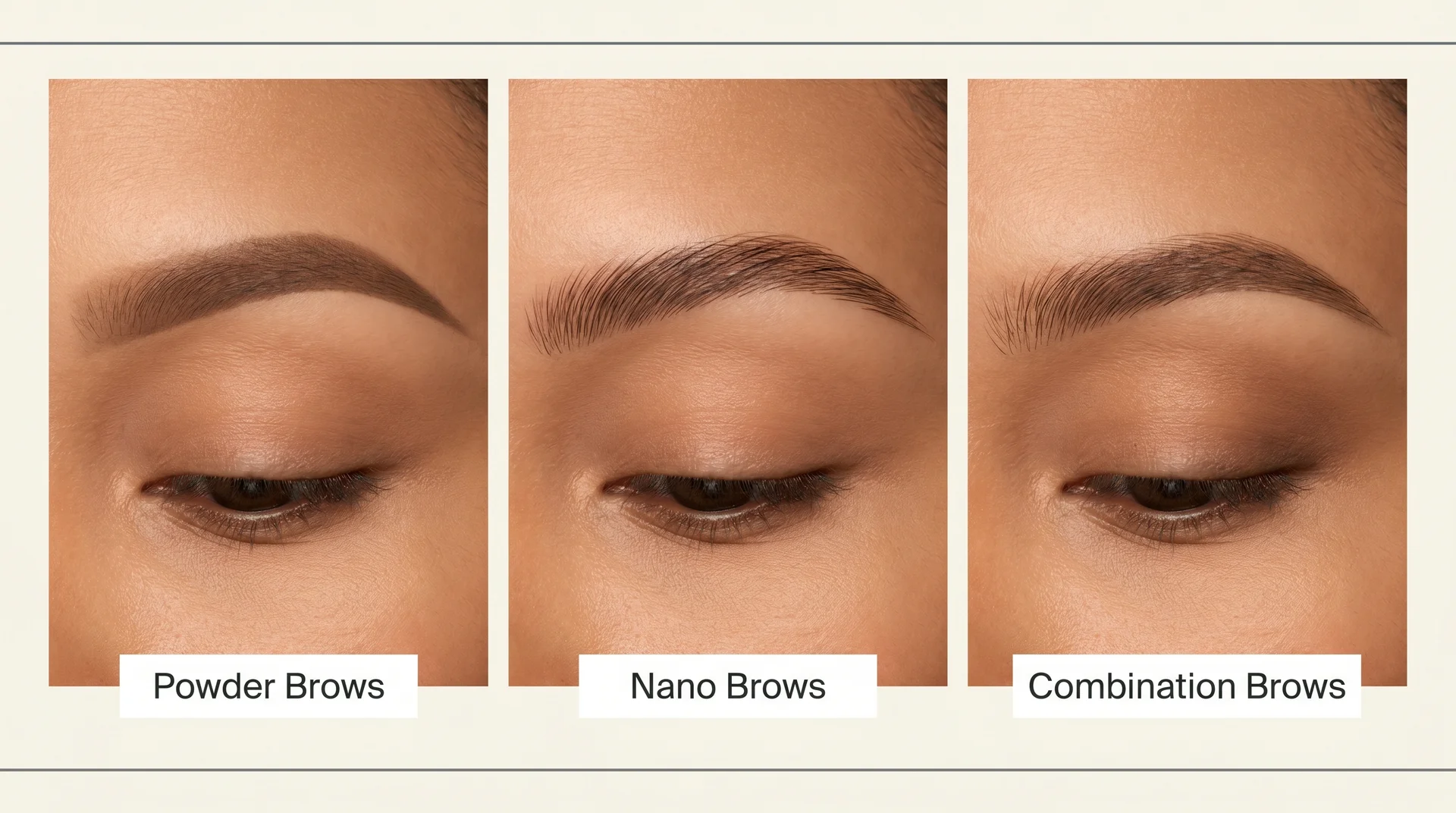
Microblading and eyebrow tattooing aren’t the only options, and for some skin types and aesthetic preferences, the newer techniques serve better than either classic choice. Most comparison guides skip this entirely.
Powder Brows: The Machine Technique That Mimics Makeup
Powder brows use a machine but deposit pigment in a diffused, stippled pattern rather than in deep, solid coverage.
The result mimics the look of a brow filled in with a brow powder or pomade, soft and lighter at the front and more defined toward the tail. It suits clients who wear makeup-style brows daily and want that particular look preserved without the daily effort.
Because it uses a machine, powder brows last longer than microblading and perform considerably better on oily skin. The oiliness of the skin doesn’t degrade the outcome the way it does with fine hair strokes.
If you’ve been told microblading isn’t right for your skin type, powder brows are the first alternative worth exploring.
Nano Brows: Better Microblading for More Skin Types
Nano brows use a single ultra-fine needle on a machine rather than the blade-style tool of traditional microblading. The result is still hair-like strokes that closely mimic natural brow hairs, but the technique creates less trauma to the skin, heals more cleanly, and works on skin types where traditional microblading struggles.
If you love the look of microblading but have oily, sensitive, or thicker skin, nano brows are worth asking about specifically.
They’re less widely offered than microblading, so you may need to look for a technician who specializes in the technique. For the right client, the results hold longer and heal more predictably than traditional microblading.
Combination Brows: When You Want Both
Combination brows blend microblading or nano strokes at the front of the brow with powder shading toward the middle and tail. The front carries that natural, feathery quality. The body and tail carry more definition and pigment density.
For bridal clients especially, this approach works beautifully. The result photographs well under any lighting condition while still looking completely natural in person.
It’s also a smart option for clients with very sparse brows or significant gaps, where hair strokes alone won’t provide enough coverage to create a full, balanced look.
Can You Get Microblading Over an Existing Eyebrow Tattoo?
Yes, in some cases, but with meaningful caveats. Microblading over an existing eyebrow tattoo is possible only if the existing tattoo has faded significantly and the pigment is light enough that the technician can work over it without the strokes being lost in the existing color.
Microblading over dark, saturated, or recently done tattoo work is not advisable. The fine hair strokes simply won’t show up against a dark base.
Most technicians will ask you to come in for a consultation before committing to anything.
They’ll assess the existing pigment, the skin texture, and whether the area is stable enough for additional work.
If the existing tattoo has shifted to a blue-gray or greenish tone, that color correction should typically happen first before any microblading is attempted over it.
In many cases, a powder brow or combination technique over a faded tattoo will produce better results than microblading alone.
How to Choose and Vet a Brow Artist for Eyebrow Tattooing or Microblading
Most brow regret isn’t about the technique. It’s about trusting a portfolio full of day-one photos.
I’ve seen this more times than I’d like. A client books based on gorgeous fresh-work photos, heals differently than those photos suggested, and realizes too late that she never saw a single healed result in that portfolio.
The procedure itself is almost secondary to this part of your research. A mediocre artist with a great technique produces mediocre results. An excellent artist makes almost any technique look exceptional.
Portfolio Signals That Matter for Microblading and Eyebrow Tattooing
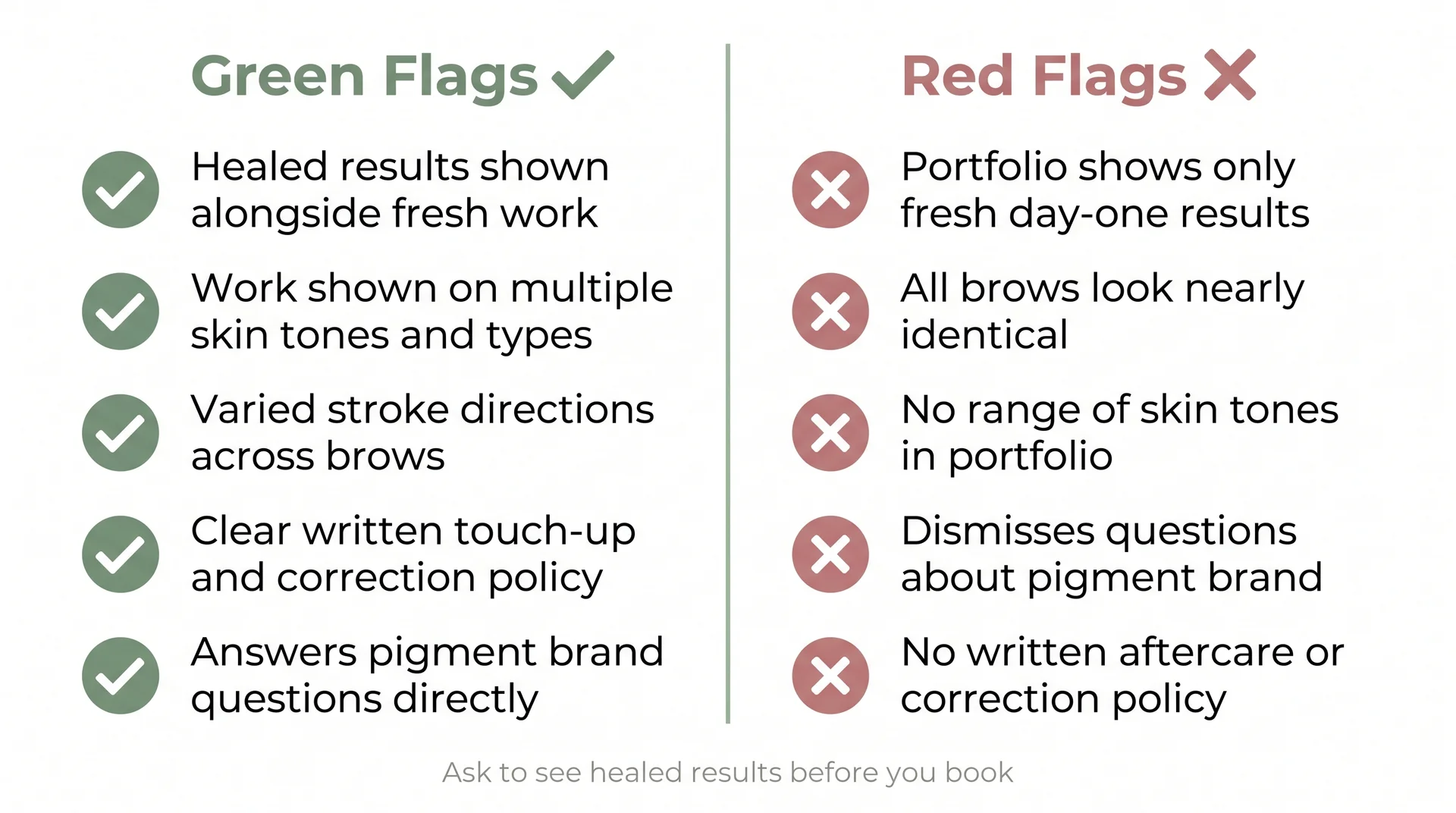
Look for healed results, not just freshly done brows. A portfolio full of pictures taken immediately after the procedure tells you very little about how the work ages. Ask specifically to see healed results, or look for before-and-after photos that clearly show the six-week healed state.
Look for work on skin that resembles yours in tone and type. Microblading on fair, dry skin heals differently than on deeper, oily skin.
Watch for stroke direction: natural brow hairs grow in multiple directions across the brow, and a skilled artist maps that and varies the stroke angle accordingly.
If every brow in the portfolio looks perfectly geometric and uniform, that’s a portfolio where efficiency took priority over artistry.
Questions to Ask Before You Book
- What pigment brand and formulation do you use, and how does it hold up on my skin type?
- Can I see healed photos from clients with similar skin to mine?
- What does your touch-up policy cover, and how long do I have to use it?
- What happens if I’m not happy with the healed result?
- How many procedures do you complete in a typical week?
A technician who answers these questions with specificity and ease, who talks through their process rather than just gestures at their portfolio, is showing you exactly the kind of practitioner they are.
Licensing, Safety, and Why It Varies Across US States
Cosmetic tattooing regulation varies significantly across US states. Some require a full esthetician license, others a cosmetology license with additional training, and some have limited or no specific regulatory framework.
At a minimum, look for formal training from a recognized institution, a current business license, and a studio that follows standard sanitation protocols. Single-use blades, properly sterilized equipment, and a clean workspace are non-negotiable, regardless of what the licensing framework in your state requires.
If you’re exploring options further, a related procedure worth comparing is a thread brow lift, which addresses brow position rather than pigment and may be worth discussing at the same consultation.
When Things Go Wrong: Corrections, Removal, and Managing Expectations
Microblading Corrections
Uneven healing, patchy pigment, or a shape that looked right in the chair but doesn’t quite work in daily life: these are the most common microblading complaints. Many are addressable at the mandatory touch-up appointment, which is precisely why that appointment exists.
Color can be adjusted, additional strokes can fill patchier areas, and minor shape corrections are possible while the pigment is still fresh. More significant corrections may require a dedicated correction appointment with a specialist.
Not every microblading artist will perform corrections on another artist’s work, so factor this into your artist selection if you’re particularly anxious about outcomes.
Eyebrow Tattoo Removal Options Ranked by Effectiveness
Laser treatment is the most reliable correction for tattoo ink that has shifted to a blue-gray or greenish tone. Q-switched lasers are the most commonly used for this application. Multiple sessions are typically required.
Saline removal is another option some cosmetic tattoo artists offer. It works by introducing a high-concentration saline solution into the tattooed area, which draws pigment toward the surface as the skin heals.
It’s less predictable than laser for most pigment types and works better on more recent work than on deeply settled, older tattoo ink. Neither option is a quick fix, and neither is inexpensive, which circles back to the artist selection section above.
The quality of the pigment used and the skill of the technician matter enormously for long-term satisfaction.
How to Prepare and What Aftercare Actually Changes the Result
Before Your Eyebrow Tattoo or Microblading Appointment
Avoid retinol, retinoids, and vitamin A derivatives for at least two weeks before your appointment.
These accelerate skin cell turnover and affect how the pigment takes to the skin. Stop blood-thinning supplements, including fish oil and vitamin E, for a week before the procedure, and avoid alcohol for twenty-four hours prior.
If you take prescription blood thinners, discuss this with your technician and your prescribing physician before booking, as bleeding during the procedure makes pigment placement less precise and affects long-term retention.
Come to your appointment with your normal brow look in place, whether that’s pencil, powder, or nothing at all. A photograph of brow shapes you admire is genuinely helpful for the mapping conversation.
This is the part of the appointment where you have full input, so use it. The mapping and shaping step that happens before any pigment touches your skin deserves as much attention as the procedure itself.
Look at the drawn shape carefully in the mirror before the technician continues. Step back. Ask for adjustments if anything feels off.
Aftercare That Protects the Result for Both Procedures
Keep the area dry for the first seven to ten days.
No swimming, no heavy sweating, no steam rooms, and careful washing around the brow area. Water exposure during active healing can draw pigment out of the skin before it’s fully settled.
Avoid sun exposure directly on the brows during healing. Even after healing is complete, make SPF part of your daily routine around the brow area. UV exposure breaks down pigment faster than almost anything else, and consistent sun protection is one of the most effective things you can do to extend the life of either procedure.
Your technician may recommend either dry healing or light moisturizer application during the healing period. Follow your specific technician’s protocol rather than general internet guidance that may contradict their method.
Frequently Asked Questions
Which Lasts Longer: Eyebrow Tattoo or Microblading?
Eyebrow tattooing lasts significantly longer. Microblading typically lasts one to three years before a touch-up is needed. Eyebrow tattoos are permanent and don’t fully disappear without laser removal, though they do fade and may shift color over many years.
Which Is More Painful: Microblading or Eyebrow Tattooing?
Eyebrow tattooing is generally more uncomfortable. Both procedures use numbing cream, but the machine used in tattooing goes deeper and creates more vibration. Microblading typically feels like light scratching. Pain tolerance varies by individual, and numbing effectiveness varies by skin chemistry.
Is Microblading Better for Oily Skin?
Traditional microblading is generally not ideal for oily skin. The sebum in oily skin pushes pigment out of the shallow placement faster, causing strokes to blur and fade prematurely. Powder brows or nano brows typically perform better on oily skin types.
How Much Does Microblading Cost Compared to an Eyebrow Tattoo?
Microblading typically runs $400 to $800 for the initial session. Eyebrow tattooing typically runs $150 to $400. Over five years, microblading usually costs more in total because it requires touch-ups every one to three years. Tattooing costs less overall but carries higher correction and removal costs if things go wrong.
Can Microblading Look Natural?
Yes, and it’s one of microblading’s strongest advantages. The individual hair strokes mimic natural brow hairs closely enough that most people can’t tell the difference at a conversational distance. The result depends significantly on the artist’s skill and the client’s skin type.
What Is the Ghost Brow Phase in Microblading?
The ghost brow phase refers to weeks two and three after microblading, when the pigment appears to have nearly disappeared. The skin heals over the strokes and temporarily mutes the color. This is completely normal and not a sign the procedure failed. The pigment returns as the skin completes its healing cycle, usually by week six.
What’s the Difference Between Microblading, Nano Brows, and Powder Brows?
Microblading uses a manual blade to create hair-stroke incisions in the upper skin layer. Nano brows use a single ultra-fine needle on a machine to create similar hair strokes with less skin trauma, making them suitable for a wider range of skin types. Powder brows use a machine to create a soft, diffused fill that mimics brow powder or pomade. All three are semi-permanent; nano brows and powder brows generally hold up better on oily skin.
Making the Call on Eyebrow Tattoo vs. Microblading
If you want natural-looking hair strokes, you’re comfortable with a touch-up every one to two years, and your skin runs normal to dry, microblading or nano brows are your best starting points.
If you love a more defined, filled brow and you want something that holds for years with minimal maintenance, powder brows or eyebrow tattooing with modern cosmetic pigments will serve you better. If you have oily skin, steer away from traditional microblading specifically, and ask about powder or nano techniques at your consultation.
Whatever you choose, spend as much time vetting your technician as you spend researching the procedures. The most important variable in this entire decision isn’t the blade or the machine. It’s the judgment, the skill, and the experience of the person holding it.
Disclaimer: The information in this article is intended for general educational purposes only and does not constitute professional medical or cosmetic advice. Eyebrow tattooing and microblading are cosmetic procedures that involve breaking the skin. Individual results vary based on skin type, health history, artist skill, and aftercare. Consult a licensed brow technician, esthetician, or dermatologist before undergoing any semi-permanent or permanent cosmetic procedure.