
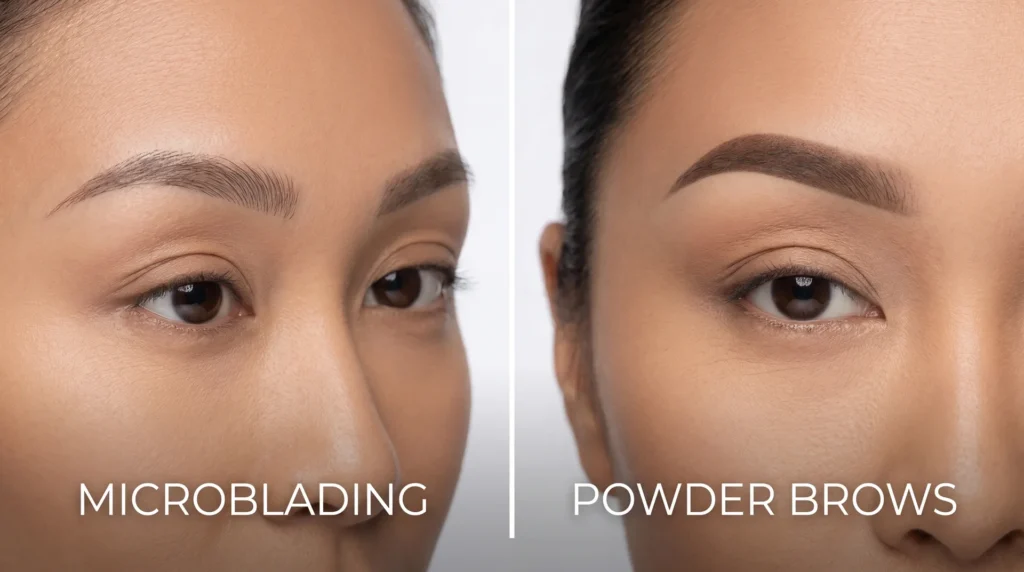
You’ve probably stood in front of the mirror on a rushed morning, brow pencil in hand, wondering if there’s a smarter way to do this. Maybe your brows are sparse. Maybe they never look the way you want without fifteen minutes of effort. That’s usually the moment people start researching powder brows and microblading, and it’s also where the confusion begins.
Both techniques promise to solve the same problem. Both look stunning in before-and-after photos. Both carry a price tag that makes you want to be completely sure before you sit in that chair. The decision between them, though, is more personal than most comparison guides suggest, because what holds up beautifully on one person’s skin can blur and fade on another’s within a year.
I’ve worked as a makeup artist across bridal, editorial, and fashion productions throughout the Pacific Northwest. I’ve watched both techniques age on real clients, in real light, over real time. The observations below come from that experience, not from a chart.
| The short answer: powder brows suit most skin types, produce a soft, filled-in look, and fade more evenly over two to three years. Microblading creates fine, realistic hair strokes that look genuinely natural on dry to normal skin, but struggles on oily skin and can blur unpredictably over time. Your skin type, the look you want, and how you already wear your brows day-to-day together determine which technique belongs on your face. |
What Each Technique Actually Does to Your Skin
How Microblading Creates Hair-Stroke Brows
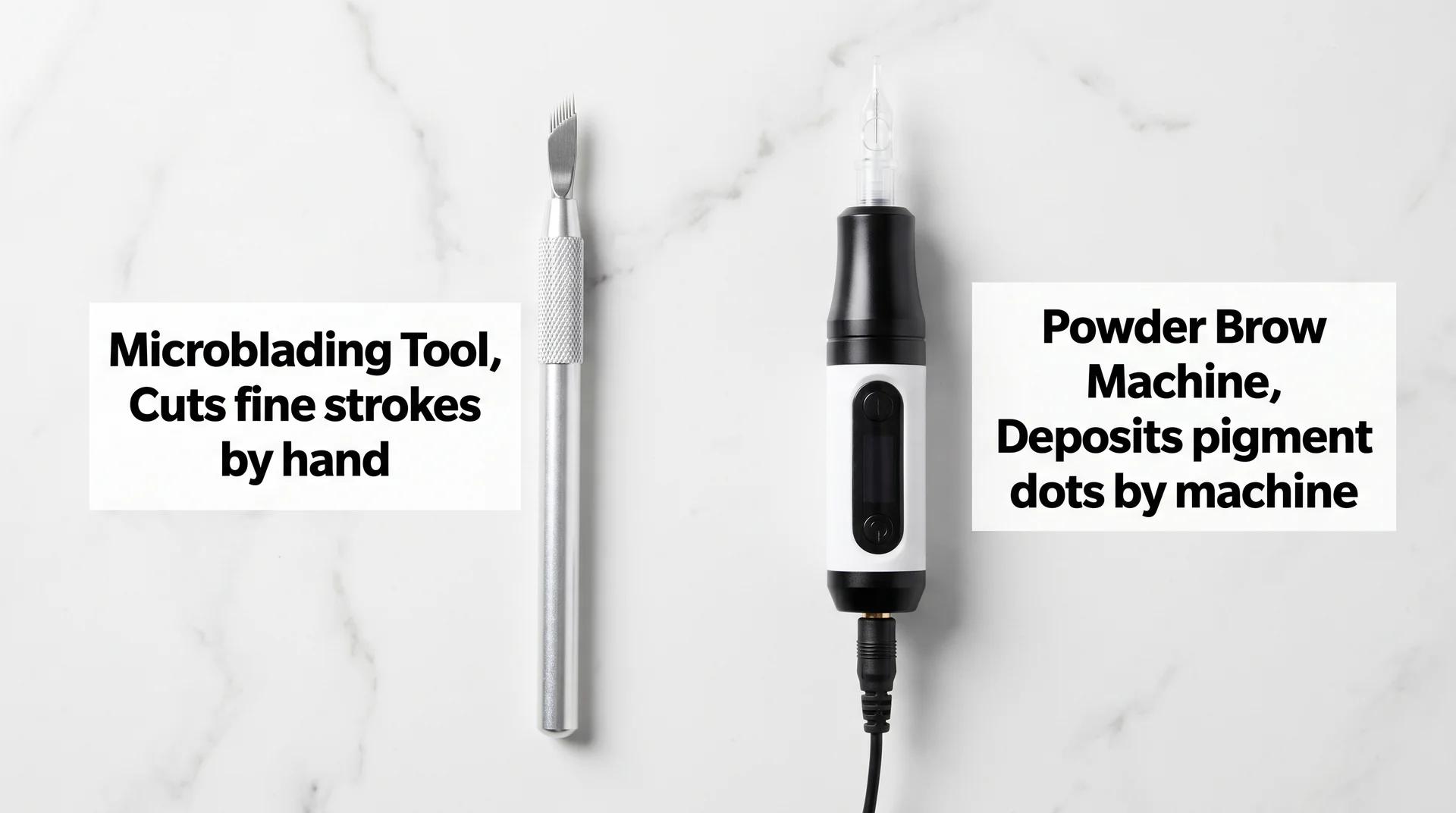
Microblading works by drawing individual hairs by hand. A trained artist uses a fine handheld tool fitted with a row of tiny needles to create shallow cuts in the skin, then deposits pigment into those cuts in the direction of natural brow hair growth.
On the right skin, executed by a skilled artist, the result looks strikingly close to real hair. You’d have to look very carefully to see the difference.
Fresh microblading looks crisp and defined. By the six-week healing mark, the colour softens, and the strokes settle more naturally into the skin. At twelve to eighteen months, depending on your skin type and aftercare, you’ll either be heading back for a touch-up or still happy with what you see.
The closest comparison from my kit is a very precise HD brow pencil, where each stroke is placed with intention. If you want to understand how microblading differs from older permanent brow tattoo methods, this comparison of eyebrow tattoo vs microblading lays that out clearly.
How Powder Brows Build Depth and Definition
Powder brows take a different approach. A machine deposits thousands of tiny dots of pigment across the brow area, building up a soft, diffused colour that looks similar to a well-applied brow powder or pencil fill.
The ombré version creates a gradient, lighter at the front and deeper toward the tail, for a more defined finish.
If you’ve ever finished your brows on a good morning and thought, “this is exactly how I want them to look every single day,” powder brows can come very close to delivering that permanently.
From my bridal work, I can tell you powder brows hold up under flash photography and read consistently in both natural and artificial light across a wider range of skin types than microblading does.
Fresh powder brows look saturated and bold. They fade by twenty to forty percent during healing, then settle into a softer, more natural finish by week six. That colour holds fairly evenly for two to three years before lightening noticeably.
Powder Brows vs Microblading: Finding the Right Fit for Your Skin Type
The Skin Type Breakdown
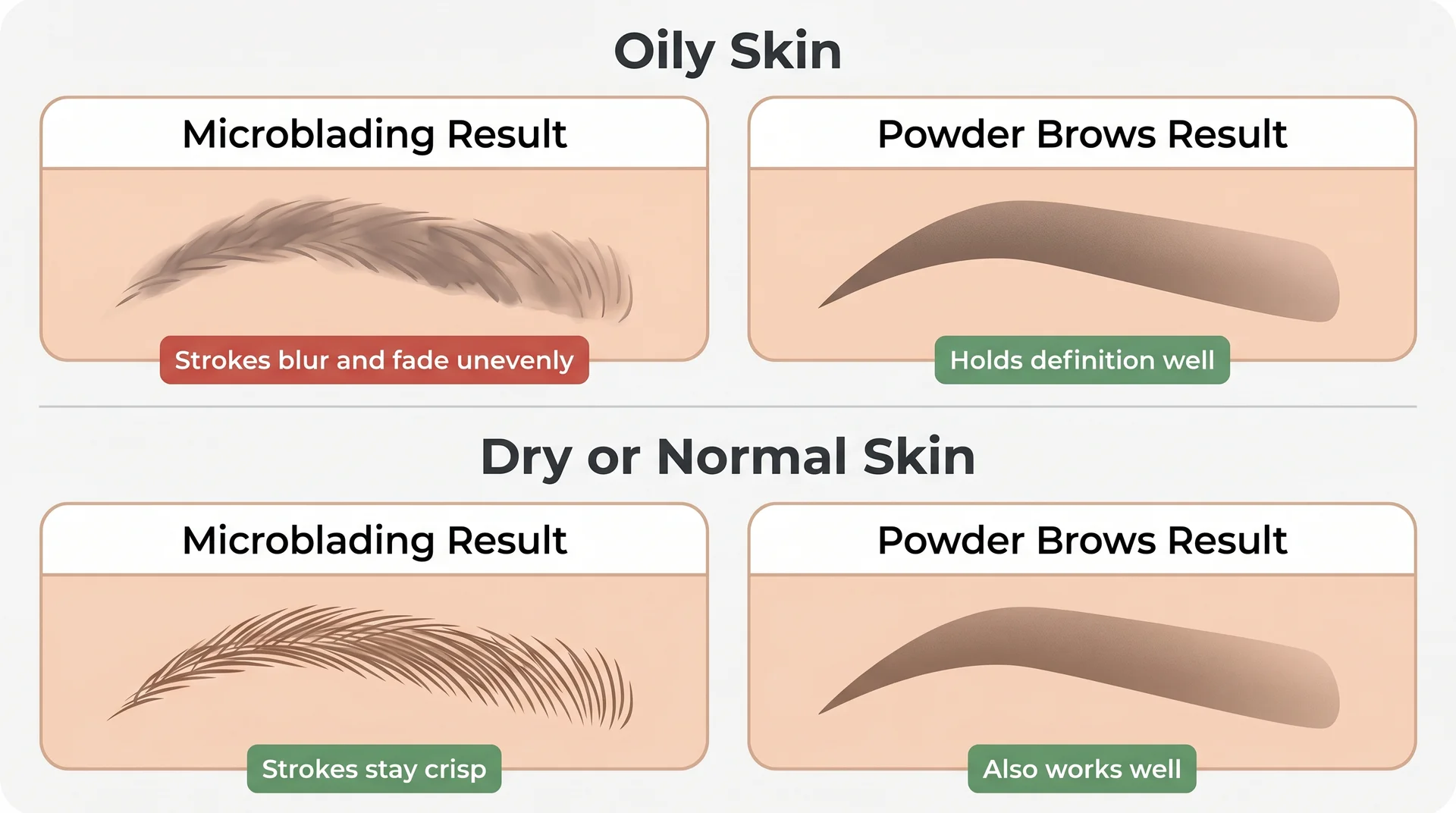
Your skin type is the single most important variable in this decision, and it’s the one most people skip past when scrolling through photos. Here’s how it actually plays out:
| Skin Type | Better Option | Why It Matters |
|---|---|---|
| Oily or combination | Powder brows | Excess oil breaks down microblading strokes, causing blur and uneven fading within months |
| Dry or normal | Either technique | Microblading holds crisply; powder brows also perform well |
| Mature or aging | Powder brows | Thinner skin with less collagen doesn’t hold blade strokes cleanly; machine stippling is gentler and ages better |
| Sensitive | Powder brows | Less physical trauma to the skin; minimal to no bleeding compared to microblading |
| Textured or large-pored | Powder brows | Strokes blur into pores over time; diffused shading holds its shape far better |
If you have oily skin and you’re drawn to microblading, your skin’s natural oil production will break down pigment channels and blur stroke edges as it heals. You might see beautiful results at first and then watch them soften into something less defined within six to twelve months.
That isn’t bad artistry; it’s biology. I’ve worked with bridal clients who made this choice based on a photo they loved and came back frustrated at how quickly it changed.
Ask yourself what your brows look like on a day when you love them. “Natural, a bit fuller, individual hairs visible” points toward microblading on compatible skin. “Polished, filled in, properly defined at the arch” describes what powder brows deliver.
If the answer is somewhere between both of those, stay with me for the combo brows section below.
Skin Tone and Pigment Considerations
Skin tone matters more than most comparisons acknowledge. On fair skin, both techniques are visible, but pigment choice becomes critical because subtle colour shifts show immediately. On medium to deeper skin tones, microblading strokes can sometimes heal with less contrast than expected, making the result look faint.
Powder brows tend to read more consistently across darker skin tones, because layered shading holds pigment more densely and evenly than individual strokes do.
For any skin tone, ask your artist specifically what their chosen pigment does as it fades. You want it to lighten to a neutral, skin-friendly tone, not drift toward ashy grey, warm orange, or any off-colour that will look wrong against your complexion two years from now.
Who Should Avoid Powder Brows and Microblading
Both procedures are safe for most healthy adults, but certain conditions make them inadvisable or require a doctor’s clearance before booking.
You should avoid both procedures if you are pregnant or nursing, currently on Accutane, prone to keloid scarring, or have active eczema, psoriasis, or dermatitis in the brow area.
People with uncontrolled diabetes, autoimmune conditions, or compromised immune systems should speak with a physician first, as these affect healing and raise infection risk.
If you’ve had Botox recently, most artists recommend waiting at least two weeks before any brow procedure so the area has fully settled. If you’re on blood thinners, increased bleeding during the procedure can affect how pigment sets and retains.
These aren’t reasons to give up on the idea entirely; they’re reasons to be transparent with both your artist and your doctor before committing.
The Real Comparison: Longevity, Pain, Healing, and Cost
Which Lasts Longer on Oily vs Dry Skin
You’ll see many sources state that microblading lasts one to three years, and powder brows last two to three years. Those ranges are broadly accurate, but they hide the variables that produce very different results in different people.
| Technique | Dry or Normal Skin | Oily Skin |
|---|---|---|
| Microblading | 18 to 24 months | 10 to 14 months |
| Powder brows | 2 to 3 years | 18 months to 2 years |
Beyond skin type, sun exposure fades pigment faster than almost anything else. Skincare products containing retinol, glycolic acid, and exfoliating acids also accelerate fading when used near the brow area.
Keep active skincare products away from your brows after any semi-permanent procedure. Pigment quality matters too. Cheaper pigments fade unevenly and can shift colour in ways that compound the problem over time. Ask about this before you book.
Pain and Healing: What to Expect Week by Week
Microblading is generally more uncomfortable than powder brows because the handheld tool creates small cuts in the skin with some minor bleeding. Most clients describe it as a scratching sensation similar to eyebrow threading or a repeated light paper cut.
Powder brows feel more like an electric toothbrush pressed gently against the skin, with minimal to no bleeding. Both procedures use topical numbing cream and are manageable for most people.
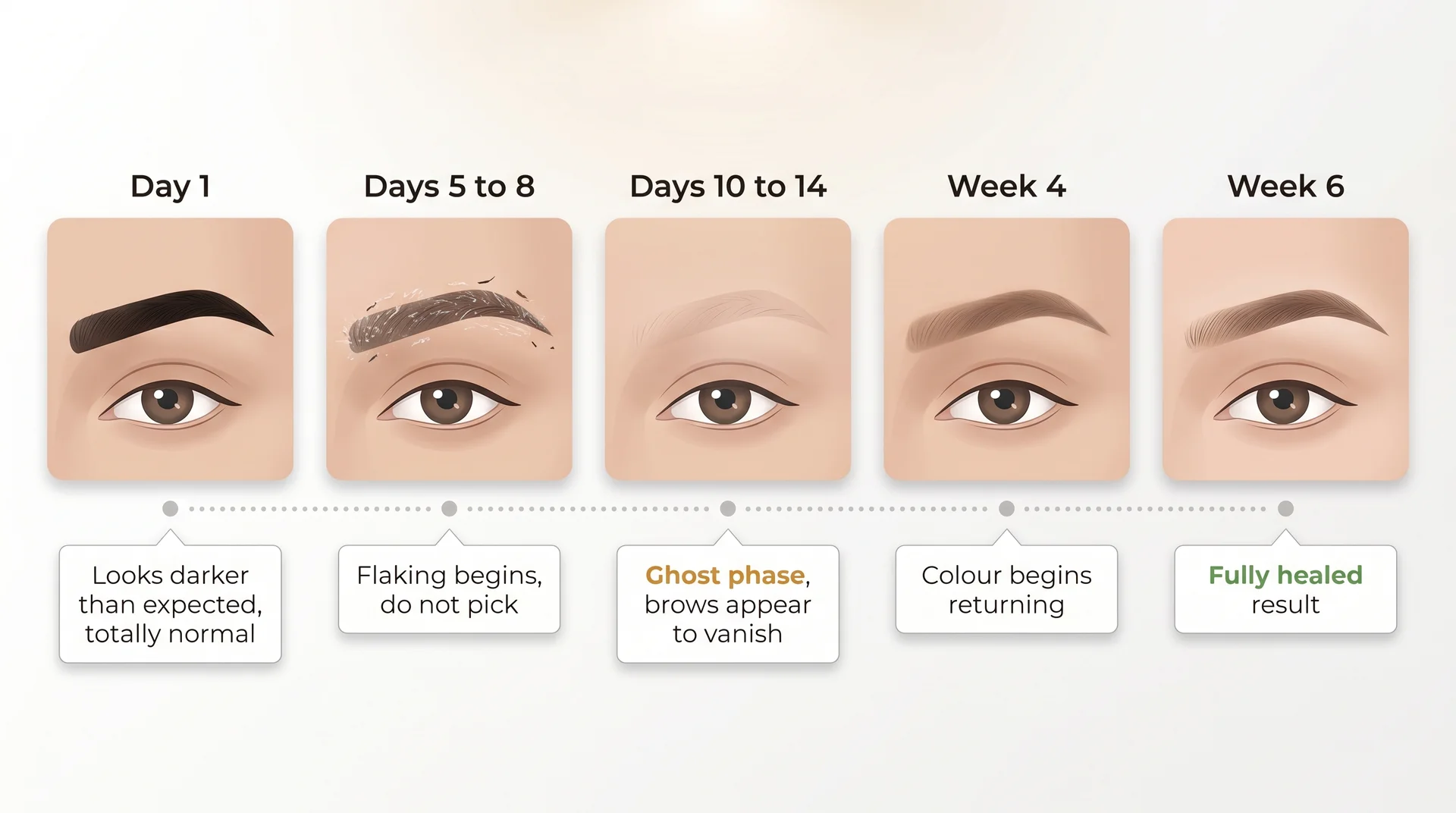
The healing timeline is where first-timers most often get caught off guard:
- Days 1 to 4: Both techniques look darker and bolder than the final result. This is completely normal and expected.
- Days 5 to 12: Flaking and peeling begin as the skin sheds its surface layer. Do not pick at the skin. Picking disrupts pigment retention and creates patchy results that are harder to correct.
- Days 7 to 14, the ghost phase: Your brows may appear to nearly disappear. The healed surface skin temporarily obscures the pigment beneath. This is not a sign that the procedure failed. Colour returns as the skin continues to settle, usually by weeks three to four.
- Week 6: Brows are considered fully healed. A touch-up at this point is standard practice, correcting any areas where pigment is retained unevenly, which is normal after a first session.
If you’re specifically considering powder brows and want to know what each of those healing stages actually looks like for that technique, including why the ghost phase is so disorienting.
And what fully healed results should look like at week six, the full ombre powder brow healing stages, week by week, covers what most procedure guides leave out.
| Aftercare Requirement | Microblading | Powder Brows |
|---|---|---|
| Keep brows dry | 7 to 10 days | 5 to 7 days |
| No exercise or sweating | 7 to 14 days | 3 to 5 days |
| No swimming or steam room | Up to 30 days | 10 to 14 days |
| Visible scabbing | Moderate to heavy | Minimal to light |
Powder brows come with less restrictive aftercare because the skin hasn’t been cut. If you have an active lifestyle, travel regularly, or can’t realistically keep your face carefully dry for ten days, that difference is worth factoring into your decision.
How Much Each Technique Costs in the US
Initial pricing for both techniques falls within a similar range in the United States:
- Microblading: $300 to $700 for the initial session
- Powder brows: $300 to $700 for the initial session
- Six-week touch-up (both): $100 to $175, sometimes included in the initial price
The long-term cost picture matters more than the upfront number. If your skin type means microblading needs refreshing every twelve months, you’re paying for an annual procedure. If powder brows hold well for two and a half years before they need attention, the cumulative cost shifts noticeably in their favour.
Location and artist experience also shift prices significantly. A seasoned artist in a major city will charge more than a newer technician in a smaller market. That difference is usually earned and worth paying for.
How Powder Brows and Microblading Fade Differently Over Time
The Fade Pattern Difference
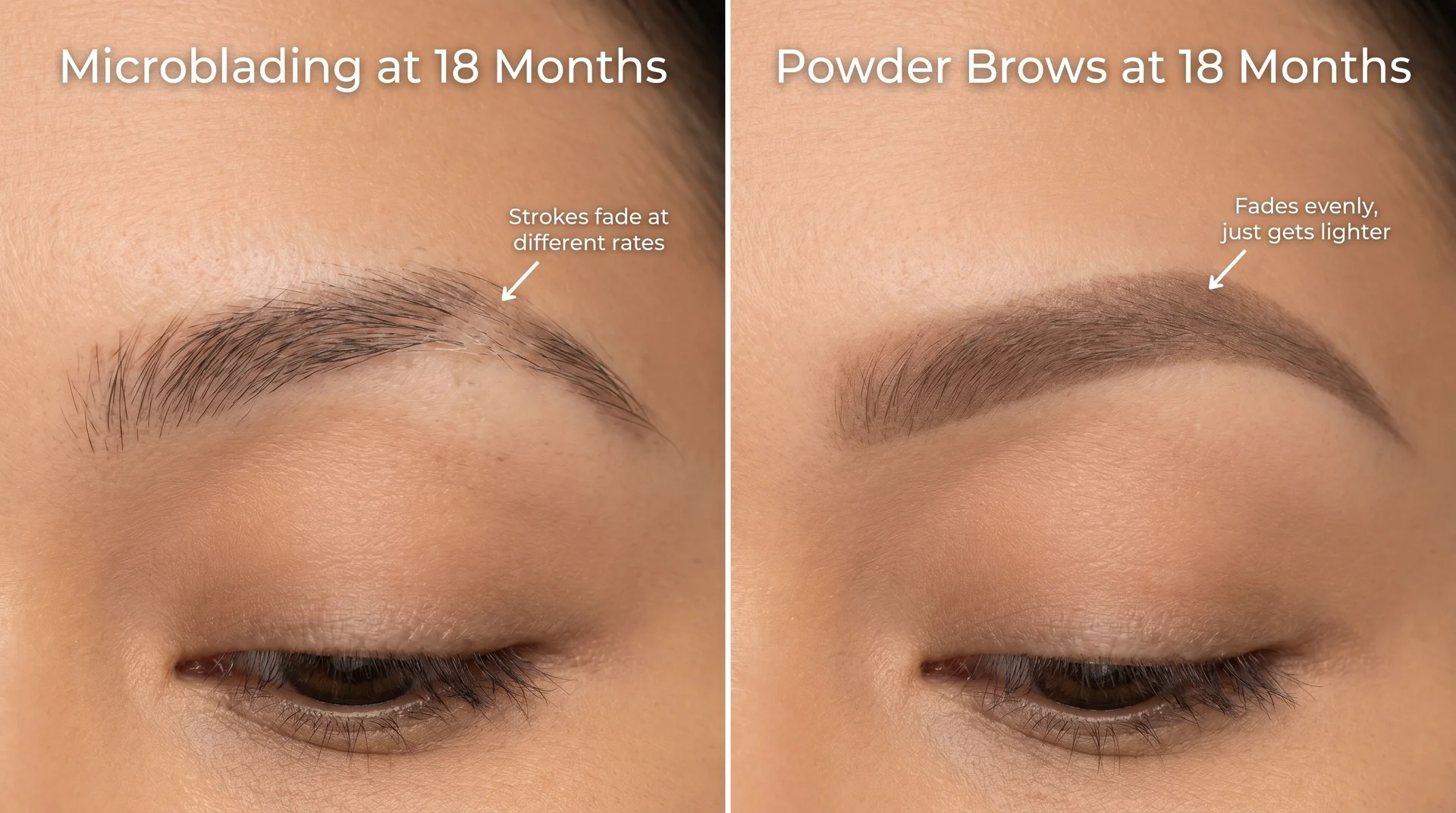
Microblading fades in strokes. Because each hair stroke is a separate deposit of pigment, individual strokes can fade at different rates. The result can look uneven or patchy as the months pass, with some areas holding definition while others soften to near-invisibility.
Powder brows fade more uniformly, getting gradually lighter across the whole brow rather than thinning in specific patches. Most people find this considerably easier to live with, because the brows simply look softer over time rather than obviously faded in places.
The Pigment Color Shift Risk
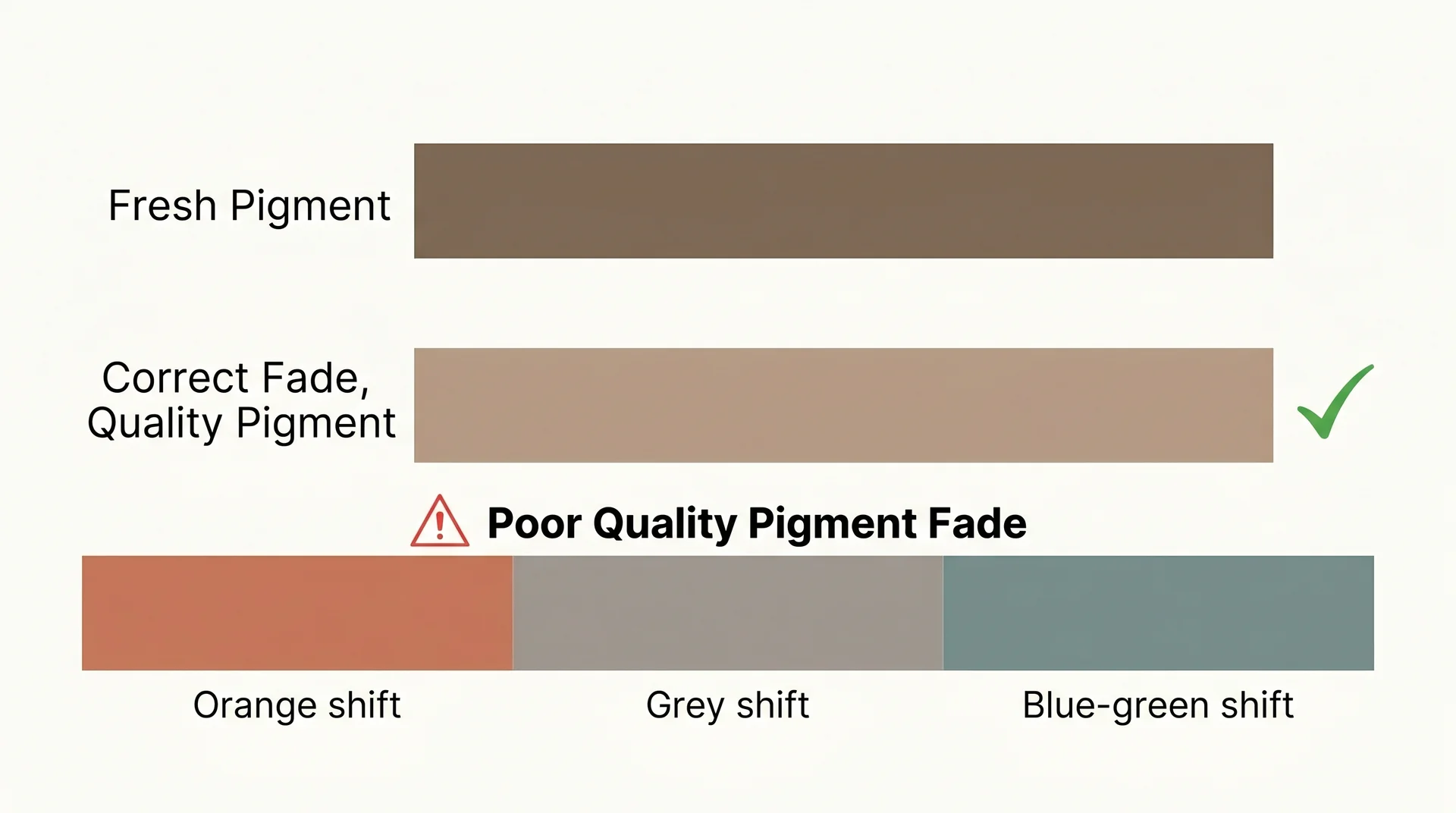
Older iron-oxide-based pigments have a reputation for shifting colour over time, sometimes toward warm orange tones, sometimes toward grey or a muted blue-green. This is less common with modern high-quality pigments, but it still happens with cheaper products or less experienced artists.
I’ve worked on editorial shoots with clients whose brow work from several years prior had shifted to a grey-cool tone that required significant camouflage before the camera went on.
Before you book, ask your artist specifically what pigment brand they use and how it fades on your skin tone. A confident, experienced artist will always have a specific, direct answer.
Switching Between Techniques Later
Switching from one technique to the other isn’t a clean process. Any new work layers on top of existing healed pigment, which means your artist needs to account for what’s already there.
Moving from microblading to powder brows is one of the more common transitions, and a skilled artist can often incorporate powder shading into a refresh appointment over faded microblading.
What you can’t easily do is change your mind six months in and start entirely fresh. This is worth thinking through honestly before you commit.
Risks and Side Effects to Know Before You Book
Both powder brows and microblading are safe when performed by a properly trained artist in a hygienic, licensed environment. Knowing the real risks helps you ask better questions and recognise situations you should walk away from.
Microblading carries a higher scarring risk than powder brows because the blade creates actual incisions in the skin. People who are prone to keloids or hypertrophic scarring should avoid microblading specifically. Powder brows create significantly less physical trauma and carry a lower scarring risk for sensitive skin types.
Both procedures carry a risk of infection if hygiene standards aren’t properly followed. Prolonged redness, swelling, crusting, or oozing beyond the first few days is a signal to see a doctor, not wait it out.
Allergic reactions to pigment are rare but possible, particularly with pigments containing red-toned dyes. A reputable artist will always discuss your allergy history before starting.
Pigment migration, where pigment spreads slightly beyond the intended stroke or edge, is a known risk with microblading, particularly on oily or large-pored skin. Powder brows are less prone to this because the dotted application is designed to be diffused from the start rather than hold precise lines that can spread.
FDA regulations on pigment colour additives used in cosmetic tattooing remain limited, which means pigment quality varies widely between suppliers and artists. This is another reason to ask about pigment sourcing directly before you book.
Combo Brows and Nanoblading: The Option Worth Knowing About
If you’ve read this far and you’re still genuinely torn, there’s a good chance that neither technique alone is your ideal answer.
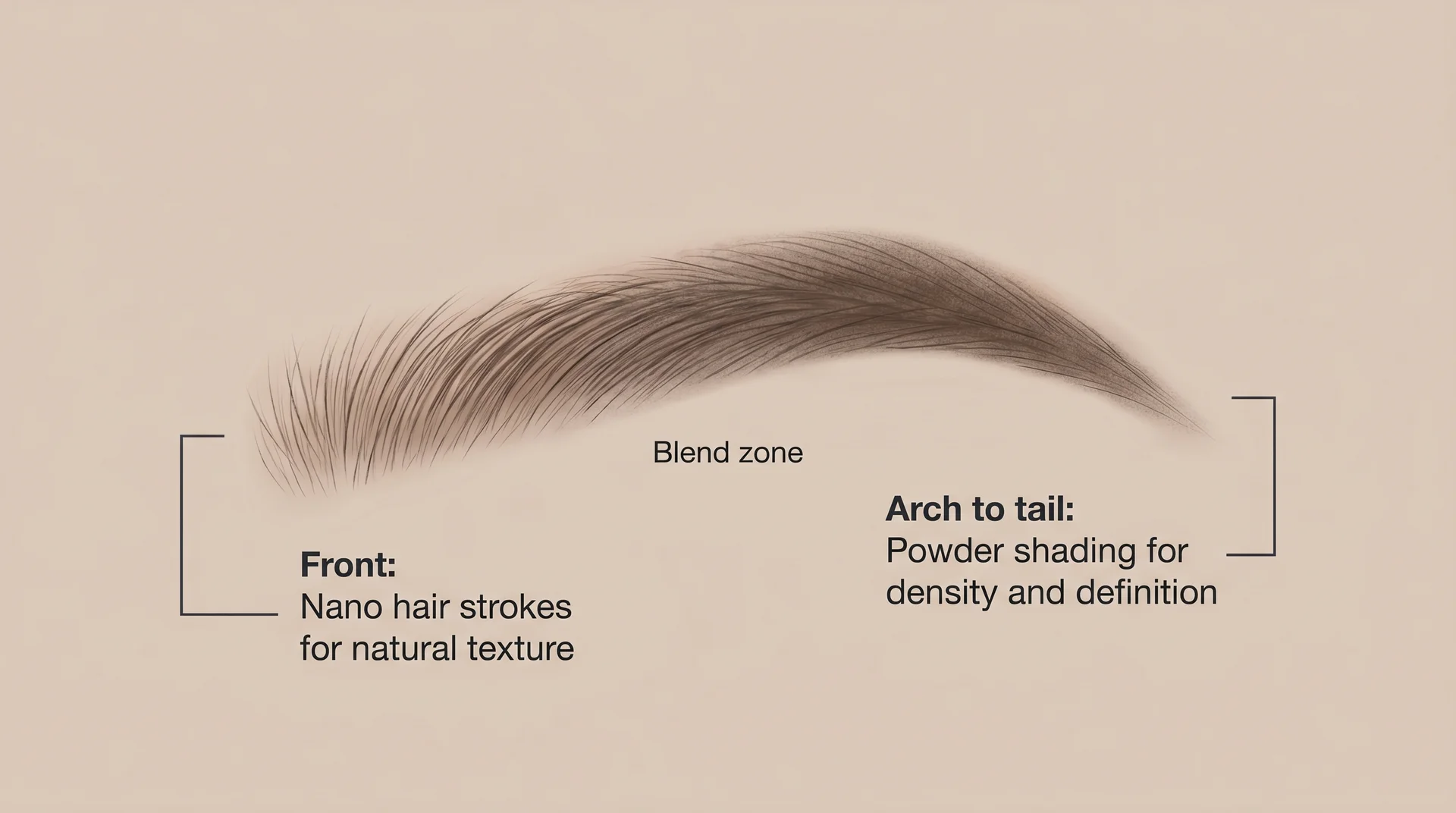
Combo brows combine microblading hair strokes at the front of the brow with powder shading through the body and tail.
The result is a brow that looks textured and full at the same time, naturally feathery at the front where brows are meant to be lighter, and structured through the arch and tail where definition reads as intentional.
This suits people who want both texture and density, and it works particularly well for sparse brows that need the illusion of individual hair in areas where there isn’t much to work with.
Nanoblading takes the hair-stroke concept of microblading and delivers it through a machine rather than a hand tool, creating finer, softer strokes with less skin trauma and better results on a wider range of skin types.
It’s worth serious consideration for anyone who loves the look of hair strokes but has skin that doesn’t hold traditional microblading well. This comparison of nano brows vs powder brows goes deeper into the distinction, if you want to explore that further.
If your artist offers a nano-plus-powder hybrid approach and their healed portfolio reflects it consistently across different skin types, it’s worth discussing before you default to a classic technique.
If the hair-stroke result is what you’re after and you’re also considering nanoblading as an alternative to microblading, our guide breaks down how the two techniques differ in tool, longevity, and suitability for oily skin before you book.
Choosing the Right Artist for Powder Brows or Microblading
Choosing the right technique is only part of the decision. The artist matters just as much. The same technique produces completely different results depending on who executes it and how well they’ve matched their approach to your skin specifically.
Questions to Ask at Your Brow Consultation
- “Can I see healed results from clients with skin similar to mine?” Fresh results photograph well on almost everyone. Healed results reveal the actual quality of the work.
- “What pigment brand do you use and how does it fade over time?” A knowledgeable artist will have a specific, confident answer. Vagueness here should concern you.
- “How do you adjust your technique for different skin types?” This tells you whether they treat every client identically or genuinely adapt their approach.
- “Is the six-week touch-up included in the initial price?” Touch-ups are part of the process, not optional extras.
- “What’s your process at the consultation before we decide on a technique?” A good artist won’t commit you to a technique until they’ve assessed your skin in person.
Red Flags That Should Make You Walk Away
- An artist who recommends a technique before seeing your skin in person
- A portfolio that shows only fresh, day-of results with no healed follow-ups
- Pricing significantly below the local market average with no explanation
- No discussion of skin type, health history, or contraindications during the consultation
- Vague or evasive answers about pigment brands or technique customisation
If you’re also exploring options for lifting and repositioning your brow shape rather than adding pigment, it’s worth understanding how thread brow lifts work as a separate technique that addresses arch position rather than colour or density.
| Disclaimer: This article is written for informational purposes only and does not constitute professional medical or cosmetic advice. Semi-permanent brow procedures involve skin penetration and carry real risks. Always consult a qualified, licensed brow technician or a dermatologist before booking any procedure, particularly if you have any health conditions, skin sensitivities, or are on medication. |
Frequently Asked Questions
Is Powder Brows or Microblading Better for Oily Skin?
Powder brows are the better option for oily skin. The machine-stippling method creates diffused colour that holds its shape even as your skin produces oil. Microblading strokes tend to blur and fade unevenly on oilier skin types because natural oil breaks down the pigment channels over time, often within six to twelve months.
Which Hurts More, Microblading or Powder Brows?
Microblading is generally more uncomfortable because the tool creates small cuts in the skin with minor bleeding. Powder brows feel more like light tapping with minimal skin trauma. Both use topical numbing cream and are manageable for the majority of people.
How Long Does Microblading Last Compared to Powder Brows?
On dry to normal skin, microblading typically lasts eighteen to twenty-four months. On oily skin, closer to ten to fourteen months. Powder brows generally last two to three years on normal skin and eighteen months to two years on oilier skin. Both need periodic touch-ups to maintain their look.
Can I Get Powder Brows if I’ve Had Microblading Before?
Yes, in most cases. A skilled artist can apply powder shading over healed microblading, and it’s one of the more common transitions clients make. Be transparent with your artist about your previous brow work before any consultation, as existing pigment affects colour layering and technique choices.