Ombre powder brows produce a soft, filled-in gradient that mimics the look of brow powder applied by hand, denser at the tail, lighter and more diffused toward the front. The result looks clean and defined without appearing drawn on, which is the main reason this technique has overtaken microblading in popularity among clients who want definition without hairstroked lines.
If you’ve been comparing before-and-afters and wondering whether what you see in studio portfolios is what you’ll actually get, the short answer is: sort of. The day-one result and the six-week healed result can look dramatically different, and most content out there doesn’t walk you through that gap with any real specificity.
On longevity: ombre powder brows last between one and three years on average, but that range is only useful once you know where your skin type places you within it. This piece covers the full arc, what healing actually looks like week by week, how long results hold and why, what’s worth knowing before you spend $500 to $900, and what nobody in a studio is going to tell you unprompted.
What Ombre Powder Brows Actually Look Like: Before and After
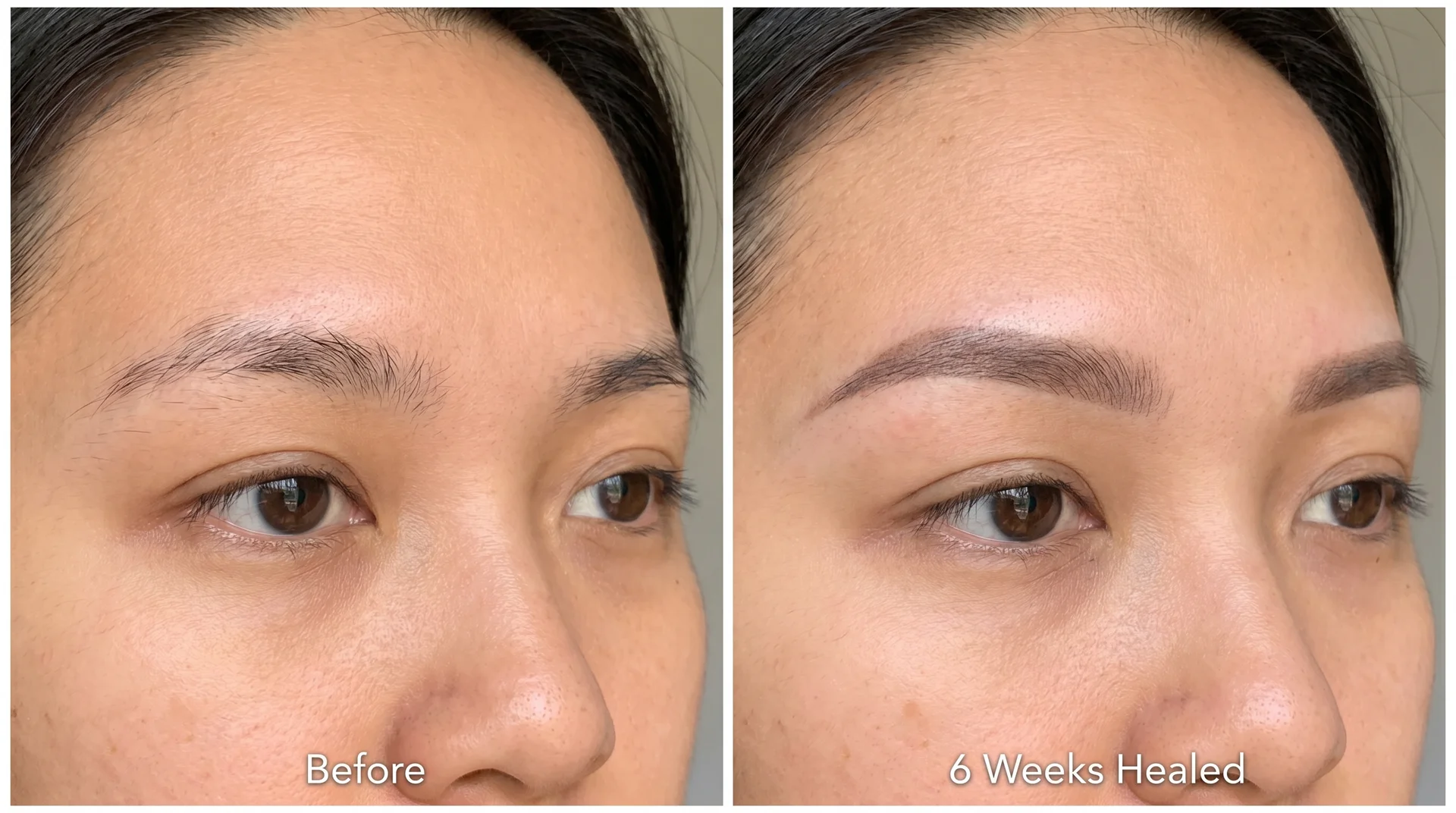
Ombre powder brows create a soft, graduated fill that goes from lighter at the head of the brow to deeper and more saturated toward the tail, replicating the look of well-applied brow powder without the daily effort. The shape looks defined without appearing stamped on, which is why this technique consistently satisfies clients who found microblading’s hairstroked look too artificial for their face.
What most studio before-and-afters don’t show you clearly is the difference between the fresh result and the healed result. These are not the same thing, and the gap is large enough to explain before anyone books anything.
Fresh Results vs. Healed Results: The Difference Nobody Warns You About
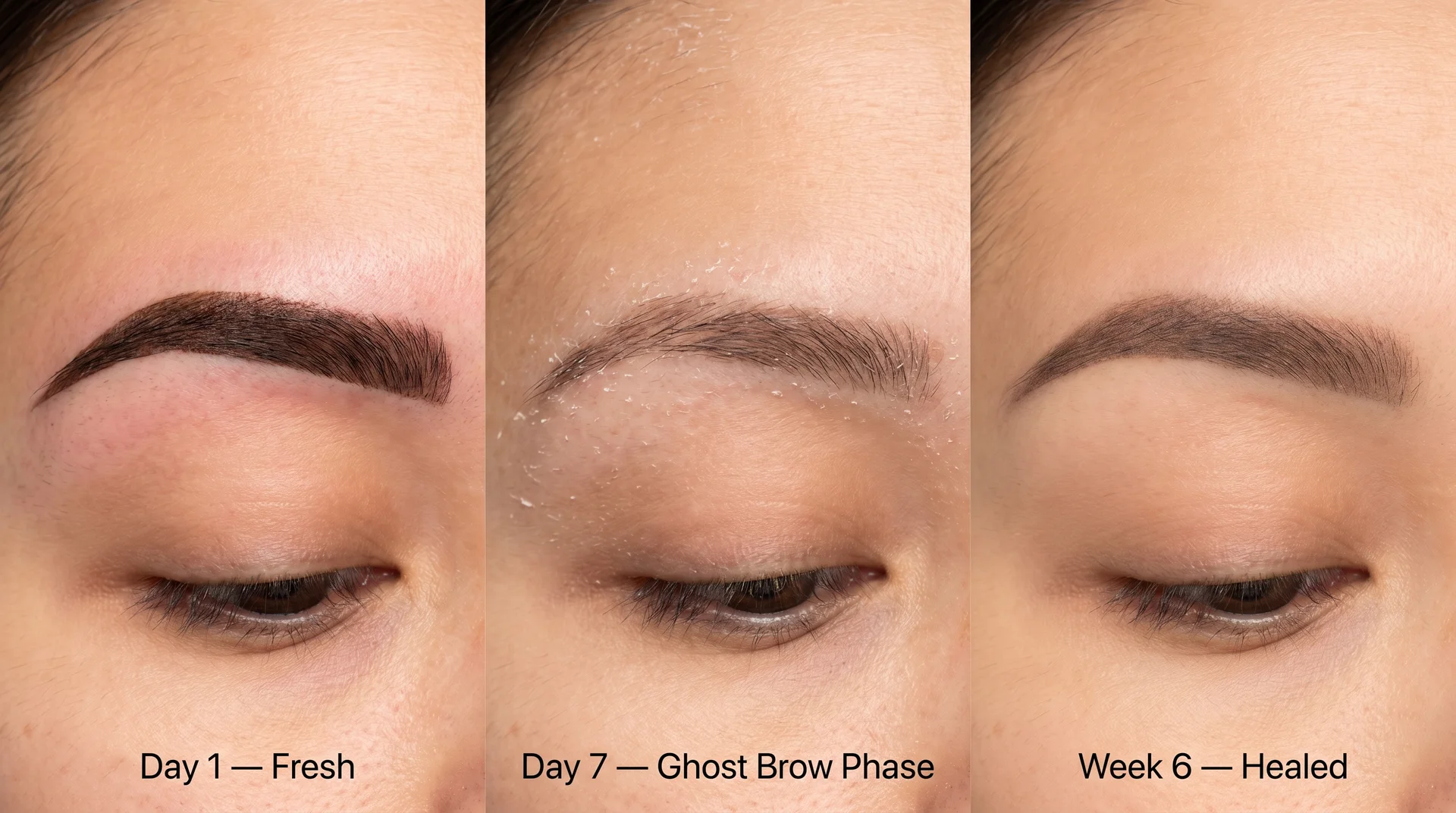
Freshly done ombre powder brows look significantly darker and more saturated than the result you’ll actually live with.
Industry sources and PMU practitioners commonly cite a 30 to 50 percent color reduction during healing. The pigment oxidizes in the hours after the procedure, and the surface skin is in a state of mild trauma: slightly swollen, retaining more pigment than the dermis will ultimately hold. What you see on appointment day is not a preview of your long-term result. It never is.
This gap produces distress in both directions. Some clients panic because they look overdone immediately after and are convinced something went wrong. Others love the intensity of the fresh result and then feel shortchanged at week six when the healed color is softer and less dense. Both reactions are understandable, and both are usually avoidable when expectations are set accurately before the appointment instead of after.
Something I notice from working in makeup across varied lighting environments that doesn’t come up in studio content: the healed result often reads differently in person versus in photos. In natural daylight at close range, a beautifully healed ombre brow can appear slightly more solid than it does on screen, even when the gradient is technically present.
If you’ve been comparing your healed result to a filtered Instagram portfolio photo and finding it wanting, stand in actual daylight before drawing any conclusions. The camera and the mirror are telling you different things.
The day-one result is not the real result. The six-week result is the real result. Everything between is healing.
What Before-and-After Results Look Like by Brow Starting Point
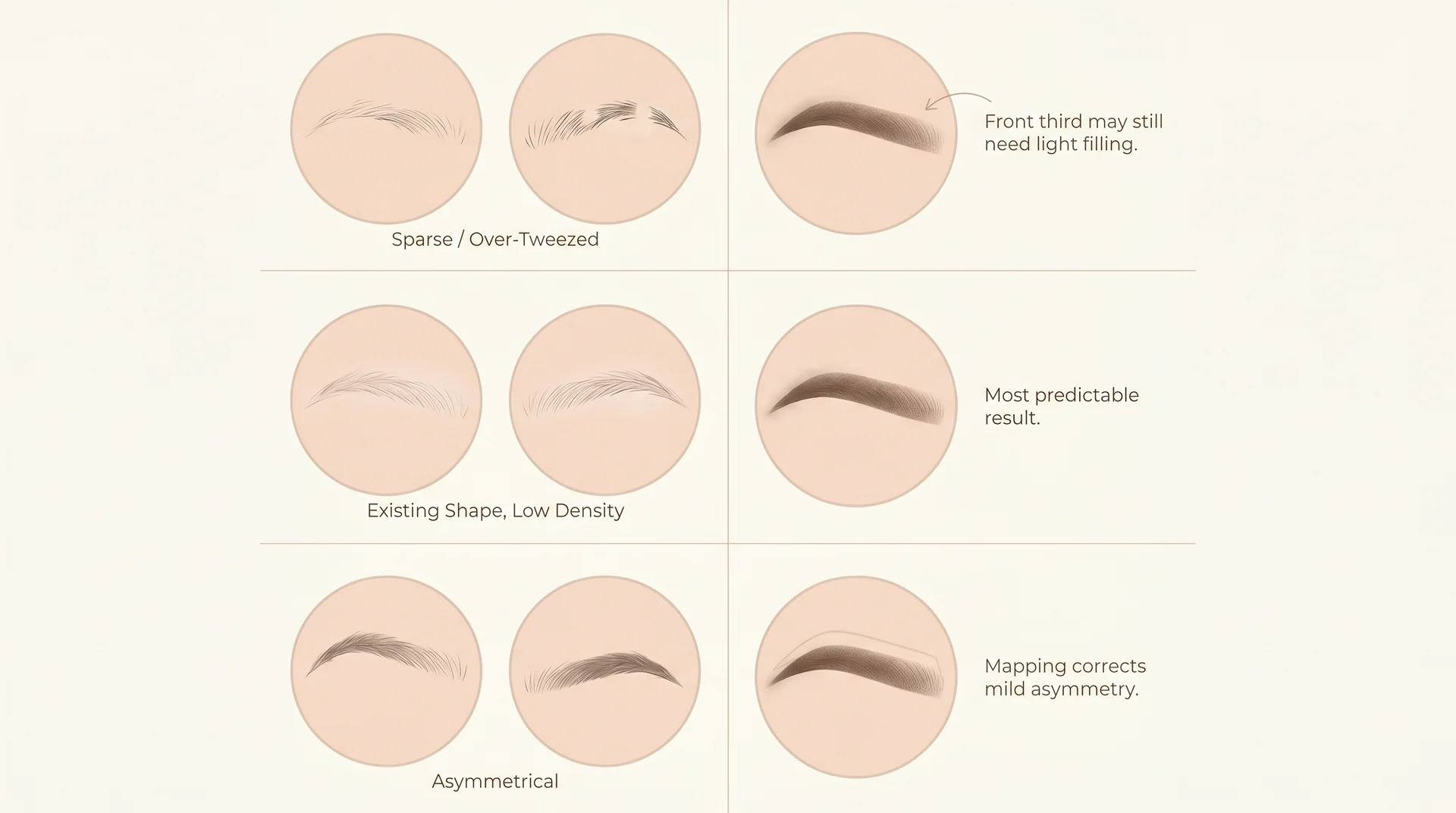
Your starting brow condition shapes what the after looks like more than most clients realize. Here’s how results typically break down:
- Sparse or over-tweezed brows: Ombre powder brows fill in density convincingly and create genuine shape where there wasn’t much before. The front third of the brow — the intentionally lighter, more diffused area heals palest. For clients with very little natural brow hair at the head of the brow, this section can still require light filling with a brow pencil after healing. This is the thing I almost never see mentioned in procedure content, and it comes up in client conversations more than studios would probably like to acknowledge. The procedure doesn’t fail in these cases. It just doesn’t always eliminate the pencil entirely for everyone, and that’s a distinction worth knowing before you book.
- Brows with existing shape but poor density: These tend to yield the most satisfying results. The shape is already there; the ombre fill adds the density that was missing. Healing is typically even, and pigment retention is predictable.
- Asymmetrical brows: A skilled artist can correct mild asymmetry during brow mapping, but significant natural asymmetry will be improved rather than eliminated. This conversation needs to happen during the mapping phase, before any pigment is applied. Ask your artist specifically how they plan to address your particular asymmetry, and look at the mapped shape on your face before anything begins.
What Ombre Powder Brows Look Like on Different Skin Tones
Pigment selection at booking matters more than most studios communicate upfront, and it’s especially significant at either end of the skin tone spectrum.
- Fair skin: Lighter pigments tend to heal truer to color. Oversaturation shows more obviously on fair skin, so a conservative depth approach in the first session is usually right.
- Medium and olive skin: These tones hold pigment consistently and heal predictably. Warm-toned pigments tend to read most naturally against warmer undertones.
- Deep skin tones: Deeper pigments are needed to read properly against the skin. Under-pigmentation is a common issue when artists lack experience with deeper tones; the healed brow reads gray or washed out rather than defined. Ask specifically about your artist’s experience with your skin tone and request healed photos from clients who share it, not just fresh ones.
If you’re interested in how other semi-permanent brow techniques compare in terms of healed appearance, the nano brows before and after guide covers the equivalent healing arc for that technique and is a useful side-by-side reference if you’re still choosing between methods.
The Ombre Powder Brows Healing Timeline: Week by Week
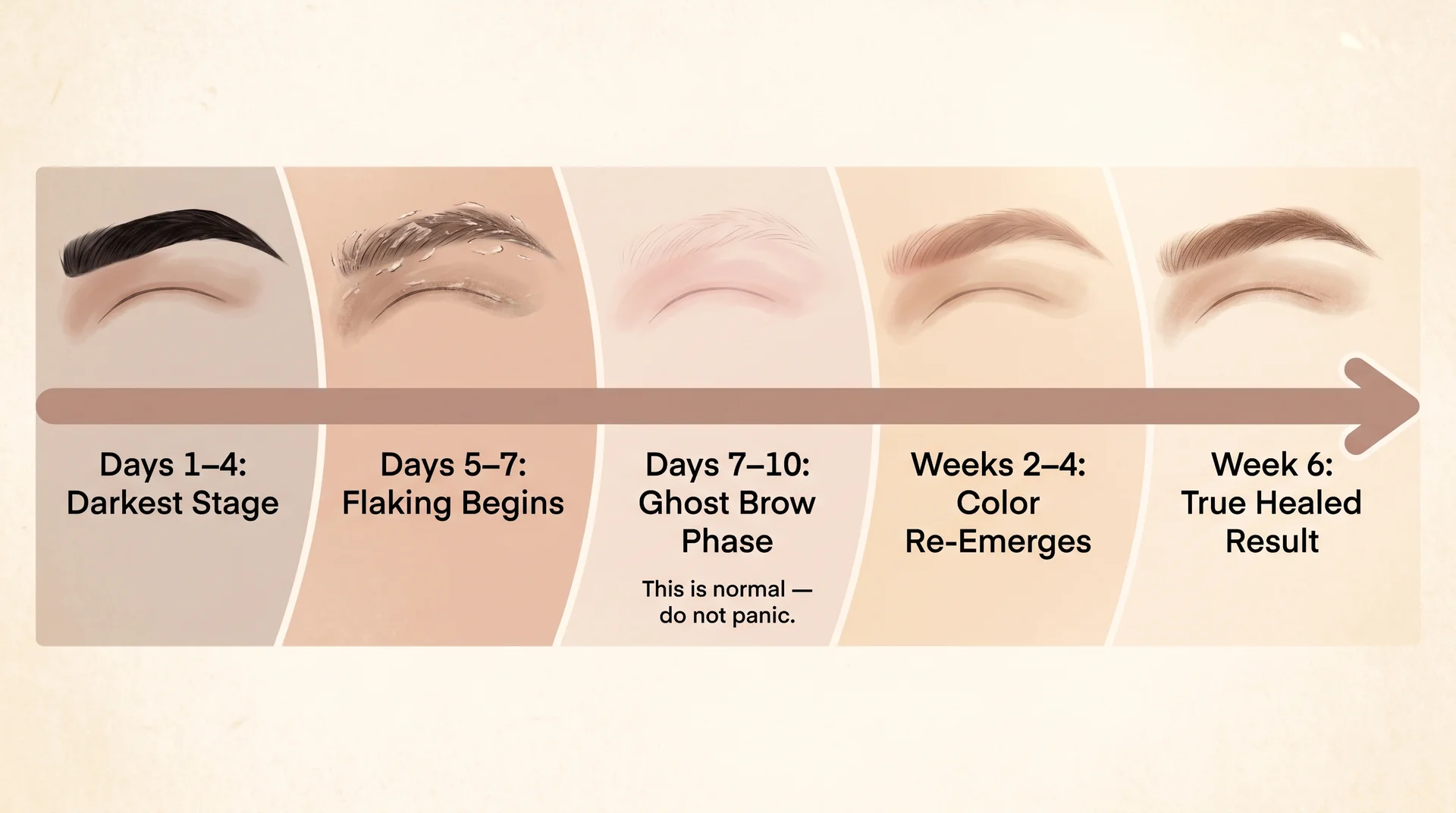
Ombre powder brows take four to six weeks to fully heal, and the process looks significantly worse before it looks better.
Most clients understand there’s a healing period. Fewer understand that the most alarming-looking stage — where the brows seem to have nearly vanished is completely normal and temporary. Here’s the honest week-by-week breakdown, including the parts most procedure guides skip over.
Days 1 Through 4: The Darkest Stage
In the first four days, your brows will look noticeably darker and more intense than the intended final result. Mild swelling and slight redness around the brow area are normal, particularly on day one. The pigment is sitting in the upper layers of the skin during this phase, which is why the color appears more saturated than it will once healing is complete.
Two main aftercare protocols exist: dry healing, which involves keeping the brow area clean and dry for the first ten days with no product applied, and wet healing, which involves applying a thin layer of healing ointment regularly to prevent the area from drying too aggressively.
Most artists have a preferred protocol matched to their technique and the pigments they use. Follow your artist’s specific instructions rather than switching to a method you read about somewhere else. The protocol is paired with the procedure for a reason.
The constraint clients frequently underestimate in this window: avoid sweating, swimming, and steam for the first ten days. This isn’t a casual guideline. Breaking it during the healing window genuinely affects pigment retention in ways that the touch-up appointment can improve, but may not fully correct.
Days 5 Through 10: Peeling, Flaking, and the Ghost Brow Phase
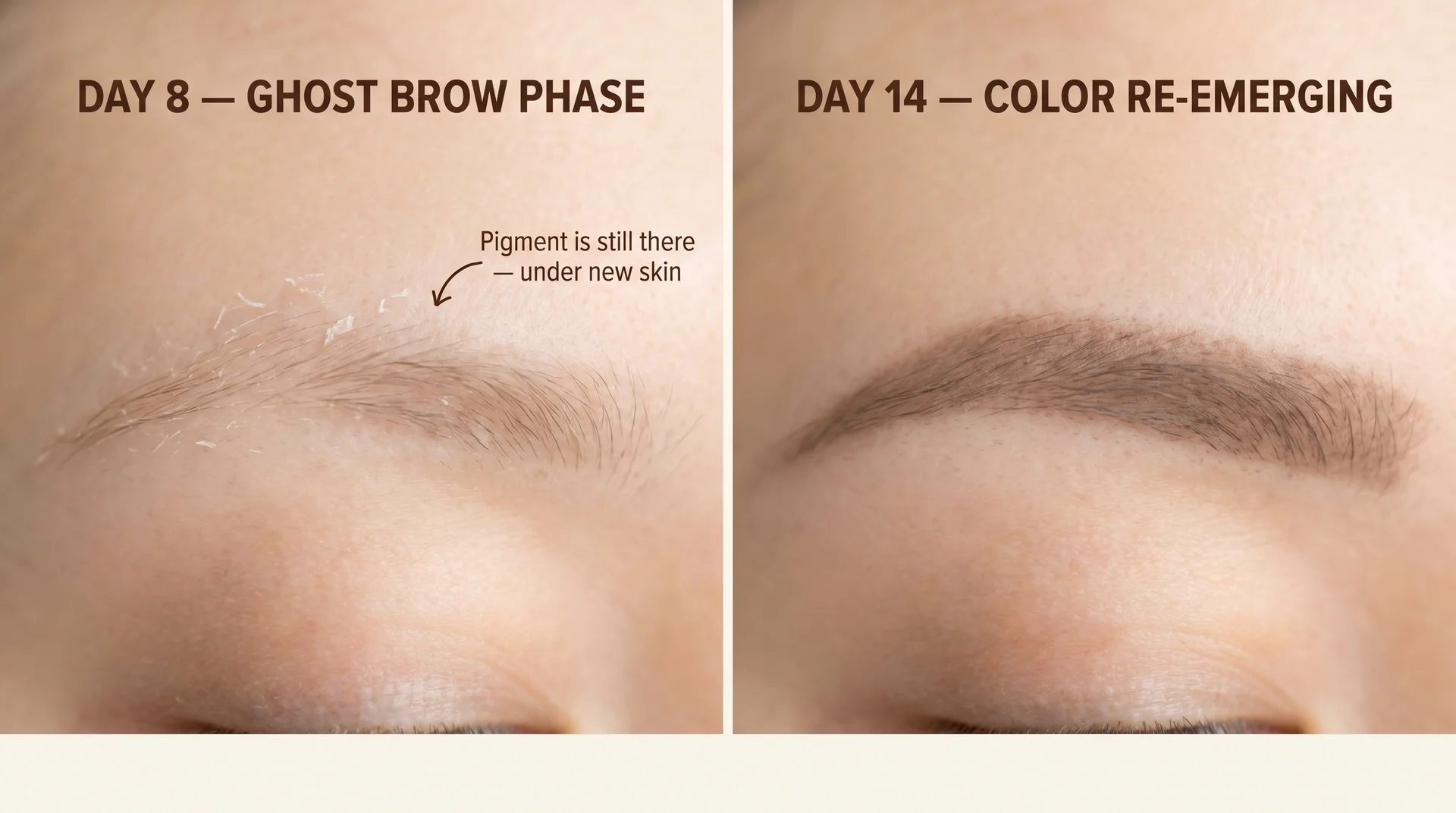
Around days five through eight, your brows will look like they’ve significantly faded, sometimes to the point where they seem nearly gone. This is a normal stage of ombre powder brow healing called the ghost brow phase, and it’s the single most common source of panic posts in PMU communities online. If you’re reading this section because you’re currently in it and worried your brows have disappeared: they haven’t.
What’s actually happening: The surface skin is exfoliating naturally, taking the top layer of pigment with it. The deeper dermal pigment is still there; it just isn’t visible yet because the fresh skin regenerating above it is opaque during that process. The color will re-emerge as healing completes, typically becoming visible again by days ten to fourteen.
Do not pick at any peeling or flaking during this phase. The flakes can be noticeable, and it’s genuinely tempting. Picking removes pigment prematurely and causes uneven retention in the healed result. The skin needs to shed on its own timeline.
Weeks 3 Through 6: The True Healed Result
By week six, the pigment has settled into the skin, and the healed color is visible. This is the result of photographing and using it as your reference point for the touch-up appointment.
Most artists schedule a perfecting session at six to eight weeks. This is a standard part of the process, not a sign that something went wrong. It addresses the realities of how individual skin retains pigment: areas that healed lighter than intended, patchiness from uneven exfoliation during healing, and any minor shape refinements the client wants. First sessions almost always benefit from a touch-up. It’s typically built into the initial pricing. Confirm this when you book rather than assuming.
What Fully Healed Ombre Brows Should and Shouldn’t Look Like
A well-healed ombre brow is soft and consistent in shape. The color sits evenly across the brow without visible gaps, and the gradient from front to tail reads as intentional rather than accidental.
Some healed outcomes warrant a follow-up conversation with your artist:
- Significant patchiness or highly uneven pigment retention across the brow
- Color that has shifted noticeably orange, pink, or gray relative to the original pigment choice
- Asymmetry that wasn’t present immediately after the procedure
- Brows that appear to have faded almost completely by week six
Color shift toward orange or pink usually points to a pigment that wasn’t well matched to your skin’s undertones, or a formulation that reveals warmer underlying tones as it fades. This is more common with lower-quality pigments.
The FDA has issued guidance on cosmetic tattoo pigments, noting that many contain ingredients not specifically approved for injection into the skin relevant context, when evaluating the pigment brand an artist is using and why they chose it.
If you’re deeply unhappy with a healed result and the touch-up appointment doesn’t resolve it, correction options do exist: saline removal and laser removal can both lighten or remove unwanted pigment, though both require multiple sessions and carry their own costs and healing considerations. This is worth knowing before you book, not after.
How Long Do Ombre Powder Brows Last?
Ombre powder brows last between one and three years on average. That range is technically accurate and practically useless if you don’t know what determines where you land within it. The two factors that matter most are skin type and post-procedure skincare habits, and skin type is the more significant of the two by a meaningful margin.
Longevity by Skin Type: Why the Range Matters
Research in the Journal of Cosmetic Dermatology on semi-permanent makeup pigment retention identifies sebum production and epidermal turnover rate as the primary biological drivers of how quickly cosmetic tattoo pigment fades. In practical terms, oily skin breaks down pigment faster, and it does so continuously from the moment the procedure is complete.
The following estimates reflect general PMU industry guidance:
| Skin Type | Typical Longevity | Notes |
|---|---|---|
| Oily | 10 to 14 months | Sebum accelerates pigment breakdown; plan for more frequent touch-ups |
| Combination | 12 to 18 months | Depends on how oily the brow zone specifically is |
| Normal | 18 to 24 months | Typically holds pigment consistently between touch-ups |
| Dry | 18 to 30 months | Best retention; healed result tends to be most even |
The friction point that threads through countless oily-skin complaints in PMU forums: clients are caught off guard by how quickly their brows fade because the “one to three years” framing implies a longevity their skin simply won’t support.
If you have oily skin, build the cost of a one-year touch-up into your budget expectation from the start rather than hoping you’ll be the exception.
What Speeds Up Fading
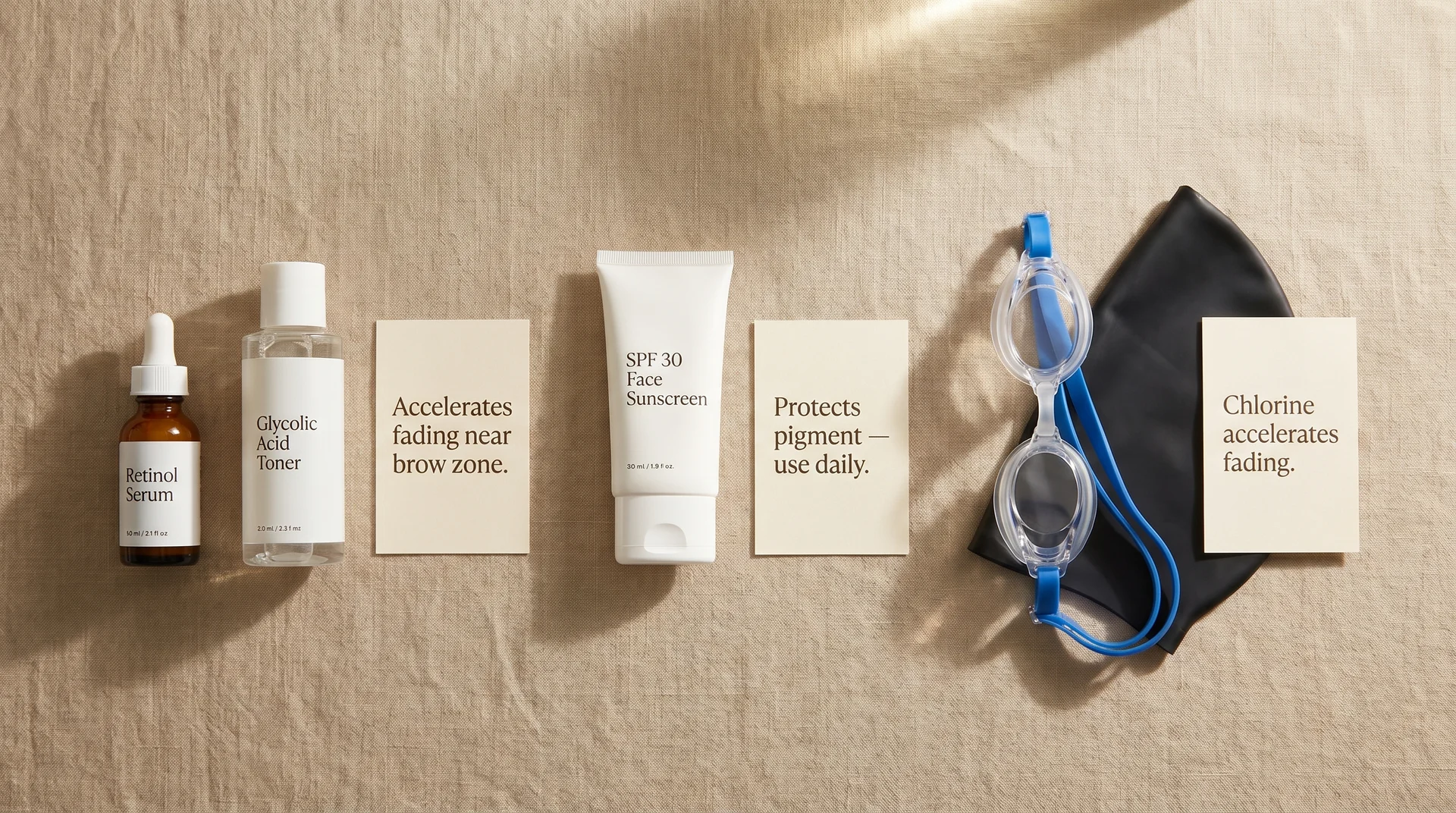
Beyond skin type, several specific factors accelerate how quickly ombre powder brow pigment breaks down:
- Sun exposure without SPF: UV radiation degrades pigment faster than almost anything else in a typical daily routine. SPF applied over the brow area consistently is one of the simplest ways to extend your results over time.
- Retinoids and chemical exfoliants near the brow area: Ingredients including prescription tretinoin, OTC retinol, glycolic acid, lactic acid, and salicylic acid accelerate skin cell turnover in the treated area and speed up the rate at which pigment fades. This applies when they’re applied to or near the brow zone specifically.
- Frequent swimming in chlorinated pools: Occasional swimming isn’t a concern. Regular lap swimming several times a week accumulates into meaningful fading over the life of the procedure.
- Laser and light-based skin treatments: Some laser treatments affect cosmetic tattoo pigment. Always disclose your ombre brows to any provider performing facial laser work.
When to Book a Touch-Up and What It Actually Involves
Two distinct touch-up types exist, and they’re different in scope and cost:
- The six-to-eight-week perfecting session: This completes the initial procedure. It addresses uneven pigment retention, areas that healed lighter than intended, and any minor shape refinements. Usually included in the initial procedure price, confirm this before you book, because some artists charge it separately.
- The annual or biennial color refresh: A separate appointment and a separate cost, typically ranging from $150 to $350, depending on your artist and location. It restores color depth to a brow that has faded with time. Waiting too long between refreshes doesn’t permanently erase the pigment; it just means the refresh session may require more time and pigment to restore the original result.
Plan the refresh cost into your evaluation of the procedure’s overall value. A $700 initial procedure plus two annual touch-ups over three years is a $1,100 or more investment over that period, not a $700 one.
Ombre Powder Brows vs. Microblading: Which One Lasts Longer?
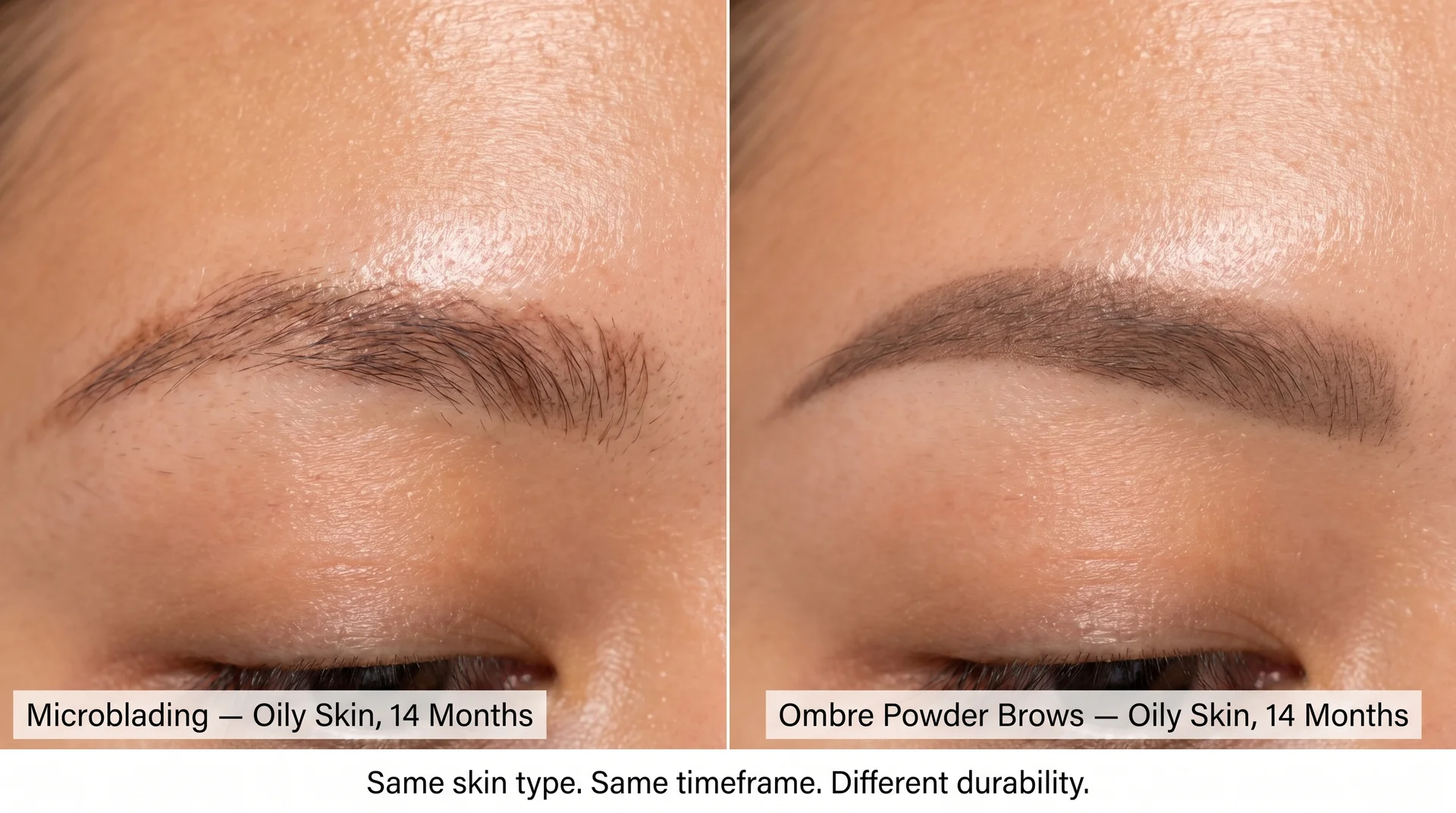
Ombre powder brows typically outlast microblading by six months to a year, particularly on oily and combination skin. The reason is in how each technique deposits pigment. Microblading creates individual hair strokes by making fine incisions in the skin and implanting pigment into each one.
Ombre powder brows use a stippling or pixelated technique that deposits pigment more evenly across the dermis without the same depth or precision of incision. On oily skin, microblading’s fine hairstrokes tend to blur and lose definition as sebum production and skin turnover work against them continuously. Ombre powder’s deposit holds its shape more consistently because there are no fine lines to lose.
For a deeper comparison of both techniques across skin type, cost, and longevity, the powder brows vs. microblading guide walks through the decision in full.
Why Skin Type Should Drive the Decision, Not Just Aesthetic Preference
Clients often walk into consultations with a preference already formed. Microblading looks more natural — more like individual hairs — and the appeal is obvious for anyone who wants something less defined-looking. The problem is that the most natural-looking procedure is the one that still looks good at eighteen months, not just at six weeks.
For oily skin, microblading’s hairstrokes frequently blur within a year, creating a result that reads muddy and undefined rather than crisp and natural. The ombre powder technique holds up better against the sebum production working against the result continuously, because it doesn’t rely on fine line definition to look good as it ages.
The decision about which technique to choose should start with an honest skin type conversation, not an aesthetic preference that doesn’t account for how either technique performs on your specific skin over time.
Combo Brows: When Both Techniques Are Used Together
Combo brows layer both techniques — hairstrokes at the front of the brow for a natural-looking appearance, powder fill through the body and tail for density and definition. They offer a middle ground for clients who want some of microblading’s natural quality without sacrificing all of powder brow durability.
The trade-off worth knowing upfront: the hairstroke portions of a combo brow still fade faster than the powder-filled sections. Over time, the result can look uneven as the hairstrokes blur while the powder holds its shape.
Cost is typically higher than either technique alone, and touch-up cadence is often shorter. For oily skin clients specifically, combo brows frequently perform similarly to straight microblading at the twelve to eighteen-month mark. If you’re weighing this option alongside nano brows, the nano brows vs. powder brows comparison covers the durability and technique differences that affect combo brow decisions, too.
What Affects How Your Ombre Powder Brows Hold Color Over Time
Pigment retention after ombre powder brows comes down to skin biology, what goes on your skin, and how much sun it sees. Skin type was covered in the longevity section above. What’s worth understanding separately is the mechanism behind skincare-related fading because once you understand it, the practical habit change takes about ten seconds.
Skincare Ingredients That Accelerate Fading
The American Academy of Dermatology’s guidance on topical retinoids documents the mechanism directly: these ingredients deliver their anti-aging and exfoliating effects by accelerating epidermal cell turnover in the treated area. That same mechanism is unfriendly to cosmetic tattoo pigment sitting in the upper dermal layers. When you sweep a retinol serum across your full face as part of your evening routine, most people apply it across their brows. The skin above your brow pigment is turning over faster than it would otherwise, and the pigment is going with it.
The same applies to AHAs (glycolic acid, lactic acid), BHAs (salicylic acid), and benzoyl peroxide used across the forehead and upper face. The instruction isn’t to stop using these products; it’s to apply them below the brow line and avoid sweeping them upward. That’s a small adjustment in a routine you already have, and over eighteen months, it makes a real difference in whether you’re sitting in a refresh chair earlier than you needed to be.
I’ll be honest, this is something I wish more artists explained at the booking stage. I’ve had clients come back saying their brows faded faster than expected, and when I ask about their skincare routine, the retinol is always going on in one pass across the whole face. It’s not intentional, it just doesn’t occur to most people that the brow area is part of the treatment zone.
Aftercare That Actually Affects Long-Term Retention
Most clients are diligent about the first two weeks of healing aftercare and then consider the maintenance phase complete. The habits that affect your results at eighteen months are worth establishing as an ongoing routine rather than a temporary caution:
- SPF applied consistently over the brow area: UV exposure degrades pigment continuously, and several unprotected summers compound over the life of the procedure significantly.
- Keeping exfoliating products out of the brow zone: Ongoing habit, not just a healing-period restriction. See above.
- Avoiding prolonged chlorine exposure: Occasional swimming isn’t a concern. Regular lap swimming several times a week will accelerate fading over time in a way that accumulates noticeably by the end of year one.
What You Cannot Control and Should Account for in Your Budget
Individual skin physiology varies in ways no procedure can override. Some clients metabolize pigment faster at the cellular level, regardless of how carefully they follow aftercare. Others retain color beautifully for two-plus years with minimal effort. There’s no way to know exactly where you’ll land until you’ve had the procedure and watched how your skin responds through the first full annual cycle.
This isn’t a failure of the artist or the technique. It’s the variable that makes touch-up appointments expected rather than optional. The accurate way to evaluate ombre powder brows as an investment is to include touch-up costs from the start because the procedure’s longevity is a genuine range, and you won’t know your place in it until you’re in it.
Is Ombre Powder Brows Worth It? What I’d Tell You Before You Book
For most clients with dry to normal skin who already fill in their brows daily, ombre powder brows are worth it. For clients with oily skin, sparse fronts, or an expectation that they’ll never touch a brow pencil again, the gap between what the procedure delivers and what was promised can produce real disappointment, and that disappointment is usually avoidable with accurate information up front.
Who Gets the Best Results from Ombre Powder Brows
Clients who tend to be most satisfied share a few consistent characteristics:
- Dry to normal skin with no significant oiliness in the brow zone
- Sparse, over-tweezed, or thinning brows where adding density is the primary goal
- A preference for the filled-in, defined brow look rather than a natural hairstroked effect
- A daily routine that already involves brow powder or pomade, ombre powder brows replicate that look as a baseline
- Willingness to maintain annual or biennial touch-up appointments as a standard part of the ongoing investment
Who Should Think Carefully Before Committing
This isn’t a list of reasons to avoid the procedure. It’s a list of situations that need honest conversation before booking:
- Oily skin without a realistic plan for annual touch-ups: The procedure will still look good, but it will need more frequent refreshing than standard marketing suggests. Go in with that expectation and the budget to match it.
- Clients expecting to put the brow pencil away entirely with very sparse front growth: The intentionally lighter, diffused front third of an ombre brow may still need light filling for clients with almost no natural brow hair at the head. The result is still significantly better, it’s just not always the complete elimination of a morning brow routine that the procedure is sometimes sold as.
- Anyone with a history of keloid scarring: Keloid-prone skin responds differently to dermal trauma, and healing may not be predictable. Consult a dermatologist before booking any cosmetic tattooing procedure.
- Clients currently on isotretinoin or those who have recently completed a course: Most artists require a waiting period after completing isotretinoin before performing any PMU procedure. The standard timeframe varies; ask your dermatologist and your artist what applies to your specific situation. [VERIFY current clinical standard]
| This article covers general information about ombre powder brow procedures and is not a substitute for advice from a licensed PMU artist, dermatologist, or healthcare provider. If you have any skin conditions, active medications, or health concerns relevant to cosmetic tattooing, consult a qualified professional before booking. |
The Real Cost Breakdown Over Three Years
The procedure price is the opening number, not the full picture. Here’s a realistic three-year cost breakdown:
| Cost Item | Typical Range | Notes |
|---|---|---|
| Initial procedure | $500 to $900 | Varies significantly by location and artist experience level |
| Six-to-eight-week perfecting session | Usually included | Confirm before booking, some artists charge separately |
| Annual color refresh, Year 1 | $150 to $350 | Oily skin may need this at ten to twelve months |
| Annual color refresh, Year 2 | $150 to $350 | Normal to dry skin may not need this until Year 2 or later |
| Estimated three-year total | $800 to $1,600 | Depends on skin type, artist, and touch-up frequency |
Compare that against three years of daily brow products. A quality brow pencil or pomade runs $20 to $35 and gets replaced roughly every two to three months. Over three years, that’s somewhere between $240 and $630 in product alone, plus time.
Twenty minutes a week spent on brow maintenance adds up to over seventeen hours a year. For most clients, the value calculation tips toward the procedure, but it tips more cleanly when the full cost is visible from the start.
What to Ask Your Artist Before You Book Ombre Powder Brows
The quality of your result depends as much on artist selection as on the procedure itself.
Studios aren’t incentivized to explain how to evaluate them critically, which is why this part of the process gets the least honest coverage anywhere. Booking based on price or an impressive Instagram portfolio is where a lot of disappointing outcomes actually begin.
How to Read a Portfolio Honestly
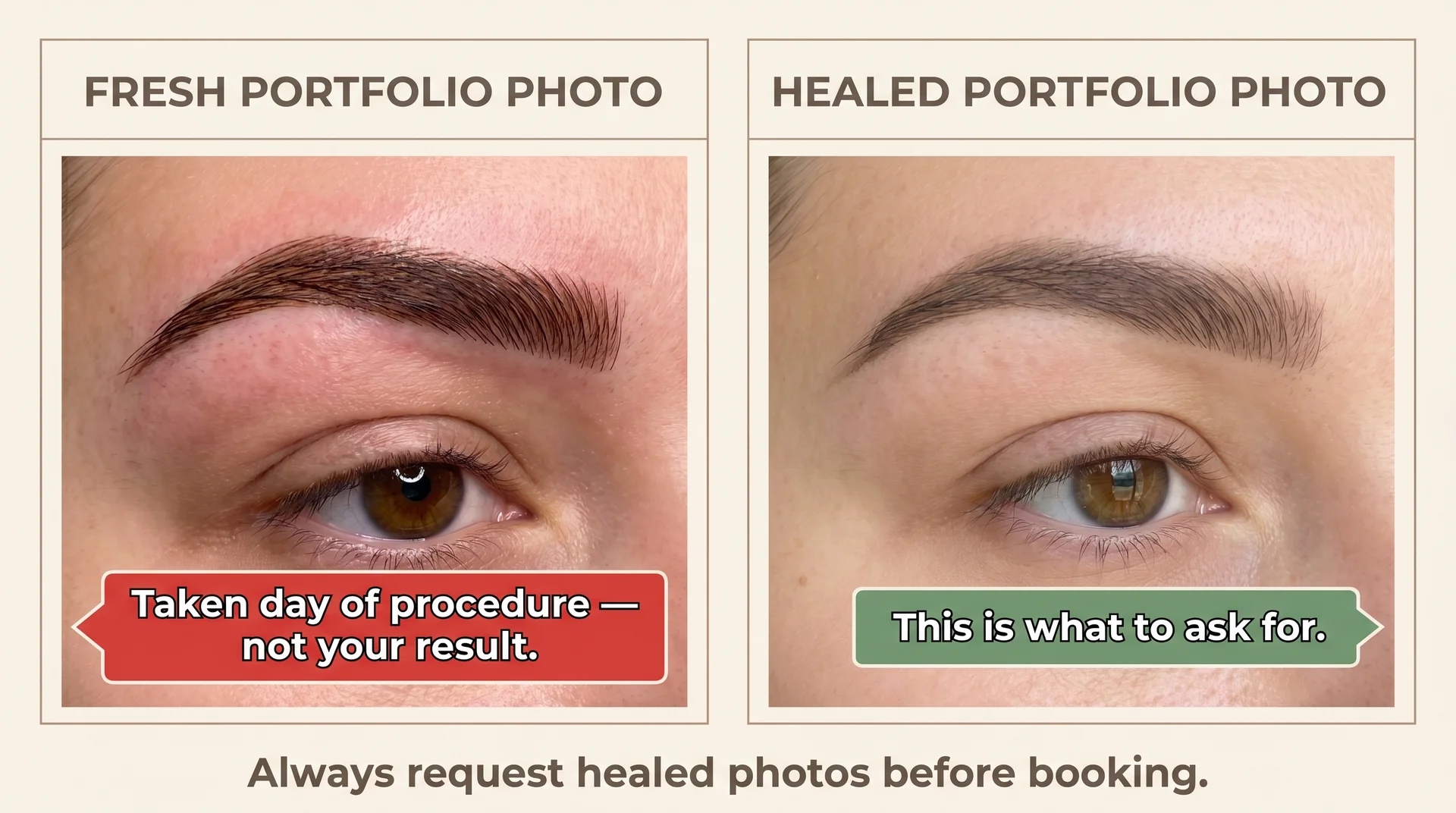
Most studio portfolios show fresh results photographed within hours or days of the procedure. Fresh results always look more saturated, defined, and impressive than healed results. When you’re scrolling through a portfolio, you’re mostly seeing the procedure at its most flattering, immediate appearance, not what clients are actually living with six weeks or a year later.
Ask specifically for healed photos taken at six or more weeks post-procedure. Any experienced artist has them. What healed portfolios tell you that fresh ones don’t:
- How even the color retention is across different parts of the brow
- Whether the gradient heals cleanly or becomes blurry and undefined at the arch or tail
- How the pigment reads on different skin tones at the settled stage, not just at six hours post-procedure
- Whether the color has shifted toward orange, gray, or pink as it fades
Consistency across a portfolio of healed results tells you more about an artist’s technical skill than any number of beautiful same-day photos. A healed portfolio is the honest one.
Questions to Ask Before You Confirm the Appointment
- What brand of pigment do you use, and is it formulated specifically for cosmetic tattooing?
- Do you use dry healing or wet healing aftercare protocol, and what’s your reasoning?
- Is the six-to-eight-week perfecting session included in the initial price?
- What does your touch-up policy cover, and are there conditions under which it isn’t included?
- Do you do brow mapping before starting, and will I be able to see the planned shape before any pigment is applied?
That last question matters more than people typically expect. Brow mapping is where the shape gets built, the arch placement, the front-to-tail length, and the symmetry corrections. It’s where a good result is actually created.
The procedure is executing the map. If the map is wrong, the execution doesn’t save it, and I’d say that from brow shaping experience as much as from watching what happens to clients who come back from procedures that weren’t mapped properly. Artists who skip this step or rush through it are the ones whose work produces results that no amount of touch-up fully corrects.
Red Flags to Watch For
- Portfolios that show only fresh, same-day results with no healed photos available upon request
- An artist who can’t or won’t explain their pigment brand, why they chose it, or how the color behaves as it fades over time
- No mention of brow mapping or a shape consultation before the procedure begins
- Pricing significantly below the local market rate without a clear explanation, such as a training model or supervised practice session
- Pressure to book immediately without time for questions or a consultation appointment
A reputable artist welcomes questions about their process. The answers they give, and the ones they can’t give, tell you most of what you need to know before you hand over your deposit.