
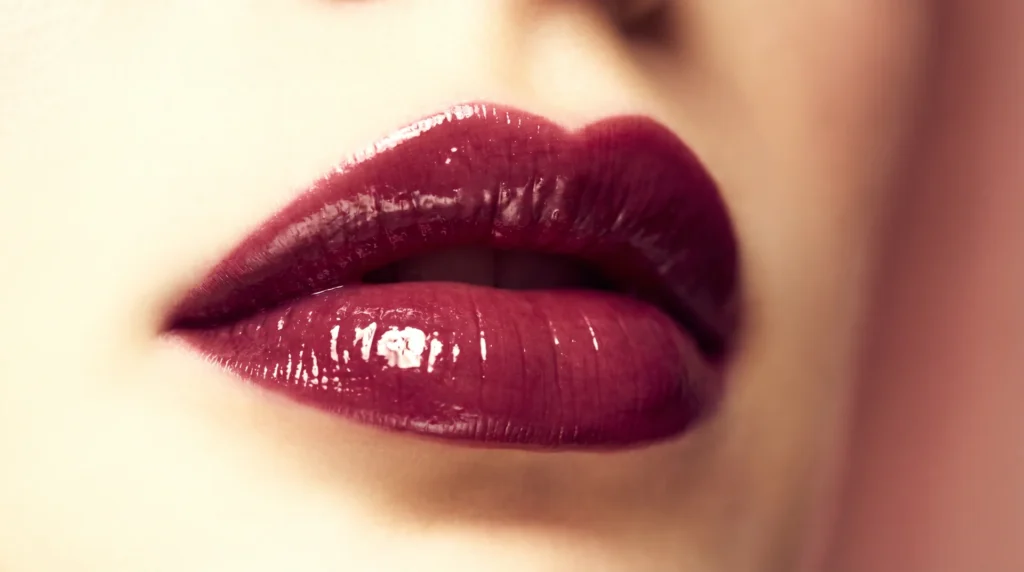
If you’ve picked up something labeled “lip lacquer” and wondered whether it’s just an expensive gloss in different packaging, you’re not overthinking it.
The lip product market has made this genuinely confusing.
Lip lacquer is a liquid lip color with more pigmentation than standard gloss, a thicker and creamier formula, and a high-shine, mirror-like finish that holds longer than gloss without the dry, tight feel of most liquid lipsticks.
It sits between those two products, and once you understand exactly what it does, it’s one of the more useful additions to a daily routine.
What Lip Lacquer Actually Is
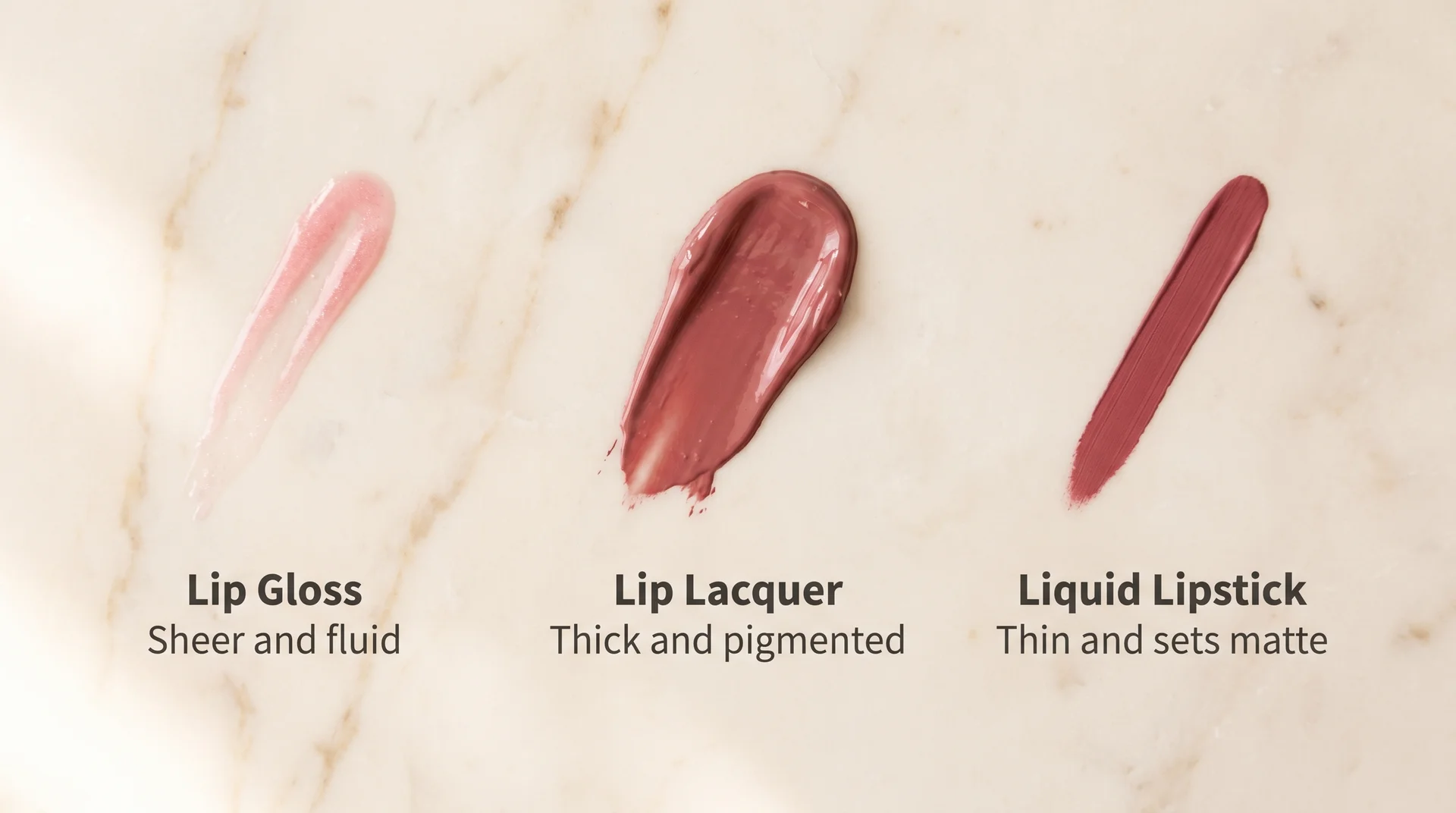
The straightforward version: lip lacquer is a liquid lip formula that delivers glossy, high-impact color without drying down matte and without needing a lipstick underneath to look finished. It doesn’t sit like a film.
It stays visibly shiny throughout wear, and a good formula does this while keeping your lips comfortable for hours.
The word lacquer comes from the furniture and nail industry, where it describes a high-gloss coating finish. Applied to lips, it describes the finish aesthetic, not a specific ingredient standard, which is why brands use it loosely.
When a product is called a lip lacquer, they’re telling you the look they’re going for: that wet, reflective, glass-like surface that adds depth and dimension to lips in a way a standard bullet lipstick can’t match.
Most people have worn something close to a lacquer at some point without knowing what it was called. The difference becomes clear the first time you wear one for five or six hours and realize you haven’t touched it up once.
That staying power, combined with real color and a glossy finish that doesn’t quit, is the whole point.
How Lip Lacquer Feels on Your Lips
The word “lacquer” sounds like it might sit heavy or rigid on the lip, and “glossy” in practice sometimes means sticky. A well-made lip lacquer is neither of those things.
A quality formula feels cushioned, smooth, and flexible. It coats your lips without pulling or dragging, and it stays comfortable because most formulas include conditioning ingredients, things like shea butter, jojoba oil, vitamin E, or plant-based squalane.
The texture is noticeably thicker than a standard gloss when you load the applicator, but it settles into a soft layer that moves with your lips rather than over them.
Does Lip Lacquer Dry Out Your Lips?
A good lip lacquer should not dry out your lips. This is one of the things that makes it genuinely different from the liquid lipstick category.
Matte liquid lipsticks set via a film-forming process that can feel progressively tight and uncomfortable by hour three or four. Lacquers skip that step entirely. They stay glossy because they don’t film-form, and the emollient-heavy base is often more nourishing in practice than lighter gloss formulas.
I work a lot of bridal bookings in the Pacific Northwest, where hair and makeup wrap early and the ceremony doesn’t end until mid-afternoon. Matte liquid lipstick makes brides self-conscious by hour three. Lacquer doesn’t, which is exactly why I reach for it when the look calls for something glossy and the timeline calls for something lasting.
Will It Feel Sticky?
A modern, quality lip lacquer should not feel sticky. The stickiness associated with traditional gloss usually comes from lighter oil-based formulas that stay too fluid on the lip surface.
Lacquer formulas use higher-viscosity ingredients that build the thickness without the tacky drag. You’ll know a formula is good when you press your lips together and they release cleanly without any pull.
Cheaper formulas can still be sticky, so reading reviews from people who’ve worn the product for several hours is worth the extra minute before you buy.
Lip Lacquer vs. Lip Gloss vs. Liquid Lipstick
People use these three terms interchangeably, and the packaging rarely helps. Here’s where they actually differ in practice.
| Lip Gloss | Lip Lacquer | Liquid Lipstick | |
|---|---|---|---|
| Finish | High shine, glossy | High shine, mirror-like | Matte or satin |
| Pigmentation | Sheer to light | Medium to high | Full opacity |
| Texture | Light, fluid | Thick, creamy | Thin, sets dry |
| Wear Time | 1 to 2 hours | 3 to 5 hours | 6 to 12 hours |
| Lip Feel | High comfort | High comfort | Can feel drying |
| Wears alone? | Rarely | Yes | Yes |
| Sticky feel | Often | Rarely | No |
Lip Lacquer vs. Lip Gloss
Three things separate them in real wear: pigmentation, longevity, and independence.
A lip gloss is designed to add shine and a sheer tint. It slides off in one to two hours, it feathers at the lip line more easily, and it almost always needs a lipstick underneath to show real color.
A lip lacquer delivers enough pigment to wear alone, holds for three to five hours, and because the formula is denser, it grips better and stays more controlled at the edges.
When a client wants a glossy look that survives a ceremony without constant touch-ups, this is the distinction that matters. Gloss is a top coat. Lacquer is the main event.
Lip Lacquer vs. Liquid Lipstick
These share a delivery system, but they do opposite things once they’re on your lips. Liquid lipstick sets dry, locks in place, and survives meals and drinks with minimal fading.
The tradeoff is comfort: many liquid lipsticks feel increasingly tight as the hours pass, and they can make dry or chapped lips look worse under a matte finish, not better.
Lip lacquer trades some longevity for a completely different finish and feel. It stays glossy and comfortable. When it starts to fade, it tends to leave a soft, even tint behind rather than peeling or patching.
It won’t survive a full dinner without a touch-up, but what it looks and feels like in the five hours before that dinner is considerably more comfortable to live in.
Lip Lacquer vs. Lip Stain
These are not in the same category. A lip stain is a water or gel-based formula designed to soak into the lip surface and leave a tint. It dries to nothing, holds for hours, and is virtually unmovable once set.
There’s no shine, no coating, no texture. A lacquer coats the lip surface. A stain tints it. They suit completely different needs and don’t substitute for each other.
How Long Does Lip Lacquer Last?
In honest, real-world terms: three to five hours on bare lips. If you eat a full meal, expect the center to fade first, since that’s where the most contact happens. Drink through a straw instead of directly from a cup, and you’ll extend that wear time noticeably.
A good lacquer fades gracefully, which matters more than it sounds. The shine dims before the color disappears, so you move from full-impact gloss to a soft tint over the course of the day without ever looking patchy or worn-out.
Four Tips to Make Lip Lacquer Last Longer
- Exfoliate the night before or morning of. Lacquer settles into the surface texture. A simple sugar scrub or a soft toothbrush in gentle circular motions takes thirty seconds and makes a visible difference in how the formula applies and holds.
- Apply a lip liner first, then fill in the entire lip. This isn’t just about defining the edge. Filling in the whole lip gives the lacquer something to grip, and when the gloss fades, what’s left behind still looks intentional.
- Apply in thin layers. One heavy coat slides and fades faster than two thinner ones. Apply the first coat, press your lips gently together, blot once with a tissue, then add a second layer. That layered application holds considerably longer.
- Avoid oil-heavy foods before your next touch-up. Butter, olive oil, and rich sauces break down the formula faster than anything else. This isn’t a reason to skip the meal. It’s a reason to carry the lacquer with you.
How to Apply Lip Lacquer for a Clean, Glossy Finish
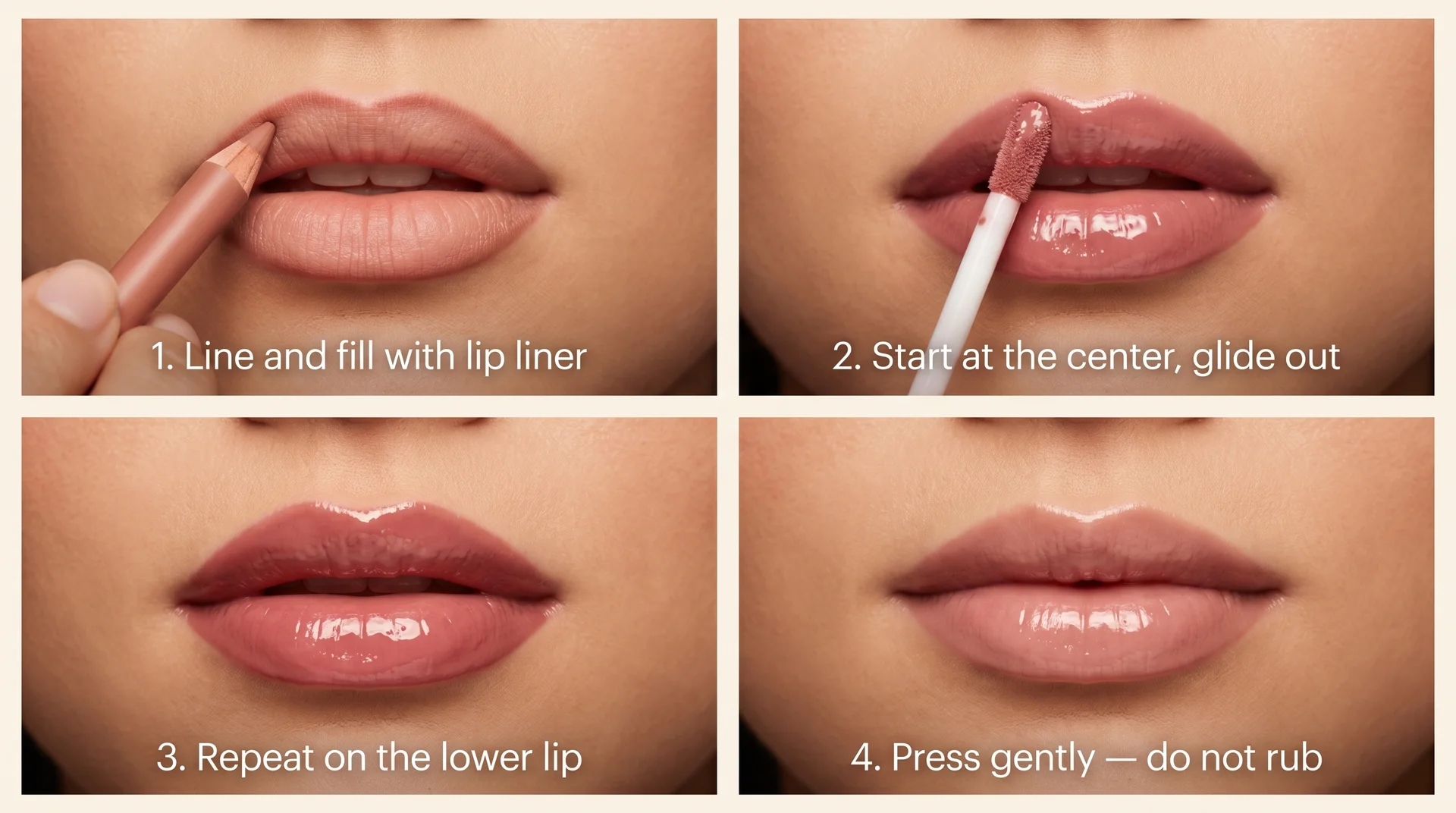
The application is more forgiving than liquid lipstick and requires less precision than a bullet. That’s part of what makes it a useful choice when you want a polished lip without the stress of a fine line to manage.
Lip lacquer typically goes on last in your makeup routine, after everything else has set. If you’re still figuring out the right order for the rest of your routine, this guide on whether to do hair or makeup first covers the full getting-ready sequence.
Applying Lip Lacquer on Its Own
- Start with prepped lips. Hydrated, exfoliated, and blotted free of any balm residue. The balm itself is fine. You just don’t want excess product sitting on the surface when you apply.
- Apply a lip liner in your natural lip color or a shade that coordinates with the lacquer. Trace the outer edge, then fill in the entire lip. Optional for a casual look, meaningful for events or photography.
- Load the applicator moderately. Not so much that it pools at the center of the tip. Place it at the center of the upper lip and glide outward toward the corners.
- Repeat on the lower lip, starting at the center.
- Press your lips gently together once to blend. Don’t rub or smack them. A gentle press moves the product evenly without smearing the edges.
- Wait thirty seconds. If you want more intensity, add a second coat. If you’re happy with the first, you’re done.
Layering Lip Lacquer Over Lipstick (and How to Turn Any Matte Lip Glossy)
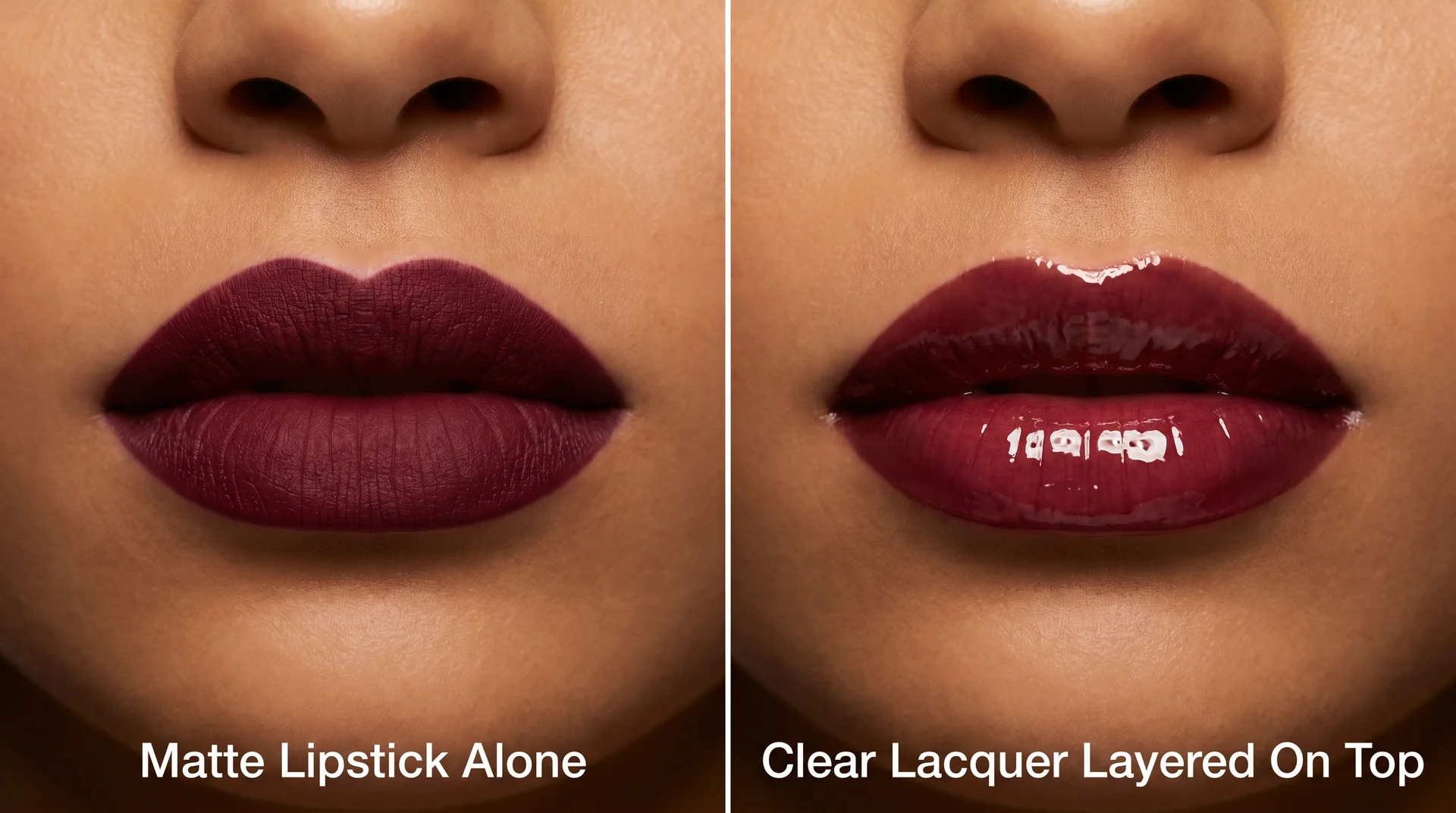
This is where lip lacquer becomes something more than a standalone product. A clear or nude lacquer applied over a matte lipstick transforms the finish without changing the color underneath.
It’s the fastest way to take any lipstick in your collection from flat to editorial-level glossy. On shoots, I use clear lacquer as a finishing layer over whatever lip color is already on because it reads beautifully in photos, adds a sense of fullness, and takes about ten seconds.
The one rule when layering: make sure the base lipstick has fully set before the lacquer goes over it. If the lipstick is still fresh and slightly tacky, the lacquer will displace it rather than sit cleanly on top.
If you don’t own a lip lacquer yet but want the finish, you can get close by applying a small amount of clear gloss directly over a set matte lipstick. The hold won’t be the same, but the visual effect is similar enough to try before you commit to a new product.
Choosing the Right Lip Lacquer Shade for Your Skin Tone
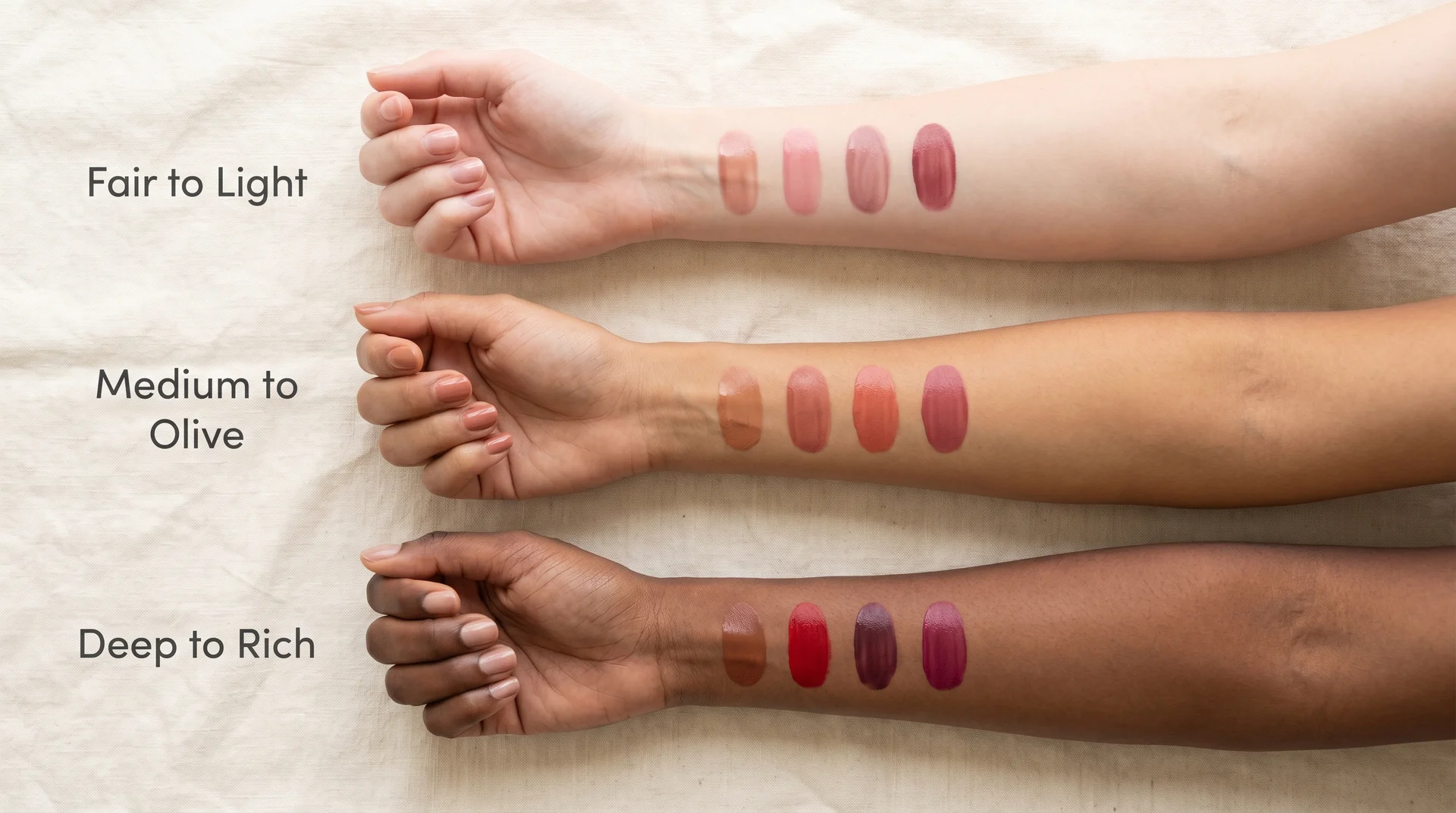
Lacquer reads slightly sheerer than the same color in a matte formula because of how a high-shine finish reflects light. That means you may want to choose one shade warmer or richer than you would in a bullet lipstick to get the same visual depth.
- Fair to light skin tones: Rosy nudes, soft pinks, and berry shades read bright and fresh in lacquer without washing out.
- Medium to olive skin tones: Warm nudes, terracotta-adjacent shades, and deep roses pick up the warmth in the skin tone and look rich in a high-shine formula.
- Deep to rich skin tones: Warm browns, vivid reds, and saturated berries carry beautifully, and the shine adds dimension that these shades can sometimes lack in matte finishes.
If you’re unsure where to start, a warm nude lacquer tends to work across the widest range of skin tones. The shine does much of the heavy lifting in terms of visual impact.
Who Lip Lacquer Is Actually Best For
Lip lacquer suits people who want the look of gloss with more staying power, and people who love the idea of liquid lipstick but find the formula too drying or the application too unforgiving.
It’s genuinely beginner-friendly because the texture is forgiving, and a slightly imperfect edge is far less obvious than with a precision matte formula. It also photographs exceptionally well, since the way it reflects light adds fullness and dimension that reads clearly on camera.
Where it’s not the right tool: if you need your lip color to hold through six hours without any access to a mirror, a long-wearing matte liquid lipstick is the more practical option. And if you want almost no product feel at all, a tinted balm or very light gloss will suit you better than the denser lacquer texture.
Frequently Asked Questions
Is lip lacquer the same as lip gloss?
No. They share a glossy finish, but lip lacquer has a thicker formula, higher pigmentation, and longer wear. Gloss typically holds for one to two hours and needs a lipstick underneath to show real color. Lip lacquer is pigmented enough to wear alone and holds for three to five hours.
Is lip lacquer long-lasting?
More so than gloss, less than a matte liquid lipstick. A quality lip lacquer holds three to five hours on most people, longer with a lip liner base. It fades gracefully, leaving a soft tint rather than disappearing unevenly.
Can you wear lip lacquer without lipstick underneath?
Yes. Most lacquers are formulated to work as a standalone lip color. One to two coats deliver visible, finished color on its own.
Does lip lacquer transfer?
Yes, it transfers more than a matte liquid lipstick. Expect some transfer onto cups and onto a partner. A filled-in lip liner underneath reduces edge transfer, but the formula stays fluid enough that some movement is normal.
How do you remove lip lacquer?
Micellar water on a cotton pad removes it easily. An oil-based makeup remover works faster, since lacquer formulas are emollient-based and break down quickly with oil. It doesn’t require the effort that long-wear matte lipsticks often demand.
Is lip lacquer good for dry lips?
Generally, yes. Most lacquer formulas include conditioning ingredients, plant oils, butters, or vitamin E, which feel hydrating during wear. They don’t set dry like matte liquid lipstick. That said, the formula looks and holds better on lips that are already in good condition. Regular exfoliation and moisturizing will make any lip product perform noticeably better.
What is the difference between lip lacquer and lip stain?
They are completely different products. Lip stain soaks into the lip surface and leaves a semi-permanent tint. It dries to nothing, holds for hours, and feels weightless. Lip lacquer coats the surface with a glossy, pigmented layer. One tints, the other coats.
Can lip lacquer be used as a top coat over matte lipstick?
Yes, and it works well. A clear or lightly tinted lacquer over a fully set matte lipstick gives you a glossy finish without changing the color underneath. Make sure the lipstick is fully dry before layering, or the lacquer will shift it rather than sit on top.
Final Thoughts
Lip lacquer earns a place in a routine specifically because it resolves the choice most people think they have to make between a glossy look and a practical one. You get real color, real shine, and real hold without choosing between them.
If your current glosses feel too high-maintenance and your liquid lipsticks feel too demanding, give a lacquer a week in rotation before you decide. Chances are, it becomes the thing you reach for most.
Ingredient Note: Some lip lacquer formulas contain common allergens, including peanut oil, tree nut oils, and fragrance. If you have known sensitivities, check the full ingredient list before purchasing. This is especially worth doing with mainstream drugstore formulas, which vary more across colorways than many people expect.