
I remember the first client who came to me after quitting tretinoin for three weeks.
Her skin was flaking, she was breaking out in places she never had before, and she was convinced the prescription was making things worse.
She had applied it wrong from day one, and nobody had told her what “wrong” even looked like.
If you have tretinoin sitting in your cabinet and you are not sure where to start, or you have started and your skin is reacting badly, this guide covers everything I have learned across a decade of working with clients on this exact ingredient.
The short answer to how to apply tretinoin is: clean face, bone dry, pea-sized amount, then moisturizer.
The version that actually keeps you on tretinoin long enough to see results is more specific than that, and I will walk you through all of it.
What You Actually Need Before You Open That Tube
Most people skip straight to the application step, which is exactly where things go sideways.
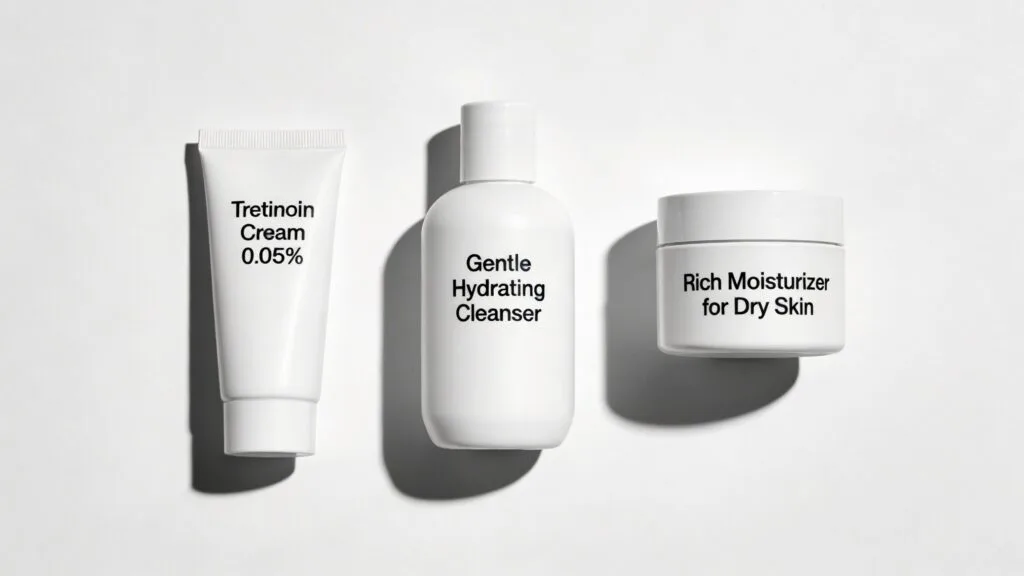
Before you ever touch tretinoin to your face, your supporting products matter more than most prescribing doctors have time to explain.
Your cleanser needs to be completely free of exfoliating acids, fragrance, and active ingredients. Boring is better at this stage.
CeraVe Hydrating Cleanser , Vanicream Gentle Facial Cleanser , and La Roche-Posay Toleriane Hydrating Gentle Cleanser are the three I reach for consistently because they clean without stripping.
Your moisturizer needs to be ready on the same shelf as your tretinoin, because you will need it immediately. Look for ceramides, hyaluronic acid, and glycerin in the ingredients list. Avoid these in your moisturizer while starting tretinoin:
- Retinol or any other retinoid (redundant and irritating)
- Glycolic acid or salicylic acid (too much acid load on compromised skin)
- Fragrance or essential oils (sensitizing when your barrier is adjusting)
- Alcohol is high up in the ingredient list (drying)
Tretinoin Cream, Gel, Microsphere: Which One Do You Have?
Creams are the most commonly prescribed form and suit normal-to-dry skin best.
Gels absorb faster and work better for oily or acne-prone skin, but can be more drying.
Microsphere formulations (such as tretinoin microspheres or Retin-A Micro) release the active ingredient gradually and tend to cause less irritation, making them a useful option for people who struggle with the standard cream.
If you are unsure which formulation you have, check your prescription label.
Your SPF is Not Optional Once You Start Tretinoin
Tretinoin accelerates cell turnover, which means newer skin cells are sitting closer to the surface. Those cells burn faster and are more easily damaged.
Use SPF 30 or higher every single morning from day one of your tretinoin routine.
How to Apply Tretinoin: Step by Step
Follow this sequence exactly, especially in your first three months.
Step 1: Wash your face with your gentle cleanser . Use lukewarm water, work the cleanser in for about 30 seconds, and rinse thoroughly.

Step 2: Pat your skin dry with a clean towel and then wait . This is the step people skip, and it causes the most irritation.
Wait a full 20 to 30 minutes before applying tretinoin.
Applying tretinoin to even slightly damp skin increases absorption significantly, which, for most people in their first weeks, means redness, peeling, and the kind of irritation that makes them quit. Set a timer.
Step 3: Dispense a pea-sized amount of tretinoin . One small pea covers an entire face when applied correctly. Using more does not get you results faster.
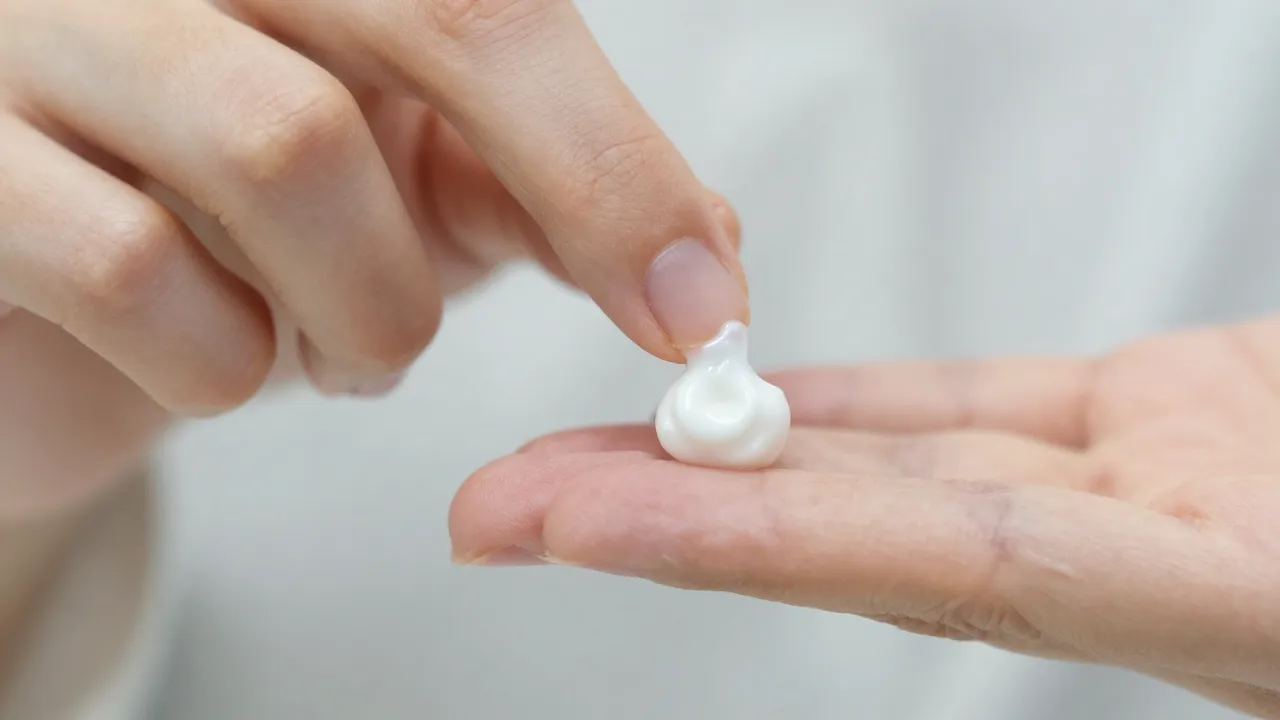
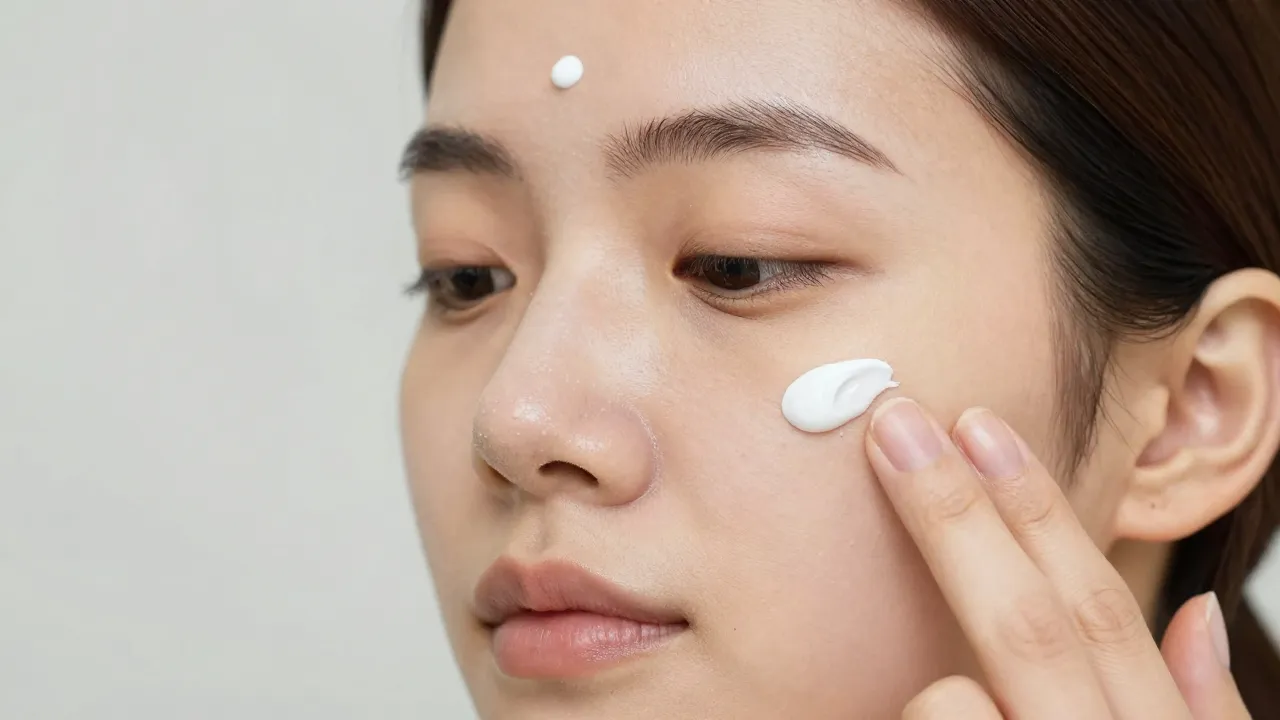
Step 4: Dot the product across your face in four to five spots : forehead, left cheek, right cheek, chin, and optionally the nose. Blend outward from each dot using gentle, light strokes.
Keep it at least a half inch away from the corners of your eyes, the corners of your nose, and your lip line.
These areas are thinner-skinned and absorb far more product than the rest of your face.
Step 4b (optional): Once your skin has adjusted after three or more months, you can extend a small amount down your neck and across the backs of your hands.
These areas age visibly and respond well to tretinoin. Use the same pea-sized amount for the face; do not add more product just because you are covering a larger area.
Step 5:Wait another 20 minutes before layering anything on top . This allows the tretinoin to settle before you dilute it with a moisturizer.
If you have sensitive skin or are in your first four weeks, skip this wait and go straight to your moisturizer.
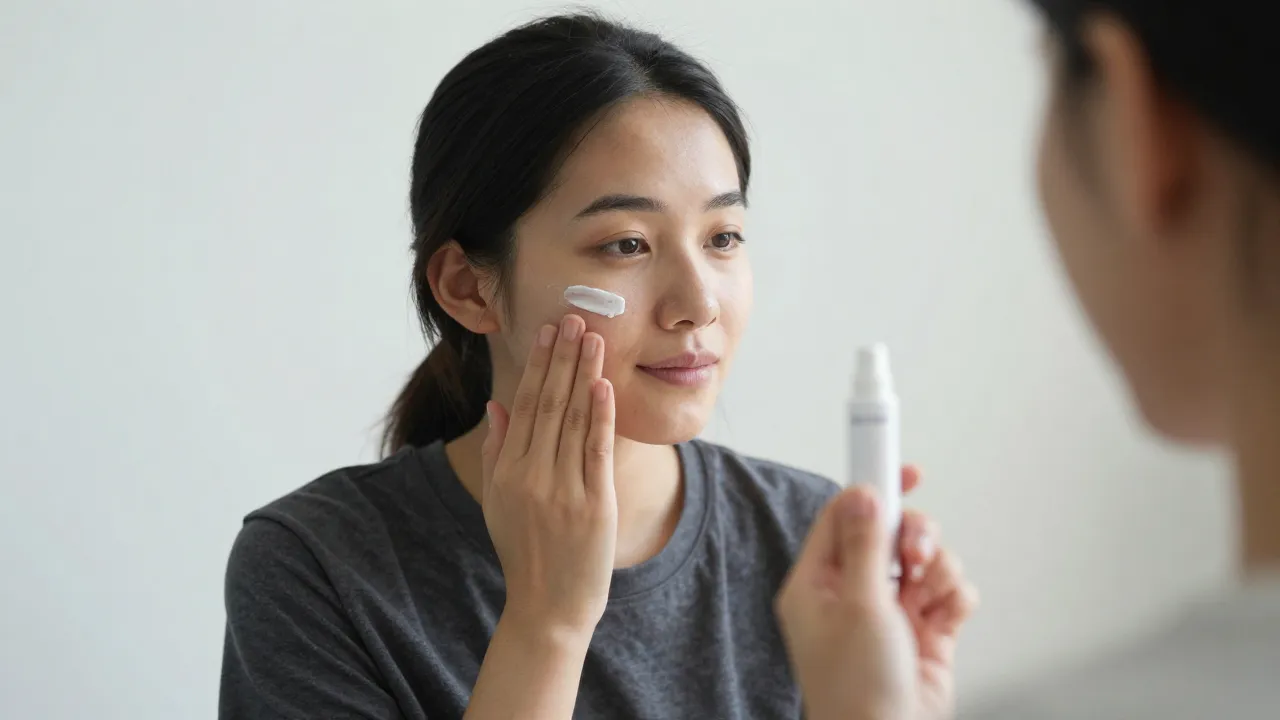
Step 6: Apply your moisturizer . Use a generous amount.
Tretinoin Before or After Moisturizer: Three Methods Explained
This is the question I get more than almost any other, and the answer depends on where you are in your skin’s adjustment process.
There are three methods, and each has a real place in a real routine.
Method 1: Moisturizer After Tretinoin (The Standard Approach)
Apply tretinoin to completely dry skin, wait 20 minutes, and then apply your moisturizer. This delivers the most direct skin contact with the active ingredient.
I recommend this for clients who are at least three months into their tretinoin routine and whose skin has adjusted without significant flaking or redness.
Method 2: Moisturizer Before Tretinoin (The Buffer Method)
Apply your moisturizer first, wait 15 minutes for it to absorb, and then apply tretinoin on top.
The moisturizer creates a mild barrier that slows absorption slightly, which translates to noticeably less irritation for most beginners.
A 2021 clinician’s guide to topical retinoids published in the Journal of Cutaneous Medicine and Surgery supports using a moisturizer-first approach to reduce irritation without meaningfully compromising effectiveness, making it a legitimate starting point rather than a workaround.
I used this method with a client who had rosacea and had failed two previous attempts at tretinoin due to redness and stinging.
We started her on the buffer method at 0.025%, and she stayed on it consistently for six months. That consistency is what built her results.
Method 3: The Sandwich Method
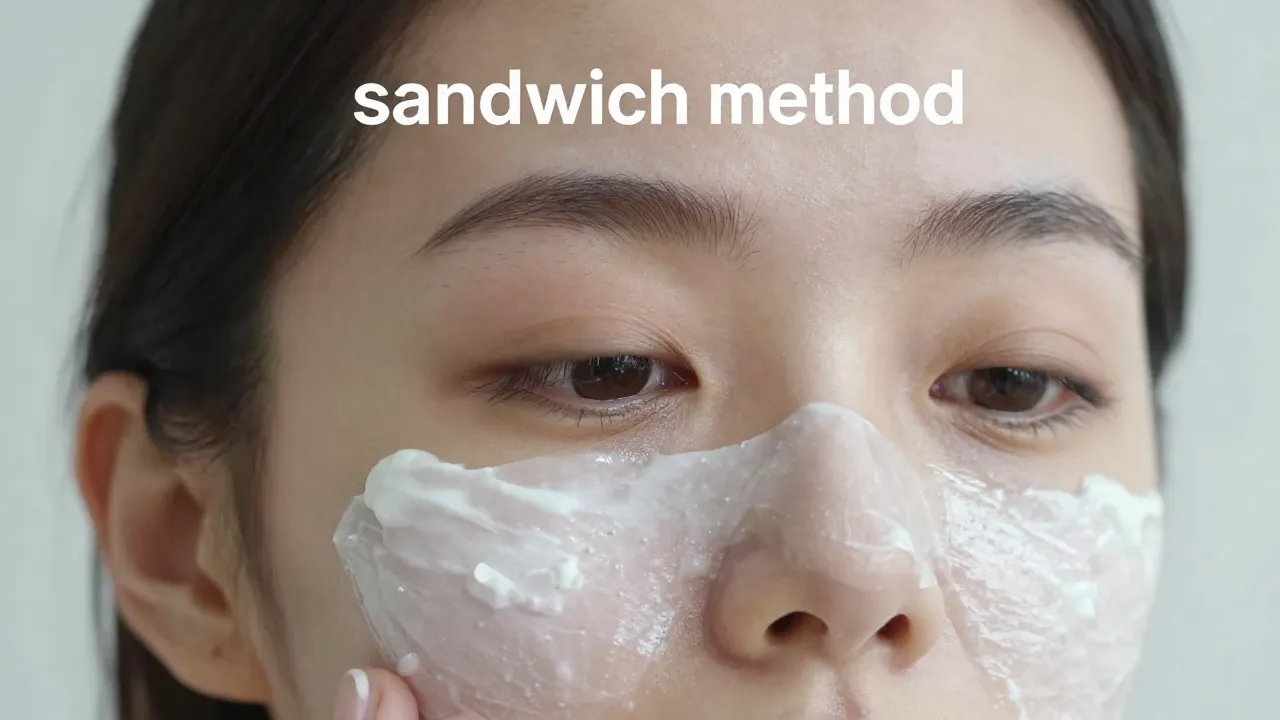
Moisturizer first, then tretinoin, then moisturizer again.
This is the method I recommend for anyone who has previously quit tretinoin because of irritation, anyone with a compromised skin barrier, and almost everyone in their first four to eight weeks.
Here is the piece of information that the skincare community does not talk about enough: the sandwich method does reduce how much tretinoin penetrates the skin.
Research presented at the 2025 AAD Annual Meeting found that full sandwiching reduced tretinoin’s bioactivity approximately threefold compared to applying it directly to dry skin (conference presentation, AAD Annual Meeting, March 2025). That sounds alarming until you consider the practical reality.
“Staying on tretinoin at 30% absorption is more effective than quitting at 100% absorption.”
Start with the sandwich, let your skin adjust over eight to twelve weeks, and then graduate to the buffer method or the standard approach when your skin is ready.
| Method | Who it’s for | Irritation level | Effectiveness |
|---|---|---|---|
| Moisturizer after (standard) | 3+ months in, adjusted skin | Higher | Maximum |
| Moisturizer before (buffer) | Beginners, sensitive skin | Moderate | High |
| Sandwich method | Very sensitive, compromised barrier, previous quitters | Lowest | Moderate |
| Mixed into moisturizer | Highly reactive skin, lowest-irritation option | Lowest | Moderate-Low |
How Often to Apply Tretinoin: The Ramp-Up Schedule
Tretinoin is not a product that rewards aggression. The clients I have seen get the best long-term results are the ones who treated the first three months as a slow build, not a sprint.
Here is the schedule I use with every new tretinoin client:
- Weeks 1 to 2: Apply two nights per week. Pick non-consecutive nights, like Monday and Thursday. Your skin needs recovery time between applications.
- Weeks 3 to 4: Move to every other night if your skin is tolerating the twice-weekly applications without significant peeling or redness.
- Weeks 5 to 8: Apply four to five nights per week if your skin continues to adjust well.
- Week 8 and beyond: Nightly application is the goal for most people. Some people with sensitive skin stay at every other night indefinitely, and that is a completely valid long-term approach.
The purge is real. Between weeks two and four, many people experience increased breakouts, flaking, and redness.
This is tretinoin accelerating cellular turnover and pushing existing congestion to the surface faster than it would have emerged on its own. It is not a sign the product is wrong for you.
About 80% of the clients who text me during the purge phase can be helped by adjusting application method or frequency and stay on it.
The other 20% needed a genuine break, but even those clients came back after their barrier recovered.
What to Use and What to Avoid on Tretinoin Nights
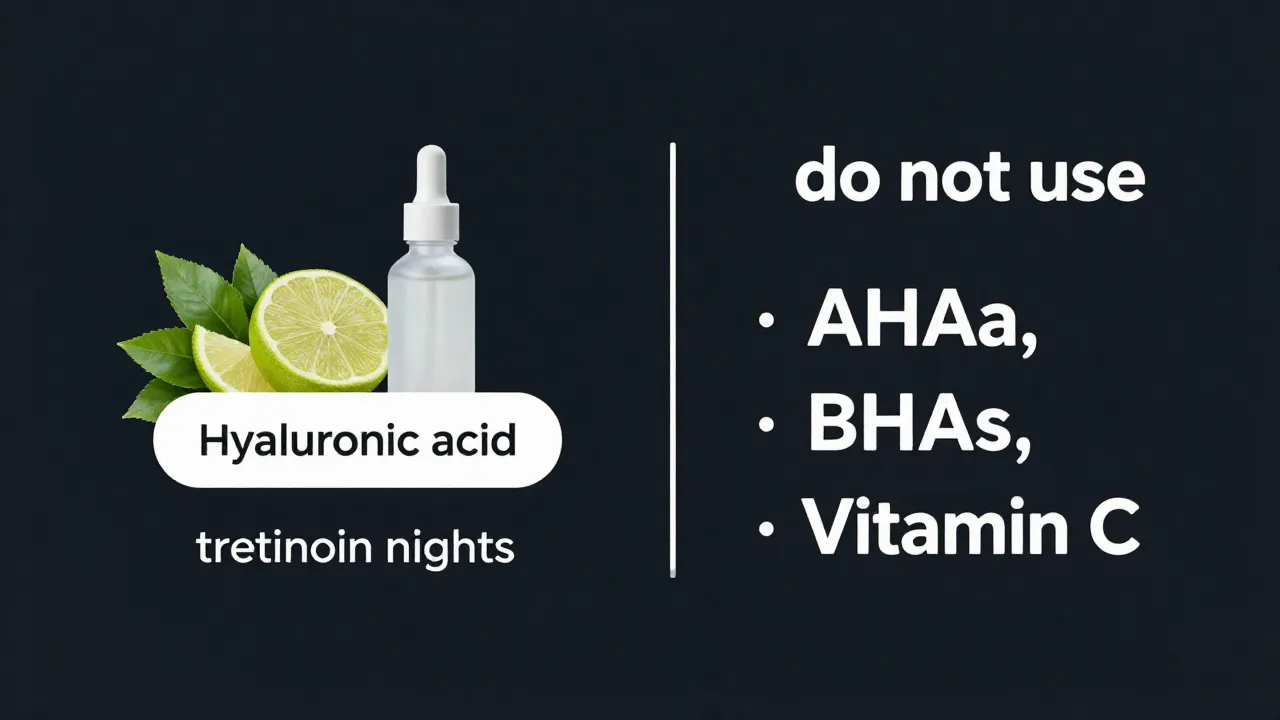
One of the biggest mistakes I see is people continuing their full active-ingredient routine on tretinoin nights. Tretinoin is already working hard on your skin.
Layering additional actives on the same night creates a compounding irritation load that your barrier cannot always handle, especially in the beginning.
Avoid these on the same night as tretinoin:
- Glycolic acid, lactic acid, or any AHA
- Salicylic acid or any BHA
- Benzoyl peroxide (it can oxidize tretinoin and reduce its effectiveness)
- Vitamin C serums (save these for your morning routine where they pair better with SPF)
- Physical exfoliants or scrubs
- Alcohol-based toners
- Any other retinoid product
These ingredients are safe to use alongside tretinoin:
- Hyaluronic acid serums, applied after tretinoin and before or instead of moisturizer
- Niacinamide, which helps buffer irritation and supports your barrier during adjustment
- Ceramide-rich moisturizers
- Peptide serums layered on top
One thing worth flagging specifically: Azelaic acid. It is one of the most frequently asked-about combination questions I receive, and it deserves more than a bullet point. I have covered the full answer in the azelaic acid and tretinoin guide on this site, which I recommend reading before you try combining the two. |
What to Expect in the First Three Months of Using Tretinoin
Expectations matter enormously with this ingredient because the results do not come fast.
The adjustment period is uncomfortable enough that people quit right before they would have seen a change.
- For acne: Clinical improvement typically appears within eight to twelve weeks of consistent use. You may see the purge before you see the clearing. Stick through it.
- For anti-aging and texture: The visible effects on fine lines, skin texture, and firmness build over three to six months. At three months, you might notice your skin looks smoother in certain light. At six months, you will notice it in every light.
- Tretinoin for hyperpigmentation: Tretinoin accelerates cell turnover, which means pigmented cells shed faster. Improvement typically begins appearing around the twelve-week mark, but meaningful change in deeper pigmentation takes longer.
| Timeframe | What most people experience |
|---|---|
| Weeks 1 to 4 | Dryness, possible flaking, potential purge breakouts |
| Weeks 4 to 8 | Redness settling, skin beginning to adjust |
| Weeks 8 to 12 | Smoother texture starting to appear, active breakouts reducing |
| Months 3 to 6 | Visible improvement in tone, texture, and clarity |
| 6 months and beyond | Continued improvement, results compounding with consistent use |
Your Daytime Routine on Tretinoin
Your nighttime routine gets all the attention, but what you do in the morning matters just as much for protecting everything tretinoin is building overnight. Keep your morning routine genuinely simple, especially in your first three months.
- Cleanser: A gentle, non-stripping cleanser or even just a rinse with lukewarm water. Your skin does not need heavy cleansing in the morning.
- Moisturizer: Apply a moisturizer with ceramides and hyaluronic acid to support your barrier through the day.
- SPF: A broad-spectrum SPF 30 at minimum, every single morning. Tretinoin thins the stratum corneum, the outermost layer of skin, and makes you significantly more vulnerable to UV damage. Skipping SPF while using tretinoin is one of the few things that can actively undermine your results.
What to skip in the morning while adjusting:
- Vitamin C serums until your barrier has stabilized (introduce them after week eight if you want to)
- AHAs or BHAs
- Physical exfoliants
Also, avoid waxing, chemical peels, and laser treatments on any area of your face where you are applying tretinoin, at least for the duration of your initial adjustment period.
Frequently Asked Questions
Can I use tretinoin every night from the very start?
Not recommended. Starting nightly before your skin has adjusted almost always causes irritation severe enough to make people quit. Follow the ramp-up schedule, it significantly improves your chances of staying on it long enough to see results.
Tretinoin before or after moisturizer, which is correct?
It depends on your skin’s tolerance. Beginners should use the buffer or sandwich method (moisturizer first). Once adjusted after three or more months, apply tretinoin to dry skin before moisturizer for maximum contact. Full breakdown is in the “Three Methods” section above.
Can I use tretinoin in the morning?
No. Tretinoin breaks down in UV light and is more sensitizing during daylight hours. Always apply it at night.
How long until I see results?
Expect eight to twelve weeks minimum for meaningful change. Six months is the realistic benchmark for anti-aging or pigmentation goals.
What happens if I miss a night?
Nothing significant. Just resume your normal schedule the following night. Tretinoin works through long-term consistency, not a single application.
Is tretinoin safe during pregnancy or breastfeeding?
No. Tretinoin is not recommended during pregnancy or breastfeeding. Speak with your prescribing doctor before starting or continuing it. Alternatives are available.
What concentration of tretinoin should I start with?
Start at 0.025%, the lowest commonly prescribed strength. After about six months, discuss moving to 0.05% with your prescriber. Higher concentration does not mean faster results when your skin is not yet ready for it.
Final Thoughts
Tretinoin is one of the most evidence-backed skincare ingredients available, but technique is what separates results from irritation.
Dry skin, pea-sized amount, the right layering method for where your skin is right now, and SPF every morning without exception. That is the whole system.
The clients who stay consistent through the first three months are the ones who look back at six months and understand why it was worth it.