
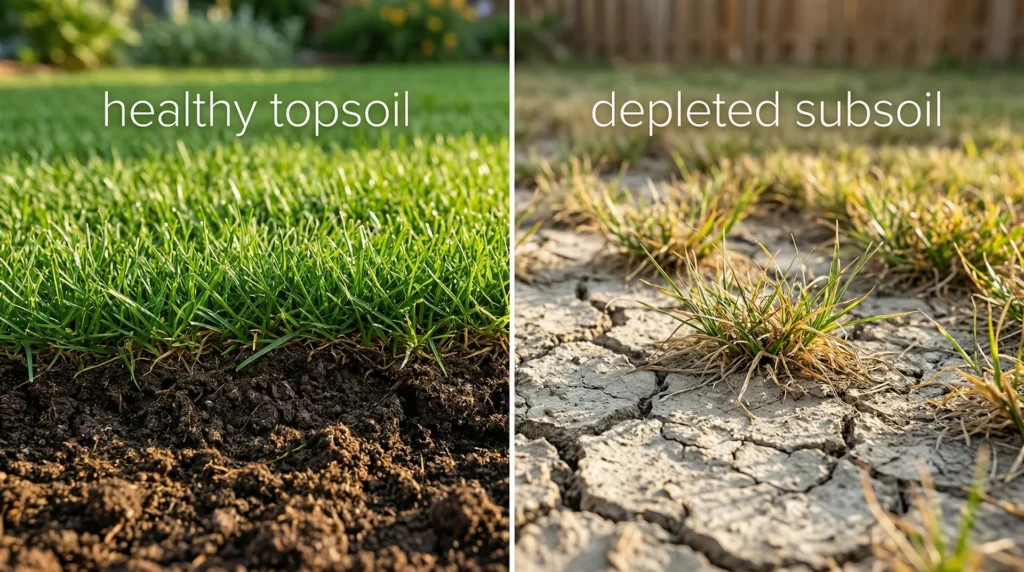
Every spring, I walk through a client’s backyard, and I see the same frustrated look on their face. The grass grows in patches, the soil feels like cracked ceramic underfoot, and no amount of watering makes any visible difference.
I have seen this scenario play out across dozens of residential gardens, and almost every time, the answer lives beneath the surface.
Here is the short answer if you need it immediately:
| For grass, use a screened, loam-based topsoil with at least 5% organic matter, a pH between 6.0 and 7.0, and good drainage. Spread it a quarter to half an inch thick over an existing lawn, or lay 4 to 6 inches deep for a new installation. That single change will noticeably shift what your grass does over the next growing season. |
If you want to understand why it works and how to get it right for your specific yard, the details in this guide will walk you through everything I apply across every project I take on.
What Topsoil Actually Does for Grass
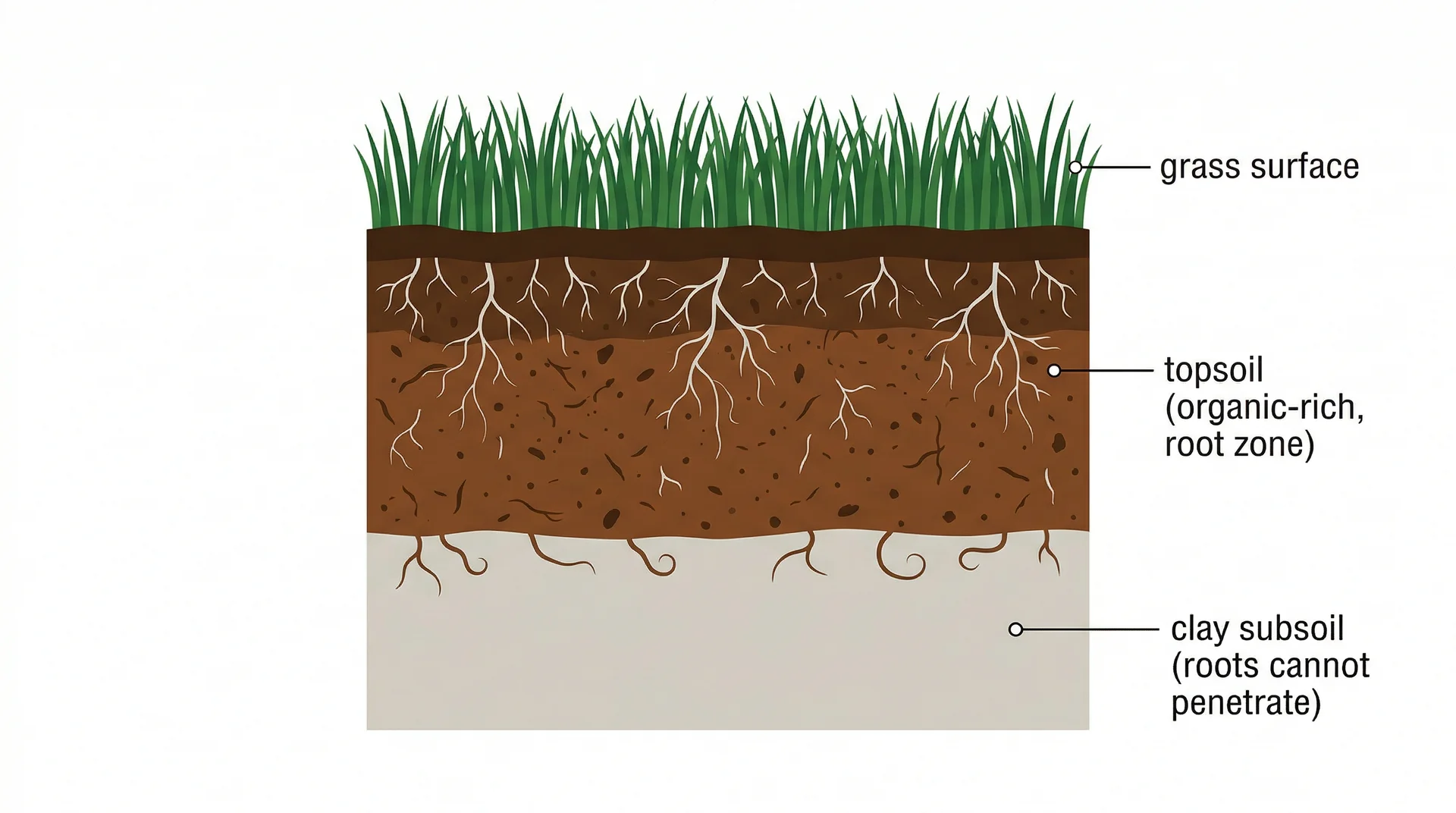
Topsoil is the uppermost layer of soil, usually sitting 2 to 8 inches deep, and it holds the highest concentration of organic matter, minerals, and microbial life in your entire yard. It does three things for grass that no surface-level fix can replicate.
It feeds the root system. Grass pulls nitrogen, phosphorus, potassium, and trace minerals from this layer every day. When topsoil is thin, compacted, or depleted, roots simply cannot access what they need to stay dense and green.
It manages water. Good topsoil absorbs rainfall, holds enough moisture to keep roots hydrated through dry spells, and drains the excess before roots sit in waterlogged conditions.
I worked on a townhouse garden where the client had fought moss and yellow patches for three years.
The soil beneath was pure clay subsoil with barely an inch of actual topsoil over it. We added 4 inches of blended topsoil, and within one growing season, the lawn transformed completely.
It sustains a living ecosystem underground. A single teaspoon of healthy topsoil contains between 100 million and 1 billion bacteria, alongside fungi, protozoa, and earthworms working in complex relationships with your grass roots.
When you starve or compact this ecosystem, your grass reflects it immediately.
Research confirms that soils with higher organic matter and greater microbial diversity consistently produce stronger, denser turfgrass with better drought tolerance than chemically fertilised soils with depleted biology.
Topsoil vs. Garden Soil vs. Compost: Which One Does Your Lawn Actually Need?
This is the question I get asked most often, and the confusion is completely understandable because garden centres stack these products next to each other with minimal explanation.
| Product | What It Is | Best Use for Grass |
|---|---|---|
| Topsoil | The natural upper soil layer, screened and sold as-is or blended | Top-dressing, new lawn base, levelling |
| Garden Soil | A manufactured growing medium, often with bark, peat, or fertiliser added | Beds and borders are not ideal for lawns |
| Compost | Fully decomposed organic material, highly fertile | Amendment blended into topsoil, not used alone |
| Topsoil and Compost Blend | Pre-mixed combination | Best all-round choice for lawn improvement |
For grass specifically, topsoil is your primary material. Compost improves it. Garden soil is often too light and free-draining to hold a stable lawn surface and can contain bark pieces that interfere with mowing.
I blend topsoil with about 25 to 30% compost on most residential projects where I want to accelerate soil improvement without the cost of a premium blended product.
Reading Your Lawn Before You Buy Anything
Before you order a single bag or cubic yard of topsoil, spend twenty minutes diagnosing what is happening beneath the surface. Buying topsoil without this step is like taking medication without knowing what is wrong.
Signs Your Soil Needs Attention
| What You See | What It Usually Means |
|---|---|
| Patchy, thin grass in random spots | Inconsistent soil depth or nutrient deficiency |
| Grass is yellowing despite regular watering | pH imbalance or nitrogen deficiency |
| Water pooling after light rain | Compaction or clay-heavy subsoil |
| Moss spreading across the lawn | Excessive moisture, low pH, low fertility |
| Lawn feels spongy underfoot in spring | Thatch buildup over depleted soil |
| Bare patches near borders | Shallow topsoil depleted by root competition |
| Weeds thriving where grass struggles | Compaction or disturbed soil ecology |
If you recognise three or more of these, address the soil before anything else you do will hold.
Do a Soil Test First
A basic soil test costs between $15 to $25 in the US, and it tells you your soil’s pH, nitrogen, phosphorus, potassium, and organic matter percentage. Your local cooperative extension office or garden centre can usually process one within a week.
What you learn from that test shapes every decision afterward. I have had clients skip this step, buy expensive topsoil blends, and watch their grass stall within a season because the pH was incompatible with the existing soil. Fifteen minutes and twenty pounds of testing saves that outcome reliably.
Matching Topsoil to Your Soil Type
Your existing soil type determines which topsoil works best and what amendments to combine it with. Getting this wrong is one of the most common causes of poor results, even when homeowners buy decent-quality topsoil.
| Existing Soil Type | Problem for Grass | Best Topsoil Match |
|---|---|---|
| Heavy clay | Poor drainage, compaction, and waterlogging | Sandy loam topsoil, aerate before applying |
| Sandy soil | Dries too fast, nutrients leach quickly | Loam topsoil high in organic matter (8%+) |
| Chalky soil | High pH, nutrient lockout | Acidic-tending loam, add sulphur amendment |
| Loam (balanced) | Usually good, may need a fertility boost | Standard screened loam or blended lawn mix |
| Compacted subsoil exposed | Very low fertility, almost no biology | Deep topsoil installation (4 to 6 inches minimum) |
For clay soils specifically, I always aerate before applying topsoil because spreading topsoil over compacted clay without aeration means the material sits on top rather than integrating with the soil profile below.
The roots hit the clay layer and stop, and you end up with a shallow, drought-prone lawn regardless of topsoil quality.
Choosing the Right Topsoil: What to Look For
The Three Types You Will Encounter
Screened Topsoil: Topsoil passed through a mesh (typically 10mm or 15mm for lawn use) to remove stones, roots, and debris. This is the most consistent material for top-dressing and overseeding. It integrates well with existing lawns and creates a clean seedbed. For most residential lawn projects, this is my default recommendation.
Blended Topsoil or Lawn Mix: A pre-mixed combination of screened topsoil, composted bark, and sometimes horticultural grit. These perform exceptionally well for top-dressing because the organic content is already partially decomposed and immediately available to soil biology. Always check the organic matter percentage on a blended product. Anything below 3% delivers limited long-term benefit. Aim for 5 to 8%.
Bulk or Unscreened Topsoil: Cheaper and practical for large-scale projects where you need volume to build soil depth from scratch. I use it for building up levels or filling large areas, then finish with a layer of screened topsoil as the growing medium. For existing lawns, screened is always the better choice.
What to Ask Your Supplier
| Factor | Recommended Target / Standard | Why It Matters |
|---|---|---|
| Organic Matter Content | 5% – 8% | Improves soil fertility, moisture retention, and microbial activity |
| pH Level | 6.0 – 7.0 | Ensures optimal nutrient availability for most grass types |
| Texture | Loam (ideal); avoid pure sand or clay | Loam balances drainage and moisture retention; extremes cause growth issues |
| Source | Locally sourced topsoil preferred | Better matches regional soil chemistry and climate conditions |
| Certification | BS 3882:2015 (UK); soil analysis certificate (US) | Confirms soil quality, safety, and suitability for landscaping use |
I once ordered topsoil from an unverified clearance supplier to save money, and the client spent most of the following summer pulling bindweed and couch grass. The material was loaded with weed seeds. Verified topsoil from a reputable source is worth every extra pound or dollar spent.
A Note on Weed Risk
Unverified topsoil is one of the most common ways persistent weeds enter a garden. Good suppliers screen their topsoil and can provide certification confirming low weed seed presence.
If you source topsoil from a clearance sale, a construction site, or an unlicensed supplier, you are taking a genuine risk that can cost far more to fix than the money you saved on the material.
How Much Topsoil Do You Need?
Coverage Formula
For top-dressing an existing lawn at 0.25 inches (6mm): Multiply your lawn area in square metres by 0.006 to get cubic metres needed.
For a new lawn at 4 inches (10cm) deep: Multiply your lawn area in square metres by 0.10 to get the cubic metres needed.
For a new lawn at 6 inches (15cm) deep: Multiply your lawn area in square metres by 0.15 to get the cubic metres needed.
Quick reference:
| Lawn Size | Top-Dressing (0.25 inch) | New Lawn (4 inches) | New Lawn (6 inches) |
|---|---|---|---|
| 20 sqm | 0.12 cubic metres | 2 cubic metres | 3 cubic metres |
| 50 sqm | 0.30 cubic metres | 5 cubic metres | 7.5 cubic metres |
| 100 sqm | 0.60 cubic metres | 10 cubic metres | 15 cubic metres |
| 200 sqm | 1.20 cubic metres | 20 cubic metres | 30 cubic metres |
Most topsoil suppliers also provide online calculators. I use them as a quick sanity check before confirming any order.
How to Apply Topsoil to Your Lawn the Right Way
Can You Put Topsoil Over Existing Grass Without Killing It?
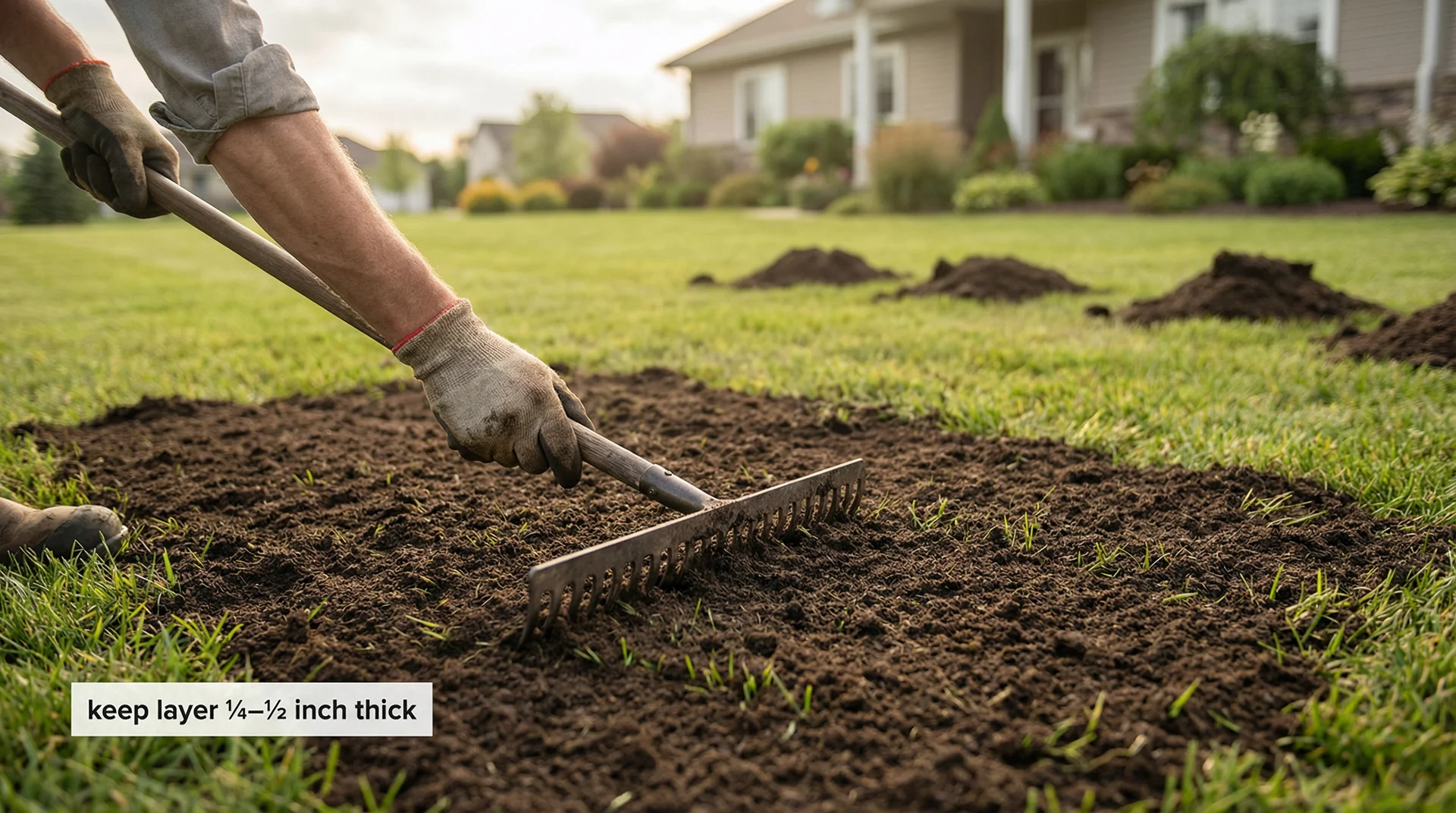
Yes, and this is one of the most searched questions around this topic for good reason. You can apply topsoil over existing grass without killing it, but only if you keep the layer thin. A quarter to half an inch is the safe range.
Go beyond that, and you block light from reaching the grass blades, and the existing turf suffocates before the new roots establish.
Early in my career, I applied a generous 2-inch layer of topsoil on a client’s lawn renovation, thinking more would deliver better results faster.
Within three weeks, large sections of the existing grass beneath had yellowed and died from lack of light. Keep it thin on established lawns, always.
Top-Dressing an Existing Lawn: Step by Step
Step 1: Mow the lawn short. Cut your grass down to 1 to 1.5 inches before you start. This gives the topsoil better contact with the soil beneath the grass canopy.
Step 2: Scarify out any thatch. If your lawn has a thick spongy layer between the grass blades and the soil surface, remove it with a scarifier or firm rake before adding topsoil. Topsoil over heavy thatch will not reach the soil where it can do its job.
Step 3: Aerate compacted areas. Run a hollow-tine aerator over compacted sections first. The holes allow topsoil to move directly into the soil profile, delivering organic matter and nutrients right at the root level. This step made a visible difference on a project in Surrey where the lawn had been used as a play area for years and was compacted solid.
Step 4: Spread the topsoil. Tip topsoil onto the lawn in small heaps, then use a landscape rake or the back of a flat spade to spread it evenly. Keep the layer between a quarter and half an inch thick.
Step 5: Work it in. Use a stiff brush or rake to work the topsoil down into the grass so it reaches the soil level. Grass tips should still be visible above the topsoil layer when you finish.
Step 6: Overseed and water. Scatter grass seed over bare or thin patches now while conditions are ideal, then water gently to help the topsoil settle and activate germination.
How Deep Should Topsoil Be for Grass Seed on a New Lawn?
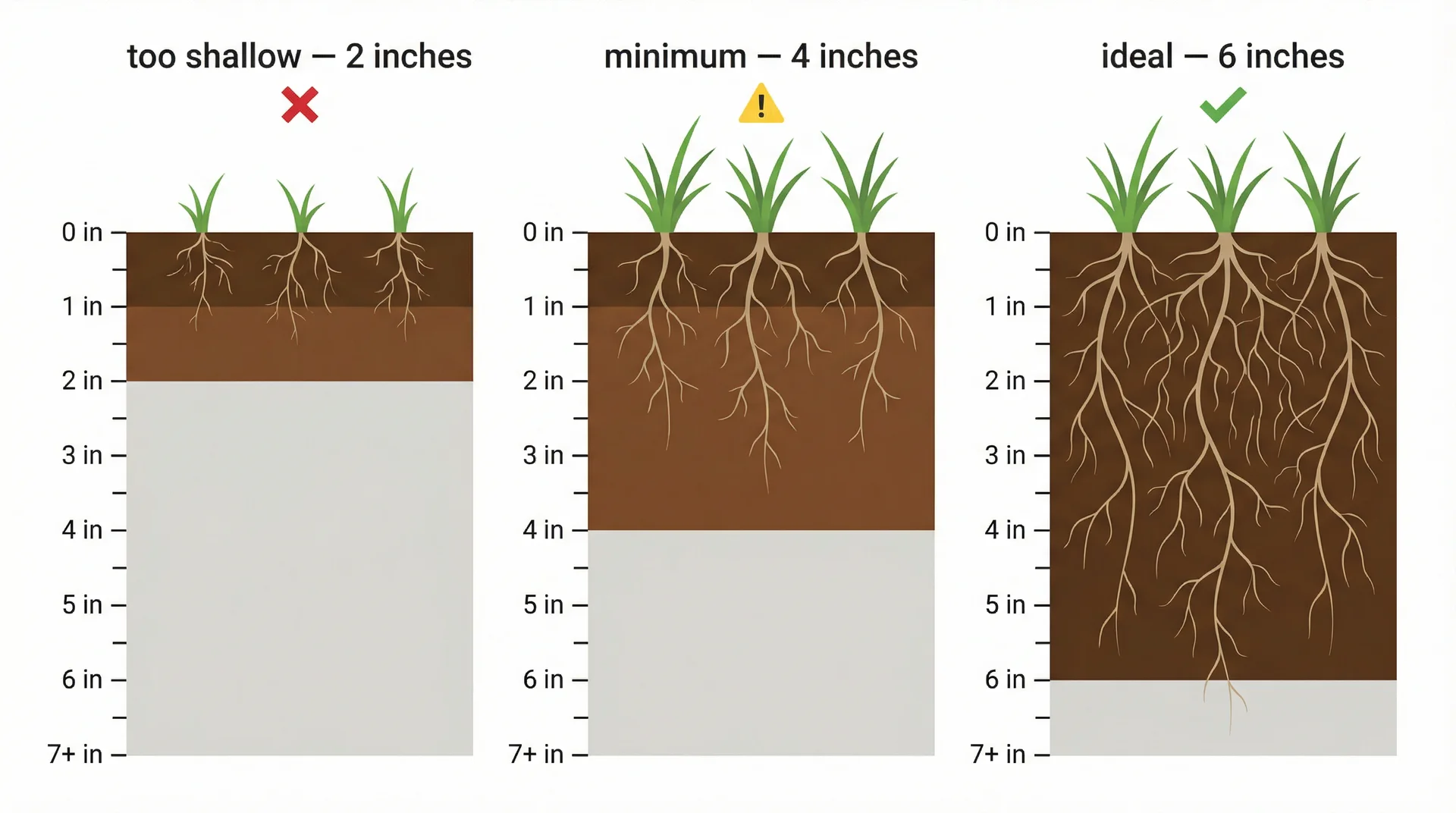
For seeding a brand new lawn, the target depth is a minimum of 4 inches and ideally 6 inches of quality topsoil.
This depth gives roots the room and resources to establish deeply, which directly determines how drought-tolerant and resilient your lawn becomes over the following years.
Grass seeded into less than 3 inches of topsoil will establish initially, but will struggle through its first drought because the roots hit the impoverished subsoil beneath and cannot go further.
I have seen this exact pattern on multiple new-build properties where developers lay turf over minimal topsoil, and the lawn looks fine for one season before deteriorating.
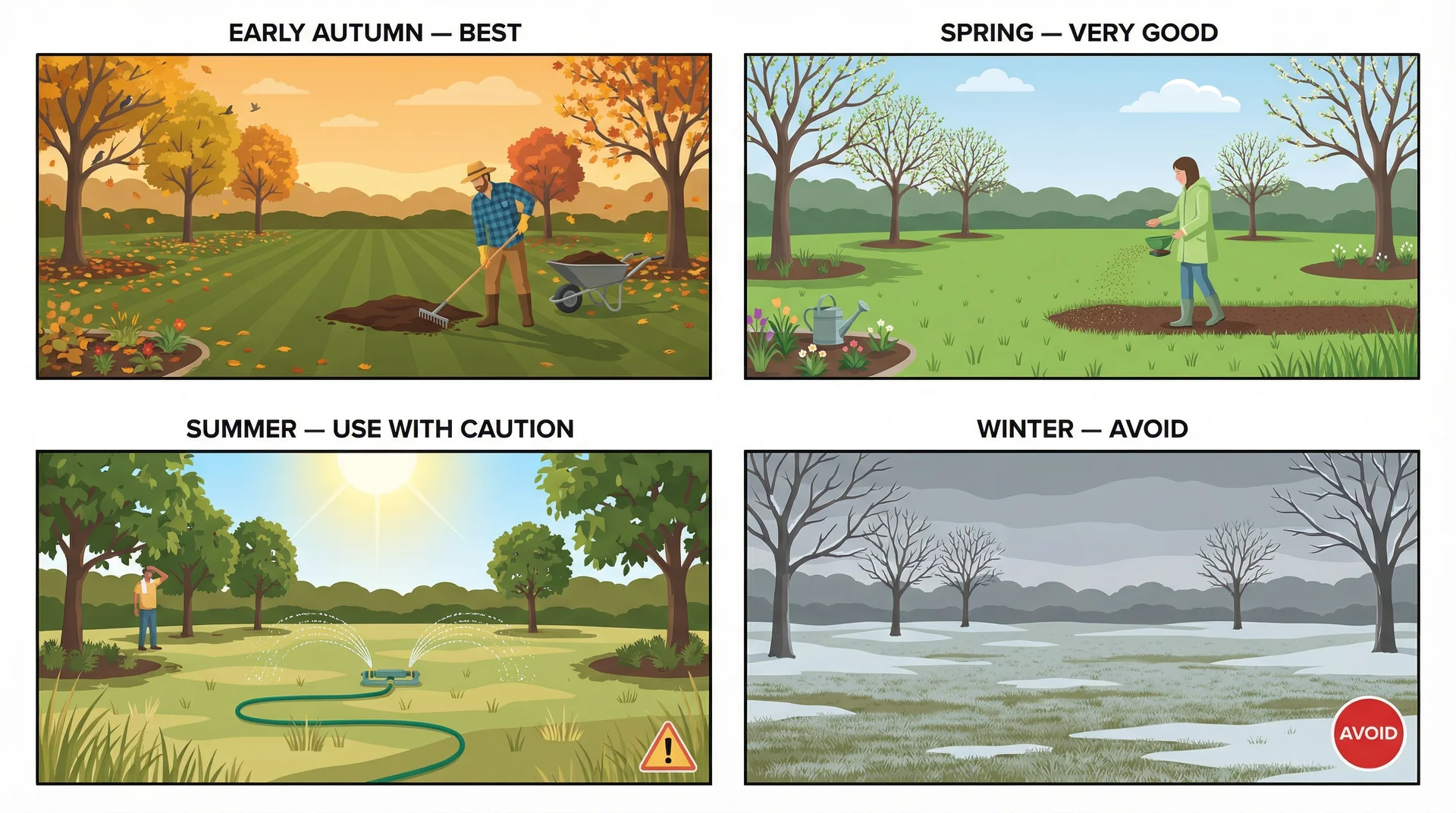
Best Time to Apply Topsoil for Grass
| Season | Suitability | Why |
|---|---|---|
| Early Autumn (Sep to Oct) | Best overall | Soil is warm, grass is active, and moisture returns naturally |
| Spring (Mar to Apr) | Very good | Active growth helps grass recover quickly |
| Summer | Use with caution | Works with consistent irrigation, heat stress risk on seedlings |
| Winter | Avoid | Cold soil slows integration, waterlogging risk |
DIY Topsoil Blend for Lawn Use
If you want to blend your own topsoil rather than buy a pre-mixed product, here are the ratios I use across projects depending on the goal:
| Goal | Blend Ratio |
|---|---|
| General top-dressing | 70% screened loam topsoil, 30% fine compost |
| Improving clay-heavy soil | 60% sandy loam topsoil, 25% compost, 15% horticultural grit |
| Improving sandy soil | 70% loam topsoil, 30% compost high in humus |
| New lawn seedbed | 65% screened loam, 35% fine compost or seedbed compost |
Mix the components thoroughly before spreading, and check the pH of your blend before application. The combination of loam and compost consistently outperforms either material used alone.
The Soil Biology Nobody Talks About
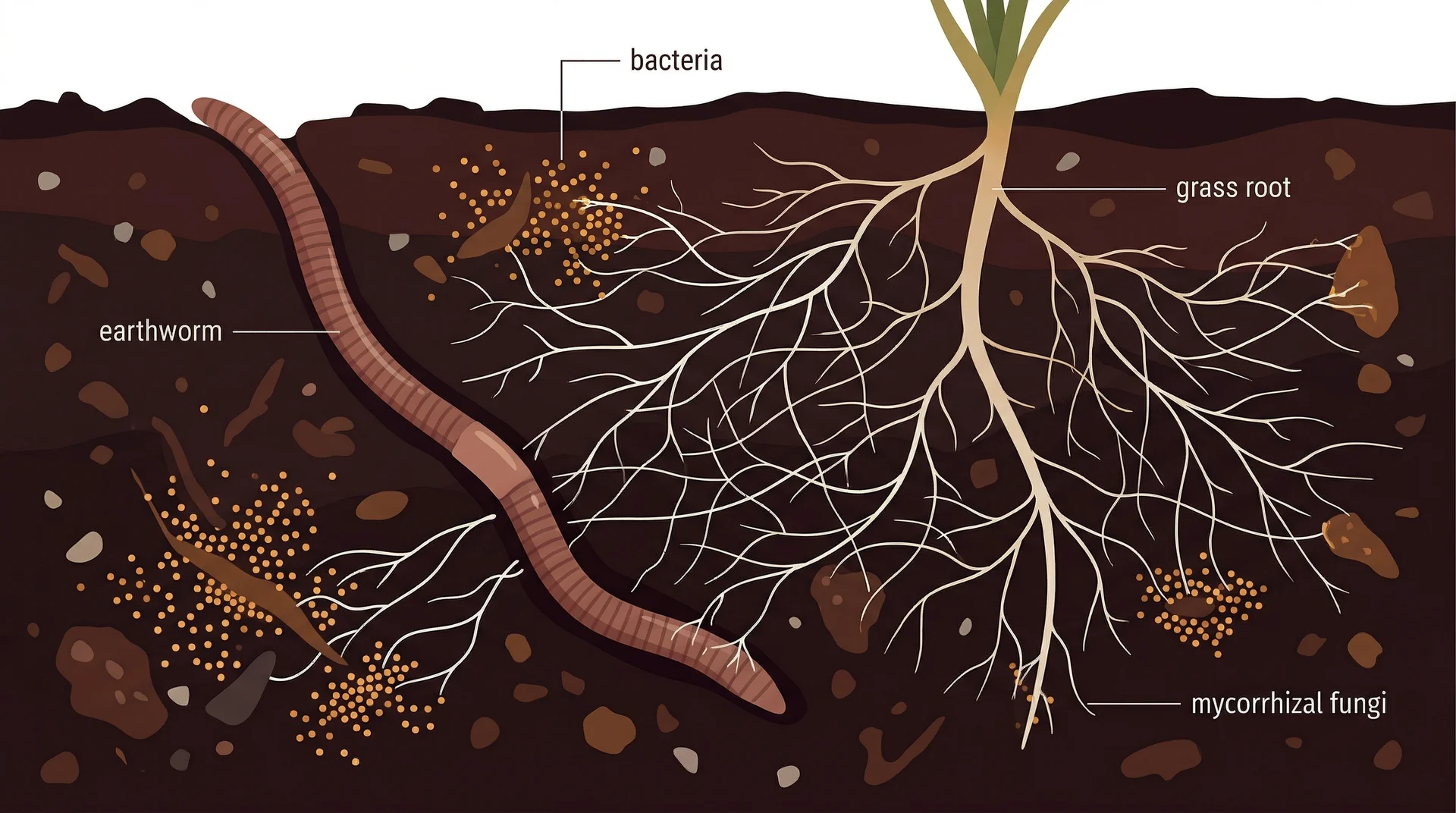
Healthy topsoil is alive in a literal sense. The key players in your topsoil ecosystem include:
- Bacteria that break down organic matter and fix atmospheric nitrogen into plant-available forms
- Mycorrhizal fungi that form networks with grass roots and dramatically extend their water and nutrient absorption range
- Earthworms that create drainage channels and deposit nutrient-rich castings throughout the soil profile
- Protozoa and nematodes that graze on bacteria and release nutrients in forms that the grass can immediately use
When you consistently add organic-rich topsoil and avoid over-applying synthetic chemicals, you feed this community. They, in return, feed your grass.
This principle guides most of my sustainable design recommendations for residential outdoor spaces because the results speak clearly over a three to five-year timescale.
Lawns that receive annual top-dressings of organic-rich topsoil look noticeably better by year three or four than comparable lawns maintained only on synthetic fertilisers.
Common Mistakes to Avoid
Applying too much at once. On existing lawns, keep the layer between a quarter and a half an inch. Anything beyond that risks smothering the grass before the topsoil integrates.
Using topsoil with an incompatible pH. A project I remember clearly involved a limestone-rich area where the natural soil sat at pH 7.5. The homeowner had sourced acidic topsoil at pH 5.5 before I arrived. Applying it directly would have created a pH mismatch that stressed the lawn for years. We blended it with lime-adjusted compost before spreading. Always check the pH of any topsoil before you spread it.
Ignoring drainage problems before applying topsoil. Topsoil over a waterlogged base can make things worse by creating a perched water table above an impermeable layer. If water pools consistently in your lawn, address drainage before adding topsoil.
Buying unverified, cheap topsoil. Unregulated topsoil can contain heavy metals, herbicide residues, construction debris, or heavy weed seed loads. Look for BS 3882:2015 certification in the UK or ask for a basic analysis certificate in the US.
Long-Term Care: Keeping Your Topsoil Healthy
Add organic matter every year. A thin layer of compost or well-rotted organic material applied each spring or early autumn sustains soil biology and prevents organic matter from declining through natural decomposition between topsoil applications.
Mow at the right height. Keep grass at 2.5 to 3 inches to encourage deeper root growth and shade the soil surface, reducing moisture loss and suppressing weed germination. Short mowing consistently produces weaker, shallower grass that cannot access the nutrition you have invested in building.
Water deeply and less frequently. Deep, infrequent watering sessions two to three times per week train roots downward into the richer soil layers you have created. Light daily watering keeps roots shallow and dependent on surface moisture, which fluctuates most.
Leave clippings on the lawn. Grasscycling returns a meaningful amount of nitrogen and organic matter to the soil with zero effort. Research from the University of Minnesota found this practice can supply up to 25% of a lawn’s annual nitrogen needs.
Aerate every one to two years. Annual or biennial aeration keeps soil structure open and prevents compaction. I aerate in early autumn before top-dressing on every lawn I manage regularly, and the difference in grass density and colour over multiple seasons is striking.
Season-by-Season Topsoil Maintenance Calendar
| Month | Task |
|---|---|
| February to March | Soil test to check pH and nutrient levels |
| April | Light compost top-dressing if autumn application was skipped |
| May to June | Monitor drainage, spot-aerate compacted areas |
| July | Deep watering during dry spells to maintain topsoil moisture |
| August | Source topsoil, plan overseeding ahead of the autumn window |
| September | Scarify, aerate, top-dress with screened topsoil, and overseed |
| October | Final mow before growth slows, apply organic matter if needed |
| November to January | Allow soil to rest, limit foot traffic on wet ground |
Frequently Asked Questions
How much topsoil do I need for grass?
For top-dressing at a quarter-inch depth, multiply your lawn area in square metres by 0.006 to get the cubic metres needed. For new lawns at 4 to 6 inches deep, multiply your area by 0.10 to 0.15.
Can I put topsoil directly over dead grass?
I advise against it. Dead grass creates a barrier that prevents topsoil from contacting the existing soil, which stops proper integration and encourages fungal issues. Scarify or remove the dead material first, then apply topsoil.
How long does it take to see results after applying topsoil?
On an existing lawn, visible improvement in grass colour and density typically appears within 4 to 8 weeks during the active growing season. Soil structure improvements build over one to two full growing seasons.
What is the best topsoil for overseeding?
A fine screened loam or purpose-blended seedbed compost works best because the fine texture allows good seed-to-soil contact. Coarse topsoil leaves air gaps around seeds that reduce germination rates significantly.
Is topsoil or compost better for grass?
Use both. Topsoil provides the primary growing medium and structural foundation. Compost improves fertility and feeds soil biology. Blending the two, roughly 70% topsoil to 30% compost, consistently delivers better results than either material used alone.
What topsoil depth do I need for grass seed?
A minimum of 4 inches, with 6 inches as the ideal target for new lawn installations. Less than 3 inches of topsoil over compacted subsoil produces grass that looks healthy initially but struggles through its first dry summer because the roots have nowhere to go.
Final Thought
Your lawn tells you exactly what it needs if you learn to read the right signals.
The patchy growth, the soil that turns to dust in July, the patches that reappear despite your best efforts: these are almost always symptoms of inadequate topsoil quality or depth.
Sourcing organic-rich, loam-based topsoil and applying it correctly at the right time is the single most impactful change you can make for a struggling lawn. It builds the foundation that everything else, your watering, your mowing, your overseeding, your fertilising, depends on to actually work.
From my years of designing and managing residential outdoor spaces, the gardens that consistently look the best and require the least year-to-year intervention are almost always the ones where we took soil preparation seriously right from the beginning.
Build the soil first. The rest follows naturally.