
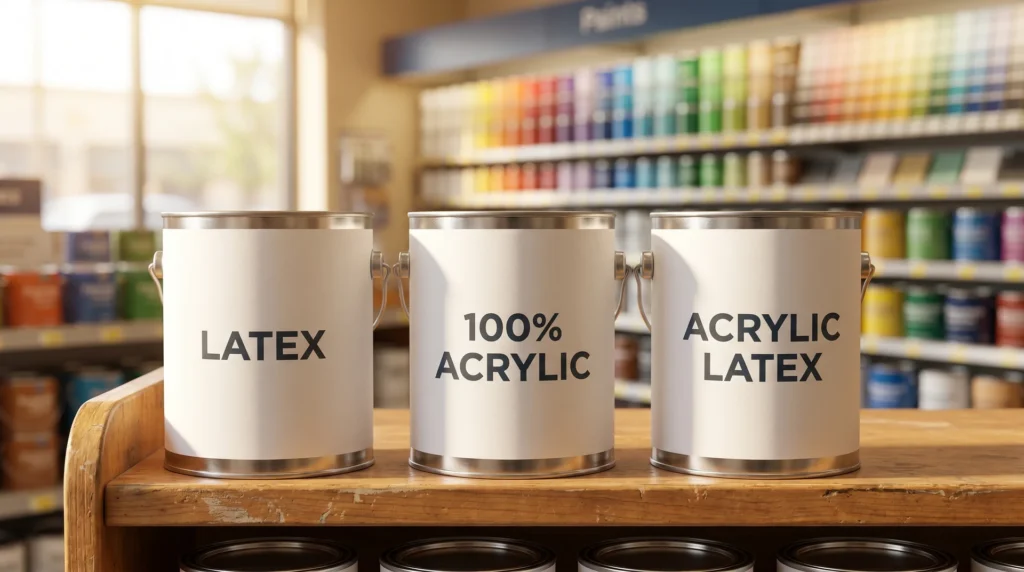
You’re standing in the paint aisle holding two cans that seem to describe the same product. One says “latex.” One says, “100% acrylic.” A third, somewhere to the left of both, says “acrylic latex.” All three are labeled water-based, all three are priced differently, and you need to get home and get this project finished. That moment of paralysis is completely legitimate.
I’ve watched it happen to clients who were otherwise confident renovators, and I’ve felt a version of it myself before I understood what the labels were actually saying.
| Disclaimer: The paint recommendations in this guide are based on general residential use and publicly available product information. Always check the manufacturer’s product data sheet for your specific paint before starting any project, particularly in high-moisture or high-traffic environments. If you have a latex allergy or chemical sensitivity, consult the Safety Data Sheet (SDS) of any paint you plan to use, and speak with a medical professional before exposure. |
Is Acrylic Paint the Same as Latex Paint?
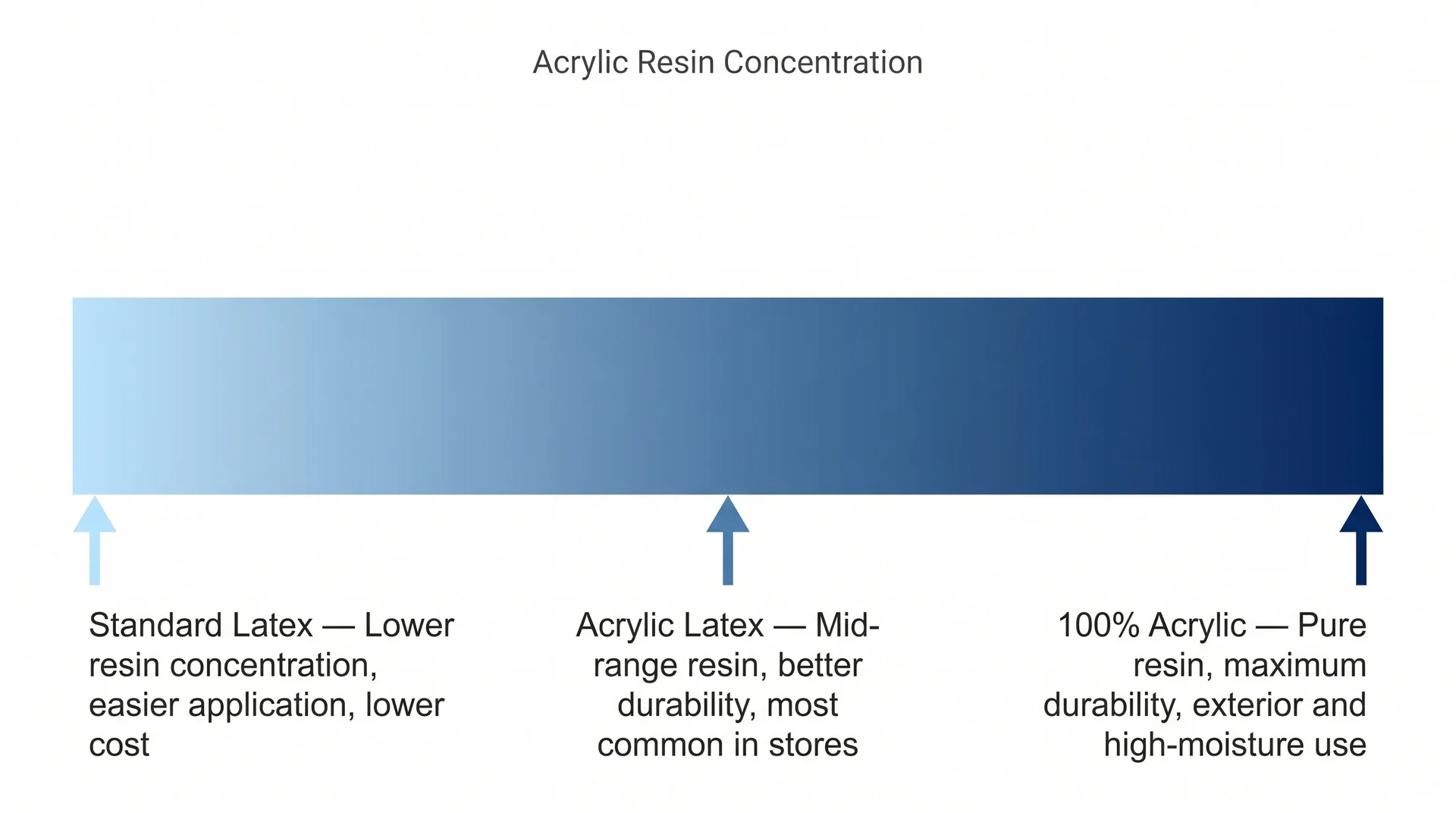
100% acrylic paint uses pure, undiluted acrylic resin as its binder, producing a tough, flexible, moisture-resistant film suited to demanding conditions. Standard latex paint uses a diluted or blended resin formula at a lower concentration, making it easier to apply, faster to dry, and more affordable for large interior surfaces. Acrylic latex paint sits between the two and is what you’ll find on most mid-range and premium cans, whether the front label says so clearly or not.
If a label says “latex,” the paint is water-based and very likely acrylic-based. If it says “100% acrylic,” you’re getting undiluted resin and a more durable finish. If it says “acrylic latex,” you’re getting a hybrid that outperforms standard latex and costs less than pure acrylic. These three categories explain almost every can on the wall.
Why the Naming Is So Confusing (and Why It’s Not Your Fault)
The word “latex” in paint is a trade convention, not a precise ingredient description. It became shorthand for “water-based” across the industry, the same way “Kleenex” became a substitute for any facial tissue. Early latex paints, developed in the mid-20th century, did use rubber-based compounds, some derived from natural sources. Over time, manufacturers moved to synthetic acrylic polymers because they performed better and cost less to produce. The rubber is left. The name stayed. Nobody updated the label.
When you pick up a gallon of “latex wall paint” from any major US brand today, there’s a high probability that what’s inside is an acrylic resin formulation, a vinyl-acrylic blend, or a combination of both. The word “latex” on the front tells you the paint is water-based and easy to work with. It tells you nothing specific about the binder.
What “100% Acrylic” Actually Means on a Paint Can
When a label says “100% acrylic,” the binder is pure acrylic resin with no vinyl blending, no filler substitutes diluting the formula, and no secondary polymer cutting the concentration. Acrylic resin is a synthetic polymer derived from petroleum-based materials. It creates a paint film that bonds aggressively to surfaces, stays flexible under thermal stress, and resists moisture, mildew, and UV degradation over time.
More resin means more of everything that makes paint last: adhesion, elasticity, color retention, and washability. It also means a higher price per gallon and a thicker consistency that takes a bit more skill to apply without lap marks.
What “Acrylic Latex” on a Label Actually Tells You
This is the category that causes the most confusion in the aisle, and it’s also the one you’re most likely to actually buy. Acrylic latex is a water-based formulation that uses acrylic resin as its primary binder at a concentration higher than basic latex and lower than 100% acrylic. It combines the workability and low-VOC profile of standard latex with meaningfully better durability and adhesion.
The vast majority of interior and exterior paints from Sherwin-Williams, Benjamin Moore, and Behr that get marketed as “latex” or “interior latex” on their front labels are acrylic latex formulations. You’ll confirm this on the back of the can or in the product data sheet. For most homeowners painting interior walls, acrylic latex is the product they’re already using, whether or not they realize it.
Is Acrylic Paint Latex-Free? What People with Latex Allergies Need to Know
This question matters more than most paint guides acknowledge. 100% acrylic paint contains no natural rubber latex. It uses synthetic acrylic polymers as its binder. Modern “latex” paint sold in the US also contains no natural rubber, despite the name. The natural rubber that originally gave latex paint its name was phased out decades ago in favor of synthetic acrylic and vinyl-acrylic resins.
According to occupational health research, misidentifying synthetic paint as a source of natural rubber latex allergy has led to significant lost workdays and unnecessary restrictions for healthcare workers.
The paints contained no natural rubber latex at all. That said, individual formulations vary by brand, and some products may contain other sensitizing chemicals unrelated to natural rubber. If you have a documented latex allergy or chemical sensitivity, always check the product’s Safety Data Sheet before use and consult a medical professional. Do not rely on the product name alone.
How Acrylic Paint Performs, and When It Actually Changes Your Results
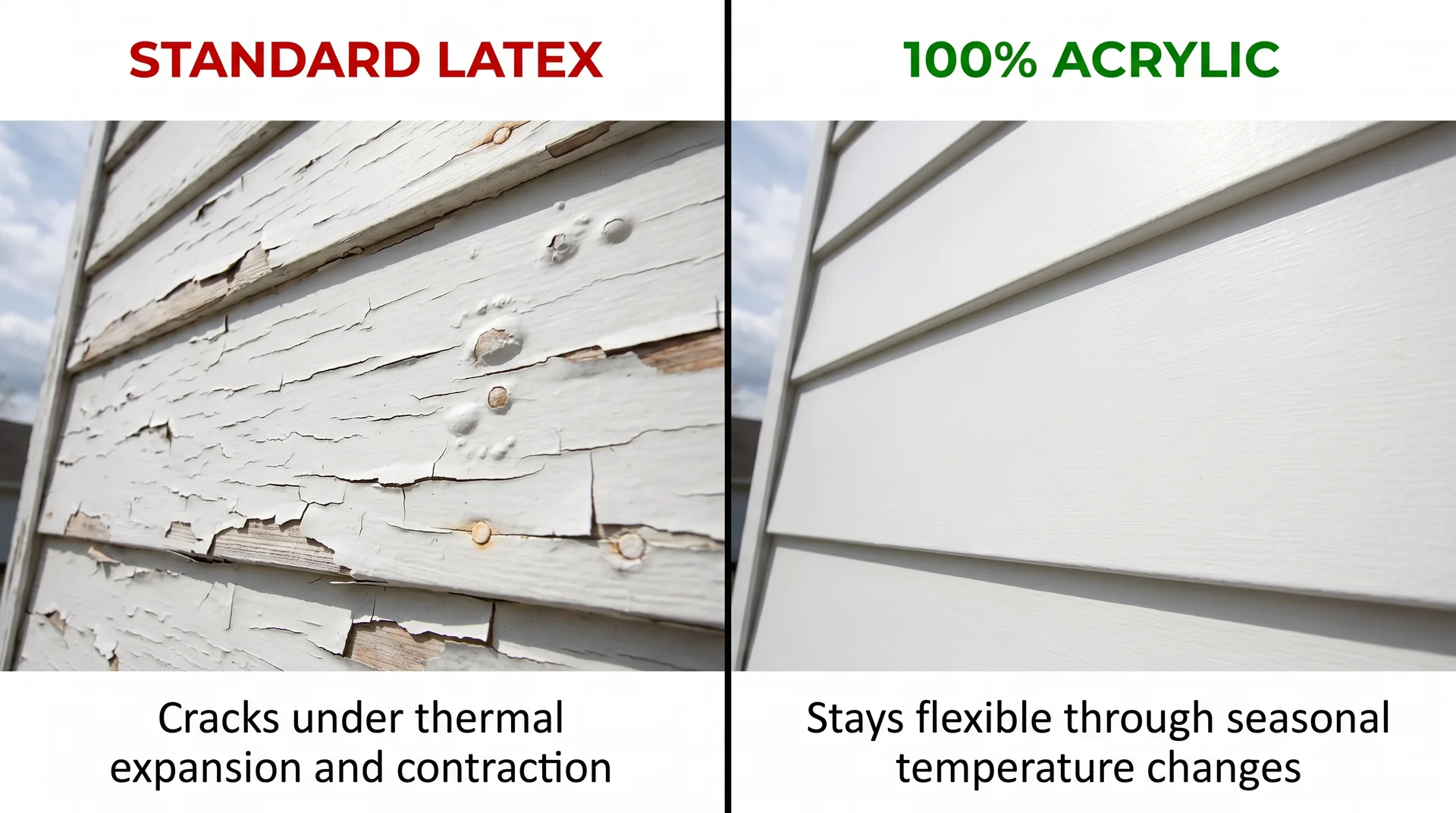
The performance gap between 100% acrylic and standard latex becomes real in specific conditions. After years of residential design work, including painting consultations for clients who returned with peeling trim or bathroom walls bubbling at the seams, the pattern is consistent: the wrong paint type for the conditions creates the problem, and fixing it costs more than the savings at checkout.
100% acrylic paint expands and contracts with temperature fluctuations. That elasticity matters on exterior surfaces, where the paint film faces heat, cold, rain, and UV exposure through every season. Acrylic resists cracking under that stress. It resists mildew. It holds color well under direct sunlight. It bonds to a wide range of surfaces, including wood, metal, vinyl siding, and drywall, often with less primer support required on well-prepared surfaces.
The tradeoff is real: pure acrylic dries more slowly and requires more attention during application. Between coats, 8 to 12 hours is the practical recommendation, which means an exterior project usually demands a full two-day minimum for two coats.
Moisture is the other condition where acrylic pulls ahead. Bathroom walls, surfaces above a stove, and any laundry room wall benefit from the moisture-resistant film that 100% acrylic creates once it fully cures. Standard latex handles light splash zones reasonably well with a good semi-gloss finish, but it doesn’t offer the same long-term resistance in spaces that see daily steam and humidity.
How Latex Paint Performs, and Why It Still Owns the Interior Wall Market
Latex paint is not the inferior option. It’s purpose-built for the job most homeowners do most often: painting interior walls and ceilings in living rooms, bedrooms, hallways, and dining rooms. For that specific application, it is genuinely the better tool.
Latex is touch-dry within one to two hours, which means you can get a second coat on the same afternoon if you start early enough. It emits fewer VOCs than 100% acrylic, which matters when you’re painting in an occupied home where people and pets return to the room the same day. It goes on smoothly, covers well, and corrects easily if you catch a drip before it sets.
Latex is also more forgiving for people who don’t paint regularly. The application window stays open longer, brush marks level out better on flat and eggshell finishes, and a damp cloth handles mistakes before they cure.
The One Surface Where Latex Genuinely Struggles
Wood is where latex’s high water content causes problems. Unpainted or previously oil-painted wood can swell when a water-heavy latex formula hits it directly, because the moisture raises the grain, creates texture under the paint film, and can lift or bubble the finish over time.
Proper priming addresses this, but it adds a step people frequently skip. On metal, standard latex without a purpose-designed primer often fails adhesion gradually, with corrosion creeping under the paint film from the edges and cut points.
Acrylic vs. Latex Paint: Key Differences at a Glance
| Feature | Standard Latex | Acrylic Latex | 100% Acrylic |
|---|---|---|---|
| Binder | Vinyl-acrylic blend or diluted acrylic | Acrylic resin (higher concentration) | Pure acrylic resin |
| Water-based? | Yes | Yes | Yes |
| Drying time | 1 to 2 hours touch-dry | 1 to 2 hours touch-dry | 8 to 12 hours between coats |
| Durability | Good for interior walls | Better for high-traffic areas | Best for exterior and moisture-prone areas |
| Moisture resistance | Limited | Moderate | High |
| VOC emissions | Low | Low | Slightly higher |
| Price (per gallon) | $15 to $40 | $40 to $65 | $20 to $80 |
| Best for | Interior walls and ceilings | Most interior and exterior surfaces | Exterior siding, bathrooms, trim, and metal |
| Cleanup | Soap and water | Soap and water | Soap and water |
| Contains natural rubber latex? | No | No | No |
Which Paint Should You Use? A Room-by-Room Guide
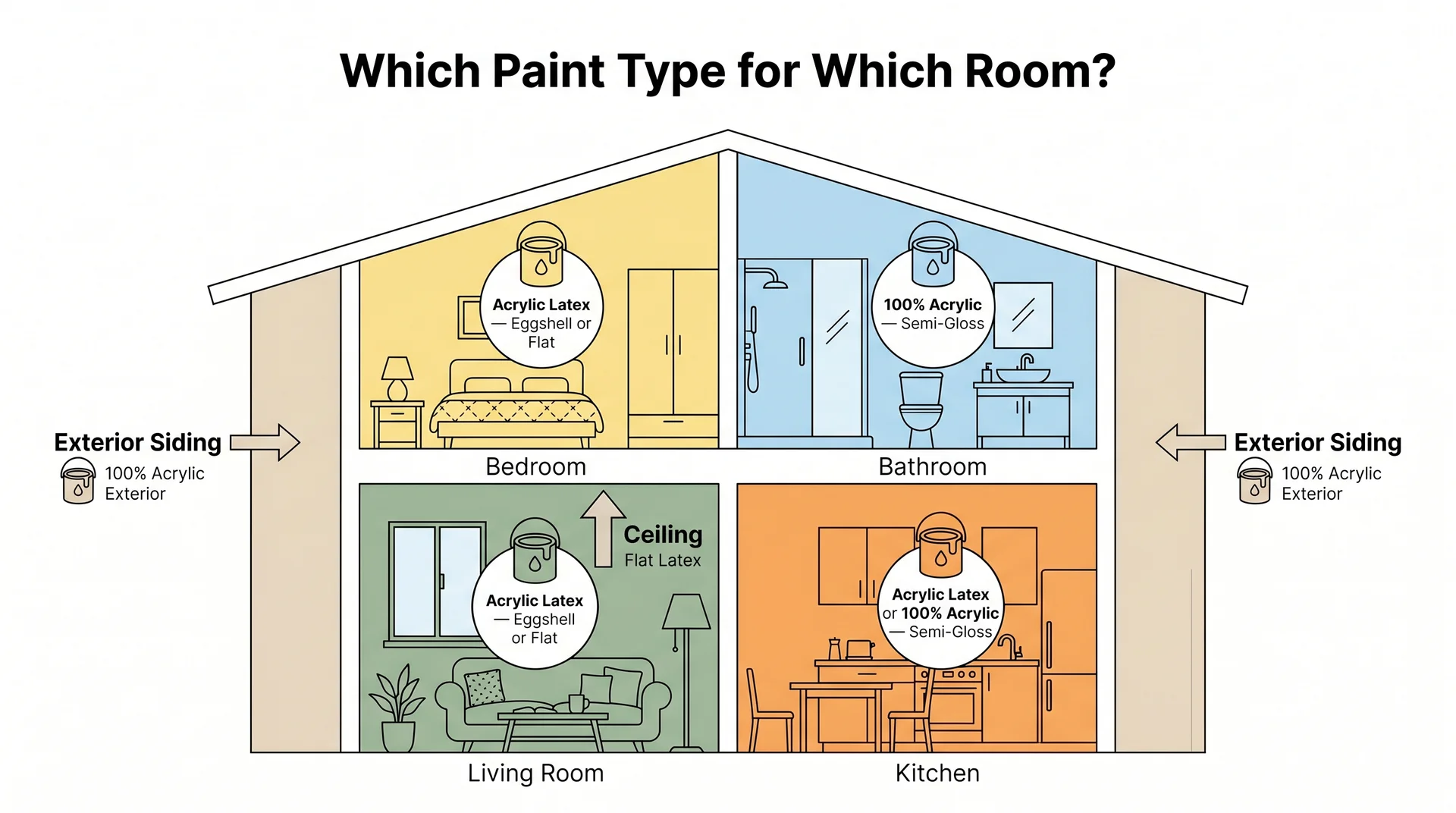
The right answer depends on the surface, the conditions it faces, and how long you want the finish to hold.
Interior living rooms and bedrooms are the natural home of acrylic latex in an eggshell or flat finish. These rooms don’t face moisture stress or temperature extremes, and a quality acrylic latex gives you better washability than basic latex without the cost premium of 100% acrylic. Sherwin-Williams Cashmere and Benjamin Moore Regal Select, both acrylic latex formulas, are the two products I recommend most often for main living spaces.
Ceilings throughout the house work well with flat latex or acrylic latex ceiling paint. Flat finish hides imperfections, dries fast, and ceilings don’t need the washability that walls do. Low-VOC latex is especially valuable here if you’re painting while people are still in the house.
Kitchens need a semi-gloss or satin 100% acrylic or high-quality acrylic latex. Kitchens see grease, steam, and frequent wiping, and you need a finish that holds up to cleaning without dulling or chalking over time.
Bathrooms are where I’d spend extra without second-guessing it. Daily shower steam and sustained humidity put real pressure on a paint film. 100% acrylic in semi-gloss is the call here. Standard latex in a bathroom starts showing wear much sooner, and the repair cost in time and money far exceeds the few dollars saved at purchase.
Exterior siding requires 100% acrylic exterior paint. The elasticity and UV resistance are both non-negotiable for a surface that faces full weather exposure across four seasons.
Exterior trim and doors need 100% acrylic enamel. Trim takes impact, direct sun, and temperature stress simultaneously. Acrylic enamel cures hard while staying flexible enough not to crack under movement.
Wood furniture and cabinets need 100% acrylic or a performance-grade acrylic latex enamel. The important detail here is cure time: the paint may be dry to the touch within hours, but takes several weeks to fully harden on a surface that gets handled or closed daily.
Metal surfaces need 100% acrylic with a bonding primer. Strong adhesion and corrosion resistance both matter here, and standard latex without proper priming fails in adhesion gradually.
| Surface | Recommended Paint Type | Key Reason |
|---|---|---|
| Interior walls, living/bedroom | Acrylic latex, eggshell, or flat | Good washability, low VOC, forgiving application |
| Ceilings | Flat latex or acrylic latex ceiling paint | Fast dry time, hides imperfections |
| Kitchen walls | Semi-gloss acrylic latex or 100% acrylic | Grease and steam resistance |
| Bathroom walls | 100% acrylic, semi-gloss | Moisture and mildew resistance |
| Exterior siding | 100% acrylic exterior | UV resistance, flexibility under thermal stress |
| Exterior trim and doors | 100% acrylic enamel | Hardness and elasticity under impact |
| Wood furniture and cabinets | 100% acrylic or acrylic latex enamel | Full cure hardness, surface durability |
| Metal surfaces | 100% acrylic with bonding primer | Strong adhesion, corrosion resistance |
Can You Use Acrylic and Latex Paint on the Same Surface?
Yes, with the right preparation. The two paint types are chemically compatible enough that layering them doesn’t cause a fundamental problem, but the order matters.
Acrylic over latex works reliably when the latex surface is clean, dulled in sheen, and free of any peeling or chalking. Acrylic’s strong resin bonds to latex without adhesion issues from mismatched chemistry. For most touch-up and repainting situations, this combination works without problems.
Latex over acrylic requires more careful preparation. Once 100% acrylic paint fully cures, it creates a very hard, low-porosity surface. Fresh latex doesn’t grip that surface the way it grips drywall or a matte primer coat, and the result, if you skip prep, is a paint film that peels or chips faster than expected, particularly in areas with moisture exposure or physical contact.
The Prep Step You Cannot Skip When Switching Between Paint Types
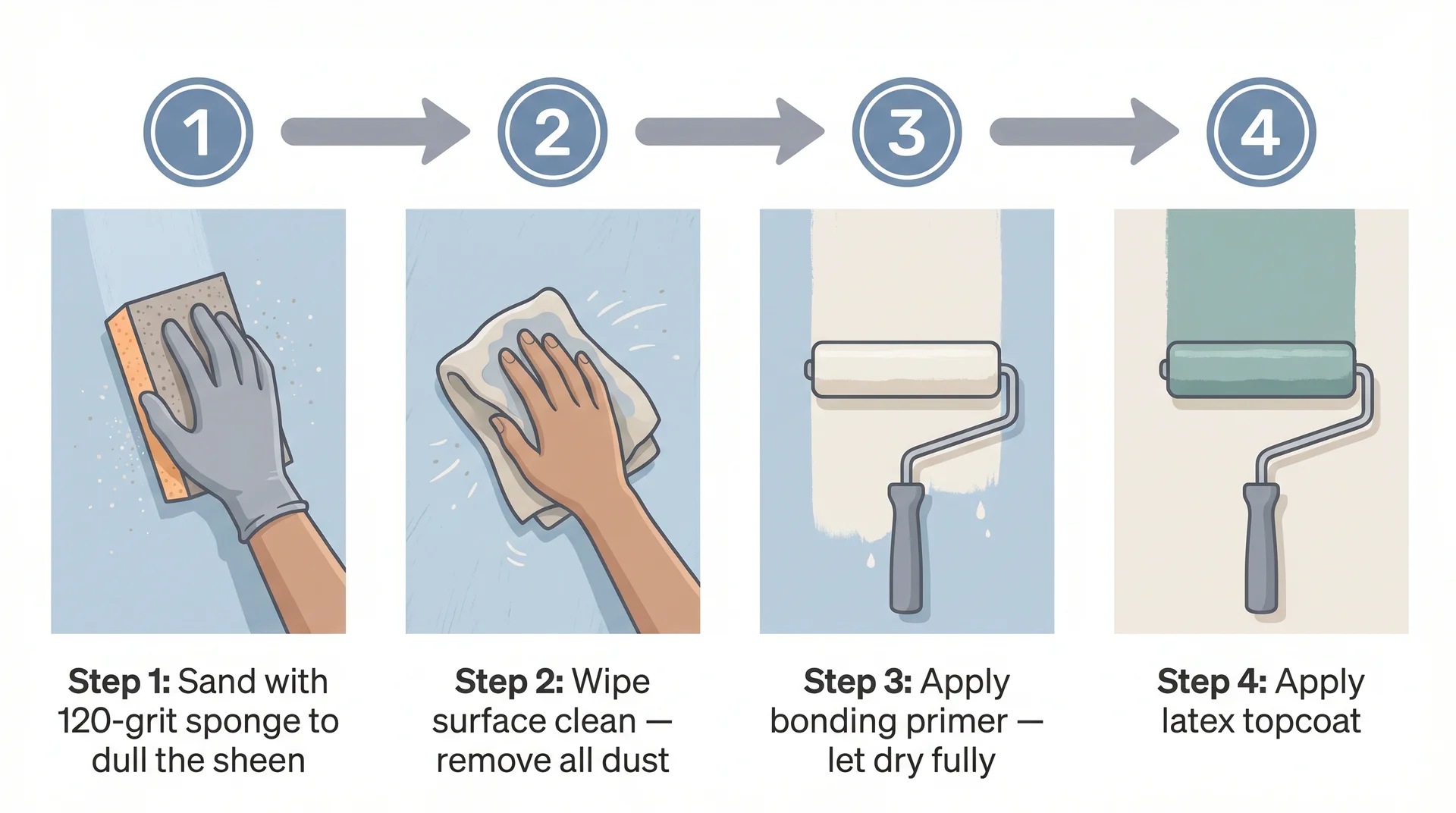
If you’re applying latex over a previously painted acrylic surface, light sanding is the step you need. A 120-grit sanding sponge dulls the sheen and opens the surface enough for the new latex to grip properly.
After sanding, wipe the surface down with a damp cloth to remove all dust, then apply a bonding primer before your finish coat. This step is the most consistent reason a fresh paint job starts peeling within a year of application when it’s skipped.
If the acrylic surface carries no sheen and is already in good condition, a bonding primer alone often handles adhesion without sanding. If the surface is glossy or shows any sign of flaking, sand it before you prime.
How to Tell If Your Existing Wall Paint Is Acrylic or Latex Before You Repaint
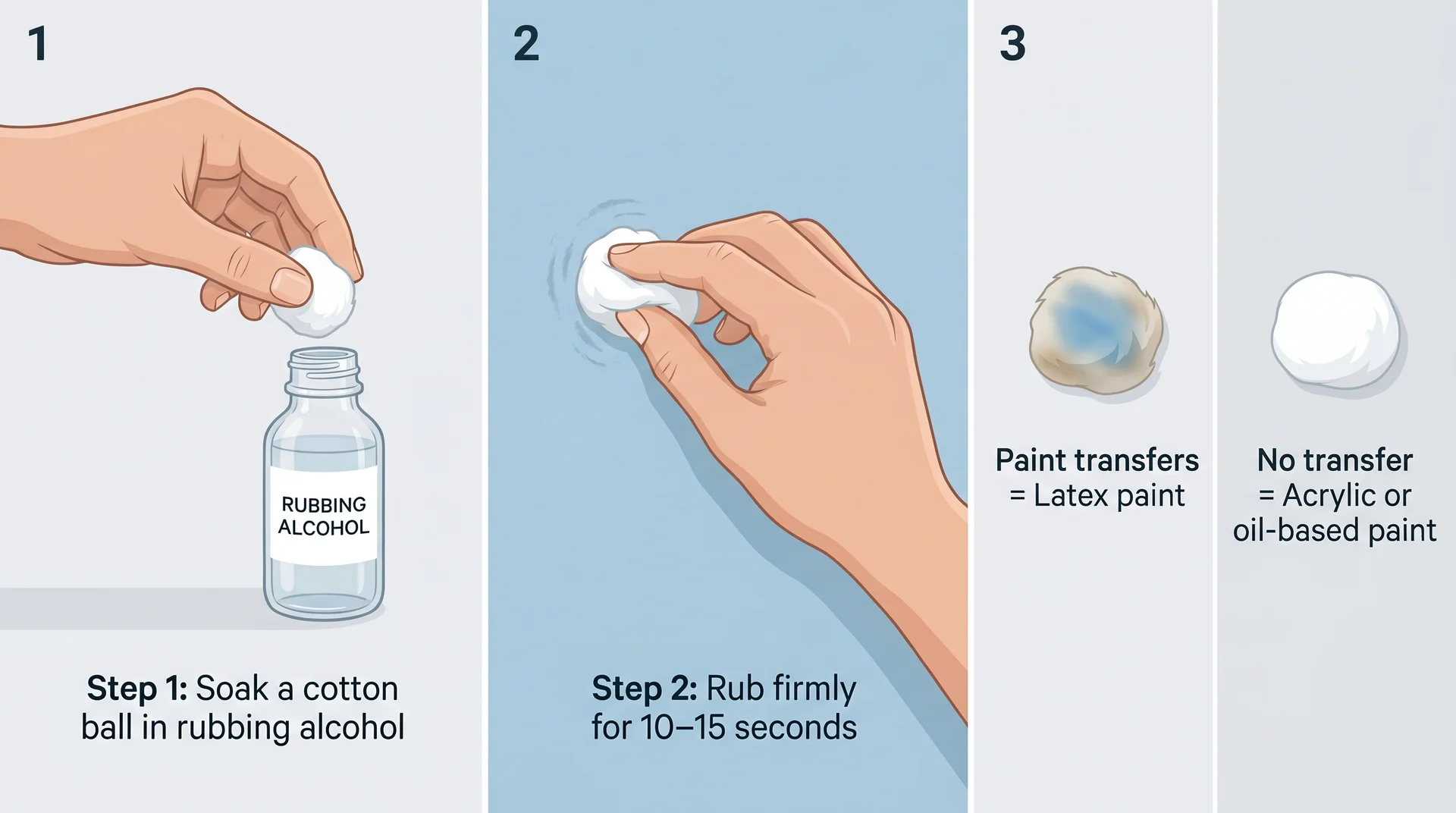
Knowing what’s already on a surface saves you a failed repaint. There are a few reliable ways to check.
The rubbing alcohol test is the most practical option for homeowners. Dampen a cotton ball with rubbing alcohol and rub it firmly against the painted surface for 10 to 15 seconds. If paint color transfers onto the cotton, the existing paint is likely a softer latex-based formula. If the surface stays completely intact with no transfer, you’re probably looking at a harder acrylic finish or an oil-based paint. Acetone (found in most nail polish removers) works slightly better than rubbing alcohol for this test, though either will do.
Check the sheen and hardness. A glossy, very hard surface that resists the alcohol test usually signals 100% acrylic or an enamel. A surface that scratches or chips more easily when you run a fingernail across it tends to be a softer latex.
Look at leftover paint cans. Labels reading “alkyd” or “oil-based” mean oil paint. Labels reading “acrylic,” “latex,” or “water-based” mean a water-based formula. Cleanup instructions are another giveaway: soap and water means water-based, mineral spirits means oil-based.
When you’re genuinely unsure, apply a bonding primer before your new coat, regardless of what the existing paint turns out to be. It handles the uncertainty and costs far less than a premature repaint.
How Much Does Each Type Cost, and What Are You Actually Paying For?
Interior latex paint in the US runs between $15 and $60 per gallon. Interior acrylic latex from premium brands sits in the $40 to $65 range. Exterior 100% acrylic paint runs $20 to $80 per gallon, with professional-grade formulas from Sherwin-Williams and Benjamin Moore reaching the upper end.
What drives the price difference is resin concentration. More acrylic resin in the formula means a more durable, flexible, and adhesive paint film. Budget-tier latex paints use a lower resin-to-filler ratio, and the fillers, typically calcium carbonate or talc, give good surface coverage but reduce performance under stress.
The calculation for deciding when to spend more is straightforward. If a surface faces moisture, impact, or frequent cleaning, upgrade to 100% acrylic. Bathrooms and kitchens are the obvious cases, but the same logic applies to interior trim, baseboards, and doors throughout the house. The extra $10 to $15 per gallon on trim paint is minimal relative to the time cost of repainting trim that’s chipping after two years.
Where you don’t need 100% acrylic: large interior wall and ceiling surfaces in dry living areas. A quality acrylic latex in the mid-to-upper price tier performs very well in those conditions, and reaching for 100% acrylic on a bedroom wall gives you very little practical return on the premium.
Frequently Asked Questions
Is Acrylic Paint Latex-Free?
Yes. 100% acrylic paint contains no natural rubber latex. It uses synthetic acrylic polymers and is water-based. Modern “latex” house paint also contains no natural rubber. People with natural rubber latex allergies are generally not at increased risk from either paint type. That said, verify the specific formulation on the product’s Safety Data Sheet before use, and consult a medical professional if you have documented chemical sensitivities.
Is All Latex Paint Water-Based?
Yes. Modern latex paint is entirely water-based. Water acts as the carrier that suspends the resin and pigment particles during application. When the water evaporates during drying, the resin particles fuse and form the paint film. Cleanup with soap and water works for both latex and acrylic latex, and the ease of cleanup is one of the main advantages both types hold over oil-based paint.
Can I Use Craft Acrylic Paint (Tube or Bottle Acrylics) to Paint Interior Walls?
You can apply it to a wall surface, but you shouldn’t. Craft acrylics are formulated for small-scale application on canvas, paper, and craft materials, not for the coverage demands and washability needs of a full painted wall. Using them on a wall will cost significantly more per square foot than house paint, won’t adhere as uniformly to drywall, and won’t produce a consistent finish over time. Use interior house paint for walls.
What Does “Acrylic Latex Enamel” Mean on a Paint Can?
Acrylic latex enamel is a water-based paint formulated with acrylic resin that cures to a harder, more impact-resistant finish than standard latex. The word “enamel” indicates hardness and durability rather than a specific ingredient. Acrylic latex enamel works well for trim, cabinets, doors, and other high-contact surfaces where you need the finish to hold up to impact, handling, and repeated cleaning.
Are Sherwin-Williams and Benjamin Moore “Latex” Paints Actually Acrylic?
Most of them are. Sherwin-Williams Emerald, Duration, and SuperPaint, and Benjamin Moore Regal Select and ben interior paint, are all acrylic latex formulations. They use acrylic resin as the primary binder. Benjamin Moore Advance is a 100% acrylic alkyd hybrid. The front label often says “latex” as a marketing convention, while the back label and product data sheet confirm the actual resin type.
Is Acrylic Paint the Same as Oil-Based Paint?
No. Acrylic paint is water-based, not oil-based. The pigment is suspended in an acrylic polymer emulsion. When the water evaporates, the acrylic resin particles fuse and form the paint film. Unlike oil-based paint, acrylic dries quickly and cleans up with soap and water. It does not produce the strong solvent fumes associated with oil-based formulas, though painting in a well-ventilated space is always recommended.
Does Latex Paint Contain Actual Latex (Natural Rubber)?
No. Modern latex house paint does not contain natural rubber latex. The term “latex” became a generic label for water-based paint decades ago and has stuck, even though the rubber that originally gave the category its name was replaced by synthetic acrylic and vinyl-acrylic resins. The name is a historical holdover, not a current ingredient description.
Final Thoughts
The paint aisle gets much easier once you understand what the labels are actually communicating. Acrylic and latex share chemistry; they share the water-based category, and in many products, they share the same can.
The distinction that matters for your project is matching the resin concentration and performance profile to the conditions the paint will face. Get that right, and the color choice, the finish sheen, and everything else becomes straightforward.
The most common mistake in residential painting isn’t choosing the wrong color. It’s reaching for cheaper, easier-to-apply latex in a space that needed acrylic’s durability, and then wondering why the finish looks tired eighteen months later. Buy for the surface, buy for the conditions, and buy once.