
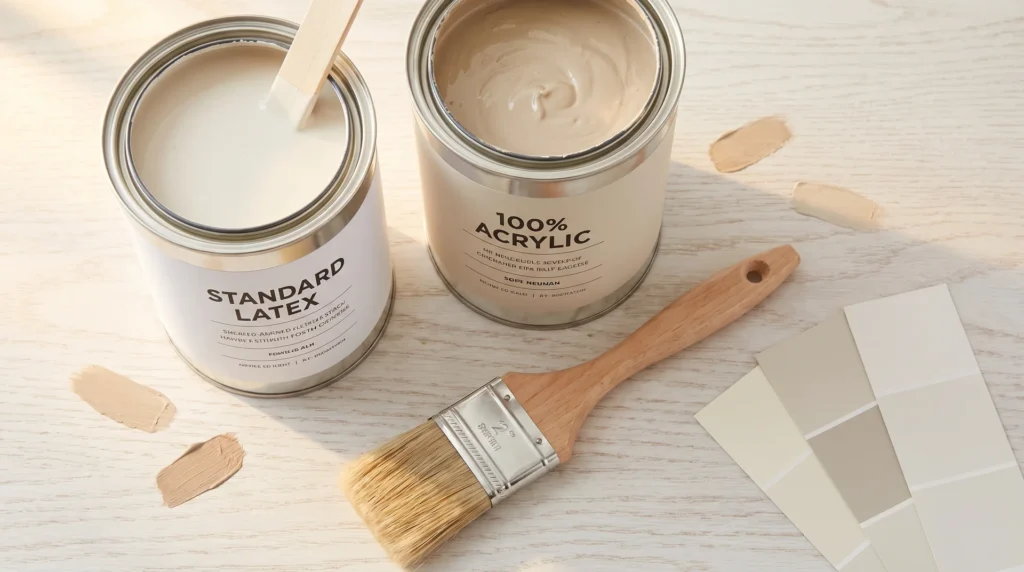
Stand in the paint aisle, and the labels feel like a trick. A premium Paint Can from Benjamin Moore says “100% Acrylic Latex.” The budget option says “Latex.” The exterior can say “Acrylic.” You just got confused.
Here’s what clears it up: acrylic is a type of latex. That’s the whole source of confusion when you’re trying to understand the difference between acrylic and latex paint. The two terms don’t describe competing products. They describe different performance tiers within the same water-based family, which is why “100% Acrylic Latex” on a label isn’t a contradiction. It’s the quality marker.
You’re choosing between a standard water-based formula and a higher-performance one, and the right choice depends on what surface you’re painting, where it lives, and what you need it to endure.
Why Acrylic and Latex Paint Look the Same on the Shelf
The Naming History Behind “Latex Paint”
Decades ago, “latex” referred to rubber compounds used in early water-based formulas. As the chemistry evolved toward synthetic polymers, the name stayed because consumers already recognized it. Today, no mainstream residential latex paint contains natural rubber. The word “latex” on a can simply tells you the paint is water-based, nothing more.
What “100% Acrylic Latex” Actually Means on the Label
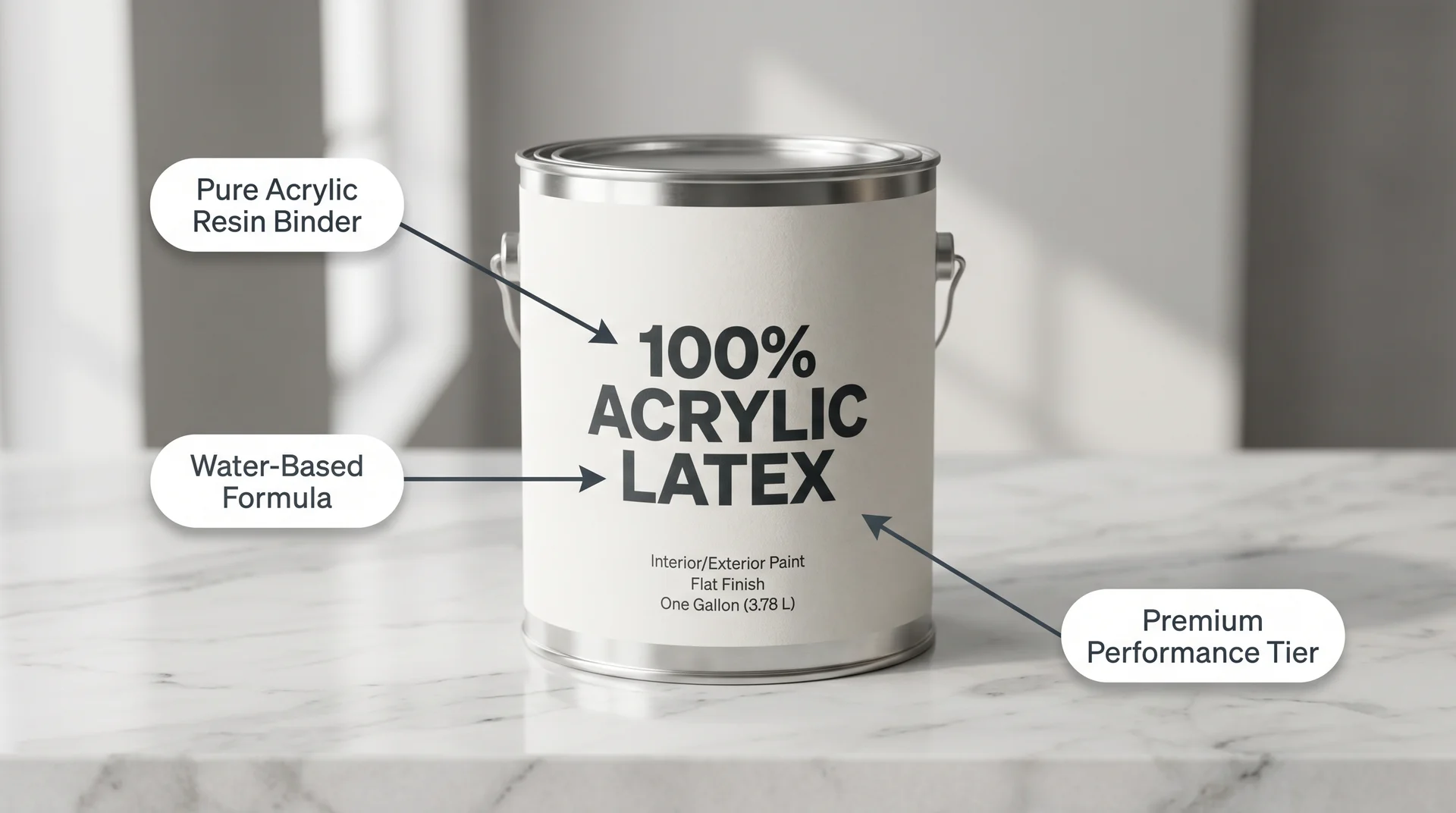
This label makes two statements simultaneously: the paint is water-based (latex), and the binder holding all the pigment together uses pure acrylic resin (100% acrylic). That second part is the quality signal.
Standard latex paints use a blend of acrylic and vinyl resins, which costs less to produce but creates a softer, less adhesive film. A 100% acrylic formula uses pure acrylic polymer as the binder, building a denser, more flexible, and more durable finish. When you see that label on a product from Behr, Benjamin Moore, or Sherwin-Williams, you’re looking at their premium tier. It reflects a real formulation difference that shows up directly in how the paint performs.
The Real Difference Between Acrylic and Latex Paint
What Standard Latex Paint Contains
Standard latex combines water, pigment, and a synthetic resin binder, typically a vinyl-acrylic blend or polyvinyl acetate. The water evaporates as it dries, leaving a pigment film held together by the binder.
Because the resin concentration is lower and the polymer softer, it dries quickly, applies smoothly, and cleans up with soap and water. It’s excellent for large, flat interior surfaces where easy application and fast recoats matter.
The film isn’t as resilient as a higher-resin formula, but on a standard interior wall in a low-traffic room, that difference is largely irrelevant.
What Makes 100% Acrylic Paint Perform Differently
100% acrylic replaces the softer vinyl-acrylic blend with pure acrylic polymer. The result is a denser, more elastic film that flexes with temperature changes rather than cracking. It bonds more aggressively to surfaces, resists moisture penetration more effectively after curing, and holds color longer under UV exposure.
These properties make it the right choice wherever paint faces real stress: exteriors, high-humidity rooms, surfaces cleaned repeatedly, and anywhere you need the finish to outlast the inconvenience of repainting.
One shortcut for reading any label: look at how it describes the binder. “100% Acrylic” signals the highest-performance water-based formula. “Vinyl-Acrylic” or “Acrylic-Latex” signals a blended formula that performs well in standard interior applications.
“Latex” alone, without further specification, is typically a blended product at the lower end of the performance range. The binder is the ingredient doing all the protective work, and its quality determines how long that protection holds.
Acrylic vs. Latex Paint: How the Two Actually Compare
| Standard Latex | 100% Acrylic | |
|---|---|---|
| Binder Type | Vinyl-acrylic blend or PVA | Pure acrylic polymer |
| Durability | Good on low-traffic surfaces | Excellent on high-wear and exterior surfaces |
| Flexibility | Moderate | High |
| Moisture Resistance | Moderate | High |
| Mold and Mildew Resistance | Limited | Strong |
| VOC Level | Lower | Slightly higher (low-VOC versions available) |
| Touch-Dry Time | 1 to 2 hours | 2 to 4 hours |
| Recoat Window | 2 to 4 hours | 4 to 6 hours |
| Price Per Gallon | $15 to $45 | $35 to $80+ |
| Best Use | Interior walls, ceilings | Exteriors, bathrooms, trim, high-traffic rooms |
Durability and Longevity
The durability gap matters in specific contexts and is nearly irrelevant in others. On a bedroom wall you repaint every several years, both formulas perform similarly. On an exterior wall, a bathroom ceiling, or high-contact trim, 100% acrylic holds up measurably longer.
The surfaces where that gap shows up most painfully are exactly the ones you’d least want to redo: exterior siding after a harsh season, bathroom ceilings that start bubbling, trim that chips every time a door makes contact. That’s where the better formula earns its cost.
Flexibility and Weather Resistance
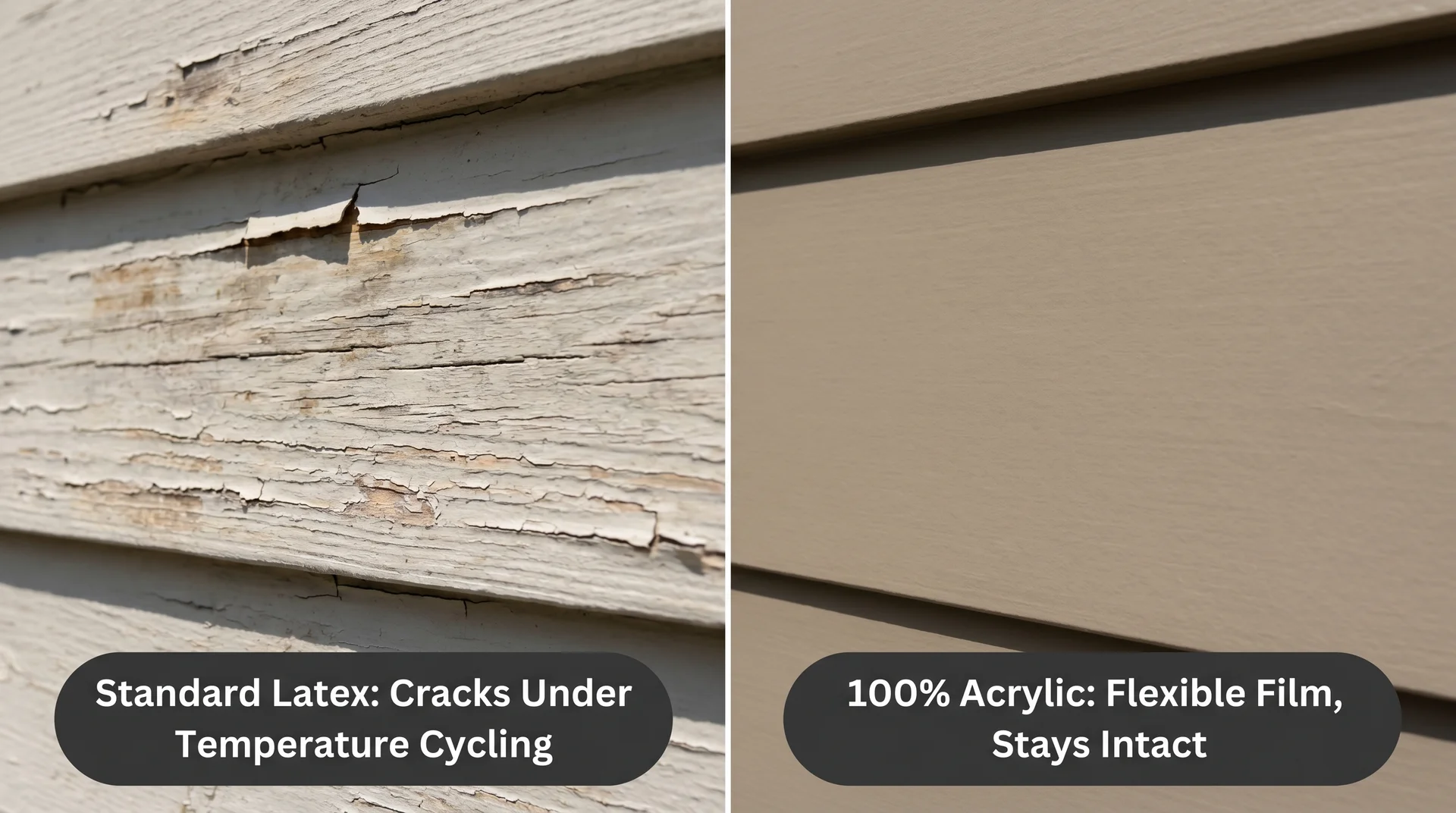
Flexibility is the property that protects exterior surfaces. When temperatures drop overnight and the wood beneath a painted surface contracts, a less flexible film eventually cracks.
100% acrylic forms a film that moves with those changes rather than fracturing. In interior spaces with consistent climate control, this matters less. For your front door, exterior trim, wood fascia, or painted siding, flexibility is the property you’re actually paying for when you invest in 100% acrylic.
VOC Levels and Indoor Air Quality
Standard latex emits lower VOC levels than most 100% acrylic formulations, which makes it the more comfortable choice for painting occupied rooms, especially in homes with children, pets, or anyone with respiratory sensitivities.
The gap has narrowed as manufacturers have developed low-VOC acrylic lines. Benjamin Moore Aura, Sherwin-Williams Emerald, and Behr Premium Plus Ultra are all 100% acrylic formulas available in low-VOC versions that are appropriate for interior use.
If VOCs are a concern, look for the low-VOC designation specifically on the label rather than assuming paint type alone tells the whole story.
Drying Time and Recoat Windows
Standard latex is touch-dry in one to two hours and ready for a second coat in two to four. 100% acrylic takes longer, typically two to four hours to touch-dry and four to six hours before recoating safely.
For a full room over a weekend, that difference in recoat time shifts your whole schedule. Rushing a second coat onto acrylic that isn’t ready usually shows up as lap marks or uneven sheen in the finished surface, and it’s not an easy fix once it’s dry.
Price Per Gallon vs. Long-Term Value
Standard interior latex runs $15 to $45 per gallon. 100% acrylic runs $35 to $80 or more. The sticker price is the wrong comparison for high-wear surfaces.
A standard latex on a bathroom ceiling that starts peeling in two years will cost more in time and materials to repair than the better formula would have cost at the register.
On interior walls in low-traffic rooms, standard latex is the sensible choice. On surfaces the paint actually has to fight for, 100% acrylic is the investment that makes financial sense over time.
Which Acrylic or Latex Paint to Use in Each Room
This breakdown comes from more than a decade of advising clients on interior decisions, first as a design consultant at a regional furniture retailer, and later as an independent styling advisor working directly with homeowners. What follows reflects what consistently works in real rooms, not on a spec sheet.
Living Rooms, Bedrooms, and Ceilings
A quality standard latex or latex-acrylic blend is exactly what these surfaces need. They’re low-to-moderate-contact areas in climate-controlled spaces, and they don’t justify the performance premium of 100% acrylic.
What matters more here is finish: eggshell or satin on walls gives you enough sheen to wipe down scuffs, while flat or matte on ceilings absorbs light, hides surface variations, and keeps the visual weight exactly where you want it.
Kitchens
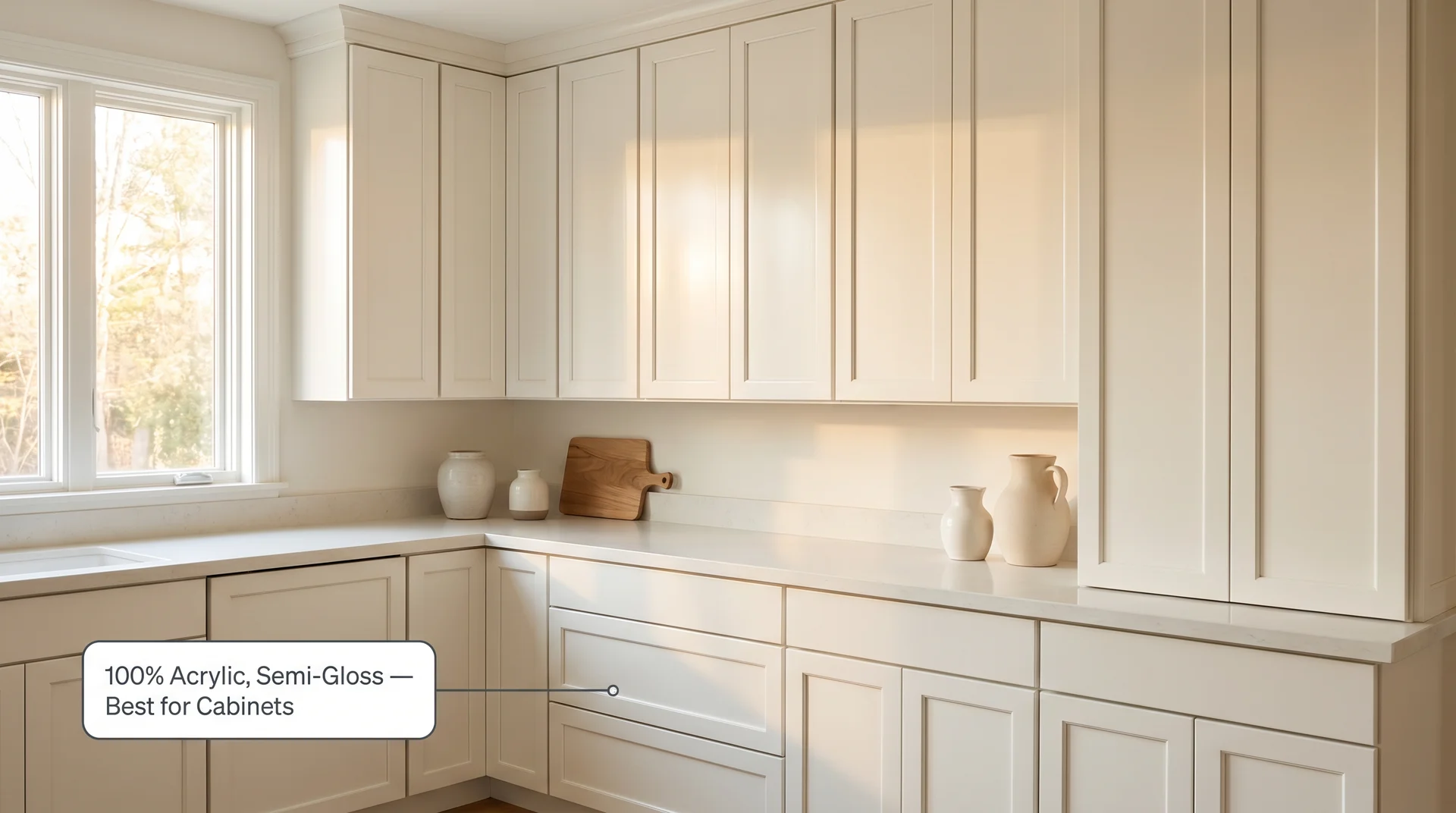
Make two separate decisions in this room. For walls, a satin or semi-gloss latex handles splashes and steam without issue.
For cabinets, use 100% acrylic. Cabinet faces take direct hand contact, grease, and repeated wiping, and a softer binder shows that wear within a few years in ways that are genuinely discouraging after a full refresh.
The same principle applies to painted open shelving: the effort involved in that kind of project deserves a paint film that holds up to daily use.
Bathrooms
This is the clearest case for 100% acrylic. The moisture exposure in a bathroom, even a well-ventilated one, is more than a vinyl-acrylic binder can handle reliably over time. Use 100% acrylic in a satin or semi-gloss finish on walls, and semi-gloss on the ceiling if the room runs warm and steamy.
Mold and mildew resistance matters on a bathroom ceiling, and it’s a property that standard latex doesn’t deliver consistently under real conditions.
Trim, Doors, and Millwork
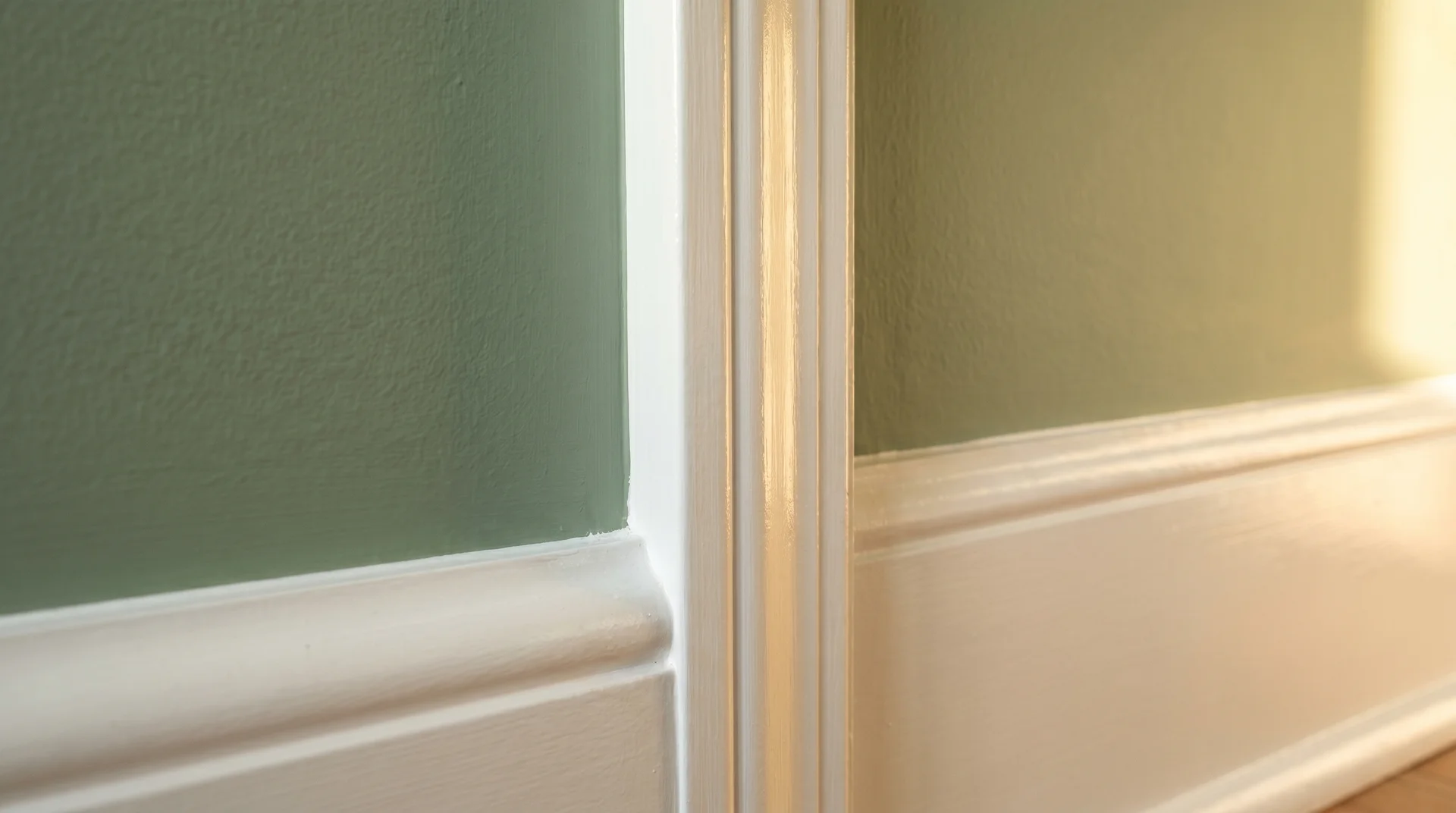
Most paint guides underserve this category, which is a significant omission because trim and millwork are the surfaces that determine whether a room looks finished or not.
Doors, window casings, baseboards, built-ins, and interior shutters take more contact, more cleaning, and more visual scrutiny than walls. Use 100% acrylic in a semi-gloss or gloss finish for all of them.
It delivers stronger adhesion on smooth primed surfaces, better scuff resistance, and a harder finish that holds up to daily interaction.
Using leftover wall latex on trim is a shortcut that shows up in chipping within a year, often sooner on heavily used doors.
Exterior Walls and Siding
For exterior surfaces, 100% acrylic is the standard, and for straightforward reasons.
Exterior paint faces UV radiation, temperature cycling, rain, and physical abrasion across multiple seasons, and it needs to handle all of it without cracking or peeling. Standard latex lacks the flexibility and moisture resistance to hold up reliably outdoors.
One exception: very old stucco with significant surface movement, or exteriors in climates with extreme freeze-thaw cycles, may perform better with an elastomeric coating, a specialized high-build formula with even greater flexibility.
For most standard residential exteriors, including wood siding, painted masonry, and trim, a quality 100% acrylic exterior paint is the right answer.
Furniture and Accent Pieces
For a side table, bookshelf, or accent cabinet in a low-contact setting, 100% acrylic in satin or semi-gloss delivers good adhesion and a durable film that holds up to daily interaction. For pieces in a sunroom or outdoors, 100% acrylic is the clear choice for UV and moisture resistance.
On chalk-finish paints, since they come up often in this context, chalk-finish formulas produce a beautiful matte, velvety surface, but they need a topcoat (wax or a water-based polyurethane) to protect the film. Without it, the surface won’t hold up the way a cured acrylic finish does.
Can You Mix or Layer Acrylic and Latex Paint?
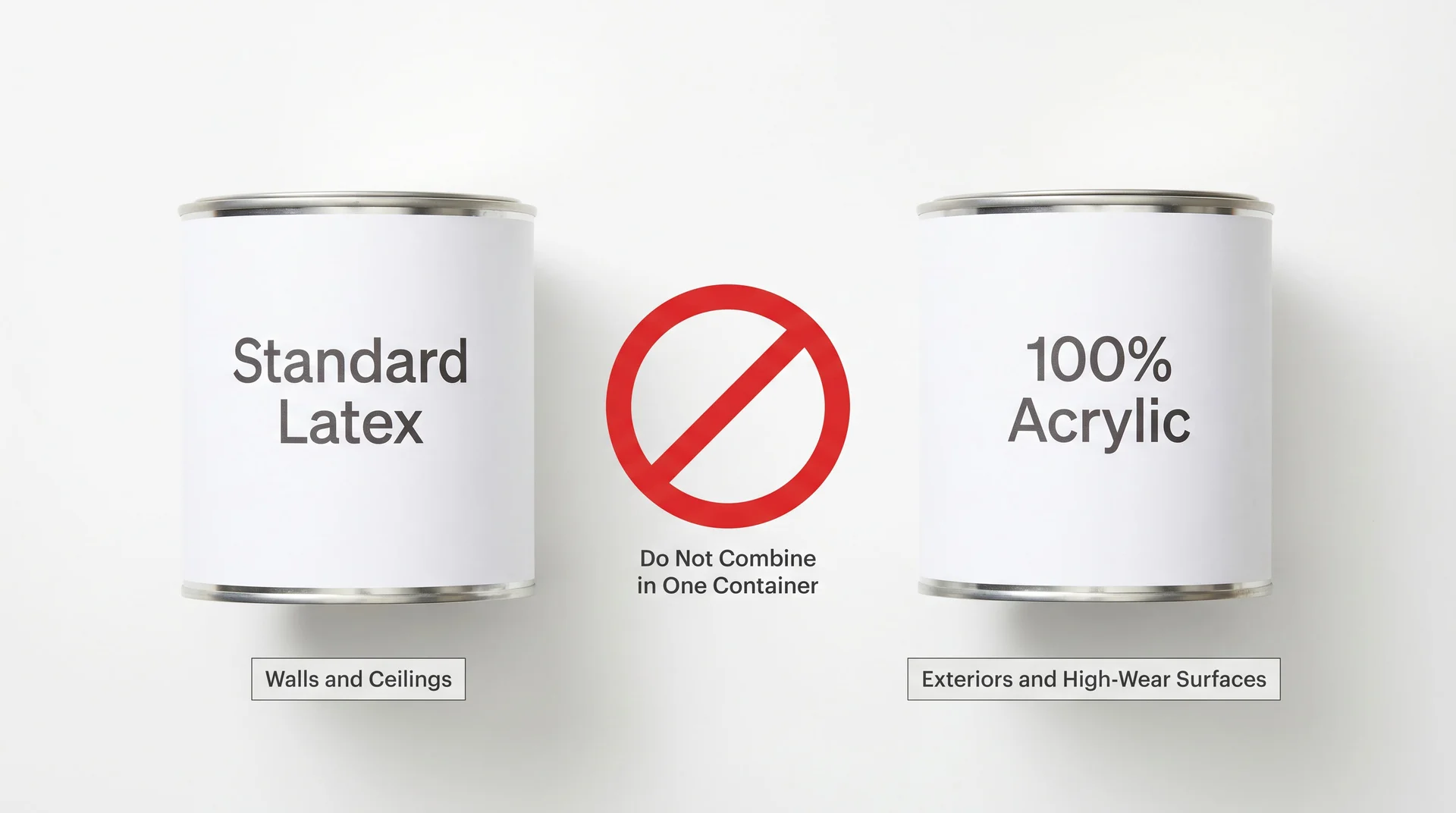
Not reliably, and it’s worth being specific about why. Mixing two full-formula house paints, one standard latex and one 100% acrylic, in a single bucket produces an unpredictable blend. The binder concentrations differ, the viscosities differ, and the curing behavior won’t be consistent across the surface. You may end up with uneven sheen, adhesion issues, or a finish that never fully hardens.
There is one practical exception: adding a small amount of artist’s acrylic paint to latex house paint to adjust or deepen the color is a legitimate decorative technique.
Because artist’s acrylics are concentrated pigment and binder in a compatible water-based formula, they blend into latex without disrupting the curing process. For tinting purposes, this works. For replacing or extending your house paint supply by combining two cans, it doesn’t.
Layering Acrylic Over Latex, or Latex Over Acrylic
Layering is a different question from mixing, and both directions are generally compatible because both formulas are water-based. Acrylic over existing latex: fine, as long as the existing layer is sound and cleanly prepared.
Latex over existing acrylic: also fine, with one condition. If the acrylic surface has a glossy finish, you need to dull it before applying the new coat. A gloss surface resists adhesion because there’s nothing for the new paint to grip.
When Surface Prep Resolves the Problem
Sand any glossy existing layer with 120 to 150-grit sandpaper, wipe down thoroughly to remove the dust, and apply a quality primer if you’re making a significant color or finish change.
That sequence handles the vast majority of layering situations. Most “the paint didn’t stick” scenarios trace back to skipped prep, not a fundamental incompatibility between paint types.
When You Should Start Fresh Instead
If the existing layer is peeling, bubbling, chalking, or cracking, painting over it doesn’t fix it. A new coat of paint, regardless of its quality, cannot bond to a failing substrate.
The right approach is to remove the failing layer, address the underlying cause (usually moisture intrusion, poor original adhesion, or substrate damage), and start from a sound surface. Painting over a problem delays it by a season, at most.
How to Read an Acrylic or Latex Paint Label Before You Buy
Acrylic and Latex Paint Label Terms Decoded
| Label Term | What It Means |
|---|---|
| 100% Acrylic | Pure acrylic resin binder. Highest durability and flexibility in the water-based category. |
| Acrylic Latex | Water-based with acrylic resin as the primary binder. Often interchangeable with 100% Acrylic on premium lines. |
| Vinyl-Acrylic | Blended binder, part vinyl (PVA) and part acrylic. More affordable, solid performance in standard interior applications. |
| Latex Enamel | Water-based formula engineered for a harder, more durable finish. Typically semi-gloss or gloss. Common for trim and cabinets. |
| Latex | General term for any water-based paint. Without further specification, typically a vinyl-acrylic blend. |
| Low-VOC / Zero-VOC | Reduced volatile organic compounds. Available in both standard latex and 100% acrylic from most major brands. |
Matching the Right Finish to Your Paint Type
The finish level (flat, eggshell, satin, semi-gloss, gloss) works together with paint type to determine both the look and the durability of the surface. Eggshell or satin in quality latex is the reliable choice for living rooms and bedrooms: soft, forgiving, and cleanable.
Semi-gloss in 100% acrylic covers kitchens, bathrooms, trim, and doors: hard-drying, washable, and visually sharp. Gloss on trim and millwork reads as polished and intentional, but it reveals every surface imperfection, so prep work matters considerably more at that sheen level.
For exterior surfaces, a satin finish in 100% acrylic holds up to cleaning better than flat and is the most practical choice for painted siding.
Do You Need a Primer With Acrylic or Latex Paint?
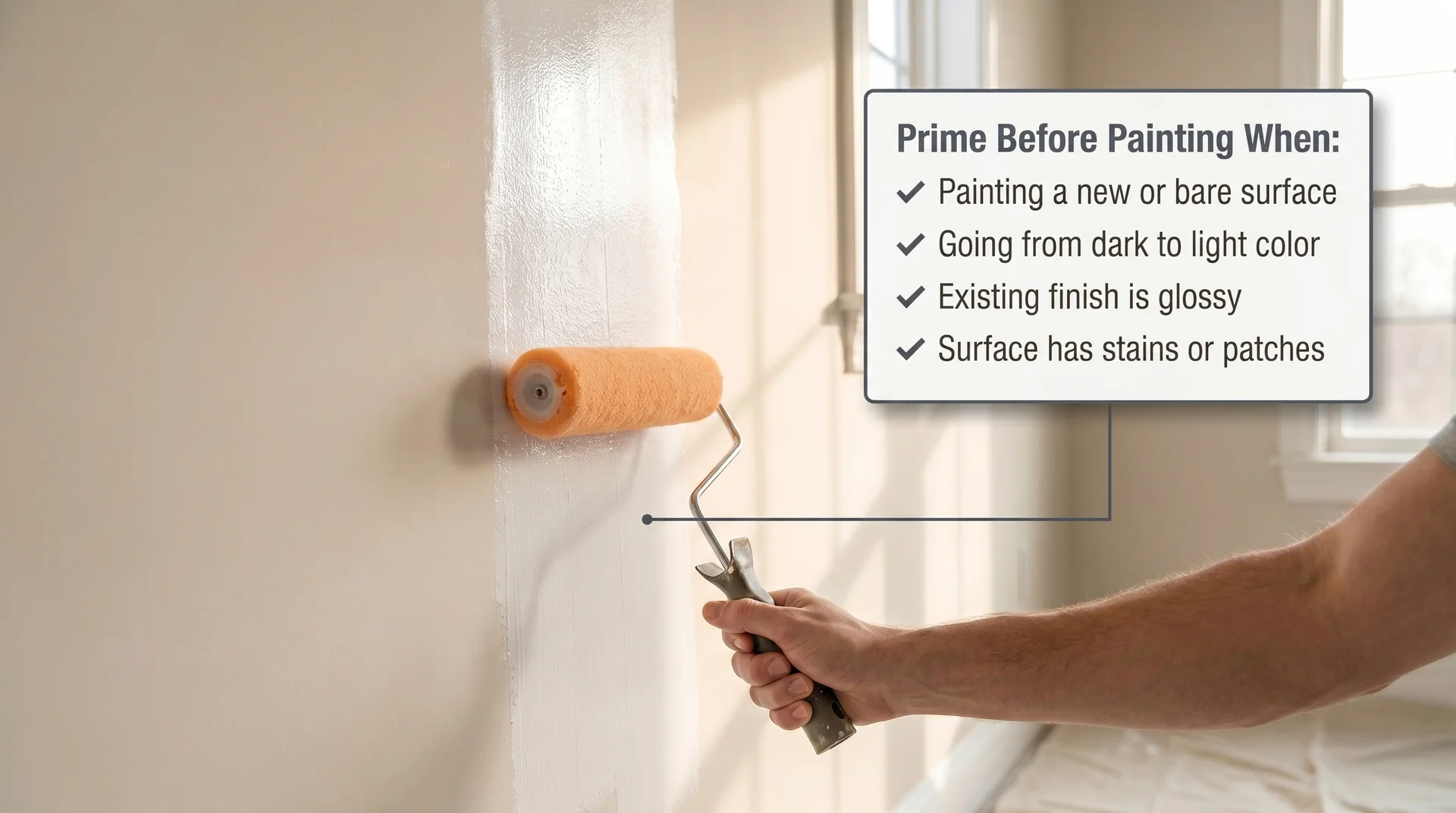
Primer is worth using in four situations: you’re painting a new or previously unpainted surface, you’re making a dramatic color change (especially light over dark), you’re painting over a glossy existing finish, or you’re covering a stained or patched area. In each case, primer improves adhesion and helps the topcoat deliver its full performance.
For standard interior walls in good condition that you’re refreshing in a similar color, a self-priming latex at the mid-to-upper price range often eliminates the separate primer step. For exterior surfaces, bare wood or new drywall, a dedicated primer is worth the additional time and cost.
One Question Worth Asking at the Paint Counter
Tell the associate the specific surface you’re painting rather than the room or the color. “Exterior wood siding,” “bathroom ceiling,” “kitchen cabinets,” “interior drywall” give them what they need to match you to the right formula within the brand’s product line. Most major brands carry multiple performance tiers, and the one displayed most prominently on the floor isn’t always the appropriate one for your project.
Frequently Asked Questions
Is acrylic paint the same as latex paint?
Not exactly. Acrylic is a type of latex, which means all 100% acrylic paints are technically water-based, but not all latex paints use pure acrylic resin. Standard latex uses a vinyl-acrylic blend as the binder. The “100% Acrylic Latex” label reflects both facts: water-based formula, pure acrylic binder.
Which lasts longer, acrylic or latex paint?
100% acrylic outlasts standard latex on demanding surfaces, including exteriors, bathrooms, high-traffic areas, and surfaces cleaned regularly. On interior walls in low-traffic rooms, both formulas perform comparably, and the price premium for 100% acrylic isn’t justified.
Can I use latex paint on exterior surfaces?
Standard latex can be applied outdoors, but it won’t hold up as long as 100% acrylic because it lacks the flexibility and weather resistance required for sustained outdoor exposure. For any exterior surface you want to avoid repainting within three to five years, 100% acrylic is the right investment.
Is 100% acrylic paint safe for indoor use?
Yes. Many 100% acrylic interior paints are available in low-VOC or zero-VOC formulations, including Benjamin Moore Aura, Sherwin-Williams Emerald, and Behr Premium Plus Ultra. Check the label for the low-VOC designation, specifically if indoor air quality matters for your household.
What paint should I use on bathroom walls?
100% acrylic in a satin or semi-gloss finish. The moisture, temperature variation, and cleaning demands in a bathroom are more than a standard latex binder can handle reliably. 100% acrylic provides the mold and mildew resistance and moisture barrier the room needs.
Can I paint acrylic over old latex paint?
Yes, as long as the existing layer is sound, meaning no peeling, bubbling, or chalking. Clean the surface, sand any glossy areas lightly, and apply a quality primer if you’re making a significant color or finish change. With proper prep, the acrylic layer bonds reliably.
What is the best paint for trim and doors?
100% acrylic in a semi-gloss or gloss finish. Trim and doors take more contact and more cleaning than walls, and a standard latex binder shows wear on those surfaces within a few years. A 100% acrylic formula cures into a harder, more scuff-resistant film that holds up to daily use.
Can you mix acrylic and latex paint together?
Mixing two full-formula house paints of different types in a single container isn’t recommended because the binder concentrations and curing behavior differ in ways that make the result unpredictable. Adding a small amount of artist’s acrylic to latex house paint to adjust the color is a different situation, and that does work because you’re tinting, not blending two full formulas.
Choose Right
The paint aisle will probably always feel a little more complicated than it should. But the decision is simpler than it looks once you understand what the labels are actually saying.
For most interior walls, a quality standard latex or latex-acrylic blend in the mid-to-upper price range is exactly right. For bathrooms, kitchens, trim, doors, and anything exterior, 100% acrylic is the formula worth spending on. Put the money where the surface will demand something from the paint, and save it where the surface won’t.
The right paint doesn’t announce itself. It stays on the surface, does its job quietly for years, and gives you the room you were actually trying to create.