
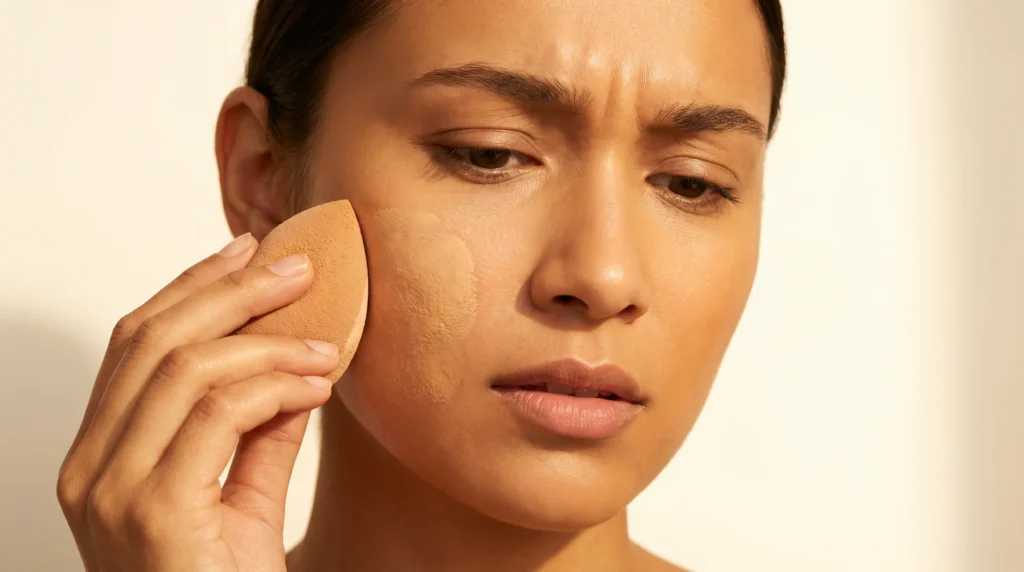
Foundation clings around your nose, sits in every fine line around your mouth, and leaves your cheeks looking flaky despite every step you took before you left.
Here’s the thing nobody says when they hand you a list of possible causes: the foundation didn’t fail you. It just made visible what was already there.
Foundation sits on top of everything your skin is doing, and patchy foundation is almost always a sign, not a mistake. This guide helps you find exactly what yours is telling you.
Most patchy foundation situations trace back to one of three things: your skin’s condition before anything goes on it, a formula that doesn’t suit your skin type, or an application approach that works against what your skin needs. Often it’s two of these together. The sections below help you identify which ones are yours.
| This article is written for informational purposes only. If you experience persistent skin concerns, redness, or sensitivity that does not respond to routine changes, consult a board-certified dermatologist. |
Figure Out Which Type of Patchy Foundation You Have
The most useful first question is not which product to switch to. It’s: where does the patchiness appear, and when does it start? The cause and the fix are completely different depending on the answer.
Patchy Foundation Right After You Apply It
If your foundation looks uneven within the first few minutes, the problem almost always lives in your skin prep or your formula choice.
Your skin surface may be too dry or rough for the foundation to grip smoothly, or your primer and foundation are chemically incompatible and separating on contact. Either way, the fix happens before you open your foundation bottle.
Patchy Two Hours Later? That’s a Different Fix Entirely!
If your foundation looks fine when you leave and falls apart by mid-morning, you’re dealing with a wear-time issue.
Excess oil is lifting the product from underneath, your setting isn’t holding in the right zones, or the formula doesn’t match your skin’s demands across a full day.
Following advice meant for application-time patchiness when you have a wear-time problem tends to compound it. Knowing which is yours saves a lot of misdirected effort.
The Real Reason Your Makeup Looks Patchy Starts with Your Skin
Almost every client who comes to me with a stubborn foundation problem turns out to have a skin issue underneath it, not a product problem on top of it. Your skin type is not fixed.
It changes with the season, your hormone cycle, how much water you’ve had, and the skincare routine you’re currently using. Foundation reacts to all of that, and when the surface is unstable, even a well-matched formula will look uneven.
Dry Skin vs. Dehydrated Skin: Are You Misreading Yours?
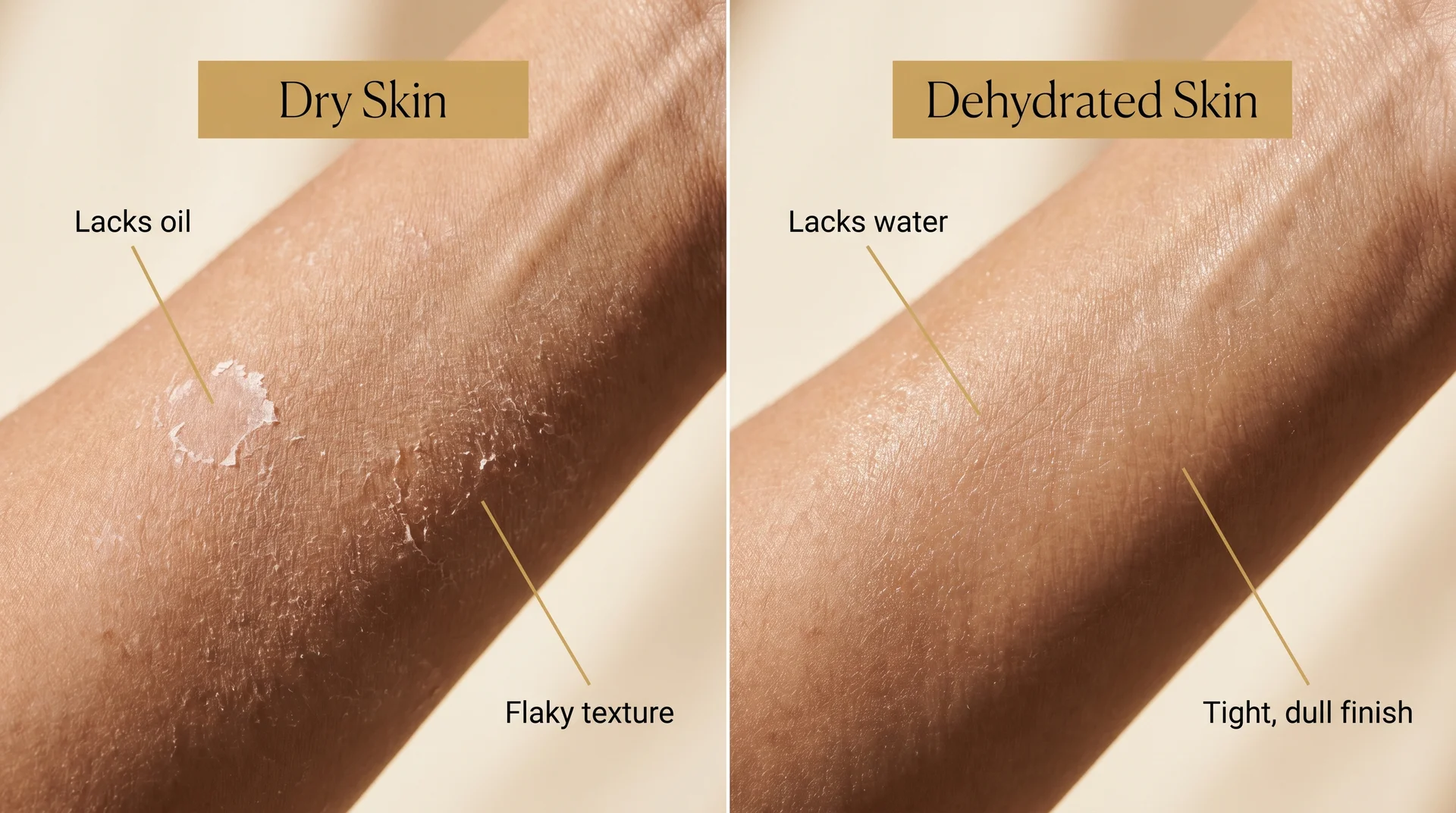
Dry skin lacks oil. Dehydrated skin lacks water. They look similar and cause similar foundation problems, but they respond to different solutions. If you apply a rich moisturizer and your skin still looks dull and tight under foundation within an hour, dehydration is likely the cause.
Your skin barrier is struggling to hold water in, and any product sitting on top of it will shift, cling, and separate.
This distinction changes your product choices. Dry skin needs oil-based or cream foundations and rich, emollient primers.
Dehydrated skin responds better to a hyaluronic acid serum layered before moisturizer, and usually performs better under a water-based or skin-tint formula than a heavy liquid foundation. A Korean milky toner applied right after cleansing is one of the most effective ways to address surface dehydration before any other product goes on.
Why Your Oily T-Zone Might Actually Signal Dehydration
When your skin is dehydrated, it sometimes compensates by producing more oil, particularly across the forehead and nose. The result is a face that looks shiny in the T-zone and feels tight or patchy across the cheeks.
It reads as combination skin, but the underlying cause is a lack of water. If you’ve been reaching for matte formulas to manage this, you may be making the dehydration worse.
A hydrating primer across the full face, paired with a targeted mattifying product only on your oiliest zones, will do more for your foundation’s performance than a single-formula-covers-all approach.
A Damaged Skin Barrier Makes Every Foundation Look Patchy
Your skin barrier is the outermost layer responsible for holding moisture in and keeping irritants out. When it’s compromised, whether from over-exfoliating, harsh cleansers, or going through a period of stress, the foundation doesn’t settle on it. It reacts with it.
Signs your barrier needs attention before you address the makeup problem: foundation pills the moment you try to blend it, your skin feels sensitive or stinging under regular products, and no amount of moisturizer makes a visible difference before application.
If this sounds familiar, step back from active ingredients for a week. Use a gentle cleanser, a barrier-supportive moisturizer with ceramides or squalane, and a minimal primer. The makeup problem often resolves on its own once the barrier does.
I had a bride whose skin barrier was completely depleted from a skincare overhaul she’d started two weeks before her wedding. She was using three acids and a retinol, all at once. Her wedding morning was about doing almost nothing: a hydrating essence, a gentle moisturizer, and the lightest possible skin tint. Her skin looked better than any full-coverage foundation would have given her on a damaged surface. – Sophie Kim
Zone by Zone: Where Your Foundation Goes Patchy and Why
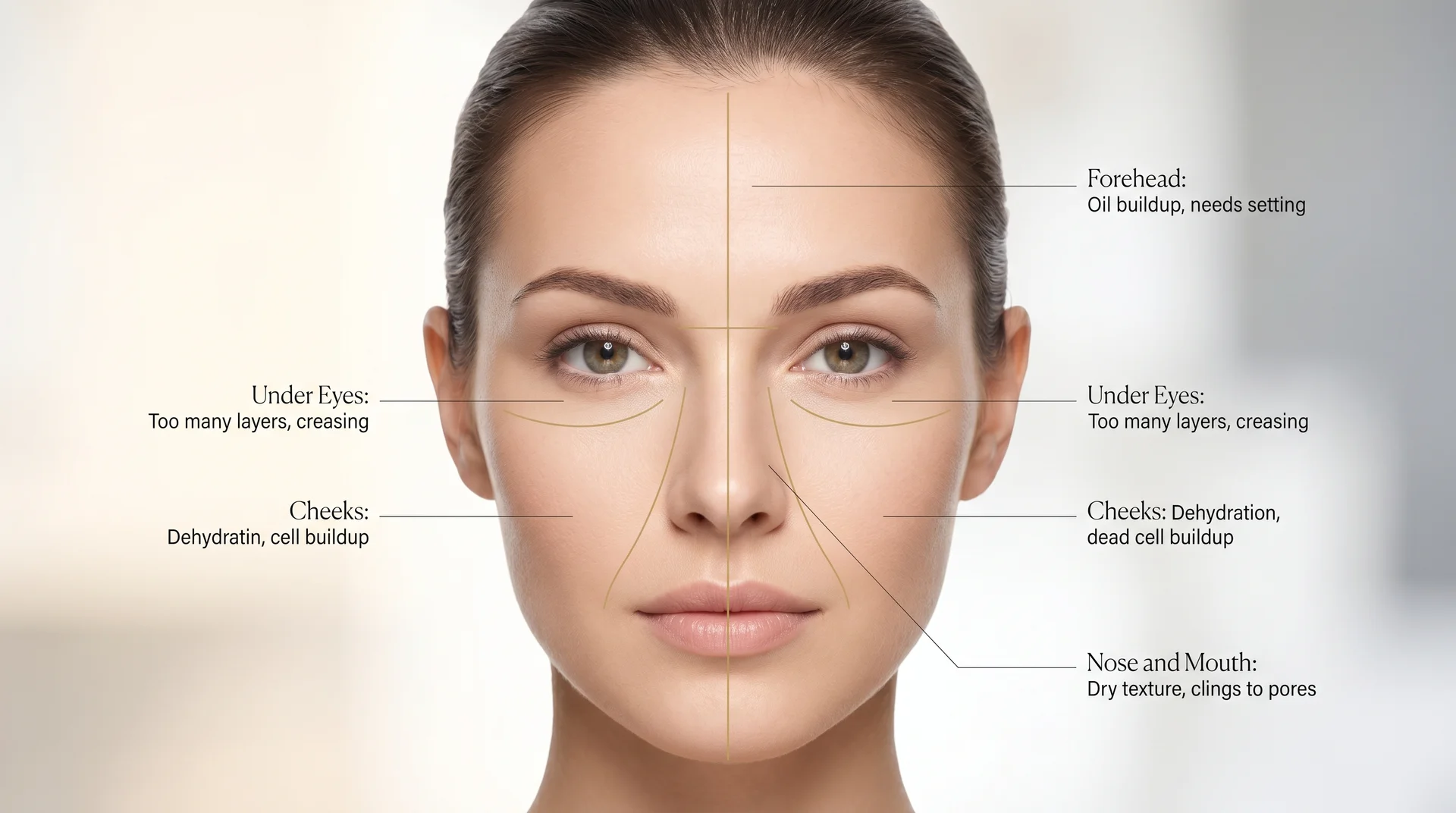
Your face is not one uniform canvas. Patchiness rarely happens everywhere at once, and different zones patch for different reasons. Knowing which zone is giving you trouble is the fastest shortcut to identifying the cause.
Foundation Clinging Around the Nose and Mouth
The skin around your nose is thinner, often drier, and has more texture around the nostrils. Foundation clings here because the surface has more variation: dry edges, enlarged pores along the sides, and constant movement from speaking and smiling that pulls product into fine lines.
The fix is targeted prep: apply a small amount of hydrating serum specifically around the nose before your overall moisturizer step. During application, press your sponge into this area rather than sweeping it, and use the smallest amount of product you can.
Cheeks Looking Patchy or Dull on Dry Skin
Flaky, dull patches on the cheeks almost always point to dehydration, dry skin, or dead cell buildup from previous makeup days that weren’t fully removed. Foundation on an unexfoliated surface settles into the dead cell layer and looks grainy and flat.
Gentle chemical exfoliation two to three nights a week, a properly matched moisturizer, and a hydrating foundation formula resolve most cheek patchiness without any other product changes. If you’re using a matte formula on your cheeks and they’re dry, that’s the first thing to change.
Under-Eye Patchiness and Concealer Creasing
Under-eye patchiness almost always comes from layering too many products in a zone that needs very little. Thick eye creams that haven’t absorbed, heavy concealer applied in one pass, and setting powder on top of all of that create a crackling texture that looks terrible in natural light.
The fix: use eye cream sparingly and let it absorb for at least five minutes. Apply concealer in one thin layer, blend with a small damp sponge, and skip heavy powder under the eye entirely.
If you need to set, press a small amount of translucent powder only into the inner corner.
Forehead Separating or Getting Patchy Mid-Day
The forehead is typically the oiliest zone on the face. If your foundation separates here mid-day, it’s almost always a setting issue: too little powder, the wrong powder, or no setting spray after application.
If it patches at application time with a flaky texture, you’re likely dehydrated in this zone and over-relying on mattifying primers that strip away what little moisture you have.
Add a hydrating serum to your morning prep and ease off on mattifying products here until the dehydration is addressed.
The Skin Prep Sequence That Stops Patchy Foundation Before It Starts
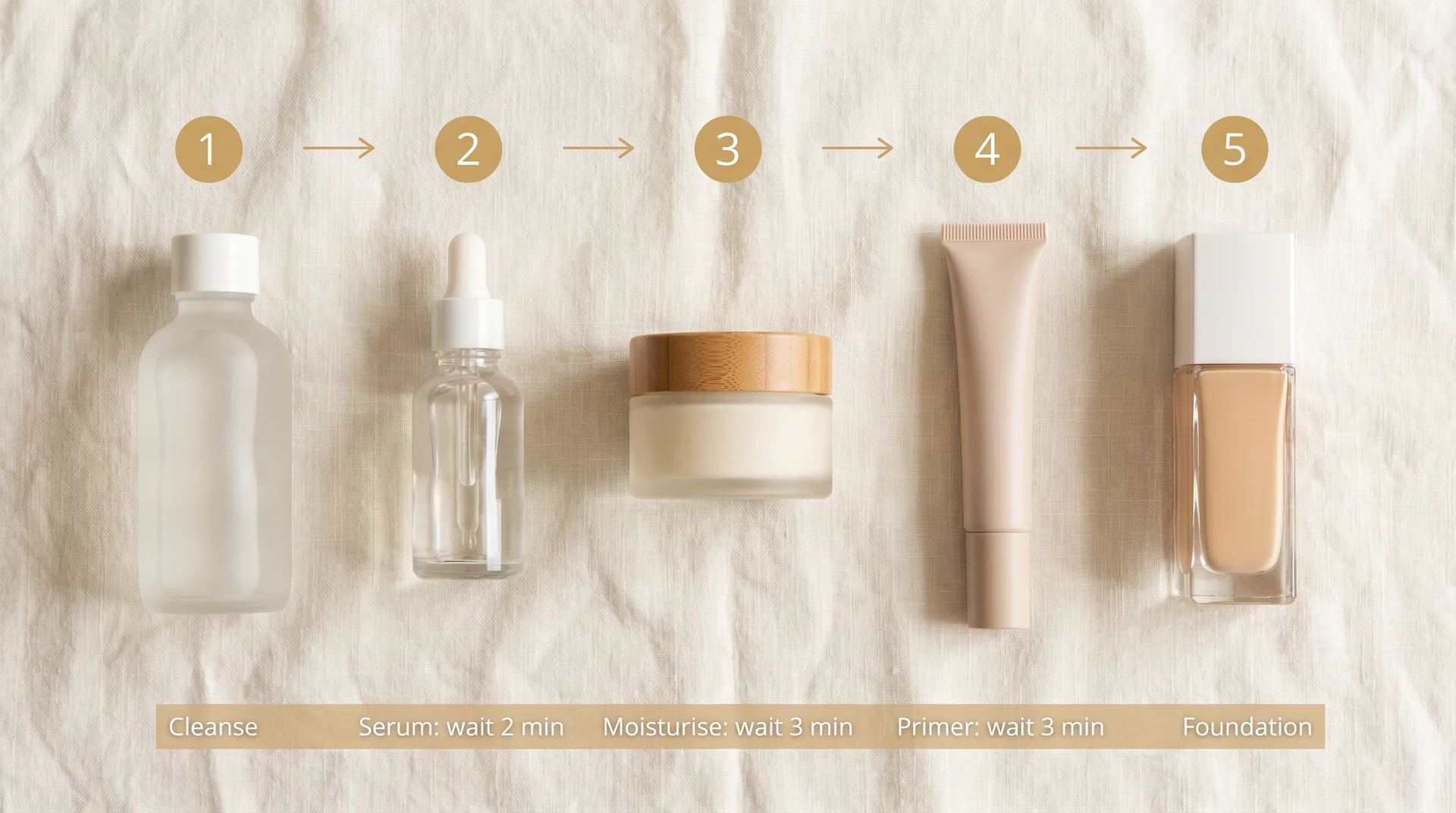
Skin prep is not just “moisturize and prime.” The sequence matters, the timing matters, and the logic behind each step determines how well everything on top of it performs.
Cleanse First, Even If You Cleansed Last Night
Overnight skincare residue, oils produced while you sleep, and leftover product from the previous day accumulate on your skin surface. Foundation applied over this layer will always look slightly uneven, even when you can’t see or feel the buildup.
A gentle morning cleanse with a low-pH cleanser takes two minutes and changes how everything else sits. You don’t need to strip your skin. You need a clean starting point.
Exfoliation Timing That Changes How Patchy Foundation Behaves
Exfoliate at night and apply makeup in the morning. This gives your skin time to recover and arrive at a calm, smooth surface without any irritation that can interfere with how foundation adheres.
Chemical exfoliants, specifically a low-percentage lactic acid or a mild BHA, work better than physical scrubs for most skin types. Two to three nights a week is enough, and skipping exfoliation entirely is one of the more common reasons cheek patchiness persists despite good moisturizing habits.
For a guide on choosing the right exfoliating toner for your skin type, the best Korean toners guide covers this well.
Moisturize for Your Specific Foundation Formula
This is the step most people rush, and it causes more patchiness than almost any other single factor.
- If you use a water-based foundation, apply a hyaluronic acid serum, let it absorb for two minutes, then apply a lightweight water-based moisturizer and give that another two to three minutes before primer.
- If you use a silicone-based foundation, use a lighter moisturizer or a hydrating primer that bridges your skincare and foundation without creating a slippery layer between them.
- If you use a full-coverage or liquid-to-powder formula: make sure your moisturizer is fully absorbed and matte before you start. A slightly tacky skin surface causes these heavier formulas to pill and move rather than adhere.
- For very dry or mature skin: mix one drop of a non-fragranced face oil directly into your foundation before application. This prevents the formula from sitting flat on dry patches and gives it a more skin-like finish throughout the day.
SPF Sunscreen and Patchy Foundation: The Compatibility Problem
Sunscreen is non-negotiable, but it’s also one of the more overlooked causes of foundation patchiness. Certain SPF formulas, particularly those with a silicone-heavy base, create a layer that water-based foundation cannot adhere to properly.
The foundation sits on top of the sunscreen and slides around rather than bonding with the skin. If your foundation started patching after you introduced a new sunscreen into your routine, formula incompatibility is likely why.
Check whether your sunscreen and foundation share a compatible base (both silicone, or both water-based). Mineral sunscreens with a dry-finish formula tend to sit more neutrally under most foundations than chemical SPFs, which often have a silky, silicone-rich texture.
Allow your sunscreen to dry fully, at least two minutes, before applying primer or foundation on top.
Primer Is Not Optional, But Most People Use the Wrong One
Primer creates the right surface for your foundation to grip, blurs visible texture, and extends wear. It can’t do any of those things if it’s chemically incompatible with your foundation.
Mixing a silicone-based primer with a water-based foundation causes separation on the skin. That’s what produces the sliding, uneven finish that no amount of blending corrects.
To check your formula, look at the second or third ingredient on the label. If it ends in “-cone” or “-siloxane,” it’s silicone-based. If neither appears in the first five ingredients, it’s water-based.
| Primer Type | Best Paired With | Avoid Pairing With |
|---|---|---|
| Silicone-based (contains dimethicone or any -cone ingredient) | Silicone-based foundation | Water-based foundation |
| Water-based (no -cone ingredients in the top five) | Water-based or lightweight liquid foundation | Heavy silicone formulas |
| Hydrating primer (hyaluronic acid base) | Skin tints, luminous, or dewy foundations | Matte or full-coverage formulas |
| Mattifying primer | Matte or semi-matte foundations | Luminous or skin-tint formulas |
Note on niacinamide and vitamin C serums: both can cause pilling when layered under silicone primers. If you use either, apply them first, allow two to three minutes of absorption, then follow with a water-based primer and a compatible foundation.
Skipping this wait time is a common and frustrating source of unexplained patchiness.
Why Your Foundation Formula Is Making Your Makeup Look Patchy
Formula choice is where I’ve seen the most persistent, fixable patchiness go unresolved for the longest time. People adjust their moisturizer, change their primer, try a new brush, and never identify that the foundation itself is the wrong match for their skin type.
Silicone-Based vs. Water-Based Foundation: How to Tell the Difference
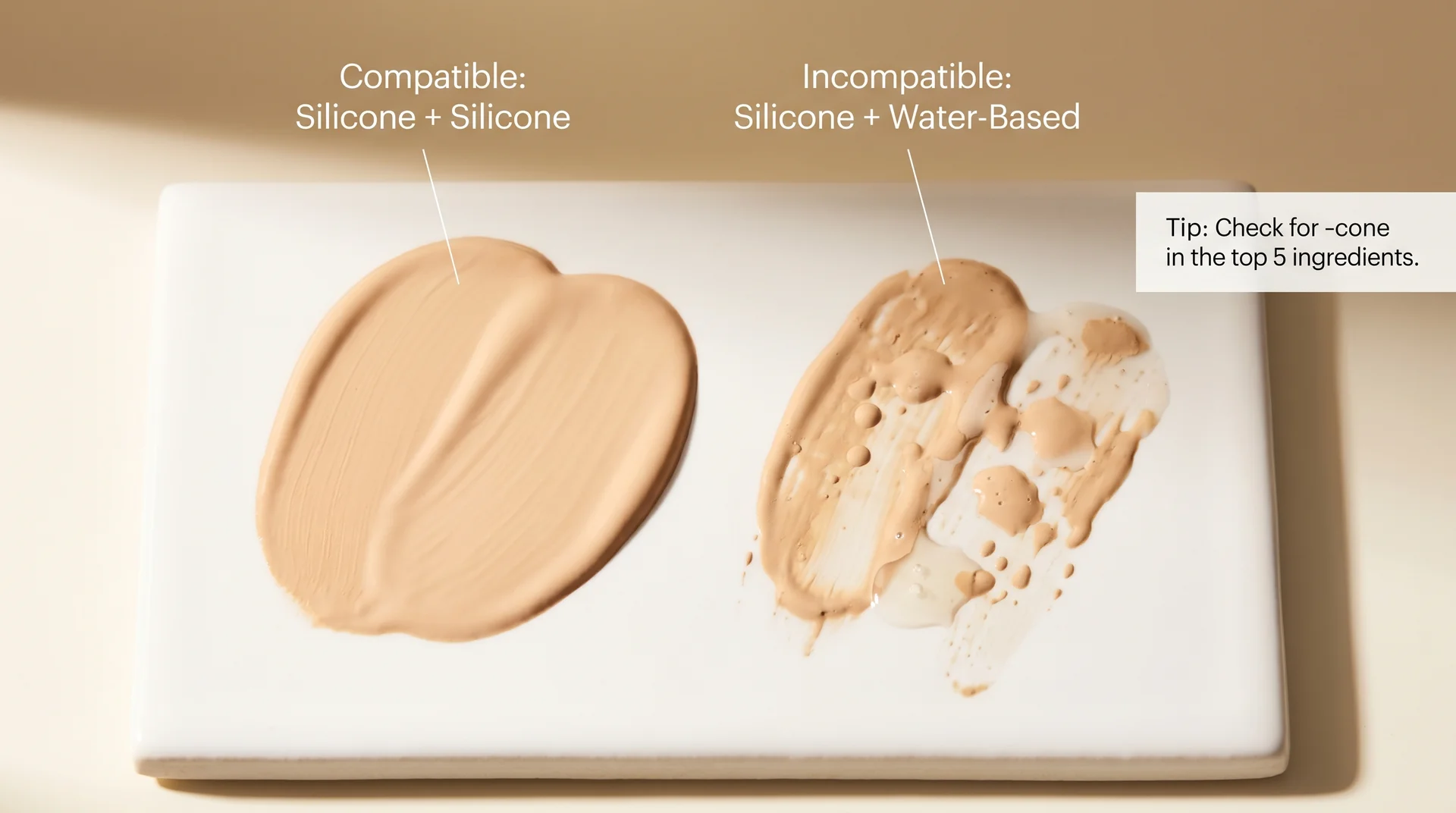
Silicone-based foundations contain ingredients like dimethicone or cyclopentasiloxane in the first three to four positions on the ingredient list. They give a smoothing, pore-blurring effect and tend to wear well on combination and normal skin types.
Water-based foundations list water (aqua) as the first ingredient and contain no silicones near the top. They feel lighter, more breathable, and work especially well on dry or sensitive skin that benefits from hydration within the formula itself.
Applying a silicone primer under a water-based foundation causes separation because the two formulas don’t bond. If you’ve experienced a slippery, uneven finish that blending never corrects, formula incompatibility is likely why.
Why Matte Foundation on Dry Skin Causes Patchiness
Matte formulas are designed to absorb oil. On dry skin, they pull the remaining moisture from the surface and make existing texture look dramatically more pronounced.
If you have dry skin and prefer a controlled finish, use a semi-matte or natural-finish foundation across the full face and set selectively with a light powder only in your oiliest zones. You get oil control where you need it without sacrificing the rest of your face to a chalky, patchy result.
Full Coverage vs. Skin Tint: When Less Formula Fixes the Patchy Look
Heavy, full-coverage formulas require a smooth, well-prepped base because they cover a lot of surface area, and any unevenness underneath shows through the product itself. If you consistently struggle with patchiness and you’re using full coverage, try dropping to a medium-coverage liquid or a skin tint.
On dry and combination skin, especially, a lighter formula blends more forgivingly, moves with the skin throughout the day, and rarely patches the way heavier formulas do.
A note on expired foundation: a formula past its shelf life separates, oxidizes, and applies unevenly, regardless of how good your prep is. Check the PAO (period-after-opening) symbol on the packaging and replace any foundation you’ve been using beyond that window. Most liquid foundations are formulated for 12 months after opening.
Application Mistakes That Cause Patchy Foundation
Why Applying Too Much Foundation in One Pass Makes Patchiness Worse
More foundation almost never means more coverage. A thick single layer is harder to blend, more likely to drag across dry patches, and far more prone to creasing into fine lines. Apply foundation in thin, buildable layers.
Start with a small amount in the center of the face and blend outward. Assess what you have, then add more only where you genuinely need it.
Brush, Sponge, or Fingers: What to Use on Patchy Skin
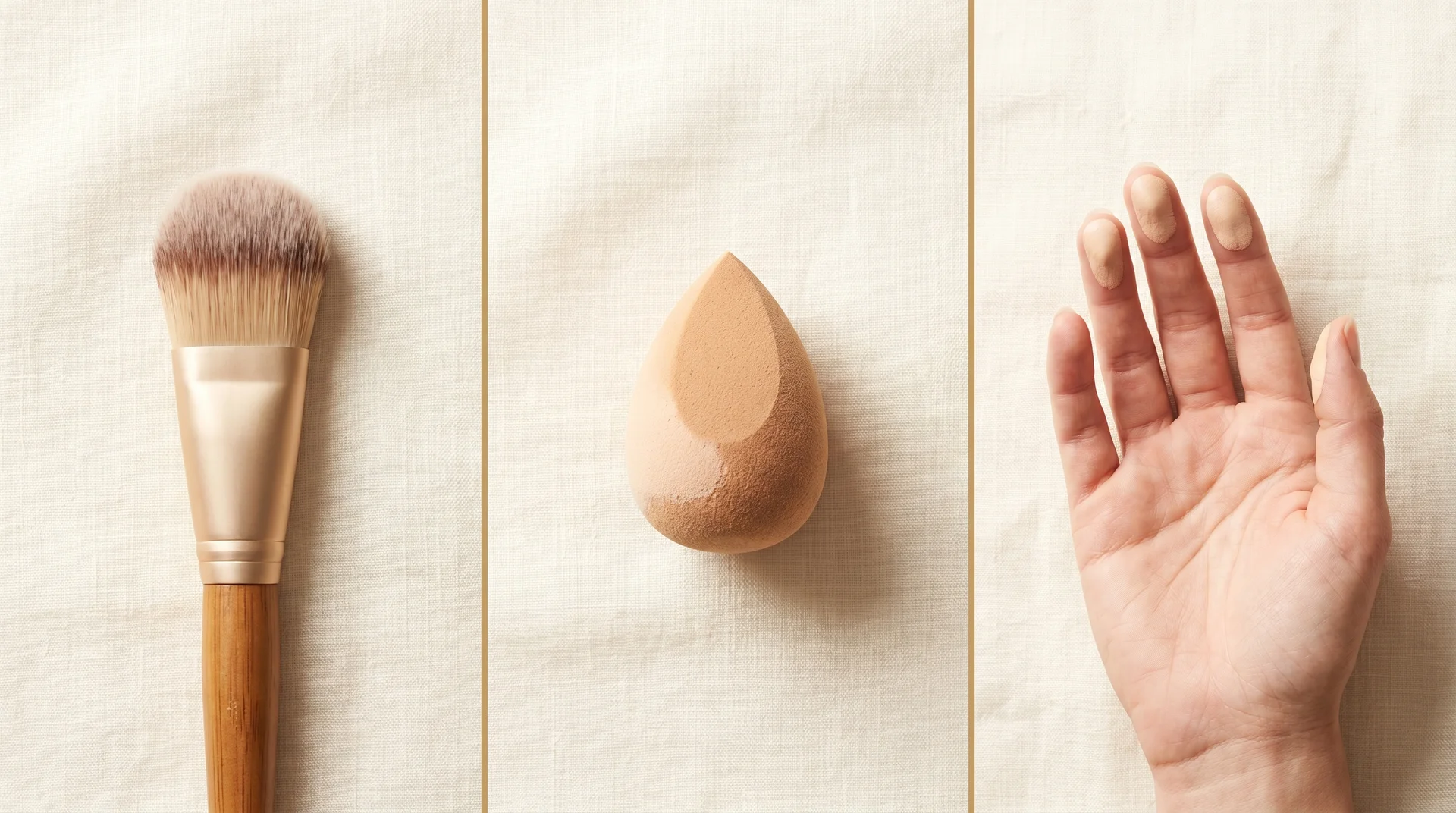
- Dry or dehydrated skin: a damp beauty sponge pressed into the skin, rather than dragged across it. The moisture in the sponge adds slip that helps the foundation blend without pulling at dry patches.
- Oily or combination skin: a densely bristled, flat foundation brush gives precise, controlled coverage that sits on the surface without pushing product around.
- Mature skin or visible texture: fingertips, warmed by contact with your skin, can melt foundation into fine lines more naturally than any brush. Use the pads of your fingers in small, pressing motions.
- Full-coverage formulas: start with a brush to place the product, then press a damp sponge on top to remove brush marks and push the foundation into the skin.
Press, Don’t Drag: The Blending Direction That Fixes Patchy Foundation
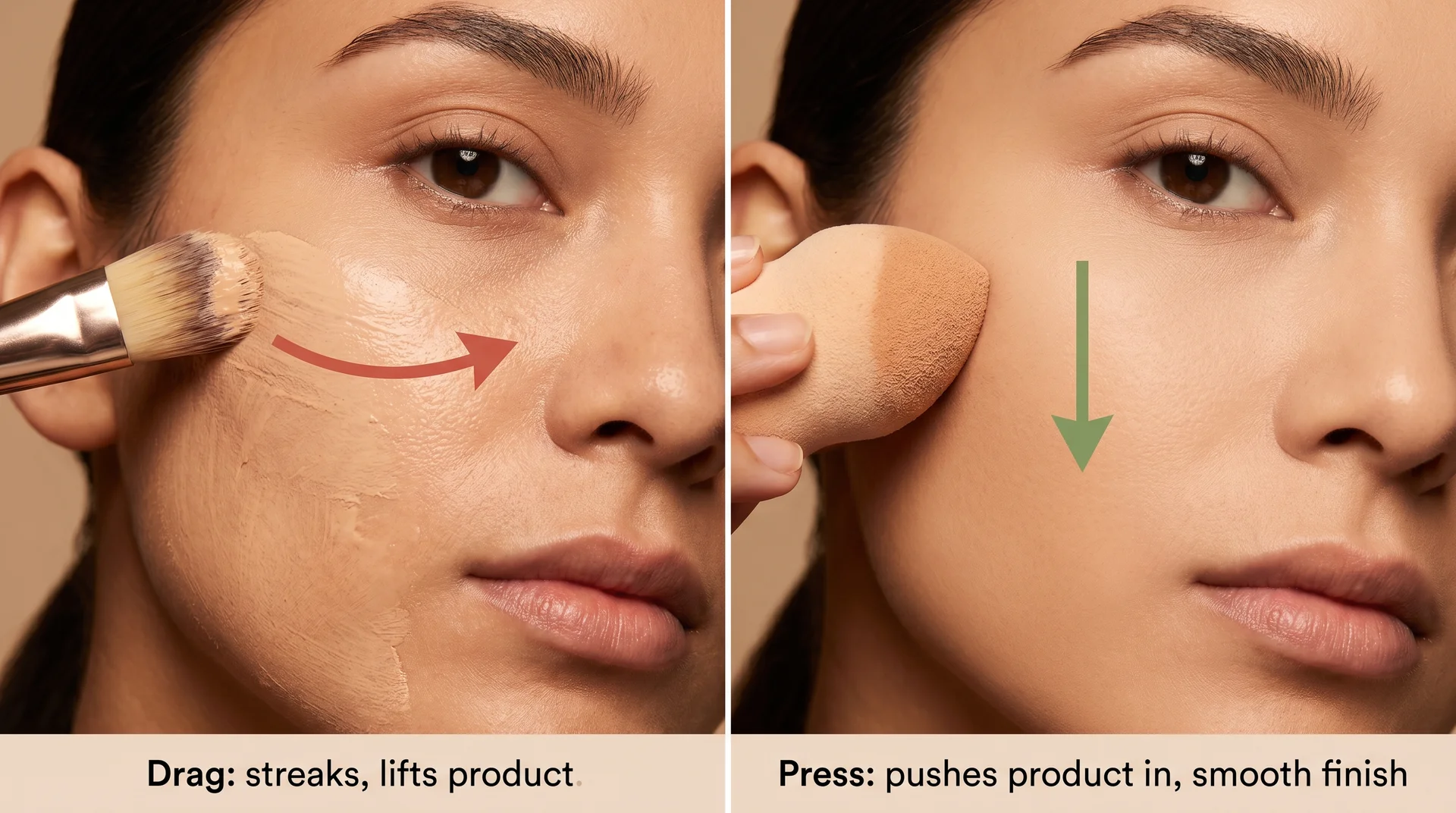
Sweeping or dragging foundation across dry or textured skin moves the product in one direction and lifts it in another, leaving thin patches in some areas and thick buildup in others.
Pressing and stippling, where you tap or bounce your tool into the skin, gives you more even coverage because you’re pushing the product into the surface rather than across it.
This single technique change makes a significant difference on any skin with visible texture or dryness, particularly around the nose and across the cheeks.
How Long to Wait Between Skincare and Foundation
Allow at least three to five minutes between your last skincare product and your primer, and another two to three minutes between primer and foundation.
Foundation applied over skincare that hasn’t absorbed sits on top of the wet product underneath and moves all day. The wait time is often the fix before any product change is needed.
For more on how your morning routine order affects the finished result, the guide on whether to do hair or makeup first covers the full sequence, including where foundation fits.
How to Fix a Patchy Foundation Mid-Day Without Starting Over
The Face Mist and Damp Sponge Reset
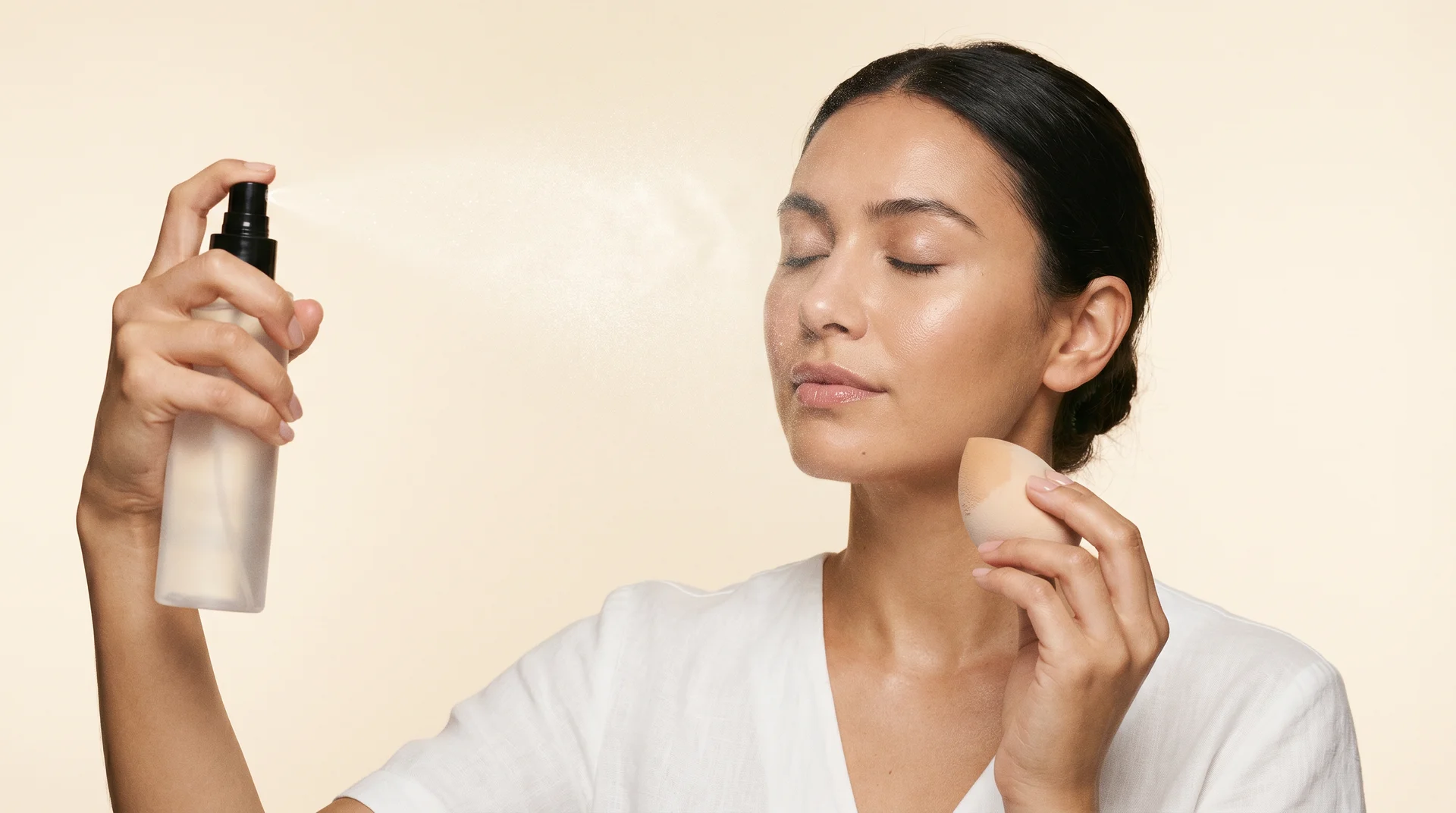
A setting or hydrating mist is the fastest mid-day fix for most types of patchy foundation. Hold the bottle about eight to ten inches from your face, mist lightly over the affected area, let it sit for thirty seconds, then press a clean, slightly damp sponge over it to push the rehydrated foundation back into the skin.
Match your mist to your foundation base: water-based mist for water-based foundation. Avoid repeatedly misting over a silicone-based formula throughout the day, as too much moisture causes a sliding effect.
Targeted Mid-Day Touch-Ups by Zone
- Around the nose: press a very small amount of fresh foundation or concealer with your fingertip and blend immediately with a small sponge. Skip the brush here for touch-ups; it drags product instead of pressing it in.
- Under the eye: use a clean, warmed fingertip to gently press creased concealer back into the skin. Add nothing new. Let body heat do the work.
- Oily T-zone breakdown: blot first by pressing a clean tissue against the area gently. Then dust a small amount of translucent setting powder with a fluffy brush. Avoid pressing more foundation into an already oily zone; it will separate again within the hour.
Always press, never rub, when fixing patchy foundation mid-day. Rubbing moves the product away from areas where you still have coverage and creates new bare spots alongside the old ones.
When Weather Is Why Your Makeup Looks Patchy
Some days, your technique is solid, your formula is right, your prep is careful, and your foundation still breaks down because the conditions around you are working against everything you built.
Cold Weather, Indoor Heating, and Patchy Foundation on Dry Skin
Cold temperatures reduce your skin’s ability to retain moisture, and indoor heating pulls humidity from the air throughout the day. The result is skin that dehydrates faster than usual, which means the canvas you started with in the morning has shifted by noon.
In winter months, add a hydrating serum to your morning prep even if you don’t usually use one, and consider shifting to a more hydrating foundation formula for the season.
High Humidity and Heat: When Foundation Breaks Down, No Matter What
In high humidity, your skin produces more sweat and oil, which lifts foundation from underneath faster than almost anything else. Setting becomes more critical in these conditions than any other single prep step.
A setting spray applied over your finished foundation, followed by a light dusting of translucent powder on your oiliest zones, gives you the most stable base. Silicone-based foundations tend to hold better in humidity than water-based ones, since water-based formulas interact more visibly with sweat.
Adjusting Your Foundation Routine by Season, Not Just Skin Type
Your skin type is not static. I approach prep differently on a rainy November morning at an outdoor bridal shoot than I do on a dry August editorial day. The same face. The same products. But a completely different prep emphasis based on what the conditions require.
- Summer: prioritize setting and use a setting spray to lock everything in place.
- Winter: emphasize hydration in prep, lean toward luminous or satin formulas, and ease back on powder.
- Transitional seasons: pay attention to what your skin is doing on a given morning rather than following a fixed routine from another time of year.
Patchy Foundation Diagnosis: Quick Reference Guide
If Your Foundation Patches Immediately After Application
| What You’re Seeing | Most Likely Cause | Fix |
|---|---|---|
| Foundation clings to the nose and nostrils | Dry, textured skin surface | Apply hyaluronic acid serum to this zone before moisturizer; press the sponge, don’t drag |
| Cheeks look flaky or grainy | Dehydration or dead skin cell buildup | Chemical exfoliant 2-3 nights per week; switch to a hydrating foundation formula |
| Foundation pills on application | Skincare hasn’t absorbed; primer-foundation formula mismatch; niacinamide under silicone primer | Wait 3-5 minutes after skincare; confirm your primer and foundation share a compatible base |
| Foundation skips unevenly across the face | Dry skin, wrong formula type, or SPF incompatibility | Try a luminous or skin-tint formula; check sunscreen compatibility; use a damp sponge |
If Your Foundation Looks Fine at First, But Gets Patchy Later
| What You’re Seeing | Most Likely Cause | Fix |
|---|---|---|
| Foundation slides off the T-zone by mid-morning | Insufficient setting; excess oil production | Translucent powder on oily zones; finish with a setting spray every time |
| Creasing around the mouth and eyes | Too many layers in the expression zones | Apply in thinner layers; use minimal or no powder in these specific areas |
| Foundation separates into patches across the face | Formula-to-skin mismatch, environmental factors, or expired product | Reassess formula for current season; check product expiry date; add setting spray |
If Certain Areas Are Always Patchy, No Matter What You Try
- The nose, consistently: add a targeted prep step. Apply a small amount of primer specifically to this zone before your overall primer application. The texture around the nose responds well to localized prep.
- Under the eyes, consistently: strip back the layers. Eye cream in a small amount, fully absorbed. Concealer in one thin layer, set minimally or not at all.
- Cheeks only: the issue is almost always the formula. Try a hydrating skin tint or serum foundation specifically in this zone, even if you use a different formula elsewhere on your face.
- Forehead only: identify whether it’s oil or dehydration based on timing. Mid-day separation means setting more thoroughly. Application-time patchiness means add a serum step and ease off any mattifying product here.
One Last Thing About Patchy Foundation
A patchy foundation is not a verdict on your skin or your skill. It’s information. Your skin is telling you that something between what it needs and what it’s receiving is out of alignment, and that’s worth a conversation rather than a correction with more product.
Every face I’ve worked on, from bridal suites on wedding mornings to editorial sets in the Pacific Northwest, has reinforced the same thing: the solution is rarely more coverage. It’s understanding the surface first, then choosing what goes on top of it with that understanding in hand.
Start with where and when your patchiness appears. Work back from there. The answer is almost always closer than you think.