
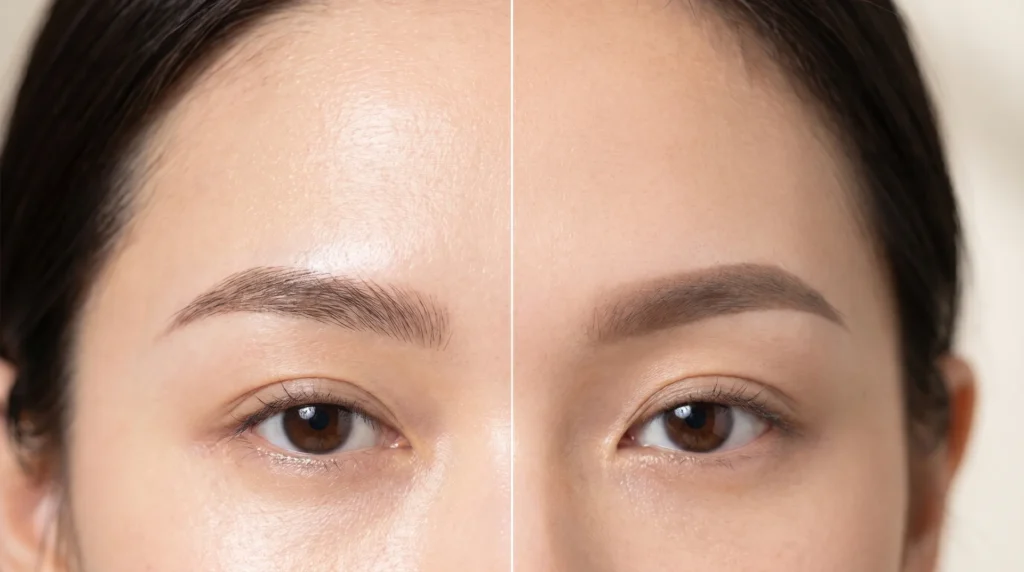
| Heads up: Nano brows and powder brows are forms of cosmetic tattooing. This article is for informational guidance only. Individual results vary based on skin type, health history, and the artist’s skill. Always consult a certified, licensed PMU artist before booking, and speak with your doctor if you have any skin conditions, active medications, or health concerns that may affect healing. |
You’ve probably already read a few articles about this. You’ve scanned the comparison tables, looked at before-and-afters, and still aren’t sure which one is yours. That’s not indecision. That’s what happens when most content answers the wrong question.
The real question isn’t what the difference is between nano brows and powder brows. It’s which one will look right on your face, heal well on your skin, and still make you happy a year from now.
I’ve been doing makeup professionally across bridal, editorial, and fashion work in the Pacific Northwest, and brow decisions come up constantly with clients, especially brides who are planning procedures weeks before their wedding. I’ve seen both techniques freshly done, half-healed, fully healed, and two years in. That’s the perspective I’m bringing here.
Here’s what you’ll walk away with: a clear answer for your specific situation and enough understanding of both techniques that you feel confident going into your consultation.
The Quickest Honest Answer: Nano Brows vs. Powder Brows
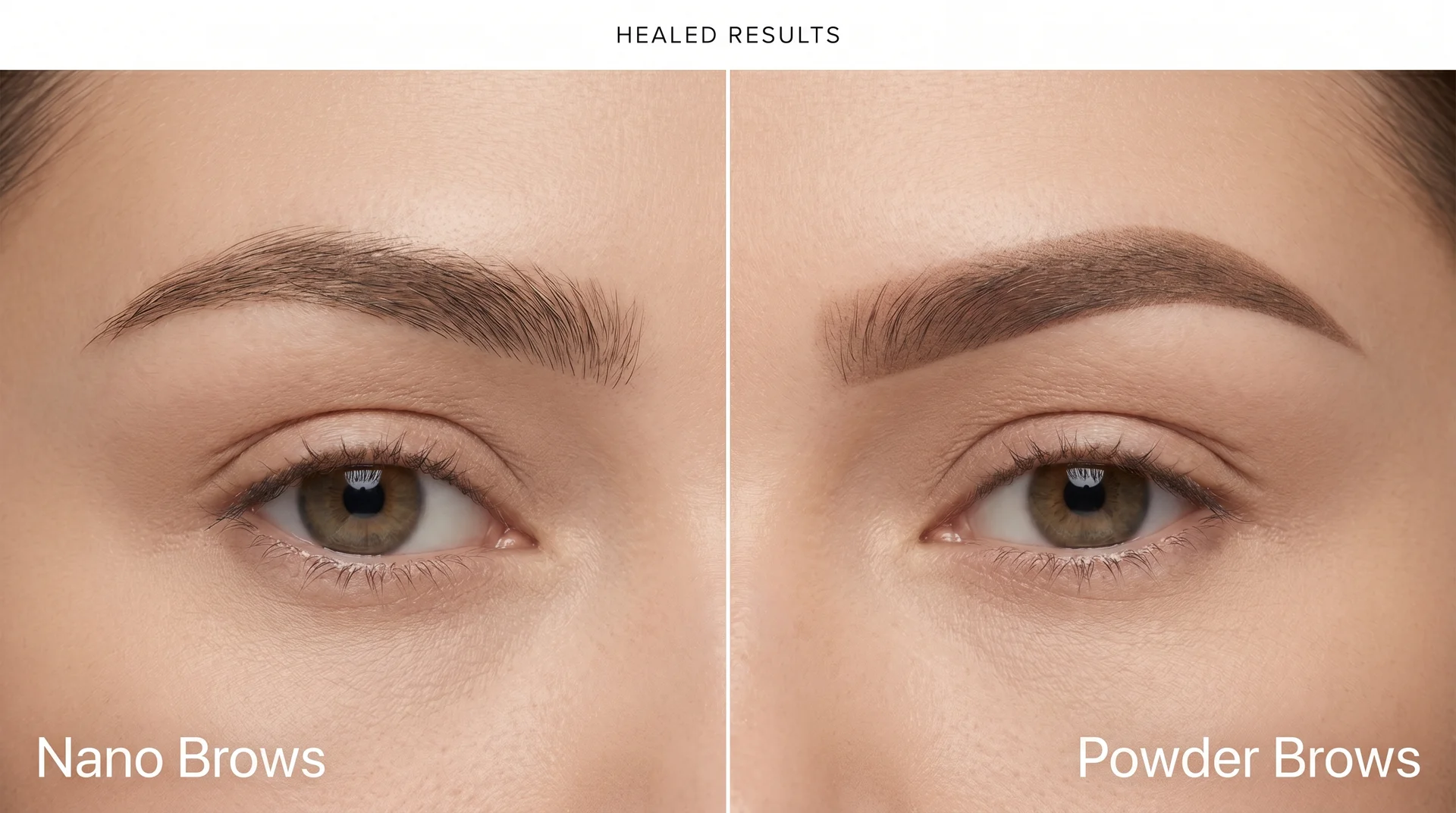
Nano brows use a single ultra-fine machine needle to draw individual hair-like strokes into the skin. They look feathery, dimensional, and realistic. They’re best for sparse or thin brows on dry-to-normal skin and typically last 12 to 18 months.
Powder brows use a shading technique that deposits soft pigment across the brow in a gradient, lighter at the front and deeper toward the tail. They look like beautifully applied brow product that never smudges. They suit a wider range of skin types, including oily skin, and typically last 1 to 3 years.
If your skin is oily, powder brows are almost always the stronger technical choice. If your skin is dry to normal and you want brows that look like they grew there, nano brows will likely give you what you’re picturing. If you want both realism and fullness, there’s a hybrid option we’ll cover below that most articles skip entirely.
Nano Brows vs. Powder Brows: Side-by-Side Comparison
| Nano Brows | Powder Brows | |
|---|---|---|
| Technique | Single needle, individual hair strokes | Stippling machine, soft pixel shading |
| Look | Natural, feathery, hair-like | Soft makeup finish, gradient, polished |
| Best Skin Type | Dry to normal | All types, especially oily or mature |
| Longevity | 12 to 18 months (up to 24 on dry skin) | 1 to 3 years |
| Initial Cost (US) | $400 to $800 | $350 to $700 |
| Touch-Up Frequency | Every 12 to 18 months | Every 18 to 24 months |
| Session Time | 2 to 3 hours | 1.5 to 2.5 hours |
| Healing Time | 4 to 6 weeks for the full result | 3 to 5 weeks for the full result |
| Pain Level | Mild to moderate (numbing used) | Mild (numbing used, typically faster) |
| Ideal For | Sparse brows, natural look | Fuller coverage, low maintenance |
What Each Technique Actually Does to Your Skin
How Nano Brows Work
A PMU machine drives a single ultra-fine needle into the superficial layers of skin in rapid, controlled punctures. The artist draws these punctures in deliberate strokes following the natural direction of your brow hairs, mimicking the appearance of individual hairs growing from the skin.
Each stroke is placed with intention. The finished result is dimensional and textured, with a softness that reads as natural even up close.
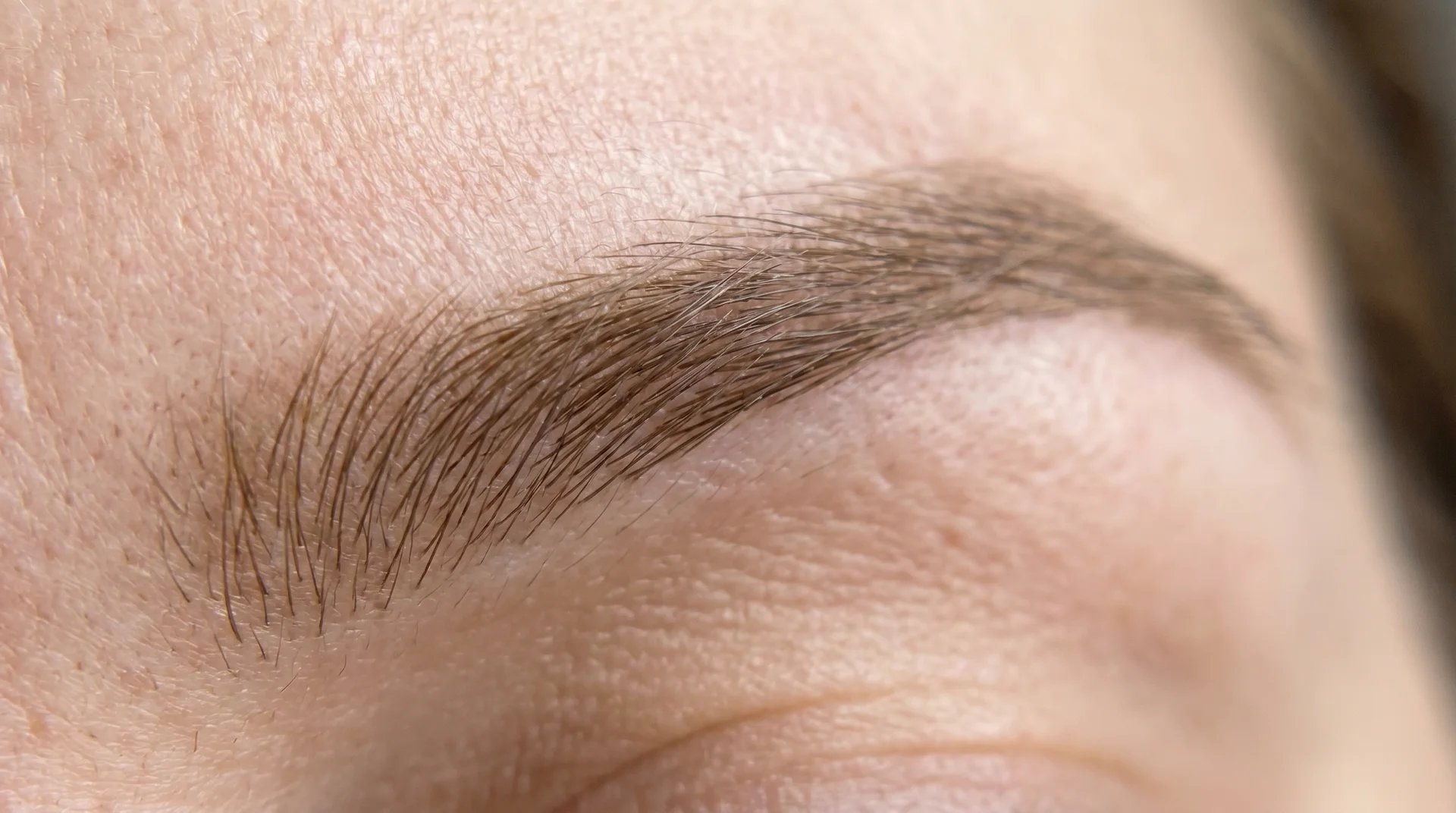
When I’m working with bridal clients who want brows that hold up in high-resolution photography, nano brows come up often. The hair-stroke detail creates real dimension in close-up images that shaded brows sometimes can’t match in natural light.
How Powder Brows Work
Powder brows use a shading technique where the artist deposits thousands of tiny pigment dots across the brow using a machine. Density builds gradually, which creates the gradient effect.
The front of the brow stays lighter and softer, and the colour deepens through the arch into the tail. The result looks like someone has softly and precisely filled in your brows every day without any effort.
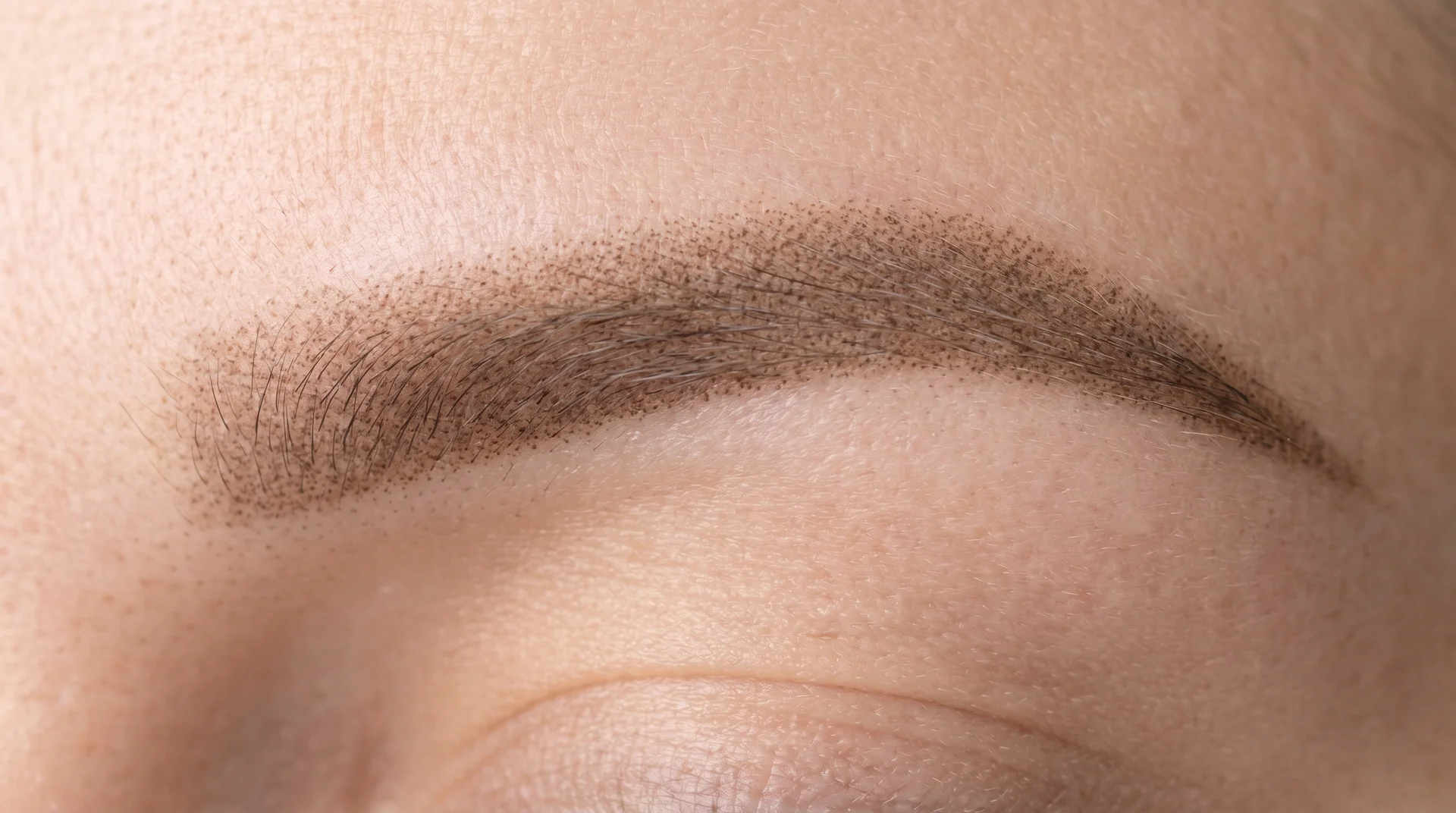
Because the pigment sits more densely in the skin, it lasts longer and holds up better on oily skin.
Nano Brows vs. Microblading: A Quick Note
A lot of people arrive at this comparison already confused about microblading. Here’s the short version: microblading uses a manual blade that creates incisions in the skin, while nano brows use a machine that punctures rather than cuts.
Nano brows cause less skin trauma, work better on oily skin, produce crisper and more consistent strokes, and carry a lower long-term risk of blurring. Most experienced PMU artists now recommend nano brows over microblading for the same hair-stroke look with better outcomes.
If you’re weighing microblading against nanoblading specifically and want the full technique breakdown, this guide to nanoblading vs. microblading covers exactly how the two hair-stroke methods differ before you commit.
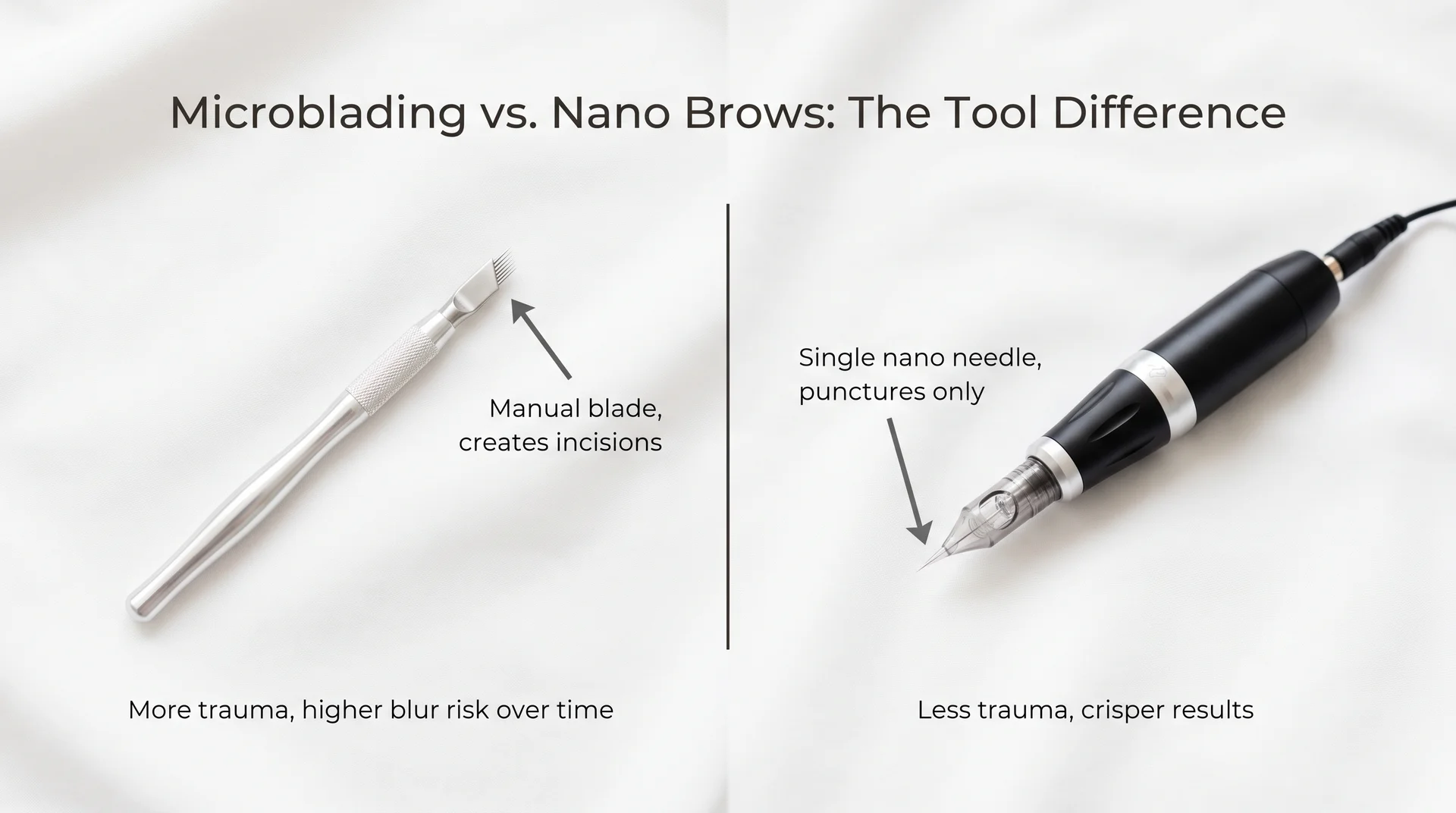
Most experienced PMU artists now recommend nano brows over microblading for the same hair-stroke look with better outcomes. If you’re still weighing microblading as an option, this breakdown of eyebrow tattoo vs. microblading covers the full comparison before you commit.
Powder brows also use a machine and are a separate aesthetic entirely.
The Core Difference Between Nano and Powder Brows
Strokes versus shading. That’s it. If you want brows that look like they grew there, you’re describing nano brows. If you want brows that look like you applied them beautifully and permanently, you’re describing powder brows.
Neither is superior. They’re built for different aesthetics and different lives.
Which Technique Suits Your Skin Type
Skin type is the single most important factor that most people underestimate. It affects how long results last, how crisp strokes stay, and whether you’ll be happy at the 12-month mark or frustrated.
Dry or Normal Skin: Both Techniques Work Well
You have the most flexibility here. Nano brows heal predictably on dry to normal skin, and strokes hold their definition well over time. Powder brows perform beautifully too, with even fading.
If you’re in this category, your choice comes down almost entirely to the aesthetic you want, which is a nice place to be.
Oily Skin: Why Powder Brows Hold Up Better
Nano brows can work on oily skin, and many artists offer them to oily-skinned clients with good results. But the science matters here.
Oily skin pushes pigment out more aggressively during healing, and individual hair strokes are more vulnerable to softening and blurring over time than densely deposited shading.
Powder brows hold up significantly better on oily skin because the pigment density is higher and the shading technique is less vulnerable to sebum interference.
If you choose nano brows with oily skin, go in with realistic expectations about more frequent touch-ups and a somewhat softer healed result.
Mature or Thinning Skin
Powder brows tend to heal more predictably on mature skin. The shading technique is less dependent on precise stroke-to-stroke definition, so small variations in skin texture matter less.
Fine nano strokes can appear less defined on skin with more laxity or texture, and this is worth discussing honestly with your artist before committing.
Sensitive Skin or Previous Permanent Makeup
If you have existing microblading or semi-permanent brow work that has partially faded, this affects what technique makes sense now. Powder brows can often be applied over faded previous work to even out patchy results.
Nano brows over previous work are more technically complex and depend on how the old pigment has healed. Be transparent with your artist about your history and bring photos at different stages of fading if you have them.
What Nano Brows and Powder Brows Look Like at Every Healing Stage
Days One to Seven: The Part Nobody Warns You About
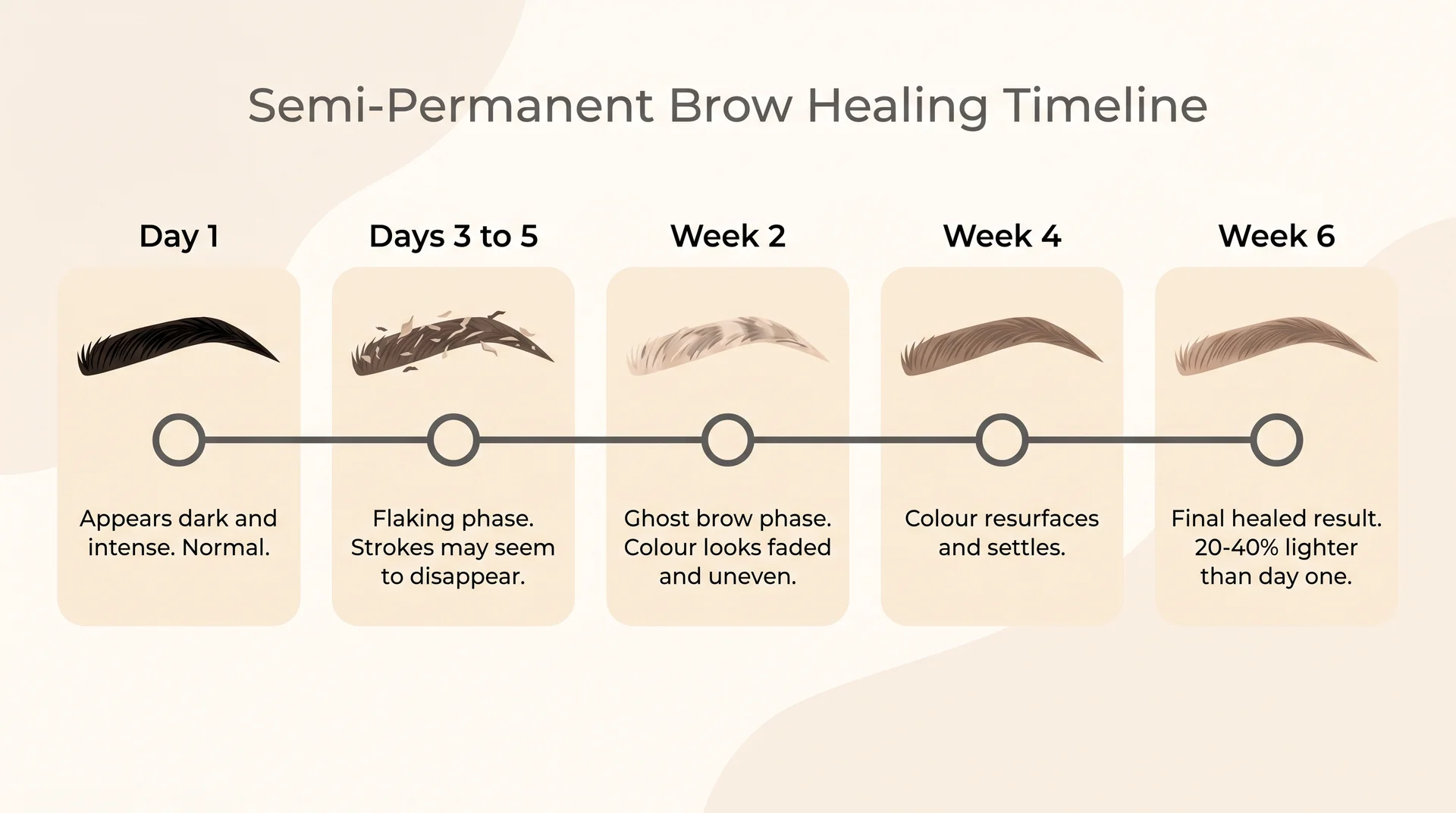
Both techniques will look significantly more intense immediately after the procedure than the final result. The colour appears dark and bold, and the surrounding skin looks irritated. This is not the final result.
Over the following days, both techniques go through a flaking phase as the top layer of skin sheds. With nano brows, strokes can seem to disappear during this phase, which genuinely panics people who haven’t been warned.
For a fullooksek-by-week breakdown of what nano brows actually look like from day one through the six-week healed result, the nano brows before and after guide covers every stage in detail.
With powder brows, the surface colour sheds with the skin cells, and the brows can look patchy or ghost-like for a week or so. This is exactly what’s supposed to happen.
I always tell bridal clients to schedule their brow procedure at least 6 to 8 weeks before their wedding date. Weeks two and three can look worse before they look better, and you don’t want to be navigating that in the week before a major event.
For more on building a smart wedding morning beauty timeline, this guide on whether to do your hair or makeup first covers the sequence well.
Healed Results at Six Weeks
Once fully healed, nano brows look softer, lighter, and more feathery than day one. The initial darkness is gone. What remains is a dimensional texture that blends with your existing hair in a way that’s often genuinely hard to detect.
Both techniques look 20 to 40 percent lighter after healing than immediately after the procedure. This is one of the most common sources of post-procedure disappointment for people who weren’t warned.
It’s normal and accounted for during the procedure, which is why the touch-up appointment at 6 to 8 weeks exists.
What Your Nano Brows or Powder Brows Look Like One Year In
This is the conversation most articles skip. Nano brow strokes naturally soften over months as pigment settles and skin cell turnover does its work. By 12 to 18 months, strokes may appear less crisp and take on a slightly more diffused look.
On dry skin with consistent sun protection, this progression is slow. On oily skin or with an active skincare routine, it happens faster. Powder brows tend to fade more evenly and gradually, maintaining their overall shape longer.
At 18 months, powder brows typically look like a softer version of their 6-week result, not a significantly changed one. This predictability is a real advantage for people who want low-maintenance consistency.
The Real Cost of Nano Brows vs. Powder Brows
| Nano Brows | Powder Brows | |
|---|---|---|
| Touch-Up Cost | $150 to $400 per session | $150 to $350 per session |
| Touch-Ups Needed (5 years) | 3 to 4 sessions | 2 to 3 sessions |
| 5-Year Maintenance Cost | $450 to $1,600 | $300 to $1,050 |
Powder brows cost slightly less upfront in most markets and require fewer touch-ups over time, making them the more economical choice across a 3 to 5 year span.
That doesn’t mean you should choose based on cost alone, but it’s a legitimate factor to know before you book.
What Actually Speeds Up Fading in Nano and Powder Brows
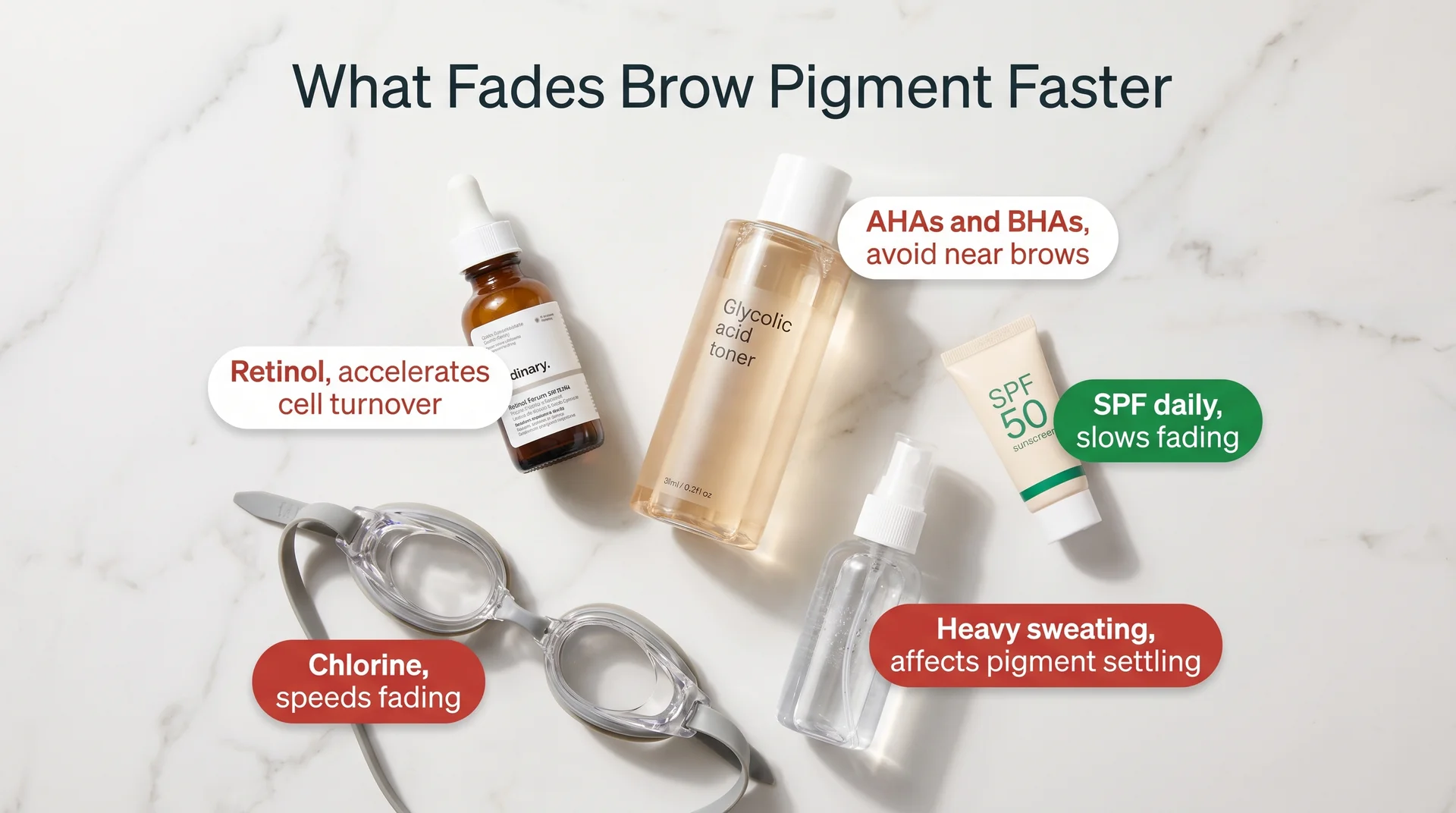
- Retinol and retinoids: These accelerate cell turnover and speed up pigment fading significantly. Keep them away from the brow area.
- AHAs and BHAs (glycolic acid, salicylic acid): Same issue. If you’re building a skincare routine that uses active exfoliants, read up on how to choose toners with active ingredients, so you know what’s in your products and where to apply them.
- Sun exposure without SPF: One of the fastest ways to fade both techniques. Daily SPF over the brow area matters more than most people realise.
- Chlorinated pools and steam rooms: Relevant mostly in the first two weeks, and contribute to faster fading over time.
- Heavy sweating, especially in the first two weeks after the procedure, affects how pigment settles.
If you use a tanning bed, the SPF point above is worth looking at more closely.
The UV inside a tanning bed is significantly more concentrated than outdoor sun, and whether sunscreen actually protects the brow area depends on the type of UV it blocks, not just the number on the bottle.
This guide on whether sunscreen actually works in a tanning bed covers what most people misunderstand about SPF in that environment.
Aftercare for Nano Brows and Powder Brows
Aftercare is where a lot of people undo otherwise great results. Both techniques follow similar rules for the first week, with some nuance.
Do:
- Keep the brow area dry for the first 7 to 10 days. No sweating, swimming, or steam.
- Apply the aftercare ointment your artist provides in a very thin layer if they recommend the wet healing method.
- Let the skin flake naturally. It will. Don’t help it along.
- Sleep on a clean pillowcase, ideally a satin one, to reduce friction.
- Apply SPF 30 or higher over the brow area once healed.
Don’t:
- Pick, peel, or scratch the flaking skin. This pulls pigment out and creates patchy results.
- Apply makeup directly over the brows for at least two weeks.
- Use active skincare ingredients (retinol, AHAs, BHAs) near the brow area for at least four weeks post-procedure.
- Expose the area to direct sun, salt water, or chlorine until fully healed.
- Assume your brows are “done” after the first session. The 6 to 8 week touch-up is a standard part of the process, not a correction.
Does It Hurt? Pain and Appointment Time for Each Technique
Both techniques use numbing cream applied before and sometimes refreshed during the procedure.
The experience is generally described as a mild scratching pressure rather than sharp pain, and it’s typically much less intense than people expect.
Nano brows take longer to complete because each stroke is drawn individually, so you’re in the chair for more time.
Powder brows are usually faster and most clients report a more comfortable session overall, since the shading technique involves less repetitive needle passes across the same area. Both cause significantly less skin trauma than traditional microblading.
Who Should Choose Nano Brows (And Who Shouldn’t)
Nano Brows Are the Right Choice If You:
- Have sparse or thin brows, whether from over-plucking, natural growth patterns, or gradual thinning
- Want results that look as close to natural brow hairs as possible
- Have dry to normal skin
- Are comfortable with touch-ups every 12 to 18 months to keep strokes crisp
- Prefer the feathery, fluffy brow look over a defined, structured finish
- Are you planning high-resolution photography, such as bridal or editorial work, where stroke texture reads beautifully up close
When to Reconsider Nano Brows
If your skin is oily and you’re not willing to commit to more frequent touch-ups, you may be disappointed with how quickly strokes soften.
If you have deeply pigmented skin where fine hair strokes may not create enough visible contrast, or if you want full, consistent coverage rather than individual definition, powder brows will serve you better.
Who Should Choose Powder Brows (And Who Shouldn’t)
Powder Brows Are the Right Choice If You:
- Have oily or combination skin and want results that genuinely last
- Love the look of defined, polished brows and wear brow makeup regularly anyway
- Want the longest-lasting result with the fewest maintenance appointments
- Live an active lifestyle: gym, swimming, outdoor work, heavy sweating
- Have mature skin and want predictable, even healing
- Have patchy brows or previous semi-permanent work you want to even out
When to Reconsider Powder Brows
If you specifically want hair-stroke realism and brows that look completely natural and individual, powder brows won’t give you that. The technique creates a filled-in look, not a hair-by-hair texture.
If you already have full, thick brows and only want subtle definition, powder brows may provide more coverage than you actually need. You might also want to explore what a thread brow lift can achieve if your concern is shape and lift rather than colour and definition.
The Hybrid Option: Combining Nano and Powder Brows
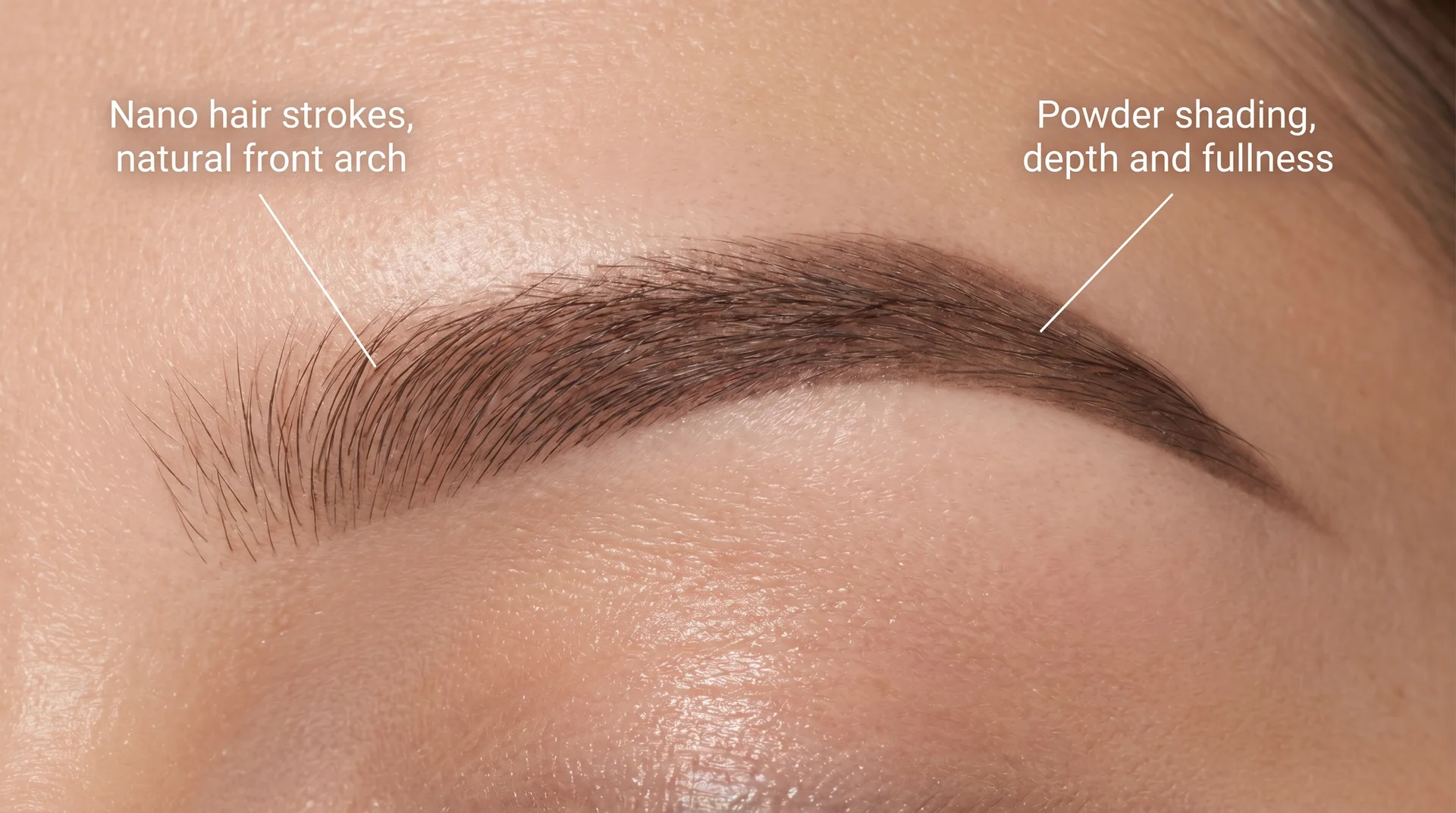
A lot of people researching this topic end up feeling like neither option fully fits. They want the natural realism of nano brows, but also the fullness and coverage of powder brows. That’s not indecision. That’s a real third option called hybrid brows, and most guides barely mention it.
Hybrid brows combine nano hair strokes at the front of the arch with powder shading through the body and tail. The front stays light, feathery, and natural-looking, while the middle and tail carry the definition and fullness that powder shading creates.
The ratio is customised based on your skin type, existing brow hair, face shape, and desired outcome.
Hybrid brows work on a wider range of skin types than nano brows alone because the powder shading component compensates for where fine strokes might not hold as well.
If you’ve read this far and you’re still torn between the two techniques, ask your artist whether a hybrid approach makes sense for your skin and the look you’re describing. It’s often the answer that fits the most people.
Questions to Ask Your PMU Artist Before You Book
The artist matters as much as the technique. Before you book, ask these questions and pay attention to how the artist responds.
- Can I see healed photos specifically? Fresh photos look very different from healed results. Ask for images taken at least 6 weeks post-procedure, and ideally at the 1-year mark.
- What’s your approach for my specific skin type? A good artist asks about your skin type early and factors it into their technique recommendation. If they recommend the same technique to everyone, notice that.
- What pigment brand do you use and how does it age? Quality pigments fade to softer versions of themselves. Lower-quality pigments can shift to unwanted grey, red, or orange tones over time.
- Is the touch-up appointment included? The 6 to 8-week touch-up is a standard part of the process and should be included or clearly priced.
- What happens if I’m not satisfied with the result? A confident, reputable artist has a clear answer to this. It doesn’t mean errors don’t happen. It means they take their work seriously enough to have a process.
Frequently Asked Questions
Which looks more natural, nano brows or powder brows?
Nano brows look more natural in the hair-stroke sense, because individual strokes mimic real brow hair. Powder brows look more natural in the makeup sense, like beautifully filled-in brows. Both can look intentional and flattering. It depends entirely on what “natural” means to you.
Which lasts longer, nano brows or powder brows?
Powder brows last longer, typically 1 to 3 years, versus 12 to 18 months for nano brows. On dry skin with excellent aftercare, nano brows can push toward 24 months, but powder brows are generally the longer-lasting technique, especially on oily skin.
Can I switch from nano brows to powder brows later?
Yes, in most cases. Once nano brow strokes have faded sufficiently, a powder brow treatment can be applied over the same area. If you still have significant residual pigment, your artist will assess whether the base is suitable. Always disclose your full history during a consultation.
Are nano brows or powder brows better for people with no brows at all?
Both work on a bare canvas, but they create very different results. Nano brows on a bare canvas can look beautifully realistic if done by a skilled artist who understands brow mapping.
Powder brows create a defined, filled look that some people love and others find too bold. If natural realism is the priority, nano or hybrid tends to be the stronger choice.
Do powder brows look tattooed?
Done well by an experienced artist, powder brows look like beautifully done makeup, not like a conventional tattoo. The gradient effect and soft shading technique prevent the flat, stamped-on look associated with older cosmetic tattooing.
That said, they do look polished and defined. They won’t look bare or completely undetectable, the way nano brows can.
What’s the difference between ombré brows and powder brows?
They’re essentially the same technique. Both use machine shading to create a gradient effect, lighter at the front and deeper at the tail. Some artists use the terms interchangeably. Others use “ombré” to describe a more pronounced gradient.
Ask your artist to show you healed examples of whichever term they use so you can see the actual result rather than interpreting the label.
Is one technique better to get before a wedding?
Both require a healing period of 4 to 6 weeks, and both benefit from a touch-up at 6 to 8 weeks, so you need to book at least 8 to 10 weeks before your wedding date to be safe. Nano brows photograph with beautiful natural detail in high-resolution images.
Powder brows photograph with clean, consistent definition. Both look stunning in wedding photos. The choice comes down to whether you want your brows to look natural and hair-like, or polished and defined, in your images.
Can I still wear brow makeup over either technique?
Yes. You can fill in, define, or add to your brows with regular makeup over both techniques. Many people with powder brows rarely feel the need to. People with nano brows occasionally add a light tint or powder when they want more depth. Neither technique prevents you from using brow makeup. They just change how often you reach for it.
Final Touchup
The version of this decision that keeps people stuck is the idea that there’s one clearly correct answer, and if they read enough, they’ll find it. Both techniques are genuinely good. Both can look beautiful on the right person. What changes is the person.
You deserve to go into your consultation knowing what you want and why, not just pointing to a Pinterest board and hoping the artist figures it out. The right brow technique doesn’t announce itself; it just disappears into your face and lets you get on with your morning.
The brows that will make you happiest are the ones you stop thinking about, not because they’re impressive, but because they simply look like you.