
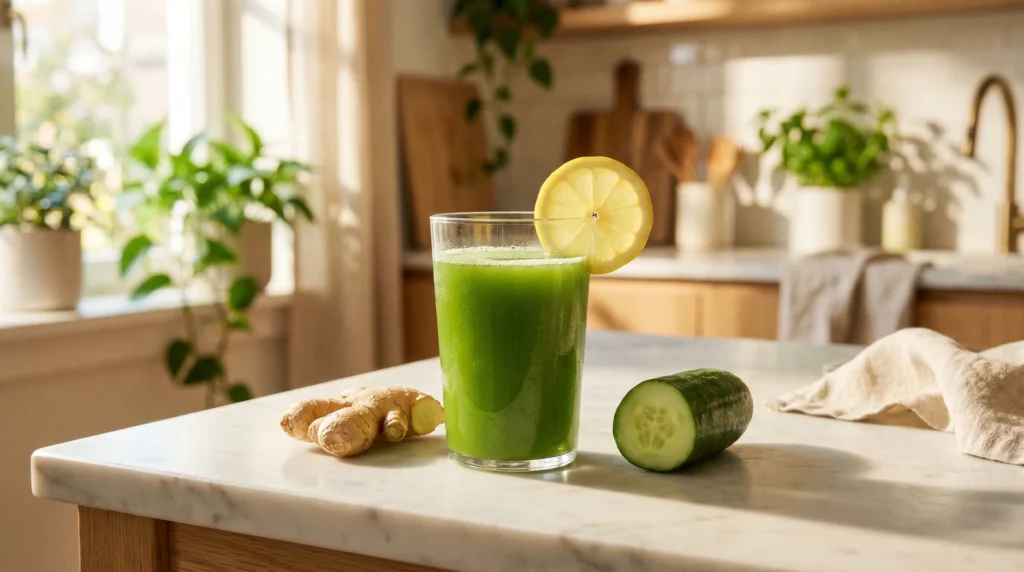
These juices reduce bloating, support digestion, and work as low-calorie replacements for less useful morning drinks, and that’s a genuinely useful outcome, even if it’s not the full story you’ve been sold.
Several ingredients that appear in detox juice recipes for weight loss have well-documented effects on gastric motility, fluid balance, and inflammation. Ginger is one. Magnesium-rich leafy greens are another.
Understanding what’s actually happening when you drink these juices makes them easier to use correctly and less frustrating when the results look different from what you expected.
Every recipe below is built around ingredients with a reason to be there, not just a wellness reputation. They’re also designed to taste good enough to finish, which I’d argue is the practical prerequisite for any of this to matter at all.
One scope note before we go further: this guide covers adding one juice daily to a normal eating routine. Juice fasting and multi-day cleanses are a different conversation entirely, with different safety considerations, and conflating them would give you the wrong frame for what’s possible here.
What “Detox Juice” Actually Means
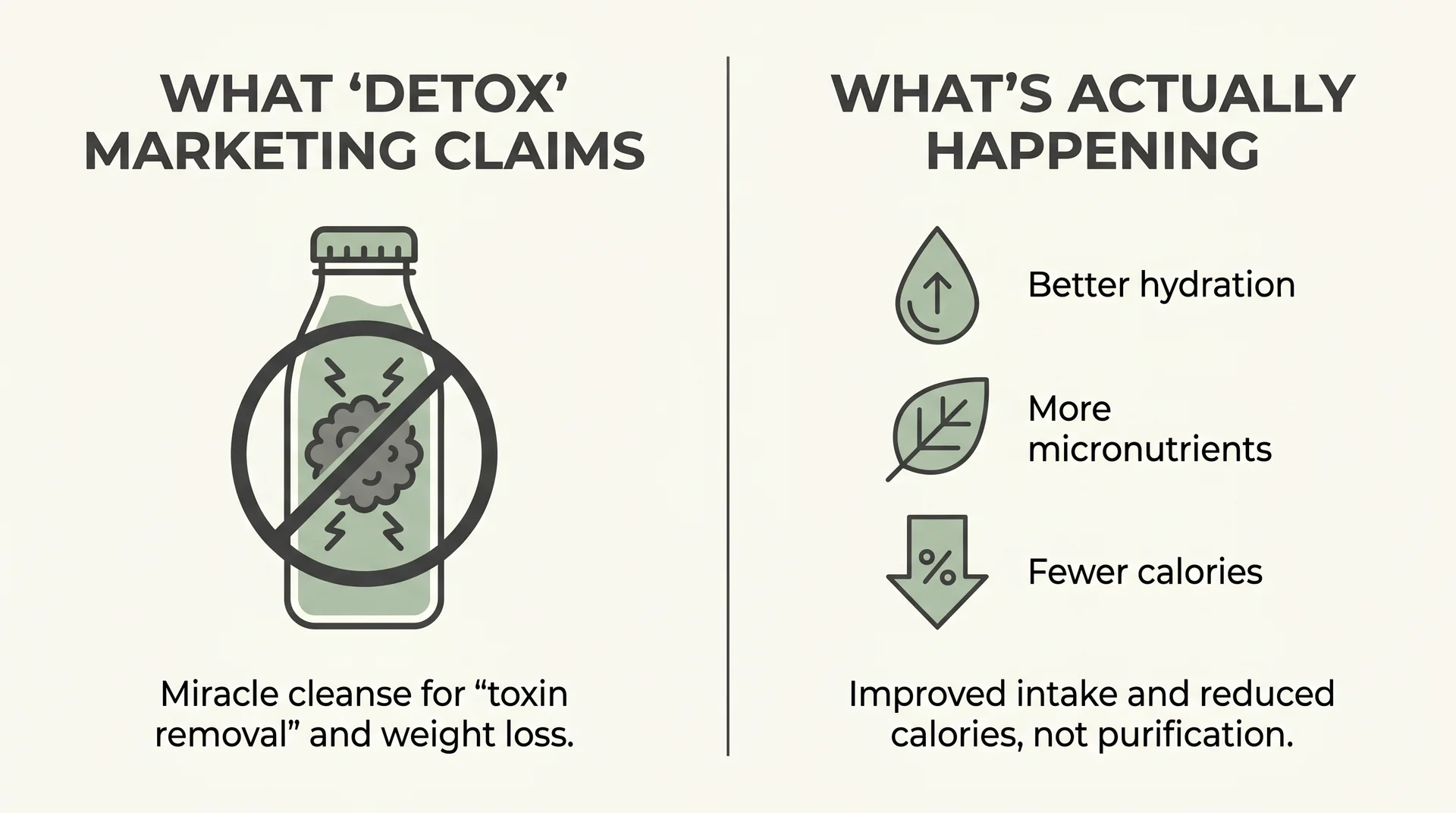
The word “detox” in the context of juicing is a marketing term, not a clinical one. That doesn’t make these juices useless. It means the actual benefit is different from what the label implies, and understanding the real mechanism is what helps you use them well.
Your body already has a detoxification system; your liver, kidneys, and lymphatic tissue handle waste elimination continuously, without any assistance from a juice cleanse.
What Your Body Actually Does When You Drink These Juices
When you replace a calorie-dense morning drink with a vegetable-forward juice, a few real things happen. Your caloric intake drops. Your micronutrient intake goes up. You’re better hydrated.
If the juice contains ginger, cucumber, or magnesium-rich greens, you’re also getting ingredients with documented effects on digestion and fluid balance. The NIH National Center for Complementary and Integrative Health is clear that no reliable clinical evidence supports the idea that juice cleanses remove toxins from the body.
What the research does support is the nutritional value of the individual ingredients, a different and more defensible claim.
The honest reframe: these aren’t detox drinks in any clinical sense. They’re nutrient-dense, low-calorie beverages with specific ingredients that can reduce bloating and support digestive function. That’s still genuinely worth making.
What Juicing Cannot Do
Juicing cannot spot-reduce belly fat, override a diet high in processed foods, or replace the function of your liver and kidneys.
Setting that expectation clearly upfront saves a lot of frustration. The people who feel let down by a juice routine are almost always the ones who expected a mechanism that doesn’t exist.
One real-world constraint worth naming: if you’re currently eating a diet high in sodium and processed foods, a morning juice routine will highlight that contrast, not fix it.
The juice works best as part of a broader shift in eating patterns, not as a standalone intervention layered on top of an unchanged diet.
The Ingredients That Actually Make a Difference
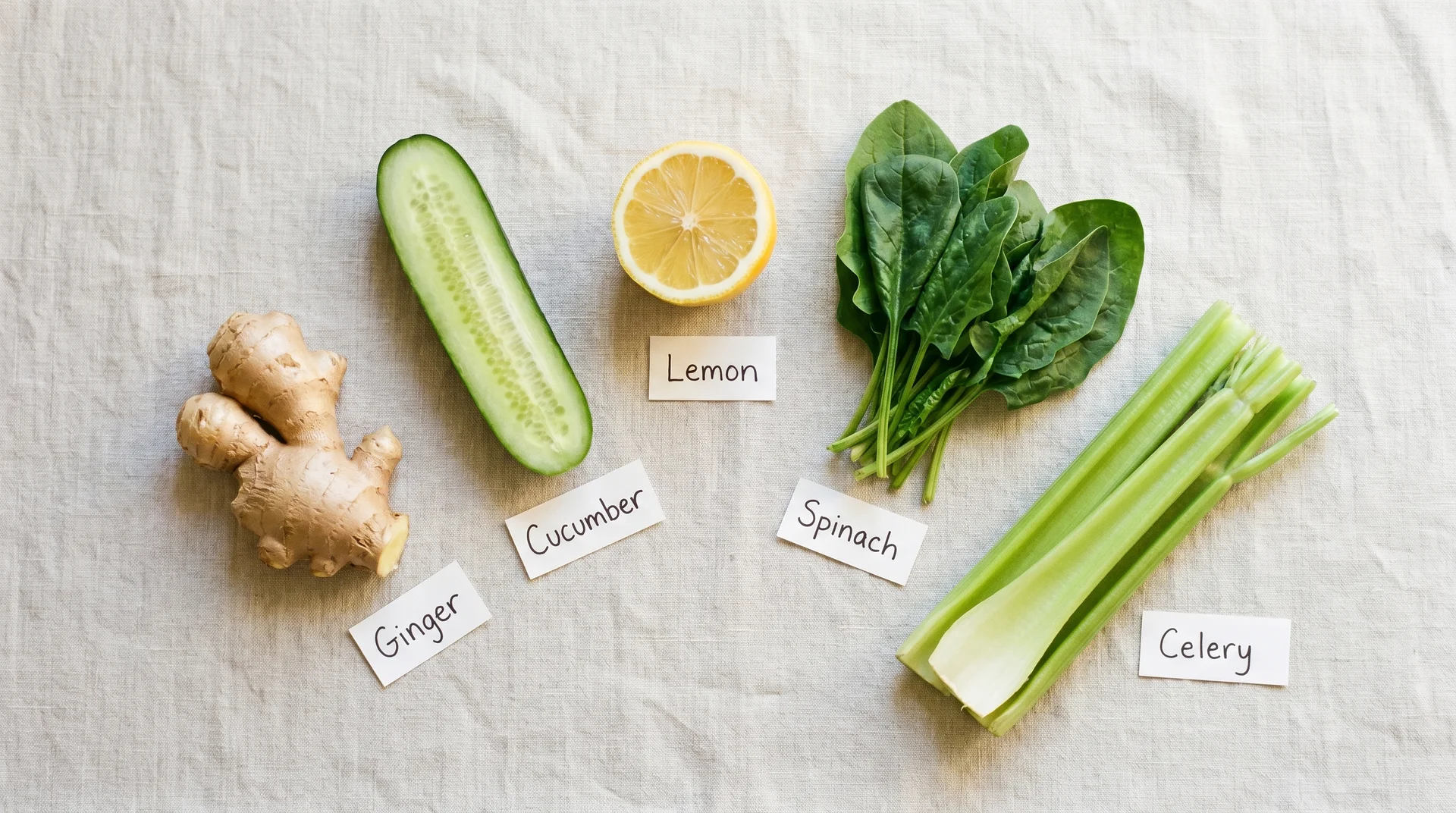
Not every ingredient in popular detox juice recipes has a scientific reason to be there, but several do, and those are the ones worth building around.
Here’s a reference for the five ingredients used across all four recipes in this guide, including what each one does, why it’s included, and what to use when your produce budget doesn’t cooperate:
| Ingredient | Primary Mechanism | Key Nutrient | Budget Swap |
|---|---|---|---|
| Ginger | Supports gastric motility, reduces inflammation | Gingerols | Ground ginger (use sparingly — potency degrades) |
| Cucumber | Hydration, potassium for fluid balance | Potassium, water | Zucchini (similar water content, milder flavor) |
| Lemon | Digestive signaling, palatability | Vitamin C, citric acid | Lime (identical effect, often cheaper) |
| Dark leafy greens | Fluid regulation via magnesium | Magnesium, chlorophyll | Frozen spinach, thawed and strained |
| Celery | Mild diuretic effect, low-sodium volume | Phthalides, water | Fennel (similar flavor profile, comparable yield) |
Ginger: Motility, Inflammation, and Why It’s Not Optional
Ginger is the one ingredient I’d never leave out of a flat stomach juice. That’s not just preference.
A systematic review published in Food Science and Nutrition (Bodagh, Maleki, and Hekmatdoost, 2019) found that ginger accelerates gastric emptying and reduces gastrointestinal symptoms, which is directly relevant to the kind of bloating most people are trying to address.
The active compounds responsible for this effect are called gingerols. They’re present in fresh ginger root at concentrations that make a meaningful difference when used consistently.
Ground ginger works as a substitute, but the gingerol content degrades significantly during the drying process. It’s not an equal swap, though it’ll do in a pinch.
A practical note: a one-inch piece of fresh ginger goes further than most people expect. Start with a half-inch piece if you’re new to it. Ginger is assertive, and too much will make even a well-balanced juice nearly undrinkable, which defeats the whole purpose.
Cucumber: Hydration and Fluid Balance
Cucumber is the base of most green juice recipes for weight loss for a practical reason: it has approximately 95% water content by weight, it’s mild enough not to dominate the flavor, and it adds potassium without adding meaningful sugar.
Potassium matters here because it counterbalances sodium, which is the primary driver of water retention for most people. If you’ve ever felt noticeably bloated the morning after a high-sodium dinner, that’s exactly the mechanism you’re working against.
Cucumber contributes to the electrolyte balance that supports normal fluid regulation.
Lemon: Digestive Signaling and Palatability
Lemon does two things that matter. The citric acid signals the digestive system in a way that supports bile production, which aids the breakdown of food. And it makes green juices considerably more drinkable.
Most people who give up on green juices give up because of taste, not commitment. Lemon is what keeps bitter greens from tasting like lawn clippings. Half a lemon per serving is usually enough to brighten the flavor without dominating it, and lime works identically if lemon is unavailable or more expensive that week.
Dark Leafy Greens: Magnesium and What It Has to Do with Bloating
Magnesium is involved in more than 300 enzyme systems in the body, and one of its less-discussed roles is regulating muscle contractions in the digestive tract. Insufficient magnesium can slow gut transit time, which contributes to the kind of bloating that has nothing to do with what you’re eating and everything to do with how long it’s staying in your system.
Spinach and kale are both meaningful sources of magnesium, per USDA FoodData Central. They also contain chlorophyll, which some small studies suggest may support liver function, though that research is more preliminary than I’d want to build strong claims around. The magnesium piece is solid. The chlorophyll piece is promising but not settled.
One real-world note: dark leafy greens are high in oxalates. If you’re prone to kidney stones, specifically calcium-oxalate stones, daily high-oxalate juice is worth discussing with your doctor before you commit. There’s more detail on this in the section on who should be careful with these recipes.
Celery: Sodium, Diuretic Effect, and the Caveats
Celery has gotten significant wellness attention, and some of that attention has outpaced the evidence.
What it does have going for it: it’s very low in sodium, has high water content, and contains compounds called phthalides that some research suggests may support cardiovascular, reproductive health, and mild diuretic function.
The diuretic effect is mild and not guaranteed. Celery juice works primarily because it’s a large volume of low-calorie liquid that supports hydration, and that’s useful even if it’s less dramatic than what you’ve seen claimed about it.
Budget constraint worth noting: celery is one of the more expensive produce items per serving when you’re juicing, because you need a significant volume to get a meaningful yield. A full bunch produces roughly 8–10 ounces of juice.
Flat Stomach Detox Juice Recipes for Weight Loss
Each recipe below targets a specific mechanism of bloating, fluid retention, or digestive sluggishness rather than making a general detox claim.
All four recipes work with a standard centrifugal juicer. If you don’t own one, a high-powered blender plus a nut milk bag or fine mesh strainer is a functional alternative.
The fiber retained changes the glycemic response slightly, and the yield is lower, but the nutritional benefit of the ingredients carries through.
Green Flat Stomach Juice
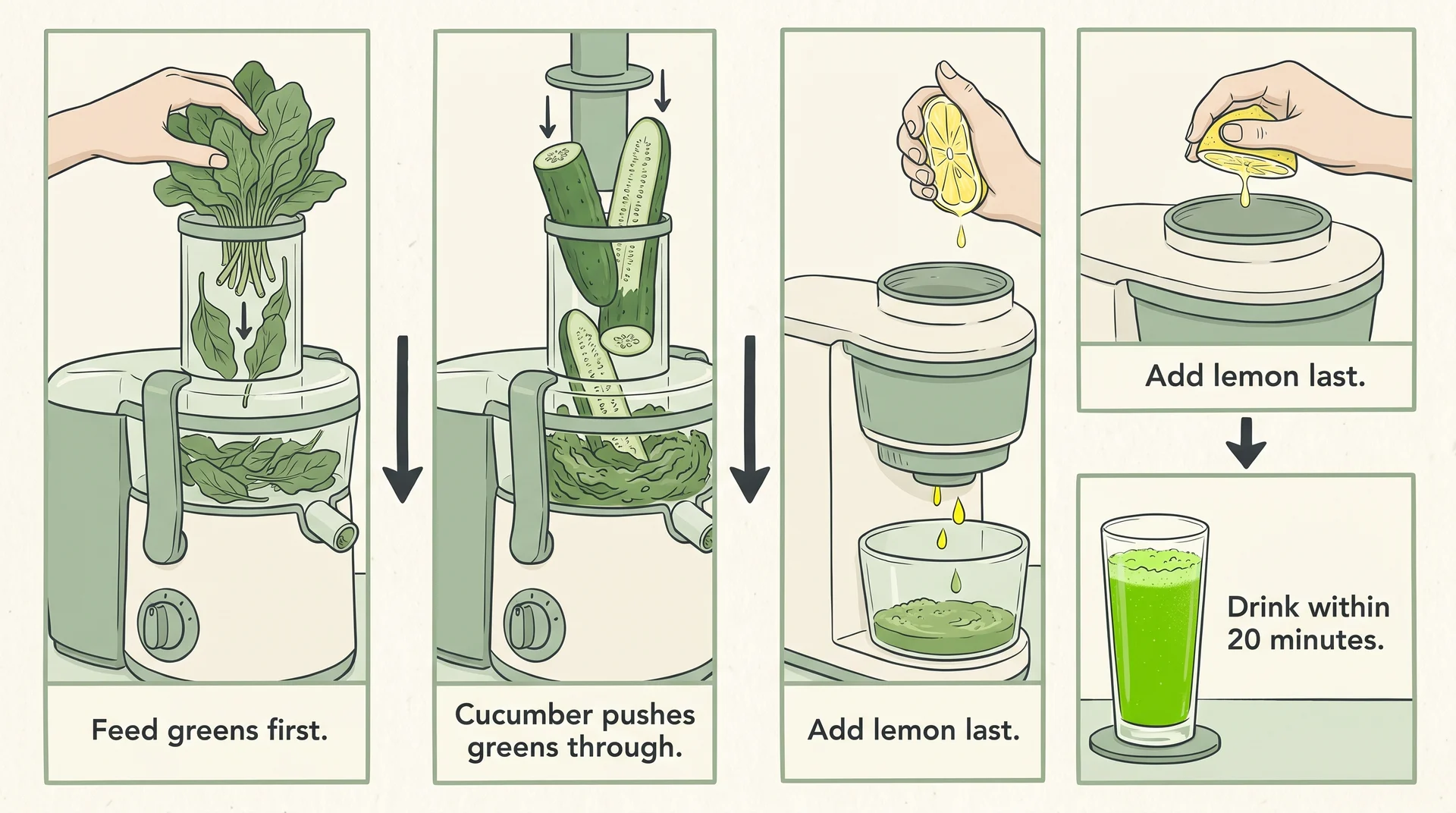
This is the foundational recipe in this guide, built around the four ingredients with the strongest evidence for bloating and fluid balance: cucumber, spinach, ginger, and lemon.
It’s the best juice recipe to start with if you’re new to juicing, because the flavor is mild enough to be approachable but specific enough to be effective.
Makes 1 serving (approximately 12 oz)
- 1 large cucumber
- 2 large handfuls of fresh spinach
- 1-inch piece fresh ginger, peeled
- ½ lemon, peeled
- ½ green apple (optional — adds sweetness without a significant sugar load at this volume)
- Wash all produce thoroughly.
- Cut the cucumber in half lengthwise to fit the juicer chute.
- Feed spinach through first, then immediately follow with cucumber to push the greens through the mechanism.
- Add ginger and lemon.
- Add the apple half last, if using.
- Stir briefly and drink within 20 minutes. Green juice oxidizes quickly, and meaningful nutrient loss begins within that window.
Palatability note: If this tastes too grassy on your first try, increase the lemon or add the apple. A slightly modified juice you finish every morning is more useful than a technically perfect one you abandon after three days.
Pineapple Ginger Detox Juice
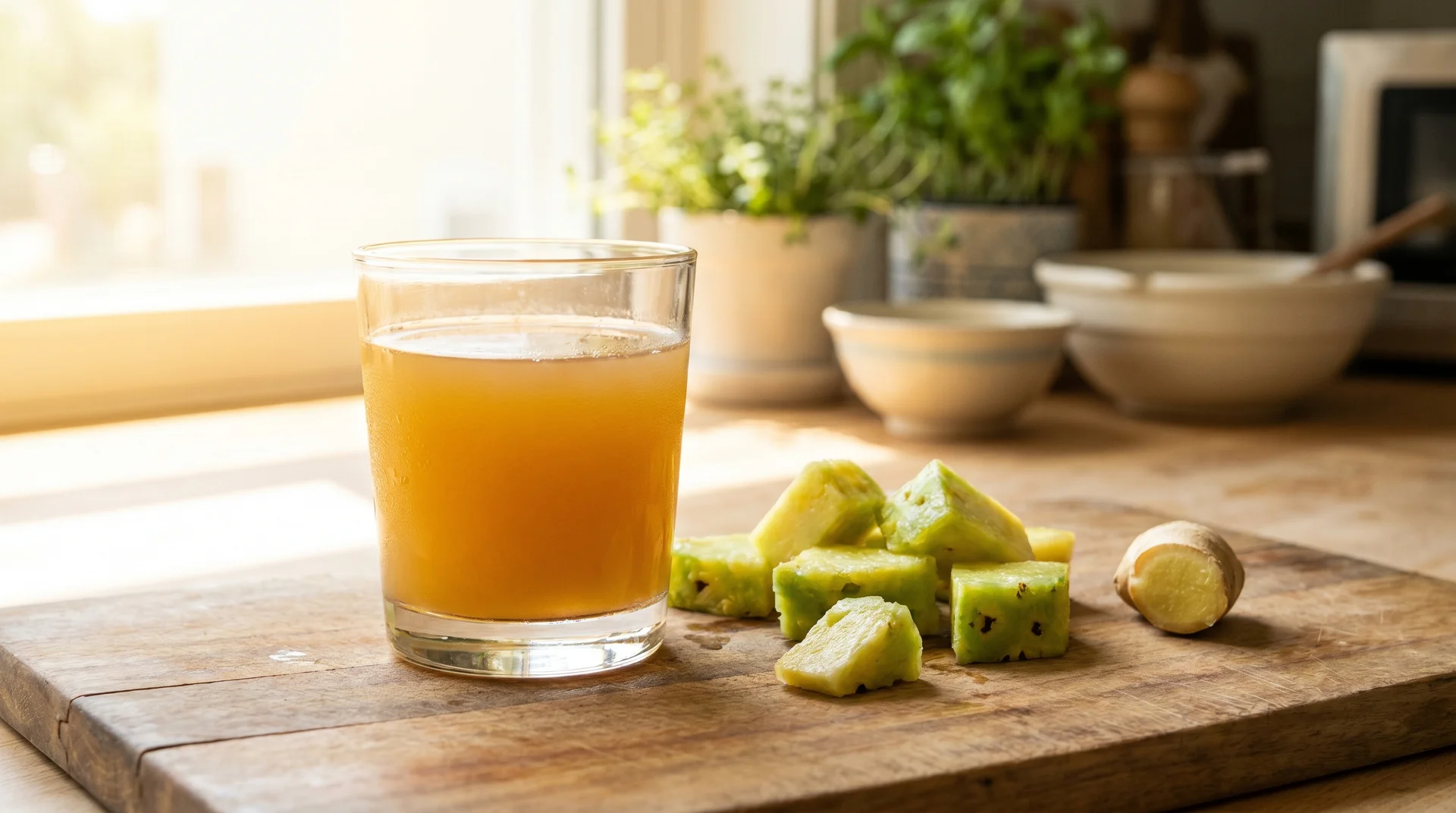
This one is for people who struggle with the flavor profile of a classic green juice. Pineapple contains bromelain, an enzyme with anti-inflammatory properties that may support protein digestion. It also makes the ginger considerably more approachable, which matters for long-term compliance.
Makes 1 serving (approximately 10 oz)
- 1 cup fresh pineapple chunks, not canned
- 1 large cucumber
- 1-inch piece fresh ginger, peeled
- ½ lemon, peeled
- A few mint leaves
- Wash all produce.
- Feed the pineapple through first to establish juice flow.
- Follow with cucumber, ginger, and lemon.
- Add mint leaves last if using.
- Drink immediately, or refrigerate in an airtight container for up to 24 hours.
Palatability note: This is the most beginner-friendly recipe in this guide. If you’ve tried green juices before and quit, start here before writing off the category entirely.
Beet and Carrot Cleanse Juice
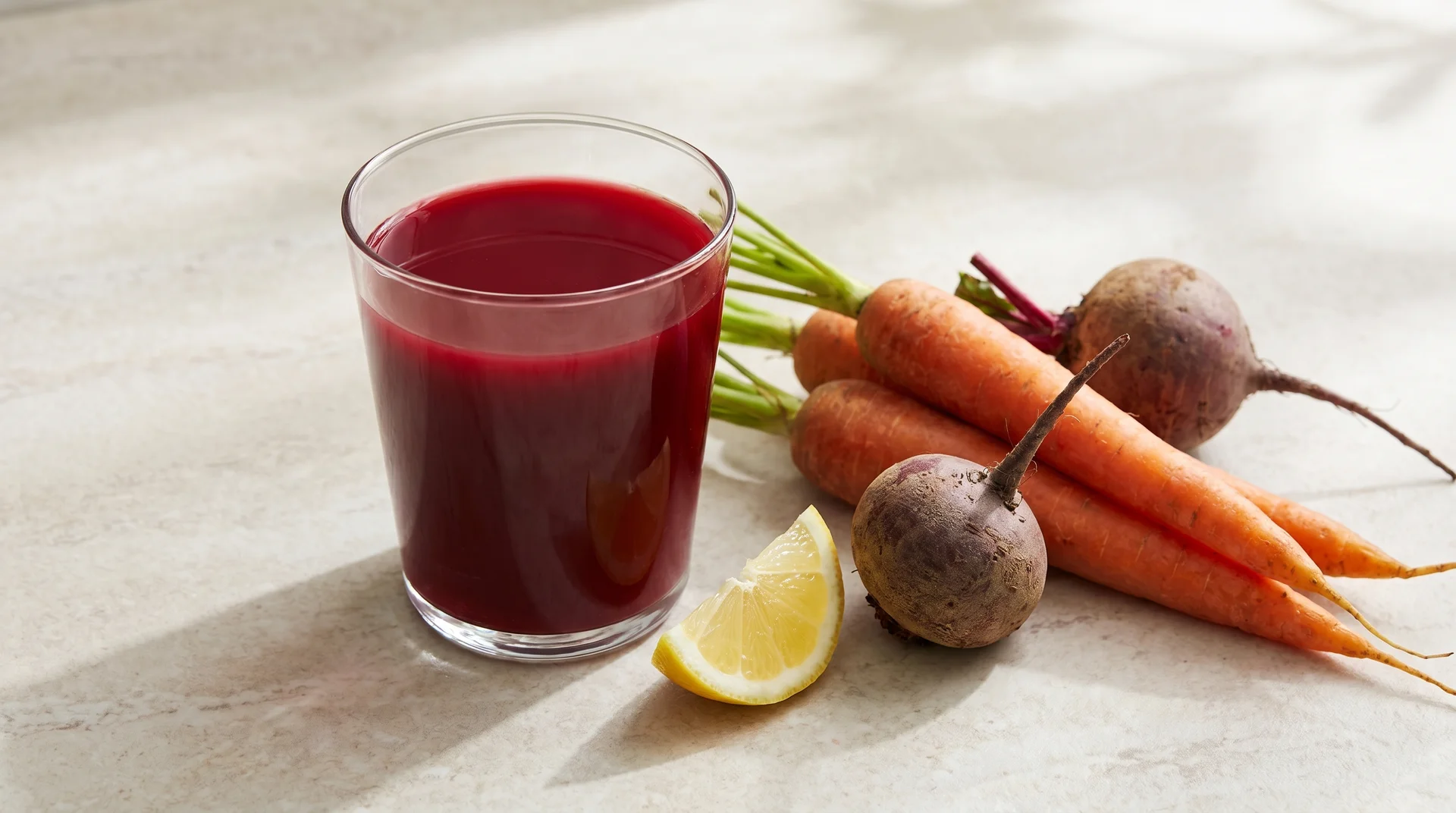
Beets contain compounds called betalains, which have antioxidant and anti-inflammatory properties and have been studied for their role in supporting liver function. Carrot adds beta-carotene and natural sweetness. This is a slightly higher-sugar recipe than the green versions, worth knowing if you’re monitoring blood glucose.
Makes 1 serving (approximately 10 oz)
- 1 medium beet, scrubbed (no need to peel if organic)
- 3 medium carrots
- 1-inch piece fresh ginger, peeled
- ½ lemon, peeled
- ½ green apple
- Wash and scrub all vegetables thoroughly.
- Cut the beet into quarters to fit the juicer.
- Feed the carrot through first, then the beet.
- Add ginger, apple, and lemon.
- Stir well before drinking — beet juice settles quickly.
- Drink immediately.
Real-world note: Beet juice will turn your urine and sometimes your stool a pinkish-red color. It’s harmless and temporary. It is also alarming if you don’t know to expect it, so now you do.
Celery Lemon Flush Juice
This is the simplest recipe here and the most targeted for water retention specifically. It’s not the best-tasting juice in this guide, and I’m not going to pretend otherwise. It’s functional, and when bloating is primarily sodium-driven, it works.
Makes 1 serving (approximately 8 oz)
- 8–10 celery stalks (approximately 1 full bunch)
- 1 lemon, peeled
- ½ cucumber
- ½-inch piece fresh ginger
- Wash celery thoroughly, paying attention to the base where soil collects between stalks.
- Feed celery through the juicer in batches.
- Follow with cucumber, ginger, and lemon.
- Drink within 30 minutes.
Palatability note: Celery juice is an acquired taste. The ginger and lemon carry most of the palatability work here. If you genuinely cannot get through it, the green flat stomach juice achieves similar hydration and fluid-balance goals with a more forgiving flavor. You can also try celery soup, which is also very healthy, tasty, and easy to make.
Budget Version: When Produce Prices Don’t Cooperate
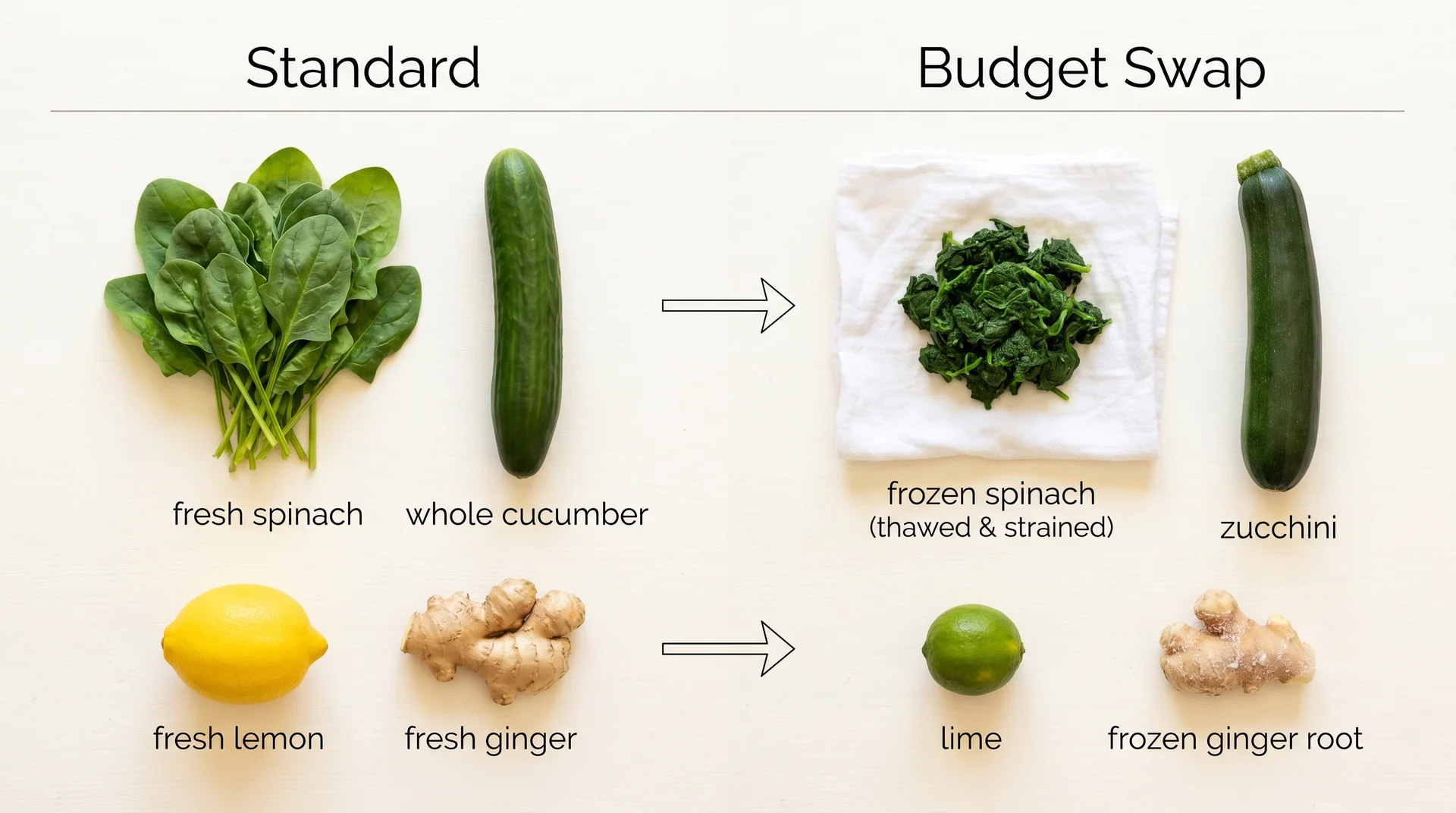
Fresh produce for daily juicing adds up faster than most people anticipate. A standard serving of the green flat stomach juice can run $8–12, depending on your market and the season. These swaps preserve the core mechanisms while reducing the weekly produce cost meaningfully:
- Frozen spinach instead of fresh. Thaw completely, squeeze out excess water, and strain through a nut milk bag rather than juicing. The magnesium content is largely preserved through freezing, which is the whole point of including it.
- Zucchini instead of cucumber. Similar water content, lower price point, mild enough not to alter the flavor significantly.
- Lime instead of lemon. Identical digestive effect. Often cheaper, especially in winter.
- Freeze your ginger root. Buy in bulk when it’s priced well and freeze it. Frozen ginger actually grates more easily than fresh and keeps for months without losing meaningful potency — this one tip pays for itself quickly.
- Shop produce at the end of the day. Many grocery stores discount produce that’s one day from expiration. Fine for juicing. Often 30–50% cheaper.
When to Drink These Juices
Morning, on an empty stomach, is the most effective time and the reason is practical, not ceremonial.
Drinking a nutrient-dense, low-calorie juice before eating establishes a pattern of starting the day with something useful rather than reactive.
The digestive benefits of ginger and the hydration from cucumber reach your system when it’s had eight hours to reset. Pre-meal timing works too, with a juice 20–30 minutes before lunch or dinner, slightly reducing appetite and front-loading micronutrients.
Honestly, consistency matters more than perfect timing. The morning routine works better for most people simply because morning habits are easier to anchor than pre-meal ones, not because of anything specific to what happens to nutrients at 7 am.
Does Juicing Actually Help with Belly Fat?
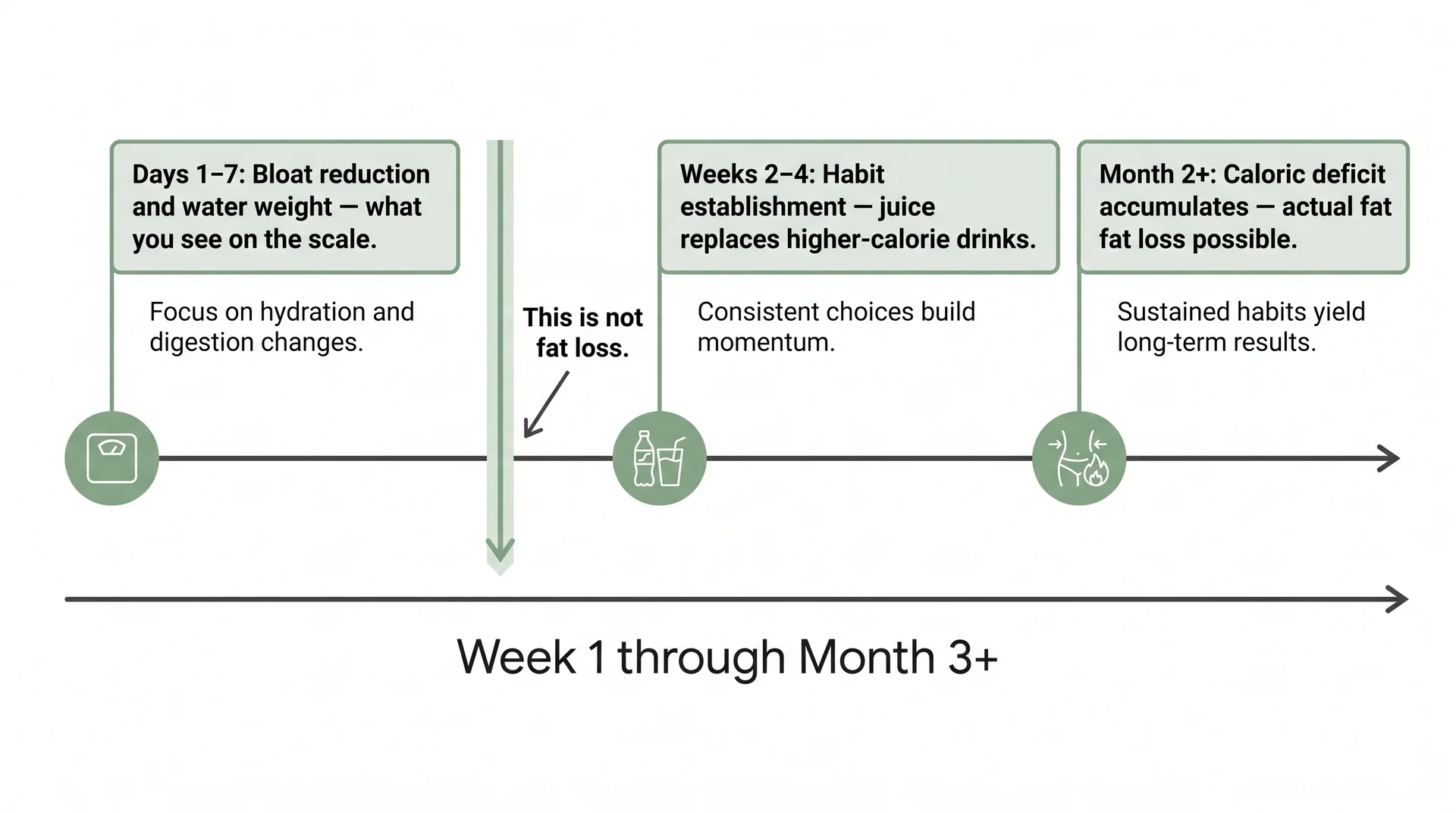
Juicing can support weight loss as part of an overall caloric deficit, but it does not directly reduce belly fat on its own.
What Happens in Week One (and Why It’s Not What You Think)
Most people who add a daily juice to their routine notice something within the first week: they feel less bloated, their stomach looks flatter, and the scale might be down a pound or two. This is real. It is not fat loss.
What’s actually happening is a combination of reduced bloating, improved gut transit time largely from the ginger and magnesium-rich greens covered earlier in this guide, and a mild reduction in water retention from replacing sodium-heavy morning drinks.
If you’ve simultaneously cut out a daily flavored latte or a processed breakfast, you’ve also reduced calories without feeling like you restricted anything.
The number on the scale in week one reflects water weight, reduced gut content, and the absence of bloat. Knowing that isn’t discouraging. It tells you the tool is working as intended, and that what comes next is actual fat loss over weeks and months, which requires the rest of your eating pattern to cooperate.
The Longer-Term Picture
Here’s where I want to be honest about something harder to quantify: individual responses to a juice routine vary in ways that are genuinely difficult to predict, even with a solid understanding of the underlying nutrition science.
Some people find that a consistent morning juice significantly reduces snacking and decreases overall daily caloric intake. Others find that a fruit-heavy juice raises blood glucose enough to create more hunger mid-morning than they started with. Both outcomes are real.
What the NIH and NIDDK are consistent on is this: sustained fat loss requires a sustained caloric deficit over time. Juicing supports that only if it genuinely reduces what you’re consuming across the day, either by replacing higher-calorie drinks or by modestly reducing appetite.
The best juice recipes for weight loss are the ones people drink consistently for months, not the ones they white-knuckle through for two weeks expecting a transformation. If a recipe in this guide doesn’t suit you, use a different one. The ingredient principles stay the same across all four.
Before committing to a daily routine, there are a few specific situations where a quick conversation with your doctor or RD first is genuinely worth the five minutes.
Who Should Be Careful With These Juices
The flat stomach detox juice recipes in this guide are built from common produce, but several ingredients interact with specific medical conditions in ways worth knowing about before you start.
Most healthy adults can add a daily vegetable-forward juice to their routine without concern, but the following situations are specific and clinically relevant, not general warnings.
- Blood thinners (warfarin/Coumadin). Dark leafy greens are high in vitamin K, which directly affects how anticoagulants work. A sudden increase in daily vitamin K can alter your INR levels. This doesn’t mean you can’t juice; it means you need to keep your vitamin K intake consistent and discuss any new daily habit with your prescribing physician before starting.
- Type 1 or type 2 diabetes. Juicing removes most of the fiber from produce, which concentrates natural sugars and can cause a faster blood glucose response than eating whole vegetables would. Stick to vegetable-forward recipes such as the green flat stomach juice or the celery lemon flush over fruit-heavy versions, and monitor your glucose response when you first introduce it.
- History of kidney stones. Spinach, kale, and beet greens are high in oxalates. Daily high-oxalate juice can increase urinary oxalate levels in susceptible individuals. If you’re prone to calcium-oxalate stones specifically, talk to your doctor or a registered dietitian before making green juices a daily fixture.
- Pregnancy or breastfeeding. The recipes here are generally safe, but large amounts of ginger beyond typical culinary quantities warrant a conversation with your OB or midwife before adding consistently.
The information in this article is educational and does not replace guidance from your doctor or a registered dietitian, particularly if you’re managing a chronic health condition.
The purpose of naming these interactions specifically is to give you actionable information, not to add friction to a straightforward habit.
Making a Juice Routine That You’ll Actually Keep
The most effective juice routine is the one you maintain consistently for months, not the most ambitious one you abandon after two weeks.
The single most common reason people stop juicing has nothing to do with commitment or discipline. I’ve seen this pattern consistently in the clients I work with: the routine collapses at the cleanup stage, not the drinking stage.
Every operational friction point you remove in advance is a day of consistency you protect.
- Prep produce the night before. Wash, cut, and store everything in the fridge so there are no decisions to make at 7 am. Reducing friction matters more than motivation, especially in weeks three and four when the novelty has worn off and you’re relying on the habit itself to carry the routine forward.
- Don’t juice for the whole week in advance. Fresh juice loses meaningful nutrient content after 24–48 hours, even in an airtight container. Two days ahead is the practical maximum.
- Rotate two recipes, not one. Palate fatigue is real. Alternating between the green flat stomach juice and the pineapple ginger version gives enough variety to stay interested without requiring a completely different produce list each week.
- Clean the juicer immediately after use. Three minutes now versus fifteen minutes later, and the latter version builds the kind of low-grade resentment toward a habit that was otherwise working.
A consistent morning habit of replacing something less nutritious with something more nutritious accumulates over time. The flat stomach results you’re after come from those decisions stacking across weeks and months, not from any single recipe on any single morning.