
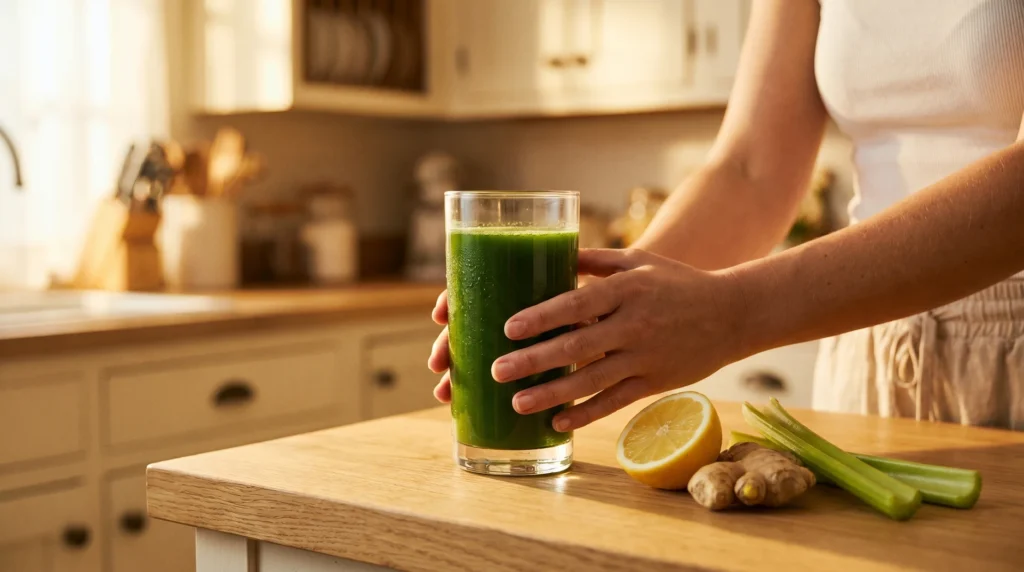
Juicing can support weight loss. The recipes that actually help look very different from the ones filling your social media feed, and the difference comes down to one thing most juice articles never explain.
This guide covers five juice recipes for weight loss built around nutritional logic, plus the framework that explains why some recipes support your efforts, and others quietly undermine them. I’m a registered dietitian nutritionist, and the clients who’ve gotten the most from juicing are the ones who understood this distinction first.
| If you’re managing diabetes, insulin resistance, or any condition that affects blood sugar regulation, the glycemic information throughout this piece is particularly relevant to your situation. Run specific dietary changes past your own doctor or dietitian before making juice a regular part of your routine. |
Weight Loss Juice Recipes Worth Making
All five of these recipes work with a juicer or a high-speed blender. If you’re using a blender, add a small amount of water, blend until smooth, then strain through a fine-mesh sieve or nut milk bag.
The nutritional difference between blended-and-strained juice and cold-pressed juice is modest.
The blender question comes up constantly, and the honest answer is that it doesn’t matter nearly as much as which recipe you’re making.
Before the recipes, a comparison to help you choose based on your situation:
| Recipe | Sugar Level | Best Time | Good For |
|---|---|---|---|
| Green Detox Juice | Low | Morning | Starting out, managing blood sugar |
| Carrot and Ginger | Moderate | Morning / mid-morning | Easing into vegetable-forward juicing |
| Cucumber Mint | Low | Afternoon | Hydration: light daily addition |
| Beet, Carrot, and Apple | Higher | Post-exercise | Active days; exercise recovery |
| Lemon and Turmeric Tonic | Very low | Before breakfast | Morning habit anchor; anti-inflammatory support |
Green Detox Juice
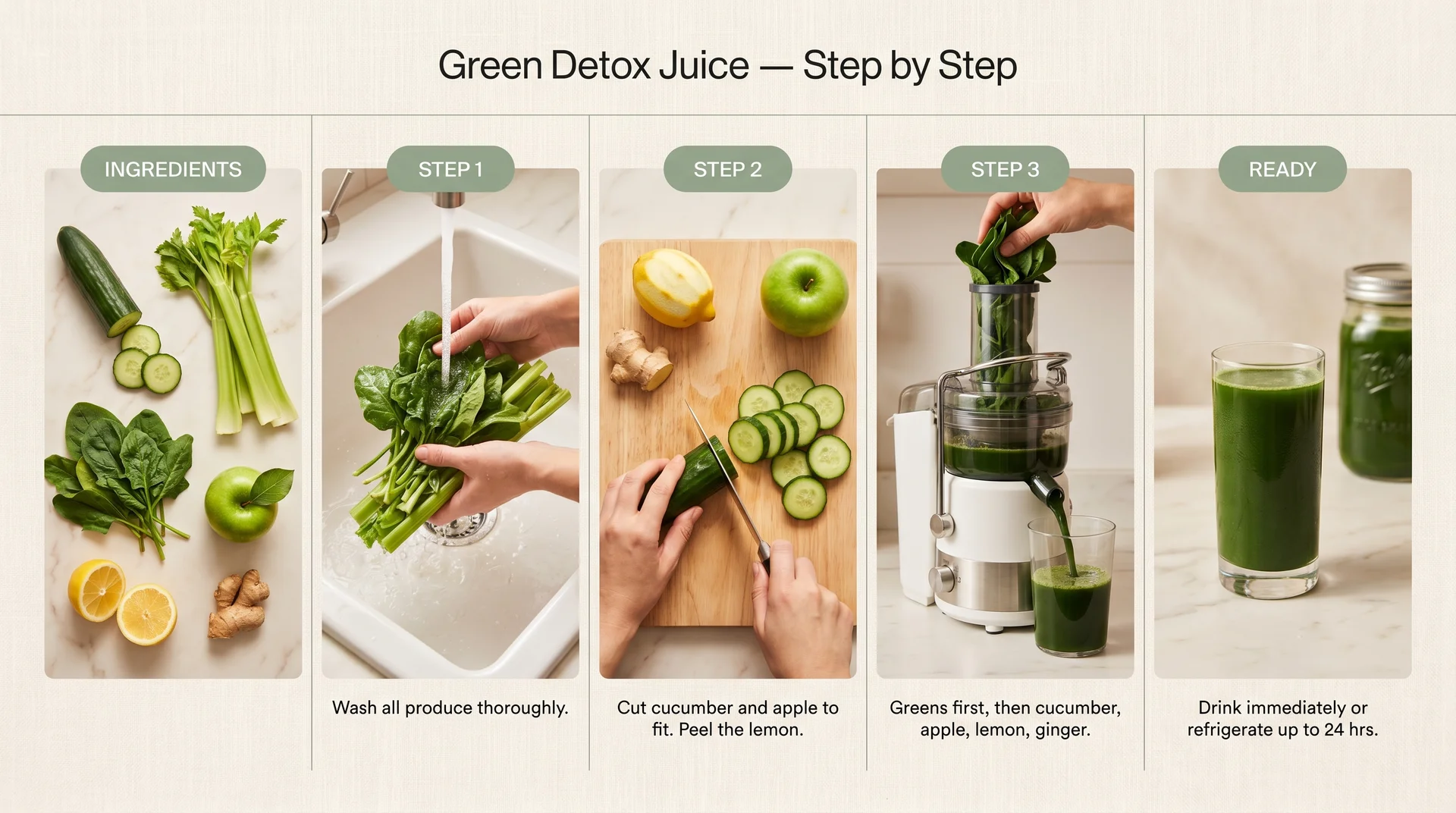
The lowest-sugar option in this list, and the one I’d recommend starting with if you’re new to vegetable-forward juicing.
Built almost entirely on vegetables, with one green apple providing enough sweetness to make it drinkable. The cucumber and celery base keeps glycemic load minimal, spinach adds iron and folate, and the ginger and lemon lift it out of territory that tastes like a lawn.
Makes approximately 12–16 oz. Best consumed in the morning.
Ingredients:
- 1 large cucumber
- 4 stalks of celery
- 2 cups spinach or kale
- 1 green apple
- 1 lemon, peeled
- 1-inch piece of fresh ginger
Steps:
- Wash all produce thoroughly.
- Cut the cucumber and apple into pieces that fit your juicer chute or blender. Peel the lemon.
- If using a juicer, run leafy greens through first, then cucumber and celery, then apple, lemon, and ginger. The harder produce pushes the greens through more efficiently.
- Stir well and drink immediately, or refrigerate in a sealed jar for up to 24 hours.
Carrot and Ginger Metabolism Juice
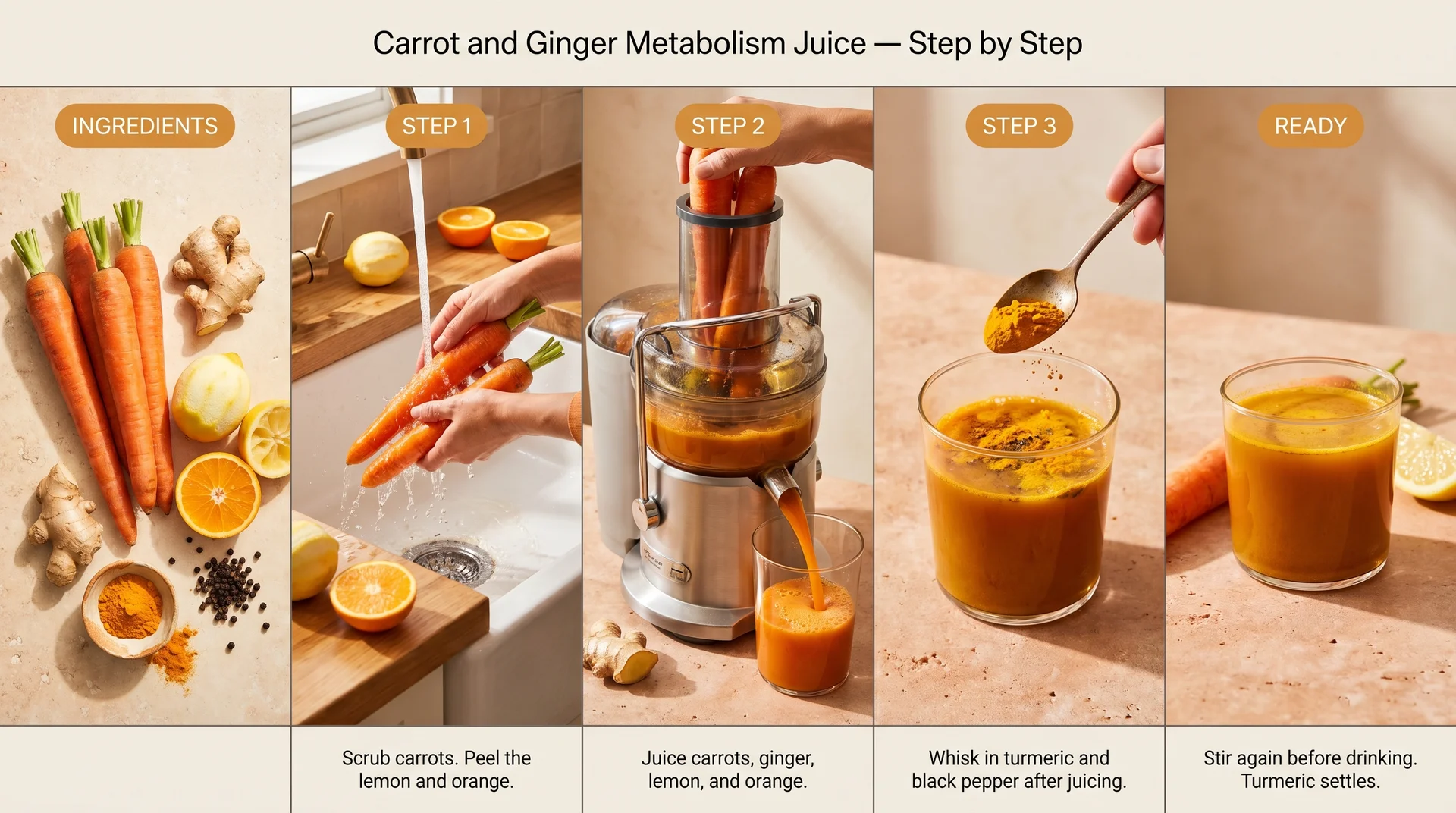
A warmer, slightly sweeter option for anyone who finds pure green juice too aggressive at first — and a solid morning weight loss drink recipe in its own right.
Carrot provides natural sweetness without the same glycemic spike as fruit-forward juices. Ginger and turmeric carry the most consistent anti-inflammatory evidence of any common juice ingredients, and the half orange here is a deliberate measure: enough brightness, not enough to tip the sugar content into fruit-juice territory.
Makes approximately 10–14 oz. Good as a morning or mid-morning option.
Ingredients:
- 4 large carrots
- 1-inch piece of fresh ginger
- 1 lemon, peeled
- 1/2 small orange, peeled
- 1/2 teaspoon ground turmeric, or 1-inch fresh turmeric
- Small pinch of black pepper
Steps:
- Scrub carrots well. Peel the lemon and orange.
- Juice the carrots, ginger, lemon, and orange. If using fresh turmeric, juice it with the carrots.
- Whisk ground turmeric and black pepper into the finished juice — powders don’t run cleanly through a juicer, so add them after.
- Stir again before drinking. Turmeric settles quickly.
Cucumber Mint Hydration Juice
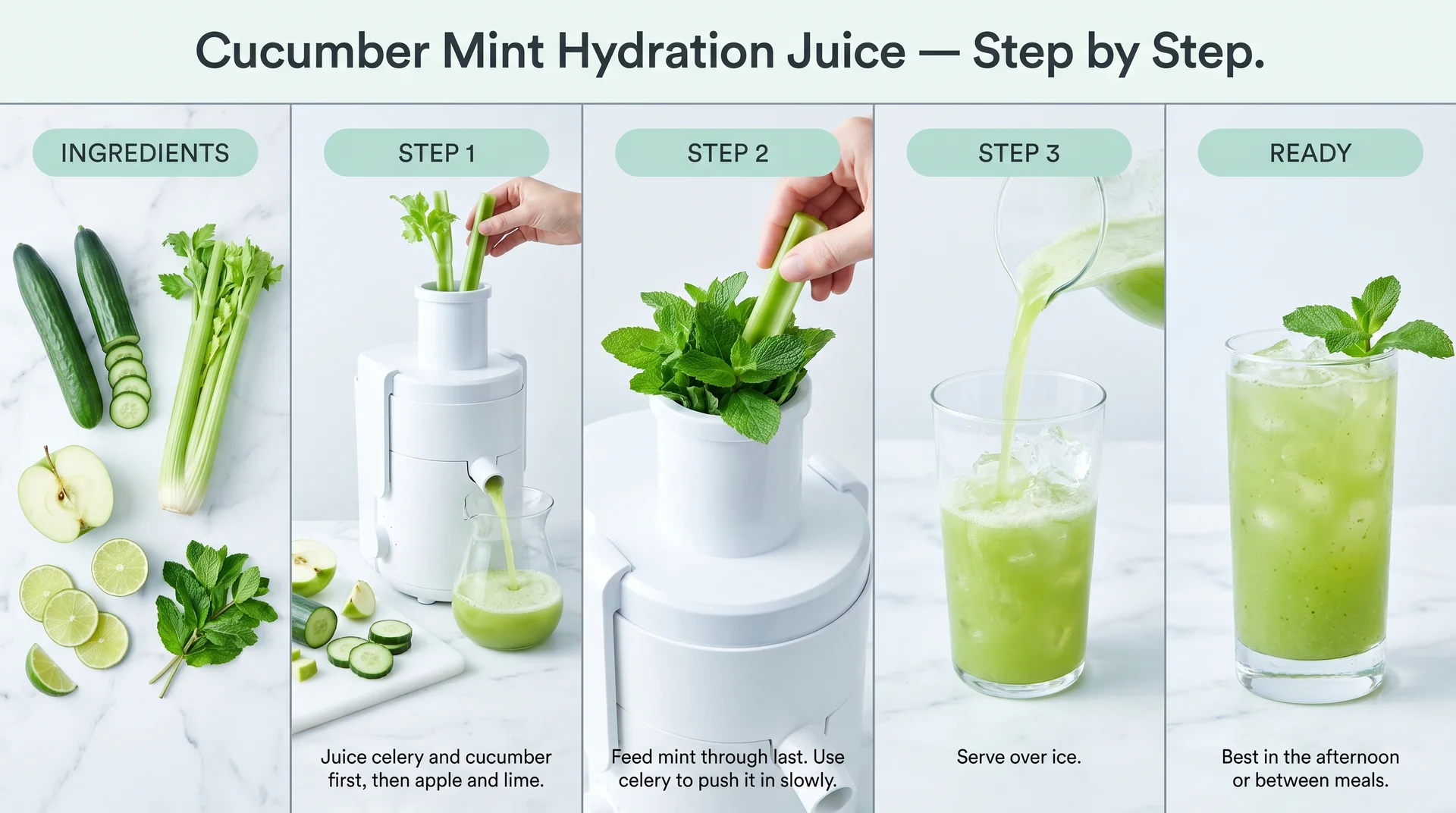
The lightest recipe in this list. It is best used as an afternoon option or between meals rather than as a morning anchor.
This one isn’t trying to accomplish much beyond hydration and a modest micronutrient contribution. The calorie count is minimal, which is exactly the point when you’re using juice as a daily addition rather than a meal component. It’s also the most approachable recipe here for people who find the greener options too intense.
Makes approximately 10–12 oz.
Ingredients:
- 2 large cucumbers
- 3 stalks of celery
- 1/2 green apple
- 1 lime, peeled
- 10–15 fresh mint leaves
Steps:
- Juice the celery and cucumber first, then the apple and lime.
- Feed mint leaves through last, using a celery stalk to push them slowly through the juicer.
- Serve over ice.
Beet, Carrot, and Apple Juice
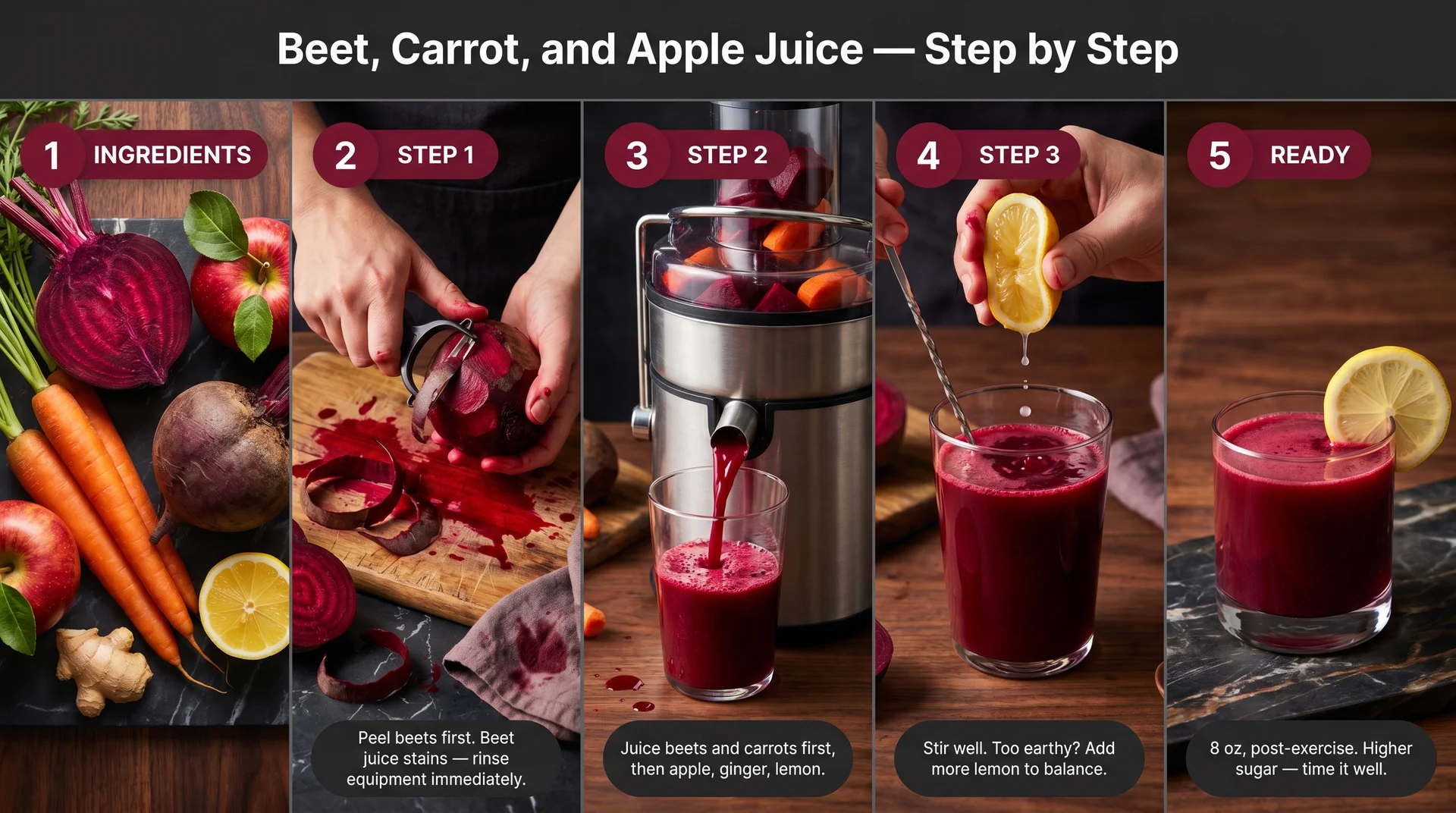
The highest-sugar recipe in this set, and that is worth knowing before you pour a large glass of it every morning.
These are the five juice recipes covered in this guide; the beet version carries the most natural sugar of the group, which shapes when and how much it makes sense to drink. If there’s one recipe I’d hold back from until you’ve got the habit running, this is it.
Not because it’s unhealthy, beets contain dietary nitrates with solid evidence for supporting circulation and exercise performance, but because their sugar content is meaningfully higher than that of the green and cucumber-based options.
Use it post-exercise, keep the serving to around 8 oz, and it earns its place.
Makes approximately 12–14 oz. Best post-exercise.
Ingredients:
- 2 medium beets, raw and peeled
- 3 medium carrots
- 1 apple
- 1-inch piece of fresh ginger
- 1/2 lemon, peeled
Steps:
- Peel the beets before juicing. Beet juice stains. Use a cutting board you don’t mind discoloring, and rinse your juicer components immediately after.
- Juice beets and carrots first, then apple, ginger, and lemon.
- Stir well. If the earthy beet flavor is too strong, add more lemon to balance it.
Lemon and Turmeric Morning Tonic
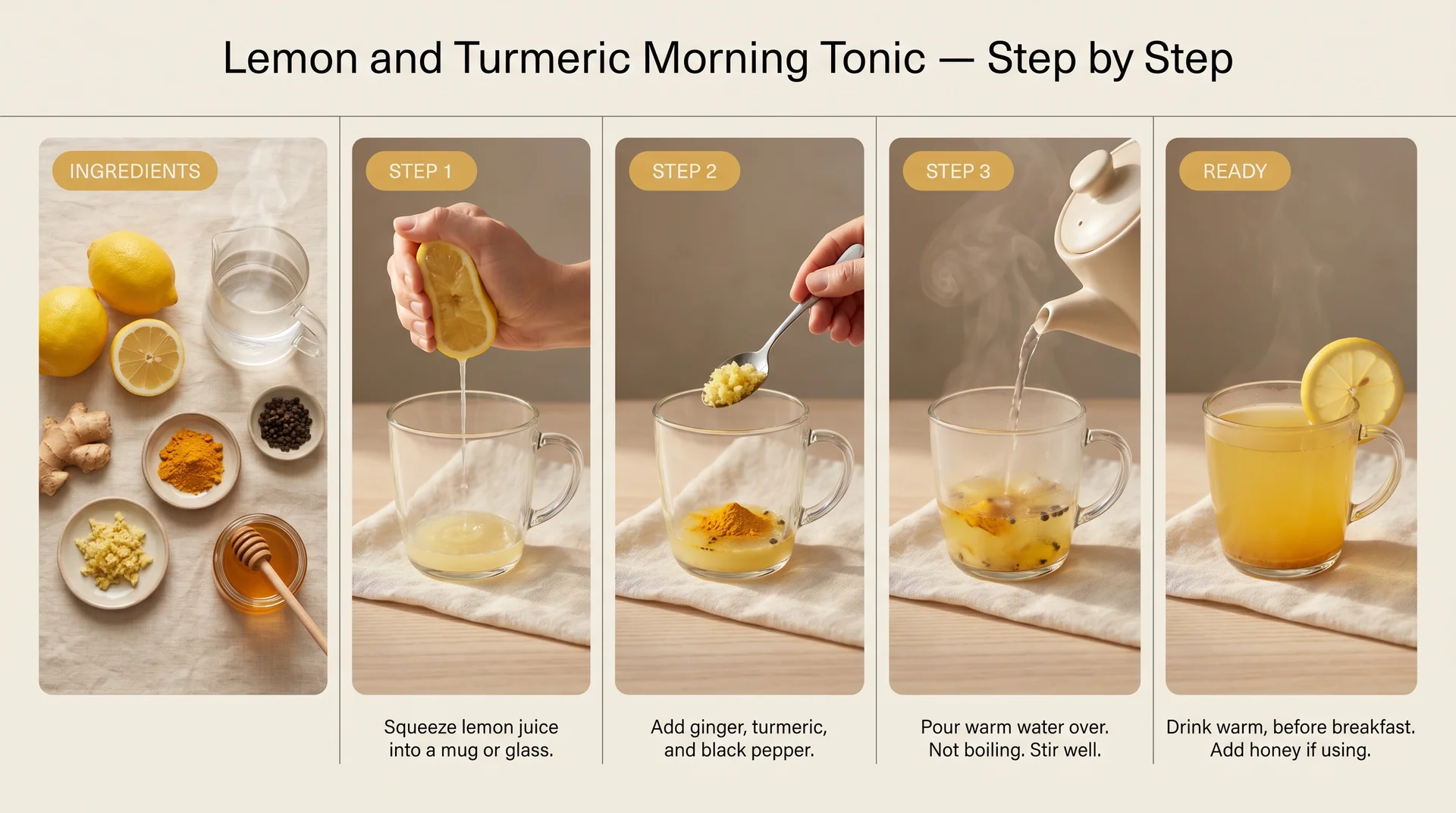
This is technically a tonic rather than a juice, and it keeps appearing in searches alongside juice recipes for weight loss — so it deserves an honest assessment rather than a skip.
What it is: a warm or room-temperature drink built on lemon juice, ginger, turmeric, and water.
What it does: delivers vitamin C and anti-inflammatory compounds, and gives you a practical reason to hydrate before you’ve fully woken up.
What it doesn’t do: melt fat, accelerate detoxification, or replace breakfast. Include it if you want a simple, low-effort morning ritual. Don’t include it, expecting dramatic results.
Makes 1 serving. Best before breakfast.
Ingredients:
- Juice of 1–2 lemons
- 1-inch fresh ginger, grated or finely juiced
- 1/4 teaspoon ground turmeric
- Small pinch of black pepper
- 8–10 oz warm water, not boiling
- 1/2 teaspoon raw honey, optional
Steps:
- Squeeze lemon juice into a mug or glass.
- Add grated ginger, turmeric, and black pepper.
- Pour warm water over and stir well.
- Add honey if using. Drink while warm.
Knowing the framework is half the work. Turning it into a daily practice is the other half, and that part is simpler than it sounds.
Does Juicing Actually Help With Weight Loss?
Juice does not cause weight loss on its own. What it can do, when made correctly and used as a dietary addition rather than a meal replacement, is increase your intake of vitamins, minerals, and phytonutrients while keeping calorie density low.
The weight loss is indirect. A vegetable-forward juice adds nutrients without much caloric load, which can support an overall eating pattern oriented toward weight management. It doesn’t burn fat, produce any clinically meaningful metabolic boost on its own, or detoxify anything.
Your liver and kidneys handle detoxification. No juice speeds that process up, regardless of what the label says, and I’m not going to use the word “detox” anywhere else in this piece for that reason.
Where juicing becomes genuinely useful is in making it easier to consume a wider variety of vegetables than you might eat whole.
If you wouldn’t sit down to a plate of celery, spinach, cucumber, and ginger, but you’ll drink that combination in ten seconds, that’s a real dietary gain, if the rest of your eating pattern supports your goals.
What the Evidence Actually Says
There is no strong clinical evidence that juice alone drives fat loss. What does have solid support is the relationship between higher vegetable and fruit intake and overall dietary quality, and between dietary quality and healthy weight management over time.
That distinction matters. Juice is a vehicle for micronutrients. It’s not a metabolic intervention.
The Fiber Trade-Off Nobody Mentions
Dietary fiber slows gastric emptying, reduces the rate at which glucose enters the bloodstream, and has well-documented effects on satiety hormones, according to research published in Nutrients (Barber et al., 2020).
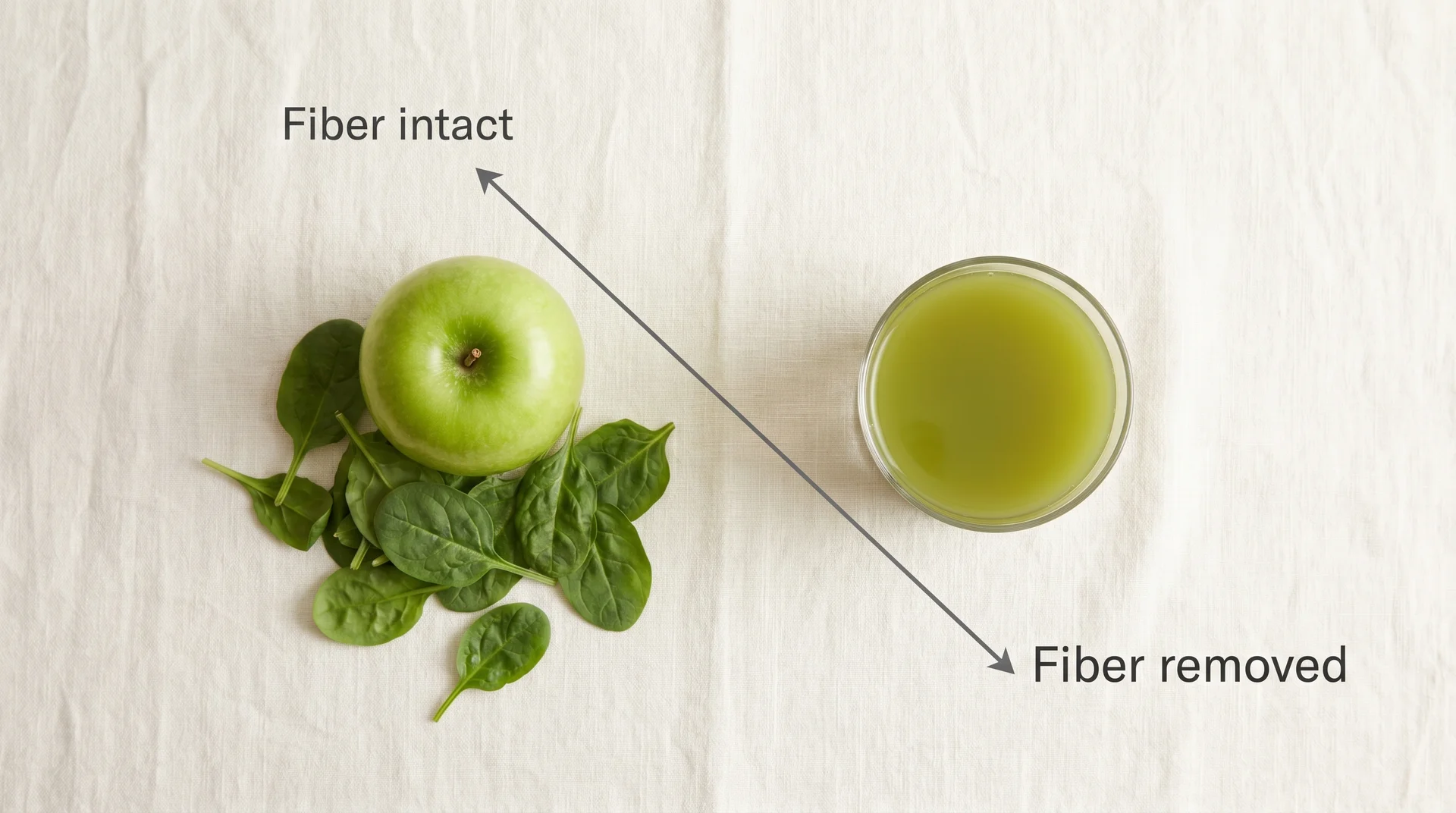
When you juice a fruit or vegetable, you extract the water and dissolved compounds, leaving the insoluble fiber behind in the pulp.
The practical consequence is that a glass of apple-heavy juice raises blood sugar faster than eating a whole apple would, and does less to keep you satisfied afterward.
This is exactly why people tell me they juiced for two weeks, felt hungrier than before, and gave up. That’s not a personal failure. It’s the predictable result of removing the fiber that would have slowed digestion and extended fullness.
The juice recipes that support weight loss are built to minimize this trade-off. Recipes heavy on low-sugar vegetables, light on fruit, and designed to complement whole food intake rather than replace it.
Keep that principle in mind as you read the recipes. It explains every structural decision in them.
What Makes a Good Weight Loss Juice Recipe?
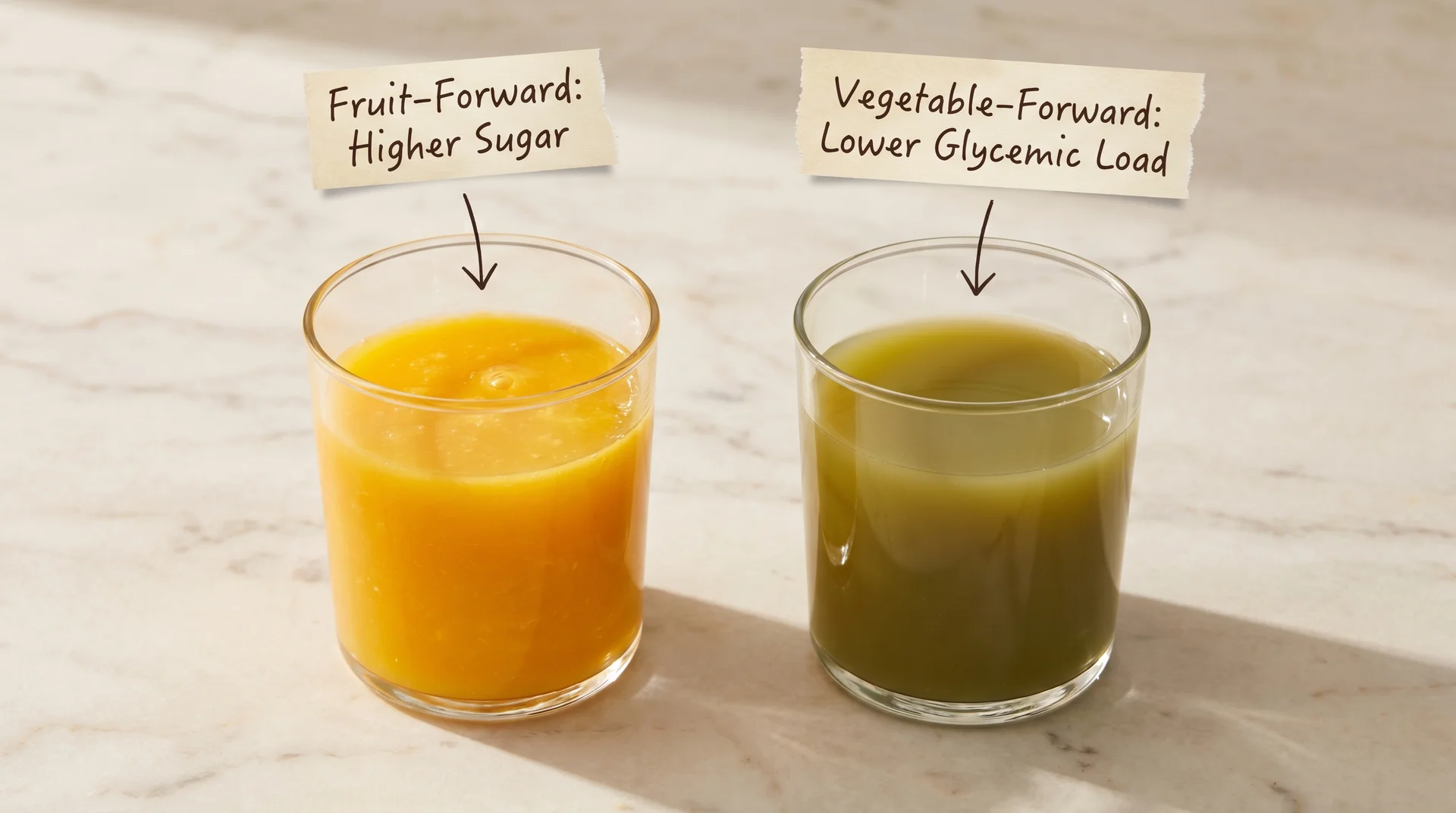
The ingredient ratio is the only thing that separates a juice recipe that supports weight loss from one that doesn’t.
A juice built mostly around apple, mango, or pineapple has a fundamentally different effect on blood sugar and hunger than one built around cucumber, celery, and leafy greens with a small amount of fruit for palatability. Both are “healthy juices.” Only one makes sense in the context of weight management.
The Vegetable-Forward Principle
Build the base of any weight loss juice from vegetables, add fruit for palatability, and keep the fruit to one serving per recipe.
When the base is cucumber, celery, or leafy greens, natural sugar stays low, and phytonutrient density stays high. One green apple or half a lemon gives you the sweetness that makes the juice drinkable without turning it into liquid fructose. That’s the balance worth aiming for.
Fruit-heavy juices carry vitamins and antioxidants, and they’re not off-limits. But in the context of weight management, fast-absorbing sugars hit the bloodstream without the fiber that would ordinarily slow them down — the same trade-off described above, active in every sip.
Ingredients That Actually Do Something
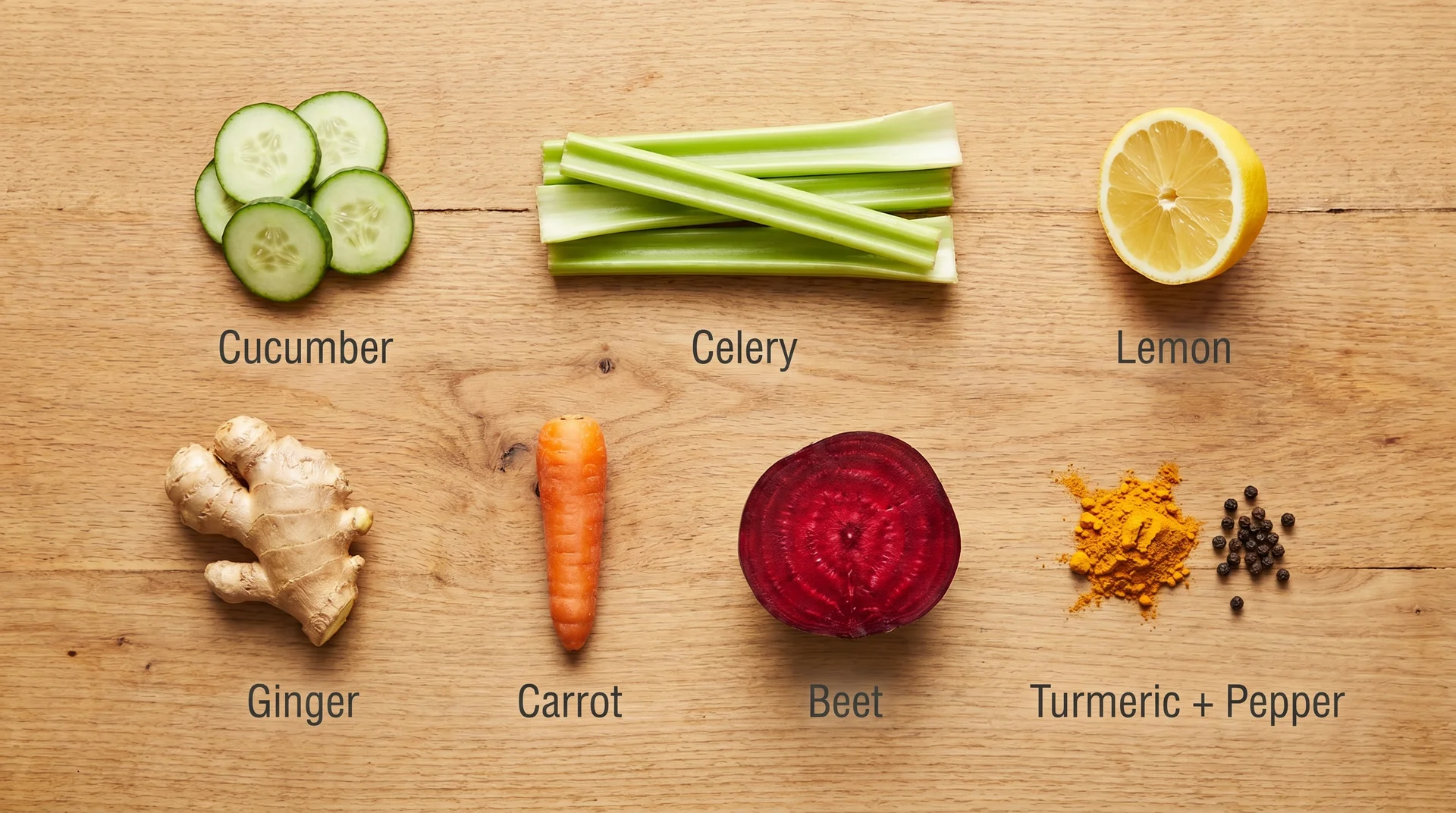
These are the ingredients worth building vegetable juice recipes for weight loss around, with a frank look at what each one contributes:
- Cucumber: Around 16 calories per cup according to USDA FoodData Central, almost entirely water, with trace amounts of vitamin K and potassium. An excellent base because it adds volume and hydration without any meaningful glycemic load. Genuinely useful, not glamorous.
- Celery: Similarly low in calorie density and high in water content. Contains natural sodium and potassium, which support hydration balance, and has a mild diuretic effect. Not a miracle ingredient, a reliably useful one for this specific purpose.
- Ginger: Carries some of the most consistent evidence among common juice add-ins, particularly for anti-inflammatory properties and its effect on gastric motility. Honestly, I include ginger in almost every recipe because it also makes the juice significantly more interesting to drink — and a recipe you’ll actually keep making is worth more than a perfect one you abandon after three days.
- Lemon: Low in sugar, high in vitamin C, useful for balancing the bitterness of greens. The alkalizing claims you’ll see online don’t hold up clinically — blood pH is tightly regulated regardless of what you consume, but lemon earns its place through flavor and micronutrient contribution.
- Carrot: Higher in natural sugar than cucumber or celery, but moderate on the glycemic index relative to fruit. Rich in beta-carotene. Use in combination rather than as a primary base.
- Beet: Contains dietary nitrates with solid evidence supporting circulation and exercise performance. Natural sugar is higher than in most vegetables, so smaller quantities and timing around physical activity make sense.
- Turmeric: The curcumin in turmeric has meaningful anti-inflammatory evidence behind it, but its bioavailability without black pepper is low. Piperine, the active compound in black pepper, significantly enhances curcumin absorption. Most recipes skip this detail. Include it every time.
What to Use Sparingly
Mango, pineapple, and grapes are high in fructose and absorb quickly without fiber to moderate the effect. They’re not forbidden; they’re the wrong foundation for a juice recipe oriented around weight management.
Use them as occasional flavor additions rather than base ingredients, and the glycemic picture changes considerably.
How to Use These Juices Without Undermining Your Goals
Where Juice Fits in a Real Eating Pattern
Juice works as an addition to your eating pattern, not a substitute for whole food, and that distinction is what determines whether you see any results.
When juice replaces a meal, you typically consume fewer calories short-term, but also far less protein and fiber than a whole-food meal would provide.
Research published in Nutrition Reviews (Rebello et al., 2016) found that viscosity and fiber content are among the strongest predictors of satiety. Juice has neither. The result is increased hunger later in the day, usually satisfied in ways that offset whatever caloric reduction the juice created.
That’s the same fiber dynamic described at the start of this piece, playing out again at the meal level. The pattern is consistent enough that it’s worth naming directly rather than leaving the reader to discover it the hard way after two fruitless weeks.
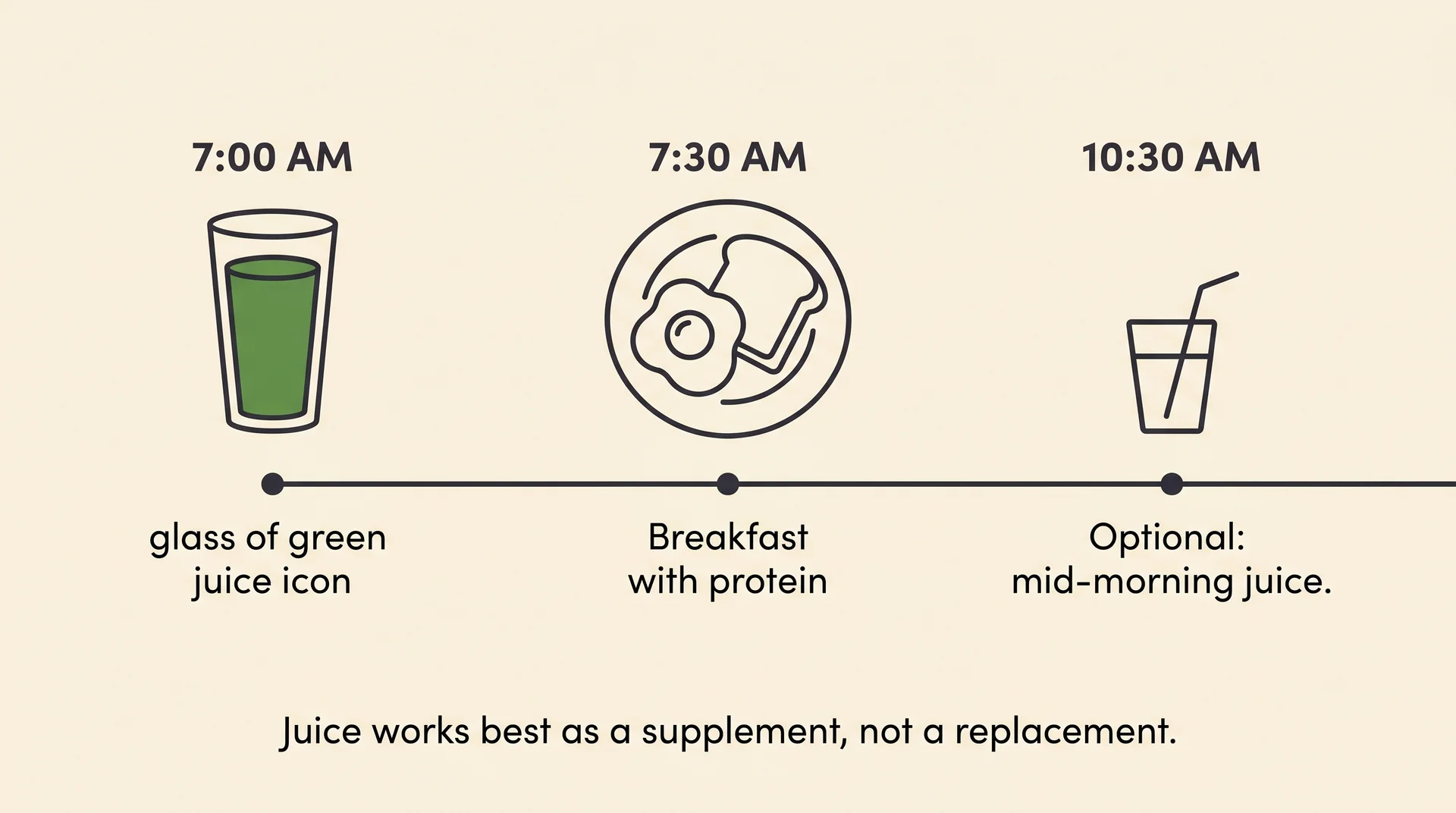
The clients I’ve worked with who got the most from a juicing habit used it one of two ways: as a morning addition before a protein-containing breakfast, or as a mid-morning nutrient boost between breakfast and lunch. Both approaches deliver the micronutrient benefit without asking juice to do a job it isn’t built for.
How Much Is Realistic
Eight to sixteen ounces per day is a reasonable starting point. More than that, the caloric and sugar contribution of even vegetable-forward recipes starts to accumulate.
Most advice on the quantity question gets this wrong by treating all juice recipes as equivalent. They’re not. The Green Detox Juice can reasonably go to 16 oz. The Beet, Carrot, and Apple version probably shouldn’t exceed 8 oz, particularly if you’re not offsetting it with a workout.
Start at 8 oz daily, run it for two weeks, then adjust based on how your body responds.
Timing and One Honest Caveat
Morning tends to be the most effective time for most people, because juice functions as a nutritional addition when consumed alongside or shortly before breakfast. Afternoon works well for lighter options, like the Cucumber Mint Hydration Juice, which was designed for that window.
One thing the research is genuinely less settled on: whether individual people respond to the same juice recipe in meaningfully different ways based on their gut microbiome, metabolic baseline, or medication load. The answer is probably yes, but the clinical evidence on personalized glycemic response to specific juice combinations is modest. The principles here are sound.
The specifics may need adjustment based on your own experience and your provider’s guidance.
One thing this piece isn’t covering: juice fasting and multi-day cleanse protocols. Those involve a fundamentally different approach to caloric restriction and warrant their own careful guidance. What’s here is about juicing as a daily dietary addition, which is a different conversation entirely.
Making This a Habit That Lasts
The practical barrier for most people isn’t motivation. It’s the cleanup.
Juicers take time to disassemble and wash, and if that feels like too much every morning, the habit won’t survive the first week, regardless of how good the recipe is. A few approaches that genuinely help:
- Batch your produce prep two to three days at a time. Wash, chop, and portion ingredients into containers in the fridge. Morning prep drops to under two minutes, which is the difference between a habit that sticks and one that quietly disappears.
- Make two servings at once and refrigerate the second. Cold-pressed juice holds well for up to 48 hours. Standard centrifugal juicers are better consumed within 24. Either way, you’re halving the number of times you clean equipment per week.
- Pick one recipe and stay with it for two weeks before adding variety. Knowing you’re making the same Green Detox Juice every morning removes a decision from a part of your day that’s already busy. That reduction in friction matters more than it sounds.
Final Thoughts
A final honest note: some people genuinely don’t enjoy vegetable-forward juice, and that’s a legitimate response, not a character flaw.
If you’ve tried the green recipes twice and disliked them, start with the Carrot and Ginger version and move toward the greener options gradually over a few weeks.
There’s no benefit in forcing a routine you dread, especially when the goal is something you need to sustain long enough to see results from.