
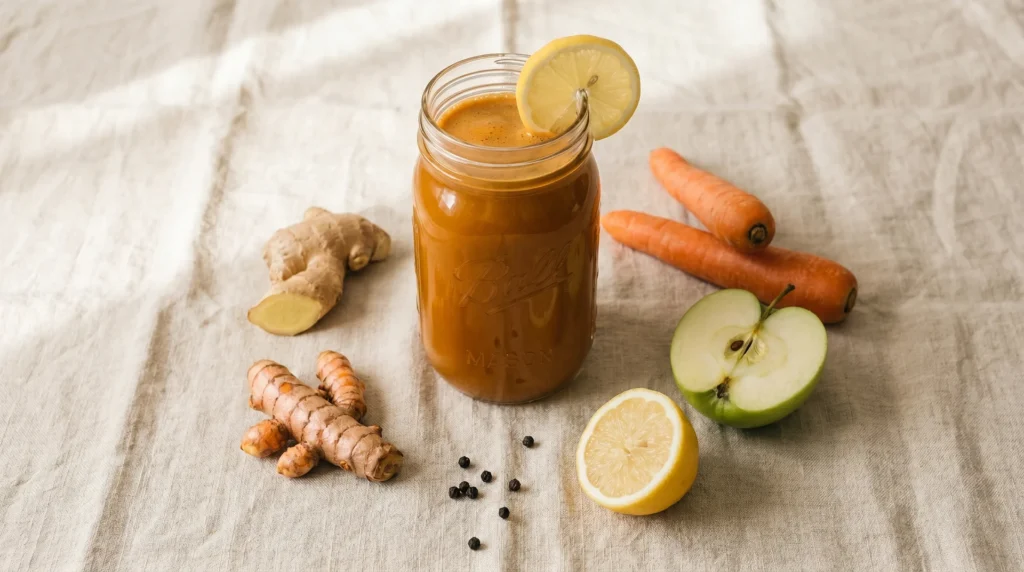
Some juice ingredients have genuine, peer-reviewed evidence behind their anti-inflammatory effects.
Turmeric, ginger, tart cherry, and dark leafy greens are not wellness trends; they’re compounds researchers have studied in clinical settings, with measurable effects on inflammatory markers in the body.
What most anti-inflammatory juice recipes skip is the part that determines whether those ingredients actually do anything once you drink them: the amounts, the ratios, and one critical detail about turmeric that changes everything about how it works.
What “Anti-Inflammatory” Actually Means
Inflammation is your immune system’s protective response to injury or infection. It’s not a flaw, and the goal isn’t to eliminate it.
Acute vs. Chronic Inflammation: Why the Distinction Matters?
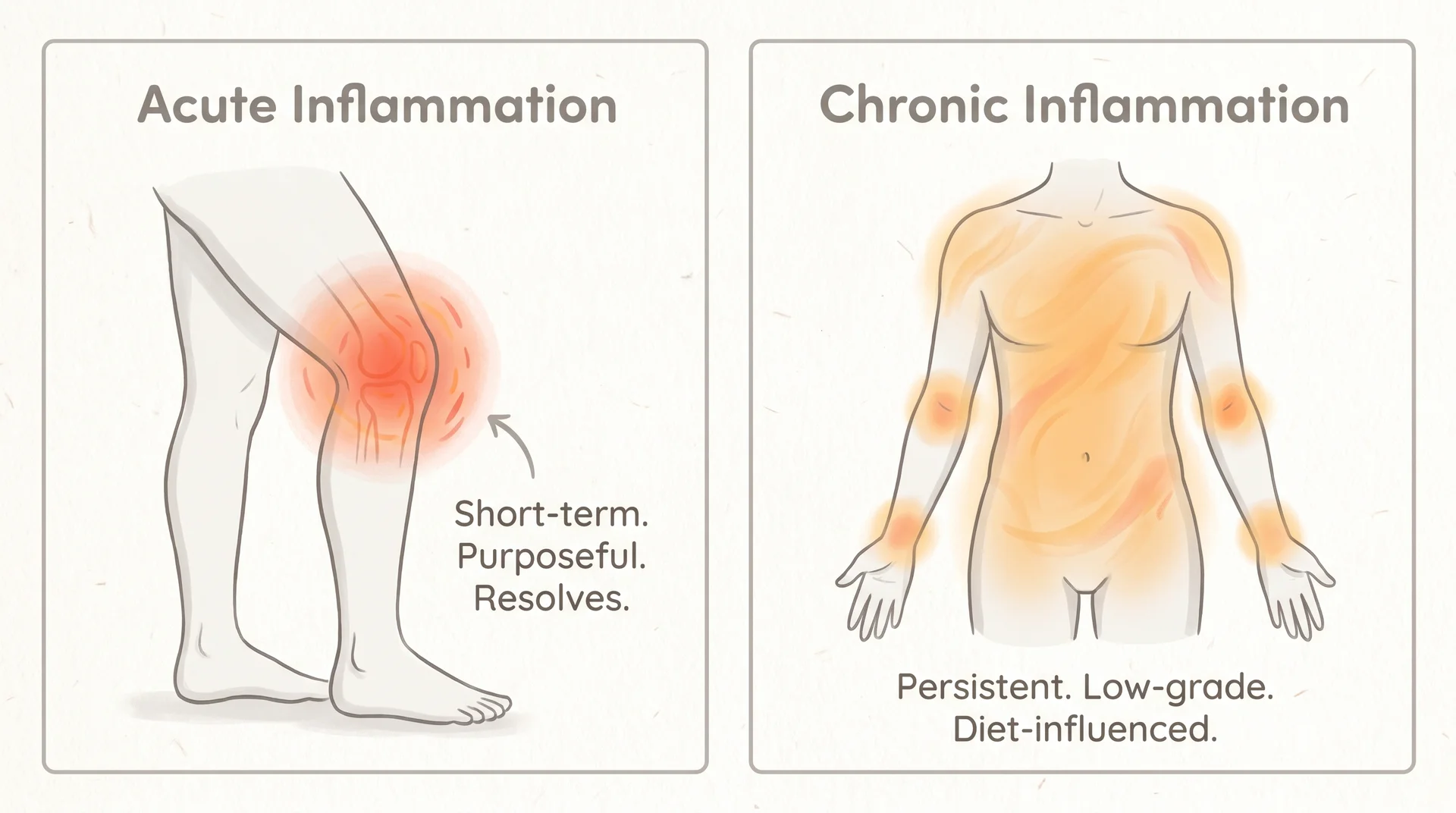
Acute inflammation is short-term and purposeful. When you sprain an ankle, and it swells, that’s your immune system sending blood and repair cells to the site. It’s supposed to happen, and it resolves when the job is done.
Chronic inflammation is different. It’s a persistent, low-grade immune activation that isn’t responding to a specific injury, and it’s associated with conditions like rheumatoid arthritis, inflammatory bowel disease, and cardiovascular disease.
Dietary approaches, including anti-inflammatory juices, work on this chronic, systemic side. They are not going to reduce the swelling from a sprained joint. They are relevant to the person managing ongoing stiffness, gut inflammation, or persistent low-grade pain that doesn’t resolve on its own.
What Juice Can Realistically Do
Juice can deliver a concentrated dose of specific phytonutrients and antioxidants with demonstrated anti-inflammatory effects. That’s a meaningful contribution, and it’s also a limited one.
This piece is not about juice cleanses or detox protocols. That’s a different claim with different evidence, and it belongs in a separate conversation.
What these four recipes offer is a consistent, practical way to get more of the right compounds into your diet regularly, built on ingredients that have actually been studied.
The Ingredients with Real Evidence Behind Them
The best anti-inflammatory juices are built around a small core of ingredients with genuine research behind them.
What juices are good for inflammation? The ones built primarily around turmeric with black pepper, ginger, tart cherry, and dark leafy greens have the strongest published evidence for effects on inflammatory markers. Most fruit-forward juices marketed as anti-inflammatory have far weaker support.
The table below shows where the most common juice ingredients actually stand, not what sounds impressive, but what the research supports.
| Ingredient | Active Compound | Evidence Strength | Best Application |
|---|---|---|---|
| Turmeric + black pepper | Curcumin + piperine | Strong – but only when paired | Daily chronic inflammation support |
| Ginger | Gingerols, shogaols | Strong | Joint pain, post-exercise soreness, gut health |
| Tart cherry | Anthocyanins | Strong for joint inflammation and exercise recovery | Gout-related flares, post-workout muscle soreness |
| Dark leafy greens | Vitamin K, magnesium, antioxidants | Moderate – part of broader anti-inflammatory patterns | Base volume and nutrient density |
| Citrus | Vitamin C, flavonoids | Moderate | Collagen support, palatability, flavor |
| Pineapple | Bromelain | Limited – primarily digestive enzyme research | Sweetness and palatability only |
| Celery | Apigenin, luteolin | Preliminary – mostly in vitro data | Neutral base, mild flavor |
Turmeric: Why It Only Works with Black Pepper
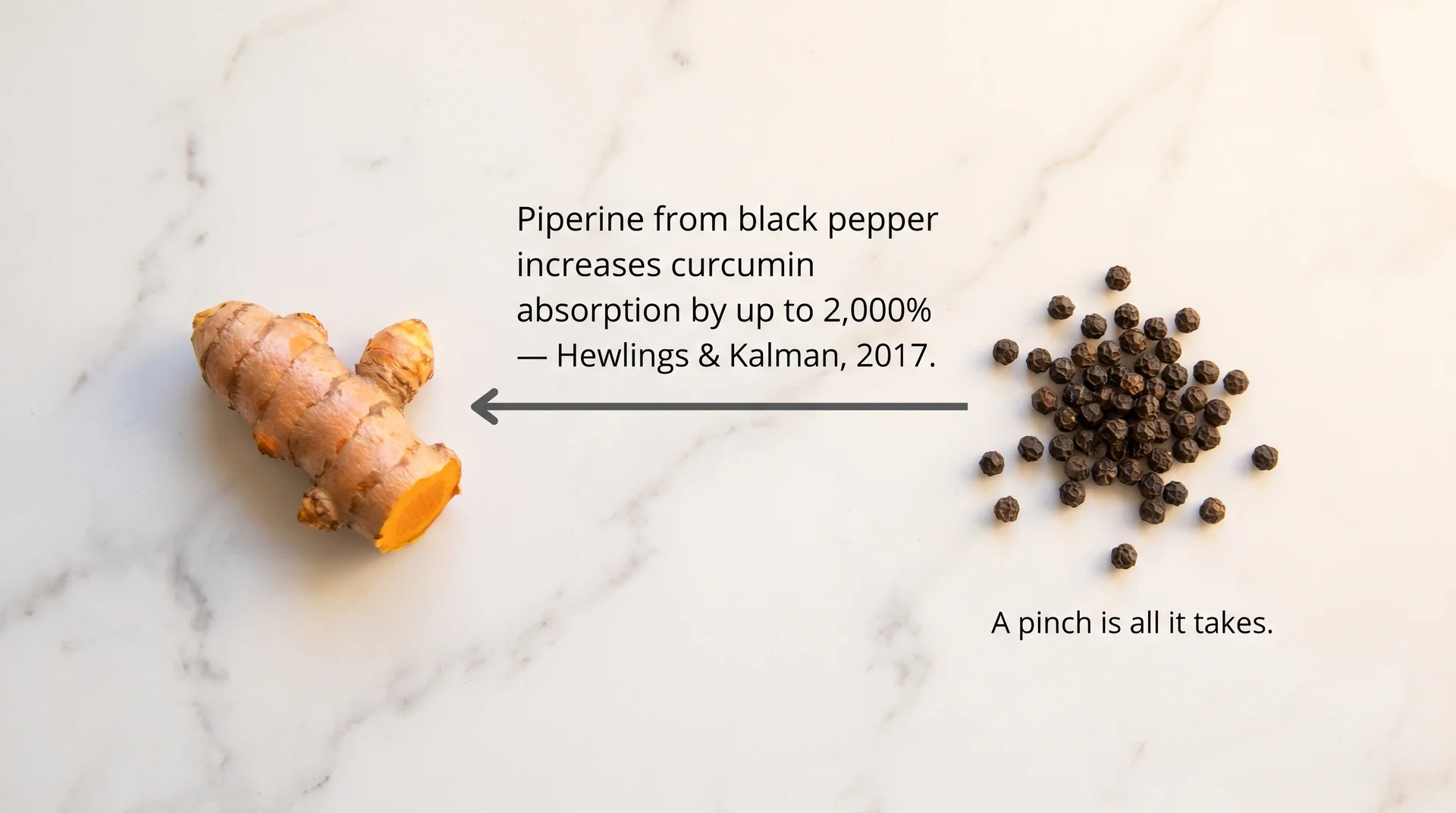
Turmeric’s anti-inflammatory effects come from curcumin, a polyphenol that inhibits several key inflammatory pathways in the body. The research on curcumin is genuinely solid and almost universally misapplied in juice recipes.
The problem is absorption. Curcumin on its own has poor bioavailability: it’s poorly absorbed in the gut and metabolized quickly before it can exert a meaningful effect.
According to Hewlings and Kalman (2017), published in the peer-reviewed journal Foods, consuming piperine alongside curcumin increases its absorption by up to 2,000%.
Piperine is the active compound in black pepper. A small pinch, genuinely a pinch, stirred into any turmeric juice after blending is enough to dramatically change how much curcumin your body actually absorbs.
Honestly, this is the most practically useful detail in this entire article. Almost no recipe mentions it. You can juice the most beautiful, golden turmeric root and get very little from it if you skip the pepper.
Consuming turmeric alongside a small source of healthy fat further improves absorption, since curcumin is fat-soluble. A handful of almonds alongside the juice, or blending a tablespoon of ground flaxseed directly into a smoothie version, makes a measurable difference.
Ginger: The One That Acts Faster
Ginger contains gingerols and shogaols, compounds that inhibit the production of pro-inflammatory prostaglandins and cytokines, the same pathways targeted by many over-the-counter anti-inflammatory medications, through a different mechanism.
Mashhadi and colleagues (2013), writing in the International Journal of Preventive Medicine, found that ginger supplementation produced meaningful reductions in muscle soreness and inflammatory markers in athletes, with effects appearing within days of consistent use.
That faster timeline matters. If you’re managing joint pain right now, ginger is the ingredient most likely to produce a noticeable effect in the short term. Turmeric requires weeks of consistent, properly absorbed intake to accumulate.
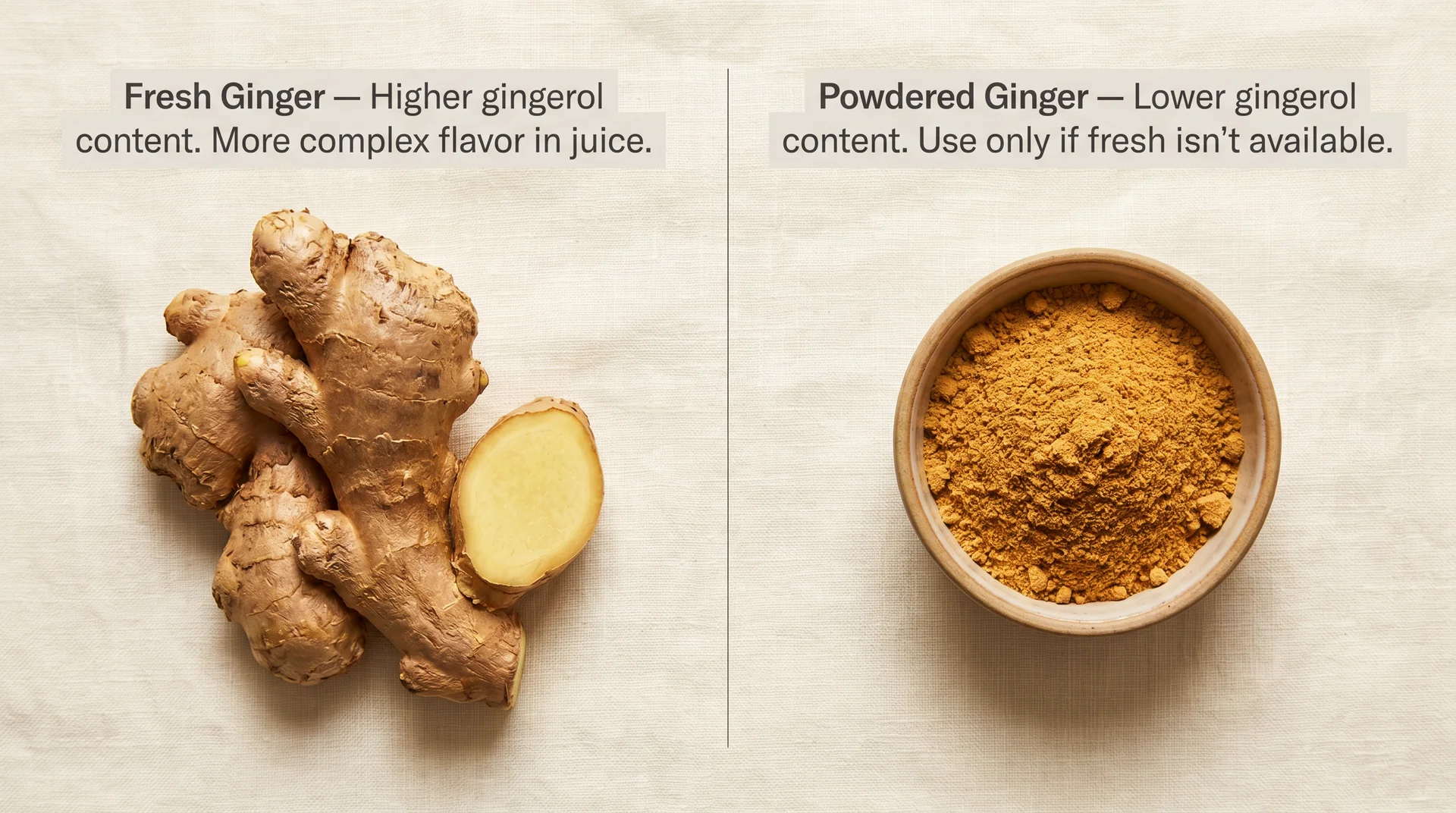
Fresh ginger is also one of those ingredients where the difference between fresh and powdered genuinely matters.
The gingerol content is higher before drying and processing, and the flavor is more complex in juice.
Tart Cherry: Underused and Underrated
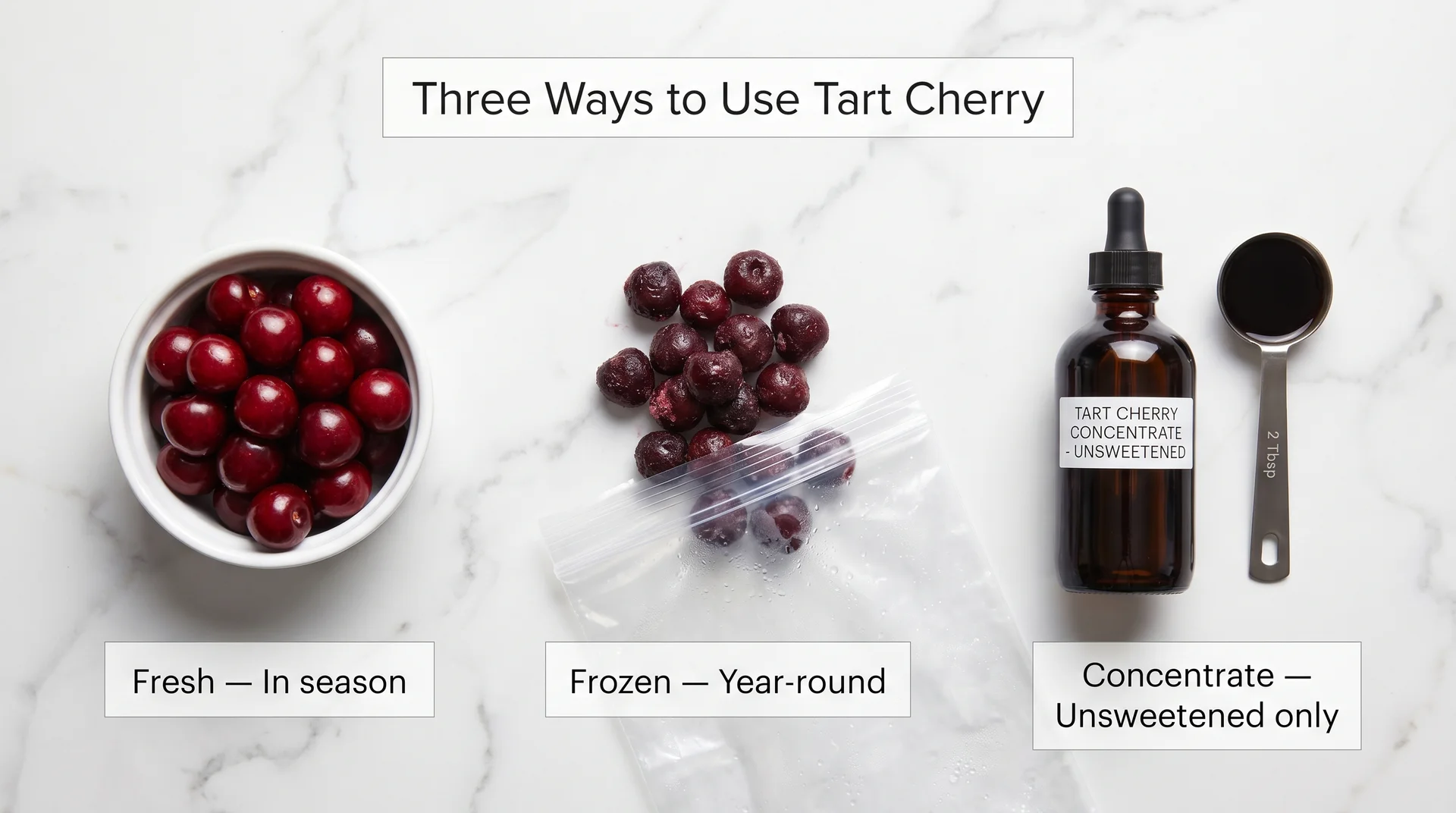
Tart cherry is probably the most underrepresented ingredient in this category, and I suspect it’s partly because it doesn’t photograph as well as turmeric.
Tart cherries contain high concentrations of anthocyanins, the same class of compounds responsible for the color of blueberries and red cabbage.
Tart cherries are among the most studied foods for joint inflammation, with published research documenting effects on uric acid levels relevant to gout and on post-exercise muscle recovery markers.
If joint pain is the primary reason you’re here, tart cherries belong in your regular rotation. It’s available fresh in season, frozen year-round, and as an unsweetened concentrate that mixes easily into any juice base.
Leafy Greens: The Base That Does More Than You Think
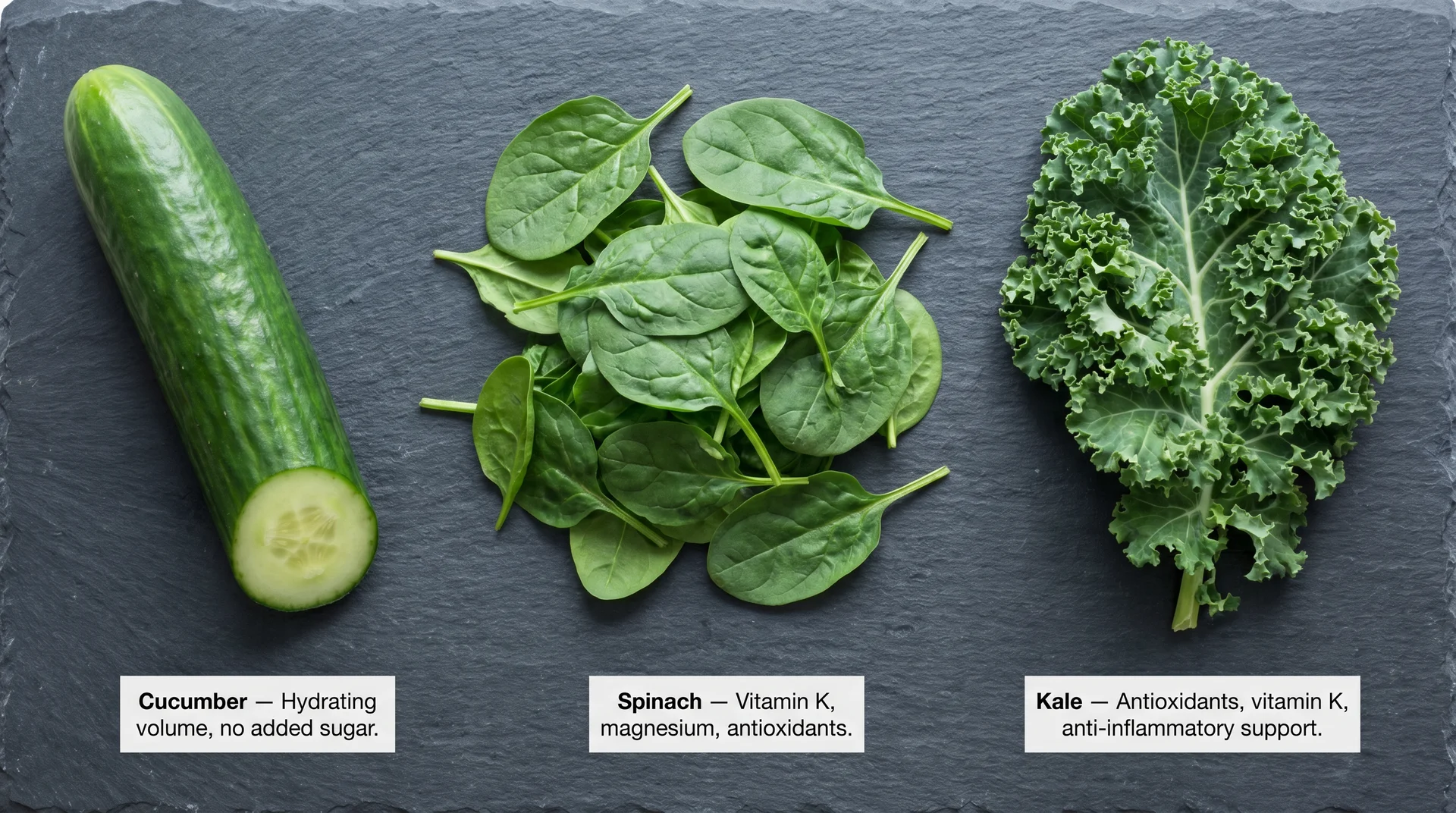
Spinach, kale, and cucumber aren’t the exciting ingredients. They’re what make an anti-inflammatory juice structurally different from a fruit drink.
- Spinach and kale supply vitamin K, which plays a role in healthy immune regulation, along with magnesium, which is associated with balanced inflammatory response, and which a significant portion of the US population doesn’t get enough of through diet.
- Cucumber provides hydrating volume without adding sugar, making it the most efficient base ingredient for keeping the 80/20 ratio where it needs to be.
- Both spinach and kale provide antioxidants that help neutralize free radicals involved in oxidative stress, a process closely linked to chronic low-grade inflammation.
Citrus: Vitamin C and More Than Immune Support
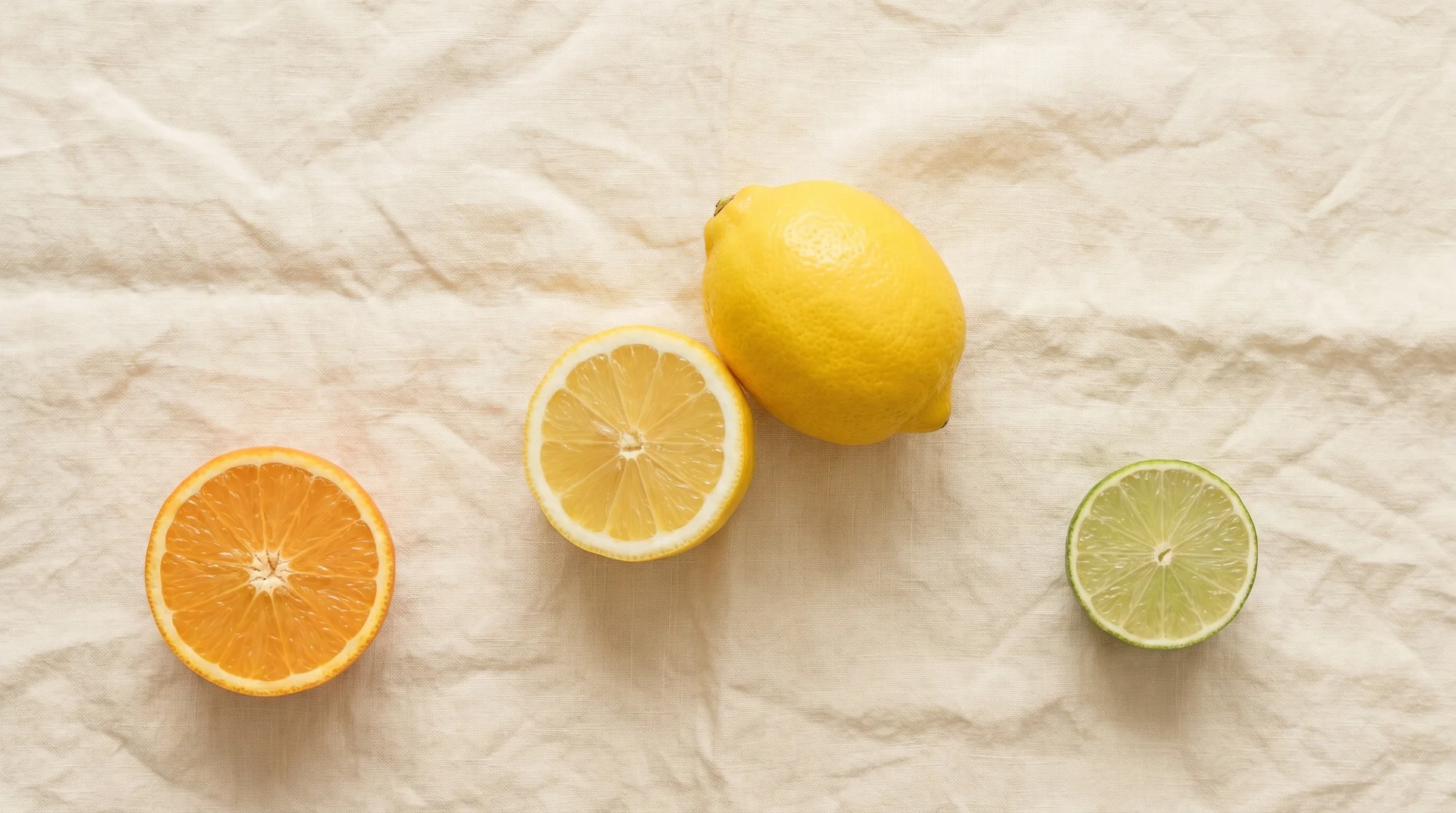
Lemon, orange, and lime contribute vitamin C, a cofactor in collagen synthesis that matters for joint tissue integrity, not just cold prevention. Citrus also adds flavonoids with antioxidant properties and, practically, the acidity that makes vegetable-heavy juices actually pleasant to drink.
One full lemon per juice is the right range. It brightens every other flavor without taking over.
The 80/20 Rule for Juicing and Why It Matters for Inflammation
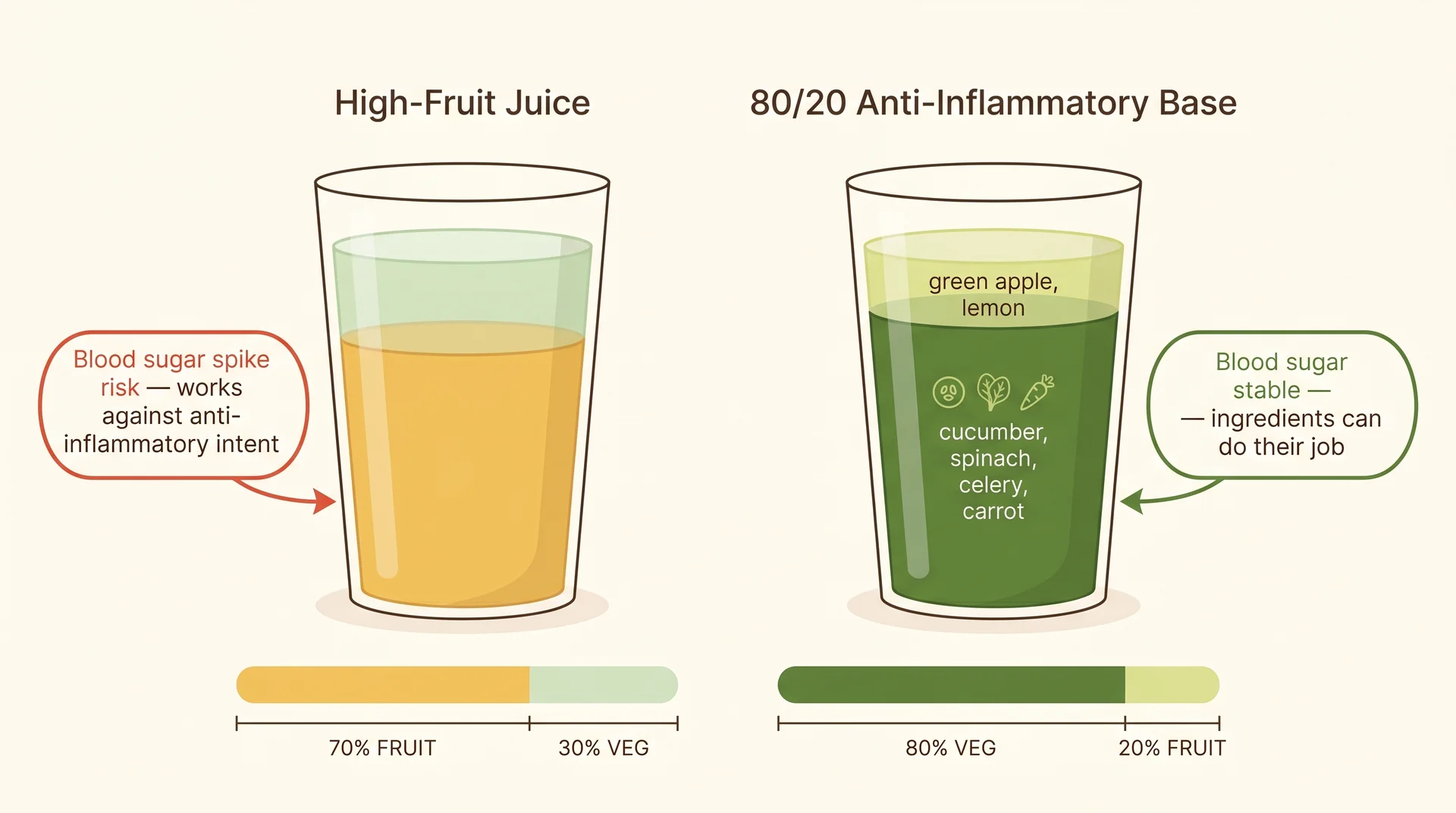
The 80/20 rule is a practical composition framework that most juice recipes follow without explaining — and the reason behind it matters more than most people realize.
What is the 80/20 rule for juicing? It means building your juice fromroughly 80% vegetables and 20% fruit by volume. For anti-inflammatory juicing specifically, this ratio matters because it keeps blood sugar stable enough to avoid triggering the same inflammatory pathways you’re trying to support through diet.
How High-Fruit Juices Can Work Against You
A juice made from mango, pineapple, orange, and a small knob of ginger is genuinely believed to be anti-inflammatory. The ginger is present. The intent is sound. The result is a drink that can spike blood sugar sharply because the fiber has been removed and the sugar is rapidly absorbed.
Elevated blood glucose triggers the release of pro-inflammatory cytokines. If you’re making juice from mostly fruit, you may be doing the opposite of what you intended, and no ingredient list will save a juice that’s fundamentally high in rapidly absorbed sugar.
Most advice on anti-inflammatory juicing gets the ingredient list right and the ratio completely wrong. This is the detail that polished recipe articles rarely say directly.
How to Build a Low-Sugar Anti-Inflammatory Base
The vegetable base carries the volume. Fruit contributes flavor, palatability, and specific compounds — but as a supporting element, not the foundation.
- Choose a neutral, hydrating vegetable for volume: cucumber or celery. These add significant liquid without sugar or strong competing flavors.
- Add a leafy green for nutrient density: spinach or kale. Two large handfuls per 16 oz of juice is the right starting point.
- Add one high-evidence active ingredient: fresh turmeric root, fresh ginger root, or tart cherry. This is the ingredient doing the primary anti-inflammatory work.
- Add one fruit for palatability: half a green apple, one lemon, or a small wedge of pineapple. Green apple is the most useful here — it adds sweetness with less sugar than most other fruit options.
- Add the absorption enhancer: a pinch of black pepper wherever turmeric is present. Not optional.
Juice Recipes for Inflammation
The best homemade anti-inflammatory drink is built around a concentrated dose of evidence-backed ingredients, at ratios designed to keep blood sugar stable and absorption high.
What is the best homemade drink for inflammation? For daily maintenance, the turmeric-ginger-carrot recipe below is the most evidence-supported option. For acute joint pain or post-exercise soreness, the tart cherry joint pain juice is the stronger choice.
Each recipe yields approximately 12 to 16 oz and is designed for a centrifugal or cold-press juicer. Blender adaptations are noted where the fiber retention is beneficial.
The Everyday Anti-Inflammatory Juice
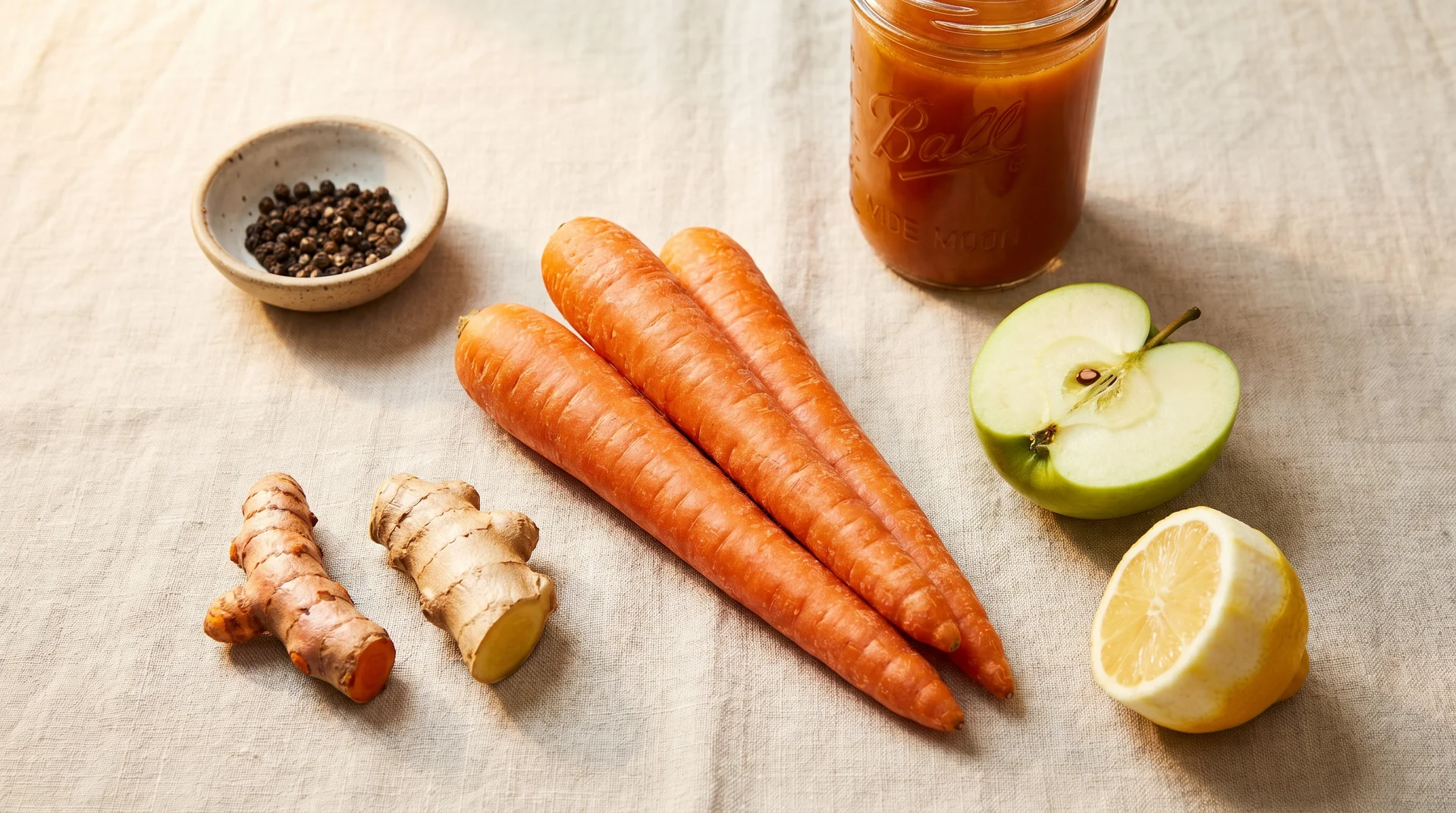
This is the daily maintenance recipe. It delivers curcumin and gingerols together, keeps sugar low through carrot and green apple, and includes black pepper, which most recipes skip entirely. Drink it in the morning alongside something with a small amount of healthy fat.
Ingredients:
- 1-inch piece fresh turmeric root (or ½ tsp turmeric powder if fresh isn’t available, though fresh is meaningfully better)
- 1-inch piece of fresh ginger root
- 3 medium carrots, scrubbed
- ½ green apple, cored
- 1 lemon, peeled
- Small pinch of black pepper, stirred in after juicing
Instructions:
- Feed the turmeric and ginger through the juicer first, followed immediately by a carrot to push their fibrous residue through cleanly.
- Juice the remaining carrots, then the green apple and lemon.
- Pour into a glass and stir in the black pepper. Do not skip this step — the curcumin absorption difference is significant.
- Drink immediately, or seal in a glass jar and refrigerate for up to 24 hours.
Blender adaptation: Blend all ingredients with ½ cup water. Strain through a nut milk bag for a cleaner result, or drink as-is for the added fiber — which slows glucose absorption and has its own anti-inflammatory benefit.
The Green Foundation Juice
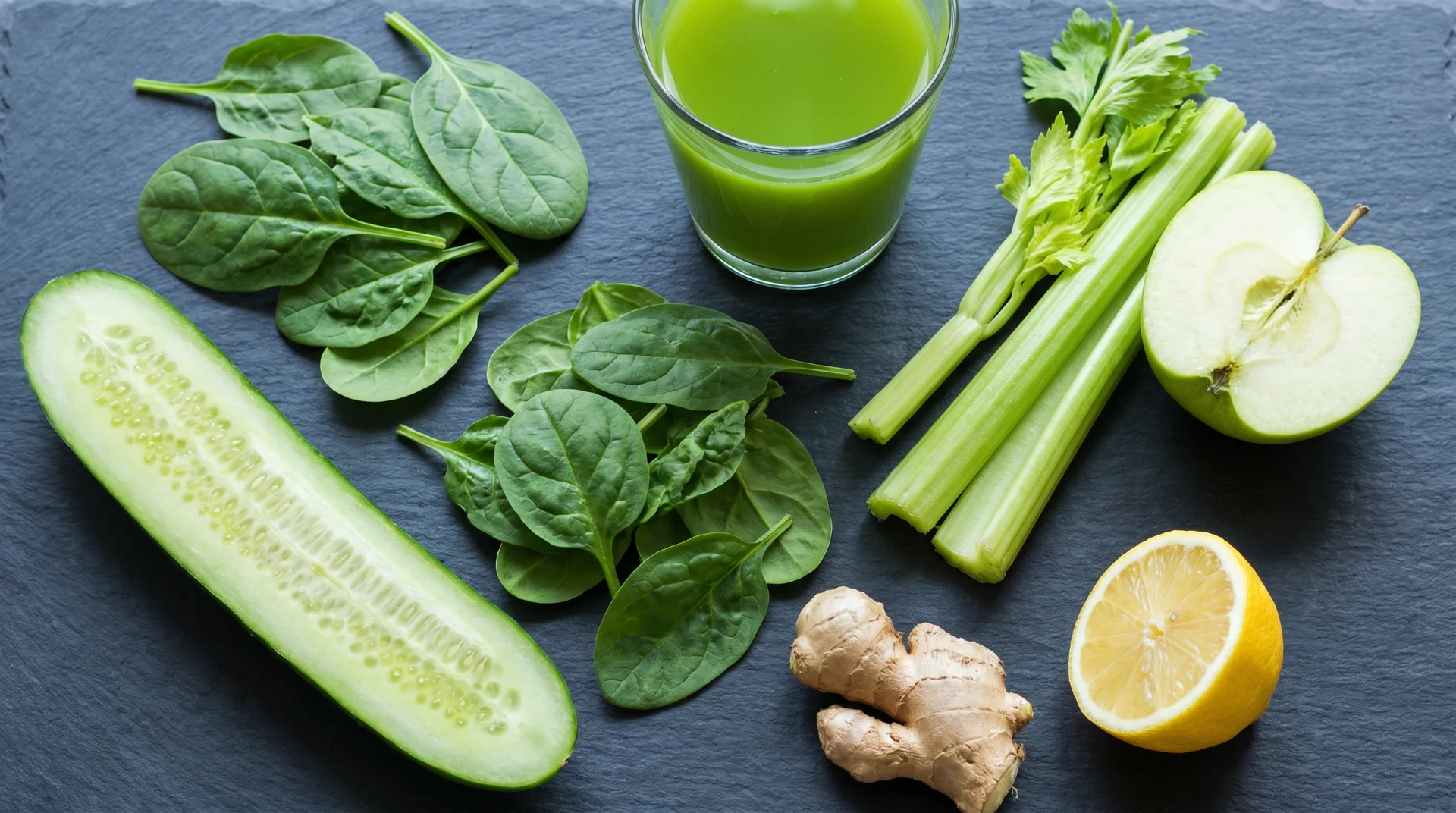
This is the lowest-sugar option in this group and the most appropriate choice for someone whose inflammation has a digestive or gut health component. It’s the one people are most skeptical of before they try it and are surprised by afterward.
Ingredients:
- 1 large cucumber
- 2 large handfuls of baby spinach
- 3 stalks of celery
- ½ green apple, cored
- 1 lemon, peeled
- 1-inch piece of fresh ginger root
Instructions:
- Feed the spinach through first, using cucumber slices to push it through; spinach alone tends to slow most juicers.
- Follow with celery, then green apple, and lemon.
- Add ginger at any point; it processes well on its own.
- Stir, taste, and add more lemon if the flavor needs brightness.
If this tastes too vegetal at first, add a second half of green apple and reduce it gradually over time as your palate adjusts. Most people who stick with it for two weeks stop noticing the vegetable flavor entirely.
If you got a taste of celery, you can try these tasty and nutritious celery soup recipes and add them to your routine.
The Joint Pain Juice
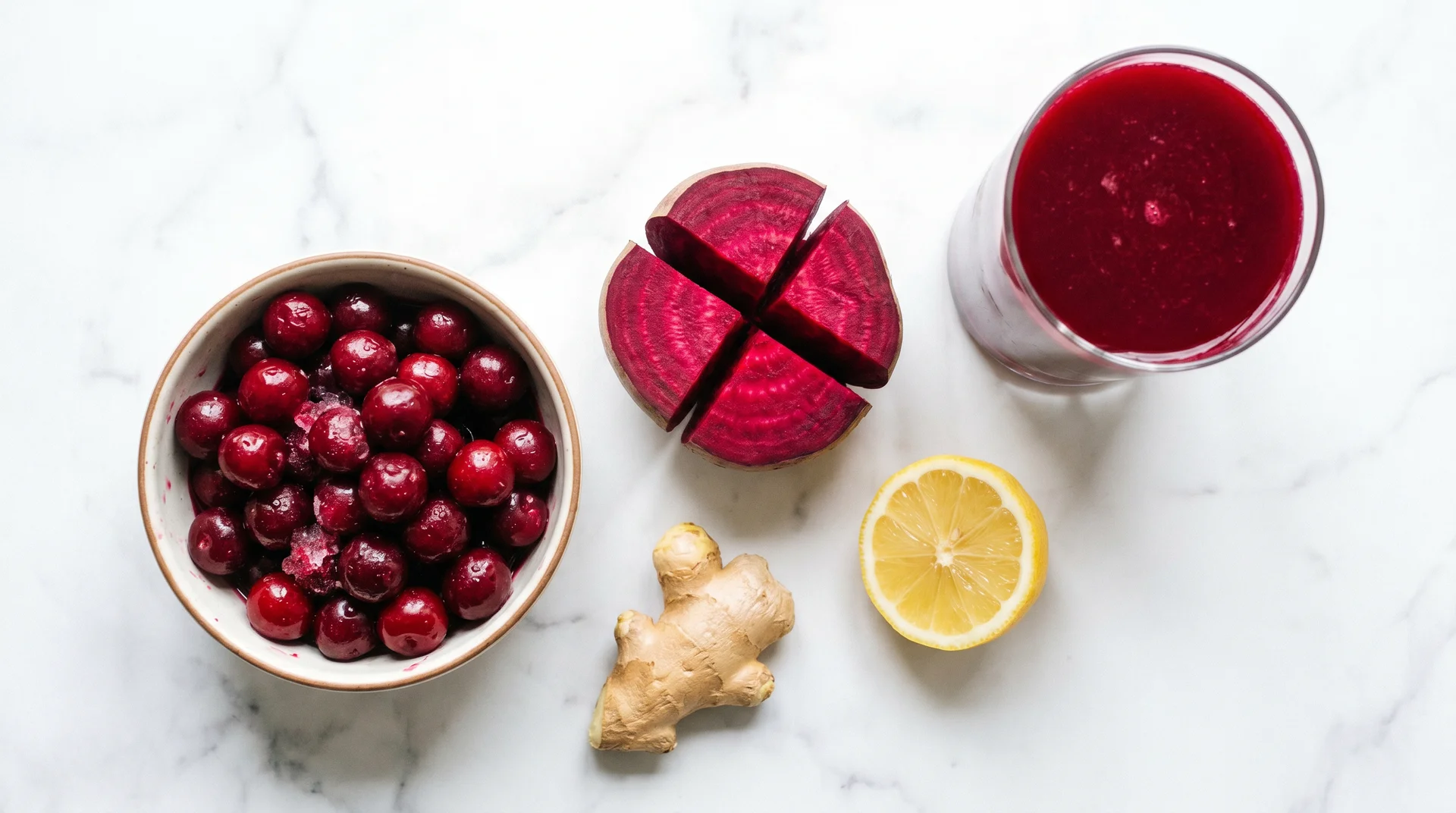
This recipe is built for the reader dealing specifically with joint inflammation, post-exercise soreness, or gout-related flares. Tart cherry is the lead ingredient, and it’s here because the evidence for its effects on joint-related inflammation is among the strongest in the category.
Ingredients:
- 1 cup tart cherries, pitted (fresh in season, or thawed from frozen, both work equally well)
- 1 medium beet, scrubbed and quartered
- 1-inch piece of fresh ginger root
- 1 lemon, peeled
- ½ green apple, optional, add only if the tartness is too sharp
Instructions:
- Feed tart cherries through the juicer. If using frozen, thaw completely first and drain any excess liquid before juicing.
- Juice the beet and ginger.
- Add lemon last, then stir to combine.
- Taste before adding the green apple. Tart cherries are naturally sharp; many people prefer them without additional sweetness.
If fresh or frozen tart cherries aren’t available, unsweetened tart cherry concentrate is a practical substitute. Use 2 tablespoons mixed into 10 oz of water or the beet-ginger-lemon juice. Check the label carefully; many concentrates are sweetened, which works against the recipe’s intent.
The beet in this recipe contributes betalains, the pigments responsible for its deep color, which have been studied for antioxidant properties. The color it produces is dramatic. Don’t be alarmed by the deep red result; it’s a concentrated drink.
The Vitamin C Morning Boost
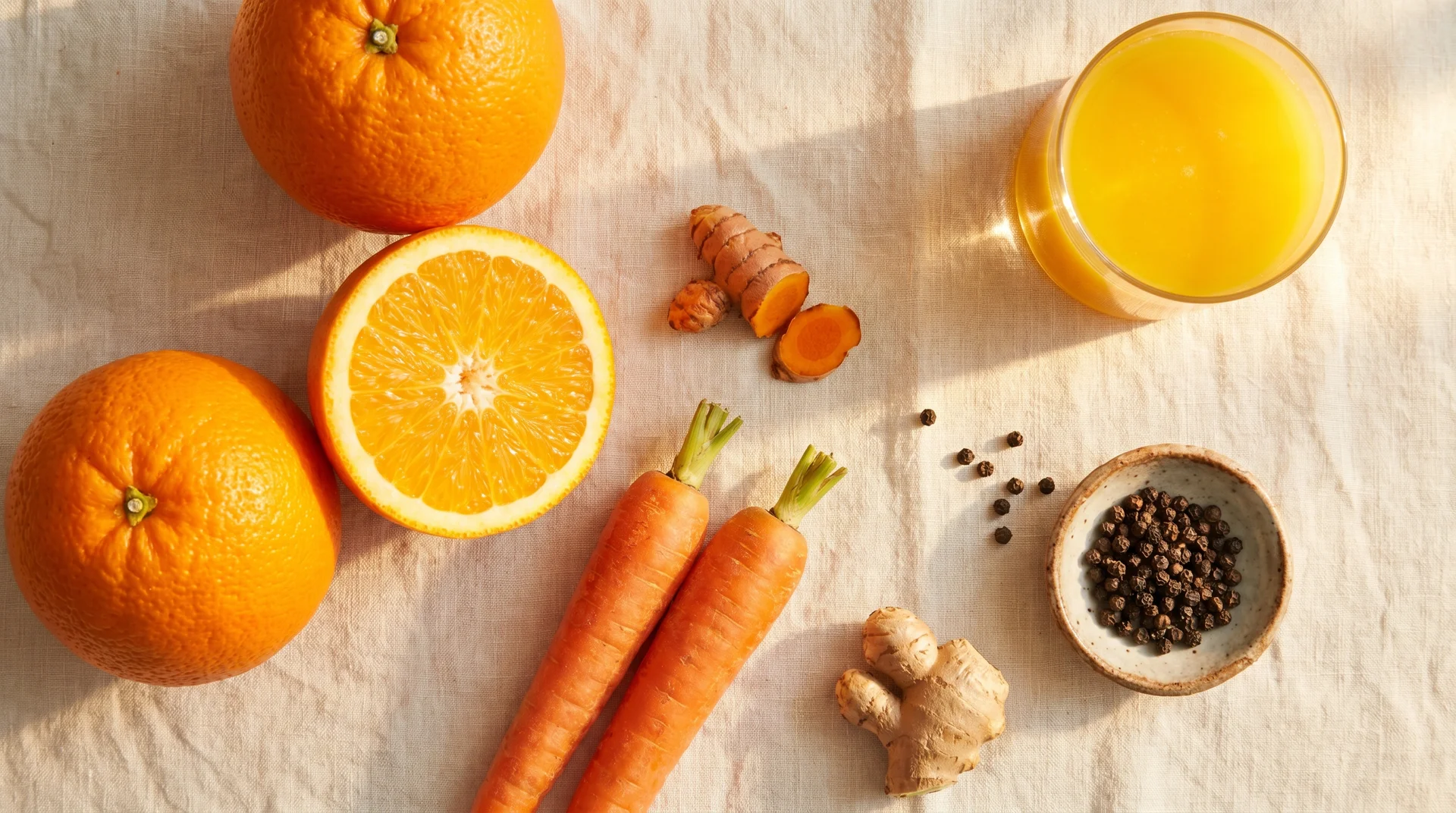
This is the most approachable entry point for someone transitioning from commercial orange juice or a high-fruit smoothie habit.
It has the highest natural sugar content of the four recipes, which is worth knowing, but it still includes turmeric and black pepper, so it earns its place here rather than in a general breakfast juice roundup.
Ingredients:
- 2 large oranges, peeled
- 2 medium carrots, scrubbed
- 1-inch piece of fresh turmeric root
- ½-inch piece fresh ginger root
- Small pinch of black pepper, stirred in after juicing
Instructions:
- Juice the turmeric and ginger first, followed by the carrots.
- Add oranges last, their juice volume is significant, and they process quickly.
- Stir in black pepper immediately after juicing.
- Drink immediately. Vitamin C degrades with oxidation faster than most other nutrients in these recipes; this one doesn’t store as well.
Getting the Most Out of Your Anti-Inflammatory Juice
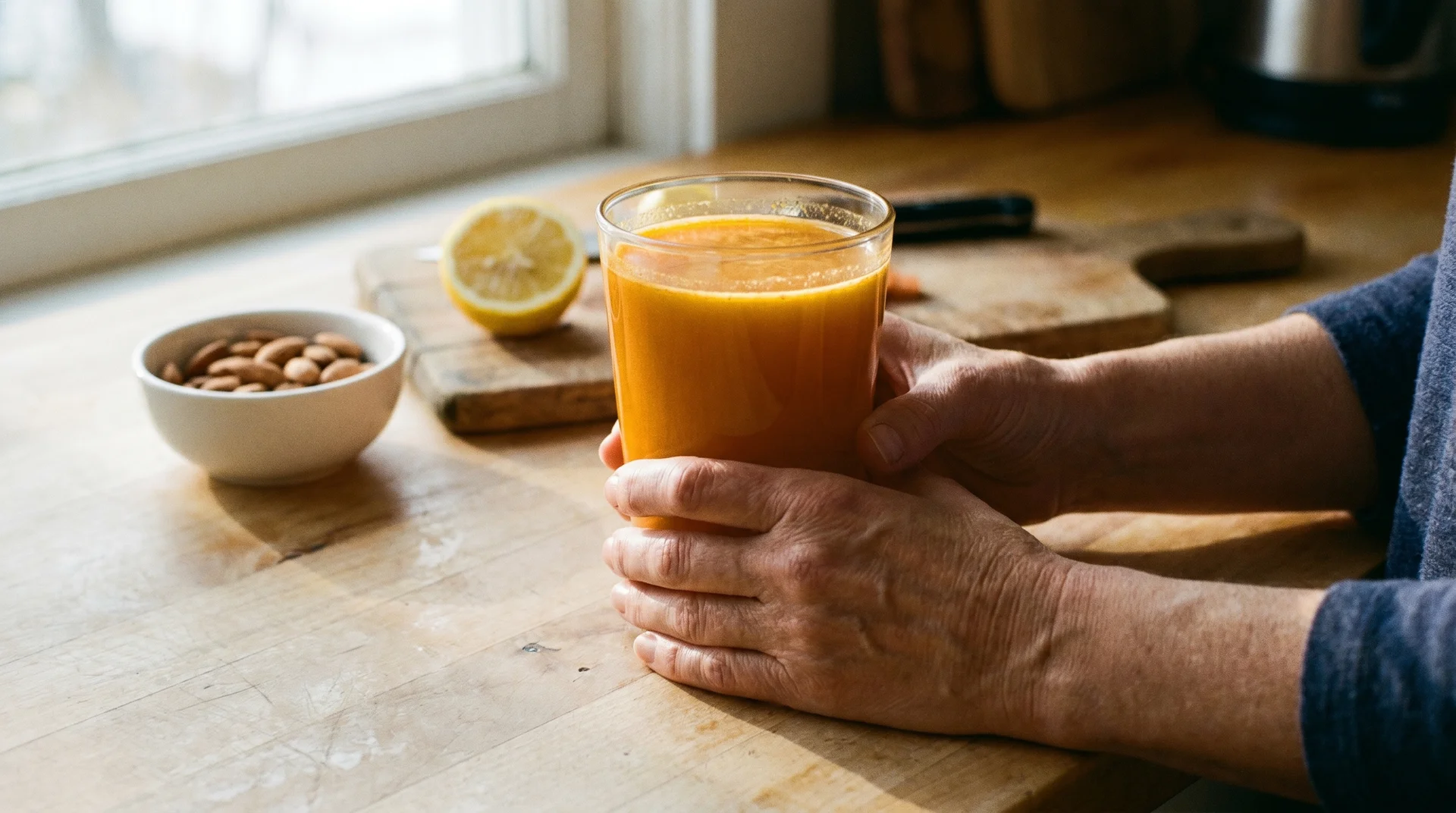
Curcumin, the active compound in turmeric and the most evidence-backed ingredient in these recipes, is fat-soluble, which means how you consume the juice affects how much benefit you actually get from it.
Timing and Frequency
Consistency matters more than volume here. One juice five or six days a week will do more than three juices on a Monday and nothing for the rest of the month.
Morning works well for a practical reason: consuming the juice before a full meal, alongside a small fat source, maximizes curcumin absorption before other compounds interfere. That said, the best time is whichever time you’ll actually do it reliably. Afternoon works. So does lunch.
Juicer vs. Blender: A Brief Note
A cold-press juicer preserves more enzymes and produces a cleaner, more concentrated liquid. A blender retains fiber, which slows glucose absorption and has independent benefits for gut health. Both work for this purpose.
A juicer makes the process faster and the result more palatable for most people. A blender is cheaper and easier to clean. Choose based on what you will actually use consistently, not based on which is theoretically superior.
What to Pair With It
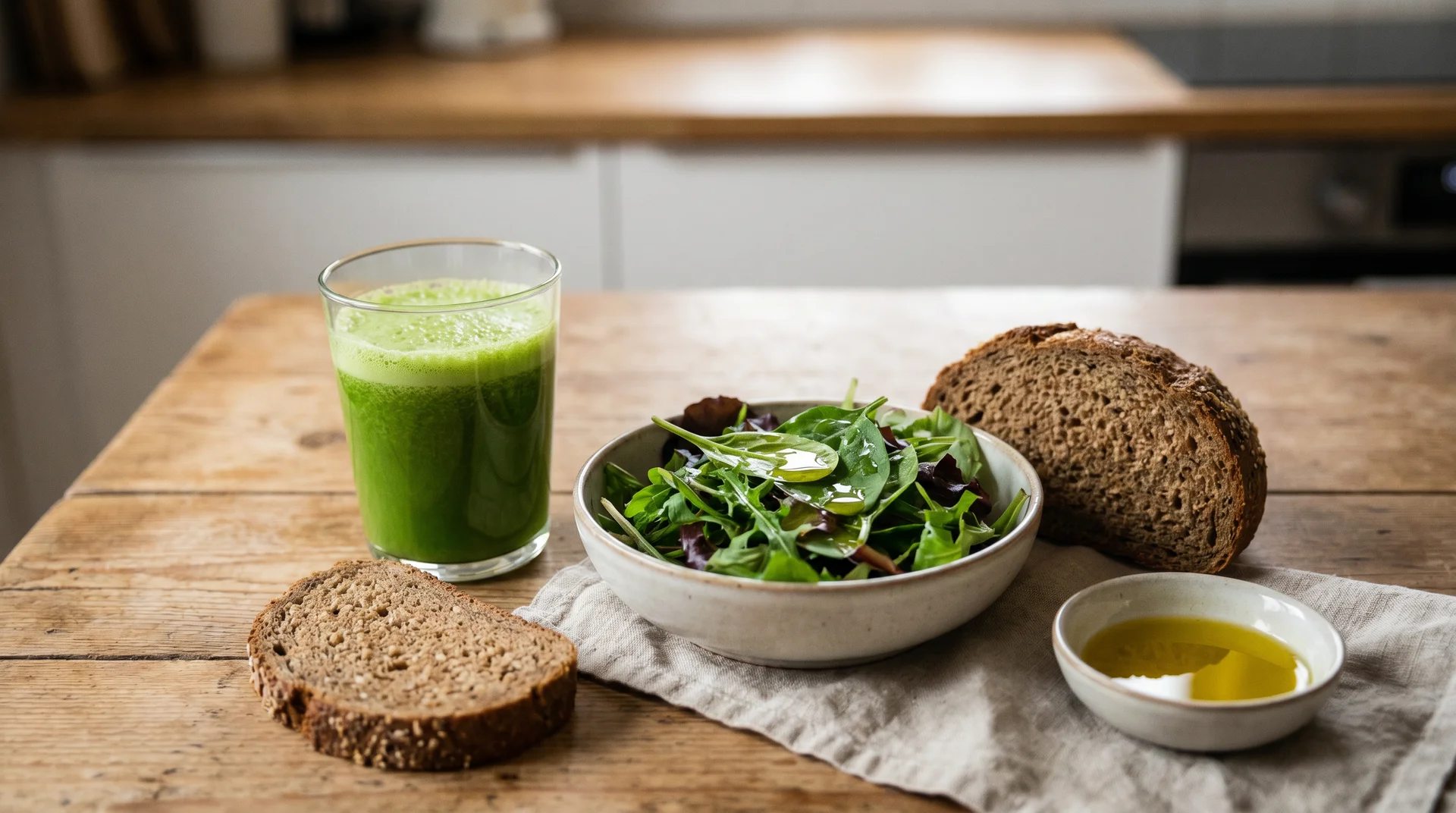
The same absorption logic covered in the turmeric section applies here in practical terms: curcumin needs fat to absorb properly. A small handful of almonds, a few slices of avocado, or a piece of whole-grain toast with olive oil alongside the juice is enough to meaningfully improve fat-soluble compound delivery.
If blending rather than juicing, a tablespoon of ground flaxseed or a quarter of an avocado blended directly into the drink accomplishes the same thing and also adds fiber.
Consistent habits, built around the right ingredients and the right ratios, give the compounds time to accumulate, and understanding what that accumulation can and cannot do matters as much as the recipe itself.
What Juicing Won’t Do
| Note: The guidance in this section is dietary information, not medical advice. If you’re managing a diagnosed inflammatory condition, such as rheumatoid arthritis, inflammatory bowel disease, lupus, or another condition involving chronic immune activation, speak with your healthcare provider or a registered dietitian before making significant dietary changes. Food can support but cannot replace medical treatment. |
What is the fastest way to flush inflammation? There isn’t one. Dietary anti-inflammatory interventions, including these juices, produce measurable effects over weeks of consistent use, not hours. Ginger acts faster than turmeric; neither works the way an ibuprofen does, and they’re not trying to.
The Arthritis Foundation is clear in its dietary guidance that anti-inflammatory foods are most effective as part of a consistent overall eating pattern, not as standalone interventions. These juices are a useful contribution to that pattern. They’re one tool.
No juice will outpace a diet built primarily on ultra-processed food, refined sugar, and low vegetable intake. If the juice is the one healthy thing in an otherwise inflammatory diet, the marginal benefit is real but small. The logic of the 80/20 ratio doesn’t apply only to the juice, but it applies to the diet as a whole.
Final Thoughts
I’ll say something here that the research doesn’t fully resolve: individual response to dietary anti-inflammatory interventions varies considerably, and the reasons aren’t entirely clear.
Gut microbiome composition, genetic variation in polyphenol metabolism, baseline inflammation levels, and overall diet quality all interact in ways that make it genuinely difficult to predict how much any one person will benefit from a specific ingredient or routine.
What these recipes will do, consumed consistently and built on the right ingredients at the right ratios, is give your body a regular dose of compounds that support an anti-inflammatory environment over time.
That’s worth doing. Just don’t expect one glass to carry the whole weight.