
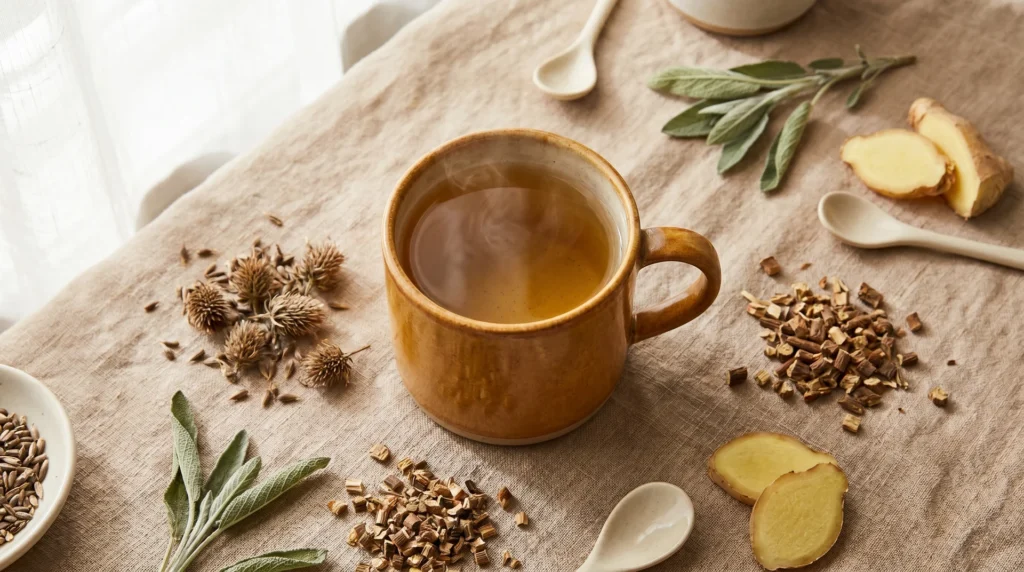
Milk thistle, dandelion root, and green tea have the strongest research behind them for supporting the organs your body uses to process and eliminate waste.
That said, what those teas can actually do depends entirely on understanding what “detox” means biologically, and most of what’s sold under that label doesn’t reflect it.
If you have a diagnosed liver or kidney condition or you take prescription medications, talk with your doctor before adding any of the herbs below. Some interact with medications, and a few are contraindicated in specific health situations.
What “Detox” Actually Means & What Tea Can Realistically Do
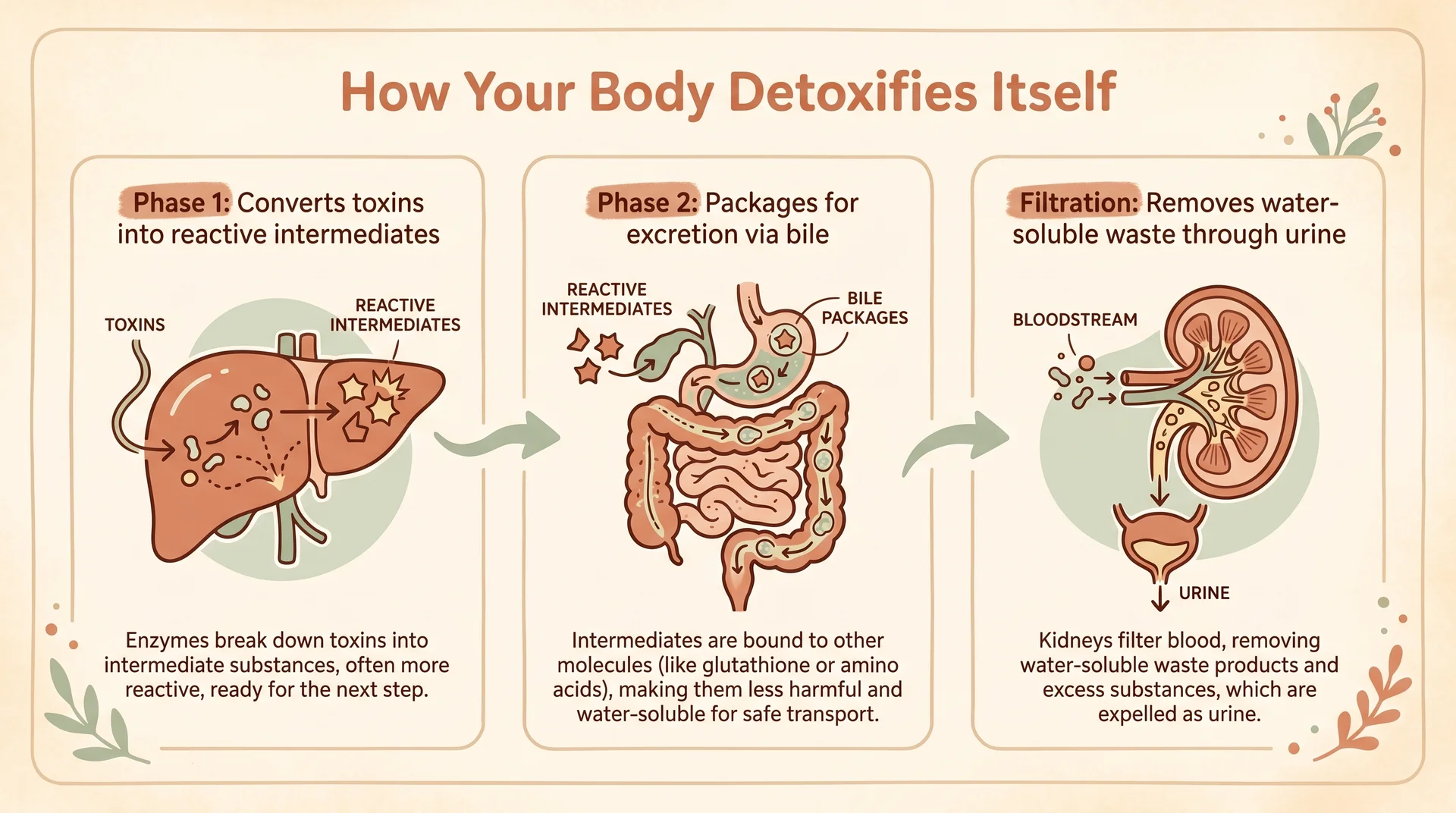
Your body is detoxifying right now, without any tea. The liver filters approximately 1.5 liters of blood per minute, converting metabolic byproducts, environmental compounds, alcohol, and medications into water-soluble forms that the kidneys and intestines can excrete.
This process runs continuously and does not need a cleanse to activate it. That’s not a reason to dismiss herbal tea. It’s a reason to be precise about what tea can and can’t do.
How Your Body Detoxifies Itself
The liver, kidneys, and intestinal tract are the primary detoxification organs. The liver performs two-phase biotransformation: phase one converts fat-soluble compounds into reactive intermediates, and phase two packages those intermediates for excretion through bile or urine.
The kidneys then filter the blood and remove those packaged compounds. The intestines clear both digestive waste and the bile the liver uses to move processed compounds out of the body.
These systems are always running. What varies is how efficiently they function, and that’s where certain plant compounds become relevant.
Where Tea Fits In
Tea cannot detoxify your body, but specific plant compounds in certain teas can support the systems that do.
Silymarin in milk thistle, bitter compounds in dandelion root, catechins in green tea, and menthol in peppermint have documented effects on liver enzyme activity, bile production, gut motility, and kidney filtration.
They’re modest, supportive influences. Thinking of them as part of an everyday detox habit rather than a periodic cleanse is more accurate, and it sets far more realistic expectations for what you’ll actually experience.
At a Glance: The Best Detox Teas by Organ System
| Tea | Primary Support | Key Compound | Evidence Level | Best Timing |
|---|---|---|---|---|
| Milk Thistle | Liver | Silymarin | Strong mechanism; mixed clinical trials | With meals |
| Dandelion Root | Liver / Bile Flow | Taraxacin, taraxacerin | Moderate; limited human trials | Morning, before eating |
| Green Tea | Liver (antioxidant) | EGCG (catechins) | Strong antioxidant evidence | Morning or early afternoon |
| Artichoke Leaf | Liver / Bile Flow | Cynarin | Moderate; European clinical data | Before meals |
| Peppermint | Digestive / Bloating | Menthol | Strong (multiple meta-analyses) | After meals |
| Ginger | Digestive / Nausea | Gingerols, shogaols | Strong | After meals |
| Licorice Root (DGL) | Gut Lining | Glycyrrhizin (removed in DGL) | Moderate; use DGL form only | After meals |
| Nettle Leaf | Kidney | Multiple flavonoids | Preliminary; traditional use | Midmorning, with water |
| Dandelion Leaf | Kidney / Diuretic | Taraxasterol, flavonoids | Moderate (pilot human trial) | Midmorning or early afternoon |
The Best Teas for Liver Support
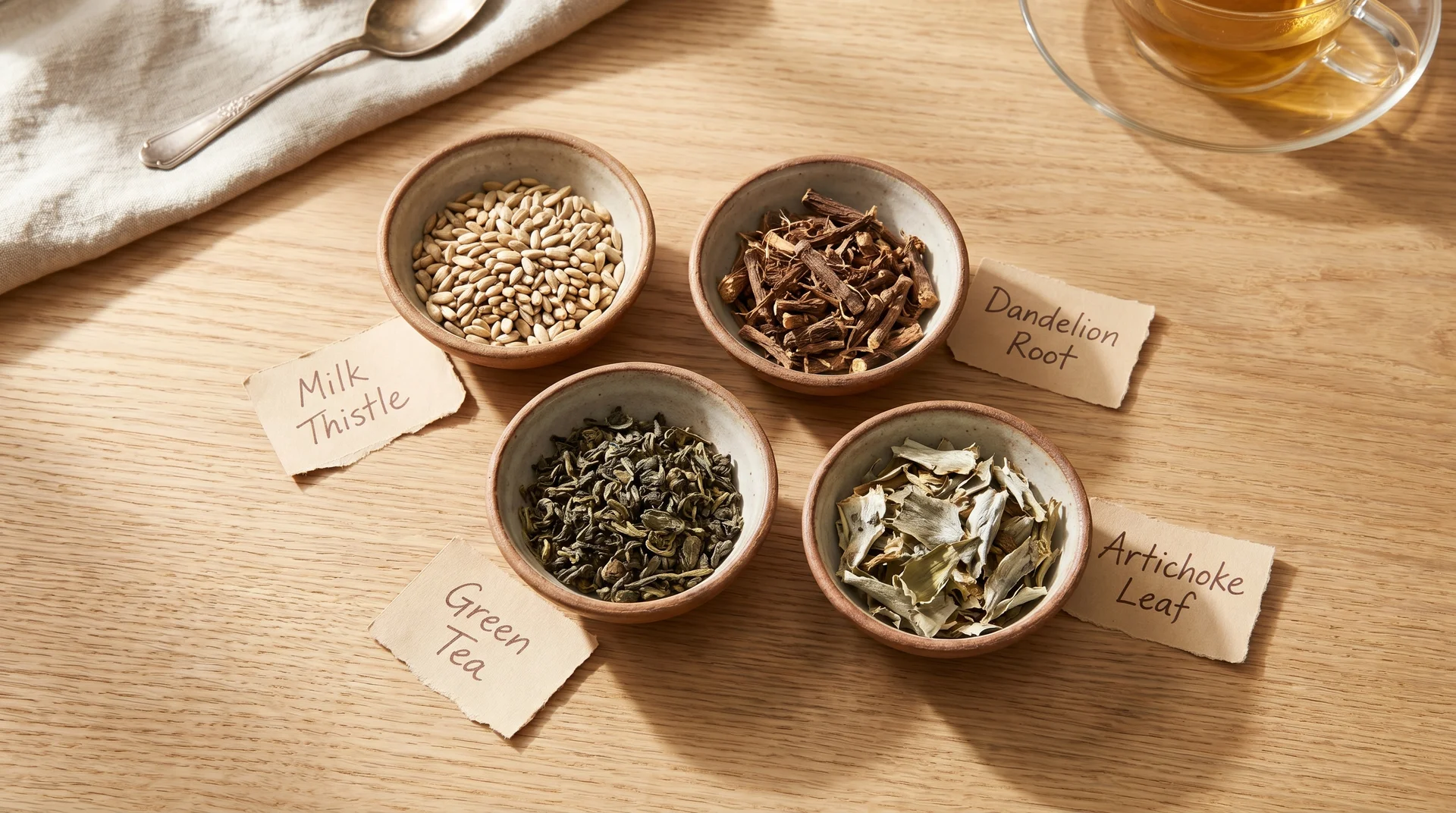
For liver support, milk thistle has the most research behind it, followed by dandelion root, green tea, and artichoke leaf.
Each works through a different mechanism. Understanding what each one does and how is more useful than a ranked list, because the right choice depends on what you’re specifically trying to support.
Milk Thistle Tea
Milk thistle is the most studied hepatoprotective herb available in tea form. Its active compound mixture, silymarin, has documented antioxidant and anti-inflammatory properties in liver tissue.
It suppresses inflammatory signaling pathways and reduces oxidative stress in liver cells, as reviewed by the National Center for Complementary and Integrative Health (NCCIH). The evidence for its liver-protective mechanisms in laboratory and cell studies is solid.
The clinical picture is more complicated. Trials of silymarin in people with specific liver diseases, particularly hepatitis C, have not consistently shown benefit beyond placebo, according to NCCIH’s review of that body of evidence.
For a healthy person drinking milk thistle tea daily as a supportive habit, the underlying mechanism is sound. We just don’t have large randomized trial data in healthy populations to point to.
There is also a bioavailability issue.
Silymarin is not highly water-soluble. A steeped milk thistle tea delivers substantially less active compound than a standardized capsule extract. For a modest daily supportive habit, the tea is reasonable.
For anyone managing a specific liver condition, the tea form alone is unlikely to reach the concentrations used in clinical research; that conversation belongs with a clinician, not a label.
Dandelion Root Tea
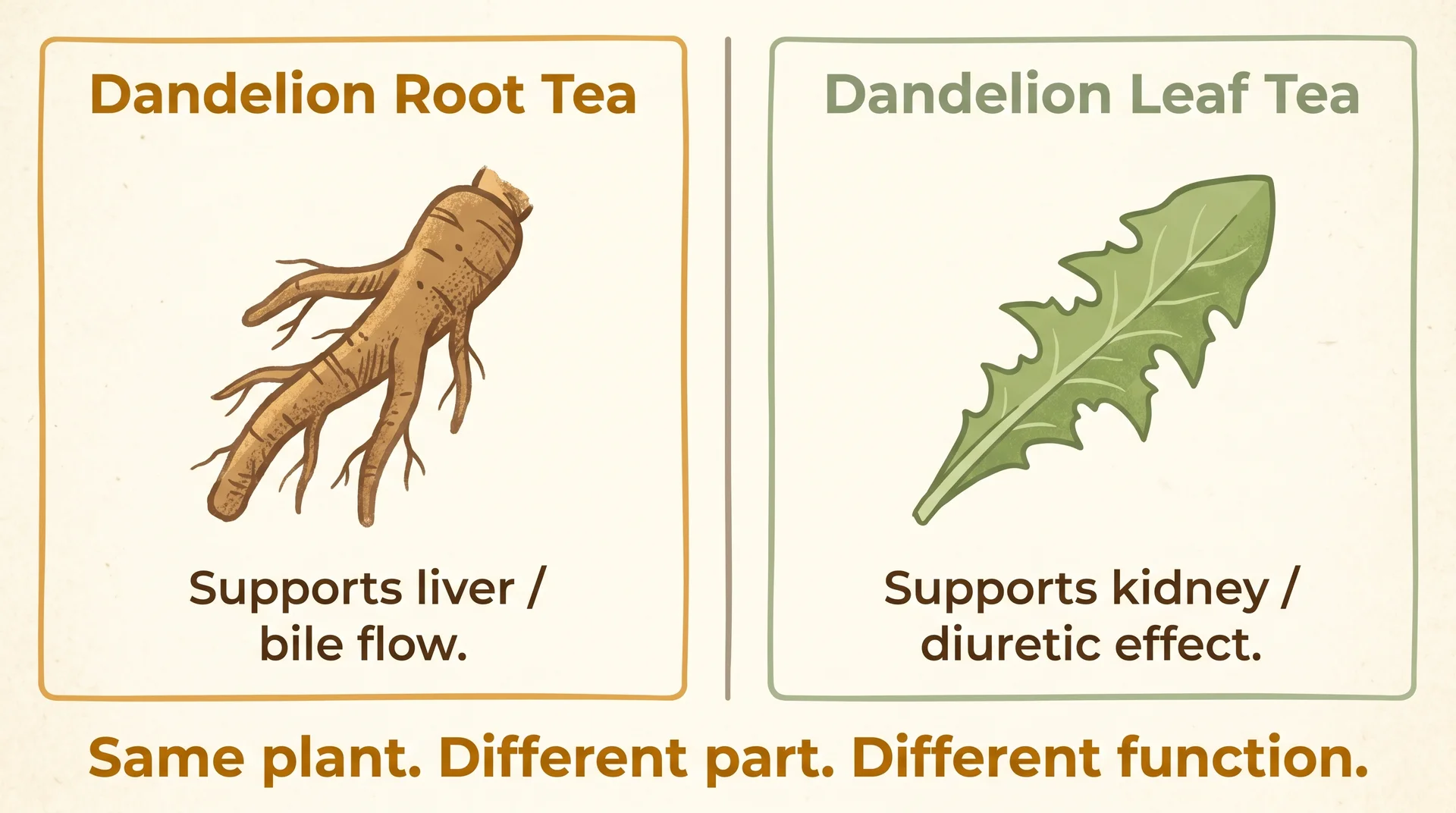
Dandelion root contains bitter compounds, primarily taraxacin and taraxacerin, that stimulate bile production and flow.
Bile is how the liver packages processed waste for excretion through the intestines, making bile flow support a legitimate liver-function mechanism, not a marketing claim. The NCCIH notes that dandelion has been used traditionally for liver and gallbladder function, though large-scale human clinical trials are limited.
Timing matters here more than with most teas. Drinking dandelion root in the morning before eating allows those bitter compounds to stimulate bile production ahead of your first meal, when the effect on digestive priming is most relevant.
Green Tea
Green tea’s contribution to liver support comes from its antioxidant load, not from a direct detoxification mechanism.
The primary active compounds are catechins, particularly epigallocatechin gallate (EGCG).
Research has linked regular green tea consumption to reduced markers of liver inflammation and improved antioxidant status.
The mechanism is reducing oxidative stress on liver cells, which lightens the chronic workload of an organ managing continuous chemical processing.
One important safety note from the NCCIH: concentrated green tea extract in very large amounts has been associated with liver injury in rare cases. Two to three cups of steeped tea daily carries no such risk for most healthy adults.
Green tea comes up constantly alongside detox content in weight-loss discussions, and it’s easy to see why the two get conflated. Weight-loss associations come from caffeine and catechin effects on metabolism.
Liver support comes from EGCG’s antioxidant activity. Those are related but distinct, with different evidence bases and different realistic expectations — and that’s a conversation I’m not getting into here, because it deserves its own space to be handled properly.
Artichoke Leaf Tea
Artichoke leaf contains cynarin, a compound with documented bile-stimulating properties.
Several European clinical studies have examined artichoke leaf extract for effects on liver enzyme activity, with modest but consistent findings. It shows up in fewer detox roundups than it probably should; most likely a marketing visibility issue rather than an evidence one.
The flavor is distinctly bitter and earthy. If you want an alternative to dandelion root with similar bile-flow properties, artichoke leaf is worth trying. The evidence and application are both straightforward.
The Best Teas for Digestive Support and Bloating
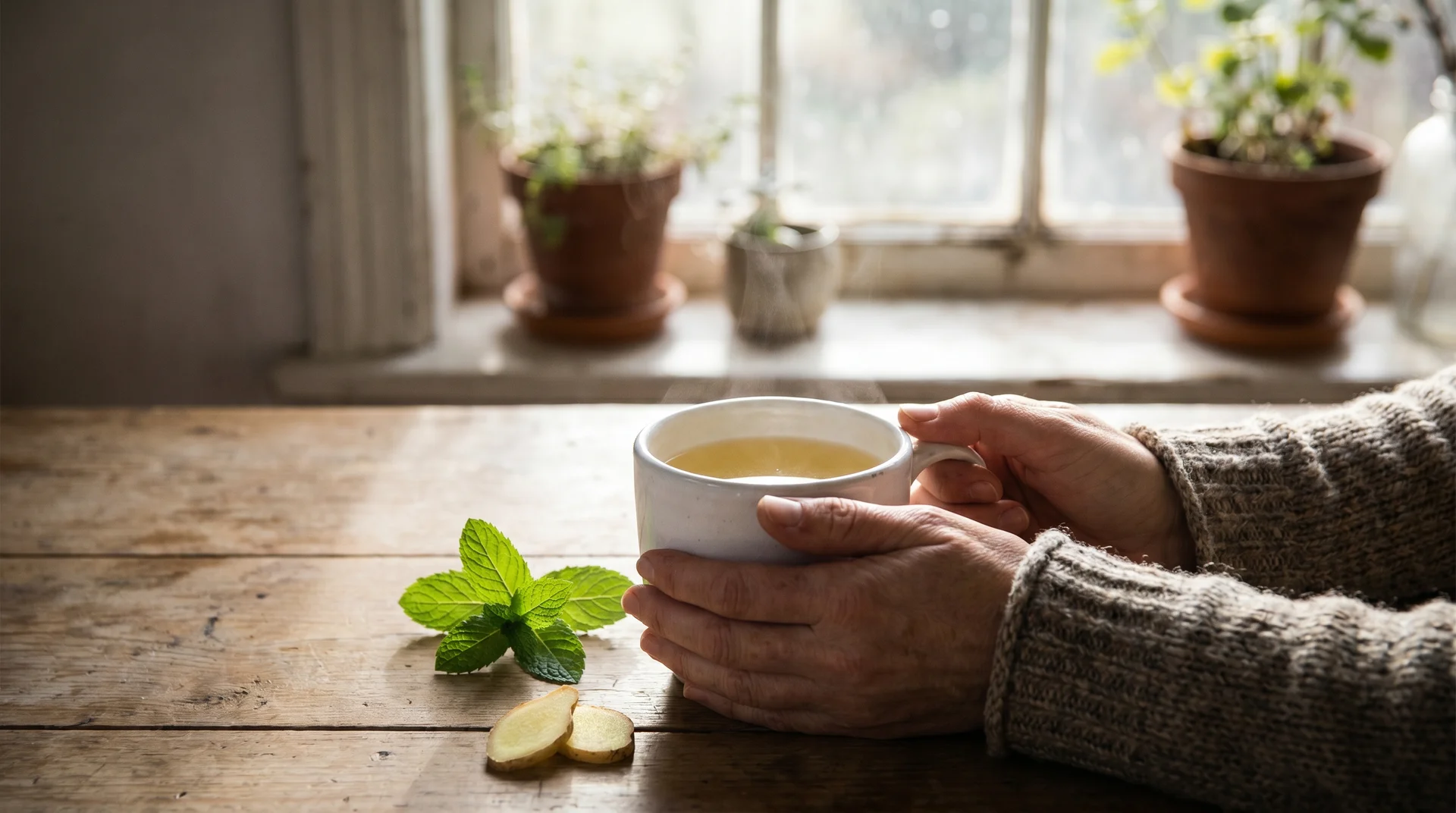
For detox-related bloating and digestive sluggishness, peppermint and ginger have the clearest, most consistent evidence of any herbal teas.
This is actually where herbal tea performs best. The evidence for peppermint and ginger on digestive symptoms is more consistent than the evidence for any of the liver teas, and bloating and sluggishness are the most common reasons people reach for detoxifying teas in the first place.
Peppermint Tea
Peppermint’s active compound, menthol, is an antispasmodic. It relaxes smooth muscle in the gastrointestinal tract, reducing cramping, bloating, and slow digestion after heavy meals.
A 2022 systematic review and meta-analysis published in Alimentary Pharmacology and Therapeutics found peppermint oil significantly more effective than placebo for global IBS symptoms and abdominal pain across multiple randomized controlled trials.
The evidence base for peppermint is among the strongest available for any herbal digestive intervention.
One constraint matters. Peppermint relaxes the lower esophageal sphincter, which means it can worsen acid reflux in people prone to GERD. If you experience reflux regularly, peppermint tea is likely to make symptoms worse, regardless of what the label says about digestive support.
If you’re also curious about how peppermint performs in a different context, we’ve covered the landscape in our guide to the best teas for sore throat relief.
Ginger Tea
Ginger supports gastric motility and has well-characterized anti-nausea properties. The active compounds, gingerols and shogaols, have been studied in chemotherapy-induced nausea, postoperative nausea, and morning sickness, with consistently positive results across multiple clinical trials.
For people whose “detox” goal is really about resetting after a period of overeating or alcohol, ginger is one of the most practically useful options on this list.
Most commercial ginger tea bags contain very little actual gingerol, the primary active compound. Steeped fresh ginger root, a few thin slices in hot water for 10 minutes, is substantially more potent and costs almost nothing compared to packaged blends.
If you want to know more about how ginger’s properties work across different wellness applications, we’ve also covered what ginger actually does for sore throat relief, where the same gingerol activity applies differently.
Licorice Root Tea
Licorice root has demulcent properties; it coats and soothes the gut lining and has a long tradition of use for inflammatory digestive conditions. It appears in many detox and digestive tea blends because it works as a base that softens harsher botanical flavors while adding real gut-supportive function.
The safety note is specific. Whole licorice root contains glycyrrhizin, which in significant quantities affects blood pressure and potassium levels. The form to look for is deglycyrrhizinated licorice, labeled as DGL.
Occasional commercial licorice root tea is unlikely to be problematic for most healthy adults. Regular large-quantity use is a different matter, particularly with cardiovascular concerns or high blood pressure.
The Best Teas for Kidney Support
The kidneys filter waste from the blood and excrete it through urine, a continuous process that runs alongside everything the liver does. Supporting kidney function through tea means a gentle diuretic action: increasing urine flow to assist the filtration and excretion cycle.
For kidney support, dandelion leaf and nettle leaf are the most evidence-informed options available in tea form.
This is a modest effect, and it’s worth saying directly: these teas are not a treatment for kidney disease. Anyone with a diagnosed kidney condition should get clinical guidance before using diuretic herbs of any kind.
Dandelion Leaf Tea
Coming back to the dandelion, the same plant as the liver section, an entirely different part of it. Dandelion leaf is one of the better-characterized natural diuretics in the herbal literature.
A pilot human trial published in the Journal of Alternative and Complementary Medicine found a significant increase in urinary frequency and excretion ratio in the five-hour period after the first dose of dandelion leaf extract — the first human study to confirm what traditional use had suggested.
It’s a small study (n=17), and the researchers were appropriately clear that larger trials are needed.
The same paper noted that dandelion leaf provides substantial potassium, which matters: unlike many pharmaceutical diuretics, dandelion leaf does not appear to cause net potassium loss, because the potassium the plant delivers may offset what increased urination removes.
Nettle Leaf Tea
Nettle leaf has consistent traditional use as a diuretic and mild kidney tonic, with preliminary research supporting its effect on urine output and urinary tract health.
Honest framing: the clinical trial data here are thinner than for dandelion leaf, and this is an area where traditional use has outpaced the human evidence. We’re working from biological plausibility and historical patterns more than from the kind of robust randomized controlled trial data that backs peppermint for IBS.
If you’re drinking nettle leaf tea for its diuretic effect, stay well-hydrated alongside it. Using a mild diuretic while already under-hydrated is counterproductive — and that detail is consistently missing from articles that recommend it.
Which brings up the larger problem with the detox tea category itself.
The Problem with Most Store-Bought Detox Teas
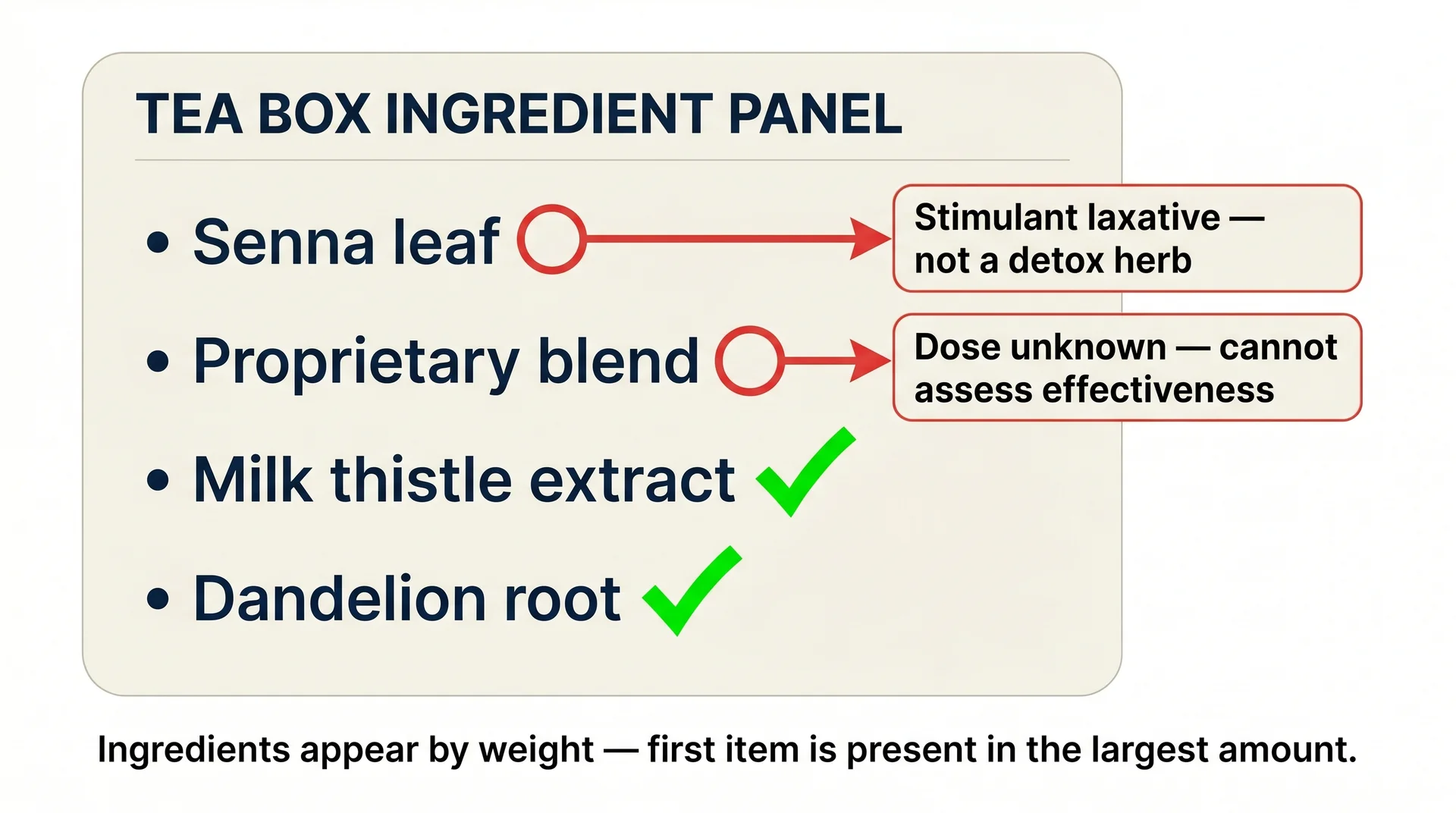
Most commercial detox teas do not contain the herbs described above at any meaningful concentration. What they frequently contain is senna leaf.
Senna is a stimulant laxative, not a liver or kidney support herb.
It works by irritating the intestinal lining, triggering rapid bowel movement. The result of quick elimination and temporary fluid loss can feel like a cleanse. The flatness some people notice is interpreted as “detoxing.”
What’s actually happening is a bowel purge. Used occasionally for constipation, senna is a legitimate over-the-counter remedy. Used repeatedly as a detox protocol, it causes laxative dependency and electrolyte imbalances, particularly potassium loss.
This is the thing wellness marketing around this category works hardest to obscure. And it’s the most important thing to understand before buying any commercial detox tea product.
When evaluating a product, the ingredient label tells you what you need to know. Look for:
- Senna leaf, senna pod, or Cassia angustifolia: A stimulant laxative. Its presence in a “detox” blend is a product design choice that prioritizes a noticeable effect over any organ-supportive function. Some products list it under its botanical name to make it less recognizable.
- Cascara sagrada: Another stimulant laxative with concerns similar to senna. Also sometimes listed under botanical names or as “sacred bark.”
- Proprietary blends with undisclosed amounts: If ingredient quantities are hidden inside a proprietary blend, you cannot assess whether any active compound is present at a meaningful dose. This is a common label design, not a mark of quality.
- Milk thistle, dandelion root, artichoke leaf, green tea extract: These belong in a liver-supportive blend. Their presence — listed by name, ideally with disclosed quantities — is a reasonable sign.
- Nettle leaf, dandelion leaf: These belong in a kidney-supportive blend. Appropriate for a gentle diuretic effect in healthy adults.
Ingredients appear in descending order by weight. Whatever is listed first is present in the largest amount. A product can include milk thistle and still lead with senna. The order of the list, not just the presence of particular herbs, is what tells you what the product actually is.
How to Actually Drink These Teas
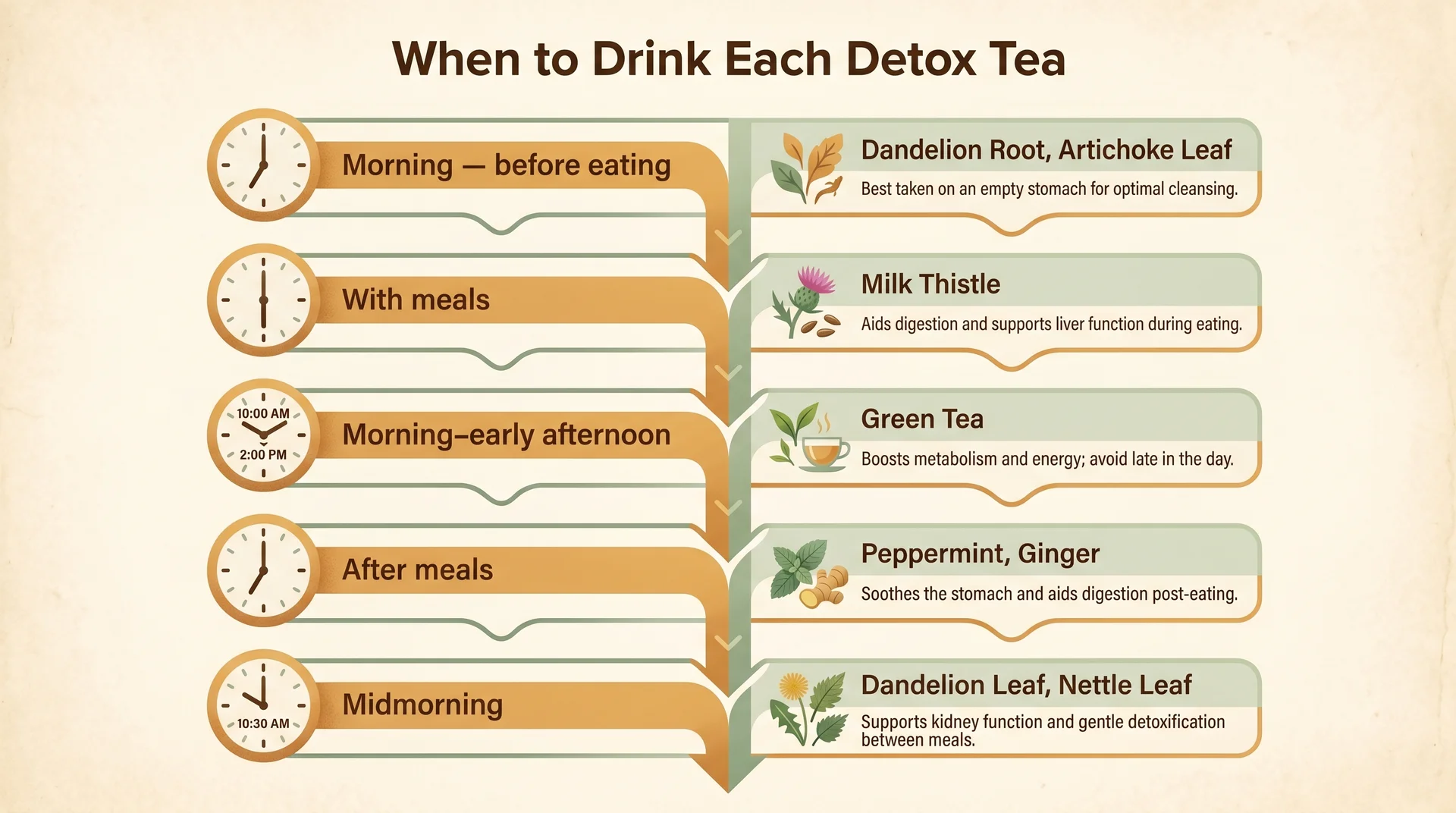
Timing and quantity matter more than most articles on this subject explain. The compounds in these teas interact with specific digestive processes, and when you drink them affects what they do.
Timing That Actually Matters
- Dandelion root and artichoke leaf in the morning, before eating. Bitter compounds stimulate bile production before your first meal, when the effect on liver and digestive priming is most relevant.
- Milk thistle with meals. Silymarin’s effects on liver enzyme activity align with active nutrient processing, and food may modestly improve the already-limited absorption that tea form allows.
- Green tea in the morning or early afternoon. Caffeine content makes evening use counterproductive for most people’s sleep. Two cups in the morning is a sensible baseline.
- Peppermint and ginger after meals. Both support post-meal digestion rather than stimulating digestive activity before eating. The antispasmodic and motility-supporting mechanisms work with food moving through the system, not ahead of it.
- Dandelion leaf and nettle leaf midmorning or early afternoon, with a full glass of water. The diuretic effect makes hydration non-optional. Timing away from evening prevents sleep disruption from increased urinary frequency.
How Much Is Enough
One to three cups per day is the range cited most consistently across the relevant research contexts, and it’s a reasonable place to start. The honest answer is that the dose-response relationship for most of these herbs in steeped tea form is not precisely characterized.
We don’t have clean data showing that three cups produce a meaningfully different effect from one cup for the average healthy person.
This is genuinely less settled than most content on this topic implies. Supplement research uses standardized extracts at known doses. Tea research is messier. Steeping time, water temperature, and plant quality all affect what ends up in the cup.
Consistent daily use at moderate amounts is more likely to produce a meaningful effect than occasional large quantities. Beyond that, individual variation matters more than any single recommendation I could give.
What Won’t Change Regardless of Which Tea You Choose
Tea is one variable in a much larger picture. The liver and kidneys function best with adequate hydration, consistent sleep, limited alcohol, and a dietary pattern that doesn’t chronically overload them.
The teas covered here work as additions to that foundation, not substitutes for it. That framing is what most detox tea content skips entirely in favor of making the tea sound more powerful than the evidence supports.
Two Teas Often Mentioned: With Honest Caveats
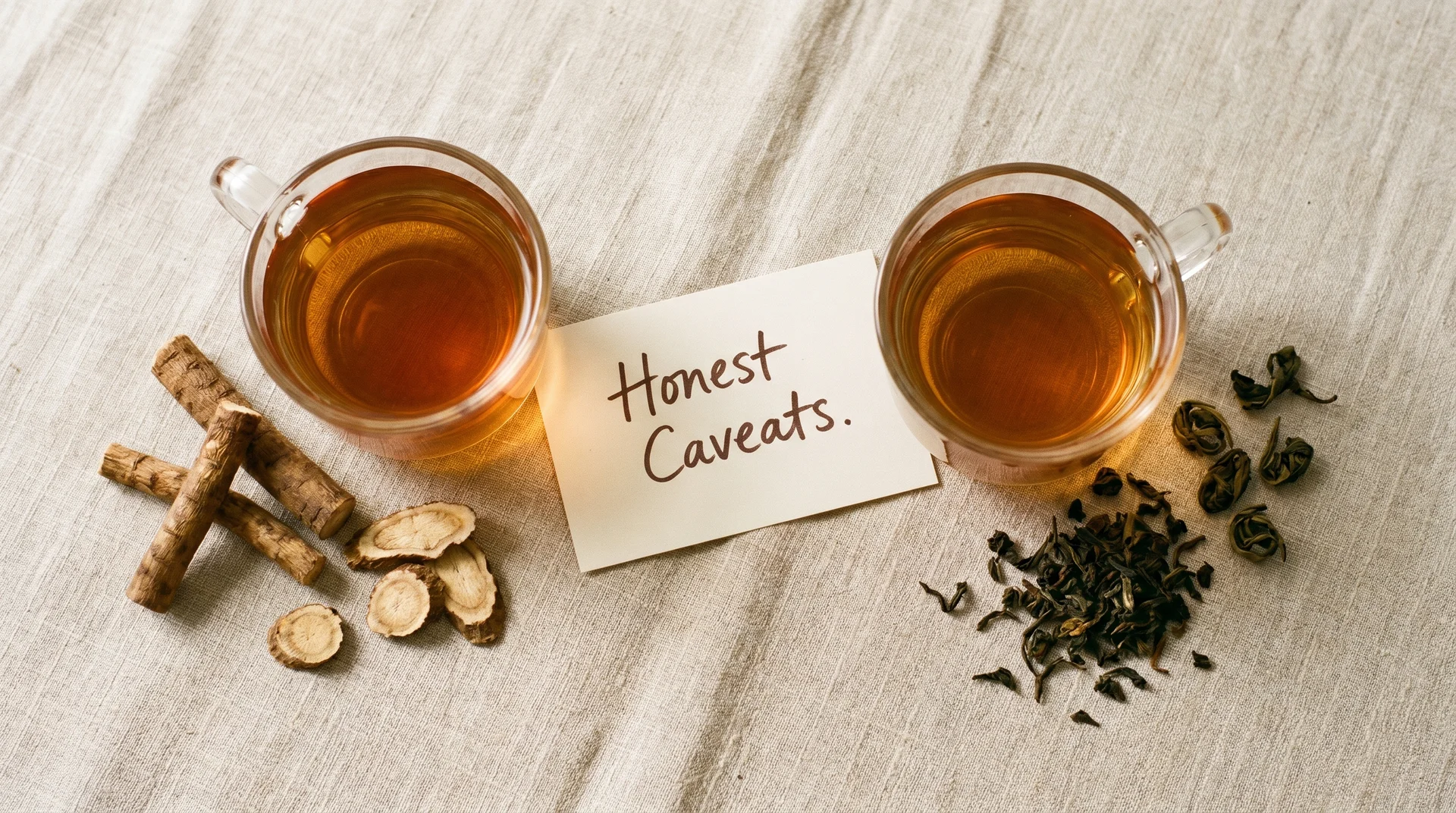
Two herbs appear frequently in detox discussions without always getting an accurate assessment.
Burdock root has a long tradition in herbal medicine as a blood purifier and liver tonic. Some preliminary research suggests antioxidant activity and possible effects on liver markers. Most of that research is animal or in vitro, not human clinical trials.
“Promising traditional herb with limited human data” is the accurate description, not a tea to dismiss, and not one to recommend with the same confidence as milk thistle or dandelion root.
Oolong tea sits between green and black tea in oxidation level and carries some of green tea’s polyphenol content at lower concentrations. It has genuine antioxidant properties.
For general daily polyphenol intake, it’s a good choice. For targeted liver support, green tea delivers more of the specific catechins the research is actually built on, and the distinction matters if liver support is the specific goal.