
You’ve picked the color. You’ve held the swatch against the wall in three different lights, talked yourself out of two other options, and finally landed on the one.
Then someone asks whether you want flat or matte, and everything stalls. You’re not sure if they’re the same thing, and there’s a quiet voice at the back of your mind wondering whether you’re about to make a decision you’ll regret every time you try to wipe down the hallway.
I’ve spent more than a decade helping homeowners make paint decisions during residential design consultations, and the flat versus matte question comes up every time someone wants a non-shiny finish.
The confusion is understandable: the two finishes are genuinely close on the sheen spectrum, manufacturers don’t agree on the terminology, and the difference that matters most isn’t about appearance at all. It’s about what happens to your walls during the years after the paint goes on.
Are Flat and Matte Paint the Same Finish?
They’re not, but they’re close enough that even paint manufacturers blur the line, and that matters when you’re standing in the store trying to choose.
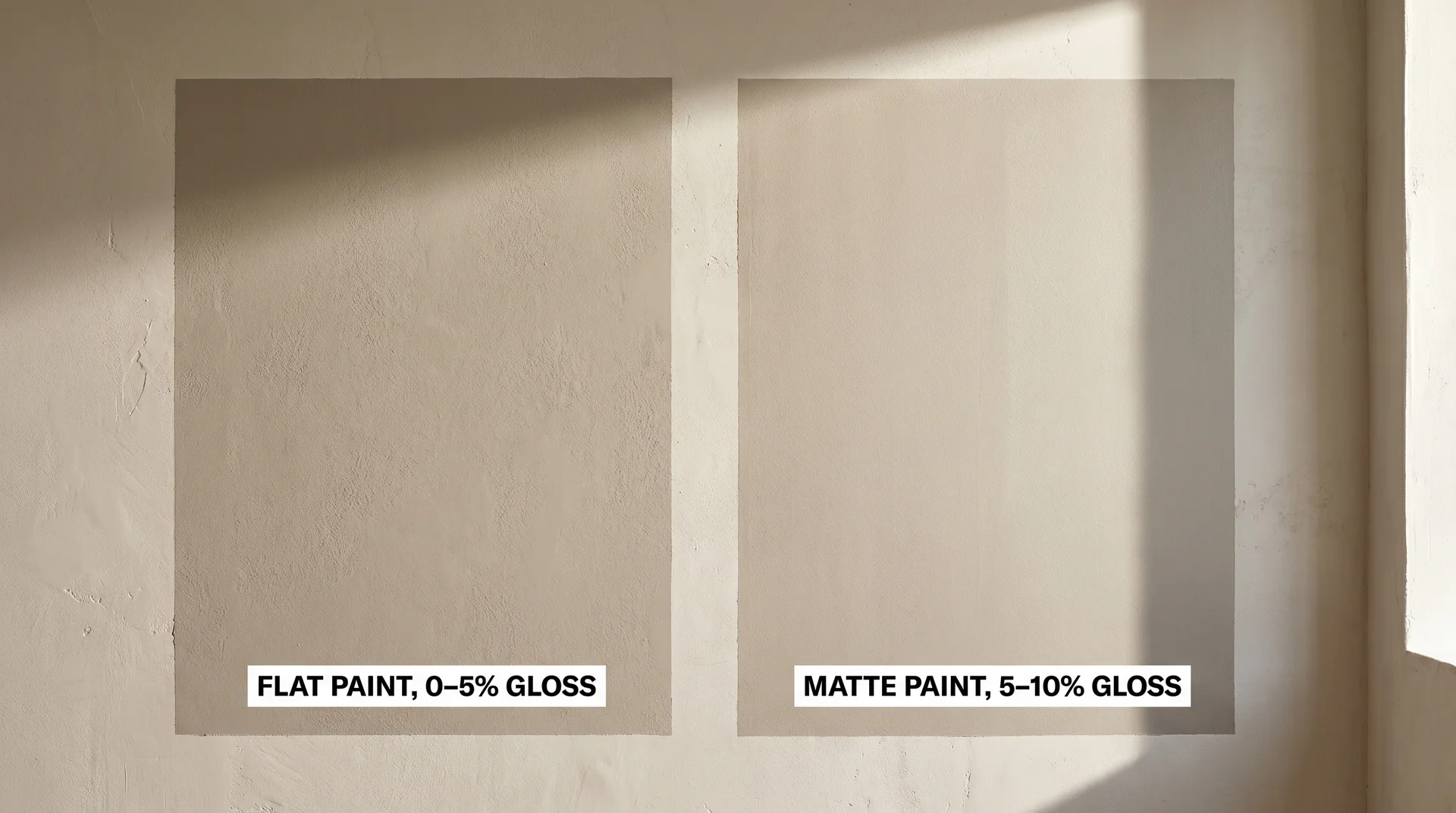
Flat paint sits at roughly 0 to 5 percent gloss. It absorbs light rather than reflecting it, giving walls that powdery, zero-reflectivity quality you associate with ceilings. Matte paint sits slightly higher, at roughly 5 to 10 percent gloss.
The sheen is still very low and barely visible in most lighting conditions, but it’s there. That small difference in reflectivity changes how each finish performs over time far more than it changes how it looks on the day you paint.
Here’s how the two finishes compare side by side:
| Flat Paint | Matte Paint | |
|---|---|---|
| Gloss Level | 0–5% | 5–10% |
| Appearance | Powdery, completely non-reflective | Soft, velvety, faint depth |
| Hides Imperfections | Best | Very good |
| Washability | Low, burnishes easily | Moderate, handles gentle cleaning |
| Durability | Lower | Higher |
| Best For | Ceilings, low-traffic rooms, formal spaces | Most interior walls, bedrooms, and living rooms |
| Cost Per Gallon | Lower upfront | Slightly higher, but lasts longer |
The full sheen spectrum runs flat, matte, eggshell, satin, semi-gloss, and high gloss, from lowest to highest. Flat and matte occupy the same quiet end of that range, which is why people treat them as interchangeable.
They look nearly identical on a swatch card and read similarly in photographs. In most rooms, a casual observer won’t register the difference. The gap shows up in maintenance, in how each finish handles light at certain times of day, and in how well each one survives being cleaned.
Why Brand Labeling Creates So Much Confusion at the Paint Store
“Matte” is a French word that literally translates to “flat,” which is why some brands, particularly European ones, still use the terms interchangeably. In the American market, most major brands now use “matte” to describe a finish with a low but measurable sheen, though the exact definition varies by manufacturer.
Benjamin Moore, Sherwin-Williams, PPG, and Behr don’t all define their matte and flat products the same way.
Benjamin Moore’s Aura Matte is a premium washable formula that behaves closer to a durable eggshell than a traditional matte.
Sherwin-Williams’ Emerald Matte sits at a noticeably different sheen level than their flat ceiling paint. The name on the front of the can tells you less than the gloss percentage printed in the product’s technical specifications.
When you’re at the paint counter, ask to see the sheen sample cards and look at the gloss percentage on the specific product you’re buying. That number is the only reliable way to know what you’re actually getting.
What the Flat vs Matte Paint Debate Gets Wrong
Most people approach this choice as an aesthetic question. The appearance difference is real, but it’s subtle enough that you’ll stop noticing it within a week of living with either finish. What you won’t stop noticing is what happens when life touches your walls.
Flat paint has a porous, almost chalky surface. That porosity makes it excellent at hiding imperfections because there’s no reflective layer to catch light at the surface. It also makes it nearly impossible to clean without making things worse.
When you rub flat paint, you create burnishing: friction compresses the surface slightly, creating a faint sheen where the rest of the wall has none. The mark you were trying to remove becomes a shiny patch that’s more visible than the original dirt.
Matte paint has a slightly denser binder that gives the surface just enough cohesion to handle a damp cloth. You can wipe a matte wall gently without creating burnish marks. You’ll still want to blot rather than scrub, but a child’s handprint near a light switch, a smear near a door frame, or a coffee splash on the dining room wall won’t require a full repaint to address. That difference in cleaning tolerance is the most important practical distinction between the two finishes.
How Flat and Matte Paint Hold Up to Cleaning
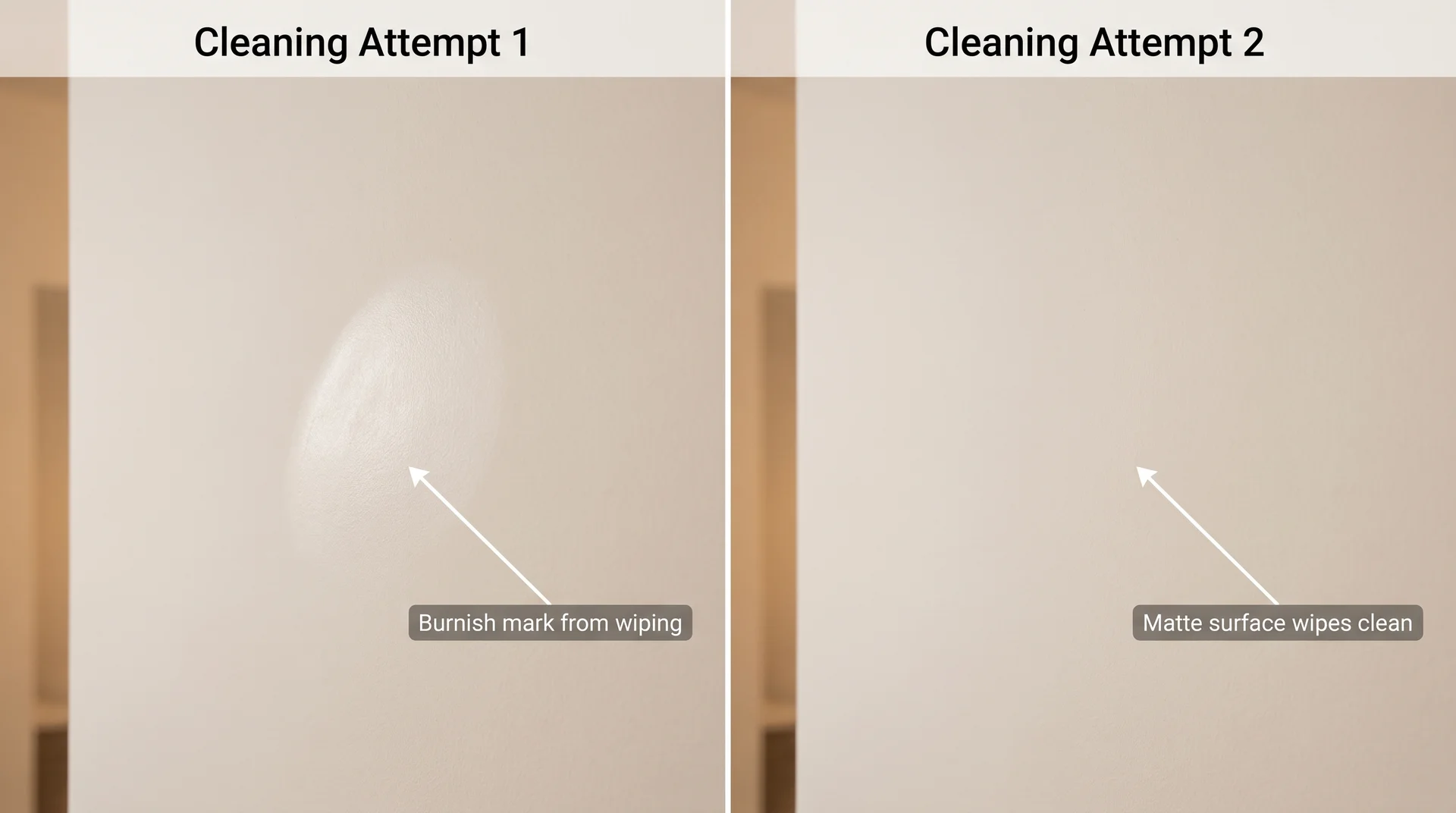
Picture a scuff mark on a flat-painted hallway wall. A dry cloth does nothing. A barely damp cloth lightens the mark but creates a slight sheen from friction. A damp sponge with mild soap clears the mark but leaves a visible halo of altered texture around it, and the more you work at it, the more it spreads.
With matte paint in the same scenario, a barely damp cloth with mild soap removes most scuffs cleanly. The surface doesn’t burnish as readily because the binder holds together with more resistance.
In homes with children, pets, or walls that regularly get touched near door frames and light switches, flat paint looks worn within a year or two regardless of care. Matte holds up significantly longer under ordinary contact.
How Touch-Ups on Flat vs Matte Paint Look Over Time
Both finishes touch up more invisibly than satin or eggshell, because a lower sheen means less light to catch inconsistencies between the original coat and the patch. The way they age over time is different, though.
Flat paint touches up very cleanly in the first year or two. After that, the original coat yellows and oxidizes slightly, and a touch-up with paint from the same can often look lighter or off-tone against the aged wall. Matte changes less over time because its denser surface resists oxidation more effectively.
Touch-ups are slightly more visible in the first few weeks, but once the paint fully cures, the blend is usually convincing. If you’re painting a rental or a house you’re preparing to sell, flat’s clean short-term touch-up behavior is genuinely useful.
Which Finish Hides Wall Imperfections Better: Flat or Matte?
Flat paint wins here, but the gap is smaller than most guides suggest, and wall prep matters more than either finish choice.
Flat paint’s zero reflectivity works in your favor on textured or patched walls because there’s no reflective layer to throw surface variation into relief under raking light. When the afternoon sun comes in at a low angle, or when a lamp sits close to the wall, any dimensional variation shows up as shadow. Flat minimizes that because it absorbs light rather than bouncing it back.
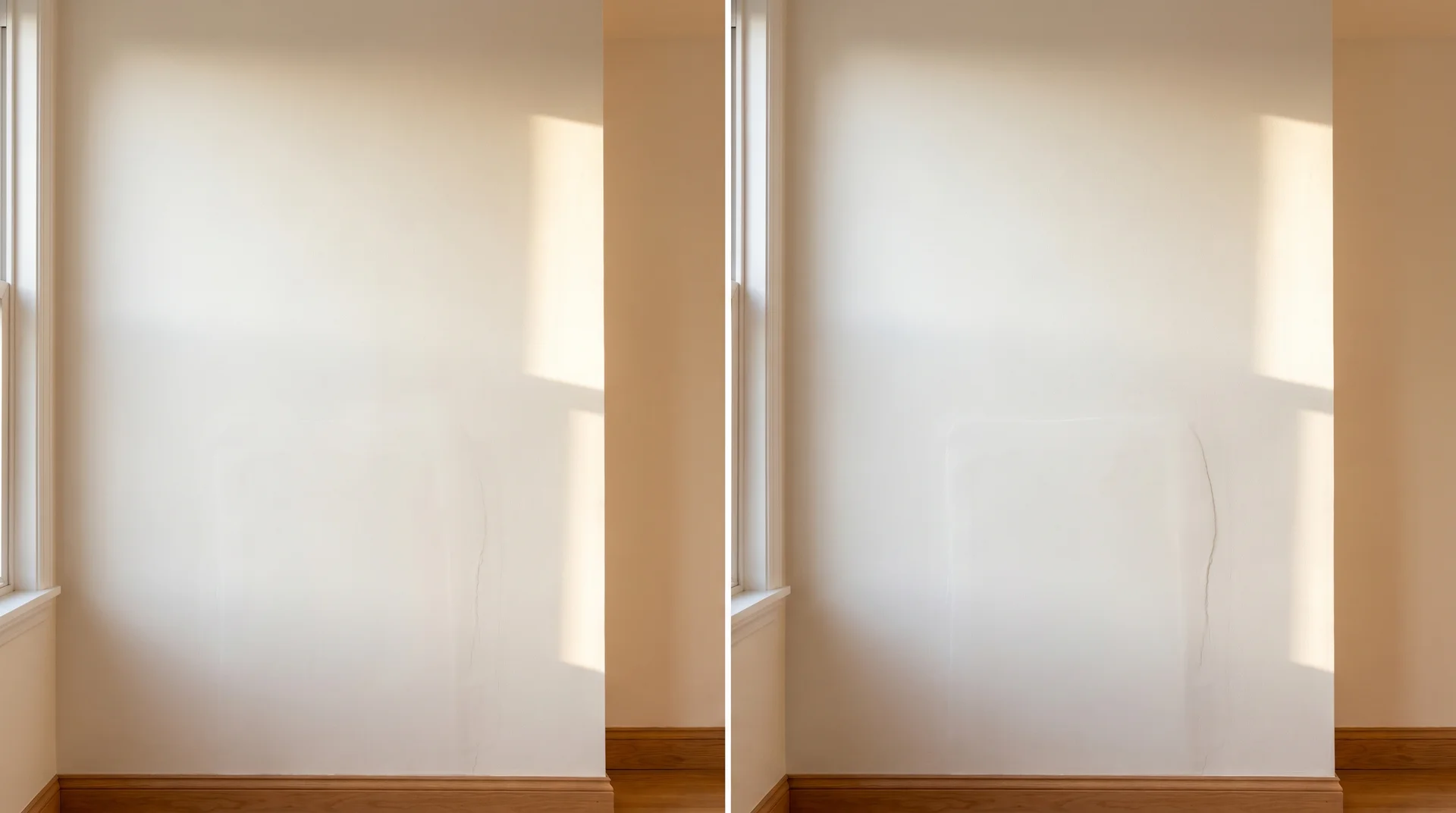
Matte’s slight sheen can occasionally catch raking light on very uneven surfaces. In a room with strong directional light from windows or wall sconces, matte can make a heavily patched wall look marginally less smooth than flat in the same condition. Whether that registers as a problem depends entirely on your wall condition and your specific lighting.
Here’s what most guides don’t say plainly: if your walls need serious hiding, the most important decision is proper prep, not finish selection. A skim coat over heavy texture, proper feathering of patches, and a coat of high-hide primer will do more for the final appearance of a matte finish than switching to flat without fixing the underlying surface. If you’re painting a room you intend to live in for years, spending on prep and choosing matte produces better long-term results than choosing flat as a substitute for that work.
How Room Lighting Changes the Flat vs Matte Paint Decision
Light is the variable nobody discusses in this comparison, and it shifts the decision significantly depending on your room’s orientation and how you light it artificially.
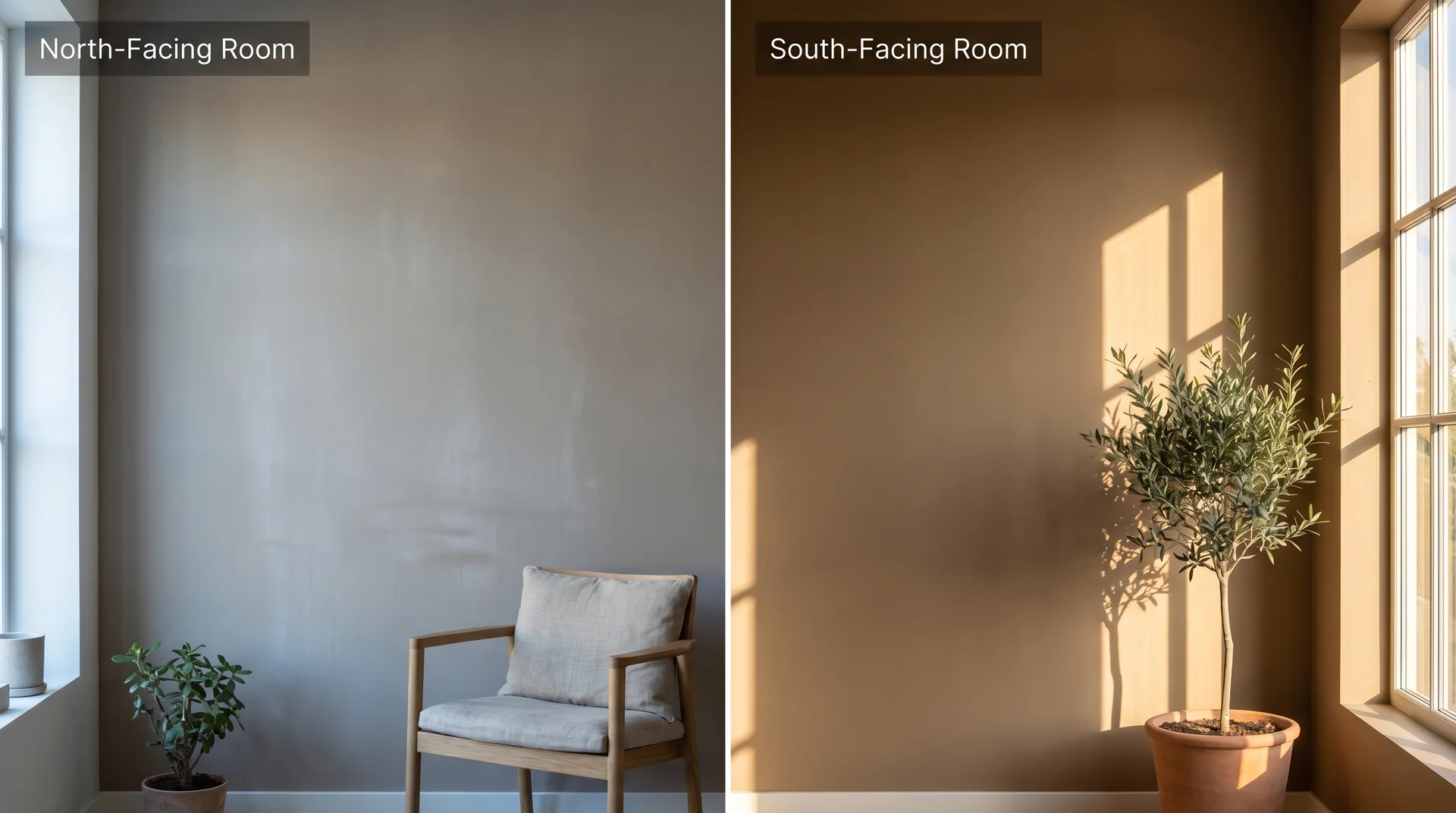
In north-facing rooms with cool, indirect light throughout the day, flat paint can feel cold and chalky. The zero-reflectivity that works beautifully in a sun-filled room reads as slightly gray and lifeless when there’s no warmth in the light. Matte’s small amount of reflectivity introduces just enough dimension to keep walls feeling present and the color feeling rich. If you’re working with a north-facing bedroom or living room, matte is usually the better choice regardless of wall condition.
In south-facing rooms with strong afternoon light, flat paint absorbs beautifully and creates genuine depth. In very bright rooms with large windows, a slightly reflective matte surface can occasionally throw faint hot spots on large wall planes where light hits at an oblique angle. Flat handles those conditions more cleanly.
Artificial lighting matters as well. Warm-toned bulbs around 2700 to 3000 Kelvin are forgiving of either finish. Cooler LED lighting above 4000 Kelvin can accentuate the chalkiness of flat and amplify matte’s faint sheen in ways that aren’t visible during the day. Always test your swatches at three different times, including in the evening under your actual lights. The version of the finish you’ll live with most is the one you see at night.
The Aesthetic Case for Flat and Matte Paint Finishes
Most guides treat flat paint as the choice you make when walls aren’t perfect or the budget is tight. That framing misses something real.
Flat paint’s completely non-reflective surface creates a sense of depth and stillness that designers use deliberately in formal spaces, showrooms, and editorial interiors. It photographs exceptionally well because there’s no surface glare to manage, which is why it appears in so many magazine rooms where walls look like pure, still color with no surface quality competing with anything else in the room.
Matte’s value is different. Its slight reflectivity gives walls a velvety dimension that reads contemporary and warm. Colors feel richer and more present in matte because the surface is doing something rather than simply absorbing everything. That’s why matte has become the dominant finish in modern residential interiors: it balances the visual softness people want from a low-sheen finish with the livability a real wall needs.
When a Designer Actually Chooses Flat Paint
Flat paint is a deliberate choice in formal dining rooms, libraries, and rooms centered on artwork or architecture where the wall is meant to completely recede. It works beautifully in spaces with rich wood tones or deeply saturated color, and in older homes where the texture of plaster walls is part of the character rather than a flaw to be hidden.
When I choose a flat for a client’s room, it’s always a choice about the kind of visual stillness that finish creates, made consciously, with the room’s low-traffic nature in mind.
When Matte Paint Is the More Elevated Choice
Matte is right for any room that sees regular daily life and still needs to look considered. That covers most bedrooms, living rooms used by actual families, and hallways where visual continuity with the rest of the house matters.
It’s also the better choice when you’ve invested in a complex, saturated color and you want the wall to feel dimensional and present.
Flat absorbs everything equally, which is beautiful with the right color in the right room, but it can make some deeper tones feel slightly inert in spaces without strong natural light.
Flat vs Matte Paint: A Room-by-Room Guide
Ceilings
Use flat on ceilings. This is as close to a universal rule as interior painting has. Ceilings receive almost no physical contact, making the flat’s durability limitation completely irrelevant there.
Zero reflectivity prevents glare from overhead lighting and makes imperfections, seams, and roller marks disappear in a way no other finish achieves.
Bedrooms
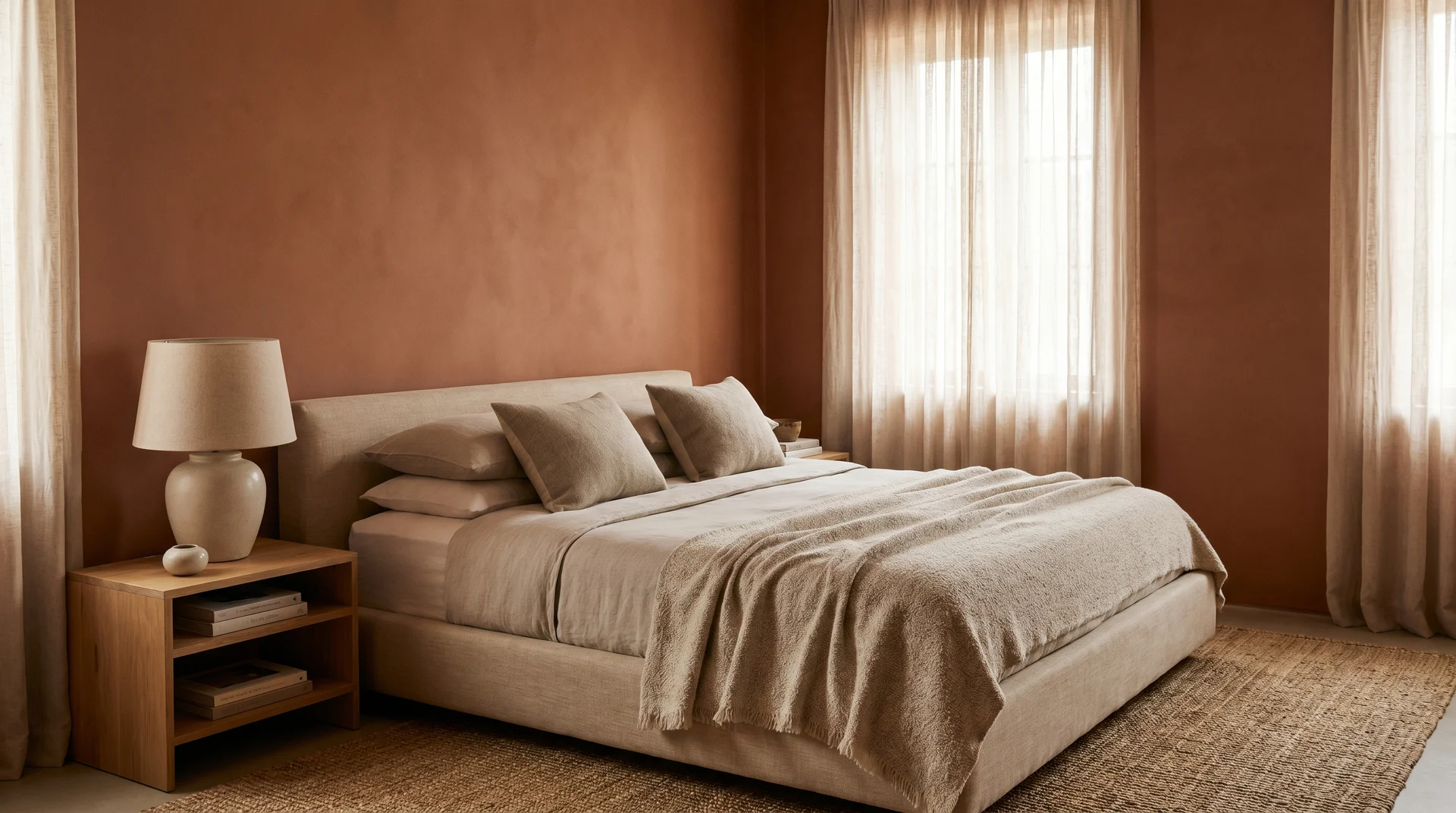
Matte is the practical default for most bedrooms. Even relatively quiet rooms accumulate contact near headboards, along walls beside the bed, and near light switches, and matte handles that wear without requiring regular touch-ups.
Flat makes a strong case in bedrooms where aesthetics take priority, and the room sees genuinely low traffic, particularly guest rooms, rooms with deep saturated color, or spaces where you want a completely still, recessive wall. You’ll need to accept touch-ups rather than cleaning as your maintenance approach.
Living Rooms
A formal living room used mainly for hosting, with furniture away from walls and no children regularly in the space, handles flat paint well. A family room used daily will look noticeably worn in a flat within a year or two.
Matte is the more practical choice for any living room where walls regularly encounter bodies, hands, and furniture. Wall condition matters here: if walls are in good shape, either finish looks excellent; if they’re heavily patched, flat is more forgiving, though proper prep closes that gap considerably.
Hallways and High-Touch Zones
Neither flat nor matte is truly ideal for busy hallways. Both finishes sit too low on the sheen spectrum to survive high-contact conditions well. If your hallway sees regular foot traffic from children or pets, eggshell is the honest recommendation. It hides imperfections almost as well as matte and survives cleaning far better than either low-sheen option.
If you’ve committed to a low-sheen finish throughout the house for visual continuity, matte is the lesser compromise. It’ll last longer than flat and won’t burnish as readily when someone brushes past with a bag or jacket.
Formal Dining Rooms and Accent Walls
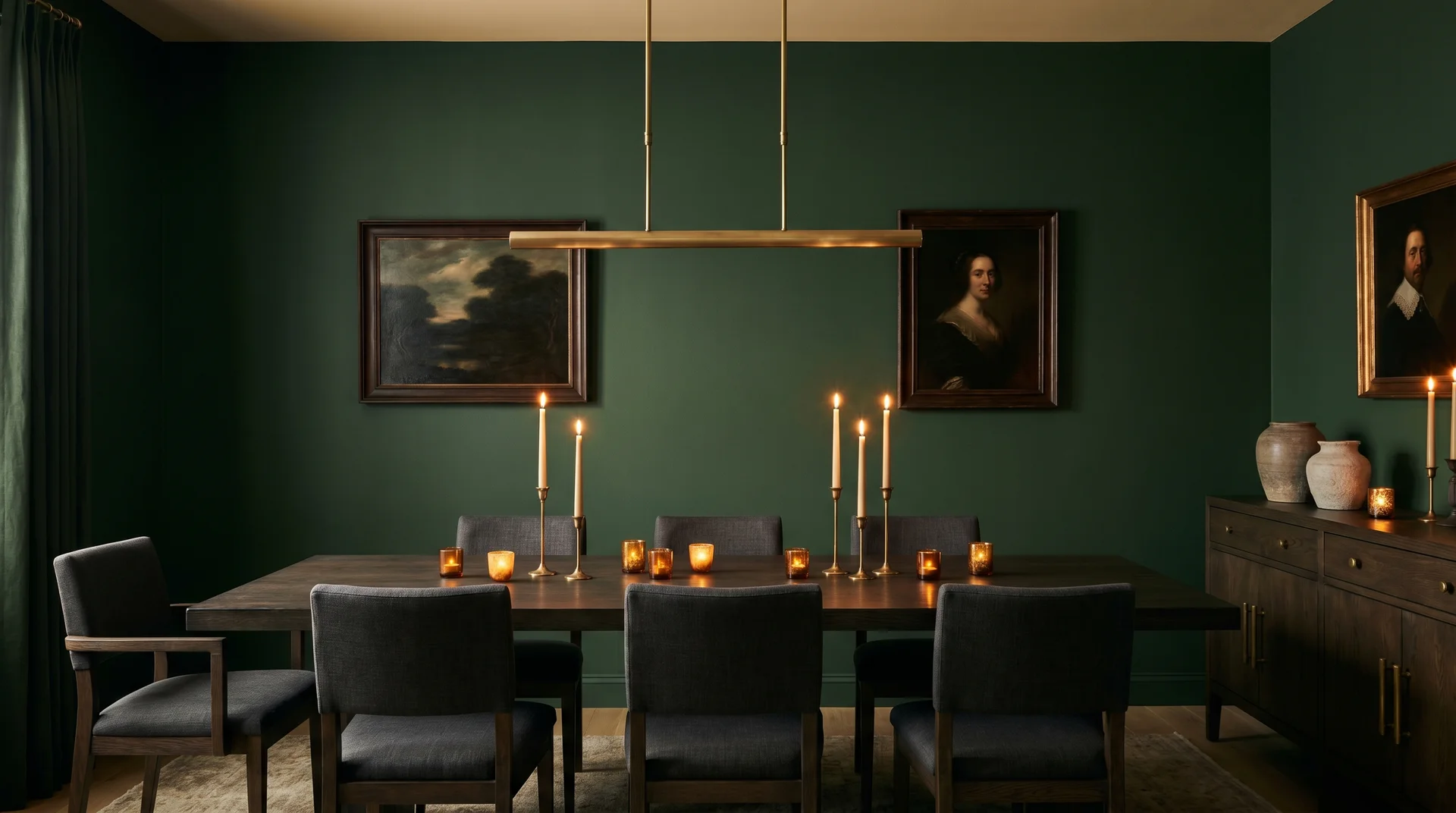
These are the spaces where flat paint earns its place without apology. A formal dining room with a rich, saturated color in a flat finish, lit with warm overhead light or candles, looks extraordinary.
The non-reflective surface makes the color feel completely present in a way that matte can’t fully match, and the low traffic of a dining room means the durability limitation rarely becomes relevant.
Accent walls follow similar logic. Using flat on one wall while the surrounding walls carry a matte or eggshell finish creates a subtle but perceptible depth difference that reads as intentional.
Most visitors won’t be able to name it, but the room will feel like it has a particular quality.
The one exception worth knowing: if the accent surface is brick, neither flat nor matte paint delivers the same effect as a whitewash treatment on brick, because whitewash lets the original masonry texture breathe rather than coating it, which is what gives a brick fireplace or accent wall that layered, intentional quality that paint alone can’t replicate.
Kitchens and Bathrooms
Both finishes run out of useful application in high-moisture, high-contact rooms. Kitchens generate grease and steam that saturate a porous surface regardless of how carefully you clean.
Bathrooms generate humidity that causes both finishes to peel and mildew in ways that satin or semi-gloss prevents. Use satin on kitchen walls and satin or semi-gloss on bathroom walls.
One exception worth knowing: Benjamin Moore’s Aura Bath and Spa is specifically formulated to handle bathroom humidity in a matte-style finish, and it performs well in that application.
If the matte aesthetic matters in those rooms, that’s the product to investigate.
How to Choose Between Flat and Matte Paint: Three Questions
The choice comes down to three questions about your specific situation.
Rooms with children, pets, or regular wall contact need matte’s cleaning tolerance. The margin over flat isn’t dramatic compared to satin, but it’s real enough to matter over the years you’ll live with the paint.
Genuinely low-traffic rooms used by adults who rarely contact the walls make flat’s maintenance limitation much less relevant.
If your feature wall happens to be brick, a fireplace surround or an exposed accent wall, the finish decision works differently. Limewashing brick is worth understanding before you default to paint, since the technique produces a chalky matte texture that no paint finish can replicate on masonry.
2. What condition are the walls in, and how much prep are you doing?
Rough walls with heavy texture, significant patching, or visible seams get a meaningful benefit from flat on day one. If you’re investing in proper prep, including priming and sanding, matte will look just as smooth and serve you better over time. The two questions are connected: how much you’re willing to prep determines how much weight finish choice actually carries.
3. Are you going for archival stillness or livable depth?
Flat creates a visual quality that reads formal, still, and recessive. Matte reads contemporary, warm, and dimensional.
If you want walls that disappear completely so the room’s furnishings and architecture carry everything, flat is the more interesting choice wherever the practical limitations allow.
If you want rich, dimensional color without any shine, matte delivers that consistently across different lighting conditions and room types.
Frequently Asked Questions
Is flat paint the same as matte paint?
They’re not the same finish, though some brands use the terms interchangeably. Flat paint sits at roughly 0 to 5 percent gloss and absorbs light completely.
Matte paint sits at 5 to 10 percent gloss, with a barely visible sheen that gives it better cleaning tolerance and slightly more durability.
Always check the gloss percentage on the product spec sheet rather than relying on the name alone.
Which is better for bedroom walls, flat or matte?
Matte is the more practical choice for most bedrooms because it handles light contact and occasional cleaning without burnishing or degrading the surface.
Flat works well in bedrooms with very low traffic, particularly guest rooms or formal spaces, where the aesthetic quality of a completely non-reflective finish justifies the maintenance trade-off.
Why do designers use flat paint?
Flat paint creates a powdery, completely non-reflective surface that gives walls pure depth and color. Designers use it in formal spaces, showrooms, and editorial interiors because it photographs beautifully and makes saturated colors appear fully saturated without any surface glare. It’s a deliberate aesthetic choice in low-traffic applications.
Can you clean flat paint without ruining it?
Not easily. Flat paint’s porous surface burnishes when rubbed, creating shiny marks that are often more visible than the original dirt.
Very gentle blotting with a barely damp cloth can remove light surface dust or very fresh marks, but anything more tends to create visible surface changes.
Touch-ups are usually a more reliable maintenance approach for flat-painted walls than cleaning.
Does matte paint hide imperfections as well as flat paint?
Almost, but not quite. Flat paint’s zero reflectivity handles surface variation better under raking or directional light.
Matte’s slight sheen can occasionally catch light on very uneven surfaces. For walls in good condition with proper prep, the difference is minor. For heavily textured or significantly patched walls, flat is more forgiving.
Should ceilings always be painted flat?
In almost all cases, yes. Flat paint on ceilings hides drywall seams, roller marks, and minor imperfections better than any other finish, and ceilings receive no physical contact that would expose flat’s durability limitations. The only exception is a deliberate design choice, such as an intentionally high-gloss or deeply toned ceiling used as a design feature.
What’s the difference between standard matte and washable matte paint?
Washable matte formulas like Benjamin Moore’s Aura Matte and Sherwin-Williams’ Emerald Matte use upgraded binders and resins that make the surface significantly more resistant to cleaning and wear than standard matte paint. They maintain a matte appearance while performing closer to an eggshell in durability. If you want Matte’s visual quality in a moderately trafficked room, washable matte formulas are worth the additional cost per gallon.
Is flat or matte paint better for older homes with imperfect walls?
Flat paint is more forgiving on day one because its zero reflectivity hides surface variation more completely. If you’re willing to invest in proper prep, including priming, sanding patches smooth, and skim-coating where needed, matte paint serves you better over time. In a properly prepared older home, the difference in how imperfections read between the two finishes is small enough that durability and cleaning tolerance should drive the decision.