

| This article is for general informational purposes only and is not a substitute for professional medical advice. If you or someone in your household experiences severe or persistent symptoms after paint fume exposure, contact Poison Control at 1-800-222-1222 or consult a healthcare professional. |
If you’re here, you’ve probably already been around fresh paint. Maybe you woke up with a headache after painting a bedroom.
Maybe you’re pregnant and second-guessing the weekend project. Either way, you want a straight answer, so here it is: for most healthy adults, paint fumes clear from your body within 24 to 48 hours after exposure ends.
If your exposure was more intense, say a full day of painting in poor ventilation, that window stretches to three to five days.
There’s one distinction worth understanding before you read further. “How long paint fumes stay in your system” and “how long paint fumes stay in the air of your room” are two different questions with two different answers.
This blog is specifically about your body, what enters it, and what it does to process what it absorbs. I’ve spent over a decade working in residential interiors, including paint selection consulting across hundreds of projects.
Paint fume questions come up regularly, and almost always after someone is already in the middle of a project and starting to feel something.
This is what I wish more homeowners knew before they opened the can.
What Paint Fumes Actually Contain and How They Enter Your System
The Two Offgassing Phases That Determine Your Risk
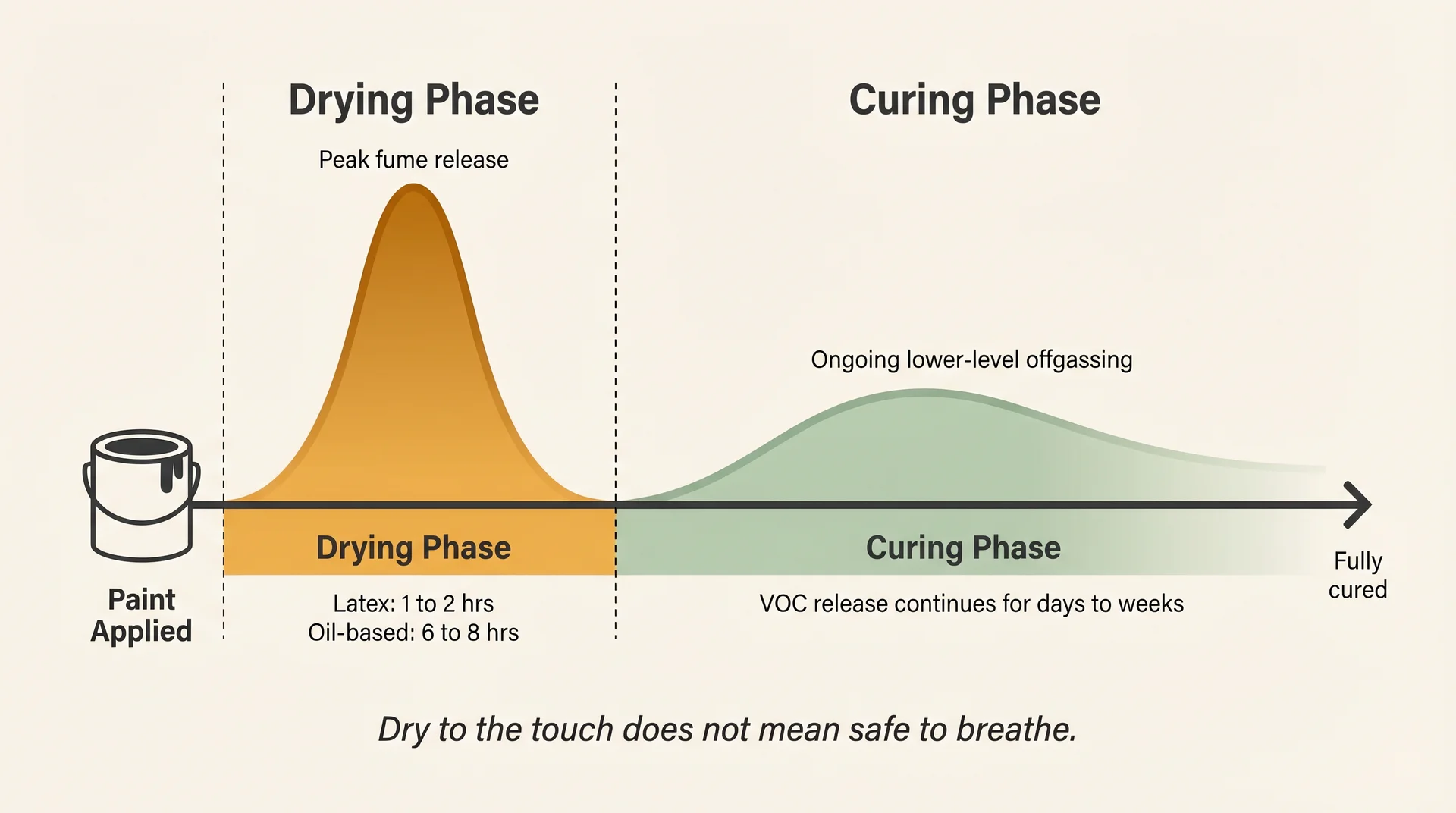
Most people assume that once the paint feels dry to the touch, the fumes are finished. That assumption is wrong, and it’s the most common mistake homeowners make. Paint goes through two distinct phases:
- Drying: The surface liquid evaporates. Latex paints dry to the touch in 1 to 2 hours; oil-based paints take 6 to 8 hours. This phase produces the most intense initial wave of fumes.
- Curing: This is the slower, invisible chemical hardening process. As paint cures, it continues releasing trapped Volatile Organic Compounds (VOCs) into the air for days, and with oil-based paints, potentially for weeks. The fume concentration is lower during this phase, but it doesn’t stop when the wall looks finished.
Understanding this changes how you think about re-entry, ventilation, and your own recovery. The acute risk is highest in the first few hours. The low-level ongoing risk is real for much longer.
How Paint Fume Chemicals Get Into Your Bloodstream
The main chemicals in paint fumes are VOCs: benzene, toluene, xylene, and formaldehyde are among the most common.
They evaporate at room temperature, which is why you smell paint almost immediately after application. Inhalation is the primary exposure route.
When you breathe air with elevated VOC concentrations, some compounds pass directly through the thin membrane lining your lungs and into your bloodstream.
Skin absorption is a secondary route for most DIY situations, and incidental ingestion matters mainly for young children who touch surfaces and put their hands near their mouths.
Your Liver Doesn’t Know When You’ve Opened the Windows
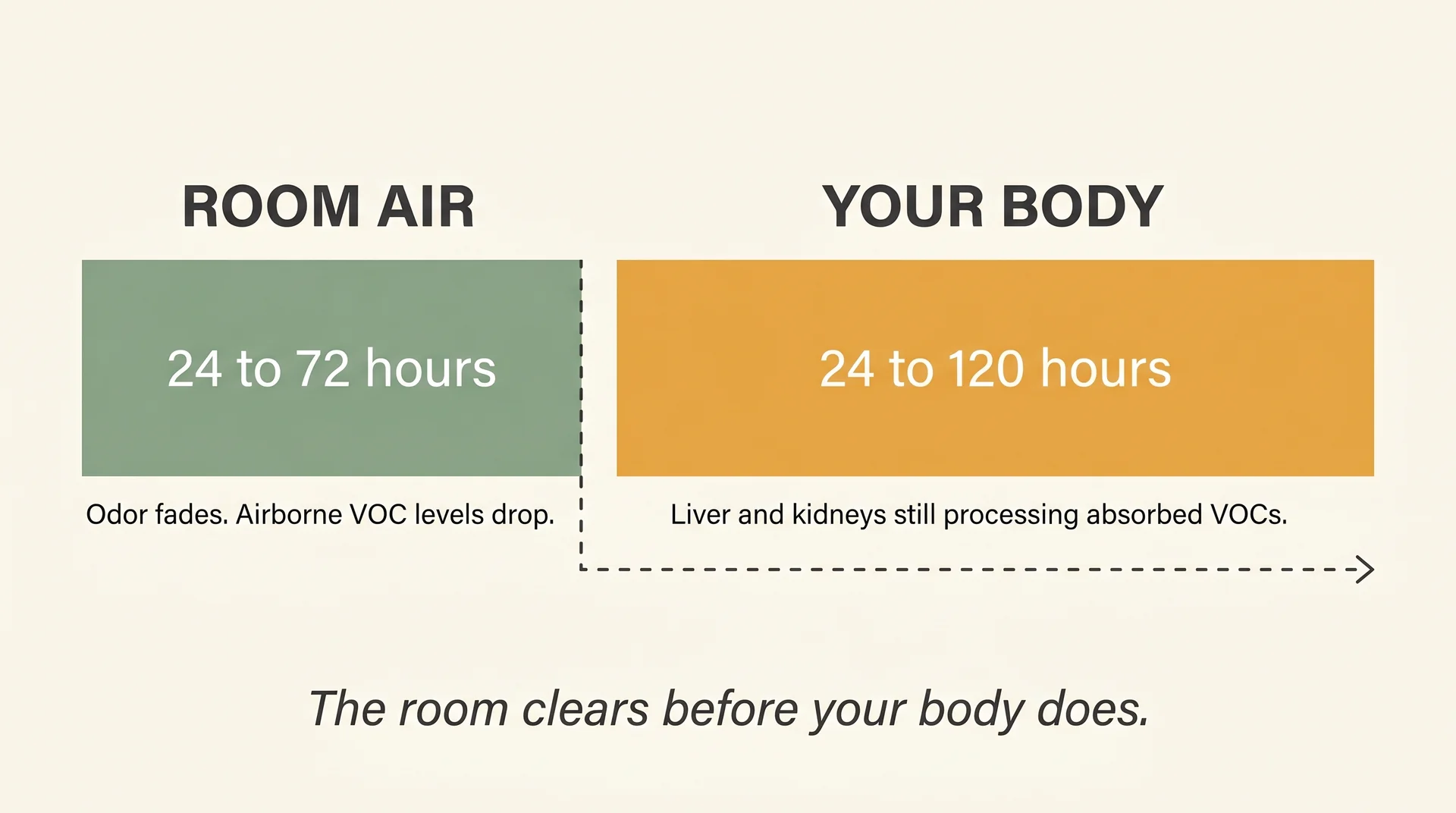
When you ventilate the room, you stop new VOCs from entering your lungs. That’s the right move, and it matters.
But the compounds already circulating in your bloodstream stay there until your liver processes them, regardless of what the air in the room is doing at that moment.
This is why people feel foggy or headachy for days after a painting project, even when the room smells completely normal. The room cleared before the body did.
These are two separate timelines running on two separate clocks, and knowing that distinction changes how you approach recovery.
How Long Paint Fumes Stay in Your System by Paint Type
The type of paint you were exposed to meaningfully changes the answer. Different formulations carry different VOC loads, which affect both how much your body absorbs and how long clearance takes.
| Paint Type | VOC Level | Estimated Body Clearance |
|---|---|---|
| Latex / water-based (standard) | Low to moderate | 24 to 48 hours for typical exposure |
| Oil-based / solvent-based | High | 3 to 5 days, sometimes longer |
| Low-VOC (labeled) | Low | Often under 24 hours |
| Zero-VOC (base coat only)* | Very low to low | 12 to 24 hours |
| Spray paint | Moderate to high | 3 to 5 days (deeper lung penetration) |
*Zero-VOC base paints can still acquire VOCs through the colorants added when they’re tinted at the store. A deep, saturated custom color can end up with VOC levels comparable to a standard low-VOC paint. Ask your retailer specifically for low-VOC colorants.
Latex and water-based paints carry a lower VOC load, and for a typical project in a reasonably ventilated room, most healthy adults clear the compounds within a day or two.
Oil-based and solvent-based paints carry significantly higher concentrations of heavier solvents, including toluene, xylene, and mineral spirits. The persistent headaches people describe after oil-based projects are often the body still working through compounds that haven’t fully metabolized. Three to five days is a realistic clearance window, longer if the space was poorly ventilated.
Spray paint creates a fine aerosol mist that penetrates deeper into the respiratory tract than vapors from brush or roller application. The same chemical load, delivered that way, takes longer to metabolize.
Even outdoor spray painting results in real inhalation without proper respiratory protection.
What Your Body Does to Process Paint Fumes
How Your Liver and Kidneys Clear Paint Fumes
Once VOCs enter your bloodstream, your liver takes on the primary processing job. It oxidizes the compounds and breaks them into metabolites that can be excreted.
Those metabolites travel to the kidneys, which filter them out through urine. Some compounds are also exhaled through the lungs as your body continues to process them, which is why your breath can carry a faint paint smell hours after you’ve left the space.
You’re literally exhaling what you absorbed.
Who Clears Paint Fumes Faster, and Why
Some compounds in paint, particularly certain solvents, are fat-soluble.
They bind to fatty tissue rather than staying dissolved in the bloodstream, where the kidneys can filter them efficiently.
The body releases these compounds back into circulation gradually, which is why some people experience mild fogginess or fatigue for longer than they’d expect from a single afternoon of painting.
Beyond body composition, these factors affect how long paint fumes stay in your system:
- Age and metabolic rate. Faster metabolism generally means faster processing. Older adults often clear compounds more slowly.
- Liver and kidney health. Pre-existing conditions that reduce organ efficiency extend the clearance timeline.
- Respiratory conditions. Asthma or COPD reduces how efficiently the lungs participate in exhaling processed compounds.
- Duration and concentration of exposure. An hour in a ventilated room is very different from six hours in a closed one.
- Ongoing re-exposure. Every time you return to a space still actively offgassing, your body’s clearance clock resets.
Paint Fume Symptoms and How to Know If They’re Still in Your System
What to Expect After Short-Term Paint Fume Exposure
Headache, mild dizziness, a slightly irritated throat, eye irritation, and low-grade nausea are all normal responses to paint fume exposure. They’re your body flagging an elevated chemical load, nothing more sinister than that.
For most healthy adults, these symptoms ease within a few hours of getting fresh air and staying away from the painted space.
If you step outside, drink water, and your symptoms track downward over the afternoon, your body is doing exactly what it’s supposed to do.
Symptoms That Suggest Heavier Exposure or Slower Clearance
Headaches that don’t ease with fresh air, nausea that carries into the following day, cognitive fogginess, or unusual fatigue that doesn’t match your activity level can all indicate that you absorbed more than a mild dose.
For many people, these symptoms resolve within the full two to five-day window. Staying out of the painted space, hydrating well, and getting outside regularly are the right steps.
When to Call Poison Control
Call Poison Control at 1-800-222-1222 or seek medical attention if you or someone in your household experiences any of the following:
- Chest pain or significant difficulty breathing
- Loss of coordination or confusion
- Fainting or near-fainting
- Severe nausea or vomiting that doesn’t resolve
- Symptoms in a child that don’t ease within a few hours of fresh air
Most people never reach this territory from a standard home painting project.
The real concern is for people working in enclosed spaces for extended periods without ventilation or respiratory protection, and that’s a meaningfully different situation from painting a bedroom with the windows open.
Vulnerable Groups and Longer Paint Fume System Timelines

Pregnant Women
This is the question I get most often from homeowners renovating while expecting.
The research consensus is that casual, incidental exposure to modern interior paints during a typical home project is considered low risk. No studies document fetal harm from normal household painting exposure with basic ventilation in place.
The research showing real risk involves occupational-level exposure or deliberate inhalation, neither of which resembles painting a nursery on a Saturday afternoon.
That said, the first trimester carries heightened vulnerability because organ development is at its most active, and the third trimester matters for fetal lung development and oxygen availability.
The recommendation from maternal health specialists is consistent: have someone else do the painting entirely, and stay out of freshly painted spaces for at least two to three days.
The precaution is easy, and the evidence for taking it is reasonable.
Children and Infants
Children breathe more air proportional to their body weight than adults do, and they spend more time at floor level, where many VOC compounds, which are heavier than air, naturally concentrate.
A room painted with standard latex paint needs at least two to three days of active ventilation before a child should sleep or spend extended time in it. A room painted with oil-based paint deserves at least a week.
A 2010 study found that higher VOC concentrations in children’s bedrooms correlated with increased rates of asthma, eczema, and rhinitis, which is why this isn’t excessive caution for a developing nervous system so much as it is appropriate caution.
People with Asthma or Respiratory Conditions
VOCs are a recognized trigger for asthma and allergic reactions.
Compounds at concentrations that a healthy person wouldn’t notice can provoke a significant inflammatory response in someone with reactive airways.
For anyone in this group, low-VOC or zero-VOC paints are a meaningful health decision with real exposure implications, and the body clearance timeline is longer than average because the lungs work less efficiently as an excretion pathway when they’re inflamed.
Elderly Adults
Metabolic rate slows with age, and kidney and liver function tend to decline as well.
Elderly individuals may take longer to clear VOCs and may experience more pronounced symptoms from the same exposure level that a younger adult handles easily.
Treat the 24 to 72-hour room re-entry guideline as a floor for older adults, not a target.
How to Get Paint Fumes Out of Your System and Your Home
Ventilate the Space Before Anything Else
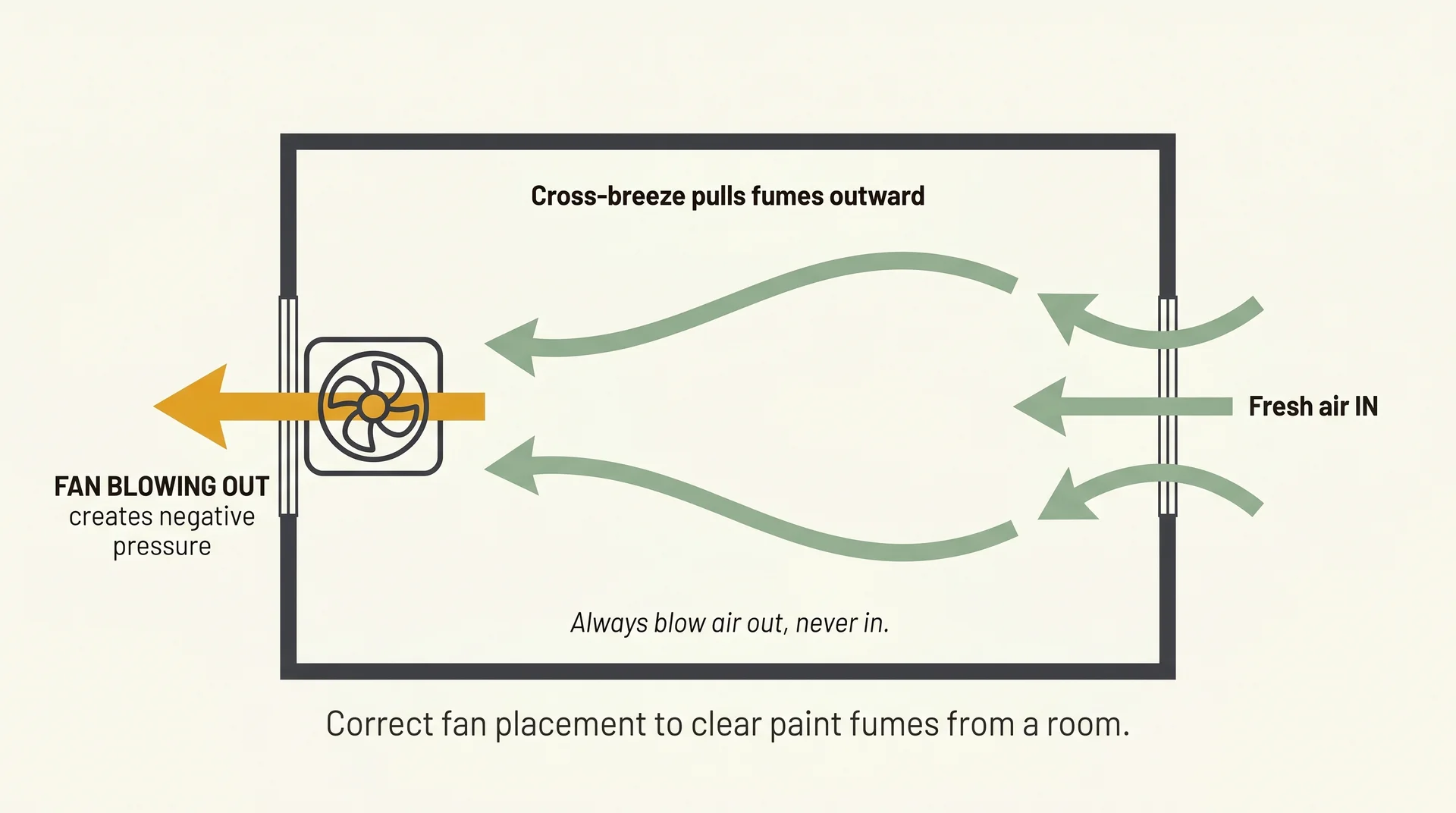
Your body can’t clear what it’s still absorbing, so stopping the source comes first.
Open windows on opposite sides of the room to create a cross-breeze, which actively moves fumes out rather than just circulating them.
Position box fans in windows to blow air outward, creating negative pressure that pulls fumes outside rather than pushing them around the room.
Keep this airflow running for a minimum of 48 to 72 hours after painting, not just for the afternoon of the project.
What Actually Helps Your Body Clear Paint Fumes
- Hydration. Water supports kidney function and helps flush water-soluble VOC metabolites through urine. Eight to ten glasses a day during the recovery period is a well-grounded target.
- Fresh air. Get outside for thirty minutes several times a day. Your lungs are an active excretion route, and they work better with clean air cycling through them.
- Warm showers. These support minor excretion through the skin and help open the airways. The effect is secondary to hydration and fresh air, but it contributes.
- Avoiding additional chemical load during recovery. Alcohol taxes the liver. Cigarette smoke and solvent-heavy cleaning products add compounds for the same organs to process simultaneously. Give your body cleaner inputs while it works through what’s already in your system.
Natural Remedies That Help Absorb Lingering Paint Fumes

While ventilation does the heavy lifting, a few low-cost household options help absorb residual fumes once the acute offgassing phase slows down:
- Baking soda. Place open bowls around the room. It absorbs odor molecules from the air passively and costs almost nothing.
- Activated charcoal. More effective than baking soda for VOC absorption. Available in bags or loose form at most hardware stores.
- White vinegar. Bowls of white vinegar in the room neutralize some VOC compounds. The vinegar smell dissipates within hours and takes the residual paint odor with it.
These work alongside ventilation rather than replacing it. They’re most useful in the days after painting, once major ventilation has been running and you’re managing the tail end of the odor.
Air Purifiers for Paint Fumes
HEPA filters capture particulates but don’t absorb gases.
For paint fumes specifically, you need a purifier with an activated carbon filter, which adsorbs VOC molecules from the air. Run it continuously during the first 48 to 72 hours, and leave it running in the room for several days afterward.
This reduces what you’re breathing while your body processes what it already took in.
How Long Before a Painted Room Is Safe: Timelines and Key Factors
Dry vs. Cured: The Distinction Most Homeowners Get Wrong
Paint that is dry to the touch has not stopped releasing fumes. Drying is surface-level; curing is the full chemical hardening process, and it takes much longer.
Latex paints can continue releasing VOCs for days during curing. Oil-based paints can offgas at low levels for weeks.
This is why a freshly painted room can smell fine after 24 hours and still carry measurable VOC concentrations in the air. Trust ventilation and a nose check, not the feel of the wall.
How Temperature and Humidity Affect How Long Paint Fumes Last
Environmental conditions change the offgassing timeline more than most homeowners realize:
- Temperature. Warmer temperatures speed up initial VOC evaporation, which means a more intense early fume release but a faster overall offgassing process. Cooler temperatures slow both drying and offgassing. Ideal painting conditions are between 65 and 80°F.
- Humidity. High humidity slows drying and extends how long the room takes to clear. If you’re painting in summer in a humid climate, plan for a longer ventilation period than the label suggests, regardless of what paint type you’re using.
Is It Safe to Sleep in a Freshly Painted Room?
Here’s a practical breakdown by paint type, assuming active ventilation throughout:
| Paint Type | Minimum Wait Before Sleeping |
|---|---|
| Latex / water-based | 24 hours minimum, 48 hours recommended |
| Oil-based | 48 to 72 hours minimum |
| Low-VOC | 12 to 24 hours if no odor is detectable |
| Zero-VOC (base coat only) | 6 to 12 hours with consistent ventilation |
For pregnant women, children, and people with respiratory conditions, treat these windows as starting points and extend them.
If the room still carries any detectable odor, no one in those groups should be sleeping in it.
The smell test remains the most practical real-world tool: your nose won’t give you a precise reading, though it’s more reliable than guessing from a label timeline alone.
A Note on Lead Paint in Older Homes
If your home was built before 1978, existing paint on your walls may contain lead. Lead was banned from residential paint in the US in 1978, but it may still be present under newer layers in older properties.
Do not sand, scrape, or burn old paint in a pre-1978 home without first testing for lead. This is a different and more serious risk than VOC exposure from fresh paint.
Certified inspectors can test painted surfaces, and certified contractors are required for lead paint remediation work.
Choosing Paint That’s Safer for Your System
What Low-VOC and Zero-VOC Labels Actually Mean
“Low-VOC” in the US means the base paint contains fewer than 50 grams of VOCs per liter for flat finishes, or fewer than 150 grams per liter for non-flat finishes, per EPA guidelines.
“Zero-VOC” means under 5 grams per liter in the base coat before tinting. The catch most homeowners don’t know: those numbers apply before colorants are added at the store. When the retailer tints your custom color, VOCs go up.
A deep, saturated shade from a zero-VOC base can end up comparable to a standard low-VOC product. Ask your retailer specifically for low-VOC colorants. Most quality suppliers carry them, and most don’t volunteer this information unless you ask.
Brands that consistently perform well on low-VOC content include Benjamin Moore Natura, Sherwin-Williams Harmony, and ECOS Paints.
I’ve specified all three in residential projects for clients with health sensitivities in the household, and they’re worth the modest price premium.
What to Look for on the Label Before You Buy
- VOC content in grams per liter. The most direct data point. Look for it on the product spec sheet if it’s not on the can label.
- Interior-only designation. Exterior paints and specialty coatings often contain fungicides and compounds not formulated for indoor air quality. Use only interior-designated products inside your home.
- SDS availability. A Safety Data Sheet lists the specific compounds in the paint. If you’re pregnant, immunocompromised, or managing a respiratory condition, ask your retailer to pull it before you buy.
Frequently Asked Questions
Can paint fumes make you sick days after exposure?
Yes. Fat-soluble VOC compounds can persist in fatty tissue and continue producing symptoms for two to five days after the original exposure ended. Persistent headaches or fatigue two days after painting, especially with oil-based products, are likely because your body is still processing what it absorbed.
How do you flush paint fumes out of your body?
There’s no supplement or treatment that meaningfully speeds the process. Staying out of the painted space, drinking plenty of water, getting fresh air regularly, and avoiding other chemical exposures during recovery are genuinely effective steps.
Is it safe to sleep in a room that still smells like paint?
No. A detectable smell means the room is actively offgassing at a rate your body continues to absorb during sleep, with hours of continuous exposure while you’re not moving around. Wait until the odor is fully gone before sleeping in the room.
How long do spray paint fumes stay in your system?
Longer than brush-applied paint. Spray aerosol particles penetrate deeper into the respiratory tract, and the same chemical load takes longer to metabolize when it enters the body at greater depth. Expect three to five days, even with outdoor exposure.
Are paint fumes dangerous during pregnancy?
Routine household exposure is considered low risk. The research documenting fetal harm involves occupational or deliberate high-dose inhalation. That said, have someone else do the painting, maintain good ventilation, and wait at least two to three days before spending extended time in the freshly painted space. The precaution costs nothing.
What neutralizes paint fumes in a room?
Ventilation does most of the work. Bowls of baking soda, activated charcoal bags, or white vinegar help absorb residual odor molecules once the major ventilation phase is underway. An air purifier with an activated carbon filter is the most effective supplemental tool for VOC removal from indoor air.
Ending Note
Paint projects should make your home better. They do, when you choose your product thoughtfully and respect the room’s need to breathe first.
For most healthy adults who paint a room with modern interior latex, keep the windows open, and leave the space while it dries, the 24 to 48-hour timeline is accurate and genuinely reassuring.
If the exposure was longer, the space was poorly ventilated, or the paint was oil-based, give your body the full three to five days it needs: hydration, fresh air, and time away from the space.
| This article is intended for general informational purposes only and does not constitute medical or professional health advice. Individual reactions to paint fume exposure vary based on product formulation, exposure duration, personal health factors, and ventilation conditions. Always read the manufacturer’s Safety Data Sheet for your specific product. If you experience severe or persistent symptoms, consult a qualified healthcare professional or call Poison Control at 1-800-222-1222. Pregnant women, children, elderly individuals, and those with pre-existing health conditions should consult their healthcare provider before undertaking any painting project. |