
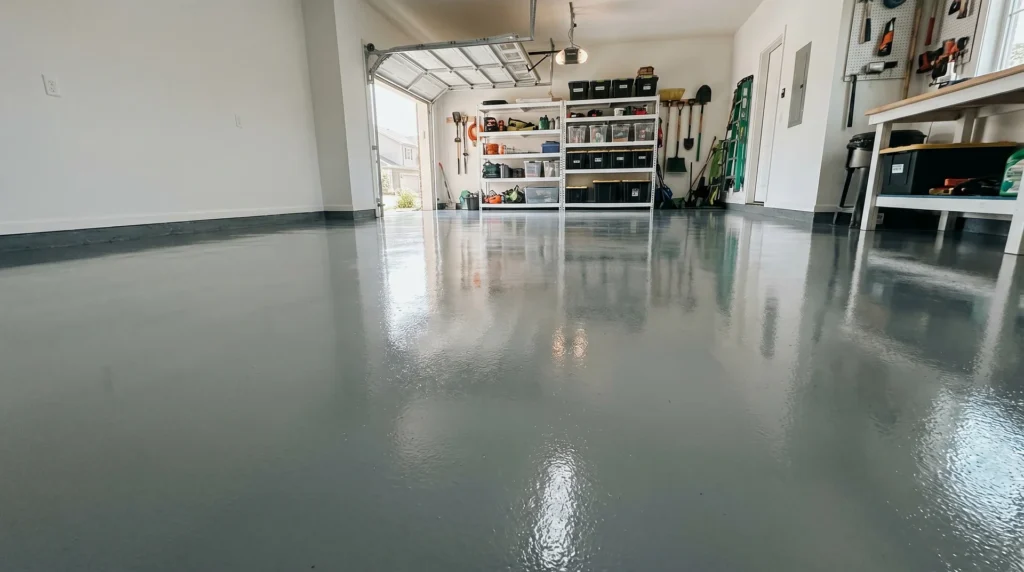
You’ve probably seen it and done a double-take: a garage floor with a clean, glossy finish that looks almost too polished for a utility space. Or a basement that doesn’t look like a basement at all.
Epoxy paint is a latex acrylic paint with epoxy resin blended directly into the formula. It comes ready to use in a single can, applies like regular paint, and delivers a noticeably harder surface, more stain-resistant, and easier to clean than anything standard floor paint can offer.
It’s also a commitment you can’t easily undo. Which is exactly why you deserve the full picture before you pick up a can. I’ve spent over a decade helping homeowners make decisions about their spaces, and questions about epoxy paint come up constantly. This guide answers all of them.
What Is Epoxy Paint, Exactly?
At its core, epoxy paint is a paint with a performance upgrade. The latex acrylic base gives it familiar handling, standard rollers and brushes work fine, and it dries the way paint dries. What changes the outcome is the epoxy resin in the mix.
The epoxy component bonds more aggressively to concrete and metal surfaces, resists chemical staining, and hardens into a film that ordinary acrylic paint simply can’t replicate.
The ratio of epoxy in the formula determines how the finished floor performs. A higher epoxy content means a tougher, more resistant surface. A lower ratio makes the application easier but leaves a less durable result. This is why two products can both be labelled “epoxy paint” in the same hardware store aisle and still perform very differently once they’ve dried.
Epoxy paint comes in two main formats.
Water-based epoxy paint has more carrier agent in the formula, making it easier to apply, lower in fumes, and well-suited to light-to-moderate residential traffic. Solvent-based epoxy paint carries a higher epoxy-to-carrier ratio, which produces a harder, more durable finished surface. It’s the better long-term choice for high-abuse spaces like active garages, though it applies less forgivingly and requires stronger ventilation.
Epoxy Paint vs Regular Floor Paint: What’s the Actual Difference?
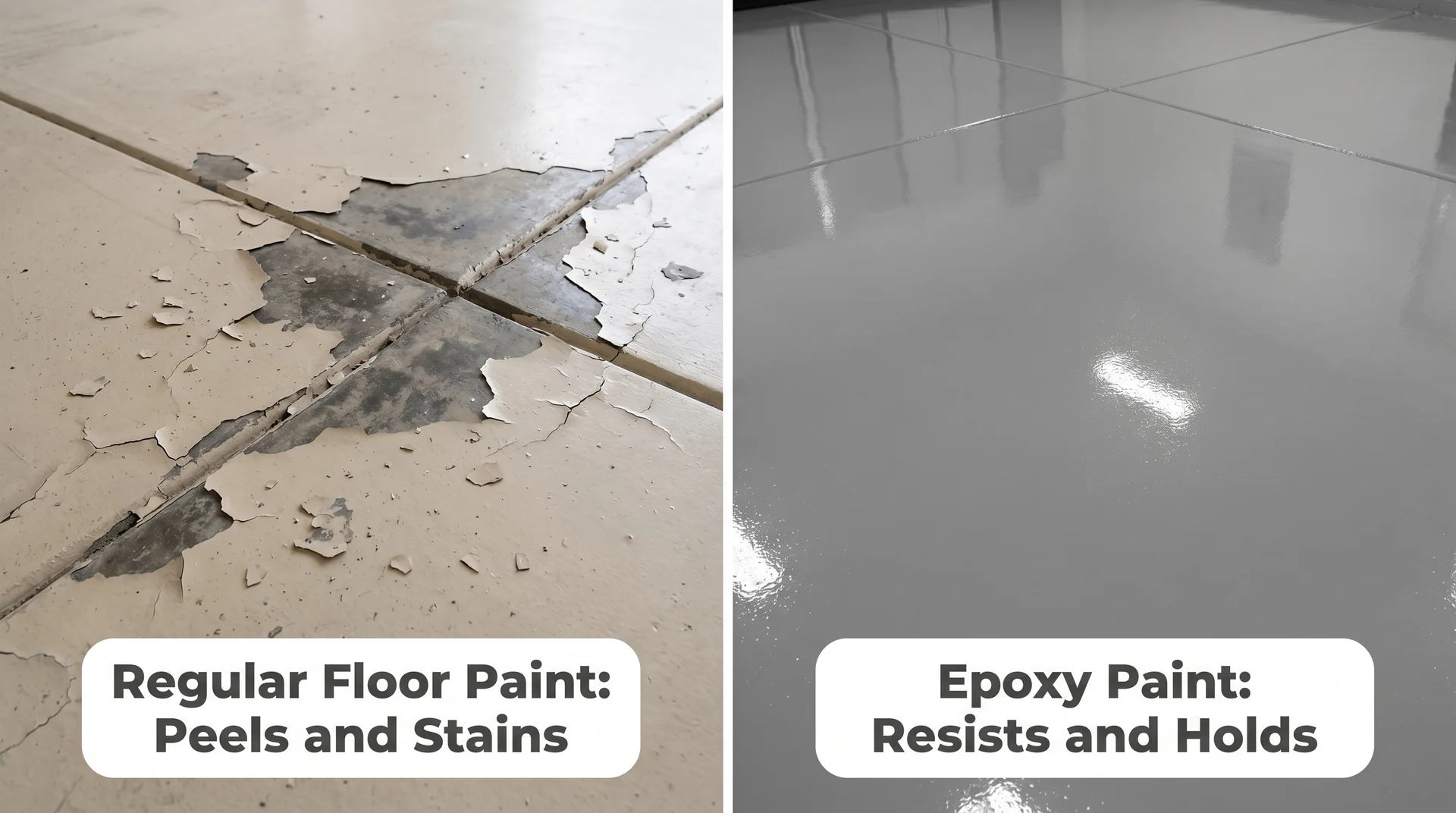
Regular floor paint is latex or acrylic-based and dries to a softer, more porous film. Epoxy paint has epoxy resin added to the formula, producing a harder surface that resists staining, chemicals, and abrasion significantly better.
Without epoxy in the mix, a standard acrylic paint will eventually peel and flake from concrete, especially in areas dealing with moisture, foot traffic, and temperature swings. With epoxy present, the paint grips the surface far more tenaciously, and the dried film is far less porous.
The difference becomes most visible over time. In a garage that sees regular use, standard floor paint begins to look tired and worn within a year or two. A properly applied epoxy paint job on the same floor will hold its appearance for three to five years with basic maintenance.
Epoxy Paint vs Epoxy Coating: What’s the Real Difference?
This is the most common point of confusion, and it matters before you spend a dollar.
One-Part Paint vs Two-Part Coating
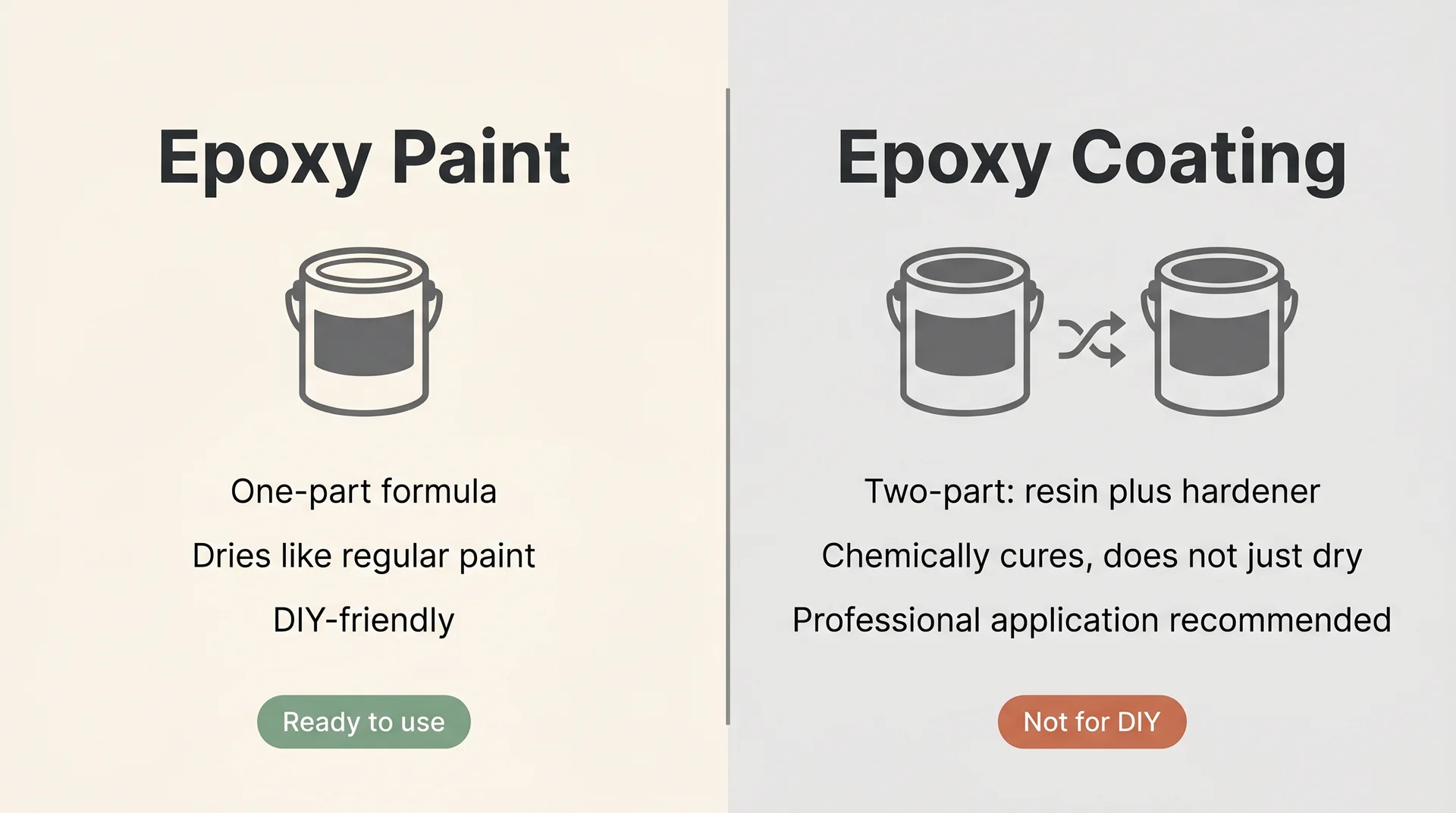
Epoxy paint is a one-part product. You open the can and apply it. The epoxy blended into the formula improves performance, but it dries through evaporation of the carrier and behaves like a paint throughout its life.
Epoxy coating, or two-part epoxy, is a different product category entirely. It comes as two separate components, an epoxy resin and a polyamine hardener, which you mix immediately before application. Once combined, a chemical reaction begins, and the coating cures rather than dries. Curing produces a rigid, extremely durable film that bonds to the surface at a molecular level.
Two-part epoxy coatings are thicker, harder, and far more resistant to chemicals. They’re also significantly more complex to apply and unforgiving of errors.
Both products are frequently labelled “epoxy” in hardware stores. If you’re standing in the aisle and see one product called epoxy floor paint and another called epoxy floor coating, you’re looking at two genuinely different things with meaningfully different performance levels.
Which One Is Right for Your Project?
| Your Situation | What You Need |
|---|---|
| Basement, laundry room, or utility space with light foot traffic | Epoxy paint (water-based) |
| Garage with one car and occasional light spills | Epoxy paint (solvent-based preferred) |
| Garage with multiple vehicles, regular oil or chemical exposure | Two-part epoxy coating, professionally applied |
| Industrial space, workshop, or commercial floor | Professional epoxy coating system |
| First-time DIY applicator with a weekend and moderate confidence | Epoxy paint |
Where Epoxy Paint Works Well on Floors and Surfaces
Surfaces Where Epoxy Paint Delivers
Concrete floors are where epoxy paint performs best and is most commonly used. Garage floors, basement floors, workshop floors, and utility room floors all respond well to it. Concrete is porous, and epoxy paint seals that porosity while adding a durable, cleanable surface layer. The result is a floor that doesn’t generate concrete dust, doesn’t absorb oil and stains, and wipes clean after a spill without leaving a mark. Clients who’ve made this one change tell me it’s among the most satisfying practical upgrades in a utility space.
Metal surfaces take epoxy paint well because of the strong adhesion the epoxy component provides. Outdoor railings, garden furniture frames, and equipment in humid or corrosive environments benefit from its resistance to rust and moisture.
Bathroom and utility room floors are a solid candidate where the priority is function. Epoxy paint’s moisture resistance makes it appropriate for surfaces that see regular water exposure, as long as there’s no moisture migrating upward through the slab beneath.
Where to Think Twice Before Using Epoxy Paint
Epoxy paint sits on top of concrete rather than penetrating it. If your basement or garage floor has moisture seeping up through the slab, epoxy paint won’t stop it. It’ll trap the moisture, and the coating will fail, usually with bubbling or peeling, within a season or two. Resolve the underlying moisture problem first, then consider your surface finish.
Prolonged UV exposure causes epoxy paint to yellow over time and eventually chalk out on the surface. Off-white and clear finishes show this most noticeably. If your space gets hours of direct sun daily, factor this in when you choose a finish colour.
For walls and vertical surfaces in residential homes, epoxy paint is technically possible, but there are better-suited products for walls that offer similar protective benefits without the same preparation demands.
Epoxy Paint Pros and Cons from a Residential Design Perspective
What Epoxy Paint Does Really Well
- Genuine durability: On a properly prepared concrete floor, a good epoxy paint holds up to foot traffic, dropped tools, dragged storage, and the general punishment utility spaces absorb daily.
- Seals concrete dust: Bare concrete generates a gritty residue that settles on everything. Epoxy paint creates a non-porous barrier that stops it entirely.
- Easy to clean and maintain: Spills don’t absorb. Dirt doesn’t grind in. A mop handles most cleaning days. That high-gloss surface that looks high-maintenance is, in practice, the opposite.
- Moisture-resistant: It handles spills, condensation, and humidity better than ordinary floor paint, though it’s not a substitute for proper waterproofing beneath the slab.
- Cost-efficient upgrade: Compared to replacing the flooring entirely, epoxy paint costs a fraction and delivers a significant visible improvement.
- Transforms how a utility space feels: A clean, glossy epoxy-painted floor makes a garage or basement feel deliberate and cared for, and that affects everything from how you work in the space to how guests perceive your home.
Drawbacks to Know Before You Commit to Epoxy Paint
- Surface prep is the whole game: The number one reason epoxy paint jobs fail is inadequate surface preparation. The floor has to be thoroughly degreased, free of existing coatings, and completely dry. Any grease, oil, or residue left on the surface causes adhesion failure, and that shows up as peeling within months.
- It’s a real commitment: Removing epoxy paint from concrete requires a solvent or mechanical grinding. This isn’t like repainting a wall on a whim.
- High-traffic zones wear faster: The area just inside your garage door will thin and wear before the rest of the floor. A refresh coat every few years in those zones is realistic maintenance.
- Slippery when wet: The smooth, non-porous surface reduces traction when it’s wet. Anti-slip additives are available and worth treating as standard in any space prone to water tracking.
- Yellowing under UV exposure: Clear and light-coloured finishes shift in colour over time in sun-exposed spaces.
How Long Does Epoxy Paint Last?
In most residential settings, a well-applied epoxy paint job lasts three to five years before it shows meaningful wear. Several factors shape that range considerably.
Surface prep quality is the biggest variable. A floor that was meticulously degreased, properly etched, and given adequate drying time between coats will outlast a rushed job by two to three years. Traffic volume matters too.
A basement floor used a few times a week will last considerably longer than an active garage with daily vehicle use and chemical exposure. Solvent-based products outlast water-based ones in demanding environments because the higher epoxy-to-carrier ratio leaves more resin on the surface. UV exposure accelerates colour shift and surface degradation, particularly for lighter finishes.
When you start seeing visible thinning in high-traffic zones or scuffing that won’t clean away, that’s the floor signalling it’s ready for a refresh. Re-coating over existing epoxy paint is possible if the current layer is still well-bonded. Clean the surface thoroughly, abrade it lightly to create adhesion, and apply a fresh coat. If the existing paint is peeling or delaminating, it needs to come off first before anything new goes down.
Is Epoxy Paint Safe to Use Indoors?
Yes, with the right precautions, and the answer depends meaningfully on which type you choose.
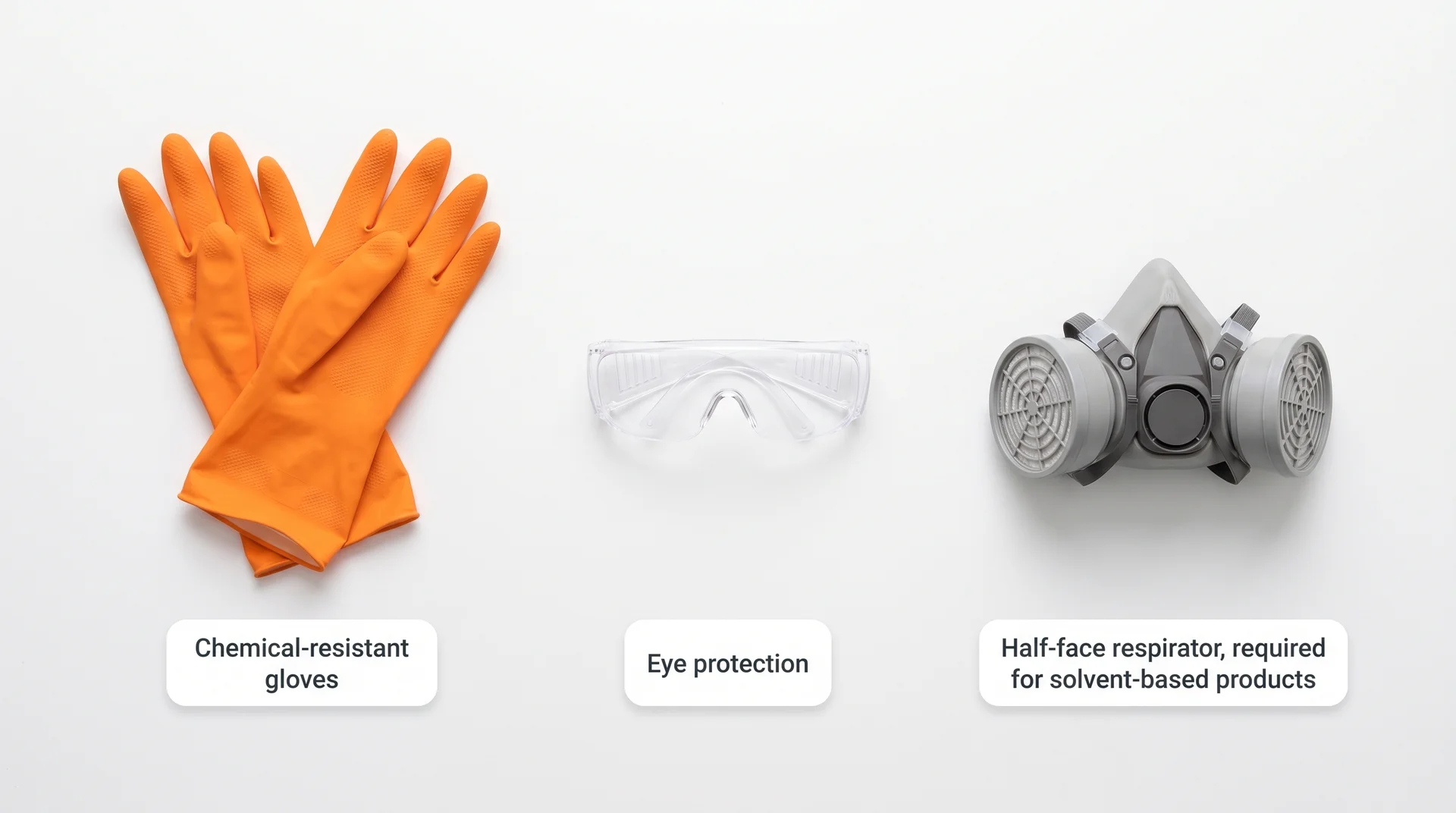
Water-based epoxy paints have significantly lower VOC levels. Good ventilation, open windows, and fans running are sufficient for most residential indoor applications. Gloves and eye protection are standard practice.
Solvent-based epoxy paints emit stronger fumes during application and through the full curing period. A half-face respirator is required. Keep children and pets completely out of the space until the floor has cured, which typically means 48 to 72 hours for foot traffic.
Maintain airflow throughout the cure, not just during the painting itself. The fumes taper as the carrier evaporates, but sustained ventilation makes a real difference in comfort and air quality.
| Safety note: Always read the product Safety Data Sheet (SDS) for the specific epoxy paint you’re using before application. If you have pre-existing respiratory conditions or sensitivities to chemical compounds, consult a professional applicator rather than handling the product yourself. Epoxy compounds can cause skin and eye irritation on contact; protective gear is not optional. |
How to Apply Epoxy Paint: DIY or Hire a Professional?
Most homeowners can apply epoxy paint successfully themselves. But success is almost entirely determined by how seriously you treat the preparation phase.
I’ve worked with genuinely careful, capable homeowners who got poor results because they underestimated the prep, not the application itself. One light scrub of a greasy garage floor isn’t enough.
The surface has to be clean, the way meticulously clean, because epoxy paint bonds to the surface directly, and anything sitting between the paint and the concrete interrupts that bond. That’s where peeling starts.
That’s where bubbling originates. Budget as much time for prep as you do for painting. Probably more.
The Full Application Process for Epoxy Paint on Concrete Floors
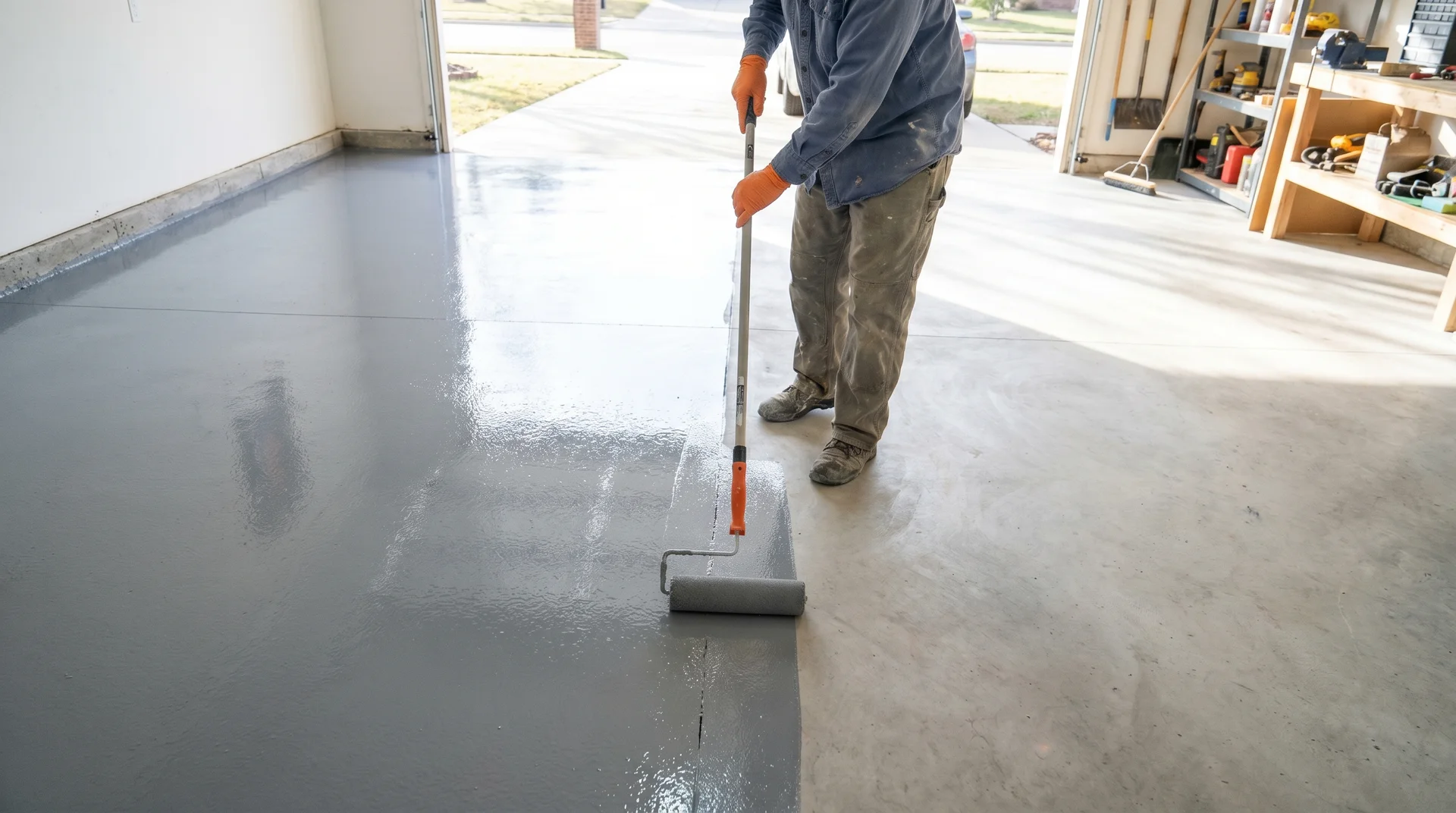
- Degrease the entire surface. Use a dedicated concrete degreaser and scrub thoroughly. Repeat if the floor has years of automotive fluid or oil exposure. Rinse completely and allow to dry.
- Repair cracks and spalling. Fill any cracks with a concrete patching compound and let it cure fully before you proceed.
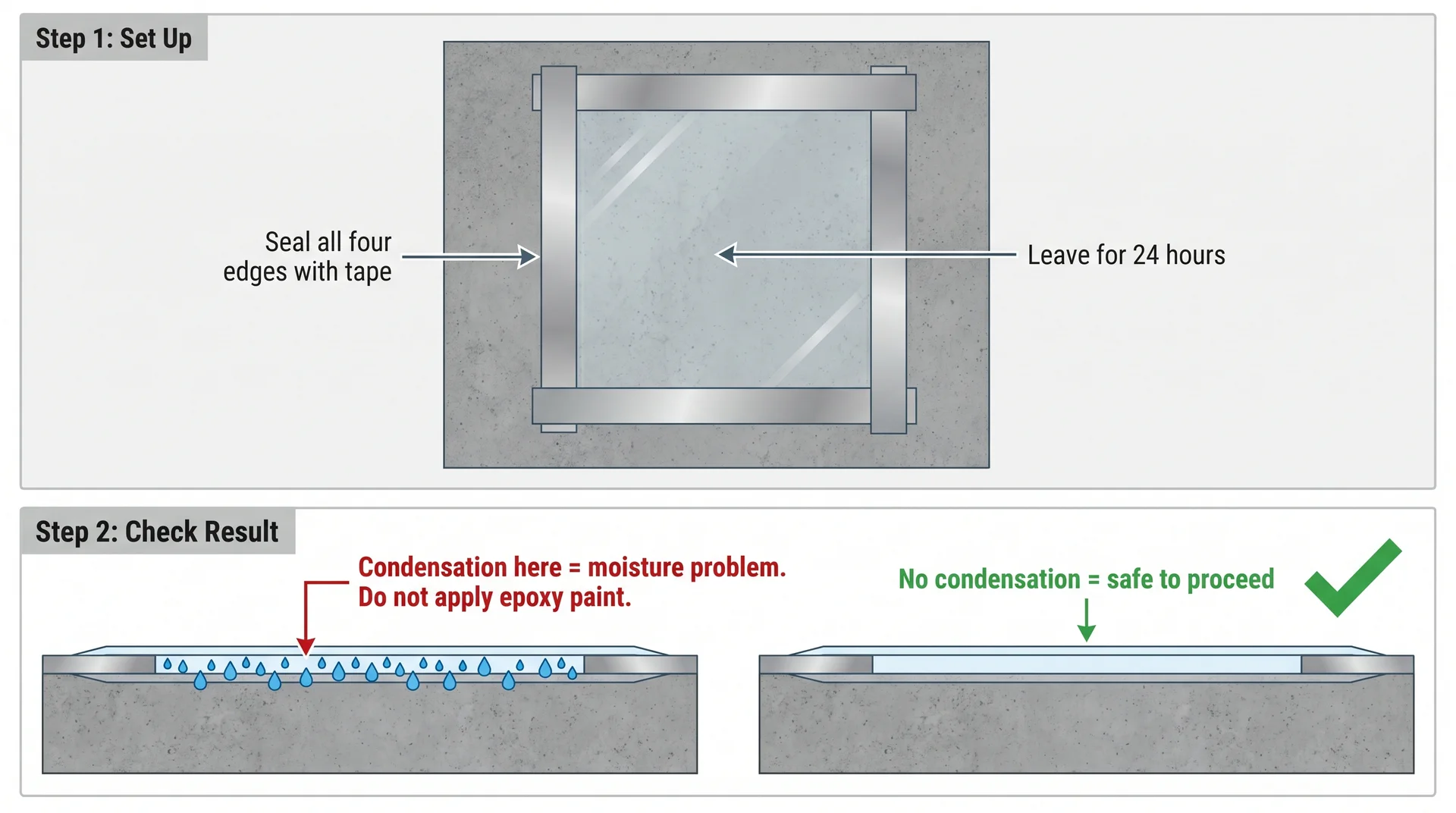
- Test for moisture in the concrete slab. Tape a 60cm square of plastic sheeting to the floor and seal all four edges. Leave it for 24 hours. If condensation forms underneath, you have a moisture migration problem that needs resolving before any coating goes down.
- Check the temperature. Concrete must be at least 55°F (13°C) during application and through the curing period. Applying in cold or damp conditions causes adhesion failures that show up weeks later.
- Etch or lightly sand the surface. Many products recommend acid etching to create a mechanical profile that gives the paint something to grip. Follow the manufacturer’s instructions for your specific product.
- Apply in thin, even coats with a roller. Use a brush for edges and corners. Apply two to three coats with a full 24-hour drying period between each coat. Rushing this step causes delamination.
- Allow full cure before use. 24 to 48 hours for foot traffic; 72 hours minimum before vehicle traffic; ideally a full week before heavy use.
When to Hire a Professional for Epoxy Paint Application
Some situations call for professional help. Large surface areas over 600 square feet become difficult to manage within the product’s working window as a solo applicator. Concrete with active moisture issues needs remediation before any surface coating.
If the floor has existing coatings that need to come off first, professional equipment makes that work significantly faster.
And if you want a true two-part epoxy coating rather than epoxy paint, professional application becomes effectively necessary for a result that holds.
How to Maintain and Clean an Epoxy-Painted Floor
This is one of epoxy paint’s genuine pleasures: routine maintenance is simple. Sweep or dust-mop regularly to remove grit and debris, and damp-mop for deeper cleaning. A soft-bristle deck brush and a bucket of warm water with mild dish soap handle anything that needs more than a mop.
Avoid harsh abrasive cleaners, bleach-based products, and solvent-based cleaning agents. These dull the finish and degrade the epoxy over time, shortening the lifespan of the coating considerably.
For ongoing protection, place felt pads under furniture legs and rubber caps on equipment feet in contact with the floor. A quality entrance mat at the garage door keeps fine grit from grinding into the surface under tyre and foot traffic, which is the primary cause of early surface wear in the zones that matter most.
What Does Epoxy Paint Look Like? The Design Angle!
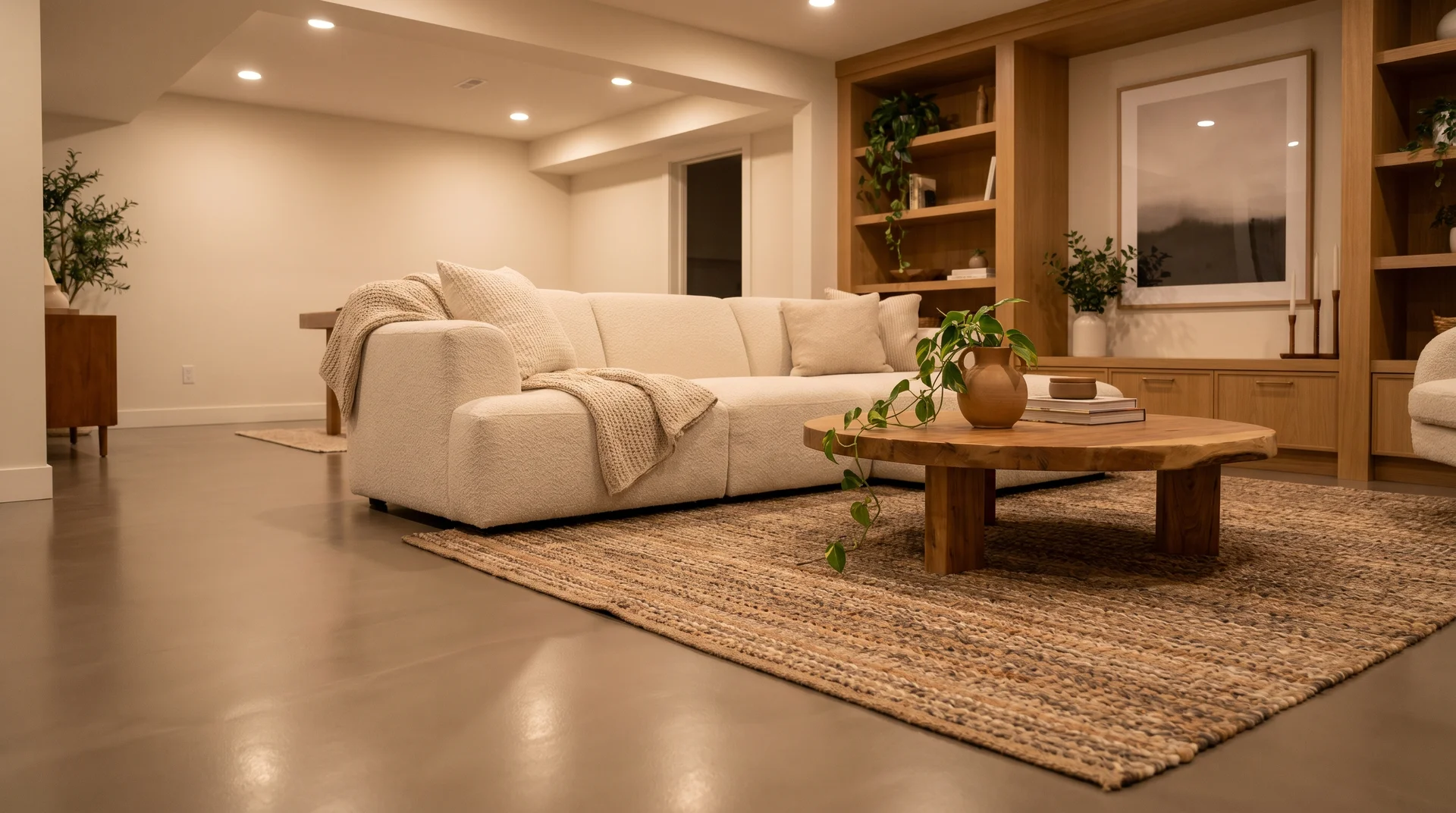
The default finish is high-gloss, and it’s striking in person. Even a basic utility space looks deliberate and finished under a clean epoxy floor. The reflective surface also bounces light around low-ceiling garages and basements in a way that makes them feel more open than they are. That’s a meaningful benefit in spaces that tend to feel cramped and dim.
Colour selection matters more than most people give it credit for. Cool grey tones remain the most popular choice for garages, and they earn that popularity.
Mid-grey doesn’t show tyre marks or general dirt between cleans, it works with almost any wall colour, and it reads as clean without feeling clinical. Lighter grey makes the space feel larger. Darker grey hides more between cleaning days.
For basements that serve as living spaces, a home gym, a home office, or a kids’ play area, warmer tones make a real difference in how the room feels.
A warm greige or soft taupe on the floor registers as residential rather than industrial, and that shift in atmosphere changes how comfortable the space is to spend time in. It’s a small decision with a disproportionate effect on the finished result.
One thing to set expectations around: standard epoxy paint doesn’t offer the decorative chip and flake options you see in professional coating systems. Those broadcast layers of coloured flakes or metallic pigments belong to two-part coating applications. If that look is what you’re after, you’re looking at a coating system, not a paint.
How Much Does Epoxy Paint Cost?
Epoxy paint is one of the more affordable floor refinishing options on the US market.
- Product cost: $30 to $60 per gallon for water-based; slightly higher for solvent-based
- Coverage: Approximately 250 to 400 square feet per gallon, depending on concrete porosity
- Total DIY budget for a two-car garage (two to three coats): $150 to $350, including rollers, degreaser, crack filler, and masking tape
- Professional application of epoxy paint: $1 to $3 per square foot for labour, depending on location and surface condition
- Two-part epoxy coating systems, professionally applied: $3 to $12 per square foot
For most residential homeowners, DIY epoxy paint represents excellent value. The material investment is modest, and the visual and functional result is disproportionately good compared to the cost when the prep work is done properly.
Frequently Asked Questions
What is epoxy paint used for most commonly?
Epoxy paint is most commonly used on concrete garage floors, basement floors, and utility room floors. It seals the porous concrete surface, prevents staining, resists chemicals and moisture, and creates an easy-to-clean, durable finish. It also works well on metal surfaces and in utility bathrooms.
Does epoxy paint need a primer?
Most epoxy paints are self-priming on concrete, so a separate primer isn’t required. What’s required is a meticulously clean, degreased, and dry surface. The paint can’t compensate for contamination beneath it, and inadequate prep is the leading cause of epoxy paint failure.
Can epoxy paint be applied over existing floor paint?
Generally, no. Epoxy paint needs to bond directly to the concrete. Existing paint creates a barrier that prevents the bond, and the epoxy coat will fail over time. In most cases, the existing coating needs to come off first.
Can you recoat over existing epoxy paint?
Yes, if the existing layer is still well-bonded and not peeling. Clean the surface thoroughly, abrade it lightly to create adhesion, and apply the fresh coat. If the existing paint is lifting or delaminating, remove it before recoating.
How long before you can use the floor after applying epoxy paint?
Allow 24 to 48 hours for foot traffic. For vehicle traffic, wait at least 72 hours. A full week of cure time before heavy vehicle use is the safer target for a result that holds.
Does epoxy paint yellow over time?
Yes, particularly under UV exposure. Off-white, cream, and clear finishes show yellowing most noticeably. Darker colours are significantly less affected. If your space gets prolonged direct sunlight, choose a UV-resistant formula or a deeper colour.
Is epoxy paint safe for indoor use around children and pets?
Once fully cured, yes. Water-based epoxy paint is low-VOC and safe for household occupancy after the standard drying period. During application and curing, keep children and pets out of the space and maintain good ventilation throughout.
Can you use epoxy paint on bathroom floors?
Yes. Moisture resistance and easy cleaning make it a practical choice for utility bathrooms and laundry room floors. Add an anti-slip additive if the floor gets wet regularly, as the glossy surface reduces traction when wet.
Edwina’s Final Take on Epoxy Paint
Epoxy paint is one of the best-value upgrades you can make to a hard-working floor. It costs far less than replacing the surface, it outperforms ordinary floor paint by a wide margin, and it holds up well in the environments it’s designed for.
What it asks from you in return is honest surface preparation and realistic expectations about its lifespan and limitations.
If you’re looking at a concrete floor right now and wondering whether it’s worth doing, the answer for most residential spaces is yes. Just take the prep as seriously as the painting itself. Everything else follows from that.