
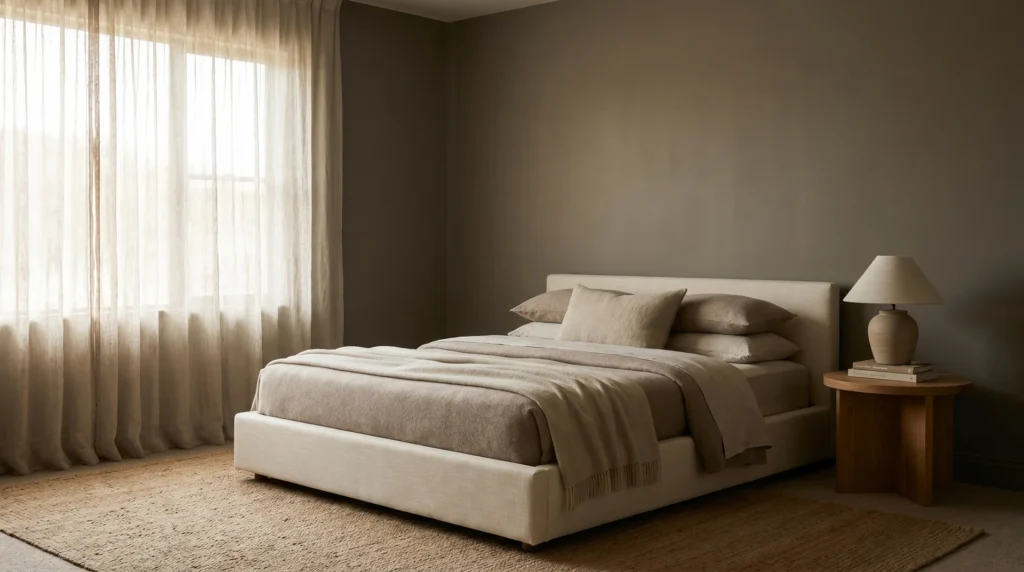
The first time a client called me in quiet distress about her newly painted bedroom, I could tell something had gone wrong before she finished her sentence.
She had moved into a new build, loved how the rooms felt, settled and a little serious, and then repainted the master bedroom in eggshell because someone told her flat paint was “impossible to clean.” The room ended up looking fine. But it had lost something. The colors sat differently on the walls. The light bounced more. The stillness she had loved was gone.
That conversation, and a dozen variations of it across my years of residential styling work, taught me that flat paint is one of the most misunderstood finishes in interior design. People dismiss it as the cheap default builders reach for without thinking, or they over-correct and avoid it entirely.
| Flat paint is an interior finish with effectively zero sheen, with a reflectance of 0–5% on the sheen scale. It absorbs light rather than reflecting it, produces a smooth, velvety surface, and makes colors appear at their richest and most saturated. It works beautifully on every ceiling in your home, as an intentional choice in bedrooms and formal rooms, and on older walls with imperfections worth hiding. It fails in kitchens, bathrooms, hallways, and anywhere children treat the walls as part of their daily routine. |
Everything in this guide helps you decide which side of that line your room falls on.
What Is Flat Paint, and Where Does It Sit on the Sheen Scale?
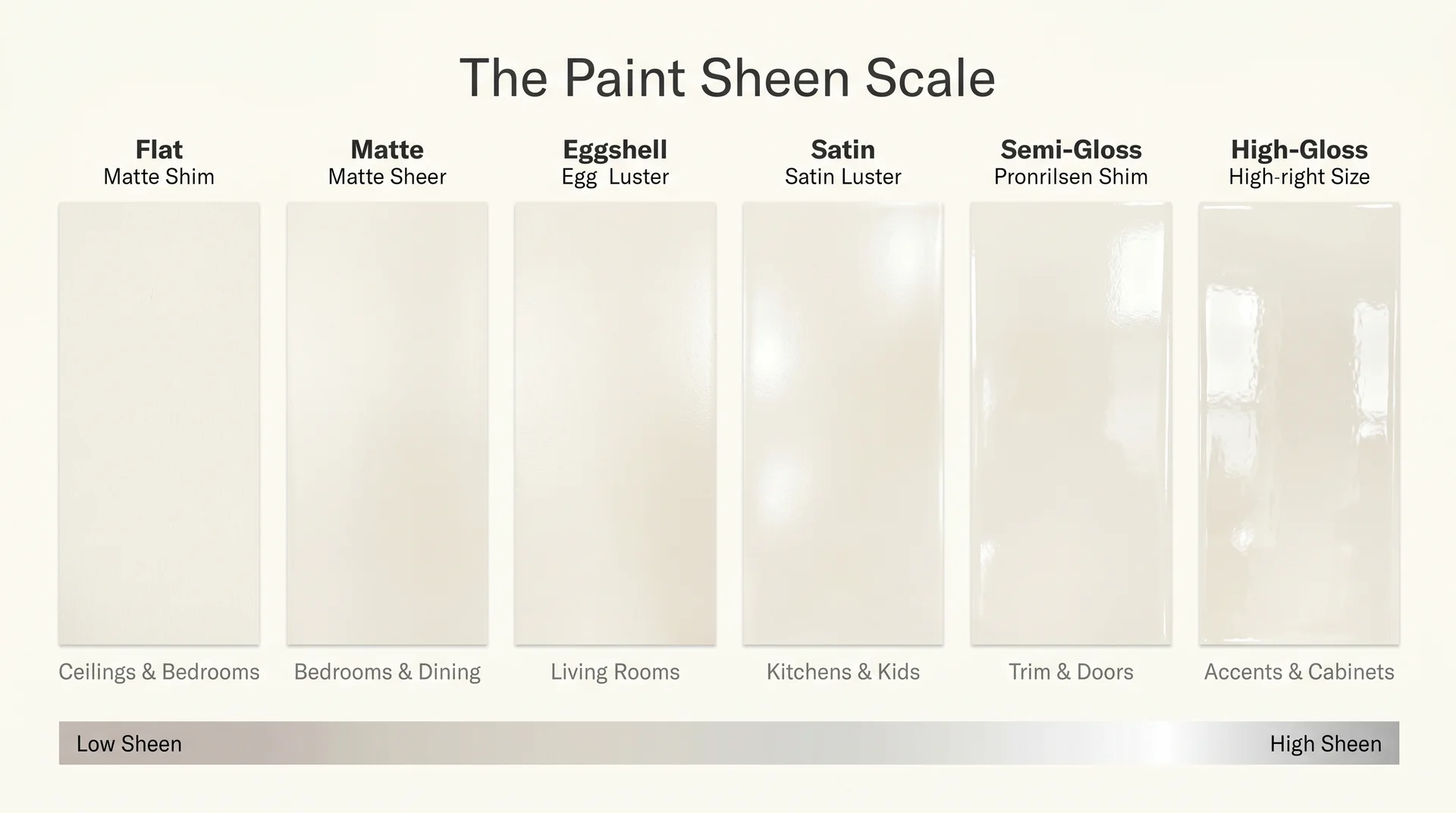
The sheen spectrum runs from flat at the lowest end through matte, eggshell, satin, semi-gloss, and high-gloss at the top. Each step up adds more reflectivity, more durability, and more visual exposure of whatever imperfections your walls carry. Flat paint sits at the bottom, with a sheen level near zero.
Its formulation contains more pigment relative to the binder compounds that create sheen. More pigment means better coverage in fewer coats and richer color on the wall. I like to describe it to clients this way: a flat-painted wall behaves like fabric, taking in the light around it and holding the color steady. A high-gloss wall behaves like glass, reflecting everything at you.
Most residential walls live somewhere between those two extremes, which is why finishes like eggshell and satin dominate the market. But specific rooms and specific situations call for going all the way down to flat, and recognizing those situations is what separates an intentional choice from a builder’s default.
Flat Paint vs Matte Paint: Do These Labels Mean the Same Thing?
In most situations, yes. The two terms appear interchangeably on paint cans at most hardware stores, and both deliver a low-sheen, non-reflective finish on your walls. A few brands draw a technical distinction. Benjamin Moore, for instance, positions their “matte” one step above “flat” on the sheen scale, with slightly more durability and a touch more washability. Their Waterborne Ceiling Paint sits at the extreme flat end, while their Aura Matte occupies a slightly more refined position on the same end of the spectrum.
When you see either label, you are in the same territory: low sheen, excellent imperfection coverage, richer color expression, and lower washability than any finish above it. The brand-specific nuance only matters when you are shopping a particular paint line, and the person behind the counter distinguishes between the two.
Flat Paint vs Ceiling Paint: These Are Two Different Products
Ceiling paint is typically an ultra-flat formulation, but its chemistry differs from standard interior flat paint in one specific way: it is thicker and more viscous to prevent dripping during overhead application.
Using ceiling paint on walls produces a chalky, institutional result rather than the velvety finish of a quality interior flat. The formulation is designed for a surface that rarely gets touched or cleaned. Standard flat interior paint on walls looks intentional and refined in the right context. Ceiling paint on walls tends to look like a utility solution, because it is one.
What Flat Paint Actually Does to a Room’s Color and Atmosphere
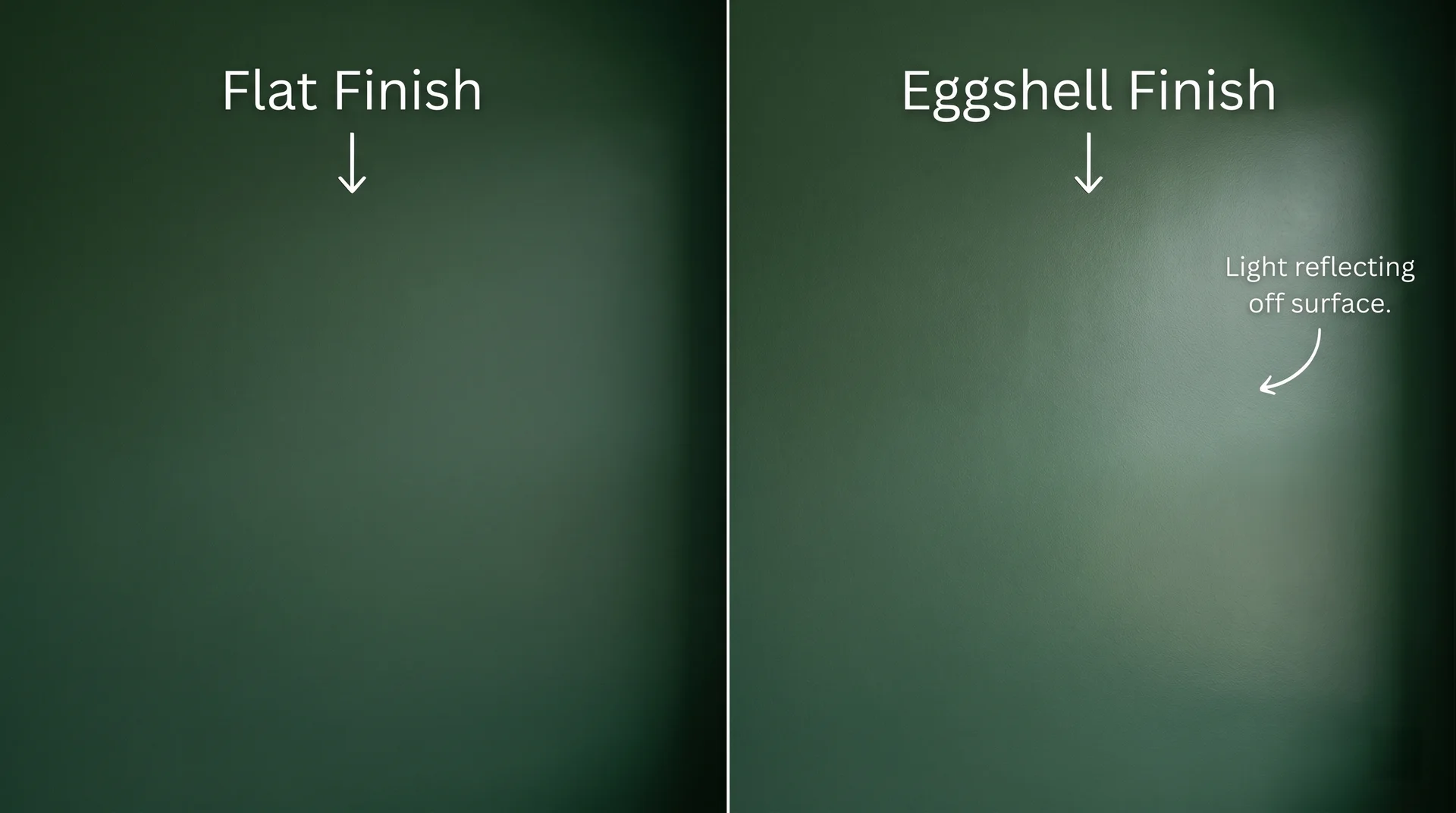
This is where most paint guides stop short, and it is the part worth explaining at length. Flat paint does more than hide imperfections. It changes the entire visual character of a room in ways most homeowners have felt without ever having language for it.
Because flat paint absorbs light rather than bouncing it around, colors appear at their truest and most saturated expression. A dusty blue in a flat finish reads as genuinely dusty and soft. The same color in satin picks up the cool cast of an overhead fixture, and shifts register entirely. A deep forest green in flat reads like a landscape. In eggshell, it reads more like paint. The difference is subtle in photographs and unmistakable when you live in the room across changing light conditions through the day.
Beyond color, flat paint produces visual stillness. When walls absorb light instead of reflecting it, they stop competing for attention. Your eye moves instead to the furniture, the textiles, the art, the window. In a bedroom, that stillness is exactly what you want the room to deliver. In a space where energy and brightness serve the goal, you want light to move, which is why satin or semi-gloss finishes belong in those situations.
The rooms that always feel the most considered in my clients’ homes are the ones where we stripped back the finish rather than added to it. Flat paint has a way of making color feel like a decision rather than a product.
Why Dark and Saturated Colors Look Best in Flat Paint
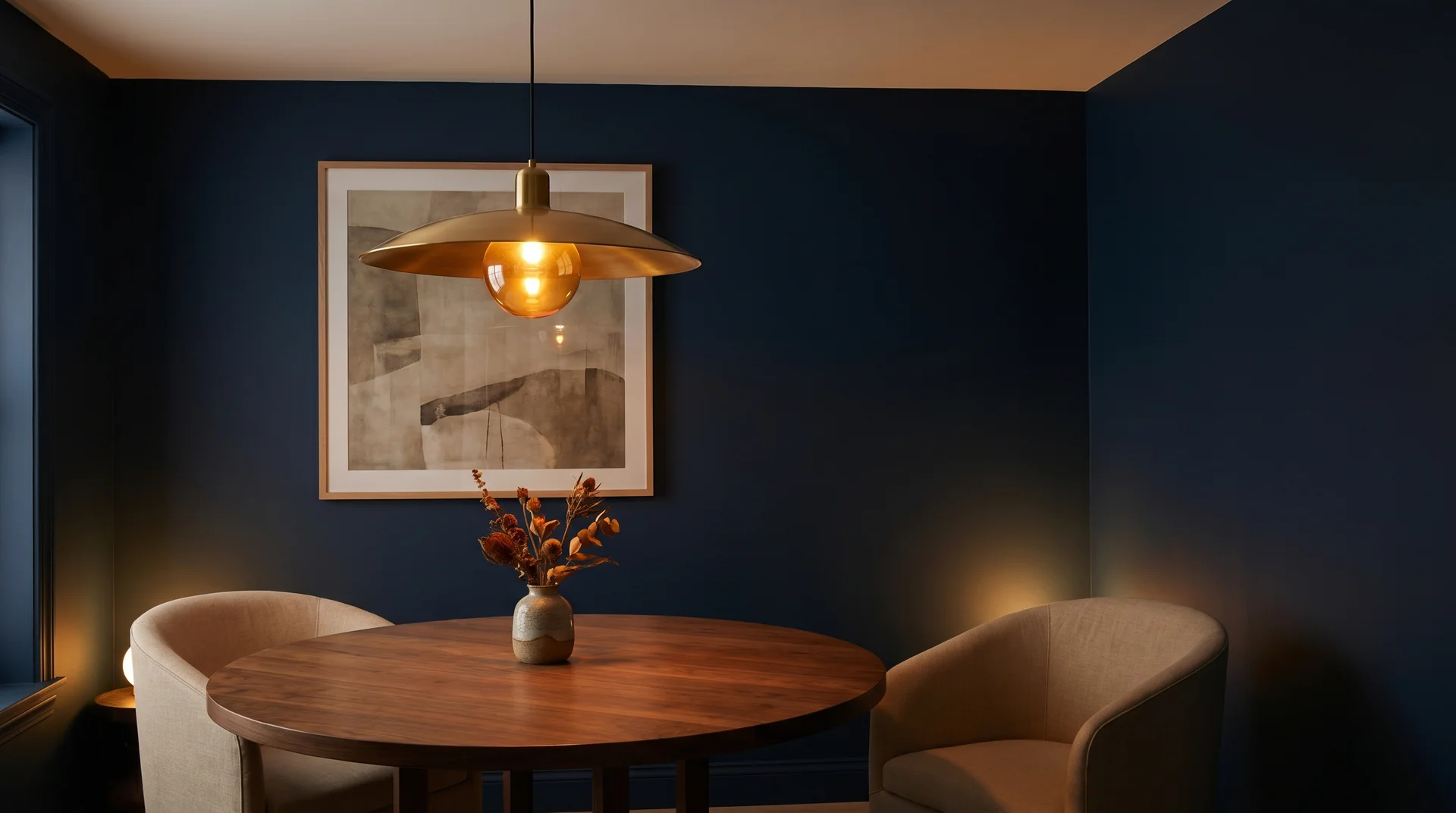
Dark colors belong in flat or ultra-matte finishes. When you put a deep, saturated color behind a surface that reflects light, two things happen. The color shifts depending on the angle of the light source, so the wall looks different at noon than it does at seven in the evening, and different again under lamplight.
The sheen also reveals every variance in application: every slight roller inconsistency, every patch that absorbed slightly differently from the surrounding wall. Flat paint removes both problems simultaneously.
The color reads true and consistent across the full wall surface, and the absence of sheen means nothing catches light unevenly across the day. This is why every deep, moody, magazine-worthy interior you have admired almost certainly uses a flat or ultra-matte finish on those walls.
Flat Paint Pros and Cons: The Honest Picture
The Case for Flat Paint
Imperfection concealment is the strongest genuine advantage flat paint offers. Because it absorbs light, it hides surface irregularities that become visible under any reflective finish. Drywall seams, patched nail holes, slight textural variations, and evidence of previous paint repairs disappear into a well-applied flat finish. This matters enormously in older homes and in new builds, where drywall finishing gets completed quickly under construction schedules.
Color richness and depth are the advantages most people do not expect. More pigment per gallon means more color on the wall with fewer coats, and the absence of sheen means the color on the chip reads closer to the color on the wall under your home’s actual light conditions.
Touch-up invisibility is a practical advantage experienced painters appreciate. When you touch up a flat-painted wall with the original paint, the repair blends seamlessly because there is no sheen differential to expose the patch. In eggshell or satin, a touch-up risks creating a visible spot where the fresh paint and the aged surrounding paint respond to light slightly differently.
Cost and coverage represent a real advantage for large-scale projects. Flat paint costs less per gallon than higher-sheen formulations, covers more surface in fewer coats, and requires less intensive prep on imperfect walls. For rental properties and whole-home repaints in older buildings, that difference adds up meaningfully.
Where Flat Paint Works Against You
Washability is the genuine limitation, and the physics explains why. The porous, light-absorbing surface that makes flat paint look beautiful is exactly the surface that traps stains and cannot release them under scrubbing. Light pressure with a barely damp cloth handles dust and very fresh, dry marks. Oil, food residue, crayon, and marker are nearly impossible to remove without also lifting paint from the surface in the process.
Burnishing is the failure mode homeowners discover too late. When you scrub flat paint with any force, the treated area develops a subtle shine from the friction. That shiny patch does not respond to further cleaning. It becomes permanent evidence of the attempt to clean, which is often more visible than the original stain was.
Scuff absorption compounds the problem in contact-heavy rooms. A satin-painted wall deflects a light scuff because it carries a slightly harder film. A flat-painted wall absorbs it, making it much harder to address after the fact.
Can You Clean Flat Paint Walls?
Yes, with the right approach and immediate timing. Fresh marks on flat paint respond to a lightly damp cloth applied with very light, blotting pressure. Set stains, grease, and anything that has dried into the surface are genuinely difficult.
A melamine foam sponge removes many marks, but it introduces a risk of micro-abrasion that dulls the surface slightly. Use it sparingly, test it in a low-visibility corner first, and treat it as a last resort.
If you want the flat aesthetic but need a more cleanable surface, look at premium paint lines specifically engineered to close this gap:
| Paint Product | Brand | Finish Category | Washability |
|---|---|---|---|
| Aura Matte Interior | Benjamin Moore | Matte | High for low-sheen category |
| Regal Select Flat | Benjamin Moore | Flat | Standard |
| Duration Home Matte | Sherwin-Williams | Matte | High for low-sheen category |
| Emerald Matte | Sherwin-Williams | Matte | High for low-sheen category |
| Ultra Flat | Behr Premium Plus | Flat | Standard |
The Aura Matte and Duration Home Matte formulations use advanced binder technology that improves washability while preserving a true low-sheen result. They cost more than standard flat paint, but they close the gap with eggshell in practical terms and are worth the investment in rooms where you want the flat look with a meaningful degree of resilience.
How Long Does Flat Paint Last on Walls?
In a bedroom or formal room with minimal wall contact, flat paint holds well for five to seven years before it shows its age through accumulated scuffs, dulling, or uneven touch-up layering. In a family room used actively by children or pets, that timeline can shorten to two or three years before a full repaint becomes necessary.
The practical solution is simple: reserve flat paint for rooms that earn it through low traffic and intentional use, and choose eggshell or satin for the spaces where life happens at full volume.
Where to Use Flat Paint: A Room-by-Room Guide
Flat Paint on Ceilings: The Application That Is Almost Always Right
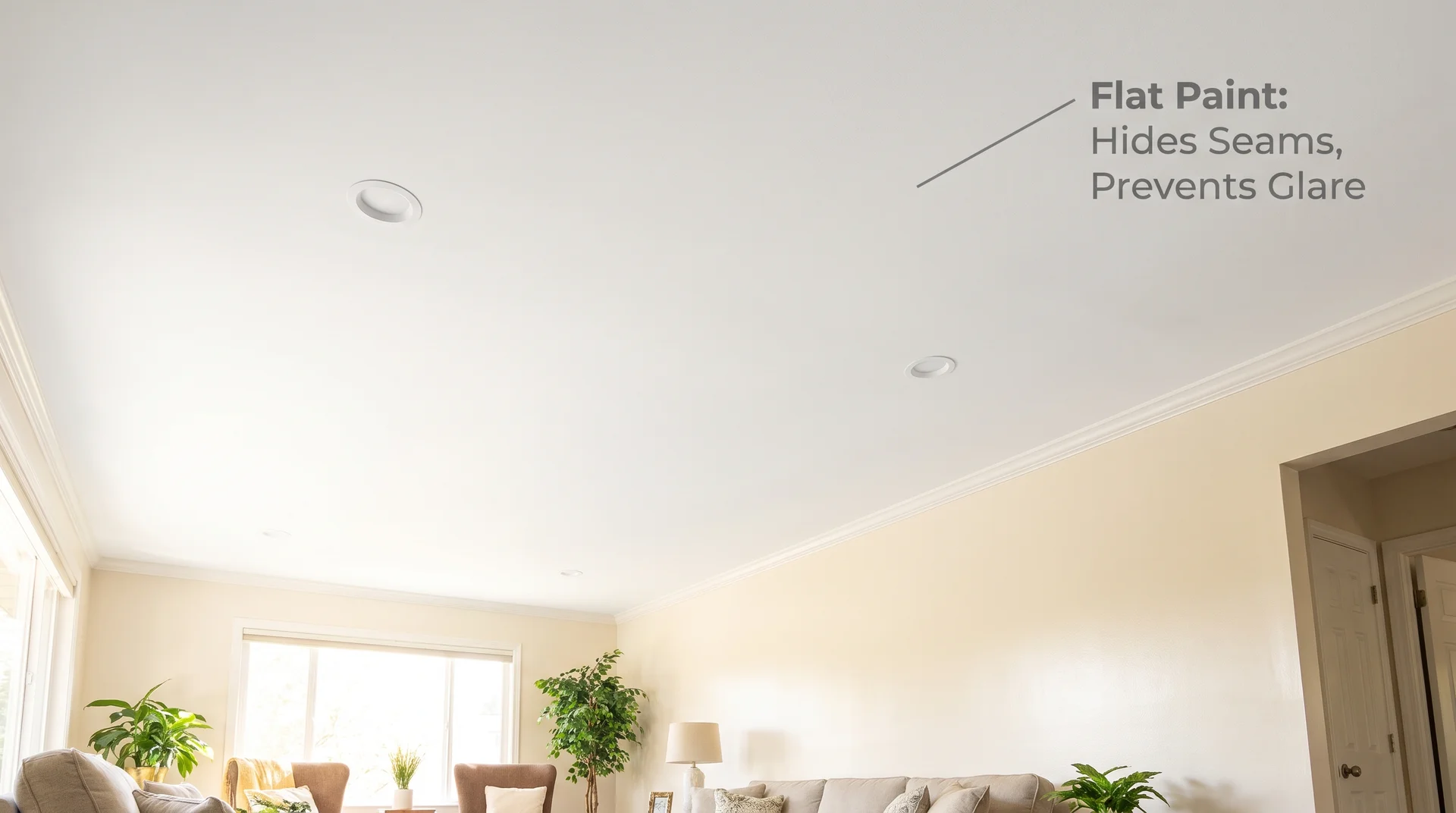
In every residential project I have worked on across more than a decade of design consulting, flat paint goes on the ceiling. Ceilings carry drywall seams, taping irregularities, patched areas, and textural variation, making any reflective surface a visual liability.
A sheen on the ceiling catches the overhead light and exposes every imperfection as a shadow or ridge. Flat paint absorbs all of it. On textured ceilings, whether popcorn, knockdown, or skip-trowel, the effect is even more pronounced because the flat finish subdues the texture rather than highlighting it.
Beyond concealment, a flat ceiling prevents overhead glare that makes rooms feel uncomfortably active. Flat paint on ceilings is non-negotiable in my specifications, regardless of what finish I choose for the walls beneath it.
Flat Paint on Bedroom Walls: Where the Low-Traffic Advantage Works for You
Bedrooms are the ideal environment for flat paint on walls. Traffic is low, direct wall contact is minimal, and the atmospheric goal of a bedroom aligns with everything flat paint delivers: depth of color, visual quiet, and a quality of settled warmth that supports rest rather than activity.
The specific situation where I reach for it most readily is when the walls are imperfect. Older plaster, repaired cracks, patched holes from previous picture hangers, slight textural variation from prior paint layers: a well-applied flat finish absorbs all of it.
Those same walls in eggshell would require a significantly more intensive prep process and still carry the risk of surface irregularities catching the light unevenly.
Formal Dining Rooms and Adult Living Spaces
A formal dining room, a quiet reading room, a home library: these spaces benefit from flat paint for the same reasons bedrooms do, with the added dimension that they tend to be rooms where color makes a statement.
A deep terracotta or a saturated navy reads completely differently in flat versus eggshell in a dining room. The flat version looks chosen with intention. The eggshell version looks painted, and in a room designed to feel elevated, that distinction matters. These spaces also receive the kind of deliberate, moderate use that suits flat paint’s maintenance profile.
Older Homes and Walls With History
If your home has walls with decades of repainting layered over original plaster, with slight undulation, with repairs visible as subtle ridges, or with the beautiful imperfection that comes with genuine age, flat paint is very often the most elegant and practical solution available to you simultaneously. The physics work in your favor. A century-old plaster wall in flat paint reads as beautifully textured and warm.
The same wall in satin can read as uneven and patchy even under a careful paint job, because the finish that most people assume is more sophisticated for an older home is often the one that exposes every flaw the house has accumulated across its lifetime.
Where Flat Paint on Walls Becomes a Problem
Kitchens produce steam, grease, and food splatter as a baseline condition of daily use. Flat paint absorbs all of it, and the cleaning process required to address grease on a flat surface typically damages the surface more than the grease did.
Bathrooms expose paint to sustained moisture, and the porous surface retains it. Over time, moisture retention behind the paint surface creates conditions for mildew within the wall itself. Satin or semi-gloss protects the substrate in a way that flat paint cannot.
Hallways are the most contact-dense surface in a home. Every person who passes through touches the wall at some point. Bags, shoulders, furniture being moved through tight corridors, children running: all of it lands on hallway walls regularly, and flat paint accumulates visible damage faster than almost any other application.
Children’s rooms and mudrooms operate under the same logic as hallways, but with additional intensity. The washability demand in these rooms exceeds what flat paint can meet without creating a continuous touch-up cycle.
A quick reference for the right finish by room type:
- Ceilings throughout the home: flat paint
- Bedrooms and formal dining rooms: flat paint or premium matte
- Main living rooms and family rooms: eggshell
- Hallways: eggshell or satin
- Kitchens: satin minimum
- Bathrooms: satin or semi-gloss
- All trim, baseboards, and doors: semi-gloss
How to Prep Walls Before Applying Flat Paint
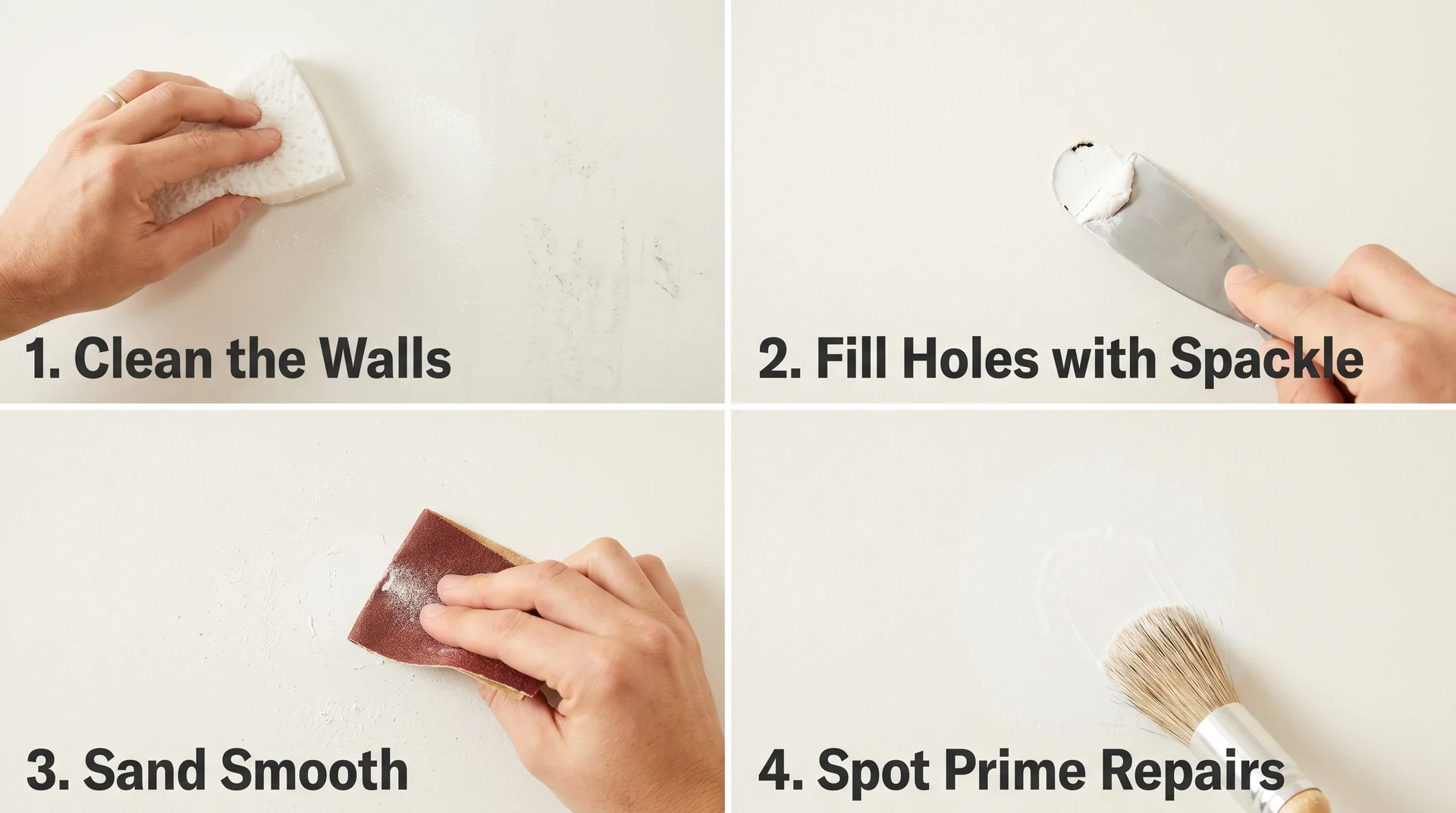
Because flat paint is so unforgiving of surface variation once the light hits it from a specific angle, good prep matters as much as the finish choice itself. I have seen beautiful paint jobs undone entirely by skipped surface preparation, and with flat paint, the relationship between prep quality and final result is direct.
Clean the walls thoroughly before anything else. Grease, residue from old wall tape, and dust all prevent proper adhesion. A TSP substitute cleaner or warm soapy water with a sponge handles most residential surfaces.
Fill holes and imperfections with lightweight spackle, let it dry completely, and sand flush with the surrounding wall using 120-grit sandpaper. Flat paint conceals texture variation, but it does not fill physical holes or raised edges.
Prime any repaired areas before painting, particularly if you are going from a high-sheen finish to flat. Bare spackle absorbs paint differently from surrounding painted surfaces, which can create dull spots even under a flat finish. A spot-prime with a PVA primer seals the repair and ensures the final coat absorbs evenly.
Use a thick-nap roller (3/4 inch) on textured or imperfect walls to push paint into the surface variation rather than skating over it. Apply two thin coats rather than one heavy one to avoid pooling at the base of the roller marks.
Flat Paint vs Eggshell: The Decision Most Homeowners Actually Face
Most homeowners do not agonize over flat versus high-gloss. The real choice, in the rooms where the decision matters, is flat versus eggshell. Here is how they compare side by side:
| Flat Paint | Eggshell Paint | |
|---|---|---|
| Sheen level | Zero to near-zero | Low, soft glow |
| Imperfection concealment | Excellent | Good |
| Color depth and saturation | Richer | Slightly lighter |
| Washability | Low | Moderate |
| Durability on walls | Lower | Higher |
| Touch-up blending | Seamless | Can show on aged surfaces |
| Best rooms | Ceilings, bedrooms, formal rooms | Living rooms, hallways, dining rooms |
| Older or imperfect walls | Strong advantage | Moderate |
| Homes with children or pets | Limited situations | Better suited |
Eggshell is the safer, more versatile finish for a home that sees full family use across every room. Flat paint is the more intentional, more beautiful finish for specific rooms and specific purposes, and it does those things better than eggshell can.
A Simple Framework for Deciding Between the Two
The framework I work from in client consultations runs like this. Ceilings always get flat. Bedrooms and formal rooms are strong candidates for flat when the walls are imperfect, or the client wants the matte aesthetic. Main living areas with children or pets get eggshell as the default.
Hallways, kitchens, and bathrooms step up to satin. The honest framing is that eggshell is the safer choice for most people’s actual lives, and flat paint is the better choice for specific rooms and specific aesthetics. Neither is wrong in the right context.
How to Know If Flat Paint is Right for Your Room?
Work through these questions before you buy.
What is the primary function of this room? Rest, formality, and quiet use favor flat paint. Daily family activity at full volume favors eggshell or satin.
Who uses this room and how? Adults who move through deliberately sit well with flat paint. Children who use the walls as a backdrop to an active life require something more washable.
What condition are the walls in? Imperfect walls with patches, texture variation, original plaster, or evidence of prior repairs benefit most from flat paint’s concealment advantage. New drywall in excellent condition reduces that argument.
What color are you using? Deep, saturated colors show at their absolute best in flat or matte finishes. If you are committing to a statement color, flat paint delivers the fullest, most honest version of it.
Flat paint earns a clear yes when traffic is low, imperfections are present, the aesthetic goal is matte and grounded, and durability is not the primary concern for that room.
Frequently Asked Questions
Is flat paint the same as matte paint?
In most cases, yes. The two terms appear interchangeably on most consumer paint labels. Some brands like Benjamin Moore make a technical distinction, placing matte one step above flat on the sheen scale with slightly higher durability. In practice, both deliver a non-reflective finish and belong in the same rooms and situations.
Can you use flat paint in a kitchen or bathroom?
You can apply it, but it creates significant maintenance problems in both. Kitchens produce grease and steam that flat paint absorbs and cannot withstand cleaning to remove without surface damage. Bathrooms expose flat paint to sustained moisture that the porous surface retains, creating mildew risk within the wall over time. Satin is the practical minimum for both rooms.
Why do builders always use flat paint in new homes?
Flat paint is faster to apply, easier and cheaper to touch up after the rest of the construction finishes, lower in cost per gallon, and more forgiving of drywall finishing that has not reached a perfect surface level. It solves specific workflow problems efficiently. In most main living areas of a new home, switching to eggshell for the long term makes practical sense for ongoing maintenance.
Can you put flat paint over semi-gloss without priming?
You can, but results are more reliable with a light sanding and a coat of primer first. Going from a glossy surface to flat without surface prep often produces an uneven result where the old surface absorbs the new paint inconsistently, leaving subtle variations across the wall.
Does flat paint make a room look bigger or smaller?
Flat paint makes a room feel warmer and more contained rather than visually expansive. It absorbs light rather than bouncing it, which draws a room inward in a way that feels cozy. In a small room where you want an expansive feeling, a light color in eggshell or satin serves that goal better. In a small room where you want it to feel deliberate and enveloping, flat paint works in your favor.
What is the best washable flat paint for walls?
Benjamin Moore Aura Matte and Sherwin-Williams Duration Home Matte are the two formulations I recommend most consistently. Both use advanced binder technology that improves washability while maintaining a true matte finish, and they cost more than standard flat paint but close the gap with eggshell in practical terms.
Can flat paint be used on exterior walls?
Standard interior flat paint belongs only on interior surfaces. Exterior flat and low-sheen paints exist and are sometimes used on rough or textured masonry, but they carry significant limitations in moisture resistance and longevity. Any exterior painting project calls for a product specifically formulated for outdoor conditions and weather exposure.
How do you touch up flat paint without showing the repair?
Use paint from the original can rather than a remixed batch, apply it with the same tool used for the original application, and feather the edges of the repair into the surrounding surface rather than filling in sharply at defined edges. A properly executed touch-up on flat paint is effectively invisible within a few hours of drying, which gives it a genuine advantage over every finish above it on the sheen scale.
Final Thoughts
Flat paint has a reputation problem that comes from two directions at once. Builders reach for it as a default, which makes it feel like a baseline rather than a choice. Then homeowners react against that baseline by reaching for higher sheens across the board, trading the things that made the flat-painted rooms feel beautiful for a washability advantage that those specific rooms did not need.
The finish works beautifully when you choose it deliberately, in the right room, with clear expectations about what it delivers and what it does not. Ceilings, quiet bedrooms, rooms where color carries the design weight, older homes with walls that have lived a full life: these are the places where flat paint does something that no other finish on the sheen spectrum can replicate.
The rest is a matter of knowing clearly where to stop reaching for it and reach for the eggshell instead.