
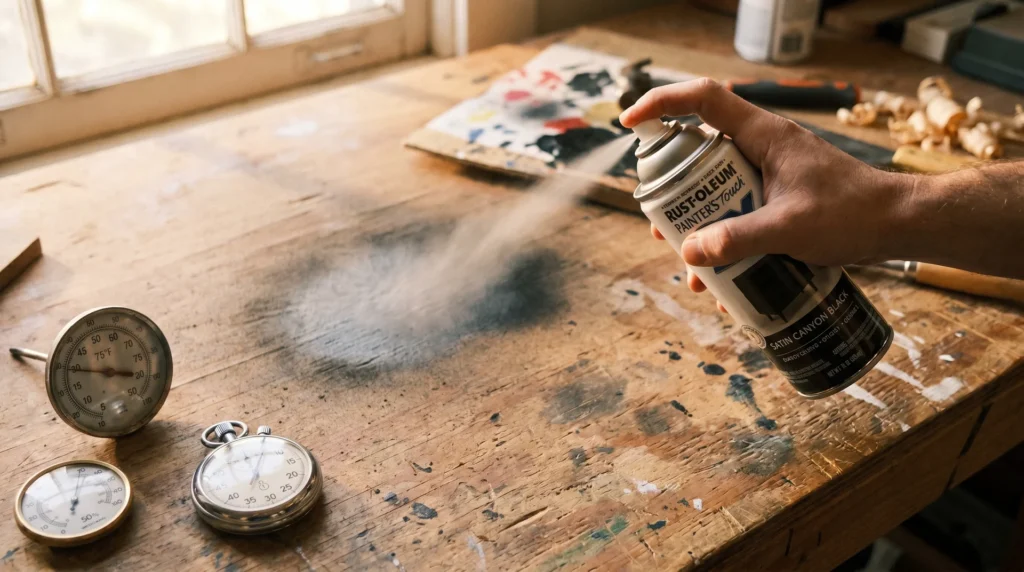
| Most spray paint reaches touch-dry in 20 to 30 minutes. You can usually recoat within an hour. Full cure, the point where the finish has hardened enough to handle real contact, takes anywhere from 24 hours to several days, depending on what you’re painting, what formula you’re using, and what the air around you is doing. |
One premature touch, one second coat stacked on a surface that wasn’t fully set, one object placed on a painted shelf before the cure was complete, and the whole job goes back to square one.
I’ve refinished enough furniture, patio pieces, and decorative objects over the years to know that feeling well.
A cloth impression in a console table finish that was supposed to be cured. A smudge on a cabinet door from someone who pressed a thumb to it and thought it felt fine.
This guide covers the real spray paint drying time timeline, what it actually depends on, how to speed it up, and what to do when your finish stays tacky longer than it should.
The Answer Depends on Which “Dry” You Mean
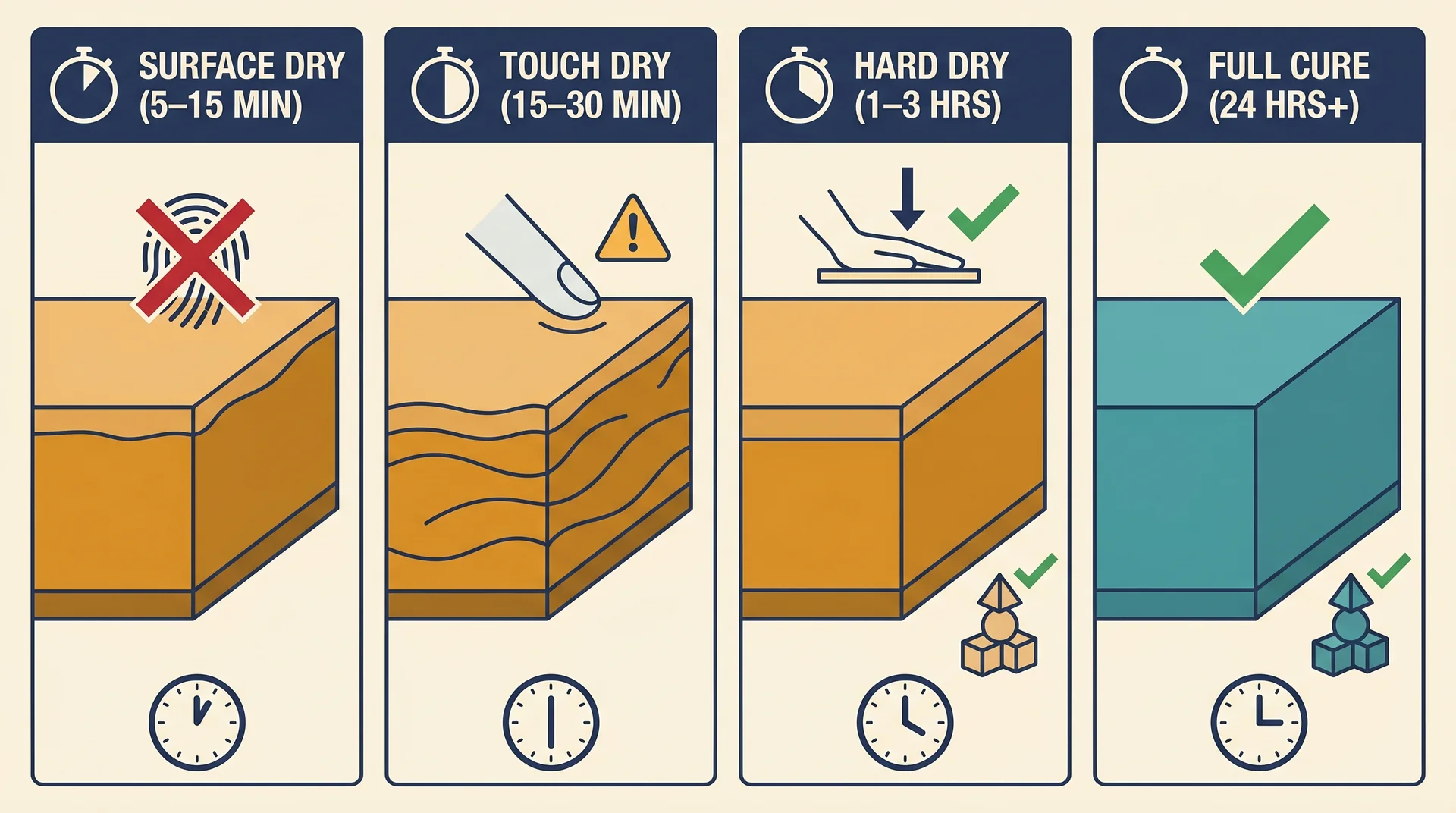
Spray paint moves through four distinct stages before it’s genuinely ready for handling. Treating any one of them as the finish line is the source of most spray paint mistakes.
Stage 1: Surface Dry (5 to 15 Minutes)
The outermost layer has formed a thin skin, and dust won’t stick to it, but the paint underneath is still completely liquid. Touching the surface at this stage, even lightly, breaks that skin and almost always leaves a permanent mark. Give it more time before you do anything with it.
Stage 2: Touch Dry (15 to 30 Minutes)
A very light fingertip won’t transfer paint or leave a visible mark, but the paint underneath is still soft. Firm pressure, wrapping, stacking, or setting anything on the surface will dent or smudge the finish. This is the stage that fools people most consistently, especially on aerosol projects where the paint dries faster than expected.
Stage 3: Hard Dry (1 to 3 Hours)
The paint can take moderate pressure without visible damage, and applying a second coat is safe within the recoat window printed on the can. The piece can be moved carefully at this stage, though the surface is still more vulnerable than it looks.
Stage 4: Full Cure (24 Hours to Several Days)
Full cure is when the paint completes its chemical hardening process and reaches its final durability. This is the only stage where it’s genuinely safe to stack painted pieces, place objects on a painted surface, or return something to daily use.
The clock resets to zero with every coat added, which means a three-coat project needs full cure time after the final coat, not the first. A piece that feels hard and dry after a couple of hours can still take an imprint from a tray placed on it overnight.
How Long Does Spray Paint Take to Dry on Different Surfaces?
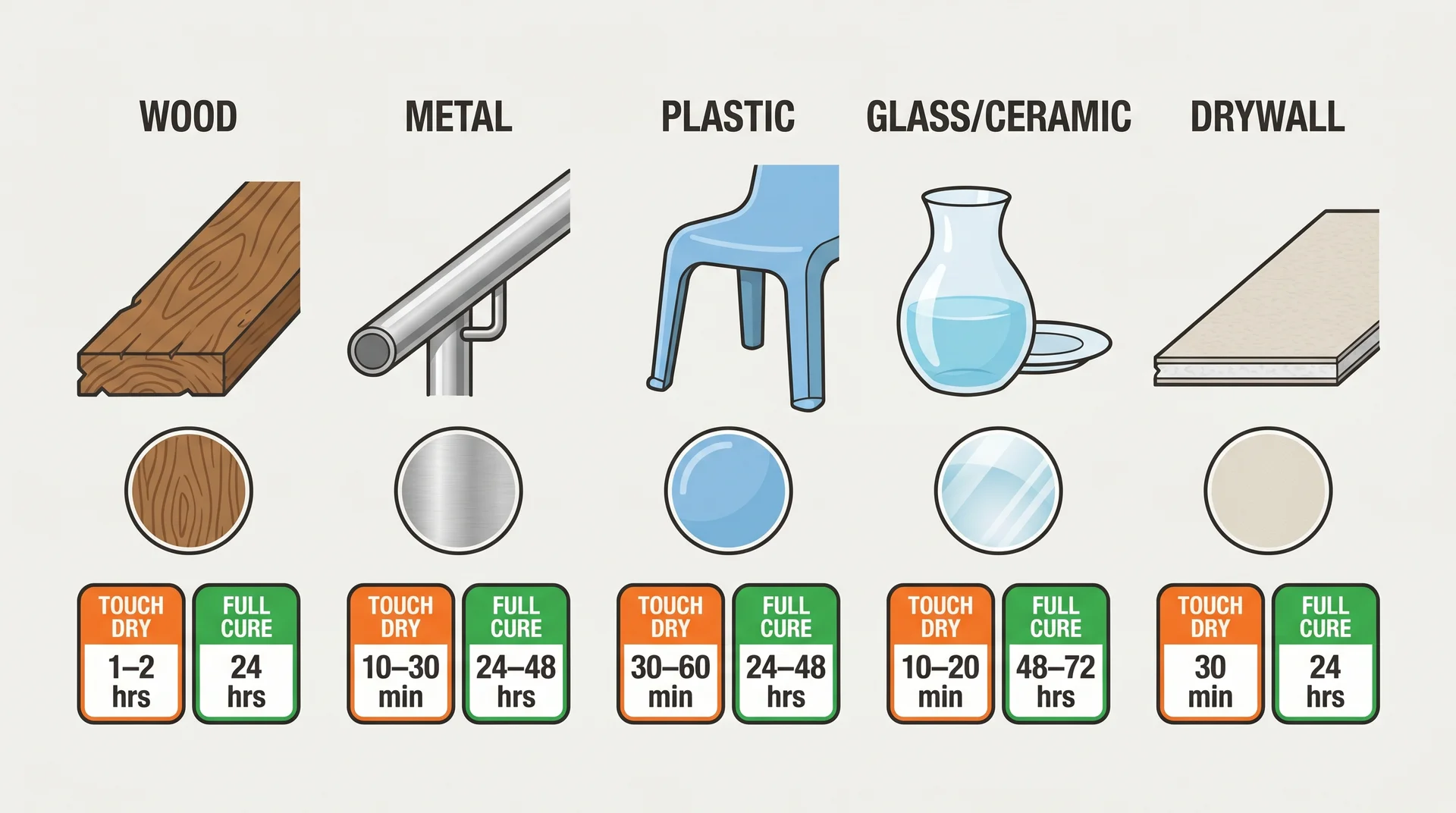
The material underneath the paint controls how solvents move and evaporate. Porous surfaces pull moisture inward and tend to dry faster on the surface. Non-porous surfaces keep solvents on top longer.
Both behave differently and need to be approached accordingly.
Wood: Furniture, Shelving, and Decorative Pieces
Spray paint on wood is typically touch-dry in one to two hours and fully cured in 24 hours. The porous grain absorbs solvent relatively quickly, which helps the surface dry faster than metal or plastic.
Sanding lightly between coats and using primer on raw wood ensures even absorption and consistent spray paint dry time across the whole surface. Skipping primer on unfinished wood almost always produces a patchy finish that takes longer to harden evenly.
Metal: Outdoor Furniture, Hardware, and Railings
Metal is one of the quickest surfaces to work with, reaching touch-dry in 10 to 30 minutes. Full cure takes 24 to 48 hours. The smooth, non-porous surface doesn’t absorb solvent, so it evaporates efficiently from the surface layer.
The real challenge with metal is adhesion. A metal-specific primer improves the bond and meaningfully reduces the risk of chipping under contact once the piece is in use.
Plastic: Planters, Outdoor Chairs, and Accessories
Standard spray paint on plastic reaches touch-dry in 30 to 60 minutes, but without a plastic-compatible formula, it often peels or fails early regardless of dry time. Full cure takes 24 to 48 hours.
Formulas like Krylon Fusion and Rust-Oleum Painter’s Touch 2X bond chemically to plastic surfaces rather than sitting on top of them. Choose these deliberately rather than assuming a general-purpose can will do the same job. The dry times are similar; the durability outcome is not.
Glass and Ceramic: Decorative Objects and Vases
Glass and ceramic surfaces reach touch-dry quickly, often in 10 to 20 minutes, but full cure takes 48 to 72 hours. Without a bonding primer, paint on glass sits on top of the surface rather than gripping it and scratches easily under light contact.
For decorative pieces that stay in place, spray paint works well. For anything handled regularly, a clear sealer coat after full cure adds meaningful protection.
Drywall and Interior Walls
On primed drywall, acrylic spray paint reaches touch-dry in about 30 minutes and a full dry within 24 hours. Unprimed drywall absorbs paint unevenly, which extends dry time and often causes blotchy coverage that requires more coats to correct. Primer is not optional here if you want predictable results.
How Long Does Spray Paint Take to Dry by Paint Type?
The formula matters as much as the surface. Different spray paint chemistries use different solvents and binders, and those differences control how quickly the paint sets and how long the full cure actually takes.
Acrylic Spray Paint
Acrylic is touch-dry in 20 to 30 minutes, recoatable within an hour, and fully cured in approximately 24 hours. It’s the most forgiving formula for home projects and handles moderate humidity better than lacquer.
For furniture updates, decor objects, and indoor accent pieces, acrylic covers the widest range of situations reliably.
Enamel Spray Paint
Enamel takes 30 minutes to an hour to reach touch-dry and up to 8 hours or longer for full cure.
The result is a harder, more durable finish, which makes the longer timeline worth accepting for high-wear surfaces like door hardware, metal railings, or patio furniture.
Enamel also has a specific and unforgiving recoat window, which makes reading the can before you start essential.
Lacquer Spray Paint
Lacquer is the fastest-drying formula available in spray cans, reaching touch-dry in under 30 minutes. That speed comes with conditions.
Lacquer is highly sensitive to humidity, and painting above 60 percent relative humidity risks blushing, a milky haze caused by moisture being trapped as the surface dries too quickly on the outside.
In the right environment, it produces a smooth, hard finish with quick turnaround. In the wrong environment, it’s one of the more frustrating materials to work with.
Chalk and Matte Finish Spray Paint
Chalk and matte formulas reach touch-dry in about 30 minutes, but the finish shows every fingerprint and mark if the piece is handled before a full cure.
Most chalk-finish spray paints also benefit from a clear topcoat sealer to reach their full durability, since the flat, porous surface is more absorbent than gloss or satin alternatives.
Metallic and Textured Finishes
Metallic and textured spray paints take 20 to 50 percent longer to dry than standard gloss or matte formulas due to particle suspension in the formula.
Factor that into your project timeline before committing to a quick turnaround with either finish.
Brand-Specific Spray Paint Dry Times at a Glance
| Brand | Touch Dry | Recoat Window | Full Cure |
|---|---|---|---|
| Rust-Oleum Painter’s Touch 2X | 20 minutes | Within 1 hour or after 48 hours | 24 hours |
| Krylon ColorMaxx | 10 minutes | Within 15 minutes or after 48 hours | 24 hours |
| Krylon Fusion All-In-One | 15 minutes | Within 25 minutes or after 48 hours | 24 hours |
| Montana Gold | 10 to 15 minutes | 30 minutes | 24 to 48 hours |
Always verify against the specific can. Formulations change between product lines, and specialty finishes within the same brand often carry different timelines from the standard range.
Five Conditions That Control Your Spray Paint Dry Time
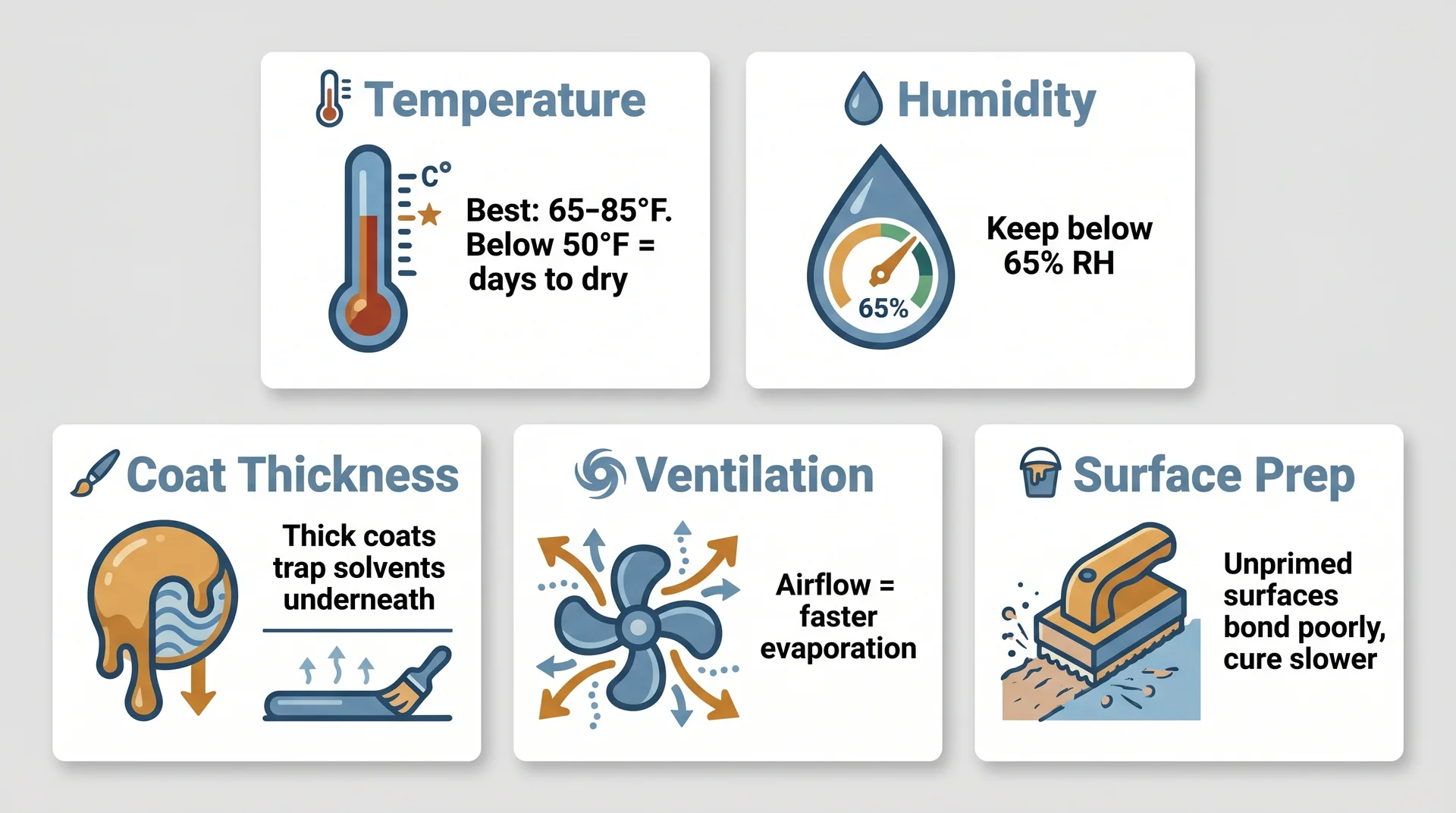
The numbers on the can assume conditions that rarely exist in a real project environment. These five factors shift those numbers, sometimes by hours, and understanding each one gives you more control over the outcome than any product choice does.
Temperature
Most spray paint dries best between 65 and 85 degrees Fahrenheit. Below 50 degrees, solvent evaporation stalls dramatically, and dry times can stretch from hours into days. Above 90 degrees, the surface skins over too quickly, trapping solvents beneath and causing wrinkling or a soft interior under a firm-feeling top layer.
If you’re working in a cold garage in winter or outdoors on a hot afternoon, the manufacturer’s stated times simply don’t apply to your situation. On mild days, outdoor indirect light is close to ideal for spray paint drying time, offering warmth and airflow without the temperature extremes that cause surface failure.
Humidity
Above 65 percent relative humidity, spray paint drying time extends noticeably. Lacquer is the most sensitive formula and can turn hazy at high humidity, even when everything else about the application is correct.
A quick check of a weather app or a basic hygrometer before you start can save a full day of waiting for a finish that never quite sets properly.
Coat Thickness
A heavy coat traps solvents beneath the surface skin. The top dries and seals while the lower layers can’t off-gas, and the paint stays soft underneath even when the surface feels firm.
Multiple thin coats dry faster in total than a single thick one and produce a smoother, more consistent result. This is the variable you control most directly, and it matters more than most people realize until a project goes wrong.
Ventilation
Moving air accelerates solvent evaporation. A fan circulating air through the space can reduce spray paint dry time meaningfully compared to still indoor air.
Position a fan to circulate air across the surface rather than blowing directly at it, which can introduce dust into a wet finish. Avoid painting in enclosed spaces without fresh air flow, both for the quality of the cure and for your own safety.
Safety Note: Spray paint contains volatile organic compounds (VOCs) that can cause dizziness, headaches, and respiratory irritation with sustained exposure. Always work in a well-ventilated space, wear a mask rated for organic vapors, and keep indoor spaces aired out for several hours after painting. Store and dispose of spray paint cans according to your local hazardous waste guidelines, and keep them away from heat sources and open flame.
Surface Preparation
Paint applied over a dirty, oily, or unprimed surface cannot form a proper bond, and paint that can’t bond properly never fully cures.
Cleaning the surface thoroughly, sanding any glossy finishes lightly to give the paint something to grip, and applying a compatible primer are preparation steps that directly affect both the quality of the finish and the reliability of your dry time.
Skipping them rarely saves time and almost always costs it.
How to Make Spray Paint Dry Faster
There are genuine options for shortening spray paint drying time, and a few approaches that are tempting but counterproductive.
What actually works:
- Work within the 65 to 85 degree temperature range. If your garage is cold, bring the project indoors or wait for a warmer day.
- Check the humidity before you spray. Below 65 percent is your target.
- Apply thinner coats. Two or three controlled applications cure faster in total than one heavy coat.
- Improve ventilation by opening windows and running a fan to circulate air across the painted surface.
- For outdoor projects, choose a mild, dry day with indirect natural light and light airflow — the most effective natural combination for faster drying.
- Use an acrylic formula if your project is time-sensitive and doesn’t require the durability of an enamel finish.
What makes things worse:
- Heat guns and hair dryers on high settings blister acrylic and latex finishes. A hair dryer on the lowest, coolest setting creates mild airflow without significant heat risk, though a fan is more effective and less risky.
- Placing a freshly painted piece in full direct sun often drives the surface temperature above the safe range, particularly in summer, causing wrinkling rather than faster curing.
- Applying a second coat over a tacky first coat to seal it in traps the solvent layer beneath and usually produces a permanently compromised finish.
The Recoat Window and the Mistake That Ruins Most Projects
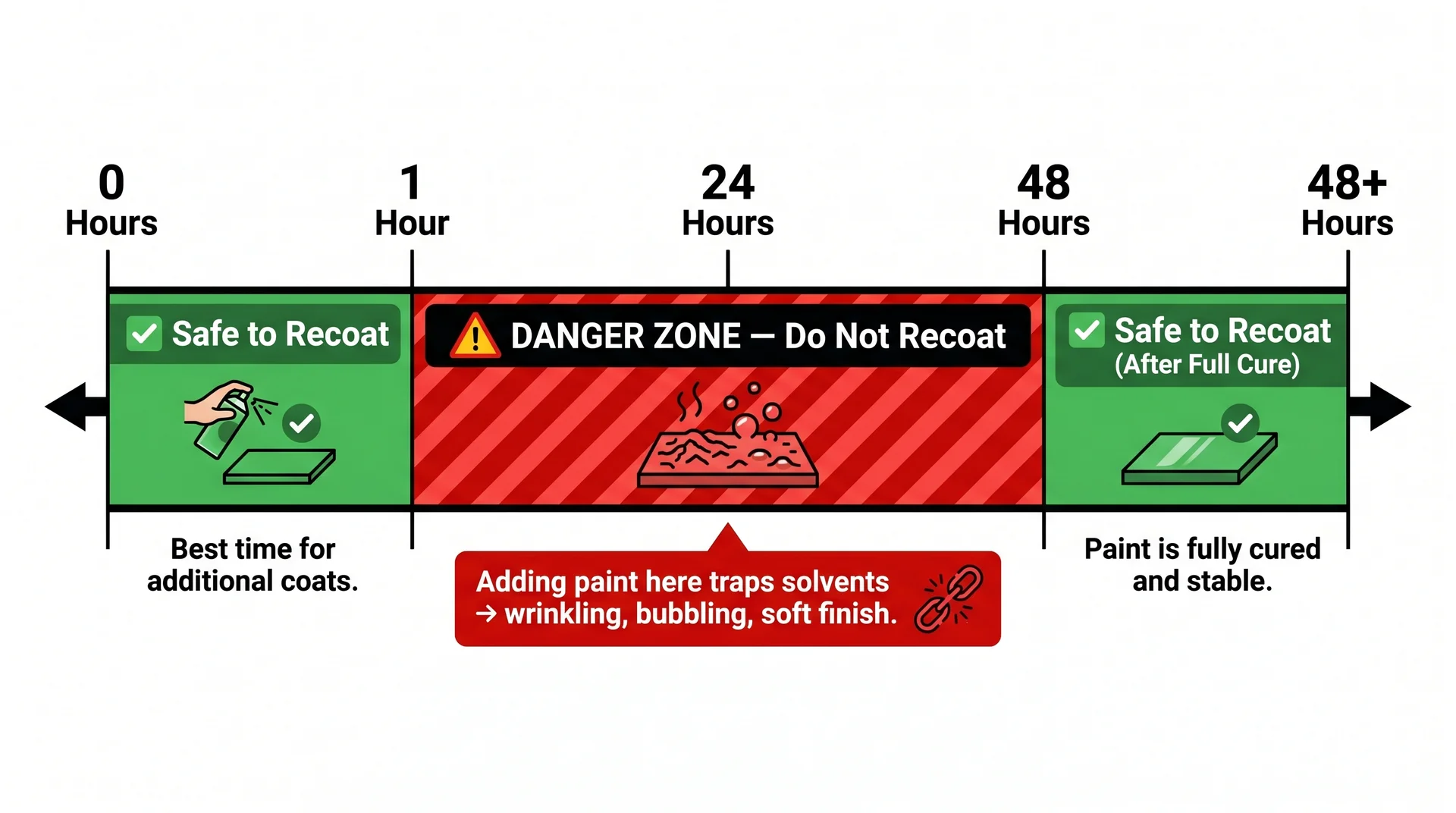
Most spray paint cans include a recoat instruction that reads something like: “Recoat within 1 hour or after 48 hours.” That odd-sounding gap is the most important line on the can, and most people skip past it entirely.
During the period between roughly 1 hour and 48 hours after application, many enamel and oil-based formulas are in a vulnerable state of partial cure. Adding a second coat during this window traps solvents from the first coat before they can fully off-gas. The result is wrinkling, bubbling, lifting, or a finish that stays permanently soft in places.
Your two safe options are to recoat quickly, within the first hour while the surface is still partially open to bonding, or wait for full cure before adding another coat. There is no safe middle ground in that gap.
Understanding this before you start, rather than discovering it after your second coat is already on the piece, is what separates a clean result from a project that has to be stripped and redone from scratch.
Why Your Spray Paint Is Still Tacky and How to Fix It
A finish that stays sticky past 24 hours means something went wrong during application or curing conditions. It’s fixable in most cases, as long as you identify the actual cause correctly before reaching for a solution.
The Coat Was Applied Too Thick
A heavy application seals solvents beneath the surface skin. The top hardens while the interior stays liquid, and the finish can stay soft underneath for days.
Move the piece to a warm, well-ventilated area and wait another 24 to 48 hours without adding more paint. If the finish remains soft after that extended wait, light sanding back to a stable layer and a fresh start with thinner coats is the most reliable path forward.
Humidity Was Too High During Application
Moisture in the air interfered with solvent evaporation, and the curing process stalled partway through. Move the piece to a drier environment and run a dehumidifier if you have one.
Mild humidity-related tackiness usually resolves within a day or two once conditions improve. For stubborn surface stickiness, a light application of cornstarch or talcum powder can temporarily absorb surface moisture, though this treats the symptom and not the underlying cause.
The Wrong Paint Was Used for the Surface
Standard spray paint on plastic without a plastic-specific formula may never fully cure at the adhesion layer. The paint can’t bond to the surface, so the chemical hardening process doesn’t complete.
Sanding back to the surface, applying a compatible primer, and repainting with the right formula is the only real fix here.
The Recoat Window Was Missed
If a second coat went on during the vulnerable window between one hour and 48 hours, the coats are in chemical conflict and the finish will stay soft or wrinkle.
Let the piece rest in a warm, ventilated space as long as possible. If the surface is firm enough, sanding lightly with 220-grit paper breaks up the compromised layer and gives a fresh coat something stable to bond to. Apply the new coat in controlled conditions within the correct recoat window.
When to Sand and Start Over
If a finish has been tacky for more than a week despite improved temperature and ventilation, it won’t resolve on its own. Sand back and start fresh with proper preparation.
On finished furniture where the underlying layers are sound, a water-based clear polyurethane applied over mild persistent tackiness can sometimes seal the surface and create a hard protective layer.
Test it on a hidden area first, since some formulas crackle under a topcoat if they haven’t cured enough. On walls or trim, a fresh application is almost always the cleaner solution.
Spray Paint Dry Time Quick-Reference Chart
By Surface
| Surface | Touch Dry | Full Cure |
|---|---|---|
| Wood (furniture, shelving, decor) | 1 to 2 hours | 24 hours |
| Metal (furniture, railings, hardware) | 10 to 30 minutes | 24 to 48 hours |
| Plastic (chairs, planters, accessories) | 30 to 60 minutes | 24 to 48 hours |
| Glass and Ceramic (decorative objects) | 10 to 20 minutes | 48 to 72 hours |
| Drywall (primed) | 30 minutes | 24 hours |
By Paint Formula
| Formula | Touch Dry | Full Cure | Best For |
|---|---|---|---|
| Acrylic | 20 to 30 minutes | 24 hours | Furniture, decor, general projects |
| Enamel | 30 to 60 minutes | 8 to 24 hours | High-wear surfaces, hardware |
| Lacquer | Under 30 minutes | 3 hours | Smooth finishes in low humidity |
| Chalk and Matte | 30 minutes | 24 hours, plus topcoat | Furniture, velvety finishes |
| Metallic and Textured | 30 to 60 minutes | 24 to 48 hours | Accent pieces, decorative surfaces |
These times assume 65 to 85 degrees Fahrenheit, humidity below 65 percent, and reasonable ventilation. Outside those conditions, your actual spray paint drying time will shift, sometimes significantly.
How Experienced Painters Know When Spray Paint Is Actually Ready
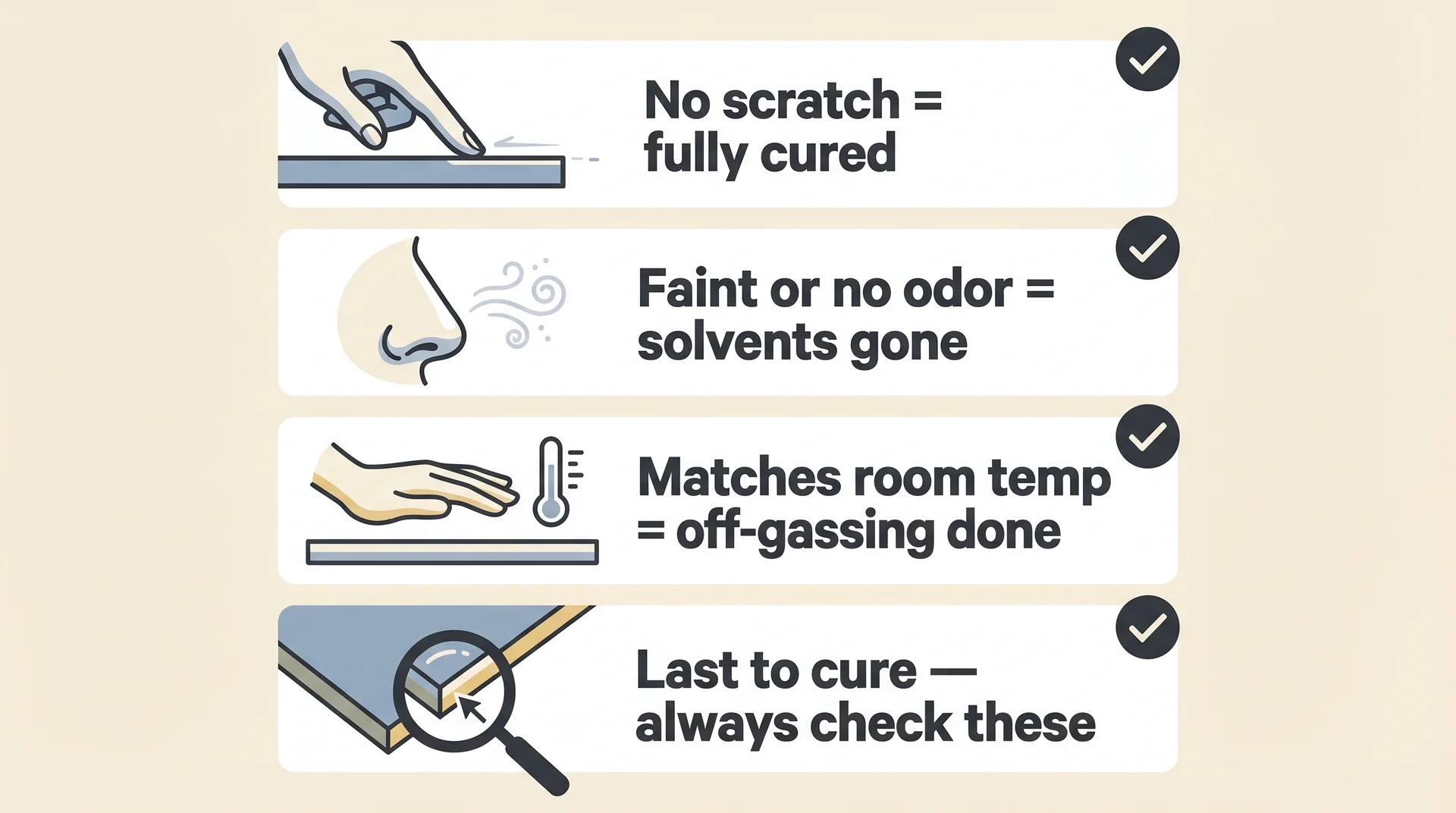
The charts are a starting point. In real project conditions, a few physical checks tell you more than the clock does.
- Drag a fingernail lightly across a hidden edge. A fully cured surface won’t scratch. This test is more reliable than pressing a fingertip on the surface, since fingertip pressure warms the paint slightly and can give a falsely firm reading on a surface that isn’t ready.
- Check the smell. A strong paint odor in a ventilated room means solvents are still off-gassing from within the layers. When the smell has faded to nearly nothing, you’re close to a full cure.
- Feel the surface temperature. Curing paint feels slightly cooler than the surrounding air because evaporation is still happening. A surface that matches room temperature has usually stopped actively off-gassing.
- Check the edges and corners last. Paint takes the longest to cure where it’s thickest. If the middle of a surface feels hard but the corners have any give at all, the piece isn’t ready to handle or use.
The projects that hold up longest, and that still look right two or three years into a room, are consistently the ones where the final coat got the full 24 hours before anything touched it. Building that window into your project from the beginning is the single most effective thing you can do for the quality of the result.
Frequently Asked Questions
How long before I can apply a second coat of spray paint?
Apply your second coat within the first hour or wait for full cure at 24 to 48 hours. The window in between, for most enamel and oil-based formulas, is a period where adding paint traps solvents and causes wrinkling. Check the specific can for the recoat window before you start.
How long does spray paint take to dry on furniture?
On wood furniture, spray paint is touch-dry in one to two hours and fully cured in 24 hours. On metal or plastic furniture, the touch-dry time is faster, but full cure still requires at least 24 hours before placing objects on or against the painted surface.
How long should spray paint dry before rain?
Most spray paint needs at least 24 hours before it can handle moisture exposure. A finish that feels hard and dry after a few hours can still spot, streak, or soften if it gets wet before the full cure is complete.
How long does Rust-Oleum spray paint take to dry?
Rust-Oleum Painter’s Touch 2X reaches touch-dry in about 20 minutes and is recoatable within one hour or after 48 hours. Full cure takes approximately 24 hours under ideal conditions. Other Rust-Oleum product lines vary, so the label on the specific can is always the most accurate reference.
Does spray paint dry faster in direct sunlight?
Indirect sunlight in moderate temperatures speeds drying. Direct sun on a freshly painted surface, especially in warmer months, can drive the surface temperature above the safe range and cause wrinkling or uneven curing. Indirect outdoor light is an asset; full direct sun is a risk.
How do I know when spray paint is fully cured?
A fully cured surface won’t scratch under light fingernail pressure on a hidden edge, has minimal paint odor in a ventilated space, and feels the same temperature as the surrounding air.
How long does spray paint take to dry in cold weather?
Below 50 degrees Fahrenheit, spray paint drying time extends dramatically, sometimes by a full day or more. If you’re painting in a cold garage, bring the piece into a heated space to complete curing.
Can a hair dryer speed up spray paint drying time?
A hair dryer on the lowest, coolest setting creates mild airflow without significant heat risk. High heat settings blister acrylic and latex finishes, and should be avoided. A fan positioned near the surface is generally more effective and carries less risk than a hair dryer.
End Note
The spray paint dry time printed on the can is a best-case estimate under controlled conditions that rarely match a real project environment.
Temperature, humidity, coat thickness, and surface preparation all move that number, sometimes by hours and sometimes by days.
Thin coats, proper ventilation, and the patience to let the final coat reach full cure before anything touches it will consistently produce a better result than any shortcut available.