
The most common reason people hesitate before booking nano brows is that they have only seen two types of photos: dramatic studio before-and-afters taken the same day as the procedure, or blurry healed results with no context for what happened in between.
Neither gives you a useful picture of what the process looks like on real skin, in real lighting, over the full six weeks of healing. This guide walks through every stage, including the ones most artists don’t photograph.
I work with brows up close on wedding days and editorial shoots, and I’ve seen how nano brows perform under ring lights, studio flash, and natural light at every point in the healing process. The results, when done well and healed properly, are genuinely impressive. Getting there requires knowing what to expect along the way.
What Nano Brows Actually Are
Nano brows are a form of semi-permanent cosmetic tattooing that uses a digital machine and a single ultra-fine needle to deposit pigment into the skin in individual hair-like strokes.
The machine moves the needle in and out of the skin at a controlled depth and speed, creating pixelated strokes that mimic the natural direction and texture of real brow hair.
The technique was developed as a machine-based alternative to microblading, and it’s grown in popularity because it works across a wider range of skin types. The needle pierces the skin rather than cutting it, which causes less trauma and typically produces cleaner, more consistent results across the entire brow.
How Nano Brows Differ from Microblading
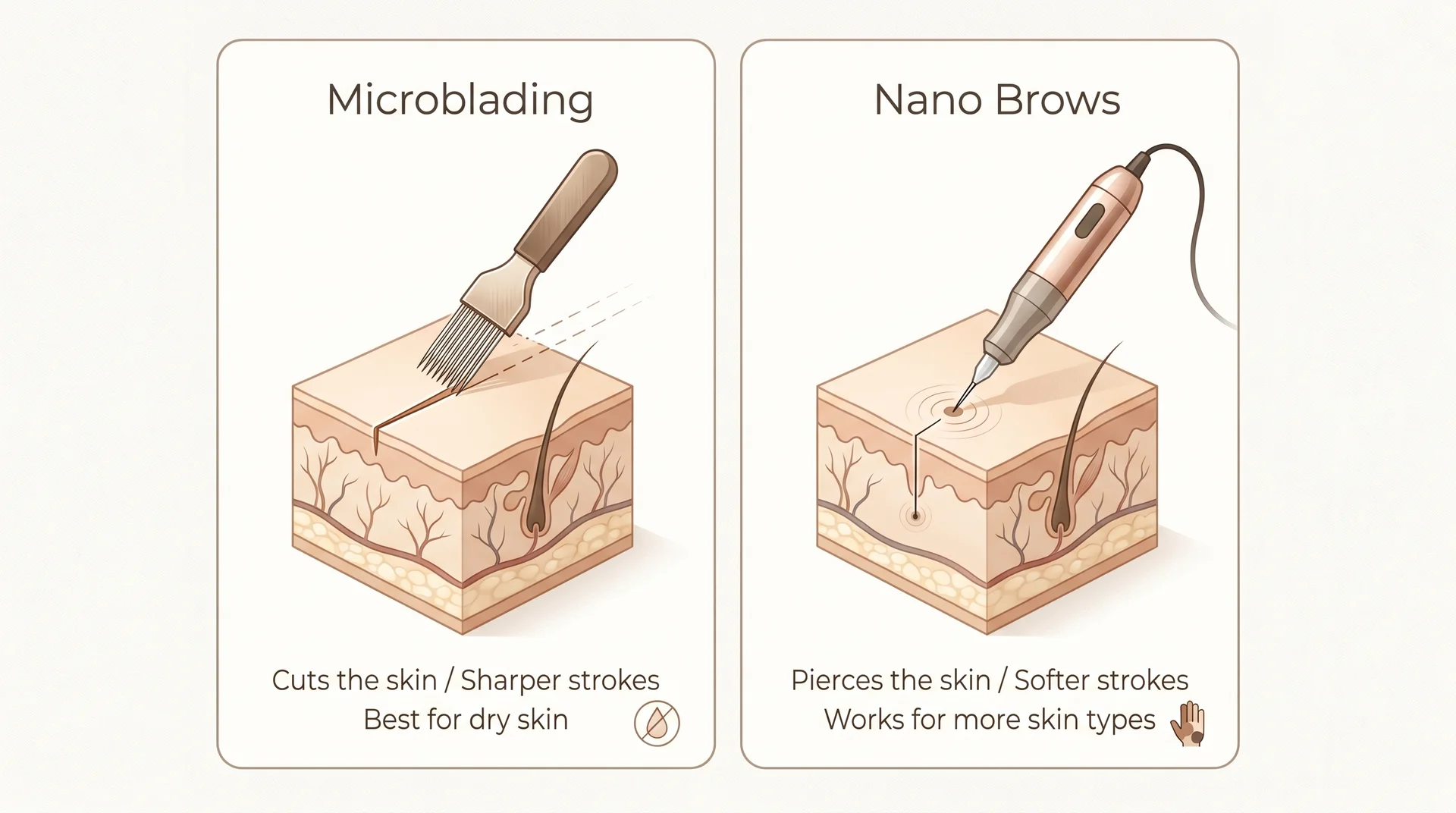
Microblading uses a handheld tool with a row of fine blades to make small cuts in the skin, where pigment is then deposited. This creates very defined, crisp strokes on the right skin type. Nano brows use a machine with a single needle that punctures rather than cuts, which is gentler and offers more precise control over depth and pressure throughout the appointment.
The practical difference for most clients comes down to candidacy. Microblading works well on normal to dry skin with small pores. Nano brows suit a broader range of people, including those with oily skin, combination skin, mature or thin skin, and darker skin tones that don’t retain microblading pigment as reliably.
The healed result with nano tends to appear slightly softer, with strokes that blend naturally into existing hair rather than sitting sharply above it.
For longevity, nano brows typically last 18 to 30 months before a refresh is needed, which is somewhat longer than microblading on average. Microblading often shows significant fading within 12 to 18 months (source: Healthline). If you’re weighing microblading as a separate option, this full breakdown of eyebrow tattoo vs. microblading covers the key differences before you commit.
Your Brows Right After the Appointment
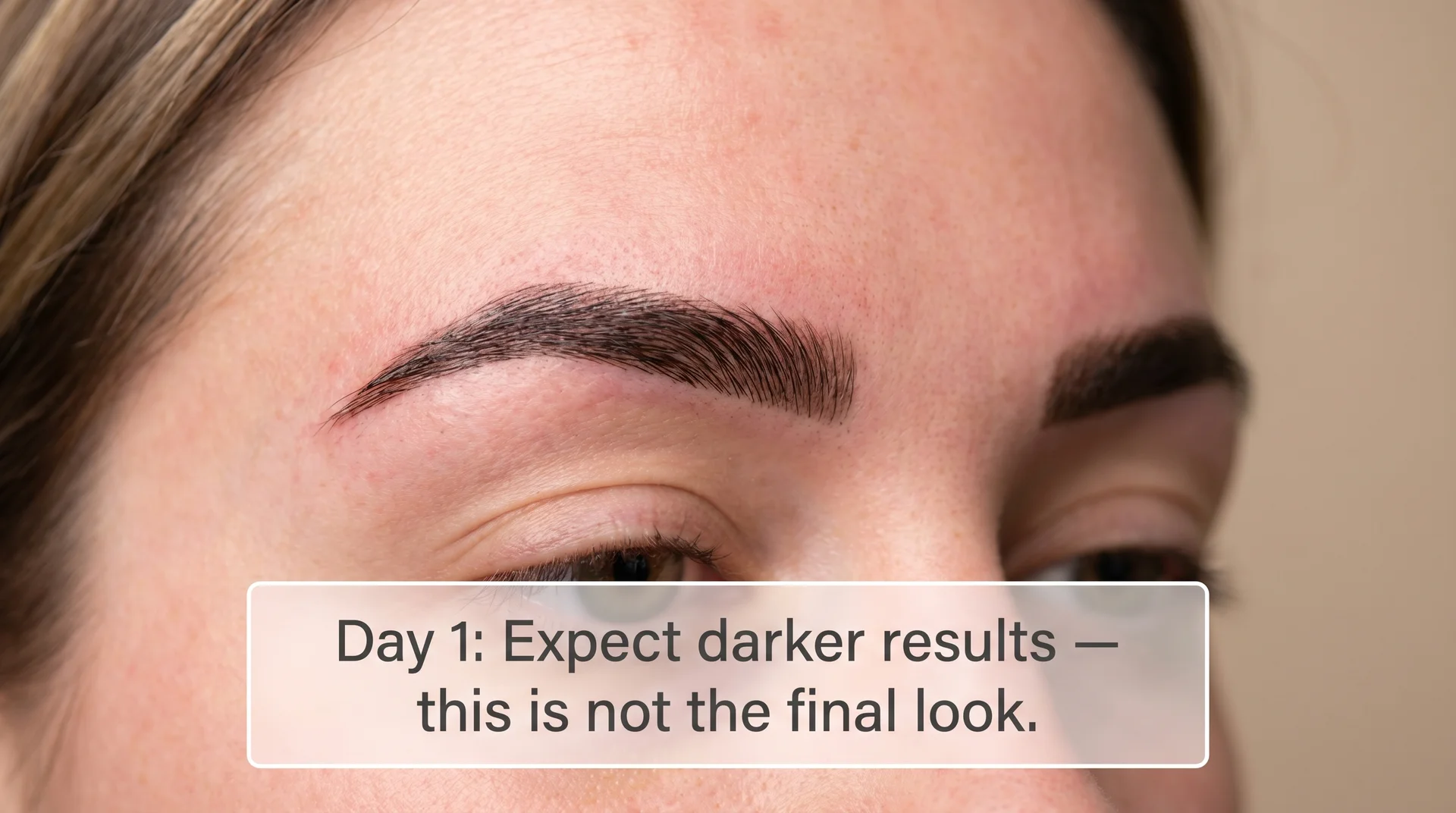
Day-one nano brows are not the final result, and they are not intended to be. What you leave the studio with will be noticeably darker, bolder, and more defined than what you’ll see six weeks later. Some clients experience mild swelling that makes the brow area look slightly raised and more prominent for the first 24 to 48 hours. The strokes are vivid because the pigment sits at the surface of the skin before the healing process has had a chance to soften and settle it.
Artists refer to this as brow shock, and it’s completely expected. The pigment appears at full intensity right after application because it hasn’t yet been filtered through the layer of skin that regenerates over it during healing.
Many clients describe feeling anxious in the first week when their brows look too dark or too drawn on. It helps to know that strokes will lighten considerably as the skin heals. [commonly cited lightening range of 30 to 50 percent; confirm with your artist based on pigment used]
One practical note from working in editorial settings: on a wedding day or shoot scheduled close to a nano brow appointment, plan to work with a tinted brow gel or a small amount of concealer at the edges to soften the freshly done look if the brows read too dark on camera. The strokes are already placed; you’re adjusting the intensity while they settle. This is manageable, but it’s worth flagging to your makeup artist ahead of time so she can plan accordingly.
The Nano Brows Healing Timeline, Week by Week
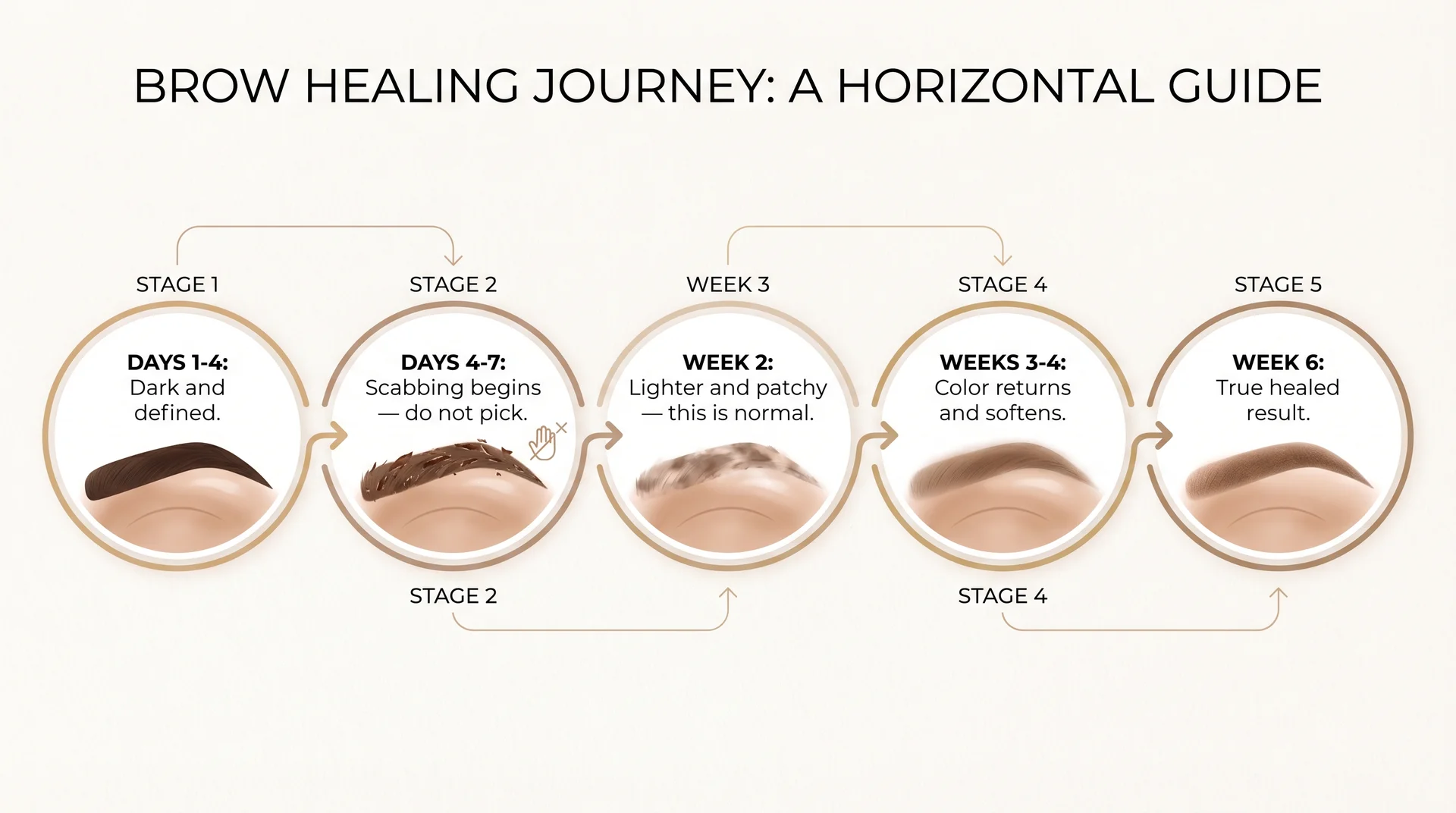
Nano brows take approximately four to six weeks to fully heal, and the appearance changes significantly at each stage. Understanding what’s happening to the skin at every point makes the process far less alarming when you’re in the middle of it.
- Days 1 to 4: Brows appear very dark, defined, and slightly raised. The surrounding skin may be mildly red or tender. This is the most dramatic stage and the one that appears most often in marketing photography. The actual healed result does not look like this.
- Days 4 to 7: The skin begins to scab and flake lightly in the brow area. This is a normal part of healing. Picking at or scratching the scabs removes pigment along with the surface skin and causes uneven, patchy results that the touch-up may not be able to fully correct.
- Week 2: Brows may look significantly lighter and patchier than expected. Some areas may appear to have lost color entirely. This is the most stressful phase for most clients because it looks like the procedure didn’t work. It has. The pigment is settling beneath the newly forming layer of skin and will gradually reappear as that layer matures.
- Weeks 3 to 4: Color begins to return and even out. The strokes soften, and the brows start to look more like natural hair. Any residual puffiness is gone by this point, and the shape reads clearly for the first time.
- Week 6: The true healed result is visible. This is when a good artist will schedule the touch-up appointment to assess pigment retention and fill in any areas where color didn’t take evenly on the first pass.
Age plays a role in how quickly this process moves. Younger skin regenerates faster, which can accelerate the healing timeline. Mature skin regenerates more slowly and may take the full six weeks, or slightly beyond, to show the final settled result.
What Healed Nano Brows Actually Look Like
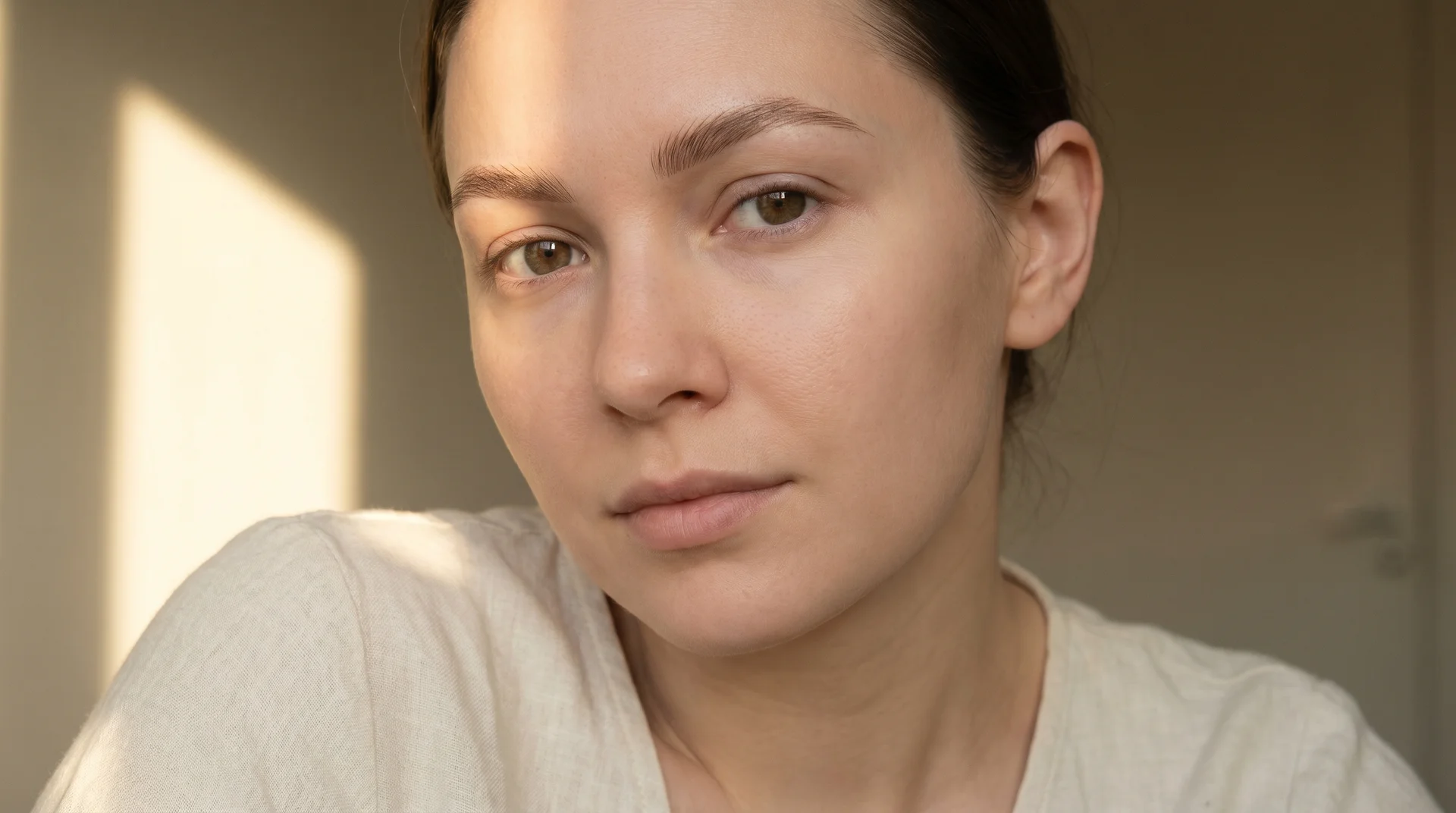
Healed nano brows look softer, more natural, and lighter than they did on day one. The strokes are still visible, but they blend with existing brow hair rather than competing with it. The shape reads as intentional and defined without appearing drawn on. Color settles to a noticeably lower intensity than what was applied at the appointment.
On camera, healed nano brows hold dimension under ring lights and studio flash in a way that pencil-filled brows don’t. Cosmetic pencil and pomade can flatten under direct flash, reading as a solid shape with no texture.
Healed nano brows maintain individual stroke texture, which photographs more naturally because the eye reads them as hair rather than product. For bridal work or editorial shoots, this distinction matters more than most clients realize before they’ve seen it side by side.
How Skin Type Changes the Healing Result
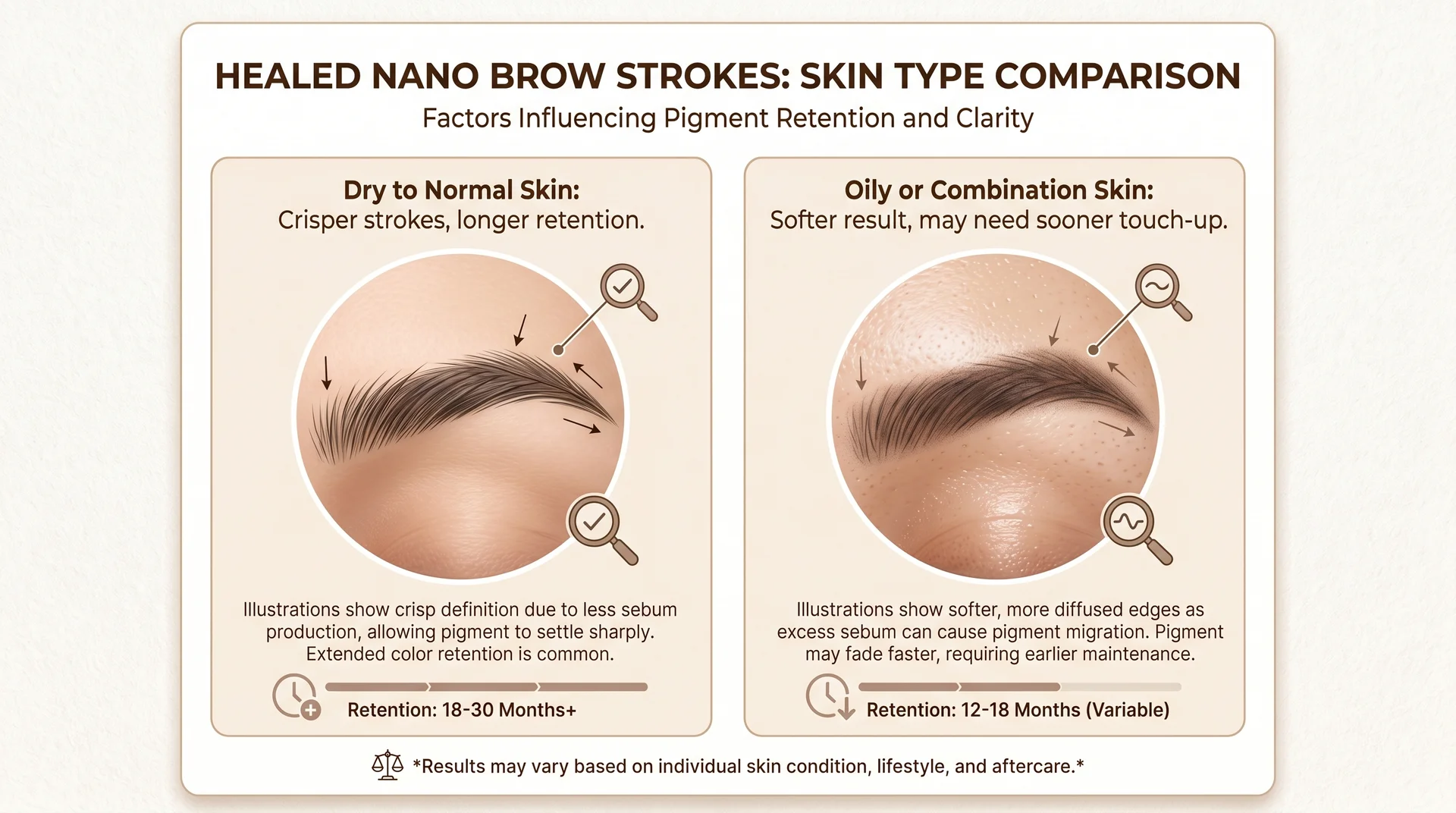
Skin type has a direct effect on how crisp the healed strokes appear and how long the result holds. On dry to normal skin with smaller pores, strokes heal with the most definition, clear edges, and the longest retention. This is the ideal candidate profile, and healed results on this skin type tend to look closest to the gallery photos that initially inspire the booking.
On oily or combination skin, the healed result is softer and slightly more diffused. The strokes are still visible, and the overall improvement is real, but the edges won’t be as sharp as they appear on drier skin.
Sebum production affects pigment retention, which is also why oily skin types typically need touch-ups more frequently (source: Tina Davies PMU).
Very oily skin may produce better long-term results with a powder brow or hybrid technique, and a thorough artist will discuss this honestly during your consultation rather than proceeding with nano brows and delivering an outcome that doesn’t match what you came in expecting.
If you’re weighing both options, this guide to nano brows vs. powder brows walks through the skin type differences in detail.
If powder brows are the direction you’re moving toward, what ombre powder brows look like before and after healing walks through the full process for that technique, including the healing stages that tend to catch clients off guard, and the honest longevity picture broken down by skin type.
On mature or thinner skin, nano brows work well precisely because the machine technique is gentler than microblading. The needle depth is controlled precisely throughout, which reduces the risk of pigment spreading in skin that has lost some of its elasticity over time.
Nano Brows Before and After by Starting Brow Type
The condition of your brows going in determines both the scope of the work and what the healed result can realistically achieve. Nano brows are not one procedure with one outcome; the result varies considerably depending on what the artist has to work with.
- Sparse brows: Nano brows fill thinning areas by adding strokes where hair is missing. The result is a fuller, denser brow that reads as natural. This is the most common use case and the one with the most consistently satisfying outcomes.
- Overplucked brows: For brows that have been overplucked over many years, nano strokes can re-establish a shape. Results depend on how much natural hair remains to anchor the work. A client with very little remaining tail hair will need more work to create the impression of a full tail, and the result will rely more heavily on the tattooed strokes than on natural hair.
- Brows with gaps only: Where the general shape is good, but there are gaps or asymmetry issues, nano brows can be applied selectively to targeted areas rather than across the full brow. The healed result is usually very natural because the real hair does most of the visual work, and the tattooed strokes simply fill in where hair is missing.
- Near-complete reconstruction: Clients with minimal brow hair, including those managing brow loss from alopecia or recovering from chemotherapy, can use nano brows to build a full brow from scratch. These cases require a highly experienced artist and realistic expectations. The result is brows that look intentional and polished rather than drawn on, but they don’t replicate the natural randomness of a full brow with hair present. The absence of real hair underneath means the tattooed strokes carry the full visual load.
Aftercare That Changes the Outcome
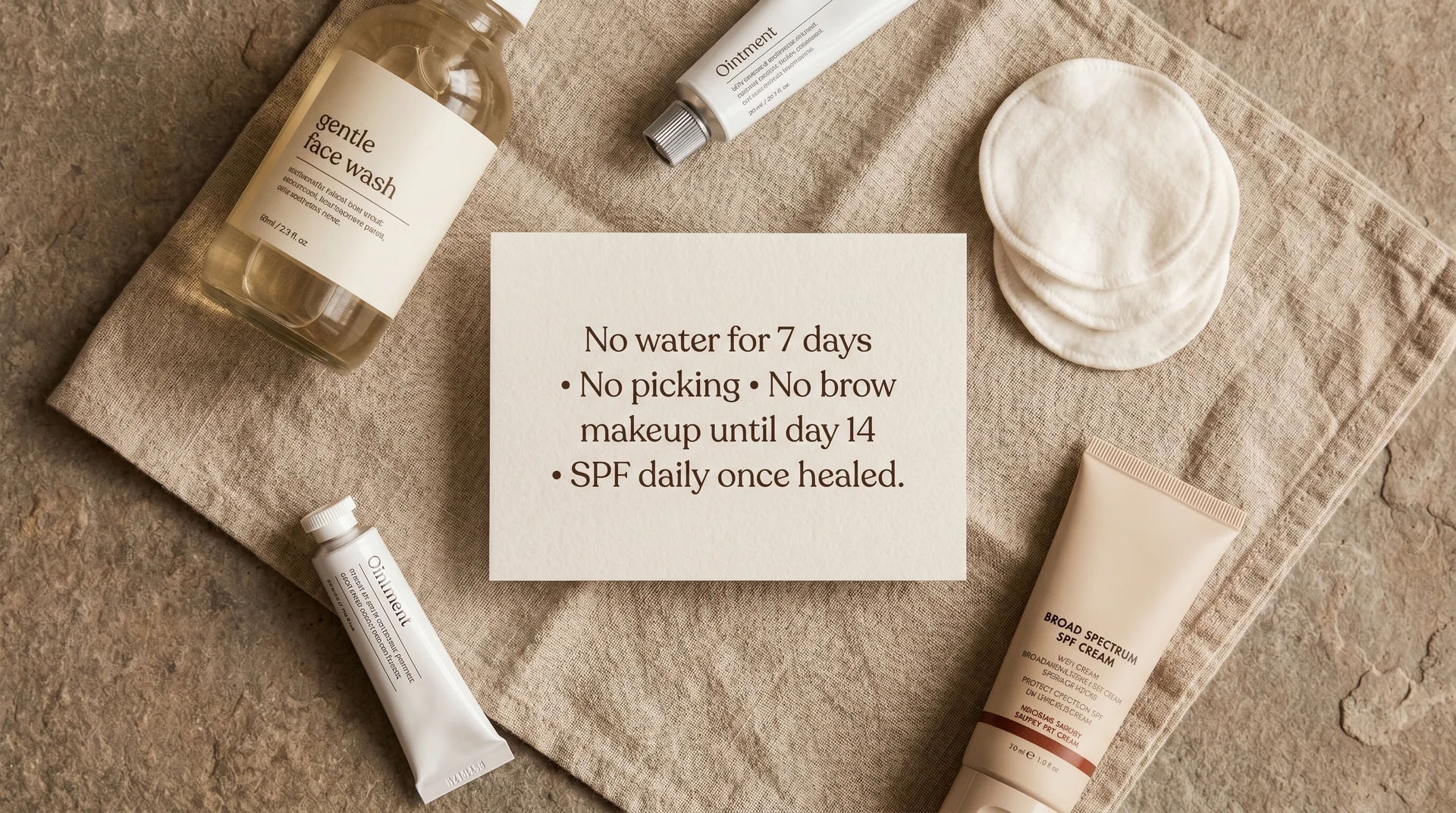
Aftercare directly affects the quality of the healed result, and there is no workaround. The most carefully applied nano brows will heal unevenly if the aftercare instructions aren’t followed closely during the first two weeks. This is the part of the process that’s entirely within your control.
The essential rules:
- Keep the brow area completely dry for the first seven days. This means no sweating heavily, no swimming, no washing your face with water running over the brows, and no steam from hot showers directed at the face. Even brief moisture exposure during this window can affect how the pigment sets.
- Do not pick, rub, or scratch any scabbing or flaking. Removing the surface layer prematurely takes pigment with it and creates gaps in the healed result that the touch-up may not be able to fully restore.
- Avoid makeup in the brow area until the skin has fully closed, typically around day ten to fourteen. Applying product over healing skin creates a barrier that can affect how the underlying pigment settles.
- Once fully healed, apply a broad-spectrum SPF daily to the brow area. UV exposure accelerates pigment fading in cosmetic tattoo work more than most clients expect, and consistent SPF use meaningfully extends the life of the result.
The touch-up appointment at six weeks is not optional if you want an even, complete result. Some areas always heal lighter than others on the first pass, and the touch-up is when your artist assesses retention and fills in what didn’t take. Skipping it means living with the uneven first-pass result indefinitely, since the procedure is designed as a two-step process.
How to Evaluate Before-and-After Photos
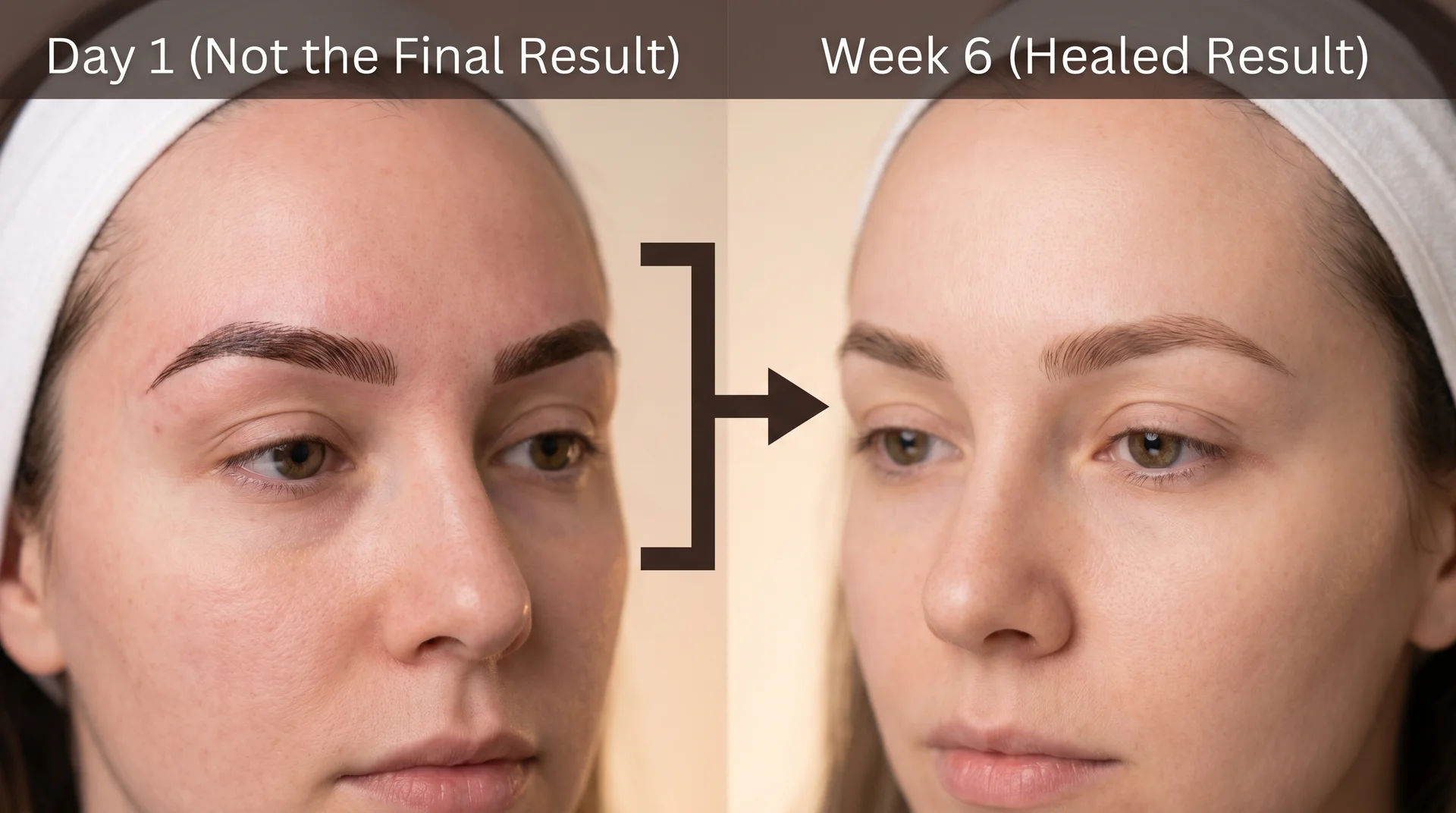
Most before-and-after photos in nano brow galleries show day-one results, not healed results. This is the most common source of disappointed expectations, because day-one brows are always more saturated and defined than what the healed version looks like. Knowing what to look for in a portfolio saves you from booking an artist whose results don’t match your actual goals.
When reviewing an artist’s work, look for:
- Healed photos labeled clearly as healed, ideally taken at six or more weeks post-procedure. Experienced artists photograph healed results as standard practice because those results reflect the actual quality of their work, not just the quality of the day-one application.
- Natural variation between clients. Every brow heals differently based on skin type, skin tone, existing hair density, and individual pigment retention. A gallery where every client looks identical at the healed stage is worth questioning.
- Both close-up and full-face photos. The close-up shows stroke quality and precision; the full-face photo shows whether the brow shape was mapped to suit the client’s face structure rather than a template.
- Examples across different skin tones. How pigment heals on deeper skin tones, particularly Fitzpatrick types four through six, looks different from lighter skin, and an artist with genuine experience should have documented results across the range.
From a photographer’s and makeup artist’s perspective, the brow work that looks best in images is rarely the boldest. The results that photograph well are the ones where stroke placement follows the bone structure, the color was calibrated to the client’s natural hair tone, and the shape was mapped to their face rather than imposed on it. Bold and dark on the day of the appointment is easy to achieve. Natural at six weeks, on camera, in different lighting conditions, is the actual skill.
The Cost and Longevity Breakdown
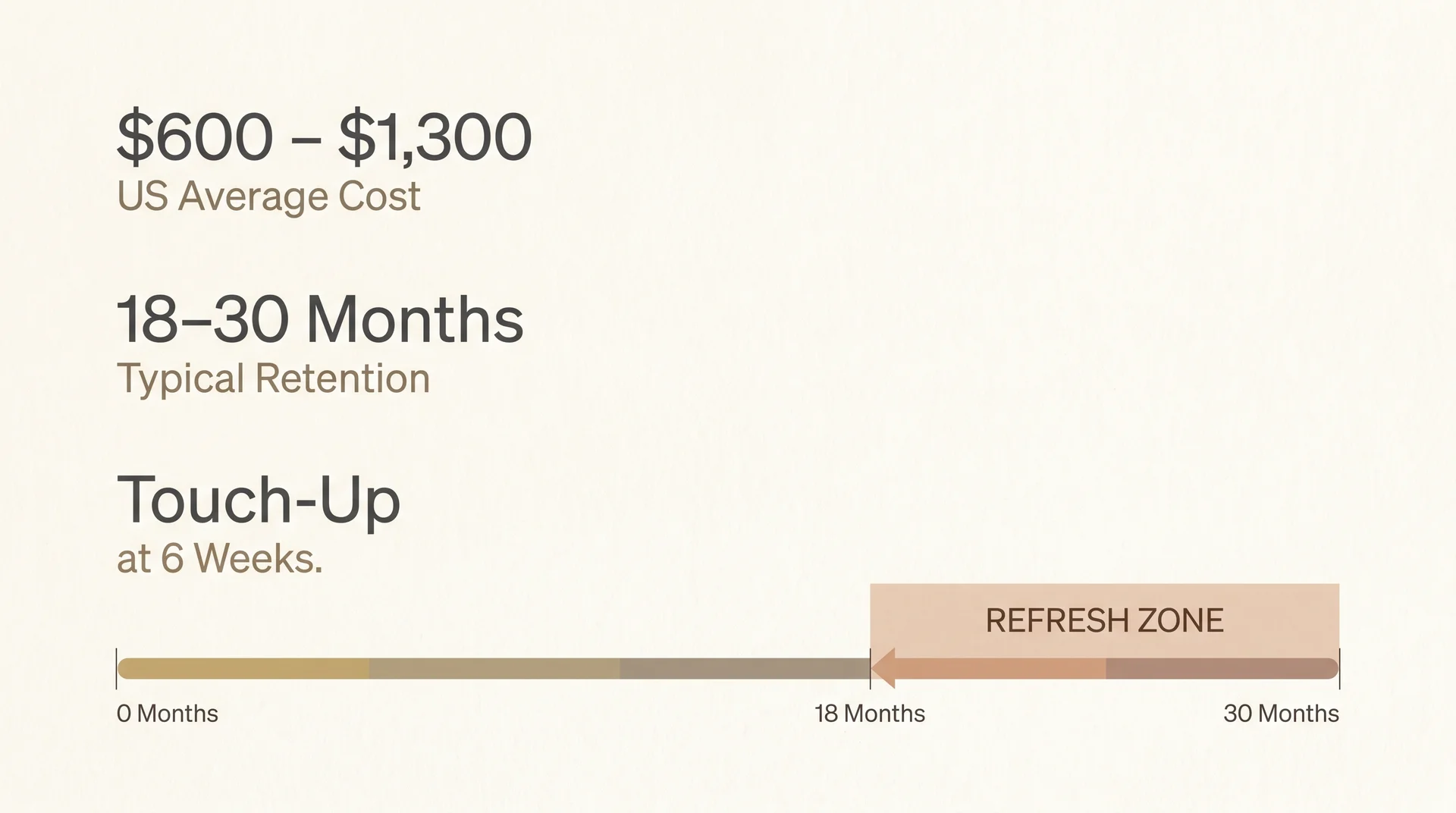
Nano brows cost between $600 and $1,300 in the US, with some artists including the touch-up in the initial price and others pricing it separately. [VERIFY: pricing reflects mid-2024 to early-2025 market averages across US studios; confirm current rates in your area at the time of booking, as prices vary significantly by region and artist experience level.] The range reflects location, the artist’s training and portfolio depth, and studio overhead. Major metro areas tend to sit at the higher end of this range.
For longevity, expect the healed result to remain clearly visible for 18 to 30 months, with oily skin types typically landing at the shorter end of that range and dry skin types often holding retention closer to the two-year mark. Pigment doesn’t disappear abruptly; it gradually softens into a more diffused, powdery look over time. Most clients schedule a refresh well before the brows have faded entirely.
The daily time math is worth considering if you’re on the fence. Ten minutes a day filling in your brows adds up to roughly 60 hours a year. Over two years of solid retention, nano brows offset around 120 hours of brow work.
End Note
Whether the upfront cost makes sense depends on how involved your current brow routine is and how reliably you can achieve the result you want with it.
For clients with very sparse brows who spend real time each morning getting symmetry right, the calculation is usually straightforward.
If you’re still deciding between techniques before committing to a cost, the full comparison of powder brows vs. microblading lays out the five-year cost picture across all three main options side by side.