
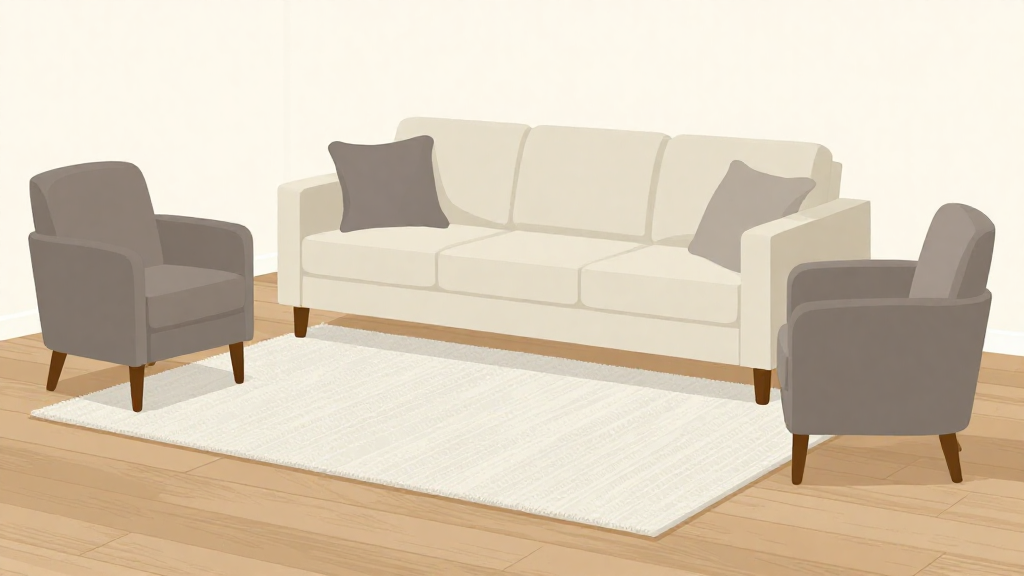
Have you ever finished decorating a room only to feel like the furniture is just “floating” in space? I’ve been there. That’s when I realized that area rug placement is the anchor that pulls everything together.
Many homeowners first need to decide between carpet or rug before placement rules even come into play.
Early in my home-styling journey, I bought a gorgeous vintage rug that was way too small for my living room. I thought the color would save it, but instead, the room looked disjointed and unfinished. That’s why I put together this area rug placement guide to help you all.
In this guide, I’ll show you how to use professional placement rules to turn your home into a cohesive, high-end place. Let’s get started!
Area Rug Placement Living Room: The 3 Core Rules
In my experience, the living room is where most people feel the most pressure to get things right. I once visited a friend who had a beautiful open-concept home, but her sofa and chairs were scattered around a tiny rug. It felt like the furniture was afraid to touch the carpet!
We spent the afternoon shifting things around, and the glow-up was instant. To master area rug placement in living room layouts, you generally want to follow one of these three professional standards:
1. The “All Legs On” Rule
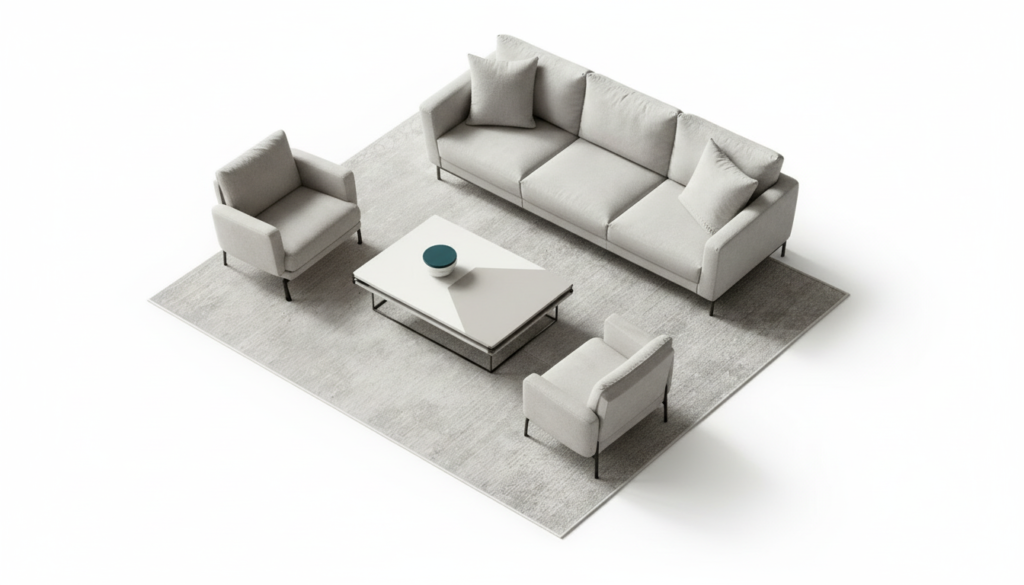
This is the gold standard for large rooms. Every piece of furniture in your seating group (sofa, side chairs, and coffee table) sits entirely on the rug.
To do this right, you usually need at least an 8×10 or 9×12 rug. This creates a defined “room within a room” that feels incredibly high-end and cohesive.
This layout works best when the overall flooring choice matters just as much as furniture placement.
2. The “Front Legs Only” Rule
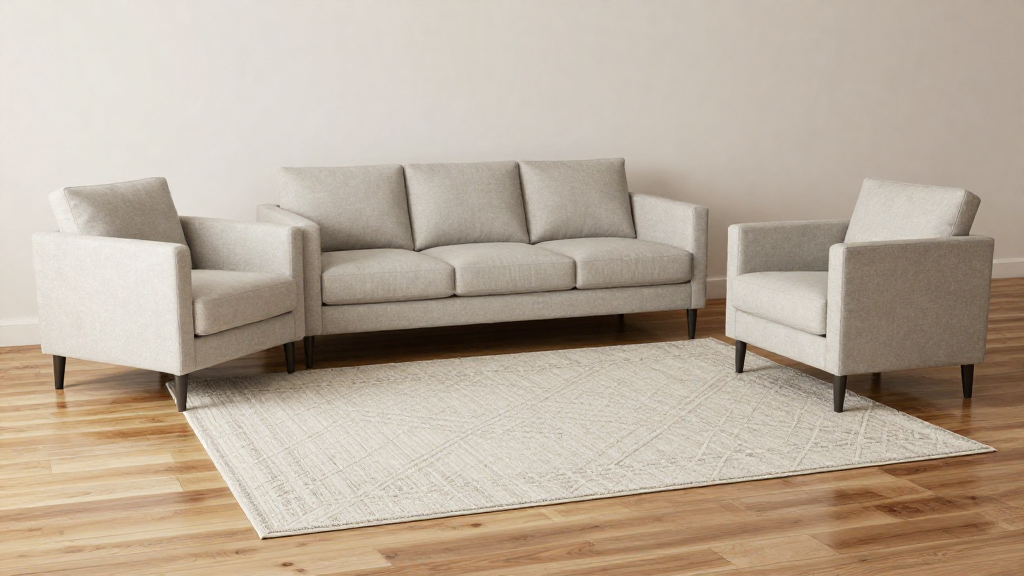
This is my personal go-to for average-sized rooms. You place the front two legs of your sofa and chairs on the rug while the back legs stay on the bare floor.
This “anchors” the furniture to the rug without requiring a massive, expensive piece of carpet.
A great tip I learned is to make sure the rug extends about 6 to 8 inches past the sides of your sofa so it doesn’t look “pinched.”
3. The Sectional Strategy
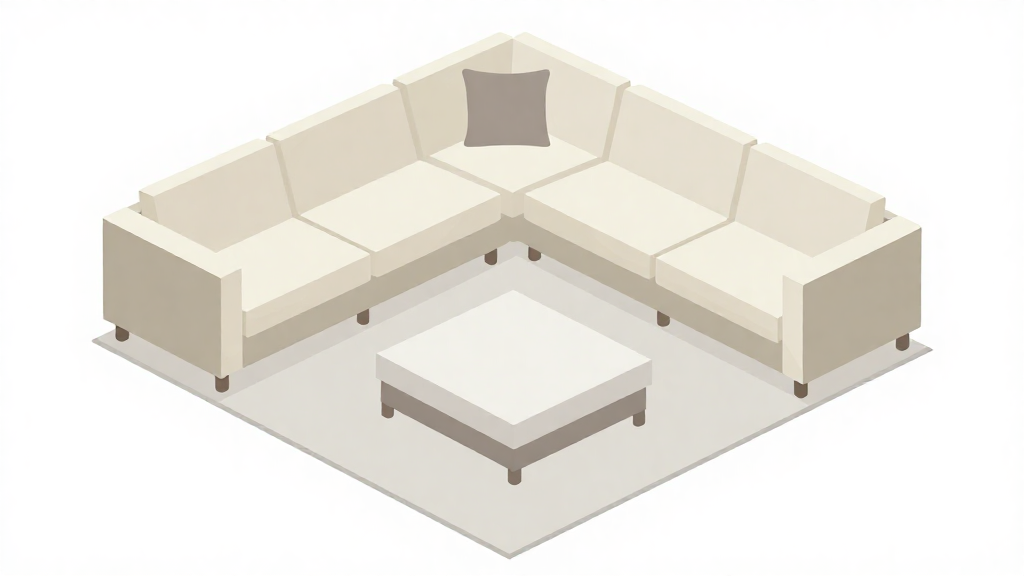
If you have an L-shaped sectional, the rug should ideally be large enough to go under the entire “L” or at least the front legs of all segments.
I’ve found that pulling the rug too far under one end can make the whole room look lopsided. Aim to keep the rug centered under the main seating axis to maintain balance.
The biggest mistake I ever made was buying a 5×7 rug for a room that clearly needed an 8×10.
If you already have a rug that’s too small, don’t throw it away! My solution was layering. I bought an inexpensive, oversized jute rug to act as a base and placed my smaller, colorful rug right on top.
It filled the space perfectly and added a trendy, textured look that I actually liked better than the original plan.
Bedroom Area Rug Placement: From Twin to King
The bedroom is where comfort meets design, and getting the bedroom area rug placement right is essential for that “sanctuary” feel. I remember staying at a boutique hotel where the rug stopped just short of where my feet hit the floor in the morning. It was such a cold start to the day!
Many homeowners reconsider their bedroom flooring comfort after realizing how much flooring affects mornings.
Since then, I’ve been obsessed with ensuring a rug provides a soft landing. Here is how to scale your rug to your bed size:
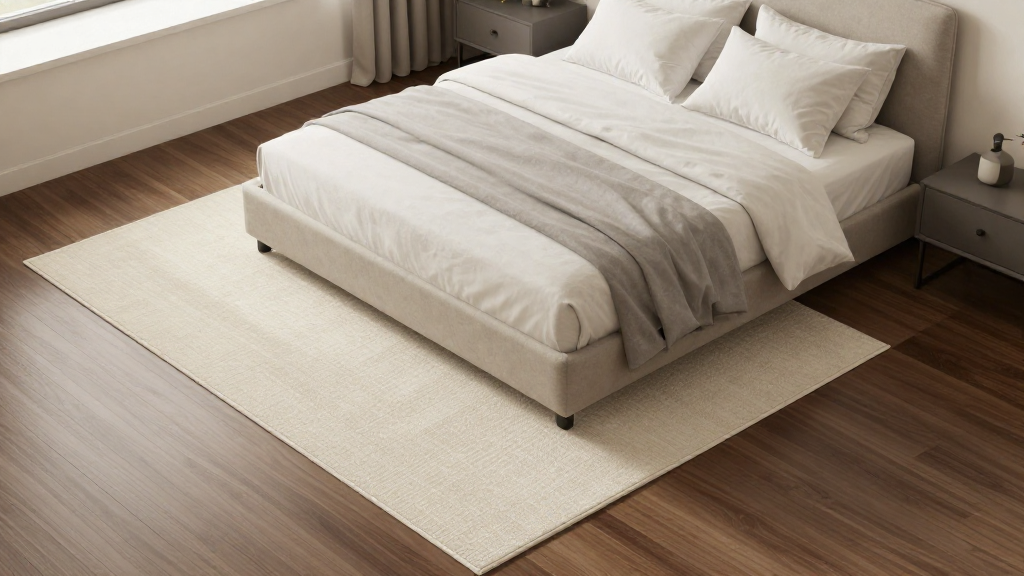
King and Queen Beds: For these larger beds, the most popular layout is the “Two-Thirds” rule. You place the rug perpendicular to the bed, sliding it under about the bottom two-thirds. For a Queen, an 8×10 rug is perfect; for a King, go with a 9×12. This ensures you have about 2 feet of soft rug on either side of the bed.
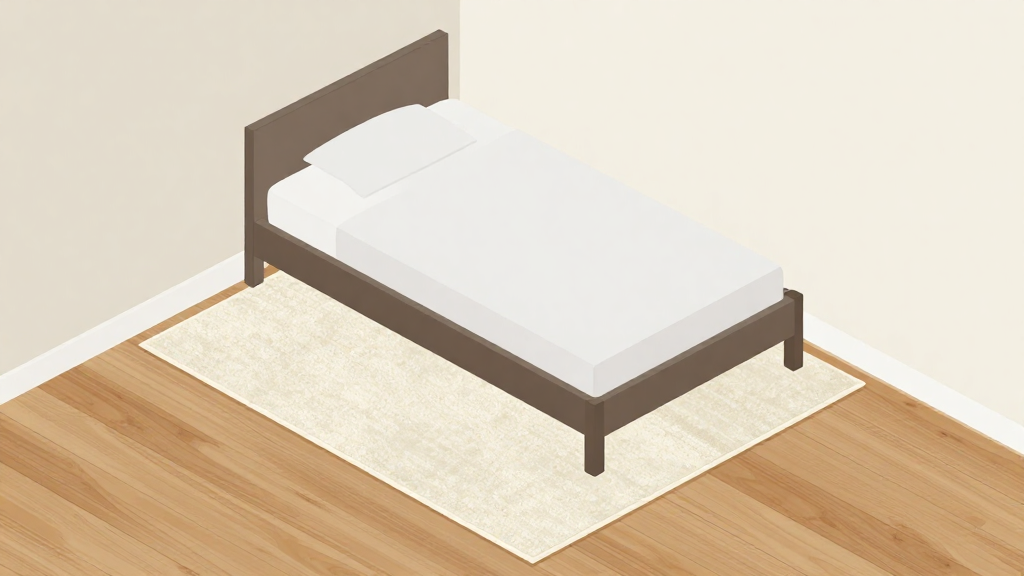
Twin Beds: If you have a single twin bed, you can place a 5×8 rug horizontally under the bottom half. However, in my daughter’s room, I actually preferred placing the rug off-center to one side of the bed where she plays, rather than centering it. It felt more functional for a kid’s space.
Nightstand Placement on a Rug
Should the nightstands sit on the rug? If your rug is large enough (like a 9×12 for a Queen), you can pull it all the way to the wall so the nightstands sit entirely on it. If you have a smaller rug, stop it just before the nightstands. Just avoid having the front legs of the nightstand on and the back legs off. It makes them wobbly and looks like an accident!
I once tried to force an 8×10 rug to reach my nightstands in a large master bedroom. The nightstands ended up half-on and half-off the rug, which made my bedside lamp tilt at a weird angle. It drove me crazy!
If your rug isn’t big enough to go all the way under the nightstands, pull it down toward the foot of the bed. This leaves the floor bare under the nightstands (keeping them level) and allows the rug to extend further past the foot of the bed, which looks much more intentional.
Dining Room & Entryway Area Rug Placement (High-Traffic Zones)
When moving beyond the living room and bedroom, the rules for area rug placement shift from comfort to pure functionality. In these high-traffic zones, a rug that is the wrong size or thickness isn’t just a design flaw. It can be a daily annoyance or even a tripping hazard.
For dining rooms, the rug must act as a wide “landing pad” for furniture, while entryways require a delicate balance between durability and door clearance.
- The 24-Inch Rule: In the dining room, your rug should extend at least 24 inches beyond the table on all sides so chairs stay on the rug when pulled out.
- Door Clearance: Entryway rugs must have a low enough pile height to allow the front door to swing open without catching or bunching the fabric.
- Proportional Borders: Designers suggest leaving about 18 inches of exposed floor around the perimeter of a rug to maintain proper room proportions.
- Traffic Patterns: In hallways and entries, ensure the rug is wide enough that guests don’t have “one foot on, one foot off” while walking.
I had a beautiful rug that just fit the table, but every time a guest went to sit down, the back legs of their chair would catch on the edge of the rug. It was embarrassing and clunky!
Always measure your table and add at least 4 feet to both the length and width. This gives you that essential 24-inch border. If you have a round table, a round rug looks best, but make sure it follows the same 2-foot extension rule.
Breaking the Rules: Pro Tips for Awkward Spaces
Sometimes, your room just doesn’t follow the standard rectangular rules. Dealing with awkward room layouts requires a bit of creativity.
You have to be willing to break traditional rules to find a balance that works for your specific space.
By using irregular shapes and layering techniques, you can make even the strangest nook feel like it was designed that way on purpose.
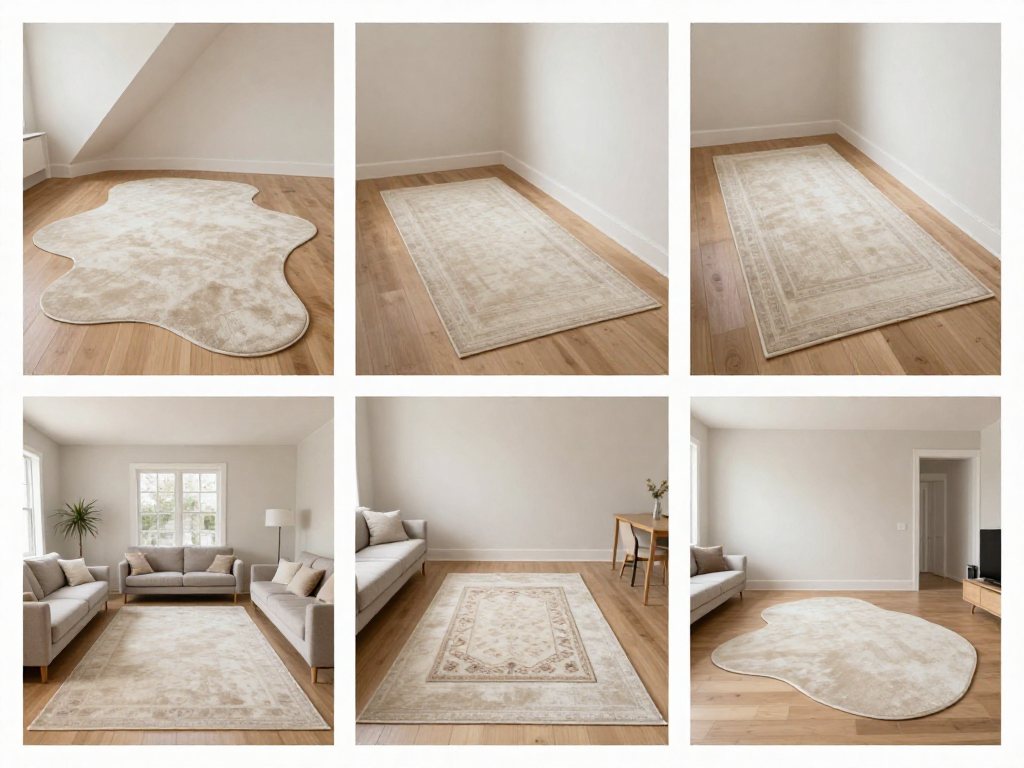
- Go Irregular: Use rugs with organic, non-straight edges to soften sharp angles in rooms with odd corners or diagonal walls.
- The Diagonal Trick: In tiny or narrow rooms, placing a rug at a 45-degree angle can trick the eye into thinking the space is wider.
- Zone with Multiple Rugs: Use separate rugs to define different “zones” in an open-concept room rather than forcing one giant rug to fit everywhere.
- Layering for Scale: If you have a beautiful rug that is too small for an awkward space, layer it over a larger, neutral rug to fill the area correctly.
- Embrace Asymmetry: “Unshaped” rugs allow you to experiment with balance in ways that traditional rectangular rugs simply cannot.
When I had that diagonal wall in a rented studio apartment, I initially tried to align my rug perfectly with the longest straight wall. It looked terrible! It actually made the room look more crooked because the rug highlighted the weird angle.
I swapped the rectangle for a round rug. Since a circle doesn’t have straight lines, it doesn’t “fight” with the walls.
It created a cozy focal point that completely ignored the room’s odd geometry. This trick becomes especially useful when trying to style dark floors without fighting the room’s architecture.
In small apartments, you have to be smart about how you use your floor.
Floating with Purpose: Instead of tucking a rug under heavy furniture, let it “float” just under the front legs of your sofa. This keeps more floor visible, which makes the room feel less crowded.
Asymmetric Zoning: An irregular rug placed slightly off-center can define a reading nook or a small coffee area without making the room feel “boxed in.”
Summing Up
It’s essential to remember that rugs are more than just decorative elements; they are integral to creating a cohesive and inviting space. A well-placed rug can anchor your furniture, define areas within a room, and add warmth and texture to your home.
From the living room to the bedroom, and from dining areas to awkward spaces, following strategic placement guidelines can turn your rooms into functional and aesthetically pleasing spaces.
Key Takeaways
- Understand the Space: Measure your rooms and furniture to select the right rug size and shape. Don’t rush the decision; it’s worth taking the time to find the perfect fit.
- Prioritize Functionality: Consider how you use each space. Your rug should enhance the room’s function, whether it’s providing comfort in the bedroom or defining a dining area.
- Be Creative: Don’t be afraid to break traditional rules! Layering rugs, using irregular shapes, or experimenting with placement can lead to unique and inviting designs.
- Enjoy the Process: Designing your home is a personal journey. Make your space reflect your style, and remember that every mistake is a lesson learned.
By following these guidelines and embracing a bit of creativity, you can create beautifully anchored spaces that feel uniquely yours. Happy decorating!