
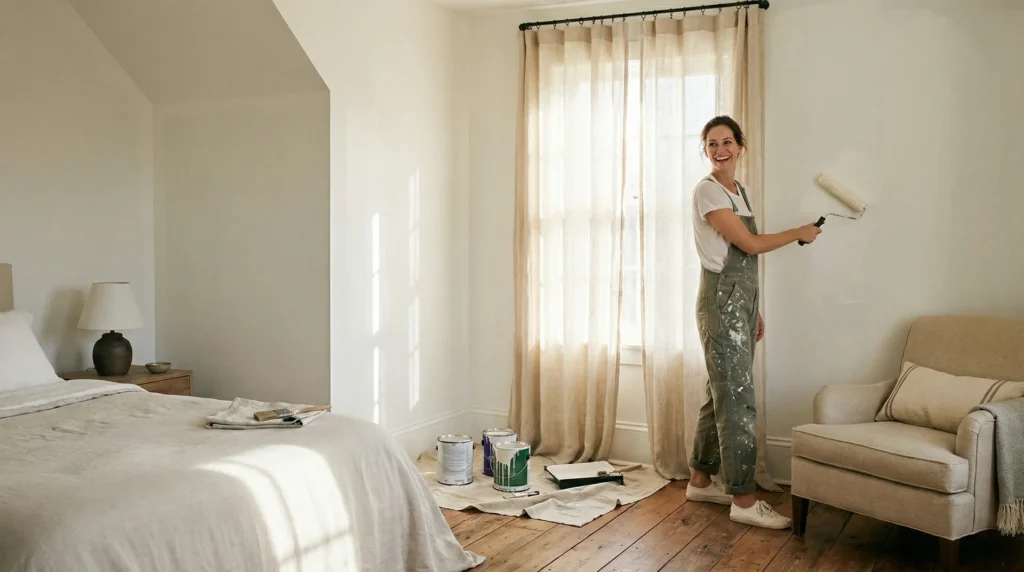
Painting a bedroom costs between $200 and $400 if you do it yourself and between $800 and $2,500 if you hire a professional.
The national average for a professionally painted standard bedroom sits around $1,000 to $1,400, including walls, trim, and ceiling in a 12×12 room with 8-foot ceilings.
That range exists because five variables shape every quote: room size, paint quality, surface condition, the scope of work, and where you live. Once you understand how each one applies to your specific room, the number stops feeling vague and starts feeling actionable.
I have worked through enough bedroom painting projects, both as a design consultant guiding clients through renovations and as someone who has stood in freshly painted rooms watching a colour story come together, to tell you exactly where that money goes and exactly where you do not need to spend it.
What Drives the Cost to Paint a Bedroom
Room Size and Wall Surface Area
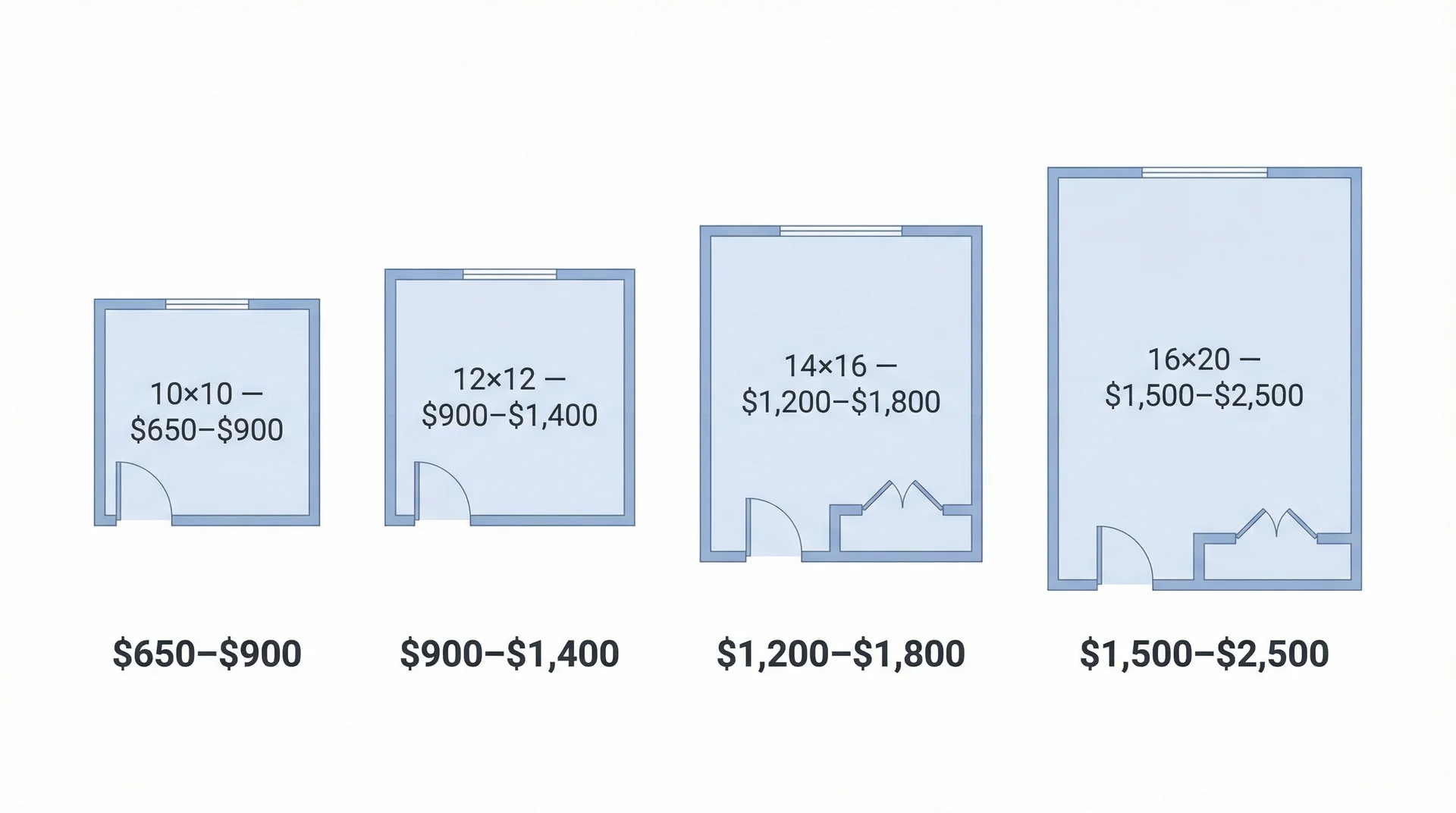
Painters calculate quotes based on paintable square footage. They measure total wall surface area, subtract windows and doors, and work from that figure.
A standard bedroom typically has between 132 and 200 square feet of paintable wall space. Ceilings add another 100 to 150 square feet on top of that.
| Room Size | Paintable Wall Area | DIY Cost | Professional Cost |
|---|---|---|---|
| Small (10×10) | 120–140 sq ft | $80–$150 | $650–$900 |
| Medium (12×12) | 150–175 sq ft | $130–$200 | $900–$1,400 |
| Large (14×16) | 185–220 sq ft | $180–$280 | $1,200–$1,800 |
| Primary Bedroom (16×20) | 240–300 sq ft | $240–$380 | $1,500–$2,500 |
Rooms with 9 or 10-foot ceilings add meaningful surface area and increase ladder time for precise cutting at the top.
On most professional quotes I have reviewed, a 10-foot ceiling on a medium room adds between $200 and $400 compared to a standard-height version of the same room.
Paint Quality and What Each Tier Actually Delivers
Budget-range paints under $25 per gallon require more coats, the pigment often looks flat once dry, and they scuff within a year of everyday bedroom use. Premium paints in the $55 to $75 per gallon range cover in fewer coats, hold colour depth over time, and clean without marking.
For a standard 12×12 bedroom, you need approximately two gallons for the walls, one gallon for the ceiling, and one quart to one gallon for trim, depending on the detail level.
| Paint Tier | Price Per Gallon | Total Material Cost (Walls + Ceiling + Trim) |
|---|---|---|
| Budget | $18–$25 | $70–$110 |
| Mid-Range | $30–$45 | $110–$170 |
| Premium | $55–$75 | $180–$280 |
On specific brands: Sherwin-Williams SuperPaint runs around $55 to $65 per gallon and remains one of the most consistently recommended mid-to-premium options for bedroom walls.
Benjamin Moore Regal Select, typically $65 to $75 per gallon, is the brand I see specified most often in higher-end residential projects for its depth of colour and durability.
For budget-friendly coverage, Behr Premium Plus at around $30 to $40 per gallon performs well and is widely available. These are not the only good options, but they represent reliable reference points when you are comparing what a contractor proposes against what you can source yourself.
Paint represents the smallest line item in a professional job, but it determines whether the room looks good in a week or in a decade.
Labour Rates and What Professionals Actually Charge
Labour is the largest cost driver in a professional job. Most painters charge between $2 and $6 per square foot of paintable surface, or a flat day rate between $300 and $600 per painter per day. For a standard medium bedroom, labour alone typically runs $400 to $900 before materials.
What labour usually includes:
- Moving and protecting furniture
- Surface preparation (filling small holes, light sanding)
- Priming where required
- Two coats of paint on the walls
- Cutting in around trim and ceiling lines
- Post-job cleanup
What typically costs extra:
- Ceiling painting (often quoted as a separate line)
- Trim, doors, and window frames
- Wallpaper removal
- Repairing water stains or large cracks
- Specialty finishes like limewash or venetian plaster
Always read the scope of work before signing anything. I have seen homeowners receive a quote for wall painting, assume trim was included, and end up with a beautifully painted room where the trim looked like it belonged to a completely different decade.
Surface Preparation: The Part That Surprises Most Budgets
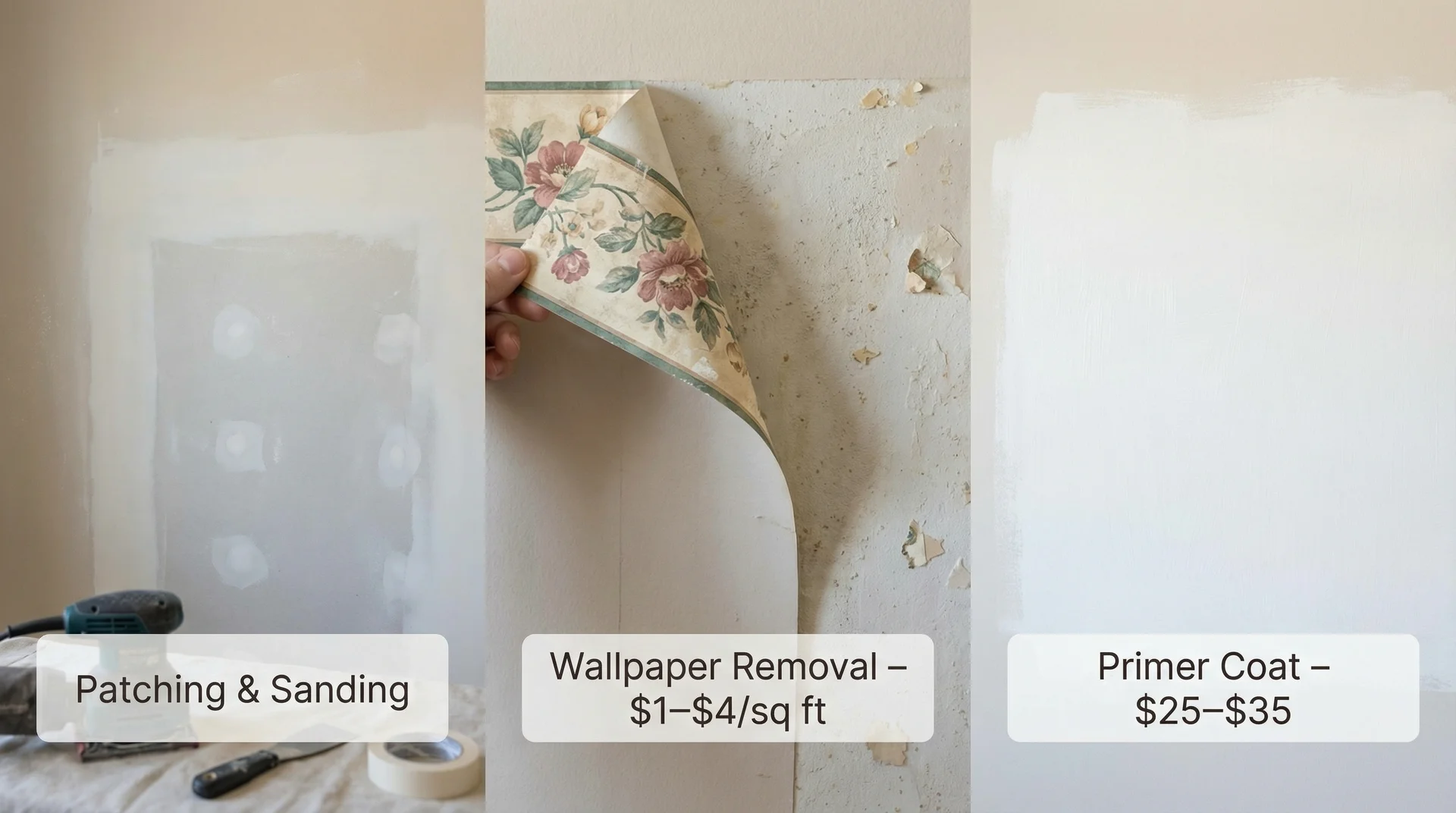
A freshly painted room looks exactly as good as the surface underneath it. Preparation adds cost because it adds time, and it is the one area where skipping steps always shows in the final result.
| Prep Task | Typical Additional Cost |
|---|---|
| Filling and sanding nail holes | Usually included in the base quote |
| Skim coating an uneven wall | $150–$400 per wall |
| Removing old wallpaper | $1–$4 per square foot |
| Treating a moisture or mildew stain | $50–$150 per area |
| Sanding glossy existing paint for adhesion | $50–$100 or included |
In one project I was advising on, a client had a wallpaper border running around the top of her bedroom walls. The painter had not noticed it during the quote walkthrough, and she had not mentioned it.
That border removal added $180 and half a day to the job. Detailed in-home estimates matter more than any online quote precisely because of situations like this.
Repainting vs. Painting for the First Time
This distinction affects both your prep time and your material costs more than most people realise. Painting over an existing colour in good condition is significantly easier and cheaper than a first-time paint job on new drywall or a full colour change from dark to light.
Repainting a bedroom in a similar colour with walls in good condition typically requires one coat of paint over a light scuff sand. Material costs drop, and professional labour time shortens.
Painting for the first time on new drywall requires a dedicated primer coat before any paint touches the wall. New drywall is porous and will absorb paint unevenly without priming, leaving a patchy, uneven finish. Add one gallon of primer ($25 to $35) and an additional coat of work to your budget.
Dramatic colour changes, specifically switching from a deep saturated colour to something pale or white, require a tinted primer matched to your new colour, followed by at least two coats of the finish paint. Contractors often charge an additional $100 to $250 for the extra material and coat time involved.
Geographic Location and Local Market Rates
| Market Type | Professional Cost for a Medium Bedroom |
|---|---|
| High cost-of-living cities (NYC, LA, Boston, Seattle) | $1,500–$2,500 |
| Mid-tier cities (Denver, Nashville, Charlotte, Portland) | $900–$1,600 |
| Smaller cities and rural areas | $600–$1,100 |
These variations reflect overhead, insurance, licensing costs, and local demand. In higher-cost markets, the spread between the lowest and highest quotes for identical work can be $400 to $600, making it especially worthwhile to collect multiple quotes.
How Long Does It Take to Paint a Bedroom?
This question comes up constantly, and it shapes scheduling decisions as much as budget decisions.
A professional painter working on a standard bedroom completes the job in one to two days, including prep, painting, and cleanup. A two-person crew often finishes in a single day.
For DIY, plan for a full weekend at minimum: one day for prep, taping, and priming, and a second day for painting with drying time between coats. Rushing the timeline produces results you will notice every morning when you wake up in that room.
Paint is dry to the touch within one to two hours, but does not fully cure for 14 to 30 days.
Move light furniture back after 24 hours, and wait at least 48 to 72 hours before placing anything heavy against the walls. Curing time depends on paint formulation and ventilation.
DIY vs. Hiring a Professional: An Honest Comparison
When DIY Makes Sense
DIY painting makes real sense if you have two to three days available, basic comfort with detail work, and patience for proper edge cutting and taping. The savings are genuine.
DIY material cost breakdown for a 12×12 bedroom:
| Item | Cost |
|---|---|
| 2 gallons of mid-range paint | $70–$90 |
| 1 quart trim paint | $18–$25 |
| 1 gallon primer (if needed) | $25–$35 |
| Roller kit, brushes, trays | $25–$45 |
| Painter’s tape | $8–$15 |
| Drop cloths | $10–$20 |
| Patching compound and sandpaper | $12–$20 |
| Total | $168–$250 |
You save $600 to $1,200 in labour on a single room. A DIY job done carefully and patiently looks genuinely excellent. A DIY job done in a hurry looks like one, and you will notice it every time you walk in.
When a Professional Is Worth Every Penny
Hire a professional if your walls have damage, stains, or texture issues that need skilled attention. Hire one for dramatic colour changes, rooms with detailed trim or built-in elements, or any time the value of your own hours exceeds the labour cost. The maths on that last point is simpler than people think.
Choosing the Right Paint Finish for a Bedroom
| Finish | Best For | Durability | Price Point |
|---|---|---|---|
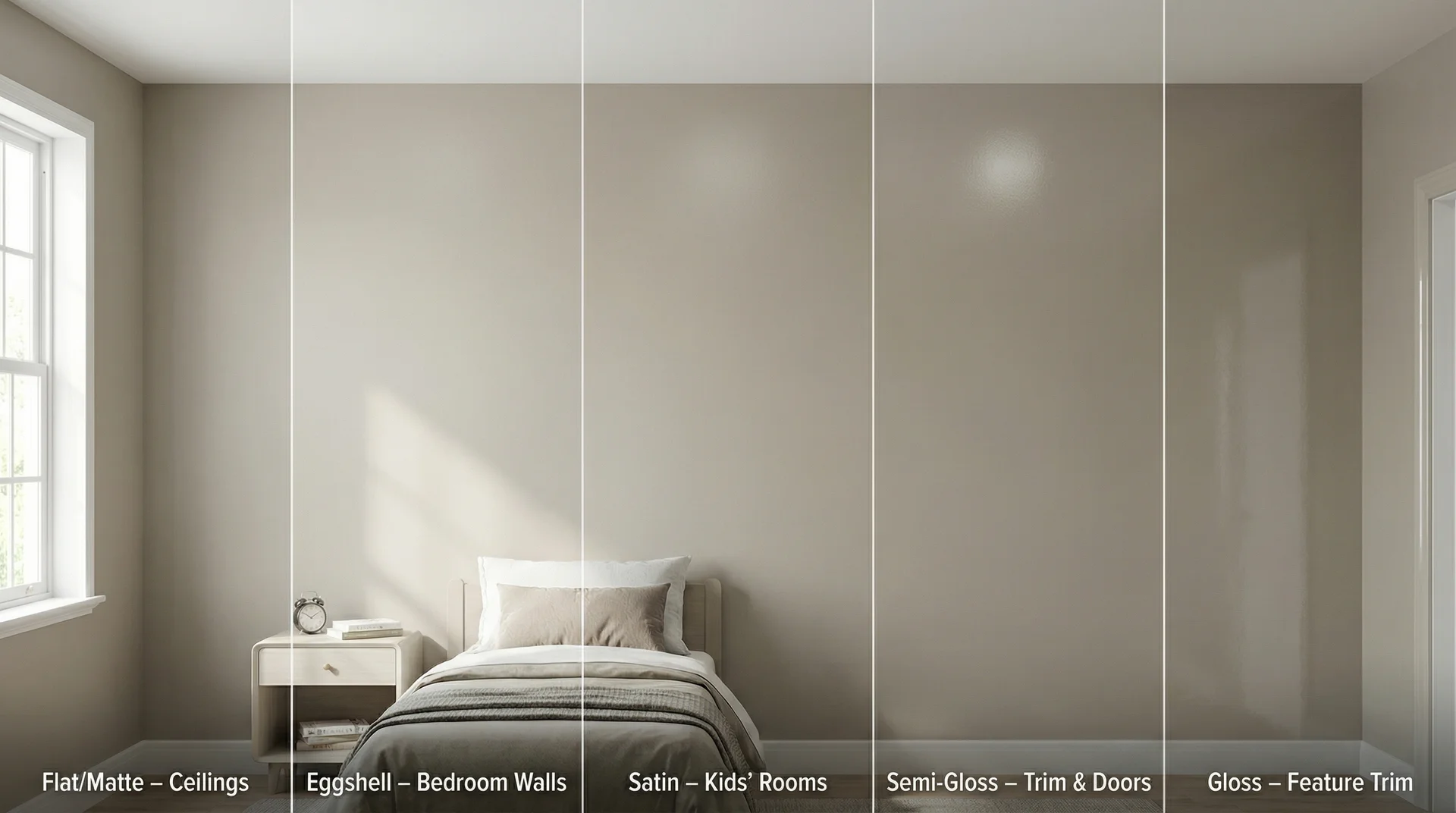
| Flat / Matte | Ceilings, low-traffic walls | Low | Lower |
| Eggshell | Bedroom walls (most common) | Moderate | Mid |
| Satin | High-touch walls, kids’ rooms | Good | Mid |
| Semi-Gloss | Trim, doors, window frames | High | Higher |
| Gloss | Feature trim, furniture details | Very High | Highest |
Eggshell on the walls is the finish I recommend most consistently for bedrooms. It holds a soft, elegant quality in both natural and artificial light, cleans without streaking, and does not show every minor scuff the way a flat finish does.
Trim and doors in semi-gloss create a subtle sheen contrast that gives a room a polished, intentional quality most homeowners do not expect until they see it in person.
Accent Walls and Specialty Finishes: Costs and Considerations
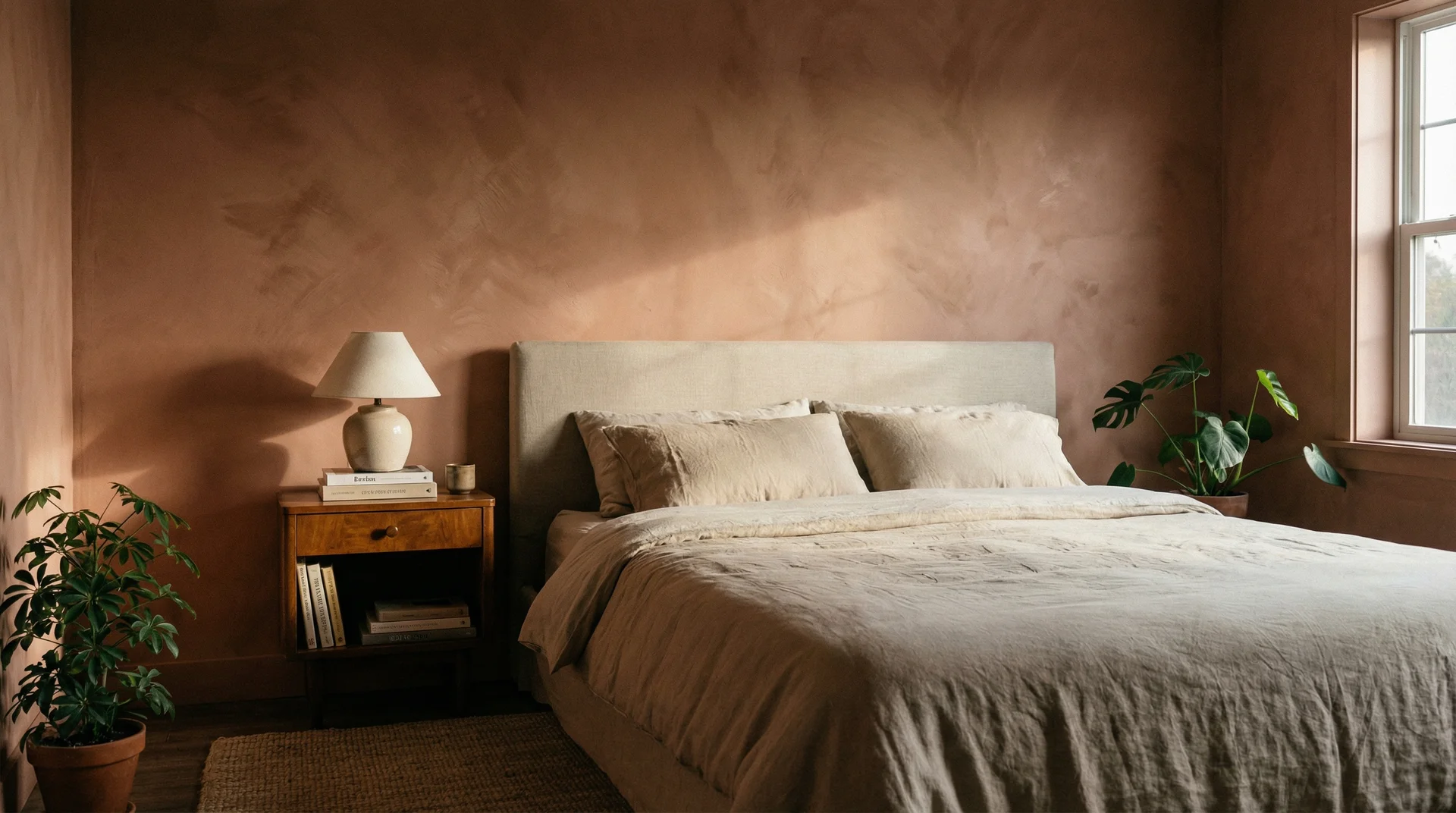
A contrasting colour on a single wall adds very little to DIY cost, perhaps an extra quart of paint, and roughly $80 to $150 to a professional quote. Specialty finishes cost considerably more.
| Specialty Finish | Approximate Professional Cost |
|---|---|
| Limewash effect | $200–$500 per wall |
| Venetian plaster | $400–$800 per wall |
| Textured paint finish | $150–$350 per wall |
| Geometric or striped pattern | $150–$400, depending on complexity |
| Ombre or colour wash | $200–$450 per wall |
A limewash finish on the wall behind a bed can transform a room from pleasant to genuinely considered. I worked with a client who spent $320 on a single limewash wall and called it the best money in her entire bedroom renovation. For the right room with the right light, that assessment is not an exaggeration.
Smart Ways to Reduce Cost Without Reducing Quality
Do your own prep work. Cleaning walls, filling nail holes, sanding patches, and applying painter’s tape yourself can remove $100 to $200 from a professional quote without affecting the finish quality at all.
Stay within the same colour family. Dramatic colour changes add primer, extra coats, and labour time. Choosing a colour in a similar tone to your existing wall significantly reduces those variables.
Paint only the walls. If your ceiling and trim are in good condition, a walls-only quote saves you meaningfully. Address the ceiling and trim in a separate project or handle them yourself.
Supply your own paint. Many painters allow you to provide the paint, which removes their materials markup. You purchase at retail, select exactly what you want, and hand it over on the day. Confirm this arrangement in advance.
Book during off-peak months. Painting contractors are busiest in spring and early summer. Late autumn and winter bookings often come with faster scheduling and, occasionally, softer rates.
How to Read a Professional Quote
Green flags in a solid quote:
- Every surface listed explicitly (walls, ceiling, trim, doors, closet interior)
- Number of coats specified
- Paint brand and product name included
- Surface prep is described and included
- Start date confirmed
- Insurance and licence number provided
Questions worth asking before you sign:
- What happens if we need extra coats for full coverage?
- Is furniture moving included in the scope?
- Can I supply my own paint, or choose the brand?
- How long does cleanup take, and what does it include?
- Do you offer a workmanship guarantee, and for how long?
I watched a client hire the lowest quote of four, no priming over a dark red wall, one coat applied, and the job looked uneven within a week as the original colour bled through.
A second contractor redid the entire room. The total cost landed twice what the mid-range original quote would have been. Three quotes minimum, always.
Signs Your Bedroom Actually Needs Repainting
Sometimes the question is not just about cost but about whether the room needs attention at all. These are the signs worth acting on rather than painting over metaphorically:
- Visible fading or patchy colour, especially near windows where UV exposure is highest
- Scuffs and marks that do not clean off with a damp cloth
- Peeling or bubbling paint, which usually indicates a moisture issue underneath, needs to be addressed before repainting
- Yellowing around fixtures or vents is common in older rooms with poor ventilation
- Crayon, marker, or stain bleed-through that touch-up paint cannot cover evenly
Most bedroom walls benefit from repainting every five to seven years under normal conditions. High-traffic rooms or rooms with children often need attention every 3 to 5 years.
Frequently Asked Questions
How much does it cost to paint a 12×12 bedroom?
A 12×12 bedroom typically costs $130 to $200 in materials for a DIY job and $900 to $1,400 for a professional, including walls, trim, and ceiling.
How much does a gallon of paint cover?
One gallon covers approximately 350 to 400 square feet with a single coat. For a medium-sized bedroom with two coats on the walls, two gallons is the standard starting point.
Should I paint the ceiling the same colour as the walls?
You can, and it creates a cocooning, enveloping effect that works well in bedrooms.
Most standard jobs use ceiling white or an off-white to keep the room feeling open, but matching the wall colour is a design choice worth considering if you want a more intimate, considered atmosphere.
Can I paint over wallpaper instead of removing it?
Technically, yes, but it is rarely a good idea.
Paint applied over wallpaper can cause the paper to bubble, peel, or show seams through the finish. Removal costs more upfront but produces a significantly better long-term result.
How do I calculate how much paint I need?
Measure the perimeter of your room and multiply by the ceiling height to get the total wall area.
Subtract 20 square feet per window and 21 square feet per door. Divide by 350 for the number of gallons per coat, then multiply by the number of coats you plan to apply.
Is it cheaper to paint a bedroom in winter?
Painters are generally less busy between October and February, which means faster scheduling and occasionally lower rates.
Cold temperatures can affect paint application and drying time, so proper indoor temperature and ventilation become more important during winter projects.
How long after painting can I sleep in the room?
Most modern latex paints are safe to sleep near once the room has been ventilated for a few hours and the paint is dry to the touch, typically two to four hours after the final coat.
For low-VOC paints specifically, you can return to the room the same evening with the window open. High-VOC paints may require 24 hours before comfortable occupation.
What I Would Tell a Friend Asking This Question
If someone called me tomorrow and asked for a straight answer, here is what I would say.
For a professionally painted standard bedroom, plan for at least $1,000 and feel confident if the quote lands between $1,000 and $1,400 with good materials.
- If you want the ceiling and trim done at the same time, budget $1,400 to $2,000 and collect three quotes before deciding.
- If you want to DIY and you genuinely have the time and patience to do it properly, $200 to $350 covers materials comfortably and the result can look excellent.
The single thing that moves a paint job from average to genuinely good is preparation. Mid-range paint applied over a well-prepped wall looks better than premium paint applied over a neglected one, every single time.
Spend the time on that step, or pay someone who will, and the room will reflect it for years.