
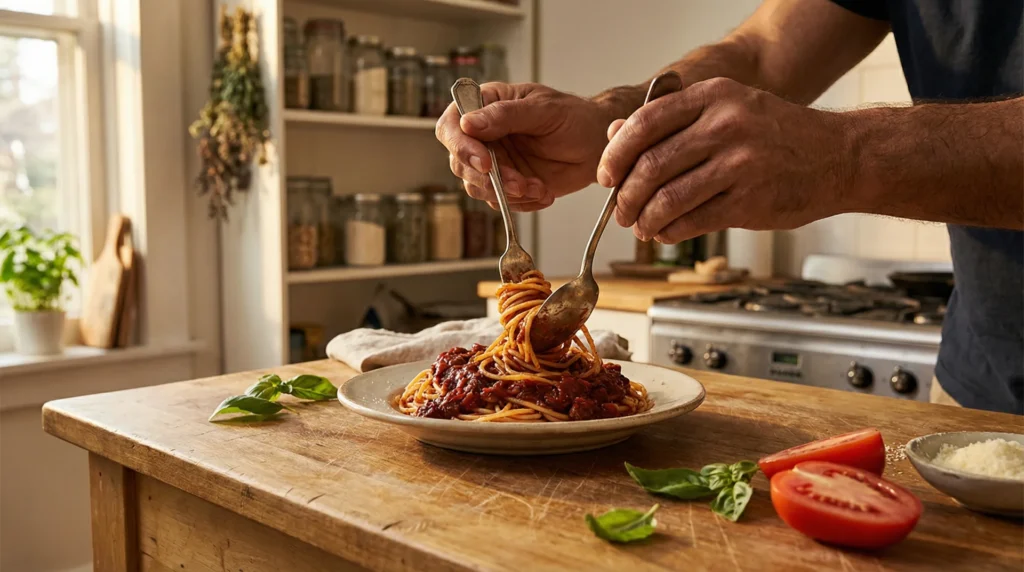
I spent three years cooking professionally before I made a fresh tomato sauce that actually tasted the way it should, and the failure was not about skill. I was treating fresh tomatoes the same way I treated canned ones, which is an entirely different ingredient with entirely different needs.
Fresh tomatoes carry between 94 and 96 percent water by weight. Canned tomatoes have already had much of that liquid concentrated out during processing.
When you expect the same behaviour from both, fresh tomatoes will consistently give you a thin, underwhelming sauce unless you understand what they actually need from you.
In short,
| Core and chop your fresh tomatoes, build a flavour base with olive oil, onion, and garlic, add the tomatoes with salt and herbs, then simmer everything on low heat for 45 to 60 minutes until the sauce thickens and the sharp brightness of raw tomato transforms into something deep, sweet, and round. Everything below teaches you how to make that transformation happen reliably. |
Is This a Marinara or a Fresh Tomato Sauce?
Marinara is a specific Neapolitan preparation, traditionally cooked quickly to preserve bright, fresh tomato flavour with very few aromatics.
What we are making here simmers longer, draws more depth from the cooking process, and produces a fuller, rounder result that is better suited to a proper pasta dinner at home. Same foundation, different outcome.
Choosing the Right Tomatoes
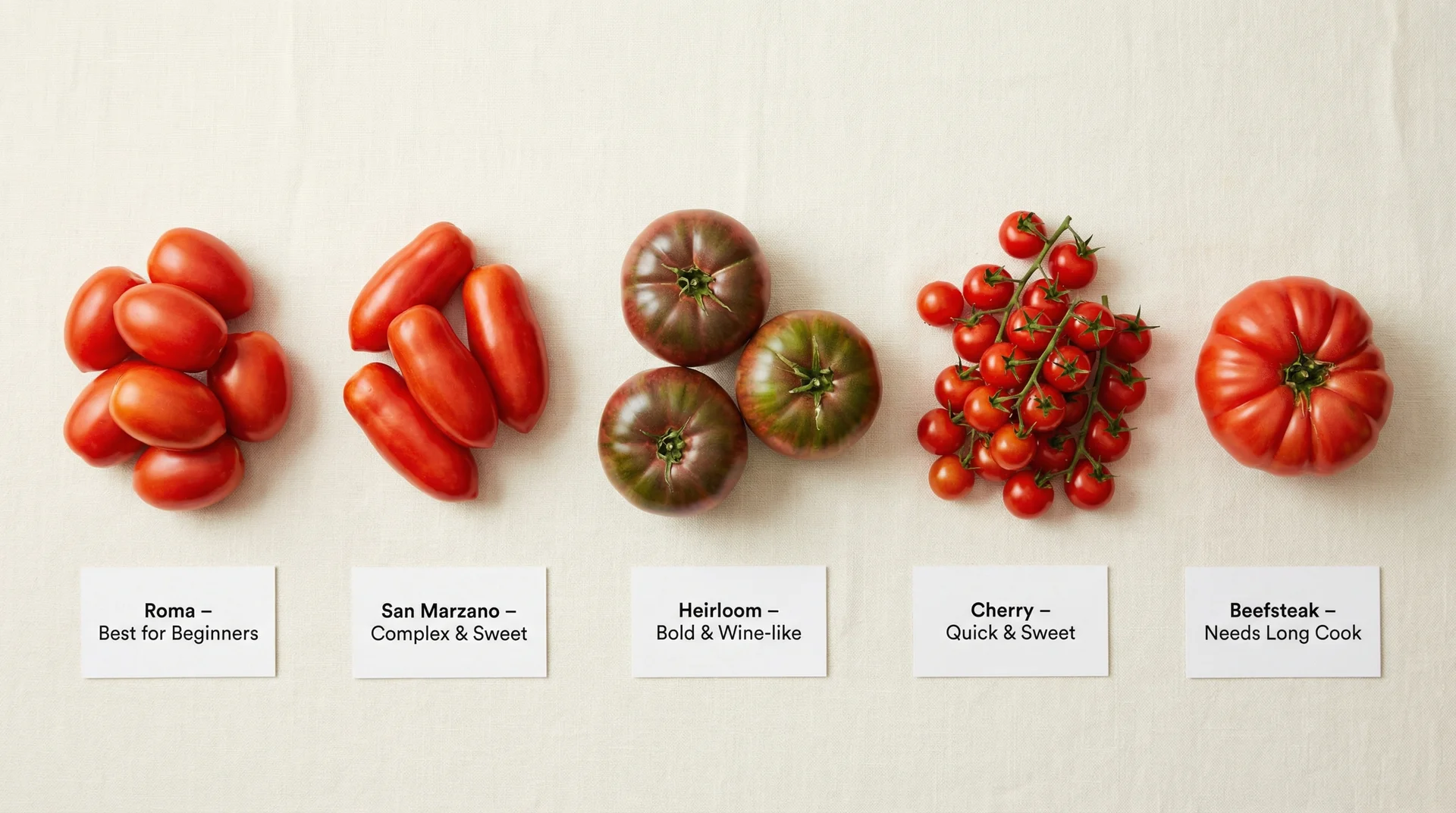
I have made this sauce with every variety I could find across twelve years of cooking. Here is what each one brings to the pot.
| Tomato Variety | Water Content | Simmering Time | Flavour Profile |
|---|---|---|---|
| Roma / Plum | Low | 45 to 60 minutes | Sweet, meaty, mildly acidic |
| San Marzano | Low to Medium | 45 to 75 minutes | Complex, sweet, low acid |
| Heirloom (Brandywine, Cherokee Purple) | High | 75 to 90 minutes | Rich, wine-like, bold |
| Cherry / Grape | Low to Medium | 20 to 30 minutes | Very sweet, bright, concentrated |
| Vine-Ripened | Medium | 60 to 75 minutes | Balanced, accessible |
| Beefsteak | Very High | 90+ minutes | Mild, requires heavy reduction |
For anyone making this for the first time, Roma tomatoes are the right choice. They have dense, meaty flesh, low water content, and a flavour that becomes genuinely complex after a proper simmer.
San Marzanos are extraordinary if you find them fresh, but a good Roma from a farmers’ market will give you results you will be proud of.
Buy your tomatoes fully ripe. A pale, firm tomato stored in cold transport after being picked underripe will produce a pale, flavourless sauce regardless of how long you cook it. Press gently with your thumb; the tomato should yield slightly without feeling mushy. The smell near the stem should be floral and sweet. No smell means no flavour in the pot.
How Many Tomatoes Do You Need?
Fresh tomatoes lose significant volume as they cook down. Always start with more than you think you need.
- 2 servings: 500g to 600g (about 4 to 5 Roma tomatoes)
- 4 servings: 1kg to 1.2kg (about 8 to 10 Roma tomatoes)
- 6 servings or batch cooking: 1.8kg to 2kg
Every Ingredient and What It Actually Does
The Core Ingredients
Extra Virgin Olive Oil: Use a quality one here because you will taste it. Olive oil carries fat-soluble flavour compounds from the garlic and onion throughout the sauce. Three to four tablespoons for a four-person batch is the right amount, and it sounds like a lot until you taste what it does.
Yellow Onion: Yellow onion cooked slowly in olive oil becomes sweet and deeply savoury. It holds its flavour better through a long simmer than white onion does, which tends to fade.
Garlic: Four to five cloves, sliced thin rather than minced. Sliced garlic infuses more gently into oil and does not brown as quickly, which produces a sweeter, rounder flavour in the finished sauce.
Fresh Basil: Add it at two stages. A small handful goes in during the last ten minutes of cooking for herbal depth. Another handful goes in raw just before serving for brightness. Both together give you a layered flavour that single-stage additions simply cannot.
Salt: Season earlier and more generously than you expect to. Salt added early draws moisture from the tomatoes, helps them break down, and deepens flavour throughout the entire reduction.
Red Pepper Flakes: Even a small pinch opens up the other flavours without reading as spicy. I add it almost every time I make this.
Supporting Ingredients Worth Knowing
| Ingredient | Amount | When to Add |
|---|---|---|
| Dry red wine | 60ml | After aromatics, before tomatoes |
| Tomato paste | 1 tablespoon | With garlic, cook 1 to 2 minutes |
| Fresh oregano | 2 to 3 sprigs | Midway through simmering |
| Pinch of sugar | ¼ teaspoon | Taste and adjust at the end |
| Parmesan rind | 1 piece | Early, simmer throughout |
The Parmesan rind is a habit I carried from a restaurant kitchen where nothing was wasted. Keep your rinds in a small bag in the freezer and drop one into the sauce as it simmers. You will not taste cheese in the final sauce. You will taste something fuller and more complex that you cannot quite name. That is exactly the effect you want.
Spaghetti Sauce Recipe with Fresh Tomatoes
Serves: 4
Prep time: 15 minutes
Cook time: 55 to 60 minutes
Total time: About 75 minutes
Calories per serving (approximate): 180 kcal (sauce only, without pasta)
Ingredients
- 1kg fresh Roma tomatoes (about 8 to 10 tomatoes)
- 4 tablespoons extra virgin olive oil
- 1 medium yellow onion, finely diced
- 4 to 5 cloves fresh garlic, thinly sliced
- 1 tablespoon tomato paste
- 1 teaspoon sea salt, plus more to taste
- ¼ teaspoon red pepper flakes (optional)
- 1 small bunch of fresh basil, divided into two portions
- Freshly ground black pepper to taste
- 60ml dry red wine (optional but recommended)
- 1 Parmesan rind (optional)
Instructions
Step 1: Prepare the Tomatoes
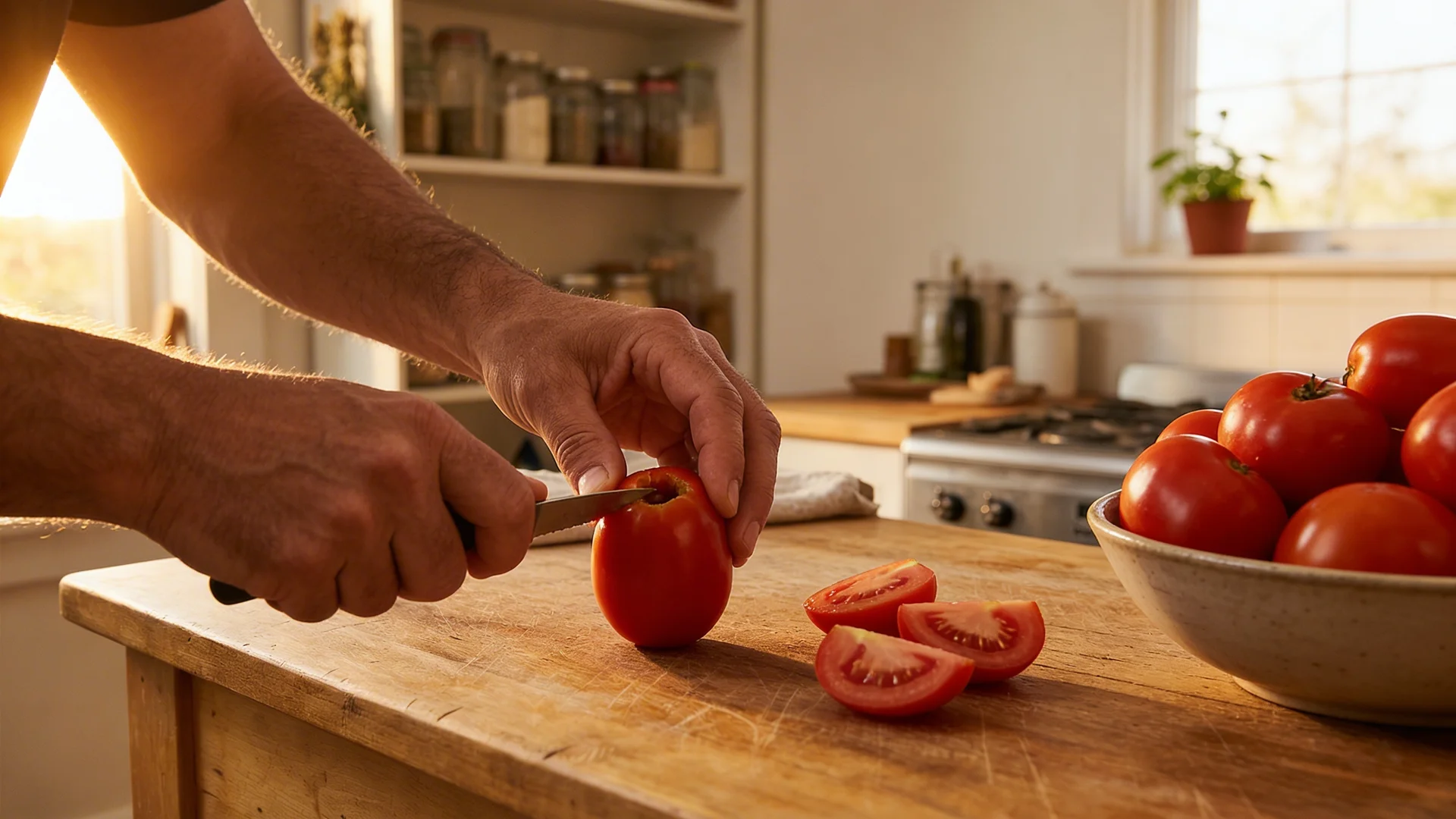
Wash and core your tomatoes by cutting out the stem end with a small paring knife. Cut each tomato into rough quarters or sixths, nothing precise. You do not need to peel or seed them at this stage.
For a smoother sauce: Score a small X on the base of each tomato, lower them into boiling water for thirty seconds, then transfer immediately into ice water. The skins slide off cleanly. This step takes an extra ten minutes but produces a noticeably silkier texture. For a weeknight dinner, skip this entirely and blend or mash at the end instead.
Step 2: Build the Flavour Base
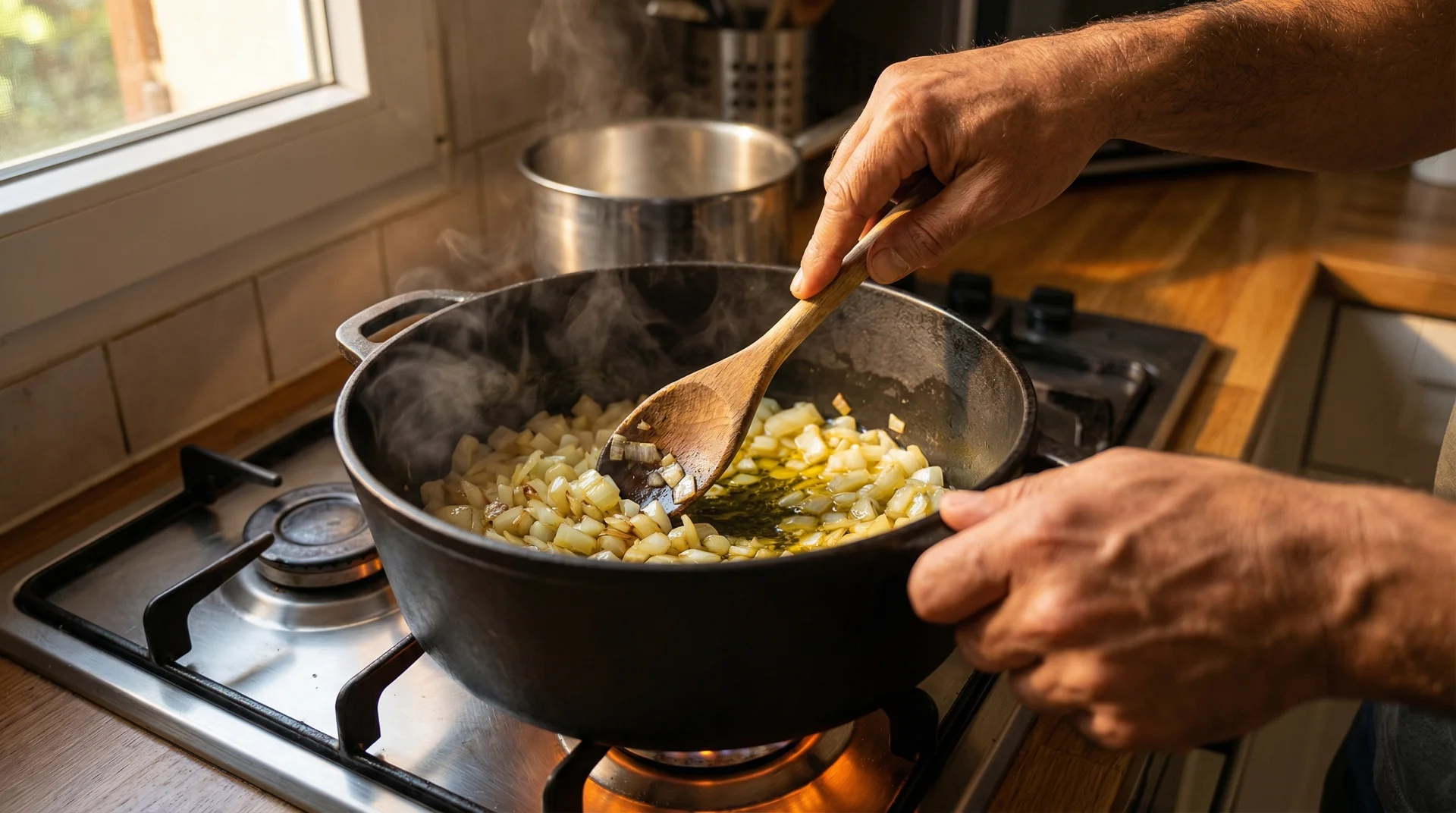
Set a large, heavy-bottomed pot or Dutch oven over medium-low heat. Pour in the olive oil and let it warm for about a minute. Add the diced onion with a generous pinch of salt and cook for eight to ten minutes, stirring occasionally, until the onion turns completely soft, translucent, and just beginning to colour at the edges.
The onion should look almost melted at this point. If it still has any visible firmness, keep going. An onion that has been given proper time in the oil builds the sweet, caramelised foundation that a quickly softened one simply cannot replicate.
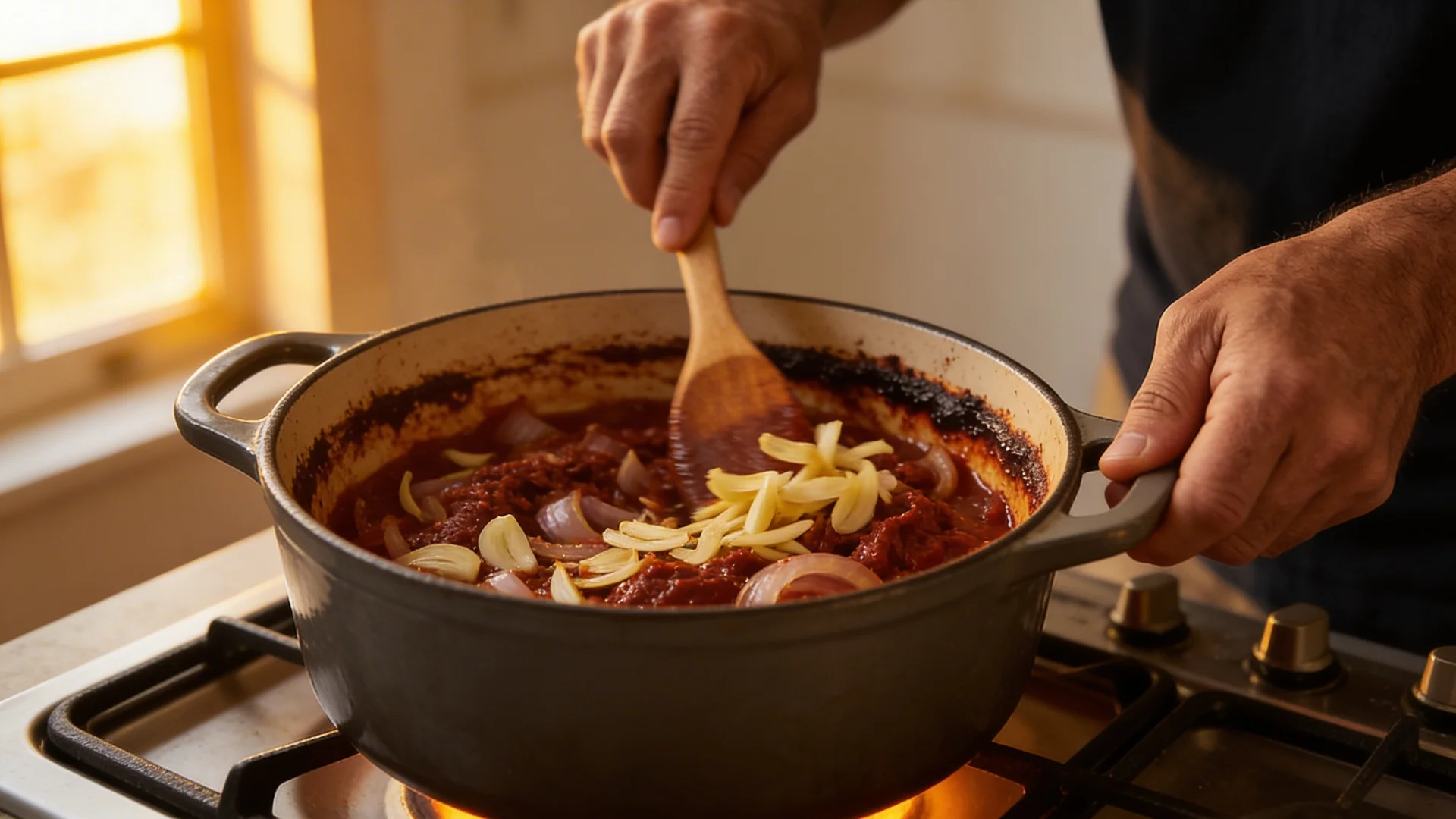
Add the sliced garlic and cook for two minutes at the same temperature until it softens and turns lightly golden. Add the tomato paste and stir it through the aromatics, cooking for another two minutes. The paste will darken slightly and develop a richer, almost nutty smell. That change is exactly what you are waiting for before moving on.
If you are using red wine, pour it in now and let it bubble for ninety seconds to cook off the alcohol before adding the tomatoes.
Step 3: Simmer the Sauce
Add the chopped tomatoes, remaining salt, black pepper, red pepper flakes, and the Parmesan rind if using. Stir everything together and raise the heat to medium until the pot reaches a gentle simmer.
Reduce the heat back to low, partially cover the pot with a lid, leaving a small gap for steam to escape, and simmer for 45 minutes, stirring every ten minutes.
How long should you simmer fresh tomato sauce? A minimum of 45 minutes with the lid partially on, followed by ten to fifteen minutes with the lid fully removed.
That uncovered stage drives off the remaining excess liquid and concentrates the flavour in a way that makes the sauce genuinely taste finished. Cooking the full 75 to 90 minutes deepens the flavour further if you have the time, but 60 minutes is the reliable sweet spot.
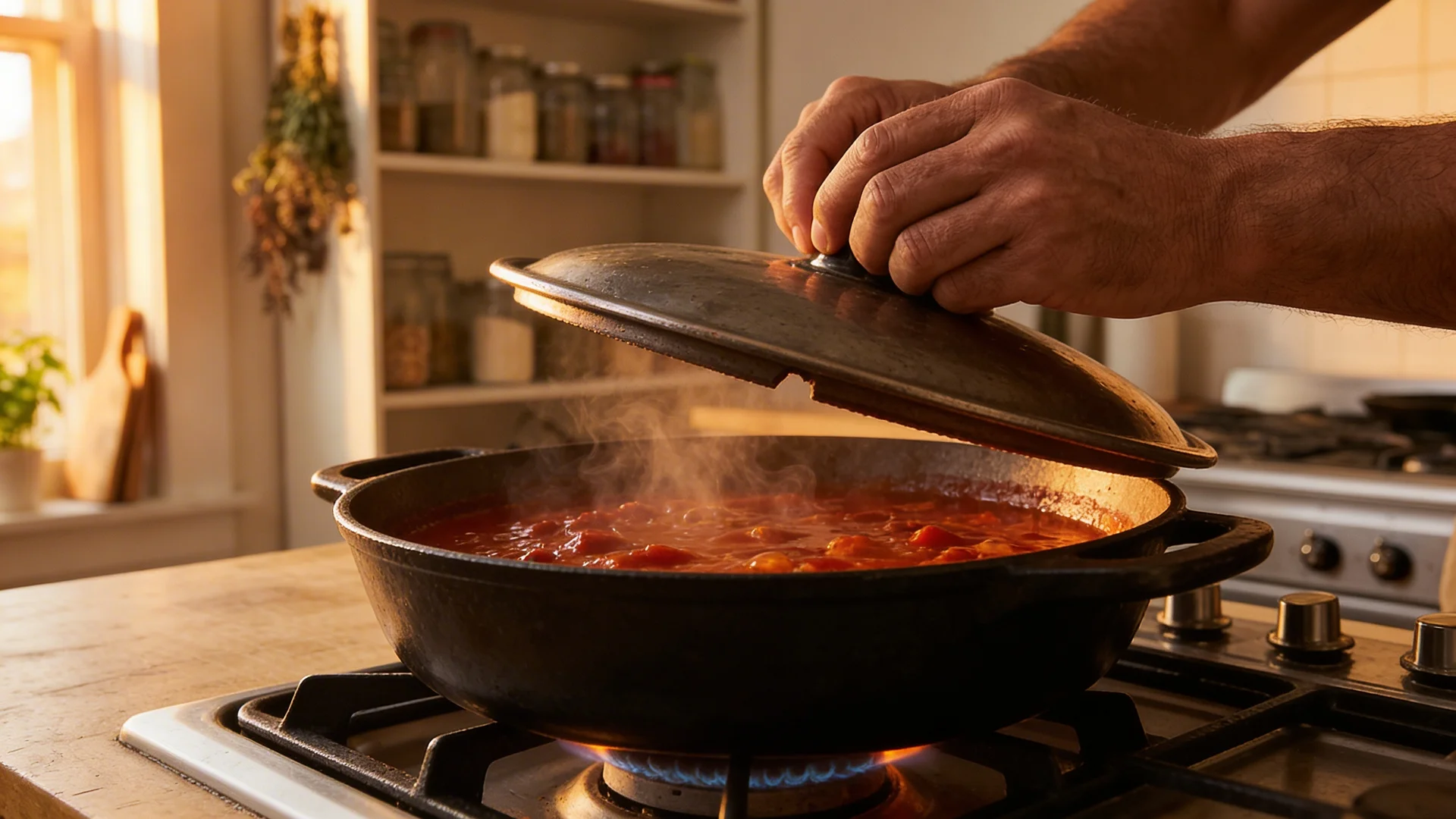
Remove the lid for the final ten to fifteen minutes and let the sauce reduce. You will watch it visibly tighten and darken.
The sauce is ready when it coats the back of a wooden spoon and holds a clean line when you draw your finger through it. The colour deepens from bright red to a darker burgundy red. The smell shifts from sharp and raw to sweet, round, and deeply savoury.
Step 4: Finish and Adjust
Remove the Parmesan rind. Add half the fresh basil and let it wilt for two to three minutes. Mash with a potato masher for a rustic texture, or run a quick pass with an immersion blender for a smoother consistency.
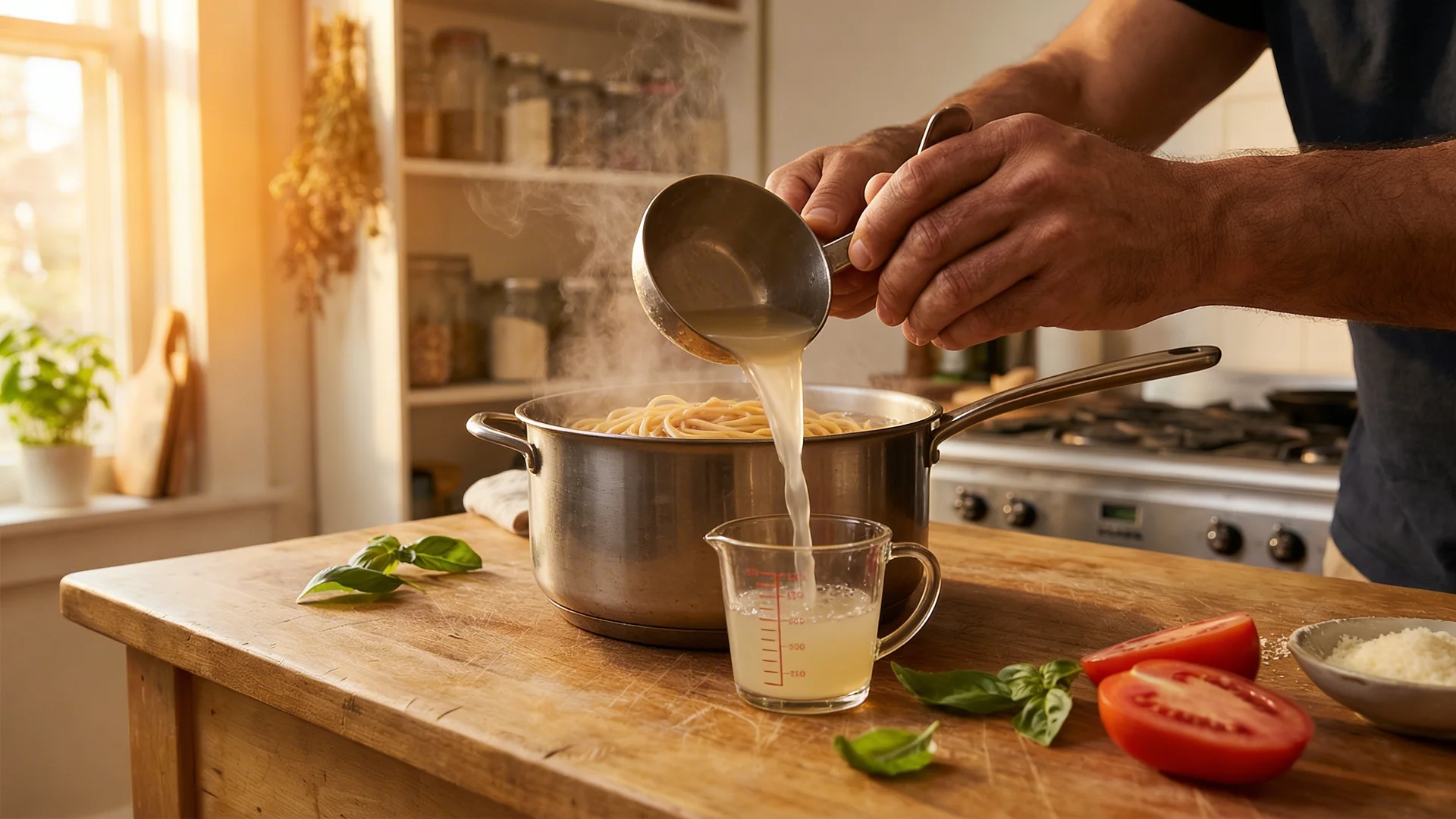
Before you drain the pasta, reserve about half a cup of the starchy cooking water. Add two to three tablespoons of this water to the sauce when you toss the pasta in.
The starch binds the sauce to each strand and prevents it from pooling at the bottom of the bowl. This single step makes a visible difference in how the final dish looks and tastes, and it is one of the most consistently useful habits I bring from restaurant cooking into a home kitchen.
Taste and adjust. If the sauce tastes sharp, add a small pinch of sugar, stir through, and taste again. Finish with a drizzle of fresh olive oil stirred through just before serving, and scatter the remaining fresh basil over the plated dish.
Approximate Nutrition Per Serving
(Sauce only, based on 4 servings)
| Nutrient | Per Serving |
|---|---|
| Calories | ~180 kcal |
| Total Fat | 14g |
| Saturated Fat | 2g |
| Carbohydrates | 12g |
| Fibre | 3g |
| Sugars | 7g |
| Protein | 2g |
| Sodium | 490mg |
(Values are estimates and will vary based on specific ingredients and portion sizes.)
Why Your Fresh Tomato Sauce Is Not Turning Out Right
Why Is My Fresh Tomato Sauce Watery?
The cause: The lid stayed fully closed throughout cooking, the simmer temperature ran too low, or the tomatoes had an unusually high water content.
The fix: Remove the lid entirely, raise the heat to an active simmer, and cook for fifteen to twenty minutes while stirring frequently. You will see the sauce tighten as the steam escapes. If it stays thin after this, stir in an extra tablespoon of tomato paste and continue uncovered for another ten minutes.
Why Does My Fresh Tomato Sauce Taste Flat?
The cause: Insufficient seasoning during cooking, aromatics that were rushed, or underripe tomatoes going into the pot.
The fix: Season in layers throughout the process. Make sure your onion and garlic are cooked long enough before the tomatoes go in. A teaspoon of fish sauce stirred in during the last ten minutes adds deep, rounded umami without any fishiness. A Parmesan rind simmered throughout helps substantially for the same reason.
Why Does My Sauce Taste Bitter or Too Acidic?
The cause: Garlic that burned in the oil, or tomatoes with a naturally high acidity.
The fix: Burned garlic has no recovery. Start your aromatics again in a fresh pan with the old batch discarded. For acidic tomatoes, add a small pinch of sugar, half a teaspoon at most, and stir it through. A tablespoon of unsalted butter swirled in at the very end rounds off harsh edges beautifully.
Why Is the Texture Grainy or Full of Skins?
The cause: Tomato skins and seeds that did not fully break down during the simmer.
The fix: Pass the finished sauce through a food mill or a fine mesh strainer, pressing with the back of a ladle to push all the flavourful pulp through while the skins and seeds stay behind.
Variations Worth Making
Roasted Tomato Version: Halve your tomatoes, toss with olive oil and salt, add a few unpeeled garlic cloves, and roast at 200°C (400°F) for 35 to 40 minutes until caramelised and slightly charred.
Squeeze the roasted garlic from its skins and blend everything together before adding to your sautéed onion. The reduction happens in the oven, so almost no additional simmering is needed, and the smoky depth is a genuinely different flavour experience from the stovetop version.
With Meat: Brown 400g of Italian sausage (casings removed) or ground beef in the pot before building the sauce, then set the meat aside and build your aromatics in the same fat. Return the meat for the full simmer. The collagen and fat it releases during cooking give the sauce a richness that a vegetable-only version cannot replicate.
With Vegetables: Sauté diced zucchini, red bell pepper, or mushrooms alongside the onion at the start. Mushrooms in particular add a meaty, umami depth that makes a vegetarian sauce feel genuinely satisfying and substantial.
Quick Weeknight Version: Use halved cherry tomatoes, skip the long simmer, and cook on medium-high heat for fifteen to twenty minutes while pressing the tomatoes down occasionally. The sauce stays brighter and fresher. Toss the pasta directly in the pan with a splash of pasta water to bring everything together.
How to Store and Reheat This Sauce
This sauce is worth batch-cooking. It takes minimal active effort, the kitchen smells extraordinary while it simmers, and it gives you a useful, high-quality base for meals throughout the week.
| Storage Method | Container | Duration |
|---|---|---|
| Refrigerator | Airtight glass container | Up to 5 days |
| Freezer | Freezer-safe bag or container | Up to 3 months |
| Freezer (ice cube tray) | Covered tray | Up to 3 months |
From the refrigerator: Add a tablespoon or two of water and warm on medium-low heat, stirring gently. The sauce thickens as it sits and the water brings it back to the right consistency.
From frozen: Defrost overnight in the refrigerator before reheating.
One thing worth knowing: this sauce tastes better the day after you make it. The flavours continue to meld overnight in a way that freshly made sauce has not yet had time to do. If you can make it ahead, you will notice the difference clearly.
What to Serve This Sauce With
- Spaghetti or linguine with Parmesan and fresh basil is the classic preparation and the one this sauce is genuinely built for.
- Penne or rigatoni work well with a thicker, chunkier version because the ridges and tubes trap the sauce inside them.
- Polenta topped with this sauce and a poached egg is one of the most effortless and satisfying meals I know how to put together.
- Shakshuka-style eggs: Warm the sauce in a wide pan, make small wells with a spoon, crack eggs directly in, cover, and cook until the whites just set. Serve with crusty bread.
- Pizza base: Reduce the sauce slightly further than normal and use it in place of jarred pizza sauce. The flavour difference is significant enough to be immediately obvious.
- White beans or farro: Spoon generously over cooked grains with crumbled feta and a handful of fresh herbs for a quick, filling bowl meal.
Frequently Asked Questions
Can you make this sauce without peeling the tomatoes?
Yes, and I do this for most weeknight versions. The skins break down during a long simmer, and a quick mash or blend handles any remaining texture. Peeling gives a smoother, more refined result, but it is entirely optional.
How do you know when the sauce is fully cooked?
The colour deepens to a darker burgundy red, the consistency coats the back of a spoon, and the smell shifts from sharp and raw to sweet and complex. If the acidity still feels forward and bright, give it another ten minutes.
How long should you simmer fresh tomato sauce?
At a minimum, 45 minutes with the lid partially on, plus ten to fifteen minutes uncovered. A total of around 60 minutes gives the best balance of fresh tomato flavour and developed depth. Up to 90 minutes deepens the richness further.
Can you use cherry tomatoes for this sauce?
Yes, and they make an excellent quick version. Cherry tomatoes are naturally high in sugar, which means they caramelise beautifully under heat and require far less cooking time, around twenty to twenty-five minutes, to produce a bright, sweet sauce with a lighter body than the Roma version.
Can you make this sauce without olive oil?
Unsalted butter works well as a substitute and produces a slightly richer, rounder flavour. The fat you use genuinely matters in a recipe with this few ingredients, so avoid neutral-tasting vegetable oils if you can.
What pasta shape works best with this sauce?
Long, thin pasta like spaghetti and linguine work best with a smooth or lightly chunky sauce because it clings evenly along the full length of the pasta. For a chunky, vegetable-heavy version, use rigatoni, penne, or fusilli so the sauce gets caught inside the shapes.
Can you freeze fresh tomato sauce?
Yes. Cool completely, transfer to freezer-safe containers, and freeze for up to three months. For shelf-stable canning, use a tested, approved recipe with the correct acid levels from a source like the National Center for Home Food Preservation. For most home cooks, freezing is the far simpler and safer option.
Why does my homemade sauce not taste like a restaurant’s?
Restaurant tomato sauces typically simmer for two hours or more, and they almost always finish with a generous amount of olive oil stirred in just before serving. That finishing oil gives the sauce its glossy, rounded quality. Both habits are easy to replicate at home and make a meaningful difference.