

When I started advising clients on window treatments over a decade ago, the question I heard more than almost any other was whether to go with blinds or curtains. Homeowners would come in genuinely torn between the two, and it took me a while to realise that the question itself was the problem.
After working through hundreds of residential spaces, from compact city apartments to large suburban family homes, I give almost everyone the same answer: layer both, and do it with intention.
Yes, you can hang curtains over blinds, and for most rooms, you absolutely should. The combination gives you something neither treatment can deliver alone: full, adjustable control over light, privacy, insulation, and visual warmth, all working together in one window.
Blinds handle the functional side, the precise, adjustable control over light and sight lines. Curtains handle the warmth, texture, and visual weight that make a room feel finished and genuinely designed. Together they perform better and look considerably richer than either would on its own.
This guide walks you through everything you need: why the combination works, how to choose the right blind and curtain for each room, how to install them properly, and the common mistakes worth avoiding before you buy a single thing.
Benefits of Layering Curtains Over Blinds
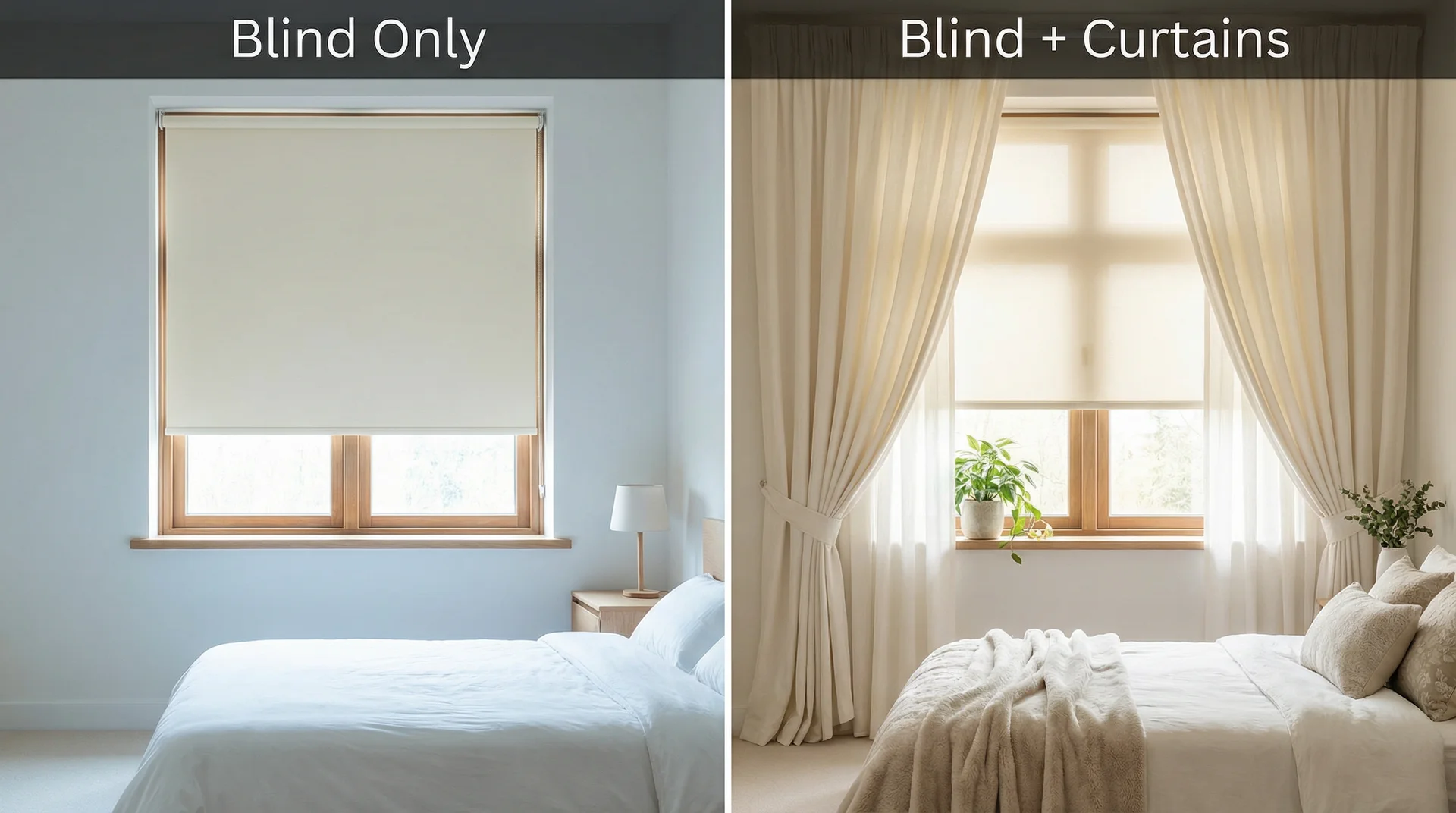
Light, Privacy, Insulation, and Style: All at Once
I visited a client’s bedroom a few years into my independent styling practice. She had invested in quality roller blinds in a warm cream, and the room still felt cold and incomplete. The blinds were doing their job on a functional level, but the space lacked softness and a sense of finish.
We added full-length linen curtains in a slightly deeper ivory, hung wide and high above the window frame, and the room transformed in a single afternoon. She messaged me the next morning to say it finally felt like a bedroom.
That experience captures why layering works, and it goes well beyond aesthetics.
Better Light Control at Every Hour
Blinds let you tilt, raise, and lower to manage how much light enters. Curtains, especially lined or blackout versions, let you block light entirely or diffuse it into a soft ambient glow. Together, the two give you a near-infinite range of light conditions.
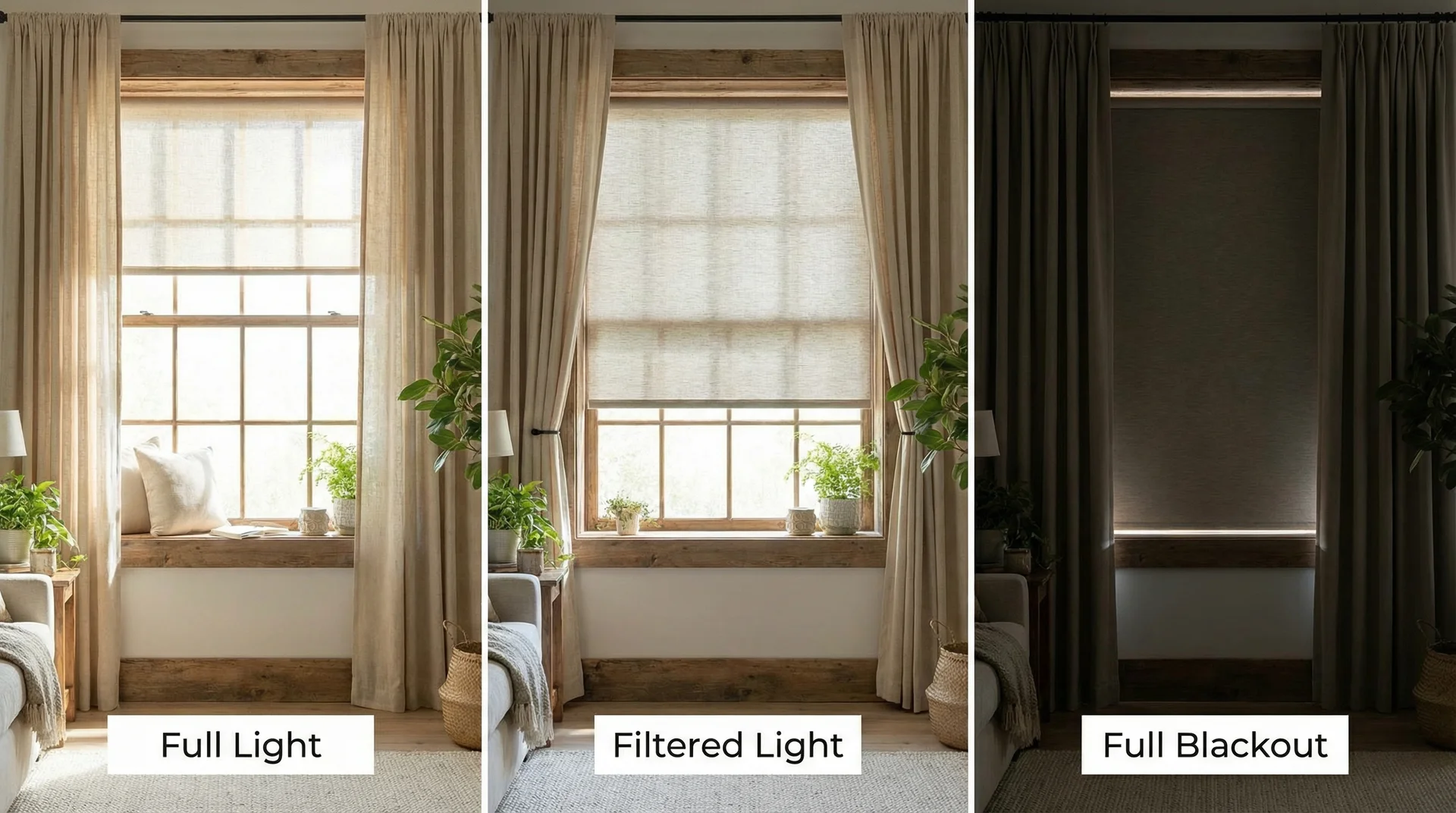
Open both for a fully bright room, keep the blinds down with curtains drawn back for filtered daylight, or close everything for complete darkness. Blackout curtains layered over roller blinds create the kind of sleep environment that light sleepers and shift workers genuinely depend on.
Privacy That Adapts Around Your Life
The common frustration I hear is that one window treatment forces a trade-off: privacy costs you light. Layering resolves this entirely. You keep the blinds down for daytime privacy while the sheer curtain softens the incoming light.
In the evening, when interior lighting makes a space visible from outside, you draw both layers, and the window becomes completely private. This flexibility matters most in ground-floor rooms, street-facing living areas, and home offices where you need to work without feeling watched.
Measurable Energy Savings
Windows account for 25 to 30 percent of residential heating and cooling energy use, according to the U.S. Department of Energy. Adding a fabric layer over your blind creates an additional thermal buffer between the glass and the room.
Thermal or interlined curtains reduce drafts noticeably, and during summer, they reflect solar heat before it fully enters the space. Clients in older homes with single-pane windows consistently notice a difference in room temperature after adding curtain layers over existing blinds.
A Visual Depth That Single Treatments Cannot Match
A roller blind alone looks flat and purely functional. A curtain panel alone can look underdressed, especially in high-ceilinged or wide-windowed rooms.
Together, they create a visual anchor for the wall, frame the window with intention, and give the room the quality of a space that has been genuinely decorated rather than just furnished.
Where This Combination Works Best, Room by Room
| Room | Primary Need | Recommended Combination |
|---|---|---|
| Living Room | Versatile light and warmth | Sheer or linen curtain over wooden or faux-wood Venetian blind |
| Bedroom | Full darkness and insulation | Blackout curtain over roller or cellular blind |
| Home Office | Glare control with natural light | Light-filtering curtain over an aluminium Venetian blind |
| Dining Room | Evening privacy and atmosphere | Linen or velvet curtain over a Roman blind |
| Kitchen | Easy maintenance and light | Café-length curtain over slim roller blind |
| Kids’ Room | Complete blackout and softness | Printed blackout curtain over blackout roller blind |
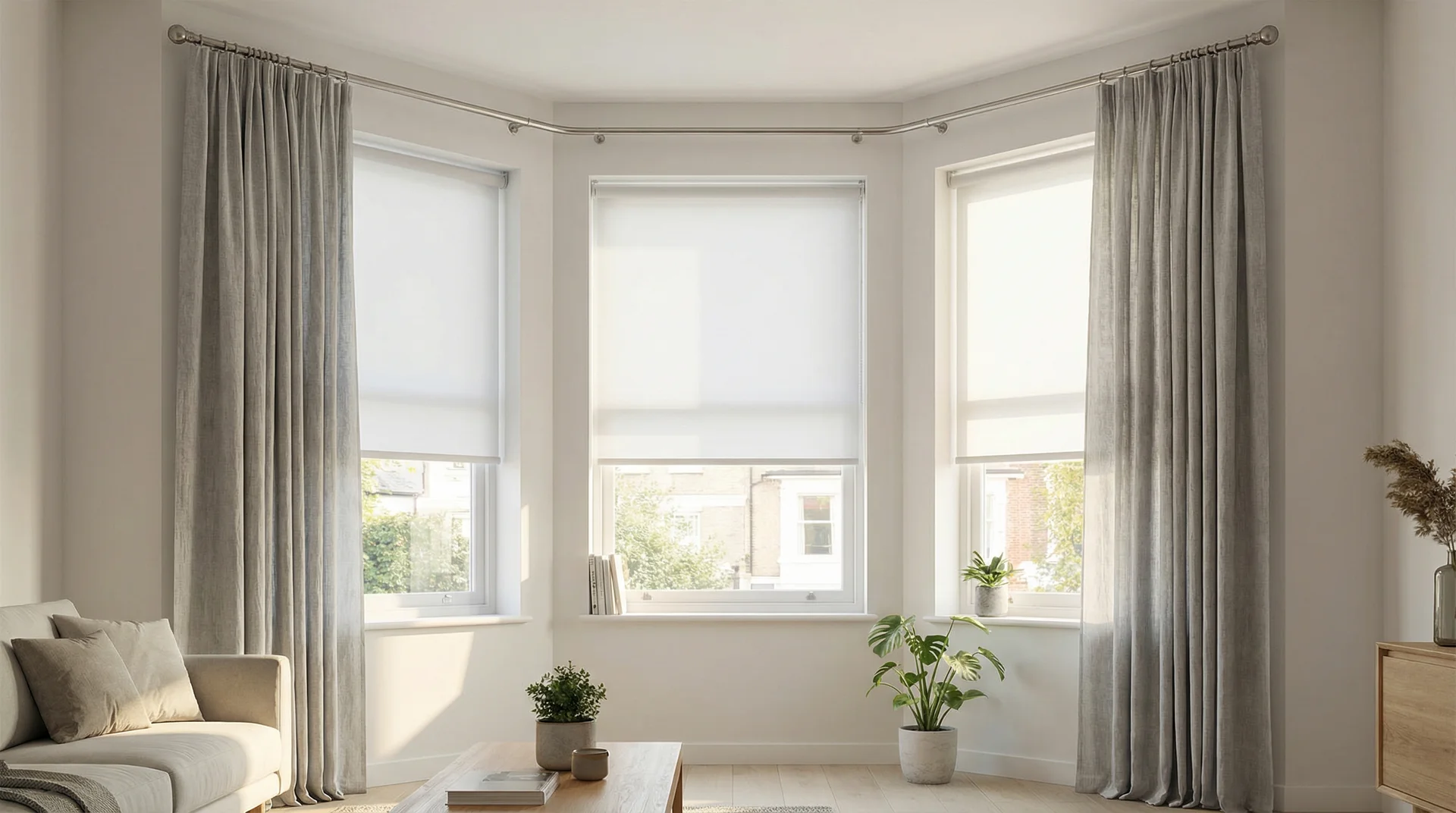
| Bay Window | Flexibility across multiple panes | Individual roller blinds per pane with one continuous curtain rod spanning the full bay |
The living room benefits enormously from layering because the room’s needs shift throughout the day, from bright morning light to a softer evening atmosphere. The bedroom demands the most because your sleep quality depends directly on it.
Home offices sit in between: you need enough natural light to stay alert, but glare on a screen genuinely disrupts focus. Aluminium Venetian blinds work particularly well as the base layer here because you can tilt the slats to redirect light toward the ceiling rather than straight at the desk.
Bay windows deserve a specific mention because they trip people up.
The most practical approach I have used repeatedly is to mount individual blinds inside each pane of the bay for precise light control per section, then run a single curtain rod that follows the bay’s angle with full-length curtains that can be drawn across the whole bay at once.
It avoids the visual clutter of separate curtain sets per pane and gives the bay window a cohesive, considered finish.
Choosing the Right Blinds as Your Base Layer
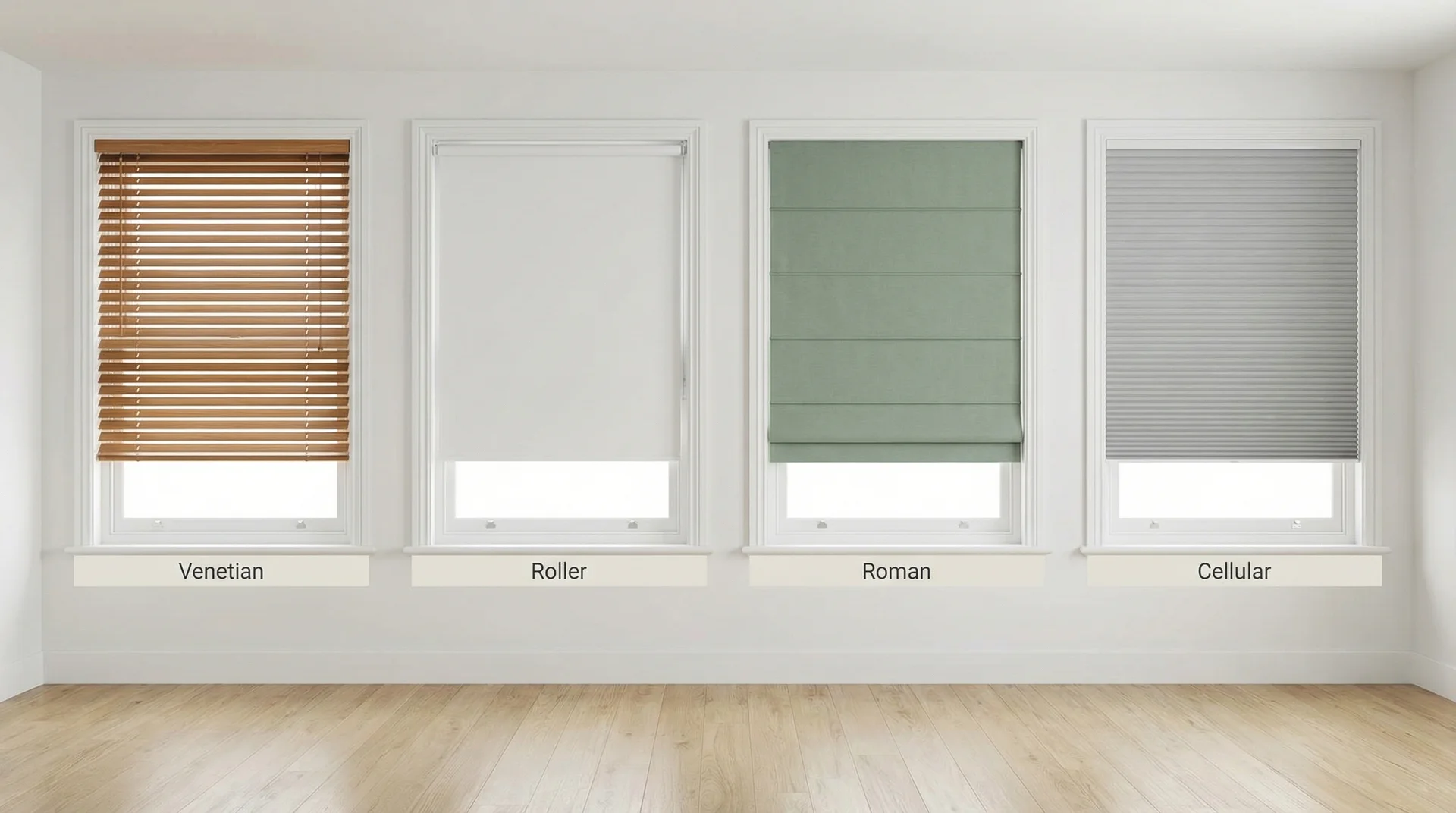
The blind forms the functional backbone of your layered window treatment. Its job is precision: light angle, privacy level, and a clean visual base for the curtain above.
Venetian Blinds (Wooden and Faux-Wood)
These are among the most versatile bases for layering. The slats give you precise directional control over light, and the warmth of wood grain or the clean finish of faux-wood suits a wide range of interior styles.
Wooden Venetian blinds pair particularly well with linen, cotton, and natural fibre curtains because the textures share the same material language. Choose a cord-free or wand-operated version where possible.
Cord mechanisms can tangle with curtain panels when both sit close to the window, and managing that daily becomes frustrating quickly.
Roller Blinds
Roller blinds are probably the most popular base layer choice, and the reason is straightforward: they sit flat against the window with minimal visual presence, so they do not create bulk when curtains are drawn back.
They come in every opacity from sheer solar fabrics that filter UV light while maintaining the view, through to full blackout. For bedrooms, a blackout roller blind under blackout curtains creates total light elimination that neither treatment achieves alone.
Roman Blinds
Roman blinds carry their own visual weight through their folded fabric structure, so layering curtains over them works best when the curtain panels are lightweight or sheer.
This allows the Roman blind to remain visible as a decorative element rather than disappearing behind heavy fabric.
The pairing works beautifully in dining rooms and living rooms where the blind is in a patterned or textured fabric, and the curtains are in a solid, complementary tone.
Cellular and Honeycomb Blinds
These win on insulation. Their honeycomb structure traps air and creates a thermal barrier that other blind types cannot match.
If energy efficiency is a priority, particularly in north-facing rooms or older homes with single-pane glazing, cellular blinds make an excellent base. They look clean and minimal, which means they sit quietly behind curtains without adding any visual bulk.
What to Avoid
Some blind types create practical problems under curtains. Venetian blinds with exposed pull cords tangle with curtain panels regularly. Very deep Roman blinds with a thick fabric stack at the top can push curtain panels away from the window when raised, creating an uneven hang.
Cheap roller blinds with a back-rolling mechanism often sit away from the window glass, leaving a gap that allows light to bleed around the edges of a blackout curtain.
Spending a little more on quality brackets and a flush-fitting blind mechanism solves this before it becomes an ongoing annoyance.
Choosing the Right Curtains to Layer Over Blinds
The curtain layer is where you make your design statement, and it is also where I see the most common errors, usually because people treat the curtain as an afterthought once the blind is already in.
Fabric and Weight: Setting the Tone
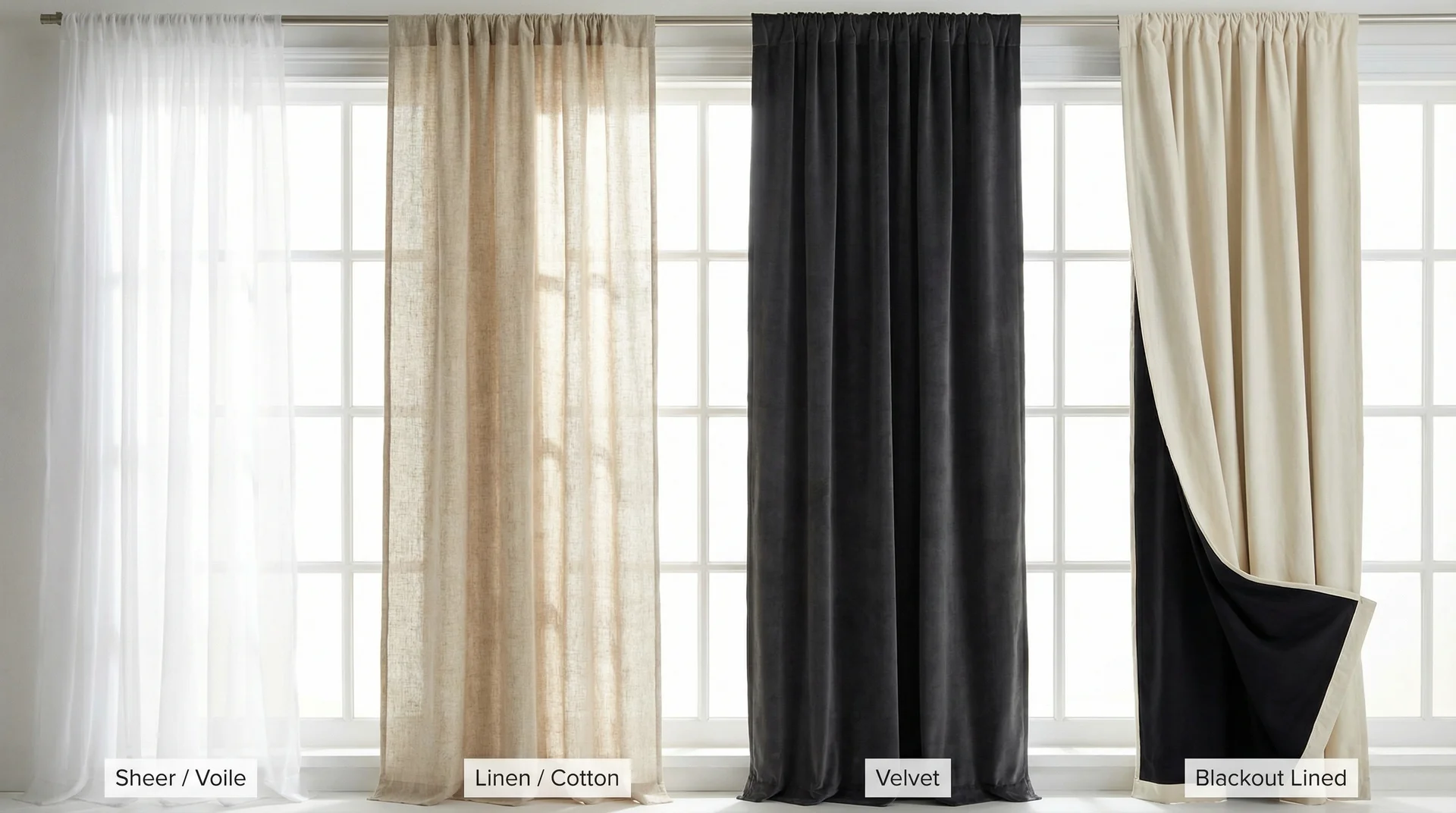
- Sheers and voiles let light pass through softly and create an airy, relaxed quality. They work well layered over a blind that handles the privacy when needed, especially in living rooms and dining rooms.
- Linen and cotton offer versatility. They have enough weight to hang and drape well, provide light filtering, and suit a wide range of interior styles from casual to formal.
- Velvet and heavy weaves make a bold statement and insulate effectively. I have used velvet curtains over roller blinds in north-facing bedrooms where the lack of direct sun made the room feel perpetually cold. The velvet changed both the temperature and the mood of the space noticeably.
- Blackout-lined curtains are the functional champion. The lining is applied to the reverse, so the face fabric can be anything from sheer linen to a patterned cotton, while the back does the heavy lifting of blocking light and insulating the room.
Length and Width: The Details That Define the Outcome
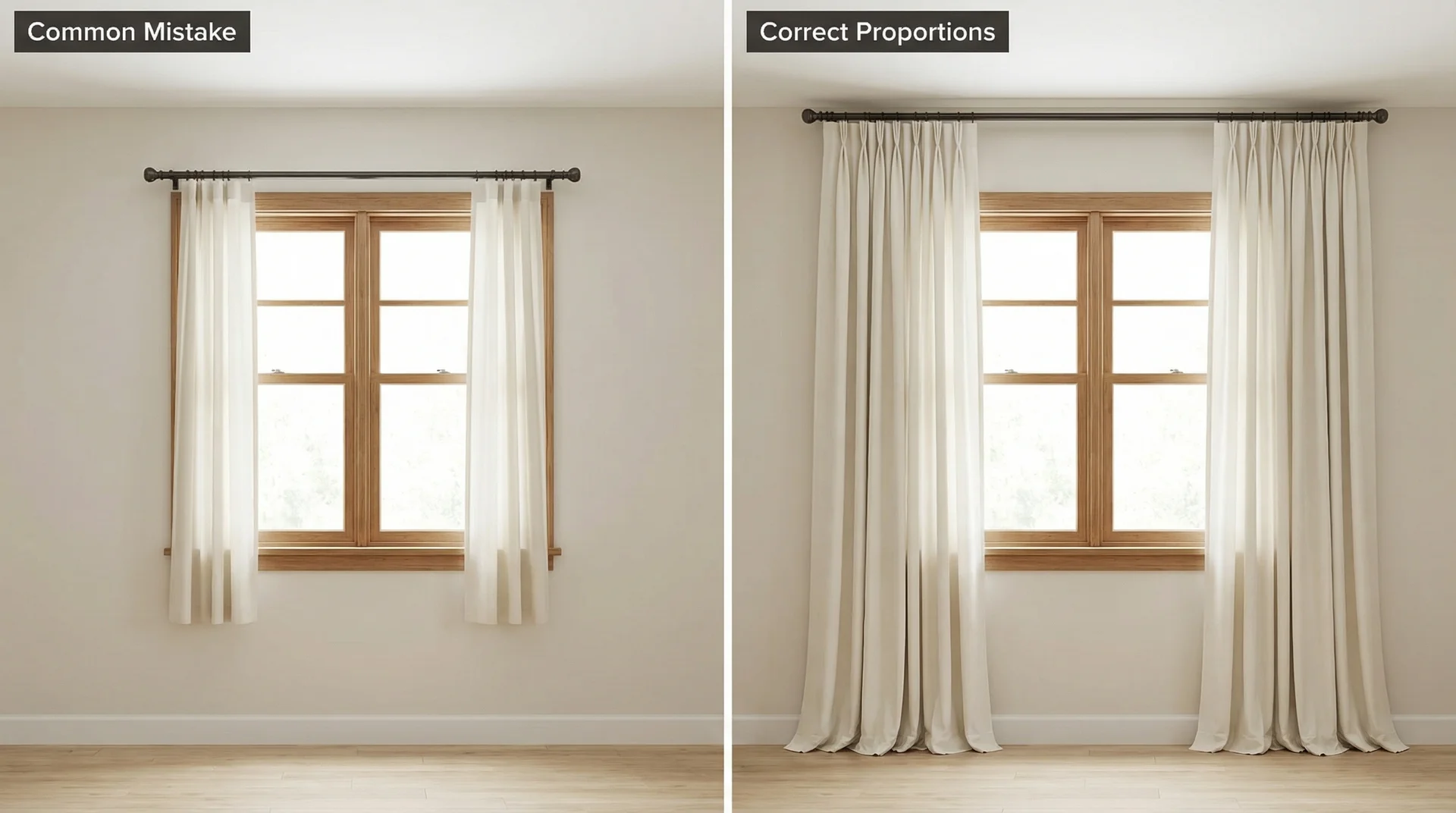
Curtains should touch the floor or hover no more than half an inch above it. Panels that stop at the sill or hang somewhere mid-wall look unfinished and make ceilings feel lower. A slight pool of fabric on the floor adds a sense of luxury in bedrooms and dining rooms, though it works less well in busy family living areas.
For width, each curtain panel should measure 1.5 to 2.5 times the width of the window. This fullness creates the beautiful drape when closed and the elegant gather when open, which makes a treatment look considered.
The most common mistake I see is buying panels that are just wide enough to cover the window, which results in flat, thin curtains that look mean regardless of how good the fabric is.
Heading Styles and Their Visual Effect
| Heading Style | Visual Effect | Best Suited For |
|---|---|---|
| Eyelet / Grommet | Modern, clean, structured | Contemporary and Scandinavian interiors |
| Pinch Pleat | Formal, tailored, classic | Traditional, transitional, and formal spaces |
| Tab Top | Casual, relaxed | Informal living areas and casual bedrooms |
| Rod Pocket | Soft, gathered, romantic | Sheer curtains, cottage, and country-style rooms |
| Wave / S-fold | Sleek, minimal, architectural | Modern interiors with high ceilings |
Colour, Texture, and Putting the Layers Together
The colour relationship between the blind and the curtain determines whether the window treatment feels intentional or accidental.
Keeping both layers in the same tonal family creates a calm, cohesive window. A cream roller blind beneath ivory linen curtains reads as a single, considered statement. I use this approach in spaces where the furniture and accessories already carry the visual interest, and the window needs to frame rather than compete.
Introducing a deeper curtain over a lighter blind creates visual depth and makes the window a focal point. Navy curtains over white roller blinds in a living room with neutral walls anchor the colour story of the space without overwhelming it.
For texture mixing, the principle I return to consistently is to vary texture across the layers while keeping tonal weight consistent. A smooth roller blind pairs well with a textured linen curtain. A woven Roman blind pairs well with a silky sheer. When both layers carry heavy texture simultaneously, the window starts to feel visually busy rather than layered.
The best window treatments disappear into the room. You notice the light they create and the atmosphere they contribute, but you do not stand in the doorway thinking about the curtains. That is the goal.
How to Hang Curtains Over Blinds: A Step-by-Step Process
This is the section where most guides give vague advice. Here is the process I follow in installations and recommend to clients doing this themselves.
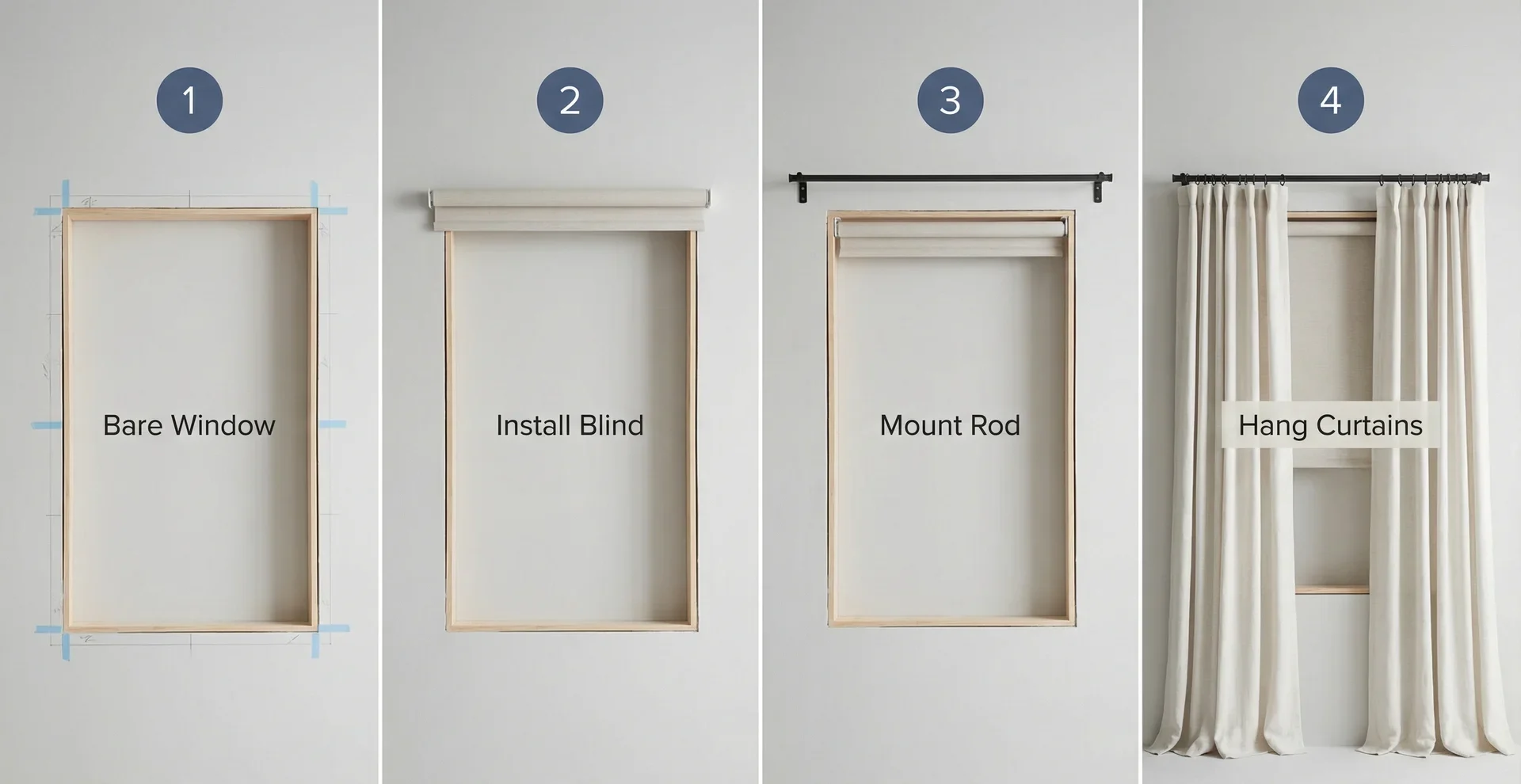
Step 1: Install the blind first
Mount the blind bracket before anything else, because the blind’s position determines where the curtain rod needs to sit. For layering, an outside-mount blind, fixed to the wall above the frame rather than inside the recess, is almost always the better choice. It ensures both the blind and the curtain rod can clear the window frame without interfering with each other.
Step 2: Mark the curtain rod position
Hold the rod bracket against the wall at your intended height and mark the position with a pencil.
The rod should sit at least 4 to 6 inches above the window frame, and ideally closer to the ceiling where the room’s height allows. Use a spirit level across both bracket marks before drilling anything.
Step 3: Set the rod width
The rod should extend 6 to 12 inches beyond the window frame on each side. This ensures the curtain fabric stacks onto the wall when open rather than blocking part of the glass, and it makes the window appear wider than it actually is.
Step 4: Choose the right bracket and rod for the curtain weight
A standard single bracket holds most lightweight to medium-weight curtains. For heavy-lined curtains or panels over 2.5 metres in length, use a heavier gauge rod and add a centre support bracket to prevent the rod from bowing under the weight.
Step 5: Hang and adjust
Hang the curtain panels and allow them to settle for 24 to 48 hours before making any final adjustments to the length or hook positions. Fabric, particularly linen and cotton, relaxes and stretches slightly in the first day or two after hanging.
Step 6: Check the double curtain rod option
If you want to hang a sheer and a heavier curtain on the same window, a double curtain rod carries both tracks on a single bracket system. The sheer sits on the inner rod, closest to the glass, and the heavier panel sits on the outer rod.
This gives you the full range of light options: sheer only, heavy only, or both drawn together, without needing to manage two separate systems.
Common Styling Mistakes to Avoid
I want to be direct about these because they are easy to overlook and genuinely affect how the finished treatment looks.
Hanging the rod too low and too narrow. This is the most common and most impactful mistake. A rod positioned just above the window frame makes the window look small and the ceiling feel low. Mounting high and extending the rod wide costs nothing extra and makes one of the most dramatic visual differences of any single installation decision.
Buying curtains that are not full enough. Flat, thin panels make even beautiful fabric look poor. Always calculate the required width based on 1.5 to 2.5 times the window measurement, not just enough to cover the glass. To know how to get the right width of the curtain for every window and door, take a look at this blog where I share all the details!
Choosing a blind that clashes in style with the curtain. A heavy, ornate Roman blind under a sleek grommet-headed curtain creates visual conflict because the two treatments are speaking different design languages. The layers should feel like they were chosen together, even if the blind handles function and the curtain handles aesthetic.
Ignoring the window recess depth. A very shallow window recess combined with an inside-mount blind can push curtain panels away from the wall, leaving an awkward gap between the fabric and the window. Check the recess depth before committing to an inside-mount option.
Skipping the blackout liner in bedrooms. A sheer or unlined curtain over a non-blackout blind lets light bleed around every edge of both treatments. If the bedroom is the priority space, invest in a blackout blind and a blackout-lined curtain. The compounding effect of both layers eliminates almost all light penetration.
Seasonal Adaptability: Getting More From Your Investment
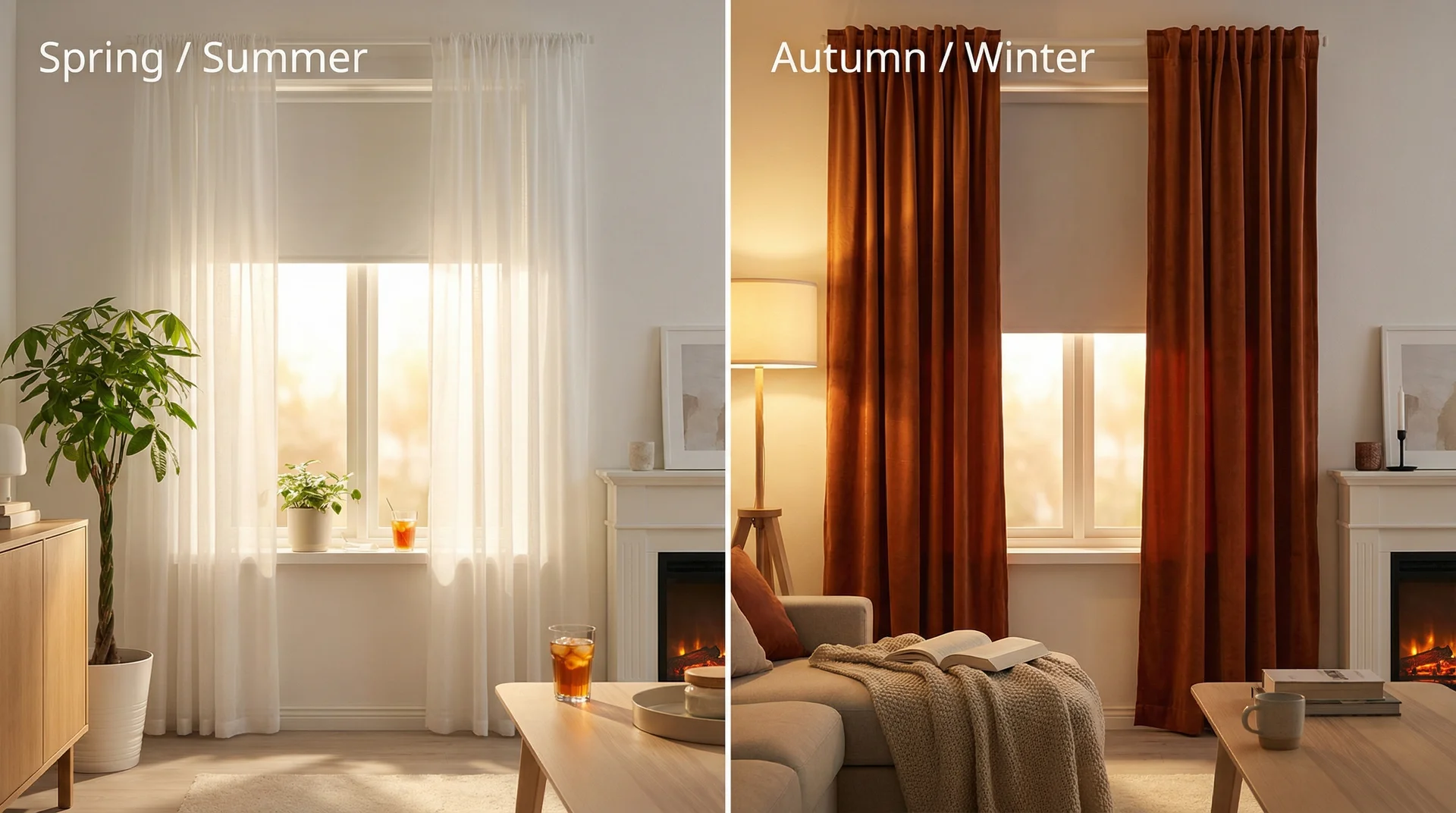
One of the practical advantages of layering that rarely gets enough attention is how easily you can refresh a room seasonally by swapping only the curtain layer. The blind stays fixed as your functional base, and the curtain becomes changeable.
- Spring and Summer: Swap to a sheer voile or lightweight linen curtain over a solar roller blind. The room feels lighter, airier, and seasonally appropriate without any hardware changes.
- Autumn and Winter: Bring back a thermal-lined or velvet curtain over a cellular or blackout blind. The heavier fabric insulates, adds visual warmth, and shifts the room’s atmosphere for the colder months.
The brackets and rod stay in place. The curtain panels unhook in minutes. You get a noticeably different room twice a year for the cost of a second set of panels.
Frequently Asked Questions
Do curtains go in front of or behind blinds?
Curtains always go in front of the blinds. The blind mounts directly to the window frame or wall, either inside the recess or on the wall above the frame.
The curtain rod mounts above the window, in front of and above the blind, so the curtain panels hang over and in front of the blind when drawn closed.
What type of blind works best under curtains?
Roller blinds work best for most rooms because they sit flat and minimally against the window without adding bulk. Venetian blinds, both wooden and faux-wood, work very well in living rooms and home offices.
Cellular blinds are the best choice for maximum insulation. Roman blinds work under curtains but pair better with lighter, sheer curtain panels rather than heavy lined ones.
Can you hang curtains over blinds without drilling?
Yes, in some cases. Tension rod systems work for lighter-weight curtain panels in narrower windows, typically up to around 120 centimetres wide.
Adhesive mounting strips and over-the-door rod hooks are available for no-drill installation, though these are most reliable for lightweight curtain panels.
For full-length, heavy, or blackout-lined curtains, drilled and anchored brackets are considerably more stable and safe over the long term.
Do curtains and blinds together look good in a small room?
Yes, when installed correctly. Mounting the rod close to the ceiling and extending it well beyond the window frame on each side makes the window appear significantly larger and the ceiling taller.
In small rooms, choosing lighter fabrics and quieter colours in the same tonal family prevents the window from feeling heavy or overwhelming.
What is the difference between a double curtain rod and two separate rods?
A double curtain rod carries two tracks on a single bracket system, one for the sheer inner panel and one for the heavier outer panel. It is neater, quicker to install than two separate rods, and keeps both panels aligned.
Two separate rods can achieve the same result but require more precise placement to ensure both rods sit at the same height and the panels do not interfere with each other.
A Final Word on Getting It Right
After a decade of working through these decisions with homeowners, the thing I come back to consistently is that the best window treatments serve the way you actually live in a room. Every choice, from blind type to curtain fabric to hanging height, should start from a clear understanding of what you need the window to do.
Layering curtains over blinds gives you the widest range of options of any window treatment approach. You get control over light across its full range, adaptable privacy, real insulation value, and a visual richness that a single treatment rarely achieves.
The three things worth prioritising above everything else:
- Hang the rod high and wide. This single decision improves the proportions of almost every window in every room.
- Buy enough fabric. Curtain panels need 1.5 to 2.5 times the window width to drape beautifully. Anything less, and the fabric looks thin regardless of quality.
- Match the blind to the room’s function first. Style comes from the curtain layer. Let the blind do its practical job without compromise.
Window treatments tend to be the last design decision in a room and the first thing a visitor registers when they walk in.
Getting them right is one of the highest-impact improvements you can make to a living space, and the layered approach gives you the most flexibility to get that right and to keep refining it as your space and your life evolve.