
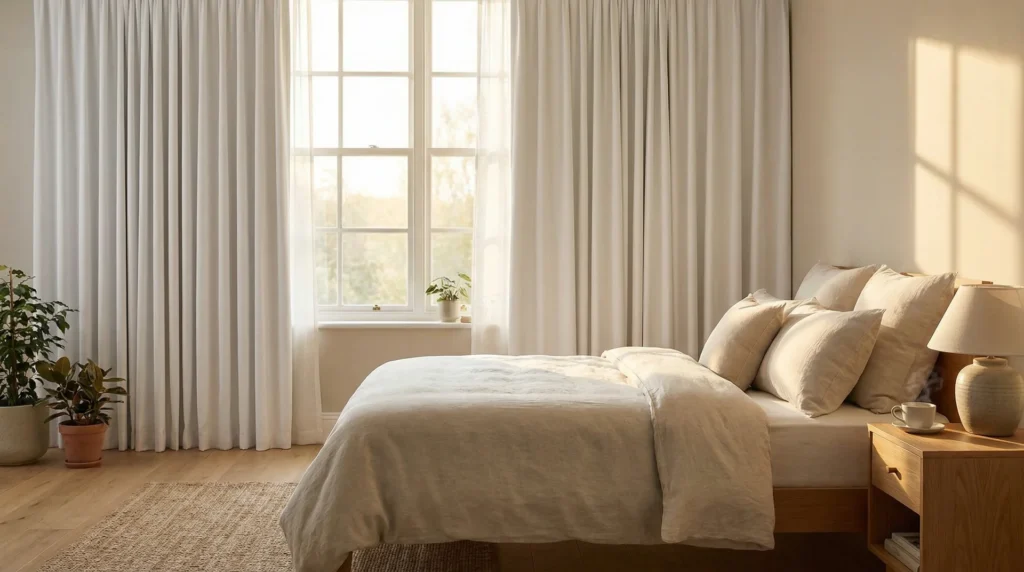
Yes, blackout curtains genuinely help with heat. I want to give you that answer immediately because you are probably sitting in a warm room, wondering whether swapping curtains will actually make a difference or just look nice. The answer is both.
Blackout curtains reduce the amount of solar heat that enters your home through your windows. When you pick the right ones and hang them correctly, you can feel a difference within a week of putting them up.
Rooms I have worked on have dropped anywhere from 3 to 8°F in perceived temperature simply by replacing inadequate window treatments with proper thermal blackout curtains.
I have spent over a decade working with homeowners on residential interiors, first as a design consultant for a regional furniture retailer and then as an independent interior styling advisor.
Windows come up in nearly every project, and heat management through window treatments remains one of the most underrated fixes a homeowner can make. I have walked into rooms that felt like ovens and left them feeling noticeably cooler, purely by recommending the right curtains and showing clients how to hang them properly.
This piece covers how blackout curtains actually work, what to look for when buying, the installation mistakes that cancel out every benefit, and where they perform best, room by room. I also want to be upfront about what they cannot do, because understanding the limits helps you use them far more effectively.
Why Your Windows Let In More Heat Than You Realise
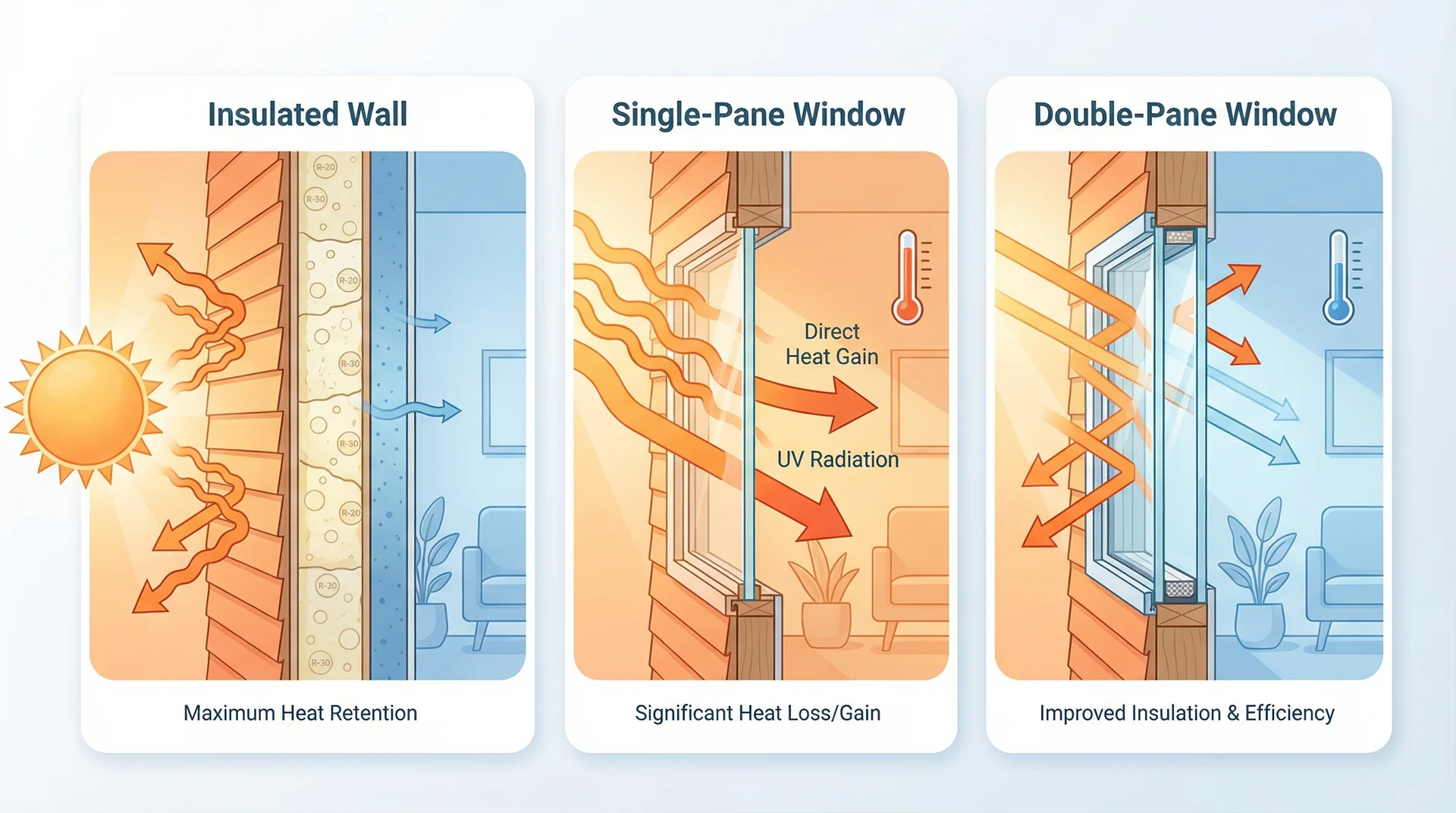
Windows account for roughly 25 to 30 percent of residential heating and cooling energy use, according to the U.S. Department of Energy.
Your walls have insulation. Your roof has insulation. Your windows, unless you have invested in double or triple glazing, are essentially a thin sheet separating your living space from the full force of the sun.
When sunlight hits glass, a portion passes straight through and warms every surface inside your room, floors, sofas, and walls. They absorb that radiant energy and release it back as heat.
This process is called solar heat gain, and it explains why south and west-facing rooms feel dramatically warmer in the afternoon than north-facing ones.
I measured the temperature difference between a southwest-facing living room and a north-facing bedroom in the same townhouse once. Same floor, same air conditioning unit running continuously, and the difference was nearly 8°F. The only real variable was window direction and the absence of any meaningful window treatment.
The curtain becomes your first line of defense. It intercepts sunlight before it enters the room and converts it into heat.
How Blackout Curtains Actually Block Heat
Understanding the mechanism helps you buy smarter, so I want to walk you through this clearly.
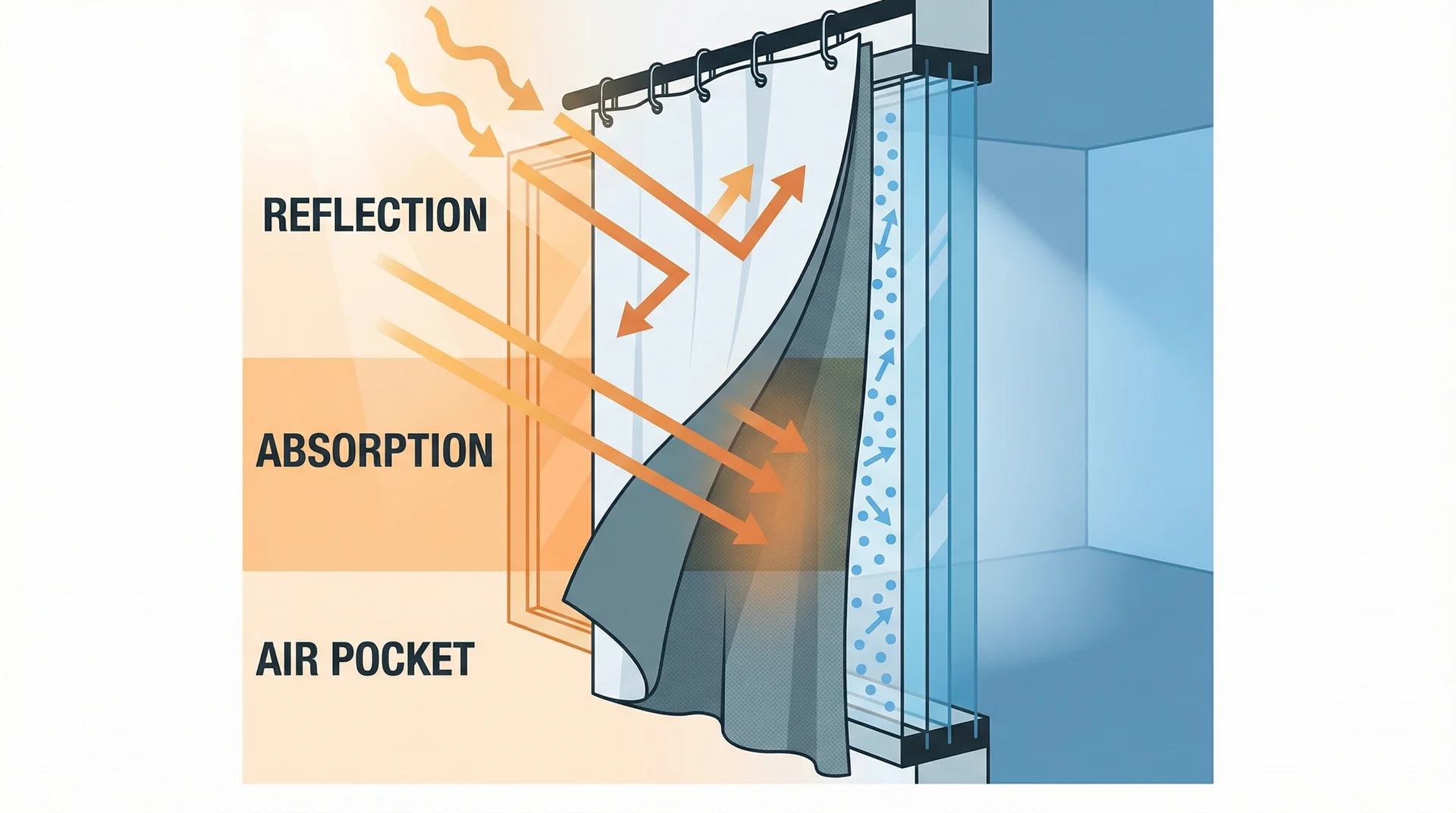
Reflection
Lighter-coloured blackout curtains with a reflective or white backing bounce incoming solar radiation away from the window before it converts into heat inside your room. This is the most effective thermal function a curtain can perform. The reflective backing faces the window; the decorative fabric faces your room. You lose nothing aesthetically.
Absorption with Controlled Release
Darker blackout curtains absorb solar radiation rather than reflecting it. This still prevents heat from radiating directly into your space, but the fabric does warm up and can re-release some heat slowly. Less ideal for peak summer heat, but still significantly better than no treatment at all.
The Air Pocket Effect (Thermal Insulation)
This one surprises most people. When a blackout curtain hangs close to a window with minimal side and top gaps, it traps a thin layer of still air between the fabric and the glass.
That air pocket slows the transfer of heat from the hot glass into your room. The same principle works in winter, slowing warm indoor air from escaping outward, which is exactly why blackout curtains are a year-round investment, not a seasonal one.
Blackout Curtains vs. Thermal Curtains: Are They the Same Thing?
This question comes up on every product page and in nearly every client conversation I have had, so I want to address it directly.
Blackout curtains are designed primarily to block light. Their dense, tightly woven construction also gives them some thermal properties, but not every blackout curtain is optimised for heat management.
Thermal curtains are designed specifically to insulate. They typically feature a separate foam or bonded polyester lining that creates a stronger barrier against temperature transfer. They may or may not block 100 percent of light.
The best option for heat specifically is a blackout curtain with a thermal lining, a product that does both jobs. These are widely available, clearly labelled, and sit comfortably in the mid-price range.
When I advise clients on window treatments for warm rooms, this is always the combination I recommend first. If you see a curtain labelled simply as “blackout” with no mention of thermal or insulating properties, check the construction details before assuming it will perform well in summer.
Do Blackout Curtains Help at Night Too?
During the day, blackout curtains reduce heat gain by blocking solar radiation. At night, the sun is no longer a factor. What the curtains do instead is slow the release of heat that has already built up inside the room, similar to how they trap still air against a cold window in winter.
In practice, this means that if you keep blackout curtains closed all day in a very hot room without any ventilation, you may find the room holds heat into the evening.
The solution is straightforward: open windows or run ventilation from late evening onwards, and let the cooler night air replace the warm air before closing the curtains again for sleep.
Used this way, blackout curtains actively support a cooler sleeping environment by maintaining the overnight temperature once the room has been ventilated and cooled down.
The rooms I have styled with blackout curtains specifically for sleep comfort always follow this pattern: curtains closed during the heat of the day, room ventilated in the evening, curtains drawn again before bed to hold the cooler air in place overnight.
What the Research Actually Shows
The U.S. Department of Energy states that medium-coloured draperies with a white plastic backing can reduce heat gain by approximately 33 percent.
For a room that takes the full force of afternoon sun, a one-third reduction in solar heat gain can mean the difference between a usable space and one you avoid from noon onwards.
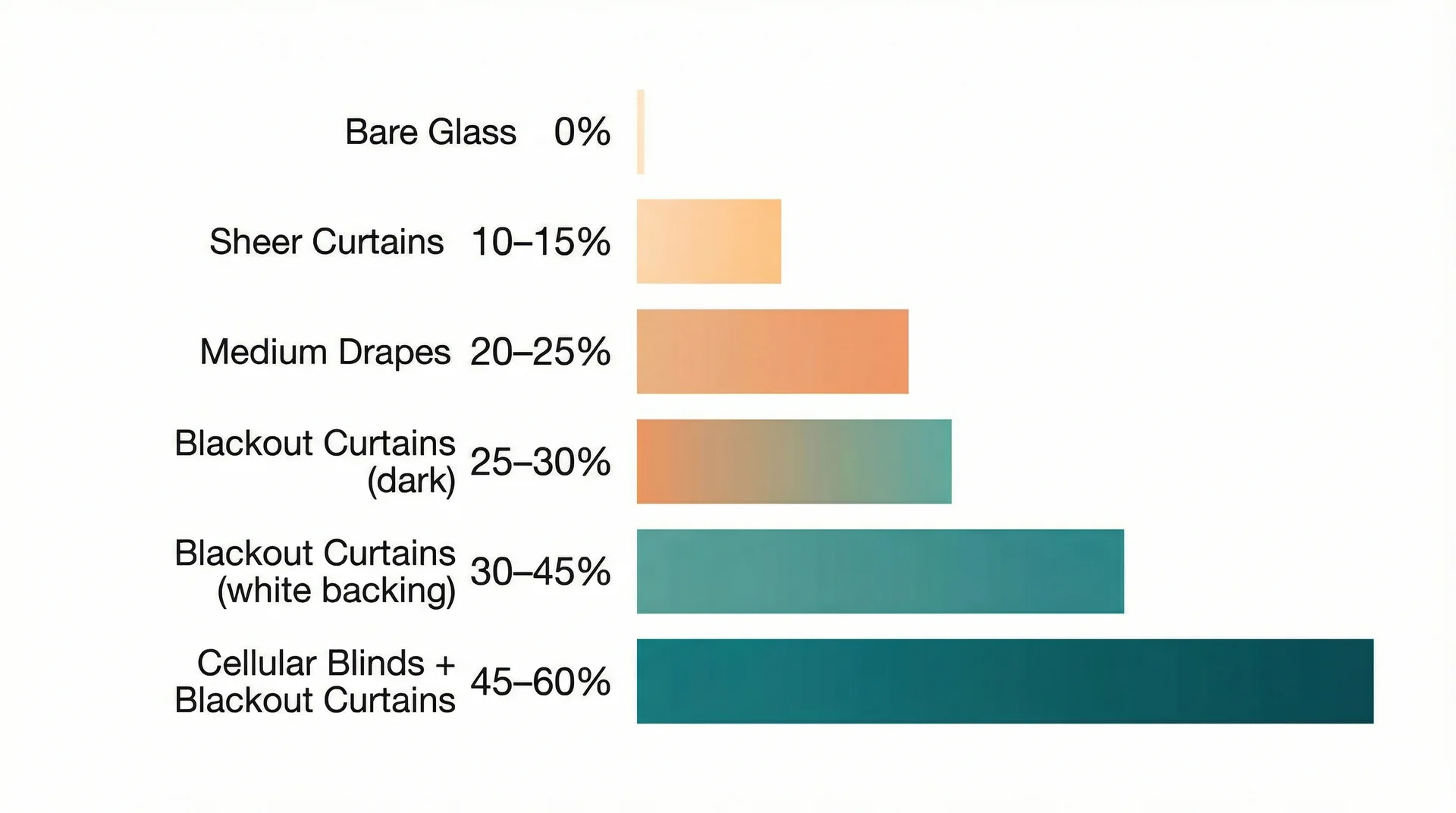
Here is how different window treatment options compare:
| Window Treatment | Estimated Heat Gain Reduction |
|---|---|
| No treatment (bare glass) | 0% |
| Standard sheer curtains | 10 to 15% |
| Medium-coloured drapes | 20 to 25% |
| Blackout curtains (dark colour) | 25 to 30% |
| Blackout curtains with white or reflective backing | 30 to 45% |
| Cellular blinds layered with blackout curtains | 45 to 60% |
(Sources: U.S. Department of Energy; Lawrence Berkeley National Laboratory window treatment studies.)
The layered combination in that last row delivers the most dramatic results in my experience. I started recommending cellular blinds plus blackout curtains for south-facing master bedrooms around five years ago.
The cellular blind creates a tight insulating layer at the glass; the blackout curtain adds reflectivity and eliminates remaining light gaps. Clients consistently report that this combination feels like a different room.
What to Look for When Buying Blackout Curtains for Heat
The word “blackout” on a label tells you about light blocking. It tells you almost nothing about thermal performance. Here is what to actually look for:
Quick Buying Checklist
- Triple-weave construction with three bonded fabric layers, with a dense middle layer. Hold the curtain up to a lamp in the store or at home. If you can clearly see light through it, it will not perform well thermally.
- Thermal or insulating lining is a separate layer of acrylic foam or bonded polyester sewn into the back. This does the heavy insulation work.
- White or pale window-facing side reflective backing reduces heat gain significantly compared to dark-backed panels.
- A weight above 300 grams per square metre means a heavier fabric holds more still air within its weave. Quality thermal blackout curtains typically range from 300 to 500 grams per square metre.
- Tightly woven polyester or polyester-cotton blend natural fibres alone rarely achieve the density needed for genuine thermal performance.
I carry a small flashlight when I visit fabric showrooms with clients. I hold it behind a curtain sample. If the light barely penetrates, we are in the right territory. If I can clearly see the fabric’s individual threads, we move on.
Color Strategy
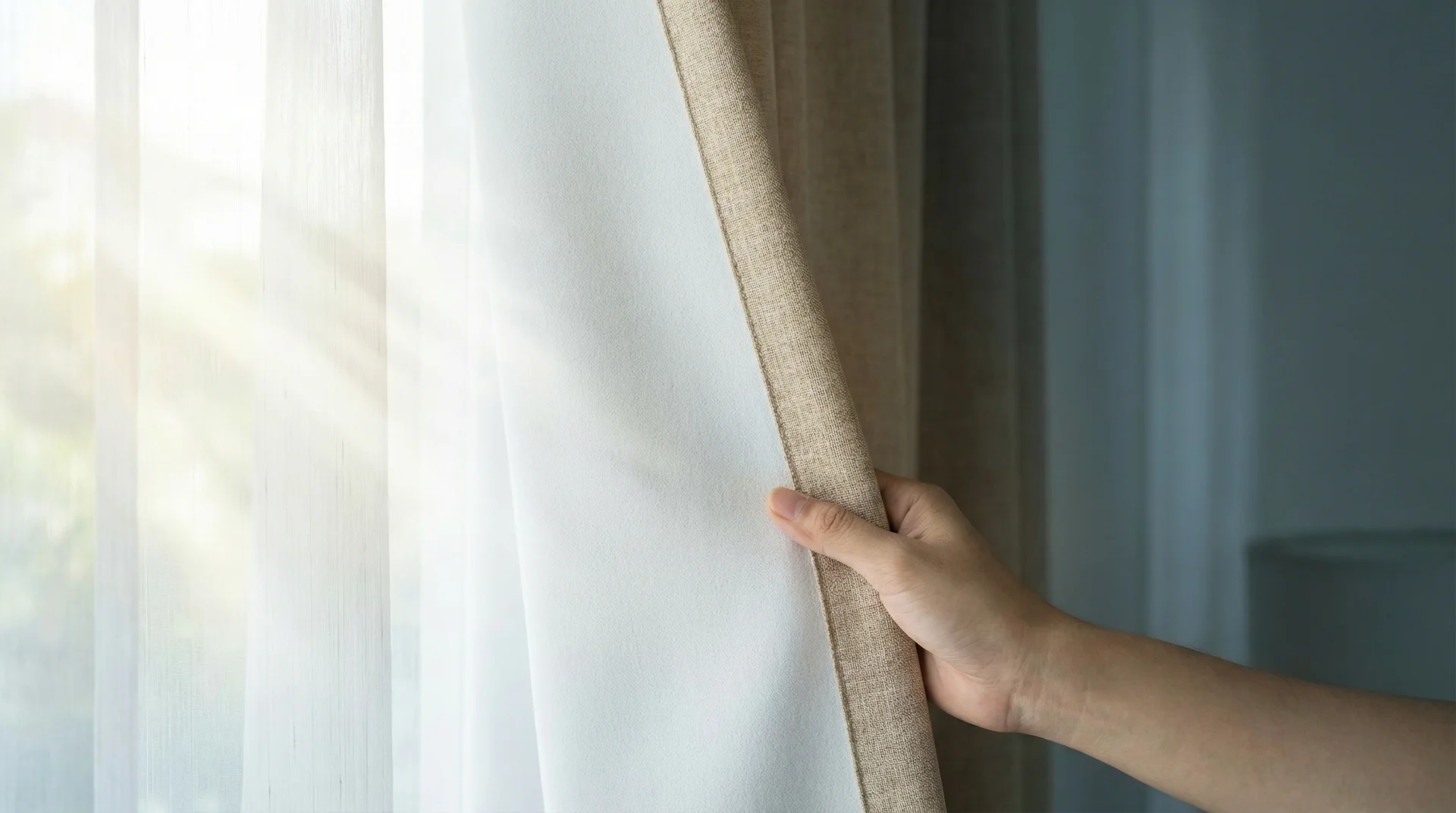
Think of the two sides of the curtain as having two separate jobs. The side facing the window should be as light as possible,like white, cream, or silver. This side reflects sunlight. The side facing your room is purely aesthetic and can be any colour you want.
I had a client with a charcoal-grey blackout curtain on her west-facing bedroom window. She noticed almost no temperature change despite good installation.
When we switched to the same curtain style in a pale linen with a white thermal backing, she described the room as feeling like a different house within a few days. The construction was nearly identical. The colour made all the difference.
The Installation Mistakes That Cancel Out Every Benefit
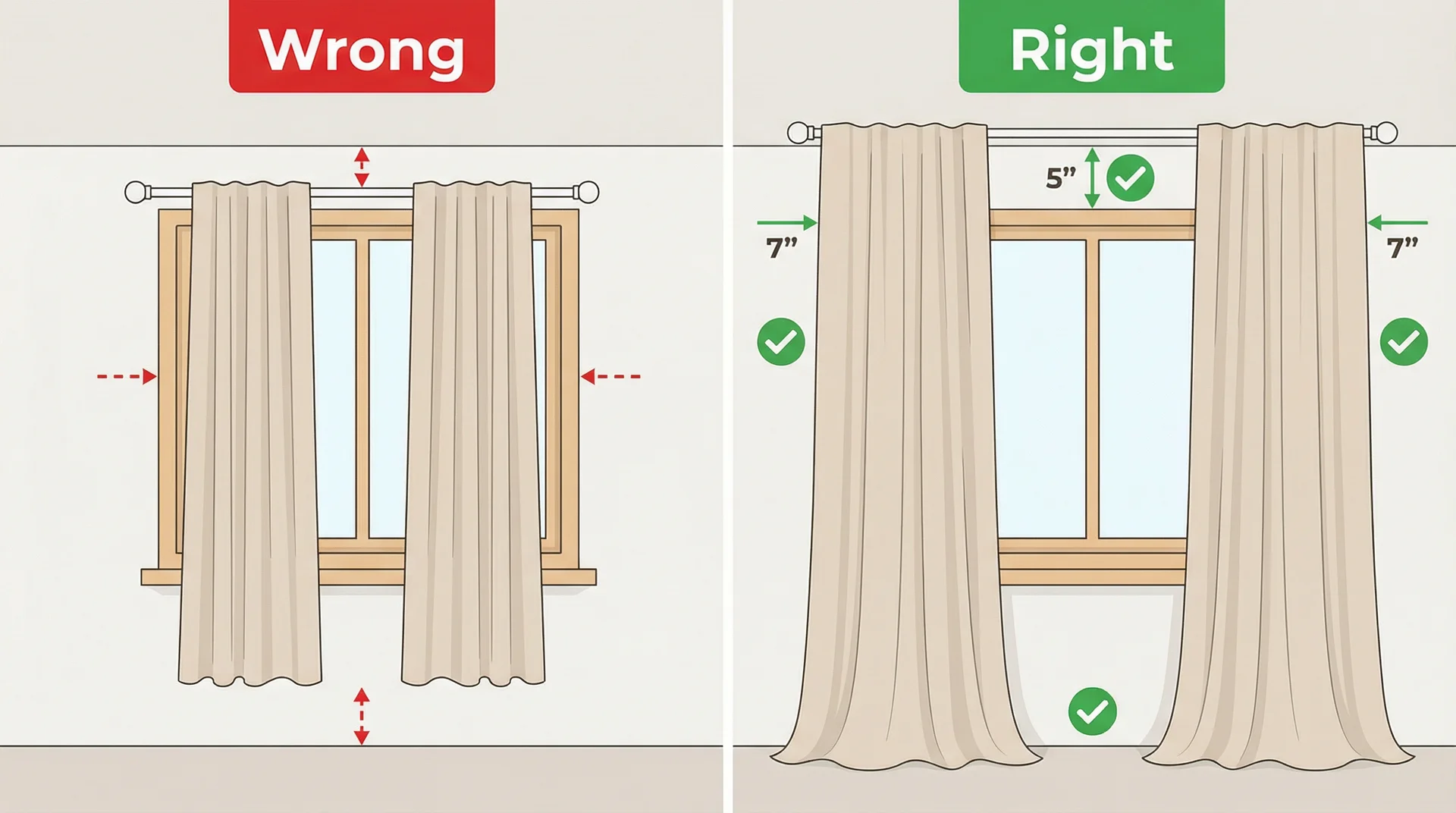
I have been inside homes where someone spent good money on excellent curtains and still felt almost no difference in room temperature. The curtains were the right choice. The installation was the problem.
Mounting the Rod Too Close to the Frame
When a curtain rod sits directly above the window frame, gaps form at the sides where heat creeps in around the edges. Mount the rod 4 to 6 inches above the window frame and extend it 6 to 8 inches beyond the frame on each side. This ensures the curtain overlaps the wall on both sides and creates a proper thermal seal.
Letting the Curtain Float Above the Floor
Gaps at the bottom allow hot air to circulate freely between the curtain and the window. Your curtains should either reach the floor with a gentle 1-inch break or reach the windowsill with minimal gap. A floating hem looks casual and sacrifices thermal performance.
Ignoring Top and Side Gaps
A beautifully hung curtain with proper width leaves a 2-inch gap at the top, which is actively undermining itself. Warm air rises and circulates through that gap continuously.
Some clients use magnetic tape along the wall edge to create a near-seamless seal at the sides, and the difference in room temperature is noticeable. For the top, a ceiling-mounted track or a valance board significantly reduces this gap.
Using a Standard Single Rod Positioned Away From the Glass
A standard rod pushes the curtain away from the window, reducing the effectiveness of the air pocket. A ceiling-mounted track or a rod bracket that extends the curtain closer to the glass improves thermal performance considerably.
Room-by-Room: Where Blackout Curtains Make the Biggest Difference
Bedrooms
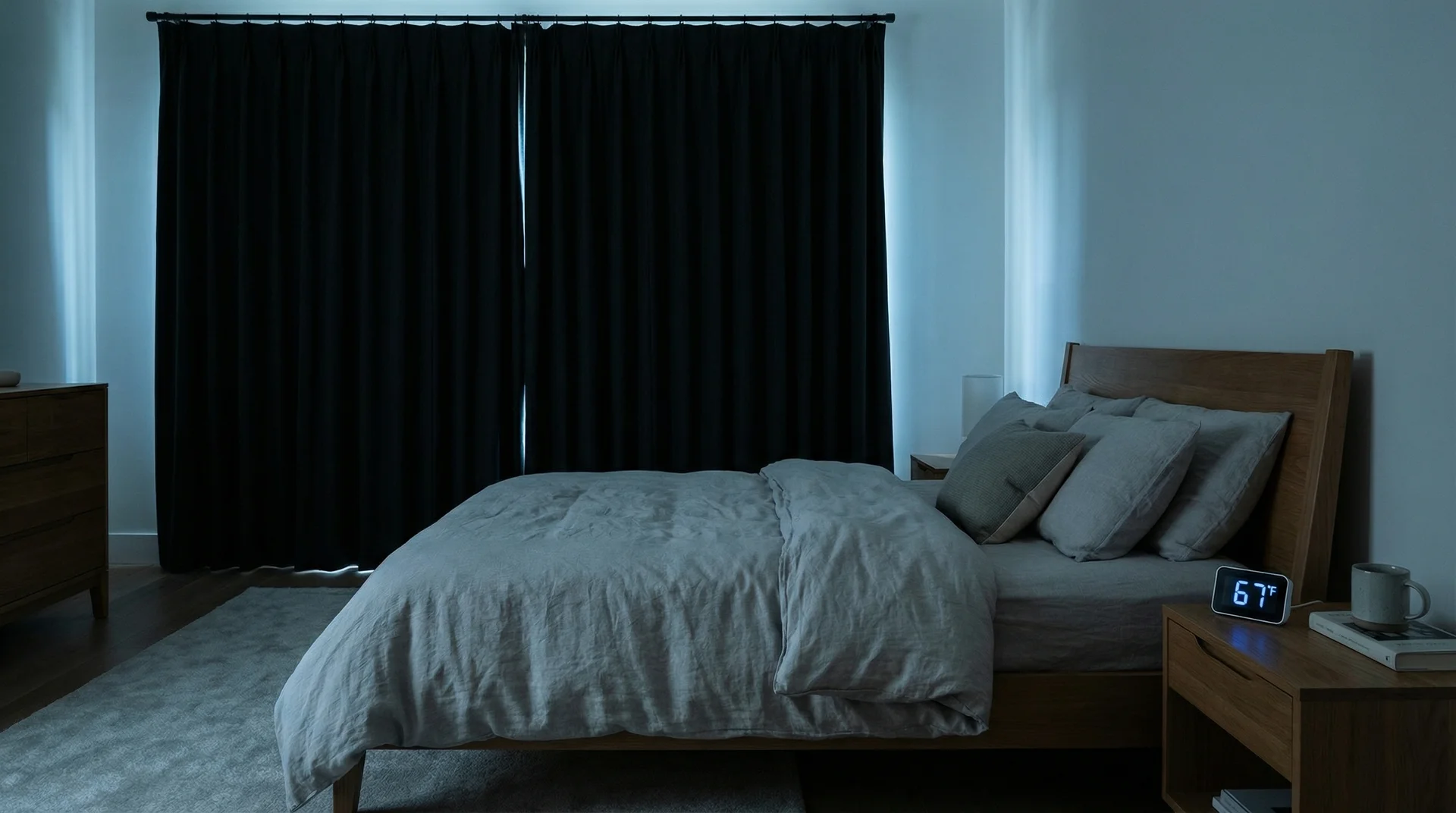
This is almost always where blackout curtains deliver the most meaningful quality-of-life improvement. Sleep research consistently shows that cooler room temperatures, typically between 65 and 68°F (18 to 20°C), promote deeper, more restorative sleep.
Blackout curtains do double duty here: they cool the room and block early morning light. If you install them anywhere first, start with your bedroom.
Living Rooms With South or West-Facing Windows
These rooms take the worst of the afternoon sun in the Northern Hemisphere. I worked with a family in an open-plan home where the main living area faced southwest with floor-to-ceiling windows.
We installed ceiling-track blackout curtains on the two largest panels and kept them closed between noon and 5 PM during the summer. Their electricity usage dropped noticeably the following month, and the room went from avoided-after-lunch to comfortable throughout the day.
Home Offices
Thermal comfort directly affects concentration. A room that climbs past 77°F (25°C) during work hours creates measurable cognitive fatigue.
A sun-facing home office benefits enormously from blackout curtains, and layering them behind a sheer panel lets you pull back the blackout layer during non-peak hours for diffused natural light without the heat.
Children’s Rooms and Nurseries
Children are more sensitive to temperature extremes than adults, and overheating during nap time is both a comfort and a safety concern.
The American Academy of Pediatrics recommends keeping nursery temperatures between 68 and 72°F (20 to 22°C).
Blackout curtains in these rooms support that consistently by managing both heat and light, which also helps establish reliable sleep schedules.
Blackout Curtains vs. Other Heat-Blocking Options
These solutions are not competing options; they work best in combination. But if you are choosing where to start, here is an honest comparison:
| Solution | Heat Reduction | Cost Per Window | DIY Friendly |
|---|---|---|---|
| Thermal blackout curtains | 30 to 45% | $60 to $300 | Yes |
| Cellular / honeycomb blinds | 35 to 50% | $50 to $200 | Yes |
| Reflective window film | 30 to 40% | $20 to $80 | Moderate |
| Exterior roller shutters | 50 to 70% | $200 to $800 | No |
| Double-glazed window upgrade | 50 to 70% | $300 to $900 | No |
Blackout curtains consistently offer the best combination of thermal performance, aesthetic flexibility, and cost accessibility. They are also reversible; if you change your decor, you replace the panels. You cannot say the same about window film or new glazing.
My personal recommendation for most homeowners looking for immediate, budget-conscious results: start with thermal blackout curtains on your most sun-exposed windows and layer cellular blinds underneath if you want to push performance further.
This combination gives you genuinely strong heat reduction at a fraction of the cost of any structural window upgrade.
A Brief Note: Do Blackout Curtains Help in Conservatories and Cars?
I get variations of this question fairly often, so I want to address them briefly.
In conservatories: Standard blackout curtains are less practical here because of the ceiling glazing and the volume of glass involved. Specialist conservatory blinds with reflective coatings tend to outperform curtains in this space. However, blackout curtains on the vertical glazed panels of a conservatory still contribute meaningfully to reducing heat gain on those specific surfaces.
In cars: Purpose-made automotive blackout shades and window films are far more practical than fabric curtains for vehicles. The principle — blocking solar radiation before it enters the glass — is identical, but the application differs entirely.
What Blackout Curtains Cannot Do
Blackout curtains work within real limits, and I want to be clear about them.
They cannot compensate for poor whole-home insulation. If your attic, walls, or window frames are losing heat through gaps, curtains will help at the glass but will not solve the broader problem.
They need to be close to work. A blackout curtain left open during peak sun hours provides none of its thermal benefit, regardless of quality. The habit of closing curtains on sun-facing windows between roughly 10 AM and 4 PM is just as important as the curtain itself.
They reduce heat gain, not air temperature. Your air conditioning or fans still need to manage the actual air temperature. Blackout curtains mean your cooling system works less hard, but they do not replace active cooling on a very hot day.
Within a well-managed home environment, thermal blackout curtains are one of the highest-value, lowest-effort interventions available for summer comfort. Understanding their limits just helps you use them better.
Caring for Blackout Curtains So They Keep Performing
- Vacuum monthly using an upholstery attachment on low suction. Dust on the surface reduces reflective capacity over time.
- Follow the manufacturer’s wash instructions strictly. Most thermal linings will delaminate in a hot wash or tumble dryer. Cool water, gentle cycle, and line drying are the standard requirements.
- Store loosely rolled, not tightly folded. Tight creases in thermal-lined fabric can crack the lining and reduce its insulating performance.
- Check the backing every two to three years. Hold the curtain up to light away from the window. Significant new light penetration where there was little before means the lining is degrading.
Quality thermal blackout curtains, cared for properly, typically give five to eight years of reliable performance before insulating properties begin to diminish.
If You Are Starting From Scratch: A Practical Framework
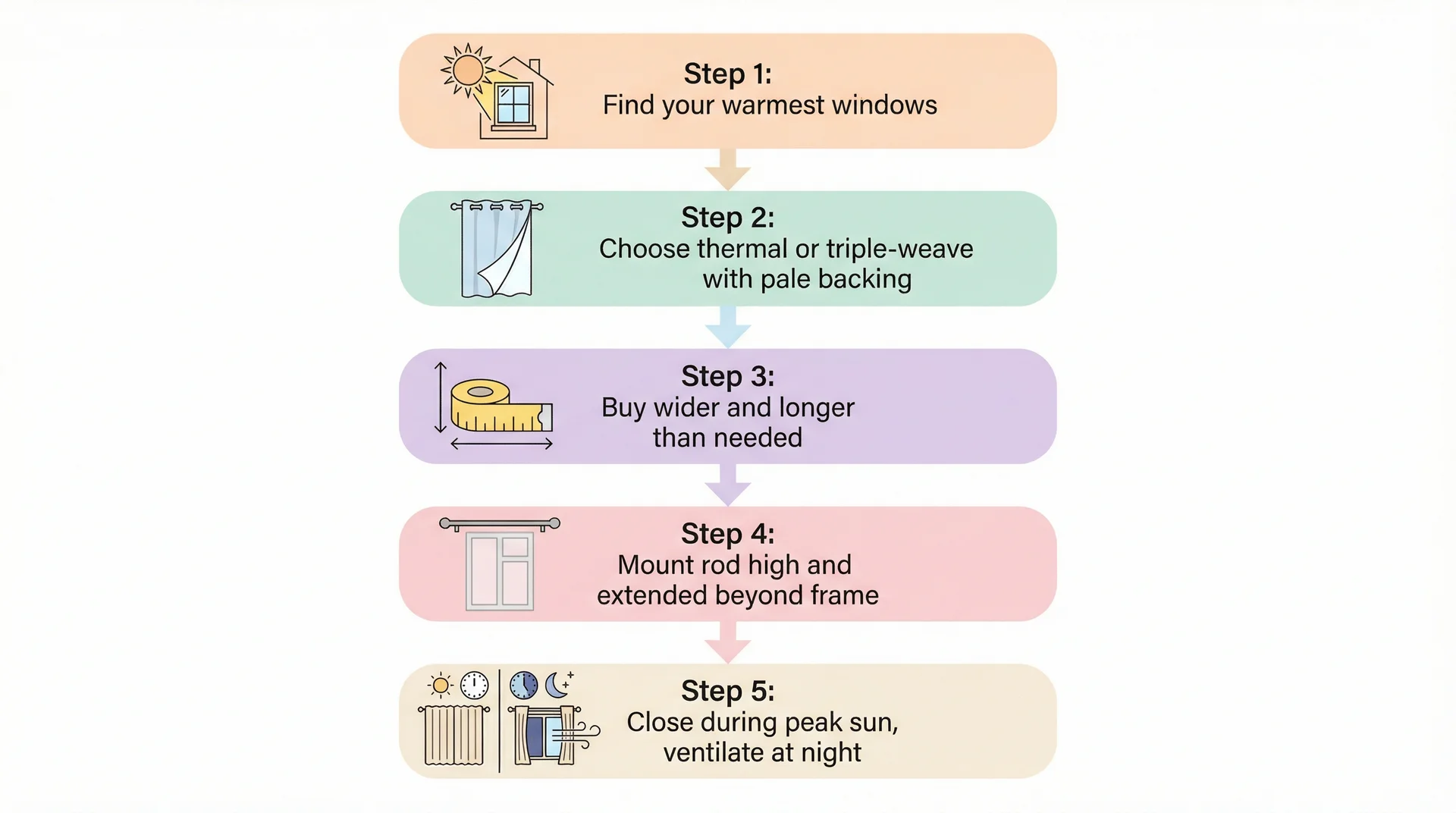
Step 1 – Find your problem windows. Walk through your home between noon and 3 PM on a sunny day. The rooms that feel distinctly warmer are your priority.
Step 2 – Choose triple-weave or thermally lined curtains with a white or pale backing. Look for the word “thermal” or “insulating” in the product description. Mid-range pricing (roughly $50 to $150 per panel) is where performance value peaks for most households.
Step 3 – Buy wider and longer than you think you need. For a 48-inch wide window, buy panels totalling at least 80 to 96 inches in combined width. For height, measure from your intended rod position to the floor and add 2 inches for a gentle floor break.
Step 4 – Mount the rod high and wide. 4 to 6 inches above the frame and 6 to 8 inches beyond the frame on each side.
Step 5 – Use them strategically. Close sun-facing curtains from mid-morning through late afternoon. Open windows in the evening once outdoor temperatures drop. Close curtains again before bed to hold the cooler air in overnight.
Frequently Asked Questions
Do blackout curtains work in both summer and winter?
They do, and this is one of their most underappreciated qualities. In summer, they reflect solar heat and reduce heat gain. In winter, the air pocket between the curtain and the glass slows warm indoor air from escaping outward. One investment serves you across all seasons in both directions.
Will blackout curtains make my room feel dark and cave-like?
Only if you keep them closed all day on every window. The practical approach is to open them on non-sun-facing windows for natural light while keeping sun-exposed ones closed during peak hours.
Layering a sheer panel behind the blackout curtain gives you the option of diffused natural light when you want it, without direct solar heat.
How much can I realistically expect to save on energy bills?
The U.S. Department of Energy estimates up to a 33 percent reduction in heat gain through treated windows. In practical terms, your air conditioning runs fewer cycles daily during summer.
Individual savings depend on your climate, home size, and number of treated windows, but many homeowners report noticeable reductions in cooling costs within the first summer after installation.
Are more expensive blackout curtains worth it?
In most cases, yes, up to a point. The quality difference between a $20 panel and a $70 panel is usually substantial in lining quality, fabric density, and construction.
The difference between a $70 panel and a $200 panel is mostly in material finish and aesthetic. Mid-range is where performance value peaks before you are primarily paying for luxury fabric.
How do I know if my blackout curtains are actually thermal?
Check the product description for terms like “thermal lining,” “insulating lining,” or “foam backing.” Hold the curtain up to a bright light source. Minimal light penetration indicates good density.
You can also feel the backing; a genuine thermal lining has a slightly spongy or dense texture, noticeably different from a standard fabric back.
A Final Thought
I have recommended blackout curtains in some form to almost every client I have worked with who had a warm room problem. The difference varies: sometimes it is subtle, noticed in quieter air conditioning cycles, and sometimes it is dramatic within days. What it has never been, when chosen and installed correctly, is negligible.
Your windows are the most thermally vulnerable part of your home, and the treatment you put in front of them matters more than most people realise. Blackout curtains are a genuine, design-forward thermal upgrade.
Understanding how to choose and use them well is the difference between mediocre results and a genuinely cooler, more comfortable home.