
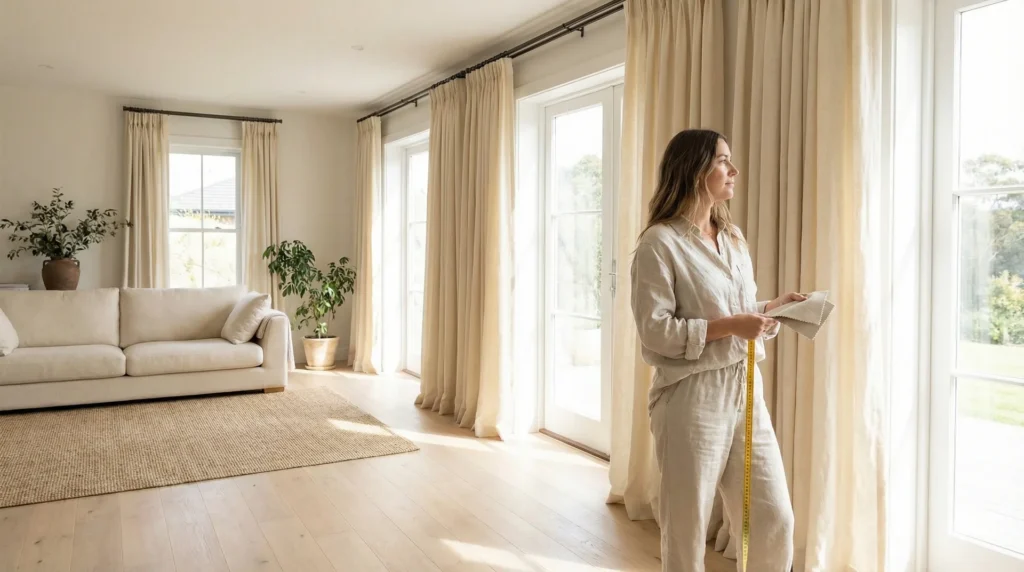
I remember standing in a showroom early in my career, measuring tape in one hand and fabric swatches in the other, genuinely stumped.
The salesperson kept asking me questions I had no answers to. “What is your rod width?” “Floor length or sill?” “How many panels?” I smiled and nodded, quietly panicking inside.
After a decade of working in residential design and helping homeowners through exactly this kind of decision, I can tell you that curtain sizing feels complicated for one reason: most guides bury the answer. So here it is upfront.
Quick curtain size chart:
| Curtain Length Style | Measurement from Rod |
|---|---|
| Sill Length | Rod to 1 inch above the windowsill |
| Apron / Below-Sill | Rod to 4–6 inches below the sill |
| Floor Length | Rod to ½ inch above the floor |
| Puddle Length | Rod to 3–6 inches past the floor |
| Window Width | Panel Width Needed (per side) |
|---|---|
| Up to 36 inches | 40–54 inch panel |
| 36–60 inches | 54–72 inch panel |
| 60–90 inches | 72–100 inch panel |
| Above 90 inches | Two panels of 80–100 inches each |
Everything below shows you how to apply these numbers correctly, because the measurements alone mean nothing if you start from the wrong point or choose a length that works against your room.
Why Your Window Measurement Is the Wrong Starting Point
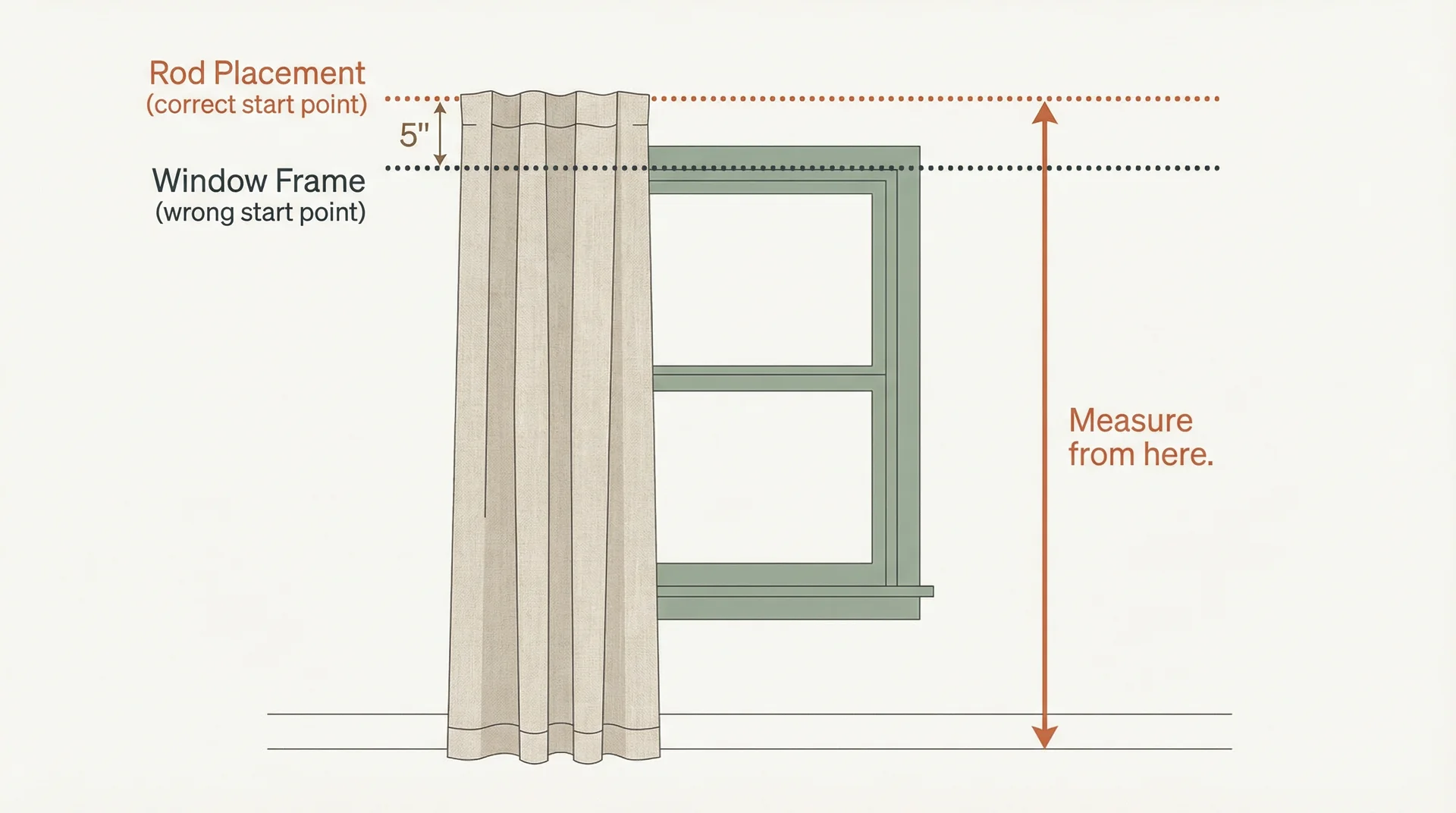
Most people hold their tape measure against the window frame first. The instinct makes sense, but curtains do not hang from the window. They hang from the rod, and where you place that rod changes every number you are about to write down.
When I worked as a design consultant at a regional furniture retailer, I watched clients return curtains week after week. The story was almost always the same: they measured the window opening, ordered panels to match, and ended up with something that looked pinched, short, or awkwardly floating above the floor. The window measurement had nothing to do with the problem. The rod placement did.
Before you measure anything, decide these two things:
- Rod height: Place it 4 to 6 inches above the window frame for a standard look, or go closer to the ceiling entirely for rooms where you want height and drama. I default to near-ceiling placement in most consultations because it visually elongates walls and makes windows appear taller.
- Rod width: Extend the rod 6 to 12 inches past each side of the window frame. This lets panels stack completely off the glass when open, keeping your view clear and maximising light.
Fix the rod position first. Every measurement after that becomes logical.
How to Measure Curtain Length
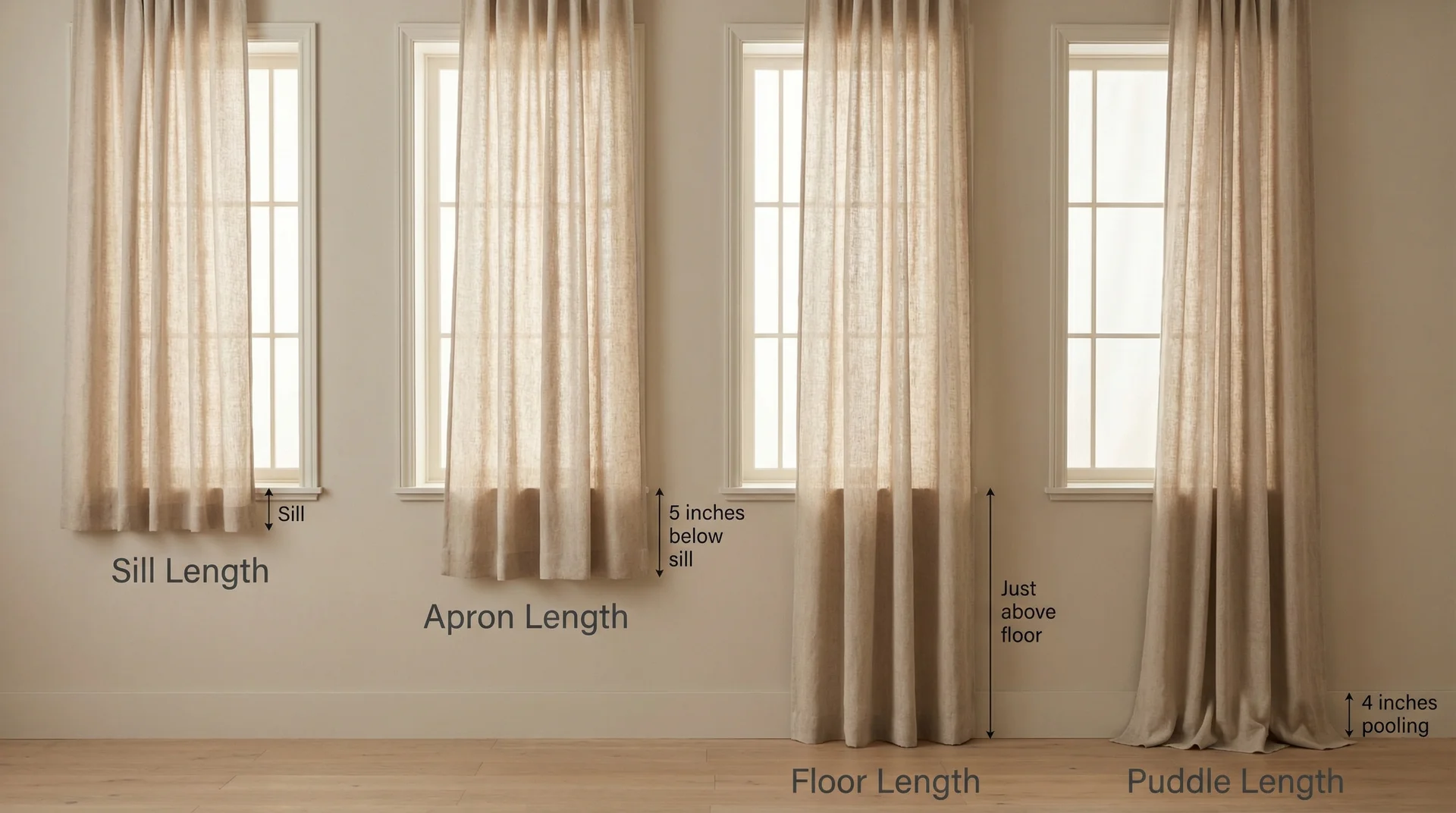
Length is a design decision as much as a practical one. I have seen the same fabric in the same colour look completely different depending on whether panels grazed the floor or puddled onto it.
Sill Length
Measure from the rod (or the bottom of the ring, if using rings) down to one inch above the windowsill. This works well in kitchens, bathrooms, and any window sitting above a radiator, countertop, or built-in furniture.
My honest take: Sill-length curtains in a living room can feel incomplete unless the design is very intentional. I lean toward this length only when the space below the window is genuinely occupied by something purposeful.
Apron Length
Measure from the rod to 4 to 6 inches below the windowsill. This suits casual spaces where you want coverage without the formality of floor-length panels.
Floor Length
Measure from the rod to the floor, then subtract half an inch. That small gap prevents the hem from dragging, collecting dust, or fraying over time. In my own home, every window I have styled personally uses this length because it suits everything from relaxed linen to structured velvet.
Puddle Length
Add 3 to 6 inches beyond the floor measurement for that lush, editorial pool of fabric at the base. The trade-off is maintenance: puddle curtains collect dust and need re-arranging regularly. Reserve this length for rooms where curtains stay stationary, like a formal dining room or a statement reading nook.
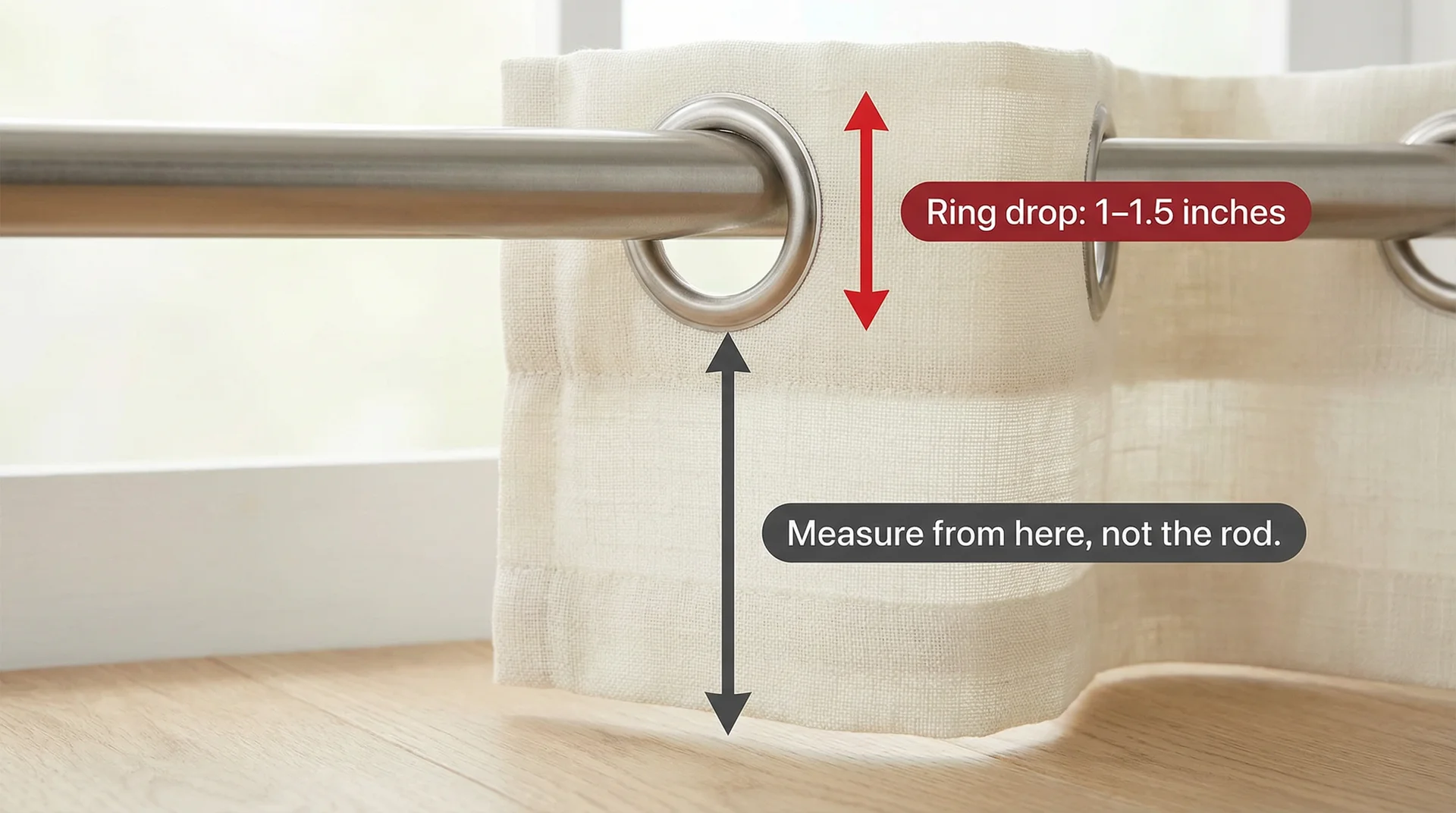
One detail people miss: If you use curtain rings or clips, measure from the bottom of the ring to the floor, not from the rod. Rings typically add 1 to 1.5 inches, and skipping this step is one of the most common reasons floor-length curtains end up floating above the ground.
How to Measure Curtain Width
Width is where curtain sizing quietly fails most people, and I say quietly because the mistake only reveals itself once the curtains are hung. A panel that looks fine on the hanger looks flat, stretched, and thin once it sits on a rod with no fullness.
Your total curtain width should equal 1.5 to 3 times the width of your rod.
Fullness Ratio Reference
| Fullness Ratio | Visual Effect | Best For |
|---|---|---|
| 1.5x rod width | Streamlined, minimal | Modern and Scandinavian interiors |
| 2x rod width | Balanced, classic | Most living rooms and bedrooms |
| 2.5x rod width | Soft and full | Traditional and transitional spaces |
| 3x rod width | Luxuriously full | Formal rooms, heavy fabrics, statement windows |
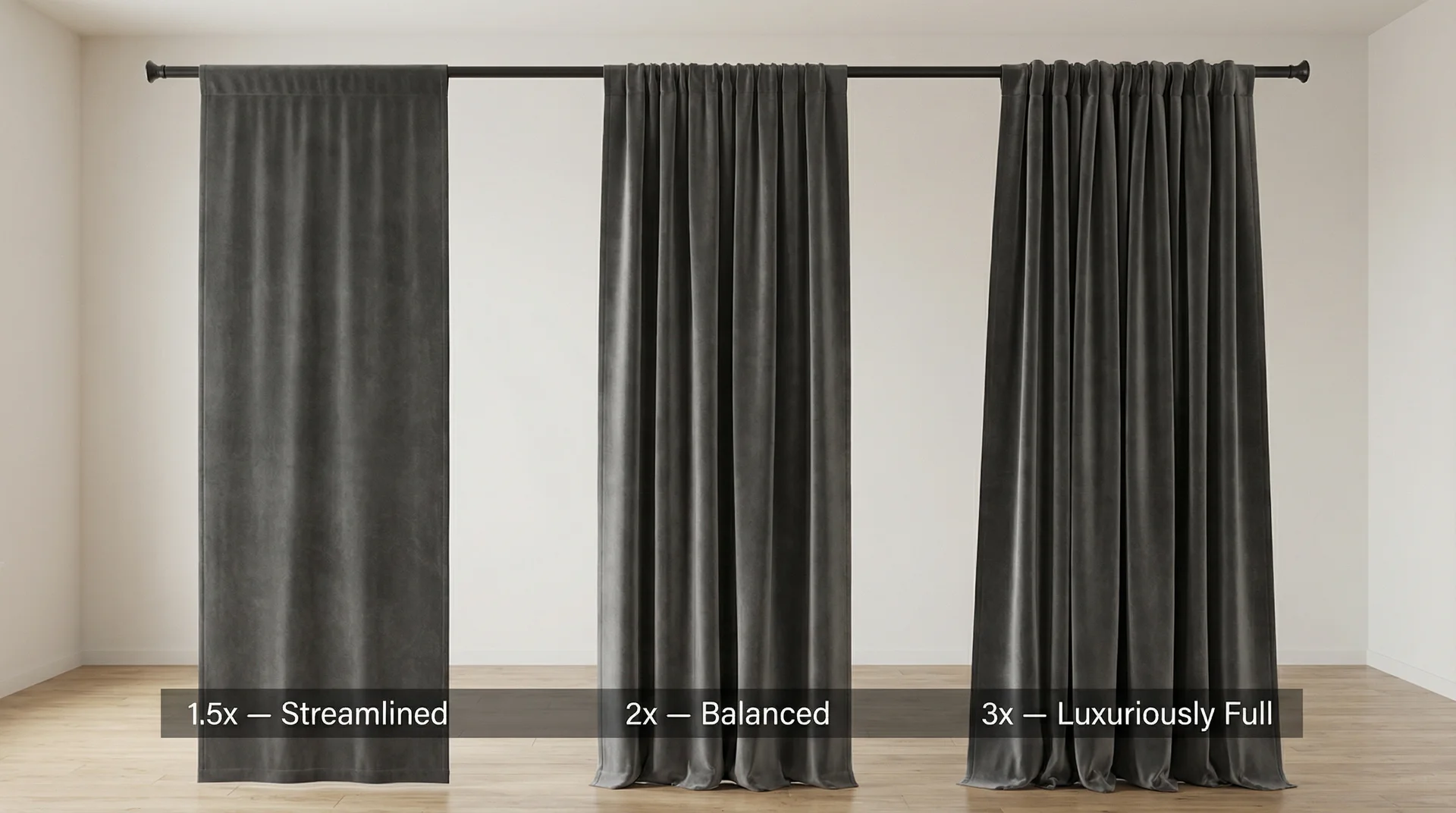
Applied example: Your rod measures 72 inches. For a balanced look, multiply 72 by 2 to get 144 inches of total curtain width. Using two panels means each panel needs to be 72 inches wide. If the retailer stocks 54-inch panels, those fall short, and you need wider panels or an extra panel per side.
I always advise people to round up on the width. A curtain with slightly more fabric than needed looks intentional. A curtain stretched tight across a rod looks like it was bought in the wrong size, because it was.
How Many Curtain Panels Do You Need?
This question comes up constantly, and the answer is more straightforward than most people expect.
The formula:
- Measure your rod width in inches
- Multiply by your chosen fullness ratio (use 2x as a solid default)
- Divide the total by the width of the panel you are buying
- Round up to the nearest whole number
Example: Rod width: 80 inches Fullness ratio: 2x Total fabric needed: 160 inches Panel width available: 54 inches Panels needed: 160 ÷ 54 = 2.96, rounded up to 3 panels
For most standard windows with a rod under 72 inches, two panels cover the need comfortably. For wider windows, bay windows, and sliding glass doors, three or four panels often serve better both visually and functionally.
Standard Curtain Sizes You Can Shop From
Ready-made curtains come in a consistent range of dimensions across most retailers. Use this as your reference before you shop.
Standard Lengths
| Length (inches) | Best Used For |
|---|---|
| 63 inches | Sill-length windows, kitchens, and children’s rooms |
| 84 inches | Standard 8-foot ceiling rooms, most bedrooms |
| 95 inches | Rooms with 9-foot ceilings or raised rod placement |
| 108 inches | Rooms with 10-foot ceilings |
| 120 inches | High ceilings, floor-to-ceiling dramatic panels |
Standard Panel Widths
| Panel Width (inches) | Suits Rod Width Per Panel |
|---|---|
| 40–42 inches | Rods up to 28 inches |
| 50–54 inches | Rods up to 36 inches |
| 60–72 inches | Rods up to 50 inches |
| 80–100 inches | Wide or bay windows |
Important: These are per-panel measurements. Most windows need two panels. Calculate your total fabric need first, then determine how many panels reach that total.
UK vs. US Curtain Sizes: What Changes If You Are Shopping Across Markets
If you are sourcing curtains from UK retailers or working with a British interior designer, the sizing terminology and drop measurements differ slightly from the US standard.
| Measurement | US Standard | UK Standard |
|---|---|---|
| Common drops (lengths) | 63, 84, 95, 108, 120 inches | 54, 72, 90 inches (in inches) or 137, 182, 228 cm |
| Panel width convention | Sold by individual panel | Often sold as a pair |
| Fullness standard | 1.5x to 2.5x | 2x to 2.5x (referred to as “pencil pleat fullness”) |
The most important thing to check when buying from a UK retailer is whether the listed width refers to one panel or the pair combined. Buying what looks like a generous width and discovering it is the pair total is a frustrating and expensive mistake that I have seen happen more than once.
Sizing for Non-Standard Windows
Standard windows get all the attention in sizing guides, but a large share of homes have at least one window that requires a different approach. Here is how I handle each type.
Bay Windows
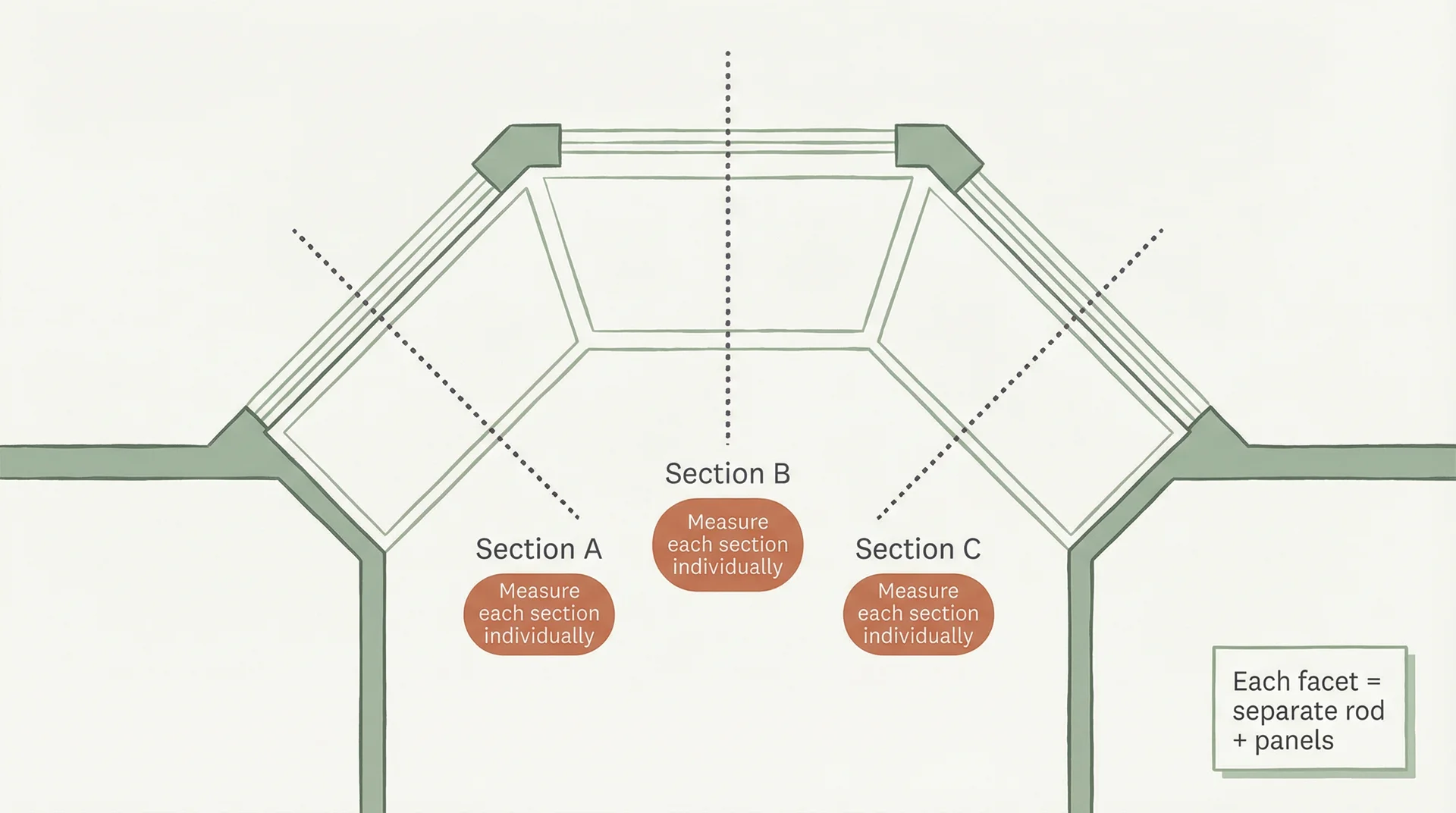
Bay windows require individual measurement for each section of the bay. Treat each facet as its own window, measure each rod separately, and order panels for each section individually.
Trying to span a full bay with one rod and one set of panels creates visual tension and practical frustration when you try to open or close them.
For a cohesive look across the bay, keep the panel fabric and fullness ratio consistent across all sections, even as the dimensions vary.
Sliding Glass Doors
Sliding doors need panels wide enough to clear the full door opening when stacked back.
This means the rod should extend at least 12 to 16 inches past each side of the door frame, and panels should have enough width to stack entirely off the glass. Using the 2.5x to 3x fullness ratio here ensures the panels look full even when pushed to the sides.
Recommended: Floor length or just above the threshold, with a half-inch clearance to prevent dragging when the door opens.
French Doors
French doors present a specific challenge because the doors themselves move into the room when opened. Curtains mounted to the wall beside the doors work best here. Measure the full wall span from rod end to rod end and use floor-length panels that clear the door handle completely.
An alternative approach I often recommend is mounting individual panels directly to each door using tension rods, which keeps the curtain anchored to the door and moves with it. For this method, measure each door panel individually.
Tall or Floor-to-Ceiling Windows
These windows deserve panels that maximise their height. Mount the rod at the very top of the wall or ceiling and use 108 to 120-inch panels. The goal is to let the window’s architecture breathe rather than interrupting it mid-wall with a rod at a standard height.
To choose curtains for large windows, the rule for measuring windows and curtains change a bit, something you might need to know if you have large windows you want to cover.
How Fabric Type Affects Your Sizing Decision
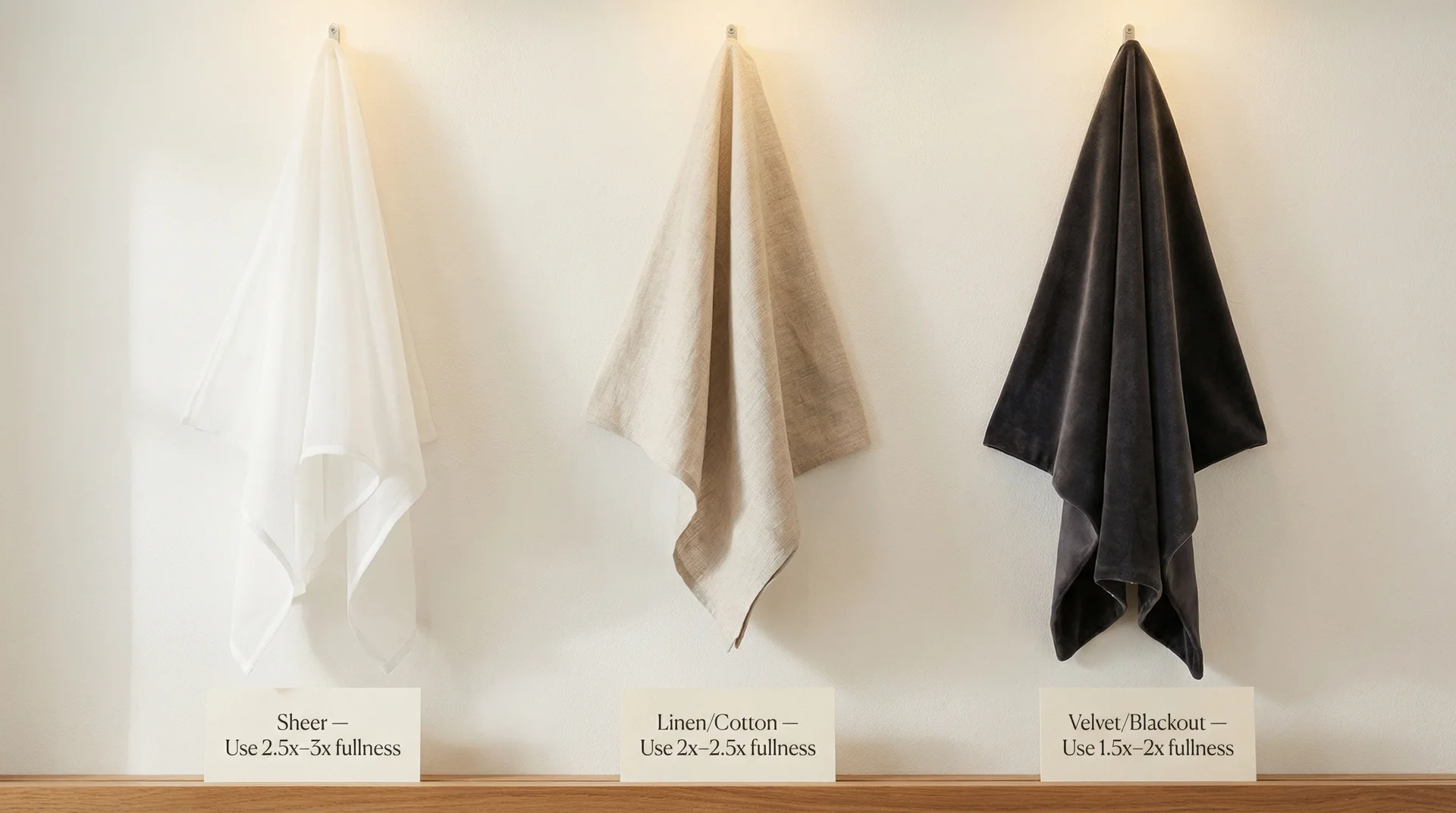
A sheer linen panel and a lined velvet curtain in identical dimensions look completely different once hung. Fabric weight and construction change how a curtain moves, drapes, and fills a rod, which means your sizing calculation needs to account for fabric type.
Sheer and Lightweight Fabrics
Sheers need the most fullness because their airy, translucent nature means sparse panels look see-through and thin rather than intentional and soft. Use a minimum of 2.5x fullness for sheer fabrics, and go up to 3x for the most elegant result.
Length-wise, sheers look particularly beautiful at floor or puddle length because the fabric floats gently rather than hanging with structure.
Mid-Weight Fabrics (Linen, Cotton, Polyester)
These fabrics sit comfortably at the 2x to 2.5x fullness ratio and behave predictably across all four length styles. They work in most rooms and suit most header types without needing special adjustments.
Heavyweight and Lined Fabrics (Velvet, Blackout, Interlined)
Heavy fabrics have their own weight working for them, which means they do not need as much extra width to look full. A 1.5x to 2x ratio works well here. However, lined curtains add slight bulk to the panel, so always factor in the lining when judging panel width against your rod.
Blackout curtains specifically: The functional goal of light blockage means you want panels that overlap generously at the centre and extend well past the window frame on each side. Underlining the width and skimping on coverage defeats the purpose entirely.
Blackout curtains also help with heat management in your room and make it cooler, but there are certain nuances to it, which I have talked about in my other blog.
How Header Style Changes Your Measurement
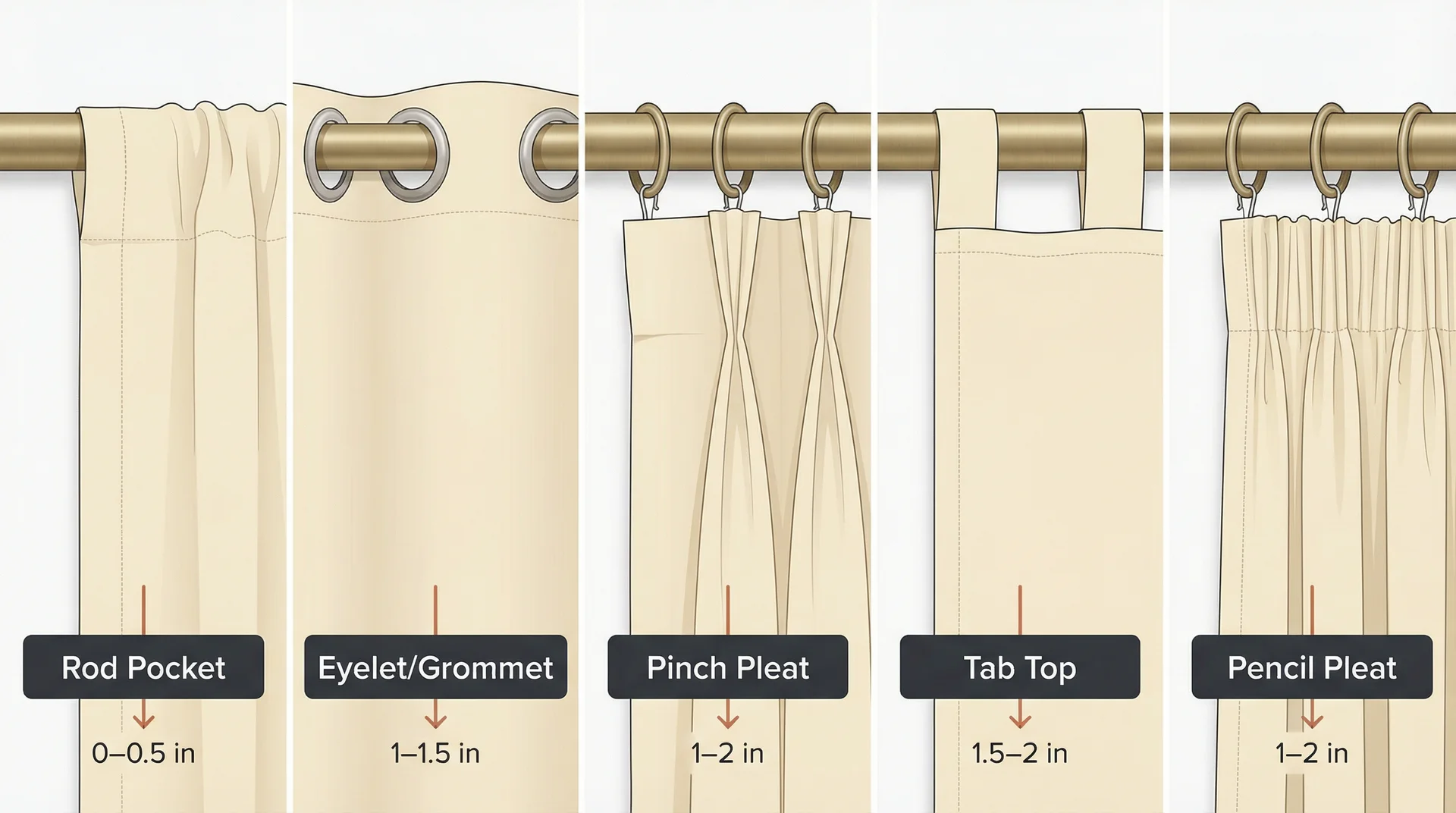
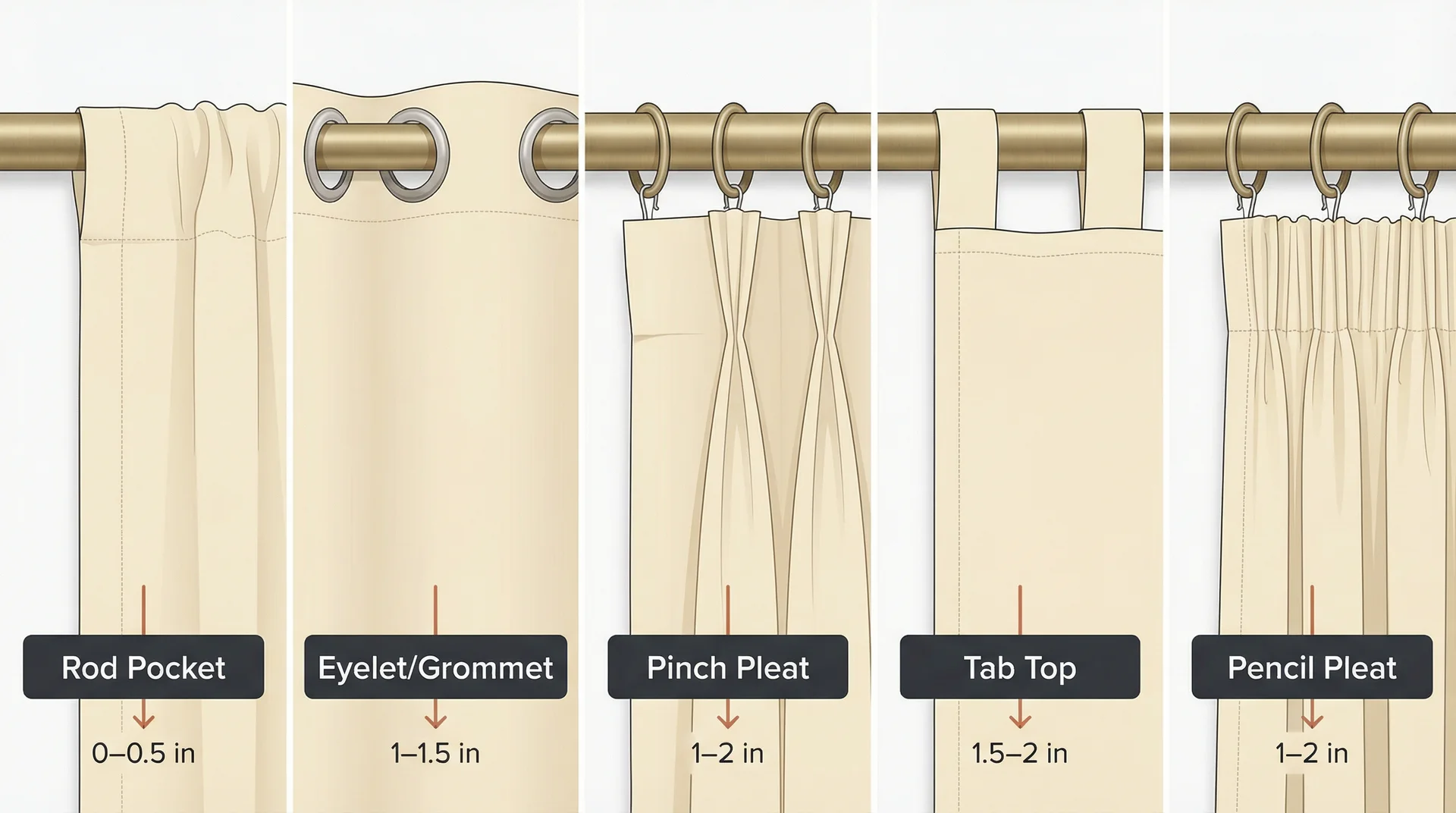
The curtain header (the top construction that attaches to the rod) affects how much the panel drops below the rod and how much fabric it consumes.
| Header Type | Drop Below Rod | Width Adjustment Needed |
|---|---|---|
| Rod Pocket | Flush (0–0.5 inches) | None |
| Eyelet / Grommet | 1–1.5 inches | None, measure from the rod top |
| Pinch Pleat | 1–2 inches via hook | Add 30–40% extra width for pleating |
| Tab Top | 1.5–2 inches | None, measure from the rod top |
| Pencil Pleat | 1–2 inches via hook | Add 2x to 2.5x standard fullness |
Always check the product listing for “finished length,” which most reputable retailers list as the measurement from the top of the header to the hem. This removes guesswork entirely and gives you a clean number to compare against your own measurement.
Where to Place Tie-Backs (And Why It Matters to Sizing)
Tie-backs are a small detail that most guides overlook, but placement changes how a curtain looks when held open and affects whether the panel needs to be wider to compensate for the portion gathered at the side.
Standard tie-back heights:
| Room Type | Tie-Back Placement from Floor |
|---|---|
| Standard living room | 36–40 inches |
| Formal or dramatic rooms | Higher at 48–54 inches for a fuller lower sweep |
| Cafe style or half curtains | At or just above mid-panel |
Placing tie-backs too high makes curtains look stiff and overly formal. Placing them too low cuts into the floor clearance and creates a triangular shape that reads as unfinished.
For most rooms, one-third from the bottom of the panel is a reliable starting point. When a curtain is frequently tied back, add an extra 4 to 6 inches to your panel width to ensure the full visual width is maintained even when a portion is gathered to the side.
Room-by-Room Curtain Sizing Reference
| Room | Recommended Length | Fullness Ratio | Notes |
|---|---|---|---|
| Living Room | 84–108 inches | 2x to 2.5x | Mount the rod near the ceiling for height |
| Master Bedroom | 84–95 inches | 2x to 3x | Prioritise blackout lining |
| Children’s Bedroom | 63–84 inches | 1.5x to 2x | Keep hardware safely mounted |
| Kitchen | 36–63 inches | 1.5x to 2x | Moisture-resistant fabrics preferred |
| Bathroom | 45–63 inches | 1.5x | Keep fabric away from water sources |
| Dining Room | 96–108 inches | 2x to 2.5x | Puddle length suits formal settings |
| Home Office | 84–95 inches | 1.5x to 2x | Light filtering is preferred for screen glare |
| Bay Window | Per section | 2x to 2.5x | Measure each facet individually |
| Sliding Door | Floor clearance | 2.5x to 3x | Extend the rod 12–16 inches beyond the frame |
Common Curtain Sizing Mistakes Worth Knowing
Measuring the window frame instead of the rod: The frame is a spatial reference only. Your curtain has no relationship with it. Fix the rod, then measure from there.
Buying panels that are too narrow: When panels are too narrow for the rod, they look horizontally stretched and lose all softness. Go wider on width whenever you feel uncertain.
Skipping the floor gap: That half-inch clearance at the floor protects the hem from fraying and dragging, particularly with natural materials like linen and cotton.
Choosing length based on what is available: If your measurement calls for 91 inches and the options are 84 or 95, choose 95 and hem if needed. A curtain that is too short cannot be fixed.
Ignoring fabric weight in the fullness calculation: Heavier fabrics need different ratios than sheer ones. Linking fabric type to your fullness decision is what separates curtains that look purposeful from ones that simply cover a window.
Frequently Asked Questions
What size curtains do I need for a standard window?
For a standard 36-inch-wide window with an 8-foot ceiling and a rod placed 4 to 6 inches above the frame, look for two panels that are each 54 inches wide and 84 inches long. This gives a comfortable 2x fullness and the right floor clearance.
Should curtains touch the floor?
For most living rooms and bedrooms, yes. Floor-length curtains read as elegant and intentional. The exception is functional spaces like kitchens and bathrooms, where sill-length or below-sill curtains work better practically.
What is the standard curtain drop in the UK?
UK standard drops are typically 54 inches (137 cm), 72 inches (182 cm), and 90 inches (228 cm). These translate roughly to the US 63, 84, and 95-inch lengths, with some variation depending on the retailer.
How do I know how many curtain panels I need?
Multiply your rod width by your desired fullness ratio (2x is a good default), then divide that total by the width of the panel you are buying. Round up to the nearest whole number.
Can I use one curtain panel instead of two?
Yes, and it can look intentional in the right setting, particularly in a minimalist or asymmetric design. The single panel needs to be wide enough to cover the full rod width at your chosen fullness ratio when closed, or it will look sparse.
What length curtains make a room look bigger?
Ceiling-height rods with floor-length panels create the strongest illusion of height and space. The eye follows the vertical line of the curtain upward, making the ceiling appear higher than it is.
How much longer should curtains be than the window?
Your rod should extend 6 to 12 inches past each side of the window frame, and the curtain length should be measured from the rod down rather than from the window frame. The “how much longer” question is really a rod placement question at its core.
One Last Thought
Curtain sizing becomes easy once you build the habit of starting with the rod, settling on a length style that suits the room, and calculating width generously.
The charts in this guide carry the technical weight, but the real shift happens when you connect the measurements to what you actually want the room to feel like.
The homeowners I have worked with who felt most confident about their choices were the ones who understood their intention before picking up the tape measure.
They knew whether they wanted drama or calm, structure or softness. Sizing was just the final step that turned a clear vision into something real.
Take your measurements, trust the process, and give your room the curtains it deserves.